Olympics Without the Closet

Olympics Without the Closet
New generations are born with a willingness to excel admirably, and it is good that the fire of Olympus burns, without discriminating, in all hearts
Author:

Mileyda Menéndez Dávila |sentido@juventudrebelde.cu
Tuesday 03 August 2021 | 07:22:38 pm
Translated and edited by Walter Lippmann for CubaNews.
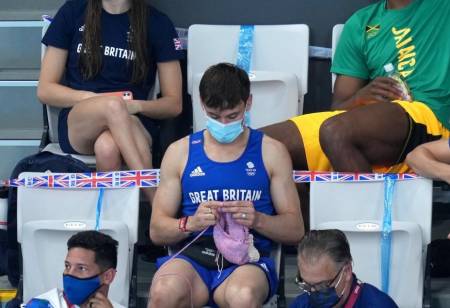
Tom Daley, now Olympic diving champion, knits to raise funds to help gay boys who have no support from their families. Author: Taken from the Internet Published: 03/08/2021 | 06:59 pm
Wanting to be someone else is a waste of the person you are.
–Marilyn Monroe
If there’s one thing that distinguishes Olympic competitions, it’s their exhibitionist nature. More than to beat their rivals, whatever the sport, each athlete goes out to demonstrate how far we can go in life when we set out to break the limits that someone else set before and seemed immovable.
In that spirit, records are also broken from the stands, as evidenced by the photo of British diver Tom Daley, the new Olympic champion, kintting in concentration as his teammates compete in the Aquatics Center.
The image is iconic because it confirms another challenge overcome in these Games, historic since their inception for many reasons: Tokyo 2020 is the first Olympics in which at least 130 people with homosexual or bisexual erotic orientation, or non-binary identity, and one trans person will openly compete.
Daley declared, “I am gay and an Olympic champion,” to show that these are not incompatible qualities, as has been taboo for too long in modern sport. And the knitting thing is not just a hobby: his fame and activism on Instagram allows him to sell those pieces and donate resources to shelters for gay boys with no family of their own to give them love and respect. The gold didn’t go to his head because he already had it in his heart.
This is his third Olympics and the second time he has come openly gay, an attitude that inspires more athletes to shed the fear of showing who they are in front of the world’s cameras. One less element of stress for their competing bodies and their minds, pending also pandemic.
“When I was younger I always felt like the one who was alone and different and didn’t fit in. There was something in me that was never going to be as good as society wanted me to be,” he told the Guardian. “I hope that any young LGBT person can see that no matter how alone you feel now. You are not alone. You can achieve anything.”
Triple somersault
Tokyo 2020 is not the first step, but it is the most forceful in bringing sport out of the closet of sexual prejudice. The sports magazine Outsports states that in the London 2012 Games, 23 self-declared athletes participated outside the heteronormative canons; and in Rio 2016 there were 56.
The Japanese event almost triples the number with athletes from 25 countries. To mention the most significant: from the United States there are 30 and from the United Kingdom 15. There are 12 from the Netherlands and 11 from Canada. New Zealand and Australia had nine each, and Brazil seven. And these figures do not include the technical staff and Paralympic athletes who will come later.
They are in sports as varied as swimming, basketball, canoeing, horseback riding, field hockey, golf, fencing, judo, handball, rowing, rugby, cycling, diving, boxing, BMX freestyle, soccer, softball, tennis, athletics, taekwondo, wrestling and volleyball. At first glance, we can see figures with non-binary identities, that is, that break the typical culturally constructed expectation of feminine and masculine.
And if we are talking about challenging stereotypes, one who does so in a forceful way is New Zealand’s Laurel Hubbard, 43, the first trans woman to compete in weightlifting. Registered as a male at birth, in 2013 she completed her physical and legal transition process. Her case has raised strong controversy, but her hormone levels meet the international requirements to compete with women in this sport, which is controversial for gender reasons.
Hubbard did not win a medal, but she was still happy to be in competition, and before the press she thanked the International Olympic Committee for reaffirming its commitment to the principles of Olympianism and making it clear “that sports is something for everyone, that it is inclusive and accessible”.
For now, trans people who take up sports competitively face complaints from those who believe that genes, bone weight or pubertal development give them certain biological advantages, especially if they compete with women. The curious thing is that many of these sportswomen or their predecessors faced similar resistance to breakthrough in sports that were considered very masculine, and proved that they could give an equally honorable and exciting show for the public, something that could also be said of Paralympic competitions.
As we have already said: if in any area society quickly applauds those who leave behind obsolete marks, it is in sports. The new generations are born with the physical and mental disposition to excel in an admirable way, and it is good that the fire of Olympus burns, without discrimination, in all hearts.
The Strength of Women with the Revolution

The Strength of Women with the Revolution (+Video)
Teresa Amarelle Boué, a member of the Political Bureau and general secretary of the FMC, told Granma that in the midst of the media misrepresentation campaign against Cuba, fighting her is among the priorities of the Federation, which will reach its 61st anniversary.
Translated and edited by Walter Lippmann for CubaNews.
Photo: Taken from the Internet
Cuban women will always be at the side of the Revolution, in defense of the principles and rights conquered for more than six decades. This was emphasized by Teresa Amarelle Boué, member of the Political Bureau and secretary-general of the Federation of Cuban Women (FMC), an organization that, with that conviction, as part of its essence, will reach its 61st anniversary.
In the midst of the media misrepresentation campaign against Cuba, she referred to Granma that fighting it is among the Federation’s priorities: “We are an organization that has legal authority, a non-governmental organization, but that does not mean that we are against the Government or the leadership of the Revolution, because it was the Revolution that dignified Cuban women and that is what we defend.
“We defend the Revolution because we want that in Cuba women have the right to employment, that there are schools, free education and that our women can be more than 62% of university graduates,” she said.
In another moment of her statements, during a meeting held with the press, she highlighted the importance of the National Program for the Advancement of Women. “Women have to know what the Program proposes; this work we are doing in the communities, the laundromats we are increasing, the strategy itself on violence, which should come out in the next few days with a legal norm; the work we are doing in the Women and Family Guidance Houses.
“We must start in the communities a workshop on gender violence, and we are also working on training the Police and legal personnel on everything that has to do with women’s rights so that they are in a position to exercise a better role in this regard.”
She said that next August 23 the FMC will reach its 61st anniversary with the motivations left by the 8th Party Congress. She pointed out that they will organize dialogues among women in each of the municipalities, and the Fidel and the Revolution of Women workshops, on the occasion of the 95th birthday of the Commander in Chief, always respecting the epidemiological norms.
Among the actions to be carried out in the coming days are a process of deep community intervention to stimulate citizen participation in the communities, as well as volunteer work, special matinees and recognitions to artists, founders and outstanding women in the fight against the pandemic.
The tribute to Vilma Espín Guillois will take place on August 23 at the Second Front, in the mausoleum where her remains rest. The commemorative day will also include the presentation of the Mariana Grajales and Ana Betancourt orders, the August 23 distinction and the 60th Anniversary stamp.
U.S. people send syringes to save lives
The U.S. people send syringes to save lives, while their government promotes chaos in Cuba
Yisell Rodríguez Milán | internet@granma.cu
July 29, 2021
The paradoxes of imperialism are beyond absurd. Just as the U.S. movement in solidarity with Cuba announces the shipment of six million syringes for vaccination against COVID-19, the U.S. Agency for International Development (USAID) reports that, in order to access the latest two million dollars allocated for subversion in Cuba, counter-revolutionary mercenaries must adapt their “proposals” to reflect the events that occurred here July 11.
The U.S. government seeks to fuel confrontation, division among Cubans, and promote the many lies about Cuba circulating on the world’s principal media platforms, especially social networks.
Now, a little more than a week after that Sunday of disturbances, the USAID – the public face of the CIA – discloses that it will not change its objectives with respect to the island, and that, in addition, those requesting funding must design their proposals taking into account the current political situation, the Cuba Money Project reported.
Last June 30, USAID announced that it would allocate two million dollars to projects that “encourage” democracy and human rights in Cuba, one of the most obvious U.S. interventionist strategies around the world, and historically used against the Cuban Revolution.
In the meantime, as of July 17, some two million syringes have reached the port of Mariel, just west of Havana, from the Cuba solidarity movement in the United States – an act of love organized by Global Health Partners, with the participation of Cuban-Americans and several solidarity groups, who are continuing to collect funds to send medications, including antibiotics, painkillers, contraceptives and vitamins.
Revolutionaries
Revolutionaries
We revolutionaries are much more like those who sacrificed themselves for the Revolution than those who gave up in the effort.
Translated and edited by Walter Lippmann for CubaNews.
The Cuban Revolution is a political and cultural act of support for the Cuban Revolution.
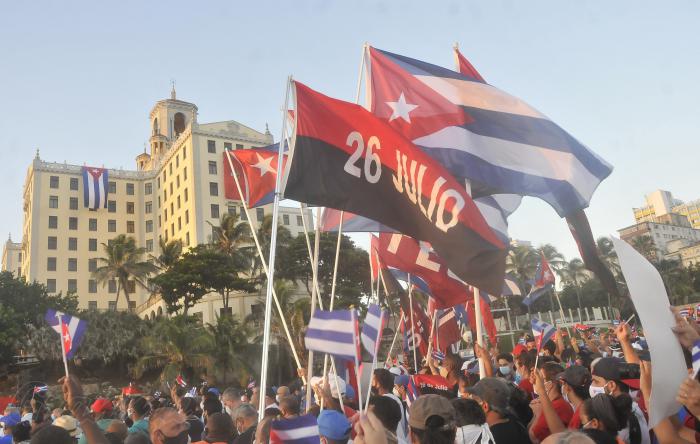
The unity of Cubans is their greatest strength. Photo: Ismael Batista Ramírez
To suppose that we revolutionaries are satisfied with the situation of the country, that we have resigned ourselves and lost our dreams, is a blunder. We are not addicted to shortages, we do not applaud the shortages, we do not ignore the empty shelves or the crowded lines of which we are also part. We long for the bonanza, the good food, the well-stocked market, the full pantry; but we do not shoot at the target with our problems nor do we stay on the random surface of the crisis.
It is up to us revolutionaries to go deeper, to discover the root of the evils, to understand that it is necessary to act against those that are truly ours (the evils) in order to put a stop to them, without necessary self-criticism rising up, like a dense smokescreen, to play the game of those who have become skilled in placing all the evils in the bag of their own inefficiency.
We revolutionaries must have a greater quota of analysis, which will allow us to put the faults in the right place, without forgetting that the tactic of our enemies will always be to knock down our bush and then hold us responsible for not having the fruits. In the human instinct to find the guilty, it is not always easy to discover the real ones.
It is up to us revolutionaries to proclaim that there will be a better future, with the enormous difficulty of doing so from a stormy present. This includes the imperial harassment of our Island; and in that difficult mission, we cannot allow the waters of discouragement to sink our ship, so that others may appropriate our destiny.
We revolutionaries must resemble much more those who sacrificed themselves for the Revolution than those who gave up in the effort. There are many people in our history who overcame more complex moments than those of today without losing hope and optimism.
No one forces us, revolutionaries, to be so, and if we have assumed it, we must understand that it is not a cyclical conviction or a ship that only sails with the wind in our favor. If we are, it must always be with the same face and ready to face more than one storm.
New Worlds
New Worlds
Author: Victor Fowler | internet@granma.cuTranslated and edited by Walter Lippmann for CubaNews.
A few days ago, on Tuesday 27th and for a couple of hours, more than a hundred people (most of them young) exchanged ideas about the events of July 11th in the country. In a panel -organized by the La Manigua collective and transmitted in its voice chat under the leadership of psychologist and activist Karima Oliva Bello- we listened to the remarks of Verónica Medina (actress and vice-coordinator of La Madriguera), Iramís Rosique (member of the Editorial Board of La Tizza and specialist of the Network in Defense of Humanity) and José Ernesto Nováez (journalist and writer, coordinator of the Cuban Chapter of the Network in Defense of Humanity). I don’t know if they have participated in a voice chat on Telegram, a messaging application that (like the popular WhatsApp or the Cuban Todus) which allows the gathering of communities in a virtual “living room” in which they “converse” in real-time, thanks to the exchange of audio messages.
After the initial comments by the panelists, the exchange was open to the participation of more than a hundred listeners who gathered for the occasion. Then a range of ideas flowed that covered, among many other issues, aspects as diverse as the pointing out of errors in the political and/or cultural work within disadvantaged populations; assessments of the relevance or error of having eliminated spaces for collective development such as the scholarship system or the pioneer camps; the substitution of political work (discursive, explanatory, dialogic, pedagogical) for superficial administrative vision (which stops at the management of figures, flows and operations); the need to undertake a profound renovation of structures of popular power such as the CDRs, the FMC and the Poder Popular itself; the obligation for the state and political apparatuses to continuously revive their interactions with the citizens. This is needed so that, in the midst of a relentless economic, political, ideological and cultural war against Cuban socialism, any sign of estrangement, distance or alienation between the population and these directive bodies is prevented.
In addition, there is the need to reinvent the discourses and ways of communicating; the request to eliminate any demand for an active revolutionary policy that continuously rectifies problems of vulnerability, poverty, marginality and their cultural, behavioral, social and educational consequences, social integration and personal fulfillment; the need to increase the participation and, in general, the leading role of young people in society, whether in concrete actions or in the reflection and dissemination of new ideas; the demands on the mass media regarding the importance of showing a more active role, as well as greater immediacy and depth in the analysis and dissemination of the country’s problems, the continuous presence of such problems/demands in the various party instances, the efforts bu State agencies to solve or mitigate them and, most importantly, the placement in the foreground of the communities’ responses; the need to change models of action and/or communication to make the fight against corruption, state bureaucracy, “campaigning” and the weaknesses of the media itself more transparent.
A day earlier, on July 25, this same voice chat had connected us live with the arrival at the Capitol in Washington of the members of Puentes de Amor, a project of solidarity with Cuba and the fight against the blockade, coordinated by Carlos Lazo in the United States. Weeks before, in another transmission, also made from the space of social networks, the collectives of Bufa Subversiva, Brújula Sur, Cimarronas, Horizontes Blog and La Tizza met to create the “collaborative broadcasting channel” Malas compañías. There they developed another very interesting discussion, which they titled Comunidad lgtbiq+ en Cuba. Where are we and where are we going?
These are names of new spaces for the presentation and discussion of ideas, as well as actors to postulate them. In communicational terms, the transformation leads to the obligation to assimilate and produce for a world in which greater speed, diversity and integration between text, audio, still images and video messages are imposed. In addition to the above, a world where exchanges become more challenging, captivating and interactive the greater the dialogicity.
On the one hand, I am interested in listening, and I confess to having enjoyed these exchanges of opinion in territories that require me to abandon my clumsiness in the handling of digital communication technologies, and to quickly incorporate myself into the many options offered by the universe of social networks, blogs, websites, podcasts, voice chats and other alternatives for establishing contact. I believe that there is an enormous potential that political and mass organizations, state entities, neighborhood structures and the most diverse projects of social transformation need to assume, integrate into their work and daily practices, and make the critical analysis of problems, communicative transparency, participation and social dialogue in the country increasingly diverse, extensive, deep and significant in its transformative character.
JCOVID-19 in Cuba, July 2021
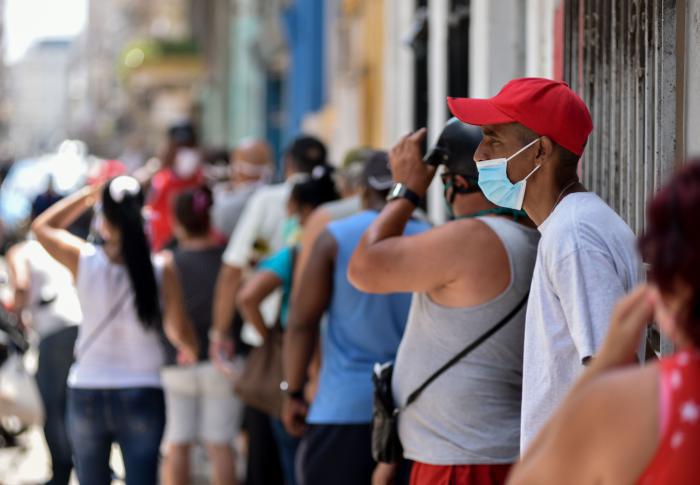
July, the most critical month for COVID-19 in Cuba
In the 31 days of the last month, the nation counted 200,398 positive cases of COVID-19, which represents 149,776 cases more than in June, which had been the worst period until then.
Translated and edited by Walter Lippmann for CubaNews.
Risk perception in the population is fundamental to contain the dangerous wave of COVID-19 that the country is facing. Photo: Ariel Cecilio Lemus
The spread of more contagious and virulent genetic variants of SARS-COV-2, together with other factors related to the non-compliance with sanitary protocols and the loss of risk perception, caused in the month of July an epidemiological scenario unprecedented in the entire stage of the COVID-19 pandemic in Cuba.
In the 31 days of the finalized month, the nation counted 200,398 positive cases of COVID-19, which represents 149,776 cases more than in June, which had been the worst period until then.
On average, 6,464 positive patients were registered per day, with a peak of 9,747 confirmed cases on July 31 and figures exceeding 8,000 cases for several days, which strained the health system in some parts of the country, with the consequent shortage of medical supplies.
In July, 1,553 people died of the disease (1,216 more than in the previous month), also the highest number reported, including the unfortunate deaths of pregnant women, postpartum women and a 12-year-old girl.
At the end of July 31, the island had a high incidence rate of 1,056.3 cases per 100,000 inhabitants. The province with the highest incidence rate was Matanzas (2,861.4), a territory that went through the worst health crisis of the period, with over 3,000 cases, but which, with the efforts that have been made, has already begun to control the situation.
It is followed by Ciego de Avila (2 500.1), Cienfuegos (2 423.4) and Guantanamo (1 625.7). The rest of the provinces, although they have an index below 1,000, report high numbers of transmission, with the exception of the special municipality Isla de la Juventud, which maintains control of the disease.
Induced “spontaneity” (+Video)
Induced “spontaneity” (+Video)
If the media attack under which Cuba is living these days is unprecedented in its scope, due to the technological potential of the adversaries and their growing concerted actions from various geographical points, it is not strange either, because the country has always been in the trenches of a psychological warfare.
Translated and edited by Walter Lippmann for CubaNews.
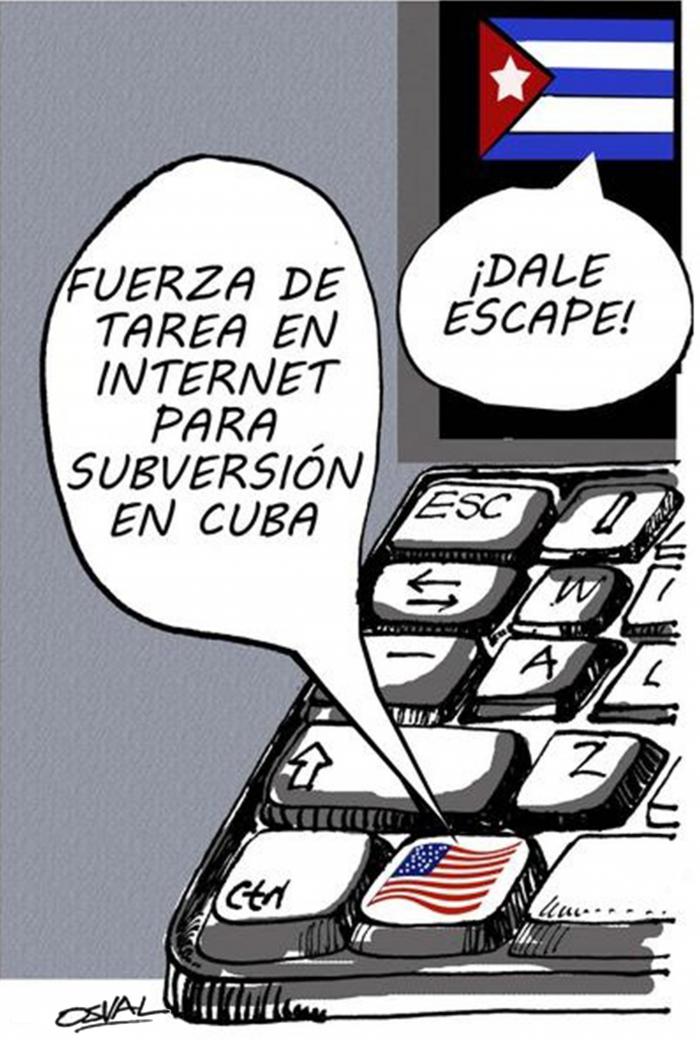
Photo: Osval
Leaflets in which the Commander in Chief Fidel Castro, with suitcases and gold in his hands, escaped from Cuba in a sinking ship, were prepared and printed in 1962 by specialists in psychological warfare of the United States Army. Although they were not used in the end, because other experts considered them counterproductive at the time, they were part of the arsenal of propaganda resources planned to support the military invasion that the government of the North American nation included in the response options during the so-called Missile Crisis.
A few hours after the recent riots, which were undoubtedly orchestrated from abroad, a Twitter “user” posted that Raul Castro had fled to Venezuela, and the note went “viral”. It did not matter that the photo of the tweet was taken in 2015, when the then-Cuban President arrived in San José, Costa Rica, to attend a Summit of the Community of Latin American and Caribbean States.
Its purpose was to contribute to fix the opinion matrix around a chaos originated by a “legitimate national uprising” against the Cuban government, due to the mismanagement of the pandemic and the lack of medicines, food and electricity.
If the media attack under which Cuba is living these days is unprecedented in its scope, due to the technological potential of the adversaries and their growing concerted actions from various geographical points, it is not strange either, because the country has always been in the trenches of a psychological war.
The example of the drawings that had Fidel as a target of disinformation appears in the book De la octavilla a la sicotecnología, by Emiliano Lima Mesa and Mercedes Cardoso, scholars of the psychological warfare procedures used by the United States in the preparation and development of armed conflicts.
Both researchers say that Cuba has suffered the largest and most prolonged psychological warfare ever carried out by the United States against any country. “It has involved both psychological and propaganda actions and has manifested itself in the economic blockade, support for mercenary gangs, biological warfare, military aggressions, sabotage and assassination attempts on the main leaders, to cite just a few examples,” they write.
In making specifics on the propagandistic level, they state that it has manifested itself in newspapers, books, posters, flyers, rumors and radio and television broadcasts to spread lies and slander against the Revolution.
The referenced book is indispensable to learn the details of the persistent and sinister behavior of the U.S. intelligence apparatus, whose purpose is subverting the social order in our country. Perhaps, in a new edition, in the chapter Against Cuba, the media misdeeds of the social networks in the Internet era should be included. The work was published in 2003 and, since then, the adversarial struggle against the Cuban Revolution has had the Internet as one of its main scenarios.
It is fair to recall that, in this same newspaper, colleague Raúl Antonio Capote wrote that as of 2007, the CIA considered it a matter of prime importance to guarantee access to the Internet in Cuba. The nefarious agency’s idea was to use the illegal networks created on the island at that time, for which they evaluated the possibility of connecting them to digital television, which would be the possible means of access to the network of networks.
The promoters of the program, Capote pointed out, ordered to put in Cuban territory ten BGAN (Broadband Global Area Network) equipments. “One was given to a CIA agent in Havana to send daily, in a secure way, information on the capacity of MININT and Mincom to detect illegal satellite TV connection antennas. They also required information on movements of FAR troops in certain regions of the country, and characterization of leaders and cadres of the Revolution”.
In the route that led to the riots of last July 11, there are many other traces of U.S. intelligence agencies and entities created by them to act against Cuba. Thus, among the most recent are the events of San Isidro and the concentration of young people in front of the Ministry of Culture headquarters in Havana.
Both cases were portrayed as an internal issue, due, among other things, to new currents of thought and dissatisfaction of young intellectuals and artists unable to give free rein to their creative spirit. But when analyzing the causes, if the nonconformity to certain regulations and the superficiality with which some officials act is real, it is impossible to ignore that in the period 2008-2012 the United States Agency for International Development (USAID) sponsored the non-governmental organization (NGO) Creative Associates, which set out to recruit young people belonging to what is identified as Cuban counterculture.
In January 2012, in one of the reports justifying the expenditures, the NGO cited several achievements of its work, including a network of more than 30 independent leaders in all Cuban provinces and the solid establishment of youth and countercultural groups.
Faced with the failure of the immediate objectives they intended with the recent unrest, USAID has responded with a call for more subversion projects in Cuba. The new sum amounts to $2 million dollars, and is being offered for democracy promotion activities. After all, for identical purposes, the agency, along with the National Endowment for Democracy (NED), was a channeling mechanism for much of the $250 million that in the last two decades the U.S. government devoted to undermining socialism in Cuba.
By the way, Samantha Power, the new director of the US Agency for International Development (USAID), is a character to keep an eye on. A former U.S. ambassador in the Obama administration and an expert in diplomacy and climate change issues, she has also stood out for promoting her country’s active intervention in other nations for supposedly humanitarian reasons.
That position is confirmed in an article published by The New York Times, on April 15 of this year, when Lara Jakes exposed details of Samantha Power’s confirmation hearing in the Senate. On that occasion, writes the author, Rand Paul, a Republican senator from Kentucky, asked the official, “Are you willing to admit that the interventions in Libya and Syria that you advocated were a mistake?”
“Power did not,” the journalist said, transcribing her words: “When these situations arise, it’s almost a question of lesser evils; the options are very difficult”.
Could the requests for humanitarian intervention for Cuba made by the same promoters of the vandalism riots be the result of coincidence; the same ones who, in desperation, want to make people believe that chaos reigns in the country?
The Seven Plagues of Cuba

Letter to a Cousin or, the Seven Plagues of Cuba
 By René González Sehwerert. Hero of the Republic of Cuba. One of the five young revolutionaries who infiltrated terrorist groups that from the cradle of the anti-Cuban mafia, Miami, organize with impunity their criminal attacks against Cuban territory. He was sentenced to 15 years in prison. His cause enjoyed enormous international solidarity. He returned to Cuba in 2013.
Translated and edited by Walter Lippmann for CubaNews.
Cuban flag. Photo: Abel Padrón Padilla/ Cubadebate.
Dear cousin:
I am not going to deny to you that there is a clamor from many people -among whom I find myself- demanding solutions. Much less will I justify that someone lives like Carmelina while so many people sacrifice. The problem is that this is the norm all over the planet and nobody seems to care. It is enough for a people to make a revolution to overcome it and they are immediately hit by three plagues.
1- They beat it up, strangle it and attack it so that it cannot solve anything it set out to do.
2- They blame the government that has tried to do so for the shortcomings imposed by the strangler who assaults him.
3- As if that were not enough, they then attack the collective intelligence of the rest of the planet, magnifying everything bad that happens there, in the victimized space, as if the rest of the planet did not do worse every day, before the complicit silence of all.
I would like to read what Fernando Perez wrote. Maybe I have points of agreement with him, who is a person we all here -including the authorities- respect. It is obvious that we have to change many things. But has it not been a perversity to try to suffocate us for 62 years so that we change according to the convenience of those who imposed worse conditions on our parents, and today are imposing worse conditions today around the world? Is it not time to join the world clamor against this blockade that has been suffocating us for too long now, and whose only purpose is to make us surrender out of hunger and despair?
In the end, the dilemma boils down to this: Those who surrender and those who do not. I cannot judge the surrenderers.
Obviously, we have to defend ourselves from those who, in their surrender, also become our victimizers. Many victims have become victimizers throughout history. For example, the crimes of Zionism against Palestine. I am not aware whether or not there were police excesses during the riots that took place in the past days. It is likely that there were.
A peaceful, secure country, fighting calmly against all demons, was suddenly overwhelmed by a violence that is alien to it, imposed by interests that are also alien to it. You tell me that those young people, dressed in uniforms and shields, bats, helmets, etc, whom you describe as teenagers, waiting with a baton to stop the march -or the brown shirts?- break your soul.
I can understand you, but I can’t help wondering: What would they have made you believe if they were giants, with the same clothing and a baton, ready to break the souls of the demonstrators, as happens every day all over the planet? What would CNN in Spanish, or ABC, or El Comercio have told you? Ah, because the three plagues that you believe in are the three plagues that you believe in? Because, in addition to the three plagues I mentioned before, there is a fourth one: this assaulted, assaulted people, under a stranglehold that has tightened on a pandemic that has already tightened on the entire planet, is not even allowed to make a mistake.
Let’s take a look at the cost to the Cuban people of the upsurge of neo-fascism in the last four or five years:
-The brutal assault on the income of Cuba’s medical programs in Brazil, Ecuador and Bolivia, denying us several billions in income and denying the elementary right to life to millions of Latin Americans, without anyone seeming to notice.
– The application of Title III of the Helms-Burton Act, substantially reducing the country’s possibilities of doing business with the rest of the world.
-The bestial aggression against the Cuban family, by breaking their right to send remittances, before the silence of those who claim to clamor for the human rights of Cubans.
– More than 200 measures against the economy and finances of the country, announced publicly before the indifference of the defenders of human rights in Cuba, by the president of the United States of America.
All this was before the arrival of a fifth plague: COVID-19, and its devastating impact on the main economic sector of the island: tourism. But a sixth plague remains: to take advantage of the COVID to tighten the siege, to hinder or prevent the entry of medical supplies.
Do you dare to calculate the impact on the Cuban people, both in terms of billions and human suffering? But when it seems that we already have enough, that we could not bear another blow, the peak of the pandemic infestation occurs and from among those who have been applauding each one of those strangulation measures, displaying unheard-of cynicism and hypocrisy, a perfidious blow to the heart of none other than the people who have faced the COVID in an exemplary manner under aggression: The perverse label of SOSCuba.
And over that people now hangs the seventh plague: a “humanitarian corridor”, at the hand of the most devastating and aggressive war machine in history. Don’t Yugoslavia, Afghanistan, Iraq, Syria ring a bell? It is against this backdrop, meticulously and perversely built for years around the Cuban people, that suddenly the trumpets sound, calling for the slitting of throats, now through the social networks and the increasingly perverted means of incommunication. Cousin coñoñooo! Only that the wall of Nicolás Guillén is not that of Jericho.
The revolutionaries have indeed taken to the streets, but not to “confront the masses”. They are the masses. After the attempted coup -which is what it was, an attempt- they have come out with flags, with hymns and with ideas.
With those ideas we will have to look for solutions, self-criticize where necessary, listen to each other, attend better to the clamors of the people, broaden the spaces for participation, be more inclusive, break the inertia, attract and not exclude, build a more effective and less formal democracy. Because the society we want to build is not conceived to coexist with such levels of violence. That, cousin, we leave it to those who attack us, strangle us, attack us and then, when we have to defend ourselves, they criticize us. Come on, cousin.
A hug. I love you.
No torture in Cuba, no disappearances
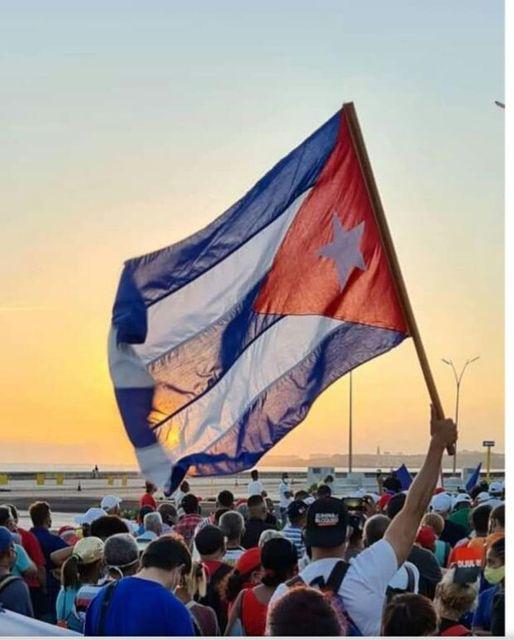
No torture in Cuba, no forced disappearances
Yudy Castro Morales | internet@granma.cu
After the disturbances that took place last July 11 and 12, as part of a political and communicational operation encouraged and paid for by the U.S. government to discredit Cuba, lists of allegedly missing persons began to circulate on the Internet.
Are there, in fact, disappeared persons in the country? Are such lists real? What is the procedure for the detention of a suspect in Cuba? What legal limits govern the action of authorities?
In answering these questions, during an appearance July 20 on the Cuban television program Hacemos Cuba, Colonel Victor Alvarez Valle, second in command of the specialized corps of the Ministry of the Interior’s Criminal Investigation Directorate, stated categorically that there are no disappeared persons in Cuba, no one involved in processes underway related to the recent disorders, or in any other.
“Within the Revolution, we have as principles our people’s right to life, to freedom, the right to protection and security, which also characterize the action of our authorities,” the colonel said, noting, as well, that Cuba is a signatory of the International Convention for the Protection of All Persons from Enforced Disappearance.
This position, he said, is also recognized in the Constitution approved by the majority of Cubans and, although in our legal system it is not specifically established as a crime, there are a number of statutes that cover and punish those who commit such acts, in the event that the occurrence of an enforced disappearance is proven.
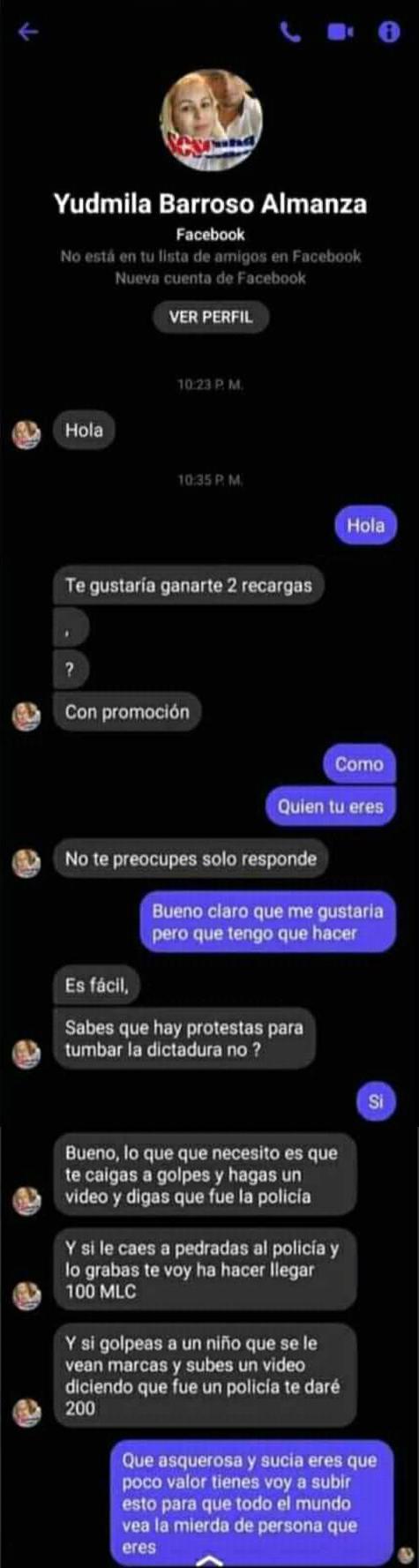
This is an example of the modus operandi of those who promote chaos on social networks and attempt to fabricate a reality in Cuba that does not exist.
Moreover, he added, “There is no secrecy in the processing of persons taken into custody at a Ministry facility, for any reason, for committing any crime.”
Regarding the procedure followed in detaining a citizen, José Luis Reyes Blanco, head of the Supervision Department of the Attorney General’s Directorate of Criminal Proceedings, explained, “The records of this process, the detention record that is signed by the person involved, information on the detainee and the presence of the Attorney General’s Office throughout the criminal process, from the beginning, contribute to controlling the investigation and allow us to ensure that in our country, since 1959, there have been no disappeared persons.”
Obviously, if events of this nature were taking place, the number of complaints submitted to the Attorney General’s Office, through its citizen attention channels, would be significant.
Reyes, on the contrary, reported that in 2020, at the height of the pandemic, the office responded to more than 129,000 inquiries across the country; during the first semester of this year, the figure exceeded 49,000 and, for the period July 12-20, following the disturbances, 63 individuals have contacted the Attorney General’s Office, mostly through face-to-face channels.
“None of these complaints or claims were related to disappearances,” he reported, with most concerning arrests, that is, seeking specific information, which the interested parties received at the sites where the inquiry was made, Reyes stated.
At this time, he noted, the Attorney General’s Office is investigating five complaints related to the detention process, but there are no pending cases involving the location of a person. “The information is available and, more importantly, the family knows it,” he emphasized.
In this context, Colonel Alvarez Valle pointed out that when a person is taken to a police station, the first step is to register him or her in a log book, manually, and the arrest record is completed, so the person knows why he or she was taken into custody.
Next, he explained, the process continues and the first 24 hours may include the suspect’s first statement, and measures that can be imposed are determined, depending on the crime involved.
“In the first 24 hours, the family generally knows where the person is, since the Ministry additionally has a system of attention and information to the population, which is automated and links all stations, where all detentions are recorded.
“In the recent cases, all families know where their detainees are; they have gone to these sites, they have delivered belongings with personal hygiene products and individual medications; in other words, the information on the whereabouts of the person is established and auditable by supervisory bodies within the Attorney General’s Office,” he detailed.
He then referred to the International Convention for the Protection of All Persons from Enforced Disappearance, to which Cuba is a party and, as such, was reviewed for compliance in 2017.
As applied in the country, Article 17, specifically, establishes, among other elements, that no one shall be detained secretly, and that, without prejudice to other international obligations of the state party regarding incarceration, each state party, in its legislation shall:
-Establish the conditions under which orders of arrest may be issued.
-Determine the authorities empowered to order incarceration.
-Ensure that any person incarcerated shall be held only in officially recognized and supervised locations established for this purpose.
-Guarantee that any person incarcerated shall be authorized to communicate with and be visited by his or her family, a lawyer or any other person of his or her choice, subject only to the conditions established by law, and in the case of a foreigner, communication with consular authorities is guaranteed, in accordance with applicable international law.
-Guarantee access by any competent authority or institution empowered by law to arrest citizens, if necessary with the prior authorization of a judicial body.
Reyes clarified that all persons detained during or following the July 11 events have access to a lawyer; although some have chosen not to avail themselves of legal services.
And to establish the absolute falsity of the aforementioned lists, at another moment during the television program, communication was established with one of the allegedly missing persons, who mentioned other colleagues at his workplace, as well, all in perfect condition and surprised to see their names circulating on the Internet.
The Ministry of the Interior criminal investigation expert reiterated that these lists have no credibility given the limited information they contain, and since it has been proven that many of those listed were never arrested or even interviewed by authorities.
Reyes added that some detained suspects have been released, after determining that they had no criminal participation in the events. Others are under precautionary house arrest, pending further investigation, and another group of defendants, in the pre-trial preparatory phase, are provisionally imprisoned.
TORTURE WILL NEVER BE A PRACTICE USED BY CUBAN AUTHORITIES
Another element that has been maliciously positioned on social networks involves allegations that individuals involved in the destabilizing events have been subjected to torture.
Regarding this issue, Colonel Alvarez Valle stated, “Just like forced disappearances, torture is not a practice in Cuba. The history of the Revolution demonstrates this; it is not and will not be a practice of the Ministry of the Interior’s combatants to use force against those being prosecuted,” adding that Cuba is a party to the Convention against Torture and Other Cruel, Inhuman and Degrading Treatment or Punishment.
José Luis Reyes explained that, following the disturbances, the presence of attorneys in police stations was increased, since being aware of the detainees’ opinions is of interest, and the station provides a propitious opportunity to dialogue and note any concerns or complaints.
Participants in the Hacemos Cuba program also referred to complaints by a young man regarding alleged acts of violence committed against him, after being arrested during the disturbances, which have drawn attention on social networks.
Colonel Alvarez reported that, as a result of charges previously filed against him, this person was under house arrest, which involves restrictions he was obliged to comply with. July 11, he was in the street, at some distance from his home, in the midst of the disturbances, in violation of the provisions of his house arrest, of which he was fully informed.
Reyes added that the case of this young man is among the claims under consideration by the Attorney General’s staff, and that his father has visited the office. All the information he offered was recorded and the pertinent verifications and investigations will be carried out with total transparency.
Should any irregularity become evident, the Colonel stated, the circumstances in which the events occurred will be clarified and the corresponding measures adopted, on the disciplinary order, if the officer involved committed a mistake, or in criminal court if his conduct could indicate a violation of the law.
The facts and arguments presented made sufficiently clear that in Cuba there are no disappeared or tortured persons, and, if any irregularity occurs or has occurred in the work of the Ministry of the Interior or the Attorney General’s Office, it will be investigated, the findings will be made public and, if the law was violated, measures will be taken to ensure the restitution of legality.
It is time to save the Revolution
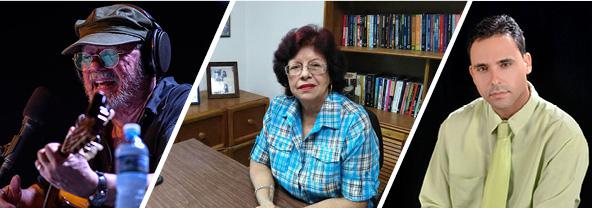
It is time to save the Revolution, not to turn our backs
Cuban artists and intellectuals express their rejection of aggression against Cuba promoted, organized and financed by the U.S. government
BAJANTE | internet@granma.cu
July 29, 2021
Cuban artists and intellectuals continue to express their support for the Revolution and reaffirm their rejection of continuous aggression against Cuba promoted, organized and financed by the United States government.
In his blog Segunda cita, the singer-songwriter Silvio Rodríguez, noted: “Regarding police excesses… I received some images of the demonstration in front of the Capitol moving toward the Malecón. It is a panoramic shot taken from a balcony of the Hotel Inglaterra. You can see police marching along the flanks of the demonstration, but there is no physical aggression on either side. I have the impression that much of what we have seen has been edited very precisely, to show what they wanted to highlight.”
Regarding the unconventional war that the nation is experiencing today, Camagüeyan poet Alejandro González Bermúdez, told Granma: “Social networks have become, in the case of Cuba, a manipulated and meticulously programmed platform to stimulate or discourage, as desired. The origin of this manipulation is obvious. At the same time, the Cuban government reiterates its commitment to dialogue, peace and consensus…”
Mercy Ruiz, winner of the National Award for Editing, expressed her “indignation with this new war for which Cubans must be prepared and defend the Revolution with all weapons, non-conventional and conventional,” and emphasized, “At this moment we must have firm convictions. The people must be systematically informed. This allows us to have weapons we need to fight. Young people need more historical education, to be aware of the background of relations between Cuba and the United States, so they understand that Homeland or Death is not a slogan, but a conscious, firm way of living.”
“The period we are living today in Cuba and beyond, is not one of slogans, but of convictions,” insisted Ulises Mora, founder of the Timbalaye rumba project. “These are moments in which we must together contribute to create solutions based on our experience and protect our conquests, in order to live together in an inclusive environment of broad social participation. We know and are fully aware of the consequences of the inhuman blockade imposed by the United States and its constant persecution. Despite this, we were able to develop vaccines against covid-19, making tangible the most evident form of the human essence. This is one more reason to reaffirm our conviction to defend Cuba from any corner of the world. No one has said that our revolutionary work is perfect, we all know that there is much to be done and to rectify, but only in an atmosphere of peace, fraternity and love among all Cubans will we advance, with and without a blockade. Cuba is the result of our struggle for independence, our hope for a better world, and the dignity of a people that will not give in to imperialist pressure, not even the most ruthless and inhuman of its aggressions.”
You must be logged in to post a comment.