White House Talks About Obama’s Cuba Trip Again
- English
- Español
CUBA-USA: THE WHITE HOUSE TALKS ABOUT OBAMA’S CUBA TRIP AGAIN
By: Dr. Néstor García Iturbe.
January 4, 2016
A CubaNews translation.
Edited by Walter Lippmann.
On December 26, from Honolulu, where the Nobel Peace Prize-awarded President was spending his Christmas holidays, Deputy National Security Advisor Ben Rhodes told reporters that Obama’s trip to Cuba would be decided in a couple of months.
He further said that it would be at a time when the relationship process was irreversible; when they considered Cuba had improved in the treatment of human rights and when “the communist country” allowed private companies to do business.
He added that Cuba had to give its citizens greater access to information and the Internet.
The key issue determining whether or not Obama would travel to Cuba –according to Rhodes– is whether his trip would help improve these points.
We recall that one of Obama’s statements –when the speculation about the trip began– was that he would meet in Cuba with those who have expressed their opposition to the Revolution and are fighting for freedom of expression.
The US media considers that this would be a historic journey that could serve to pressure Cuba to make reforms (Reuters, article by Jeff Mason, Edited by W Simon.) Remember that: pressure Cuba.
Surely the announcement of the trip was made by the Deputy National Security Deputy because this is not just any ordinary visit: this is a visit to the only country officially declared ENEMY of the United States after Obama signed a presidential proclamation in which Cuba was included under the Trading with the Enemy Act.
It is clear that Cuba –with its position in the international arena, particularly in Latin America– is endangering the national security of the United States, which is governed by the Monroe Doctrine.
Mr. Ben Rhodes expressed some ideas –I don’t know if they are his own– that indicate total ignorance of the situation in Cuba; the state of relations between the two countries and international norms for the establishment of diplomatic relations.
He argues that the visit of the Nobel Peace Prize-winning President will be made at a time in which they consider the process of re-establishment of relations is irreversible. Perhaps this advisor has not read the speeches of our President Raul Castro who has explained that this process has two stages: restoration and normalization. We are in the first stage; the second has not yet begun.
Moreover, whether the process is irreversible –or not– will be decided by the outcome of the US presidential elections, because some of the presidential candidates have argued that if they win they will break diplomatic relations with Cuba. Cuba’s interests must also be taken into consideration when discussing this matter.
What could Mr. Rhodes advise Obama to help the process be irreversible, if that is really what he wants?
Primarily, he should advise Obama to consider the points Cuba raised to begin the process of normalization. The chief executive has powers that he has not used to reduce the blockade to a minimum, should Congress refuse to lift it.
The president could instruct the agencies under his command to suspend all actions representing interference in the internal affairs of Cuba. He could prevent giving more funds than those authorized for the State Department to sponsor the opposition in Cuba. He could order the Office of Broadcasting for Cuba to shut down Radio and TV Marti. He could order USAID to stop the recruitment of journalists, as contractors, to travel to Cuba and contact opponents of the Revolution.
If, in compliance with US laws, it is required to fine a bank or a financial company for doing business with Cuba, he could instruct that the fine not be hundreds of millions of dollars. The law could be enforced with a much smaller fine, if Obama so ordered it.
He could also submit for Congressional approval, the annulment of the Treaty of Relations between the Republic of Cuba and the United States of America, signed in Washington on 29 May 1934, which confirmed the presence of the United States Naval Base in Guantanamo, as first agreed in the Treaty of 1903.
In a recent article, I suggested other conditions to be met by the Nobel Peace Prize-winning President to be welcomed in Cuba –if not as a friend at least as a neighbor. I will not repeat them here.
Apart from all the above, it is not enough that Obama deems his visit to Cuba beneficial for the United States, it is also essential that Cuba deems inviting him beneficial.
CUBA.- EU.- LA CASA BLANCA HABLA NUEVAMENTE DEL VIAJE DE OBAMA A CUBA.
Por: Dr. Néstor García Iturbe.
4 de enero del 2016
El día 26 de diciembre, desde Honolulu, donde el Premio Nobel de la Paz estaba pasando sus vacaciones navideñas, el Asesor Asistente para la Seguridad Nacional, Ben Rhodes, informó a la prensa que el viaje de Obama a Cuba sería decidido en un par de meses.
Planteó además, que sería en un momento en que el proceso de relaciones fuera irreversible, cuando se considere que Cuba ha mejorado en el tratamiento de los derechos humanos, que lo que el calificó como “el país comunista” permita a empresas privadas hacer negocios.
Planteó también que Cuba tenía que dar a sus ciudadanos más acceso a información y a INTERNET.
El punto crucial para determinar si Obama viaja o no a Cuba, según Rhodes, será, si su viaje ayudará a que mejoren estos asuntos.
Recordamos que uno de los planteamientos de Obama cuando se comenzó a especular sobre el viaje , fue que se reuniría en Cuba con los que han planteado su oposición a la Revolución y luchan por la libertad de expresión.
La prensa estadounidenses considera que será un viaje histórico y que servirá para presionar en función de que Cuba realice reformas (Reuters,artículo de Jeff Mason, Editado por W Simon.) Recuerden eso, presionar a Cuba.
Seguramente el anuncio del viaje lo realiza el Asesor Asistente para la Seguridad Nacional, porque este no es un viaje cualquiera, es un viaje al único país declarado ENEMIGO de Estados Unidos oficialmente, después que Obama firmó la proclama presidencial donde nos incluyo en la Ley de Comercio con el Enemigo.
Es evidente que Cuba, con su postura en el campo internacional y en particular en América Latina, está poniendo en peligro la Seguridad Nacional de Estados Unidos, que se rige por la Doctrina Monroe.
El señor Ben Rohdes expresó algunas ideas que desconozco si son de su cosecha, pero que indican un total desconocimiento de la situación en Cuba, el estado de las relaciones entre los dos países y de las Normas Internacionales para el establecimiento de Relaciones Diplomáticas.
Plantea que el viaje del Premio Nobel de la Paz se efectuará en un momento, en que se considere el proceso de relaciones sea irreversible. Quizás este señor no ha leído los discursos de nuestro Presidente Raul Castro donde se explica que ese proceso tiene dos etapas, el restablecimiento y la normalización. Estamos en la primera, todavía no ha comenzado la segunda.
Por otra parte, si el `proceso es irreversible o no, se decidirá con el resultado de las elecciones presidenciales estadounidenses, pues algunos de los aspirantes a la presidencia han planteado que de ganar estas, romperán relaciones diplomáticas con Cuba. También el interés de Cuba debe ser tomado en consideración cuando se habla de este asunto.
¿Qué pudiera aconsejar a Obama el señor Rohdes para dificultar que el proceso sea reversible, si esa es realmente su intención.?
Principalmente debería aconsejar a Obama que cumpla con lo planteado por Cuba para el inicio del proceso de normalización. El ejecutivo tiene potestades que no ha utilizado para llevar el bloqueo a su mínima expresión, en caso de que el Congreso lo mantenga.
El presidente puede orientar a las agencias que reciben órdenes suyas, suspender todo tipo de acción que implique una injerencia en los asuntos internos de Cuba. Que no se entreguen más fondos de los que tiene autorizado el Departamento de Estado para sufragar la oposición en Cuba. Ordenar a la Oficina de Transmisiones para Cuba, el cierre de Radio y Televisión Martí. Ordenar a la USAID que no lleve adelante el reclutamiento de periodistas, como contratistas, para viajar a Cuba y contactar personas desafectas con la Revolución.
Si de acuerdo con las layes establecidas se requiere multar algún banco u empresa financiera por realizar transacciones con Cuba, que la multa no sea de cientos de millones de dólares. La ley se puede cumplir, si Obama lo ordena, con una multa muchísimo menor.
Elevar al Congreso, para su aprobación, la anulación del Tratado de Relaciones entre la República de Cuba y los Estados Unidos de América, firmado en Washington el 29 de mayo de 1934, el cual ratificó la presencia de Estados Unidos en la Base Naval de Guantánamo, recogida en el Tratado de 1903.
En artículo reciente, planteamos otras condiciones que debían cumplirse para que el Premio Nobel de la Paz fuera recibido en Cuba, si no como un amigo, al menos como un vecino. No voy a repetir estas.
Además de todo eso, no es suficiente que Obama considere beneficioso para Estados Unidos el viajar a Cuba, es también imprescindible que Cuba considere beneficioso invitarlo.
U.S.A: War Against the Poor, Not Against Poverty
- English
- Español
U.S.A: WAR AGAINST THE POOR, NOT AGAINST POVERTY
By: Dr. Néstor García Iturbe
December 27, 2015
A CubaNews translation. Edited by Walter Lippmann.
President Obama, undeserved Nobel Peace Prize Winner, can say that the U.S. has declared war on the poor, but not on poverty.
The war is conducted by the repressive police forces of different States, killing in cold blood anyone who seems suspicious of wanting to violate the established order.
The victims of this war are mainly black people, followed by Latinos and a few Whites in the group of least fortunate, those who have no jobs, no money and often no shelter.
This war is motivated by the social differences existing in the United States: the ruling class and its servants against the dispossessed who are less of a problem dead than living. To the social differences one must add race differences which also have an important role in this war.
According to website http://killedbypolice.net/, this year –until December 25– police in the different States killed 1182 people, including 95 in December alone. In this article we offer the data of those killed in December 2015.
The organization also provides figures of those killed during the years 2013 and 2014. As an example we show figures of those killed in December, because the total would be of about 4,000 people.
The list we offer first shows the consecutive number of the person killed; the date when it was murdered; the State where it died; the sex (F for female, M for male); the race (B for Black, W for White, L for Latin); name and age of the person. When the data is not complete it is because –according to authorities– the deceased has not yet been identified.
In this war more casualties are reported monthly than those the Pentagon reports of troops stationed in different countries, military bases and fleets overseas.
A black, a Latino, or a Poor White, is less likely to die in Afghanistan than in Florida or California; all that thanks to the Nobel Peace Prize Winner and the and American Way of Life, which for them would be the American Way of Dying.
EU.- GUERRA CONTRA LOS POBRES, NO CONTRA LA POBREZA.
Por: Dr. Néstor García Iturbe
27 de diciembre 2015
El presidente Obama, inmerecido Premio Nobel de la Paz, puede decir que en Estados Unidos se le ha declarado la guerra a los pobres, pero no a la pobreza.
La guerra la llevan a cabo las fuerzas represivas policiacas de los distintos Estados, asesinando a mansalva a todo aquel que parece sospechoso de querer violar el orden establecido.
Las víctimas de esta guerra son en primer lugar las personas de la raza negra, seguidos por los latinos y también algunos de la raza blanca que se encuentran en el grupo de los desafortunados que no tiene trabajo, ni dinero y muchas veces ni un techo donde refugiarse.
Esta guerra está motivada por las diferencias sociales existentes en Estados Unidos, la clase dominante y sus servidores contra la clase de los desposeídos, que muertos representan menos problema que vivos, a las diferencias sociales deben agregarse las raciales, que también tienen un peso importante en esta guerra.
Durante el tiempo transcurrido durante este año, hasta el día 25 de diciembre, según el sitio http://killedbypolice.net/ , la policía de los distintos Estados, asesinó 1182 personas, de ellas 95 en los días transcurridos en Diciembre. En este artículo se ofrecen los datos de los asesinados en Diciembre 2015.
Esta organización también ofrece las cifras de los asesinados durante los años 2013 y 2014. Solamente ponemos como ejemplo los asesinados en Diciembre, pues si reflejáramos el total serían cerca de 4,000 personas.
El listado que le ofrecemos tiene en primer lugar el número consecutivo de la persona asesinada; la fecha en que fue asesinada; el Estado en que murió; sexo F femenino, M masculino; la raza B negro, W blanco, L latino, nombre de la persona y edad. Cuando los datos no aparecen, según las autoridades, el occiso todavía no ha podido ser identificado.
En esta guerra se reportan más bajas mensuales que las que reporta el Pentágono sobre las tropas que están acantonadas en distintos países, bases militares y flotas de ultramar.
Un negro, latino, o blanco pobre, tiene menos posibilidades de morir en Afganistán, que en La Florida o California, todo eso gracias al Premio Nobel de la Paz y el Americna Way of LIfe, que para ellos sería el American Way of Die.
SOMOS JOVENES: Wasted…to no Avail

Within Cuban society, especially among the younger generations, there are latent tendencies to apathy and lack of motivation. These are triggers for the demolition of life projects and the destruction of personal futures, both material and spiritual.
By: Javier Gómez Lastra
March 13, 2015
As usual, Juan Carlos, Jorge and Rachel wake up late in the morning –at noon or in the afternoon perhaps– because they normally stay up late between dominoes, music and drinks; celebrating who knows what, along with other neighborhood friends.
Nothing brings them out of their daily routine linked to leisure. Neither study nor the need to feel useful in a job goes through the minds of these three young people, used to laziness.
They are full of needs. Living in a small room on the verge of collapse located in the neighborhood of Luyanó, they survive in the most precarious conditions in the company of their mother: a nurse with many years of experience but devoid of motivation.
Nevertheless, the main shortcoming of these teenagers is the lack of accurate guidance in their lives.
Juan Carlos, the firstborn, has been waiting for two years for the possible “claim” from his father that “would put him on board a plane to go north”; Jorge, the one in the middle, fantasizes about a job “with little to do and a good chance to make money”; while Rachel hopes to find a Prince Charming “from abroad” that would give her the life of a queen.
However, all three agree on something: they are determined not to work for the state for a simple salary; because any business brings in more money than spending the whole month working in a factory, and in the end what you get paid is not enough. In their view to do that is to sacrifice for nothing.
And as they wait for the smiling future to come to them, life goes by in front of their eyes. They have no sense of time lost, work, education, and responsibility. They live in an existential vacuum linked to the lack of horizons and disappointment since they don´t try to do something useful.
In the struggle
The deep economic crisis of the early 90s of last century affected almost all the families in the island, and brought all kinds of material and spiritual changes among the people.
The new style of coping with everyday existence was dubbed “the struggle”. It describes the legal and illegal mechanisms designed to cope with the drastic decline in living standards. There were many urgent readjustments families had to make in order to survive and these included substantial alterations in their way of thinking and acting which were imposed by the prevailing harsh reality.
Silhouettes of young people with bubbles
Psychologist Elaine Morales Chuco, specialist with the Instituto Cubano de Investigación Cultural Juan Marinello [Cuban Institute for Cultural Research Juan Marinello], in conversation with Somos Jóvenes, explained that some of the features resulting from exposure to this situation in adolescents and young people, were unemployment, dropping out of school, criminal behavior and migration in search of bigger and better opportunities.
“The reduction or disappearance of access to formal spaces,” explained the expert, “such as jobs and state-sponsored educational and recreational centers generated the move of many young people to the socio-cultural world of the street. This, in turn, resulted in the creation of a vicious circle that only brought greater difficulties.”
“At the same time, the situation broke the link –which had existed until then– between education and working conditions; that is, the chain: instruction-occupation-income dissipated because there was a proliferation of work proposals that did not require a high educational level, but did offer attractive incomes.”
“It should be added that this combination of elements individually and collectively impacted their vision and interpretation of reality, and many individuals did not hesitate to take on new strategies in order to solve everyday economic demands which could not be postponed.”
“Thus, many Cubans learned to live for the moment, the uncertainty and with very little chance to develop solid life projects.”
“Likewise, their aspirations of material wellbeing in many cases could not be satisfied by the previously generally accepted mechanism (study-work-pay). Therefore new ways emerged –some formally promoted, and others informally, or even illegal such as the activities of the underground economy. A number of sources of income and immediate benefit were welcomed regardless whether they were associated with prostitution, pimping, begging, drug abuse or crime.”
“Other behaviors stigmatized until then –like not being involved with study and work, felonies, or other such behaviors– gradually stopped receiving all the rejection they deserved, and within some social groups they gained a certain degree of approval that legitimized them. Meanwhile the coexistence rules present in other times were challenged,” said Elaine, author of the study: “Marginalization of Adolescents and Young Persons: An Analysis in Cuba.”
I got tired of being without money
Finding alternatives to address their economic needs became a major concern. This began to occupy a prominent place in Cuban daily life since the crisis began.
Amid these conditions, many young people took the strategy of migrating to provincial capitals in the country, or abroad. Selectivity of employment increased and many did not perform the job for which they were trained in their studies but did something else that could guarantee higher pay and better conditions to the detriment of personal motivations.
Numerous production or informal services became acceptable, because they brought better revenue.
However, both economic sectors (formal and informal) have advantages and disadvantages, regardless of the will to be linked to one or the other.
Among the advantages associated with formal employment is the way in which individuals are inserted into and integrated into society, and the potential for instructional upgrading and the diversity of perspectives offered to do so. Work linked to the state entails a level of security and stability that had been traditionally associated with the guarantee of salary and social security with retirement pensions for years of service, age or health conditions.
The main disadvantages of this sector are: income limitations that do not offer adequate compensation given the demands and responsibilities; lack of material stimulation; controls to which the worker is subjected; rigid schedules and inadequate conditions for the performance of the tasks in the job.
The prerogatives attributed to informal work are especially related to income and prospects to meet shortages. This is more stimulating for the workers. These jobs also appear to provide more independence; have less control; and have fewer requirements; schedules are more flexible and there is more free time. However, they also maintain a certain social pressure because of the illegal status of some activities and the source of resources.
With a fuming head
The employment problem of young people is, in the current conditions of the country, another very complex and controversial issue. However, work continues to play a key role in structuring the country’s institutions and the lives of individuals, according to María Josefa Luis Luis, historian and researcher at the Centro de Estudios Sobre la Juventud [Center for Studies on Youth], in her analysis “Considerations on Work Socialization.“
She explains that “irregularities in the labor market, unemployment and underemployment rates, as well as instability and precarious working conditions are realities faced by workers around the world. For young people, these abnormalities affect personal development and conceptions about work. Although the traditional model (livelihood, rights, moral responsibility, sense of accomplishment) is valid for most, in practice it is very difficult or impossible to attain for a good number of them.”
“In Cuba, there are numerous contradictions related to employment that significantly damage employment relations and the role of these as an effective means of socialization and education of the new generations.”
“The economic crisis eroded the material and technological foundation of the workplace due to the lack of means of work, or the obsolescence of others. The rules of organization, protection and hygiene, individual and collective productivity, as well as work motivation, were affected.”
“This, in turn, had an impact on individual expectations and possibilities for job satisfaction, as well as contributions and income. It generated frustration and dissatisfaction and reduced job stability.”
Salsa, greenbacks, and beer
The slogan promoted years ago by a domestic soap opera is a way of thinking for some Cubans for whom life is perennial leisure. They don’t realize the damage this ideology of leisure can cause.
It also indicates the boasting of a supposedly superior status, based on the myth of money, and encourages reaching that level at any price. It becomes a philosophy of lack of interest and apathy that dangerously gains ground.
Young people are a highly impressionable group, ready to make changes in search of better educational opportunities, more access to culture and employment, among other factors. In this regard, it is essential to know the expectations they have, as well as their ability to make plans and realize them under current conditions.
To meet those material goals or aspirations is not a subject for reproach. On the contrary, to live without them –doing nothing to achieve them– means a real problem, or extremely harmful conflict from a spiritual point of view.
We must not clip the wings of those who have aspirations and wish to embrace them. On the contrary, we should lead them to the realization of their goals, always on the right track; since the key issue is related to the methods or the means chosen in order to achieve these objectives.
When there is no experience, going off the right track to achieve success can be easy and have negative consequences that would last a lifetime. We must encourage and guide young people based on sound principles, openly, without reservations or fear of sacrifice, always aided by study and honest work.
The lack of real joy, in the short and medium terms, makes a dent in young people who are vulnerable to the frustration caused by repetitive promises of a bright future, in contradiction to what they live from day to day, suffering disappointment at not being able to see the announced steps to progress.
We must insist on the need of work as the only force capable of promoting development as well as personal and national prosperity. This should go hand in hand with the correct instruction, regardless of the path they wish to follow.
The family, considered the primordial cell of society, is responsible –in the first instance– for instilling the true values of honesty and diligence. Only in this way can apathy and lack of interest be eradicated. We all have an impact on this through daily example and confrontation of misconducts.
Cuba’s national hero, Jose Marti taught us: “Being educated is the only way to be free”. Under this strategy we must guide the formation of the people and especially of the new generations.
This objective should have children and young people as their fundamental targets so we can all embrace a prosperous future; so that the efforts and dedication of those who work for such a future is not wasted or to no avail.
Bibliography:
Several authors. Lecturas de la realidad juvenil cubana a principios del siglo XXI. [Readings about the Reality of Cuban Youth the Early 21st Century] Centro de Estudios Sobre la Juventud, 2011.
What Lies in the Future of Capitalism
- English
- Español
WHAT LIES IN THE FUTURE OF CAPITALISM
By Manuel E. Yepe
http://manuelyepe.wordpress.com/
A CubaNews translation. Edited by Walter Lippmann.
US American economists of different political orientation have been commenting these days on Robert Reich´s new book entitled Saving Capitalism: For the Many, Not the Few, in the New York Review of Books (December 17, 2015).
For Paul Krugman “It was gratifying to find the stark candor behind the title of Reich’s book. ‘Saving capitalism’ assuredly implies that capitalism is on the ropes –in danger of expiring– an implication that I both believe and welcome.”
Marxist analyst Zoltan Zigedy says that Robert Reich, Paul Krugman, and Joseph Stiglitz share lofty accomplishments in academic economics and constitute the intellectual triumvirate informing the non-Marxist left in the US.
Although they do not agree on everything, they share a core set of beliefs in the viability of capitalism and its need for reform. It is unusual to see Krugman and Reich blatantly suggesting the urgency of saving the capitalist order.
The urgency they feel turns on the dramatic increase in economic inequality in major capitalist countries, particularly the US. Krugman stresses that inequality was an issue that Reich and he “were already taking seriously” twenty-five years ago.
“That may be, but I think it’s fair to say that neither was taking the growth of inequality seriously as a structural feature of capitalism until the important work of Thomas Piketty two years ago.”
According to Zigedy, Krugman, Reich, and other non-Marxist economists modified their understanding of the causes of the growth of inequality over the last several decades. Krugman, says Zigedy, describes a currently- evolved capitalism resembling the capitalism that Marxists described well over half of a century ago.
Decades ago, liberal economists believed that rising inequality sprang from a poor match between technological requirements and workers’ skill sets –what Krugman calls “skill-based technological change” (SBTC). Education was seen as the great leveler, restoring wealth and income to those falling behind.
But with the correlation between levels of education and compensation broken today, all reject SBTC as an adequate explanation and the key to arresting the growth of inequality. The growth of debt-laden college graduates working in call centers surely shattered that illusion.
Krugman thus dismisses a technological explanation for the growth of inequality. Instead he urges that we consider the centerpiece of Reich’s study: monopoly power.
It is the concentration of economic power in the hands of fewer corporate players that accounts for growing economic inequality. According to Krugman and Reich: “…it’s obvious to the naked eye that our economy consists much more of monopolies and oligopolists than it does of atomistic competitors.”
Zigedy wonders, why did it take Reich and Krugman so long to arrive at this juncture, a place that Lenin had visited over a hundred years ago? Marxist writers like Paul Baran and Paul Sweezy devoted an entire influential book to monopoly capitalism nearly fifty years ago.
Thus, non-Marxist economists and their political allies have scorned the concept of monopoly power until recently, a concept that Marxists have made a centerpiece of their analyses.
Krugman and Reich reveal another crucial linkage –that between economic power (monopoly power) and political power. They see monopoly power as sustained, protected, and expanded by political actors. At the same time, they see political actors as selected, nourished, and guided by monopoly power. This creates a troubling conundrum for those seeking to reform capitalism.
Reich’s conclusion, in Krugman’s words: Rising wealth at the top buys growing political influence via campaign contributions, lobbying, and the rewards of the revolving door. Political influence in turn is used to rewrite the rules of the game in society. The result is a sort of spiral, a vicious cycle of oligarchy.
For Marxists, concentration necessarily begets monopoly capitalism, which subsequently completely fuses with the state, creating a mutually reinforcing synthesis. The state rules in the interest of monopoly capitalism while policing the economic terrain to maximize the viability and success of monopoly capital.
Nothing demonstrates the intimacy more than the crisis bailouts of mega-corporations (“too big to fail”) and the increasing monopoly capital’s dominance over the two-party political system that rules the United States.
January 8, 2016.
LO QUE DEPARA EL CAPITALISMO PARA EL FUTURO
Por Manuel E. Yepe
http://manuelyepe.wordpress.com/
Economistas estadounidenses de diversa orientación política han estado opinando en estos días acerca del nuevo libro de Robert Reich titulado Salvando al capitalismo: para los muchos, no para los pocos, presentado en la Revista de Libros de Nueva York el 17 de diciembre de 2015.
Para Paul Krugman fue gratificante constatar la sinceridad descarnada que expresa el título de libro de Reich porque “salvar el capitalismo” implica que el capitalismo está contra las cuerdas, o sea, en peligro de extinción, “consideración en la que creo, saludo y comparto”.
El marxista Zoltan Zigedy señala que Robert Reich, Paul Krugman y Joseph Stiglitz comparten altos logros en la economía académica y constituyen un triunvirato intelectual no marxista bien informando. Aunque ellos no estén de acuerdo en todo, comparten un conjunto básico de creencias en la viabilidad del capitalismo y su necesidad de reforma. No obstante es raro ver a algunos sugiriendo manifiestamente la urgencia de salvar el orden burgués.
La urgencia deriva del espectacular aumento de la desigualdad económica en los principales países capitalistas, particularmente en Estados Unidos. Krugman confiesa que la desigualdad era una cuestión que Reich y él “empezaron a tomar en serio” ya hace veinticinco años. “Pero creo que es justo decir que no tomamos en serio ese crecimiento de la desigualdad como una característica estructural del capitalismo hasta que apareció el importante trabajo de Thomas Piketty hace dos años”.
Según Zigedy, los economistas no marxistas Krugman y Reich han modificado su interpretación de las causas del crecimiento de la desigualdad durante las últimas décadas. Krugman, afirma Zigedy, describe un capitalismo desarrollado actual que se asemeja al capitalismo que los marxistas vienen describiendo desde hace más de medio siglo.
Hace décadas, los economistas liberales sostenían que el aumento de la desigualdad era resultado de que había sectores de la clase obrera que no reunían los requisitos tecnológicos o carecían de las habilidades exigidas por el “cambio tecnológico basado en la habilidad” (SBTC, por sus siglas en inglés). La educación era vista por ellos como el gran nivelador, estabilizador de la riqueza y el avance de los atrasados.
Pero con la actual ruptura de la correlación ente nivel de educación y compensación, todos rechazan el SBTC como explicación adecuada y clave para detener el crecimiento de la desigualdad. El aumento del número de graduados universitarios abrumados de deudas rompió esa ilusión.
Así, Krugman sustituye la explicación tecnológica para el crecimiento de la desigualdad, por algo que es eje central del estudio de Reich, el poderío monopólico. Es la concentración del poder económico en manos de pocos jugadores corporativos lo que lleva al aumento de la desigualdad económica. Según Krugman y Reich: “… es evidente que nuestra economía se asienta mucho más en los monopolios y oligopolios que en la competencia atomística.”
Zigady pregunta ¿Por qué Reich y Krugman tardaron tanto tiempo en llegar en esta consideración a la que Lenin arribó hace más de cien años? Escritores marxistas como Paul Baran y Paul Sweezy dedicaron hace casi cincuenta años un influyente libro al capitalismo monopolista.
Así, los economistas no marxistas y sus aliados políticos hasta hace poco desdeñaban el concepto de poder de monopolio, que los marxistas han hecho pieza central de sus análisis.
Pero Krugman y Reich revelan otros acoplamientos cruciales: entre el poder político y el poder económico (poder monopólico) y los del mercado con el poder político. Ellos observan que el poder monopólico es sostenido, protegido y ampliado por actores políticos, así como que los actores políticos son seleccionados, alimentados y guiados por el poder de monopolio. Esto crea un preocupante problema para aquellos que buscan la reforma del capitalismo.
En palabras de Krugman, la conclusión a que llega Reich es que la creciente riqueza en el segmento poblacional superior incrementa su influencia política mediante contribuciones de campaña, cabildeo y recompensas. La influencia política, a su vez, sirve para reescribir las reglas del juego en la sociedad. El resultado es una especie de espiral, el círculo vicioso de la oligarquía.
Para los marxistas, la concentración engendra necesariamente capitalismo de monopolio, que posteriormente se funde con el Estado, creando una síntesis que convierte a las normas del Estado en policías en el terreno económico encargados de maximizar la viabilidad y el éxito del capital monopolista.
Nada demuestra mejor ese maridaje que los rescates de las mega-corporaciones (“supuestamente demasiado grandes para quebrar”) ante las crisis y el evidente incremento del dominio del capital monopolista en el sistema político de dos partidos que rige en Estados Unidos.
Enero 8 de 2016.
USA and Cuba: one year later

USA and Cuba: one year later
by Ricardo Alarcón
Published on December 19, 2015 in Opinión, Política, Ricardo Alarcón de Quesada
December 17 marks the first anniversary of the announcement that Cuba and the United States would reestablish diplomatic relations. Presidents Raul Castro and Barak Obama did it at the same time from Havana and Washington, respectively. They both admitted that it was barely the first step of a process toward the elimination of a hostile policy maintained for over half a century but failed in the end, as the White House resident himself acknowledged.
Since then, Embassies were reopened, some senior officials have visited Havana, several minor or relatively important problems have been solved, and representatives of both governments have held meetings to discuss a thick agenda of essential topics, including the economic blockade —still in place— the permanent occupation of Cuban territory in Guantanamo, and the subversive projects that remain in operation to undermine the Revolution. As long as Washington makes no radical changes in its policy —lifting the blockade completely, returning Guantanamo to Cuba and ending its interference in our affairs— calling such diplomatic relations “normal” would be a bad joke.
There is a question, however, that seems to be a favorite on the American side and to which several of that country’s most read publications have devoted their attention: the claims filed there for alleged losses suffered by corporations and individuals as a result of Cuba’s nationalization laws of 1960.
This issue would have to be discussed together with Cuba’s own claims for the damages caused by fifty years of economic war and aggression which are incomparably greater and have had a serious impact on the island’s population. An official document that used to be secret, but no longer is, recognizes that the purpose of the policy was to make the Cuban people “suffer” by “hunger and despair”. Approved in the spring of 1960, the text was written before the Cuban nationalizations, and its words are literally consistent with what the Geneva Convention calls the “crime of genocide”.
The revolutionary laws always included the right to fair compensation by the former owners. All those foreign companies that respected Cuba’s sovereignty and accepted our legislation benefited, without exception, from such laws, and have kept normal links with us through business and new investments. It was also the case, by the way, with individuals living in Cuba who adopted the same attitude.
The North American companies were the only ones excluded, owing to their government’s rejection of the Cuban legislation and their economic attacks.
Still, there is an aspect of this issue that the U.S. media are carefully ignoring. It’s been a long time now since those who were expropriated in Cuba received special and privileged treatment that allowed them to get compensation for what they supposedly lost to the revolutionary measures.
Starting in 1964, and ever since, regulations were amended and unique laws were adopted exclusively for that group of people that made it possible for them to obtain compensation for their losses by means of substantial tax deductions. No other American taxpayers were granted similar benefits.
As far as taxes were concerned, it was an exceptional treatment only comparable to what migrants receive under the Cuban Adjustment Act, which also came in handy to individuals who in 1960 had not yet become American citizens but also enjoyed those advantages and helped create the myth of a successful Cuban-American business sector.
It was the Cuban people who never got any compensation whatsoever. The blockade has been not only the main obstacle to the island’s development, but also the main cause of that people’s suffering. It’s a genocidal policy, the longest genocide in history. The United States has an obligation to lift it now, immediately and unconditionally, and they must try to compensate their victims if they wish to have relations with their neighbors worthy of being considered “normal”.
Movie Filmed in Cuba Nominated for Oscar
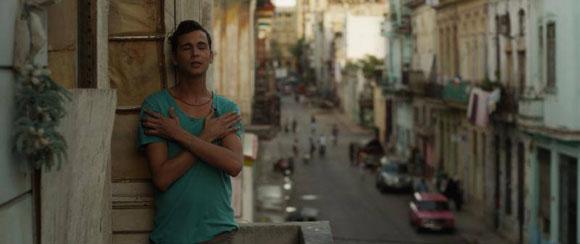

Movie Filmed in Cuba Nominated for Oscar
The film had its world premiere at the Telluride Film Festival, where it was a great success
Author: Cubasi | internet@granma.cu
December 21, 2015 11:12:23
A CubaNews translation. Edited by Walter Lippmann.
Hector Medina stars in the film
Film “Viva”, set in Cuba and directed by Paddy Breathnatch, was chosen by the Irish Academy of Film and Television to represent the country at the Oscar Academy Awards as best foreign language film.
In this regard, Aine Moriarty, President of the Irish Academy, said: “The Irish Academy is delighted that this wonderful film by Paddy Breathnach and Mark O’Halloran represents Ireland at the Oscars. It reflects the creativity and diversity of points of view of this Irish team while shooting a Cuban story that is so tender, intriguing and visually captivating.”
The film had its world premiere at the Telluride Film Festival, where it was a success. In October, it will be presented at the Busan Festival.
Written by Mark O’Halloran, the drama follows Jesus, an 18 year old Cuban who is lost and trying to find his true identity. Unsure of himself or his future direction, he works at a drag queen club in Havana. There he pursues his dreams of becoming an actor, while earning money through prostitution.
He finds his oasis at home listening to the albums his mother and grandmother left him; or even watching the boxers who train next door. Then, something comes to his life that will challenge his direction and his freedom: his missing father, a famous boxer, who returns after spending 15 years in prison for killing a person in a street fight when Jesus was a child.
The cast includes Hector Medina, Jorge Perugorría and Luis Alberto Garcia.
Not Long Before Boarding in Tampa

In the end, Obama didn’t have what he needed to have
CUBA-USA:
IN THE END, HE DID NOT HAVE WHAT HE NEEDED TO HAVE.
By: Dr. Néstor García Iturbe
September 11, 2015.
A CubaNews translation. Edited by Walter Lippmann.
Historical coincidences are always interesting and especially in connection with September 11 there are quite a few.
Today, the Nobel Peace Prize Winner signed a “Presidential Determination” exercising his authority to keep Cuba, until September 14, 2016, under the Trading with the Enemy Act.
In doing so, he makes a mockery of his Secretary of State, John Kerry, who recently said in Havana that the United States and Cuba were not enemies or rivals, but neighbors. It also gives a sample of little political acumen by signing this determination on 11 September, when he could have signed it on the10th, or the 12th, to avoid coinciding with other events that occurred on September 11th, in which the United States has been involved.
On a September 11, another US President, from the same oval office where the Nobel Peace Prize Awarded works, took the Presidential Determination to launch a coup d’etat against the constitutional government of Chile. This resulted in the death of thousands of Chileans, including President Salvador Allende, and thousands of others who suffered humiliation and torture. The United States never described all those atrocities as human rights violations by the perpetrators of the coup; because, of course, it participated in their commission.
On another September 11, the events that resulted in the destruction of the World Trade Center, known as the Twin Towers, occurred. The then-President was at that moment visiting a school and when he heard the news, took the Presidential Determination to spend more time talking to the children and going over their notebooks, as if he had been prepared for what was taking place. We all know the story that has been spinned around these events, including the plane that struck the Pentagon, the remains of which were never seen, and the one that was going to attack the White House that disappeared without further explanation.
Also on a September 11, in New York City, terrorists who were residents in the US shot dead the Cuban diplomat Felix Garcia. The terrorist who was accused and convicted of the crime is already free; perhaps as a result of another Presidential Determination.
Mr. Obama, history judges men by the determinations they make at a given moment. If they act rightly and courageously according to justice, or if they act wrongly and capriciously, as if justice and the world were meaningless to them.
In the context we are describing, it is impossible not to remember Comandante Juan Almeida, who died on a September 11 and who –in the middle of a fierce battle against the forces of the Batista dictatorship, indeed supported by US determination– famously shouted: “Nobody here surrenders, cojones”.
Mr. Obama, our national poet Nicolas Guillen, in one of his famous and well-known poems, repeated something very consistent with the Cuban Revolution, when he wrote that “I now have what I had to have.”
In your case, by taking this Presidential Determination to keep Cuba under the Trading with the Enemy Act until September 14, 2016, you have shown that you do not have what you needed to have.
TEXT OF THE PRESIDENTIAL DETERMINATION:
THE WHITE HOUSE
Office of the Press Secretary
For Immediate Release September 11, 2015
September 11, 2015
Presidential Determination
No. 2015-11
MEMORANDUM FOR THE SECRETARY OF STATE
THE SECRETARY OF THE TREASURY
SUBJECT: Continuation of the Exercise of Certain Authorities Under the Trading With the Enemy Act
Under section 101(b) of Public Law 95-223 (91 Stat. 1625; 50 U.S.C. App. 5(b) note), and a previous determination on September 5, 2014 (79 FR 54183, September 10, 2014), the exercise of certain authorities under the Trading With the Enemy Act is scheduled to terminate on September 14, 2015.
I hereby determine that the continuation for 1 year of the exercise of those authorities with respect to Cuba is in the national interest of the United States.
Therefore, consistent with the authority vested in me by section 101(b) of Public Law 95-223, I continue for 1 year, until September 14, 2016, the exercise of those authorities with respect to Cuba, as implemented by the Cuban Assets Control Regulations, 31 C.F.R. Part 515.
The Secretary of the Treasury is authorized and directed to publish this determination in the Federal Register.
BARACK OBAMA
Tourism and Revolution Must Go Hand in Hand
TOURISM AND REVOLUTION MUST GO HAND IN HAND
ByManuel E. Yepe
http://manuelyepe.wordpress.com/
A CubaNews translation. Edited by Walter Lippmann.
According to the Wall Street Journal (WSJ), the US government is working to reach a deal with Cuba by year’s end that would allow tourists to fly on scheduled commercial flights between the two countries.
The agreement would allow airlines to establish regular service between the U.S. and Cuba as early as December, marking the most significant expansion of bilateral tourism ties between the U.S. and Cuba since the 1950s, when Americans regularly traveled back and forth to Havana without the limitations imposed by Washington from the 1960s.
The Obama administration –says the Journal– is also exploring further steps to loosen travel restrictions for US citizens to the island nation despite the still in place unconstitutional decades-old ban imposed by Washington.
Only Congress can lift the U.S. travel and trade blockades imposed against Cuba following the popular triumph in the island. Nevertheless, says the Journal, Mr. Obama has executive authority to grant exceptions to them. He announced several last December –such as allowing Americans to use credit and debit cards in Cuba and expanding commercial sales and exports between the two countries.
The WSJ recalls that U.S. laws authorize citizens to travel to Cuba with special licenses only for specific purposes, including business trips, family visits or people-to-people cultural exchanges.
The negotiations are partly centering on how many flights a day would be permitted between the two countries and whether Cuba’s state-owned airline, Cubana de Aviación, can serve the U.S. The WSJ sources were not certain about this last issue.
Many U.S. airlines, including American Airlines and Jet Blue, are eager to serve Cuba and have been pushing regulators to authorize scheduled service.
Four shipping companies in Florida (90 miles from Cuba): United Americas Shipping Services, Havana Ferry Partners, United Caribbean Lines and Airline Brokers, announced receipt of US Treasury permission to operate ferries between the two countries, while noting that they still need additional permits including that from Havana.
The reestablishment of diplomatic relations, which culminated on August 14 with the official reopening of the US Embassy in Havana, has been one of the catalysts for the accelerated growth of visitor arrivals to the Caribbean country.
Between January and July of this year (2015), 88,996 people from the United states traveled to the island, despite the fact that the blockade does not allow them to do so as true tourists because Washington does not authorize them to visit beaches or other fun and recreation centers so they do “not bring their money to Castro “.
The rapprochement between the two countries has increased world interest in Cuba. The island in turn is developing different strategies to strengthen the tourism industry, improve the quality of hotel services and expand its capacity.
To attract foreign capital, the island has adopted a new Foreign Investment Act. Meanwhile, increasing ties between the private and state sectors in the Cuban economy, bring an important complement to meet the growing demand for rooms, restaurants and other services.
The Italian publication specializing in tourism issues in the Caribbean Travel Trade Caribbean (TTC) wonders in its latest issue if the “wave” of potential US tourists expected in Cuba would be good or bad for other Caribbean islands more dependent on the leisure industry.
Cuba, which continues its socialist project with the same drive as before, argues that the eventual normalization of its relations with the US will not damage the economies of tourism-dependent Caribbean countries.
The Caribbean Hotel and Tourism Association welcomed Cuba as an integral part of the Caribbean and called for the development of cooperation with Cuba in all aspects of tourism. It also called on governments of the region to adopt a new program for tourism development involving high-level discussions with the US and Cuban authorities with a view to developing a Tourism Initiative in the Caribbean Basin to promote in an “economically viable, secure and stable way” this industry in the region.
But Cuba’s tourism infrastructure will have to be strengthened before the full impact of “the wave” occurs in the industries of other Caribbean destinations. Cooperation between countries in the region will be the best antidote against the problem; and the Cuban revolution has demonstrated many times its ability to face great challenges.
September 12, 2015.
Pre-pre-travel notes and reflections
It’s Saturday morning, September 12, and I’m putting together the last items to put in my suitcases. It’s always like this and I try to also give a few thoughts to the world I’m leaving behind here, and the one I’m expecting to see in Cuba. For the first time I’ll be traveling via Tampa, where I’ll have a longish layover and should be able to write some more. Will share some of these with you here on CubaNews and via Facebook. Your comments are welcome. My eyes are getting better. The right eye is still somewhat itchy and both are on the unsightly side. Oh, well.
This morning NPR, which I sometimes think of as National Pentagon Radio, or Nearly Private Radio, featured a completely typical and hostile report on Cuba on the eve of Pope Francis’ visit next weekend. Gjelton wrote an informative book on the history of the Bacardi family and Cuban rum some years ago. I remember being with the press corps on one of the last times Fidel Castro spoke before a mass rally, in Bayamo, Cuba on July 26, 2006. I took a wonderful photo of Fidel which I’ll share with you. Have been brushing up my skills in Photoshop, and now some of the rough edges of the photo, though not the marvelous expression on Fidel’s face as he looks to the sky above. I’m sure you’ll enjoy it.
I’m traveling now precisely to that I can witness his visit and the public reactions, and to attend the big mass at Revolution Plaza. Hope to take a lot of pictures and to make reports on what’s going on there. Cristina Fernandez de Kirchner, Argentina’s President, is coming in for the event. Will work on this during the rest of the morning, and send it out shortly before leaving, so it may have a somewhat disjointed character. Hope you’ll enjoy it. If this isn’t done before I leave, maybe I’ll write more during the layover in Tampa. In fact, I’m sure I’ll write more in Tampa.
======================================
You must be logged in to post a comment.