
May 2021 24
Secretariat of PCC Central Committee
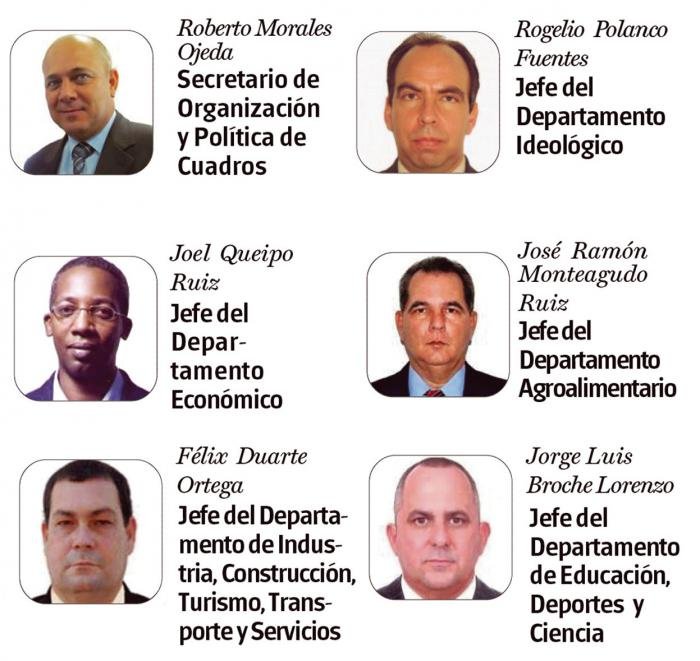

Secretariat of the Central Committee, at the forefront in the direction of the Party’s work.
With full presence in the political, economic and social life of the country, the members of the Secretariat professionally deal with the daily activities of the Party, for which they control, in their sphere of action, and with the help of the auxiliary structure of the Central Committee, the work of the institutions and agencies of the State and the Government.
Author: Yudy Castro Morales | yudy@granma.cu
27 May 2021 01:05:20
Translated and edited by Walter Lippmann for CubaNews.
The intense days of debates that took place during the 8th Congress of the Communist Party of Cuba outlined the ideas, concepts and guidelines that will guide today and in the future the work of the organization at all levels.
To continue strengthening the performance of the Party in the political-ideological work, to raise the combativeness and exemplarity of the militants and cadres, and to intensify the control, demand and participation of the people to promote the economic and social development of the country, are among the priorities that demand greater commitment from the organization, in order to consolidate and improve what has been achieved.
The Secretariat of the Central Committee is immersed in this challenging scenario, which calls for dynamizing the functioning of the Party, deepening its link with the masses and adapting its higher and intermediate leadership structures to the current and future responsibilities.
Integrated today by six comrades with a wide trajectory in the ranks of the organization, this is the organism elected by the Plenary of the Central Committee which, subordinated to the Political Bureau, assists it in the direction of the daily work of the Party.
In this endeavor, the Secretariat is in charge of organizing and ensuring the fulfillment of the agreements and resolutions of the Congress, the national conferences, the plenary sessions of the Central Committee and the meetings of the Political Bureau.
It is also responsible for the way in which the Party relates with the Young Communist League (UJC), the organs and agencies of the State and the Government and the social and mass organizations; at the same time it orients and controls the application of the Party’s policy regarding the ideological, economic and social activity of the country.
Its functions also include directing the functioning of the auxiliary structure of the Central Committee and, in turn, preparing draft directives or other documents to be submitted to the consideration of the plenary sessions and meetings of the Political Bureau.
Guiding and controlling the activity of the intermediate leadership bodies, in the fulfillment of the decisions of the congresses, conferences and the Political Bureau, as well as carrying out the daily practice of the Party’s international relations, also distinguish the work of the Secretariat.
In close coordination with the National Defense and Security Commission, this body contributes to the orientation and control of matters related to defense, state security and the internal order of the country.
Its competencies include, meanwhile, the implementation of the cadre policy of the Party and the ujc, as well as the control of the same in the mass and social organizations, the organs, agencies and entities of the State and the Government.
In accordance with its responsibilities regarding the internal functioning of the Party, the Secretariat also analyzes and adopts the pertinent decisions on income, deactivations and sanctions that fall within its competence.
With full presence in the political, economic and social life of the country, the members of the Secretariat professionally deal with the daily activities of the Party, for which they control, in their sphere of action, and with the help of the auxiliary structure of the Central Committee, the work of the institutions and agencies of the State and the Government, and, at the same time, evaluate the situation and prospects of the sectors they serve and propose to the leadership of the Party the appropriate measures.
Silencing the Study of Race and Equity
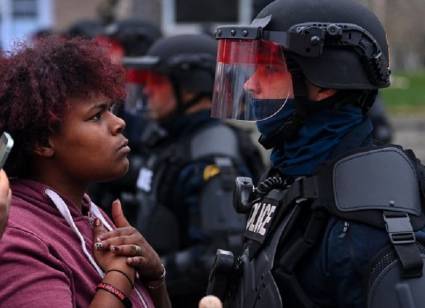

In the U.S., legislation is being passed to silence analyses on race and equity
The same historical thread: slavery-Tulsa massacre-George Floyd and is intended to hide the facts to cover up scars and, above all, wounds still open and bleeding in the polarized U.S. society.
Author:

Translated and edited by Walter Lippmann for CubaNews.
Confronting America’s systemic racism Author: Joshua Lott Posted: 05/29/2021 | 10:49 pm
Is America a racist society? Yes. Absolutely and categorically so. Facts abound to exemplify the assertion. A review of some of the incidents of more immediate times reaffirms it.
However, it is not only the acts of violence, of police brutality, especially against Blacks and Latinos, nor the rise of extreme right-wing, xenophobic and fascistic groups and organizations, that show this visible trace. Neither do the economic and educational inequalities that undermine development opportunities.
In the first days of May, the governor of the state of Idaho, Republican Bradley Jay Little, signed a bill whose purpose is supposedly not controversial: to prohibit public schools and colleges from teaching that “any sex, race, ethnicity, religion, color or national origin is inherently superior or inferior”.
It might seem positive; however, this sidesteps, indeed, eradicates, conversations about race and equity, as if they have no relevance in a society where they remain one of the biggest and most divisive problems, rooted in a historical development that had as its roots the near annihilation and dispossession of native peoples and the enslavement of men and women forcibly brought from faraway Africa.
Idaho is not unique in the trend, as a dozen states, including Iowa, Louisiana, Missouri, New Hampshire, Oklahoma, Rhode Island and West Virginia, have also introduced bills that would prohibit schools from teaching “divisive,” “racist” or “sexist” concepts.
According to a paper published by USA Today, such legislation attacks “critical race theory,” a movement of scholars and civil rights activists, which questions and critically examines how the legacy of slavery (in August 1619 the first cargo of enslaved Africans arrived on the shores of present-day U.S. territory) and systemic racism still affects American society today and are everyday experiences for people of African descent.
Thus, this legislative pattern – especially in Southern and Republican-dominated states – is seen as a backlash against teaching anti-racist lessons in schools, a barrier to learning true and hidden histories in order to entrench the racism against African descendants in the U.S. society.
The pattern is seen as a backlash against the teaching of anti-racist lessons in schools, a barrier to the learning of true and hidden histories to enthrone the socio-economic dominance of white elites, who also cover up class-based profiteering, whatever the skin color of the exploited.
Two key events
These final days of May mark two dates a century apart, the first anniversary of the murder of George Floyd in Minneapolis, when the relentless knee of policeman Dereck Chauvin squeezed his neck for more than eight minutes and prevented him from breathing. It was a crime that shook America and continues to shake it, and outraged the world. Then there is the centennial of a massacre of which very few in the northern nation are aware: the Tulsa massacre.
In Tulsa, Oklahoma, dozens of Black citizens were murdered -some estimates reach more than 300 victims of the racist barbarism of white mobs, joined by the police and the National Guard-, between the night of May 31 and June 1, 1921, in the Greenwood area, which was known as the Black Wall Street, due to the economic prosperity and intellectual development achieved by its inhabitants, and which was reduced to ruins and ashes in the fires.
Baptist minister and civil rights activist Jesse Jackson wrote in the Chicago Sun-Times: “Few even know about the massacre. It has not even been taught in Tulsa public schools until this year. Though a hundred years old, the massacre raises questions of justice and decency that
of justice and decency that America cannot avoid.”
Yet a significant part in size and power of the United States avoids it and does its best to sidestep it.
The detractors of critical race theory, the conservative elements that deny the existence of systemic racism in America, hoist its eradication and not only try to “discredit” it by calling it “Marxist”, above all they impute it to be a plan to “teach children to hate their country”, therefore, they are a threat to American society and the nation.
The Trump administration opposed the teaching of that history in public schools, asserting that it was “divisive and un-American propaganda.” Trump said, “Students in our universities are inundated with critical race theory. This is a Marxist doctrine that holds that America is an evil, racist nation, that even young children are complicit in oppression, and that our entire society must be radically transformed.”
Another reality
A recent study by Reflective Democracy, a group working to build a democracy in America that works for everyone “because it reflects who we are and how we live in the 21st century,” found that white men hold 62 percent of all elected offices despite being only 30 percent of the nation’s population, exercising minority rule over 42 state legislatures, the House of Representatives, the Senate and state offices from coast to coast.
The analysis added that women hold only 31 percent of the offices despite being 51 percent of the population and “people of color” hold only 13 percent despite constituting 40 percent of the population. It also recalled that 43 states in the Union are considering or have already passed laws that would allow them to apply voter suppression, which targets precisely those vulnerable segments – Blacks, Latinos, native Americans and women.
Some analysts recall that this wave against critical race theory only “crystallized” with Trump, but was awakened when Barack Obama came to the White House, which “was shocking and traumatic for people who had always imagined the United States as a white nation,” according to Adrienne Dixson, a professor at the University of Illinois and author of the book Critical Race Theory in Education.
On both sides, the debate has grown over the past year with the nationwide, ethnically diverse, age-group-wide activism of Black Lives Matter which burst onto the social scene of the national conservative organization Parents Defending Education, whose purpose is to confront what they consider “divisive and polarizing ideas in the classroom,” as Critical Race Theory sees it.
On their website Parents Defending Education released a study in which they claim that 70 percent of respondents said it is not important for schools to “teach students that their race is the most important thing about them.” that 74 percent opposed teaching students that whites are inherently privileged and that Blacks and other people of color are inherently oppressed. They also say that 69 percent opposed teaching in schools that America was founded on racism and is structurally racist. Likewise, they say and that 80 percent oppose the use of classrooms to promote student political activism.
Is American society polarized? Undoubtedly, and in my opinion, this is an extremely dangerous element, a boiling cauldron with no safety valve.
Cuba at the Baseball Pre-Olympics
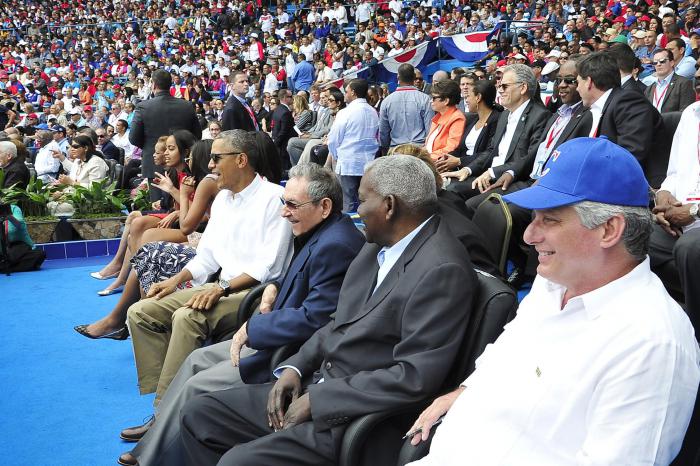
Cuba at the Baseball Pre-Olympics: Frustration, Hysteria and Hatred, Three Strikes that Strike Out Attacks on Cuba
Today begins the pre-Olympic baseball tournament of the Americas, in which the Cuban team, starting at 1:00 p.m., will face its Venezuelan counterpart in West Palm Beach, Florida. However, a group that is not even remotely a majority, intends to continue playing and, of course, losing, the war. To do so, they resort to violence and, logically, to lies. The target of their attacks are the Cuban baseball players.
Translated and edited by Walter Lippmann for CubaNews.
Today begins the pre-Olympic baseball tournament of the Americas, in which the Cuban team, starting at 1:00 p.m., will face its Venezuelan counterpart in West Palm Beach, Florida. However, a group that is not even remotely a majority, intends to continue playing and, of course, losing, the war. To do so, they resort to violence and, logically, to lies. The target of their attacks are the Cuban baseball players.
Protected, organized and directed by Senators Rick Scott and Marco Rubio, Congresswoman Maria Elvira Salazar, and summoned by the cheap spokesman of that leadership, Alexander Otaola, the members of that segment have organized to meet at the baseball park. There, according to Otaola himself, they will protest against the presence of representatives of the “totalitarian” government of the island. In order to guarantee their presence, the legislator even allocated resources for the purchase of tickets.
It was reported that the security of the stadium, whose responsibility falls on Scott himself, would allow the pronouncement by means of offensive posters and the throwing of objects on the field against the players. Even the attack phrases, which out of respect will not be published in the pages of this newspaper, contain obscene words. As if that were not enough, they also announced that they would attack the bus on which the athletes were being transported.
The rules of the Olympic Charter, and this is a tournament under the Olympic umbrella, since it is about the qualifying for the next Games in Tokyo, obliges the hosts to guarantee the normal development of the competition. This includes the safety of each of the participants. In other words, the U.S. authorities, both sporting and governmental, are responsible for what happens to any player.
It is not new to proceed in U.S. territory for our sports embassies. Today it is the frustrated Otaola and his bosses, losers as always, in the face of the virility of the Cuban people and their overwhelming support for the continuity of the Revolution and its successes. These are despite the blockade, more than 240 measures of an alienated president, which the current president has not even touched, and the pandemic. “Poor little ones”, how they have yet to suffer.
Next June 10 will be the 55th anniversary of the Declaration of Cerro Pelado, the name of the ship that carried the athletes to the Central American and Caribbean Games in San Juan, in colonized Puerto Rico. That text expressed the willingness of the delegation to participate, even if they had to swim there. Before, in Jamaica-1962, in a similar event, also in a baseball stadium, Sabina Park, provocateurs like those of today threw chairs and sticks against the members of the delegation, who defended themselves, causing their aggressors to flee. In 1963, in the Pan American Games in Sao Paulo, the plane carrying the athletes was not allowed to touch the airport runway, and the then-president of Inder, José Llanusa Gobels, told the pilot who landed that “we came to compete, it is our right”.
In Indianapolis-1987, the Pan American event found the same hostile environment in several of the scenarios, as in 1999, in Winnipeg, where they even authorized a newspaper, plus a radio station, to whip and incite the desertion of our delegation.
In contrast, never has a U.S. athlete, a member of their delegations or a journalist been assaulted in Cuba, neither physically nor morally. None has been insulted. In March 1999, the Baltimore Orioles baseball team was here, and its players, such as Charles Johnson, known by the fans for his presence in the 1991 Pan American Games, when he hit a decisive home run, was applauded. We gave an earlier ovation to Jim Abbott, that excellent pitcher who was missing a hand, which was not an impediment to his exceptionally. The same applied to his teammates Robin Ventura, Joe Carter or Greg Olson.
It was precisely, in the multisport meeting of America, in 1991, at the dawn of the special period, that Cuba offered US TV to broadcast the Games free of charge.
In Havana, in March 2016, the president of the United States himself attended, in a full stadium, the match between Tampa Bay and Cuba. He was received with utmost respect for his country’s anthem, its flag and his high investiture. There is not a single outrage or slander from the sports press to U.S. athletes. US Baseball players have been received in the bilateral tops and, later, these same people have admired their results in the major leagues, as in the recent cases of Maikel Conforto or Carlos Rodon, the latter author of a zero hit zero runs in this major league season, which was praised by the national sports chronicle.
It has never occurred to anyone that, because of political or ideological differences or because of a criminal blockade, ordered to starve, the work of the governments of the United States, that a baseball player should be booed or mistreated. The same for its President, who sat, with his family, behind home plate at the Latinoamericano sports stadium, a place where the daughter of the legendary Jackie Robinson, received, on behalf of her father, the prolonged applause of tribute to the first Black player in MLB.
Those who today seek to attack and repudiate the Cuba team in Florida have recognized, as they themselves published in social networks, that the issue is political, and it does not matter that they are athletes, artists, journalists or doctors, that they are not government officials. They, like their bosses, do not act against governmental structures, they act against the people, because that, people, are the ball players, whom Otaola, disrespectfully, called hairy rats.
By the way, the players who are looking for their Olympic ticket are clear that their mission there is to play baseball and give a good show to the crowd and to many of their followers who will go to support them. They seek they want the victory of their country, like those who this weekend spoke out against the blockade in several U.S. cities.
For the haters, even if they do not understand a thing, we leave them two messages in the voices of Martin Luther King, Jr., pastor of the Baptist Church, and José Martí. The Cuban-born Martí said: “Nothing a man does debases him more than to allow himself to stoop so low as to hate someone”. And the most universal of Cubans portrayed them: “The barbarians who entrust everything to force and violence, build nothing, because their seeds are of hatred”.
The Party of the Cuban Nation?
May 19, 2021 Translated and edited by Walter Lippmann for CubaNews. The recently concluded VIII Congress of the Communist Party of Cuba (PCC) reiterated and ratified once again the characterization of the Party as “Party of the Cuban Nation,” a formulation that has been a fundamental idea since the IV Congress (1991). And I wonder: Is it valid? Does it correspond to our socio-cultural and national reality and the tendencies that shape our development today? I think not. I think it is a statement that does not fit at all to what it tries to claim. I also believe that it is necessary for the current leadership to seriously reconsider such a formula for the sake of its own credibility, prestige and a bit of necessary modesty. Do not take this as an unfounded and insolent questioning; neither as an attempt of ideological subversion, enemy propaganda or other usual suspicions and attempts at disqualification. I try to approach this as seriously and rigorously as possible, and I invite everyone to reflect on this important issue. Here are some arguments and criteria that may serve this necessary discussion: In the first decade of the Party’s existence (1965-1975), Cuban society reached high levels of economic-social homogenization after the absolutist nationalizations, thus culminating a long stage of struggles and significant transformations in terms of social benefits. This, together with Fidel’s talent and charisma, the permanent confrontation with the US and an exile [movement] at the service of the latter, shaped a political and ideological context of majority support for the revolution. The Party could rightly claim and aspire to being the vanguard of the people or, at least, of the majority sectors of the people. However, there was a tendency to ignore and underestimate the effects of economic and social attrition -and its effects on the political positioning of many people- that years of deprivation and material shortages caused. The Camarioca episodes and the so-called “freedom flights”, until their cancellation, were not only initial symptoms of a hostile tendency, of discontent, of alienation and that found in the escapist option of emigrating to the U.S., its best solution. By the end of the 1960s, the Minister of the Interior at the time (Commander Sergio del Valle), warned in a conference behind closed doors that an essentially new phenomenon was beginning to emerge: the class composition of “those who were leaving” was beginning to change; they were no longer “bourgeoisie siquitrillidos” [bourgeois whose goods had been taken] but working people, the humble, from the city and even from rural areas. This approach, unfortunately, did not translate into timely policy designs to counteract such a trend. This precedes and explains to a great extent -together with the demystifying influence of the “flights of the community”- the conflict at the Peruvian embassy and Mariel (1980), whose analysis, dominated by confrontation and humiliations (“the scum,” the rapid response brigades and the acts of repudiation), did not lead to a rectification in the direction suggested early on by Comandante Sergio del Valle. Meanwhile, generational changes in the population went completely unnoticed. The generation that had fought against Batista was visibly aging and around it a structure of interests and material goods was being created that would also benefit children and grandchildren. Meanwhile, the increase in the population of young people was growing in an environment where the past of struggle was already becoming a vague reference to “the old” or to the heroism of past times, while the present was a daily struggle to “resolve” recurrent shortages, a phenomenon that would become extremely acute with the collapse of the so-called “real socialism” in Eastern Europe and the USSR. This collapse – beyond the aggravation of the critical material situation of the country – had another effect that is not spoken about: The young generations educated in the superiority of the world socialist system saw with astonishment the crumbling of the whole architecture of supposed principles, values and alliances on which they had been educated. This was a factor that promoted disappointments, a feeling of having been deceived, frustration, with the usual balance of disenchantment and which translates into very diverse options, from opting for various beliefs, cults and churches, fraternal societies to a thousand forms of corrupt practices and always the recurrent option of emigrating to the USA (“la pira pa’ la Yuma”). Proof to the song: When Luis Orlando Dominguez, ex-secretary general of the UJC and member of the Central Committee is prosecuted for a case of corruption, his main argument was: “I did what I saw other leaders doing,” and that brings to mind the famous popular phrase in Cuba before ’59: “Immoralities without me not because I fight them; me you have to take me.” The tragic culmination of such a tendency would be represented sometime later by the events of the Ochoa-Abrantes case (1989) and during the following two decades by the cases of Army Corps General Abelardo Colomé Ibarra, Commander Rogelio Acevedo and his wife, the Aldana case and that of Abelardo Colomé Ibarra (Furry) and his children, and other less-known cases involving ministers and senior government officials. The cost of these last episodes severely hit the levels of moral authority, prestige and credibility of the leadership. Not admitting this is pure blindness. Not by chance, the then member of the Political Bureau, Jorge Lezcano, warned with great concern about the possibility of having to “govern in minority,” a way of reasoning that was not only extremely serious, but absolutely unacceptable. In such a context, to proclaim oneself “Party of the Nation” appeared to the eyes of many as an unreal pretension. It is no less unrealistic to persist in this formulation today. It bore a very unfortunate kinship with the well-known phrase of the French King Louis XIV that “The State is me.” The Cuba of these last decades is not that of the struggle against Batista, Girón, the struggle against the counterrevolutionary rebels, the October Crisis, Ché and the internationalist deeds,. Instead, it is one of a very precarious survival derived from a monopolist-absolutist Party/State that clings to a proven inoperative model, inseparable from the world of shortages and an incessant and devastating incessant economic war on the part of the US, aggravated today to the extreme by the effects of the pandemic. Cuba is today a society where the processes of economic and social differentiation have been accentuated in a thousand different ways. Very diverse sectors have extended to private activities (that which we euphemistically insist on calling “non-state sector”), where the private and tenant agricultural sectors -and not the agricultural cooperatives, which see their potentialities nullified. Th same or worse is happening with the CAN (Non Agricultural Cooperatives) – as a direct result of state control and interference. These involve two types of citizens, those who have MLC (freely convertible currency) and those who depend almost exclusively on the peso. Today, we have an active population of almost one million people who no longer depend for their livelihood on a salary from the State, a phenomenon that was unheard of four decades ago. And to each of these sectors correspond specific interests and aspirations, different horizons, ideas and proposals of their own that do not necessarily have to coincide or accept those proposed and provided by the Party and its government. From another angle, we face the migration issue, which is also a challenge of capital proportions. Almost one million Cubans (and more if we add their descendants) have emigrated to the United States and most of them have a manifest hostility towards the Cuban authorities, to the extent of pronouncing themselves mostly in favor of former President Trump. Are they or will they be considered part or not of the Cuban nation? Today, their intertwining with the island’s population reaches heights unsuspected in the distant past. More than 600,000 visited Cuba before the pandemic, an impressive number with a very diverse load of influences, values and connections. Are they visualized as part of the nation or not? Correspondingly, will they be extended full rights or not? Will the set of restrictions and costs that limit their ability to travel normally to their country of origin be ended for those who have retained their original citizenship? Will they be entitled to any organized parliamentary representation? The conferences called “The Nation and Emigration” were not convened for 15 years; an important and unavoidable component of our nation was thus alienated. Are they of no interest, are there no possibilities to come together and work on the differences and possible coincidences? Is “The Nation” no longer interested in this considerable segment of our population, even if they have renounced their citizenship for elementary conveniences? Are we perhaps excluding them as members of our nation? All this differentiated economic and social universe offers a picture as a nation that did not exist four decades ago, but that today does exist and manifests itself in a thousand different ways and with an unprecedented level of interactions, diffusion and influences thanks to cyberspace and the social networks. It is a diversity that must be assumed in all its complexity and ensuring the steps and mechanisms that open the possibility of legitimate expression, sometimes coinciding, sometimes disagreeing and with different proposals and others in open opposition, without anyone being offended or scandalized. This should be reflected at all levels, Party, Government, National Assembly and in the official media, without verticalism or linear behavior, without demanding loyalties based on intolerance, unconditional obedience or the vote by a show of hands. Is it perhaps unfounded or unacceptable that this diversity comes to have representations in the Party and even as different parties? Or is it that we have already forgotten that of “base and superstructure”? Let us be reasonable in dealing with the current diversity and its future increase if an integral redesign of the model is completed and not patches here and there and its consequences for the inevitable economic and political reordering of the whole system. This heterogeneous nation today, and much more tomorrow, demands this rethinking. The Party can be the Party of many and can aspire -through its effective practice- to be the vanguard Party of many, but in no way can it claim to be the Party of the nation. The latter is much, much more, diverse. Under these conditions this Party cannot claim to represent the totality of society and the nation. I repeat: A total rethinking is necessary.
El recién concluído VIII Congreso del Partido Comunista de Cuba (PCC) reiteró y ratificó una vez más la caracterización del Partido como “Partido de la Nación Cubana,” formulación que se inscribe como una idea fundamental desde el IV Congreso (1991). Y me pregunto: ¿Es acaso válida; se corresponde con nuestra realidad socio-cultural y nacional y las tendencias que configuran nuestro desarrollo hoy en dia? Pienso que no; pienso que es un enunciado que no se ajusta en nada a lo que pretende reclamar. Creo además que se impone para la dirigencia actual reconsiderar seriamente semejante fórmula en aras de su propia credibilidad, prestigio y de un poco de necesaria modestia. No se tome esto como un cuestionamiento infundado e insolente; tampoco como un intento de subversion ideológica, propaganda enemiga u otras suspicacias e intentos habituales de descalificación. Trato de abordar esto con la mayor seriedad y rigor posibles, e invito a todos a reflexionar acerca de esta importante cuestión. A continuación algunos argumentos y criterios que pueden servir a esta discusión necesaria:
The Party of the Cuban Nation?
by Domingo AmuchasteguiPARTIDO DE LA NACION CUBANA?
Por Domingo Amuchastegui (19/5/2001)
How to end fertility responsibly?

How to end fertility responsibly?
Several techniques and methods exist in Cuba for women and men to end fertility in a responsible way. Are they accepted in the same way? Do cultural patterns and gender inequality influence the most used ones? Juventud Rebelde approaches the issue from three territories of the country
Authors:
 Liudmila Peña Herrera,
Lisandra Gómez Guerra,
Dorelys Canivell CanaL
Published: Thursday 13 May 2021 | 10:30:46 pm. Updated: Friday 14 May 2021 | 03:55:27 pm.
Translated and edited by Walter Lippmann for CubaNews.
Contraceptive method. Autor: Juventud Rebelde Publicado: 13/05/2021 | 10:08 pm
Every time María Alejandra’s menstruation is late, she and her husband’s pulse quickens. The 35-year-old woman jokes that surely the female is coming, behind her boys, and he makes a face like he wants to pull his hair out, because “two are more than enough”. Then she returns to the subject that was almost forbidden that afternoon when he told her that he agreed to opt for male sterilization (vasectomy). However, it all remained a fleeting phrase.
“We had that conversation in front of my mother-in-law, who, upon hearing my proposal, screamed her head off,” says this Havana native, who currently uses condoms as the only contraceptive method, which was difficult to obtain more than a year ago.
There are many people who face the dilemma of finding the best way to control birth control or to put an end to their fertility. Ideally, the decision should be made in a consensual manner with the couple, but this is not always what prevails.
Family planning: a women’s issue?
The 48th edition of Cuba’s Health Statistical Yearbook -which contains updated information up to 2019- states that intrauterine devices (IUDs) had the highest percentage (52.2 percent in that year) of contraceptive coverage, followed by female sterilization (tubal ligation), which reached 22.6 percent in 2019.
According to that document, this last value is the highest recorded since 1995 (the date from which the comparisons start). Other contraceptive methods referred to were pills, injectables and condoms. It is worth noting that male sterilization was not included among the options, at least not reported.
So common, it seems natural to many people that birth control is mostly a female concern, even if there are men who are willing to take a leading role.
A survey conducted in the streets of Sancti Spiritus shows the prevailing patriarchal ideology that affects these decisions. Among the opinions identified with this type of concepts, those that stand out are those that maintain that women should worry more because men have children, but if they want to, they do not raise them; if they change their mind after tubal ligation, they can go to the doctor and he will always know what to do.
The “discomfort” involved in the use of condoms and the discomfort associated with IUDs were also mentioned. Another of the ideas naturalized by popular opinion is that “if a woman has a cesarean section, she takes advantage of it and gets her tubes tied”.
This is confirmed by Claudia Bernal Castillo, who opted for tubal ligation surgery. We didn’t even talk about it at home,” explains the 32-year-old. If we only wanted two children, and we already had them, why let that moment go by”.
This is one of the reasons that move patients to request the surgical procedure to the Sancti Spíritus doctors Omar Rangel and Miguel González Bellón, specialists in Gynecology and Obstetrics, who assure that it happens “as a consequence of machismo”.
“This is a definitive and irreversible method of family planning. Although the application of methods to reverse it has been registered, the predominant thing is the appearance of ectopic pregnancies, which are a danger for the woman”, says Bellón.
Dr. Rangel adds: “It is always explained that it is not necessary to perform the procedure during the cesarean section, because it is more invasive and can generate a greater number of maternal deaths, since it involves a surgical intervention. It can be performed laparoscopically -which is less invasive and less risky- 48 hours postpartum”.
The possibility of complications was what made Yaritza Cabrera, 36 years old and a resident of the capital, desist from this procedure, minutes before the cesarean section. “When they were preparing me for the operation, including the oxygen mask, I vomited and almost choked. I was afraid that my blood pressure would rise, because I became tachycardic, so I told the doctor: ‘Forget about the ligature,'” she recalls.
Although both physicians from Sancti Spiritus agree that requesting this procedure is a woman’s right, they recommend it, especially under certain circumstances. Dr. Rangel explains that it is done up to the age of 39 and 40, and never before the age of 24. He also states that it is sometimes necessary to perform it on multiparous patients, those with serious psychiatric problems, decompensated diabetics and those with renal insufficiency.
Both consider that there is an urgent need to improve the culture regarding the use of multiple contraceptive methods: mechanical, endocrine, implants, tablets, etc., so that surgical intervention is not recurrent. “In the family planning consultation, which should be attended as a couple, providers should be trained to provide guidance, according to all the possibilities, so that the best option is chosen,” concluded Dr. Bellón.
Can men decide?
Among the techniques used to write this report was a qualitative survey carried out in a private group created by this team for journalistic purposes (Experimento para textos periodísticos) on the social network Facebook, which is made up of 900 users residing in the country.
Most of the women acknowledged that when they decided to end their fertility through surgery, they made the decision alone, without consulting their partner. Some responded that they never thought of proposing to him to have a vasectomy, and it is noteworthy that several of them tried to negotiate to see which one would work best for them.
Several tried to negotiate to see which of the two would undergo the surgery, but it was not possible to reach an agreement. Two girls even proposed to their husbands to have it done and they were offended.
This is still a taboo subject,” says Yinet Córdova, from Holguín. I used condoms for many years because I couldn’t use other methods, and I gave them up when I was sterilized endoscopically, because my husband refused to have a vasectomy”.
For Rouslyn Navia, a resident of Havana, the story has not been much different. At 37 years old and with two children, she does not intend to get pregnant again. She did not opt for ligation during the cesarean section “for fear that the recovery would be more painful. Then I tried to negotiate with my husband to have the vasectomy, since he has several children. He did not agree.
Vasectomy is a surgical technique whose purpose is male sterilization, when the man has decided to put a definitive end to his fertility. However, urologist and andrologist Ramiro Fragas Valdés, specialist in Urology and master in Sexuality at the Cira García Central Clinic, in Havana, warns that, although it can be performed since the 1970s, “it is not practiced as much as it could be because, when couples are referred, they think more about tubal ligation, and because it is the woman who generally opts for sterilization. The idea is to change that, especially because vasectomy is a much simpler and less risky procedure for a man than tubal ligation is for a woman”.
One of the issues that prevent men from opting for this technique, in addition to prejudice, is misinformation. In the survey, most of the participants assured that they would not dare to have it done, and considered that the subject should have a greater presence in the media.
Although some said that “it is not a necessary method if the woman can get pregnant” and that “they say it is very painful”, it is striking that more than half of the men said that “it should be a more accessible option” and “information should be offered in family planning consultations and in sex education in schools”.
These opinions coincide with the opinion of Dr. Fragas, who believes that “if we break the taboo of machismo, if we make the method more widely known, and if we get family planning programs to offer it as an option to couples, vasectomy would be practiced much more than female sterilization, we would save resources, and we would save money. With female sterilization, we would save resources and take better care of women”.
Vasectomy: quick and precise
T is a middle-aged man, a doctor, from Havana and childless. He does not want to mention his name, but agrees to share his experience because, despite wanting to undergo the surgery for many years, it has not been possible for him to do so. For years, it has not been possible for him. He says that he never wanted to have offspring, which is why, since he was a medical student, he asked about that possibility.
“First, it was not feasible because I was very young,” he recalls. Then, because I had no children. Later, I was frightened by the unwillingness I found to receive help with postoperative pain management. When I told myself I could handle it, the childlessness story came back.
T’s doubts and concerns may be those of other men. That is why we asked Dr. Fragas, also a member of the board of directors of the Cuban Urology Society, about these issues. The specialist explains that “vasectomy is a very simple surgery that is performed in 15 minutes. The rest period is two or three days, and sexual activity can be resumed after a week”.
However, he believes it is necessary to be clear that “the reversal -in case the patient wants to have children later- takes at least two hours because it is done through microsurgery, and the results are not always favorable. Therefore, it is generally recommended for couples in which the man and the woman are over 35 years old. It cannot be a hasty decision and should be promoted among stable unions, with two children or more”.
Dr. Fragas has extensive experience in this type of surgery, and between the incisional method and the one that does not require a scalpel (Li technique), he prefers the latter, although in his opinion both are equally effective.
“There are patients who feel safer with the traditional technique, with a scalpel,” explains the doctor, who in 2009 presented in Barcelona a casuistry of approximately 400 patients who had undergone surgery, together with other experts. It is also very simple, and one or two small incisions are made. Li’s technique does not change much, but the fact that it does not use a scalpel, that it is performed through a single incision in the median raphe under local anesthesia, makes it more attractive”.
The urologist assures us that the experience of these men, when the doctor makes an appointment to see them to see how it went, is very favorable. “They are very happy with the method and recommend it as something safe and simple,” he says.
Dr. Iliana Armas Ampudia, First Degree Urology and MGI specialist, and member of the Provincial Infertility Consultation in Pinar del Río, corroborates her colleague’s explanation and adds:
“The patient walks in and out of the consultation and should not have any complications. However, it is a very unusual practice. In more than ten years in the specialty, I have barely performed four, and I have colleagues who have performed one or two. Society still has many taboos about these issues. Men should know that it does not affect virility: their erections will remain the same, as will their ejaculation, only free of spermatozoa”.
He also points out that “the couple should continue to take care of themselves for up to three months after the surgery to completely avoid any risk of pregnancy”.
Voices from experience
At the age of 67, Georgina Venegas, from Pinar del Río, remembers with gratitude the decision of her husband, journalist Rafael Cao, now deceased. He decided to have a vasectomy so that she would not have to undergo a ligation. It was the early 1990s, and Georgina had undergone two back-to-back terminations.
“We had one child together, and he had another from a first marriage. I had already turned 39, and I told him, ‘I’m going to have to tie the knot, unless you do.’ I just had to ask,” she says.
After a tenacious search in surgical records and operative reports by the nurses of the Urology service in Pinar del Río, this team managed to talk to Alfredo Miló, who underwent a vasectomy in 2019 to prevent his wife, already with two very complex pregnancies due to preeclampsia, from having to enter a salon again.
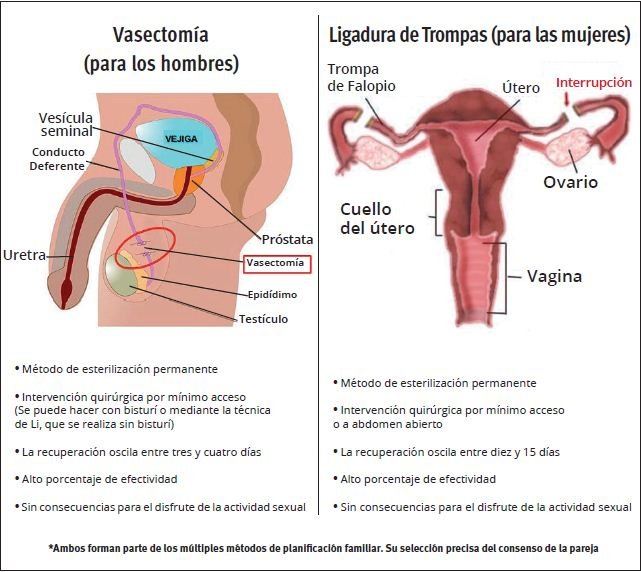
“Before deciding on a vasectomy, we looked at other alternative methods, but none of them satisfied us. I would tell her, ‘I don’t want you to go to the operating room,’ and she would say, ‘I do want you to go, but to have a vasectomy. Not knowing what it was like and with my machismo in front of me, I did not agree, and so we worked for several years, until I was convinced.
“During the operation I felt no pain. The recovery was perfect. I can tell those who doubt that vasectomy transports you to a world where worries are over.”
His wife, Yamilka Rodriguez, confesses that it was not at all easy to convince him, because “there was a lot of pressure from society and even from the family; even when he entered the salon they told him not to do it”.
Today, Yamilka says, not many people are surprised:
“Women ask me how I got her to have it done and men tell her: ‘You’re crazy, no woman deserves to have that done for them’. It is a deep-rooted machismo. In the face of that, I say that we are happy”.
As this is an issue that is discussed (when dialogue is achieved) within the couple, in the Family Planning Consultation of the municipality of Pinar del Río, each of the options available to avoid pregnancy is explained. In this regard, Dr. Lázara Medina Martínez, who has a diploma in Comprehensive Care for Women and a master’s degree in Communicable Diseases, points out that “vasectomy, in particular, is almost never accepted”.
From 2012 to date, during the time she has been working in this practice, only two couples have opted for this method, in both cases because the women had pathologies that prevented them from undergoing ligation.
Acts of love and responsibility
In sexual and coupled life, as in social life, everyone has their own contexts, realities and determinants. It is true that as a country we are gaining more and more information and debate on topics that have traditionally been considered off-limits, or only of interest to sectors such as women, in the case of birth control and the end of fertility; but as long as there are options that have not been taken advantage of because of macho cultural patterns, there is still much to communicate and discuss.
On this path, there is nothing better than to seek guidance from specialists and positive experiences. Fortunately, when one looks to the horizon, one finds examples such as those of Ernesto Herrera, from Holguín, who has just become a father. He is sure that, “when the time comes, vasectomy will be the option I will take. It is safer and less traumatic than a ligation for my wife. It is also an act of love.
Talking About the Party – Introductory Note

Talking About the Party – Introductory Note
by Walter Lippmann, May 19, 2021
The Cuban Communist Party’s VIII Congress, held in Havana in April 16-19, 2021, found the island confronting perhaps its greatest challenges since the revolutionary government came to power in 1959. Washington’s multi-faceted blockade has been intensified more than ever before, and the Covid-19 pandemic struck a cruel body blow to the island’s tourism economy, its principal source of foreign hard-currency income.
As the island’s sole political party, the PCC has faced a seemingly endless array of problems. Its historic leadership, lead by Raúl Castro, was stepping aside to make room for a new generation raised in and products of, Cuba’s revolutionary system.
Beginning on the eve of the congress, and concluding after the congress concluded its decisions, Rafael Hernández, shared a series of detailed observations for the online journal OnCuba. He looked at the origins, evolution and development of the PCC, including how it was formed, its evolution and development. These considerations can and will help the attentive reader to better understand the PCC, and some of the challenges it faces as an organization.
The author of these articles, Rafael Hernández, is the director of the Cuban journal TEMAS (Themes). He is a political scientist, a graduate of El Colegio de Mexico, and UNAM. He has published more than a dozen books and 200 essays on Cuba-US relations and Cuban politics and society. A few of them in US academic publishing houses. The series was original published in OnCuba, a Miami-based publication, but wasn’t translated there. Links to the Spanish original of each of the five articles can e found at the bottom of each one.
Speaking About the Party, Part I
Reducing the socialist revolution to the protagonism of a party or an ideology does not help to understand its complexities and problems.
https://walterlippmann.com/talking-about-the-party-i/
Speaking About the Party, Part II
Dialogue between different generations will just be a good wish as long as the Party and the rest of the institutions it guides do not achieve an environment conducive to respect and trust, to discussion, criticism and ensuring a truly participatory and democratic style in decision making.
https://walterlippmann.com/talking-about-the-party-ii/
Speaking About the Party, Part III
Diversity and representation
https://walterlippmann.com/talking-about-the-party-iii/
Speaking About the Party, Part IV
On the VIII Congress that has just concluded.
https://walterlippmann.com/talking-about-the-party-iv/
Speaking About the Party, Part V and final
Is this Party capable of conducting reforms as a continuous process of correction and adjustment, and at the same time, self-reform?
https://walterlippmann.com/talking-about-the-party-v-and-final/
Outgoing PCC First Secretary Raul Castro presented a sobering look at the challenges faced by the country. It’s very long, but is essential reading to understand the thinking of leadership. At the end of the congress, Miguel Diaz-Canel, replacing Raúl as head of the party and state, presented an assessment of the PCC’s tasks and perspectives. Here they are:
Central Report to the Eighth Congress of the Communist Party of Cuba
Full text of the presentation by Army General Raúl Castro Ruz, April 16, 2021
Díaz-Canel: “Among revolutionaries, we Communists go to the fore”
Full text of speech by Miguel Díaz-Canel Bermúdez, first secretary of the Communist Party of Cuba and President of the Republic of Cuba during the 8th Party Congress, April 19, 2021, Year 63 of the Revolution
http://en.granma.cu/cuba/2021-04-27/diaz-canel-among-revolutionaries-we-communists-go-to-the-fore
Finally, let me add that I’m very grateful to Rafael Hernández for assistance with this translation.
Talking About the Party (V)
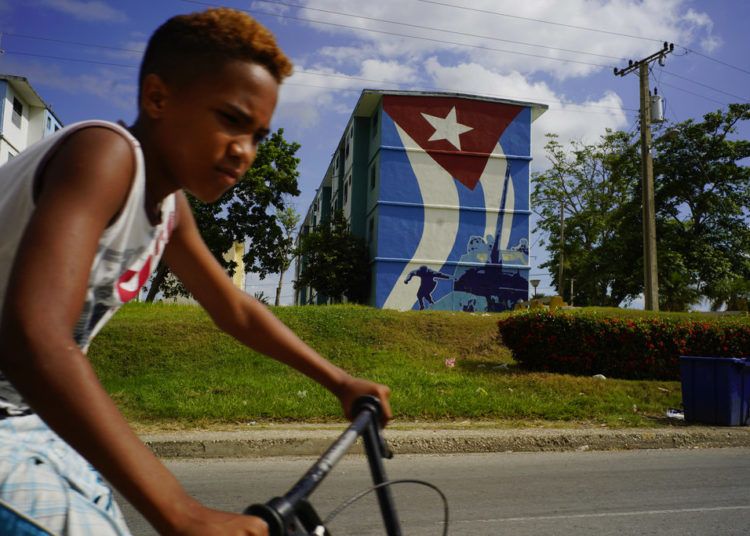
Talking About the Party (V) and final
Is this Party capable of conducting reforms as a continuous process of correction and adjustment, and at the same time, self-reform?
By Rafael Hernández
April 29, 2021
Translated and edited by Walter Lippmann for CubaNews.
A friend of mine, with whom I engage in long-distance dialogues, says that truth is not to be tested and rights are not to be plebiscitee. If I understand correctly, then, justice is not voted; that is, what is just does not depend on the judgment of the majority, which can sometimes support very unjust things, as human history teaches.
Let’s say, for example, the sum of all those who discriminate against others for any reason – skin color, gender, sexual orientation, religious faith, social class, educational level, age, disability, region, etc. – could be more than 50% of all of us. That majority would not have justice on its side, even if they possibly believed it, and would even be offended if someone suggested otherwise. So if an investigation were to show that they exercise prejudice and discrimination against others, the majority might nevertheless be suspicious of that truth, despite all the evidence. In other words, the truth is not what the majority thinks either.
Do justice and truth have anything to do with democracy? Probably, if we took a poll, the majority would recognize them both, and also equality and freedom, as conditions for a democratic system. But I suspect that if we were to ask right now what is the order of priority of these conditions for a genuine democracy, 1) to be fully equal and 2) to be fully free, the latter would win out. It would be worth inquiring, just to see if we are really as we think of ourselves. In any case, even supposing that the truth is not tested, there is no doubt that it is investigated, and even discovered.
Although it may give the impression of a philosophical or theoretical disquisition, I am only trying here to get to a concrete political question: can a single party, to which the majority does not belong, be functional to a democratic system, and do better than the many parties in a capitalist order? Although impossible to discuss as it deserves in such a short space, this problem underlies many comments about the PCC that have circulated in recent days.
To begin with, does it make sense to compare the Cuban Party with others? Let’s say, those of Mexico. Unlike Cuban militants, those affiliated to the Mexican ones can register without having an endorsement, nor undergo an exemplary assembly at their workplace, nor go through a meticulous selection process, up to the granting or not of militancy. The entrance into those parties, directed above all to win elections, is more accessible for the majority of Mexicans than for us the PCC.
In spite of these and other big differences, which I pointed out before, the question of the representativeness of the population in the parties is comparable, since in both cases they not only maintain command structures, but also ranks, which can be measured. For example, in the case of Mexicans, the data (2019) show affiliations in the main political organizations: PRI (2 million 65 thousand), PRD (one million 200 thousand), Morena (467 thousand), PAN (250 thousand). In total, 3,982,000; or in other words, 3.11% of the Mexican population residing in the country (128 million). Naturally, since those under 18 years of age and those not registered for other reasons do not vote, this calculation should be made on those who can. Let’s say, right now, two months before the Mexican elections, the affiliates of these four parties add up to 4.2% of all registered voters (95 million). As is evident, if the degree of consensus that a party achieves were measured by its number of affiliates, none of the Mexicans could ever win the elections.
Calculated on the basis of the electoral roll (9,292,277, in 2019), the militancy of those over 16 (voting age in Cuba) in the political organizations, PCC and UJC, represents 7.5%; and if compared with the economically active population (4,515,200), it reaches 15.5%, or what is the same: out of every 13 of the members of this population, 2 are militants in one of the two organizations. Reasoning that this is a small minority, because it does not include the majority of the population, ignores the fact that nowhere do political parties attract to their ranks as active members (not the same as voters) that kind of majority. Reducing the votes for socialism as a system to that militancy also fails to explain the complex fabric of consensus nor the new political factors in its dynamics since 2018 – new government, new Constitution, historic leadership changeover, deepening of reforms, etc.
To a large extent, that Constitution and its public discussion have been a kind of outlet, a point of equilibrium of the interwoven national consensus that characterizes Cuban society today. Among my jurist friends, judgments abound on the significance of that Magna Carta as a great frame of reference, a mirror to correct the course, and a barrier to prevent adverse circumstances and other contingencies from derailing the course. However, it would be an excess, as well as an illusion, to consider it a magic mirror, with all the answers to the real problems of society and the system, and to its political practices.
If constitutions were that magic mirror, according to Singapore’s multi-party constitution, the same party (and the same family) would not be governing, with the approval of “the international community,” since 1955; nor in Malaysia, since 1957; nor in Cambodia, since 1979. Not to mention other constitutions closer to home, where the same party, not exactly communist, ruled for 70 years, or where the same two have been representing We the People for more than two hundred years. Nor would that mirror explain how it is that the constitutions of China and the Democratic People’s Republic of Korea admit several parties.
Judging the amount of democracy of a system on the basis of party competition, rather than grassroots representation and interaction with the citizenry, seems trivial with respect to the idea of “government of the people.” If that “government of the people” is not reducible to the act of voting or consultation, nor does democracy spring from a dozen undemocratic parties, then under what conditions can a single party foster citizen democracy?
Addressing that problem, even incompletely, would bring us closer to the Cuban political situation on its own terms, rather than looking at it as a reform that will never come to pass, simply because it will not. Some observers argue that the very idea of a single party in charge of reform is nothing more than an oxymoron. This approach, built more on the literary metaphor of the eternal return than on the study of relevant cases, suffers from three deficits: 1) judging the system by what it is not, that is, what it lacks to reach capitalism; 2) eagerness to characterize the unequivocal signs of its imminent collapse for the last 30 years; 3) inability to anticipate what has happened during all this time.
Analyzing the question of the Party’s representativeness, besides the social composition of its ranks, requires understanding its role in the political system as a whole. Indeed, if it is “the superior political force,” which does not supplant the others, but guides them, it must contribute to the representative and democratic functioning of the organs of state power, in the first place, the system of People’s Power. In addition, there are the unions, youth, women’s and agricultural producers’ organizations, in the sense that they really defend their interests. Finally there’s the support to all all groups which, outside these organizations, suffer discrimination in today’s Cuban society.
It is also up to the Party to ensure that the emigrant citizens [those living abroad] have a representative mechanism, which does not rely on foreign policy, but on an institutionality that embodies citizens’ rights, such as the National Assembly. As well it must contribute so that heretics do not suffer stigma, nor end up in ex-communication or worse, but that their dissent can be cultivated and used as a source of renewal of doctrine, according to the lessons that heretics like Luther and Calvin left in Christianity.
Of course, it is their task to deal with the opposition, something very different from dissent, but not an irremediable, homogeneous and cohesive block. And to do so with political means, not merely to apply law and order. Although the study of the social composition of that opposition does not reveal, as some suppose, that it is the voice of the poor or of the blacks in the barrios, it does show that it involves diverse people, not all of them intractable. “What would become of the Revolution if it had not won for its cause the adversaries…?” recalled Fidel Castro in a speech to the PCC militancy, to explain to them the new policy towards emigration, in 1979. “There is a long tradition of the Revolution in the struggle to capture adversaries. ” [1]
If the basic democratic question is the participation of the people, can a single party not only promote consultation and mobilization, but also expose policy-making to citizen action, and ensure that citizens can participate in controlling them through society and its institutions?
There is no shortage of questions: Is this Party capable of conducting reforms as a continuous process of correction and adjustment, and at the same time, self-reform? Is it capable of not only becoming aware of its problems, but also of eradicating them? Where are the points of resistance to change? What are the main problems of the Party’s organizational culture? What are the characteristics of the cadres and the rules of operation? What is the political education of a communist militant today?
In the first part of this series, I noted that this sum of subordinate minorities that made up the majority were the social base of the Revolution and of the socialist consensus. There was the solid base [e.g., the good people, the vanguard workers] as it was said before, of the Party. Then, it was relatively easy to distinguish the vanguard, not only above, but also below. It was enough to propose them: “the best to the Party.” Now, what is the content of the notion vanguard nowadays? Is it possible that it means the same thing? Who are its members?
When Raul Castro was president, he once stated that the economic policy of the Update would not succeed without decentralization. If decentralization is not confused with the deconcentration of power structures, and if, as Martí called them, the “habits of command” to govern, the verticalism and the lack of dialogue with citizens at the local level are not maintained, then it is a redistribution of power, that is, a political change.
According to this logic, the road to economic development would pass through local empowerment, which is where the real participation of citizens does or does not take place, and where lies, as the Apostle says, “the salt of democracy.” To guarantee this profound political reform of the system, without fear of those words or of transiting a passage into the unknown, is also up to the Party.
Talking about the Party (IV)
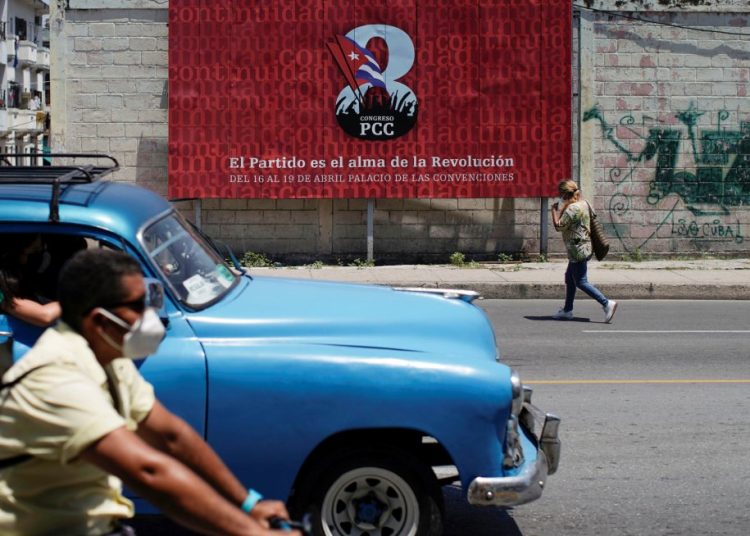
Talking About the Party (IV)
On the VIII Congress that has just concluded.
By Rafael Hernández
April 20, 2021
Translated and edited by Walter Lippmann for CubaNews
Photo: Alexandre Meneghini/ REUTERS
Talking about the Party (III)
Talking About the Party (III)
Diversity and representation
By Rafael Hernández
April 14, 2021
Translated and edited by Walter Lippmann for CubaNews
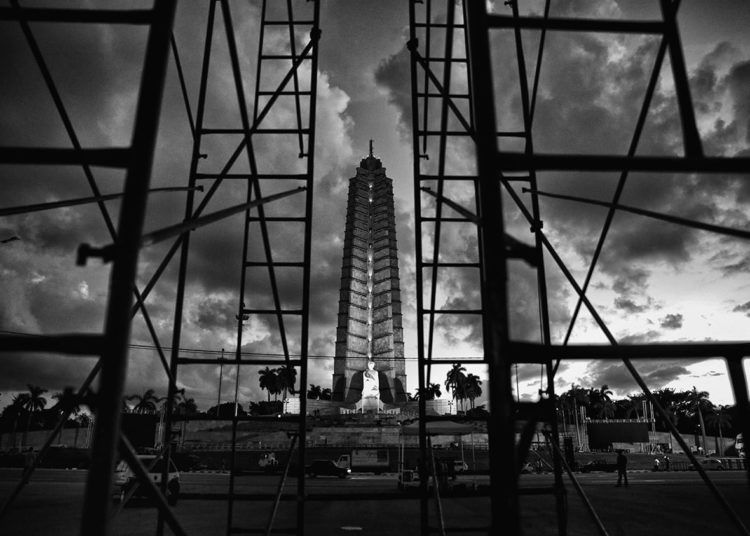
Plaza de la Revolución on the morning of November 28, 2016, three days after the death of Fidel Castro. Photo: Gabriel Guerra Bianchini.
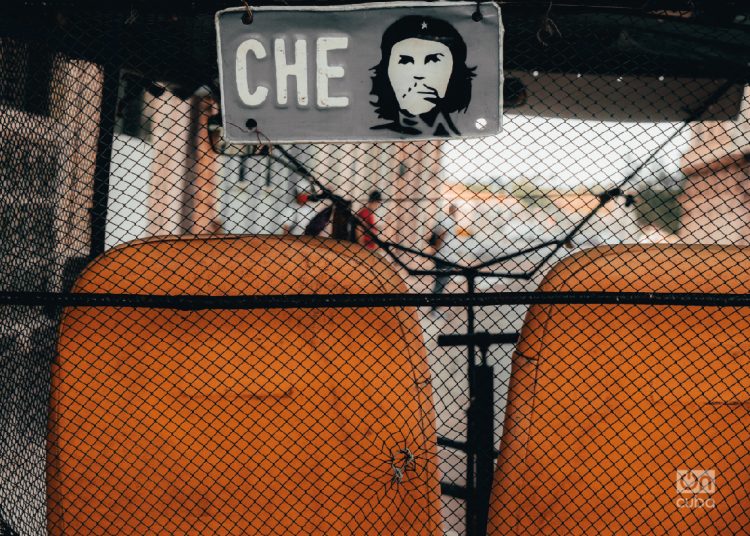
Photo: Randdy Fundora
Then a “rectification of errors and negative tendencies” (1986-91) of this system, interrupted before establishing a new one.
Then, a package of emergency measures (1993-96) to overcome the crisis of the Special Period, almost unchanged for more than ten years of uncertain recovery.
This continued until the beginning of a program of structural reforms called Updating the Model (2011), which produced nothing less than another conceptualization of socialism, economic guidelines and a new Constitution.
In this last, a mixed economy model is advocated, property relations are substantially modified, the private sector and the market are legitimized, and the most radical decentralization of the system is proposed -almost everything still pending implementation.

Plaza de la Revolución. Photo: Kaloian
According to the figures of the VII Congress, the Party had 670,000 members, 13% less than five years before. Added to the 405,830 of the UJC (2012), they were still a very high number with respect to the population and other political parties where it is enough to register, according to those figures in Cuba, out of every 4.5 people of working age 1 is a PCC militant. In its occupational structure, professionals had been the most represented sector (41.6%), above leaders and workers. A quarter of these professionals, equivalent to 11.1% of the total number of militants, were teachers.
Of every 6 members of the PCC, 4 were under 55 years old (2 ½ under 45); 1 between 55 and 60 and 1 over 60. The Central Committee (CC) of the PCC elected at the VI Congress (2011) had an average age of 57, and that of the VII (2016), had decreased to 54. The rejuvenation policy lowered the average age of the top leaders in the provinces to 52 (2018), five less than that of current President Díaz-Canel.
Women were 39% of the Party’s militancy, but 52% of the UJC. In the current CC, they are 42%; and in the Political Bureau (PB), they increased from zero or one, to 4 since 2016. Non-whites in the ranks, as well as in the Political Bureau, represent 35%, the same proportion as in Cuban society, according to the last Census. In the CC, they are 31%, of which the majority are black (16.6%).
The entry of five new members to the Political Bureau at the VII Congress had already lowered the average age from 70 to 63. This PB was the first one where the positions by professional profile (9) -defense, economy, diplomacy, public health, science and technology- exceeded those of career political leaders (8).
Among these political cadres, 5 had led in the provinces, and 3 joined the PB under Raul’s command. Contrary to what is repeated, more military personnel did not enter, but left, and those who remained were already there before Raul’s command. This pattern, which leads provincial leaders of the PCC and the People’s Power to the highest national level, is also part of his legacy.
Probably, this pattern will be maintained in the leadership bodies to be elected by the VIII Congress. The number of women and non-whites, as well as provincial leaders, will increase. Very surely, the age of the Political Bureau will decrease again: the outgoing First Secretary will soon be 90 years old, and the incoming one will have barely turned 61 when taking office. If the number two were a non-white woman or a provincial leader, known for their popular roots, everything would fit.
A friend of mine says that he doesn’t care about the age, color, profession, or even gender of those who lead, as long as they adopt intelligent and effective policies. I don’t know how many people think this way. Still, even if its implications for equality of access and opportunity among diverse groups were to be overlooked, the proximity of profiles between militancy, leadership and society is by no means irrelevant, if only as a point of linkage between the society and its political institutions.
Throughout my life, I have known many Party militants, and not a few leaders, from the local level to the CC and the Political Bureau, including the historical generation. Although I can identify common traits among many of them, their diversity is more revealing to me. Let us say that it would not be difficult to find two Party militants with ideas more different from each other about socialism, its problems and how to solve them, than any Democrat and any Republican with respect to the system of the North.
One of these militants could affirm, for example, that such differences weaken the unity necessary in a Party “of steel,” which assures sovereignty and independence, confronts the internal and external enemy, by force if necessary, and serves as an example to the younger generations. The other would say that, for a democratic socialism, public debate of these differences strengthens a Party that should be flexible, adapt to the historical moment, and apply political solutions to political problems, instead of the simple use of force.
My two militants, who could be 35 or 70 years old, would agree on many other things: the Party could promote a better citizen democracy; sovereignty, social justice, equity and human dignity are non-negotiable. Our system, with its flaws, surpasses any capitalism. However, the two might disagree even more if I asked them what to do in economic policy, how to discuss and legislate in the National Assembly, what are the limits of expression in art, or what they think of the Party-oriented media. Probably, both could cite the historic leadership to support their arguments.
If socialist policy generates judgments like those of my two militants, shouldn’t they be expressed in the Party press? If that policy claims to channel the dissent of society within the framework of established institutions, and if these, in order to remain unique, should be “the most democratic in the world,” should not a legitimate space be provided for a loyal opposition, within the socialist ranks, even if it disagrees with certain policies?
In an increasingly diverse society, thinking creatively about the continuity of this unity would contribute to place – to paraphrase Cintio Vitier – “the devices at the center of the flower.”
***
Note:
1 Speech by the Commander in Chief, Fidel Castro Ruz, Meeting of information to cadres and militants of the Party, Karl Marx Theater.” February 8, 1979, Versiones Taquigráficas del Consejo de Estado, quoted in Cuba y su emigración, 1978: Memorias del primer diálogo, Elier Ramírez Cañedo. Ocean Sur, 2019.
Talking about the Party (II)
Talking About the Party (II)
Dialogue between different generations will just be a good wish as long as the Party and the rest of the institutions it guides do not achieve an environment conducive to respect and trust, to discussion, criticism and ensuring a truly participatory and democratic style in decision making.
By Rafael Hernández
March 31, 2021
Translated and edited by Walter Lippmann for CubaNews
Plaza de la Revolución. Photo: Kaloian
You must be logged in to post a comment.