Mariela Castro Facebook post on Orlando
- English
- Español
Mariela Castro Facebook post on Orlando
By Mariela Castro
A Google/CubaNews translation.
Edited by Walter Lippmann.
Once again the people of the United States, and particularly the LGBT population, is the victim of hate crimes with firearms.
The people of Cuba and the international community together, receive the impact of this terrible event, amidst media confusion, far from helping loved ones to process the grief and American society to seek solutions, [instead] encourages hatred, stigma and discrimination.
There are increasingly frequent news of violent acts that threaten the enjoyment of human rights in the United States and have placed the issue of arms sales in the center of discussions.
From the most painful experiences we can learn, so I do not lose hope that the American people from their pain, will succeed in conquering a society without violence.
All my solidarity!
Mariela Castro Espín
June 14 at 3:08 pm · Havana, Cuba
Mariela Castro Facebook posting on Orlando
Mariela Castro Espín
Junto al pueblo de Cuba y la comunidad internacional recibo el impacto de este acontecimiento terrible, en medio de una confusión mediática que, lejos de ayudar a los seres queridos a procesar el duelo y a la sociedad estadounidense a buscar soluciones, alienta el odio, el estigma y la discriminación.
Son cada vez más frecuentes las noticias de hechos violentos que atentan contra el disfrute de los derechos humanos en los Estados Unidos y colocan el tema de la venta de armas en el centro de los debates.
De las experiencias más dolorosas deben sacarse aprendizajes, por lo que no pierdo la esperanza de que el pueblo estadounidense, desde su dolor, salga adelante en la conquista de una sociedad sin violencia.
¡Toda mi solidaridad!
Cuban President mourns passing of Muhammad Ali
- English
- Español
Cuban President mourns passing of Muhammad Ali
A Google/CubaNews translation.
Edited by Walter Lippmann.

Havana, June 4 (Prensa Latina) Cuban President Raul Castro, today mourned the death of legendary American boxer Muhammad Ali, declaring the Seventh Summit of the Association of Caribbean States (ACS) closed.
We send our message of condolences and solidarity to the family of the great Muhammad Ali boxing champion, the people of the United States, especially the African American community, whose rights he always defended as well as the whole sports community, he said.
In his closing speech, he also said that “we will never forget his chivalry and ethics, his rejection of war and the defense of peace, respect and friendship with Fidel (Castro) and Teofilo Stevenson, the great boxer born in Cuba and Caribbean.”
Considered the greatest boxer of all time, Ali, who was born in 1942 with the name of Cassius Clay until he converted to Islam, died Friday at the age of 74 in a hospital in Phoenix (Arizona) following respiratory complications from his long battle with Parkinson’s disease.
Throughout his brilliant career, in addition to winning Olympic gold medal in Rome in 1960 and establishing himself as world heavyweight champion professional, Ali was about to face in the “Fight of the Century” three-time holder under the five rings and who would be his friend, the Cuban [Teófilo] Stevenson.
Upon learning of his death, personalities from diverse fields, from all corners of the world, sent out similar messages evoking the greatness inside and outside the ring to the boxer who “floated like a butterfly and stung like a bee”, as he described himself.
The ACS Summit met for three days in Havana with the participation of heads of state and government, foreign ministers and representatives of thirty members and associate members of the regional organization to discuss issues of common interest.
Presidente cubano lamenta el fallecimiento de Muhammad Ali
La Habana, 4 jun (PL) El presidente cubano, Raúl Castro, lamentó hoy la muerte del mítico boxeador estadounidense Muhammad Ali, al declarar clausurada la VII Cumbre de la Asociación de Estados del Caribe (AEC).
Enviamos nuestro mensaje de condolencias y solidaridad a la familia del gran campeón de boxeo Muhammad Ali, al pueblo de los Estados Unidos, en especial a la comunidad afroamericana, cuyos derechos siempre defendió, así como a toda la comunidad deportiva, expresó.
En su discurso de cierre afirmó, además, que “nunca olvidaremos su caballerosidad y ética, su rechazo a la guerra y su defensa de la paz, su respeto y amistad con el compañero Fidel (Castro) y con ese gran boxeador nacido en Cuba y caribeño que fue Teófilo Stevenson”.
Considerado el boxeador más grande de todos los tiempos, Ali, que nació en 1942 con el nombre de Cassius Clay hasta que se convirtió al Islam, murió el viernes a la edad de 74 años en un hospital de Phoenix (Arizona) a raíz de las complicaciones respiratorias provocadas por su larga batalla contra el mal de Parkinson.
A lo largo de su brillante carrera, además de conquistar el oro olímpico en Roma-1960 y erigirse campeón mundial de los pesos máximos en el profesionalismo, Ali estuvo a punto de enfrentar en la llamada “Pelea del Siglo” al tres veces titular bajo los cinco aros y quien sería su gran amigo, el cubano Stevenson.
Al conocerse su deceso, personalidades de los ámbitos más diversos emitieron desde todos los rincones del mundo mensajes similares evocando la grandeza dentro y fuera de los cuadriláteros del boxeador que “flotaba como una mariposa y picaba como una abeja”, como él mismo se describía.
La Cumbre de la AEC sesionó por tres días en La Habana con la participación de jefes de Estado y Gobierno, cancilleres y representantes de la treintena de países miembros y asociados de la organización regional para debatir temas de interés común.
Espanol Here
USA: 50 dead and 53 injured after mass shooting in Florida

- English
- Español

US: 50 dead and 53 injured after mass shooting in Florida
Club Pulse in Orlando, Florida, this morning. Photo: Twitter
A CubaNews translation.
Edited by Walter Lippmann.
A man with an assault rifle and a pistol took hostages and shot at close range in a crowded nightclub in Orlando, Florida, killing 50 people and wounding 53 before being shot fatally by police commandos, the mayor reported on Sunday.
“There is blood everywhere,” said Mayor Buddy Dyer at a press conference.
Earlier, U.S. Representative Alan Grayson identified the assailant as Mateen Omar Port St. Lucie, Florida, based on what police sources said.
Police Chief John Mina said the attacker was also carrying some kind of “suspicious device”. He explained that the individual engaged in a shootout with a police officer who was inside the club at about 2 AM and then took hostages.
At about 5 AM, the authorities dispatched a SWAT team to rescue the hostages and the assailant was killed in a firefight with those agents. Mina had initially said said police did not determine the exact death toll, but were “about 20”.
Police commander Danny Banks said at a news conference that authorities are investigating the hypothesis that it could have been an act of domestic or international terrorism, but also that the assailant may have acted on his own. Orange County Police Chief, Jerry Demings, added: “From my point of view, this is an incident of domestic terrorism.”
FBI Special Agent Ron Hopper said that there was no additional threats in Orlando or surrounding areas. When asked if the attacker had any connection with Islamic terrorism, Hopper said, “we have evidence that this individual had leanings towards that.”
Police had earlier reported on Twitter that a “controlled explosion” had taken place, in the Club Pulse, Orlando, a popular nightclub among gays when the event happened. Mina said that it was an explosion detonated by police on purpose to distract the attacker.
A woman, Mina Justice, was outside the club Sunday morning trying to find her son Eddie, 30 years old, who had sent her a text message telling what happened and imploring him to call the police. He told her that he had locked himself in a bathroom with other people and then wrote “Here it comes”.
Justice said: “The last message he wrote was: ‘We have corralled, is in here with us.’ That was the last communication. “
Dozens of police vehicles, including vans of SWAT teams, rushed to the place urgently. At least two police vans were carrying what appeared to be those killed at the event to Orlando Regional Medical Center.
The nightclub, Pulse Orlando, published shortly after 2 am a note on its website saying: “Get out of the Pulse and run”. Just before 6 it made another posting in which it said: “As soon as we get the information we do get. Please keep them all in your prayers as we work in this tragic event. Thank you for your thoughts and your love. “
Police said the local, state and federal authorities are investigating the incident.
Research on the events involved local, state and federal agencies, police said.
The incident occurred after the death Saturday of a 33 year-old singer, Christina Grimmie, who was shot after a concert in Orlando by a 27-year-old from Florida who later committed suicide. Grimmie was a star on YouTube and had participated in the TV show “The Voice”.
Jon Alamo said it was in the back of one of the rooms of the nightclub when a man with a gun entered the front.
“I heard 20, 40, 50 shots,” Alamo said. “The music stopped.”
Another of those present at the disco, Rob Rick, said the incident took place around 2 am, shortly before closing time.
It is believed inside the club there were more than 100 people when the shots were heard. Those present crouched and crawled into the cab of a DJ. They tore down a separation between the area reserved for disco and workers and people could escape through the back of the living area.
(With information from agencies)
EEUU: 50 muertos y 53 heridos tras tiroteo masivo en la Florida
12 junio 2016
Club Pulse, en Orlando, Florida, esta madrugada. Foto: Twitter
Un hombre con un fusil de asalto y una pistola tomó rehenes y disparó a mansalva en un abarrotado club nocturno de Orlando, Florida, matando a unas 50 personas e hiriendo a 53 antes de ser abatido fatalmente por comandos policiales, informó el alcalde de la ciudad el domingo.
“Hay sangre por doquier”, expresó el alcalde Buddy Dyer en conferencia de prensa.
Poco antes, el representante Alan Grayson identificó al agresor como Omar Mateen de Port St. Lucie, Florida, con base en lo que le dijeron fuentes policiales.
El jefe policial John Mina dijo que el atacante también portaba algún tipo de “artefacto sospechoso”. Explicó que el individuo se entabló en una balacera con un policía que estaba dentro del club a eso de las 2 de la madrugada y luego se adentró y tomó rehenes.
A eso de las 5 de la mañana las autoridades despacharon un equipo SWAT para rescatar a los rehenes y el agresor murió en una balacera con esos agentes. Mina inicialmente había dicho dijo que la policía no determinó la cifra exacta de muertos, pero que fueron “aproximadamente 20″.
El comandante policial Danny Banks dijo en conferencia de prensa que las autoridades indagan la hipótesis de que pudo haberse tratado de un acto de terrorismo interno o internacional, pero también de que el agresor pudo haber actuado por su cuenta. El jefe policial del condado de Orange, Jerry Demings, agregó: “Desde mi punto de vista, esto se trata de un incidente de terrorismo interno”.
El agente especial del FBI Ron Hopper dijo que ya no había amenazas adicionales en Orlando o sus alrededores. Cuando se le preguntó si el atacante tenía conexión con el terrorismo islámico, Hopper contestó: “tenemos indicios de que ese individuo tenía inclinaciones hacia eso”.
La policía anteriormente había informado en Twitter que había ocurrido “una explosión controlada” en el lugar, el club Pulse Orlando, un centro nocturno popular entre los gays. Mina dijo que ese fue un estallido detonado a propósito por policías para distraer al atacante.
Una mujer, Mina Justice, estaba afuera del club la mañana del domingo tratando de encontrar a su hijo Eddie, de 30 años de edad, quien le había enviado un mensaje de texto narrando lo que sucedía e implorándole que llamara a la policía. Le dijo a ella que se había encerrado en un baño con otras personas y que luego escribió “Ahí viene”.
Justice afirmó: “El último mensaje que escribió fue: ‘Nos tiene acorralados, está aquí adentro con nosotros’. Esa fue la última comunicación”.
Decenas de vehículos policiales, entre ellos camionetas de equipos SWAT, acudieron con urgencia al lugar. Por lo menos dos camionetas de la policía se estaban llevando lo que parecían ser víctimas fatales del suceso al Orlando Regional Medical Center.
La discoteca, Pulse Orlando, publicó poco después de las 2 de la madrugada una nota en su página diciendo: “Salgan de Pulse y corran”. Justo antes de las 6 realizó otra publicación en la que decía: “Tan pronto como tengamos información se las vamos a hacer llegar. Por favor, mantengan a todos en sus oraciones mientras trabajamos en este trágico suceso. Gracias por sus pensamientos y su amor”.
La policía dijo que las autoridades locales, estatales y federales están investigando el incidente.
En la investigación sobre lo sucedido participan agencias locales, estatales y federales, dijo la policía.
El incidente ocurrió después de la muerte el sábado de una cantante de 22 años, Christina Grimmie, que fue baleada tras un concierto en Orlando por un hombre de 27 años de edad de Florida que más tarde se suicidó. Grimmie era una estrella en YouTube y había participado en el programa de televisión “The Voice”.
Jon Alamo dijo que estaba en la parte de atrás de una de las salas del club nocturno cuando un hombre con un arma entró en la parte de delante.
“Escuché 20, 40, 50 tiros”, dijo Alamo. “La música se detuvo”.
Otro de los presentes en la discoteca, Rob Rick, dijo que el incidente tuvo lugar alrededor de las 2 de la madrugada, poco antes de la hora de cierre.
Se cree en el interior del club había más de 100 personas cuando se escucharon los disparos. Los presentes se agacharon y se arrastraron hacia la cabina de un DJ. Derribaron una separación entre la zona de discoteca y un área reservada a trabajadores y la gente pudo escapar por la parte de atrás de la sala.
(Con información de agencias)
US Differentiates Between Coups in Brazil and Venezuela
- English
- Español
US Differentiates Between Coups in Brazil and Venezuela
By Manuel E. Yepe
http://manuelyepe.wordpress.com/
A CubaNews translation.
Edited by Walter Lippmann.
A US State Department spokesperson repeatedly refused to comment on the momentous political crisis in Brazil during his June 3 press briefing. He gave evidence of the sharp contrast between his long and loquacious criticisms of neighboring Venezuela and Washington’s complicit tolerance of the parliamentary coup in Brazil.
This was reported on the alternative website AlterNet by journalist Zaid Jilani, who actively participated as a reporter in the press conference given on June 3rd by US State Department official spokesperson Mark Toner.
In a dispatch by Jilani, published by digital website The Intercept and other alternative media, it was reported that, when questioned about this sharp contrast, Toner, visibly excited, said: “I don’t have anything to comment about the ongoing political dimensions of the crisis in Brazil.”
The US “hard” foreign policy intends to apply to Venezuela the Inter-American Democratic Charter of the Organization of American States (OAS) imposed by the Washington on the continent following September 11, 2001. It’s goal was to strengthen United States domination in the context of the New York terrorist events used as a pretext for President George W. Bush President George W. Bush ‘s declaration of the “war on terrorism”.
In the case of Brazil, the United States tries to justify the “soft” parliamentary, judicial and media coup d’état against President Dilma Rousseff’s government. Her impeachment’s legitimacy has been rejected by most experts and observers who are not subject to the networks of international corporate media controlled by Washington.
The State Department has been extremely repetitive in its criticism of Venezuela’s progressive government. It accuses that government of applying popular policies contrary to the hegemonic interests of the global corporations. By contrast, it has been silent about the takeover of the government in Brazil by a staunchly right-wing, pro-business government that is making the privatization of state industry a priority.
The debate with Toner at the press conference began when The Intercept journalist (Zaid Jilani) asked Toner why the U.S. has been joining in regional criticisms of Venezuela’s government for its alleged democratic backsliding, but has ignored Brazil’s political crisis, where right-wing lawmakers voted on May 12 to suspend the democratically-elected President from government and to open impeachment proceedings against the head of state.
It was then that veteran Associated Press State Department reporter Matt Lee jumped into the fray, asking if the impeachment of former President Dilma Rousseff was itself “valid.”
Toner continued to dodge, declaring U.S. confidence in Brazilian institutions. “But we’re very concerned about the current development of political events in Venezuela…” he said.
“And why aren’t you very concerned about a similar situation in Brazil?” Lee probed.
“Again — well, look, I’ve said my piece. I mean, I don’t have anything to add,” Toner concluded.
When Pam Dawkins of Voice of America asked about Venezuela and “the state of democracy there” in light of the delay of a proposed recall referendum put forth by the country’s opposition, Toner’s tone changed dramatically. In a response that went on for two full minutes, Toner waxed moralistic, asking Venezuela to respect democratic norms.
“We call on Venezuela’s authorities to allow this referendum to move forward and thus ensure that Venezuelans can exercise their right to participate in this process in keeping with Venezuela’s democratic institutions, practices, and principles consistent with the Inter-American Democratic Charter.”
Lee felt obliged to note again the contrast between Toner’s long critical response about the situation in Venezuela and the two phrases about Brazil “which is a much bigger country and with which you have enjoyed better relations.”
Then another reporter jumped into the fracas, asking Toner if the composition of the new Brazilian cabinet –composed entirely of men, many of them tied to large industries in the country– that replaces the cabinet led by the first female head of state in Brazil’s history raised any concerns.
“Look, guys, I will see if we have anything more to say about the situation in Brazil,” Toner concluded, to get rid of the embarrassing situation in which he had been placed because of the ambivalence of the “two-faced” imperialist foreign policy.
June 11, 2016.
DISTINGUE EEUU GOLPES EN BRASIL Y VENEZUELA
Por Manuel E. Yepe
http://manuelyepe.wordpress.com/
Un portavoz del Departamento de Estado estadounidense se negó reiteradamente a comentar la actual crisis política en Brasil y estableció un inconsecuente contraste entre su larga y mordaz crítica contra el gobierno de Venezuela y la cómplice tolerancia de cara a los “golpistas parlamentarios” en Brasilia.
Así lo reportó en la red alternativa AlterNet el periodista Zaid Jilani, quien participó activamente como reportero en la conferencia de prensa que ofreció el 3 de junio, Mark Toner, funcionario de la cancillería estadounidense y su portavoz oficial.
En un de despacho de Jilani aparecido en la publicación digital The Intercept y otros medios alternativos se cuenta que, cuestionado acerca del agudo contraste en que incurrió, Toner respondió visiblemente excitado: “no tengo nada que comentar sobre las actuales dimensiones políticas de la crisis en Brasil.”
La política exterior “dura” estadounidense pretende aplicar a Venezuela la Carta Democrática de la Organización de Estados Americanos (OEA) impuesta por Estados Unidos al continente aquel nefasto 11 de septiembre de 2001, para fortalecer la dominación de Estados Unidos en el contexto de los acontecimientos terroristas en Nueva York que sirvieron de pretexto para la declaración por el presidente George W. Bush de la guerra contra el terrorismo.
En el caso de Brasil, Estados Unidos intenta justificar el golpe “blando” de estado parlamentario, judicial y mediático contra el gobierno de Rousseff, juicio político cuya legitimidad ha sido rechazada por la mayoría de los expertos y observadores no sometida a las redes de la prensa corporativa internacional que controla Washington.
El Departamento de Estado ha sido sumamente reiterativo en sus críticas al gobierno progresista venezolano, al que reprocha aplicar políticas populares contrarias a los intereses hegemónicos de las corporaciones globales, y sin embargo guarda sigilo respecto a la toma del gobierno en Brasil por un régimen pro empresarial, de derecha, incondicional partidario de la privatización de las industrias del estado como una prioridad de gobierno.
El debate con Toner durante la conferencia de prensa comenzó cuando el periodista de Intercept (Zaid Jilani) preguntó a Toner por qué Estados Unidos se había unido a las críticas y amenazas al gobierno de Venezuela por supuestos retrocesos democráticos, en tanto ignora la crisis política de Brasil, donde legisladores de la derecha votaron el 12 de mayo por la separación del gobierno de la Presidenta Dilma Rousseff e iniciaron un proceso de impeachment contra la democráticamente electa Jefa de Estado.
Fue entonces cuando se incorporó a la discusión el veterano reportero de la Associated Press en el Departamento de Estado, Matt Lee, preguntando si la destitución de la ex Presidenta Dilma Rousseff había sido legalmente “válida”.
Toner, desviando el sentido de lo que se debatía, se limitó a reafirmar la confianza de Estados Unidos en las instituciones brasileñas. “Pero estamos muy preocupados por el desarrollo de los acontecimientos políticos en Venezuela…”, dijo..
“¿Y por qué no les preocupa una situación similar en Brasil?”, preguntó Lee. “Bueno, miren, yo he dicho lo mío y no tengo nada más que añadir”, selló Toner. Cuando Pam Dawkins, corresponsal de la Voz de las Américas, preguntó sobre el estado de la democracia en Venezuela “a la luz de la demora en la aprobación de la propuesta del referéndum revocatorio que ha presentado la oposición”, Toner resurgió con una extensa respuesta de corte moralista enfatizando en que Venezuela debía respetar las normas democráticas.
“Hacemos un llamado a las autoridades de Venezuela para que permitan este referéndum y así aseguren que los venezolanos puedan ejercer su derecho a participar en este proceso en consonancia con las instituciones democráticas, las prácticas y los principios conformes con la Carta Democrática Interamericana.”
Lee se sintió obligado a observar una nueva vez el contraste entre la extensa respuesta crítica acerca de la situación en Venezuela y las apenas dos frases sobre Brasil, “que es un país mucho más grande y con el que hemos tenido más amplias relaciones.”
Cuando otro reportero se incluyó en el debate, preguntando a Toner si para él era motivo de preocupación la composición del nuevo gabinete brasileño – integrado enteramente por hombres, muchos de ellos estrechamente vinculados a grandes negocios del país, en reemplazo del gabinete liderado por la primera mujer Jefa de Estado en la historia de Brasil.
“Miren, chicos, tendré que ver si tenemos algo más que decir acerca de la situación en Brasil”, concluyó Toner para liberarse de la embarazosa situación en que se hallaba colocado a causa de la ambivalencia de la política exterior imperialista “a dos velocidades”.
Junio 11 de 2016.
Sanders Wants to Debate Real Issues
- English
- Español
Sanders Wants to Debate Real Issues
By Manuel E. Yepe
http://manuelyepe.wordpress.com/
A CubaNews translation.
Edited by Walter Lippmann.
Another novelty introduced by the campaign of Democratic Party presidential candidate Bernie Sanders in his bid to win voters for his candidacy is the complaint made about the sad role of candidates and the media interested in sharpening antagonisms between candidates based on purely personal or trivial matters instead of focusing on the real issues of the country.
In a speech he gave in Santa Barbara, California recently, Sanders called on the media to be objective when reporting on his campaign.
“I have a problem with the New York Times, because, from the first day, it has been trying to ignore my campaign and has been very negative toward it.”
“Our campaign is aimed at defeating Secretary Clinton regarding real problems. I want to break up the big banks, she does not. I want to raise the minimum wage to $15 an hour; she wants $12 an hour. I voted against the war in Iraq, she voted for the war in Iraq. I think we should ban fracking, she does not.”
“I think we should establish a tax on coal and aggressively address the problems of climate change, which is not her position. Those are some of the issues for which I am campaigning …”
“The New York Times interviewed a handful of people, made a report and published it on the front page. These are problems to the New York Times but not my campaign.”
Sanders has argued that for the Democrats to win against Trump in November, “they would have to meet the needs of workers, confront Wall Street, confront greedy US corporations, and then also face the communications media.”
Pressed by a reporter for an opinion on the FBI investigation of Hillary Clinton’s email practices when she was Secretary of State, Sanders said that Americans are tired of such issues in the political debate.
“I think the media and candidates need to talk about the reasons that cause the decline of the middle class, and about why we have such high levels of income and wealth inequality.”
Certainly, in California, Sanders addressed very tangible issues such as the rights of agricultural workers, of President Obama’s deportation policy which divides immigrant families, the drought that has lasted for years, and other local issues such as the poisoned groundwater that causes asthma and birth malformations.
As reported by CNN, Sanders was introduced to a crowd in Bakersfield by the son of the popular Chicano farmworkers labor leader Cesar Chavez, who said that, if his father were alive, he would be a follower of Sanders. Right away, other supposed or real relatives of Cesar Chavez appeared to deny this, but Sanders’ campaign did not pay attention to this kind of problem.
Sanders told his supporters in the Central Valley community that there was still much to be done to help agricultural migrant workers. He said he had “no doubt that, just as here in the valley, agricultural workers are exploited throughout the country”.
He asserted that when they are paid very low wages, when they are exposed to pesticides, and when the tap water they get is not drinkable, responsibility lies with the corporations which own the farms and the corporations that buy the products of these farms.
Jeff Weaver, Sanders’ campaign manager, told The [UK] Guardian, one day before the California primary, that he was convinced that the possibilities for the Vermont senator were remarkable, because he had demonstrated his capacity to mobilize the masses in these big events just by his presence, as he did with his surprising victory in the Michigan primary when the polls had placed him ten points behind.
What everyone overlooks is that, although Secretary Clinton obviously has accumulated a substantial advantage, there is an incredible source of support for the senator which has not yet come to light in the process. Senator Sanders’ type of intensive campaign has actually moved many voters, said Weaver.
Even if it does not achieve the ultimate goal of winning the Democratic nomination to the White House for Sanders, his successful and surprising campaign has cast doubt on many myths and taboos about the political thinking of ordinary Americans. In reality, they are products of circumstantial situations that have opened spaces to fascism in the United States and have left deplorable footprints in the history of that great nation.
June 7, 2016.
SANDERS Y EL DEBATE DE PROBLEMAS REALES
Por Manuel E. Yepe
http://manuelyepe.wordpress.com/
Otra novedad introducida por la campaña del precandidato presidencial del partido demócrata Bernie Sanders en su puja por ganar votantes para su candidatura es la denuncia que ha hecho acerca del triste papel de los aspirantes y medios más interesados en agudizar los antagonismos entre candidatos en aspectos puramente personales o triviales en vez de centrarse en los problemas reales de la nación. En un discurso que formuló en Santa Barbara, California, Sanders llamó a los medios de prensa a ser objetivos al reportar sobre su campaña. “Tengo un problema con el New York Times, porque desde el primer día ha estado tratando de desentenderse de mi campaña y ha sido muy negativo respecto a ella”.
“Nuestra campaña está dirigida a derrotar a la secretaria Clinton respecto a los problemas reales. Yo quiero destrozar los grandes bancos, ella no. Quiero aumentar el salario mínimo a $15 la hora, ella quiere $12 la hora. He votado contra la guerra en Irak, ella votó por la guerra en Irak. Creo que deberíamos prohibir el fracking, ella no. Pienso que debemos fijar un impuesto sobre la hulla y tratar agresivamente los problemas del cambio climático, lo que no es la posición de ella. Ésos son algunos de los temas por los que estoy haciendo campaña…
El New York Times entrevista a un puñado de personas, hace un reportaje y lo publica en primera plana; esos son problemas para el New York Times pero no los de mi campaña.” Sanders ha sostenido que para que los demócratas puedan ganar contra Trump en noviembre, “tendrían que atender a las necesidades de los trabajadores, enfrentar a Wall Street, enfrentar la codicia de las corporaciones estadounidenses, y luego enfrentar incluso a los medios de comunicación.”
Presionado por un periodista para que opinara sobre la investigación del FBI acerca de las prácticas de correo electrónico de Hilary Clinton cuando era Secretaria de Estado, Sanders opinó que los estadounidenses están cansados de ese tipo de elementos en el debate político. “Creo que los medios de comunicación y los candidatos tienen que hablar sobre las razones que provocan que esté en decadencia la clase media y acerca de por qué tenemos tan grandes niveles de desigualdad del ingreso y la riqueza”.
Ciertamente, en California Sanders ha abordado cuestiones muy tangibles de los derechos de los trabajadores agrícolas, de la política de deportación del Presidente Obama que divide las familias inmigrantes, de la sequía que se sufre hace años y temas locales como los de aguas subterráneas envenenadas que provocan asma y defectos congénitos.
Según informó la CNN, Sanders fue presentado a una multitud en Bakersfield por el yerno del popular líder de los trabajadores agrícolas chicanos Cesar Chávez, quién manifestó que si éste siguiera vivo, sería un seguidor de Sanders. Enseguida aparecieron otros supuestos o verdaderos parientes de Cesar Chávez a negar que tal habría sido la actuación del citado fallecido dirigente de los trabajadores agrícolas, pero la campaña de Sanders no prestó oídos a este tipo de problema.
Sanders dijo a sus partidarios en la comunidad de Valle Central que todavía había mucho por hacer para ayudar a los trabajadores agrícolas migrantes. Manifestó que “no tenía duda alguna de que al igual que aquí en el valle, son explotados los trabajadores agrícolas en todo el país”.
Aseveró que cuando se les pagan salarios muy bajos, cuando son expuestos a pesticidas y el agua que sale de sus llaves no es potable, la responsabilidad recae en las corporaciones que son dueñas de las granjas y las corporaciones que les compran sus productos a esas granjas.
Jeff Weaver, Director de la campaña de Sanders, dijo al diario The Guardian un día antes de las primarias de California que estaba convencido de que las posibilidades que aún tenía el senador de Vermont eran notables, porque él había demostrado capacidad de movilizar a las masas en esos grandes eventos tan solo con su presencia, como lo hizo con su sorpresiva victoria en las primarias de Michigan cuando las encuestas lo situaban detrás por diez puntos. “Lo qué todo el mundo pasa por alto es que, aunque la Secretaria Clinton obviamente ha acumulado una sustancial ventaja, hay una increíble fuente de apoyo para el senador que aún no ha salido a relucir en el proceso. Un tipo de campaña intensiva como la del Senador Sanders realmente mueve muchos votantes, subrayó Weaver.
Aunque no alcanzara el objetivo supremo de llevar a Sanders a la candidatura demócrata para la Casa Blanca, su tan exitosa como sorprendente campaña ha logrado poner en duda muchos mitos y tabúes acerca del pensamiento político del estadounidense común que son en realidad productos de coyunturas circunstanciales que abrieron espacios al fascismo en Estados Unidos y han dejado lamentables huellas en la historia de esa gran nación.
Junio 7 de 2016.
Eduardo Galeano on Muhammad Ali (1967)
- English
- Español
Eduardo Galeano on Muhammad Ali
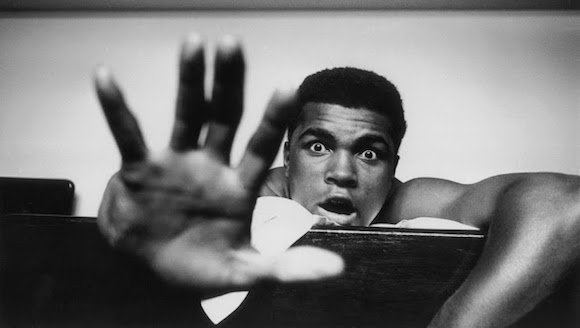
1967: Houston
By Eduardo Galeano
They called him Cassius Clay. He chooses to call himself Muhammad Ali
They made him a Christian. He chooses to make himself a Muslim.
They made him defend himself. No one punches like Ali, so fierce and fast, light tank, bulldozing feather, indestructible possessor of the world crown.
They told him that a good boxer confines his fighting to the ring. He says the real ring is something else, where a triumphant black fights for defeated blacks, for those who eat leftovers in the kitchen.
They advised discretion. From then on he yells.
They tapped his phone. From then on he yells on the phone, too
They put a uniform on him to send him to Vietnam. He pulls it off and yells that he isn’t going, because he has nothing against the Vietnamese, who have don no harm to him or to any other black American
They took away his world title, they stopped him from boxing, they sentenced him to jail and a fine. he yells his thanks for these compliments to his human dignity.
Translation from MEMORY OF FIRE: CENTURY OF THE WIND, by Eduardo Galeano (1988)
 EDUARDO GALEANO is a Uruguayan writer and journalist.
He is the author of THE OPEN VEINS OF LATIN AMERICA.
Eduardo Galeano sobre Muhammad Alí
Lo llamaron Cassius Clay: se llama Muhammad Alí, por nombre elegido.
Lo hicieron cristiano: se hace musulmán, por elegida fe.
Lo obligaron a defenderse: pega como nadie, feroz y veloz, tanque liviano, demoledora pluma, indestructible dueño de la corona mundial.
Le dijeron que un buen boxeador deja la bronca en el ring: él dice que el verdadero ring es el otro, donde un negro triunfante pelea por los negros vencidos, por los que comen sobras en la cocina.
Le aconsejaron discreción: desde entonces grita. Le intervinieron el teléfono: desde entonces grita también por teléfono.
Le pusieron uniforme para enviarlo a la guerra de Vietnam: se saca el uniforme y grita que no va, porque no tiene nada contra los vietnamitas, que nada malo le han hecho a él ni a ningún otro negro norteamericano.
Le quitaron el título mundial, le prohibieron boxear, lo condenaron a cárcel y multa: gritando agradece estos elogios a su dignidad humana.
(En Memoria del Fuego III: El Siglo del Viento)
Stubborn Capitalism Won’t Leave Cuba Alone
- English
- Español
Stubborn Capitalism Won’t Leave Cuba Alone
By Manuel E. Yepe
http://manuelyepe.wordpress.com/
A CubaNews translation.
Edited by Walter Lippmann.
When they talk to Cubans today about the benefits of capitalism and plans are drawn to aid them in the transition to that socio-economic order, they are assuming Cuban citizens suffer from a historical amnesia against which they are vaccinated.
At the birth of the twentieth century, Cuba began a direct transition from its colonial condition to a neo-colonial situation in which all consciousness-forming factors –including education, the media and entertainment– pointed to the model of a capitalist nation with the US consumer society as a paradigm.
Deeply divided internally –on the basis of race, gender, income, political parties and other factors– everything took shape according to the dominating interests of the powerful neighbor.
Governments were elected following nominations by political parties representing different sectors of the bourgeoisie, almost all depending on their ties with the United States.
Cuba’s elections were tragi-comic spectacles, initiated with promises and advertisements escalating to blackmail, bribery, scams, fraud and embezzlement. These were occasionally interrupted by cycles of violence that could include US interventions, coups d’état and repression with torture and murders. There would be the corresponding responses of rebellion; until the start of a new cycle… similar to the one before.
The recent restoration of diplomatic relations between the United States and Cuba ended a fierce asymmetric war between two neighboring countries, with a clear victory by resistance of the Caribbean nation. Cuba had endured the violent hostility of the only global superpower for over half a century: the richest and technologically most developed country of the present. The US was determined to reverse the course of Cuba’s history of revolutionary struggles for national independence which had begun in 1868 and peaked in 1959.
Cuban historian and sociologist Fernando Martinez Heredia, in a recent work on the 55th anniversary of the proclamation of the socialist character of the Cuban Revolution, explained:
“At the onset of the second great revolutionary wave of the twentieth century –whose center was in the Third World but which included a cycle of large protests in many countries of the so-called developed world– Capitalism, to go on the offensive and reverse the situation, appealed to such manipulations as weakening the institutions and coordination initiatives that could serve the Third World. It waged “low intensity wars”; increasing conservative practices and political rhetoric, waving flags such as that of human rights, and launching campaigns such as the supposed struggle against drug trafficking and corruption … “.
The powerful US media machine has tried to hijack such words as “democracy” and “freedom“, which expressed the objectives of their struggles, from the peoples fighting for their second and true independence in Latin America. The US media put these words precisely into service to interests more in conflict with the semantic and true value of these terms.
“Cuba is entering a stage in which the great dilemma is to develop socialism or return to capitalism,” says Martinez Heredia. “What is being waged is not a cultural struggle between neo-liberalism and state economy. It is between a socialism, that will have to transform itself and become even more socialist or perish, and a capitalism that has opted to accumulate more and more social force by conquering society through make-believe and by getting Cubans get used to capitalist deeds, relationships and social consciousness.”
“Capitalism continues to exist, and not passively. It is always attacking –sharply or chronically. It will attack mainly by entering, returning, reliving, soaking, infecting the institutions, groups and individuals who want the new and socialist.”
In the battle between these two ways of living, that of capitalism has been receiving many reinforcements in recent times. Its main battlefield is in everyday life: social relationships, the growth and expansion of private businesses and their constellations of economic and social relations, ideas and feelings.
“The current US strategy toward Cuba will deploy a good number of soft and intelligent resources as modern “fool-catchers” in the 21st Century war. They will attempt to erase all of Cuba’s greatness and reduce the country to the nostalgia for “the good old days” before the rule of rabble and the Castros.”‘
“This is the enemy that Cubans now have to fight. An enemy that is trying to seduce Cuba to regain the control it had on the island. It will attempt to do this by means of a cultural war after the resounding failure of the genocidal blockade it still clings to,” says Fernando Martinez Heredia.
June 3, 2016.
TESTARUDO CAPITALISMO NO DEJA A CUBA EN PAZ
Por Manuel E. Yepe
http://manuelyepe.wordpress.com/
Cuando a los cubanos se les habla hoy de las bondades del capitalismo y se les trazan planes de ayuda para la transición a ese orden socio-económico, se está suponiendo en sus ciudadanos una amnesia histórica contra la cual están vacunados.
Con el nacimiento del siglo XX, Cuba inició el tránsito directo de una condición colonial a una situación neocolonial en la que todos los factores formadores de conciencia, incluyendo la enseñanza, la prensa y los entretenimientos, enfilaban hacia un modelo de nación capitalista, con la sociedad de consumo estadounidense como paradigma. Profundamente dividida en lo interno por razones de raza, género, ingreso económico, partidos políticos y demás factores, todo se conformaba con los intereses de dominación del poderoso vecino.
Los gobiernos eran electos según propuestas de candidaturas de los diferentes partidos políticos representantes de sectores de la burguesía dependientes casi todos de sus vínculos con Estados Unidos. Los comicios eran espectáculos tragicómicos iniciados con etapas de promesas, pasquines, chantajes, sobornos, estafas, fraudes y malversaciones, interrumpidos en ocasiones por ciclos de violencia que podían incluir intervenciones estadounidenses, golpes de estado y represión con asesinatos y torturas… y sus respuestas correspondientes de rebeldía, hasta llegar al inicio de un nuevo ciclo parecido al anterior.
El restablecimiento reciente de relaciones diplomáticas entre Estados Unidos y Cuba puso fin a una feroz guerra asimétrica entre dos países vecinos, con una clara victoria por resistencia de la nación caribeña, que soportó durante más de medio siglo la violenta hostilidad de la única superpotencia global -el país más rico y desarrollado
tecnológicamente de la época actual-, empeñado en invertir el curso de su historia de luchas revolucionarias por la independencia nacional iniciada en 1868 y culminada en 1959.
Como explicara el historiador y sociólogo cubano Fernando Martínez Heredia, en un reciente panel por el 55º aniversario de la
proclamación del carácter socialista de la revolución cubana: “Al inicio de la segunda gran ola revolucionaria del siglo XX – que tuvo su centro en el llamado Tercer Mundo pero incluyó un ciclo de grandes protestas en muchos países de los llamados desarrollados- el capitalismo apeló, para pasar a la ofensiva y revertir la situación, a manipulaciones tales como: debilitar las instituciones y
coordinaciones que pudieran servir al Tercer Mundo; librar guerras “de baja intensidad”; conservatizar en alto grado las prácticas y el lenguaje políticos; apoderarse de banderas tales como la de los derechos humanos y lanzar campañas como las supuestas luchas contra el narcotráfico y la corrupción…”.
La poderosa maquinaria mediática de Estados Unidos logró escamotear a los pueblos en lucha por su segunda y verdadera independencia en Latinoamérica vocablos tan expresivos de sus objetivos de combate como “democracia” y “libertad” para ponerlos en uso al servicio
precisamente de los intereses más encontrados con el valor semántico y efectivo de esos términos.
“Cuba está entrando en una etapa en la que el gran dilema es desarrollar el socialismo o volver al capitalismo”, advierte Martínez Heredia. “No es una pugna cultural entre el neoliberalismo y la economía estatal lo que se está librando: es entre un socialismo que tendrá que transformarse y ser cada vez más socialista o perecerá, y un capitalismo que ha apostado a acumular cada vez más fuerza social, ir conquistando a la sociedad con sus ilusiones y hacer que se vayan acostumbrando los cubanos a sus hechos, sus relaciones y su conciencia social”.
“El capitalismo sigue existiendo, y no de modo inerte, sino atacando siempre, de manera aguda o crónica, pero también y sobre todo ingresando, retornando, reviviendo, empapando, contagiando las instituciones y las actitudes individuales y de grupos de la sociedad que la quieren nueva y socialista”.
En la batalla entre esas dos maneras de vivir, la del capitalismo ha estado recibiendo muchos refuerzos en la época reciente… Su campo de batalla principal está en la vida cotidiana, las relaciones sociales, el aumento y la expansión de los negocios privados y sus
constelaciones de relaciones económicas y sociales, las ideas y los sentimientos que se consumen.
“La estrategia actual de Estados Unidos contra Cuba deparará un buen número de recursos suaves e inteligentes, cual modernos cazabobos de la guerra del siglo XXI. Pretenden borrar toda la grandeza cubana y reducir al país a la nostalgia de “los buenos tiempos”, antes de que imperaran la chusma y los castristas”.
Es este el enemigo que ahora toca a los cubanos rechazar, el que intenta seducir a Cuba para recuperar el dominio que tuvo sobre la isla por medio de una guerra cultural tras el rotundo fracaso del bloqueo genocida al que aún se aferra, advierte Fernando Martínez Heredia.
Junio 3 de 2016.
Muhammad Ali, the Most Famous Boxer in the World, has Died
- English
- Español
Muhammad Ali, the Most Famous Boxer in the World, has Died
June 4, 2016
A CubaNews translation.
Edited by Walter Lippmann.
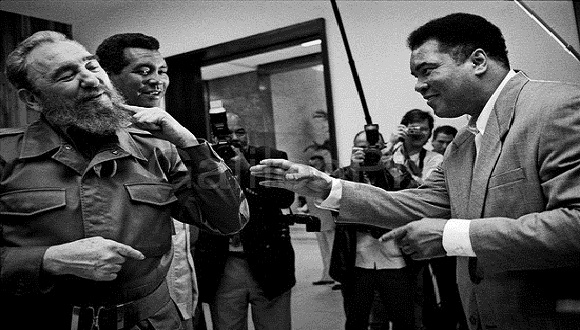
Fidel Castro together with Muhammad Ali and Teofilo Stevenson ,Havana, Cuba, 1996 (file photo)
The legendary American boxer Muhammad Ali died at age 74 in a hospital in Phoenix, Arizona, USA, after 32 years of battling Parkinson’s disease. In part he was a myth, who has also been recognized as the most famous boxer of all time.
According to Ali spokesperson Bob Gunnell, his funeral will be held in his hometown of Louisville, Kentucky, but without specifying a date. “Ali’s family wants to thank all those who accompany them in their thoughts, prayers and support and also require respect for their privacy,” the statement said.
Ali suffered for more than thirty years Parkinson’s disease and had been hospitalized twice in late 2014 and early 2015. On the latter occasion, due to a severe urinary tract infection after he was initially diagnosed with pneumonia.
Although his birth name is Cassius Marcellus Clay Jr. acquired the name of Muhammad Ali when he converted to Islam.
Ali visited Cuba on at least two occasions, where he held meetings with the great Cuban boxer Teofilo Stevenson. Incidentally, when Stevenson died in 2012, he sent this message of condolences: “I was deeply saddened this morning the news of the death of one of the great boxing champion Teofilo Stevenson. Although he never fought professionally, winning three gold medals in three different Olympics, guarantees that he would have been a formidable challenge for any other reigning heavyweight champion or challenger at his best enemy. I will always remember the encounter with the great Teofilo in his native Cuba. He was one of the greats of this world, and at the same time was a warm and huggable man. My condolences to his family and friends. Rest in peace.”
Cuba will also always remember the picture that immortalized Ali next to the leader of the Revolution, Fidel Castro and Stevenson and gives its condolences on his death of him, the world’s most famous boxer.
(With information from El Mundo)
Muere Muhammad Ali, el boxeador más famoso del mundo
Fidel Castro together with Muhammad Ali and Teofilo Stevenson ,Havana, Cuba, 1996 (file photo)
—
Muhammad Ali, junto a Fidel Castro y Teófilo Stevenson. Foto: Archivo.
4 junio 2016
El legendario boxeador estadounidense Muhammad Ali falleció a los 74 años de edad en un hospital de Phoenix (Arizona, EEUU), después de 32 años de luchar contra la enfermedad de Parkinson. Parte con él un mito, quien también ha sido reconocido como el boxeador más famoso de todos los tiempos.
De acuerdo con portavoz de Alí, Bob Gunnel, su funeral se llevará a cabo en su ciudad de Louisville, Kentucky, pero sin precisar fecha. “La familia de Alí quiere agradecer a todos los que le acompañan con sus pensamientos, oraciones y apoyo y exige también respeto a su privacidad”, asegura el comunicado.
Alí sufrió durante más de treinta años la enfermedad de Parkinson y había sido hospitalizado dos veces a finales de 2014 y principios de 2015. En esta última ocasión, debido a una infección urinaria severa después que inicialmente se le diagnosticó neumonía.
Si bien su nombre de nacimiento es Cassius Marcellus Clay Jr. adquirió el nombre de Muhammad Alí cuando se convirtió al Islam.
Ali visitó Cuba en al menos dos ocasiones, donde sostuvo encuentros con el gran boxeador cubano Teófilo Stevenson. A propósito de la muerte de Stevenson en 2012, envió este mensaje de condolencias: “Me entristeció profundamente esta mañana la noticia de la muerte de uno de los grandes campeones del boxeo, Teófilo Stevenson. Aunque nunca peleó profesionalmente, haber ganado tres medallas de oro en tres Juegos Olímpicos diferentes, garantiza que él habría sido un enemigo formidable para cualquier otro campeón de peso pesado reinante o cualquier retador en su mejor momento. Siempre recordaré el encuentro con el gran Teófilo en su Cuba natal. Él fue uno de los grandes de este mundo, y a la vez fue un hombre cálido y abrazable. Mis condolencias para su familia y amigos. Que descanse en paz.”
Cuba también siempre recordará la foto que inmortalizó a Ali junto al líder de la Revolución Fidel Castro y Stevenson y muestra sus condolencias por la muerte de él, el boxeador más famoso del mundo.
(Con información de El Mundo)
A Contradictory Vision of Small Business in Cuba
- English
- Español
A Contradictory Vision of Small Business in Cuba
By Manuel E. Yepe
http://manuelyepe.wordpress.com/
A CubaNews translation.
Edited by Walter Lippmann.
The US economy is characterized by the absolute rule of corporations and the relatively low importance of small and medium-sized enterprises in its economic system. Large companies systematically absorb those small and medium-sized ones that are most successful. Those who don’t resist the overwhelming competition from mega-corporations are driven into bankruptcy. Theses are development laws of monopoly capitalism.
It would seem that large corporations and small firms are the two poles of an inevitable contradiction of capitalist development.
That’s why it is so puzzling that, after the agreements between the Cuban and US governments to work together for the “normalization” of relations based on mutual respect of the sovereignty of each partiy, that the United States devotes so many efforts to presenting itself as a benevolent promoter of small private companies on the island.
This is easily seen in a number of actions, among them “spontaneous” offers of business management training that new small business owners in Cuba are receiving. Presumably, all the new small and medium-sized enterprises that have arisen comply with recent Cuban legislation. Its purpose is expand self-employment as a way to avoid over-employment in state-owned economic entities. These naturally comply with the requirements of Cuban laws for domestic investment. Cuban citizens are often surprised when they learn the identity of the owners of these companies.
According to Susan Crabtree of The Washington Examiner, in recent days, the White House convened a secret meeting organized by the Business Forward NGO group. It includes some of the most powerful US corporations, to discuss links with Cuba.
“As part of the ongoing engagement with the business community about the president’s efforts to normalize relations with Cuba, on Wednesday May 25, the White House will host a meeting of small- and medium-sized business leaders from around the country for a briefing on the administration’s Cuba policy,” the official told the Examiner.
It would seem strange that, departing from the classic neo-liberal principles of capitalism, the US central power intervened in issues so commonplace, typical of early capitalism.
Currently, most US citizens entering Cuba are not identified with a rejection of the policies of isolation and hostility towards the island, as had been the case previously. The latest are people who have been subjected to the process of global indoctrination promoted by the large corporations. Among other things, they strive to control the mass media, the means of communication, education, entertainment and others that serve to mold the thinking promoted by the elite of US imperial power.
They are, therefore, imbued with prejudices embedded in their consciousness for over half a century by the hostile regime-change policy and which conflates capitalism with democracy, which is almost its polar opposite.
Consciously or unconsciously, they pass along the goal of dividing Cuban civil society from the socialist state, with expectations –more or less obvious– that the United States might exert its control and influence on Cuba.
These efforts have been present in the “Programs for Transition to Democracy in Cuba” which were formulated since 2003 during the administrations of George W. Bush from 2004 to 2006, based on similar proposals from such US academic bodies as the Brookings Institution.
Spreading delusions and fantasies of the “American Dream”, these activities try to foster the desire to become rich at all costs among newly self-employed Cubans, disregarding the new economic model of their country and its socialist authorities. If successful, they would eventually be totally defenseless against the appetites of international capitalism.
Just as Cuba respects the capitalist structure that governs the United States with the pre-eminence of corporations and their methods to relate, the superpower should recognize the validity of the Cuban socialist system and the central role of the state which uses the market only as a tool to fulfill its eminently social role.
May 27, 2016.
CONTRADICTORIA VISIÓN DE LA PEQUEÑA EMPRESA
Por Manuel E. Yepe
http://manuelyepe.wordpress.com/
La economía de Estados Unidos se caracteriza por el imperio absoluto de las corporaciones y la escasa importancia relativa que tienen las pequeñas y medianas empresas en el conjunto de la economía.
La sistemática absorción de aquellas que son más exitosas en su gestión por las grandes compañías o la quiebra irreparable de las que no resisten la competencia avasalladora de las megas compañías, constituyen una norma del desarrollo en el capitalismo monopolista. Diríase que las grandes corporaciones y las pequeñas firmas son los dos extremos de una contradicción inevitable del desarrollo
capitalista.
Por eso resulta tan asombroso que, tras los acuerdos entre los gobiernos cubano y estadounidense de trabajar en común por la “normalización” de las relaciones basadas en el respeto recíproco de las soberanías de ambas partes, Estados Unidos dedique tantos esfuerzos a presentarse como benevolente promotor de la pequeña empresa privada en la Isla.
Esto se aprecia fácilmente en las “espontáneas” ofertas de capacitación para la gestión de sus negocios que reciben en Cuba los nuevos propietarios de pequeñas empresas, entre otros actos. Es de suponer que todas las nuevas pequeñas y medianas empresas que surgen en Cuba al calor de legislaciones que favorecen el trabajo por cuenta propia como alternativa para evitar las plantillas exageradas en las entidades económicas estatales, cumplen con requisitos que las leyes cubanas establecen para la inversión interna. Sin embargo, con frecuencia la ciudadanía cubana, se sorprende por la identidad de los dueños y se preocupa por el origen del capital implicado en tales pequeñas empresas.
Según Susan Crabtree, de The Washington Examiner, en días recientes la Casa Blanca convocó una reunión secreta organizada por el grupo ONG Business Forward que incluye algunas de las más poderosas corporaciones de Estados Unidos, destinada a tratar sobre los nexos con Cuba.
“Como parte de los actuales acuerdos con la comunidad de negocios acerca de los esfuerzos del Presidente por normalizar las relaciones con Cuba, el miércoles 25 de mayo, la Casa Blanca será anfitrión de una reunión de líderes de negocios pequeños y medianos de todo el país para ser informados acerca de la política de la Administración hacia Cuba”, informaba la convocatoria presidencial.
Parecería extraño que, faltando a los principios neoliberales clásicos del capitalismo, el poder central estadounidense intervenga en temas tan pedestres, propios de capitalismo primitivo.
En la actualidad la mayoría de los ciudadanos de EE.UU. que están ingresando en Cuba no son, como hasta hace poco, personas identificadas con el rechazo a las políticas de aislamiento y hostilidad hacia la Isla. Son personas sometidas al proceso de adoctrinamiento global promovido por las grandes corporaciones que, entre otras cosas, controlan los medios de comunicación, los de prensa, educación, entretenimiento y demás que sirven para conformar el pensamiento único promovido por la élite del poder imperialista estadounidense.
Están, por ello, impregnados de los prejuicios incrustados en sus conciencias durante más de medio siglo por la política hostil que convoca al cambio de régimen (regime change) y confunde el capitalismo con la democracia, que es casi su contrario absoluto.
Consciente o inconscientemente traslucen el objetivo de separar a la sociedad civil cubana del Estado socialista, con pretensiones más o menos evidentes de que Estados Unidos pueda controlarla e influirla. Estos esfuerzos han estado antes presentes en los “programas para la transición hacia la democracia en Cuba” formulados con insistencia desde 2003 y durante los gobiernos de George W. Bush de 2004 a 2006, fundamentados con propuestas similares de instituciones académicas norteamericanas como la Brookings Institution.
Sembrando falsas ilusiones y fantasías del sueño americano, estas acciones tratan de generar en los nuevos trabajadores por cuenta propia cubanos el empeño por enriquecerse a toda costa, sin formar parte del nuevo modelo económico de su país ni acatar a las autoridades socialistas, quedando así, en última instancia, en total indefensión frente a los apetitos del capitalismo internacional. Así como Cuba debe respetar la estructura capitalista que rige en Estados Unidos con la preeminencia de las corporaciones y sus métodos de relacionarse, la superpotencia debe reconocer la vigencia del sistema socialista cubano y el papel central del Estado, con el mercado como asistente para el cumplimiento de su papel eminentemente social.
Mayo 27 de 2016.
Ambitious Neo-Conservative Conspiracy
- English
- Español
Ambitious Neo-Conservative Conspiracy
By Manuel E. Yepe
http://manuelyepe.wordpress.com/
A CubaNews translation.
Edited by Walter Lippmann.
“America is a weapons factory, the White House a war room, and the president the manager of the neoliberal conspiracy to re-colonize the planet. It exports war and mass poverty. On the economic front: usurious neo-liberalism; on the military front: illegal wars. These are the trenches of America’s battle for world domination in the 21st century. If not stopped, it will be a short century.”
The above was written by film critic and Edinboro University Pennsylvania professor Luciana Bohne in a documented essay on the aggressiveness deployed by the US to assert its global hegemony.
In the 19th century, the United States posed as the nation chosen by God though Manifest Destiny to expand its domination throughout the world for the good of humanity. It decided to exterminate the internal “red menace” writing and shredding treaties, stealing lands, massacring, and herding indigenous populations into concentration camps (known as “Indian reservations”), in the name of civilizing the “savages.”
In 1890, with the massacre of Lakota at Wounded Knee, the frontier land grab completed Washington’s internal imperialist aspirations. But there remained a world to conquer, and the US trained its exceptionally covetous eye on Cuba and the Philippines, then part of Spain’s decadent colonial system. US external imperialism was born, wrote Bohne.
“Then, in 1917, something happened: a successful socialist revolution in Russia, the second major attempt, after the French Revolution of 1789, to try to redistribute the wealth of the few to the advantage of the many. The rulers of the world –the US, Britain, France and sundry acolytes– put aside their differences and united to stem the awful threat of popular democracy rising and spreading. They invaded Russia, fomented a civil war, funded and armed the counter-revolutionary forces, failed, and tried again in 1939,” wrote Bohne.
“But Hitler’s war of extermination against the USSR ended in a spectacular victory for Moscow.
For a while, after 1945, the US had to behave as a civilized country, formally. It claimed that the USSR had a barbarian, all-conquering ideology, rooted in terror, disappearances, murder, and torture. By contrast, the US was the shining city on the hill, the beacon of hope for “the free world.” Its shrine was the United Nations; its holy writ was international law; its first principle was the inviolability of the sovereignty of nations.
All this was rubbish, of course. It was an apartheid society. It nuked Japan not once but twice, deliberately selecting civilian targets. It shielded from justice top Nazi war criminals from justice in order to absorb them as partners in its intelligence structures. It conducted virtual “show trials” against dissidents during the hysteria of the McCarthy congressional hearings, seeding the country with a harvest of fear.
It waged a genocidal war on Vietnam to prevent that country’s independence and unification. It assassinated African independence leaders and bestowed fascist dictators on Latin America. It softly occupied Western Europe, tied it to itself through military “cooperation” through NATO, and continued its ruthless effort to take out the Soviet Union and crush self-determination in the colonial world.
The Soviet Union dissolved in 1991, and the US went berserk with triumphalism. The conquest of the world, interrupted in 1917, could resume.
The benign mask dropped. “History had ended, ideologies had died, and the messianic mission of the US to become the steward of God’s property on earth could be fulfilled.”
An ambitious neo-conservative conspiracy drafted “The Plan for a New American Century” (PNAC). It envisaged the 21st century as a unilateralist drive to entrench American values globally through pre-emptive wars and regime change.
This frenzied delirium of US military domination turned into official foreign policy with the Bush Doctrine after the terrorist acts on 9/11 in New York. But it would be the Clinton administration’s Doctrine of Humanitarian Warfare –combining the liberal principles of “democracy and freedom” with policies of human rights– that induced the liberal left to embrace war and imperialism as the method of defending human rights.
“Since 1945”, wrote Bohne,” America’s Manifest Destiny, posing as the Free World’s Crusader, has claimed 20 to 30 million lives worldwide and bombed one-third of the earth’s people.”
May 30, 2016.
Spanish Headline Here
Por Manuel E. Yepe
http://manuelyepe.wordpress.com/
“Estados Unidos es una fábrica de armas que exporta guerra y pobreza a las masas, la Casa Blanca es un cuartel y el presidente de la nación es el jefe de la conspiración neoliberal para recolonizar el planeta. En el frente económico, Washington es el prestamista del
neoliberalismo; en el frente militar, promotor de guerras ilegales. Estas son las trincheras de su batalla por la dominación del mundo en el siglo XXI. Si no se le detiene, será un siglo corto.”
Esto dice y pronostica Luciana Bohne, crítica de cine y profesora de la Universidad de Edinboro, en Pensilvania, en un documentado ensayo acerca de la agresividad que despliega Estados Unidos en función de afirmar su hegemonía global.
En el siglo XIX, Estados Unidos, presentándose como la nación escogida de Dios por destino manifiesto para expandirse por el mundo y dominarlo para bien de la humanidad, decidió exterminar la “amenaza roja” interna. Forzó inicuos tratados y destrozó otros que no eran de su conveniencia, robó tierras, masacró poblaciones nativas, convirtió fincas de pastoreo en campos de concentración (reservas indias), todo en nombre del propósito de civilizar salvajes.
En 1890, con la matanza de Wounded Knee, su vocación imperialista completó la fijación de la frontera nacional que en lo interno llenaba sus aspiraciones. Pero quedaba un mundo por conquistar y el naciente imperialismo global estrenó su codicia con la conquista de Cuba, Puerto Rico y Filipinas, que eran parte del decadente sistema colonial de España. Nació el imperialismo externo norteamericano, escribe Bohne.
En 1917, dice la autora, “ocurrió una revolución social en Rusia, la segunda tras la francesa de 1789 que se proponía redistribuir la riqueza de los pocos para beneficio de los muchos. Estados Unidos, Gran Bretaña, Francia y otros acólitos, dejaron a un lado sus diferencias y se unieron para detener la terrible amenaza que planteaba la democracia popular y su difusión. Invadieron Rusia, fomentaron una guerra civil, financiaron y armaron a las fuerzas de la contrarrevolución. Cuando fracasaron, lo intentaron de nuevo en 1939. Pero la guerra de Hitler por el exterminio en la URSS terminó con espectacular victoria de Moscú”.
Por un tiempo, después de 1945, Estados Unidos tuvo que comportarse formalmente como un país civilizado. No obstante, desarrolló una campaña contra la URSS alegando que tenía una ideología de exterminio, terror, asesinatos y torturas. Estados Unidos, por el contrario, era un faro de esperanza para el “mundo libre”. Su Santuario estaba en las Naciones Unidas; su Sagrada Escritura en el derecho internacional, y era su principio básico la inviolabilidad de la soberanía de las naciones.
Todo esto, aclara Bohne, era pura falacia. Estados Unidos era una sociedad de apartheid que había sido capaz de llevar a cabo bombardeos nucleares -dos veces-, sobre objetivos civiles de Japón cruelmente seleccionados. Evitó que se hiciera justicia a los criminales nazis al finalizar la guerra para absorberlos como socios en las estructuras de su inteligencia militar. Llevó a cabo juicios mediatizados contra disidentes durante la histérica era macartista, sembrando al país para una cosecha de miedo. Libró una guerra genocida contra Vietnam para evitar su independencia y unificación. Asesinó a líderes
independentistas africanos y promovió dictadores fascistas en América Latina. Ató a Europa occidental mediante acuerdos de “cooperación” militar en la OTAN y libró un esfuerzo implacable por debilitar a la Unión Soviética y aplastar la autodeterminación en el mundo colonial. La Unión Soviética se disolvió en 1991 y Estados Unidos lo celebró con triunfalismo. La conquista del mundo, interrumpida en 1917, podría reanudarse.
Cayó la máscara benigna. “La historia había terminado, las ideologías habían muerto y podría cumplirse la misión mesiánica de Estados Unidos, convertido en el administrador de la propiedad de Dios en la tierra”.
Una ambiciosa conspiración neoconservadora bosquejó el “Proyecto para un nuevo siglo americano (PNAC)”, que pronosticó que el siglo XXI sería el del afianzamiento mundial de los valores estadounidenses mediante guerras preventivas y cambios de los regímenes que no fueran afectos a ellos.
Este frenético delirio de dominación militar de Estados Unidos se convirtió en política oficial con la doctrina de Bush después de los actos terroristas del 11 de septiembre en Nueva York, aunque antes tomó cuerpo en la doctrina de la guerra humanitaria aplicada por Clinton que mezcló los principios liberales de “democracia y libertad” con las políticas sobre derechos humanos para inducir a la izquierda liberal a abrazar la guerra y al imperialismo como medios de defensa de los derechos humanos.
Desde 1945, dice la autora del artículo, el destino manifiesto proclamado por Estados Unidos como cruzada del mundo libre, ha cobrado las vidas de entre 20 a 30 millones de personas y ha bombardeado a un tercio de los habitantes del planeta.
Mayo 30 de 2016.
You must be logged in to post a comment.