The Most Powerful Piece


The Most Powerful Piece (re: The Queen’s Gambit)
Author: Mailen Aguilera Rivas
Published in: Canal USB
December 15, 2020
Translated and edited by Walter Lippmann for CubaNews.
They tell some stories of minstrels who once showed Queen Isabella of Castile a board game that had become very popular on the European continent. But when the sovereign knew about the limits on movements of her equivalent in the field of the 64 squares, she demanded, furiously, that it be modified immediately. It could be only a legend, although it coincided with the time when the queen of chess changed the displacement of a square in all directions to the infinite possibilities of having only the end of the board as a limit. The truth is that it doesn’t stop to seem unusual that the only female piece is revealed as the most fearsome, to the point that not few players prefer to free themselves from it by means of exchanges or sacrifices to avoid complications.
Elizabeth, in its English version, is also the name of the main character in the novel “Queen’s Gambit”, by the writer Walter Tevis, which recently was adapted in a television mini-series transmitted by Netflix. Under the direction of Scott Frank, it has in the main role Anya Taylor-Joy, a young revelation who had made her debut several years ago with Robert Eggers in his disturbing “The Witch”.
She is accompanied by other actors including Thomas Brodie-Sangster (Game of Thrones) as Benny Watts, Harry Melling (The Old Guard) is Harry Beltik and the director Marielle Heller now in front of the cameras playing Alma Wheatley. The story is about Beth Harmon, an orphaned girl extraordinarily gifted for chess, a sport almost exclusively for men and more in the historical period she reflects, immersed in the middle of the Cold War.
Although this proposal began without lots of publicity fuss, it has already snuck into millions of homes and been proclaimed as the most-viewed Netflix in the year. A real surprise for those who read the synopsis and didn’t predict great acknowledgments. So it’s fascinating to unravel the keys that made the simple story of “girl overcomes the obstacles of her time” the unprecedented success it has become.
First of all, Walter Tevis was one of those authors with such a coherent narrative style that when we read it we feel like we are in front of the big screen. That is why several of his books have been taken to the cinema like “The Lifeguard” (starring Paul Newman) or “The Color of Money”, with Tom Cruise in the main role. In the novel “Lady’s Gambit”, she offers us the incessant but satisfactory journey of the attractive plot that, like the aerial board that the young woman recreates in her head, transforms the places described during the reading into magnificent sequential shots. Beth’s inner struggles, her irreverent way of interacting with others, make up a very solid and unforgettable character. Therefore, for the experienced director and screenwriter Scott Frank, it was enough to just create the product as faithful as possible to the original work.
The visual language of the series is so exquisite that for those who read the book and then looked for the television adaptation, they experienced the already known, the typical déjà vu. This added to the careful recreation of the time, the soundtrack (impeccable work of the composer and guitarist of Cuban descent Carlos Rafael Rivera) coupled with the various scenarios, the work of costumes and makeup as well as the stellar direction of actors, contribute to make “Gambito de dama” the different and necessary proposal. It is irrefutable proof that the public still prefers a good story over any effective machinery.
However, despite the magnificence of such a team, the queen reaffirms herself as the most powerful. Anya Taylor-Joy became with astonishing naturalness the Beth Harmon of literary work. Through her impeccable performance, she manages to show the fragile balance between genius and destruction that plagues the protagonist. Perhaps to some her character, while fascinating, may also seem unsympathetic and unemotional in the face of common feelings.
But in the disarray of her existence, Beth discovers the logic to explain it only in front of the board. The addiction to drugs and alcohol, more than physical support, becomes a means to feed the demands of her gifted mind and at the same time to make her forget that, like the chess lady, she will always be alone even among crowds. The fight acquires the dimension of titanic task because to reaffirm her only reason of existence, to become Great Master and to be the champion of the world, she must constantly fight against all kinds of discriminations.
Both in the book and in the series, she faces legendary considerations that stipulated the game science as an indisputable domain of the male sex, a situation that becomes more acute in tournaments (Listening to both of them, she felt something unpleasant and familiar: the feeling that chess was a man’s business, and she was a stranger. She hated that feeling).
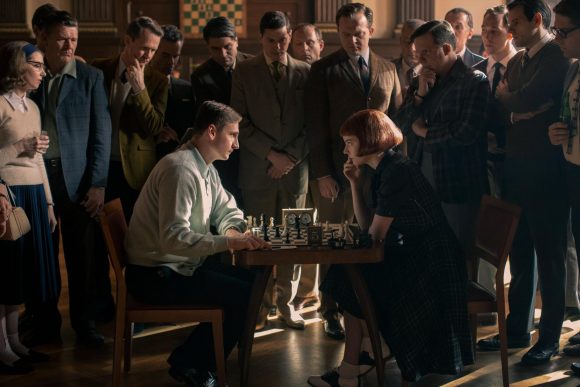
“Lady’s Gambit” manages to unveil the mysteries of the 64 squares even for those who don’t know all the rules. As an amateur player many years ago, I still remember the exhaustive intellectual combat of each game, the anguish of the move to be made, the anticipation of every possible move of the opponent. In short, a very difficult battle to attract many spectators because it takes patience and genuine interest to follow something that can last for hours.
For this reason, although I would have preferred more specifications of openings, strategies and endings, as it is told in the novel, it is understandable that the adaptation to the audiovisual medium sacrificed part of the essence of the game in order to achieve the interest maintained by a heterogeneous audience. The palms also for all the editing work, led by Michelle Tesoro, another of the team that accompanies Scott Frank in his projects.
The sequences related to the mental sport are then referred to the controversial and resounding plays or, mostly, to the expressions on the face of each participant. It is not surprising that in the interest of achieving near-perfect results, they had the advice of emblematic figures such as Garry Kasparov.
On the other hand, I must highlight some elements that, despite not tarnishing the final product, did seem to me to be counterproductive. During the tournament in Mexico, they clarify that the men who accompanied the champion Borgov were from the KGB to prevent him from running away, a detail that is not mentioned at all in the book. What the novel does show is that Beth, besides fighting against social machismo, also had to face the institutional one imposed by the country, which hindered her training and prevented her from being a child prodigy like little Girev.
At all times, Walter Tevis gives to the game science practiced in Russia the superior level that Beth must decipher to accede to the throne (This was not the attack chess with which she had carved her reputation in the United States: it was chamber music chess, subtle and intricate). For that nation, the sport of the 64 squares has been revealed for decades as a proud practice of crowds with constant support from official institutions.
That is why, with the exception of Bobby Fischer, it has monopolized the World Championship for almost 50 years. That’s why I also find the crowd’s cheers for Beth in Moscow when they had one of their own discussing the title notwithstanding the impression the young American would have made.
The truth is that both the series and the novel had the effect for thousands of people, including myself, to fall in love with chess again. Not only of that disciplined, methodical, that is achieved with years of study and dedication, but also its intuitive and exceptional variant of which our brilliant Capablanca showed off. “Lady’s Gambit” also becomes the expression of a long-cherished dream: a woman with the title of absolute world champion, without distinction of sex. Milestones such as the Cuban Maria Teresa Mora, the aforementioned Nona Gaprindashvili or Judit Polgar are examples that other Beth’s may exist, waiting in the shadows for the right moment to be crowned.

Technical Data Sheet
Title: The Queen’s Gambit
Year: 2020
Country: United States
Duration: 60 min.
Direction: Scott Frank (Creator), Allan Scott (Creator), Scott Frank
Script: Scott Frank (Novel: Walter Tevis)
Genre: TV series. Drama : Chess. Cold War. 50’s. 60’s. TV miniseries.
Cast: Anya Taylor-Joy, Thomas Brodie-Sangster, Bill Camp, Harry Melling, Johnston Island, Moses Ingram, Chloe Pirrie, Janina Elkin, Marielle Heller, Marcin Dorocinski, Patrick Kennedy, Matthew Dennis Lewis, Russell Dennis Lewis, Rebecca Root, Christiane Seidel.
Producer: Netflix (Distributor: Netflix)
Natalia Bolívar, Wisdom of a Witch
El Caimán Barbudo
Natalia Bolívar, Wisdom of a Witch
By Dailene Dovale
October 4, 2020
Translated and edited by Walter Lippmann for CubaNews
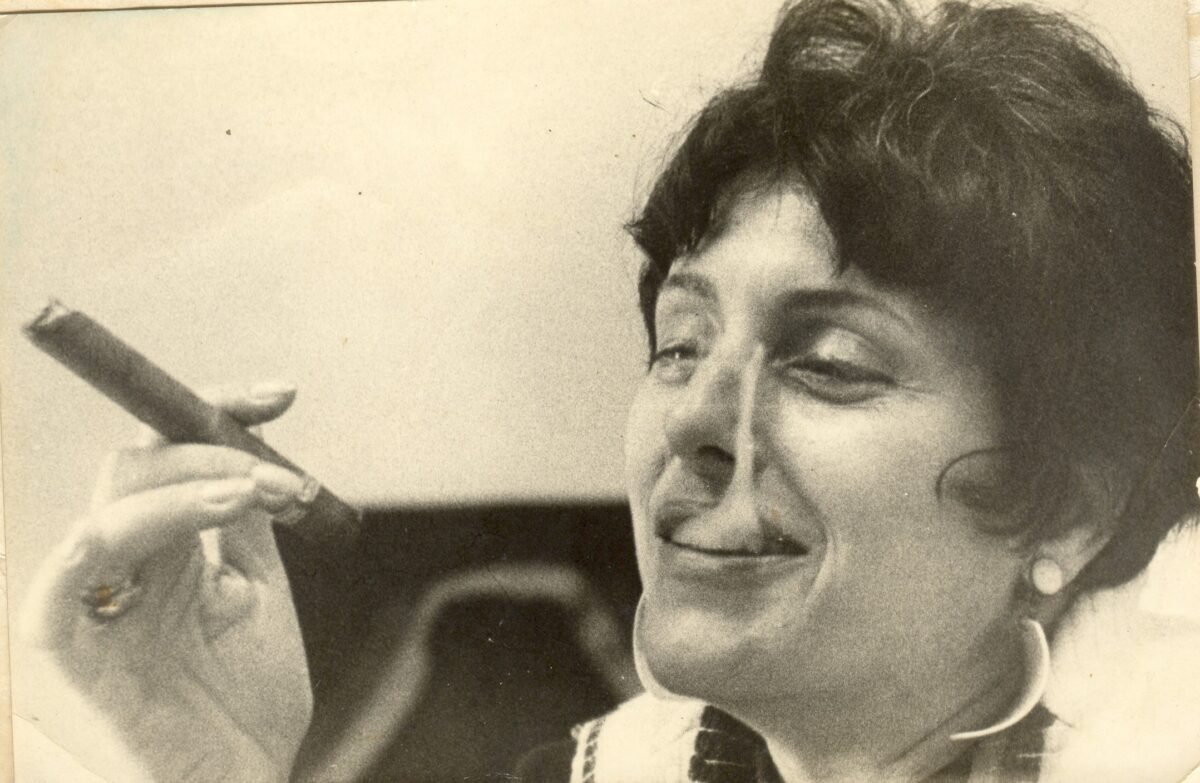
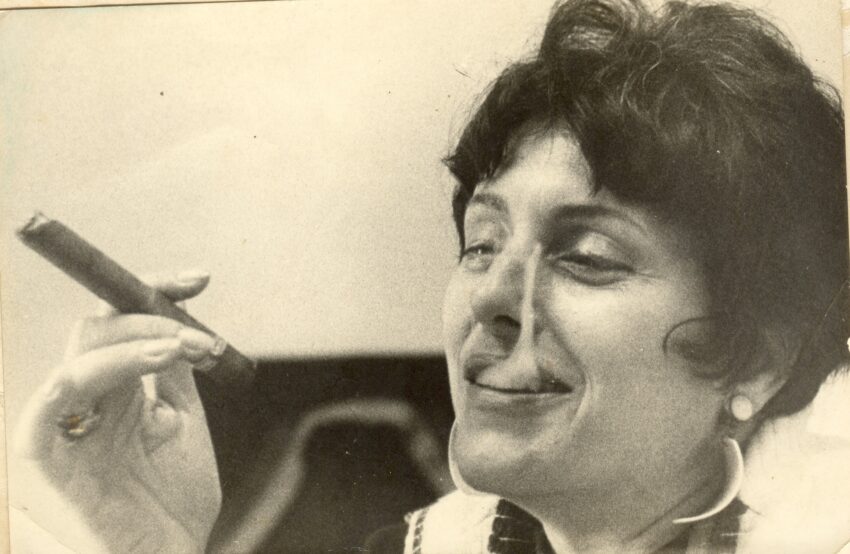
It is December 31, 1958. Natalia feels depressed, in a rented house. She is alone, or almost alone, because around her instead of grapes and happy relatives, she has guns, weapons of all kinds. Natalia Bolívar Aróstegui, the charismatic girl of the Havana aristocracy, barely has a peso and spends it on elementary food and a bottle of Bacardi Rum.
“I drank it at the top of the bottle”, she will say decades later, when she turns her gaze to the past and remembers herself sad, with her friends of the Revolutionary Directorate in the Escambray Mountain Range and she is waiting, waiting for an attack they were planning against Batista, waiting for a change. That night she hears persecutors passing by on 31st Street. The tyrant fell, and Alberto Mora, head of action and sabotage for the Directorate, warned her the next day. The Revolution triumphed.
It is difficult to imagine the life of ups and downs and vagaries of Natalia when they set foot in her home on Friday, September 13, 2019. A place of peace, where the breeze and clarity pour in, there are colorful sunflowers moving to the rhythm of the wind and a moving view of trees and red tiles. It is difficult. It is necessary, then, that Natalia arrives with her dress of flowers and her blue shoes, toad style, to count in a low but firm voice the summits and depressions where she has walked her existence.
– Let me see if I can open this – she apologizes – I drink a lot of water because I am diabetic – she says and clears her throat, after taking her favorite place in the room, a mahogany balance with blue lining.
– And the coffee? – he asks his daughter Natacha, with a somewhat tough look, dark clothes, the main help in writing her memoirs.
– They already gave me coffee – I clarify.
– She has, but I haven’t – claims Natalia. And the daughter blurs as quickly as she appears.
During her childhood, Natalia studied at an American school, the St. George School. The contrasts are there since that time. She speaks English in class, and then enters the domain of the Spanish language at home and feels the powerful influence of Isabel Cantero, Chicha, her black nanny.
Chicha’s mother, a slave of the Cantero de Trinidad, came to Natalia’s family as a gift to her medical grandfather. “My grandfather was not a slave and he took her in as part of the family. When she gave birth to Isabel, she was raised with great love”.
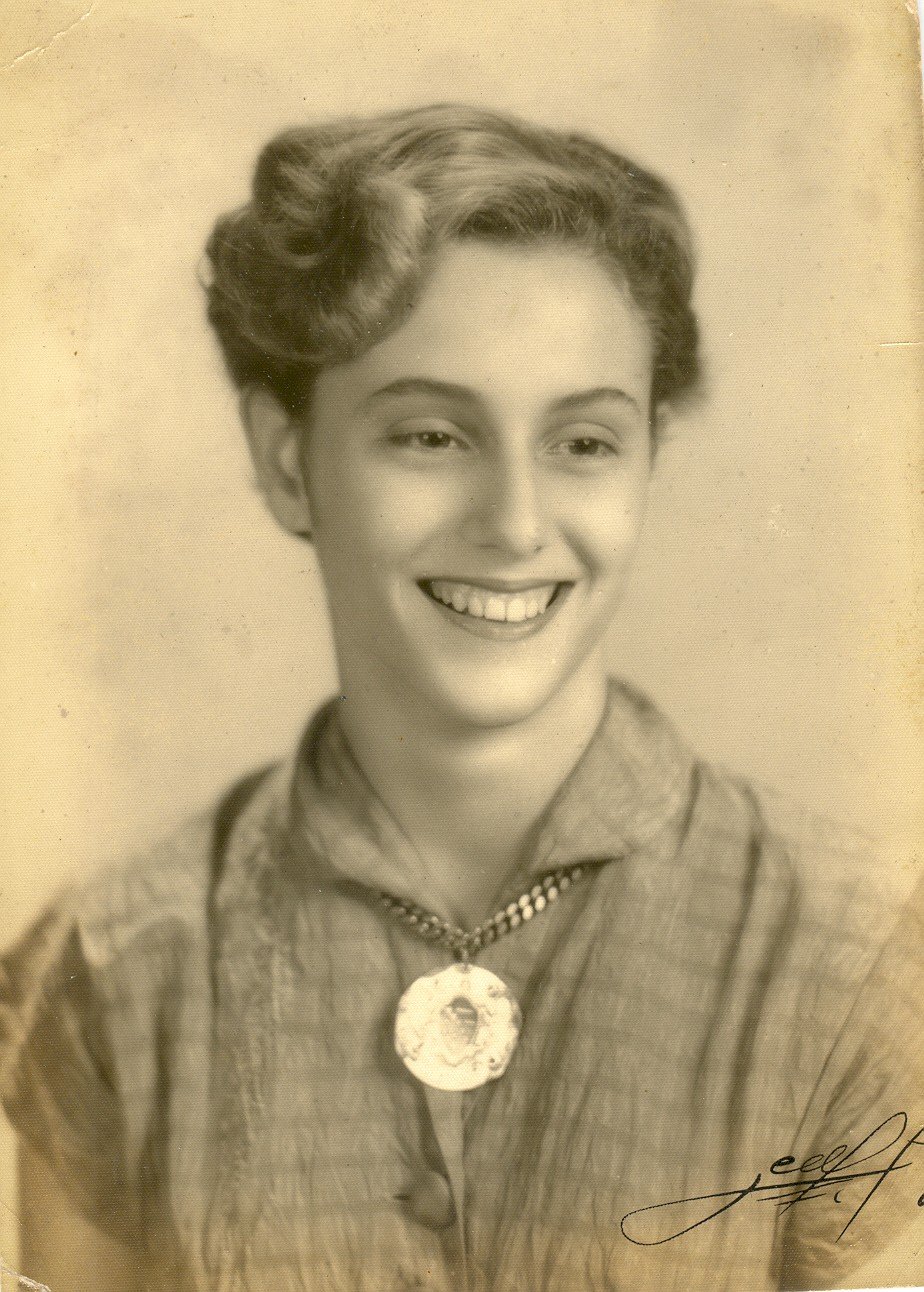
When the grandfather dies, Chicha moves in with Natalia’s mother and becomes her manager, takes the children to the park, takes care of them and pampers Natalia. They join. She is their main source of love, while her parents, María Teresa Aróstegui and Arturo Bolívar, who is related to the Liberator of America, play the strictest and toughest roles to form a disciplined girl, ready for work and adult life. Then Chicha becomes the nanny of his daughters Natasha and Bubby. In her old age, Chicha goes to live in Trinidad with her family. She survives the hundred years and leaves in Natalia the wisdom of the Afro-Cuban religions and culture.
– Miss Lidia, you have death behind you – says a Matanzas santero to a renowned ethnologist during one of his investigations. – With whom, with me?
– Not with you, with the one who comes behind – and points to the then very young Natalia Bolívar.
Natalia is a disciple of Lidia Cabrera. She meets her at the Palacio de Bellas Artes, where she arrives as a guide at the hands of Octavio Montoro, a relative who connects her to Martha Fernández and a group of women who planned the foundation of the palace. There he approaches the ethnology room and finds in Lidia another inspiration to continue studying the Afro-Cuban culture. She also discovers José Luis Wangüemert who marks her entry into the Revolutionary Directorate (and becomes an unforgettable love). To be found, she also finds an omen of death.
– Then there it sounded to me everything that was going to happen in two weeks. I was going to fall prey to death, to tell my family. Imagine, I forbade my family to talk to Lidia. And then he gave me Oggún’s necklace, which is very pretty, and he said: “When they come looking for you… because they are going to come looking for you, you hook this necklace that I give you, with Ochosi’s arrow that is for protection against the police and all the henchmen.
When you are apprehended, you hook the necklace under your blouse.
She is taken to the Bureau of Investigations, it is the 24837 dam. (“Play the ball and it comes out”). In the Laguito they show her the cement block where they were going to put her and throw her into the bay of Havana if she didn’t say all the security houses where, for example, Raúl Díaz Arguelles and Gustavo Machín were sheltering. She resists in silence.
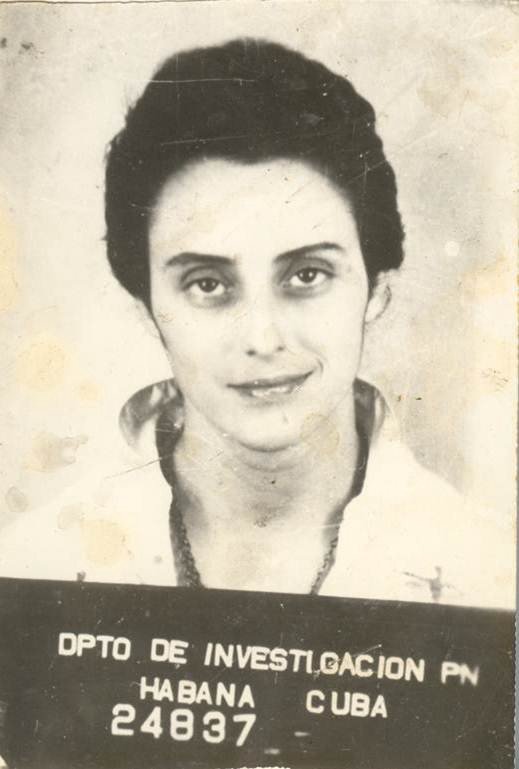
– They started hitting me and putting things in my ears. That’s why I’m deaf. My family is mobilized, but they call Julio Laurent, a guy who’s more of a killer than Ventura. I’m scared! This is already dying, I said to myself. I played a hot-cold game with him.
What do they call you?! They shout. She has several names. Rosa and the Witch, because of all the necklaces she was wearing. What’s your name?! They repeat I don’t know what your name is! They have caught you, they threaten you, because in her house they found papers, bonds that she kept for those who were leaving the country or going to the mountains.
What do you do with that necklace, you who are Catholic, Apostolic, Roman? Just then you understand everything. That was the godson of the old man who foresaw his capture, and the necklace was the same one that the killer had received when he became a saint. From there they start talking in Yoruba. A tense dialogue, which concludes when he says:
– What do you want?
– What do I want? That they look for my mom and bring me a sandwich with a chocolate serum – she answers that day with her mouth full of blood, and now, as an old woman, she smiles when she thinks about how close she came to death.
“I felt like eating something or taking something cold. My mother arrives, she is very nice and almost all the phrases were converted into French when she said that Laurent is the murderer. And I, shut up, don’t say that we don’t even go out at Easter”.
They let her out and she immediately goes to the Brazilian embassy. She only brings one piece of clothing. Then she is joined by her friend Raúl Díaz Arguelles.
Two weeks later she leaves the Brazilian embassy and goes into hiding. He never thinks about leaving his country. He rents houses. He hides his identity under other names. She is already on file with the entire police force. She does not give up, they attack the Fifteenth Police Station. She takes Raúl and Tabo Machín with Frank Arango to a small town near the Escambray. “He returned with Tabo’s cousin, the house he had left in Orfila was full of weapons. I had to take care of all that”. There she was surprised on January 1, 1959.
Natalia becomes silent. “I’m going to have to go to the bathroom,” she interrupts. As she leaves, she goes through her room: paintings on all the walls, little bird rattles that sound in a constant jingle. In my hands I discover a lock of white hair; it is Natalia’s and must have flown towards me in one of those breezes that cross her home.
A traitor to her social class, she is accused by her family when everyone follows the path of migration and she stays in her beloved Cuba. Despite the sadness of seeing her loved ones leave, despite feeling that the Board of Directors was being humiliated, she could not walk away.
“I took Fine Arts with the guns. I was the director for six years, I did the Napoleonic Museum there because Julio Lobo left me the entire Napoleon collection. Many of the collections are in the museum because they were left to me. Always with the lawyers of the owners and the lawyers of the museum, we made the minutes with a delivery, how shall we say, of indefinite loan. They would leave things to me to protect them. You know that in revolutions looting is common. That’s why they threw me out when I didn’t allow the sale of artworks.
– What year was that?
– It was in ’66. They threw me out and sent me to clean graves in the cemetery, but those are such nasty things… – and it leaves the idea in a fine thread that fades into thin air.
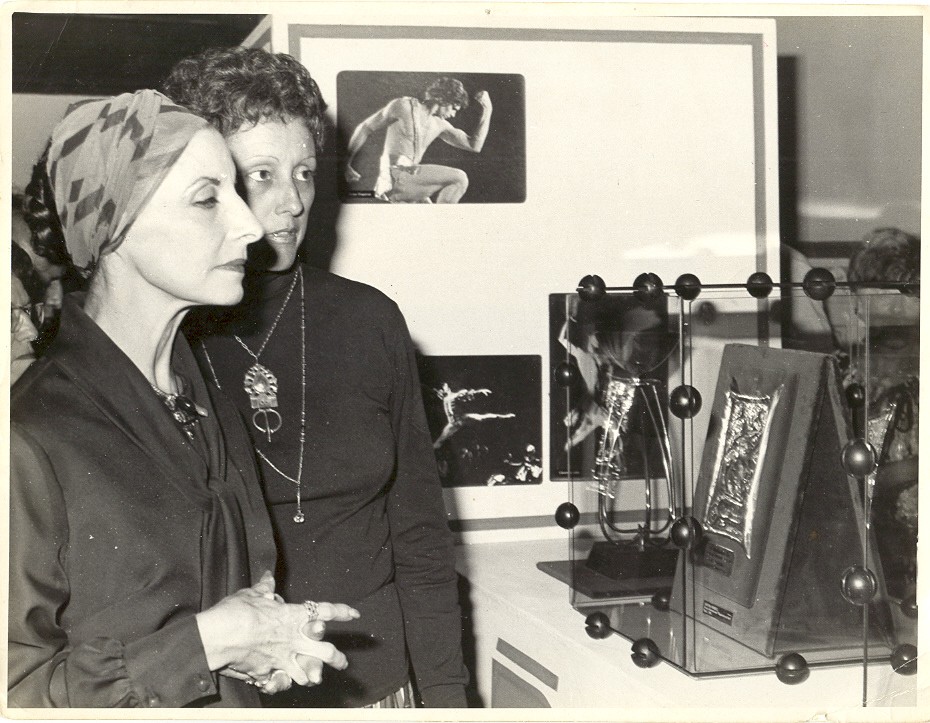
Alicia Alonso and Natalia Bolívar
“What did I go to, Natalia, after? They moved me right away. Do you know why? I was a character at that time. I knew all the writers and all the artists from before… I knew them all very well. I complained and after that they sent me on my way… Do you know what “on my way” is? With the iron things opening a hole in the rocks at the exit of the Havana tunnel, in Pastorita’s famous apartments. The already created National Council of Culture sends me to work with the iron rod to break the rock.
“My life is very complicated,” she repeats, evoking the guagüeros who used to collect money on the buses and, after eliminating that post, work with it. They are all abakuá. Moved by a Natalia, recently given birth, weak and very thin, they decide to help her. “Natalia, you stand here in the hole, take the iron, throw it there, you pretend you are opening and we open next to you”.
Her pilgrimage through the world of work remains just as eventful. She is an administrator of a blumber factory, an administrator who studied four months at the Louvre Museum and knows how to handle two languages, for example.
“That’s where they got me from. Where do they get you from, Bolivar? She lands, like a damaged UFO, in agriculture. First in supplies, then in agricultural plans and in the Nazarene command post, where she serves as a translator for the presidents who come from all over the world to see the Ten Million Dollar Sapphire.
“I had a good time because I was in an environment that was more cultured and interesting. Many presidents passed through there and with Fidel several times. Sometimes he was upset about something and he would get involved with who he was with, with the King of what I know, and I would say that I am not going to tell him. It was a lot of fun, really.
The laps continue after the failed harvest. From the duck, goose and chicken breeding plan to the jewelry store at the National Bank of Cuba and the Numismatic Museum, located in the oldest bank in Cuba. Upon arrival, everything is stained with dye. They clean the floor with iron-bristle brushes.
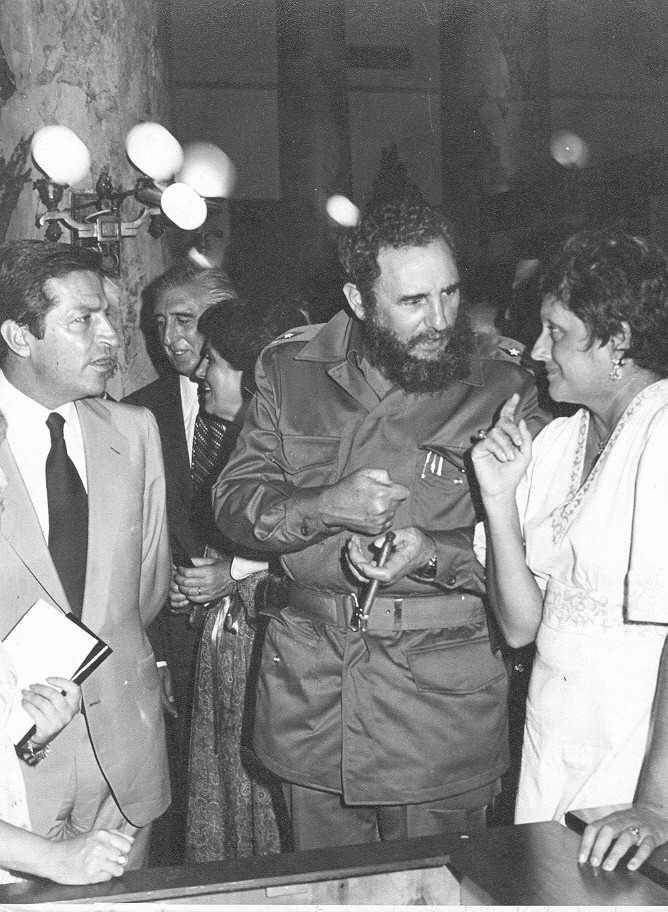
With Fidel Castro
The museum of a subject as arid as numismatics becomes a sensation among ambassadors and personalities of culture. Music, ceramics, painting converge there…
On one occasion, Adolfo Suarez, the first president of post-Franco Spain, visited with Fidel Castro. For Natalia this fact – Fidel talking all the time with her and Adolfo Suarez and not with the then Minister of the Bank – caused her to be fired from her job.
“That was in 78 or 79, they left me a year and a half without a salary and without being able to work with either Alicia Alonso or Sergio Vitier. One day I said I was going to kill the minister.
Her friend José Alberto “Pepín” Naranjo, worried, asked her why she was harassing the minister and she told him the truth.
“They sent me to say how much the state had to pay for the year I was out of work and out of money. I survived because my mother had money in the bank.
Not only did her impeccable work arouse suspicions. In a country of workers and peasants, she proudly defends her aristocratic ancestry. And to top it all off, she denies any political party “that forces me to do something I don’t want to do.
It’s the middle of the Special Period, in a restaurant in Old Havana, under the promise of a steak and a cold beer, she and a babalawo friend of hers are talking. The waitress interrupts, “lunch is ready”, she warns them.
– Hey, stay here – he keeps her.
Then a trucker arrives with a box of books. And silently, as if carrying the holy grail, he gives it to the bartender.
– Hand me that book, let me see it.
– No, you have nothing to do with it – the bartender spits.
– Hand it over!
– What do you want it for?
– Get it for me! Natalia, look…
– Hey, I have nothing to do with Marx, Lenin or Engels, so why should I open it?
– Open it – he says.
“It was The Orishas in Cuba, with a cover of complete works by as many communists as there may be. The guy was selling it for a hundred pesos, and a hundred pesos before that was a hundred pesos. I’m leaving like a wildcat, I’m eating the steak, of course, and I’m leaving for Uneac. Look at what you are doing. He gave them a changó. The choricera was formed, as one would say in good Cuban. They closed the printing press. The police got involved. And they had to present my book, and it was Cuba’s bestseller.
The book is the result of collaborations with filmmakers such as Titón, who sought advice for their films or plays. The book, which received the unconditional support of her psychiatrist friend Beatriz Begoña, was born five years late and in the midst of an unprecedented popular reception.
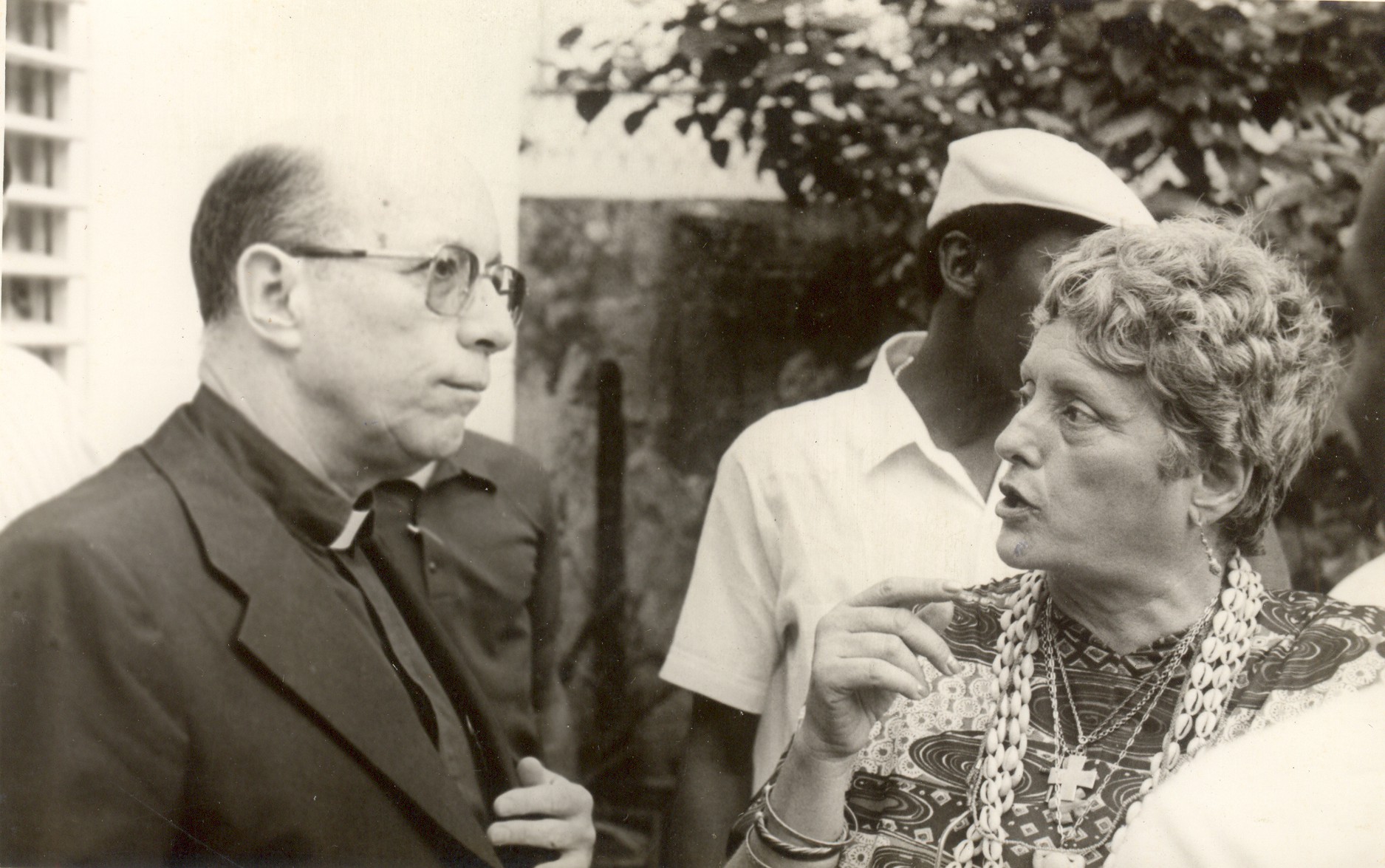
During the presentation of The Orishas in Cuba
“We did a coconut shoot, with all the people who had helped me make the book and who were already dead: my psychiatrist, Enrique Rodriguez Roche, Lidia Cabrera, people who were dead and I put a scribble with the names on top of them.
Scribbling, he says, is what Elegguá is put on a chair. The presentation-homage was accompanied by Arsenio Gutiérrez’s group, with drums and songs. She and Reynaldo González are in the garden of the Union of Writers and Artists of Cuba, surrounded by so many people that the Special Brigades are necessary. Days later such a scene is repeated in the Cuba Pavilion. A line of three days and nights. Some friends fear for their safety.
“Natalia, you have to find yourself a bodyguard so that you can go with him, since you are going to go alone, they are going to kill you, that’s full. And she who doesn’t, for the people there is no need for protection.
Next to the room there is a small studio, full of books, photos of Natalia, Natalia with her daughters, Natalia alone. Her daughter Natacha, who now brings a smile, is looking for her mother’s iconic photos. “At different times, she always likes to dress up. Even on birthdays, she still dresses up sometimes.
Working with Natalia is easy but very complex. Sometimes they do not agree because “we are from different generations”, admits Natacha while she checks, folder by folder, the moments of celebration, of trips, with Lidia, with Eusebio Leal.
“She is the lead singer, we are all together, but for now, everything is fine”.
They can have small discussions but always reach a consensus. Natalia is quite incisive when it comes to putting a period or a comma. They both learn.
“Listen to everyone. You learn from everyone, because even the least educated man teaches you something,” Natacha confesses. It is one of the teachings she sees in her mother and, above all, being a good friend. “Even if her friends are in the worst stage of their lives, she always stays by their side”.
And it is true. In the Elogio Oportuno, a space coordinated by Fernando Rodríguez Sosa, she signs the book La sabiduría de los oráculos (The Wisdom of the Oracles) with a little brother-in-law that says her name in Mandarin and draws a little Cuban flag on some of them.
“Natacha, give her the address and phone number,” Natalia orders if anyone asks for a contact or another opportunity to have her near. And then, in front of a pink and white cake – in celebration of her 85th birthday – she will remember again Lidia Cabrera, Fernando Ortiz and all her friends who opened the doors of being Cuban and knowing how to be Cuban. “Thank you for this. All my thanks to them”.
But no feeling is pure and happiness has nuances. This is a painful moment, as he confessed that Friday afternoon. “Seeing Havana, which is my Havana, how it has been destroyed. That has given me such great pain, destroying the great houses, the great stories of Cuban architecture”.
“And if someone dares to ask you why I haven’t left my country… I’ve traveled all over the world, but this is my country,” he stresses almost fiercely.
No one can take away Natalia’s Cuban identity. “I didn’t last more than a month outside my country. And if you ask her who Natalia Bolivar is, she will immediately say: “Cuban”. She needs nothing more than a root to her island deep in her chest.
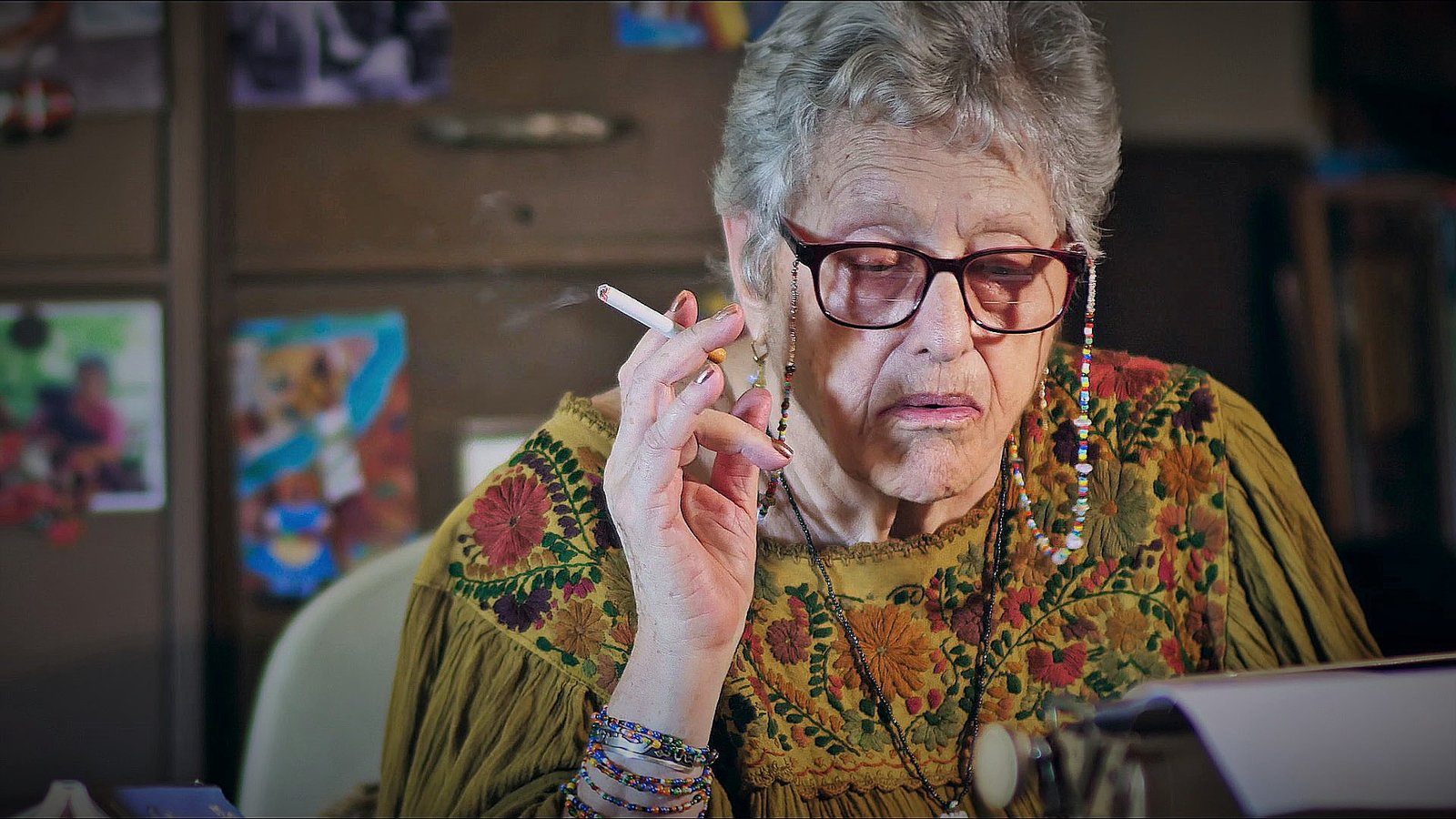
Heberferon versus skin cancer

Heberferon, Cuban alternative against skin cancer
February 4, 2021
Translated and edited by Walter Lippmann for CubaNews.
Photo: Minsap
Cuba joins the global community today in the commemoration of World Cancer Day, a disease that, according to the Pan American Health Organization, is the second leading cause of death in the Americas.
The Antillean nation’s contributions in the creation of drugs to treat this disease, which according to statistics cost the lives of 1.4 million people in 2020, while another four million were diagnosed, stand out.
One of the innovative Cuban drugs is HeberFERON, unique in the world, and also currently used in the action protocol against COVID-19 with very good results.
Doctor in Biological Sciences Irlado Bello Rivero, leader of this project at the Center for Genetic Engineering and Biotechnology (CIGB), commented to the Cuban News Agency on the history and evolution of this important product.
He pointed out that in 1957 Human Interferon Alpha 2b and in 1961 Human Interferon Gamma were discovered for their antiviral properties, but it was not until 1981 when they appeared in the nation.
When their antitumor effects were proven in in-vitro cancer systems, the alpha 2b variant was among the first to be used in the world against practically all tumors, since it inhibits cell growth.
The senior researcher said that Commander in Chief Fidel Castro Ruz was interested in this possibility of treating cancer and sent a group of experts to be trained on the subject and to deepen the technology for the development of interferons.
As a result, he explained, the Human Alpha Leukocyte Interferon, obtained for the first time in a natural way from white blood cells and leukocytes infected with a virus, began to be produced in the national territory.
He added that this formulation was also successfully used in the treatment of conjunctivitis and hemorrhagic dengue.
The Center for Biological Research was inaugurated, where this study was furthered; then the CIGB was created in 1986, and in the 90’s we were already producing Interferon alpha 2b and gamma interferon by recombinant means, he said.
Bello Rivero pointed out that clinical trials of the two products were carried out separately and they were registered in viral activities for almost any disease and type of cancer; their formulations also evolved and greater stability in the blood was achieved.
However, interferons did not have all the effects on cancer patients that were evidenced in vitro and other alternatives for the disease appeared, such as monoclonal antibodies and vaccines, he added.
The specialist commented that although this interest was waning in the world, in the archipelago there was a vast experience in their use and this was one of the few places where the two variants were produced.
Therefore, he continued, they were dedicated to combine them in a mixture, since it was known that together they generated a superior biological potency.
He emphasized that in 1998 they came up with these ideas and in 2005 they managed to define a new combination that allowed them to patent the product.
No one else has combined them in this way or managed to put them in the same bulb in a stable way, because they are very similar biologically but physically and chemically they are very different, he said.
He emphasized that they demonstrated the superiority of the new option over alpha and gamma interferons separately, through clinical trials in patients with basal cell carcinomas, the most frequent skin tumors with a high incidence worldwide.
The anti-tumor response was faster and more complete, he said, and this was also evident in advanced tumors that had not responded to previous treatments or surgery.
In 2008, the formulation was registered, not yet in its final version, which happened in 2016 already under the name HeberFERON for the treatment of basal cell skin cancer, especially in advanced patients and those at high risk of recurrence in the disease.
Bello Rivero reported that they began evaluating the drug in malignant brain tumors and in high-risk renal carcinomas after surgery, with very good results to date.
He specified that both studies are in Phase II, and the projections, when the COVID-19 pandemic allows it, are to register its use for these types of cancer.
According to the expert, HeberFERON has not yet crossed national borders, but the interest of other countries in the drug increases in the pandemic context.
Bello Rivero commented that it is remarkably effective in negativizing SARS-CoV-2 patients a few days after administering the first dose, even in those with viral persistence after 15 days.
He also pointed out that it influences the anti-inflammatory response, which contributes to reducing the number of patients seriously ill with the new coronavirus.
The website of the BioCubaFarma Business Group, to which the CIGB belongs, adds that the administration of this drug allows shortening the response windows against the viral infection without having to use lopinavir-ritonavir and chloroquine.
Researchers report that in the last decades, skin cancer has increased in the world. In Cuba some five thousand new cases are reported every year, with a tendency to increase, particularly basal cell carcinoma, although spinocellular carcinoma and melanoma are also present.
According to PAHO data, melanoma of the skin is among the most frequently diagnosed cancers among men.
The institution itself warned that if measures are not taken to prevent and control cancer, it is expected that the number of people who will be diagnosed will increase by 55 percent, which means approximately 6.23 million people by 2040 in the Americas region.
In addition, he emphasized that cancer patients have a higher risk of suffering from severe COVID-19, since they have a higher mortality rate due to an underlying condition.
In Cuba, attention to this health problem is a priority for the government and, consequently, for the sector’s authorities, with broad intersectoral and community participation, as well as comprehensive and integrated management between the different levels of care and sectors of society.
Recent information indicates that the use of HeberFERON has been extended throughout the country, with the opening of more sites for this purpose in the different municipalities.
Cuba’s Place in the New Cold War
Translated by Walter Lippmann for CubaNews. If you doubt the assertion that we are facing a new cold war, by carefully reading the main international media and specialized publications you will be able to verify that -from different points of view- in a growing number of cases, the interpretation and hypothesis of a new cold war seems to dominate the most varied interpretations at present. This seems irrefutable when examining the growing tensions and conflicts from Brussels to Moscow, from the Arctic to the Black Sea, from the Caucasus to the Middle East, throughout the length and breadth of South and East Asia, bordering the land and sea borders of China and its neighbors, and in all of them the direct presence and gravitation of the US, from NATO that today touches Russia’s borders to a renewed alliance -like the defunct NATO- that seeks to confront the countries of the region to the supposed Chinese threats. Where to and how How does tiny Cuba fit into this new context? We are a long way from the Missile Crisis or the Soviet submarine base in Cienfuegos… Does the Havana government seek to engage in any of these conflicts in alliance with Russia or China? Not even remotely! Havana’s close economic relations with Moscow -in frank decline for decades- and Beijing -with a worrisome decrease in the last ten years- have nothing to do with the geostrategic spaces mentioned above. There will be areas of political-diplomatic convergence in the international agenda (the presence of China and Russia as permanent members of the Security Council is an important capital for Cuba), but nothing that would serve to imagine or fabricate “conspiracy theories” that Cuba would respond to any of these orbits in any kind of aggressive truculence. The significant reduction of these economic relations ranges from large unresolved debts up to today and consequently a significant reduction in credits and various kinds of financing, in addition to significant cuts in the sphere of bilateral trade. A considerable list of projects agreed upon with both countries and in which Cuba placed great hopes have been shelved or put in the trash bin, from railroads to mining and oil exploitation, hotels and others. Except for very specific areas -such as biotechnology in China- it is difficult to identify today the completion of major projects by Russia and China in Cuba or any significant trade increases. Recent figures indicate that barely 10 of the 60 projects agreed with Russia will be implemented, while trade with China has been cut by 40%. Therefore the search for other investments, advanced technologies and trade links must prioritize the options that can be found in Western Europe, which is also where the bulk of Cuba’s foreign debt with the Paris Club rests. To a lesser extent, some Asian markets such as Japan (which in the early 1970s became Cuba’s second-largest trading partner) and South Korea (pending diplomatic recognition) may eventually offer some important opportunities. Paradoxically, a new space of reinsertion for Cuba is already the Arab World -not in its old relations of collaboration with Algeria, Palestine or Syria in some areas- and in particular with the monarchies of the Arabian Peninsula with which cooperation relations have increased as never before. This has not been and is not the case with the countries of Latin America and the Caribbean, with the exception of the fragile and changing relationship with Venezuela or a possible political turnaround in Brazil. Cuba is not in a position today to join areas of conflict, except in the case of Venezuela. Nothing that involves major links or confrontations in latitudes distant from Cuba. Cuba will continue to seek to consolidate and expand its active participation in the multilateral agenda and practices (and the legitimacy it offers) promoted by the UN. Cuba will continue to promote the possibilities offered by the cooperation and assistance programs offered by various countries with which it has normal relations, and which have helped it a great deal up to now. A similar approach will be reinforced in two hemispheric directions (CELAC, CARICOM and the Summit of the Americas), especially with those countries where the so-called “pink wave” facilitates relatively closer ties, although not at the commercial or direct investment levels, with the exception of Caracas and Brasilia. Another geostrategic space in which Cuba will have to explore in the near future are its very controversial possibilities is that of the U.S. with Biden -something that seems more improbable with each passing day- or with the administration that emerges victorious in 2024, This will depend on a prior dismantling of the economic war design applied by Trump and so far maintained by Biden and to lessen -but not suppress, a possibility that will remain for an unpredictable future- the sustained impact of the past embargo and the current economic war that will make possible in part a discrete improvement in the links between both economies. This will include the whole spectrum of collaboration and mutual trust derived from the agreements signed at the end of the Obama administration. Let me be a bit more specific: Some three months ago it was public info: 40% less trade (makes sense, among other reasons, some 800 million was connected to the tourist industry) with China. Besides, Cuba owes them a lot a money, a lot of arrears, plus growing concerns among Chinese businesspeople from additional sanctions by the Trump administration. Then add Chinese discontent (made public on several occasions) because of Cuba’s refusal to implement overall reforms (the Shenzhen road). Concerning Russia, we have that only 10 of the 60 projects agreed with Russia during Medvedev’s last visit might be implemented, including the monumental railway in Cuba (east-west, known as the Tren Central plus of the significant oil drilling projects, just one so far). Let no one argue now that this smacks of “claudication.” In other words, surrender under the worse possible terms. Cuba is not in the vicinity of Singapore or the China Seas, nor is it in Gibraltar or the Balkans. It is an integral part of the American hemisphere and we live 90 miles from the United States, where almost one million Cubans and their descendants are settled and growing every day. The simplest example is the cost of transportation from Chinese or Russian ports to U.S. ports in the Gulf of Mexico. This scenario may seem far away, but it is actively encouraged by many of Washington’s major allies (Canada, Mexico and the EU), who can, to some extent, contribute to some level of normalization. I repeat what I have argued on other occasions: Washington may well draw some positive lessons from the EU-Cuba Political Dialogue and Cooperation. This eventual partial normalization will inevitably include the Cuban-American population factor at three different levels: a. Remittances; b. An inter-family trade that will bring about a significant relief and promote levels of informal trade (inevitable in the current conditions); c. Attracting the first direct investment projects on the part of these Cuban-Americans with the due authorization of the United States. It is within these different spaces, conditions, limits, potentials and agendas, in which Havana will be able to reinsert itself in a scenario where the dominant cold war tendencies on the world scene weigh heavily on any decision-making process for any country scarce of resources, without an economy of scale or balanced economic relations of its external sector. Time and again Cuban leaders have insisted in recent years that they must learn from the costly and disastrous experiences of concentrating the largest and most sensitive part of their economic relations with a single country and this should set an important tone for their reinsertion. Important limitations to this reintegration Four limitations stand out for their importance in making this reintegration process more viable or not. They are as follows: The integral redesign of the provenly inoperative economic model is indispensable and cannot be postponed. All the official discourse in Cuba tries to present the current legislation on foreign investment, the model symbolized by the ZEDM and the Investment Portfolio designed for potential investors, as the best credentials to attract foreign investment that the official discourse now accepts as a strategic component of its development. The reality is that –in addition to the aforementioned economic war– current legislation is still perceived as very restrictive and incomplete, ZEDM is still far from producing what was expected and must -among other aspects- articulate an export project to the region and beyond that does not exist today. If the ZEDM aspires to follow “the path of Shenzhen” and the Investment Portfolio does not meet its objectives due to the same factors, it’s will be necessary in addition to the investment proposals that the Cuban authorities have rejected over the last 25 years for clinging to monopolizing and restrictive formulas. After the successful renegotiation of its foreign debt and the satisfactory start of its payments, Havana has entered a new process of non-payments and subsequent increased interest and penalties and thus an almost total loss of its credit possibilities. This places the Cuban authorities in an extremely precarious situation from the point of view of its international finances. It is more than evident to highlight its crisis in this regard. Last but not least, Cuba persists in its obstinate rejection of any level of collaboration, association or membership with respect to the international financial system (International Monetary Fund, World Bank and, on a regional scale with the IDB). All this is tantamount to reinforcing and prolonging its singular condition of “financial pariah” in the real world. The sum of these factors places Cuba in an enormously disadvantageous and prejudicial situation, in an extreme degree of vulnerability, to face and achieve an effective international reinsertion in the complex framework of a new cold war.
Si duda de la afirmación de que nos enfrentamos a una nueva guerra fria, con proponerse un lectura cuidadosa de los principales medios internacionales y de publicaciones especializadas podrá comprobar que -desde diferentes ópticas- en un creciente número de casos, la interpretación e hipótesis de una nueva guerra fria parece dominar en la actualidad las más variadas interpretaciones. Esto parece irrefutable al examinarse las crecientes tensiones y conflictos que van desde Bruselas a Moscú, del Artico hasta el Mar Negro, desde el Cáucaso hasta el Medio Oriente, a lo largo y ancho de Asia Meridional y Oriental, bordeando las fronteras terrestres y marítimas de China y sus vecinos, y en todos ellos la presencia y gravitación directa de EEUU, desde la OTAN que hoy toca a las fronteras de Rusia hasta una renovada alianza -al estilo de la fenecida OTASO- que busca enfrentar los países de la región a las supuestas amenazas chinas. Hacia dónde y cómo ¿Cómo encaja la minúscula Cuba en todo este nuevo contexto? Muy lejos estamos de la Crisis de los Cohetes o la base de submarinos soviéticos en Cienfuegos…¿Busca acaso el gobierno de La Habana comprometerse en algunos de esos conflictos en alianza con Rusia o China? Ni remotamente! Los esquemas de estrechas relaciones económicas de La Habana con Moscú -en franca declinación desde hace décadas- y Beijing -con una preocupante disminución desde los últimos diez años- nada tienen que ver con las espacios geoestratégicos mencionados más arriba. Habrán áreas de convergencia politico-diplomática en la agenda internacional (la presencia e China y Rusia como miembros permanentes del Consejode Seguridad es un importante capital para Cuba), pero nada que sirva para imaginar o fabricar “teorías conspirativas” de que Cuba responda a ninguna de estas órbitas en ningún tipo de truculencia agresiva. La sensible reducción de esas relaciones económicas abarca desde grandes deudas no resueltas hasta hoy y consecuentemente una sensible reducción en materia de créditos y financiamientos diversos, además de notables recortes en la esfera del comercio bilateral. Una considerable lista de proyectos acordados con ambos países y en los que Cuba cifraba grandes esperanzas han ido quedando engavetados o en el cesto de basura, desde ferrocarriles hasta explotaciones mineras y petroleras, hotelería y otros. Salvo áreas muy específicas -como la biotecnología en China- es difícil identificar hoy la materialización de grandes proyectos por parte de Rusia y China en Cuba o incrementos comerciales de alguna importancia. Cifras recientes indican que apenas 10 de los 60 proyectos acordados con Rusia serán ejecutados, en tanto que el comercio con China se ha recortado en un 40%. De aquí se desprende que la búsqueda de otras inversiones, tecnologías avanzadas y nexos comerciales, tengan que priorizar las opciones que pueden encontrarse en Europa Occidental y donde descansa, además, el grueso de la deuda externa de Cuba con el Club de París. En medida menor, algunos mercados asiáticos como Japón (país que a inicios de 1970 llegó a ser el segundo socio comercial de Cuba) y Corea del Sur (pendiente de un reconcimiento diplomático) pueden ofrecer eventualmente algunas oportunidades de importancia. Paradójicamente, un novedoso espacio de reinserción para Cuba lo es ya el Mundo Arabe -no en sus Viejas relaciones de colaboración con Argelia, Palestina o Siria en algunas áreas- y en particular con las monarquías de la peninsula arábiga con las que las relaciones de cooperación se han incrementado como nunca antes. No ha sido ni es así el caso de los países de América Latina y el Caribe, a excepción de la frágil y cambiante relación con Venezuela o un posible giro político en Brasil. Cuba no está en condiciones hoy de sumarse a espacios de conflicto, si exceptuamos el caso de Venezuela. Nada que involucre vinculaciones o confrontaciones de mayor envergadura en latitudes distantes de Cuba. Cuba continuará procurando consolidar y ampliar su activa participación en la agenda y prácticas multilaterales (y la legitimidad que ésta le ofrece) que promueve la ONU; continuará fomentado las posibilidades que ofrecen los programas de cooperación y asistencia que ofrecen diversos países con los cuales tiene relaciones normales, y que bastante le ayudan hasta hoy. Una aproximación similar reforzará en dos direcciones hemisféricas (CELA, CARICOM y Cumbre de las Américas), en especial con los países donde la llamada “oleada rosada” facilita nexos relativamente más estrechos, aunque no en los planos comerciales o de inversión directa, con excepción de Caracas y Brasilia. Otro espacio geoestratégico en el que Cuba tendrá que explorar en el futuro cercano son sus muy controversiales posibilidades es el de EEUU con Biden -cosa que cada dia que pasa se presenta más improbable- o con la administración que salga vencedora en el 2024, condicionado esto a un desmantelamiento previo del diseño de guerra económica aplicado por Trump y hasta ahora mantenido por Biden y aminorar -no suprimir, posibilidad ésta que quedará para un futuro impredecible- el sostenido impacto del pasado embargo y de la actual guerra económica que posibilite en parte una discrete mejoría de los nexos entre ambas economías. Esto incluirá todo el espectro de colaboración y confianza mutua derivados de los acuerdos suscritos al final de la administración Obama. Nadie venga a argumentar ahora que esto tiene sabor a “claudicación.” Cuba no está en las proximidades de Singapur o en los mares de China, tampoco en Gibraltar o los Balcanes. Forma parte integral del hemisferio americano y habitamos a 90 millas de EEUU, donde se encuentra radicado casi un millón de cubanos, sus descendientes y aumentando cada dia más. El más simple ejemplo lo constituyen los costos de transportación desde los puertos chinos o rusos a los de EEUU en el Golfo de México. Podrá parecer bien lejos este escenario, pero el mismo se ve activamente propiciado por muchos de los principales aliados de Washington (Canadá, México y la UE), que en alguna medida, pueden contribuir a algún nivel de normalización. Repito lo que he argumentado en otras ocasiones: Bien pudiera Washington extraer algunas experiencias positivas del Diálogo Político y de Cooperación entre la Unión Europea y Cuba. Esta eventual normalización parcial incluirá, inevitablemente, el factor de la población cubano-americana en tres planos diferentes: a. Remesas; b. Un comercio interfamiliar que propicie un alivio signficativo y promueva niveles de comercio informal (inevitable en las acondiciones actuales); c. Atraer los primeros proyectos de inversión directa de parte de esos cubano-americanos con la debida autorización de EEUU. Es en estos espacios, condiciones, límites, potencialidades y agendas diferentes, en los cuales podrá el Gobierno de La Habana reinsertarse ante un escenario donde las tendencias dominantes de guerra fria en la escena mundial gravitan considerablemente en cualquier proceso de toma de decisiones para cualquier país escaso de recursos, sin una economía de escala ni relaciones económicas balanceadas de su sector externo. Una y otra vez los dirigentes cubanos han insistido en años recientes que han de aprender de las costosas y desastrosas experiencias de concentrar la mayor y más sensible parte de sus relaciones económicas con un solo país y esto deberá trazar una pauta importante en su reinserción. Limitantes importantes en esta resinserción Cuatro limitantes sobresalen por su importancia en hacer más viable o no este proceso de reinserción. Son ellas: La suma de estos factores colocan a Cuba en una situación enormemente desventajosa y prejudicial, en un grado extremo de vulnerabilidad, para hacer frente y alacanzar una efectiva reinserción internacional en el complejo marco de una nueva guerra fria.
Cuba’s Place in the New Cold War
By Domingo Amuchastegui (4/27/2021)REINSERCION INTERNACIONAL DE CUBA ANTE UNA NUEVA GUERRA FRIA
Por Domingo Amuchastegui (4/27/2021)
Diaz-Canel speech to Ibero-American Summit
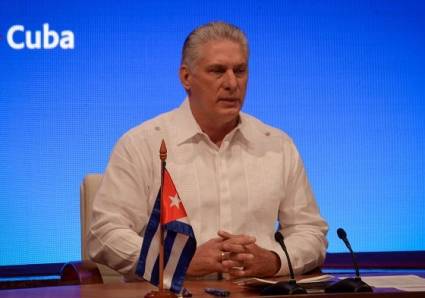

In Cuba, science and innovation have been key factors in the development process and social justice objectives.
An inclusive Ibero-America, which takes into account the interests and development needs of all members of this Conference, can favor the advancement of our nations, stressed the President of Cuba, Miguel Díaz-Canel.
Author:

Juventud Rebelde
|digital@juventudrebelde.cu
Translated and edited by Walter Lippmann for CubaNews.
The legitimacy of a government emanates from the expressed and sovereign will of its people. Autor: Estudios Revolución Publicado: 21/04/2021 | 10:35 pm
Speech by Miguel Mario Díaz-Canel Bermúdez, First Secretary of the Central Committee of the Communist Party of Cuba and President of the Republic, at the XXVII Ibero-American Summit of Heads of State and Government, on April 21, 2021, “Year 63 of the Revolution”.
His Excellency Xavier Espot Zamora, Head of Government of the Principality of Andorra;
His Majesty Felipe VI;
Your Excellencies Heads of State and Government of Ibero-America and other heads of delegations; Your Excellency Rebeca Grynspan, Ibero-American Secretary-General:
Please receive cordial greetings on behalf of the Cuban people and Government.
The efforts of the Principality of Andorra to organize this Summit and to give continuity to the work of the Ibero-American Conference, in the period that is coming to an end, under the exceptional conditions imposed by COVID-19, must be acknowledged and thanked.
Our congratulations and support to the sister Dominican Republic, next Pro Tempore Secretariat.
Excellencies:
Cuba has experiences to show and attaches special relevance to the theme of this appointment: “Innovation for Sustainable Development-Objective 2030. Ibero-America facing the challenge of the Coronavirus”.
In barely a year, a devastating pandemic has worsened the living conditions of millions of human beings on the planet and caused the worst economic downturn in nine decades¹. In contrast, five years after its adoption, hardly any progress has been made in the implementation of the 2030 Agenda.
There is talk of the multiple crises generated by COVID-19, but some problems are dozens of years older.
Developing countries are burdened with the unbearable weight of a foreign debt that has already been paid a thousand times over, and some of them are also suffering the impact of unilateral coercive measures that violate international law and hinder their legitimate right to development.
Until a just, democratic and equitable international economic order can be established to address the root causes of inequalities and move towards the Sustainable Development Goals, these will remain a chimera for most of the world’s peoples.
Let us be honest. The current development paradigms cause poverty and exclusion of the majority due to their irrational patterns of production and consumption that, under the designs of the market, disdain the most valuable thing: human life and dignity.
An inclusive Ibero-America, which takes into account the interests and development needs of all the members of this Conference, can favor the progress of our nations.
Sustainable development demands political will, solidarity, cooperation, financial and technology transfers from developed countries and equitable access to these resources that takes into account accumulated inequalities.
The pandemic has laid bare an indisputable truth: health and social protection systems, education, science, technology and available material resources must be put at the service of all and not at the mercy of the narrow interests of a few. Regardless of ideologies, the State has a responsibility to assume in the use of resources associated with the life and well-being of citizens.
As I explained at the Ibero-American Summit in Veracruz in 2014, in Cuba, science and innovation have been key factors in the development process and social justice objectives. This premise, which is a fundamental part of the legacy of the historic leader of the Cuban Revolution, Commander in Chief Fidel Castro Ruz, has allowed us to face the current pandemic under the blockade.
A robust system of science and technological innovation with an advanced and efficient biotechnological and pharmaceutical industry, allied to the universal, free and quality health system, with highly specialized human resources, have made possible the Cuban response to the pandemic that seems to surprise some.
A little more than a year after the first cases of COVID-19 were detected in the country, we have five vaccine candidates, two of them, Soberana 02 and Abdala, in Phase III clinical trials and we hope to immunize the entire Cuban population before the end of 2021, with our own vaccines.
Our National Economic and Social Development Plan until 2030, aligned with the Sustainable Development Goals, gives a leading role to innovation and scientific research.
The links between government structures and the knowledge and goods and services production sectors have been strengthened to promote innovation for economic and social development, with emphasis on local development.
Cuba has 229 Science, Technology and Innovation entities, of which 141 are Research Centers, 26 Scientific and Technological Services Centers, 61 Development and Innovation Units and a Science and Technology Park², and at the same time it is developing a Government Management System based on Science and Innovation.
The Government of the United States, in the midst of the pandemic, brutally tightened the economic, commercial and financial blockade, and financed and supported dangerous acts of violence and disrespect for the law to promote social and political instability in our country. The Cuban people have responded by redoubling their proverbial resistance to the blow of creativity.
The campaigns of the U.S. Government to discredit and boycott the medical cooperation that Cuba offers have not tarnished our vocation of solidarity and cooperation: 57 medical brigades of the Henry Reeve Contingent have contributed to confront the pandemic in 40 countries and territories. Many of the members of this Conference have appreciated the high altruism of Cuban health professionals.
Excellencies:
The legitimacy of a government emanates from the expressed and sovereign will of its people, not from the recognition of foreign powers. The Government presided over by the constitutional President Nicolás Maduro Moros must be respected.
It is unfair to blame the Venezuelan Government for the economic and social situation facing Venezuela, when the application of cruel unilateral coercive measures, planned and implemented by the United States accompanied by several of its allies, with the aim of causing suffering among the population, continues. These coercive measures promote emigration, a phenomenon about which some express great concern and could contribute to resolving its cause.
It would be useful and sincere to recognize that the U.S. design of intervention in Venezuela failed miserably and placed other countries that supported it in an untenable political and legal situation.
Those who claim to respect the will of the Venezuelan people and promote a political solution among Venezuelans should recognize that the Bolivarian Republic of Venezuela is a sovereign state, cease meddling and act with respect for the United Nations Charter and the Proclamation of Latin America and the Caribbean as a Zone of Peace.
Excellencies:
On behalf of the Cuban people, I am grateful for the traditional support of the Ibero-American community for the just demand to put an end to the blockade against Cuba, as well as the signs of rejection to the arbitrary and unilateral qualification of our country as a sponsor of terrorism, by the Government of the United States.
Cuba maintains unchanged its policy of solidarity and international cooperation for the benefit of our peoples, and will never renounce the construction of a sovereign, independent, socialist, democratic, prosperous and sustainable nation, always ready to share, as a human heritage, the results of our experiences based on Science and Innovation.
Thank you very much to all of you.
Taken from the Report: “The Inequality Virus”, published by OXFAM on January 25, 2021 and available at: https://www.oxfam.org/es/informes/el-virus-de-la-desigualdad
Data provided by Citma’s International Relations Department.
The So-Called “San Isidro” Case
MONCADA Lectores
The So-Called “San Isidro” case
by Esteban Morales
Translated and edited by Walter Lippmann for CubaNews
I believe that what is happening there is a consequence of not having taken care of four fundamental issues in time:
1- The marginal conditions of some of our neighborhoods in Havana.
2-The lack of attention or delay in recognizing and using the Social Sciences.
3- In spite of Fidel’s early warning, having neglected, for a long time, the racial question.
4-Some deficiencies in our political-ideological work.
On the last three points, I have warned enough.
But as a result of my warnings, I was never called to the Round Table, and when the faces of its protagonists appear, mine is never there. In spite of having been, individually, among those who have attended the Round Table the most.
None of those who used to publish me now publish me. They have not called me anymore to Cuban Television. Luckily TELESUR gave me a job.
I have also written many works on the racial question, three books and dozens of articles, always warning about the role that the Social Sciences should play and about the importance of ideological work. I am sure you have read some of them. In them, I have had to fight many battles, so that they do not accuse me of being a racist, accept my criticisms as necessary and do not believe that because I have traveled a lot to the United States, I have brought these things from there. Of which I have been accused more than a few times. Racism and discrimination were not brought by anyone, from anywhere. They are here, because they were born, with us, as a nation. And from here we will eliminate them someday. For the glory of all Cubans. We are already working on it within a Governmental Commission, presided over by Miguel Diaz Canel, President of the Republic.
We have slums, which I know very well, because I have visited them, so that no one can tell me about them. And, in addition, because when I had to come from my town, to Havana, in October 1958, I lived, beyond the triumph of the Revolution, in the Jesus Maria neighborhood, in Vives Street No. 258 between Alambique and San Nicolas. I know the neighborhood very well, because I participated in the La Coubre, joined the Young Rebels there and worked in the Provincial Directorate of 26th of July, which was on Arroyo and 27th.
In those neighborhoods, the standard of living is very low, it always was. They are plagued by delinquents, prostitutes, and poor people, who live on the day-to-day things they can get. It does not mean that all their neighbors are prostitutes, antisocial and delinquents.
Many decent and revolutionary people also live there. But this is the environment that has always tended to dominate. In general, social relations, forms of behavior and mentality are still far removed from what is reflected in our journalistic, radio and television media. The state of the houses, the streets, the material conditions, do not contribute to generating a healthy social environment. As a result, many families struggle to move to other neighborhoods and the worst remains in the neighborhood.
Thus, attitudes, forms of behavior, colloquial language, philosophy of life are generated, all of which are very different from the environment in which most of us live and develop.
In general, there are no reading habits, interest in studying is very low, the sense of intellectual and cultural improvement is also very low. Access to the University is very limited.
Most of them are interested in earning money, or rather in having it, even if they do not seek it by lawful and moral means. Therefore, whoever offers them money, buys not a few, with relative ease, even if it is to carry out antisocial activities, and sometimes even counterrevolutionary activities.
Excessive drinking is very common among the type of person who live in this neighborhood. Rather, not a few of them are interested in partying and getting drunk. As a result, the vast majority of them, within the environment in which they live, are not interested in standing out for the positive, but for the negative, which not a few exacerbate. In their dress, their speech, their behavior, the way they behave socially, the way they treat women.
So then, the people, let’s call them normal, who live there, suffer a kind of cornering. That forces them to move away, so as not to suffer the negative consequences of being forced to live under such conditions.
The environment in which they live, tends to generate an ethic of permissibility, before any crime. A similar type of behavior is the treatment that women generally receive. Women often react in the same way, with a tendency to associate with these types of men, who some consider more “macho”. Generally, this type of woman, when receiving from the man any cultured attention, respectful treatment or delicacy, confuse them with homosexuality, as a lazy and effeminate type. This serves to fuel rude and disrespectful behavior, with a tendency to brutality towards them. Without realizing, sometimes, that they themselves contribute to the worse treatment they are subjected to. So then, feminism, the struggle for equality and recognition of women’s status, does not have much space among many of them.
They despise the laws, those who apply them, the police, in particular, they hate them and do not deserve any respect. They see them as their enemies and never as agents of order or guardians of good morals. For this reason, the tendency is not to inform on anyone, regardless of the crime they may have committed. This is considered as an act of “snitching”, lack of manhood, which many consider should be punished, even with a beating or death. Revenge is a typical phenomenon of social behavior.
They were not born this way, but, not infrequently, the example they receive at home, is forming them in this way; because, not infrequently, the same parents, inoculate them with customs, forms of behavior, values, ethics, inverse to those that the average of the society demands of them. From here also, sometimes, developed their behavior regarding education, respect to teachers, authority and government institutions.
In their eyes, the ideological work that is done is looked down upon, the work of the UJC seems to them as elitist and that of the rest of the organizations do not manage to attract them to good manners.
Fidel was very concerned about this, when he spoke several times about the racial question and generated the “Social Workers”, in view of the reality of the number of young people who neither studied nor worked. It was said that there were about 80,000 in the province of Havana. I also oriented to make investigations to know what was happening with the children in these neighborhoods. If the mothers had enough money to buy food for them, if the children had a television set and toys, etc. Trying to alleviate a social situation that could already be considered critical.
But all this remained in Fidel’s good intentions and the work that was being done was not continued. We were coming from a situation in which prostitution, drugs and these social problems were not considered to have a place in our society. But Fidel perceived them clearly from the beginning and oriented work toward them.
Today then, these neighborhoods are affected by delinquency, drugs, people without ideology, the unclassed, the marginalized, to whom we have already arrived too late. The consequences are manifesting themselves.
In these neighborhoods, in general, the revolution has not been able to reproduce itself and the counterrevolution, which has always stalked them, does not find it very difficult to attract them. If we add to this, the Pandemic and the difficult economic conditions we are going through today, I would say that we are in the most complex situation to address their problems. Although I am sure we are going to do it. Because our social policy and the interest that “no one is left helpless” are real. And they are being reinforced within the current economic policy.
They would not have been counterrevolutionaries, in their immense majority, but we, with our inattention and deficient political-ideological work, have been giving them away to the counterrevolution. Perhaps, without realizing it. So, if the revolution had managed to work more strongly against inequalities, the racial question, marginality, invisibilization; if our television and our media in general, had always been more visible of the differences, had debated more our problems, of things about which we are only beginning to talk about now, it would have been less difficult to fight against that environment and rescue its victims from the problems that now afflict them. And that the counterrevolution takes advantage of.
But we concentrate on the advances, neglecting the fact that not all of us have arrived in the same way to the current Cuban society and those have been left behind. Being the majority, blacks and mestizos, unfortunately, poor in general. They are the ones who were more directly affected by the “starting points”, farther away from the social and cultural welfare that the revolution, from the beginning, has lavished on many.
San Isidro is not the only neighborhood in Havana with these inequalities, marginalities and social disadvantages that have degenerated into the counterrevolutionary attitudes of a few.
There are other neighborhoods. And not only in the Capital.
What should we do now?
I believe that we should pay attention, with urgency, to the following issues:
1- We must pay attention to the material needs of those neighborhoods, in order to improve them. No promises, no propaganda. Just start. To make people see that their material situation begins to improve.
2- It is necessary to work on those neighborhoods with quality ideological and cultural work. Not with speeches or talks. Nor with master classes.
3- The situation of all those neighborhoods, Cuasi cuaba, La Lisa, Siboney, Atares, Luyano, etc., must be reviewed. If they have not turned around, it is because there are community projects and positive neighborhood leadership.
4- It is necessary to dust off everything that the Social Sciences have investigated and put it into execution. Formulate new projects and finish giving the Social Sciences the place they deserve, within the general scientific work and in the treatment of problems, in particular. There is scientific potential to do so.
5- The party must thoroughly review the work of the Ideological Apparatus and turn part of the tasks of its cadres in the directions that this situation demands.
6- The neighborhood of San Isidro, it is necessary to negotiate with them. See what they want. Take them to the logic of what they can ask for. And try to convince them of what cannot be given to them.
7- Formulate a strategy to help the nuclei of the party in situations of this nature. Because I am convinced that this struggle continues. And the insurmountable ones, already on the side of the counterrevolution, will continue, as long as they can, taking advantage of the complex situation the country is going through, to fulfill their purposes linked to the current US policy towards Cuba.
Biden already gave them the human rights policy, in his recent report, with which they will continue to pressure and perhaps do nothing to help the country solve its difficulties. On the contrary, they will try to exacerbate them. Generating a waiting period to see how the story ends.
Havana, April 18, 2021
About Solidarity with Cuba
MONCADA, Lectores
About Solidarity with Cuba, notes of a chronicle
By Gisela Arandia Covarrubias
Translated and edited by Walter Lippmann for CubaNews.
Thanks to Rosemari Mealy for bring this to my attention.
Listening these days to President Miguel Díaz Canel’s comments on the duration of the blockade against Cuba, I remembered a meeting held in the city of Oakland, in 1998, during the Dialogue with Cuba Conference organized by the US University of California Berkeley, where a group of Cuban intellectuals and scientists participated and the blockade was one of the topics. It came to my mind then, when I explained the spiritual impact of that aggressive measure against Cuban people rooted to their cultural identity wherever they are in the world.
There I spoke of the cultural impact of the blockade, in the space that transcends beyond the political and economic damage, such as the lack of medicines and medical equipment. I made a reference to the anguish caused by sustained shortages in daily life, where the younger generations have known no other reality than that of shortages, a childhood with minimal limitations for their enjoyment, due to the absence of simple things, such as modern toys, that stimulate their abilities. I also mentioned the uncertainty of housewives at the time of preparing the family diet due to the lack of simple but indispensable products in the diet. I insisted on the sadness of the families who could not have the relationships that other peoples have, where emigration is a daily phenomenon. I had just finished an investigation in Miami, organized by Florida International University and I still had fresh in my mind those encounters with Cuban families where crying for the island was a frequent occurrence.
But the reason for this chronicle was the idea of the Cuban President, with reference to the duration of the blockade of Cuba, the longest in history. It is a subject that refers to several variables. Although Cuba does not possess enormous wealth like other nations, its oil resources are still incipient compared to other territories and are still in the process of being studied. Cuba’s reserves of strategic minerals do not offer millionaire profits either. This is a reality known since the XIX century, that, for the empire, towards a nation that, by the way, has not been a political priority for them. Nor have they attempted an armed invasion with the U.S. military as they have done in dozens of countries around the world, although they know that, in this case, the response would be without winners or losers.
Why then this persistence only with Cuba? Even in the case of Vietnam, the scene of human losses for both sides after a war that shook American society or conflicts with other countries where direct or diplomatic attacks have been carried out, why this sustained abuse against this neighboring island where the blockade has a broad historical consensus of rejection in various instances in the United States itself? So, what is it that bothers them so much about this small Caribbean island with an area of only 110,860 square kilometers [42,803 square miles]? Perhaps one answer could lie in the approach to issues of the Humanities and Social Sciences, such as cultural identities.
In all the years of the blockade, it was Barack Obama, a non-white president, who made a different reflection on this long conflict. I am not going to present a eulogy, but to delve into a different look, to dig into the space of those cultural subjectivities, which finally shape humanist behavior. Obama’s genealogy was not typical of the status quo in that country. He was born in Honolulu to an African economist father and an American anthropologist mother, his primary studies were in Hawaii, with his maternal grandparents, with an education that culminated with outstanding grades at Harvard. His professional level provided him with a pragmatic view of Cuba:
“When I was a child this conflict was already going on and in more than half a century nothing has changed in favor of the United States….”
As perhaps the philosophers of the Enlightenment would say, the strategies and tactics employed have become obsolete, so I propose to explore history as that scientific discipline that describes, roughly speaking, social events and, for that, we have as an essential guide José Martí, [1]. He predicted, more than a century in advance, the significance for that empire of its sustained effort to be the master of the continent. There we find a United States that saw and felt the island as an extension of its territory, where, as masters, they determined their road map, from the simplest things such as promoting their way of life, [2] to decisions such as the Treaty of Paris. In order to eliminate Spain in a sort of ultimatum, they even named their maneuvers, with cynical serenity as “Hispano-American agreement” [3] supposedly to liberate a Cuba that had already practically defeated the Spanish troops.
A practice of expropriation also used with native peoples of that country or with Mexican territories. In other words, history from the perspective of the Annals [4] announces a long-lasting conflict between the mighty Goliath and the young David. But in addition to the story, there is the psychological significance, from a perhaps Freudian perspective, of a dominant and powerful father who does not accept the break with a daughter, perhaps a bastard, but whom he wants to keep under his absolute dominion. The hypothesis would have to be formulated: Is it perhaps a lack of psychic capacity to accept that something that is supposedly his own reveals itself against his authority? This also seems to be an unacceptable reflection.
Now from sociology, with a classist and philosophical vision, let us see how Hitler decided that the Jews did not have the right to live. That is why he created the concentration camps for the extermination of those peoples, from the paradigm of an identity superiority, of white-European-Christian people, supposedly with superior intelligence genes. A cultural identity, in force in the United States, that, unfortunately, was possible to observe in the recent events during the electoral process.
Proclaiming themselves to have a superior identity, they do not tolerate, they do not admit being defeated or to lose an iota of what they have believed to be theirs. Even more dramatic, if it is in what they have considered their backyard, where they have lost a part of their property and do not accept losing, nor being surpassed by others, let alone to be ridiculed, because that hurts a lot.
Because something that the U.S. administration cannot stand is the cultural trauma that Cuba has generated. It’s a reality that is expressed in the United Nations, where for years the world has been in favor of Cuba and against the United States. It could be argued that, for the mentality of a sector of that leadership, it is inadmissible to recognize that Cuba has not submitted to its mandates and hegemony, but not only that, but it has been able to survive and even triumph in spite of the sanctions, a reality that is too strong for that segment of an elite, clinging to the thought of an identity superiority.
And there we find then, how the accumulated rage can increase. Thanks to the low political level and ignorance about Cuban reality, Donald Trump found a space in Miami for an alliance with his also-rabid colleagues. Where are those who thought in 1959, that emigration to the United States would give them the possibility of returning to Cuba, as “their owners”, again? Those who left with suitcases in hand and imagined that within a year or two at the latest, they would be back in their homes, with their servants, in their properties. But it was a dream that was not fulfilled and the one that Trump gave them the hope of recovering.
In conclusion, it is possible to think that the U.S. blockade against Cuba hides a kind of paranoia that has penetrated deeply into that colonizing and imperial mentality, which does not admit a Waterloo. Neither the defeat at the Bay of Pigs nor the loss of the war in Vietnam, which caused this inexplicable pain, of those who have imagined that they are the masters of the world. Because neither lies such as the sonorous aggression or the slander that Cuba is a nation that supports terrorism are able to unbalance the Cuban population. They know that David has already defeated them long ago, with his scientific, cultural and athletic advances, but they panic to admit it. That is why Biden continues with indecision about continuing Obama’s agenda or standing and watching the bulls from the rail, as Juan Formell said, paraphrasing his song: Que tiene Cuba, que sigue ahí, ahí, ahi…!!!!!
Notes
– [1] José Martí “Our America”.
– 2] Louis Pérez, “Ser Cubano identidad, nacionalidad y cultura” 2006.-Ed. Ciencias Sociales.
– 3] The Treaty of Paris of 1898, signed on December 10, 1898, ended up misnamed as the Spanish-American War, by which Spain abandoned its claims over Cuba and declared its independence. The Philippines, Guam and Puerto Rico were officially ceded to the United States for $20 million. That agreement has been regarded as the endpoint of the Spanish overseas empire and the beginning of the period of U.S. colonial power.
– 4] The Annals School is a historiographical approach that emphasizes events of long duration.
The author may be reached at:
Gisela Arandia Covarrubias
colorcubano@cubarte.cult.cu
Biden-Harris and Cuba
- English
- Español
Great Expectations, Failed Expectations
Biden-Harris and Cuba
By Domingo Amuchastegui
March 31, 2021
Translated by Walter Lippmann for CubaNews.
For many Cubans, last November’s election results in the United States were loaded with great expectations. The economic war imposed by Trump with its devastating effects was to come to an end and with the Biden-Harris binomial in the White House -it was apparently the most logical thing to think- the dynamics of normalization of relations between Cuba and the US initiated in 2014 would be resumed. Biden and his advisors had actively participated in that dynamic and the premises to resume the process interrupted by Trump. However, at this point, those great expectations do not appear on today’s horizons or in more distant scenarios.
Almost 100 days into the inaugural 100 Days, the Biden-Harris binomial has not lifted a finger to partially or completely reverse the set of economic and political-diplomatic attackers launched by Trump against the Cuban authorities. They have not even taken a step to fulfill the three steps they promised to undertake immediately (reestablish diplomatic and consular presence, family reunification processes and the normal sending of remittances). It has been argued by some specialists that the Cuba issue is neither important nor a priority for the Democratic agenda. If this were so -given its insignificance- it could be resolved quickly and with the stroke of a pen. But, the issue is more complex and of greater relevance.
To the proposals of a hundred or so members of Congress advocating a restart of the normalization process and carrying it through to its ultimate consequences, he has so far not given them the slightest attention or consideration. They have been sent to the usual “freezer” or usual procedure to “kill” the legislative proposals that do not interest the system or the situation.
In addition, the Biden-Harris administration is now seeking to “revive” the case of the “Havana syndrome,” a chapter that was cleared up a long time ago, even in Trump’s own time. If he could not prove and legitimize before the world any guilt on the part of the Cuban authorities, what sense does this measure make now?
To this is strung together a curious congressional proposal promoted by well-known Senators Bob Menendez (NJ) and Marco Rubio (FL) with some bipartisan backing. It is a meticulously elaborated plan, in great detail, articulating an articulated body of pressures, restrictions and sanctions on the Nicaraguan government in order to force it to accept the convocation of an electoral process, to the liking and design of these senators.
And why against Nicaragua, the weakest link of the “troika” so characterized by John Bolton at the time? Nicaragua would be the “laboratory,” from whose effectiveness would emerge its application to the cases of Venezuela and Cuba, the cases that most interest these influential senators. It remains to be seen whether or not the “freezer” resource will be applied. The proposal also assures the approval of their electoral bases and the approval of powerful Cuban-American political-economic interests.
Faced with such tendencies, it is legitimate to ask: Is the Cuba of today diametrically different and opposite to the one that Blinken, Mayorkas, Kerry and others of the current Biden team knew in detail, including the Cuban leaders? Except for the devastating effects of the Trump era mentioned above, Cuba, its situation and authorities are the same. It could even be added that positive reform factors are present that were not present in 2014. What cataclysms or dramatic turns have taken place in Cuba for the new administration to have the handling of the Cuba issue in a situation of prolonged quarantine until now? None. Conveniences and domestic policy objectives, and first and foremost the dispute to win Florida for 2022/2024, seem to explain these courses of action.
To culminate this flow of hostile currents to the normalization of relations, a kilometric report on human rights violations in Cuba, signed by its Secretary Antony Blinken, emerges from the State Department. It includes a string of accusations including extrajudicial executions, disappearances, torture, etc., etc., which seem to configure a case worthy of Nuremberg…
The sources are almost entirely those opposition organizations trained and paid by the US (as can be documented in US government sources). There are in the Cuban case reprehensible and debatable objections in several areas of freedom of association and expression and other issues, but the monumental dossier of monstrosities pointed out in Blinken’s report would seem to be a Hollywood script of the worst, if not a fabulous fabrication of little or no credibility. Blinken seems to forget that all the opponents with whom President Obama met during his visit are still there, in perfect physical condition, writing whatever they want, surfing the cyberspace and waging war with their statements, trips abroad and denunciations, that the UNPACU and the Ferrer brothers continue distributing their little bags of food to gain support, Yoani Sanchez continues with 14 ½, the Catholic clergy makes its criticisms and among the revolutionaries we also find all kinds of criticisms.
And these issues -difficult and controversial- the Cuban authorities discuss them in a civilized manner with the European Union within the framework of Political Dialogue and Cooperation (from which the United States could learn a little), they seek consensus and agreements. If the Cuba described in Blinken’s report were true with its extrajudicial executions, torture, disappearances, etc., why has it been actively contributing to the peace processes from Central America to Colombia? Why do the Lima Group, Norway, Canada and Spain seek its mediating contribution? If it were the Cuba that Blinken is trying to “sell” now, how would he explain that three Popes visited Cuba in the last 20 years and chose, by mutual agreement with the Metropolitan of Moscow, Havana (and not Paris, Rome or Geneva) to host their first meeting at the highest level after the Great Schism of Christianity more than a thousand years ago?
So why does the Biden-Harris pairing now assume such a course? If George H.W. Bush in 1989 was able to proclaim the victory of the United States -with God’s favor, as he proclaimed- now the Democratic team, based on a sure assessment that “the Cuban regime” is facing the most critical stage of its existence that foreshadows a possible collapse. In view of this -they seem to calculate- it would not make sense for the White House to plan to resume the process that Obama initiated. To do so -it is understood- would provide the Cuban authorities with sufficient political-diplomatic and economic oxygen to refloat their system.
The benefits of this reasoning would ensure -as perceived- a solid backing of Cuban-American and Latino voters in Florida while on a hemispheric scale it would be a very serious setback for the so-called “pink wave” of center-left options and other radical nuances, especially for the civil-military government of Maduro in Venezuela, a certain version of “domino theory.”
It is worth noting that such a scenario may be complicated in the short and medium-term by events and trends in the hemisphere that would in no way favor the current Biden-Harris foreign policy. Some of these could have a particularly negative impact on the new administration’s policy. Some of them are:
-New rise of the “pink wave” (return of MAS in Bolivia, electoral victory of Arauz in Ecuador, formation of the Patriotic Front as an important challenge to the declining Duque government, possible defeat of the right in Chile)….
-The civilian-military power still headed by Maduro is not cracking or falling down so far…
-The model put to the test against Ortega (Nicaragua), the latter survives the offensive to subvert it…
-The “sabre rattling” in Brazil could well lead to a coup d’état, not so much to put an end to the Bolsonaro disaster, but to prevent it from frustrating the certain victory of Lula in the next elections…
-The crisis on the border with Mexico and the massive immigration (the barbarians are knocking at the doors of the Empire!) overflows the attempts of its management and neutralization, it transcends its local and domestic limits with very diverse regional connotations…
-In such a context, the holding of an upcoming Summit of the Americas may become a major setback for the current foreign policy designs of the Biden-Harris administration that will weaken its attempts for a successful hemispheric primacy, allowing its capitalization by Trumpism in the 2022/2024 contests.
In such a situation, the Biden-Harris policy toward Cuba may face unforeseen setbacks and setbacks that will force it to reorient objectives and priorities, in which case Cuba will have a better chance of survival.
Grandes expectativas, expectativas fallidas:
Biden-Harris y Cuba
Por Domingo Amuchastegui
31 de marzo 2021
Para muchos cubanos los resultados electorales de noviembre del pasado año en EEUU venían cargados de grandes expectativas. La guerra económica impuesta por Trump con sus devastadores efectos debía llegar a su fin y con el binomio Biden-Harris en la Casa Blanca -era aparentemente lo más lógico pensar- se retomaría la dinámica de normalización de relaciones entre Cuba y EEUU iniciada en el 2014. Biden y sus asesores habían participado activamente de esa dinámica y las premisas para retomar el proceso interrumpido por Trump. Sin embargo, a esta altura esas grandes expectativas no aparecen en los horizontes de hoy ni en más distantes escenarios.
Casi cumplidos los inaugurales 100 Dias, el binomio Biden-Harris no han levantado un dedo para revertir parcial o completamente el conjunto de agresiones económicas y politico-diplomáticas acometidas por Trump contra las autoridades cubanas. No han dado un paso siquiera para cumplir los tres pasos que prometieron acometer de inmediato (restablecer la presencia diplomática y consular, los procesos de reunificación familiar y el normal envío de remesas). Se ha argumentado por algunos especialistas que el tema de Cuba no es importante ni prioritario para la agenda demócrata. Si esto fuera así -dada su insignficancia- rápido y de un plumazo pudiera resolverse. Pero, el tema es más complejo y de myor relevancia.
A las propuestas de un centenar de congresistas abogando por reiniciar el proceso de normalización y conducirlo hasta sus últimas consecuencias, no les ha concedido hasta ahora ni la más minima atención o consideración. Las ha remitido al habitual “congelador” o procedimiento habitual para “matar” las propuestas legilativas que no interesan al sistema o la coyuntura.
A esto se añade ahora el que la administración Biden-Harris busca “revivir” el caso del “síndrome de La Habana,” capítulo bien esclarecido hace tiempo, incluso en tiempos del propio Trump. Si éste no pudo probar y legitimar ante el mundo ninguna culpabilidad de las autoridades cubanas, ¿qué sentido tiene ahora esta medida?
A esto se engarza una curiosa propuesta congresional promovida por los conocidos senadores Bob Menéndez (NJ) y Marco Rubio (FL) con algún respaldo bipartidista. Se trata de un plan minuciosamente elaborado, con todo lujo de detalles, articulando un cuerpo articulado de presiones, restricciones y sanciones sobre el gobierno de Nicaragua a fin de forzarlo a aceptar la convocatoria de un proceso electoral, a gusto y diseñado por estos senadores. ¿Y por qué contra Nicaragua, el eslabón más débil de la “troika” así caracterizada por John Bolton en su momento? Nicaragua sería el “laboratorio,” de cuya eficacia se desprendería su aplicación a los casos de Venezuela y Cuba, los casos que más interesan a estos influyentes senadores. Habrá que ver si se le aplica o no el recurso del “congelador.” La propuesta además asegura el beneplácito de sus bases electorales y el beneplácito de poderosos intereses político-económicos cubano-americanos.
Frente a tales tendencias, es legítimo preguntarse: ¿Es acaso la Cuba del presente diametralmente distinta y opuesta a la que Blinken, Mayorkas, Kerry y otros del actual equipo de Biden conocieron en detalle, incluídos los dirigentes cubanos? Salvo los efectos devastadores de la era Trump antes mencionados, Cuba, su situación y autoridades son los mismos. Incluso pudiera agregarse que están presentes factores positivos de reforma que en el 2014 no estaban. ¿Qué cataclismos o virajes dramáticos han tenido lugar en Cuba para que la nueva administración tenga el manejo del tema Cuba en una situación de prolongada cuarentena hasta ahora? Ninguno. Conveniencias y objetivos de política doméstica, y en primer lugar la disputa por ganar la Florida para el 2022/2024, parecen explicar major estos rumbos.
Para culminar este flujo de corrientes hostiles a la normalización de relaciones, surge del seno del Departamento de Estado, suscrito por su secretario Antony Blinken, un kilométrico informe acerca de las violaciones de los derechos humanos en Cuba, que incluyen un rosario de acusaciones que incluyen ejecuciones extrajudiciales, desapariciones, torturas, etc., etc. que parecen configurar un caso digno de Nuremberg…
Las fuentes en su casi totalidad son aquellas organizaciones de oposición entrenadas y pagadas por EEUU (como puede comprobarse documentalmente en fuentes gubernamentales de EEUU). Existen en el caso cubano objeciones reprobables y discutibles en varias áreas de las libertades de asociación y expresión y otros temas, pero el monumental expediente de las monstruosidades apuntadas en el informe de Blinken parecerían un guión hollywoodense de los peores, si no una fabulosa fabricación de escaso o ningún crédito. Parece olvidar Blinken que todos los opositores con los cuales se entrevistó el presidente Obama durante su visita ahí están continúan ahí, en perfectas condiciones físicas, escribiendo lo que se les antoja, navegando por los espacios cibernéticos y haciendo la guerra con sus declaraciones, viajes al exterior y denuncias, que la UNPACU y los hermanos Ferrer siguen distribuyendo sus bolsitas de comida para ganar adhesiones, Yoani Sánchez sigue con 14 ½, el clero católico hace sus críticas y entre los revolucionarios también encontramos también todo género de críticas.
Y estos temas -díficiles y controversiales- las autoridades cubanas los discuten civilizadamente con la Unión Europea en el marco de Diálogo Político y de Cooperación (del que pudiera aprender un poco EEUU), buscan consenso y acuerdos. Si la Cuba que se describe en el informe de Blinken tuviera visos de veracidad con sus ejecuciones extrajudiciales, torturas, desaparecidos, etc., ¿por qué ha venido contribuyendo activamente a los procesos de paz desde Centroamérica hasta Colombia? ¿Por qué desde el Grupo de Lima hasta Noruega, Canadá y España procuran su contribución mediadora? Si fuera la Cuba que Blinken intenta “vender” ahora, ¿cómo explicaría que tres Papas visitaran Cuba en los útimos 20 años y escogieran, de mutuo acuerdo con el Metropolitano de Moscú, a La Habana (y no París, Roma o Ginebra) para sopstener su primer encuentro al más alto nivel después del del Gran Cisma de la cristiandad hace más de mil años?
Entonces, ¿por qué el binomio Biden-Harris ahora asume semejante rumbo? Si George H.W. Bush en 1989 pudo proclemar la victoria de EEUU -con el favor de Dios, según proclamó- ahora la pareja demócrata, a partir de una segura evaluación de que “el regimen cubano” enfrenta la etapa más crítica de su existencia que prefigura un posible desplome. Ante esto -parecen calcular- no tendría sentido que la Casa Blanca proyecte retomar el proceso que Obama iniciara. Hacerlo -se entiende- brindaría a las autoridades cubanas oxígeno politico-diplomático y económico suficiente para reflotar su sistema.
Los beneficios de este razonamiento asegurarían -según se percibe- un sólido respaldo de votantes cubano-americanos y latinos en la Florida en tanto que a escala hemisférica sería un gravísimo revés para la llamada “ola rosada” de opciones de centro-izquierda y otros matices radicales, en especial para el gobierno cívico-militar de Maduro en Venezuela, una cierta versión de “teoría del dominó.”
Conviene destacar que tal escenario puede complicarse a corto y mediano plazo con acontecimientos y tendencias en el hemisferio que en nada favorecerían la actual política exterior de Biden-Harris. Algunos de ellos pudieran ejercer una gravitación particularmente negative para la política de la nueva administración. Algunos de ellos son:
-Nuevo ascenso de la “oleada rosada” (regreso del MAS en Bolivia, victoria electoral de Arauz en Ecuador, formación del Frente Patriótico como importante desafío al declinante gobierno de Duque, posible derrota de la derecha en Chile)…
-El poder cívico-militar que todavía encabeza Maduro no se resquebraja ni se cae hasta ahora…
-Puesto a prueba el modelo contra Ortega (Nicaragua), éste sobrevive la ofensiva por subvertirlo…
-Novedoso “ruido de sables” en Brasil que bien pudiera desembocar en una salida golpista, no tanto para poner fin al desastre Bolsonaro, sino para impeder con ello frustrar la segura victoria de Lula en las próximas elecciones…
-La crisis en la frontera con México y la inmigración masiva (los bárbaros tocan a las puertas del Imperio!) desborda los intentos de su manejo y neutralización, trasciende sus límites locales y domésticos con muy diversas connotaciones regionales…
-En un contexto tal, la celebración de una próxima Cumbre de las Américas puede convertirse en un importante revés para los actuales diseños de política exterior de la administración Biden-Harris habrán de debilitar sus intentos por una primacía hemisférica exitosa, permitiendo su capitalización por parte del trumpismo en las contiendas del 2022/2024.
En una situación como esta, la política de Biden-Harris hacia Cuba puede enfrentar tropiezos y contratiempos imprevistos que lo obliguen a reorientar objetivos y prioridades, en cuyo caso Cuba podrá sortear major sus posibilidades de sobrevivencia.
Remembering Ramsey Clark
- English
- Español
Remembering Ramsey Clark
by Ricardo Alarcón de Quesada
April 12, 2021
Translated by Walter Lippmann for CubaNews.
The news of his death did not come as a surprise since it was known that his health was declining and he was also affected by irreparable family losses. But the death of Ramsey Clark is a source of pain and suffering for many in many parts of the world.
His trajectory since the 1960s was one of admirable personal integrity and fidelity to the principles that made him one of the most respected personalities of the American progressive movement.
Attorney General of the United States during the administration of Lyndon B. Johnson, he played a key role in the approval and application of the Civil Rights Act, a decisive step in eliminating discrimination against African-Americans in electoral matters. He also accompanied Johnson in his efforts to ensure affordable health care for all. Both issues were flags that “liberals” raised but with increasingly hesitant hands while their elimination has become a priority for Trump and his supporters.
Ramsey for his part became a point of reference for those who did not abandon the ideals of freedom and true democracy.
He opposed the war against the Vietnamese people to the point that the President excluded him from the National Security Council despite the fact that his participation in that body derived from the high office he held.
Outside the government, Ramsey waged a tireless battle to stop this aggression, which generated a growing mobilization not only in his country but throughout the world, and to which he contributed as few others did. Not only with speeches and declarations. Of special significance was his physical, personal presence on Vietnamese soil in open violation of Washington’s official prohibition.
He had an exceptional capacity for work and delivering solidarity was for him a mission to which he gave his all. No cause was alien to him.
We Cubans owe him a great debt. Our cause was also his. His voice was raised time and again to denounce the blockade and the war that the Empire is waging against us in all fields.
His participation in the campaign to free Elián González and in the hard, complex and prolonged struggle for the liberation of our Five Heroes was decisive. Personally, as long as I live I will thank him for his help and from the bottom of my heart I say Thank you for everything dear friend, brother, compañero.
Ramsey Clark en la memoria
Ricardo Alarcón de Quesada
12 de abril 2021
La noticia sobre su fallecimiento no causó sorpresa pues se sabía que su salud declinaba afectada además por pérdidas familiares irreparables. Pero la muerte de Ramsey Clark es fuente de dolor y sufrimiento para muchos en muchas partes del mundo.
Su trayectoria desde la década de los Sesenta del pasado siglo es de admirable integridad personal y de fidelidad a los principios que lo convierten en una de las personalidades más respetadas del movimiento progresista norteamericano.
Fiscal General de Estados Unidos durante la Administración de Lyndon B. Johnson fue pieza clave en la aprobación y aplicación de la Ley de Derechos Civiles paso decisivo para eliminar la discriminación contra los afroamericanos en materia electoral. Acompañó a Johnson también en sus medidas para asegurar servicios de salud asequibles para todos. Ambos temas fueron banderas que los “liberales” levantaron pero con manos cada vez más vacilantes mientras que su eliminación se ha convertido en prioridad para Trump y sus seguidores.
Ramsey por su lado se convirtió en punto de referencia para quienes no abandonaron los ideales de libertad y verdadera democracia.
Se opuso a la guerra contra el pueblo vietnamita al punto de que el Presidente lo excluyó del Consejo de Seguridad Nacional pese a que su participación en esa instancia se derivaba del alto carga que desempeñaba.
Fuera ya del Gobierno Ramsey libró una batalla incansable para detener esa agresión que generó la movilización creciente no sólo en su país sino en todo el mundo y en cuyo despliegue él contribuyó como pocos. No sólo con discursos y declaraciones. De especial significación fue su presencia física, personal, en la tierra vietnamita violando abiertamente la prohibición oficial de Washington.
Tenía una capacidad de trabajo excepcional y entregar solidaridad fue para él una misión a la que se dio por entero. Ninguna causa le fue ajena.
Es grande la deuda que con él tenemos los cubanos. Nuestra causa fue también la suya. Su voz se alzó una y otra vez para denunciar el bloqueo y la guerra que el Imperio nos hace en todos los terrenos.
Fue decisiva su participación en la campaña para liberar a Elián González y en la dura, compleja y prolongada brega para la liberación de nuestros Cinco Héroes. Personalmente mientras viva le agradeceré su ayuda y desde el fondo de mi corazón le digo Gracias por todo querido amigo, hermano, compañero.
Decree Law on Animal Welfare
Decree Law on Animal Welfare published in Official Gazette (+ PDF)
April 10, 2021
Translated and edited by Walter Lippmann for CubaNews.
The Decree Law No. 31 Animal Welfare was published Saturday in the Official Gazette of the Republic of Cuba. With this, it is possible to take legal action in favor of the care and better treatment of animals in the country.
The document will regulate the principles, duties, rules and purposes regarding the care, health and use of animals, to guarantee their well-being, with a focus on “One Health”, in which human health and animal health are interdependent and linked to the ecosystems in which they coexist.
The text published this Saturday in the extraordinary Official Gazette No.25 highlights that animal welfare is understood as the adequate physical and mental state of an animal in relation to the conditions in which it lives and dies.
It refers that natural and legal persons, owners, holders and possessors of animals, must satisfy their basic needs, according to their species and category, they are also required to register.
People are prohibited from inducing confrontation between animals of any species and the activity of veterinary doctors is regulated by Decree Law.
The National Center for Animal Health of the Ministry of Agriculture (MINAG) will be responsible for directing, executing, implementing and controlling State and Government policy on animal welfare, in relation to the organs and agencies of the Central State Administration, state entities, local bodies of People’s Power and associative forms that are linked to animal welfare.
The regulations include the specific functions of each Ministry to promote the proper care and treatment of animals, as well as the conditions with which their owners must comply to guarantee the well-being they require.
The Decree Law stipulates precise actions to be followed by the holders of productive and working animals, also clarifies that species that are domesticated to accompany people or for the purpose of their enjoyment are considered companion animals.
Pets that remain in the outdoor spaces of a home must have conditions that allow them to shelter from inclement weather, isolated from the ground and with enough space for their movement, he points out.
In the case of those that are abandoned by their owners and do not have identification, or those that wander on public roads, agencies or entities, they will be collected by the competent authority, in accordance with the provisions of the Regulation of the Decree-Law.
Regarding commercialization, it is defined that those who carry out this activity must have the corresponding licenses or authorizations, in accordance with the provisions of current legislation, which also applies to people who carry out import and export operations.
The Gazette published today also includes Decree 38: Regulation of Decree-Law 31 on Animal Welfare, signed by Cuban Prime Minister, Manuel Marrero, and the head of MINAG, Gustavo Rodríguez, which stipulates the rules and conduct to be followed by the veterinarians, agencies, and by natural or legal persons.
It also lists the violations and penalties to be applied in each case, which include fines of between 500 and four thousand pesos; The pertinent ways to present complaints or disagreements are also shown.
The Decree-Law of Animal Welfare, approved by the Council of Ministers on February 26, came to satisfy a need of the population and of experts and interested in the subject that required regulations more in line with current times.
Both the Decree-Law of Animal Welfare and the Regulations come into force 90 days after the date of their publication in the Official Gazette of the Republic of Cuba.
In this regard, the Cuban Minister of Agriculture has highlighted that although the Decree-Law may be implemented after 90 days of publication in the Official Gazette, the MINAG has established certain lines for what it considers the first stage of work .
- Download the Decree Law of Animal Welfare here .
(With information from ACN)
You must be logged in to post a comment.