Legitimate protest does not include attacks


Legitimate protest does not include attacks
The first thing the Revolution did was to teach the people to read, so we could think. And thinking means reflecting on the world around us, as well as contributing to improving it through creative suggestions and constructive criticism, in order to correct mistakes. Long before social networks, Cubans were a very opinionated people. We have our own points of view about everything: sports, movies, medicine, politics…..
“Hot corners” are where baseball is discussed, plays and decisions challenged, which says as much about the exercise of expressing an opinion as attending a neighborhood government accountability assembly.
In these block meetings of residents in every Cuban community emit their evaluation of the human and the divine: from the hole in the middle of the street to the bread baked yesterday that did not weigh was what it was supposed to. These assemblies, mechanisms of democratic expression unparalleled in the world, have trained Cubans in the art of defending their judgments with arguments, valid or not, but expressed with civility and decency.
It is also the norm in matters of such broad interest as the debates on Constitutional questions, policy guidelines and other issues of significant social importance, in which the people have been summoned to establish consensus in a collective manner. Such was the debate on the draft Constitution, held from August 13 to November 15, 2018.
Aware that their assessment mattered and counted, our people understood that they were participating in establishing the legal, economic, political and social order that would govern society through a Magna Carta that would later be approved by 86.85% of the votes, with over 90% of eligible voters participating, that is, the majority of the population.
Defending an opinion is not alien to Cuban social praxis; but that was not what the July 11 disturbances were about.
Legitimate protest will never entail committing crimes, theft, violence, attacks, vandalism. There is no civility possible when one takes such action to create chaos, ignoring all social responsibility.
Those who smashed store windows and stole products, not even food, are vandals, in reality criminals. Those who assume such deplorable attitudes, those who think they are tough and attack the police, do not deserve respect.
Shaken by these events, to which we are not accustomed, we, good Cubans, who are the absolute majority, have already stated that, despite preferring to come to an understanding, will not allow anyone to violate our sacred public tranquility, a conquest and legacy of the Revolution.
There will be no room for such aggression, no chance that a handful of mercenaries can impose an agenda of lies and violence.
Reflections on the current situation in Cuba
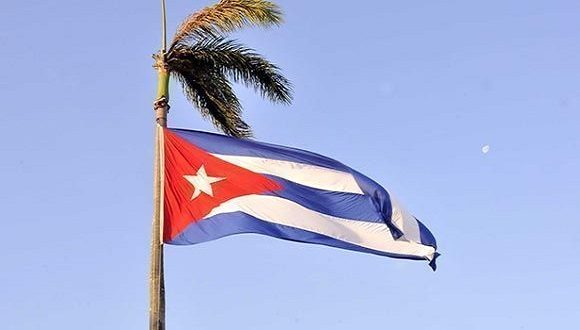

Reflections on the current situation in Cuba
By Fabián Escalante. Division General (retd), former head of Cuban intelligence services. Author of several books on the intelligence services of the US against Cuba and has investigated the assassination of John F. Kennedy from the Cuban viewpoint.
Translated and edited by Walter Lippmann for CubaNews.
Photo: Jorge Luis Sánchez Rivera/ Cubadebate.
Undoubtedly, the social explosion that took place in our country on July 11 of this year surprised us all, and not for lack of evidence and indications. The social networks, in an Olympic marathon, spread to the four winds slogans, orientations, false news, doctored photos, etc., aimed at manipulating, confusing and deceiving national and international public opinion on the Cuban socio-political situation.
The objective was clear, to take advantage of the dramatic circumstances of hardships and needs produced by the asphyxia of the multilateral blockade decreed by the United States. To this was added circumstantial events, such as the exponential increase of the COVID-19 pandemic and the breakage of the main electricity factory (Guiteras, in Matanzas), which not only affected energy but also the water supply.
To this should be added the difficulties in the supply of food and medicines with the usual long queues, a “mafia” of “black market” born as a result of this, and the mistakes made in the late implementation of economic measures approved some years ago, including food production.
The subversive operation of coup-like magnitude, at least for what is publicly known, was not discovered and unmasked, nor -at least- was the population warned by all available means. A solitary and excellent documentary, The Dictatorship of the Algorithm, shown on Cuban TV, was the most outstanding alert of these weeks. It, however, since it was not conceived as a well-organized media campaign aimed at exploiting the information provided, did not achieve the psychological and political effects and influence on the social consciousness that was necessary and should have been projected, given the imminence of the aggression underway.
The Cuba -and the world- of today is different from that of yesterday, and even more different from that of the first years of the Revolution. These reasons that make it impossible to use the same methods of analysis or crisis management used before. There is a young, depoliticized sector of the population (due to our inefficient political and patriotic work) that does not understand the need to resist imperial policies and who wish to improve their living conditions and do not find an immediate solution to their expectations.
Days have passed since the events described above and, as it happens, many interpretations are coming to light, while the media campaigns in the United States and its allies continue to accuse Cuba of human rights violations and other atrocities, with the open intention of creating the conditions for a U.S. military intervention.
We, revolutionaries, have to meditate and draw lessons from what has happened. The United States and its fascist government is mainly responsible, but -and this is important-, we also have responsibilities for the errors committed. They demand a self-critical analysis, not only marginal references. It is necessary to deepen in the why of them, what were their causes and how we are going to solve them. That is what Fidel taught us and warned us in November 2005 when he stated in a speech at the University of Havana that only the Revolution could destroy itself.
The call to revolutionaries and communists has to be to go on the offensive, to the front line: fight against counterrevolutionary elements from within and without, fight against corruption, bureaucracy, idleness: fight against what is badly done, fight against disappointment and mistrust, against the lack or absence of administrative and political control, fight against “hollow, formal” orientations, in two words, generate ideas, defend concepts and conquests.
To fight against the enemy and bureaucracy would be the duty and responsibility of this historical moment. To use the political, social and mass organizations, supported by the duties and rights provided by our socialist Constitution, not to shy away from direct confrontation and not to be afraid to face conflicts, because as Fidel indicated on many occasions: the best way to defend oneself is to take the offensive.
The combat and confrontation of ideas is taking place today at the base of society, in the block, in the neighborhood, in the community. It is there where the Party and the social and mass organizations must and have to do battle, not to oppress, but to convince, to explain and, if necessary, to transfer to the leadership of the party and the government, the difficulties, misunderstandings and shortcomings.
Passivity makes us accomplices of the errors and negative tendencies that Fidel had already warned in his time.
The enemy campaigns carried out by social networks, by mercenaries of Cuban origin living in Florida, as well as by the media operations of the traditional bourgeois media, must be confronted without hesitation. It is necessary to denounce them, to alert our population, to disarticulate them from within, taking advantage of the enemy’s need to publicize their slogans, orientations and contact their internal promoters. Their activities can be prevented and neutralized, without unnecessary mobilizations, which could wear down and exhaust our forces in the perspective of a long struggle.
External solidarity, as has been called for, must be strengthened to its maximum expression, both in Miami and other North American cities where honest Cubans live, as well as in other cities of the world, where the Cuban attitude of solidarity is well known.
Once again, Fidel summons us to the battle of ideas, which consists in debate and not in imposition, in conviction, in listening and understanding arguments, and accepting those that are fair, because this does not imply concessions of principles, on the contrary, in any case, it reinforces our concept of Revolution, that which Fidel bequeathed to us.
“Trenches of ideas are worth more than trenches of stones”.
Not even the U.S. can block love for Cuba
Not even the U.S. will be able to block love for Cuba
According to the Cuban Institute of Friendship with the Peoples, in addition to caravans, events and rallies, statements and videos were circulated on digital platforms, and two virtual events took place
July 25, 2021 22:07:35 pm
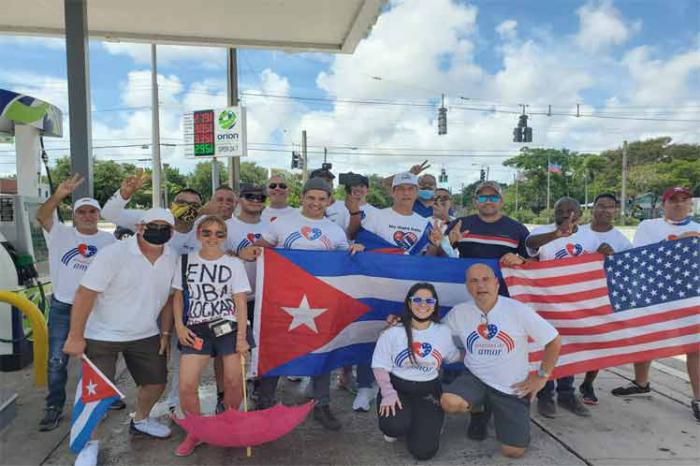
After a month of walking, the Cuban Americans of the Bridges of Love project arrived this Sunday in Washington. Photo: Taken from Facebook
In around 40 cities in 28 countries, Cubans and people in solidarity with the Cuban cause marched this weekend, in the context of the world days of denunciation of the destabilizing actions promoted by the United States with the purpose of subverting the revolutionary process on the island and against Washington’s sanctions.
According to the Cuban Institute of Friendship with the Peoples, in addition to caravans, actions and rallies, statements and videos were circulated on digital platforms, and two virtual events took place.
Among the Latin American countries where activities were reported are the Dominican Republic, Barbados, Brazil, Costa Rica, Chile, El Salvador and Uruguay, while in Europe, those carried out in France, the United Kingdom, Italy and Spain stand out.
After almost a month of walking, Cuban-Americans from the Bridges of Love project arrived this Sunday in Washington DC for a sit-in in Lafayette Park, in front of the White House, where they demanded the end of US sanctions against the Cuban people, reported Prensa Latina news agency.
The group, coordinated by professor Carlos Lazo, demands the opening of consular services at the embassy in Havana, the resumption of flights to all Cuban provinces from the United States, and the reestablishment of the family reunification plan, among other demands.
As confirmed by Carlos Lazo, through Facebook, during the trip they spoke with many Americans of different creeds and ideologies.
He also pointed out that during the journey there was no lack of threats, but “here we are, gentlemen”, said Lazo, who pointed out: “we do not respond to provocations”.
In addition to the rally in front of the executive mansion, other actions were carried out from east to west of the country, in support of the Bridges of Love effort and the just demand to eliminate the economic, commercial and financial siege that has weighed on the Cuban people for more than 60 years, according to the Latin American news agency.
A petition signed by more than 27,000 people will also be delivered, demanding that President Joe Biden fulfill his campaign promise to bring about a change in policy towards the largest of the Antilles.
Cuba reports 8853 new Covid-19 cases


Cuba reports 8853 new positive cases of COVID-19 and 80 deaths at the close of this Saturday’s press conference
The country accumulates 6 million 208 thousand 857 samples and 332 thousand 968 positive ones
Author: Web Editor
Digital | digital@juventudrebelde.cu
Translated and edited by Walter Lippmann for CubaNews.
Cuba at COVID-19 Author: Minsap Published: 18/08/2020 | 09:17 am
At the close of yesterday, July 24, a total of 60,467 patients were admitted for clinical epidemiological surveillance, 14,864 were suspected, 3,546 were under surveillance, and 42,147 were confirmed active.
For COVID-19, 56,424 samples were studied, resulting in 8853 positive samples. The country accumulates 6 million 208 thousand 857 samples taken and 332 thousand 968 positive.
Of the total number of cases (8853): 8787 were contacts of confirmed cases, 16 with the source of infection abroad and 50 without a source of infection. There were 6147 medical discharges, for a total of 288,414 in the country.
Of the 8853 cases diagnosed, 4747 were female and 4106 were male. The 8853 diagnosed cases belonged to the following age groups: 1632 under 20 years of age, 20 to 39 years 2609, 40 to 59 years 2983, 60 and over 1629.
Of the 8853 positive cases, 5.0% (441) were asymptomatic, for a total of 103,353 cases, representing 31.1% of those confirmed to date.
Distribution of cases by provinces: 8853 cases
Pinar del Río (149)
Artemisa (278)
Havana (1481)
Mayabeque (278)
Matanzas (1461)
Cienfuegos (794)
Villa Clara (383)
Sancti Spíritus (190)
Ciego de Avila (427)
Camagüey (399)
Las Tunas (300)
Holguín (423)
Santiago de Cuba (735)
Granma (131)
Guantanamo (1181)
Of the 332,968 patients diagnosed with the disease, 42,147 remain hospitalized, 41,788 of them with stable clinical evolution. A total of 2351 patients died (80 during the day), two were evacuated, 54 were returned to their countries, 6147 were discharged during the day, and 288,414 patients have recovered. 359 confirmed patients are being treated in intensive care, including 153 critically ill and 206 seriously ill.
Thinking About Cuba Today
Thinking About Cuba Today (+Video)
Some concepts are fundamental to understand the new socio-political context we are living in and that we will most probably continue to see in the coming times. We talk a lot these days about cultural, communicational and media warfare. But what do these terms really mean?
Translated and edited by Walter Lippmann for CubaNews.
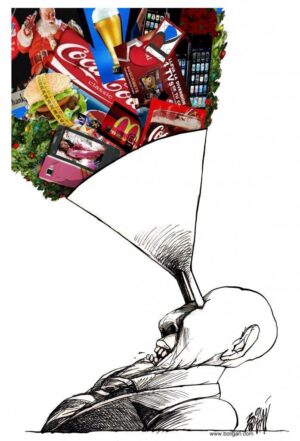
Photo: Boligán Illustration
Some concepts are fundamental to understanding the new socio-political context we are living in and that we will most probably continue to see in the times to come. We talk a lot these days about cultural, communicational and media warfare. But what do these terms really mean?
THE CONTROL OF WILLS AND HEARTS
The concept of cultural war points to a very broad and complex phenomenon that is not limited to Cuban society. It is the global strategy of the centers of capitalist power aimed at the production of alienated subjectivities, functional to the logic of capital.
People are induced to embrace a way of thinking and feeling based on the cult of individualism, meritocracy, competition, consumption as a measure of status and welfare, the search for individual solutions to systemic crises, uncritical attitudes towards capitalism, indifference to the precarious situation of most of the world’s population and the deterioration of nature.
This way of perceiving the world and one’s place in it is presented as obvious, or natural and inevitable. Any opinion that does not fit in or that questions this perspective will be rejected, not because it will be criticized, but because it will be inconceivable.
I will share a testimony. In a foreign university where I was teaching, I conducted an exercise in a social psychology course. I asked the students, between 19 and 25 years old, to bring me information on any topic that caught their attention in the cultural and social life of the country. They could choose topics related to art, science, politics, sports, environment, among others. My surprise was that they all brought commercials about certain products: Coca-Cola, Levi’s Jeans, Lancôme, etc. The discussion revolved around which advertisements they found most interesting and best done.
The reduction of people’s world of interests to the realm of advertising and consumption, at a stage of life which, in theory, should be characterized precisely by the fullest development of the conception of the world, in a society, moreover, of great cultural richness and a very complex social fabric,. This occurs in the midst of a process of formation in the field of social sciences, indicating how the mechanisms of cultural domination can be effective in controlling the spectrum of human desires and motivations. Attitudes towards life are depoliticized and subjectivities are accommodated to the dynamics of the market, while countless fundamental questions remain outside of what the individual is even capable of seeing.
Baudrillard will point out what is even worse: the person lives the illusion of being free because they choose what to consume, when that choice is totally pre-designed, communicatively produced and destined to fulfill a very specific function within the system of capitalist production and accumulation.
The ultimate aim of the culture war is to induce the idea that there is no better alternative to capitalism as we know it. In this sense, various agents of socialization on a global and local scale play a key role, such as educational institutions, the cultural and entertainment industry, certain churches (we cannot generalize), for example, and all those social actors that fulfill the function of socializing values.
Within the culture war, communication is fundamental, and although it is not reduced to the media, because communication occurs through various channels, such as face-to-face communication. For example, media devices play a key role, which in recent times has gained prominence given the weight acquired by digital media and social networks. That is why we are talking about a war that is also communicational and that also has a media dimension.
Digital algorithms to keep people’s minds “connected” all the time in virtual platforms crowded with advertising and busy seeing how and what to buy, are brutally effective. For Naomi Klein today, people even advertise themselves, as if they were a brand, coupling and reducing themselves to the logic of the market, the function and content of many links.
More important than experiencing, meeting, knowing and sharing, is to exhibit oneself in the “market” of human relationships, reducing these to transactions of likes mediated by electronic devices, without questioning anything else that happens around, making the meaning of life revolve around these marketing dynamics of the self.
We have to understand that this communications system, which works as an alternative pedagogical path, to the extent that it forms certain motivations and values without being a school. It is one which responds to the interests of the market and not to the project of society we want to build. It will become increasingly present among the younger generations in Cuba, to the same extent that they have greater connectivity to the Internet. This is a problem that must be assumed and solved creatively.
LET’S TAKE A CLOSER LOOK AT THE OPINION MATRIXES
However, the communications war may have more specific objectives than the naturalization of the cult of capitalism. It is also used to attack political systems that oppose the interests of the centers of capitalist power. In this case, matrices are fabricated to influence public opinion in one direction or another, to intervene in the course of certain political processes in a manner convenient to the interests of the United States or other powers, to overthrow governments, to deploy soft coups… Both forms of expression of the culture war complement each other, since the more alienated people are, the easier it is to manipulate states of opinion on specific political issues.
An opinion matrix is a partial representation of reality with an ideological imprint that responds to the interests of a certain power group and is manufactured with the intention of producing or maintaining hegemony and dominating public opinion on an issue. Opinion matrices try to create subjective conditions favorable to intervene or manage political processes. They are managed by taking into account the characteristics of the target audiences.
Let us look at an example. The opinion matrix that most strongly bombards the national media scenario is aimed at inducing hopelessness and resentment towards the Revolution and socialism. It cannot be understood without the existence of the blockade, they are a strategic pair. The blockade generates the objective conditions of shortages and frustrations which are then amplified through the discourse of hatred and boredom around the political system, in its dissimilar tonalities. The blockade produces the objective floor on which the matrices of opinion against the system are settled. This is not to say that the problems we face do not also have endogenous causes, which produce discontent that can be capitalized on.
What do the fundamental matrices of opinion that operate in our reality say? Cuban socialism failed, the government’s management and institutionality are overwhelmed (there is a crisis of governability) and the Cuban state has collapsed: there must be intervention in Cuba. These opinion matrixes try to create the ideal subjective conditions for a regime change.
In media content of various kinds from media with a counterrevolutionary agenda. The economic crisis Cuba is going through and its social impact is analyzed, the legacy of underdevelopment from before January 1959, the existence of the blockade, as well as the achievements made, are ignored. The endogenous causes of the problems are hyperbolized. Cuban society is uncritically and ahistorically equated with other societies. This is done in order to import liberal and/or anti-state narratives and forms of struggle. The category of class struggle is eliminated as a fundamental north to think about the future of the nation. At the same time the routes of analysis and proposals for solutions to the problems we are experiencing are de-ideologized.
A CHANGE OF EPOCH
The victory in this new scenario will be, in the first instance, to understand that the time is different and the mechanisms of domination we are facing are not the same. The virtual world has its own dynamics and laws of operation. It is not a matter of bringing the same narratives now to a virtual scenario. It is about completely transforming the methods of work, the forms of resistance and struggle.
In spite of considering that we must assume and defeat the communicational war that is being waged against us, our country has a strength in that sense that is not in the virtual territory. Although it may seem paradoxical: we can revitalize our organizations and institutions to transform the devices for participation and political debate at the grassroots. We need to promote effective spaces for meaningful dialogue about our reality, for coexistence in the midst of the life circumstances we are going through, for collaboration and for the collective search for solutions to the difficulties that arise.
Politicizing the analysis of Cuba’s future will make a difference: the greater the politicization, the lesser the manipulation of subjectivities through the devices used in this cultural war.
Articulate an educational-communicational strategy on a large scale, in extension and depth, to promote our perspectives and the right to build, in conditions of peace, our own, collective and sovereign path towards more prosperity, democracy and social justice.
July 11, conceived in the United States
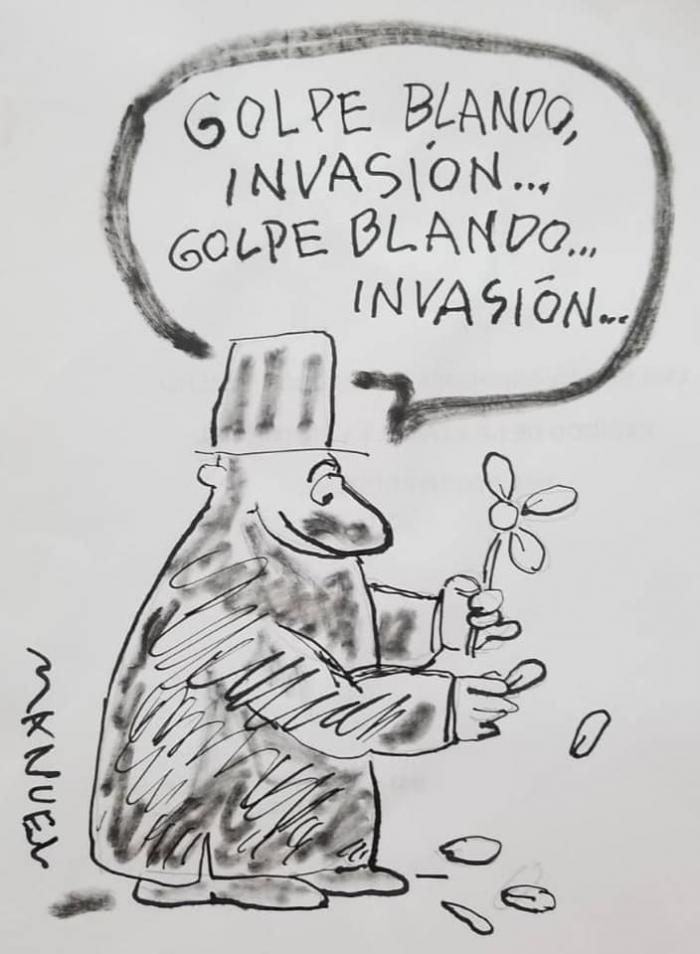
The events of July 11 were conceived, organized and financed from the US.
The inventors of the narrative of popular indignation now want to build another one about a supposed spontaneous insurrection against the government, which justifies the defeat and propitiates foreign intervention in the island.
Author: Raúl Antonio Capote | internacionales@granma.cu
July 24, 2021 00:07:34 AM
Translated and edited by Walter Lippmann for CubaNews.
Photo: Manuel
In February 2018, following indications from then U.S. President Donald Trump, the Internet Task Force for Subversion in Cuba was created, subordinated to the CIA.
It was a new step, considered essential, to dominate Cuban cyberspace and move to a higher stage in the strategy of subversion against the Cuban Revolution.
The propaganda crusade organized by the Task Force has been characterized by a coordinated use of all the instruments at its disposal to achieve, as a central objective, the demonization of the adversary and to justify its total destruction, as they have done in so many places in the world.
As part of the White House plan, which contemplated moving on to more severe actions against Cuba, after the “failure”, proclaimed by the ultra-right, of the policy followed by Barack Obama, the Trump administration applied more than 243 measures to “close” the blockade and suffocate the island.
It was a real shock therapy aimed at discouraging any resistance and breaking people’s faith in the future.
An important part of the plan was to start “heating up the streets”, as Gene Sharp’s manual indicates with absolute precision, with actions such as those that took place in the San Isidro neighborhood or the provocations in front of the Ministry of Culture and other institutions.
COVID-19 was a “marvelous opportunity” for the enemies of the Cuban people. Of course, they could not fail to take advantage of the pandemic and the suffering it could cause.
According to the calculations of the authors and sponsors, everything was ready: with the millions destined for subversion they paid mercenaries, cyber-sicarii and criminals, repeating the script of Iran and Bolivia in 2019.
During the last days of June, already under the administration of President Joe Biden – let’s remember that the policy of that country towards Cuba is only one -, the campaign of fear and demonization was strongly increased in the networks, the Internet Task Force synchronized the entire arsenal of media, sites and digital hitmen created or bought.
It was not, as they would have us believe, a Facebook group -a space created, as there are thousands on the island, where people share, meet friends, etc.- that promoted the events of July 11 in San Antonio de los Baños.
It was an action well-planned from the outside, with high technology, promoted by hundreds of fake accounts, bots and trolls, as has been denounced in recent days by our media. They acted taking advantage of the discontent caused by blackouts, shortages and fear of the increase of COVID-19 cases.
The defeat unleashed the hysteria of the promoters of the “protests”, the managers and ideologues. The mud machine kept going, like a puppet without strings, thrashing back and forth, howling death like a wounded beast.
The inventors of the narrative of popular indignation now want to build another one about a supposed spontaneous insurrection against the Government, justifying the defeat and propitiating foreign intervention in the Island.
U.S. people send syringes to Cuba
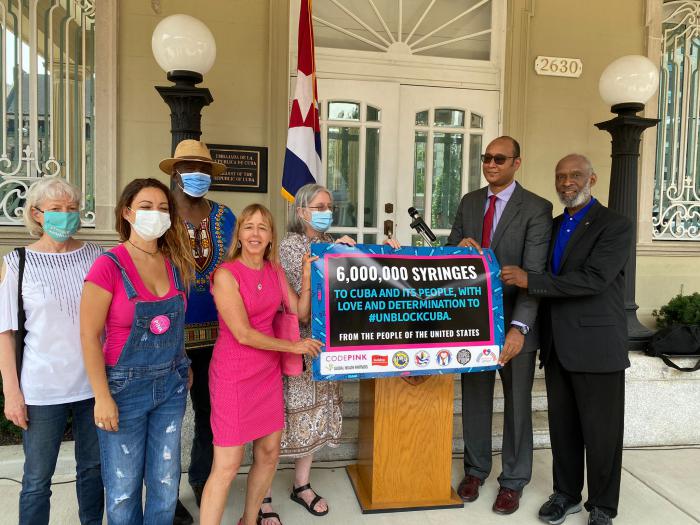
U.S. people send syringes to save, while their government seeks to sow chaos in Cuba (+Video)
Just when the U.S. movement of solidarity with Cuba announces the shipment of six million syringes for vaccination against COVID-19, the U.S. Agency for International Development (USAID) shouts to the four winds that now, in order for the counterrevolution to access its last two million destined for subversion, it must adapt its “proposals” to what happened after July 11.
Translated and edited by Walter Lippmann for CubaNews.
The Cuba Solidarity Movement in the United States presented the Cuban Embassy in the United States with a certificate of the donation. Photo: Cuban Embassy in the United States
The paradoxes of imperialism are beyond absurd. Just when the U.S. Cuba Solidarity Movement announces the shipment of six million syringes for vaccination against COVID-19, the U.S. Agency for International Development (USAID) is shouting from the rooftops that now, in order for the counterrevolution to have access to its last two million destined for subversion, it must adapt its “proposals” to what happened after July 11.
They seek to fuel the confrontation, the division among Cubans, and the many lies that circulate against Cuba in the main media platforms of the world, but, above all, in the social networks.
That is the reason why now, a little more than a week after that Sunday of riots, the USAID – a public face of the CIA – discloses that it will not change its objectives with respect to the island, and that, in addition, those requesting funding must design their proposals taking into account the current political situation, Cuba Money Project published.
Last June 30, USAID announced that it would finance with up to two million dollars projects that “encourage” democracy and human rights in Cuba, one of the most obvious U.S. interventionist strategies around the world, and historically used against the Cuban Revolution.
Meanwhile, since last Saturday, July 17, around two million syringes have already arrived at the Cuban port of Mariel from the Cuba solidarity movement in the United States. This is an act of love organized by Global Health Partners and with the participation of Cuban Americans and Americans, who will continue to collect funds to also send medicines, including antibiotics, painkillers, contraceptives and vitamins.
No Disappeared or Tortured in Cuba
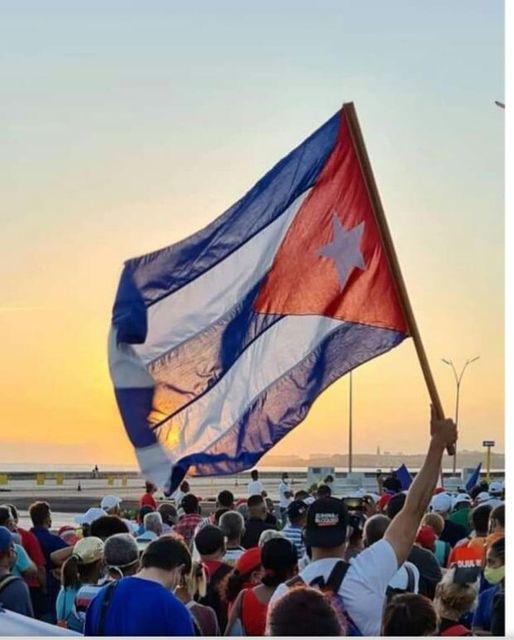
There are no disappeared or tortured people in Cuba (+ Video)
Following the riots that took place on July 11 and 12, as part of the political-communication operation encouraged and paid for by the U.S. government against Cuba, alleged lists of missing persons have begun to circulate on the Internet.
Photo: Taken from Internet
After the riots that took place last July 11 and 12, as part of the political-communicational operation encouraged and paid for by the US government against Cuba, supposed lists of missing persons have begun to circulate on the Internet.
But, are there really missing persons in the country? Are such lists real? What is the procedure for the detention of a person? What limits are there to the actions of the authorities?
In answering these questions, during an appearance this Tuesday on the program Hacemos Cuba, Colonel Victor Alvarez Valle, second chief of the Specialized Body of the General Directorate of Criminal Investigation of the Ministry of the Interior (MININT), categorically assured that in Cuba there are no missing persons, neither of the processes referred to the recent disorders, nor of any other that has been carried out.
“We have as a principle, in the Revolution, and it is also what characterizes the actions of the authorities, the right to life, to freedom, the right to the preservation and security of people,” said the colonel, while informing that Cuba is a signatory of the International Convention for the Protection of All Persons from Enforced Disappearance.
This position, he said, was also recognized in the Constitution approved by the majority of Cubans and, although in our legal system it is not characterized as a crime, there is a group of figures that cover and punish those who commit these actions, in the event that the occurrence of an enforced disappearance is proven.
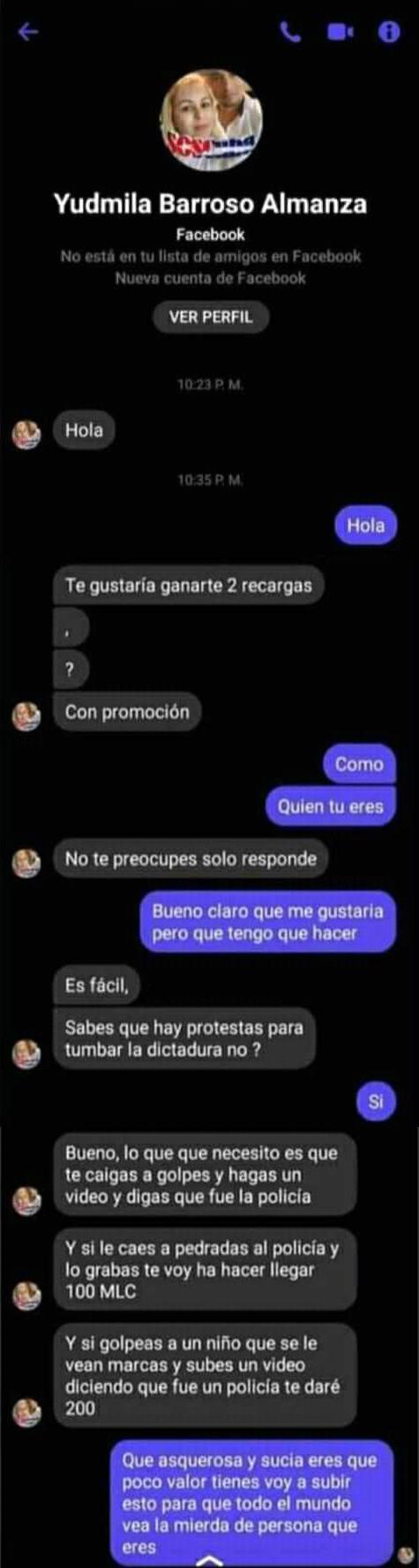 Furthermore, he added, “there is no secret establishment for the processing of persons who, for any reason, or for the commission of crimes, are taken to one of the dependencies of MININT”.
Regarding the process of detention of a citizen, José Luis Reyes Blanco, head of the Department of Supervision of the Directorate of Criminal Proceedings, of the Attorney General’s Office (FGR), explained that “the records of this process, the detention record that is signed by the person involved, the information on the detainee and the presence of the Prosecutor’s Office throughout the criminal process from the beginning, contribute to control the investigation and allow us to ensure that in our country after 1959 there have never been missing persons”. Evidently, if there were events of this nature in the country, the number of denunciations in the Prosecutor’s Office, through all its channels of attention to the citizens, would be considerable.
However, commented Reyes Blanco, in the year 2020, in the middle of the pandemic, the Prosecutor’s Office attended more than 129,000 people throughout the country; during the first semester of this year, the attention exceeded 49,000 and, as of July 12, for events associated to the riots, 63 people have addressed to this organ, mostly through face-to-face channels.
“But none of these complaints or claims have been related to disappearances”, he stressed, but to arrests, that is to say, in search of certain information, which they have received in the places to which the interested parties have gone.
Today, he commented, the Prosecutor’s Office is investigating five claims related to general non-conformities in the process, but no case is pending to define the place where the person is located. There is information and, more importantly, the family knows it”.
In this sense, Colonel Alvarez Valle pointed out that when a person is taken to a police unit, the first thing that is done is to register him/her in a logbook, manually, and the arrest record is drawn up. Therefore, the person knows why they are being taken to the station.
Then, he continued, there follows a process that can take place in the first 24 hours, which contemplates his first statement, and the measures that, depending on the crime, can be imposed.
“In the first 24 hours, the family generally knows where the person is because, in addition, MININT has a system of attention and information to the population, automated and interlinked among all units, where each of the detained persons is recorded.
“In recent cases, all the families know where their detainees are, they have gone to the places, they have delivered belongings with personal hygiene materials or specific medicines; in other words, the information on the whereabouts of the people is established and auditable by the control bodies of the Prosecutor’s Office”, he explained.
Subsequently, he also referred to the International Convention for the Protection of All Persons from Enforced Disappearance, to which Cuba is a party and was reviewed in 2017.
As applied in the country, Article 17, specifically, establishes, among other elements, that:
No one shall be secretly detained.
Without prejudice to other international obligations of the State party regarding deprivation of liberty, each State party, in its legislation:
Shall establish the conditions under which orders of deprivation of liberty may be issued.
Determine the authorities empowered to order deprivation of liberty.
Guarantee that any person deprived of liberty shall be held only in officially recognized and controlled places of deprivation of liberty.
Guarantee that any person deprived of liberty shall be authorized to communicate with and be visited by his family, a lawyer or any other person of his choice, subject only to the conditions established by law, and in the case of a foreigner, to communicate with his consular authorities, in accordance with applicable international law.
It shall guarantee the access of any competent authority and institution empowered by law to places of deprivation of liberty, if necessary with the prior authorization of judicial authority.
For his part, the prosecutor clarified that all persons detained after the events of July 11 are able to appoint a lawyer, that some do not have one is up to the choice of each individual.
And to totally deny the mentioned lists, at another moment of the program, communication was established with one of the alleged missing persons, who also spoke of other colleagues who swell the records circulated on the Internet and who are in perfect condition.
The Second Chief of the Specialized Body of the General Directorate of Criminal Investigation of MININT reiterated that these lists lose credibility due to the lack of data, and because it has been proven that many of those registered therein have never been arrested or even interviewed by the authorities.
Reyes Blanco commented that, among the detainees, a group has already been released because it has been confirmed that they have had no criminal participation, others are under a non-detaining precautionary measure, and there are defendants in the preparatory phase, with a precautionary measure of provisional imprisonment.
TORTURE WILL NEVER BE A PRACTICE OF THE CUBAN AUTHORITIES.
Another matrix that has been tried to be positioned in the social networks puts the dart in the occurrence of torture with those involved in the destabilizing actions.
Colonel Alvarez Valle said, “just like forced disappearances, torture is not a practice in Cuba. The history of the Revolution proves it, and it is not and will not be the practice of the combatants of the Ministry of the Interior to use force against those being prosecuted”. He also said that Cuba is a party to the Convention against Torture and Other Cruel, Inhuman and Degrading Treatment or Punishment.
José Luis Reyes detailed that, after the riots, the presence of prosecutors in the units has increased, because it is in the interest of hearing the opinion of the detainees, and this is a favorable scenario for dialogue and to convey any concerns or complaints.
The broadcast of Hacemos Cuba also called attention to a complaint of a young man who has escalated in recent hours in social networks, referring to acts of violence committed against him, after being detained after the riots.
This person, the colonel pointed out, is subject to a precautionary measure of house arrest for a previous process, which implies requirements that he has to comply with; however, he was in the street, outside the vicinity of his home, in the middle of the disturbances of the order, which breaks the provisions, of which he was informed.
Prosecutor Reyes Blanco added that, among the complaints in progress at the Prosecutor’s Office, there is that of this young man, since his father presented himself at the said body. All the data were taken and the pertinent inquiries and investigations will be carried out, with total transparency.
Should any irregularity arise, said the colonel, the circumstances in which the facts occurred would be clarified and the corresponding measures would be taken, either in the disciplinary order, if he were a combatant, or in the criminal order if the conduct were to be in violation of the law.
Therefore, arguments were sufficiently clear that in Cuba there are no disappeared or tortured persons, and, if any irregularity occurred or had occurred in the actions of the Ministry of the Interior or the Prosecutor’s Office, it will be investigated, the results will be made known and, if violations are found, measures will be taken to allow the restitution of legality.
Lester Mallory, The Influencer

Lester Mallory, The Influencer
Presented as an unprecedented social explosion, the events of this Sunday in the country constitute a chapter -and not a premiere- of the so-called non-conventional war.
Author: Juan Antonio Borrego | internet@granma.cu
July 13, 2021 23:07:00 PM
Translated by Walter Lippmann for CubaNews.
With the accumulation of more than six decades of blockade, the impact of the 243 measures adopted during Donald Trump’s administration -all in force until today- and the wear and tear of the already prolonged confrontation with the coronavirus crisis, now at its worst moment since its appearance in the archipelago in March 2020, it would seem that Cuba is witnessing the “perfect storm”.
Lester Mallory, the former Deputy Assistant Secretary of State for Inter-American Affairs, who died in 1994, would be rubbing his hands and boasting that it has been worth waiting 61 years to reap the fruits of the doctrine that he and his advisors conceived, drafted and did not hesitate to put on the table to the Eisenhower administration so that it could be applied.
Faced with the undeniable support of the people for the nascent Revolution, which is precisely the same that keeps it alive and well to this day, the official provided the US government with a secret memorandum containing the essence of the genocidal policy to be followed to the letter in order to overthrow the surprising revolutionary project, which by then (April 1960) was already a thorn in the empire’s side.
“The only foreseeable way to subtract internal support from it (he refers to Fidel and the Revolution) is through disenchantment and dissatisfaction arising from economic malaise and material difficulties… all possible means must be quickly employed to weaken the economic life of Cuba…. a line of action which, being as skillful and discreet as possible, will achieve the greatest progress in depriving Cuba of money and supplies, to reduce its financial resources and real wages, to provoke hunger, despair and the overthrow of the Government”, reads verbatim the document which, with greater or lesser rigor, has guided imperial policy against Cuba up to the present day.
In the fruitful television appearance this Monday, at the request of the First Secretary of the Party and President of the Republic, Miguel Diaz-Canel, Rogelio Polanco, a member of the Secretariat of the Central Committee and head of its Ideological Department, confirmed an irrefutable truth: although it is presented by certain media as a social explosion, what we have experienced this Sunday in Cuba constitutes a chapter of the unconventional war.
Indistinctly called hybrid warfare or color revolutions, fourth-generation warfare, or soft coup, the strategy followed against Cuba is part of a manual that has been rigorously applied in several countries, both in the Middle East and in Europe and also in Latin America -Venezuela, for example-, a perverse system, scientifically conceived, which, as it is easy to notice, has communicating vessels with the famous Lester Mallory’s memorandum.
Unconventional war has an important media component, now increased with the development of social networks that facilitate the generation of false news, misrepresentation, manipulation of facts and so-called half-truths, a world in which Cuba puts the news day after day and almost minute by minute, under the protection of a flourishing colony of media that presume to be independent and impartial and always have at hand the voice of an influencer or “a source who preferred not to reveal his identity”.
In this concept, nothing is more important than discrediting institutionality, denying the impact of the blockade and presenting the shortcomings that the world’s greatest power has been creating for 60 years with its web of laws, obstacles and threats to third parties, as the exclusive result of the ineffectiveness of a supposedly corrupt and obsolete government.
Another element consubstantial to this foggy but equally cruel and effective war modality is the promotion of street violence, which showed its hairy ear this Sunday in some places of the country -Güines and Cárdenas, for example-, with images of youths assaulting a store or overturning a police patrol car, the same photos that these days were on the front pages of important news media.
Provoking the forces of law and order, inducing repressive actions, seeking international condemnation, all secured from the media point of view, are also part of the ABC of unconventional war. It has been applied against the island and sustained with not inconsiderable sums of money, a “financial courtesy” whose most recent amount has just been made public in these same pages.
President Joe Biden, who pledged, not to us, but to the American electorate, to review the Trump administration’s policy towards Cuba -the last of whose measures was to include it once again on the list of state sponsors of terrorism-, then diluted along the way with the statement that it was not a priority or that he was conducting a detailed study of relations, something that six months ago seemed even logical, but today sounds very different.
What is suspicious is that only a few hours after Sunday’s events, originated in the first place by the policy of asphyxiation that his administration may not have designed, but has assumed as its own, officials of his government, and he himself, are sticking their noses into the neighbor’s problems.
Foreign Minister Bruno Rodriguez, a member of the Political Bureau of the Party, recently told the United Nations General Assembly: “Cuba’s demand is to be left in peace”, and President Miguel Diaz-Canel reiterated it, in other words, this Monday: “We are not interested in what may happen within the conception of how the government and the American people want to make their system of government, but we do demand that they respect our self-determination, sovereignty and the way in which the majority of Cubans have agreed to defend socialism”.
The haste with which these characters came out to show solidarity with the vandals, while blaming the Cuban government, reveals the interventionist approach that is being promoted and financed from abroad:
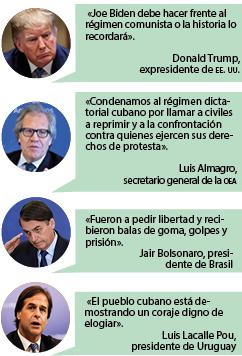
Here is the Mallory Memorandum of 1960:
https://history.state.gov/historicaldocuments/frus1958-60v06/d499
Cubans abroad are part of the Cuban nation
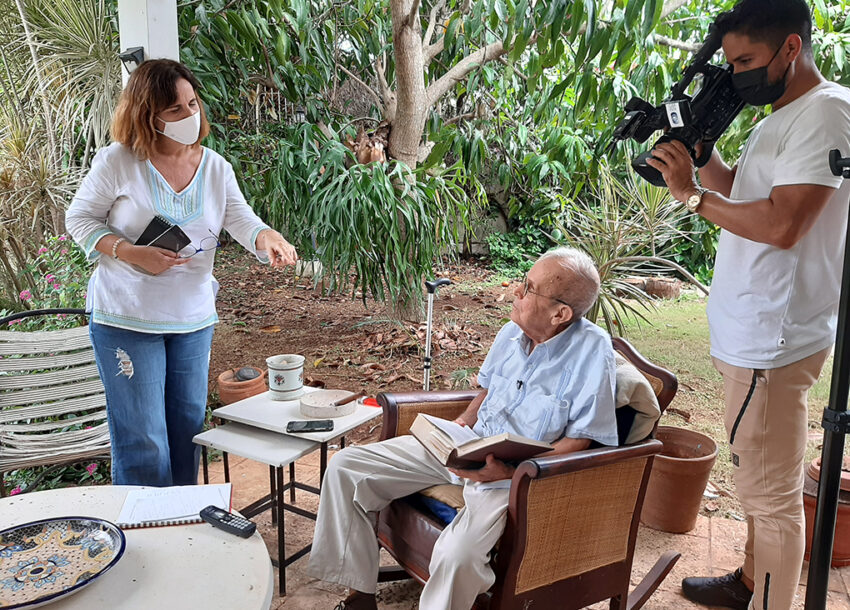

Ricardo Alarcón de Quesada:
Cubans living abroad are part of the Cuban nation
By Esther Barroso Sosa, June 20, 2021/
Translated and edited by Walter Lippmann for CubaNews.
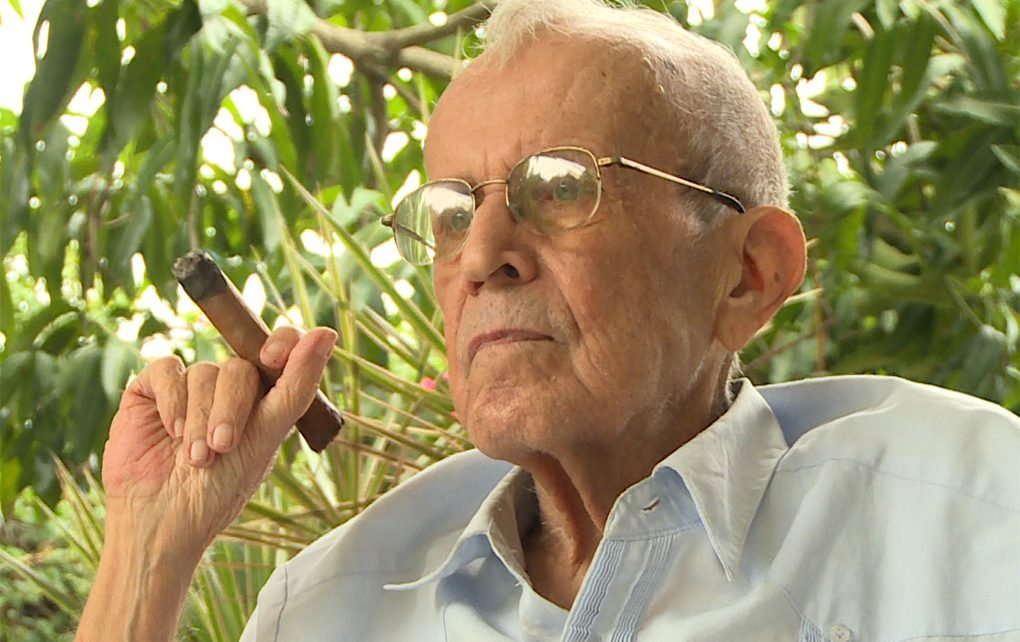
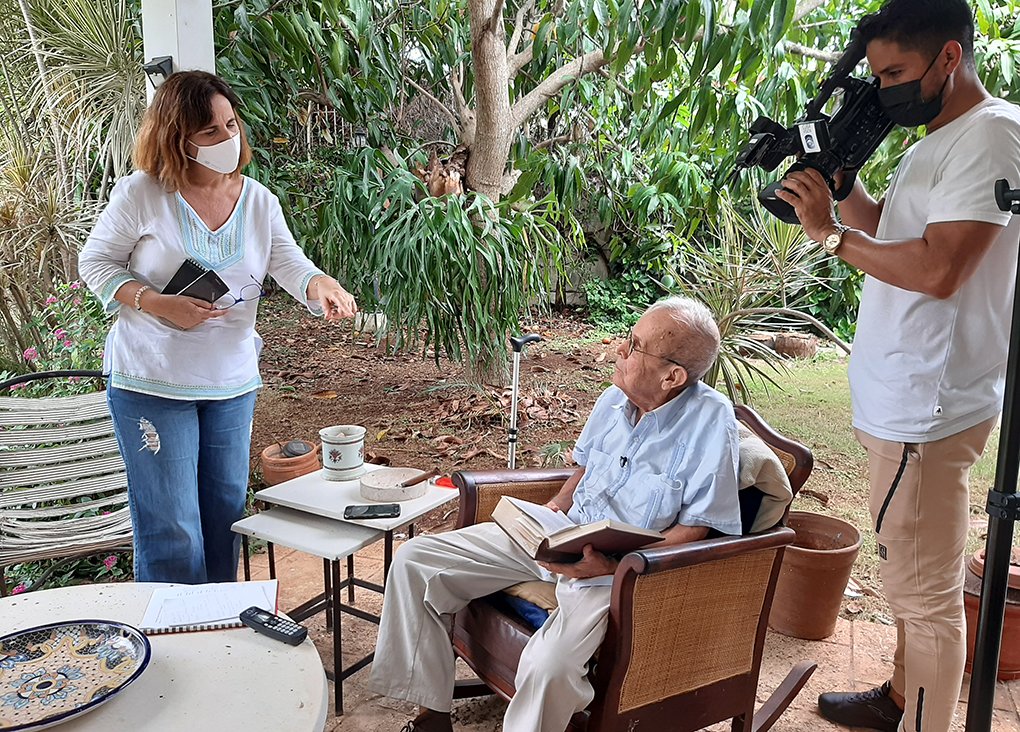
At the age of 84, after having been Cuba’s representative to the UN, Minister of Foreign Affairs and President of Parliament for two decades, among other political functions, he dedicates his days to “things like this”, that is, to giving interviews, such as the one we have asked him to give for the TV series Relatos in(contables), an audiovisual proposal still in the making. Even knowing that the recording has no broadcast date, he has not hesitated to accept.
He lights up a cigar only after the long conversation on a subject he is passionate about is over. And that’s when, at my insistence, he replies, “Yes, I’m writing something about my life, but if I’m going to tell everything I know…” The unfinished answer is probably hotter than the cigar that is already being consumed as we say goodbye. Me, with the promise to publish in full and in print what I have narrated. He, recreating himself with the shapes drawn by the smoke of his cigar.
Ricardo Alarcón de Quesada is a descendant of the family of the second wife of the Father of the Cuban Homeland: Ana de Quesada y Loynaz (1843-1910), who died in Paris, as one more emigrant and after a brief stay in the U.S., where Carlos Manuel de Cespedes sent her, trying to protect her from the rigors of the manigua [jungle] and the threats that were already made against the deposed president of the republic-in-arms.
The nation-emigration issue has not been alien to Alarcón. On the contrary. And not only because his predecessors are scattered around the world, but also because he was one of the promoters of the first dialogue between the Cuban revolutionary government and a representative group of the Cuban community in the United States.
From 1966 to 1978, Alarcón remained in New York as Cuba’s permanent ambassador-representative to the United Nations. From there he witnessed the birth and evolution of initiatives that sought a rapprochement, often critical, with Cuba and its Revolution. Organizations such as Juventud Cubana Socialista, magazines such as Areíto and Joven Cuba, the Institute of Cuban Studies or the Antonio Maceo Brigade -with its impressive first trip to the island at the end of 1977- were some of the antecedents of the Dialogue that would finally be held on November 20 and 21, 1978, after a press conference in September in which Fidel invited representatives of the community to come to the island for that purpose, with the sole condition that no leaders of the counterrevolution or active terrorists would attend.
Seventy-five members of the Cuban community in the United States participated and 140 in a second meeting held on December 8. Alarcón was one of the nine Cuban leaders who, headed by Fidel, made up the representation of the government of the island.
Esther: Shortly before the 1978 Dialogue, you had just returned from the Cuban Mission to the UN. There you had experienced the rapprochement of Cuban emigrants who were interested in being reunited with their country. They had a vision of the Cuban Revolution different from that of the most radical elements of the right-wing of the Cuban community in that country. How did that rapprochement take place, what do you remember of that stage in New York?
Alarcón: The 1978 dialogues with the Community were part of an interesting process of rapprochement. The Antonio Maceo Brigade and other projects arose and everything changed at that time and it will change more and more. It was at the Cuban Mission to the UN, in New York, where it all began. I was the only one at that table who knew almost all the Cuban emigrants who participated in the meeting.
Since I arrived in New York I have had many relationships with Cubans who were living abroad. That is not after the Revolution. You just get there and you discover that lots of Cubans who came to the U.S., many of them illegally, had originally received a B-29 visa, a type of visa that the U.S. gave for visitors, and the classification was with the letter B and for 29 days.
There were many friends that I knew who had arrived for 29 days before 1959 and were still there. It was amazing. They had a strong relationship with the only diplomatic representation Cuba had, because this was before the Interests Section existed. It was logical for them to look for that space. How could a Cuban in New York connect with his family if there were no flights and hardly any communication?
At the same time, there was the Casa de las Americas, which was the continuation of Casa Cuba, dating back to the Revolution of 1930 or earlier, Cubans living in the U.S. who maintained ties with their country of origin and with the Revolution. Little by little, we became closer to them. I used to go to Casa de las Americas a lot, it was the only social place where we could meet Cubans, play dominoes, drink beer. And it was maintained with the contribution of those Cubans.
When you look at their history, there were a lot of them who were B-29s, others were their children. It was a contact center that allowed us to meet a lot of people who, regardless of their ideology, wanted to have a link with their country of origin.
That explains why I was given the task of organizing, inviting and bringing representatives of that community to Cuba, because they were not representatives of something, nobody had elected them, but they were representative of that diversity. We are talking about 1978, almost 20 years after the triumph of the Revolution. There were people who had been changing their point of view. Practically all those who came, I knew them. There were also militant Batista supporters, some of them famous.
Esther: But there was a predominance of young people and especially Cubans who had left very young in the first years after the triumph of the Revolution?
Alarcón: Yes, and for them, it was a challenge. What they were doing was contrary to U.S. government policy. They were emigrants, people residing in a foreign country, so they were in a weak situation. It is logical that among the younger ones there were people willing to take those risks, besides the fact that they had very little connection with the counterrevolution, unlike the older ones.
Esther: There was also a context that favored that: Carter’s position towards Cuba on the one hand and on the other the Cuban government’s willingness to receive them and talk. To what extent did that dialogue come about because of pressure from those Cubans in the U.S. and to what extent did the fact that Fidel and the revolutionary leadership realized that it was necessary to establish that link have an influence? Does what they achieved deserve recognition? What was the driving force behind that dialogue? They had three fundamental objectives that became the three great themes of the Dialogue: that the emigrants be allowed to visit Cuba, family reunification and the release of political prisoners.
Alarcón: Fidel was interested in it being a dialogue with Cubans and not with the U.S. government. Those Cubans achieved, among other things, the visits to Cuba and those permits also depended on the U.S. But the release of the counterrevolutionary prisoners was a unilateral decision of the Cuban government. And it was made, not with Carter, but with the Cubans who came to that meeting. They were given very important moral support.
We held a meeting at the Riviera Hotel, in a room that was the old casino. I met with former compañeros of the 26th of July who had broken with the Revolution, who were ex-prisoners. One of them came to see me and told me: “I have to leave Cuba, every time I ask for a job, they look for my record and I am a person who has just been released from prison as a counterrevolutionary, I have to leave this country, but how can I leave?”
What perspectives did a person like that have? And there were a lot of prisoners who had already served their time and were trying to live their lives. Their families had left for the U.S. They felt they had a right to be allowed to enter the country. The U.S. policy was to allow that element to exist inside Cuba. That is why it was a vindication and an achievement of the Cuban government and of the representatives of the Cuban community abroad who participated and reached that agreement.
Esther: How would you describe the atmosphere of the meetings?
Alarcón: It was a very civilized, relaxed dialogue. In that previous meeting with me, it was agreed to make a tribute to Martí, in the Plaza de la Revolución. And a young emigrant, Mariana Gaston, together with a professor who had left Cuba before the triumph of the Revolution, Jose Juan Arrom, laid a wreath there.
I remember already during the sessions a Batistiano who had been senator for Camagüey and his only objective was to visit Camagüey. He said he wanted to see the co-religionists, a word that was no longer used. There was, for example, Luis Manuel Martinez, who had been a notorious Batista supporter and had a radio program that was like a spokesman for the dictatorship. But the atmosphere was not tense. It may have helped that we had known each other before and that the Cuban mission to the UN had made the arrangements.
That 1978 meeting, from the point of view of U.S. policy, was contrary to the interests and position of the U.S. We must recognize that all those who came, whatever their political position, did not fail to break that line. And there was also the longing for the land, which is very important in people’s lives.
===================
Esther: There is a whole history of emigration from Cuba to the U.S. before 1959 and up to the present. You have insisted on not seeing this milestone of ’78 as an isolated event but as a continuity of a whole historical process that goes back to the 19th century. How do you propose to value that connection?
Alarcon: Let’s think about what happened in Havana between February and September 1869. According to official publications of the Kingdom of Spain at that time, 100,000 people left for New York through the port of Havana. Cuba then had a population of 1 million inhabitants. There have been other mass exoduses, but none compares to that one. In addition, they traveled to Mexico, Hispaniola and Venezuela. The element of emigration is absolutely vital to understand the history of Cuba. This is not the case with other countries, but it is with us.
At the same time, there is the manipulation of the subject by the U.S. government. I have here the book Foreign Relations of the United States, 1958-1960. This is volume VI, dedicated to Cuba. If you look up the final days of the Batista regime and the early days of ’59, it looks like a mystery novel. Where was the Secretary of State on Christmas Eve? In his office communicating with his ambassador in Havana. Where was he on December 31? In his office, just the same. What did you do in the first days of January? Organize an air bridge between Columbia and the U.S. through which many henchmen left.
Later, when he installed the Cuban Adjustment Act in 1964, it is unique. It was not to adjust the status of those who were there, but for those who arrived on or after January 1, 1959. And were there few who had arrived before? According to official U.S. data, no. The Immigration and Naturalization Service published annual immigration reports. In 1958, there were three categories: Mexico, Cuba and the rest, from Canada to Argentina. There were many more Cubans illegally in the U.S. than registered, and the sum of Cubans is greater than those from the Western Hemisphere, except Mexico.
According to U.S. specialists, the number of illegal and undocumented Cubans was similar to the number of legal Cubans. Therefore, it can be assumed that the number of Cubans was significant. And what did the U.S. do? It passed a law that discriminated against those who had arrived before 1959 and, on the other hand, opened the doors to those who arrived after that date, in order to turn it into an instrument of destabilization. It was a unique case and there is no other similar law for any other country on the planet.
If you go through this book you will see how since 1958 the U.S. government tried to save Batista, then tried to save the Batista regime, then see how they tried to put an end to the Cuban Revolution, everything is explained here since 1958.
The Cuban is a peculiar human being, he was born or belongs to the family of a people, of a unique nation, in the sense that they have attributed to him the right to move from Cuba to the USA, on the one hand. On the other hand, facing a government that does everything possible to prevent such a thing from happening naturally.
We must remember, for example, the case of Nicolás Gutiérrez Castaño, known as Niki. He was born in Costa Rica. Later he moved to Miami. He is the president of the Association of Cuban Farmers in exile. They are still organized, they aspire to recover all that. I have read several interviews with him that are nice, he has a sense of humor. Once he was asked: “Do you want to take away people’s houses and lands? He said: “No, what I want to remind them is that they owe me 60 years of rent”. He is the heir of a family that owned a good part of what goes between Cienfuegos and Santa Clara, from the Zapata Swamp to the Escambray, all that belonged to his great-grandfather, actually the owner was Nicolás Castaño, but he had no sons, a female married a certain Gutiérrez and that’s where he comes from.
We are talking about a situation that has accompanied us throughout history and is still with us. It would be a mistake to think that it does not exist. One of the fundamental problems that Cubans face in the relationship with the U.S. is manipulation, on the one hand the enormous difference between the fact that for the U.S., Cuba is an issue of minor importance. Now, for Cuba, the U.S. is the big issue, it is the big problem. How to deal with that? How to change that situation?
Putting an end to that hostility requires a lot of work and effort to achieve something that is essential, not so much for people my age but for people like you and your sons and daughters. Niki claims his great-grandfather’s property. Those who will be affected if that property were to pass again to its supposed former owners, do they know? How many Cubans today are aware of the terrible threat that has existed over Cuba from the U.S.?
On the other hand, you find people who have never been to Cuba, who have never lived here, but who know what belonged to their great-grandfather and aspire to get it back. That is not a joke, it is in the laws, the Helms Burton Act says so. It says that in the future of Cuba, after the Revolution falls, relations between a future government of Cuba recognized by the U.S. will continue to have as an indispensable condition the solution of the issue of the properties nationalized in Cuba in 1959. That law is in force today. How much time do we spend explaining that?
Esther: I was a child, but I lived through the visit of the Antonio Macero Brigade and the Dialogue of ’78. For a 20-year-old, that’s already history. In my opinion, that meeting was a turning point in terms of the Cuban government’s relationship with Cubans living abroad. What is your personal vision, and above all from the human point of view, about the importance for Cuba of the Cubans living abroad? Do you feel that the leadership of the Cuban Revolution really recognizes that it is unavoidable to take into account that emigration is part of Cuba? Or not? And I ask you to think about how the issue has evolved since that crucial moment in 1978 until today.
Alarcon: Of course they are part of the Cuban nation. I have gone back over history to refer to something that is obvious and has been so for a long time. Since Cuba began to crawl as a nation, a fundamental element was the Cubans who did not reside in Cuba. From Céspedes, through Martí and up to Fidel, the issue of emigration is key to the whole Cuban political process.
In addition, we must take into account that the current situation is more complicated, since Trump arrived,. In one fell swoop he put an end to things that had been achieved at the end of the Obama administration and that facilitated Cuba’s ties with its emigration. I have no doubt that none of that is going to put an end to the pressure of Cubans who want to exercise their right to have a link with their country. It is an issue that is going to remain in force.
Esther: I feel that perhaps you have something left to say, perhaps on a personal level… And I also think that to close the cycle we should remember that you also witnessed the so-called Rafters’ Crisis and had an important participation in the negotiations that followed…
Alarcón: I participated in I don’t know how many meetings with representatives of the U.S. government to deal with issues related to emigration. We reached an agreement in 1994 that gave Cuba practically nothing, but they could receive up to 20,000 Cubans in the U.S. It is impossible for any country to have that number of Cubans. It is impossible for any country to have that number. And in 1995 we reached an agreement that literally says that the U.S. commits to giving 20,000 visas every year. They enforced it pretty exactly, especially in the early days. Why did they do this? They had to recognize that there was a moral obligation, a duty of the U.S. to make sure that Cubans who wanted to emigrate could do so because the Cuban is the only human being who believes he was born with the right to live in the U.S. That is the fault of history, of all times.
I will tell you something more personal. When I was in MINREX, I had to go to Paris. And Raúl Roa Kourí was the Cuban ambassador to France. He told me: “here is a lady who says she is your cousin and wants to talk to you”. With that cousin, with whom I communicate in French because she doesn’t even speak Spanish, I had a long conversation there. She wanted to come and visit Canagüey because she remembered the stories an aunt used to tell her and that stuck with her. That’s why I tell you that this issue of emigration and the nation has to be looked at very carefully, at least for Cubans.
When I was in New York as ambassador, I met another cousin, a Salvadoran, she was a diplomat, with the last name of Quesada. Because when the war of 1868, the Quesada family went to Paris and Central America.
This idea of terroir, that one belongs to a narrow little place on Earth with little connection to the rest of the world, there are those who can understand it that way, but it is very difficult for someone with my last name not to see himself as part of the world or not to see himself reflected, in the personal and family case, in a reality that we call emigration.
You must be logged in to post a comment.