What is Meant by “Normalization”?
====================================== CUBA.- EU.- QUE SE ENTIENDE POR NORMALIZAR Por: Dr. Néstor García Iturbe En los últimos meses, sin duda alguna, una de las palabras que más se ha escuchado ha sido normalizar. Cuando utilizamos los diccionarios para buscar el verdadero significado de esta palabra, encontramos que la misma significa “Someter a norma. Poner en buen orden.” (Diccionario Manual Ilustrado VOX de la Lengua Española); “Regularizar o poner en buen orden lo que no estaba. Hacer que una cosa sea normal.” (Diccionario Océano Práctico de la Lengua Española). Normalizar puede tener un efecto beneficioso o perjudicial, según la norma a que se someta el hecho. Lo normal es que la madre sienta cariño por sus hijos. Que el maestro se preocupe por la instrucción y educación de sus alumnos. Que una mujer en estado pueda tener un parto feliz. Que un estudiante aplicado pueda terminar su carrera universitaria. También es normal que si usted prende un fosforo cerca de la gasolina, esta entre en combustión o explote. Si usted utiliza un auto y no se preocupa por asegurarse de que cuente con el aceite y el agua necesario, lo normal es que el motor se destruya. Si a un enfermo usted no le suministra la medicina y los cuidados necesarios, lo normal es que muera. Considero que estos ejemplos son suficientes para establecer que la normalización de una situación puede estar determinada por la relación existente entre dos países o personas. Lo normal es que un amigo ayude al otro. También puede considerarse normal que un enemigo trate de destruir al que considera su enemigo. En ambos casos se actúa de forma normal. Esto puede influir en el concepto de lo que uno u otro considera normal. Estoy plenamente convencido, que la acción realizada por la USAID el día 9 de septiembre, dos días antes de que comenzaran en la Habana las reuniones de las comisiones en pro de la normalización de relaciones, ellos consideran que están dentro de la mayor normalidad. El 9 de septiembre, la USAID anunció que está buscando administradores para sus programas contra Cuba. El salario que ofrecen está entre los 90, 823 a los 139,523 dólares anuales . Las personas que están tratando de contratar deben tener experiencia en promoción de la democracia, derechos humanos, desarrollo de la sociedad civil, desarrollo comunitario y formación de grupos juveniles. Como es lógico pensar, estos son los programas de subversión político ideológica que piensan desarrollar en los sectores mencionados, por eso requieren los llamados “administradores.” En el anuncio de la USAID se plantea que “ Successful candidates must obtain a “secret” security clearance within nine months of accepting the position. Information deemed “secret” is defined as that which would “cause serious damage to national security” if disclosed. Así que estos “administradores” deberán pasar el chequeo de seguridad y obtener el famoso “clearance” pues lo que realicen o conozcan, si es divulgado, puede causar serios daños a la seguridad nacional. ¿Pueden ustedes imaginarse que tenebrosas actividades desarrollará la USAID contra Cuba, que de divulgarse causaría serios daños a la Seguridad Nacional de Estados Unidos? Entre otras cosas, en el anuncio de la USAID se plantea que Cuba es un país “sin presencia física” lo cual significa que la USAID no cuenta con una oficina en el mismo por lo que la actividad se dirigirá desde Washington, lo que nos hace pensar que estos tenebrosos planes se ejecutarán por los “diplomáticos” estadounidenses asignados a la Embajada en la Habana y el envío periódico de personas con el manto de profesores universitarios, periodistas, académicos, miembros de organizaciones juveniles y otros. Para terminar la oferta de trabajo se plantea que las solicitudes a estos cargos deben presentarse antes del día 8 de octubre a las 9:00 am., aunque de acuerdo a los listados de la USAID estos puestos de trabajo se había informado comenzarían en septiembre del 2015. Todo de lo más normal. La USAID haciendo su trabajo para tratar de destruir al enemigo que se ha apoderado de Cuba. Mientras tanto, las conversaciones siguen adelante. CUBA.- EU.- What is Meant by “Normalization”?
By: Dr. Néstor García Iturbe
September 10, 2015
In recent months, without a doubt, one of the words most often heard has been “normalization”.
When we use dictionaries to find the true meaning of this word, we find that it means “Subject to rule. Put in good order ” (Manual VOX Illustrated Dictionary of the Spanish Language).; “Regulate or put in good order what was not. Make that one thing is normal. “(Ocean Practical Dictionary of the Spanish Language).
Normalization can have a beneficial or detrimental effect, depending on the standard to which the fact is submitted.
Typically, a mother feels affection for her children. The teacher worries about the instruction and education of their students.
It is said that a woman can have a happy birth. A diligent student can finish college.
It is also normal that if you light a match near gasoline bursts into flame or explodes. If you use a car and do not worry about making sure that has the necessary oil and water, it is normal that the engine is destroyed. If you are sick you do not receive the necessary medicine and care, it is normal to die.
I believe that these examples are sufficient to establish that the normalization of a situation can be determined by the relationship between two countries or people.
Typically, one friend helps another. It is also considered normal for an enemy to try to destroy whomever it considers its enemy. In both cases such acts are normal. This can influence the concept of what either considers to be normal.
I am convinced that the action taken by the United States Agency for International Development (USAID) on September 9, two days before the start of meetings in Havana of the committees towards the normalization of relations, is what they feel are normal.
On September 9, USAID announced that it is seeking managers for its programs against Cuba. The salary offered is between $90,823 to $139,523 per year.
The people whom they are trying to hire must have experience in promoting democracy, human rights, civil society development, community development and the training of youth groups. As is logical, these are the political and ideological subversion programs that USAID plans to develop in these sectors, so they require so-called “administrators.”
In the announcement from the USAID, it states that “Successful candidates must obtain a “secret” security clearance Within nine months of accepting the position. Information deemed “secret” is defined as that which would “cause serious damage to national security” if it were disclosed.
So these “managers” must pass the security check and get the famous “clearance” for what conduct or be known, which if disclosed, could cause serious damage to national security. Can you imagine that USAID develop dark activities against Cuba, which if disclosed would cause serious damage to the national security of the United States?
Among other things, in the announcement from USAID it arises that Cuba is a country “without physical presence” which means that USAID does not have an office in the Cuba so that the activity will be directed from Washington, what makes us think that these sinister plans will be implemented by “diplomats” assigned to the US Embassy in Havana and sending periodic persons with the mantle of university professors, journalists, academics, members of youth organizations and others.
To finish the job it is suggested that requests these charges due on October 8th at 9:00 am., But according to listings of these jobs USAID had been reported to begin in September 2015.
All very normal. USAID is doing its job to try to destroy the enemy that has gripped Cuba.
Meanwhile, talks are continuing.
Google translation. Revised by Walter Lippmann.
======================================
10 de septiembre 2015
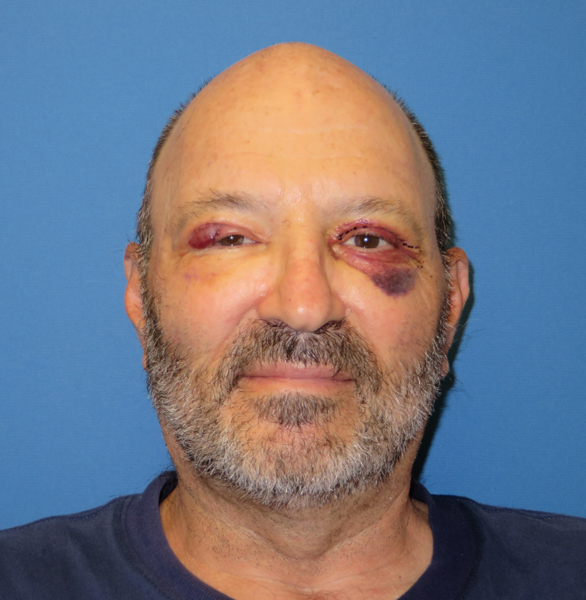
Walter’s health update, Sept. 8, 2015
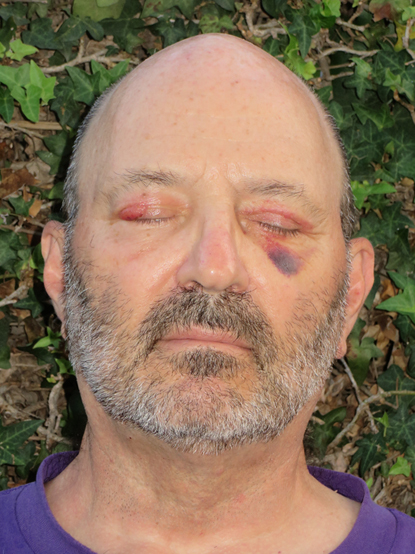
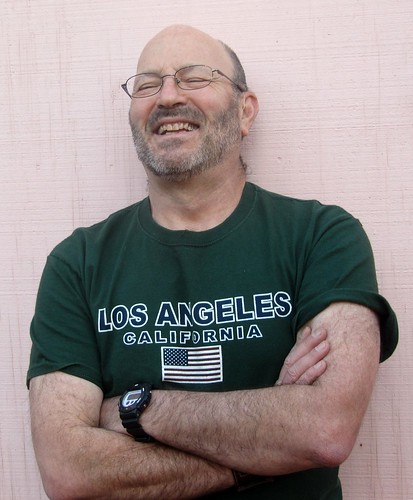
Here’s a photo taken today, September 8, 2015
Bandages removed. Scabbing gone. This is what I look like today.
No, I’m not asleep. Just wanted you to see my eyelids.
Walter Lippmann
Two Months in Cuba
BRIEF UPDATE, September 2015 Next week I’ll be returning to Cuba. This has been my longest time away since 1999 when I began regular visits. It’s been a year and a half. So much has changed since then! The Five are free and home. Diplomatic relations, broken by Washington in 1961, have been restored, and the process Cubans call “updating their economic model” has been continuing, as Raul Castro described it, “sin prisa, pero sin pausa”, which means “without rushing, but without stopping”. There’s so much to be learned and said about the process, which even the most attentive observer from abroad can barely begin to grasp. So now I’m looking forward with great anticipation to being able to catch up with friends and colleagues there, and to share with readers what I can see, hear and begin to try to understand. Below a link to my first extended commentary on Cuba, written after my second visit, fifteen years ago. Some remains valid, some has long since been resolved. Well, enough for now.
Walter Lippmann
Los Angeles, California
September 8, 2015.
TWO MONTHS IN CUBA
Notes of a visiting Cuba solidarity activist
by Walter Lippmann
These are some notes on my visit to Cuba from November, 2000 to January, 2001. Some things in Cuba are very similar to the US, but many others are very, very different.
This essay doesn’t pretend to be a full-scale analysis of Cuba. That would be beyond its scope. These are my own observations, reflections and comments on things I myself personally saw, heard and did. Before and after visiting Cuba, I spent some time visiting Mexico, to get some perspective and to make a few comparisons. I hope you’ll find it useful.
On the final page of this essay, you’ll see links to some other pictures I took, and a page of references for useful English-language sources on Cuba so you can research Cuba further on your own.
WHY CUBA? WHY ME?
My interest in Cuba has deep family roots. My father and his parents lived there from 1939 to 1942. As Jewish refugees from Nazi Germany, they were unable to enter either Great Britain or the United States, despite having close relatives in each. The Roosevelt administration strictly enforced a restrictive quota on Jewish immigration. My father and his parents had to wait in Cuba until 1943 before obtaining permission to enter the US. I was born in New York City in 1944. (A good history of the Jewish experience in Cuba is Robert M. Levine’s 1993 Tropical Diaspora (ISBN:0-8130-1218-X). There’s also a novel which eloquently evokes the time when my father lived in Cuba, Passing Through Havana, by Felicia Rosshandler (ISBN: 0-312-59779-7).
My father took me to Cuba in August, 1956. We visited his old residence and met some of his old friends. I don’t remember much about it except that Cuba was a very hot and sticky place. (I was only 12 at the time.) We stayed briefly at the Hotel Nacional, and after that we moved to a smaller hotel. We traveled to Pinar del Rio with one old friend, John Gundrum, also a German immigrant, but one who’d never left Cuba.
In November, 2000 I made my second visit to Cuba as an adult. I’d spent three weeks there in late 1999, on a delegation of yoga teachers and students meeting and practicing with our Cuban counterparts. I knew more than most in the US about this Caribbean nation. I’ve read a lot of Cuban history, and followed Cuban affairs closely. Now I wanted to take a much closer look.
How do Cubans actually live, day-to-day? I wanted to get a sense of how they work, their likes, dislikes and so on. It’s one thing to hear and read about a place, in the media (Cuba is terrible place! People are dying to leave!) or, on the other hand, uncritically favorable accounts among the few left media sympathetic to Cuba.
My Spanish is limited, so I often had to depend on bilingual friends and acquaintances for answers and directions. During my 31-year career as a social worker for Los Angeles County, I learned some simple “street Spanish,” but not enough to carry on a complex conversation. I met many who speak, and wanted to practice, English, so I was able to get answers to my many questions.
In Havana I stayed with a Cuban family I’d met in 1999. One family member had recently quit the public sector job he’d had for 13 years, and entered self-employment. He translates Cuban TV scripts from Spanish into English as an independent contractor. Cuba hopes to sell these to providers like the Discovery Channel. He also translates for visiting journalists and filmmakers. Weeks before my arrival he’d worked with Academy Award-winning documentary filmmaker Barbara Kopple, filming the Washington, D.C. ballet’s visit to the country. His mother is an engineer working for a government ministry. She belongs to the Cuban Communist Party. I didn’t pay rent, but bought the food and other items for the family. I often shopped and sometimes cooked for the family. I don’t think they’ve eaten so much garlic in their lives! (Fortunately, they like garlic…)
CUBA’S HISTORIC GOALS:
INDEPENDENCE AND A JUST SOCIETY
Essential to understanding today’s Cuba is the bitter history of US-Cuban relations. The two nations have had a long, close and tense connection. Nineteenth century US politicians discussed annexing the island. They tried to derail its independence, or thwart its efforts to forge a just society where the interests of Cubans was put first. Even now, most US politicians still act and speak as if they have the right to tell Cubans how to run Cuba. The revolution led by Fidel Castro and his compañeros is the most successful of Cuba’s efforts.
Backers of the overthrown Batista dictatorship were welcomed to the US. Washington opposed Cuban efforts to take control over national resources from foreign (mostly US) companies. It has opposed, and tried to turn back, the revolution at every turn. Washington and its supporters call this policy “the embargo.” Cuba calls it “the blockade.” This is because Washington relentlessly tries to bulldoze all other countries into supporting its anti-Cuban activities.
SINCE THE COLLAPSE OF THE SOVIET UNION
During Cuba’s alliance with the USSR and the states of Eastern Europe, the island received long-term contracts for its commodities at stable, and sometimes well-above world market prices. This provided the economic and military foundation for Cuba to survive Washington’s decades-long effort to starve it out. Washington had to think twice about military intervention. The island’s politics and economics were heavily influenced by the Soviet model.
Every home I visited has a system of elevated water storage. These are large tanks (think: oil barrels). Water is pumped once or twice a day, from 6 to 8 PM where I stayed, and Saturday and Sunday mornings. Each home or apartment only has a finite supply of water. Of course, this is in Havana., and from what people told me, the situation is different in rural areas and in other cities. Plumbing problems became much worse during the special period because of lack of parts to deal with age-related deterioration of the infrastructure in this cosmopolitan large city. Imagine New York City or Los Angles after a similar ten-year cutoff of maintenance. Duhhh…. post-nuclear war movies give a sense of what it would be like.
While I never experienced a cutoff of water, it did happen to some homes around the city. Large tanker trucks quickly came out and residents collected water in pails and hauled them home. Many people boil or chemically treat the water before drinking. Purification drops were considered sufficient where I stayed. Some travelers I spoke with used iodine, but many staying at hotels didn’t think this was necessary. The most cautious Habaneros continue to boil their water.
Walter’s health update, Sept. 4, 2015
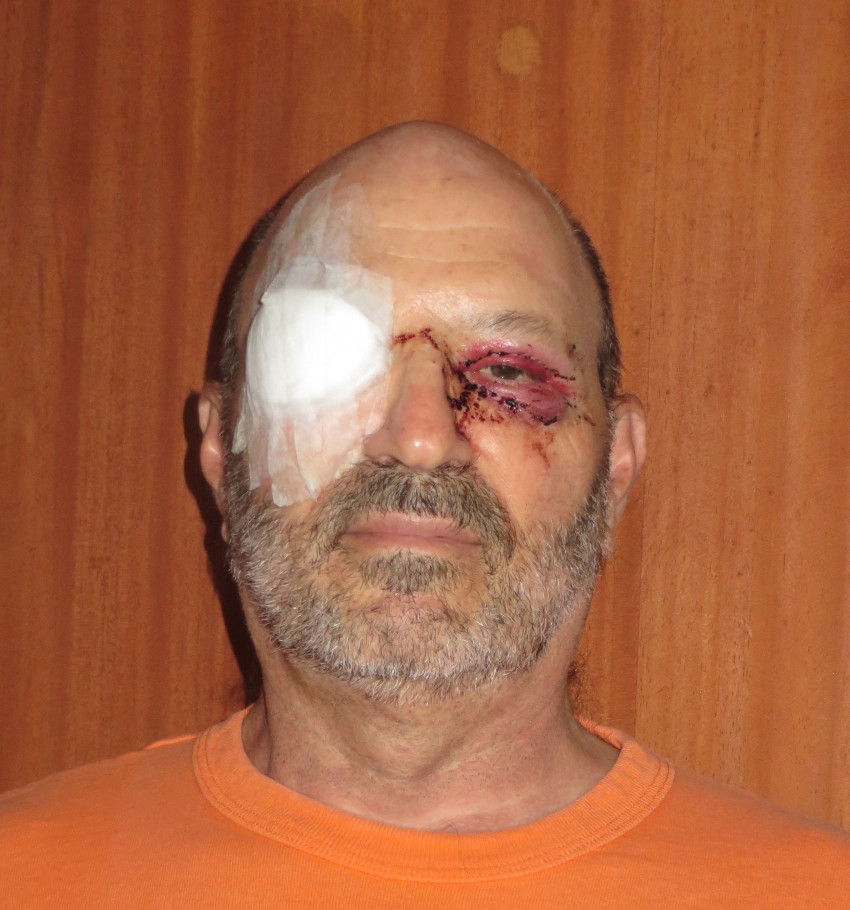
It’s been very difficult recently to keep up with the normal practice of the past many years because of a range of health problems. These were further increased for reasons I’d like to try to explain here. To all those who wrote to express friendly concern and solidarity, I’m deeply grateful. I’m sorry that it’s not been possible to thank each of you individually.
On Friday morning, August 28, 2015, I walked from home to Kaiser hospital here in Los Angeles. It took about 40 minutes and I was in great spirits.
Awhile earlier I’d been diagnosed with BCC, which doesn’t mean “blind carbon copy”, but Basal Cell Carcinoma, a form of skin cancer which had been discovered by my optometrist and which sat on my right eyelid and never seemed to go away. It was a small and somewhat unsightly growth. Its cancerous nature was confirmed a couple of weeks earlier following a biopsy which required me being under anesthesia
At about 9 they called me into an operating room where the dermatologist performed what’s called a Mohs procedure (Google it if you like) to take off a small cancerous growth on my right eyelid. They explained that I’d have to wait a half-hour before they could be sure if they had gotten it all. After the second try came the third, and, heavily bandaged-up, from there I walked to another part of the hospital for reconstructive work.
So much skin had been removed by the dermatologist that they had to take a piece of skin from my left eyelid to graft it on to where the cancer had been on the right. I as put under a partial anesthesia and had no consciousness during the procedure. It didn’t take long, but I spent the whole day in the hospital.
A friend and former co-worker came to get me. The hospital wanted to put me in a wheelchair, but I walked out without difficulty. My friend drove me me home and, wiped out, I soon went to bed.
If you’d like to see them, I’ve posted two photos here. One right after the operation and another four days later after the bandages were removed. You can see I’m happier once I can see with both eyes.
My right eye was fully bandaged up for four days, and my vision is a bit blurry on the left eye due to all the surgery done there to take skin from the left to fill in what was taken off of the right eyelid. After the operations I went home and just put myself to bed, pretty much wiped out.
Since I’m not a TV viewer, I’m grateful for recorded books. I can get lost in them and time flies by, or sometimes they help lull me to sleep, while at the same time listening with consciousness, or, perhaps, absorbing some of the information while sleeping. I’m pretty sure that’s what does happen. Like good music, some of these books one can listen to more than once.
Right now I’ve been enjoying THE IMPERIAL CRUISE; A Secret History of Empire and War by James Bradley (2009).
It traces the social and educational history of Theodore Roosevelt, steeped in 19th century racism, through World War II. His latest book continues tracing how and why Washington allied itself with Chiang Kai-Shek’s corrupt Kuomintang regime up until, and long after its defeat by the Chinese revolutionary forces led by Mao Zedong. It’s THE CHINA MIRAGE (2015) and is also out in recorded, printed and electronic versions.
The bandages were removed from my right eye on Tuesday, and I walked both there and back. The dermatologist, as well as the physical therapist I saw before the bandages were removed, both urged me strongly to keep active and keep walking, but not to do anything seriously strenuous until the weekend. This means that I can begin to do some weight-lifting and some inverted yoga in another day or two. I rarely do headstand in the middle of the room, but like to invert by hanging upside down from a swing for that purpose. It’s very stimulating, but when one comes out of it you have to stop and lean your head against the wall to avoid dizziness.
Now that they’ve been released, the Five are traveling all over the world, meeting and thanking people everywhere who fought for their release through the long years. When Gerardo was in Victorville and I got notes from him from time to time, I had the impression that the two most frequently-used words in his vocabulary were “Thank You”.
One last thing. Yesterday Gerardo, Adriana, Gema and others from Cuba arrived in Portugal where they were met by Johana Tablada, the Cuban ambassador there. She put a news release (in Spanish) about it, and I did a quick translation to English which I posted to CubaNews, Facebook and other places. Not long afterwards I got a nice thank you note from Johana Tablada via Facebook’s chat function. Here’s the news release:
That’s all for the moment. If you want to see the results of the surgery, with the bandages on and then off, I’ve posted them to Facebook and to my own website.
Once again, I’d like to thank everyone who wrote or called to express their solidarity and concern about my health. The doctors tell me it’ll be another couple of months before the unsightly results of the surgery aren’t visible.
Walter Lippmann
Los Angeles, California
September 4, 2015
Walter 9-1-2015


Terrorist Luis Posada Carriles suffers auto accident in Miami

 PHOTO CAPTION: Luis Posada Carriles driving his car in Miami.
Fidel Castro, Bayamo, Cuba, July 26, 2006.
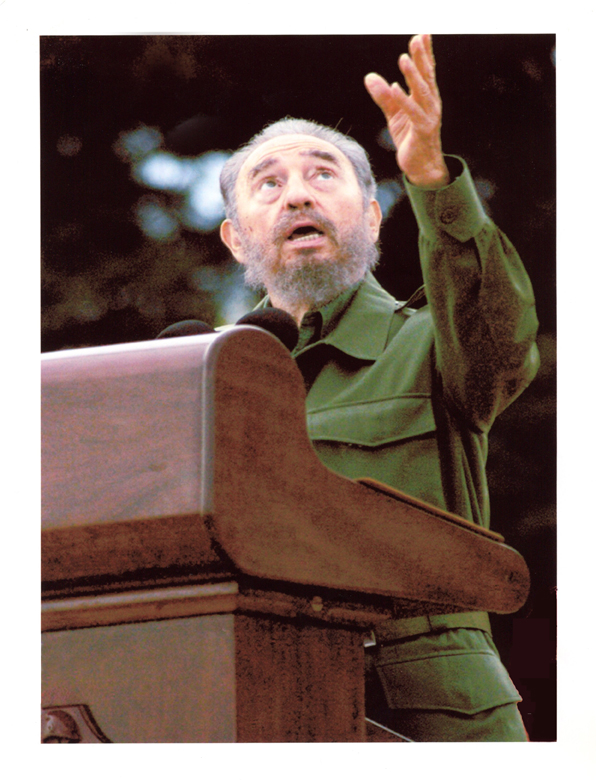
Tens of thousands of Cubans began to gather in the town square of Bayamo at 5 AM in the morning of July 26, 2006. As an accredited journalist, I was present and took this photo.
Walter Lippmann
Neither Enemies Nor Rivals, Neighbors
- English
- Español
CUBA-USA
NEITHER ENEMIES, NOR RIVALS, NEIGHBORS
By: Dr. Néstor García Iturbe
August 14, 2015
A CubaNews translation. Edited by Walter Lippmann.
Today, in his speech in the city of Havana, the Secretary of State of the United States Government, John Kerry, exlained the actions the Obama administration plans to implement in relation to Cuba, including the efforts it has done and will do with Congress to try to achieve the lifting of the blockade.
Mr. Kerry delivered some parts of his speech in Spanish, probably to prevent the translation changing what he wanted to convey. He wanted the message to directly reach all present. In Spanish language he clearly said:
“We are neither enemies nor rivals, we are neighbors.”
This was a very important phrase from Mr. Kerry, as well as was his description of the efforts of the Obama administration to achieve the lifting of the blockade.
I believe that within a little more than twenty days –certainly soon enough– President Obama will have the opportunity to take an action that will confirm his efforts for the elimination of the blockade, and also give proof to the idea that Cuba and the United States are neither enemy nor rivals, but neighbors.
On September 5, 2014, President Barack Obama extended the Trading with the Enemy Act for Cuba for another year. This action was part of the continuation of the blockade against our country.
The Trading with the Enemy Act was approved by Congress on October 6, 1917, and gives the President the power to restrict trade with countries considered “hostile” to the United States. Section 5(b) gives the chief executive the possibility of applying economic sanctions in wartime, or in any other period of national emergency, and prohibits trading with the enemy or its allies during military conflict.
Under this law, the oldest of its kind, the Regulations for the Control of Cuban Assets were adopted in 1963, after the blockade against Cuba was declared in 1962 by President John F. Kennedy. Cuba is the only country against which this legislation is in force after it was suspended for North Korea in 2008. Other countries like China and Vietnam were also subject to the application of this legislation in the past.
Although since 1959 the White House has never declared a national emergency with respect to our country, successive US presidents have extended and applied this law to Cuba. In addition to this legislation, the legal framework of the blockade is broad and complex. It includes other laws and administrative regulations such as the Foreign Assistance Act (1961), the Export Administration Law (1979), the Torricelli Law (1992), the Helms-Burton Law (1996) and the Export Administration Regulations(1979).
The action of extending the Trading with the Enemy Act for Cuba is repeated every year. It has become a routine procedure for the White House which, after 50 years, has not given up this outdated and failed policy toward Cuba. Meanwhile, internal debate for a change of policy in the US grows. Once again the US government will be internationally isolated when the overwhelming majority of states vote in favor of Cuba’s resolution calling for the elimination of the economic, commercial and financial blockade, which is presented each year to the United Nations General Assembly since 1992.” (1)
We heard the statements of the Secretary of State, Mr. Kerry, declaring that Cuba is not an enemy or a rival, but a neighbor. It would not be consistent with such statement to see that President Obama –who a year ago extended the Trading with the Enemy Act for Cuba –extends it again for another year, until September 2016.
Now Obama, who has the power to exclude Cuba from the Act, can give a sign of seriousness in his approach and prove he is pursuing a consistent policy aimed at improving relations with Cuba.
Go ahead Mr. Obama, go ahead Mr. Kerry. Show that when you say something, you do not change your minds.
This is asked by your neighbors, not your enemies.
(1) Cubaminrex/ Dirección General de EE.UU.
CUBA.- EU.- NI ENEMIGOS NI RIVALES, VECINOS
Por : Dr. Néstor García Iturbe
14 de agosto 2015
En el discurso que pronunció en la ciudad de la Habana, en el día de hoy ,el Secretario de Estado del gobierno de Estados Unidos, John Kerry, estableció las acciones que la administración Obama tiene planificado ejecutar en relación con Cuba, incluyendo los esfuerzos que realiza y realizará con el Congreso, para tratar de lograr el levantamiento del bloqueo.
Algunas partes del discurso el señor Kerry las pronunció en español, seguramente para evitar que la traducción pudiera modificar lo que deseaba trasladar y que el mensaje llegara directamente a todos los presentes. Claramente en idioma español dijo: “No somos ni enemigos ni rivales, somos vecinos.”
Muy importante esta frase del señor Kerry y su descripción de los esfuerzos de la administración Obama por lograr el levantamiento del bloqueo. Considero que dentro de un poco más de veinte días, bastante cercano por cierto, el presidente Obama tiene oportunidad de realizar una acción, que ratificará sus esfuerzos por la eliminación del bloqueo y además, que Cuba y Estados Unidos no somos ni enemigo sin rivales, sino vecinos.
El 5 de septiembre del año 2014, el presidente Barack Obama prorrogó para Cuba, por un año más, la Ley de Comercio con el Enemigo ,lo que es una acción que forma parte de la continuidad del bloqueo contra nuestro país. “La Ley de Comercio con el Enemigo fue aprobada por el Congreso Federal el 6 de octubre de 1917 y le otorga al Presidente la facultad para restringir el comercio con países “hostiles” a Estados Unidos.
La sección 5 (b) delega en el máximo jefe del Ejecutivo la posibilidad de aplicar sanciones económicas en tiempo de guerra o en cualquier otro período de emergencia nacional, y prohíbe el comercio con el enemigo o sus aliados durante conflictos bélicos.
En virtud de esta ley, la más antigua de su tipo, se adoptaron las Regulaciones para el Control de Activos Cubanos en 1963, luego de que fuera declarado el bloqueo contra Cuba en 1962 por el presidente John F. Kennedy.
Cuba es el único país para el cual está vigente esta legislación luego de que en 2008, fuera suspendida para Corea del Norte. Otros países como China y Vietnam también fueron objeto de la aplicación de esta legislación en el pasado. Aún cuando la Casa Blanca nunca ha declarado una emergencia nacional con respecto a nuestro país desde 1959, sucesivos presidentes estadounidenses han prorrogado esta ley para Cuba.
Además de esta legislación, el entramado legal del bloqueo es amplio y complejo ya que abarca otras leyes y regulaciones administrativas como la Ley para la Asistencia Exterior (1961), la Ley para la Administración de las Exportaciones (1979), la Ley Torricelli (1992), la Ley Helms-Burton (1996) y las Regulaciones para la Administración de las Exportaciones (1979).
La acción de prorrogar la Ley de Comercio con el Enemigo para Cuba se repite cada año por lo que se ha convertido en un procedimiento rutinario de la Casa Blanca, que luego de más de 50 años no ha renunciado a esta obsoleta y fracasada política hacia Cuba.
Mientras tanto, se acrecienta el debate interno en EE.UU. a favor del cambio de la política y una vez más el gobierno estadounidense quedará aislado ante la abrumadora mayoría de los Estados que votarán a favor de la resolución de Cuba reclamando la eliminación del bloqueo económico, comercial y financiero, que es presentada cada año en la Asamblea General de las Naciones Unidas desde 1992.” (1)
Después de haber escuchado los pronunciamientos del Secretario de Estado, señor Kerry , donde declara que Cuba no es un enemigo ni un rival, que es un vecino, no sería consecuente con ese pronunciamiento que el presidente Obama, al cumplirse un año de haber prorrogado para Cuba la Ley de Comercio con el Enemigo, la prorrogue nuevamente por otro año, hasta septiembre del 2016.
Ahora Obama, que tiene la facultad de no incluir a Cuba en dicha Ley, puede dar una muestra de seriedad en sus planteamientos y de que está llevando a cabo una política consecuente encaminada a mejorar las relaciones con Cuba. Adelante señor Obama, adelante señor Kerry. Muestren, que cuando dicen algo, no cambian de opinión. Se lo piden sus vecinos, no sus enemigos.
(1) Cubaminrex/ Dirección General de EE.UU.
Crisis and Hope in Puerto Rico
- English
- Español
CRISIS AND HOPE IN PUERTO RICO
By Manuel E. Yepe
http://manuelyepe.wordpress.com/
A CubaNews translation. Edited by Walter Lippmann.
These days, the “For sale” sign on houses can be seen all over the place in San Juan, Puerto Rico and other cities on the island. These signs have been put up by more than 144,000 Puerto Ricans who are leaving the island to go abroad in search of employment. Some of these ads read, as a sort of retaliation against those responsible for their misfortune:
“THIS HOUSE IS FOR SALE, BUT NOT TO AMERICANS”
The current plight of Puerto Rico, however painful, could be the harbinger of a new awakening of patriotic awareness among the Puerto Rican people. This could open the way to their deserved inclusion in the part of America where they rightfully belong.
Puerto Ricans cannot be blamed for their misfortunes in the current crisis when foreign trade, currency, communications, citizenship and nationality laws and procedures, internal and external navigation, migration, labor and wage procedures, the land, airspace, coasts, and borders, ports, forests, minerals, as well as citizen military service and defense of the country are all the responsibility of a foreign power.
Since the US invasion of the island in 1898, Puerto Rico has successively experienced: military occupation in the first two years, a civilian government with a governor and supreme judge appointed by the president of the United States until 1948, and a native governor of annexationist orientation (Luis Muñoz Marín), also appointed by Washington, with a bicameral legislature restricted to bilingual property owners subject to imperial veto.
In 1952, it became a “Associated Free State” and. to mask its colonial status, Washington gave the island the right to a constitution and the election of a governor and parliamentarians, while maintaining and ensuring the country’s colonial subordination to the United States.
Currently on the small territory of Puerto Rico there are about 15 bases commanded by the US Atlantic Command (LANTCOM). The current state of bankruptcy of Puerto Rico is because –as its governor, Alexander Padilla said– the country does not have money to pay its debt of $73 billion dollars to its creditors. This amount represents 100 percent of its Gross Domestic Product (GDP).
The country has not even been able to honor a partial payment of $58 million to the Public Financing Corporation (PFC) of which it has only managed to pay the amount of $628,000. The colonial government has officially declared itself unable to pay the debt (default), and there is not a glimpse of a solution for now. Neither Washington nor the IMF have ruled on the matter, or have contributed remedial solutions that would prevent the country from becoming insolvent by the end of this summer.
Peruvian journalist Vicky Pelaez, in the Russian magazine Sputnik, expresses the view that “actually, the country’s debt began to grow in the 1970s. “Its economy, since the middle of last century was based mainly on the pharmaceutical industry; but with the appearance of maquiladoras in Mexico and Asia, this sector began to move to those regions in search of cheaper labor and higher productivity.”
“To attract multinational corporations to the island, Washington exempted them from paying taxes and thus further weakened the local economy.” The country, with its policy of mortgage liberalization, was further affected by the mortgage crisis of the beginning of the 21st Century. In 2006, the governor of Puerto Rico, alarmed by its weak GDP growth, made the decision to suspend the tax exemption for corporations. This led to the exodus and closing of companies.
The country went into recession and the migration of Puerto Ricans, mainly to Florida and New York, grew alarmingly. Today, 45% of the total 3.5 million inhabitants of the island live in poverty, and 83% its of children live in poor areas.
Puerto Rico suffers the consequences of classic colonialism, in which a foreign country makes decisions for it and has the military and political capacity to manage the public and collective life of another country.
But the news coming from the island reflects a deepening awareness that the elimination of the US colonial system –which has been in place over the past 117 years– is the only road to achieving independence and the full exercise of its national sovereignty. These will bring about the recognition and international support indispensable for the country’s development.
August 22, 2015.
LA CRISIS Y LAS ESPERANZAS DE PUERTO RICO
Por Manuel E. Yepe
http://manuelyepe.wordpress.com/
Por estos días proliferan por doquier en San Juan de Puerto Rico y otras ciudades de la isla anuncios de la puesta en venta de viviendas fijados por más de 144.000 puertorriqueños que están abandonando la isla para marchar al exterior en busca de empleo. Algunos de estos carteles expresan, como pretendida represalia a los causantes de su desgracia:
“SE VENDE ESTA CASA, PERO NO A LOS AMERICANOS”
La grave situación actual de Puerto Rico, por dolorosa que sea, pudiera constituir el augurio de un nuevo despertar de la conciencia patriótica del pueblo borinqueño que le abra merecido paso a su plena inclusión en la parte de América a que pertenece por derecho propio.
No se puede responsabilizar por desgracias como la actual crisis a los puertorriqueños, cuando el comercio exterior, la moneda, las comunicaciones, las leyes y procedimientos de ciudadanía y nacionalidad, la navegación interna y externa, los procedimientos migratorios, laborales y salariales, la tierra, los espacios aéreos, las costas y fronteras, los puertos, los bosques, el subsuelo mineral, así como el servicio militar ciudadano y la defensa del país, son de la incumbencia de un poder extranjero.
Desde la invasión estadounidense de la Isla en 1898, Puerto Rico ha conocido, sucesivamente, la ocupación militar en los dos primeros años; un gobierno civil con gobernador y juez supremo nombrados por el presidente de Estados Unidos hasta 1948; un gobernador nativo de orientación anexionista (Luis Muñoz Marín), igualmente designado por Washington, con un cuerpo Legislativo bicameral restringido a propietarios bilingües sujeto a veto imperial, y un “Estado Libre Asociado”, instaurado en 1952 para enmascarar el status colonial, otorgando a la Isla derecho a una Constitución y a la elección de gobernador y parlamentarios, pero manteniendo y asegurando la subordinación colonial a Estados Unidos.
Actualmente hay en el reducido territorio de Puerto Rico unas 15 bases norteamericanas bajo el mando US Atlantic Command (LANTCOM). La actual situación de bancarrota en la que ha caído Puerto Rico obedece, ha dicho su gobernador Alejandro Padilla, a que el país no tiene dinero para pagar su deuda de 73 mil millones de dólares a sus acreedores, cifra que representa el 100 por ciento de su PIB (Producto Interno Bruto).
No ha podido siquiera cancelar en fecha reciente un pago parcial de 58 millones de dólares a la CFP (Corporación para el Financiamiento Público) del que sólo logró desembolsar una fracción de 628 mil dólares.
El Gobierno colonial se ha declarado oficialmente incapacitado para pagar la deuda (default) sin que se vislumbre solución por el momento. Ni Washington ni el Fondo Monetario Internacional se han pronunciado sobre el asunto ni han aportado soluciones remediales que eviten que el país se declare insolvente hacia el fin de este verano.
Según criterio de la periodista peruana Vicky Peláez en la revista rusa Sputnik, “en realidad la deuda del país empezó a crecer desde los años 1970. Su economía desde la mitad del siglo pasado estaba basada principalmente en la industria farmacéutica pero con la aparición de las maquiladoras en México y en Asia, este sector empezó a trasladarse a aquellas regiones en búsqueda de la mano de obra más barata y de mayor productividad.
Para atraer las corporaciones multinacionales a la isla, Washington las exoneró del pago de impuestos y con ello debilitó aún más a la economía local”. La crisis hipotecaria al comienzo del Siglo XXI afectó aún más al país con su política de liberalización de la hipoteca.
En 2006, el gobernador de Puerto Rico, alarmado por el débil crecimiento del PIB tomó la decisión de suspender la exención fiscal a las corporaciones lo que provocó el éxodo y el cierre de las compañías. El país entró en recesión y la emigración de boricuas, principalmente a la Florida y Nueva York creció alarmantemente.
Hoy, un 45 por ciento del total de 3,5 millones de habitantes de la isla vive en la pobreza y el 83 por ciento de los niños habitan en áreas pobres. Puerto Rico sufre las consecuencias del coloniaje clásico, aquel en el que un país extranjero decide y tiene capacidad violenta y política para administrar la vida pública y colectiva de otro país.
Pero las noticias que llegan de allí reflejan una profundización de la conciencia de que la eliminación del sistema colonial a que ha estado sometido por Estados Unidos durante los últimos 117 años es el único camino hacia el logro de la independencia y el ejercicio pleno de su soberanía nacional, propiciadores del reconocimiento y apoyo internacional indispensables para el desarrollo del país.
Agosto 22 de 2015.
You must be logged in to post a comment.