How U.S. finances actions against Cuba

How does the U.S. finance psychological actions against Cuba?
El Estornudo, Periodismo de Barrio and Cuba Posible are some of the sites of “independent journalists” that appeared to be promoting the actions of July 11 and 12 in Cuba, as recently denounced in a report by the Argentine Club of Journalist Friends of Cuba.
Translated and edited by Walter Lippmann for CubaNews.
El Estornudo, Periodismo de Barrio and Cuba Posible are some of the sites of “independent journalists” that appeared to promote the July 11 and 12 actions in Cuba, as recently denounced in a report by the Club Argentino de Periodistas Amigos de Cuba (Argentine Club of Journalists Friends of Cuba).
These journalists, confirms the source, “are trained and awarded” by NGOs that operate with common sources of financing: the National Endowment for Democracy (NED), a front for the Central Intelligence Agency (CIA) and the Open Society Foundations founded by tycoon George Soros.
The note warns that the Cronos Civil Association based in Buenos Aires, Argentina, received “$80,000 dollars from the NED in 2020, to train journalists from the Island linked to the dependent media. This organization has, according to the Argentine club, two main media outlets, Revista Anfibia and Cosecha Roja. In relation to the Caribbean nation, they point out, “these sites carry out training projects and scholarships for journalists”.
On the other hand, the Instituto Prensa y Sociedad (IPYS) based in Lima, Peru, received in 2020 a total of $70 523 dollars to develop programs aimed at training “Cuban independent journalists” and promoting their links with journalists in the region. “In turn, Cronos and IPYS receive funds from the Open Society Foundations,” the publication explains.
Likewise, the Investigative Journalism in Cuba project of the Espacio Público Foundation, based in Chile and developed between 2019 and 2020, the text indicates, also works with funding from the NED.
“The agenda of these media and journalists is that of political correctness, an aesthetic and a profile friendly to progressivism that appears to have a low political profile, questionable in light of their sources of funding, NGOs linked to the worst crimes against the peoples,” comments the club of journalists in solidarity with the largest of the Antilles.
This is only one part of a huge continental project to train its journalistic cadres in Latin America, which includes other organizations (such as the Gabo Center, in Colombia, and Article 19, in Mexico).
Cuban dependent journalists are trained, awarded scholarships and prizes by this network of organizations throughout Latin America.
“Analyzing the message of these media allows us to understand the depth and complexity of the psychological action promoted by imperialism against our peoples”, they state.
Reason is our shield
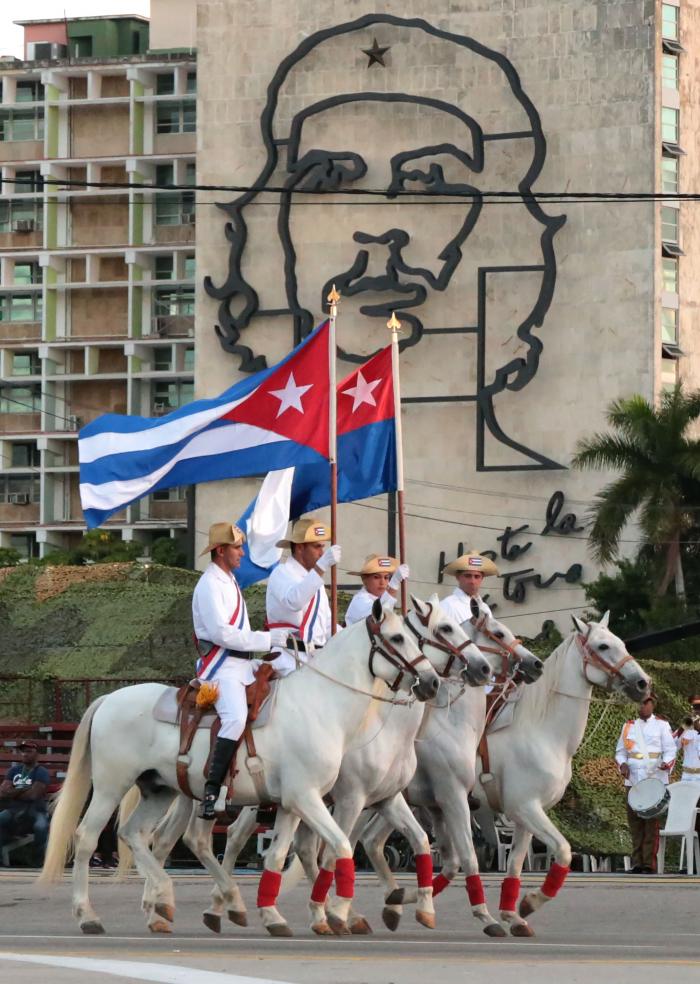
Reason is our shield (+ Video)
Dignity, resistance and unity are our most powerful forces in the face of the dishonorable and dishonorable annexationist action that serves the historical enemy of the Cuban nation in its plan to fracture and divide us in order to defeat us.
Translated and edited by Walter Lippmann for CubaNews.
Photo: Yaimí Ravelo
After hard months of the pandemic, of shocking world economic crisis, of intensified and sustained blockade -which have harshly hit our people-, Cuba is beginning to revive its social life, public spaces and services, schools, tourism and other sectors of the economy.
We are already the country in the Americas with the highest percentage of the population with at least one administered dose of the vaccines against COVID-19, the one with the highest daily vaccination rate in the world and the only one that has been able to develop a massive campaign in children from two years of age. All this has been possible due to the country’s capacity to produce its own vaccines, as a result of the scientific policy outlined and promoted by Fidel and the talent of men and women forged by the Revolution.
We are rising up with our own strength, with the unbending spirit, the dignity and the capacity of resistance of our people, with the serene and firm leadership of the country, with the spirit of victory and the creativity that has been cultivated in the midst of so many years of hard battles.
Those who have bet on the failure of Socialism in Cuba and saw July 11[,2021] as the definitive blow to the Revolution, are frustrated and in a hurry in their plans. They intend to prevent any possibility of well-being, individual and collective development, citizen tranquility and peace in our Homeland.
That is why they are promoting various destabilizing actions in the country, to provoke an incident that will lead to a social outbreak that will bring about the longed-for military intervention, which they are vociferously calling for in Miami and even in front of the White House itself.
Neither 62 years of blockade nor its 243 additional measures have been able nor will they be able to bring us down, hence the repeated attempt at a “soft coup”. It is part of the unconventional warfare that they apply to us with intensity. Strike on top of the blow.
In the Central Report to the 8th Party Congress, Army General Raúl Castro Ruz warned:
“The program of subversion and ideological and cultural influence has been redoubled, aimed at discrediting the socialist model of development and presenting us with capitalist restoration as the only alternative.
“The subversive component of U.S. policy toward Cuba is focused on the breakdown of national unity. In that sense, priority is given to actions aimed at young people, women and academics, the artistic and intellectual sector, journalists, athletes, people of sexual diversity and religions. Matters of interest to specific groups linked to animal protection, the environment, or artistic and cultural manifestations are manipulated, all aimed at disregarding existing institutions.
“Act of aggression have not ceased to be financed with the use of radio and television stations based in the United States, while the monetary support for the development of platforms for the generation of ideological contents that openly call to defeat the Revolution. They launch calls for demonstrations in public spaces, incite the execution of sabotage and terrorist acts, including the assassination of agents of public order and representatives of the revolutionary power. Without the slightest modesty, they declare the fees paid from the United States to the executors of these criminal actions.
“Let us not forget that the U.S. government created the “Internet Working Group for Cuba” which aspires to turn social networks into channels of subversion, creation of wireless networks outside state control and the carrying out of cyber attacks on critical infrastructure.
[…]“Lies, manipulation and the propagation of fake news no longer know any limits. Through them, a virtual image of Cuba as a dying society with no future, on the verge of collapsing and giving way to the longed-for social explosion, is shaped and spread to the four winds.”
Sectors of the traditional counterrevolution and new characters, educated in leadership courses financed by US foundations or the US federal budget, have joined forces to try to fulfill such purposes. They lack a social base in the country, but they are duly instructed, financed and supported from abroad.
The empire puts money and expectations on the annexationists trained by them, who, under the false banner of pacifism, seek to provoke new disturbances, generate chaos and induce the destabilization of the country.
In the last few weeks, they made public their intentions to hold a march in November, supposedly peaceful, designed to take place simultaneously in several cities of the country. Their declared purposes and their organizational scheme reveal a provocation articulated as part of the strategy of “regime change” for Cuba, previously tested in other countries.
They choose dates with a certain symbolism? But this time it seems that they also wanted to show off their annexationist stature. Did they want to celebrate President Biden’s birthday with an attack on the Revolution that has so annoyed imperial administrations for 62 years? They were left wanting.
One of its promoters has been trained in courses sponsored by the right-wing Argentine foundation CADAL, U.S. universities and think tanks such as the Carnegie Fund for International Peace (directed until recently by the current CIA director, William J. Burns). Among the topics of their indoctrination have been the formation of leaders, confrontation against government structures, the dynamics of mobilization, and the role of the Armed Forces in the “democratic transition”.
Last July 11 he was the organizer of an attempted takeover of the ICRT, complying with instruction 167 of the Nonviolent Action Workshop which states: Nonviolent “Attacks”: invasions: starting with a march and taking peaceful possession of a place or property.
More recently he has joined a subversive project in academic garb, in which he shares a seat on its Deliberative Council with the terrorist Orlando Gutiérrez Boronat.
He is accompanied among the organizers of the November demonstration by counterrevolutionary leaders of the so-called Council for the Democratic Transition of Cuba, a platform that is articulated according to the anti-constitutional coup in the country, and who have openly acknowledged receiving funding from the National Endowment for Democracy (NED), a front for the U.S. government.
As soon as it was announced by its organizers, the march received public and notorious support from U.S. legislators, political operators of the anti-Cuban mafia and media that encourage actions against the Revolution.
Tweets, declarations, Resistance Assemblies and other frenetic actions fill Miami these days, as if the demonstration were to take place in that city. Regime change, the overthrow of the government and military intervention is once again the prevailing narrative in South Florida.
Among the most fervent supporters of the provocation are Congressmen Marco Rubio, Mario Diaz-Balart and Maria Elvira Salazar; the reconverted terrorist Gutierrez Boronat (who has declared his support for this action “to overthrow the regime”), the Cuban American National Foundation and the mercenary retinue of Brigade 2506, whose president on duty declared in Miami that “With these steps, an explosion will be fomented inside Cuba so that once again our brothers take to the streets and this will lead us to the overthrow of a regime…”
As denounced by the U.S. media outlet MintPressNews, many of the operators of the digital social network campaign in support of the demonstration are residents of Florida and other U.S. states. “The participation of foreign citizens in Cuba’s internal affairs is at a level that is hardly conceivable in the United States,” the publication says.
The direct involvement of the U.S. government in the counterrevolutionary farce is also explicit and provocative. No care has been taken to conceal it and no one can do so honestly. High government officials are directly involved in its promotion and, with the support of the special services, in its organization. An important instrument, though not the only one, is the U.S. embassy in Cuba, whose public statements often include blatant meddling in the nation’s internal affairs.
That office, fruit of the bilateral agreements signed in 2015 to formalize diplomatic relations between the two countries, has not fulfilled any diplomatic office for years. It does not even serve for the provision of immigration and consular services that citizens of both countries demand and depend on.
Its officials, including the Chargé d’Affaires, are forced to play the unworthy role of babysitters of the counterrevolutionary exponents and provocateurs in our country. They have the thankless task of falling in behind them, providing them with logistical and material support, as well as advice and guidance. Everything is known and documented. The embassy’s own activity in the digital networks provides evidence of what is happening and what the counterrevolution is doing.
Such behavior is in total contravention of International Law and in particular of the Vienna Convention on Diplomatic Relations.
With such sponsors and declared purposes, it is very difficult to presume civility and pacifism in the action called for November. Much less any legitimate and sovereign intentions.
What is at stake here, and there should be no doubt in anyone’s mind, is Cuba’s right to defend itself against foreign aggression, regardless of the disguise it takes.
The organizers try to cloak themselves in the Constitution to legitimize the provocation. They use constitutional precepts to defend anti-constitutional strategies. They adduce the right to demonstrate expressed in the Magna Carta, but they forget that this same Constitution, in its Article 45, indicates that the rights of the people are limited, among others, by the respect to this supreme norm: “The exercise of the rights of the people is only limited by the rights of others, the collective security, the general welfare, the respect to the public order, the Constitution and the laws”.
This Magna Carta, approved in a referendum just three years ago by 86.85 % of the voters, clearly defines in its Article 4 that: “The socialist system endorsed by this Constitution is irrevocable”. And in Article 229 it also establishes that “In no case shall the pronouncements on the irrevocability of the socialist system established in Article 4, and the prohibition to negotiate under the circumstances foreseen in paragraph a) of Article 16, be reformable”.
It is clear that neither now nor in the future can the right to demonstrate be used to subvert the political system, to overthrow the Cuban socialist project, or to establish alliances with groups and organizations that receive foreign financing with the objective of promoting the interests of the government of the United States and other foreign powers.
There does not exist in our country the right to act in favor of the interests of a foreign power and to put the stability of our citizens at risk. It is unconstitutional, illegitimate, immoral, to adhere to an annexationist project. Our laws say so and our history says so.
This is what our National Hero José Martí warned: “On our land, there is another plan more sinister than what we know until now, and it is the iniquitous one of forcing the Island, of precipitating it to war to have a pretext to intervene in it, and with the credit of mediator and guarantor, to keep it. (…) To die, in order to give a basis on which to rise to these people who push us to death for their benefit? Our lives are worth more, and it is necessary that the Island knows this in time. And there are Cubans, Cubans, who serve, with disguised boasts of patriotism, these interests”.
Enough of lies and gross manipulation of the facts. Nobody is going to be crushed by tanks in the streets as the spokesmen of the next provocation have spread. The Moncada exercise [November 20, National Defense Day] is part of the training we constantly do in preparation for defense. In the face of provocations such as this one, we are assisted by the most legitimate act in defense of the people and their conquests.
Dignity, resistance and unity are our most powerful forces in the face of the dishonorable and dishonorable annexationist action that serves the historical enemy of the Cuban nation in its plan to fracture and divide us in order to defeat us.
They have not been able to and will not be able to. Reason is our shield.
(No English subtitles on the video.)
Cuba bets on gradual economy opening

Cuba bets on the gradual opening of its economy
The Council of Ministers analyzed, during its most recent meeting, the performance of the economy at the end of August and other important issues to maintain the country’s vitality.
Translated and edited by Walter Lippmann for CubaNews.
All the power that is exercised in Cuba is done through the people, with the participation of the people to solve the problems of society, Diaz-Canel stressed in the most recent Council of Ministers. Photo: Estudios Revolución
The tightening of the US government blockade, the international economic crisis aggravated by the COVID-19, and the epidemiological situation itself, determine that the Cuban reality at the beginning of the fourth quarter of the year continues to be complex.
However, Cuba is committed to the gradual opening of its economy, which should have a favorable impact on productive activities. This was stated by the Minister of Economy and Planning, Alejandro Gil Fernández, when presenting a report on the performance of the economy at the end of August, at the most recent meeting of the Council of Ministers, chaired by the First Secretary of the Central Committee of the Communist Party and President of the Republic, Miguel Díaz-Canel Bermúdez, and led by the member of the Political Bureau and Prime Minister, Manuel Marrero Cruz.
As a favorable element amidst the complexities, Gil Fernández defined the growth of employment, which distinguishes Cuba. “In many countries, the tendency has been to unemployment, to the cheapening of the labor force,” said the also deputy prime minister. Together with the fight against the epidemic, he stressed, we generate jobs and we are going to generate more with the improvement of the economic actors; the opening of gastronomy, services, tourism and the non-state sector.
So far, he said, 203,733 people have sought employment at the municipal Labor and Social Security departments, of which 138,656 were employed and 5,440 were linked to qualification courses to access a job.
Of the total who have been employed, he highlighted, 36% are young people under 35 years of age. The same percentage corresponds to women.
Referring to the main food balances in the national production, he pointed out that at the end of August, rice, corn, beans, milk and egg production, as well as beef and pork were out of compliance.
As for the vegetables, even though the demand is much higher than the supply, he pointed out that in August there was a greater quantity of stockpiled products than in previous months. This trend continued in September.
He referred to the behavior of energy carriers in the country. In August, he pointed out, the actual generation of electric energy was well below the foreseen plan, which meant a non-negligible cost in the economy and productive activities, with the objective of reducing the effects on the population.
Gil Fernández stressed the need for greater initiative and creative work, as well as “to take more advantage of the measures that the Government has been approving in the last few months to grant greater autonomy to the socialist state-owned company”.
These are measures -he valued- that must be taken advantage of in order to be able to move forward with greater efficiency in the state-owned enterprise. “A productive effort is required in all sectors to achieve, in the remainder of the year, the maximum possible economic growth”.
Complying with the design to control the pandemic, and with the economic measures adopted, Gil Fernandez assessed that “we can be in better conditions to, with an additional effort, in the fourth quarter try to aspire to the highest possible economic growth this year and start better 2022”.
Regarding the challenge that the reopening of tourism on November 15 means for Cuba, the Prime Minister considered that “it is an event that is already gaining strength at the international level”.
This is an issue -he reflected- that will have an impact on the economy; we are convinced that it will boost the economy, but for that “we all have to contribute. It is not only a tourism issue, but no sector is also unaffected by this event in the country”.
USEFUL AND DIVERSE AGENDA
Among other matters, the highest government body approved the new Portfolio of Opportunities for foreign investment in the country, consisting of 678 projects, 175 more than in the previous one.
In presenting the subject, the Minister of Foreign Trade and Foreign Investment, Rodrigo Malmierca Díaz, explained that, in order to prepare it, it was based on the criterion of the greater importance of foreign investment in the current economic situation.
At this moment, he assured, we have 429 projects with approved directives, ready to be negotiated, and 56 in the Mariel Special Development Zone. The projects respond to strategic axes of the National Economic and Social Development Plan until 2030, as is the case of productive transformation and international insertion; natural resources and the environment; infrastructure; as well as human potential and science, technology and innovation.
According to him, from the territorial point of view, the Portfolio is distributed among all the provinces and, for the first time, the food production sector is the most represented.
The Prime Minister drew attention to the need to promote foreign investment in a more dynamic way and always preserving our sovereignty. “It is necessary to give it the priority that this matter carries at the higher levels of management, each one with the role that corresponds to him.”
At the meeting, the Minister of Transportation, Eduardo Rodríguez Dávila, presented a report on the results of the Port-Transport-Internal Economy Operation, in the first semester of the year.
According to the information provided, even though all the missions were secured during the period, “there are still insufficiencies, both of a subjective and objective nature, which will be the focus of attention in the last months of the year”. Many of them, he explained, will be solved as funding and resources become available.
The Prime Minister emphasized that, in the midst of the complex situation, “it is more necessary than ever to get this operation right. It has to work properly; it cannot be an obstacle for the distribution of the goods that we are able to bring in, to get stuck inside the national territory, he said.
At the meeting, which was attended by Esteban Lazo Hernández, president of the National Assembly of People’s Power; Salvador Valdés Mesa, vice president of the Republic; and Roberto Morales Ojeda, secretary of Organization and Cadres Policy of the Central Committee of the Party, all members of the Political Bureau, the provincial scheme of territorial organization of Villa Clara was approved.
Likewise, the status of accounts receivable and payable in arrears, in litigation and court sentences at the end of June was analyzed; the fulfillment of the integral plans to confront urban illegalities by the governments, agencies of the Central State Administration and higher organizations of Business Management; and the progress of the Government Scholarship Program in other countries.
The Council of Ministers was also informed about the approval of the first micro, small and medium-sized enterprises (MSMEs), as well as non-agricultural cooperatives, after the regulations supporting them came into force on September 20.
THE KEY LIES IN POPULAR PARTICIPATION
We are obliged to design, among all of us, a system of popular control, aimed at confronting all the deviations that may exist in the fulfillment of the socialist legality, in the confrontation of corruption.
In this idea, considered the President of the Republic, lies the key on how we have to face the facts of corruption. His reflections were motivated by the presentation made by the Comptroller General of the Republic, Gladys Bejerano Portela, who presented to the Council of Ministers information on the fulfillment of the directives and the plan of control actions of the National Auditing System in the first semester of the year.
It is still insufficient, it was pointed out during the meeting, was the understanding, and the attention to the Policy approved for the improvement of the auditing activity and the urgency before the changes and challenges ahead. It is necessary to ensure the exercise of control and prevention as a method of management, exercised systematically in the development of all processes and not occasionally, or after they are concluded, as is generally the case. Control is the responsibility of those who exercise management; it must always be present.
The Head of State highlighted the political and governmental will that has historically existed in the Revolution to solve the problem of economic control and, in general, of everything that has an impact on efficiency and good performance, on the transparency of all our economic and social processes, as well as in the fight against corruption. On this, he said, it is necessary to look at the thinking of the Commander in Chief [Fidel] and the Army General [Raul]
Since the creation of the Comptroller’s Office, he recalled, work has been unleashed to create an adequate control environment and to advance in it. However, “the results are still insufficient and fill us with dissatisfaction,” he said.
After a broad reflection on our system of government and the leading role of popular participation in all scenarios, the President said that, on the basis of elements related to the defense of popular power, we can reach an analysis of how to make further progress in the fight against corruption.
All the power exercised in Cuba is done through the people, with the participation of the people to solve the problems of society, and this is one of them, he said. Hence his emphasis on there being a direct relationship in how the people participate in this battle. “I believe that by facing this with the people we are going to advance more.”
Díaz-Canel on racism at the UN
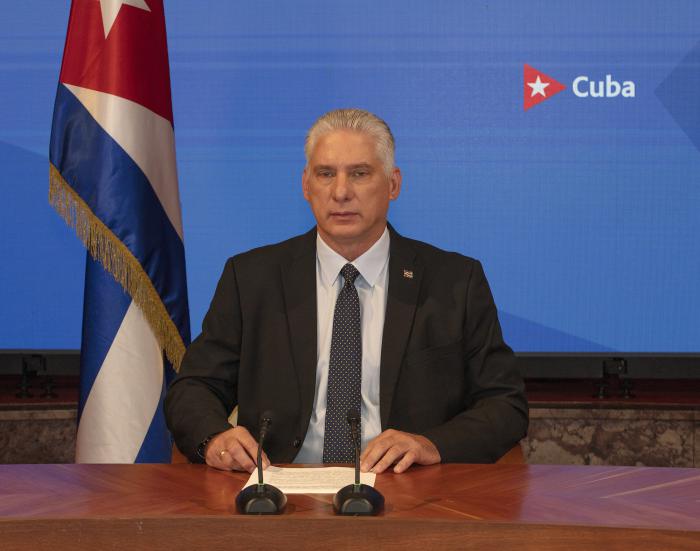
Díaz-Canel at the UN: The peoples of the world will always be able to count on Cuba’s contribution (+Video)
Speech by Miguel Díaz-Canel, First Secretary of the Central Committee of the Communist Party of Cuba and President of the Republic, at the High-Level Meeting during the General Debate of the 76th Regular Session of the United Nations General Assembly
Author: Redacción Digital | internet@granma.cu
September 22, 2021 10:09:29 am
Translated and edited by Walter Lippmann for CubaNews.
Photo: Estudios Revolución
(Shorthand Versions – Presidency of the Republic)
Mr. Secretary General;
Mr. President:
The world should be ashamed to observe the poor scope of universal agreements that were once the hope of the excluded and the dispossessed.
Twenty years after the adoption of the Durban Declaration and Program of Action, the objectives set out in those documents for the fight against all forms of racism, racial discrimination, xenophobia and related intolerance have not been achieved.
Structural racism persists. Hate speech, intolerance, xenophobia and discrimination proliferate at worrying levels, including on social media and other communication platforms.
Developed capitalist countries try with demagogic speeches to divert attention from their historical responsibility in the enthronement and persistence of these scourges and their debt to the peoples who are victims of the slavery to which they were subjected. There is a lack of political will on the part of these same countries to make the promises of the Durban Declaration and Program of Action a reality.
The multidimensional crisis generated by the COVID-19 pandemic has exacerbated the structural inequalities and exclusion inherent to the prevailing unjust economic order, which subjects the poor, those of African descent or migrants to all kinds of discrimination.
Mr. President:
In Cuba, beyond skin color, African, European and Native American genes are all mixed . We are one people, Afro-Latin, Caribbean, mestizo, in which several roots were fused to forge a unique, vigorous trunk, with its own identity, open to the world from a sense of belonging in which cultural values are assumed from an ethic of solidarity.
With a colonial slave-owning past, the black and mulatto Cuban population suffered for centuries the consequences of a system in which racism and racial discrimination were part of everyday life. Only with the triumph of the Cuban Revolution in 1959 did a process of radical transformations take place that demolished the structural bases of racism and eliminated institutionalized racial discrimination forever.
The advocacy of hatred, the promotion of intolerance and supremacist ideas on the basis of national, religious or ethnic origin and xenophobia are alien to the political, social and economic life of the country.
The new Constitution of the Republic of Cuba ratified and strengthened the recognition and protection of the right to equality, as well as the prohibition of discrimination.
The Magna Carta provides that all persons are equal before the law, receive the same protection and treatment from the authorities and enjoy the same rights, freedoms and opportunities; but laws and decrees are not enough to erase centuries of discriminatory practices in societies.
To make further progress in the emancipating work of the Revolution, the National Plan against Racism and Racial Discrimination was approved in November 2019, as a government program that favors the most effective confrontation of racial prejudice and social problems that still exist in our society.
Cuba’s commitment to the eradication of racism transcends its borders. Thousands of Cubans supported national liberation movements in Africa and against the opprobrious apartheid regime. Thousands of others have contributed their solidarity aid, particularly in the area of health.
We will not relent in our pursuit of social justice. The peoples of the world will always be able to count on Cuba’s contribution so that the commitments we assumed 20 years ago in Durban become a reality.
Thank you very much.
[1] The Cuban Genetic Map, 2015 Cuban Academy of Sciences Award, indicated that on average, without distinction by skin color, genetic crossbreeding marked the presence of European ancestral genes in a proportion of 73.8%, 16.8% of African origin and 9.4% of genes of Native American origin.
#UNGA76 Aniversario 20 Declaración del Programa de Durban | Participará el Presidente @DiazCanelB a partir de las 11:00 am de hoy. El Sitio de la Presidencia se unirá a la transmisión junto a sus canales en:
➡️YouTube
➡️PICTA#EliminaElBloqueo #Cuba🇨🇺 pic.twitter.com/J2g8OM5srD— Presidencia Cuba (@PresidenciaCuba) September 22, 2021
Magali Llort Ruiz has passed away
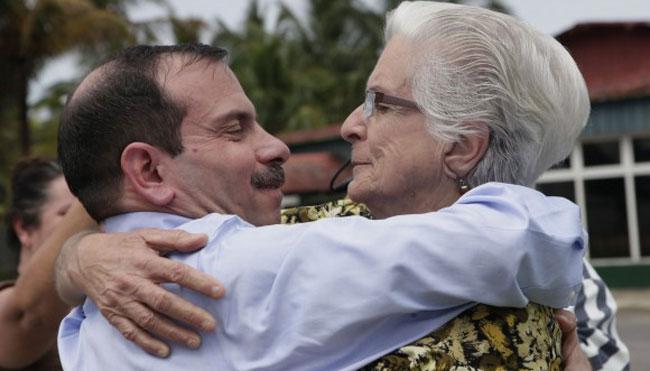
Magali Llort Ruiz passed away(+Video)
Magali Llort distinguished herself for her firmness in defense of the principles of the Revolution.
Translated and edited by Walter Lippmann for CubaNews.
September 23, 2021 16:09:42 PM
Magali Llort. Photo: Taken from the Internet
n the morning hours of September 23rd, Magali Llort Ruiz, mother of the Hero of the Republic of Cuba Fernando Gonzalez Llort, passed away.
Magali began her working life at the National Bank, where she started as a secretary. She was a union leader and reached management positions in the bank. In 1994 she retired and began working at the Union of Construction Companies of the Caribbean (Uneca) until 2000, when she actively joined the mothers and wives of the Five Heroes in the campaign for the release of the anti-terrorist fighters.
She was elected deputy in the VII Legislature of the National Assembly of People’s Power. The Commander in Chief, in a solemn act in the Karl Marx Theater on March 8, 2002, awarded her the Mariana Grajales Order, by agreement of the Council of State. She was also awarded the August 23rd Medal, an honorary distinction of the Federation of Cuban Women. Magali Llort distinguished herself for her firmness in defense of the principles of the Revolution. At the time of her death, she was a member of the Cuban Communist Party. At the request of her family, her body will be cremated.
Magali Llort has passed away
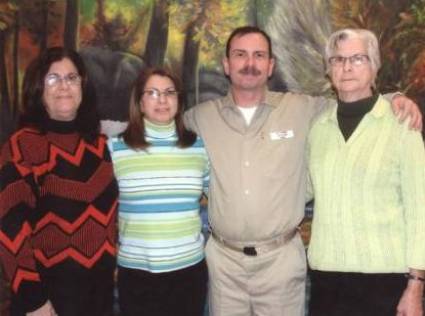

Magali Llort, a reference in the struggle for the liberation of the Five Heroes, has passed away
The Cuban Institute of Friendship with the Peoples paid tribute to the mother of one of these young Cubans, who spent more than 15 years in prison for alerting her country about Washington’s violent plans.
Published: Friday 24 September 2021 | 12:31:59 am.
Author:
 |
|Translated and edited by Walter Lippmann for CubaNews.
Cuban activist Magali Llort, a reference in the struggle on the island for the return of the five heroes who were imprisoned in the United States due to their anti-terrorist activities, died Thursday, reports Prensa Latina.
The Cuban Institute of Friendship with the Peoples (ICAP) paid tribute to the mother of one of these young Cubans, who spent more than 15 years in prison for alerting her country about Washington’s violent plans.
Through its website Siempre con Cuba (Always with Cuba), the institution also recalled Llort’s trajectory as a revolutionary and congresswoman who deserved different recognitions.
“Magali, a loving mother, did not like the media to talk about her, preferring instead to denounce the injustice committed against the Five, of whom she said that they were all her children,” the website says.
Recently, the president of Cuba, Miguel Díaz-Canel, recalled the 23rd anniversary of the imprisonment of the five anti-terrorists in the United States and pointed out that the struggle for their liberation revealed to the world the aggressions against the Antillean country.
Unseemly proposals: medicines “a la izquierda”
Unseemly proposals: medicines “a la izquierda”
Unfortunately, while some seek any remedy to survive the setbacks in the midst of a health crisis, there are those who take advantage of this misfortune to enrich themselves.
Translated and edited by Walter Lippmann for CubaNews.
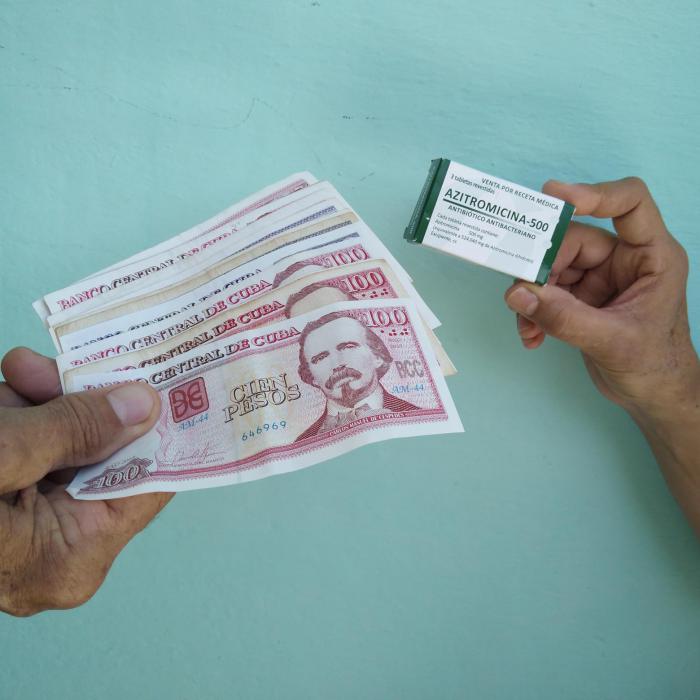
Photo: Freddy Pérez Cabrera
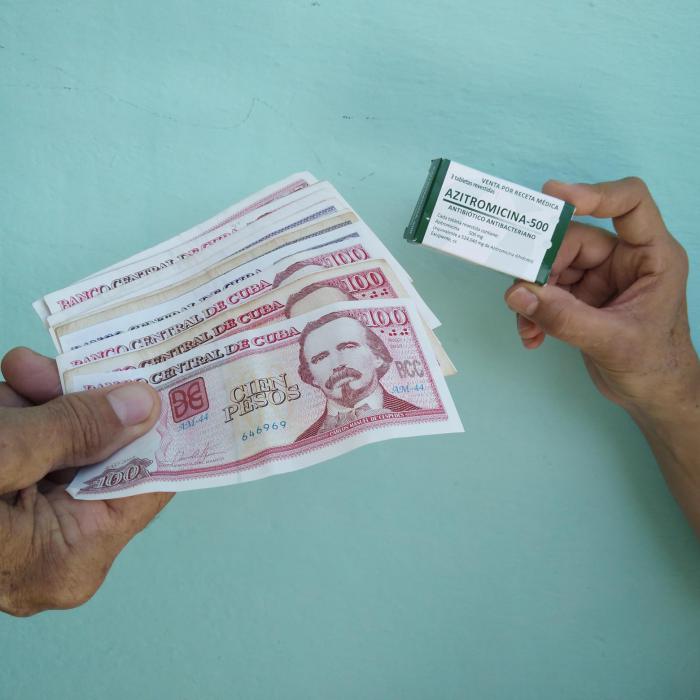
One listens impassively, as if deaf, when someone mentions that a certain medicine, such as a Rocephin vial or an Azithromycin tablet, is quoted in the informal market at prices exceeding one thousand pesos.
This is a simple reaction, because this type of information is not always completely real. However, we are facing a sad truth.
According to the listings on digital platforms, there are other drugs that exceed 500 pesos, such as Cephalexin, Duralgina, Vitamin C, Ibuprofen, Amoxicillin, Paracetamol, Metronidazole, Tetracycline, Clotrimazole in ovule and Nasalferon, just to mention a few.
One knows that the real basis is the shortage caused by the obstinate economic blockade of a government that cannot stand us as a sovereign country, and hunts us down in order to hinder any attempt to buy medicines and the supplies [needed] to manufacture them -and then they say that it is not to death, that the war they are waging against us is not against the people-. This, together with the world crisis that has unleashed this pandemic.
However, no one can deny that, behind closed doors, the shortage situation is aggravated by the lack of administrative control over the flow of drugs, and by carelessness, irresponsibility and indolence.
In any case, it takes a hard face, and a human face like a rock, to approach a family that is fighting tooth and nail for the life of a loved one, and make the unseemly proposal of selling salvation at a sky-high price.
It happens that, overwhelmed by the illness of the family member, shaken by the desperation caused by the real risk of death, many people get away from what is decent and unceremoniously pay the shameless opportunists for the smuggled medicine or the one brought in duty-free from abroad and which was not authorized for legal sale. On the other hand, necessity means that no one takes the trouble to speculate on the origin of the drug, nor does anyone notice the clear malice of the gesture. It is like a reciprocal effect, the shameless one takes advantage and the needy one solves part of his problem.
On the subject, in recent days it became known that a woman from Matanzas is serving a six-year prison sentence for illicit drug trafficking, an unscrupulous practice which, we insist, has been accentuated in times of pandemic.
The aforementioned author of the crime managed to acquire in several units of the province the analgesic known as Tramadol, for its subsequent sale at an overprice, using the informal market in Havana.
The severity of the sentence also has to do with the fact that the said drug is among those that produce effects similar to drugs, narcotic and psychotropic substances.
After the investigation and the exhaustive review of the facts, the First Chamber of the People’s Provincial Court of Matanzas issued the sentence, which also included sanctions for other persons involved.
This issue, and its different aspects, has been addressed without failing to point out the undeniable link of this practice with the lack of control and supervision, especially within the pharmacies and the whole network of entities involved, in one way or another, with the distribution and sale of medicines.
Successive evaluations of the pharmacy system in Matanzas in less than a year have brought to light the disorder in those establishments, according to the local newspaper Girón. On the other hand, in only two units economic damages for a value of more than 107,000 pesos were detected, a sign of fissures in the organization of the processes.
Even so, no explanation can justify the transfer of high-demand medicines which, as it is known, are not enough to satisfy the demand of the population.
Unfortunately, while some seek any remedy in order to survive the setbacks in the midst of a health crisis, there are those who take advantage of this misfortune to get rich.
There must be an end to contemplation with them, commented in recent days the First Secretary of the Central Committee of the Party and President of the Republic, Miguel Díaz-Canel Bermúdez, referring to this unacceptable procedure at the expense of human health.
Tinkering or integral re-design?

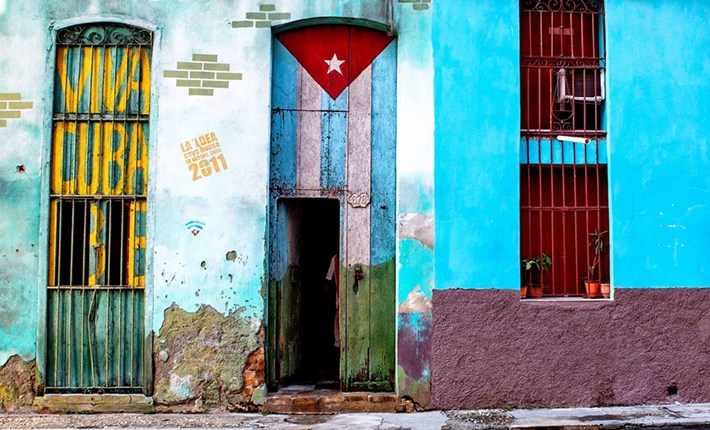
Tinkering or integral re-design?
By Domingo Amuchastegui
August 18, 2018
Translated and edited by Walter Lippmann for CubaNews.
In the time that has elapsed since the social outbreak of July 11, the Cuban leadership has undertaken a number of changes, mostly in the sphere of the economy -of agriculture in particular- without any of them suggesting a comprehensive redesign. In good Cuban fashion, what prevails is a patchwork, patches here and there, seasoned with the usual language, without essentially modifying the statist-absolutist model that has prevailed for more than six decades.
It is a package of sixty-three measures aimed at -according to official statements- increasing food production and satisfying the unmet demand for agricultural products. The costs of inputs, electricity and aerial spraying are reduced, although they are much lower than those announced in January when the Ordinance was enacted.
The problem of non-payments is of the utmost importance. For decades the State has been collecting the crops which, after countless delays and formalities, reach the markets in reduced quantities. It is now said and repeated that “whoever buys has to pay immediately”, but the real fact is that this does not happen, and producers (private farmers -the most productive-, tenants and cooperatives) must wait for months. This has been a problem for more than sixty years. At present, these producers are owed 43 million pesos.
Last June, the provincial newspaper of Camagüey reported the case of a lost peanut harvest due to bureaucratic obstacles (Photo: Leandro Pérez Pérez/Adelante).
The pricing policy is also redefined, in products such as cattle and milk, as well as various agricultural products. But, all this “after fulfilling their contracts” with the persistence of the Acopio mechanism, which ensures the state monopoly over all forms of production and the phenomenon of non-payment: Acopio collects crops and livestock, but does not pay!
Finally, it is announced that the cooperatives that have no possibility of productive and economic recovery will be extinguished and their lands will go to the state fund instead of being immediately redistributed among tenants and individuals or among the cooperative members themselves. Or is it not an irrefutable truth that two-thirds of Cuba’s agricultural production is contributed by private farmers, a premise that should guide any agrarian policy? The real panorama is symbolized and summarized by the well-known phrase -originated in the defeat of the English King Richard III- of a Cuban economist: “My kingdom for a sweet potato”.
At all times the sweetened phrases of official optimism are repeated: “processes of objective and subjective factors”, “consolidate what we have been doing and project ourselves in other actions”, “how much we still have to do”, “the economic actors will not change with the new models if we continue with the old practices”, “foreign investment, despite the blockade, continues to be an opportunity that has not been taken advantage of (…)”.
Phrases such as: “backwardness in everything: in good practices and conceptions in agriculture, housing, in the industrial base, in agriculture…” are used again and again. But is it worth asking – sixty years later – “backwardness” or irrefutable proof that the model has not worked, and does not work?
All provinces face equally serious problems of non-compliance with respect to the areas committed for the coming harvest, which suggests -unquestionably- a harvest well below the lowest production levels of recent years. Salvador Valdés Mesa, vice president of the country, exhorts to “produce sugar with a business mentality”, as if such exhortations -which are repeated on a daily basis- had a magical effect on a population that is going through its worst economic and social moments.
Tinkering Salvador Valdés Mesa, vice president of the country, exhorts us to “produce sugar with an entrepreneurial mentality”, as if such exhortations had a magic effect (Photo: Azcuba/IPS)
In a meeting with economists and accountants, where numerous criticisms and proposals were made (not disclosed in the official press), President Díaz-Canel went so far as to state that: “The problems raised [at that meeting] are set out in the Central Report of the 8th Congress of the PCC and in the closing speech, and now you ratify and support them”.
Nothing could be further from reality. A load of criticisms and proposals made in the referred meeting -which includes a document of fundamental importance signed by five renowned economists-, goes far beyond what Díaz-Canel affirms. The most critical economists who, for years, have been raising the need to remodel the system in its essential aspects, were present there.
On the other hand, in a radio interview, the secretary of the Party in the province of Santiago de Cuba and member of the Political Bureau, Lázaro Expósito, pointed out that in his province there are more than 5000 hectares without cultivation; and that the promised hectares of sugar cane are not being fulfilled. He described as unacceptable what is happening in Public Health and Communal Services and his conclusion was categorical: “The cost of making a mistake can be very high”.
In similar terms, Prime Minister Manuel Marrero characterized the situation in the province of Cienfuegos after a recent inspection visit. Both Cienfuegos and Santiago were provinces that until just a decade ago were classified as examples of good functioning and today face extremely serious situations, a situation that extends to the rest of the country, with even more serious cases such as that of Matanzas.
MSMEs and non-agricultural cooperatives (NACs0
The role that MSMEs and NACs will be called upon to play has been highlighted a lot these days. There is no speech or newspaper report that does not highlight the issue, including their possibilities of interacting with foreign trade. However, very little has been specified to date.
Where are these MSMEs going to get the financing funds or the foreign currency they need to start their projects? The development banks are still conspicuous by their absence and nothing is being done to make their access to foreign currency investments viable. The handling and circulation of dollars continues to be subject to various restrictions, starting with remittances and how they can be freely used.
Card obligations and deductions hinder their free circulation, including the most elementary buying and selling actions; meanwhile, the official exchange rate remains at 24 pesos to the dollar, while under the table the exchange rate is 70 to one.
A positive step has been to allow MSMEs the free hiring of up to one hundred workers and the announced boost. But it has not been clearly defined which areas will be open to them. Textiles and footwear; technologies, services, tanneries, furniture and construction, housing, others? Very little or nothing has been clarified or specified. What investment funds and salaries are involved in an industry with a hundred workers? What specifications are to be defined in terms of investments from abroad?
These questions have yet to be determined, and so on, until foreign investment is reached: 100% direct or through forms of association in which the State does not have to reserve 51%? The long run of failures in this field is a dismal precedent. And foreign investment in the form of small businesses (as has prevailed until now) contributes very little. Meanwhile, the tourism industry is still reluctant to move beyond management contracts.
The Hard Core of the Cuban Economy
- English
- Español
The Hard Core of the Cuban Economy and its Consequences
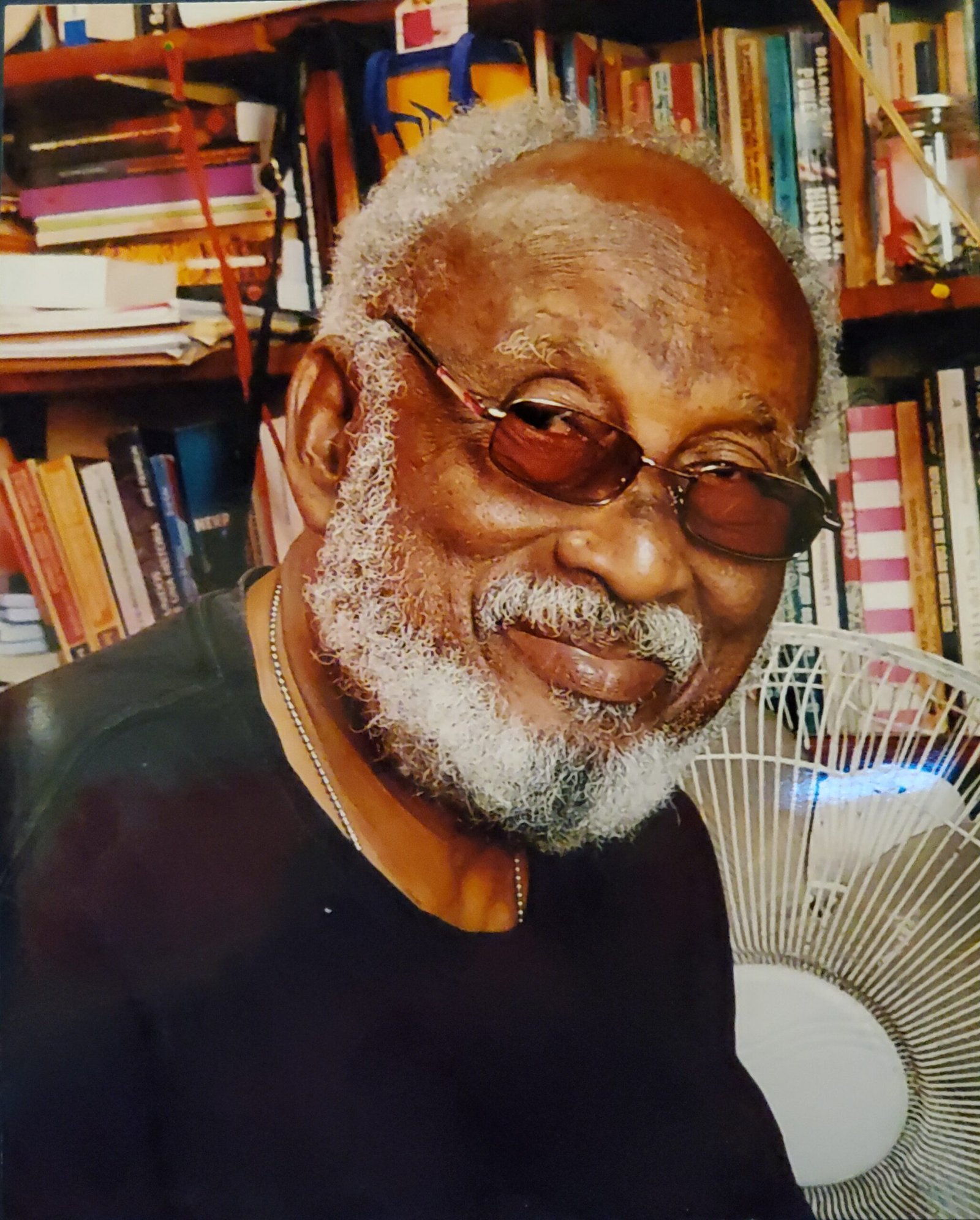 by Esteban Morales
August 22, 2021
Translated by Walter Lippmann for CubaNews.
I believe that with the 8 resolutions recently approved by the Council of State and which have already been published in the Official Gazette of the Republic, our economy will enter into what can be considered the hard core, so far not taken into account by our economic policy.
Our economy, in order to become a socialist economy, must be a transitional economy.
It is that, between capitalism and socialism, there is a historical period, aimed at transforming the former into the latter. There is no direct conversion, nor automatic transition, between capitalism and socialism. Between them there is a Period of Transition, within which the struggle for the transformation of capitalism into socialism takes place. Under the power of a state, which is the representation of the conquest of political power.
Cuba, called socialist until now, had not yet entered this period of transformations from the first to the second.
The fact is that neither the state enterprise is socialist, nor state property. Both have problems that must be overcome. Together with those of an excessively centralized planning, such as ours.
The state enterprise is gradually transformed into socialist, only within a transition period, in which it, as a whole and competing with the rest of the forms of property and management, becomes the dominant one, becoming then social property or property of all the people, which is what really transforms the state enterprise into a socialist enterprise and state property into social property. As long as this transition period is not covered, which is a period of struggles and transformations, neither the state enterprise becomes socialist, nor state property either.
It is only now, when the economic policy gives the rightful place, in the process of its application, to private, medium and large property, to cooperative property, to self-employment and SMEs, all functioning as forms of management, together and coherently, with state property and foreign investment, that the objective conditions begin to be produced for us to enter into the true period of transition towards socialism. In the meantime, we were nothing. That is why our economy could not grow systematically.
When the Revolution took political power, what it achieved was only to have the capacity to begin the economic, social and political transformations to convert Cuban society into a socialist society. A process in which to convert the Cuban economy from capitalism into a socialist economy. Without this, Cuban society cannot become socialist.
And this is essentially the reason for the continuous failures in making our economy grow.
Now that we will put the economy to work in line and in a coherent manner, with all forms of ownership and management, Cuba enters into the transition towards a socialist economy and socialism.
If we had tried to do so from the moment we entered the so-called Special Period, making the real economic transformations that were required to give stability to the process of economic growth, we would not be, as we are now, headed for a new Special Period, with no time to overcome it. Well, time has already run out.
We have gone around the wheel many times, with designs and redesigns, without putting anything into practice, exhausting the political capacity of our state to achieve it.
Here is, in part, the explanation for July 11, but also, a cause, if not the only one, then the fundamental one, of Biden’s decision to betray Obama and his own campaign promises, taking up Trump’s policy towards us. Following the so many times failed, Miami’s extreme right.
And that today Cuba is facing a situation that almost surpasses all the dangers experienced until today, being necessary to put into practice, in a coherent manner, the 8 Resolutions of the Council of State, which will be what will allow us to get out of the critical juncture in which we find ourselves.
August 22, 2021.
Received by email from the author. Photo by Walter Lippmann
El núcleo duro de la economía cubana y sus consecuencias
Por Esteban Morales
22 de agosto 2021
Creo, que con las 8 resoluciones aprobadas recientemente por el Consejo de Estado y que ya han sido publicadas en La Gaceta Oficia de la Republica, nuestra economía entrara, en lo que puede ser considerado el núcleo duro, hasta ahora no tomado en cuenta por nuestra política económica.
Nuestra economía, para pasar a ser una economía socialista, tiene que ser una economía de transición.
Es que, entre el capitalismo y el socialismo, media un periodo histórico, dirigido a transformar el primero en el segundo. No hay una conversión directa, ni transito automático, entre capitalismo y socialismo. Media entre ellos un Periodo de Transición, dentro del cual se produce la lucha por las transformaciones del capitalismo en socialismo. Bajo el poder de un estado, que es la representación de la conquista del poder político.
Cuba, llamada hasta ahora socialista, no había entrado todavía en ese periodo de transformaciones del primero en el segundo.
Es que, ni la empresa estatal es socialista, ni la propiedad estatal tampoco. Ambas arrastran problemas que tiene que ser superados. Junto a los de una planificación, excesivamente centralizada, cómo la nuestra.
La empresa estatal, se trasforma paulatinamente en socialista, solo dentro de un periodo de transición, en que la misma, de conjunto y compitiendo con el resto de las formas de propiedad y de gestión, va convirtiéndose en la dominante, deviniendo entonces en propiedad social o propiedad de todo el pueblo, que es lo que realmente transforma a la empresa estatal, en empresa socialista y a la propiedad estatal en propiedad social. Mientras no se cubre ese periodo de transición, que es un periodo de luchas y transformaciones, ni la empresa estatal pasa a ser socialista, ni la propiedad estatal tampoco.
Solo ahora, cuando se da, por la política económica, el lugar que le corresponde, en el proceso de su aplicación, a la propiedad privada, media y grande, a la propiedad cooperativa, al trabajo por cuenta propia y a las PYMES, funcionando todas, como formas de gestión, dé conjunto y de manera coherente, con la propiedad estatal y la inversión extranjera, es que se comienzan a producir las condiciones objetivas, para que entremos en el verdadero periodo de transición hacia el socialismo. Mientras tanto, no éramos nada. Por eso nuestra economía no puede crecer de manera sistemática.
Cuando la Revolución tomo el poder político, lo que logro solo fue, tener la capacidad de comenzar las transformaciones económicas, sociales y políticas, para convertir a la sociedad cubana, en socialista. Proceso dentro del cual, lograr convertir a la economía cubana, proveniente del capitalismo, en una economía socialista. Sin lo cual, la sociedad cubana, no puede transformarse en socialista.
Y de ello provienen, esencialmente, los fracasos continuos en hacer crecer nuestra economía.
Ahora, que pondremos la economía, a funcionar en línea y de manera coherente, con todas las formas de propiedad y de gestión, es que Cuba entra en la transición hacia una economía socialista y el socialismo.
Si lo hubiéramos, tratado de hacer desde el momento en que entramos en el llamado Periodo Especial, haciendo las verdaderas trasformaciones económicas que se requerían, para darle estabilidad al proceso de crecimiento económico; no estaríamos, como ahora, abocados a un nuevo Periodo Especial, sin tiempo ya para sobrepasarlo. Pues el tiempo, ya se nos agotó.
Hemos dado muchas vueltas a la noria, con diseños y rediseños, sin poner nada en práctica, agotando la capacidad política, de nuestro estado, para lograrlo.
Aquí está, en parte, la explicación del 11 de julio, pero también, una causa, sino la única, si la fundamental, de que Biden, haya decidido traicionar a Obama y sus propias promesas de campaña, retomando la política de Trump hacia nosotros. Siguiendo a la tantas veces fracasada, extrema derecha de Miami.
Y que hoy Cuba se encuentre frente a una situación, que casi sobrepasa todos los peligros vividos hasta hoy.Siendo necesario poner en práctica, de manera coherente, las 8 Resoluciones del Consejo de Estado, que será lo que nos ira permitiendo salir de la coyuntura critica en que nos encontramos.
Agosto/ 22 del 2021.
Recibido por correo electrónico del autor. Foto de Walter Lippmann
Díaz-Canel at Mexican Independence Day
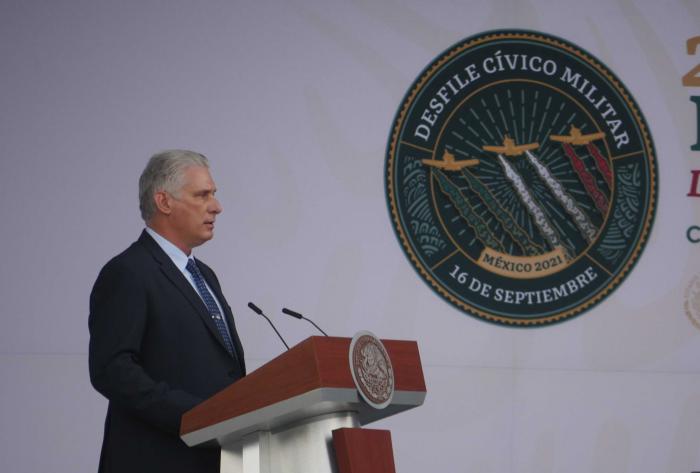
Díaz-Canel: “Among all the brothers that Our America has given us, Mexico counts, for many reasons, as one of the most dear to Cuba” (+Video)
Address by President of the Republic Miguel Díaz-Canel Bermúdez at the civic-military parade on the occasion of the celebrations for the anniversary of the Grito de Dolores. Mexico, September 16, 2021
Translated and edited by Walter Lippmann for CubaNews.
Díaz-Canel recalled that “Mexico was the first country to recognize our armed struggle and to open its ports to ships flying the Lone Star flag”. Photo: Estudios Revolución
(Shorthand Versions – Office of the President of the Republic)
Dear Andrés Manuel López Obrador, President of the United Mexican States;
Distinguished guests;
Dear Mexico:
Thank you for the opportunity you give us to bring Cuba’s grateful embrace to your beautiful patriotic celebrations for that Grito de Dolores that aroused so much libertarian eagerness in our region more than 200 years ago.
Among all the brothers that Our America has given us, Mexico counts, for many reasons, as one of the most dear to Cuba.
That affection that unites our lands begins with the dazzle caused by its deep and diverse traces in the literature and history of America:
“How beautiful is the land inhabited by the brave Aztecs!” said the Cuban José María Heredia in the Teocalli of Cholula, opening a fascinating door to that Mundo Nuestro, much earlier than that of the terrible conquest that began centuries later, with unrestrained slaughter and destruction, the Spanish troops coming from Santiago de Cuba, under the command of Hernán Cortés.
But no one would tell us more about Mexico than José Martí. I quote excerpts from his memorable speech delivered at the evening in honor of this country at the Hispanic American Literary Society in 1891: “(…) today we gather to pay honor to the nation girded with palm trees and orange blossoms that raises, like a flourish of glory, to the blue sky, the free summits where the whistle of the railroad awakens, crowned with roses as yesterday, with the health of work on the cheek, the indomitable soul that sparkled in the embers in the ashes of Cuauhtémoc, never extinguished. We salute a people that melts, in the crucible of its own metal, the civilizations that were cast upon it to destroy it!”.
Later, referring to the significant date we commemorate today, Martí said: “Three hundred years later, a priest (…) summoned his village to war against the parents who denied the life of soul to their own children; it was the hour of the Sun, when the adobe huts of the poor Indians were shining through the mulberry trees; and never, although veiled a hundred times by blood, has the sun of Hidalgo stopped shining since then! They hung the heads of the heroes in iron cages; the heroes bit the dust, with a bullet in the heart; but on September 16 of every year, at dawn, the President of the Republic of Mexico cheers, before the people, the free homeland, waving the flag of Dolores”.
Due to its characteristics, the Mexican independence process, which began with the Grito de Dolores, led by Father Miguel Hidalgo on a day like today in 1810 and was consummated 11 years later with the entrance of the Trigarante Army in Mexico City. It had a notorious component of social and indigenous demands that differentiated it from other processes that typified the independence era. Its impact was, without a doubt, extraordinary in the libertarian and anti-colonialist struggle in our region and particularly in Cuba.
It gathered ancestral aspirations of entire peoples that inhabited the territory, not only in Mexico, but also in Central and South America and the Antilles. It vindicated all poor Creole sectors -white, black and mulatto- submerged in misery, hunger and exploitation, and opposed the slavery of the blacks.
The broad popular presence had a decisive influence in its radicalization and in the realization of important social and political demands, which constituted an immense inspiration and encouragement for our independence movement.
There are many notable Cubans who left their blood and their names in the history of Mexico. The Cuban solidarity in Mexico’s confrontation with the Texan invasions in 1835-1836 and the North American invasion of 1846-48 stands out, especially the generals Pedro Ampudia, Juan Valentín Amador, Jerónimo Cardona, Manuel Fernández Castrillón, Antonio Gaona, Pedro Lemus and Anastasio Parrodi.
In March 1854, Cubans Florencio Villareal and José María Pérez Hernández launched the historic Plan de Ayutla, which was decisive in the rupture of the Mexican army and society with the dictatorial government of General Santa Anna.
As confirmed by the prestigious researcher René González Barrios, several of those men held key positions in Mexican political-military life and were governors or military commanders in important places in the country.
Two of them, Major Generals Anastasio Parrodi and Pedro Ampudia Grimarest were Ministers of War and Navy in the government of Benito Juarez during the Reform War.
In the Congress, the Government, in exile or in the war at Juarez’s side there were always Cubans. Prominent compatriots such as General Domingo Goicuría y Cabrera, and poets Juan Clemente Zenea and Pedro Santacilia, who was his son-in-law, secretary and agent of the Republic of Cuba in Arms before the Mexican Government, praised his magnificent work.
In the war against the French, the brothers Manuel and Rafael de Quesada y Loynaz, general and colonel respectively, served the Mexican army; colonels Luis Eduardo del Cristo, Rafael Bobadilla and Francisco León Tamayo Viedman; doctor commander Rafael Argilagos Gimferrer and captain Félix Aguirre. All of them would return to Cuba at the beginning of the Ten Years’ War.
It was Mexico, then, the first country to recognize our armed struggle and to open its ports to ships flying the Lone Star flag. The Congress approved it, Juarez pronounced it and Carlos Manuel de Céspedes, President of the Republic in Arms, thanked him in a memorable letter to his Mexican counterpart: “…[it is] highly satisfactory that Mexico has been the first Nation in America to have thus manifested its generous sympathies to the cause of independence and freedom of Cuba”.
One of the main tasks that Pedro Santacilia would then fulfill, with Juarez’s consent, was to send to Cuba a select group of Mexican soldiers to contribute to the formation and training of the nascent Liberation Army. Mexicans shone in the fields of Cuba and their prowess inspired the troops and all those who heard about them.
Once again, the Father of the Cuban Homeland left a record of that dedication in a letter to the “Benemérito de las Américas”. Céspedes wrote: “Some Mexican gentlemen have come here and have shed their generous blood on our soil and for our cause, and the whole country has shown its gratitude for their heroic action”.
Two of those brave Mexican soldiers, veterans of the Reform War and the battle against the French Empire, reached the rank of Brigadier General of the Cuban Liberation Army and were part of its main chiefs: José Inclán Risco and Gabriel González Galbán.
Dear friends:
Because of that endearing memory that we share, we are moved and inspired by these acts that revere history and we return again and again to each line written for Mexico by José Martí, who forever links our two nations in all his work, but especially in his letters to his great Mexican friend Manuel Mercado.
It is also to that soul friend to whom he leaves in an unfinished letter, his resounding political testament: the will consecrated to the objective of “preventing in time, with the independence of Cuba, the United States from spreading through the Antilles and falling, with that force more, on our lands of America”.
Years before, on his way to Veracruz, Martí wrote: “O beloved Mexico, O adored Mexico, I see the dangers that surround you, I hear the clamor of a son of yours who was not born of you! From the North, an avid neighbor is curdling (…) You will be ordered; you will understand; you will be guided; I will have died, O Mexico for defending and loving you!”.
Here died for the Revolution, the young communist Julio Antonio Mella, assassinated in a street of this same city where Ernesto Che Guevara and Fidel Castro Ruz would meet, years later, through his brother Raul.
It was here that the young people of the Centennial Generation trained and organized their expedition. Here they forged friendships and affections that still endure and were immortalized in a song that is like a hymn of those epic times: La Lupe, by Juan Almeida Bosque.
From that Mexican period, among many others, the names of María Antonia González, Antonio del Conde, El Cuate, key in the acquisition of the Granma yacht; Arsacio Venegas and Kid Medrano, professional wrestlers who gave physical training to the troops; Irma and Joaquina Vanegas, who offered their house as a camp, will remain forever in Cuban history.
The passage of Fidel and his companions through Mexico left a deep impression on the future Granma expeditionaries and an accumulation of legends everywhere that are still spoken of with admiration and respect.
We will never forget that, thanks to the support of many Mexican friends, the Granma yacht set sail from Tuxpan, Veracruz, on November 25, 1956. From that historic vessel, seven days later, on December 2, the newborn Rebel Army landed to liberate Cuba.
Nor do we forget that, just a few months after the historic triumph of the Revolution in 1959, General Lázaro Cárdenas visited us. His willingness to stand by our people after the mercenary invasion of Bay of Pigs in 1961 marked the character of our relations.
Faithful to its best traditions, Mexico was the only Latin American country that did not break off relations with revolutionary Cuba when we were expelled from the OAS by an imperial mandate.
Throughout the years, we have never broken what history has indissolubly united. Our two countries have honored their sovereign policies, regardless of the closeness or distance between governments. A very Mexican principle prevails: respect for the rights of others is peace.
There is unquestionable merit in those who have dedicated life and energy, heart and soul, to nurture that brotherhood with the tenderness of peoples. I pay tribute here to the sustained, invariable, passionate and firm solidarity that we always find in this land, which all Cubans must love as our own.
It was said by the Cuban Apostle, who also drew with his colorful prose a faithful portrait of this generous people when he declared: “As from the root of the land comes to the Mexican that character of his, shrewd and stately, attached to the country he adores, where through the double work of magnificent Nature and the brilliant touch of the legend and the epic, the order of the real and the romantic feeling come together in their rare measure”.
From those words until today, the common heritage built by an infinite list of prestigious intellectuals and artists of both nations has not ceased to grow. We are united by literature, cinema, visual arts, bolero and mambo.
It could be said that the significant cultural exchange between Mexico and Cuba reaches all manifestations of culture in its broadest meaning, inasmuch as it is no less influential the relationship in sports, especially, baseball and boxing, where the connection is so natural and deep that at times the exact origin of works and facts is lost and we must conclude that it comes from both.
Friends:
For these and other reasons, which do not fit in a necessarily brief speech, it is a great honor to participate in the military parade commemorating the beginning of the struggle for Mexico’s independence and to express our feelings before your Government and your people.
I do so conscious that it is a recognition of the historical ties and brotherhood existing between Mexico and Cuba, a genuine token of appreciation, affection and respect for which I am deeply grateful on behalf of my people.
The decision to invite us has an immeasurably greater value at a time when we are suffering the onslaught of a multi-dimensional war, with a criminal blockade, opportunistically intensified with more than 240 measures in the midst of the covid-19 pandemic, which has such dramatic costs for everyone, but particularly for the less developed countries.
We are facing, in parallel, an aggressive campaign of hate, disinformation, manipulation and lies, mounted on the most diverse and influential digital platforms, which ignores all ethical limits.
Under the fire of that total war, Mexico’s solidarity with Cuba has awakened in our people a greater admiration and the deepest gratitude.
Allow me to tell you, dear President, that Cuba will always remember your expressions of support, your permanent demand for the lifting of the blockade and for the annual United Nations vote to be converted into concrete deeds, something that your country has fulfilled in an exemplary manner towards our people.
We are deeply grateful for the aid received in the form of medical supplies and food to alleviate the combined effects of the economic harassment and the pandemic.
Mexican sisters and brothers:
In the face of the complex epidemiological situation facing the world, solidarity and cooperation among our peoples takes on greater transcendence.
For this reason, our health professionals and technicians did not hesitate to accompany the Mexican people whenever necessary. And we will do it again whenever they need it.
We recognize the excellent work carried out by Mexico at the head of the pro tempore presidency of the Community of Latin American and the Caribbean States, a mechanism of genuine Latin American and Caribbean vocation aimed at defending the unity in the diversity of Our America against the neoliberal recolonization project that is trying to impose on us.
As Fidel expressed in an act of Cuban-Mexican friendship held on August 2, 1980: “We will not tolerate anything against Mexico! We will feel it as our own. We will know how to be faithful to the friendship forged by centuries of history and beautiful common principles!
Long live Mexico!
Long live the friendship between Cuba and Mexico! (Applause.)
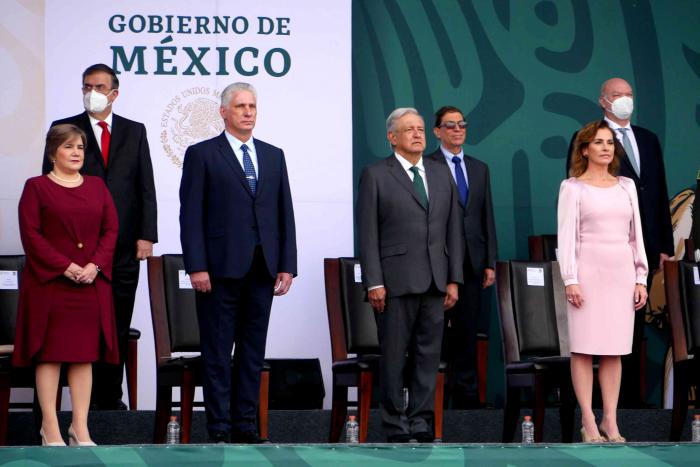
Mexico was the only Latin American country that did not break relations with revolutionary Cuba when we were expelled from the OAS by an imperial mandate, said Díaz-Canel. Photo: Estudios Revolución
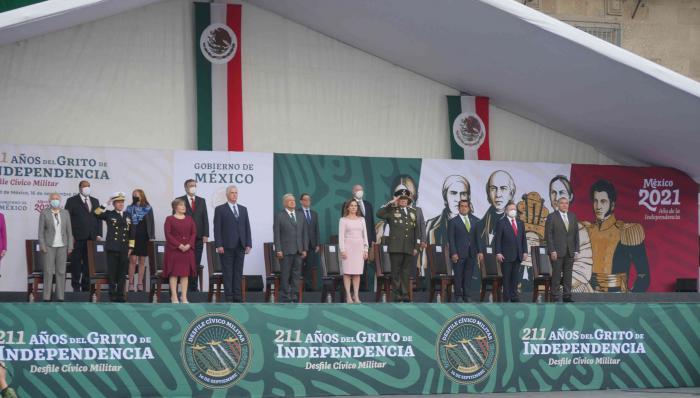
Parade for the 211th anniversary of the Grito de Independencia of Mexico. Photo: Estudios Revolución
You must be logged in to post a comment.