What the United States Owes to Haiti
What the United States Owes to Haiti
By Manuel E. Yepe
http://manuelyepe.wordpress.com/
Exclusive for the daily POR ESTO! of Merida, Mexico.
Translated and edited by Walter Lippmann for CubaNews.
The crass coarseness of the president of the United States, Donald Trump, in matters of civic and formal education cannot justify the daily barbs of this false lunatic turned head of state that, ultimately, goes to the main detriment of the reputation and dignity of US citizens.
Following Trump’s racist pronouncement, which described Haiti and the whole of the countries of Africa as “shithole nations”, Cuban journalist José A. Téllez Villalón published on the Spanish site “Rebelion” a work to remind us that a large part of the arms, ammunition and men with which France contributed to the independence of the then Thirteen Colonies, passed through the then-French colony of Saint-Domingue (today Haiti) which had contributed with the blood of its children to the triumph of the forces in struggle for their independence from the British metropolis.
On March 12, 1779, the French colonizers began the recruitment of a body of volunteers to participate in the American Revolution. “The Volunteer Hunters of Saint-Domingue,” as the contingent was called, was made up of French settlers and between 500 and 800 black and mulatto freedmen.
Between the end of 1780 and the middle of 1781, the troops commanded by General George Washington and those commanded by the French general Jean Batiste de Vimeur, Count of Rochambeau, had been left without resources to land a final blow on the English troops positioned in Yorktown.
George Washington, the leader of the independence movement, reflected it on May 1, 1781 in his diary: “In a word, instead of having everything ready to go to the campaign, we have nothing. Instead of having the perspective of a glorious offensive campaign before us, we have but a confused and defensive situation, unless we receive powerful aid in the form of ships, land troops and money from our generous allies. For now, this is too eventful to be able to count on it. “
French Marshal Rochambeau wrote to French Admiral François Joseph Paul, Count de Grasse: “I must not hide from you, Sir, that the Americans are at the limit of their resources. Washington does not have half the troops it calculates, and in my opinion, although he remains silent about it, he does not have 6,000 men, nor does Mr. de La Fayette gather 1000 regulars in the militia to defend Virginia … “.
Téllez Villalón explains that Rochambeau asked the head of the fleet to recruit troops and bring them with him as reinforcements for General Washington’s Continental Army. The Admiral complied with instructions, recruited 3,000 volunteers from Port-au-Prince and Cap-Haïtien, and placed them under the orders of the young officer Claudius Henry of Saint-Simon who was the founder of French socialism and utopian socialism. The same man who, for Engels, was, together with Hegel, the most encyclopedic mind of his time and in whose work most of the later ideas of socialism are contained.
The multinational reinforcement, consisting of a battalion of ex-slaves, pardos [tri-racial descendants of European, black and indiginous peoples] and mulatos from Port-au-Prince and Cap-Haïtien commanded by Saint-Simon, disembarked in the Chesapeake Bay, Maryland, and took part, between September 26 and October 19, 1781, in the Siege of Yorktown.
So, says Tellez, the Americans owe a lot to foreign forces -French, Latin American and Haitian- for the achievement of their Independence. It was ratified by the United States Congress on November 15, 1784, after Great Britain capitulated on September 3, 1783 with the Treaty of Paris.
Alexander Hamilton, one of the founding fathers of the American nation, acknowledged in an editorial published on July 5, 1803 in the New York Evening Post that “to the fatal climate of Saint-Domingue (Haiti), and to the courage and obstinate resistance of its black inhabitants, that we owe the obstacles that delayed the colonization of Louisiana until the favorable moment when a rupture between England and France gave a new turn to the latter’s projects”.
Nevertheless, another American founding father, Thomas Jefferson, principal author of the Declaration of Independence, who was second vice president (1797-1801) and third president (1801-1809) of the United States, showed no gratitude for this assistance. On the contrary, he suspended all trade with Haiti in 1804.
The United States resisted recognizing the newly independent country for many years, joining the European empires in punishing Haiti for its insubordination. It was not until June 5, 1862 that President Abraham Lincoln granted American diplomatic recognition of the generous and heroic Fatherland of Toussaint Louverture and Jean-Jacques Dessalines.
February 7, 2018.
Brazilian Women Say “NO” to Harassment

‘No means no’: Women say enough to sexual harassment at Brazil’s Carnival
Translated and edited by Walter Lippmann for CubaNews.
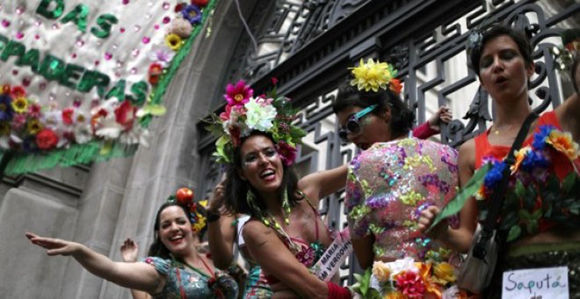
Women having fun at Carnival in Rio. Photo: Reuters.
Not to be kissed by force, not to be cuddled up to from behind and not to be grabbed around the waist without prior consent: Brazilian women have mobilized more than ever this year around the “No means no” movement to put an end to the frequent instances of sexual harassment inflicted on them during Carnival.
The situation is repeated countless times per day in many of the dance troupes that fill the streets in Brazilian cities and towns: A man begins to make advances to a woman, the woman tells him to stop, that she’s not interested, but the man keeps insisting.
In just three hours, a woman can be accosted up to five times, according to what some of them have said.
But something is changing in Brazil, although for the past two years, the number of sexual harassment complaints during Carnival has been growing in a country where 52 percent of women who have experienced such behavior from men have decided to keep silent, according to a survey by the Brazilian Public Safety Forum.
In 2018, stickers and tattoos have begun being seen calling for respect for women’s bodies and an end to macho behavior that is still seen as natural among a large portion of the public.
“When we say ‘no means no,’ we’re speaking up so that women can empower their bodies, we’re saying they aren’t obligated to endure that and that they have a support network,” Julia Parucker told EFE.
Even the police seem to pay the issue little heed. At one Carnival celebration in the state of Pernambuco, one girl said that when she went to the police to complain about a sexual attack the officer said: “Girl, this is Carnival. What do you want me to do…?”
Given that situation, Parucker and a group of female friends have launched an initiative –with donations from the public– to print 25,000 stickers for women to stick on their skin saying “Nao e Nao” (no means no).
“Our bodies are going to be our battleground, where we cry that there’s no reason for it to be like this,” she said.
The initial target was to collect 7,500 reais (about $2,330) but the campaign resonated so strongly among women that they received 20,457 reais ($6,365), which has allowed them to get their message out in the cities of Rio de Janeiro, Sao Paulo, Salvador, Belo Horizonte, Recife, Olinda and Brasilia.
Even if this is a “daily battle”, Parucker believes, it is important to step up the struggle against harassment whenever “it is necessary, like during the carnival”.
Eloisa Honorato, 31, a member of a dance troupe called “Maravillosas Cuerpo de Baile” (Wonderful Corps of Dancers), enjoys the atmosphere of the popular Sao Paulo-based parade Pilantragi together with more than twenty of her colleagues.
Most of them are carry a female symbol on their head and a top with a patterned music player showing a comb shaped like a Fallopian tube. Eloisa, however, displays a full-body painting, her breasts covered with two red hearts surrounded by a golden bra-like drawing.
“We’re here to fight against patriarchy and against an oppressive society that believes itself to be the owner of our bodies”, Eloisa complains. “We’re all fed up, we can’t take it anymore, and when we all get together we feel stronger and protected by the energy we create”, she adds.
Near them is Luiza Gonçalves, 21, who says “as women we are now more empowered and aware” that we don’t have to put up with “any intolerable situation”.
At least 42 percent of Brazilian women say they have suffered sexual harassment, according to a survey conducted by Datafolha and released last December. A third of them admitted to being sexually accosted as they were walking down the street.
To Parucker, Carnival is particularly delicate because men take advantage of the fact that everybody is happy and joking to “poke around”, to put it mildly, convinced that they can get away with it and nothing will happen.
In her opinion, there’s still a long way to go before society and authorities stop downplaying the cases of harassment “so typical” during Carnival.
The tattoos, stickers and other signs saying “No means no” are the start of a situation in Brazil where women who suffer sexual harassment can “have the courage to complain” because “when we say no means no it’s not a yes or a perhaps. No means no and (men) have to respect that,” said Parucker.
(With information from EFE)
Women in the United States Reject Trump
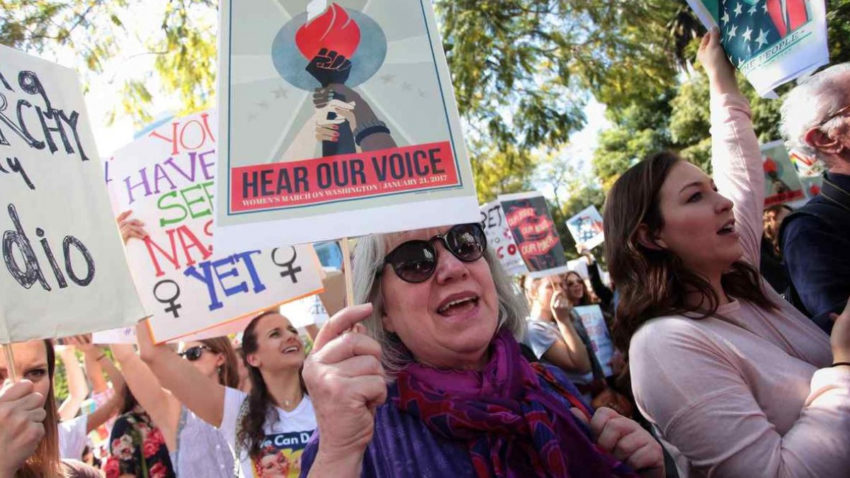

Women in the U.S. Reject Trump
Their presence in the streets coincided with the partial closure of the government due to disagreements over the budget, and the first year of the president
Posted: Saturday 20 January 2018 | 11:07:00 PM
Author: Juventud Rebelde digital@juventudrebelde.cu
A CubaNews translation. Edited by Walter Lippmann.

The marches of women were seen in Mexico as well as Canada and several countries Author: EFE Published: 01/20/2018 | 10:52 pm
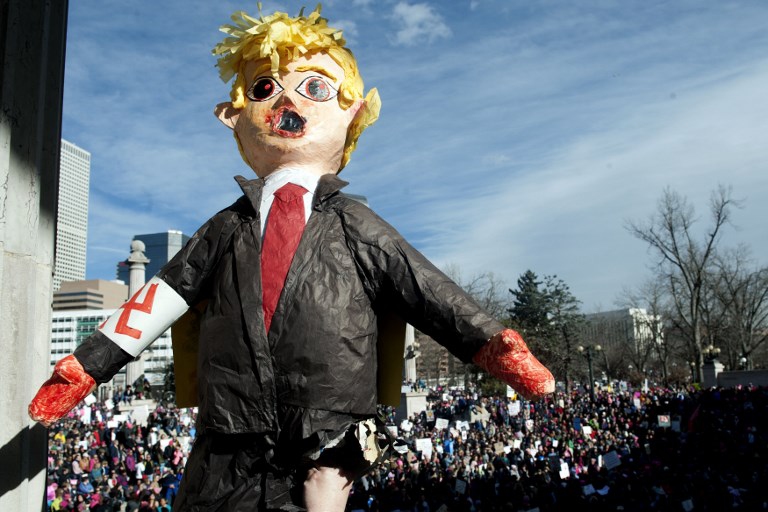
WASHINGTON, January 20 – Although there were still no official figures, press offices estimated in hundreds of thousands the number of women who took to the streets this Saturday in more than 200 cities in the United States to express their rejection of the policies of Donald Trump on the first anniversary of his arrival to the presidency. Only in Los Angeles there was there talk of 400,000 protesters.
As reported by AFP, the second Women’s March came back to the streets with the pink caps and was also held in cities like New York, where a colorful crowd invaded an avenue that surrounds the western sector of Central Park to the Trump International Hotel, one of the facilities of the President’s real estate empire, starting early in the morning.
«Where to start? There are too many things that are wrong and I can not choose,” said LeighAnn Ferrara, a 35-year-old mother questioned about what had led her to come from the north of that state with two neighbors to demonstrate.
The peaceful protest activities will last until this Sunday when they will remember the day after Trump’s inauguration. Then, PL recalls, more than three million people from all over the country joined the Women’s Marty to express their opposition to the Republican leader.
In San Francisco, Portland, Miami, Chicago, Los Angeles, Denver and Philadelphia women also raised their voices in solidarity with victims of sexual harassment and the #MeToo (Yo también) movement, which emerged a decade ago in support of black women victims of sexual violence, but green with other characteristics in recent months.
The accusations, said PL, have reached Trump himself. Since his time as a presidential candidate he has been accused by more than a dozen women of sexual misconduct.
The demonstrations coincided with the closure of offices and dependencies of the Government after Republicans and Democrats in Congress maintained inability to reach a consensus on the federal budget.
The feared closure came into effect shortly after midnight this Saturday, when the Senate vetoed a budget measure approved by the House of Representatives.
So far, neither of the two main political parties seems to give ground in their demands, although both sides face risks for a prolonged closure, said the website The Hill, specializing in issues of the Capitol.
The White House maintains that it will not negotiate on the issue that caused the stalemate: how to replace the Deferred Action for Childhood Arrivals (DACA) program and the 800,000 undocumented youth brought by their parents to the United States during the childhood.
The leader of the Democratic minority in the upper house, Charles Schumer, convened a meeting at the White House this Saturday with the main leaders of Congress and President Donald Trump, in order to discuss a broad agreement on immigration, spending limits and disaster prevention.
For its part, the leader of the Republican majority, Mitch McConnell, tried to maintain an agreement close to the bill approved in the House – rejected by the majority of Democratic senators – whose goal is achieving at least one financing agreement provisional for three weeks.
Polls show that the majority of voters support a solution that allows immigrant youth to remain in the United States, although most also believe that this should not be a reason to force the closure of the government, PL reported.
Is Beauty an Advantage at Work?
Is Beauty an Advantage on the Job for Women in Cuba?
By María Elena Balán Sainz
January 15, 2018
Translated and edited by Walter Lippmann for CubaNews.
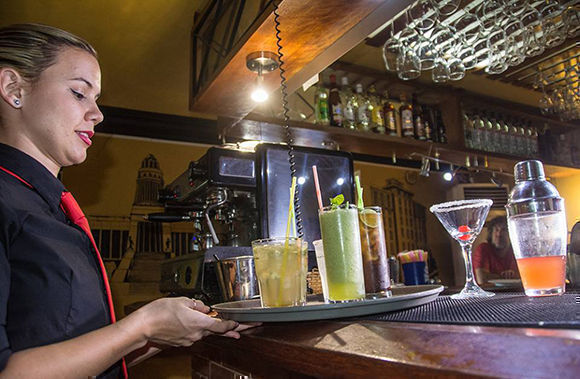
Appearance, subject to canons of mediated beauty, defines the work possibilities of women. Photo: Bar Restaurant La Catedral / Facebook.
It is true that today, the image of the person seeking a job competes in the employment market, and I am not talking about Europe or other countries of the so-called first world, also in Cuba when we read an advertisement for employees they put as requirements that they be young, tall, good-looking and white, because there such a discrimination is exposed clearly.
For those employers, especially restaurants, bars, coffee shops, places where tourists are catered to, voluptuousness and roundness of the female body have are picked first when making the choice or is it casting? Yes, because it seems that she was a selection for an artistic role in television or cinema.
They know that women constitute a priority target for advertising. These ads highlight a gender stereotype , in which it is indispensable to be young, beautiful and slender . In other words, they persist in the idea that a girl can live off her beauty and her body and leave aside her intelligence.
The image, the appearance are subject to canons of beauty mediated by the industry itself, greatly constrains job possibilities, especially in those areas of work that imply public exposure. The accent is not placed on the professional capacity of the women, but only their physical aspect is emphasized.
And, the worst is that you can not do much or anything against those who do not hire you because you are ugly, older, or black, because you will not be able to prove it, as employers argue other subjectivities which are hard to prove.
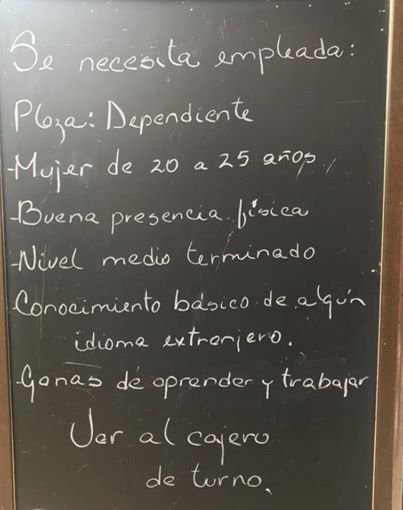
Among the requirements sought are age and it is spelled out that they prefer youth to experience; marital status, because being single and without family responsibilities or children in your care represent points in your favor; be a beautiful and attractive young woman and send a photo in a resume that may not say much professional about her qualifications, but a profile in which beauty stands out.
In advertisements, published mainly on job websites, you can see the age range that employers ask for: 80 percent of them are up to 35 years of age.
They are not interested in those who are called geeks, that is, enthusiastic to the point of obsession with knowledge, knowers and lovers of technology issues, or those who do not have that name but are cultured, educated, are characterized by their seriousness to work and are recognized for their performance and productivity.
The search for girls with a pronounced bust, a narrow waist, a beautiful face, slenderness and marked flirtatiousness that make the client’s neck turn is setting a trend. It leaves those who do not have those attributes at a disadvantage, but above all, encourages discrimination and strengthens the stereotype of women as an advertising and sexist object.
The “American Dream” has Become a Nightmare
The “American Dream” has Become a Nightmare
By Manuel E. Yepe
http://manuelyepe.wordpress.com/
Exclusive for the daily POR ESTO! of Merida, Mexico.
Translated and edited by Walter Lippmann.
The projected wall to separate Mexico from what had been its own territory until the day that it was taken away by United States. US President Donald Trump’s characterization of some nations in Africa as shitholes. The eviction from US soil of Salvadoran, Nicaraguan and Haitian residents. The deportation of undocumented young people who’d arrived in the US in childhood and are known as the “dreamers”. The rejection of refugees. The reduction of green cards by half. These and other anti-immigration actions have characterized Washington’s foreign policy during the Trump administration.
Wide-reaching, all over the world, hegemonic corporate propaganda has always presented the US as a model of democracy and a welfare paradise. It has made the US a dreamland fantasized about by millions of would-be emigrants from poor nations. Now, the US President is doing even the unimaginable. He wants put an end to such an image, by resorting to decisions that may bring about great violence.
The project of an expanding nation has prevailed since English immigrants, through the annexation of lands populated by indigenous peoples or occupied by Dutch immigrants, created the Thirteen English colonies. They later united to fight
against the natives and especially against the French immigrants.
The United States, in a continuous and expansionist process, through the purchase of territories from France and Spain, the dispossession of Mexico from a good part of its territory and several asymmetrical wars, has expanded its territory, possessions, and global hegemony..what today President Donald Trump defends with the motto “America First!” and consists of closing borders as a new phenomenon, opposed to expansionism.
The US of the fantasized American Dream is no longer being built. Having achieved its objective, it has turned to defending its accomplishments. Now, the America First doctrine is the calling card of a nation that Trump, as a white multimillionaire in love with his own genetics, considers the best in the world.
By the way, when we talk about a country called “the United States of America” we refer to an impossible entity or an entelechy. This is because America is geographically a continent made up of several independent nations. None should claim the right to represent the union of all the states that make up the continent.
Originally, the name “United States of America” could have been the expression of a legitimate and plausible aspiration of the precursors of a dream of unity that has never been made possible, but which today embodies a deceptive purpose of domination and hegemony.
Even if this were the historical reason for the imbroglio, the nations of the affected continent can survive the terminological confusion provided there is absolute respect for the sovereignty of all countries involved.
Regrettably, there have been, and still are, many occasions when conflicts arise because one of the parties, always Washington, takes advantage of the semantic confusion for its own benefit.
The United States was born practically accompanied by the doctrine of Manifest Destiny. This is the idea that the United States of America will expand because of its obvious (manifest) need and definite destiny. First, it would expand from the Atlantic coast to the Pacific. Then, the northeastern states would carry their concept of “civilization” throughout the continent through territorial expansion.
For US commercial interests, expansion offered great and lucrative access to foreign markets. This allowed them to compete under better conditions against the British. Owning ports facing the Pacific would facilitate trade with Asia.
The ideological and philosophical connotation of its name was not embraced by all of US society. Differences within the country about the objectives and consequences of the policy of expansion would determine its acceptance or rejection.
Only when the peoples who inhabit the region today known as the American continent want to proclaim in common the unification of their territorial sovereignties, could the resulting nation be legitimately declared the “United States of America”; or else when humanity reaches its eternal yearning to live in a communist world, without classes or borders.
January 30, 2018
The Cigarette Burns and the Human goes out

The Cigarette Burns and the Human goes out
Marijuana is a gateway drug among young people, which acts as a springboard to the abyss of other substances even more dangerous.
Author: Francisco Arias Fernández
January 24, 2018 22:01:42
A CubaNews translation.
Edited by Walter Lippmann.
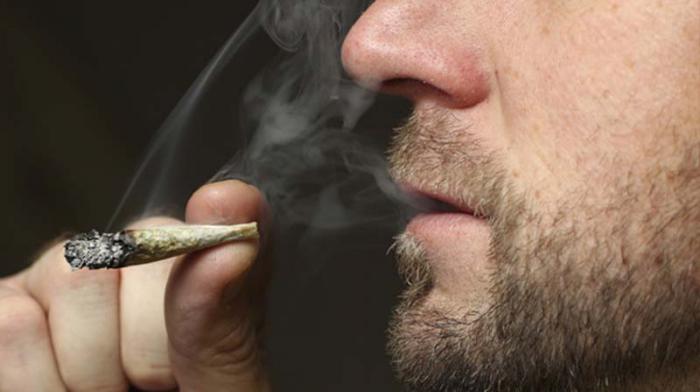
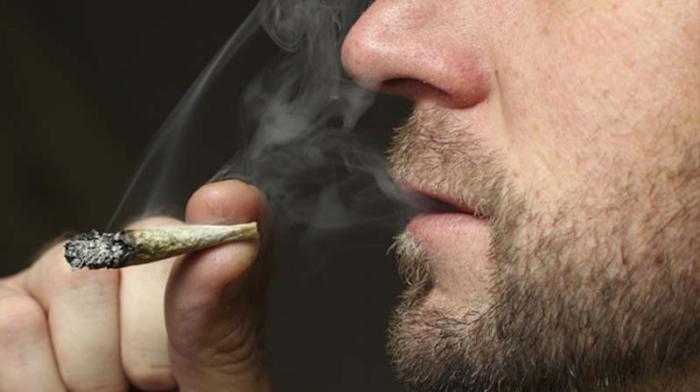
Marijuana overuse causes memory difficulties and tampers with our concentration and learning skills. Photo: Daily Información
A young Canadian with untidy blond hair and faded blue eyes walks back and forth between both ends of a boulevard in downtown Ottawa, the capital of one of the world’s richest countries, begging for money to buy marijuana. In Montevideo, Uruguay, a crazy-looking young man of about 25 offers to work as a car parking attendant for a pittance, enough so he can buy a joint. In Central American capital cities, car drivers waiting for the traffic lights to change get besieged by children eight or nine years of age performing as fire-eaters or simply holding out their hands to beg for charity on behalf of their parents, who lie hidden nearby as they wait for the “prize” to buy drugs and food.
Back in December, Brasilia’s political center was all but occupied by security forces and foreign journalists, all waiting for the arrival of a new president who would take office the following day. A few meters from the Foreign Ministry, one of the venues of the inauguration, a taxi driver warned his passengers not to roll down the windows to take pictures because of the gangs of “dope-smoking” teenagers could appear out of the blue to mug tourists.
These are personal stories, not hearsay or exaggerations. Besides, they are not isolated cases in today’s world or in the countries where I witnessed them.
Felipe met his Spanish wife through a friend who rents out his apartment in Havana. He moved to Barcelona, leaving behind his eight-year-old daughter and his parents. In his new country, he started to consume and smoke synthetic marijuana or whatever he could get his hands on. After some time, while on a visit to Cuba and a week before his return trip, he was caught in possession of small amounts of the narcotic that he had got from a dealer. He ended up in prison, which also brought a lot of suffering and trauma to his child and loved ones.
Cuban internationalist doctors cry as they share stories of children in Paraguay, Brazil, Bolivia or other South American nations who show symptoms of marijuana consumption from an early age, and others who died in their arms because they could not get any marijuana and decided to sniff paint thinners, gasoline or strychnine.
A Uruguayan psychologist, who provides therapeutic services to slum areas in Tijuana, on the U.S. border, described in his doctoral thesis, which he defended at the University of Havana, how his patients take advantage of the legalization of marijuana in southwestern U.S. states to cross the border and get a marijuana prescription for stress treatment, a sure way to maintain their addiction as they get gradually worse, both physically and mentally.
Far from tackling your ailments or bringing you benefits, he remarked, making that drug legal has boosted its use and multiplied health problems in those regions.
Similar findings were disclosed last October in a study by the French National Institute for Advanced Studies in Security and Justice (INHESJ) and the French Monitoring Center for Drugs and Drug Addiction (OFGT) about the impact of cannabis regulation on U.S. states and in Uruguay.
According to the study, “the regulated sale of marijuana in special pharmacies has led to a nationwide rising trend in all indicators for use in Uruguay and has had no significant effects on the black market”. Legalization in the U.S. has brought forth a noticeable rise in consumption, particularly among occasional and regular users aged 25 or over.
Also underlined in the study is “a major rise in hospital admissions related to presumed cannabis intoxication in two North American States” (Colorado and Washington State).
The World Health Organization (WHO) came to the conclusion in 1948 that the consumption of cannabis (marijuana, hashish and hashish oil) was dangerous from every point of view, be it physical, mental or social. More recently added to the list are the so-called synthetic cannabinoids (synthetic or laboratory marijuana), even more harmful.
Experts remark that the symptoms of marijuana intoxication appear more slowly and take longer to go away. Not only that, but that it can trigger very serious mental disorders. Its most common and socially detrimental effect is the so-called affective or amotivational syndrome, characterized by severe detachment from reality, not unlike the kind related to serious forms of schizophrenia.
[Marijuana use] impairs our thoughts, causes memory and concentration problems and tampers with learning. It also delays reaction time with visual and auditory stimuli, disrupts time perception and hinders coordination. It also causes bronchitis and lung cancer in a much larger proportion than smoking. Moreover, it is known to affect our sex life and reproductive capacity, not only because of the resulting dissociation but also the reduction of our hormonal level and sperm motility that it brings with it. Marijuana consumption also has catastrophic consequences on addicted mothers, such as congenital deformities and premature births.
Furthermore, it paves the way for lack of coordination and balance, tachycardia, conjunctival injection (bloodshot eyes), dry mouth and throat syndrome, and drowsiness, as well as death by heart arrhythmia.
Marijuana is young people’s gateway drug and a springboard to the abyss of other even more dangerous substances.
In Europe there has been evidence since the 1970s of a consumption cycle that starts with marijuana and then leads to other more harmful substances like LSD, heroin or morphine. None of them bring a happy end, for they either blow you out or kill you.
FIVE FACTS ABOUT MARIJUANA:
- Even if its properties were initially considered little dangerous and medically useful, its consumption has recognizably catastrophic effects.
- Together with alcohol and other drugs, it ranks high on the list of the first psychoactive substances capable of causing major changes in human behavior.
- Advocates of legalization should assess the impact of marijuana-induced brain lesions on our households, workplaces and communities, since its consumption affects rationality at the same time as it releases the most primitive structures and functions.
- There is sufficient updated scientific evidence that it produces schizophrenia, cognitive impairment, cancer and violent outbursts.
- Consuming marijuana before the age of 18 irreversibly reduces our intelligence quotient in up to ten units.
Source: Interview granted to journalist Lisandra Fariñas xcby Dr. Ricardo A. González Menéndez, a consultant with the Integrated Addiction Treatment Service of Havana’s Psychiatric Hospital and chairman of the National Medical Ethics Commission.
What Lies Ahead in 2018
What Lies Ahead for Cuba and Latin America in 2018
By Manuel E. Yepe
http://manuelyepe.wordpress.com/
Exclusive for the daily POR ESTO! of Merida, Mexico.
A CubaNews translation edited by Walter Lippmann.
A good friend of mine who has been living in the United States for many years,
whom I consider an excellent analyst of international political issues, tells me that former President James Carter recognized, just a few months ago, that it was his mistake not to have completed the process of normalization of relations with Cuba during his term in the White House.
The subject came up in light of the indication that, in his view, for more than two months, Trump’s destructive drive against relations with Cuba has entered a new phase. The momentum seems to have lost steam in the sense that there have been no new hostile actions. The farce of the “sonic attacks” was officially frozen, and the bilateral meetings and specific negotiations that began before Trump are being resumed.
According to my friend, “it is as if the course towards the collision was being reconsidered, giving way to a kind of temporary truce, or towards a certain arrangement or new modus vivendi.” This is not the first time an approach of this type has turned up in the policy options that appear at the level of the executive branch by way of proposals.
In 1979, Robert Pastor, assistant and very close advisor to Zbigniew Brzezinski, himself advisor to US President Lyndon Johnson between 1966 and 1968 —when describing several proposals on Cuba— introduced the notion of “Cool but Communicative”. This meant that Washington should maintain communication channels with Havana, but at the same time, should be tightening a siege around Cuba’s neck.
Could this apparent temporary truce be a new version of the “Cool but Communicative” style or —considering the different context that sustains Cuba’s international position? Could it as well the domestic support in the United States for normalization of ties with the Island— a move towards a low profile modus vivendi, that might bring stability?
Of course, the siege that Pastor talked about then was set in a very different context from today’s. The governments of Canada and of all Latin America are aligned in favor of the normalization of trade and cooperation with Cuba.
The Prime Minister of Japan, Shinzo Abe, visited Cuba and promotes relations with his country. South Korea has become an important commercial partner of Cuba and their positions are approaching normalization.
The European Union advances in the Political Dialogue and Cooperation Agreement with Cuba, after three visits to Havana by Federica Mogherini, the High Foreign Policy Representative and Vice President of the European Union.
Just a few days ago, Trump met with the Prime Minister of Norway, a country that has cooperated closely with Cuba for years in the peace process in Colombia. Without these players on the oppressor´s side, there is no possible siege; the position of all of them contradicts the course announced by Trump in Miami last June 16.
I do not share the forecast that Trump’s policy towards Cuba includes a cooling and temporary truce in its aggressiveness. That is not what becomes apparent, among many other things, after the announcement of the setting up of a new Internet Task Force aimed at subverting Cuba’s internal order. This assumes the continuity of failed Cold War policies and the blockade as part of the doctrine of Unconventional Warfare that have proven inoperative against the concept of All Peoples’ War on which the Island bases its defense readiness.
On the other hand, I do fully agree as to how influential a majority opinion can be in favor of the normalization when it is supported by important pressure groups and American economic interests agreeable to a low profile modus Vivendi. This option runs contrary to the one Marco Rubio has been working for with his spectacular farce of sonic attacks and inconsequential senatorial hearings against Cuba.
The coming electoral victory in socialist Cuba will bring continuity to the revolutionary process on the Island. It will stimulate peoples throughout Latin America to continue their struggle for self-determination against the designs of the local oligarchies and the imperialist hegemony of the United States.
The presidential victory of the Chilean right wing led by Santiago Piñera could not silence a remarkable rise of the center-left forces represented by the novel example of the Frente Amplio (Broad Front). Additional factors will include: the return of Lula and the Workers’ Party in Brazil, MORENA with López Obrador in Mexico, the almost certain victory of Maduro and the United Socialist Party in Venezuela, in the face of an atomized opposition backed by all the resources of the US empire; the undoubted victory of Evo in Bolivia. Finally, there are Macri´s crisis in Argentina, the uncertain outcome in Colombia and the return of the left in Paraguay, are the most commented scenarios of in Latin America’s patriotic struggle in 2018.
January 25, 2018
FARC goes for Colombian presidency


Photonoticia: The FARC goes for the Colombian Presidency
La Fuerza Alternativa Revolucionaria del Común lanzó recientemente su campaña para los comicios presidenciales y legislativos
Author: Redacción Internacional | internacionales@granma.cu
January 30, 2018 03:01:42
A CubaNews translation.
Edited by Walter Lippmann.
The Revolutionary Alternative Force of the Common recently launched its campaign for the presidential and legislative elections
The signing of the Peace Agreement negotiated in Havana opened the doors of civilian life and political struggle to the FARC guerrilla, which is now a political party with the same acronym by which it was identified for more than a quarter century.
The Common Revolutionary Alternative Force recently launched its campaign for this year’s presidential and legislative elections. Timoleón Jiménez, leader of the former guerrilla secretariat, heads the list to occupy the Casa de Nariño [Colombia’s presidential palace}.
The Peace Agreement establishes that the FARC are entitled to ten Congress seats, regardless of their results at the polls.
USA tells its citizens to reconsider trips to Cuba

USA
tells its citizens to reconsider trips to Cuba, one of the safest countries in the world
Legislators of Cuban origin, opposed to the rapprochement between the two countries, intend to achieve an even more drastic reduction in the flow of people between the two nations.
—————————————————————————————————–
Translated and edited by Walter Lippmann for CubaNews
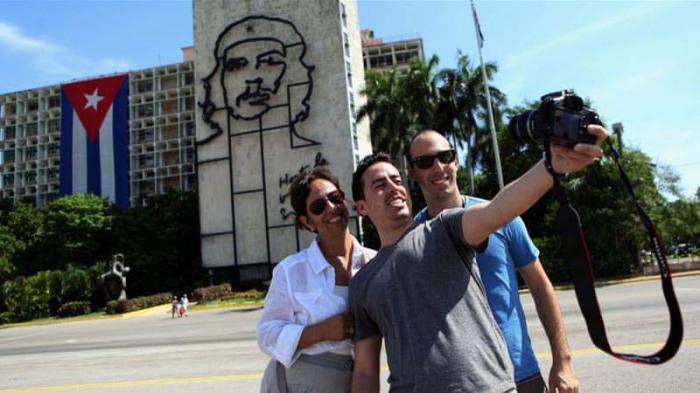
Cuba is ranked as one of the safest destinations in the world. Photo: Al Jazeera
Although Cuba is one of the safest destinations in the world, and meets all international standards, the United States on Wednesday recommended that its citizens “reconsider” possible trips to the Greater Antilles.
The State Department changed its old alert system with a ranking that places all nations on four levels, where the first only involves “taking normal precautions” and the fourth receives the warning “do not travel.”
Cuba, whose citizen security indicators are among the best in the region, was located at level three, with the suggestion of “reconsidering visits” because “there are serious risks to their safety and protection.”
Venezuela, Honduras, Haiti and Guatemala are among the Latin American countries given the same classification.
As on September 29th of last year, when an unjustified travel alert was issued against the Island, the argument used by Washington once again was the occurrence of alleged “attacks” against US diplomats in Havana, about which there is no any evidence.
“Because the safety of our personnel is at risk and we can not identify the source of the attacks, we believe that US citizens may also be exposed to danger,” says the Department of State website.
However, after months of both US and Cuban investigations, evidence to support the hypothesis of the so-called “acoustic attacks” is still lacking.
Three State Department officials acknowledged before a US Senate hearing last Tuesday that the causes and reasons for the health conditions alleged by their staff in Havana are still unknown.
Also, a report by the Federal Bureau of Investigation (FBI), cited by the Associated Press, argues that there is no evidence that “sonic attacks” have been carried out against US diplomats in Cuba.
On Tuesday, Josefina Vidal, General Director for the United States of the Cuban Foreign Ministry, criticized on Tuesday the State Department for continuing to use the word “attack” when it lacks evidence to support that.
“Cuba is a safe, peaceful and healthy country for Cubans, for foreigners, for accredited diplomats and for the millions of people who visit us every year, including the Americans,” said Vidal.
SAFER THAN IN THE UNITED STATES
Despite the unilateral measures taken by the administration of Donald Trump to strengthen the blockade and limit travel between the two countries, in 2017 there was an increase in visits by Americans to Cuba.
According to official figures from the Ministry of Foreign Affairs, between January and November of last year 579 288 people traveled from the United States, for an increase of 248.7% in relation to 2016.
The increase in visits has occurred in a security environment, as recognized by travelers, specialized sites and tour operators.
«I have always felt safe in Cuba. I spent a month there recently and I felt more secure than in Los Angeles,” American journalist Walter Lippmann told Granma.
“Under the current law, it is still illegal for Americans to travel as tourists,” Lippmann recalled.“But anyone who visits the island, no matter the route, will find that they are in what is probably the most peaceful country in the world.”
Daniel Howell, a professor at the University of New York and a specialist in Cuban literature, told this newspaper that Cuba is objectively a very safe country, because there are almost no crimes, especially compared to the United States, which has one of the highest rates of highest violence in the first world.
According to figures from the Brady Center Against Armed Violence, about 93 Americans die every day from the use of firearms. Last year, one person killed 58 others in Las Vegas, using more than a dozen assault rifles that can be purchased without difficulty in that country.
“It does not make sense to recommend to Americans not to visit Cuba. I think they use the supposed sonic attacks to scare away tourists, but this does not make sense,” Howell added.
DISAGREE WITH THE MEASURE
Although Cuba was placed in one of the most negative categories, without the support of objective data, some lawmakers of Cuban origin reacted indignantly, expecting a worse rating.
“The Department of State should not minimize Cuba’s threat to American citizens. Lowering the level of travel warning to the Island is irresponsible, especially when there are still so many unanswered questions about the attacks against US diplomats in Havana, “Representative Ileana Ros-Lehtinen, a well-known supporter of the anti-Cuban ultra-right of Miami.
In her opinion, the new classification is less drastic than that of last September 29, when the US authorities, despite lack of evidence, said that their citizens “could be at risk of being victims of sonic attacks” and recommended abstaining from everything about traveling.
Michele Thoren Bond, an undersecretary of the Bureau of Consular Affairs of the State Department, was consulted on Wednesday in a teleconference.
“We made a careful examination, we consulted with our experts and this has been the conclusion regarding Cuba,” she said after pointing out that the new classification is not due to “a change in the situation on the island, but to the need to be consistent.” in classifications of risks in different countries ».
Quoted by several media, she explained that category four includes countries where there is “a high probability of life risks.” Eleven nations have that classification: North Korea, Afghanistan, Iran, Iraq, Syria, Yemen, Somalia, South Sudan, Central African Republic, Libya and Mali.
The legislators of Cuban origin, opposed to the rapprochement between the two countries, would be pressing for Cuba to appear in the fourth level and thus achieve an even more drastic reduction in the flow of people between the two nations.
Counseled by some of them, including Senator Marco Rubio, the Trump administration has already taken unilateral measures such as reducing the categories of approved trips and drawing up a list of products and places banned for Americans in Cuba.
In addition, under the pretext of the supposed acoustic attacks, the State Department reduced the personnel of its embassy in Havana to the essential and paralyzed the consular services. He also demanded the withdrawal of 17 Cuban officials from Washington.
These actions have a “high cost for our population, Cuban emigration and the American people,” recently reported Josefina Vidal. (With the collaboration of Ernesto Gómez, Dayron Rodríguez and Jeiddy Martínez)
Death Merchants
Death Merchants
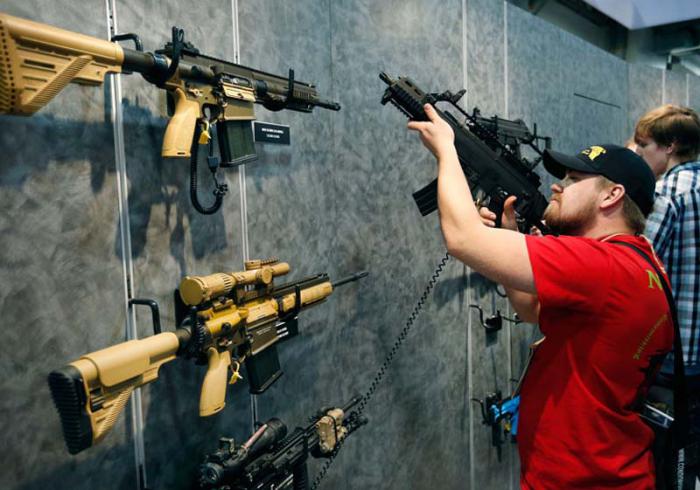
The largest arms fair in the United States ended Friday near the site of the Las Vegas massacre, where 58 people died this past October 1.
By Alfonso Nacianceno internet@granma.cu
January 26, 2018 22:01:19
A CubaNews translation.
Edited by Walter Lippmann.
Gun industry tycoons say the American economy makes millions of dollars from arms sales.
Firearm sales skyrocket whenever a massacre, like the one caused by Stephen Paddock on October 1, 2017 in Las Vegas, takes place in the United States. It’s a sad truth that weighs heavily on its population.
The 58 deaths caused by this 64-year-old retired individual who fired into a crowd of more than 22,000 concertgoers at a country music festival gave rise to angry protests against firearms. However, the tycoons who showcase their novelties in any of the three arms fairs scheduled for 2018 in the U.S. consider theirs a serious line of business. It’s marked by deals worth millions and millions of dollars that benefit the U.S. economy and which, therefore, they are unwilling to abandon.
Never mind the feelings of those who are still mourning over the horrifying deaths of so many people. They only expected to have an enjoyable evening. The U.S. gun industry held its biggest annual fair for four days, just a few miles from the killing fields. Despite the general public’s astonishment and annoyance, Shot Show featured its products along 20 kilometers of aisles, adding to a history of more than 40 events, half of them held in Las Vegas, according to an AP report about the characteristics of this mega-event.
Over 1,700 exhibitors signed agreements and made deals worth millions, whereas the organizers tried to placate peoples’ logical concerns by assuring us that only gun manufacturers and dealers were allowed into the premises, the firing pins were removed from all guns on display, and there was no live ammunition.
Beyond any arguments behind the appeals for calm, absent from the show this time was the company Slide Fire, the leading manufacturer of bump stocks —attachments that enable rifles to fire faster— an invention used by Paddock in the deadliest mass shooting by a lone gunman in U.S. history. The Texas-based company has not said why it was not among the exhibitors, nor has it confirmed its presence at the National Rifle Association (NRA) meeting.
Even if Slide Fire’s bump stocks were not on display, the show presented other accessories made to enable gun users to mimic fully automatic fire and reduce noise.
In the wake of the massacre in Las Vegas, and as discussions about gun control continue, Pennsylvania hosted the Guntoberfest gun show, another huge shop window with similar interests as those of Shot Show’s. In addition to this recent exhibition, they have already planned for another two meetings of rednecks, as gun industry leaders are usually nicknamed.
Marine West, devoted to displaying the state of the art in heavy military equipment, will have a venue in Anaheim on February 7 and 8. And April 9 to 11 will see the third of these conventions at Camp Pendleton, the major West Coast base of the United States Marine Corps.
Figures provided by the Centers for Disease Control of that country—also in charge of recording the number of deaths by firearms—reveal that 33,000 die of gunshots every year; two thirds of the annual 12,000 homicide victims are African-Americans; and people between the ages of 15 to 64 are more prone to suffer fatal accidents.
The American citizens themselves have coined two lapidary sentences to describe the situation of helplessness that they are exposed to every single day:
“There are more guns than people in the United States… Carrying a gun is as common as having a flowerpot at home”.
You must be logged in to post a comment.