May 2021 24
Talking About the Party (I)

Talking About the Party (I)
Reducing the socialist revolution to the protagonism of a party or an ideology does not help to understand its complexities and problems.
By Rafael Hernández
March 17, 2021, in With all its letters
Translated and edited by Walter Lippmann for CubaNews
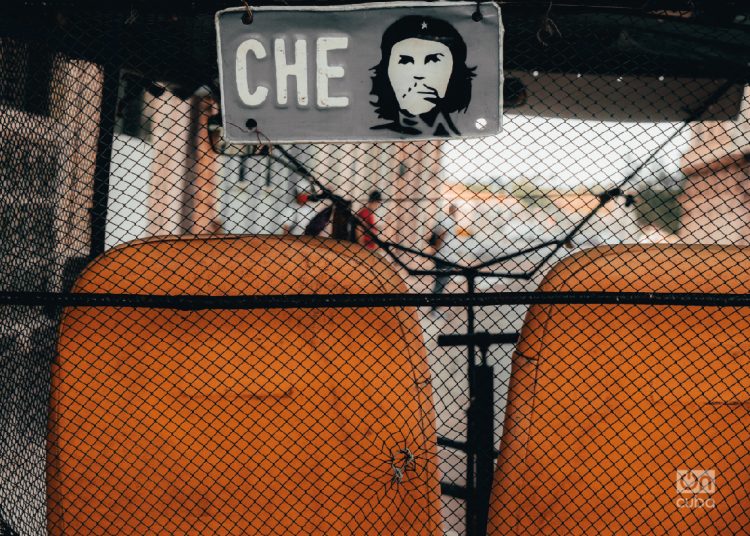
Photo: Randdy Fundora
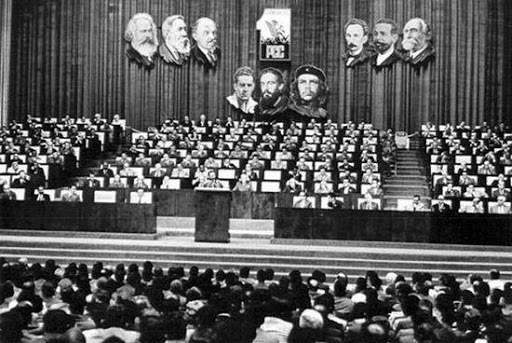
First Congress of the PCC. Held at the Karl Marx Theater in Havana, December 17-22, 1975. Photo: Archive
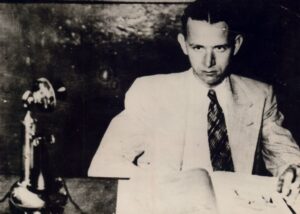
Antonio Guiteras. Photo: Bohemia Magazine
Surprising as it may seem today, those parties, including the Autenticos and the Ortodoxos, opposed to the dictatorship, were left on the sidelines, while people went out to do politics in the streets. Most of those people could not remember when exactly they ceased to exist.
Nothing less than the armed forces, that backbone of the old regime, would be uninstalled, to put it in the jargon in fashion today. No wonder Fidel Castro, who was neither the president nor yet the Prime Minister, was from the beginning the Commander-in-Chief of those newly installed forces, made up of “the uniformed people,” as his head of state liked to say, a smiling Camilo Cienfuegos, who at 27 was not, however, the youngest guerrilla commander.
How the structure of power and the prevailing social order in Cuba in the 1950s could have admitted an “agrarian and anti-imperialist revolution” without it entering from the beginning into the radicality of a real social revolution only makes sense for the codes of that Marxism-Leninism, and in the hypothetical revolutionary scenarios that the Comintern manuals enunciated.
The difference at the outset, when adopting an insurrectional strategy, was concrete political action, which predetermined the type of power at the head of the revolution from the beginning. When it clarified that socialism is reached “by successive preparatory stages,” of which that Program only outlined the first, it was assigning to the “stages” a completely different meaning from those established by the Comintern.
From this perspective, the social conflict was not brought about by interests and factors of power, but by ideology, and cultural representations, such as those of an enemy “that had to be national and foreign at the same time, a monster in which the evil of the empire and the vileness of the traitors could merge.” This parallelism between apparently exclusive visions, brought together in an approach that replaces historical analysis with literary phrases, and the logic of a social revolution by what philosophers call a teleology (of good or evil) confers a curious code of kinship, not at all by accident.
***
To be continued
Cuba condemns Israeli attacks
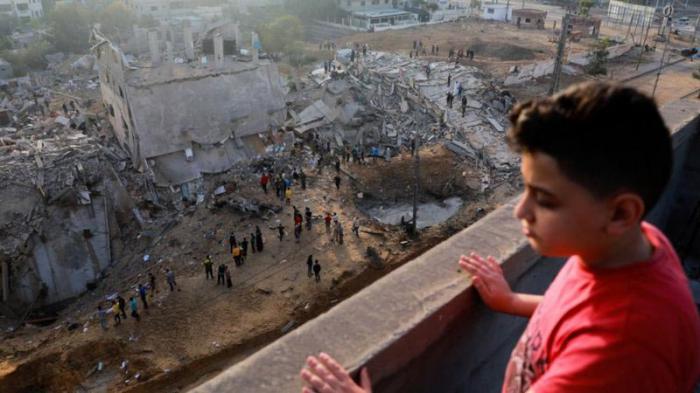

Cuba condemns Israeli attacks against the Palestinian people
The First Secretary of the Central Committee of the Communist Party of Cuba and President of the Republic, Miguel Díaz-Canel Bermúdez, condemned “the flagrant violations of the human rights of the Palestinian people” and demanded the immediate cessation of Israeli attacks on the Gaza Strip.
Translated and edited by Walter Lippmann for CubaNews.
Israel’s indiscriminate shelling of the Palestinian population in Gaza has so far resulted in the deaths of 31 children. Photo: Getty Images
The First Secretary of the Central Committee of the Communist Party of Cuba and President of the Republic, Miguel Díaz-Canel Bermúdez, condemned “the flagrant violations of the human rights of the Palestinian people” and demanded the immediate cessation of Israeli aggression against the Gaza Strip.
“The Zionist barbarism and the mantle of impunity that the U.S. spreads over those crimes with its support to the Israeli regime insult the world,” the Cuban leader said on his Twitter account.
In this regard, the island’s Foreign Minister, Bruno Rodríguez Parrilla, on the same social network, also demanded an end to the Israeli massacre. “The UN Security Council should act and prevent it,” he stressed.
Likewise, the International Relations Commission of the National Assembly of People’s Power (ANPP) of our country issued a statement in which it strongly condemns Israel’s indiscriminate bombings against the Palestinian population in Gaza, which have caused, so far, the death of at least 122 people, including 31 children, in addition to hundreds of wounded and extensive material damage.
The text demands, once again, the immediate cessation of the acts of violence of the Israeli army against the defenseless Palestinian people and the expansionist and colonizing policies of the State of Israel. It also denounces the continued support of the U.S. government for the crimes committed by Israeli forces.
The ANPP called on the international community to act urgently and decisively to force the State of Israel to put an end to its crimes. The Cuban parliament emphasized the urgent need to reach a comprehensive, just and lasting solution to the Israeli-Palestinian conflict.
The Bolivarian Alliance for the Peoples of Our America-People’s Trade Treaty also regretted and condemned the attacks by the Zionist regime.
The Palestinian catastrophe of 1948
The Palestinian catastrophe of 1948
Every May 15 is commemorated the Day of the Nakba, or catastrophe, in Palestine, the date on which around 800,000 Palestinian civilians were expelled after the occupation of their lands and homes in 1948. Only one day had passed since the proclamation of the State of Israel in the Palestinian territory and it was already showing its expansionist and usurping nature.
Author: Jorge Mazón Rodríguez | internet@granma.cu
May 15, 2021 02:05:11 AM
Translated and edited by Walter Lippmann for CubaNews.
Every May 15 is commemorated the Day of the Nakba, or catastrophe, in Palestine, the date on which around 800,000 Palestinian civilians were expelled after the occupation of their lands and homes in 1948. Only one day had passed since the proclamation of the State of Israel in the Palestinian territory and it was already showing its expansionist and usurping nature.
The partition of Palestine, approved by the UN in November 1947, precipitated the events that had been unfolding for some time. Long before, Theodor Herzl had outlined the foundations of Zionism and the future Jewish state. The British Foreign Secretary, Arthur James Balfour, had expressed to Baron Rothschild his government’s support for the establishment of a “national home for the Jewish people” in the region of Palestine; and the Zionists who had gradually settled in Palestine, supported by the international Jewish oligarchy, had taken advantage of Britain’s “neglect” as the mandated power in the region to organize themselves politically and militarily.
Once the cessation of the British mandate over Palestine was announced, coexistence between the Arab and Jewish communities became very tense and confrontations began in the face of the advance of the Zionist project and the refusal of the Palestinians to cede their territories. At this point, what historians call “programmed ethnic cleansing” was implemented, a deliberate policy aimed at displacing the Palestinian Arabs in order to insert the Jewish immigrants who were beginning to arrive en masse.
Yosef Weitz, director of the Land and Forestry Department of the Jewish National Fund and architect of the acquisition of land for the Jewish community in Palestine, gave ideological foundation to the expulsion policy: “It must be clear to us that there is no place for the two peoples in this country (…). We will not achieve our goal of being an independent people as long as there are Arabs in this small country. The only solution is a Palestine, at least Western Palestine (west of the Jordan River) without Arabs (…). The only way to achieve this is to move the Arabs from here to neighboring countries, to move them all; there must not be a village or a tribe left. Only in this way will the country be able to absorb millions of our own brothers. There is no other solution (…)”.
One of the most notorious acts of Zionist gang violence was the massacre perpetrated in Deir Yassin, where 254 Palestinian Arabs were brutally murdered. A former Israeli military governor of Jerusalem described it as follows: “(…) units of the Etzel and Stern gangs jointly organized, without provocation, a deliberate attack on the Arab village of Deir Yassin on the western edge of Jerusalem. There was no reason to justify the attack. It was a quiet village, which had denied entry to volunteer Arab units from across the border and had not been involved in any attacks on Jewish areas. The dissident groups chose it for strictly political reasons. It was a deliberate act of terrorism (…)”.
According to the final report of the United Nations Economic Survey Mission for the Middle East in 1949, the number of Palestinian refugees resulting from the violence and war following the proclamation of Israel as a state, amounted to 726,000, which constituted half of the indigenous population of that region. Since then, the West Bank alone, including East Jerusalem, Gaza, Syria, Jordan and Lebanon, has counted more than 5.7 million Palestinian refugees, who now face the impact of the pandemic as one of the most vulnerable populations.
After 73 years of constant threats, attacks and the Zionist attempt to deprive the Palestinians of their rights, the principles of the Palestinian cause remain unchanged, as does Cuba’s support for the return of the refugees and the two-state solution, which involves the realization of the right of the Arab people to self-determination and access to a free, independent and sovereign state, with its capital in East Jerusalem, and framed within the borders prior to the Israeli occupation of 1967.
Let this Nakba Day therefore serve to vindicate the right of the Palestinian refugee population to return to their country and their homes, and to demand the cessation of the Zionist regime’s attacks on Gaza, where civilians, distributed at a rate of 4,167 inhabitants per square kilometer, are the ones who suffer the most in each attack.
No Democracy Without Sovereignty
You Can’t Have Democracy Without Sovereignty
By Manuel E. Yepe
April 16, 2021
Translated and edited by Walter Lippmann.
In Latin America, the U.S. control of the media euphemistically identifies as “return to democracy” or “democratic opening”, the return to civilian hands of the governments of those countries that were subjected to bloody military dictatorships promoted by the United States in the last five decades of the last 20th century.
It must be recognized that, technically, this has been a great achievement of imperialist propaganda because the outgoing military dictatorships had been imposed by the United States when the peoples could no longer stand the reigning order and a period of rebellion for independence was on the horizon.
The peoples were not then rebelling against idyllic democracies as one might think now when one speaks of a “return to democracy” but against the humiliating subordination to the dictates of Washington which had put an end to their patriotic dreams of independence.
The triumph of the socialist and pro-independence revolution in Cuba stimulated the hope that the objective of feeling that they were the owners of their sovereignty was viable.
In reality, except in glorious historical moments -which as a rule were cruelly repressed- what existed in these lands before the barracks imposed their order on the oligarchies, were sad caricatures of democracy. They were, in truth, semi-colonial enclaves headed by oligarchs servile to the United States that the empire itself replaced by military tyrannies when it saw its interests in a given country endangered.
On a regional scale, the strategy outlined by the U.S. power elite was based on the consideration that the oligarchies were not in a position to stop the generalized popular struggle that was then approaching. This was due to the worn-out political model designed in the image and likeness of the U.S. and imposed as the only democratic and acceptable one in the hemisphere.
Those traditional parties without any popular base and burdened by corruption and banditry, which were the protagonists of the model, had nothing to do with a true democratic system.
The Latin American majorities wanted the return of civilians to government. The bloody military dictatorships only had the support of the small segment of society that fattened its coffers in the conditions of security and impunity provided by the repression of workers, students and intellectuals.
But the laboring majorities cannot see a “return” to democracy in the return to the situation of lack of opportunities for education, decent work and medical care or the continuity of poverty, marginality, violence, corruption, forced emigration and so many other ills. In any case, the positive aspect has been the opportunity to resume the civic struggles truncated by the military coups.
It is impossible to speak of democracy in countries where the organizations that are part of the Intelligence Community led by the Director of National Intelligence, who reports directly to the President of the United States, operate with impunity in defense of interests alien to those of the country. The CIA, the DEA and other known intelligence, espionage and counter-espionage bodies; where embassies, consulates and other U.S. offices openly pay followers, recruit mercenaries and corrupt officials and politicians.
If Latin America could show a panorama of progress, freedom and justice prior to the takeover of governments by the barracks, it would be possible to speak of a return to democracy. But nothing could be further from the truth.
The true democracy is the one that is yet to come, the one that will mean, for the Latin American nations as a whole, their second and definitive independence.
In fact, this popular democracy has already begun to arrive and the countries of the continent that are marching in the vanguard along this route are those that today face the most powerful media campaigns of discredit, demonization, intrigues and threats.
To those who advance cautiously, they apply the subtle methods of “soft” diplomacy in order to remove them from the leading contingent, although without renouncing the crude method of the military coup when the door remains ajar and the circumstances are propitious, as happened in the shameful case of Honduras.
Latin America has lived under the neoliberal sign of capitalism for almost four decades, has reaped very little economic and social development, and many vices and apocamientos that have stagnated with respect to the rest of the world, making this region the most unequal on the planet.
The “representative democracy” imposed by the empire is false, is not rational, promotes differences, widens the gap between rich and poor, encourages wars, disunity and discrimination based on race, creed, ethnicity and gender.
In Latin America, democracy must be preceded by independence and the unity of internal anti-imperialist forces.
Latin America needs a democracy of solidarity based on equality and friendship among its nations, not on competition and greed.
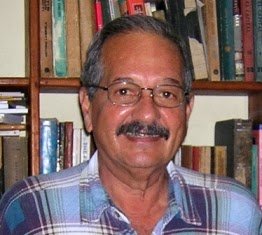
Manuel E. Yepe
Manuel Yepe Menéndez (Havana 1936), since 1954 was an insurrectional fighter in Havana as a member of the 26th of July Youth Brigades at the University of Havana. He worked in the reproduction and distribution of Fidel Castro’s defense plea “La historia me absolverá” (History will absolve me). In 1958 he edited the clandestine magazine of the M-26-7 ACCIÓN, which was published weekly in Havana and identified itself as the Organ of the Cuban Youth. He has a degree in Law, Economics Management and Social Sciences. He has served as Protocol Director at the Ministry of Foreign Affairs, Cuban Ambassador to Romania. He was General Director of Prensa Latina news agency; Vice President of the Cuban Institute of Radio and Television (ICRT); Director of the Guerrillero de Pinar del Río newspaper, and National Director (founder in Cuba) of the UNDP TIPS project. From 2000 to date he has been a member of the Secretariat of the Cuban Movement for Peace. He was a commentator on international issues for the daily newspapers POR ESTO! (2008-June 2020). August 2020
Malicious Interests Against Cuba in the USA
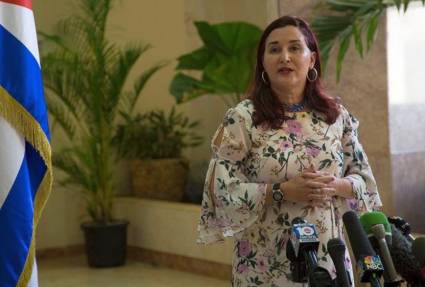

Malicious interests behind U.S. campaign against Cuba denounced
No study provides scientific evidence that there were radiofrequency waves of high intensity in areas where diplomats were located, stresses Johana Tablada, deputy director-general of the U.S. Directorate of the Cuban Foreign Ministry (MINREX).
Author:

Juventud Rebelde |digital@juventudrebelde.cu
Translated and edited by Walter Lippmann for CubaNews.
Tablada said that the group of experts from Cuba that investigated this issue explained why the thesis put forward most recently is an unlikely hypothesis Author: MINREX Published: 12/05/2021 | 08:49 am
Malicious interests are behind the campaign on the alleged Havana Syndrome, Johana Tablada, deputy director-general of the U.S. Directorate of the Cuban Foreign Ministry denounced today.
No report or study published in the United States, Cuba or the world provides scientific evidence that there were radiofrequency waves of great intensity in the area where the diplomats who reported health symptoms were located, said the official of the Ministry of Foreign Affairs (MINREX).
The only ones who won with this story are the members of a minority and reactionary group of politicians desperate and willing to resort to any means to try to impose and perpetuate the course of confrontation, lies and injustice in Washington’s policy against the Cuban people and the Americans themselves, she said.
Tablada maintained that the group of experts from Cuba that investigated this issue stated and explained why the thesis exposed most recently is an unlikely hypothesis, and certainly not a proven fact as the media and unidentified sources try to fix in people’s imagination.
She added that the Cuban Academy of Sciences disagreed on this possibility which she described as speculation presented as one more hypothesis, not supported by arguments in the body of the published report of the U.S. Academies of Sciences. The Americans themselves cannot assure what is the cause of the reported symptoms and the absence of information requested to the Washington government is critical, which limited their study.
The diplomat reiterated that the Academy of Sciences and the team of Cuban experts reject the politicization of the issue and recently reiterated the call for collaboration between both countries to solve the matter and establish the truth.
Tablada stressed that up to now the most concrete and factual thing we have seen is that symptoms were reported with such a diversity that even the State Department doctors explained, as well as the Cuban scientists, that so many elements cannot be attributed to a common cause.
The official recalled that the unfounded accusation against her country of the attacks served as a pretext for the withdrawal of most of the staff of the United States Embassy in Havana, in 2017, coupled with an unprecedented sequence of actions of hostility and setbacks in relations between the two countries and peoples.
She said that after the change of administration in the White House we are facing a new cycle of articles and leaks on the alleged existence of attacks, a word not used by official spokespersons of the Washington government in their most recent statements, according to PL. She pointed out that the common denominator of this set of publications is political speculation, manipulation and absence of primary sources and the misleading reference that assumes and presents as a true fact an alleged syndrome that was not proven by science.
The Deputy Director-General of the US Directorate of MINREX pointed out that there is no such thing as the Havana Syndrome outside of propaganda, but we live in a world, she stressed, in which perceptions matter more than realities.
She said that the investigations of the Federal Bureau of Investigation (FBI) and the Ministry of the Interior (Minint) of Cuba were serious and conclusive in ruling out the existence of ultrasonic or infrasonic sonic attacks.
Tablada stressed that Cuba has not questioned the existence of health symptoms, has investigated the issue from the police, medical and scientific spheres and has made many attempts and calls to cooperate by delivering information of its investigations to the U.S. government.
The diplomat concluded that the main victim of this whole saga seems to be again the truth. The measures taken on the basis of unconfirmed speculation have not been reversed and the suffering they have caused to the Cuban people, families and bilateral and people-to-people relations has only been aggravated, she said.
Recently, White House Press Secretary Jen Psaki said that agencies and departments across the federal government are working to address “unexplained health incidents” that are sometimes reported by different agencies and did not occur in one place.
Marco Rubio, of the Senate Foreign Relations Committee, insist on the so-called Havana Syndrome despite Cuba’s denial, supported by scientific studies, which categorically distances itself from such actions.
The CIA and hatred in the social networks
The CIA and hatred as a weapon in social networks
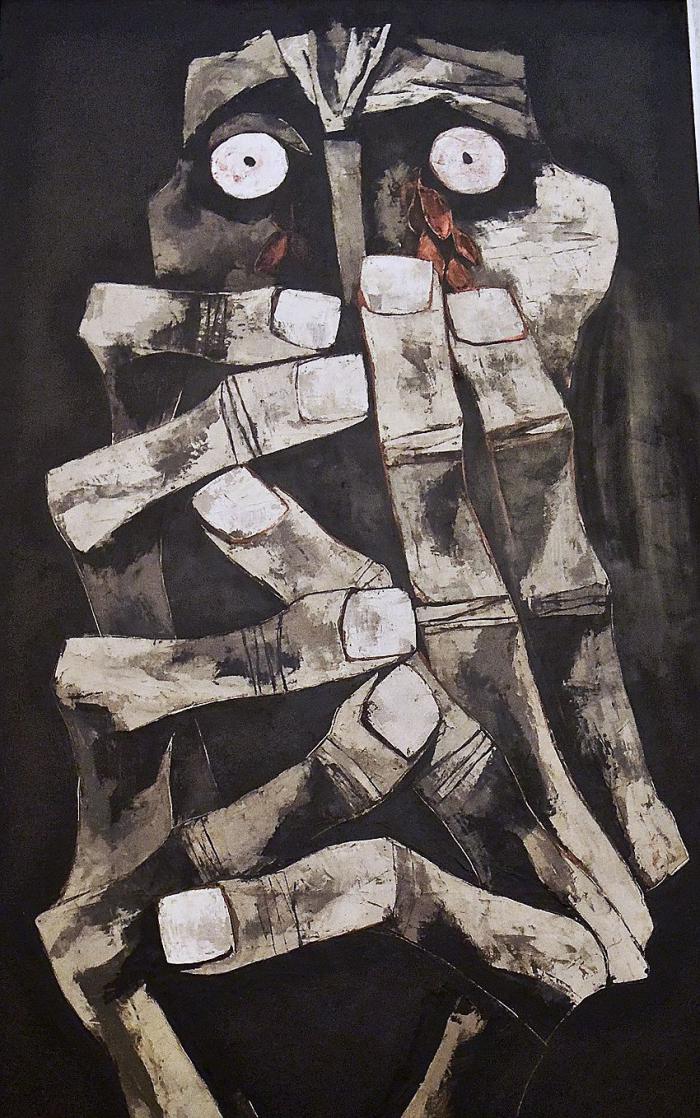
No one who, in the networks, opposes the patterns defended by their paymasters, escapes the fury of the salaried haters. For this purpose, the CIA’s cash register has no limits, nor does the low morality and the dastardly ethics of its mercenaries.
Author: Raúl Antonio Capote | internacionales@granma.cu
May 4, 2021 23:05:02 PM
Translated and edited by Walter Lippmann for CubaNews.
The Political Action Group (GAP), which is part of the Special Activities Center, a division of the U.S. Central Intelligence Agency (CIA), carries out, among other missions, analyses based on Big Data, processes profiles of subjects of interest and draws up action plans that are sent to the Internet Task Force, in charge of executing them.
Through Big Data, information is obtained that can be used for subversive work, it allows to better organize the forces to mobilize them in the fulfillment of a certain objective and, above all, through the micro-segmentation of the public, they manage, in a particular and specific way, the concerns of each neighborhood, of each family, of each person.
Enemy analysts can build models capable of predicting hidden attributes, including political preferences, sexual orientation, how much you trust the people you relate to, how strong those relationships are, all thanks to the information that users themselves upload to the networks.
In February 2018, following orientations of former President Donald Trump, the so-called Internet Task Force for Cuba or Internet Task Force for Subversion in Cuba was created, subordinated to the gap, which is the same as the CIA.
It is in charge of hiring the so-called netcenters, who execute the campaigns against Cuba, through the recruitment of specialists who, in turn, gather around them dozens of cyber-sicarii. They also have the mission of coordinating the actions of counterrevolutionary platforms and media, and of searching for collaborators on the island, among other tasks.
In cyberspace there is also a sordid specimen, feared by many, the hater. The term, imported from English, refers to those people who are dedicated to harass others through social networks.
They use their victims’ physical characteristics, sexual orientation, race, ideology or religion to carry out their harassment. They use the pain, fears and insecurities of those who take their claims seriously.
Some act out of fun, resentment or envy, but there are others who are true mercenaries, people hired to conduct smear campaigns or character assassinations. That is why they are called cybersicarii.
Character, civic or reputational assassination, as it is also named in the psychological warfare manuals of several intelligence agencies and organizations in the world, is part of the methods used by the US special services to destroy the adversaries of the empire.
The cyber-assassassin seeks to make the person subjected to the aggression feel helpless, think that he is not in control of the situation, wear himself out in useless defenses, become exhausted and try to isolate himself, to get as far away as possible from his harassers. The purpose is to make the victim try to justify herself publicly, and self-censure, which does not necessarily put an end to the attack, and may even intensify it.
They use repeated sending of offensive and insulting messages, highly intimidating, to a given individual, including threats of harm that make the person fear for their own safety; circulate rumors about someone, to break their reputation; manipulate digital materials, photos, recorded conversations, emails, steal passwords to impersonate identity; circulate fake news and cruel “gossip” about their victims; perform economic blackmail… Nothing, no matter how dehumanizing, stops the cia’s hired hands.
When multiple harassers participate in the act of cyberbullying, the action is called mobbing, and is part of the strategy against Cuban Internet users, especially public figures. Hundreds of trolls, digital hitmen, cyber-mercenaries, all trained and paid by the CIA, participate in the attacks, which are perfectly planned and scripted in the U.S. psychological warfare laboratories working for the Task Force.
Revolutionary leaders, journalists, artists, musicians, personalities from different areas of the social, cultural and political life of the country have been subjected to intense attacks of this type.
No one who, in the networks, opposes the bosses who defend their paymasters, escapes the fury of the salaried haters. To this end, the CIA’s cash register has no limits, nor does the low morals and dastardly ethics of its mercenaries.
The CIA and hatred as a weapon
The CIA and hatred as a weapon in the social networks
No one who, in the networks, opposes the patterns defended by their paymasters, escapes the fury of the salaried haters. For this purpose, the CIA’s cash register has no limits, nor does the low morality and the dastardly ethics of its mercenaries.
Author: Raúl Antonio Capote | internacionales@granma.cu
May 4, 2021 23:05:02 PM
Translated and edited by Walter Lippmann for CubaNews.
The Political Action Group (GAP), which is part of the Special Activities Center, a division of the U.S. Central Intelligence Agency (CIA), carries out, among other missions, analyses based on Big Data, processes profiles of subjects of interest and draws up action plans that are sent to the Internet Task Force, in charge of executing them.
Through Big Data, information is obtained that can be used for subversive work, it allows them to better organize the forces to mobilize them in the fulfillment of a certain objective. Above all, through the micro-segmentation of the public, they manage, in a particular and specific way, the concerns of each neighborhood, of each family, of each person.
Enemy analysts can build models capable of predicting hidden attributes, including political preferences, sexual orientation, how much you trust the people you relate to, how strong those relationships are, all thanks to the information that users themselves upload to the networks.
In February 2018, following orientations of former President Donald Trump, the so-called Internet Task Force for Cuba or Internet Task Force for Subversion in Cuba was created, subordinated to the gap, which is the same as the CIA.
It is in charge of hiring the so-called netcenters, who execute the campaigns against Cuba, through the recruitment of specialists who, in turn, gather around them dozens of cyber-criminals. They also have the mission of coordinating the actions of counterrevolutionary platforms and media, and of searching for collaborators on the island, among other tasks.
In cyberspace, there is also a sordid specimen, feared by many, the hater. The term, imported from English, refers to those people who are dedicated to harass others through social networks.
They use their victims’ physical characteristics, sexual orientation, race, ideology or religion to carry out their harassment. They use the pain, fear and insecurities of those who take their claims seriously.
Some act out of fun, resentment or envy, but there are others who are true mercenaries, people hired to conduct smear campaigns or character assassinations. That is why they are called cybercriminals.
Character, civic or reputational assassination, as it is also named in the psychological warfare manuals of several intelligence agencies and organizations in the world, is part of the methods used by the US special services to destroy the adversaries of the empire.
The cyber-assassassin seeks to make the person subjected to the aggression feel helpless, think that they are not in control of the situation, wear themselves out in useless defenses, become exhausted and try to isolate themselves, to get as far away as possible from their harassers. The purpose is to make the victim try to justify themselves publicly, and self-censure, which does not necessarily put an end to the attack, and may even intensify it.
They use repeated sending of offensive and insulting messages, highly intimidating, to a given individual, including threats of harm that make the person fear for their own safety; circulate rumors about someone, to break their reputation; manipulate digital materials, photos, recorded conversations, emails, steal passwords to impersonate identity; circulate fake news and cruel “gossip” about their victims; perform economic blackmail… Nothing, no matter how dehumanizing, stops the CIA’s hired hands.
When multiple harassers participate in the act of cyberbullying, the action is called mobbing, and is part of the strategy against Cuban Internet users, especially public figures. Hundreds of trolls, digital hitmen, cyber-mercenaries, all trained and paid by the CIA, participate in the attacks, which are perfectly planned and scripted in the U.S. psychological warfare laboratories working for the Task Force.
Revolutionary leaders, journalists, artists, musicians, personalities from different areas of the social, cultural and political life of the country have been subjected to intense attacks of this type.
No one who, in the networks, opposes the bosses who defend their paymasters, escapes the fury of the salaried haters. To this end, the CIA’s cash register has no limits, nor does the low morals and dastardly ethics of its mercenaries.
Virtudes’ Rolling Kitchen


Virtudes’ Rolling Kitchen
Parque Central Hotel installs modern food truck in the very heart of Old Havana
By Dariel Pradas
April 3, 2021
Translated and edited by Walter Lippmann for CubaNews
Text and photos: DARIEL PRADAS
Many people are already talking about the news -and also the dishes- of a food truck next to the Parque Central Hotel, on Virtudes Street, in the municipality of Old Havana.
Every day, from 10:00 a.m. to 4:00 p.m., a truck with the best retro style of the 1940s parks at that address. Its menu of chicken, pork, hamburgers and other fast-food variants attracts a clientele that, without queue or matazón [slaughter?], comes to taste the culinary standards deduced from the Iberostar chain and its five-star plus “inn”.
The offer also provides a free home delivery service and, although some people find its price onerous in general, others find it economical in comparison with gastronomic businesses in the self-employed sector.
A food truck is basically a vehicle capable of offering any type of menu in streets, squares, fairs and, in essence, open places: a sort of mobile kitchen.
In recent years, this practice has become so popular around the world that filming TV programs in such trucks, complete with chefs, aprons and gourmet terminations, has become commonplace.
It is said that the food truck on Virtudes Street is the first of its kind in Cuba; however, Jose Luis Ayala, deputy general manager of the Parque Central Hotel, says that the Melia Habana inaugurated one before, only that it focused on cocktails, not food. The Comodoro and Cohiba hotels also have similar vehicles.

The food truck menu at the Parque Central hotel consists mainly of fast food offerings.
In the 1980s, Ayala says, trucks with the same purpose of the food truck used to appear at several Havana events, but without the specialization and technologies of their current relatives: with their griddles, fryers, microwaves, scrubbers, their own electric plants, water recycling systems, policies that establish the exclusive use of biodegradable materials…
“It’s not just selling food for the sake of selling, but doing so with an image that identifies the hotel, is attractive and complies with the relevant ecological standards,” argues the assistant manager.
Sales in pesos are also important
The idea of the food truck in Cuba came from the then president of Cubanacán, Yamily Aldama, now deputy minister of Tourism. The goal was, according to Ayala, “to boost domestic sales, and then, to bring the hotel product closer to the towns and places where the summer events took place.”
In 2019, summer fairs began to be organized with the participation of hotel gastronomy. Parque Central repeated these experiences in Virtudes Street, La Piragua and other locations.
“We saw that it was a business opportunity, with a sustainable income, and that the service was recognized by customers, both by residents and local tourists who were passing through the city,” says the deputy director, who discussed a thesis in 1991 on the influence of Cuban food on tourism.
To perform this service in outdoor areas, most of the time tents were rented. A food truck would be, for its ease of movement and aesthetic appeal, a much more viable option. Once the investment was approved by the joint venture Amanecer Holding S.A., the owner of Parque Central (Iberostar is the administrator), the truck was imported and arrived in Cuba at the height of covid-19, at the end of 2020.

The food truck service complies with established sanitary protocols to counteract the spread of the coronavirus.
“The level of tourism has dropped a lot. It was very good for us to have this type of service, because right now, in the stage we are in of the pandemic, we can’t have that influx of foreign tourists,” Ayala admits. “So, we link the offer with the local market segment. As for prices, we can’t say they are cheap, nor very high. We did a study and looked for a balance between the quality of the offer and the price: something that the customer would accept.”
Although the food truck is by far not the hotel’s main business, “it helps to cover the salary expenses we have to pay to keep the hotel open. In addition, we link a large part of the hotel’s workers to the truck”.
Yoinys Pérez, sous chef at Parque Central, thinks that the food truck concept is a very good idea: “We are happy, above all, because we have work. With this we were able to incorporate workers who were at home, at 60 percent (earning that proportion of their usual salary)”.
With his 13 years of experience at the hotel, this specialist found it a little hard to adapt to the small dimensions of the truck, with the heat of the fryer close and constant.
“Sometimes I miss my old kitchen. It’s not the same to prepare a dish to order, where we have a restaurant that is five forks, with all kinds of dishes, products, finishes, sauces… they are dishes that take another kind of treatment,” he sighs suddenly.
“You miss… you miss that adrenaline. On the go, it comes out! Everything by time: starter, main course, dessert. It’s another kind of service, in which the client enjoys the hotel more and the chef innovates and feels more fulfilled.”
Nevertheless, Yoinys has come to appreciate his work in the food truck. For example, he enjoys pleasing local customers, who have a different palate than the foreign tourists he usually serves: “It’s different, but even much better. First, because they speak our language. Second, they have the same tastes as us. It’s what I know how to eat. What my children eat.
Restaurant on wheels
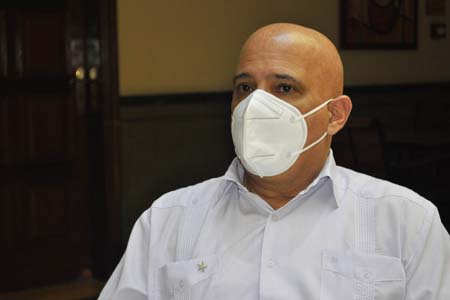
“I am a lover of gastronomy and an advocate of typical Cuban dishes,” says José Luis Ayala, assistant general manager of the Parque Central Hotel.
The food truck is here to stay. In the words of general manager Jorge Sáez Parra, “it allows you to adapt to the new reality one hundred percent. It is a service in which you are in the open air. People pass by, take it and eat it wherever they want. It is the same as Iberostar’s Covid protocols. It guarantees gastronomy in a safe way”.
Moreover, after the current pandemic crisis, such a truck will have even more repercussions, perhaps in the context of thawing, starting with fairs and concerts all over Havana.
“The essence of the food truck is to bring the offer closer to the points where there is demand for an agile service and food that does not need to be very specific, but attractive”, says the Spanish director, “It gives you flexibility: like a restaurant on wheels so that you go to where the customers are, not that the customers come to you. That’s its appeal.
Men’s things… and women’s…
Men’s things… and women’s…
Masterfully conducted by Doctor in Historical Sciences Julio César González Pagés and directed by Yolanda Cabrales, a new proposal of Cubavisión channel has already put on the table two topics that generate a range of opinions: machismo and feminism.
Author: Aracelys Bedevia

Digital |digital@juventudrebelde.cu…
March 9, 2021
Translated and edited by Walter Lippmann for CubaNews.
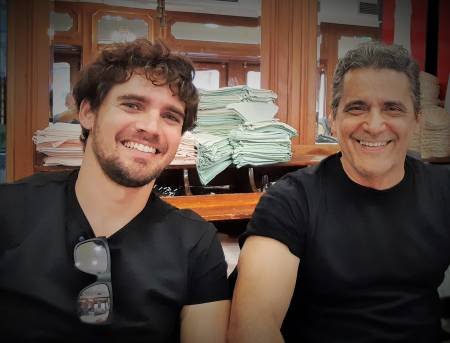
Julio César González Pagés (right) with Yonnier Angulo, who is in charge of the Men in Tangles section. Autor: Juventud Rebelde Publicado: 09/03/2021 | 09:16 pm
The enigma of femininity has made men of all times cavillers. [quibblers] —Sigmund Freud
One more step forward in the effort to build a more humane society, a victory for those of us who work and dream for a better world, represents the program Cosas de hombres [Men’s Things] which has been broadcast every Monday for the past two weeks at 10:15 p.m. on Cubavisión channel.
Masterfully conducted by Doctor in Historical Sciences Julio César González Pagés and directed by Yolanda Cabrales, the new proposal has already put on the table two topics that generate plurality of criteria: machismo and feminism. What is it? Are we or are we not?
The guests represent a wide range of professions and activities that relate male behaviors in different social spheres. Víctor Fowler (writer), Rochy Ameneiro (singer), Omar Franco (actor), David Blanco (singer), Norma Vasallo (university professor), Andrea Doimeadiós (actress) and Marilyn Solaya (filmmaker) have spoken with Pagés so far; all of them very committed to the struggle for egalitarian spaces where men and women have the same opportunities and are valued as human beings, regardless of sex.
In Men’s Things there will be, from the scientific area, research, communication and teaching, Félix Julio Alfonso, Patricia Arés, Clotilde Proveyer, Yulexis Almeida, Tania de Armas, Yonnier Angulo, Jesús Muñoz Machín, Andrei Hernández and Francisco Cruz. Alberto Roque, Lisandra Chaveco, Yohanka Rodney, Yosvel Hernández, Oni Acosta, Enmanuel George, Arlin Rodríguez and Neida Peñalver will also be present, said Julio César González Pagés to Sexo Sentido.
Edesio Alejandro, Cristian Alejandro, Maykel Blanco, Israel Rojas, Jan Cruz, Luis Franco, Jorge Luis Robaina (Karamba), Juan Carlos Rivero (Moncada), Ernesto Blanco, Adrián Berazaín and Raúl Torres will accompany the debate with music, acting and direction. The list includes Rodrigo García, Tony Ávila, Alberto Corona, Denis Ramos, Jorge Martínez, Maysel Bello, Lizette Vila, Marcos Herrera and Sebastián Milo. Representing the athletes will be multi medalist Victor Moya, in the high jump.
Dr. Pagés, leader of the Ibero-American and African Network of Masculinities (RIAM) and author of more than a dozen titles (Macho, varón, masculino and Por andar vestida de hombre, among others), says that “the idea came up in 2013 during a visit of director Yolanda Cabrales to my house.
“She had directed Ecos de mujer and wanted to create a space where men were the protagonists. In 2020 Rafael Pérez Insua, director of Cubavisión, called on us to rethink the project. With COVID-19 we had to look for alternatives. The original idea underwent changes, but gained nuances for discussion.”
-How much time will you be on screen and what other topics will you be discussing?
-We will discuss health, paternity, sexuality, violence… There will be 13 segments with a duration of 27 minutes, divided into four parts , with three guests and a section called Tangled Men, which is coordinated by Yonnier Angulo and addresses the impact of social networks on contemporary life and masculinities.
-We talk a lot about violence against women and very little about violence against men. Don’t you think that machismo is one of the reasons why this violence is invisible?
-One of the big obstacles is that women’s demands have been resisted by men who do not see them as a priority. A change of vision from hegemonic masculinities is to give them the prominent place in the effort to end inequalities in order to achieve a more equitable society.
“Revolutionary experiences have taught us that the inequalities suffered by women do not end with the end of capitalism, because there are men who are still interested in maintaining the subordination of women.
“Understanding the issue is complicated when a sector suggests that these demands can divert us from more urgent or important objectives at the national level or consider them sectoral demands, and believe that we can create the bonds of solidarity necessary to transform society without questioning male supremacy.
“More than defending men, it is about knowing [mens’] vulnerabilities and prioritizing an agenda that deconstructs the myths of [male] supremacy. We must first and foremost learn to be full humans in order to live in harmony and not be the source of so much violence and destruction.”
-Is it a good time for a program of this kind?
-Yes, it comes at an excellent time of changes in Cuban society. Laws related to our masculinities are being passed and it is important to be prepared for this. There is a great need to educate the population on the various questions related to masculinities and to offer ways to unlearn toxic macho values.
Show me your hair
Show me your hair, and I’ll tell you who you are?
The story aims to bring us closer to the life of Sarah Breedlove (who later became C.J. Walker when she remarried publicist Charles Walker and took his name for the business), the first African-American woman to achieve the status of a millionaire in the United States.
Author:

José Luis Estrada Betancourt |estrada@juventudrebelde.cu
March 8, 2021
Translated and edited by Walter Lippmann for CubaNews.
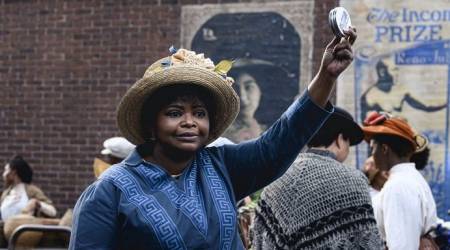
Madam C.J. Walker. Autor: MagaZinema Publicado: 08/03/2021 | 10:44 pm
I couldn’t help but think of my mother as soon as I started watching Madam C. J. Walker: Self Made: Inspired by the Life of Madam C.J. Walker, the miniseries released by Netflix in 2020 and now broadcast by Cubavisión on Saturdays at around 9:15 p.m. And not only because the extraordinary actress Octavia Spencer brings my Juana to mind, but because the story she stars in and for which she was nominated for Emmy awards, brought me back to those years of my childhood in which so many times I found the mistress of my days girdled with a hot comb to smooth her hair soaked in fat smelly grease.
It frightened me that I had to try, by fire, to make them find her beautiful, sliding that red-hot iron through the bundle of strong and unruly hair that she inherited from our ancestors, to leave them shiny and straight. I preferred to leave so as not to witness a possible accident, an alternative that did not disappear when it was the turn of the curling iron and the curl began to bend in a more permanent way with a chemical treatment that does not even spare the scalp.
I didn’t even wonder then what would be wrong with natural hair. It seemed to me the most common thing in the world that some people wanted to “advance the breed”, or that, before inquiring about their health, they were concerned with finding out how the newborn had turned out: It is evident that I was not ready to understand then that the centuries of slavery, of colonialism, imposed a Eurocentrism that later capitalism and imperialism were in charge of accentuating, to the point that this racist concept, which is so discriminatory, is so impregnated in my mind, that I was not ready to understand then that the centuries of slavery, of colonialism, imposed a Eurocentrism that later capitalism and imperialism were in charge of accentuating, to the point that this racist concept, discriminatory, is so impregnated in us (still today) that it can be common that in many spaces what does not comply with the “white beauty” is taken as dirty, unkempt, inappropriate, unprofessional, and is associated with poverty and marginality.
Undoubtedly, the theory of the existence of human races (over time up to 63 were classified, although Cuba must have surpassed that figure with so many mulattoes, mulatos blanconazos, jabaos, capirros, Indians…) was a great “invention” for those who sought to establish their social and cultural supremacy. The truth is that, although scientifically it has been destroyed, the direct derivative of this concept: racism, has not disappeared at all.
Madam C. J. Walker: A Self-Made Woman, a story that aims to bring us closer to the life of Sarah Breedlove (who later became C.J. Walker when she remarried publicist Charles Walker and took his name for her business), the first African-American woman to achieve the status of millionaire in the United States, could speak more forcefully about all of this, but does not.
However, viewers should not think that they will get to know much about this revered figure by African Americans with the four 45-minute chapters that Netflix offers us, because suddenly we will find her as a notable businesswoman and philanthropist when in a scene filmed in broad daylight, we discover her dressed in beautiful blue, as if she were dressed for an Oscar award ceremony, protecting herself from the sun, strolling outside her mansion where she will be noticed by her neighbor Rockefeller.
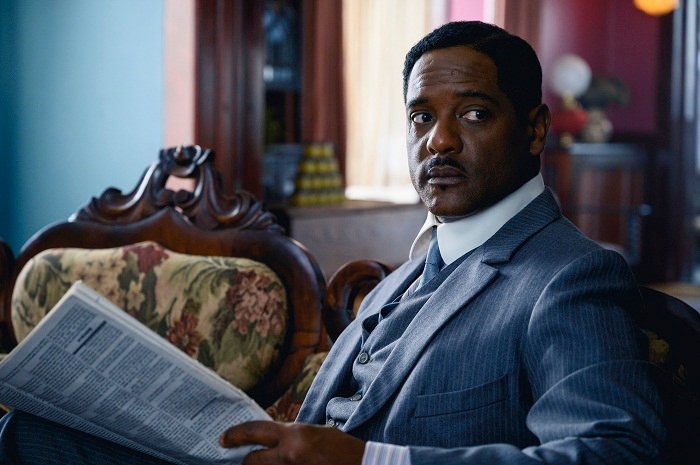
Blair Underwood as Charles Walker.
“To whom God gave it…”, those who think I’m envious are probably thinking right now. It’s just that no divine force must have given her anything, but she certainly had to fight very hard to be able to create an empire in the cosmetics industry with hair products. How did a black woman, who came into the world in 1867, on a cotton plantation in Louisiana, orphaned at the age of seven, more than poor, without any education, a domestic servant who lost her knuckles washing, manage to impose herself in a United States living in full racial segregation, in that lamentable period (1877-1950) when more than 4,400 African-Americans were victims of terrible lynchings? How was she able to achieve this, subjected to men, as women were in the early years of the 20th century, and despised for her sex and her skin?
We will not know it from the series Madam C. J. Walker... It will remain as a pending task to approach in depth the existence of this totally unknown woman (at least for me). In this production, such historical context is just a postcard in the background. Of course, we will be moved by the image of some being hanging in a tree, but the story of the protagonist played by Spencer will move along other paths.
It begins when the beautiful Addie Munroe (Carmen Ejogo), a mulatto whose white genes gave her a long and abundant mane, is shown before Sarah with the “crecepelo”, a product that will not only solve her hair loss problems, but will also give her back, above all, her self-esteem. Seeing that it works, the future tycoon, excited, will propose to her savior to let her participate in the sale, but the first one, who in a “rapture of kindness” provided it, was not willing to give that miracle to darker people with bad hair. Just what writer Alice Walker (The Color Purple) calls “colorism” to describe that other expression of “internal” racism.
You don’t have to be too imaginative to know how the script will develop in the future: Sarah and Addie, who will give her one setback after another, will become bitter enemies, although those who are familiar with Madam C. J. Walker’s biography assure that this is one of the many licenses taken by the authors of the scripts, in order to provide the ingredients that would make the melodrama move forward in the right direction.
In fact, if one is to go by the events presented to us from the novel On Her Own Ground, by A’Lelia Bundles, on which this biopic is based, Madam C. J. Walker, rather than the enormous injustices that African-Americans had to face in the early 20th century, was made more difficult by Addie (who, let’s face it, ended up stealing her invention, which she miraculously copied and obtained) and the men around her – such as Charles Walker (Blair Underwood), the husband jealous of his wife’s success; and John (J. Alphonse Nicholson), the ungrateful husband of her daughter, Leila Walker (Tiffany Haddish). She becomes betrayed, even by some of the very women to whom she gave support and work…. Nothing, the series seems to reinforce the popular saying that there is no worse wedge than the wedge of one’s own stick.
In any case, the undeniable fact is that with her efforts Madam C. J. Walker overcame poverty, humiliation, discrimination, classist and sexist prejudices… to rise as a true exponent of the American dream and to honor the title of this dramatization that was released in March, just two months before George Floyd ended up dead under the knee of ex-cop Derek Chauvin.
For me, Madam C. J. Walker: A Self-Made Woman stands out, above all, for the superb performance of Octavia Spencer (who also serves as executive producer), ever so believable, ever so convincing. Yes, Spencer is an actress of the highest caliber. She reminded us again this Sunday thanks to the film Hidden Figures, which was put on by Arte 7. We saw her, as splendid as her two other co-stars (Taraji P. Henson and Janelle Monáe), also with her hair ironed, chemically straightened or in wigs, because that’s what is generally expected of black actresses and models on TV or in the movies. As beautiful as diversity is! But it is difficult to overthrow what has been coined for so many years in the sociocultural field.
You must be logged in to post a comment.