
• CUBAN 2018 REPORT TO UN ON BLOCKADE
  • Why Cuba, Why Me?
  • Archive

Dizzy

  • Cuban Chronicles
  • About Walter
    • Why Cuba, Why Me?
    • More from Walter Lippmann
    • Photos by Walter Lippmann
    • A few things to think about…
    • About that “Other” Walter Lippmann
    • Privacy Policy
  • Translations
    • CubaDebate
    • CubaSi
    • Dr. Néstor García Iturbe
    • Esteban Morales
    • Frantz Fanon
    • Fidel Castro In His Own Words
    • Fidel Speeches Translations
    • Granma
    • Juventud Rebelde
    • La Jornada
    • Paquito
    • Manuel E. Yepe
    • Rebelión
Walter Lippmann 1434

Violence, repression and summary trials…

4 years ago CubaDebate, TranslationsIroel Sánchez

cuba-debate

Violence, repression and summary trials… depending on where they occur

By Iroel Sanchez, Cuban engineer and journalist. He works at the Office for the Informatization of Cuban Society. Former President of the Cuban Book Institute. On twitter @iroelsanchez

Translated and edited by Walter Lippmann for CubaNews.

“Since Monday, more than 1,100 people arrested for the riots have been on trial…”
(…)
“At the rate of about 10 detainees per hour, the judges cannot cope. According to one of the lawyers, between 11:30 a.m. Monday and noon today, a hundred youths had already filed through the courts. The influx is such that several police vans full of defendants are queuing up in front of the courts, which do not have enough space in the building’s dungeons.”

Contrary to what the believing reader of the international mainstream press might think, the above are not reports on the trials, intensely and very critically covered by Western media, of people involved in the riots that occurred in Cuba on July 11 and 12 last year. I have taken them from the coverage by the same press of the events in London and other British cities in August 2011.

The events of 2011 in Great Britain occurred on a Sunday and already on Monday the trials were taking place, but the media I have quoted (El País) did not call them “summary”, despite deciding on the accused at the rate of “ten detainees per hour”. Using as evidence the recordings of TV cameras installed in the streets and expressions on social networks, only six minutes were enough on average to convict.

The Western media then did not question the procedure and never used the word repression, but rather applauded the repressive action against those who receive nothing from a democracy and a justice system that excludes them.

None of the voices that, from the U.S. government and some international agencies, are now raised against Cuba for trying people accused of acting violently, protested when ten years ago the young people of London, hit by unemployment and exclusion, were prosecuted and sentenced at the pace of a sausage factory.

Speaking of young people, not 18 years old, as the British press now cites a case in Cuba, but 11, 15, 16, half of those 1100 prosecuted at conga pace, according to a headline in El Pais, were minors. Unlike in Cuba, in Great Britain children over 10 years old can be prosecuted with criminal responsibility in case they have committed crimes such as theft, arson and violence, but the good guys of the Madrid newspaper wrote about it in positive terms by introducing the word SOLO “In the UK minors between 10 and 17 years old can only be prosecuted with criminal responsibility in case they have committed crimes such as theft, arson and violence”.

For its part, El Mundo. has collected some examples of young people involved in the protests taken from the British press, not to condemn that they were repressed, but to recommend “parental control over young people”, passing over the repression against those who called for the protest from networks such as Facebook and the use by the repressors of “rubber balls” (really rubber bullets), while qualifying as “alleged” the culpability of the police in the death that unleashed the riots, police that preempting the recommendations by Covid-19 only called bonhomously to “be at home”, nothing like a curfew. They call for parental control, but not a single parent of the defendants is interviewed, something the press can do when the trials take place across the ocean.

It is worth reading the whole dispatch because it is a real gem: how to describe repression without seeing it anywhere (the bold letters are from elmundo.es):

“The Metropolitan Police recommends not to leave home to the youngest and, through a local newspaper, has made “an appeal to parents and those responsible for young people to work together with the Police to ensure that the latter are not immersed in the kind of disorder that we have seen.”

“Riots sparked by the death of Mark Duggan, allegedly caused by local police, has landed an 11-year-old boy in jail, as Skynews reports, over the altercations in the capital.

“Strathclyde Police in Glasgow, Scotland, have arrested a 16-year-old boy for sending a Facebook message allegedly inciting disorderly conduct, reports the BBC. Police have said they will be keeping a close eye on social networking sites and will take what they call “decisive action” to prevent violence in the Strathclyde area by copycats.

“The person responsible for the link to ‘Let’s start a riot in Glasgow’, which is no longer available on the aforementioned social network, is due to appear in court tomorrow.

“In Folkestone, within the county of Kent where the prestigious University of Canterbury is located, two 18-year-olds have been arrested for spreading inflammatory messages via Facebook. In addition, a 16-year-old girl is being questioned in Glasgow for the same reason, reports the English newspaper BBC.

“Finally, police in Essex have arrested a 17-year-old boy after encouraging others via Facebook to gather in the county and take part in riots.

“Robbery, fire and police charges have also been seen in Manchester, where 70 to 80 youths have clashed with Police. In West Bromwich they are smashing windows. Meanwhile, in London, the 16,000 officers that Cameron has highlighted for the fourth day are getting ready. In the Islington neighborhood, the Islington gazette newspaper picks up a Police warning: “Be at home”.

“The reason, the rubber balls that will be taken out tonight against the youth mob. For this reason, in the same writing they recommend a parental control over young people, to keep them away from the street so that they are not immersed in the riots.”

But let’s talk about Cuba. Cuban press reports after July 11 listed one by one 44 stores assaulted and looted, which were not the only ones, information that none of those media objected to because it was useful for them to talk about the extent of the protests.


Images of several overturned police and civilian cars and Molotov cocktail throwing have also circulated profusely in the networks. Calculating in a very conservative way the number of people involved in some of these events, which undoubtedly can be described as violent anywhere in the world, there would be several hundred participants in them, but for the Western press all those tried in Cuba for these events are peaceful demonstrators (!).

A little context, memory and logical thinking, please, gentlemen who enlighten us in this so-called free journalism and this so-called rule of law.

(Taken from La Pupila insomne)

Share this:

  • Click to share on Twitter (Opens in new window)
  • Click to share on X (Opens in new window)
  • Click to share on Facebook (Opens in new window)
  • Click to share on LinkedIn (Opens in new window)
  • Click to share on WhatsApp (Opens in new window)
  • Click to email a link to a friend (Opens in new window)

Millions moved to destabilize Cuba

4 years ago Granma, Translationsblockade, subversion


This is how millions are moved to destabilize Cuba

We reproduce the long list that the NED published on February 23, 2021, on its website, detailing the NGOs and foundations that received money to intervene in Cuba during 2020

Author: Granma | internet@granma.cu
January 16, 2022 20:01:36

Translated by Walter Lippmann for CubaNews.

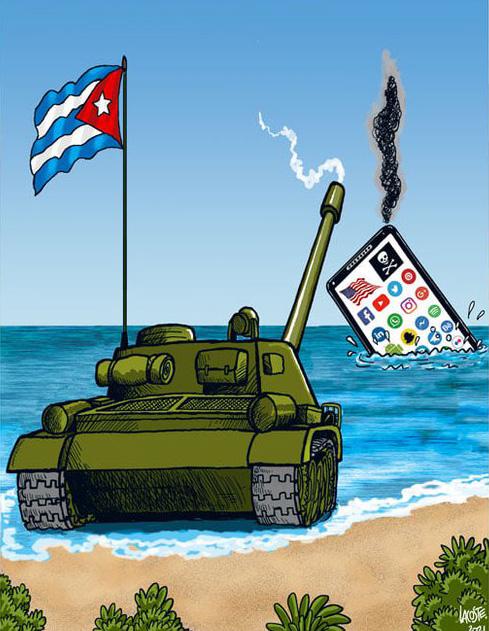
Graphic: Lacoste

In 1983, Republican President Ronald Reagan created the National Endowment for Democracy, known by its acronym in English as NED (National Endowment for Democracy). Since its inception, this organization, together with the United States Agency for International Development (USAID), has functioned as one of the economic arms of the interventionist policy of the United States Government, financing non-governmental organizations (NGOs) and foundations, that are disguised with names of very laudable values ​​such as democracy or freedom, but that seek the change of governments that do not subordinate themselves to Washington’s policies.

These interventionist policies have been developed in many countries of the world, especially in those that are located in what the United States considers its backyard: Latin America and the Caribbean.

As detailed on the NED’s own website, in 2020, the National Endowment for Democracy’s LAC program provided critical support to supposedly promote democracy in countries under what they consider to be the most authoritarian regimes: Cuba, Nicaragua, and Venezuela.  In his opinion, two countries in transition, Ecuador and Bolivia, offered important opportunities to reverse previous “authoritarian” legislation on freedom of expression and judicial independence and to encourage citizen participation in electoral processes.

They report expanding what they see as anti-corruption, digital media, and human rights programs, just as the NED reaffirmed commitments to the largest countries in the region: Brazil and Mexico, which for them currently face threats from right-wing populist governments. and left, respectively.

As can be seen, the organization calls Cuba, Nicaragua and Venezuela “more authoritarian regimes”, countries that were openly attacked through the network of foundations and NGOs that this entity has, and defamed by the media. of communication that are also financed through these organizations or other similar ones.

The NED website also reports that, on November 30, 2018, a meeting was held in which the Democratic senator, Robert “Bob” Menéndez, and the Republican member of the House of Representatives, Ileana Ros-Lehtinen, participated. , two well-known activists against popular processes in the region and with links to the most reactionary sectors of Cuban emigration based in Miami.

Along with them, the president of the NED, Carl Gershman, and the administrator of the USAID, Amb. Mark Green, with the aim of promoting alleged leaders in Cuba, Nicaragua and Venezuela.

Gershman took the opportunity to thank Congresswoman Ros-Lehtinen for her unwavering support for the work of “democratic” activists around the world, presenting her with a framed print of the Goddess of Democracy, built in China’s Tiananmen Square, nearly 30 years ago.

Later, NED Senior Director for Latin America and the Caribbean, Miriam Kornblith, participated in a panel with activists from Venezuela and Cuba. Then it is added that “this event brought together US development agencies and legislators with “democratic leaders” from Cuba, Nicaragua and Venezuela.”

LOOK AT CUBA

Since the triumph of the Cuban Revolution in 1959, the United States has sought by all means to force a change of government on the Island. The criminal economic, commercial and financial blockade that Washington illegally and unilaterally maintains against Cuba, and that has been rejected by the vast majority of the international community in 29 votes in the United Nations Organization (UN) is, without a doubt, the most concrete example of this systematic aggression that the US Government maintains against our people.

The promoters of the blockade have confessed on more than one occasion that this series of measures is intended to suffocate the Cuban people, cause chaos and thus generate a change of government and political system.

During the years of the pandemic, 2020 and 2021, the US administration (first under the leadership of Donald Trump and now under Joe Biden) deepened the blockade with new measures. The entry of medicines, respirators, fuel and economic resources to face the crisis caused by covid-19 was prevented. In this framework, protests were fomented to destabilize the Government and thus try to give the Island the final blow (a new failed attempt that generated discomfort and suffering in the Cuban people, but that did not succeed in breaking it).

In the chapter dedicated to Cuba on the NED’s own website, the list of resources that, during the year 2020, that organization has allocated to promote destabilization is shown.

According to data released by the NED, during that year more than five million dollars (5,077,788) were invested for this purpose, to which must be added the resources provided to NGOs and foundations that do not appear in the Cuba chapter. , but that act against the Island and, also, add the funds channeled through USAID and other similar organizations.

We reproduce the long list that the NED published on February 23, 2021, on its website, detailing the NGOs and foundations that received money to intervene in Cuba during 2020 (with figures ranging from 20,000 to 650,000). Dollars).

  • International Platform for Human Rights in Cuba (for EU-Cuba relations): $87,253
  • Cubalex (for complaints of human rights violations): $150,000
  • Fundación Cartel Urbano (to turn hip hop artists into leaders): $110,000
  • Democratic National Institute for International Affairs (to reduce gender-based violence): $500,000
  • Freedom of information (for new ways of reporting): $80,000
  • Publisher Hypermedia Inc.: $93,941
  • Latin American Center for Nonviolence: $48,597
  • Institute of Communication and Development: $79,300
  • Electoral Transparency: $74,945
  • Research and Innovation Factual ac (for regional media networks): $74,000
  • Cuban Human Rights Observatory: $150,000
  • Freedom of Information (for sports coverage): $50,000
  • Agora Cuba Inc. (for information): $75,860
  • Cuban Daily Association: $215,000
  • Freedom of information: $72,000
  • Foundation for Human Rights in Cuba, Inc.: $126,000
  • Cuban Institute for Freedom of Expression and the Press: $146,360
  • Freedom of information (news media): $56,500
  • Democratic Culture (for the arts): $49,106
  • Freedom of information (attention to journalists and bloggers): $33,180
  • Cuban Democratic Directorate (civil society): $650,000
  • Democratic ideas and values ​​(for marginal populations): $23,500
  • Freedom of information (for independent media): $75,000
  • Accountability and Governance: $120,267
  • Promotion of the use of data in journalism in Cuba: $91,319
  • Government and Political Analysis ac: $115,000
  • Asociación Civil Cronos (for innovation in journalism): $80,000
  • Freedom of information (social media work): $50,000
  • Inter-American Institute of Human Rights: $95,000
  • Freedom of Information (Critical Thinking): $99,980
  • Center for International Private Enterprise: $309,766
  • Press and Society Institute: $70,523
  • Public Space Foundation (independent media): $108,000
  • People in Need Slovakia (for civil society): $60,000
  • Clovek v. tisni, ops (for news outlets): $150,882
  • Political Institute for Liberty: $85,000
  • Arlenica, Art, Language and Research for Social Change, a Supplement: $11,940
  • Center for a Free Cuba (for human rights): $80,000
  • Institute for War and Peace Reporting (iwpr): $145,230
  • International Group for Corporate Social Responsibility in Cuba (support for independent unions, freelancers, and labor rights): $230,000
  • Vista Larga Foundation Corp (for writers and artists): $83,000
  • Democratic ideas and values ​​(for intervention in various sectors): $71,339


Source: Diariocontexto.com.ar

Share this:

  • Click to share on Twitter (Opens in new window)
  • Click to share on X (Opens in new window)
  • Click to share on Facebook (Opens in new window)
  • Click to share on LinkedIn (Opens in new window)
  • Click to share on WhatsApp (Opens in new window)
  • Click to email a link to a friend (Opens in new window)

January 1959: on the road to Santiago

4 years ago Granma, TranslationsJuly 26th Movement, Moncada


January 1959:
Cuba’s destiny on the road to Santiago

Five years, five months and five days earlier, the assault on the Guillermon Moncada Barracks in Santiago de Cuba and Carlos Manuel de Cespedes Barracks in Bayamo, on July 26, 1953, had been the attempt to launch a popular insurrection.

Author: Frank Josué Solar Cabrales | internet@granma.cu
December 31, 2021 15:12:04 pm

Translated and edited by Walter Lippmann for CubaNews.

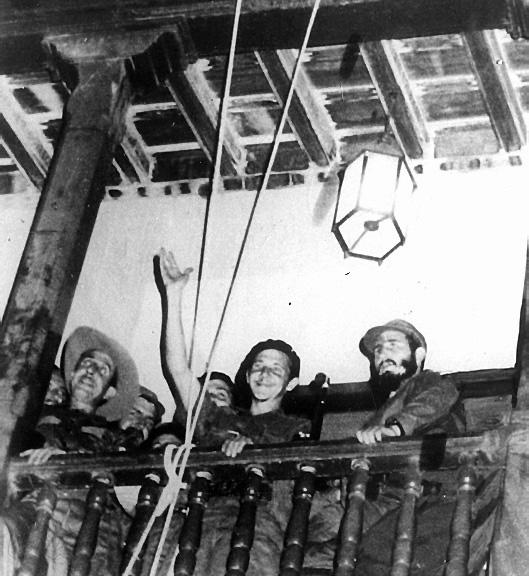
Fidel went to Céspedes Park, the main park in the city, to speak to the compact and euphoric mass gathered there from the balcony of the City Hall and proclaim the triumph of the Revolution on January 1st, 1959. At his side, Commander Raúl Castro Ruz. Photo: Granma Archive

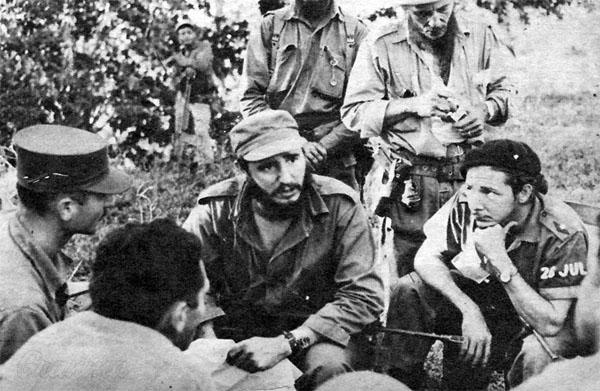
When, on January 1, 1959, Fidel Castro Ruz, at the head of his troops, advanced on Santiago de Cuba and its garrison of some 5,000 soldiers, to begin what would perhaps have been the bloodiest and hardest battle of the anti-Batista insurrection, it was curious and strange to hear on the radio that in the city the people were in the streets with flags of the 26th of July Movement, cheering the rebel leader and celebrating the revolutionary triumph. What were the circumstances that made up such a paradoxical situation? How was the victory finally consummated in the eastern city?

Five years, five months and five days earlier, the assault on the Guillermon Moncada Barracks in Santiago de Cuba and Carlos Manuel de Cespedes Barracks in Bayamo, on July 26, 1953, had been the attempt to launch a popular insurrection that would grow and advance towards Havana until it broke the resistance of the dictatorial regime. The success of the plan rested on the surprise factor and the response of the people to the call to combat. The military importance of the Moncada, together with the symbolism of Santiago de Cuba and the traditions of rebellion of its inhabitants, made the main action take place there, generating the historical merit of having been the place where this last stage of the revolutionary struggle began.

Later, with the landing of the Granma yacht in its political-administrative jurisdiction, today’s Heroic City rose up in arms on November 30, 1956, in what could have been a new insurrectional outbreak that made possible, with other pronouncements of the 26th of July Movement and other forces, the overthrow of the dictatorship. Santiago was once again, despite other actions, the capital symbol of the revolutionary activity of the country. The two most important moments of the struggle against Batista until then had taken place in its urban perimeter and/or jurisdictional space. It was an extraordinary accumulation.

If the immense majority of the nuclei in favor of the violent struggle were betting on the success of a fulminating operation in Havana, in which the joint effort of military conspiracies and armed civilian bodies would provoke a rapid fall of the regime, the July 26th Movement based its efforts on a two-phase strategy, starting with the partial or total control of the province of Oriente, whose center would be the capture of the city of Santiago de Cuba, to expand the revolutionary thrust from there towards the rest of the Island.

Entrance of Commander in Chief Fidel Castro Ruz to Santiago de Cuba, in 1959. At his side Manuel Piñeiro (the one with the beard). Photo: Granma Archive

The strategic importance of the city can be measured by the design and execution of Operation Santiago, the rebel attack for its encirclement and surrender, which, together with the invasion of the west of the Island, was the most important insurgent offensive operation in the final months of 1958.

The battle for Santiago de Cuba, now not by a surprise attack as in 1953 nor by an internal uprising as in 1956, but by the combative approach of guerrilla units, personally led by Commander in Chief Fidel Castro Ruz, had the potential to become the equivalent of the battle of Ayacucho in the independence of South America: decisive in determining the end of the war of liberation. It is also true that the distance from Havana did not necessarily have to be settled, in case of a rebel victory in the city, with the fall of the dictatorship. Once Santiago de Cuba was taken, the regime still had room for maneuver in the theater of operations, especially due to the concurrence of neutralizing maneuvers and foreign intervention.

The devastating guerrilla advance on Santa Clara, halfway to Havana, together with the success of the progressive isolation and encirclement of Santiago de Cuba put the dictator and his acolytes in check. The imminence of a disaster was decisive for the activation or hastening of various attempts to prevent the revolutionary triumph or to achieve its mediatization. Within the military ranks, desertions, accelerated surrenders and conspiratorial proposals increased. Fidel had never been reluctant to the possibility of military conspiracies that would bring the fall of the dictatorship closer with less bloodshed, as long as they did not compromise the fulfillment of the revolutionary program.

In this sense, he sought that the military pronouncements would come about through his incorporation into the rebel forces and not by means of a coup d’état in the nation’s capital.

That is why he agreed to the unconditional collaboration offered by the Chief of Army Operations in the eastern province, Major General Eulogio Cantillo y Porras, on December 28, 1958, when the Batista regime was already tottering and its overthrow seemed a matter of days. The high-ranking officer committed himself to the uprising of the commanders loyal to him, in coordination with the guerrilla forces. This implied a joint pronouncement and the articulation of a common force, which would advance on the enemy positions that did not join the uprising or would not withdraw their hostile attitude. This is how the Commander in Chief explained it:

“The plan was agreed upon in all its details: on the 31st, at 3:00 in the afternoon, the garrison of Santiago de Cuba would revolt. “Immediately several rebel columns would penetrate the city, and the people, with the military and with the rebels, would immediately fraternize, launching a revolutionary proclamation to the country and inviting all the honorable military to join the movement. It was agreed that the tanks in the city would be placed at our disposal, and I personally offered to advance towards the capital with an armored column, preceded by the tanks. The tanks would be delivered to me at 3:00 in the afternoon, not because it was thought that we had to fight, but to foresee in case the movement in Havana failed and there was a need to place our vanguard as close as possible to the capital”.

Cantillo, however, betrayed the agreement. He went to Havana and dedicated himself to organize, in agreement with Batista, a counterrevolutionary conspiracy. To gain time, he sent Fidel a note on December 30 recommending him not to do anything until January 6, because “circumstances had changed a lot in a favorable sense for a national solution”. The rebel chief, sensing the maneuver, replied that the note was a departure from what had been agreed and that hostilities would be broken as of the day and time set for the uprising. Once the attack on Santiago had begun, there would be no other way out than unconditional surrender.

Meeting in El Escandel, where Fidel Castro and Raul Castro meet with a group of officers of the army of the tyranny, on January 1st, 1959, to agree on the surrender of the military square of Santiago de Cuba. Photo: Granma Archive

Faced with the energetic reaction, General Cantillo insisted that he was working on a national solution, not a local one, favorable to the interests of the insurgents, and warned them that they should change the plan and not enter Santiago de Cuba. Just as it had happened in 1898, an upstart ally was trying at the last minute to take power, to hide the popular triumph and to prevent the entry into Santiago of the true freedom fighters.

With reports of the inexorable nature of the rebel offensive in Las Villas and Oriente, the dictator Batista decided to abandon power and flee abroad. After midnight from December 31 to January 1, he executed the plan: he left the country to a Civic-Military Junta, with Major General Eulogio Cantillo as the new Chief of the Army. General Cantillo tried to form a new civilian administration, with the summoning of the “oldest magistrate of the Supreme Court of Justice” as “presidential substitute”, Dr. Carlos Manuel Piedra y Piedra. At the same time, he tried to shore up his authority before the various regular commands of the country, ordered a ceasefire and fraternized with the rebel troops. Forming a civilian government and gaining time with the fraternization of his demoralized military garrisons in the face of the growing guerrilla forces, he believed, would help him consolidate his emerging authority, leaving him in a position to administer the salvation of most of the levers of the old regime.

Then Santiago de Cuba became the heart of the events. Where the insurrection began, the essential issue was resolved: the seizure of power.

Fidel Castro’s response, through Radio Rebelde from Palma Soriano, was immediate and forceful: To denounce and reject the maneuver in the capital as counterrevolutionary, qualifying it as a coup d’état; not to accept cease-fire or fraternization with the military forces; to order the advance of the insurgent forces on the enemy positions, only accepting parliament for unconditional surrender; to order the commanders Camilo Cienfuegos and Ernesto Che Guevara to culminate the military operations in Las Villas and to advance on Havana to take, respectively, the Military City of Columbia and the Fortress of La Cabaña, the two main garrisons of the country; to issue an ultimatum to the military square of Santiago de Cuba to lay down their arms by the end of the afternoon or face a bloody battle, with the historical responsibility for the bloodshed that would ensue; and to call for a general strike until the total fall of the dictatorship and the complete triumph of the Revolution.

The military command of Santiago de Cuba, while complying with the ceasefire and fraternization order, began to send signals of parliament to the rebel leadership. In the afternoon of that day, the military commander of the city, Colonel José Rego Rubido, met with Fidel Castro in the Alto de Villalón, and expressed himself in favor of a joint pronouncement.

After Commander Raul Castro accompanied Rego Rubido to the Moncada Barracks and met with his officers, the latter went up to El Escandel to meet with Fidel, with whom he sealed the agreement that avoided a bloody and exhausting battle for the control of the city, which would have facilitated the possible consolidation of the counterrevolutionary plans in Havana. The eastern officers agreed to “disapprove of the rigged coup in [Camp] Columbia (…) and to support the Cuban Revolution”. The originally agreed uprising of the Santiago garrison took place, now not against the dictator in flight, but against the military junta installed in the capital.

A column of guerrillas and soldiers, with their chiefs at the head, left in a motorized caravan towards Santiago de Cuba, where they entered on the night of January 1st. Fidel headed towards Céspedes Park, the main park of the city, to speak to the compact and euphoric mass gathered there from the balcony of the City Hall, and proclaim the triumph of the Revolution. For the first time, after seven years of dictatorship, the rebel leader communicated directly and massively with a liberated population. Dr. Manuel Urrutia Lleó was sworn in as Provisional President of the Republic, and given his constitutional mandate as Commander in Chief of the Armed Forces, he appointed Fidel Castro as his delegate to the country’s armed institutions. In addition, the rebel leader proclaimed Santiago de Cuba as the new provisional capital of the Republic. This last decision portrays the uncertainty of the circumstance, the danger that in Havana and other cities a counterrevolutionary maneuver would be consolidated. The proclamation was intended to complete a victory in its final phase, in the midst of the ambivalent situation in the capital of the country: the clandestine movement dominates police institutions and strategic buildings, but the main military installations have not yet been occupied by the rebel forces.

These are critical and decisive moments, which will have a favorable outcome in the coming hours with the surrender of several military posts in the country to the guerrilla columns.

It is true that granting Santiago de Cuba the condition of provisional capital had the purpose of materializing the victory, but it also had a symbolic meaning due to the role it had played in the war and throughout the revolutionary history of Cuba.

Share this:

  • Click to share on Twitter (Opens in new window)
  • Click to share on X (Opens in new window)
  • Click to share on Facebook (Opens in new window)
  • Click to share on LinkedIn (Opens in new window)
  • Click to share on WhatsApp (Opens in new window)
  • Click to email a link to a friend (Opens in new window)

Trump’s 243 measures against Cuba

4 years ago TranslationsMINREX, sanctions, Trump

Compendium of Trump’s measures against Cuba

Translated and edited by Walter Lippmann for CubaNews.
Thanks to Johana Tablada of MINREX for this compilation.
January 20, 2021

The policy of hostility of Donald Trump’s government against Cuba registered unprecedented measures and actions, which stood out for their systematicity. All spheres of our society and the daily life of citizens suffered the impact of this design, accentuated in the context of the pandemic.

More than 240 measures have been counted. Most of them were actions to tighten the blockade with the aim of economically suffocating the country, subverting the internal order, creating a situation of ungovernability and overthrowing the Revolution.

The emphasis on hindering the main sources of income and hindering our trade relations was notorious in scope.

The main affectations generated by the policy towards Cuba during the Trump administration presented the following behavior:

Title III of the Helms-Burton Act.

The decision to allow lawsuits in U.S. courts under Title III of the Helms-Burton Act was an unprecedented action, after 23 years of successive suspensions of this possibility. This has had an indisputable impact on the prospects of attracting foreign investment, since it constitutes a disincentive that adds to the already existing obstacles due to the regulatory framework of the blockade. So far 28 legal proceedings have been initiated in U.S. courts under the Act.

Travel

The travel sector has been a recurrent target of attack during the Trump administration.

Travel alerts to citizens under the pretext of alleged health incidents were followed by the banning of cruise ship travel, the suspension of the “people-to-people” educational travel subcategory, and the modification of two of the licenses allowing visits by U.S. citizens to Cuba.

The creation of the List of Prohibited Accommodations in Cuba, which included 422 hotels and rental houses, constituted an additional disincentive to travel.

Scheduled and charter flights were cancelled to all parts of the country except Havana, whose frequencies were also limited. The effects of this announcement reached both U.S. citizens and Cuban families.

Remittances

The decision to limit the amount of remittances to US$1,000 per quarter, the suspension of non-family remittances and the prohibition of remittances from third countries through Western Union, imposed greater difficulties on the income of many Cubans.  

The impossibility of processing remittances through Fincimex and AIS eliminated the main formal channels for remittances.

Medical cooperation

Within the framework of the campaign to discredit Cuba’s international medical cooperation and a regional scenario favorable to the right, the U.S. promoted the termination of agreements with several countries in the area and increased pressure on multilateral organizations and third countries. In addition to the undeniable human cost of these actions, the economic impact for Cuba has been considerable.  

Trade and Business

Regulatory changes issued by the Departments of Commerce and the Treasury dismantled existing provisions and created new coercive instruments. The measure preventing the importation of products from any country containing more than 10% U.S. components was reimposed on Cuba. In a globalized economy, this constitutes a real obstacle to acquiring necessary inputs, regardless of the market of origin.

In the interest of curtailing one of the main exportable items, the importation into the U.S. of rum and tobacco of Cuban origin was banned, an announcement that was combined with rhetoric aimed at discrediting those products.      

The creation of the List of Restricted Cuban Entities by the State Department, with which persons subject to U.S. jurisdiction are prohibited from engaging in direct financial transactions, was aimed at hindering foreign trade and the export of goods and services. A total of 231 companies are included in the list.

The decision not to renew the operating license in Cuba of the hotel company Marriot International, in order to sow a climate of uncertainty in the business community, stood out.

The effects on the business system and commercial operations in the country were considerable, as foreign counterparts sometimes interpreted that they could not relate with Cuba or continue operating with entities subject to coercive measures.

Banking-financial sector

A thorough prosecution of Cuba’s banking-financial operations took place during the Trump administration. Of the 22 monetary penalties imposed by the Office of Foreign Assets Control (OFAC) on companies that violated the blockade laws, 9 were against entities in this sector. There was a notable increase in reports of bank account closures, denial of transactions and other obstacles faced by diplomatic and business representations abroad, as a result of US pressures and due to the extraterritorial nature of the blockade.  

Fuel

In parallel to the strategy against Venezuela and under the pretext of Cuba’s alleged interference in that country, measures were adopted against ships, shipping companies, insurance and reinsurance companies linked to the transportation of fuel. In 2019 alone, 53 vessels and 27 companies were penalized. The pressures against the governments of registration or flag of vessels were also notable.

Additional measures

The outline of the policy towards Cuba combined the severe blockade measures with additional actions, which contributed to sustain in time the systematicity of the announcements and creating a climate of permanent aggressiveness. The visa restrictions and other provisions against high-ranking Cuban leaders responded to this objective.

The State Department reports on Human Rights, Religious Freedom, Human Trafficking and Terrorism reinforced the rhetoric against Cuba and the discrediting in these areas.

The arbitrary and unilateral listing pursued the same objective of demonizing and satisfying the demands of the anti-Cuban sectors. The designation of Cuba as a state sponsor of terrorism represented the culminating point in the effort to impede any process of advancement and eventual improvement of bilateral relations.


Donald Trump’s administration. Measures against Cuba
Year Total Extraterritorial Blockade Others

Year Total Blockade Extraterritorial Others
2017  50 9 37 4
2018 44 5 39 0
2019 86 44 31 11
2020 55 21 28 6
2021 7 4 1 2
  242 83 136 23

2017
Blocking

June 8 The Treasury Department’s Office of Foreign Assets Control (OFAC) imposed a sanction against American Honda Finance Corporation (AHFC) for USD 87 255 because one of its subsidiaries in Canada, Honda Canada Finance Inc. approved and financed 13 car leasing agreements between the Cuban Embassy in Canada and a Honda dealership in Ottawa between February 2011 and March 2014. The same company had already rejected, on March 30, 2015, a transfer from the Cuban Embassy in Canada for the replacement of the vehicle fleet that was to be replaced by the company.

On June 26, the Treasury Department’s Office of Foreign Assets Control (OFAC) imposed a sanction against the US company American International Group (AIG) in the amount of 148,698 dollars for allegedly violating several US government sanctions programs, including the blockade against Cuba. According to the text of the sanction, between 2007 and 2012, AIG engaged in 29 apparent violations of the blockade by providing insurance coverage, various shipments of goods to or from Cuba or related to a Cuban entity, including the processing of premiums or claims arising from that service.

September 8 US President Donald Trump signed a memorandum addressed to the Secretaries of State and Treasury in which he extended for 1 year the application of economic sanctions on Cuba under the legal framework established in the Trading with the Enemy Act of 1917.

September 26 The US Treasury Department’s Office of Foreign Assets Control (OFAC) banned a donation to an NGO in Cuba because the ship carrying the cargo belonged to the US company Norwegian Cruise Line Holdings Ltd.

November 8 The State Department announced the creation of the Cuban Restricted Entities List, in which it included 179 Cuban companies with which US citizens cannot carry out direct financial transactions.

November 8 OFAC announced regulatory changes to the Cuba sanctions program. Individual “people-to-people” educational travel was eliminated.

November 8 OFAC modified the category of educational and support travel to the Cuban people. It established that each traveler must participate in a full-time program of activities involving genuine interaction with individuals in Cuba. These activities must also increase contact with the Cuban people, support civil society in Cuba, or promote the independence of the Cuban people from Cuban authorities.  

November 8 BIS established a general policy of denial of license applications for export items that may be used by entities and sub-entities on the Restricted Cuban Entities List, among other measures. (4 specific measures)

November 17 OFAC imposed a sanction for USD 291,825 to the company BCC Corporate S.A. (BCC), a Belgian subsidiary of BCC. (BCC), a Belgian subsidiary of the US credit card company Alpha Card Group, for selling, between 2009 and 2014, credit cards that were used to make purchases in Cuba. 50% of the shares of Alpha Card Group belong to the U.S. company American Express.


Additional

September Travel Alert for Cuba – level 4

29 September Suspension of visa issuance at consulate in Havana.

May 23 Expulsion of 2 officials from the Cuban Embassy in Washington.

October 3 Expulsion of 15 officials from the Cuban Embassy in Washington.


2018
Blockade

22 February President Donald Trump issued a Presidential Proclamation to extend the state of National Emergency declared by President William Clinton on March 1, 1996 following the downing of two small planes belonging to the group c/r “Brothers to the Rescue”. The proclamation extends through 2019 the ability of the U.S. government to regulate the movement and anchorage of vessels within its territorial waters that will or are likely to travel to Cuba.

Sept. 10 U.S. President Donald Trump signed a memorandum to the Secretaries of State and Treasury extending for 1 year the application of economic sanctions on Cuba under the legal framework established in the Trading with the Enemy Act of 1917.

October 5 The Treasury Department’s Office of Foreign Assets Control (OFAC) imposed a penalty of $5, 263, 171 on the banking entity J.P. Morgan Chase for conducting unauthorized transactions and providing unauthorized services to clients included in the Specially Designated Nationals and Blocked Persons List between 2008 and 2012.

November 15 The State Department updated the List of Restricted Cuban Entities, with the incorporation of 27 new companies, for a total of 206.

November 19 The banking-financial entity Société Générale S.A. based in Paris, France, agreed to a total payment of US$1,340,231,916.05 to the US Treasury Department’s Office of Foreign Assets Control (OFAC), the U.S. Attorney’s Office for the Southern District of New York, the New York County District Attorney’s Office, the Federal Reserve and the New York State Department of Financial Services for violation of the Cuban Assets Control Regulations, the Iran Sanctions and Transactions Regulations and the Sudan Sanctions Regulations. According to OFAC, Société Générale S.A. processed 796 transactions involving Cuba totaling more than US$5.5 billion between July 11, 2007 and October 26, 2010. This is the fifth sanction applied by the Donald Trump administration and the second to be imposed in 2018.


2019
Blockade

January 16 The U.S. State Department announced through an official notice its decision to suspend for 45 days the application of Title III of the Helms-Burton Act as of February 1. The text of the note states that during this period the U.S. government will study in detail the possibility of implementing or not implementing Chapter III in the future, a decision that will respond to the objectives of “U.S. national security and its commitment to promote the transition to democracy in Cuba”. Likewise, the State Department communiqué mentions the alleged lack of freedoms and human rights violations in Cuba, while emphasizing support for “the corrupt and authoritarian regimes in Nicaragua and Venezuela”. The note concludes by warning those who do business with Cuba, particularly those who “traffic in confiscated properties and are accomplices of the dictatorship”, to reconsider their ties with our country.

February 14 The Office of Foreign Assets Control (OFAC) of the US Treasury Department imposed a sanction of 5 million 512 thousand 564 dollars on the company AppliChem GmbH, based in Darmstadt, Germany for 304 apparent violations of the Cuban Assets Control Regulations. AppliChem, an entity that manufactures laboratory substances and chemicals for industrial use and operates as a subsidiary of U.S.-based Illinois Tool Works Inc, sold its products to Cuba between May 2012 and February 2016 in violation of embargo laws, according to OFAC.

Feb. 19 President Donald Trump issued a Presidential Proclamation to extend the state of National Emergency declared by President William Clinton on March 1, 1996 following the downing of two small planes belonging to the group c/r “Brothers to the Rescue.” The proclamation extends through 2019 the U.S. government’s ability to regulate the movement and anchorage of vessels within its territorial waters that will or are likely to travel to Cuba.

March 4 The State Department announced through an official statement an additional 30-day suspension, until April 17, 2019, of the right to file legal actions under Title III of the Helms Burton Act. However, it communicated that as of March 19, the suspension of these actions will not apply to companies on the Restricted Cuban Entities List.

March 11 The Department of State announced through an official release an update to the Restricted Cuban Entities List, scheduled to take effect as of March 12, 2019. The text of the note points out the incorporation of 5 new sub-entities (Gaviota Hoteles Cuba, Hoteles Habaguanex, Hoteles Playa Gaviota, Marinas Gaviota Cuba) and one entity belonging to Gaviota (Fiesta Club Adults Only, of Blau Marina Varadero). This brings the total to 211 entities.

March 3 The State Department announces the suspension of Title III of the Helms-Burton Act for only 15 days.

April 5 The Treasury Department’s Office of Foreign Assets Control (OFAC) included 34 vessels owned by the Venezuelan oil company PDVSA, as well as two other foreign companies (Ballito Shipping Incorporated, based in Liberia, and ProPer In Management Incorporated, based in Greece) in its list of sanctioned vessels, alleging that they provide services to Caracas for the shipment of crude oil to Cuba.  According to the Treasury Department, the sanctions include the freezing of any financial assets they may have under U.S. jurisdiction and a ban on financial transactions with the listed entities and vessels.

April 9 The Treasury Department’s Office of Foreign Assets Control (OFAC) imposed a sanction on Standard Chartered Bank, a banking-financial sector entity based in England, for apparent violations of the Cuban Assets Control Regulations and other sanctions programs applicable to Iran, Syria, Sudan and Myanmar. In order to avoid legal action, the British company agreed to pay 639 million 023,750 USD to OFAC and 2,715 million 100,479 USD to other US government and state institutions.

April 11 The Treasury Department’s Office of Foreign Assets Control (OFAC) imposed a sanction on Acteon Group Ltd. (Acteon), a company based in England, in the amount of US$227,500.

April 11 The Treasury Department’s Office of Foreign Assets Control (OFAC) imposed a sanction on 2H Offshore (2H Offshore), an entity based in England, for violations of the Cuban Assets Control Regulations. The amount to be paid by the companies is USD 213,866.

April 12 The Office of Foreign Assets Control of the Treasury Department (OFAC) sanctioned 4 companies that operate in the Venezuelan oil sector and 9 vessels that transport Venezuelan crude oil, some of which, during the current year, have transported oil to Cuba.

April 15 The Office of Foreign Assets Control (OFAC) of the Treasury Department imposed a sanction to the German company UniCredit Bank AG.

April 15 The Treasury Department’s Office of Foreign Assets Control (OFAC) imposed a sanction to the company UniCredit Bank Austria.

April 15 The Treasury Department’s Office of Foreign Assets Control (OFAC) imposed a sanction on the Italian company UniCredit Bank SpA.

April 17 U.S. Secretary of State Mike Pompeo offered statements to the press announcing the full activation of Title III of the Helms-Burton Act as of May 2, 2019.

April 24 The State Department updated the Cuban Restricted Entity List by adding 5 new entities, for a total of 216.

June 4 The Treasury Department’s Office of Foreign Assets Control (OFAC) and the Commerce Department’s Bureau of Industry and Security (BIS) announced regulatory changes to Cuba policy, primarily targeting the travel sector. The measures included the elimination of “people-to-people” travel.

June 4 OFAC announced a policy of denial of licenses for passenger travel (cruise ships), recreational vessels and private aircraft.

June 4 OFAC ruled that U.S. travelers arriving in Cuba under any of the 12 categories may not conduct direct financial transactions with Cuban companies on the Cuban Restricted Entity List. (3 specific measures)

June 13 The Office of Foreign Assets Control (OFAC) of the US Treasury Department imposed sanctions on the US company Expedia Group Inc.

June 13 The U.S. Treasury Department’s Office of Foreign Assets Control (OFAC) imposed sanctions on U.S. company Hotelbeds USA Inc.

June 13 The Office of Foreign Assets Control (OFAC) of the U.S. Treasury Department imposed sanctions on the U.S. company Cubasphere Inc. for violations to the Cuban Assets Control Regulations. The three penalties pertained to transactions related to travel or travel services to Cuba.

July 3 The Treasury Department included the company CUBAMETALES in the List of Specially Designated Nationals (SDN) alleging involvement of the Cuban entity in the importation of oil from Venezuela.

July 25 The State Department announced through an official press release an update to the Cuban Restricted Entity List, scheduled to take effect as of July 26, 2019, by including 2 new entities, for a total of 218.

September 6 The Treasury Department’s Office of Foreign Assets Control (OFAC) updated the Cuban Assets Control Regulations by imposing a limit of up to US$1,000 per quarter on family remittances.

September 6 OFAC suspended gift (non-family) remittances.

Sept. 6 OFAC suspended Cuba-related transfers originating and destined outside the U.S. (U-Turn). (3 specific measures)

Sept. 13 President Donald Trump extended for another year the Enemy Trade with Cuba Act for Cuba.

Sept. 17 The Treasury Department’s Office of Foreign Assets Control (OFAC) placed 3 individuals (2 Colombian and 1 Italian national) and 17 companies (12 based in Colombia, 4 in Panama, and 1 in Italy) on the Specially Designated Nationals (SDN) List, alleging they were involved in transporting oil to Cuba.

September 24 The Treasury Department’s Office of Foreign Assets Control (OFAC) included in the Specially Designated Nationals (SDN) List 4 companies (3 Panamanian and 1 Cypriot) and 4 vessels related to the transportation of Venezuelan oil. The companies added were: Bluelane Overseas SA, Caroil Transport Marine LTD, Tovase Development Corp and Trocana World INC; while the vessels were: Carlota, Giralt, Petion and Sandino; all four under Panamanian flag.

October 1 The Office of Foreign Assets Control (OFAC) of the US Treasury Department imposed a sanction of 2 million 718 thousand 581 dollars to the General Electric Company (GE), based in Boston, Massachusetts, for 289 apparent violations of the Cuban Assets Control Regulations. The official statement issued by the Treasury referred that three GE subsidiaries (Getsco Technical Services Inc., Bentley Nevada and GE Betz) accepted payments made by The Cobalt Refinery Company (Cobalt) for goods and services rendered to a GE client in Canada. Cobalt is on the Specially Designated Nationals List.

October 18 The Department of Commerce’s Bureau of Industry and Security (BIS) announced new amendments to the Export Administration Regulations (EAR), scheduled to take effect on October 21. The new measures included a general policy of denying aircraft leasing licenses to Cuban state-owned airlines.

October 18 BIS provided for the prevention of re-export to Cuba of foreign goods containing more than 10% US components.

October 18 BIS announced the revision of the License Exception “Support for the Cuban People” so that certain donations to the government of Cuba and the Communist Party of Cuba cannot be made.

Oct. 18 BIS announced the elimination of authorization for the export of promotional items that “generally benefit the government of Cuba.”

October 18 BIS established that aircraft and vessels are not eligible for the license exception if they are used in charter mode by Cuban nationals or a State Sponsor of Terrorism, or if they are leased by them.

October 18 BIS limited the export of goods intended to improve the telecommunications infrastructure to those that facilitate the “free flow of information” among the Cuban people.  (6 specific measures)

October 25 The U.S. Department of Transportation (DOT) announced the suspension of the export of goods destined to improve telecommunications infrastructure to Cuba. (DOT) announced the suspension of all U.S. airline flights from the U.S. to Cuba, with the exception of those to Havana’s José Martí International Airport. With the measure, which went into effect on December 10, all U.S. flights to nine Cuban airports were suspended. According to the DOT note, this decision was taken at the request of the State Department and stated in a letter sent by Secretary of State Mike Pompeo.

October The most important leaders of the Spanish hotel chain Meliá Hotels International S.A., including its CEO, received notices from the State Department informing them of the prohibition to enter the US, as a consequence of the application of Title IV of the Helms-Burton Act.

November 15 The State Department announced by official release an update to the Cuban Restricted Entity List, by adding 5 new entities, scheduled to take effect as of November 19, 2019, for a total of 223.

November 26 The Treasury Department’s Office of Foreign Assets Control (OFAC) announced the inclusion of the company Corporación Panamericana S.A. on the Specially Designated Nationals (SDN) List.

December 3 The Treasury Department’s Office of Foreign Assets Control (OFAC) announced through an official communiqué the inclusion of 6 vessels (one Panamanian and the rest Venezuelan) in the Specially Designated Nationals (SDN) List for transporting crude oil to Cuba. In addition, it was identified that the vessel “Nevas”, sanctioned since April 2019, had been renamed “Esperanza”, so its entry on the SDN list was updated according to the new denomination.

December 9 The Treasury Department’s Office of Foreign Assets Control (OFAC) announced the settlement to avoid a civil lawsuit, with Chicago-based Allianz Global Risks US Insurance Company, in the amount of $170,535.00 USD.

December 9 The Treasury Department’s Office of Foreign Assets Control (OFAC) announced the settlement of a civil lawsuit with Switzerland-based Chubb Limited in the amount of $66,212.00 USD.  The sanctions are due to apparent violations of the Cuban Assets Control Regulations (CACR) for conducting transactions and other operations related to travel insurance to Cuba.

Additional

January Cancellation of MLB and Cuban Baseball Federation agreement.

March 15 Reduction of the validity of the B2 visa to three months and with a single entry.

June 20 Inclusion of Cuba Level 3 Trafficking Report.

July 26 Visa restrictions on Cuban officials and family members related to Cuban medical cooperation services under Section 212 (a)(3)(C) of the Immigration and Nationality Act.

September 19 Expulsion of 2 officials of the Cuban mission to the UN.

September 26 Inclusion of General de Ejercito and his family on the sanctioned list under section 7031 (c) of the State Department Appropriations, Foreign Operations and Related Programs Act, prohibiting their entry into the US.

September 30 Visa restrictions on Cuban officials associated with international medical cooperation programs under Section 212 (a)(3)(C) of the Immigration and Nationality Act.

November 1 Inclusion of Cuba in annual Presidential Memorandum on Trafficking in Persons and consequent prohibition of federal funding for cultural and educational exchanges, among other measures.

November 16 Inclusion of Minister of the Interior Julio Cesar Gandarilla Bermejo and his children in the list of sanctioned persons under section 7031 (c) of the State Department Appropriations, Foreign Operations and Related Programs Act, which prohibits their entry into the US.

Dec. 20 Cuba placed on a Special Watch List under the International Religious Freedom Act of 1998.

Dec. 31 The Caribbean Confederation of Professional Baseball (CBPC) informed the Cuban Baseball Federation (FCB) that it will not be able to guarantee Cuba’s presence in the Caribbean Series, scheduled for Feb. 1-7 in San Juan, Puerto Rico, after yielding to U.S. pressure.


2020
Blockade

January 10 The U.S. Department of Transportation suspended until further notice all charter flights between the U.S. and Cuba, except those directed to Havana’s “José Martí” International Airport. In a note signed by Secretary of State Mike Pompeo, it is stated that 9 airports currently receiving this service will be affected and that charter operators will have 60 days to discontinue such flights.

January 10 The text adds that, at Pompeo’s request, the Department of Transportation will impose a limit on the number of charter flights directed to the “José Martí” airport. Finally, the statement notes that in the “near future”, the Department of Transportation will present an order with the procedures to implement such limit.

February 25 President Donald Trump issued a notice extending for one year the State of National Emergency related to Cuba, declared by President William Clinton on March 1, 1996, following the downing of the “Brothers to the Rescue” planes.

February 26 The new regulations of the US company Western Union, which eliminates the possibility of sending remittances to Cuba from third countries, went into effect.

May 6 The US Treasury Department’s Office of Foreign Assets Control (OFAC) announced a settlement to avoid a civil lawsuit with the entity BIOMIN America, due to apparent violations of the Cuban Assets Control Regulations (CACR). The amount to be paid by BIOMIN America, an animal nutrition company based in Overland Park, Kansas, is USD 257,862. According to the OFAC document, between July 2012 and September 2017, BIOMIN America and its foreign entities participated without authorization in a total of 30 sales of agricultural inputs produced outside the U.S. to Alfarma S.A. in Cuba, resulting in 44 alleged violations of the CACR.

June 3 The State Department announced the inclusion of seven entities on the Cuban Restricted Entity List, including FINCIMEX. One of the hotels was already incorporated and only its name was updated, so in practice six entities were added, for a total of 229.

June 5 The Treasury Department denied the renewal of the license that allowed Marriott International to operate a hotel in Cuba, while prohibiting the company from developing future business in the country.

July 8 The Treasury Department’s Office of Foreign Assets Control (OFAC) announced that it had reached a settlement to avoid a civil lawsuit with the US company Amazon Inc. The company must pay 134,523 dollars for violating multiple sanctions programs maintained by the US government, including that of Cuba. With respect to our country, it is only detailed that “Amazon accepted and processed orders on its websites for persons located in or employed by foreign missions from Cuba, Iran, North Korea, Sudan and Syria”, apparently between 2011 and 2018.

Aug. 13 The U.S. Department of Transportation announced the suspension of all private charter flights between the U.S. and Cuba, except those authorized to Havana and others for emergency medical, search and rescue purposes and those deemed to be in the U.S. interest.

September 9 President Donald Trump extended for one more year the blockade restrictions against Cuba under the Trading with the Enemy Act. The decision was made public through a White House communiqué.

Sept. 24 New Office of Foreign Assets Control (OFAC) amendments to the Cuban Assets Control Regulations (CACR) went into effect. The measures include: Creation of the Cuba Prohibited Accommodations List (CPA List) which will incorporate entities under the ownership or control of the government of Cuba, a “prohibited” official of the government of Cuba, a “prohibited” member of the Communist Party of Cuba, or their immediate family members.

September 24 The importation of alcohol and tobacco products of Cuban origin into the US was restricted.

 September 24 Authorization for persons subject to U.S. jurisdiction to attend or organize professional meetings or conferences in Cuba was eliminated, affecting one of the 12 travel categories approved during the Obama administration.

 September 24 General license authorization for transactions related to public performances, clinics, workshops, sporting and other competitions and exhibitions was eliminated, leaving another of the 12 categories of travel approved during the Obama administration virtually without effect.

 September 28 A new update of the State Department’s List of Restricted Cuban Entities was announced, with the addition of American International Services (aka AIS Remesas), which became effective on September 29. This was the seventh update of the list and the second during 2020, bringing the total number of entities to 230.

 September 30 The Treasury Department’s Office of Foreign Assets Control (OFAC) included Luis Alberto Rodríguez López-Calleja in the Specially Designated Nationals List. With this inclusion, there are now 112 entries related to Cuba on the list.

October 1 The Treasury Department’s Office of Foreign Assets Control (OFAC) made public an agreement to avoid a civil lawsuit with the travel services company registered in New York, Generali Global Assistance, Inc (GGA). The amount to be paid by the entity is USD 5,864,860,000. GGA would have violated the blockade by making transfers related to travel to Cuba through a subsidiary in Canada, between 2010 and 2015.

October 23 The Treasury Department’s Office of Foreign Assets Control (OFAC) amended the Cuban Assets Control Regulations to prevent persons subject to US jurisdiction from processing remittances to and from Cuba involving companies included in the State Department’s Restricted List of Cuban Entities. Under these changes, shipments through FINCIMEX and American International Services (AIS) would be prevented.

On November 18, the Department of Transportation denied, at the direction of the State Department, a request by charters Skyway Enterprises, Inc. and IBC to operate flights to Cuba with humanitarian cargo.

On December 21, the Treasury Department’s Office of Foreign Assets Control (OFAC) placed FINCIMEX, GAESA and KAVE COFFEE on the Specially Designated Nationals List.

On December 31, the Treasury Department’s Office of Foreign Assets Control (OFAC) imposed a sanction on the US company BitGo.


Additional

January 2 Inclusion of FAR Minister Leopoldo Cintra Frias and his sons on the list of those sanctioned under section 7031(c) of the State Department Appropriations, Foreign Operations and Related Programs Act, prohibiting their entry into the US.

May 13 State Department notification to U.S. Congress of certification of Cuba and other countries (Iran, North Korea, Syria and Venezuela) under Section 40A(a) of the Arms Export Control Act as countries that “do not fully cooperate” with U.S. counterterrorism efforts.

July 8 Inclusion of Cuba on list of “foreign adversaries” allegedly engaged in conduct adverse to U.S. national security.

August 6 Inclusion of Cuba in Level 4 of the State Department’s Travel Alert System.

October 1 Presidential directive extending for one year restrictions on federal funding for cultural and educational exchanges to Cuba. Action stemming from Cuba’s continued placement in Tier 3 of the State Department’s Annual Trafficking in Persons Report.

7 December Maintenance on the Special Watch List under the International Religious Freedom Act of 1998, under which the Secretary of State annually designates governments that have “engaged in or tolerated systematic, ongoing, and egregious violations of religious freedom.”


2021
Blockade

On January 1, the State Department included the International Financial Bank on the Cuban Restricted Entities List. The measure would become effective on January 8.

On January 14, the U.S. Department of Commerce announced new export controls on specific technologies and activities that may serve military intelligence in China, Cuba, Russia, Venezuela and other countries that allegedly support terrorism and are subject to U.S. unilateral measures.

On January 14, pursuant to the Department of Commerce’s designation of Cuba as a “foreign adversary,” the Export Control Regulations (EAR) were amended to prohibit certain transactions that pose an undue or unacceptable risk to U.S. national security in information and communications technology.

On January 15, 2021, the Treasury Department’s Office of Foreign Assets Control (OFAC) announced the inclusion of Cuba’s Ministry of the Interior and GB Minister Lazaro Alberto Alvarez Casas on the Specially Designated Nationals List.


Additional

January 11 Inclusion of Cuba on the List of State Sponsors of Terrorism.

14 January Inclusion of Cuba on the Department of Commerce’s list of Foreign Adversaries, by virtue of an executive order signed by Trump.

Share this:

  • Click to share on Twitter (Opens in new window)
  • Click to share on X (Opens in new window)
  • Click to share on Facebook (Opens in new window)
  • Click to share on LinkedIn (Opens in new window)
  • Click to share on WhatsApp (Opens in new window)
  • Click to email a link to a friend (Opens in new window)

Empty shelves in the U.S.?

4 years ago Granma, TranslationsBiden, consumerism, Covid-19, United States society

Empty shelves in the U.S.?

The crisis caused by the pandemic is visible even in the country that sustains its abundance at the expense of the world.

Author: Nuria Barbosa León | internet@granma.cu
January 15, 2022 00:01:38 AM
Translated and edited by Walter Lippmann for CubaNews.

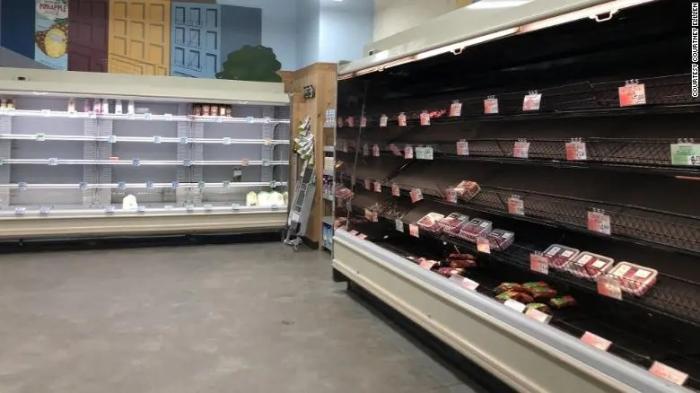
Empty shelves at a Trader Joe’s supermarket on Spring Street, New York. Photo: CNN

A news report, which seems unusual, is going around the world: CNN claims that there are shortages in supermarkets in the United States. It added that those who run the establishments do not see a solution in the short term, while “disgruntled” shoppers have given “vent to their frustration on social networks”.

Images of empty shelves at stores such as Trader Joe’s, Giant Foods and Publix astound those who still cannot believe the fact that there could be shortages in the land of consumerism.

According to CNN, the causes of the shortages are multiple. The two-year pandemic and the impact of the disease on the lack of personnel for functions such as transportation and logistics, which in turn affects the delivery of products and the restocking of stores.

The National Association of Grocery Stores indicates that many of its members have less than 50% of their workforce. Add to this a continuing shortage of truck drivers and record congestion at the ports.

$2.4 trillion was the value of U.S. imports in 2020, according to Statista. Demand for imported food products grew because it is cheaper to bring them in than to produce them. Consumption patterns that favor frozen and packaged products, which require a powerful industry for permanent supply, also play a role.

Due to the pandemic, import levels have decreased due to the impossibility of guaranteeing the transfer of goods from one country to another, and this affects the supply chain, to which is added the lack of suitable personnel to work, due to the increase of contagions within the country due to the circulation of the Omicron strain.

CNN reported that sick leave accounts for 60% of the total number of infections in the country, in addition to quarantine isolations and distancing protocols.

In addition to this situation, there are adverse weather conditions, with very low temperatures, as well as drought and fires that damaged crops such as wheat, corn, soybeans and coffee.

Today, in addition, the population is panicking about shortages and hoarding, which contributes to a further and rapid decrease in supply.

The increase in empty shelves and prices also poses a danger to Biden and the Democrats, as the Republican narrative exposes the ineffectiveness of the president, who promised, when he took office, to contain COVID-19 and economic dislocation for millions and millions of Americans. The crisis implied by the pandemic is visible even in the country that sustains its abundance at the expense of the world.

Share this:

  • Click to share on Twitter (Opens in new window)
  • Click to share on X (Opens in new window)
  • Click to share on Facebook (Opens in new window)
  • Click to share on LinkedIn (Opens in new window)
  • Click to share on WhatsApp (Opens in new window)
  • Click to email a link to a friend (Opens in new window)

Cuba mourns the death Alicia Jrapko

4 years ago GranmaAlicia Jrapko, Cuban Five

Cuba mourns the death of prominent solidarity activist Alicia Jrapko (+ Video)

Her fundamental work was the struggle for the release of the Five Cuban patriots, unjustly imprisoned for monitoring terrorist activity in the United States against Cuba.
By Nuria Barbosa León
January 12. 2022

Translated and edited by Walter Lippmann for CubaNews.

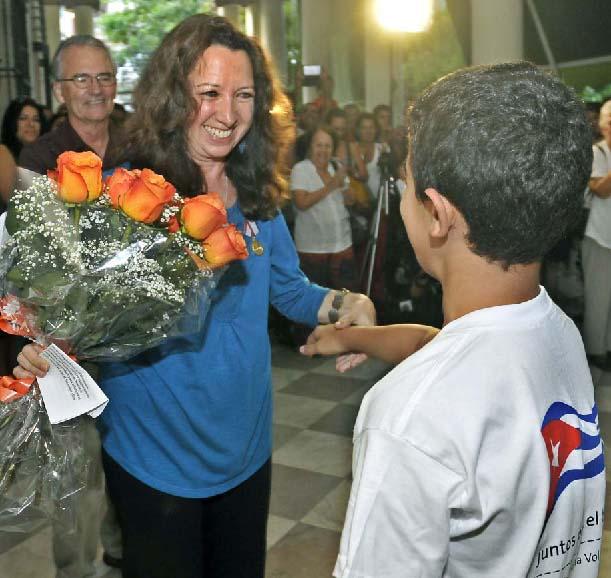
Upon receiving the Friendship Medal, she reaffirmed her commitment to defend the Cuban Revolution until her last days. Photo: José Manuel Correa

The First Secretary of the Central Committee of the Communist Party of Cuba and President of the Republic, Miguel Díaz-Canel Bermúdez, lamented the death of the tireless Argentine fighter Alicia Jrapko, who devoted her life to fight for justice on behalf of her disappeared comrades. She fought with determination for the return of Elián González, the freedom of the Five and against the blockade.

“Farewell sister,” Diaz-Canel wrote on Twitter. Also, Foreign Minister Bruno Rodríguez Parrilla expressed his heartfelt condolences for the death of the solidarity activist of Argentine origin and resident of Oakland, California, who had to fight against a malignant tumor for more than two years.

#Cuba mourns the death of the tireless Argentine fighter Alicia Jrapko, who devoted her life to fight for justice on behalf of her disappeared comrades. For the return of Elián, the freedom of the Five and against the #Blockade she fought to the end. Farewell sister. pic.twitter.com/yqeJKDFxux
– Miguel Díaz-Canel Bermúdez (@DiazCanelB) January 12, 2022

Granma spoke with her during the solidarity event held in Havana from November 1-3, 2019, where she expressed her faithful activism as coordinator of the International Committee for Peace, Justice and Dignity of the Peoples in the US.

She urged us to “reflect on the fact that today the U.S. is a convulsed society with a decaying system. The government chooses which countries to attack and which to support, depending on their behavior in the face of imperial laws. Today the enemy for them is Venezuela, Cuba, Bolivia, Syria and other nations that have chosen to protect their sovereignty without bowing to imperialist interests.

It was with deep sorrow that we learned of the passing of Alicia Jrapko, a close friend of #Cuba and a devoted defender of just causes. Her support to the struggle for the return of the Five and for the end of the blockade was extraordinary.

Heartfelt condolences to her family and friends. pic.twitter.com/P3xAMZUHvo
– Bruno Rodríguez P (@BrunoRguezP) January 12, 2022

“Cuba has done nothing to the U.S., it has never attacked it, but that government must justify its actions to divert attention so that people cannot reflect on the chaos inside the country. There are many internal problems in terms of unemployment, racism, drugs, murders and other evils. It is a society that shows a face of hatred, xenophobia, instead of messages of love and peace,” argued the woman who headed the International Committee for the Freedom of the Five in the United States.

“I have hope, because in the United States we unite and fight to conquer our rights. Every day we fight and somewhere that society is going to explode,” said Alicia Jrapko, winner of several distinctions, among them the Felix Elmuza Medal awarded by the Union of Journalists of Cuba, the Shield of the city of Holguin and the Friendship Medal granted by the Council of State of the Republic of Cuba, at the proposal of the Cuban Institute of Friendship with the Peoples.
———————————————————————————————————–
Video: Cuban TV prime-time news report on Alicia Jrapko’s passing. No subtitles.

Share this:

  • Click to share on Twitter (Opens in new window)
  • Click to share on X (Opens in new window)
  • Click to share on Facebook (Opens in new window)
  • Click to share on LinkedIn (Opens in new window)
  • Click to share on WhatsApp (Opens in new window)
  • Click to email a link to a friend (Opens in new window)

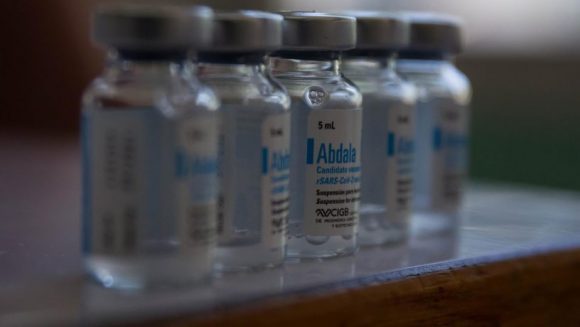
Wonderful repercussions of Abdala in Mexico

4 years ago CubaDebate, TranslationsAbdala, Mexico, vaccines

cuba-debate

Wonderful repercussions of Abdala in Mexico

By Luis Alberto Rodriguez Angeles
January 11, 2022

Translated and edited by Walter Lippmann for CubaNews.

The Cuban ABDALA vaccine arrives in Mexico. Photo: CD Archive

The Revolution celebrates 63 years in an unprecedented scenario, yes, but what does not change is the result: triumph in the face of adversity, resistance in the face of war and the balance undefeated from 1959 to date. I can hardly imagine the size of the embarrassment that the Empire must feel as the years go by without being able to defeat, with all its dollars, that small socialist island that does not account for even 10% of the total population of the United States. What anger. What a shame. And how good.

So, despite the millions coming from the money of the American working class that the White House throws year after year into subversion projects against Cuba, the island goes. The results of Cuban science in the face of covid-19 are the new Playa Girón of the imperialists. What before was defended with rifles, today was won with vaccines.

First Donald Trump and then Joseph Biden tried to take advantage of the terrible health crisis to choke the country’s economy. In a strategy that evoked the sinister Harry Truman, who unleashed the atomic nightmare on Japan in order to “save lives”, these presidents occupied the pandemic to sow unrest with the aim of promoting the counterrevolution. And again, they failed.

Today, Cuba is one of the few countries in Latin America and the world to vaccinate its entire population. With two exceptions: the island also vaccinated its children and did so with its own vaccines.

Indeed, unlike nations like Mexico, which met the goal with imported biologicals, the largest of the Antilles forged its solutions. In this way, the country is about to sell to the Government of Andrés Manuel López Obrador a good shipment of doses of Abdala, the work of the Center for Genetic and Biotechnological Engineering that has astonished the world.

At the end of December, the Federal Commission for the Prevention against Sanitary Risks (Cofepris), of the Mexican Ministry of Health, approved the use of Abdala. In 2022, many people in Mexico will be vaccinated with the fruit of revolutionary medical science, just as they will in other countries such as Venezuela or Saint Vincent and the Grenadines.

The repercussions of this news are great. It is the most influential country in the Latin American continental area, placing the Cuban biological in the same range of the Pfizer or AstraZeneca vaccines (something that the prestigious magazine The Lancet had already done ).

The event constitutes a blow to the ego of the Empire which, for months, has tried to undermine the prestige of the island laboratories. And a hard lesson to the media monopolies that continued the post-truth game by attacking vaccines made in Cuba. It is therefore expected that many more countries will join this example.

For Mexico, the use of Abdala is a very important reinforcement in its fight against covid-19. The country has made an effort to immunize the majority of its population over 15 years of age, and it has succeeded, but, in its eagerness, it has had to deal with the governments of the United States and Europe, as long as there are no shortages of immunizations. A painful case happened to him with Russia, a country that never complied with the shipment of 25 million Sputnik vaccines, forcing the federal government to negotiate even more with Washington.

So Abdala will help supply the necessary arrests that López Obrador has had to carry out in obtaining biologics, buying Cuban vaccines at a lower price, with results equal to or greater than their US and English counterparts.

Even following the example of Havana, the country could vaccinate boys and girls, which it has not been able to do since only the Pfizer dose is approved for that purpose. Thus, the friendship between Mexico and Cuba scores another success.

(Taken from From Below MX )
Printed article from: Cubadebate: 

http://www.cubadebate.cu/especiales/2022/01/11/las-maravillosas-repercusiones-de-abdala-en-mexico/print/

Share this:

  • Click to share on Twitter (Opens in new window)
  • Click to share on X (Opens in new window)
  • Click to share on Facebook (Opens in new window)
  • Click to share on LinkedIn (Opens in new window)
  • Click to share on WhatsApp (Opens in new window)
  • Click to email a link to a friend (Opens in new window)

Great actor Sidney Poitier dies at 94

4 years ago Granma, Translationsmovies, Sidney Poitier

Great actor Sidney Poitier dies at 94

He was the first African-American actor to win an Oscar (Lilies of the Field, 1964), becoming a symbol of Hollywood during the civil rights movement.

Author: International Editor | internacionales@granma.cu

January 8, 2022 11:01:58 AM

Translated and edited by Walter Lippmann for CubaNews.

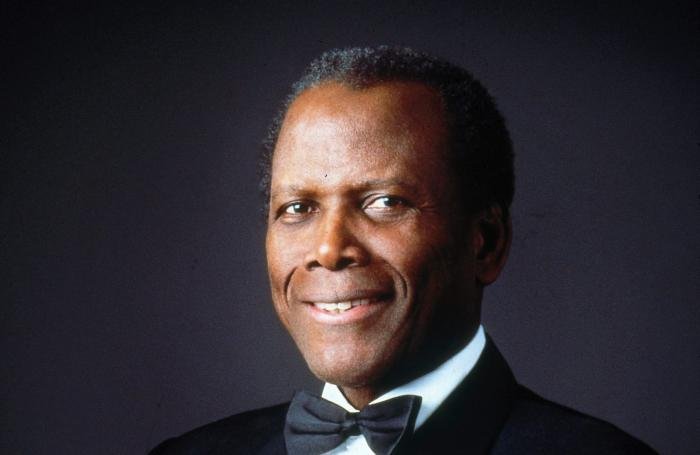
Photo: hipertextual.com

Sidney Poitier, the first African-American actor to win an Oscar (Lilies of the Field, 1964), has died at the age of 94, becoming a symbol of Hollywood during the civil rights movement, a period in which he became the biggest star in the American film industry.

The death of Poitier, who was also a civil rights activist and diplomat, was confirmed by Clint Watson, Press Secretary to the Prime Minister of the Bahamas.

CNN and the German agency Deutsche Welle do not specify details about the death of the legendary actor, born in Miami in 1927 and whose parents were natives of the island of Cat.

In addition to the Oscar, Sidney Poitier received two Oscar nominations, ten Golden Globe nominations, two Emmy Award nominations, six Bafta nominations, eight Golden Laurel Award nominations and one nomination for the Screen Actors Guild Awards.

Following the death of Kirk Douglas in 2020, Sidney Poitier was one of the last survivors of Hollywood’s Golden Age. In addition to an incredibly prolific acting career, between 1997 and 2007 he also served as the Bahamian ambassador to Japan and was on the board of Disney between 1995 and 2003.

He acted in some 50 films, the most important of which include Fugitives, Porgy and Bess, Paris Blues, To Sir, With Love, Lilies of the Field and In the Heat of the Night. In the 1980s and 1990s, his activity slowed down but many will remember him for his performance as Donald Crease in Sneakers, released in 1992 alongside Robert Redford, Dan Aykroyd, Ben Kingsley, Mary McDonnell, River Phoenix and David Strathairn.

He also directed nine films, many of them comedies, in the 1970s and 1980s. Uptown Saturday Night is probably the best-known. From his success, Sidney Poitier directed two more related films that are considered a trilogy: Let’s do it again and A Piece of the Action, all three with Bill Cosby.

Share this:

  • Click to share on Twitter (Opens in new window)
  • Click to share on X (Opens in new window)
  • Click to share on Facebook (Opens in new window)
  • Click to share on LinkedIn (Opens in new window)
  • Click to share on WhatsApp (Opens in new window)
  • Click to email a link to a friend (Opens in new window)

Making even the impossible possible

4 years ago Granma, TranslationsCuban Five, Gema, Gerardo, Senator Patrick Leahy

Gema, the most beautiful proof that Cuba can make even the impossible possible

Neither the bars nor the miles of distance prevented the emergence seven years ago of fruit of resistance and loyalty: Gema.

Author: Dairon Martínez Tejeda | internet@granma.cu
January 7, 2022 14:01:29 PM

Translated and edited by Walter Lippmann for CubaNews.


She was born “by remote control” says Gerardo Hernandez Nordelo, whom we all know as one, among five, of the Cuban Heroes condemned to the most unjust confinement in the US.

However, neither the bars nor the miles of distance prevented the emergence seven years ago of a fruit of the resistance and loyalty of man: Gema was and is the most beautiful proof of the lineage of the Cuban, the one who can make even the impossible possible.

#GemaDeCuba , the firstborn of Adriana and @GHNordelo5 is indeed the most beautiful proof that even the impossible can be made possible. #CubaViveYCelebra, posted the First Secretary of the Communist Party of Cuba and President of the Republic, Miguel Díaz-Canel Bermúdez, on his Twitter account on the girl’s birthday.

This January 6, the eldest daughter of Gerardo and his wife Adriana Pérez O Connor, turns one year older, and with it come back to memory the past memories: the two life sentences and fifteen years in prison, the hard separation of the couple, and the worst, the absence of children, without the slightest possibility of physical contact to conceive them.

But the strength of faith and hope was greater than the enemies’ determination to punish the Cuban Revolution. During 2013 and 2014 Washington and Havana conducted negotiations that included the possibility of assisted reproduction treatment for Adriana Perez. She had requested it and after several denials, U.S. Senator Patrick Leahy, passing through our land, finally served as mediator and guarantor of the process.

Leahy had visited the island on multiple occasions since the 1990s and is opposed to the U.S. blockade against the island. In 2013 he came with his wife, Marcelle Pomerleau, a nurse by profession. They met with Adriana, who confessed her fear of losing the opportunity to have a baby with her husband.

The response to such a demand was almost immediate, circumventing the laws of the federal prison system that does not allow conjugal visits.

In early 2014, the first insemination attempt was made, but failed. But the second, a couple of months later, was successful. Panama welcomed the initiative and the Cuban government paid for everything.

Thus, the news of Adriana’s pregnancy would bring joy not only to the Cuban family, but also to allies from other parts of the world, who were watching every detail of the pregnancy, until that historic January 6, 2015, when at 8:30 in the morning of the 57th Year of the Revolution, Gema was born in Havana.

A few months earlier, on December 17, 2014, Cuba had jubilantly celebrated the complete return of its five children. With January came one more, weighing only 7.7 lbs, according to science, but in reality, she weighed more, because she carried within her the dream, the sleeplessness, the longing and the resistance of an entire people.

#GemaDeCuba , the firstborn of Adriana and @GHNordelo5 is, indeed, the most beautiful proof that even the impossible can be made possible. #CubaViveYCelebra https://t.co/r8Sxic3TgZ

– Miguel Díaz-Canel Bermúdez (@DiazCanelB) January 7, 2022

Share this:

  • Click to share on Twitter (Opens in new window)
  • Click to share on X (Opens in new window)
  • Click to share on Facebook (Opens in new window)
  • Click to share on LinkedIn (Opens in new window)
  • Click to share on WhatsApp (Opens in new window)
  • Click to email a link to a friend (Opens in new window)

Right-wing extremists threaten US civil war

4 years ago CubaDebate, TranslationsDonald Trump, US politics

cuba-debate

Right-wing extremists threaten US civil war 

By David Brooks 
January 6, 2022
Translated and edited by Walter Lippmann for CubaNews.

Pro-Trump protesters storm the grounds of the US Capitol in Washington, DC, USA, January 6, 2021.

The increasing political violence promoted by anti-immigrant extremists is threatening a “civil war”, as part of their strategy to regain national political power.

The threat of political violence, even armed, is open and explicit, broadcast daily on social networks, radio, television by right-wing forces sheltered by a Republican Party now subordinate to Donald Trump and his allies.

Authorities, from the Department of Homeland Security, the FBI and other intelligence and national security agencies repeat that the greatest threat of “terrorist” violence in the United States comes from extremist US forces, many clustered around white supremacy and anti-immigrant doctrines , including neo-Nazis.

Racist symbols and references prevail in rallies and communications of these forces, such as the flag of the pro-slave Confederation of the First Civil War, along with neo-fascist images and slogans. Many were carried by some of those who participated in the assault on the Capitol on January 6.

“It seems that a civil war will be inevitable” and “we will have a civil war in the streets before Biden is president”, were some of the multiple versions of this type of message that flooded social networks at the end of the 2020 presidential election.

According to a new investigation by ProPublica and the Washington Post, more than 650,000 such messages were uploaded to Facebook threatening civil war, executions of politicians (including Trump’s vice president and the Democratic speaker of the House of Representatives) and others. of violence, between the day of the presidential elections, in early November, and January 6 with the assault on the Capitol.

Those messages have not stopped, more than a year after the elections, while Trump and an overwhelming majority of Republicans – including several legislators – continue to promote the version that Joe Biden won by a large fraud in which undocumented people participated.

The majority of Republicans, according to polls, reject that the assault on the Capitol was an illegal act, and consider instead that it was a legitimate protest against “tyranny”, and even against “radical left Democrats.” Some, including legislators, refer to the more than 700 arrested for their participation in that assault in terms of “political prisoners.”

Trump insists on employing rhetoric designed to justify political violence, calling anyone who disagrees with him an “enemy” of the homeland, and for this he even uses the now outdated, but apparently still effective, rhetoric of the cold war. 

The House of Representatives and the Senate of the United States, in emergency recess before the entrance of protesters supporters of President Donad Trump to the Capitol, the headquarters building of the federal Congress in Washington. Photo: Saul Loeb / AFP

Democrats, including Biden, “are vicious, violent and brutal on the radical left,” Trump wrote to his supporters a few days ago, criticizing the handling of foreign and domestic policy stating that “they are letting criminals and murderers into our country. country ”, referring to migrants. He concluded: “friend, this is what happens in communist countries and dictatorships. I will never stop fighting to save America. “

In other words, this is not a political dispute between opponents, but a struggle to “save” the country from the “enemy”.

This rhetoric is directed at the same forces that not only express their willingness to use violence, but are also armed. At least 23 million firearms were purchased in 2020, an increase of 64 percent compared to 2019 (other estimates estimate a total of 40 million weapons purchased by 17 million people). In 2021 millions more were added to that citizen arsenal in which there were already more than 300 million weapons (there are no official figures). Most buyers identify as either Conservative or Republican. Although before the most frequent justification for its purchase was for hunting or sports use, that has changed, as many more argue that it is for “self-defense” or citizen protection against “abuses” by governments.

Furthermore, at political rallies, demonstrations and marches, Trump supporters and / or right-wing groups proudly display their weapons. Some have used them with fatal effects, others have appeared in protest actions where they threaten opposition politicians, even in government offices, from the Capitol, in Washington, to official state facilities.

Political analysts continue to express surprise that, suddenly, a significant sector of this country is apparently ready to dispute the policy with bullets. “The idea that people would take up arms against an American election has gone from being utter nonsense to something we have to prepare for,” Professor Adam Winkler of the University of California, Los Angeles, told Newsweek. expert in arms and constitutional law.

The House of Representatives and the Senate of the United States, in emergency recess before the entrance of protesters supporters of President Donad Trump to the Capitol, the headquarters building of the federal Congress in Washington. Photo: Saul Loeb / AFP

“America today, again, is headed for civil war … the political problems are both structural and immediate, the crisis is long-term and accelerating,” said commentator Stephen Marche, author of the new book The Next War. civil, to The Guardian. He pointed out that the political system could collapse due to a crisis of legitimacy, nurtured by a right wing that promotes violence to conquer power.

Democrats, including Biden, “are vicious, violent and brutal on the radical left,” Trump wrote to his supporters a few days ago, criticizing the handling of foreign and domestic policy stating that “they are letting criminals and murderers into our country. country ”, referring to migrants. He concluded: “friend, this is what happens in communist countries and dictatorships. I will never stop fighting to save America. “

In other words, this is not a political dispute between opponents, but a struggle to “save” the country from the “enemy”.

This rhetoric is directed at the same forces that not only express their willingness to use violence, but are also armed. At least 23 million firearms were purchased in 2020, an increase of 64 percent compared to 2019 (other estimates estimate a total of 40 million weapons purchased by 17 million people). In 2021 millions more were added to that citizen arsenal in which there were already more than 300 million weapons (there are no official figures). Most buyers identify as either Conservative or Republican. Although before the most frequent justification for its purchase was for hunting or sports use, that has changed, as many more argue that it is for “self-defense” or citizen protection against “abuses” by governments.

Furthermore, at political rallies, demonstrations and marches, Trump supporters and / or right-wing groups proudly display their weapons. Some have used them with fatal effects, others have appeared in protest actions where they threaten opposition politicians, even in government offices, from the Capitol, in Washington, to official state facilities.

Political analysts continue to express surprise that, suddenly, a significant sector of this country is apparently ready to dispute the policy with bullets. “The idea that people would take up arms against an American election has gone from being utter nonsense to something we have to prepare for,” Professor Adam Winkler of the University of California, Los Angeles, told Newsweek. expert in arms and constitutional law.

“America today, again, is headed for civil war … the political problems are both structural and immediate, the crisis is long-term and accelerating,” said commentator Stephen Marche, author of the new book The Next War. civil, to The Guardian. He pointed out that the political system could collapse due to a crisis of legitimacy, nurtured by a right wing that promotes violence to conquer power.


Share this:

  • Click to share on Twitter (Opens in new window)
  • Click to share on X (Opens in new window)
  • Click to share on Facebook (Opens in new window)
  • Click to share on LinkedIn (Opens in new window)
  • Click to share on WhatsApp (Opens in new window)
  • Click to email a link to a friend (Opens in new window)
Page 8 of 144« First«...678910...203040...»Last »
 Subscribe to Blog via Email 

Enter your email address to subscribe to this blog and receive notifications of new posts by email.

Join 133 other subscribers
February 2026
M T W T F S S
 1
2345678
9101112131415
16171819202122
232425262728  
« Aug    
 Tags 
Cuban SocietyWomenUS SocietyCuba-US relationsCovid-19US politicspeopleLGBTblockadeFidel CastroCuban economymoviesviolenceVenezuelatourismus foreign policyDonald TrumpcoronavirustechnologyChinaBoliviaracismCuban FiveCuban PoliticsBlack strugglebioUS-Cuban relationsbooksMexicoRussiaCubamusicPalestine-IsraelSexGender ViolenceterrorismsubversionTrumpU.S. SocietyCuban healthBarack ObamaPCCArgentinaBidensports
 Meta 
  • Log in
  • Entries feed
  • Comments feed
  • WordPress.org

Privacy Policy

WL-Logo
 Fair use notice of copyrighted material: 
This site contains some copyrighted material that in some cases has not been specifically authorized by the copyright owner. We are making such material available in our efforts to advance the understanding of politics, human rights, the economy, democracy, and social justice issues related to Cuba. We believe this constitutes a 'fair use' of any such copyrighted material as provided for in section 107 of the US Copyright Law. In accordance with Title 17 U.S.C. Section 107, the material on this site is distributed without profit to those who have expressed a prior interest in receiving the included information for research and educational purposes. For more information go to: www.law.cornell.edu/uscode/17/107.shtml If you wish to use copyrighted material from this site for purposes of your own that go beyond 'fair use', you must obtain permission from the copyright owner.
February 2026
M T W T F S S
 1
2345678
9101112131415
16171819202122
232425262728  
« Aug    
2015, 2016, 2017, 2018, 2019, 2020, 2021, 2022, 2023 © Walter Lippmann
Touched by
 

Loading Comments...
 

You must be logged in to post a comment.

    Skip to toolbar
    • About WordPress
      • WordPress.org
      • Documentation
      • Learn WordPress
      • Support
      • Feedback
    • Log In