
In China, the Battle Continues

In China, the Battle Continues
By Carlos Miguel Pereira Hernández
March 22, 2020
Translated and edited by Walter Lippmann for CubaNews.
Image: Cuba’s Blog in China.
As you know, there has been encouraging news of the last few days in China indicating substantial progress towards controlling the spread of the virus at the mainland level. Together with the strengthening of quarantine measures in major cities to stop the upsurge of new cases “imported” from abroad, are reflected important changes in the scenario we have experienced in recent weeks.
While cities such as Wuhan and others, considered epicenters or areas most affected by the epidemic could move towards a gradual relaxation of the quarantine measures imposed, others such as Beijing and Shanghai will have to remain under strict mandatory quarantine measures for those arriving by air from abroad. This will involve adjustments to air routes, with previous stops in other cities and even changes in the planned destinations of international flights, as part of the measures taken to control the upsurge of new cases arriving from abroad. Only six new cases were reported in Beijing in this way.
The situation in Hong Kong, Taiwan, and Macao still remains complicated, although the trend of increasing new cases is also showing an encouraging slowdown.
As it is known, the situation of all our colleagues and relatives in China has remained unchanged and uneventful. This is largely thanks to the joint efforts of all and the discipline maintained in complying with the measures indicated. However, while the situation here is improving after two very critical months, in the rest of the world, including our country, it is tending to worsen and become more critical. That is why we must redouble our efforts so as not to compromise what has been achieved, to avoid complacency and, at the same time, to prepare for a gradual return to normality.
These have been intense days. In addition to taking care of ourselves and preserving the health of our collective to the maximum, it has been necessary to deploy an intense battle for the truth in our networks. [We want] to close the way to the lies and manipulation that have proven to be more contaminating and lethal viruses than COVID-19 itself. From our pages in different platforms, we responded to incredulous and manipulative people about the successful use of nebulized applications of Cuban interferon manufactured in the Changheber plant, both from the preventive point of view by the Chinese medical staff before attending the patients and in the treatment itself of the patients infected with the virus.
Just a few days ago, when we were in the midst of that other battle, in an inexplicable way, Facebook, based again on its questionable algorithms, surprisingly deleted the official page of our embassy, from which we had been informing the world in an objective and systematic way about what had happened in these long months of the epidemic, the situation of our compatriots and the work of the diplomatic mission and the consulates in the People’s Republic of China.
However, Cuba’s commitment to the truth can never be erased, not even with all the clicks in the world. Barely 24 hours later, a new page was created from which we have followed and will continue to disseminate to the world our bilateral work, as well as reiterating our support and recognition to the Chinese people and government. [In addition, there are such] humanist acts as the decision to receive the British cruise ship infected with COVID-19 in Cuban territory to enable its passengers to return to their countries of origin, or the decision by China and Cuba to send medical brigades and to strengthen international cooperation as the only effective way to win this battle for life.
Taking into account the evolution of the situation in China, the embassy, the consulates general of Shanghai and Guangzhou, the Cuban representative offices and the Antillean personnel on official missions will continue to implement planned measures, which take into account the persistence of the danger and the call for strict compliance with measures to avoid contagion, in the midst of a gradual return to normality.
The medical post will remain in operation at the embassy headquarters, with the services of the medical team that is among us. It will continue to support us in the important task of providing medical guidance and advice, and also in complying with the medical protocol established since the beginning of the epidemic. Given the current epidemiological conditions of our country, this acquires even greater importance in order to ensure that nationals traveling to our country strictly comply with it. The impeccable implementation of that protocol has enabled dozens of our compatriots to return to the country in good health and no cases of contagion from China have been reported so far.
As it has been reported through different channels, all Cubans who plan to return to the country in the next few days must also strictly comply with the indicated medical protocol, for which they must contact the corresponding consular office and the medical post.
On the other hand, taking into account the evolution of the situation and the gradual reestablishment of face-to-face work by the Chinese institutions, starting tomorrow, Monday, March 23, the Cuban embassy and consulates in China will begin to resume their work in person, which will be done in a flexible manner according to the situation in each locality and in coordination with the respective heads of offices and consulates according to the priorities to be undertaken.
In the case of the Embassy, the following measures will be mandatory:
The mandatory use of masks. Once you arrive at the parking lot and before entering the offices, have your temperature taken at the medical post.
Hands and shoes will be disinfected at the entrance of the Embassy.
No inter-office visits will be allowed and only those meetings duly authorized and coordinated by the embassy management and with the measures duly taken.
Do not use common glasses, cups or spoons. Each colleague must have and use his or her own.
Meetings with external personnel will be analyzed on a case-by-case basis and with due authorisation and will be carried out in strict compliance with the measures indicated.
It is necessary that the offices are kept clean and aired at least twice a day for 30 minutes each time.
The Consular Office in Beijing and the Consulates General in Shanghai and Guangzhou will continue to provide services as before. Secretaries may be incorporated as long as services are provided for which they are required and with strict compliance with all measures, including the use of nasobuco on a permanent basis. The consulates must permanently have all the resources to ensure prevention and timely disinfection.
In the case of the group of students studying at different Chinese higher education institutions, general compliance with these measures will continue to be observed, and they will have to be adapted to the characteristics of each university and the decisions that will be announced by the corresponding authorities for the current school year. For the time being, the Chinese authorities recommend that students abroad do not return to China until otherwise indicated.
To the resident Cuban community, we reiterate that the embassy and its consulates will remain as they have been up to now, open and in permanent communication with you, to assist and support you in whatever may be necessary. As soon as the situation allows it, we will meet to take stock of what has happened during these days, in which the unity and cohesion of all becomes the main possible and necessary path towards the future.
To all of you, no matter the task or mission that has brought you to China or the migratory status you have today, I reiterate, on behalf of the leadership of our Embassy, that it has been a true honor to have shared these difficult days with you. We have made real the permanent call of President Miguel Díaz-Canel Bermúdez to “think as a country”. At the same time, I congratulate you for the exemplary attitude that has been maintained, which is allowing us to arrive little by little at the goal and to contribute our share in the battle that is being fought. I am not exaggerating if I say that you have been up to the task of our always hardened people and also of the brotherly and stoic Chinese people.
Reciprocal solidarity between Chinese and Cubans has always been present in the common history of our peoples. There are many and countless pages written throughout these years, in which each party has spared no time or effort in supporting and reaching out to the other, in the midst of situations of disasters, epidemics, media campaigns, and unprecedented manifestations of hatred and economic warfare.
These have also been days of deep solidarity and mutual support. Cuba has not only been among the leading countries in supporting and recognizing the epic battle waged by China, which has also been a crusader for the world. But China has also provided its concrete contribution in solidarity in many ways. These include the joint work of experts who have joined forces in the development of new medicines or therapies to confront a disease that, beyond announcements and predictions, remains dangerously unknown. Likewise, Chinese and Cuban doctors are working side by side today to confront COVID-19 in the region of Lombardy, Italy, one of the most affected regions in that country.
More recently, after the appearance of the first cases of the new coronavirus in the country, we have felt the human and supportive accompaniment of the Chinese government and authorities. They were among the first again, as well as their people, their companies, institutions and friends in general, to whom we extend our deepest gratitude. Increasingly, they contact us from all parts of China to send us their encouragement and support and their confidence in the capacity of our country and its health system to face the COVID-19.
As has already been announced by the Chinese authorities, an important government donation is ready, which will be joined by others that will generously send Chinese companies with a long history of links with the Island, including equipment, inputs, and others of great practical value that will reinforce the proven capacity of the Cuban health system to act, always focused on preserving the life of the people. In addition, a modest donation is being prepared by the community of Cuban residents through the Association of Cuban Residents in China “Ernesto Che Guevara”.
The battle continues, there is still much to be done. COVID-19 constitutes a global threat that must be faced with the cooperation and responsibility of all. In its prevention and containment, solidarity and international cooperation is the only possible way.
Beijing, 22 March 2020
Free Distribution of Nasobucos Begins

Free Distribution of Nasobucos Begins
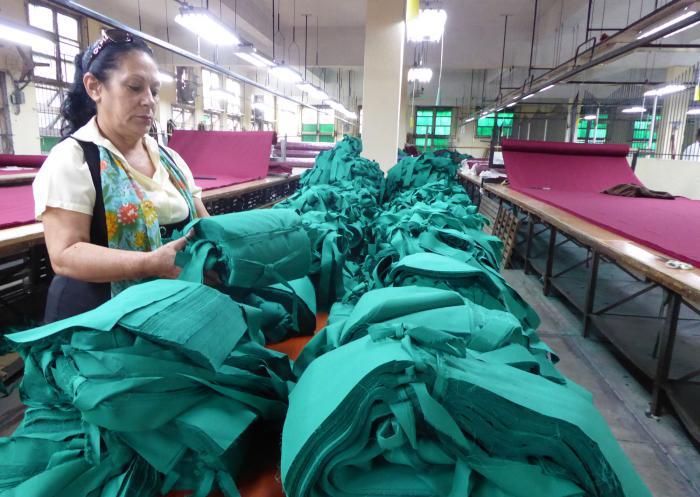
This company belonging to the Ministry of Culture of Cuba, which produces and markets goods for the art industry, is today one of the institutions that have joined the production of nasobucos throughout the country.
By Redacción Cultural
March 23, 2020
Translated and edited by Walter Lippmann for CubaNews.
Photo: Germán Veloz Placencia
The National Council for the Performing Arts promotes the actions of Tecnoescena, a company belonging to the Cuban Ministry of Culture that produces and markets goods for the artistic industry, and which today is one of the institutions that have joined the production of nasobucos throughout the country.
According to José Martínez, its deputy director, this company is producing this add-on for free distribution, guaranteeing, fundamentally, the national schools of the artistic education system, as well as in the Theater and Dance centers of Havana, in some groups, among which is La Colmenita. Other cultural institutions, whose work will interact with the public,will also benefit, specifically in the area of tourism.
Tecnoescena is joined by three groups of artistic creators from the Cuban Fund for Cultural Goods (FCBC) in Ciego de Avila, who have made available to their province 5,000 nasobucos, made by them.
These timely initiatives are those that reinforce the action of the country’s main organizations, focused on the work of preventing the new coronavirus. (Cultural Editor)
Che Guevara in Times of Pandemic

Che Guevara’s Gestures in Times of Pandemic
In these days when everyone shows the scars on their skin and in their consciousness, fruit of battles won and lost, I think that the gestures of Che are drawn in this Cuba that breaks the borders to accompany the people infected by the Coronavirus.
By Claudia Korol
March 22, 2020
Translated and edited by Walter Lippmann for CubaNews
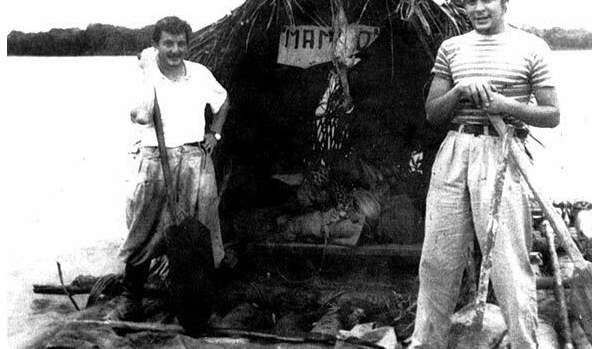
He was not yet Che, when he traced a route of travel through the lepers of the continent. He wasn’t the romantic hero or the guerrilla. He was a sensitive doctor willing to “touch” human pain, a product of poverty, stigmatization, isolation, and fear.
In their journey across the continent together with Alberto Granado, they met and challenged the logic of health care, visiting the lepers from Cordoba to Peru and Brazil. They sought answers in their dialogues with the Peruvian doctor Hugo Pesce, who shared with them everything from the writings of José Carlos Mariátegui – the rebel communist who questioned dogmas and made passion a fundamental part of the revolution – to his knowledge of the daily fight against leprosy.
In those years Ernesto wrote to his father:
“[…] farewells like the one the sick people in the Lima Leper colony gave us are the kind of farewells that invite you to go on […] All the affection depends on our going there without our duster or gloves, shaking hands with them like any neighbor’s child and sitting among them to talk about anything or play soccer with them. It may seem to you like a pointless comradely, but the psychic benefit to one of these sick people treated like a wild animal, the fact that people treat them like normal beings is incalculable and the risk involved is extraordinarily remote […]’.
There are many other writings by the young Guevara, in which he expresses his conviction that there is no true medicine that does not “touch” the roots of pain, and that does not break those imposed conditions of isolation, when they do not build bridges in which collective solutions to urgent needs circulate back and forth. There is no social medicine that does not question the capitalism that enriches itself by sowing disease and multiplying misery.
Was the young Fuser (Furibundo Serna, as his friends called him) an irresponsible boy when he visited the lepers and treated the people who survived there without fear or prejudice?
Was Che irresponsible when he decided to join his fate, as José Martí said, to the poor of the earth, making his way in the guerrilla struggle?
Many tried to make him irresponsible, before and after his immense figure multiplied in the hearts of the people of the world. To those who did, he replied in his ironic style, in his farewell letter to his parents written in 1965: “Many will call me an adventurer, and I am one, only of a different kind and one of those who put their skins on to prove their truths.
Che put his skin, body and soul, to fight the virus of capitalism, because he knew that its expansion and multiplication would only lead to new and increasingly dangerous wars, invasions, dictatorships, epidemics, and social diseases. His generous seed was tattooed on the social consciousness of the people
In these days when everyone shows off the tracks on their skin and in their awareness, fruit of battles won and lost, I think that the gestures of Che are indicated in this Cuba. [The Cuba] that opens its borders to receive the people infected by the Covid-19 virus that arrived in the English ship. I think that they are in the Cuban doctors who travel to Brazil, after the Bolsonaro government violently expelled them, subjecting them to humiliation and persecution as criminals; in those who travel to Madrid, to Lombardy, and to other destinations where the threat multiplies. Wouldn’t they be “safer”, wouldn’t they feel more “cared for”, taking refuge on the island and closing its borders?
Here, the profound internationalism of those who feel / live the world as a territory is put to the test, in the face of the narrow nationalisms and localisms that raise walls, as if the viruses could not get over them.
I think that the traces of Che, his gestures, are in the many doctors, nurses, health workers, who are exposed to the risks of the body to body, but who demand, more than the applause, that an adequate budget is allocated for health, for a healthy diet, to guarantee proper hygiene in all the houses, to safeguard the minimum conditions of care in hospitals, wards, and in the slums where the ambulances do not arrive.
Is the budget not enough, they say? Let’s make the collective gift that our mother from Plaza de Mayo, Norita Cortiñas, asked us for her birthday, and let’s decide once and for all not to pay the foreign debt. What’s crazy? Yes, it could be. Mothers have always been crazy. Their madness is our mental health as a people, it’s memory against impunity.
Great crises. New answers needed. Something like demanding that the state stop police patrols from chasing us when we go out to meet a basic need, and that they allocate the means and resources to bring health and food to distant places. Water for the Wichi. Freedom for political prisoners. Care for those who survive in places of detention.
Demand from the state and at the same time, build autonomy. I think that the traces of Che are multiplying in the activists of the popular movements that today organize the arrival of food, of elements of hygiene, of attention and care for those who are in necessary isolation. Health guerrillas – including mental health guerrillas – are shaking hands with lepers, with those infected by fear, by shame, by hunger, by despair. Popular guerrillas of the embrace, of care, of intransigent rebellion against the state militarization of all dimensions of life.
I speak of the community feminists, the popular feminists, the lifeguards, building bridges from solitude to solitude. I speak of the women who take care of the picnic areas and soup kitchens, looking for ways to continue reaching those who survive every day with food. I speak of the multiplication of the memory of resistance, flooding and overflowing the social networks, so that the 30,000 know that here we are, as always, building squares in the houses if necessary, making history so that the revolutions do not fail. So that they know that neither yesterday nor today, we will leave them out in the open. That we will repeat the gestures, until no virus has a little crown. Until collective victory, against loneliness.
Does Panic Help in Pandemic Situations?
Covid-19:
Does Panic Help in Pandemic Situations?
By Danay Galletti Hernández
March 24, 2020
Translated and edited by Walter Lippmann for CubaNews.
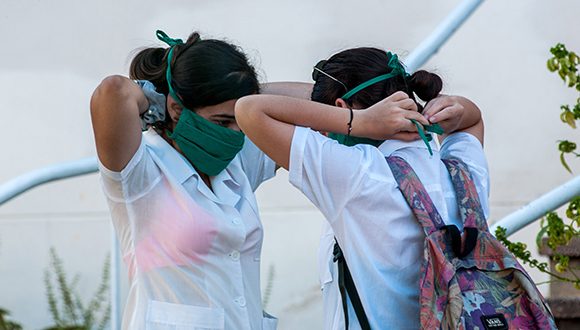
Medical students during the investigation of COVID-19. Photo: Abel Padrón Padilla/Cubadebate
Hysteria is as dangerous as social apathy, said Dr. Annia Duany, head of the Psychiatry Group at the Hospital Docente Clínico Quirúrgico Salvador Allende in Cuba, She said that confidence in the social measures taken in Cuba against COVID-19 is essential.
Panic does not help in pandemic situations and a favorable mood affects the prevention and treatment of diseases, Dr. Duany told Prensa Latina.
“It’s normal in this situation for people to experience nervousness, worry, anxiety and fear, but it’s essential to have positive coping resources. Examples being with family, seeking reliable and safe information, doing tasks and enriching our spiritual world,” he said.
On the other hand, Dr. Ana Sarracent, head of the Psychiatry Group at the Calixto Garcia Hospital, explained that although there is a risk of contagion at any age, epidemiological research indicates that those over 60 are more vulnerable to Covid-19.
“In these cases, family support is transcendental because they are more sensitive from the psychological and organic point of view. Also, extreme care and hygiene must be taken, as well as those with nervous or cognitive disorders, to ensure that they enjoy positive and happy materials,” she said.
The research work implemented to identify flu symptoms in the population and possible cases of the pandemic also reveals a significant number of adults who live alone and, therefore, need community support, Sarracent added.
They tend to have a hypochondriacal view of diseases and their situation of loneliness, as well as a diverse perception of the news broadcast on the subject, he said.
In coming days, numerous Cuban residents will arrive in the Caribbean nation and will be under isolation in response to a protection measure. The family, far from being distressed or depressed, must be aware and assume it in an appropriate manner, he said in reference to the most recent measures taken by the authorities.
About the children and how they should be treated in this context, Dr. Mabel Whilby, head of the Infant-Juvenile Group at the Pediatric Teaching Hospital of Cerro, Havana, explained that this sector of the population has different stages in psychological development and should receive information age appropriately.
The family must convey to the children that this situation will soon return to normal and then they will be able to play again with their friends, she said.
Children also have emotions, sadness and fears and must channel them, and at the same time, their parents must instill security and confidence in them through play, she added.
In this sense, conversations between adults cannot take place in front of children because they are too aware of the signs of how adults handle this situation, as they are patterns to imitate.
The specialists agreed on the importance of risk perception and insist that isolation and surveillance in homes be assumed with appropriate behavior: avoiding alcoholic beverages, smoking or neglecting eating habits.
Questions and rumors about COVID-19
Juan Padrón, Creator of Elpidio Valdés, Dies
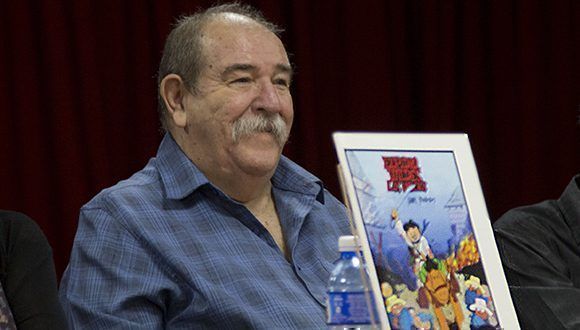
Cuban Filmmaker Juan Padrón, Creator of Elpidio Valdés, Dies
March 24, 2020
Translated and edited by Walter Lippmann for CubaNews.
Juan Padrón. Photo: Ismael Francisco/ Cubadebate.
Cuban cartoonist, caricaturist and filmmaker Juan Padrón, creator of the legendary Elpidio Valdés cartoons, died on March 24 after being hospitalized for almost a month.
His son, Ian Padrón, announced the sad news on his Facebook profile.
Our beloved father Juan Padrón has just passed away at 5.20 am today, March 24, 2020. “The last mambí” struggled for 20 days and leaves full of love and tranquility. We thank all the doctors, friends and admirers who during these days have shown their affection and admiration for this great artist who is already part of the Cuban people and the independence of Cuba. Daddy, I know you would say “don’t get so serious”… and you are right. We will always remember you as the nicest, humblest, and coolest human being we will ever meet in our lives. Thank you for Elpidio Valdés, for the Vampires in Havana and above all for being such a noble and loving father and husband. So long, compay!
Juan Padrón’s biographical journey:
He was born in January 1947 in Central Carolina, in the province of Matanzas.
He graduated from the University of Havana with a degree in Art History (1978). Since 1973 he has been working at the ICAIC Animation Studies.
He has performed several functions as part of his artistic work, including comics and cinema. In 1963 he began his artistic career as a comedian in the weekly magazine “Mella”. He published comic strips and jokes in the supplements “El Sable”, “La Chicharra” and “Dedeté” of the newspaper “Juventud Rebelde”, where he created the series “Vampires”, “Zoo”, “Comejenes”, etc. In 1970 he creates the famous character Elpidio Valdés, who appears for the first time in the pages of the weekly magazine “Pionero” and who was later included in both series and animated films.
He has had an outstanding record within the realization of animated films. He has developed diverse functions, among which we can mention: script elaboration, scenographic and storyboard design, character design, animation, animation direction and voices. He has been a judge in national and international competitions.
He has worked as a film director of several animated films made with different techniques and duration. His titles include: Elpidio Valdés’ series, Filminutos, Quinoscopios, Mafalda and Más se perdió en Cuba; feature films such as “Una aventura de Elpidio Valdés”, “Elpidio Valdés contra dólar y cañón”, “Vampiros en La Habana”, “Mafalda”, “Más se perdió en Cuba”, “Más vampiros en La Habana”.
Among the recognitions obtained by his career and the works he has directed are
- Distinction for the Centenary of “The Golden Age”.
- CIFEG Award granted by that institution as recognition.
- National Film Award (2008).
- “Distinction for National Culture”,
- Alejo Carpentier Medal,
- The “Rubén Martínez Villena” and “El Diablo Cojuelo” awards,
- “Replica of Maximo Gomez’s Machete.”
- “Order Felix Varela”
- Space for the Work of Life” Award from the Cuban Association of Social Communicators of Cuba.
- “Viva papi!”: in 1982 he won Second Choral Prize. IV International Festival of New Latin American Cinema. Havana; in 1989, it was selected among the 30 best animation films by the Cultural Council of the Film Institute.
- “Elpidio Valdés against dollar and cannon”: in 1983 it won Second Choral Prize. V International Festival of New Latin American Cinema. Havana.
- “Vampires in Havana”: in 1985 it won Third Coral Prize. VII International Festival of the New Latin American Cinema. Havana. 1986: Diploma of Honor.
- “The mushroom festival”: in 1991, it won Second Choral Prize. XIII International Festival of the New Latin American Cinema. Havana.
- “More vampires in Havana”: in 2003, it won First Choral Prize. XXV International Festival of New Latin American Cinema. Havana.
- Three of his films are part of the collection of the Museum of Modern Art of New York.
Cuban President expresses condolences fover death of Juan Padrón
The President of the Republic of Cuba, Miguel Díaz-Canel, expressed through the social network Twitter, his condolences for the death of the outstanding filmmaker and cartoonist Juan Padrón, due to a serious lung disease.
Juan Padrón, father of our beloved Elpidio Valdés, genius and figure of the Cuban mambisado in such an authentic animation that it became real to us. Our condolences to family and friends, wrote the Cuban leader.
Díaz-Canel referred to Padrón as the creator of a brilliant and inseparable artistic work of Cuba, for being insurrectionist, for being a mambisa, for being a patriot.
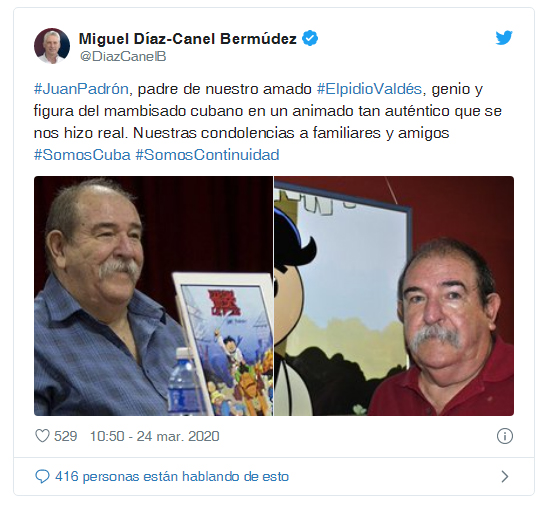
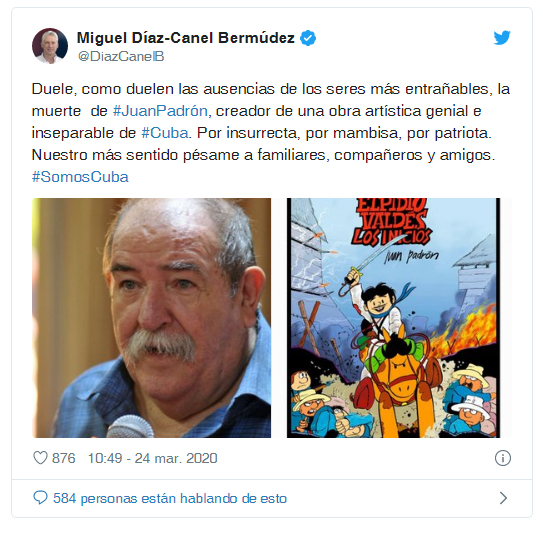
Juan Padrón, Father of Elpidio Valdés, has Died
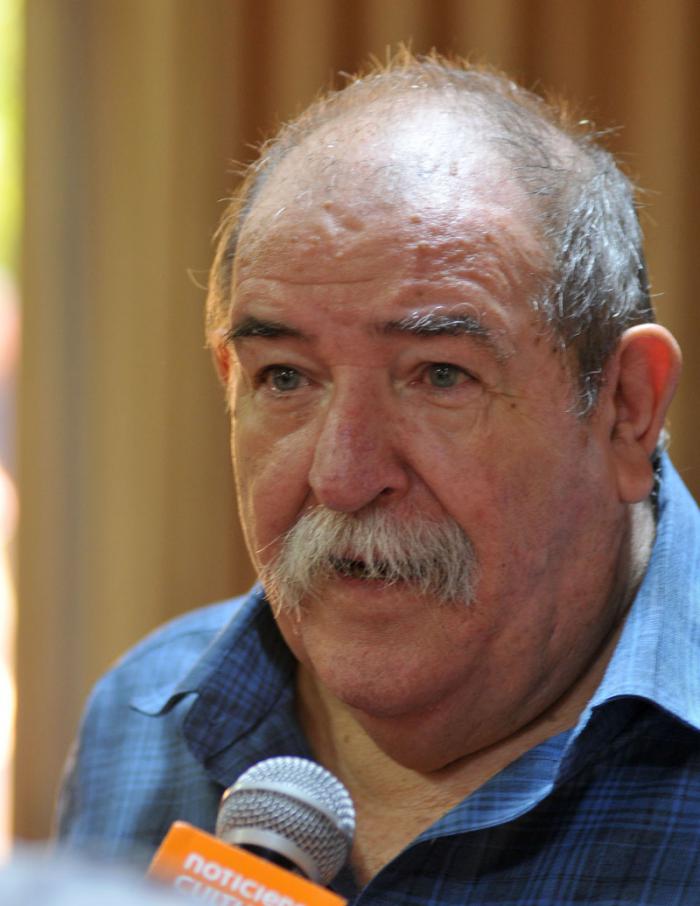
Juan Padrón, Father of Elpidio Valdés, has Died
It is shuddering to read the news: Juan Padrón has died. He left, and with his departure, thousands of Cubans will feel as if they were saying goodbye to a happy time, the one that marked with the adventures of the most “rogue manigüero mambí” the good days and the hours of the dolls in so many houses in which, with each bravado of Elpidio, the pride of knowing oneself Cuban grew.
By Yisell Rodríguez Milán
March 24, 2020
Translated and edited by Walter Lippmann for CubaNews.
Juan Padrón. Photo: Ariel Cecilio Lemus
Juan Padrón, one of Cuba’s best cartoonists and “father” of Elpido Valdés, one of the most patriotic and beloved animators in the history of children’s productions in the country, died in the early hours of March 24, 2020.
His son, Ian Padrón, a talented filmmaker known for his multiple video clips and for directing the film Habanastation (2014), posted a loving farewell on his Facebook wall, which made the news known:
“Our beloved father Juan Padrón has just passed away at 5.20 am today, March 24, 2020. “The last mambí” struggled for 20 days and leaves full of love and tranquility. We thank all the doctors, friends and admirers who during these days have shown their love and admiration for this great artist who is already part of the Cuban people and the independence of Cuba”.
“Papi, I know you’d say “don’t get so serious”… and you’re right. We will always remember you as the nicest, humblest, and coolest human being we will ever meet in our lives. Thank you for Elpidio Valdés, for the Vampires in Havana and above all for being such a noble and loving father and husband. Hasta la vista, compay,” he wrote.
Days before, Ian Padron had commented, also on Facebook, that his father was very ill, due to a lung disease. Given the concerns of his friends and followers about whether his condition would be related to the new coronavirus Covid-19, he commented: “My father Juan Padrón is still in a serious but stable state. My family asks me to explain that all the virus tests have been negative. That no one considers it to be a coronavirus. Thank you for the thousands of messages of encouragement and health.
There are probably very few people in Cuba who don’t know Juan Padrón… and Elpidio, well, Elpidio is known to everyone. Cuban television has always honored the quality of this animated man, and of others born of his imagination like Vampires in Havana! or those funny Filminutos who, on summer afternoons, brought laughter to children and blushing to adults.
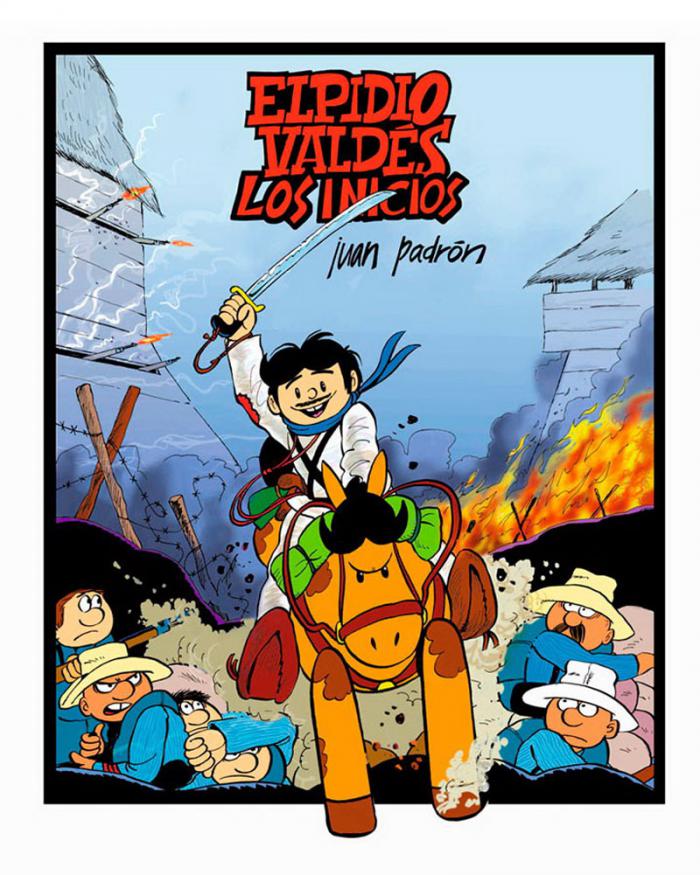
Photo: Cortesía Centro Pablo
Today Prensa Latina remembers that, in 1985, Padrón began a collaboration with the Argentine comedian Quino (Joaquín Lavado), creator of the popular character Mafalda; and that as a result of this relationship the series Quinoscopios was born, less seen on the island but whose quality earned him inclusion among the classics of contemporary animated cinema.
Juan Padrón won, among others, the National Humor Award (2004) and the National Film Award (2008). He participated as a jury member or with his works in numerous festivals around the world. He was a professor at the University of the Arts and gave conferences and courses on animation in European cities and workshops on screenwriting in several Latin American countries, refere PL.
He was currently an advisor to the Animation Studies of the Cuban Institute of Film Art and Industry (Icaic).
Winning First Place Through Prevention
Winning First Place Through Prevention
A difficult, but not invincible rival, appears in our geography. It needs to be defeated, in the purest sports jargon, with a KO.
By Gladys Leidys Ramos
March 23, 2020
Translated and edited by Walter Lippmann for CubaNews.
Photo: Granma Archive
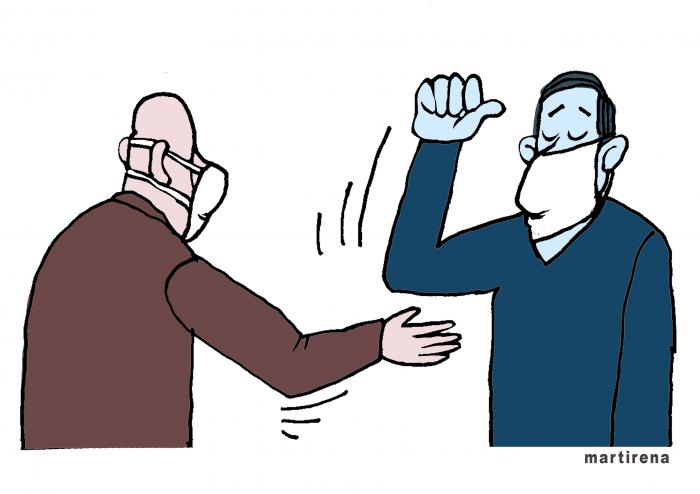
A difficult, but not invincible, opponent appears in our geography and needs to be defeated, in the purest sporting jargon, with a KO. Victory will not be rewarded with a gold medal, but with the most brilliant prize: life. For this, we have the best Cuban team: the national health system and our families.
The game will be tense, long and with constant strategies, at the height of the best game of chess, basketball or baseball. The Cuban people and all its institutions will fight for the ultimate victory.
The rapid spread of the new coronavirus, which causes Covid-19 disease, has set off alarm bells all over the world. A total of 171 countries, among them 41 Latin American and Caribbean peoples, are being threatened by this pandemic. However, Cuba has the necessary conditions for its prevention.
The measures taken by the country’s leadership and the national health system are intended to avoid any vulnerability that could undermine the well-being and quality of life of every Cuban. In this effort, the Committees for the Defense of the Revolution are holding health meetings throughout the country to help raise the perception of risk of this disease.
In the People’s Council of San Francisco de Paula, in the capital city of San Miguel del Padrón, one of these debates was held on the causes and consequences of the new coronavirus, its forms of propagation and the actions that should be taken to reduce the possibilities of infection.
“The objective of this meeting is to keep the population prepared. I insist on hygiene precautions for each person: washing hands with soap and water or alcoholic solutions; also cleaning surfaces with this type of product. Primary care, where the actions begin, is ready and trained to deal with this phenomenon. In the polyclinics and clinics, all the personnel are working to keep the information on the subject up to date,” Luelsis Hernández, director of health in the municipality, told the residents of the popular council.
Sandra Layón, coordinator of Zone 55, expressed her concern, specifically with the population of San Francisco, because she believes it may be vulnerable. “There is talk that the fundamental basis for containing the infection is the doctors’ offices, but I think that the work of the doctors and nurses in our territory should be intensified, in the field, which is the main scenario for detecting cases.
On that point, Hernandez Torres said that although there are 20 doctor’s offices in that community, and each one has doctor and nurse coverage, he agreed with the call to defeat this disease.
Risk perception and prevention are key against the coronavirus. Although the work of health specialists is essential in preventing phenomena like this, the will and responsibility of each one is equally important.
Nurse Maria Hernandez called for responsibility and discipline in the investigations that are currently being carried out in the area,, This is one way in which the primary health care network can rule out or identify any case of infection by the virus.
Idania Bastida, a pharmaceutical worker, agreed with her and called on all the inhabitants of the popular council to be able to maintain the hygiene of the community with the resources they have.
“It is important not to form gatherings on street corners, especially now that we have several collectors. We must also respect the schedules for dumping that waste. We know that there are places where trucks cannot gain access due to the geographical characteristics of our town, but that is why the collectors were installed on the corners,” said the ceding company.
Adis Aba Escalona, an official of the Federation of Cuban Women, took advantage of the occasion to inform the residents that the creative women in the municipality are working on making nasobucos, as a protective measure.
“For that reason, we are calling on everyone who knows how to sew to join in this work and complete as many as possible, not only in San Miguel del Padrón, but also in the entire capital and, if possible, in the country.
Jan Carlos Serabay warned of the need for young people, as a sector that can be vulnerable due to the low perception of risk, to contribute individually and collectively, not only to avoid infection in their age group, but also to transmit information from social networks, so that Cuban society becomes informed and aware.
On the other hand, Dr. Dairis Escobar recalled that, unlike other peoples, our country has the possibility of taking effective measures. “We take measures so that every Cuban becomes a protagonist and communicator of hygiene actions and discipline from the workplace and the home; for that we do not need greater material resources, only the perception of risk and the willingness of each person to take care of themselves and others.
The health system is doing its job, from the preparation of each worker in the sector, doctors, nurses, cleaning staff, laboratory workers, etc., to the conditioning of rooms in hospitals, to wait for admissions with everything ready,” he added.
Prince Charles Tests + for COVID-19
Prince Charles of England Tests Positive for COVID-19
March 25, 2020
Translated and edited by Walter Lippmann for CubaNews.
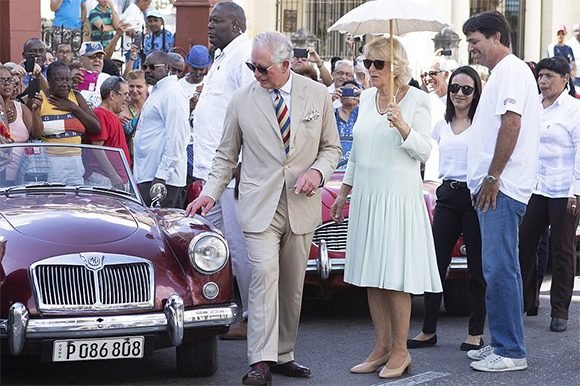
Prince Charles of England and his wife the Duchess of Cornwall on their visit to Havana in 2019. Photo: REX.
Prince Charles of England has tested positive for coronavirus, sources at Clarence House, his residence, confirmed.
The 71-year-old Prince of Wales “has shown some mild symptoms but otherwise remains in good health and has been working from home in recent days,” a spokesman for the British Royal House said.
His wife, Camilla Parker Bowles, Duchess of Cornwall, has also been tested for COVID-19, but she tested negative, the text added.
Sources at Clarence House said Charles and Camilla are currently in isolation at the royal residence of Balmoral in Scotland, adding that it was not possible to determine who infected the prince with the virus.
“It is not possible to determine from whom the prince contracted the virus due to the many commitments he made in his public role over the past few weeks,” the official statement from the Royal House said.
Queen in good health
Buckingham Palace, the official residence of Queen Elizabeth II, said the monarch last saw her son on March 12 and that “he is in good health.
The prince’s last public engagement was that same day, and he has been working from home ever since, according to official sources.
However, the Press Association news agency says the prince has had several private meetings with different people, who have already been informed.
According to the latest figures from the British Department of Health, there are currently more than 8,000 confirmed cases of coronavirus in the UK, but the number of cases is likely to be higher.
Of that number, 422 people have died from COVID-19.
The Law and the Virus


The Virus and the Law
By Mileyda Menéndez Dávila
March 24, 2020
Translated and edited by Walter Lippmann for CubaNews.
“Yeah, I know what they’re gonna tell me, if I’m on the street for fun they’re gonna give me a ticket. So what? So I have another reason to get out of the house: to pay them. I’m not going to be locked up! If what you get, you get one day…
The (not so few) people traveling on the A95 this Monday would think that my (involuntary) chat partner would be joking, but I chose to think that her bravado, bordering on indolence, was her way of dealing with something that makes her nervous and she doesn’t dare to admit it.
“Let’s see, why aren’t you locked up,” she tried to challenge me by staring at her. “I’m going to work,” I explained, and she took advantage of the situation to justify herself: “And I’m going to fight! They brought out detergent in the Vedado and I already have a point that buys at a premium everything I get. For me, that’s ham, because I form my own in a line and I see the load.
I sighed long and deep. Explaining to the lady the legal and moral implications of her conduct would be like plowing in the sea. But people were paying attention to her gestures and I decided to take advantage of the improvised mobile platform for a preventive civic talk, including the teenager who was clearly accompanying her on the “walk”.
“It’s not just fines: You can be imprisoned for three months to a year… to begin with,” I let out in an intriguing voice, assuming that her “bogeyman” would be to lose his freedom. She raised an eyebrow, and still with a cheek, asked, “Why is that?”
“Because that is the penalty for those who commit crimes against public health, such as spreading epidemics or refusing to collaborate with the health authorities in campaigns to prevent them,” I said, summarizing Article 187 of the Cuban Penal Code. Then, without pause, I reinforced the blow: “If you also boast, as you do now, it can be assumed that you are acting maliciously and the penalty is five to eight years. Ah! and as an author, not an accomplice, so there is no reduction”.
She took a breath, as if to reply in a not very good way, and I took advantage of her gesture to add: “They also give three months to a year to anyone who incites others not to take action against an epidemic, so go on adding up… And if “doing your thing” is to create panic to tangle up the tail, that crime costs you one year to three more. And, of course, contempt for the authorities–and those who report actions at the Mesa Redonda are contempt for the authorities–is also a crime, and failure to take care of your dependents is also a crime under the law.
In front of us, a young man followed my monologue of legalese, splashed by the speaker with that sound that in Cuba we call “frying eggs”. His face showed disbelief, but he did not dare to support or deny the alleged anarchist.
Another gentleman, standing near the door, commented that, even putting it all together, the penalty was little for the gravity of the moment, So that gave me grounds to say that if injuries or deaths are proved to have been caused by an irresponsible attitude, the penalty is multiplied in years, not counting the punishment for hoarding products in an illicit economic activity.
“You want to put more fear into it than the coronavirus,” he cut off my explanation, no longer smiling. “And with me, that doesn’t walk. Besides, putting people in jail doesn’t solve the problem,” he insisted on defending himself, but the young man finally took a stand for common sense: “What not? If you stop exposing others with that, it will surely work, and in the long run, people will understand that this is serious, so let’s get back, pure, get back!
Our Duty is to Protect People
Our Duty is to Protect the People
Personal will and medical responsibility drives Alexander Labrada Torres every day to fiercely guard the border of Isla de la Juventud in the face of the COVID-19
By Roberto Díaz Martorell
March 23, 2020
Translated and edited by Walter Lippmann for CubaNews.
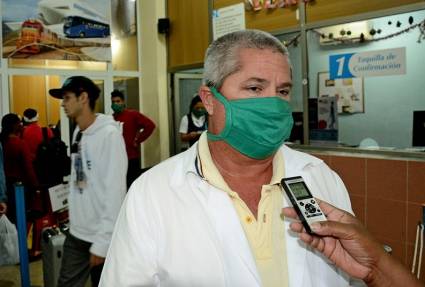
Dr. Alexander Labrada Torres is one of the many Cuban doctors protecting the borders to prevent the entry of the new coronavirus. Author: Roberto Díaz Martorell Published: 23/03/2020 | 08:55 pm
Nueva Gerona, Isla de la Juventud – The alarm clock sounds at 5:00 a.m. and Dr. Alexander Labrada Torres turns it off instinctively. His tired body resists getting out of bed, but the responsibility as a doctor gives him the final push and, as he did several weeks ago, he gets ready to do her duty.
At his side, his wife, Yuraika Gonzalez, diligently prepares breakfast and helps with the backpack. Nothing can be left behind: gloves, nasobuco (mask), cap, the water to drink, the glass…, and the kiss goodbye after the strong coffee to recharge the batteries. Alex goes out on his bike and travels the distance between his house and the Passenger Boarding Terminal in Isla de la Juventud, where he is the head of the border service dealing with COVID-19.
“Responsibility is inherent in every doctor and you comply with corresponding rigor, especially when it is your turn to look after the health of more than 500 people every dayl There are are two trips more than a thousand, in addition to the crew. In addition, each person conducts himself in a different way and sometimes it is very difficult to dialogue,” he says while organizing the work at the terminal.
First, he prepares with all the established attachments for cases like these, then he distributes the resources to the workers who, are obliged to interact with the people and watch over the fulfillment of the foreseen measures. It stops. He observes that everything is going well and he almost smiles.
“It is my responsibility to monitor every boat that leaves or arrives on the Isle of Youth; I do it together with the nurse on the catamaran to check the temperatures and the active search for any respiratory symptoms. The first trip begins with the check of bulletins from 5.30 a.m., and when we set sail, contact with the director of the entity along with the board of directors to assess the implementation of health and hygiene measures in all its units.
“And if it were only one trip, it would end with the reception of the boat around 3:00 or 4:00 p.m., but on Mondays, Wednesdays, and Fridays there are two,. On the second one, the control begins around 2:00 p.m. That second trip arrives in Nueva Gerona after midnight and sometimes until 4:00 a.m., and already at 5:30 a.m. a new day begins.
“I am very grateful to my wife; without her support, it would be very difficult to complete these schedules, I almost always arrive at the house to eat and sleep. I almost always arrive at the house to eat and sleep. While keeping myself informed of the hygienic and epidemiological situation of the country and the municipality,” he says, taking a seat to “refresh” the tiredness caused by the intensity of the work and sleeping after hours.
But Alex is not satisfied yet; he still thinks that a large part of the population does not understand the magnitude of the situation and maintains inadequate behavior. “The fact that, in Isla de la Juventud, there are still no confirmed cases of COVID-19 does not eliminate the conditions of vulnerability for contagion and that is avoidable if the measures of the Ministry of Public Health are fully complied with,” he explains.
“I get tired and I get better; fulfilling my medical responsibility is the daily vitamin I consume. We can’t afford not to identify a COVID suspect, because I know that with my work I’m protecting an entire island that expects the best from me,” he says.
At the Viajero maritime terminal in Nueva Gerona, no confirmed positive cases are reported, but they are on high alert. Any respiratory or feverish symptoms are monitored in those who leave or enter the territory by this route. “Here we have a post or isolation room, health hearings are held for passengers during their stay. Also, when they board the boat they disinfect their hands with sodium hypochlorite,” he explained.
During the trip to the port of Batabanó, the catamaran carries a nursing staff with the necessary medical supplies to act in case of an emergency and also during the three hours of travel is observed the conduct of passengers, if necessary to activate the protocol provided.
Alex tells us that the most critical day happened with the first Italian who arrived in the territory with catarrhal symptoms and he was on duty at the General Teaching Hospital Héroes del Baire. “Everything was very fast, with no time for training, and we didn’t have much knowledge of the disease. It was a long night without sleeping and I was worried, because I didn’t know what would happen in the morning. Luckily it was negative; the patient only had to be treated for pneumonia.
“I have been counting the days for two weeks in a row, but I have the confidence and assurance that my personal actions are helping to keep this little island free of the coronavirus. And I know that, like me, there are thousands in the country who keep a permanent watch on our borders; a hug for them and we continue to fight. Our duty is to protect people and we will do it,” he emphasized.
You must be logged in to post a comment.