No Impunity for Spreading the Epidemic


No Impunity for Those Who Commit the Crime of Spreading the Epidemic or Taking Advantage of the Situation
The current Cuban Penal Code imposes penalties ranging from three months to one year’s imprisonment for the basic offence of spreading an epidemic; from three to eight years for theft; from three months to one year for disobedience, illegal economic activity, speculation and hoarding.
April 3, 2020
Translated and edited by Walter Lippmann for CubaNews.
Photo: Radio Nuevitas
Camagüey – Jacqueline Ballester Aranda, the chief prosecutor of the Camagüey Provincial Public Prosecutor’s Office’s Criminal Prosecution Department, told Radio Cadena Agramonte that the biggest complaints in that territory were about the crime of spreading an epidemic.
Eight people are involved in this case because of refusals by travelers from abroad to comply with the social isolation required to preserve the health of their families and the community.
Also, four cases are being prosecuted for speculation and hoarding, based on the occupation of large quantities of deficient products, both food and hygiene, which are basic necessities for the population or essential to combat COVID-19.
A citizen was tried for the purchase of 18 liters of chlorine, with the aim of selling it at a higher price, and was sentenced to six months’ imprisonment, while another was charged with a similar amount.
On the other hand, 652 pounds of malanga and 175 pounds of rice have been recovered; in both cases, they were intended for illegal economic activity, and, for example, the defendant was marketing cereal at eight pesos a pound.
There was a robbery with force in a placita (point of sale of agricultural products) in the city of Camagüey, whose authors stole 38 sacks of potatoes and the weights of the unit. Those involved are already in custody and under investigation.
The Chief Prosecutor of the Department of Criminal Procedure of the Provincial Prosecutor’s Office added that demonstrations of contempt for the authorities, including the health and public order authorities, have been made against the request to place the nasobuco on the public highway and the indication of isolation in the centers authorized for such purposes.
The current Cuban Criminal Code imposes penalties ranging from three months to one year’s imprisonment for the basic offense of spreading an epidemic; from three to eight years for theft; from three months to one year for disobedience, illegal economic activity, speculation and hoarding.
Cuba Returns 2000+ Stranded Cubans
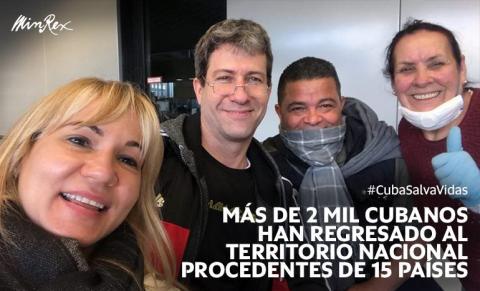
Cuba guarantees the return of more than two thousand Cubans stranded in 15 countries
Since the beginning of the spread of the pandemic, Cuban Consulates have provided timely information to Cuban nationals abroad on the evolution of the disease on the island and on consular procedures.
April 27, 2020
Translated and edited by Walter Lippmann for CubaNews.
Photo: Cubaminrex
Since the announcement of the regulations on travel to and from Cuba, a measure adopted by the Cuban authorities as part of the national plan for the prevention and confrontation of COVID-19 as of March 20, more than 2,000 Cubans have returned to national territory, by air and sea, from more than a dozen countries, among them: Angola, Barbados, Dominican Republic, Guatemala, Guyana, Haiti, Honduras, Italy, Nicaragua, Peru, Portugal, Mexico, Panama and Equatorial Guinea, Cubaminrex reported.
These return flights of Cuban citizens and foreigners residing on the island have been organized between the competent Cuban authorities and their counterparts in each of the countries involved, in strict compliance with internationally established standards.
Since the beginning of the spread of the pandemic, Cuban Consulates have provided timely information to Cuban nationals abroad on the evolution of the disease on the Island and on consular procedures. At the same time, the Cuban authorities are permanently monitoring the situation of our nationals stranded in different countries, while efforts are being made, whenever possible, to ensure their return to our country.
Equally commendable has been the action of Cuban residents and members of solidarity organizations with Cuba, who have provided food, medicines and arranged cheap accommodations for Cuban citizens who are waiting to return to our national territory.
Pandemic and Spirituality
Pandemic and Spirituality
The coronavirus forces us to assume a new spirituality and attitude towards reality. Spirituality is the capacity to open oneself lovingly to the other, to nature and to God.
By Frei Betto
April 11, 2020
Translated and edited by Walter Lippmann for CubaNews.
Life is full of contingencies. On a personal level, failure, loss of friends, illness, death. On the global level, events that no analyst or futurologist foresees, such as the fall of the Berlin Wall and the Twin Towers in New York. Nor did anyone suspect that in the midst of the 21st century, with all the resources of science, humanity would be threatened by a pandemic.
Who could have imagined that it would come from China, in the form of a contagious disease, the cause of the deepest crisis of capitalism since 2008? According to the Morgan Stanley Composite Index, in a few weeks in the financial market, the shares of the world’s stock exchanges lost $15.5 trillion dollars, more than eight times the GDP of Brazil in 2019!
Will any of those speculators and mega-researchers be affected in their pockets (the most sensitive part of the human body) have become poorer? And yet, before the pandemic, almost all of them refused to make their own contribution to measures to combat hunger and global warming.
That reminds me of the siege of Jerusalem by the Romans in the year 70. There came a time when the rich man offered a pot full of gold in exchange for a piece of bread.
The coronavirus forces us to assume a new spirituality and attitude towards reality. It does not make class distinctions, as does gastroenteritis, which kills thousands of malnourished children. Likewise, it makes no distinctions of sexual orientation, as does AIDS, which affected mostly homosexuals. Now we are all vulnerable, even if the age groups and situations of risk vary.
We are all forced to withdraw into the house and into ourselves, to become detached. This abandonment of routine activities and programmed agendas can uproot or humanize us. Those who are attached to certain habits that, for the moment, are forbidden, such as going to the movies, to the theater, to the club, will rebel. In the case of the elderly, they will not be able to have contact with their grandchildren and will have to stay at home as long as possible.
Air travel has been reduced, national borders have been closed, tourist tours have been canceled. We have no choice but to stay put where we are. Huit-clos [no exit], within four walls. We may discover, like Sartre, why others are hell. And it may be that we rescue family life, dialogue with the family, the care of the house (everything must be sanitized).
It is time to learn to work and study without leaving domestic space. Now we have more time to watch movies on TV, surf the internet, read good books, do research, meditate and pray.
The virus makes everyone equal. But it doesn’t level the playing field. The bourgeois couple, who never took the trouble to go into the kitchen or clean the house, are now forced to roll up their sleeves or risk having one of their employees bring the virus into their home. The recalcitrant does not follow the instructions of the health authorities, and the selfish buy all the alcohol gel and masks in the pharmacy.
I know a young woman who volunteered to do the shopping for the vulnerable neighbors in her building without charging anything for it. Another distributed her phone number so that isolated elderly people would have someone to talk to. A married couple of lawyers go in their car every morning to pick up their cook on the outskirts and take her back in the afternoon, to prevent her from using public transportation. Three neighboring families from a hospital decided to prepare lunches for the nurses and doctors who double their work hours. In Italy, neighbors look out the window in the late afternoon and sing in chorus. Churches, mosques, synagogues open their doors to those who live on the streets and need hygienic care. Finally, there are countless examples of generosity and solidarity in this period when we are all potentially threatened.
These gestures have their source in spirituality, even if it is not of a religious nature. Spirituality is the capacity to open oneself lovingly to others, to nature and to God. And its best teaching is in generosity, the secret of happiness. Rich is not he who has everything, said Buddha, but he who has need of little.
Hawks and Doves in the US Since Covid-19
Hawks and Doves in the US Since Covid-19
By Manuel E. Yepe
http://manuelyepe.wordpress.com/Exclusive for the daily POR ESTO! of Merida, Mexico.
April 15, 2020
Translated and edited by Walter Lippmann.
Finding the right balance between public security and personal freedom after COVID-19 “will require a review of everything we in the United States say we need to do in the interest of our security, which should involve moving away from militarized approaches to global problems to many other instruments of American power and influence.
This is what Christopher A. Preble, Vice-President of the CATO Institute for Defense and Foreign Policy in Washington DC, reflects in an article published in the magazine “Responsible Statecraft”, on the possible implications of the COVID-19 outbreak on the future of US foreign policy.
Among the responsibilities of many U.S. government officials is the identification of national security threats and prioritizing, among many options, the appropriate tools to address them.
Those who advocate increases in Pentagon spending – the so-called hawks in the language of the day – are likely to argue that resources should not be cut to the military to free up more resources for public health.
“We will soon be back to normal,” they will say from their perspective, “it would not be wise to redirect our national security strategy and spending to address one particular type of threat, at the expense of all others.
This is not exactly how politics responded after 9/11, but, in that case, the military eventually emerged victorious. In fact, anyone who opposed the militarized approach (that of the doves, who see the fight against terrorism as primarily an intelligence and law enforcement problem) was attacked by the hawks for not taking the threat seriously enough.
“Only a war would be enough; anything else would be naive, or even insensitive: a sign of indifference to the inevitable suffering of future victims of terrorist attacks.
That perspective, set a few days or weeks after 11 September 2001, has persisted. Even today, proposals to withdraw US forces from Afghanistan, for example, are met with serious warnings that this will increase the risk of future terrorist incidents in the United States. We are told that “only a continued, indefinite US military presence can manage this risk and the best we can do is to manage that danger.
Will such arguments survive the current crisis here at home? What politician will argue that Americans would have to die from COVID-19 today to ensure that other Americans are not killed by a terrorist in the future? And, will it be true that such military personnel so willing to “help” other countries are necessary to save our own?
The suggestion seemed absurd for generations, because the danger was not near, not even on the horizon. Now, it’s here.
If before it was considered naive to doubt that terrorism would represent a very serious threat to public security in the future, and skeptics were considered dangerously out of touch with reality, then the suggestion was not accepted,
Will the claims of the traditional defense hawks now come under greater scrutiny, without any senator or representative asking, for example, how that ship, tank or missile might function against a deadly pandemic?
In the post-September 11 era, a few dared to question whether the enormous expenses we had incurred amounted to unnecessary overreaction. But most Americans literally fell into that line.
The disease and its aftermath should provoke strong debate about how to preserve America’s national security.
In a peculiar twist, those who call for more spending to defeat the diseases could be called the hawks of the pandemic, while those who argue against it (and prefer that most resources stay in the military) become the doves.
The suggestion might seem odd, and the terms hawk and pigeon belong to more than just spending priorities. Because, even if the coronavirus didn’t change everything, it would necessarily change many things.
The senior leader of the Washington DC-based CATO Institute for Defense and Foreign Policy concludes that “finding the right balance between public security and personal freedom after COVID-19 will require Americans to review all the things we have to do to keep ourselves safe and to move away from a militarized approach to global problems.
Public Transportation Makes Adjustments
Public Transport Switches to
Direct Service for Essential Workers
In view of the logical concerns and worries in the population, caused by the paralysis of public transport in the country, Eduardo Rodriguez Davila, Minister of Transport (Mitrans), stressed the importance of understanding, support and discipline towards these provisions, in view of the progress of the new coronavirus
Author: Susana Antón | susana@granma.cu
April 13, 2020 21:04:09
Translated and edited by Merriam Ansara.
Edited by Walter Lippmann for CubaNews.
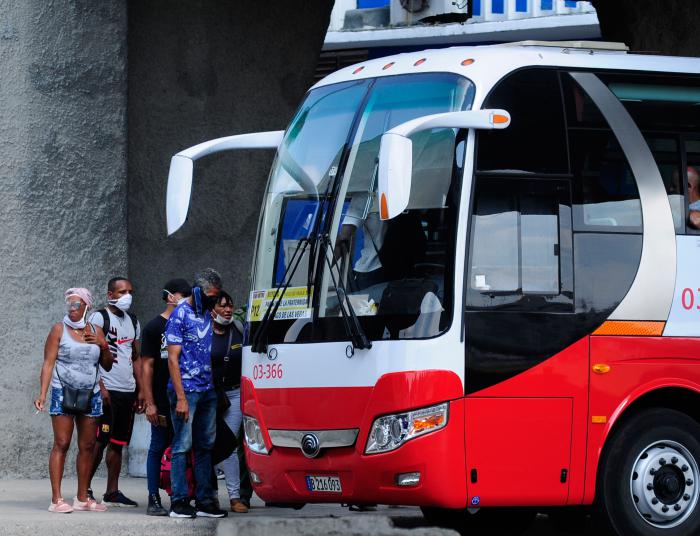
The new measures in transport seek to prevent the spread of VOC-19. Photo: Endrys Correa Vaillant
Responding to the logical questions and concern of the population over the suspension of public transportation in the country, the Minister of Transport, Eduardo Rodriuez Davila, remarked how important it is for people to understand, support and uphold these measures as necessary in the face of advancing COVID-19.
He explained to Granma, that the suspension does not for the moment include state vehicles that are used to ensure the functioning of the economy, nor privately owned personal vehicles which can circulate as needed, so long as they also are not creating traffic jams.
There is still also the movement of cargo, he said, as necessary to support the economy.
He confirmed that the mandatory suspension imposed Saturday, April 11, includes all public transportation both urban and inter-urban, includes both state and privately owned, and includes the support services for state vehicles.
Instead, transportation services have been organized for workers in the medical and health centers, commerce -related services, policing services and others defined by the Defense Councils (Civil Defense) throughout the country as essential activities.
He added that these are for specific workers at specific hours so that they can go and return from their places of work.
He said also that transportation has been guaranteed for all dialysis patients, people undergoing cancer treatments and in other situations of medical urgency. Information telephone lines have been set up at the main health centers in each municipality.
For these services as well, transportation reinforcements have been provided to all of the local defense councils, including ambulances and medi-buses.
He said that all transportation drivers concerned about the situation of their salaries should check with their own work centers which have been put in charge of administering the benefit directives of the Ministry of Labor and Social Security.
In terms of self-employed transporattion workers, Rodriguez Davila said that the current suspension of service applies for the moment to passenger and cargo transportation (including bici-taxis and buggies), and services related to these such as driving instructors and taxi stand managers.
The suspension applies to the operation of vehicles and does not include suspension of related activities such as vehicle repair, bodywork, or tire repair. These can continue so long as it does not lead to any gatherings of multiple individuals and that those involved observe the prescribed infection protection measures.
He said that for any further clarification or needs, workers in these services should direct themselves to the offices from which they have received their licenses.
The MINTRANS minister said he realized that there have had to be huge adjustments from the public transportation of passengers to transportation for designated workers.
All of these newly adjusted services have had to be carried out with strict adherence to measures of zero crowding, everyone wearing facemask, ensuring use of hypochlorite for hands before boarding and complete disinfection of the vehicles after each run.
Each day there will need to be adjustments to improve the new services and to avoid any adverse effects to essential services. He said that instructions had been given to all of the provinces to improve organization of the routes, schedule frequency and other elements that would ensure maximum efficiency of service and conservation of fuel.
He said that MINTRANS was also working with all of the main entities of the central government administration, the defense councils and the state enterprises involved in operation of port-to -transportation to economic distribution so as to guarantee timely distribution of the family ration basket of regular guaranteed goods and other measures to ensure the delivery of food and other basic products to the community.
He remarked that yesterday, Monday, because of the possibity of propagaiion of COVID-19, the Business Group for Automotive Transport Services had decided to close the Schools for Road and Driving Education to avoid gatherings of multiple individuals and had issued an announcement to this effect.
He announced that the deadlines for certificates, license renewals and psychological/physical driver exams for those whose documents were expiring had been extended until services were restarted in the related centers and offices.
Anyone who had already paid for the service at the time of the service suspension, who didn’t wish to continue the service could ask for 100% reimbursement of the amount paid.
Cuban Media in Battle vs. COVID-19

Media Near the Front Lines of the Battle Against COVID-19
by Yaymara Villaverde Marcé // Cuban News Agency
Translated and edited by Walter Lippmann for CubaNews
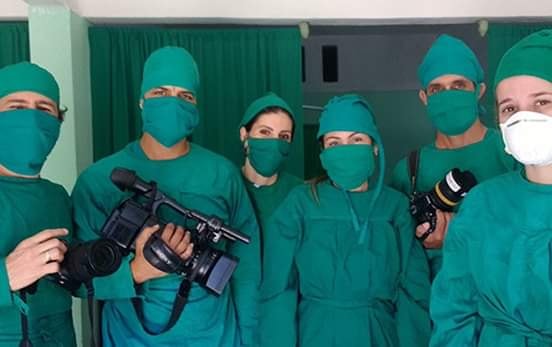
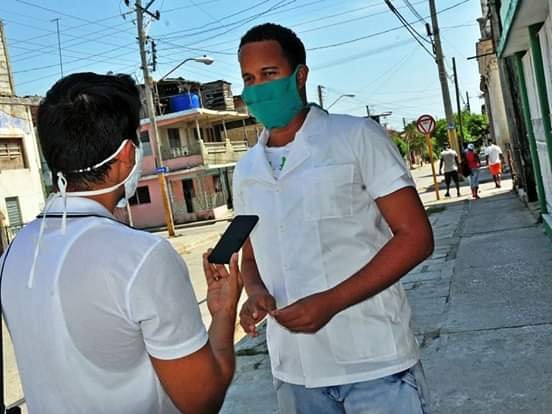
Guantanamo, 11 abr (ACN) After the heroic medical army, today on the first front of battle against COVID-19, there is also a commendable rear guard of professionals and essential workers, food producers, dependents, carriers, and journalists, recorder or camera in hand always present in times of contingency.
Every profession entails sacrifice, yes, and communicating in times of global health crisis a risk quota, a reality that challenges media institutions to unleash all the reporting and creative capacity of their journalists. They have reorganized their routines to ensure the safety of the guild and the time to inform the population in a timely and transparent manner.
We have that responsibility to our people and humanity-as Taimi Fernández, president of glove journalists, tells it, this is our duty to avoid misinformation. More so in this difficult context where accurate guidance is needed, from reliable and scientific sources, to raise public perceptions of risk and encouraging preventive behavior.
Information is a vital tool, a way to fight the new coronavirus and its spread-points out. The responsible press must take advantage of the influence that the media exert on the collective consciousness, with reliable and contrastable data that cut the wings to rumors and false news that only generate confusion and hinder an effective response.
Consequent with the decisive measure of social isolation and confinement, the Cuban media has redesigned its daily dynamics, strengthened the teleworking modality to reduce the influx of professionals and technicians, and have exempted those with chronic suffering from risks which make them vulnerable in this epidemic scenario.
This is how Mabel Pozo, director of the radio station CMKS Guantanamera, where today the necessary health and protection measures are taken. She works with the essential staff, programming was adapted to the context shee points ou, and this and the views of the people are monitored by specialists, depending on which deliveries move.
Similar strategies assume reporters and technicians of the newspaper and provincial television. There, several take advantage of remote work, in an informative reality in which mobile journalism intensifies, taking advantage of the potential of smartphones and basic technologies to generate content and products communicative for online platforms.
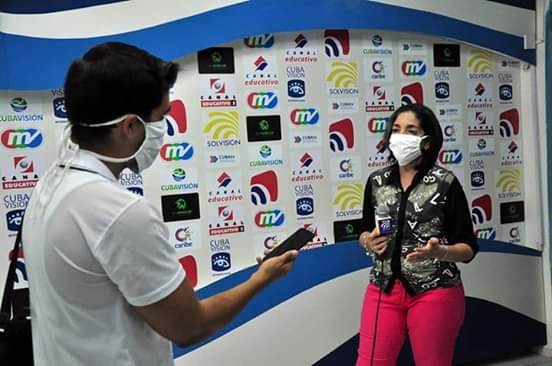
Lisván Lescaille, in front of Telecentro Solvisión, tells us that his medium reduced active staff-as a first step to protect vulnerable groups – adjusted the billboard by prioritizing three information magazines with the theme COVID-19 and invited experts, and working groups were created both on the streets and from homes, through social media.
Ariel Soler, Head of Information of the weekly “Venceremos”, spoke of vital hypermedial work in this context spoke about the journalistic exercise in which their reporters are inserted, six with corporate mobile phones and others with the Internet in their homes, with whom the editorial board of the journal organizes the work by phone, giving special follow-up to the epidemiological situation.
And nothing more revealing than the opinion of the people regarding this work, like that of the septuagenarian Guantanamera Dalia Aguilar, of those sharp to which no one makes a story, who told the ACN that no report from the national press is lost and local, “because warfare well warned does not kill soldier”, and thanks the professionals in that sector for their credibility.
Last March Ricardo Ronquillo, President of the Union of Journalists of Cuba (UPEC), sent recognition to the professionals of the country’s public media system, for the extraordinary informative work in the confrontation of the global pandemic, urged to join this campaign to all communication platforms, and take institutional measures to protect the guild.
Journalists are close to the first line of battle against the disease, because they have to report what is happening around it in Cuba, so it is important to the media to ensure its protection, he stressed.
These are times to act quickly and informative transparency said Ronquillo in a meeting of the expanded presidency of the organization and emphasized-” UPEC is not demobilized, on the contrary, we must now unleash all the creative capacity to make visible to public opinion, national and international, the work of the media”.
The Coronavirus and the Crusade Against 5G
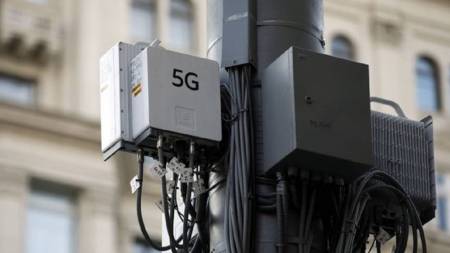

The Coronavirus and the Crusade Against 5G
Unique UK fires fuelled by conspiracy theories highlight the importance of fact-checking and maintaining common sense in the face of the SARS-CoV-2 pandemic
 By Yurisander Guevara
guevara@juventudrebelde.cu
April 8, 2020
Translated and edited by Walter Lippmann for CubaNews.
There is no scientific evidence linking 5G to COVID-19 Author: The Verge Published: 08/04/2020 | 08:49 pm
Conspiracy theories are generally harmless phenomena that rely on circumstantial issues to generate questions that often go unanswered. Thus, they sow doubt about a topic and generate debates that, in this age of the Internet everywhere, become endless.
However, when one of these theories causes consequences in the social fabric, it can already be described as dangerous. This is what is happening right now in the United Kingdom, where several telephone poles with 5G transmitters have been burned in some cities. These facts that are linked to an evil rumor that is spreading like wildfire in the networks, taking advantage of the social hysteria generated by SARS-CoV-2.
According to the “conspirators”, the deployment of the fifth generation of mobile data transmission technology, or 5G, is linked to the COVID-19 pandemic, which has led to the burning of transmitters, a sign of the panic caused by the epidemic.
Theories
Rumors and conspiracy theories about a link between the launch of 5G and the spread of the coronavirus have spread mainly through social networks. There are groups on Facebook and Nextdoor, where thousands of members repeat false and misleading claims that 5G is supposedly harmful.
The theory claims that the new coronavirus originated in Wuhan because the Chinese city had recently launched 5G. Supposedly it has now spread to other cities that also use this technology.
It is the hottest hoax on social networks these days, after another one was dismantled, claiming that the SARS-CoV-2 virus was created for obscure geopolitical purposes. In this last case, the theory falls apart with a study entitled The Proximal Origin of the Coronavirus, published in the journal Nature Medicine.
Research compares the ribonucleic acid sequence of this microorganism with that of other coronaviruses such as SARS and MERS, and bases its conclusions on the characteristics of a protein called spike. This spike is found in the external envelope of the virus and has a sort of hook through which it attaches to human cells. This “ability” of the pathogen is essential in its ability to infect people, one of its most damaging characteristics.
And it is so perfect, according to the study, that “it is most likely the product of natural selection (…) strong evidence that SARS-CoV-2 is not the product of self-serving manipulation”. In the same sense, and even more categorically, researcher Kristian Andersen, from Scripps Research Institute, in Florida, United States, stated in La Repubblica, an Italian publication: “Confronting the generic data available today on the various types of coronavirus, we can resolutely state that SARS-CoV-2 is the result of natural processes”.
In the case of the theory linking 5G to the new coronavirus, there is no more than investigating the properties of this new technology, so-called because it is the fifth generation of mobile phone networks, designed to multiply the connection speed of our portable devices tenfold.
Those who defend the theory claim that 5G weakens the immune system, emitting harmful radiation and therefore facilitating the entry of the coronavirus into the body. They also add that viruses use radio waves to communicate.
The first “argument” collapses when we look at the radio spectrum. At the low-frequency end of the spectrum, we find the radio waves used by 5G. Therefore, this technology does not produce ionizing radiation and does not damage human DNA, which other frequencies such as X-rays or ultraviolet light, responsible for causing diseases such as cancer, do.
According to the AS newspaper, “radiation emitted by radio waves is at a similar level to that produced by televisions and natural light. It is true that this new generation is a bit above its predecessors in this type of emissions. It is also true that, according to Ofcom – the UK’s telecommunications regulator – the maximum it can generate is 66 times below the safety limit.
The Department of Health in England adds that 5G “should have no impact on public health” and the World Health Organization has included 5G under heading 2B of carcinogens. That is, among those not proven to be capable of producing cancer. According to this classification, it would be as potentially carcinogenic as coffee.
The second argument is pure fantasy, while there are no studies that point in that direction. There are, however, that admit that this communication through radio waves could occur between bacteria (in no case between different viruses). For example, there is a study by a group led by Allan Widom at Northeastern University in Boston, USA, whose conclusions have been discussed by the prestigious Massachusetts Institute of Technology.
The facts
Despite all the evidence that disproves this crude conspiracy theory linking 5G to SARS-CoV-2, UK territories such as Birmingham, Liverpool and Melling have been the scene of cell tower fires in recent days.
The UK’s Department for Digital, Culture, Media and Sport tweeted that “there is absolutely no credible evidence” of a link to the conspiracy theory, while commercial agency Mobile UK said such rumours and conspiracy theories were “worrying”.
UK telecoms operators now believe the attacks undermine the nation’s security. According to a tweet from Vodafone’s chief executive officer there, “this is now a matter of national security. The police and anti-terrorist authorities are investigating.
There have even been reports of harassment of telecommunications workers as they deployed fibre optic cables, as witnessed by a video also broadcast on Twitter by a BBC reporter.
The truth is that Iran, for example, is among the nations most affected by the new coronavirus, and there is not a single 5G tower there. There’s lots of evidence that dismantle this misleading theory, but the emotional fragility begins to make a dent. 5G is not a factor in its spread. Globalization is. And once the virus enters a territory, social isolation is the most effective measure to prevent its spread.
For our readers, who today are contributing to the great global battle against SARS-CoV-2 by staying at home, here is some advice: follow only official information from authorities about the pandemic and do not contribute to the networks that expand the reach of false news. We already see how harmful and dangerous it can be to feed on unverified facts, especially when the situation we are living in requires poise and a lot of common sense.
A Frenchman Who Saw the Sun Again
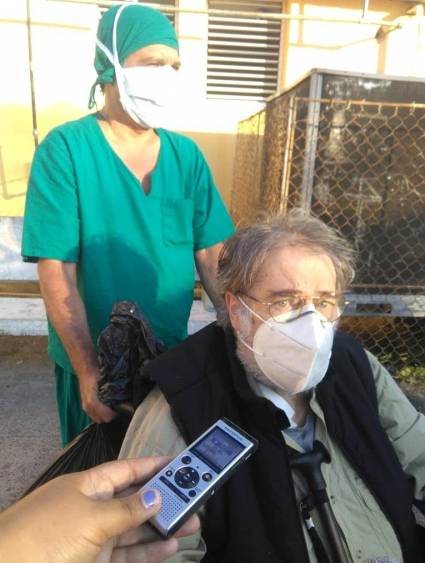
The Frenchman Who Saw the Sun Again in the Isolation Center in Matanzas
This white-bearded man conveys with his clear eyes the immense gratitude that neither resources nor tiredness nor sleep were spared in order to save him
 By Hugo Garcia digital@juventudrebelde.cu
April 9, 2020
Translated and edited by Walter Lippmann for CubaNews.
Jack Gaetan Joseph Villiers, Discharged Patient Author: Jessica Rufin Posted: 09/04/2020 | 07:36 pm
Jack Gaetan Joseph Villiers is a Frenchman who is miraculously alive. It’s as simple as that. But the miracle has also come about because of the proven professionalism of Cuban health.
“This is the first time I’ve seen the blue of the sky after almost 20 days of admission,” he said in a choppy voice from the wheelchair in which he was being transferred to the ambulance that would take him to Havana.
This man with a graying beard conveys with his clear eyes the immense gratitude that no resources, no tiredness, no sleep were spared to save him.
“But I feel good already. When all this is over, we will return to Cuba,” he whispered in his deficient Spanish as he said goodbye to the bus at the Mario Muñoz Monroy Hospital’s isolation center, becoming the sixth confirmed positive patient of the COVID-19 to be discharged in this city.
“Now I can confirm what my brother, who is a doctor, said about the capacity of Cuban doctors, who have specialized in fighting pandemics and diseases like these,” the Frenchman stressed to the Matanzas television and radio media.
Dr. Juan Carlos Martin Tirado, director of the hospital, confirms that this is another achievement of Cuban medicine, because this patient had many of the expected complications at his 72 years of age, including heart disease, hypertension and a major underlying diabetes mellitus.
Martín Tirado praised the delivery of the multidisciplinary team of intensive care, which worked day and night to save the patient.
Brave Ones: Revealing Faces, Beatriz
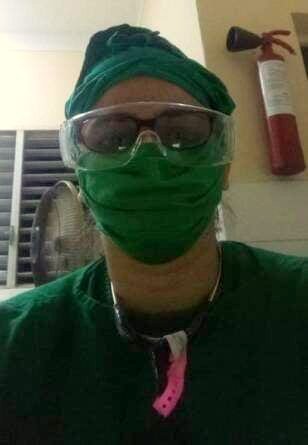

BRAVE ONES: Revealing Faces, Beatriz Rodríguez
April 12, 2020
Translated and edited by Walter Lippmann for CubaNews.
Beatriz Rodriguez Sandeliz is 30 years old. She is a First Grade Specialist in Pediatrics and head of the Respiratory Service of the Children’s Hospital “José Luis Miranda”, in Santa Clara, Villa Clara. Dr. Beatriz formed, in the beginning, together with Dr. Marbin Machado Díaz, also from the Children’s Hospital and Drs. Lissy Pérez Leal and Richard Godoy León, from the “Manuel Fajardo” Military Hospital, the team of eight pediatricians who, at present, attend to infants who are contacts, suspects or infected with the SARS-CoV-2 coronavirus.
“If they knew how hard it is to see a 12-year-old girl crying because her PCR has tested positive, we wouldn’t be so irresponsible and would stay home. It hurts to see a helpless child cry because we have not been consistent and have failed to protect those who are the hope of the world,” says this young doctor with only six years of training, three of them as a pediatrician.
(Texts and photos by Yudith María Delgado Rodríguez and Félix Alexis Correa Álvarez)
Trump and Covid-19
Trump, an Egomaniacal Monster, and Covid-19
WHO Director-General Tedros has been clear about attitudes like those of Trump and others: “Quarantine policy…”, at the WHO “no policy is made”, its mission is “to care for the poor and vulnerable”
By Juana Carrasco Martín
April 9, 2020
Translated and edited by Walter Lippmann for CubaNews.
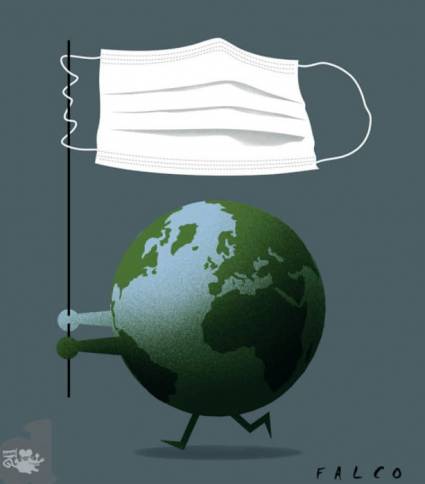
While Trump tries to discredit the World Health Organization, the world is still struggling Author: Falco Posted: 09/04/2020 | 04:32 pm
He’s definitely not crazy, he’s a shameless, cynical bastard. A criminal of the same ilk as Hitler. A being unworthy of belonging to the human species. Every day he does or says an atrocity or various monstrosities. Of course, I am referring to Donald Trump, the powerful president of the United States, which is why he tells us so much about what he says or does.
This Tuesday, April 7, when the world counted 78,269 deaths and at least 1,381,014 people infected with Covid-19, figures that continue to grow by the minute, Trump announced that he will suspend the U.S. contribution to the World Health Organization (WHO).
An hour before this mention at his daily press conference at the White House – not before he had given a rapid test of the virus to everyone in the vicinity of the president and vice president Mike Pence, especially reporters – Trump had exposed on his personal Twitter account that the World Health Organization (WHO) was too focused on China and had given – in his opinion – wrong advice during the outbreak of the new coronavirus.
The campaign to discredit the World Health Organization coincides with a revelation by the WHO’s director-general, Ethiopian microbiologist Tedros Adhanom Ghebreyesus, who said that in the past three months, during which his organization has led the global fight against the coronavirus, it has received threats of death and attacks of various kinds, including racist ones.
“I’ve been getting personal attacks for three months, some of them racist, and to be honest I’m proud of my color. I have even received death threats, but I don’t care at all. Why would I care about being attacked if people are dying, we are losing lives every minute,” he said.
“When it’s personal I don’t care, I’m no better than anyone else, but when an entire community is insulted, then that’s it, I can’t tolerate that,” he said in a calm tone.
Tedros has been clear about attitudes like those of Trump and others: “Quarantine politics…”, at the WHO “you don’t make politics”, its mission is “to care for the poor and vulnerable” in these times when the whole world is embroiled in the crisis caused by the coronavirus.
This was the motivation of the American president, when the Director of the WHO rejected the racism of “scientists” who propose to use Africa as a laboratory for criminal experiments on the population. This would have been under the pretext of looking for a Covid-19 vaccine, Trump decided to punish the WHO. Venezuelan diplomat Samuel Moncada, commented on Twitter: “It is colonialism at war with the world”.
But Trump’s actions are not limited to looking to the WHO as a scapegoat for his own mistakes in handling the crisis, which he long ignored, but he had even denied the terrible importance of the disease.
If we are particularly affected and hurt by the application of the laws of the blockade to prevent a Chinese donation to Cuba from reaching the Greater Antilles, it must be pointed out that it acted with equal dishonesty and lack of ethics towards its allies. For example, Canadian Prime Minister Justin Trudeau has pointed out that he is still working to persuade Washington to lift the blockade on a shipment of half a million masks that should have arrived in Ontario on Wednesday.
The lord of the White House does not lose his ways, and when the world needs love, courage, compassion, generosity and commitment to the truth of what is happening, Donald Trump continues to set deadly traps.
You must be logged in to post a comment.