
Of Parents…


Of Parents…
 By Dixie Edith
Cuban journalist and professor at the Communications Department of the University of Havana. On Twitter @Dixiedith
June 19, 2020
Translated and edited by Walter Lippmann for CubaNews.
Many parents, more and more, are wondering if it is worth keeping their hands tied in the face of the hard work that tradition has destined them to do. Photo: Amanda Terrero.
Fernando wanted to be a father. When he looked at his four-year-old son, he wanted to be a father. I met him a little less than five years ago on a bumpy inter-provincial flight. From the beginning of an endless wait, I was surprised to see the way the young man related to his little boy. He explained the causes of the plane’s delay as if they were bedtime stories, played with wooden blocks, fed him with infinite patience and then improvised a bed for him between several seats. The child, restless to the point of exhaustion, rested his head on his lap at every turn.
When the blessed flying device finally appeared, Fernando and I ended up sitting together and, for the sake of the Caribbean DNA that flows in us, I served as a handkerchief for tears during the short journey to the East. In just a few months, the young man, born in Bayamo, had been divorced, a promising job offer was placed under his nose in Havana, and he was immersed in a tough legal battle over the shared custody of his son. Without eating or drinking, the little boy had become a cursed chess piece between a mother, still upset by a separation she neither sought nor wanted, and a father claiming his rights.
A family court ruled months later in favor of Fernando. The last time we spoke, however, he told me that, at the gates of every holiday period, the pitched battle over whether he could bring the child to the capital began again. This is because the mother lives looking for pretexts to prevent it. Especially now that he has a new family and a baby a few months-old baby. But “Carlitos loves his little sister,” he said proudly.
When the world was worried about the arrival of the new millennium and the technological blackout that it would produce, the academic world spoke of a phenomenon that specialists called “crisis of masculinity”. This was a reflection on the break-up of patriarchal traditions, where the most traditional roles were being blurred and mixed up hand-in-hand, above all, with a re-evaluation of fatherhood.
The feminist movements had already explained to exhaustion that all this distribution of social functions that are assumed to be natural are not so natural. They are culturally-constructed and can, therefore, be changed. On the other hand, men like Fernando came to the conclusion, by different means, that one is not “less of a man” for not complying with a good part of the requirements that tradition assigns to them.
The North American journalist Susan Faludi illustrated the mentioned crisis with symptoms common to many of her fellow countrymen: increase of stress and signs of anguish, demonstrated in depression, suicides and violent behaviors; the strong demand for plastic surgeries by men, more and more accepted; steroid abuse and their own Viagra sales.
In developed Europe, the debates went through quite similar paths. It’s globalization, isn’t it? And in Latin America, although the patriarchy was still championing its respect, the much-vaunted crisis was also a topic of discussion. For Chilean sociologist Elvira Chadwick, the main change came from the fact that “men went from being the only providers to having to share that role with women who go out to work just like them. Women, who are increasingly incorporated into the world of work, are now not only work colleagues, but also often bosses. This, together with the usual competitiveness of modern societies, caused, according to Chadwick, a “man on the verge of a nervous breakdown”.
Twenty years later, things are more or less on the same wavelength, with the aggravating factor that a conservative and very fundamentalist wave is threatening to swallow us whole. The internet is full of voices calling for a return to the “original family”. Make no mistake about it, this axiom is not just about opposing equal marriage and the right to adopt babies by same-sex couples. It is also about putting women back in the kitchen and men back in the public eye. It is about rescuing those outdated arguments that there is “only one mother” and any [cone can be a] father’. Arguments that would not help Fernando to win his battles.
Specialists in family themes agree that we are experiencing moments of change where models of progress coexist with others of regression. Although daily life shows that, inside, in many houses one still lives “the old-fashioned way” when it comes to roles, points of light illuminate the paths of parenthood. Relationships within the homes are changing and although the transformation is slow, today we can see everything: families where change is a fact and others that have not yet tried to break with the old patriarchal tradition. In the midst of these hurricane winds, many parents, more and more, are asking themselves if it is worthwhile to keep their hands tied in front of the hard work that tradition has destined them to do.
I have had the privilege of meeting many of them. From the cradle. I was educated by two “luxury” people, one biological and the other who arrived later, by the work and grace of reconstituted families. After almost half a century, coexistence is mixed with genes and I no longer recognize differences. As if this were not enough, I share my daily life with men, who are far away from the generation, and who practice paternity very seriously and with pride: Ariel, of course; but also Mario Jorge, Toni, Paquito, Juan Antonio, Santiago and Juan Carlos; or, much younger, Armando, David, Regis, Abdiel, Miguel Ernesto, Jorge… the list is not so short.
But changing the way of thinking of a whole society requires coherence and clear messages. How many obstacles still exist in maternity hospitals for new parents to participate in the birth on an equal footing with their partners? How many custody disputes after a divorce end up almost automatically favoring the mother, without thinking that the potential Ferdinand, counterparts to the conflict, are not always the bad guys in the movie? How many bosses unhesitatingly accept a man’s request for permission to care for his little newborn?
Sergio, one of those fabulous parents I’ve come to know, complained a lot about the bad times that accompanied the arrival of his first child. Not only was he prevented from being present at the birth. He spent most of the time postponing that women’s issue and the times he tried to inquire, get involved, participate… doctors and nurses treated him with that kind of indifferent condescension: Don’t be nervous, everything will be fine, but you have to be patient.
That longed-for transit of customs, of traditions, must go smoothly. It cannot happen that the same society that pressures men, on the one hand, to assume paternity in a conscious way, underestimates them on the other hand. While spaces such as the National Center for Sex Education (CENESEX) are talking about responsible fatherhood these days and UNICEF calls for “being fathers from the beginning”, others, social and institutional, are sending contradictory signals, even in the best of cases. And it can happen, simply, that a man jumps over his prejudices, assumes half of the daily burdens at home, and one morning, when he arrives at the children’s cirdulo as every day, she throws a bucket of cold water on him: “Dad, tell mom that tomorrow there is a parents’ meeting”. A parents’ meeting?
Palo Alto, an Unreleased Monk Album
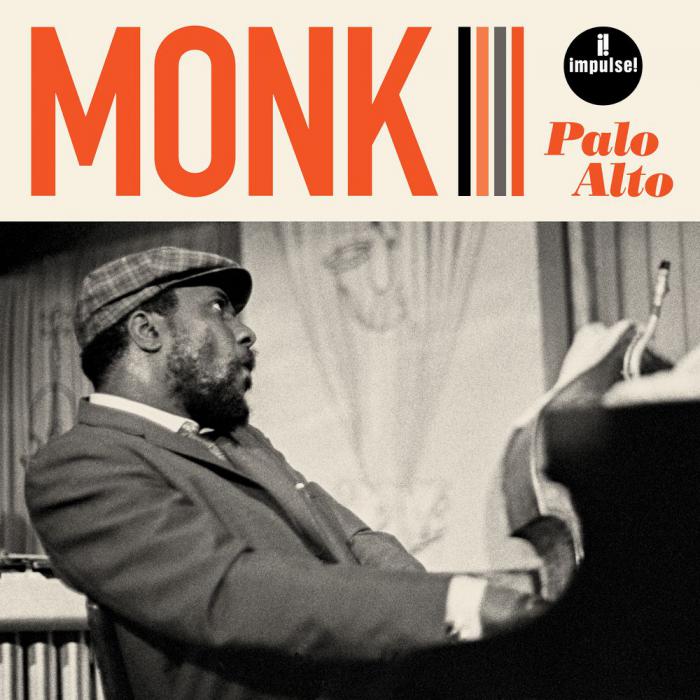

Palo Alto, an Unreleased Album by Thelonious Monk Will be Presented on July 31
The musician is considered one of the revolutionaries and geniuses of post-World War II jazz music.
By Ricardo Alonso Venereo
July 29, 2020
Translated and edited by Walter Lippmann for CubaNews.
Album cover Photo: Taken from the Internet
Palo Alto, an unreleased album by American jazz pianist and composer Thelonious Monk (Rock Mounty, 1920 – Weehawken, 1982) will be presented next July 31, on digital platforms, 52 years after his songs were actually recorded in a concert that the artist gave in 1968 in a high school in the city of Palo Alto, California, which at the time, helped “temporarily unite a city divided by racism.”
Coincidentally, the release of the album, which under the label ¡Impulse! Universal Music, will also be released on CD and vinyl. (The latter in a special edition that will include a replica of the original poster and handheld program.). It had been scheduled to be released before the current epidemiological situation in the world. It serves to show us today how identical some things are to 1968, the year of the assassination of Black leader Martin Luther King and when racial conflicts between whites and Blacks stirred up American society at the time.
“With Palo Alto, Monk’s music once again becomes balm for a wounded society that resists understanding that we all vibrate to the same beat and rhythm,” says the important Californian cultural promoter Danny Scher, This album is largely due to the current atmosphere in that country as a result of the death of the African-American George Floyd.
“The performance is one of the best recordings I’ve ever heard of Thelonious,” said T.S. Monk, son of the star, after listening to the recording that,15 years ago ,Danny Scher found, and which he put in his hands through saxophonist Jimmy Heath. He was one of the greats of the be-bop era, after he finished producing an unreleased album by Monk and Coltrane at Carnegie Hall in 2005.
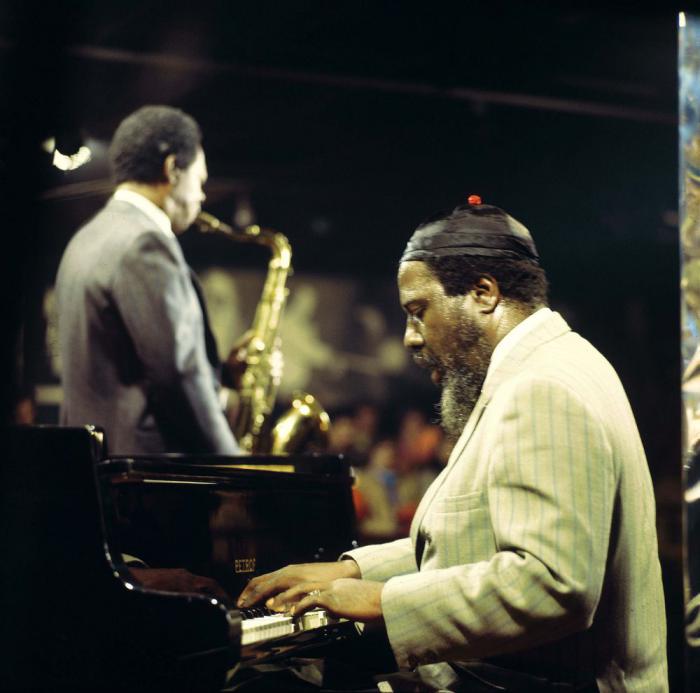
The pianist with tenor saxophone Charlie Rouse, one of the members of his quartet Photo: Taken from the Internet
Although it is acknowledged that Monk’s best performances have always been live, it is also stated that there are numerous documented concerts and tours of the pianist, which are of great value and this recording is an example of this. Here the band really sounds very relaxed and inspired, but also because this era of Monk in concert is not particularly documented, which makes this album the last official live performance of Monk’s classic quartet with Charlie Rouse, Larry Gales and Ben Riley.
It is claimed that when this concert took place the group had just recorded the legendary album Underground and the band’s days were about to come to an end, but in 1968 they were still sounding full of life, starting with Charlie Rouse, who plays superb solos in this concert. Gales and Riley also shine with their own light. And, of course, Monk, who among other pearls leaves here a version of Don’t Blame Me, truly anthological.
Other themes collected in Palo Alto are Don’t Blame Me and Ruby My Dear; the dynamic and lively Well You Needn’t, at 13 minutes and with solos by all the components or the abrupt end with Rudy Vallée’s classic: I Love You (Sweetheart of All My Dreams).
The magnificent human story behind this album, only 47 minutes long, is profusely detailed in the excellent notes signed by Monk’s biographer, Robin G. Kelley.
Thelonious Monk is considered one of the revolutionaries and geniuses of post-World War II jazz music.
Weddings and quinces in Camagüey

Weddings and quinceañeras in Camagüey
In Camagüey, it seemed that quinceañeras and couples planning to get married would have to give up the celebration of their dreams in this fateful year…
By Yahily Hernández Porto
July 23, 2020
Translated and edited by Walter Lippmann for CubaNews.
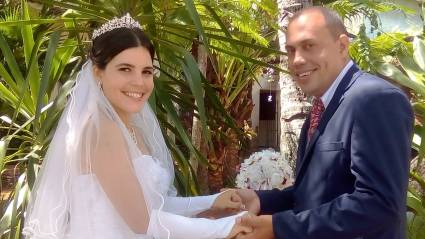
This couple was the first to be married after the threat of COVID-19 in Camagüey. Author: Yahily Hernández Porto Published: 23/07/2020 | 12:12 pm
CAMAGÜEY: Both were close in their professions, but they never stopped their routines to get close to each other. An occasional greeting was their only relationship at the Agramontine military hospital.
But since the beginning of the year, their concern brought their lives closer, because the pandemic that had just emerged in the Asian giant was taking away their sleep, as it did for thousands of Cubans.
Last March, when Covid-19 entered Cuba, their paths intertwined as they worked in the red areas of the hospital and made a decision that surprised many people.
“After experiencing that life can escape without fulfilling some dreams, we decided to get married as soon as the bio-security measures allowed it,” Ana María Nápoles Salas, 26, a stomatologist by profession, comfided to JR.
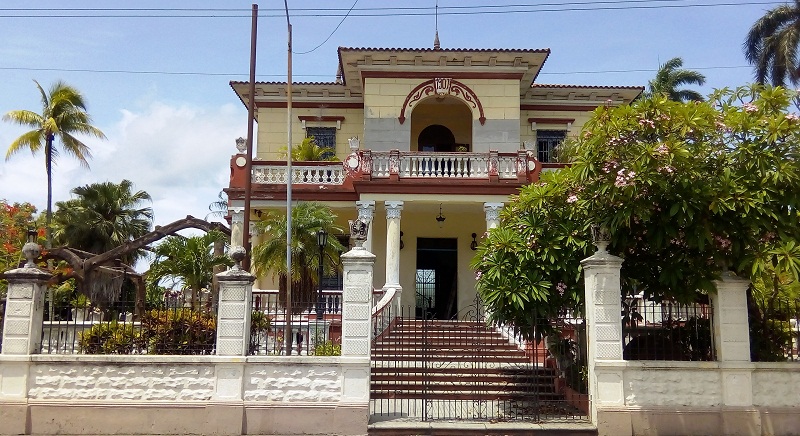
The emblematic Palacio de los Matrimonios in Camagüey celebrated its first post-pandemic wedding.
Just last July 7th JR witnessed the first post-pandemic wedding in this city, in the colonial Palace of Marriages. While the bride was talking to this reporter, the general surgeon, Major Germán Antonio Guilarte León, 36, took the opportunity to give her a mischievous surprise kiss.
THE QUINCEAÑERAS GET READY
With the same impetus as this couple, several teenage girls from Agramonte take up their dreams again and project the rescue of their Quinceañera, which they saw interrupted with fear and frustration: the parties and the traditional photographs were postponed due to the pandemic, but since the second phase many have returned to the beautiful palace or are taking turns in private homes dedicated to this celebration.
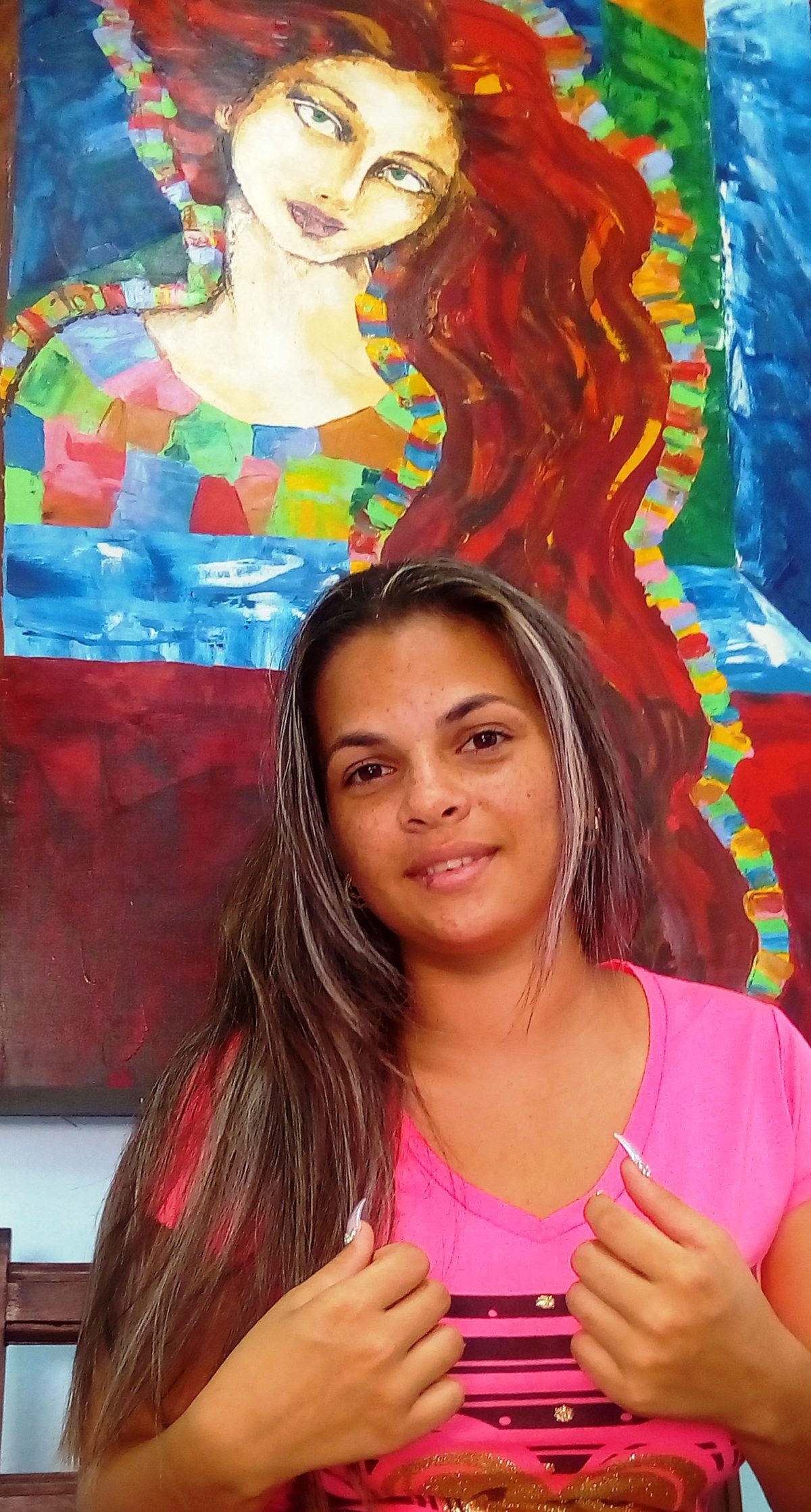
Quinceañera Yadianis Beltrán did not hesitate to resume her celebration.
“I always knew that when it all happened I’d have my party. Now I’m doing my hair to look good in the photos,” said a smiling Yadianis Beltrán Gutiérrez, who had to settle for a family meal on April 28.
In the contract office of the beautiful institution in Camagüey, several girls, along with their parents, wait for their turn to renew the date, Others are just looking for information to choose from, because there are many options in the City of Tinajones, where even quinceañeras from other provinces arrive to eternalize memories.
Jennifer Yadisley Cabreja González and Yarenmis Mendoza Flores are waiting in line to celebrate their Quinceañera on July 31st and August 29th, respectively.
The former said to this newspaper that “despite the activities suspended during the pandemic, there is no problem with work shifts”, and Yarenmis was relieved by her “luck with her birthday”, and showed solidarity with the girls who served in the midst of social isolation.
Such is the story told by Katia Faife Dorca, mother of the teenager Yuliagnis Zaldívar, who had to postpone the big family reunion, scheduled for May 4, and is currently reorganizing it so that loved ones who are abroad can attend, when everything is back to normal: “It is a comfort to know that everyone will have their chance without setbacks,” said this mother.
According to Isabel María Abad Mena, administrator of the Palacio de los Matrimonios, when the institution closed last March all weddings and quinceañera and birthday celebrations already reserved were suspended, in addition to those planned for April, May and June.
To the happiness of many, the multiple services of the Palace are now available and interested families may hire them, provided they are presented at least one month in advance.
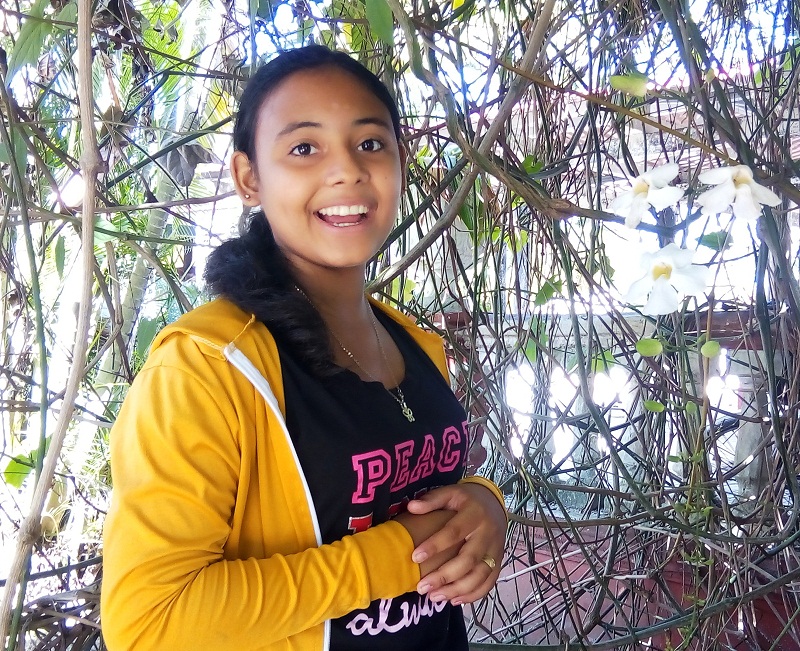
Young Yaremnis Mendoza is happy because her contract is secured for August.
“Several biosecurity measures have been implemented that must be strictly adhered to within the center, but none of them affect the quality of what’s available and the well-being of those who come to celebrate their big day,” she insisted.
She stressed that contracts with clients from other provinces, including those outside the country, will be carried out as long as the measures taken at each stage and in each region allow it. “That’s why now in our palace we only accept clients from Matanzas to Guantánamo, the rest of the West will have to wait”.
Abbot Mena pointed out that the capital reparations in the founding house was not interrupted during the pandemic period. At present, for the sake of quality and variety of the photographs, several exterior locations of the mansion have been added, where a natural, original and distinctive scenery is projected to embellish not only the portraits, but also the formal act and the toast.
THE PRIVATE SECTOR OPENS ITS DOORS
In addition to the Palace of the Married Couples in Camagüey, other family businesses that carry out this activity with creative passion are favored by the recovery of these festive services. This was corroborated by JR’s visit to some very popular and well-established private establishments located in the historic center of Agramonte.
At number 69 Avellaneda Street is the house Ilusión Estudio, which closed its services in March, despite having several weddings and fifteen celebrations scheduled. Its owners, Yuleidy Cabrera and Anuar Rodríguez, even canceled the quinceañera of their own daughter, Viviana, who was looking forward to celebrating on May 17th.
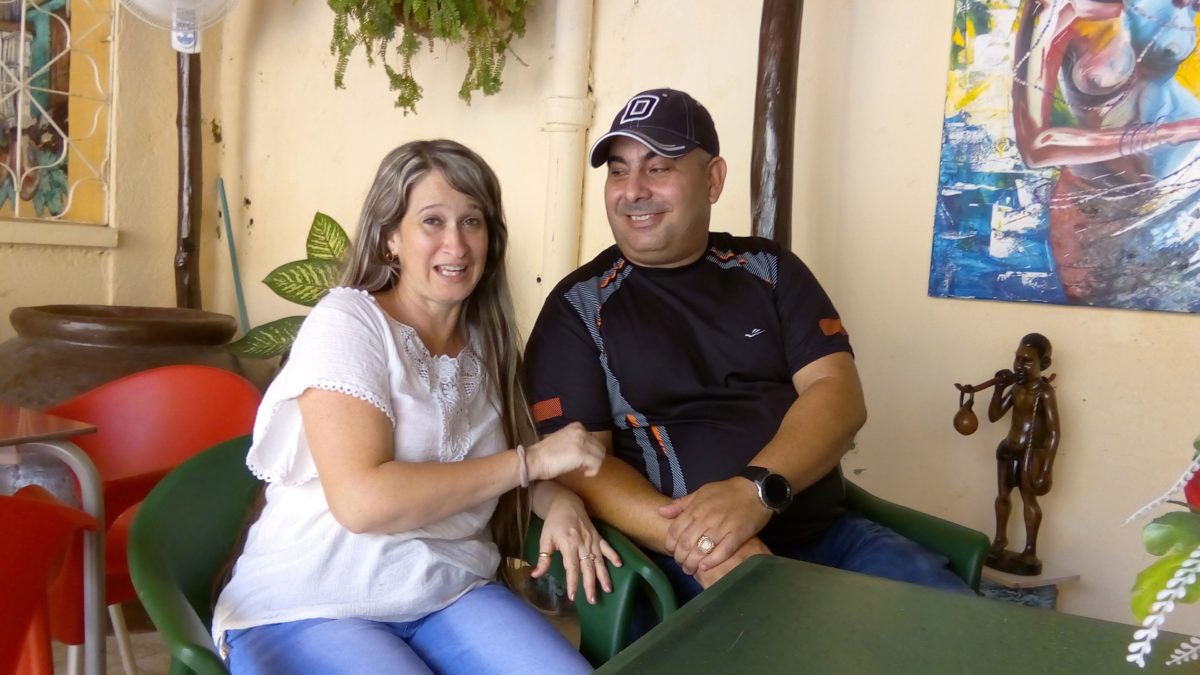
The Ilusión Estudio family returns to normal after their daughter canceled her quinceañera.
“Our daughter understood the moment in which the country and the world were living. Now we are restoring services according to the conditions and possibilities of each family that chooses us,” explained Yuleidy.
Equally demanding were the owners of the Iris V/S Alex studio, one of the oldest in Camagüey, at 586 Pobre Street: “My father-in-law, Jesús Peña, started the photography business in the 1980s, and he assures us that he had never experienced anything like this before. We have been disciplined with the measures and now we are restarting the services to satisfy the clientele according to the resources we have,” said Iriannis.
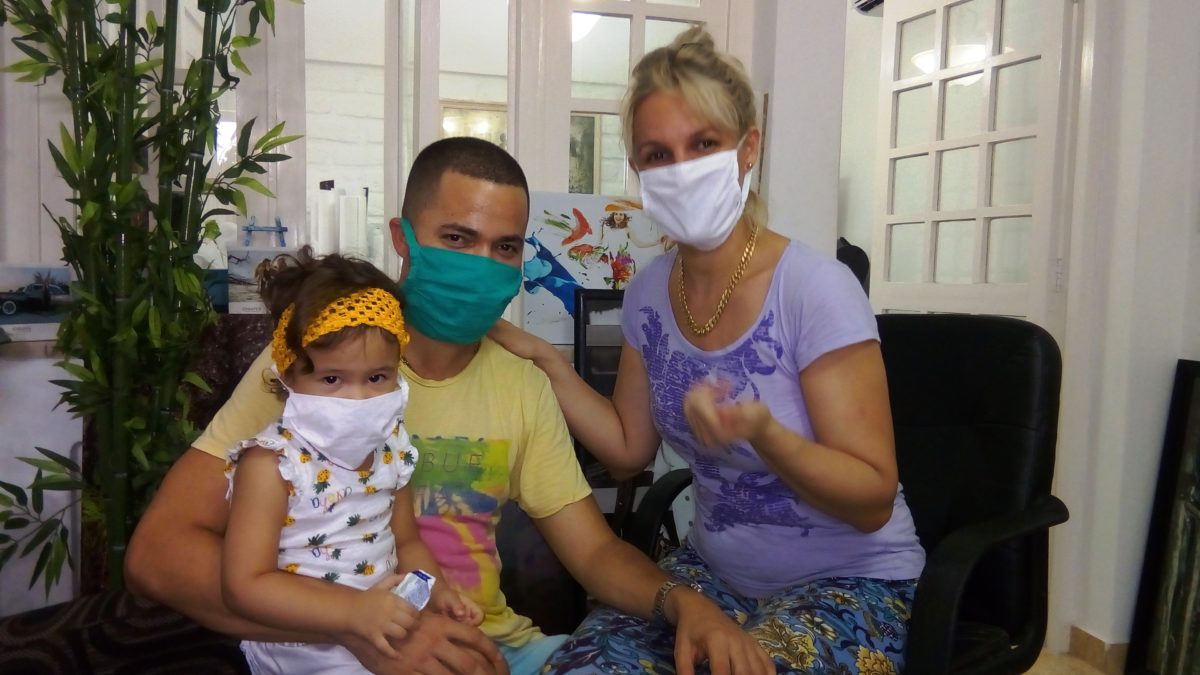
The Iris V/S Alex studio house also opens its doors to the public. Photos: Yahily Hernández Porto
During the months of confinement, both she and her husband Alex dedicated themselves entirely to “spoiling” the family. Now they are creating conditions for the reopening of their small business, like so many entrepreneurs in the non-State sector in Camagüey, who are gradually opening their doors to the public, eager to celebrate their anniversaries… and life is preserved despite the tense situation.
Cuba and The New “Abnormality”

Cuba and The New “Abnormality”
 By Ricardo Ronquillo Bello
ronquillo@juventudrebelde.cu
June 20, 2020
Translated and edited by Walter Lippmann for CubaNews.
It’s not normal, it’s not normal, it’s not normal… I was repeating as in the chorus of an endless serenade by a well-known Cuban politician several months ago. He was doing it when the coronavirus still seemed no more than a disturbing little strain licking itself with its appearance in a market in faraway Wuhan and its unexpected and mournful Bib bang was not spreading it at lightning speed across the four corners of the planet.
Normality versus abnormality, here is a question, we could define a peculiar Cuban Shakespearean drama, which feeds on strains, some as strange and imposed on us as the very COVID-19, and others very much made in Cuba, made in Cuban socialism, as much as they make us proud in some cases, or beat us Theophilus-like on the chin of our welfare in others.
Because of the above, while a good part of the world is heading towards the renamed “new normality” – despite the fact that the daily death of thousands of people and other misadjustments, which some romantically believe will be corrected by the arts of the coronavirus, discredit or unmask it – in Cuba we should better assume that the country, with its first phase of de-escalation, is advancing towards its new “abnormality”, yes, as you read it, abnormality.
In this regard, the aforementioned Cuban politician can be justified not “in part”, as the vocabulary of the Creole bureaucracy is accustomed to saying, but in all his parts, which he repeats, repeats and repeats, and it is not a “rattle” of any kind, that much of what we live, enjoy or suffer in this archipelago is definitely not normal, although some people might like to believe it or even make us believe it for sometimes very devious purposes.
Let’s take an example, of those that were heard in passing and unfortunately without any major media outbreaks, in the fight against the coronavirus: in Cuban prisons there were no cases of the virus detected and, consequently, no deaths. Compare this with what happened or what is still happening in other places, or with humiliating snapshots of prisoners in the region that have shaken the world’s conscience.
The same could be said of the gesture made by the Cuban Government and people – quite silenced, by the way, even by the powerful international media of the most benefited country – to the MS Braemar cruise ship passengers. A later report by Ignacio Ramonet would highlight Cuba’s rare horizon in the tragic fate of many of those strollers adrift in the ocean of selfishness and lack of solidarity framed by COVID-19.
It is not normal in this pandemic world -it was not so before and, despite all the good omens, it will surely not be so common in the future- that the human being comes first, that definition contained in all the documents that give shape to the aspirations of Cuban socialism in the 21st century and that, due to repetitions and hackneyedness, sometimes become pedestrian slogans.
It is worthwhile “baldly” to compare those two previous pearls with the Malthusian reason that spread throughout the world at the same rate as the coronavirus to try to defend that the economy – it would be better to say the capital of the powerful – should be above the value of any life.
From the philosophy of disposable beings did not escape even prominent nobles, from whom at least a rationality as high as their humanism would be expected. However, some calmly justify, without any charge of conscience, that throughout Europe the number of deaths from COVID-19 is similar to that which occurs in a very strong flu season. Something like that is pure waste to form so much international fuss for what is nothing more than a common cold.
It is also very suggestive that the proposals that the highest Cuban authorities are offering to their announced de-escalation – already in the first phase in most of the national territory – point more towards a new “abnormality”, than a return to the previous normality, which would be like continuing to carry old atrophys and vices. We had already made progress in the midst of the virus.
This is out of tune with the dismissive way in which it seems that the lessons of the coronavirus will be assumed worldwide, from which an infinite number of currents and conceptions could be armed, from the most reactionary to those that claim to humanize capitalism or warn of reconfiguring the role of states and public and private actors.
The new “normality” here would be to return to that situation, for moments of levitating resistance, in the face of the U.S. blockade, without really aiming -with forcefulness and rigor- at a program of national development that, although it does not prevent the criminals and growing branches, definitely overcomes them more successfully than in the past. It would be to continue to rely on boats to fill the plates and as many thirsty tanks.
The new normality would be to settle for the scandalous resilience of old knots, which tie us to worn-out and repetitive ways of overcoming serious structural problems. It would be to continue feeding the criminal chains as opposed to the legal and necessary chains between the public and private sectors of the country. It would be to ignore the modern rules of communication -based on closeness and transparency- in order to continue clouding them with prejudice and instrumentality. It would be, it would be, it would be…
And nothing that was announced in the country for the post-COVID-19 escalation resembles the above, because it would be to resort to the old and worn-out normality, when what we need is to rush, overwhelmingly, towards a revolutionary abnormality.
But,” the politician would say, “it would be blissfully normal, right, normal…, although it does speed up a little, as Formell would say.
Rafaelia Knows About Discipline
Rafaelia Knows About Discipline and Responsiveness
As in all transcendental moments for the people, the people from Las Tunas are present in police work to watch over citizens’ health and security
 Posted: Tuesday Jul 07 2020 | 11:26:48 am. Updated: Tuesday 07 July 2020 | 11:42:10 am.
By Juan Morales Agüero juan@juventudrebelde.cu
Translated and edited by Walter Lippmann for CubaNews.
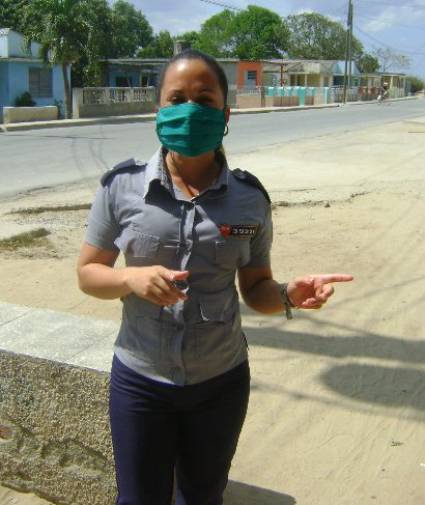
LAS TUNAS – “We women have always been present in the most transcendental moments of the history of the Revolution,” assures Rafaelia González. Author: Juan Morales Agüero Published: 07/07/2020 | 11:25
LAS TUNAS: Rafaelia González Rodríguez always had the feeling she was going to be a cop. At different times in her life, several of her relatives who wore uniforms conveyed to her the certainty that this was an important profession, responsible for guaranteeing public order, confronting crime and protecting legality.
‘That was one of the main reasons why I decided to study for a military career when my colleagues from MININT went to my pre-university to recruit students for the sector,” says the 24-year-old. I showed them my interest, and since then I have done nothing but strive to give my best to the people.
As soon as she finished 12th grade, she traveled to neighboring Camagüey to enroll at the Camilo Cienfuegos Military School.
These were five years of great rigor, both academically and in terms of training. According to her, she owes her will to improve and her sense of discipline to that school.
“I ended up as a cadet, and also as a law graduate in the criminology branch. In addition to that, the specialty itself, which in my personal case was public security,” she adds. In this last one, in the Camilitos I received the necessary preparation to be able to assume tasks like the chief of sector and to energetically face crime and illegalities in their different manifestations”.
After finishing her studies at the school in Agramonte, and by virtue of her evaluation results, the young woman began working at the police headquarters in Las Tunas. There, she was called to take an active part in the citizen’s organization in the context of COVID-19. She accepted, and from that moment on that is the task that occupies her day-to-day.
“My work at the headquarters is administrative, but I could not fail to join in this effort by our authorities to prevent the virus from spreading,” she said. Consequently, together with my colleagues, I enforce the health measures in place, including demanding physical distance in waiting lines and dispersing crowds”.
As far as she is concerned, she goes to her assigned site every day of the week to do her job. She says that in all cases she has always been respected by the people who come to these places. Even when she has called a person’s attention for violating any of the provisions, she has found receptivity.
“Many young people are involved in this work,” she says, “and among them, not a few women. In our case, we have overlooked domestic and family problems to respond to a call that we could not miss. We women have been present in all the transcendental moments of the history of the Revolution. And this is one of them.
“I have the support of my husband, an accountant who understands the duties of a military woman. I am also helped in every place I go by two members of the Prevention or Special Troops. The neighbors? They are supportive and grateful; they make themselves available for any need… Yes, I usually end up exhausted, but pa’lante. [life goes on]
Rafaelina is convinced that the participation of members of MININT in the control of citizens to prevent the spread of the coronavirus has been a great success. “Hopefully, this discipline and organization that we have helped to instill in the people in the present circumstances will remain for future stages,” she adds.
ELN: “We are on a peace mission”
Pablo Beltrán, ELN negotiator:
“We are in Havana on a peace mission, totally detached from military operations”
 Dianet Doimeadios Guerrero
Deputy director of Cubadebate. Holguín, 1988. Graduated from the Universidad de Oriente. Reporter for the newspaper “Ahora!” from 2010 to 2012. Contact: dianet@cubadebate.cu Twitter: @ddoimeG

Cuban journalist. Works in the Cuban Television Information System. He is a frequent panelist on the informative program Mesa Redonda de la Televisión Cubana. Permanent collaborator of Cubadebate.
July 13, 2020
Translated and edited by Walter Lippmann for CubaNews.
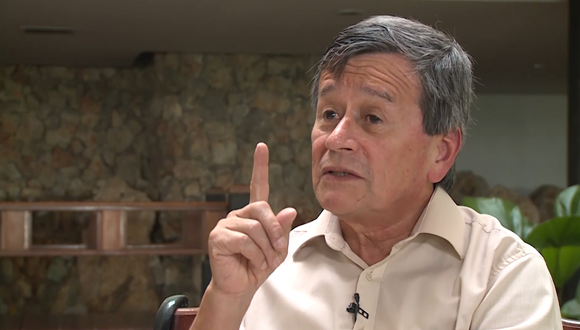
The commander of the National Liberation Army, Pablo Beltrán.
In Havana, one year and five months after the attack, Commander Pablo Beltrán states categorically in an exclusive interview with Cubadebate that none of the 10 members of the peace delegation of the National Liberation Army (ELN) were involved in the attack on the General Santander Police Cadet School in Bogotá. Not even himself, as a member of the Central Command (COCE).
After the event, which on January 17, 2019 took the lives of 22 students and the attacker himself, Colombian President Iván Duque Márquez decided to break off the peace talks with the ELN guerrillas and reactivate the arrest warrants against the members of the delegation, in Cuba since May 2018.
Today, the position of the Cuban authorities to respect the protocol of breaking the talks between the Colombian government and the ELN, and the decision not to extradite the guerrillas, are being used to question and manipulate the role of the Island as a guarantor of the peace process. Beltrán insists that the peace negotiators are “totally detached from any question of military operations” on Colombian soil.
-Commander Beltrán, what is your opinion on the Colombian Government’s argument for requesting the extradition of some of the members of the delegation following the attack on the cadet school?
-First, since we arrived in Cuba in May 2018, a commitment was made. It was the Santos Government and the National Liberation Army who asked Cuba to host the talks, as a guarantor country. That is why we came here, at the request of the parties. And Cuba, as a guarantor country, responded to that request. Secondly, when the new government was installed, it did not say: “Hey, come on,” but rather it said: “Stay there and let’s have a discreet meeting, let’s see what the other government left behind and we’ll restart”.
“When there was an attack by one of our guerrillas on a militarized police school in Bogotá in January 2019, it occurred to them to say that the delegation, even though it was here in Havana, was responsible. Something pulled out of their hat, isn’t it? Because we are here and, besides, I am a member of the national leadership of the ELN, but that does not mean that I am aware of or am commanding military operations in Colombia. My specific task is this whole process of dialogue.
“I am away from that, but even so, they insist on saying that the delegation had something to do with the attack, and based on that they ask Cuba for extradition, but the extradition is requested through Interpol. It turns out that Interpol’s statute, in chapter III, says that this type of matter does not proceed when there are conflicts between parties, that is, an internal Colombian conflict”.
-So you rule out any link between the peace delegation and the attack on the General Santander Police Cadet School in Bogotá?
-Yes, because we are here in Havana on a peace mission and totally detached from any issue of military operations; neither by communications nor by command, we have nothing to do with that, because that was the commitment we made with the two governments, the Colombian and the Cuban.
“I tell you, moreover, a specificity of how the ELN is structured. We have a national leadership, with about 20 members; a kind of executive, the central command, which there are five of us. We also have a body in charge of planning and conducting the operations, the General Staff. It is led by the military head of the central command, who is not me. So, the lines of operation that are drawn, the details of the operations, the times of the operations, the targets chosen, that’s strictly the management of the General Staff.
-Are there any members of the General Staff in Havana?
-No, there isn’t. The military leader of the ELN is Antonio Garcia. He was here in negotiations, but as in 2005, 15 years ago.
-Do you consider that the rupture and the crisis it has generated have been used to attack the guarantor countries?
-Very much so.
-There is information that relates this issue to the inclusion of Cuba in the list that the US Government is drawing up of countries that supposedly do not do enough in the fight against terrorism. How do you assess the position of the guarantors? Have they complied with the law, with the protocols written in black and white?
-It is a law of international peace negotiations to protect negotiating delegations, and the mechanism used is to sign a safe return protocol. We signed the agenda for the negotiations on 30 March 2016 in Caracas, and on 5 April, five days later, we signed the operating protocols, including the protocol of rupture, which is signed by the Colombian government, the ELN and five guarantor countries. That gives it the status of an international agreement; it was not just that Santos signed it, no, it is an international agreement and as such it has to be complied with.
“So, what the guarantor countries have said to the Colombian Government is that they are not going to dishonor their functions as guarantors. The focus of Norway’s foreign policy is the promotion of peace, and they accompany many processes around the world. The day that Norway says that it invalidates its responsibilities as a guarantor country is the day that it ends up accompanying peace processes.
“No one in the international community is going to do that, because in a world that has to be multilateral, every time there are conflicts there will have to be negotiations and negotiating teams; otherwise, there will be no more multilateralism”.
-And what do the protocols say about breaking up? What guarantees of life do they give to the parties who sit down at a table to dialogue?
-The Government of Colombia is committed to returning us safely to our camps, from where we left to conduct these negotiations; the guarantor countries, as has been the custom throughout these negotiations, are committed to accompanying us from the time we leave the negotiating site until we reach a safe place. That is what the safe return protocol strictly says.
“The guarantor countries have told the Government of Bogotá that their position to demand compliance with the protocol of rupture is invariable; neither today, nor tomorrow, nor next year, nor the following century will they change it. And the whole of the international community is increasingly accompanying the guarantor countries in this defense of the protocols”.
-Did Duque give any indication of an intention to break the dialogue table before the attack?
-The first thing they did the day after they positioned themselves was to put Ceballos (Miguel Ceballos Arevalo, High Commissioner for Peace) on the phone with me. I was here in Havana. He told me, “Well, we are going to hold a discreet meeting for several days, a part of the ELN delegation that is in Havana. That’s how contact began. Duque spoke of reviewing and making a connection with what Santos had left; but they never did it, they did not even deign to receive the agreements. And when they asked Duque what he was going to do with the agreements Santos had signed, he said ‘those are not valid because I did not sign them’.
“Then there were jokes in Colombia like ‘well, then he shouldn’t pay the foreign debt, because he didn’t sign it… since it’s eating up half of our GDP.
-Santos did not sign, the Colombian State did.
-Sure. The Constitutional Court said that at least three governments in a row are obliged to implement the Peace Accords. That’s what the Court says, but the government doesn’t care.
-Although the agreement is legally protected…
-If you look, Congress is closed, the president has already issued 160 executive orders governing, doing and undoing everything they could not do when Congress was open. The prosecutor is an employee of the president… That’s a dictatorship.
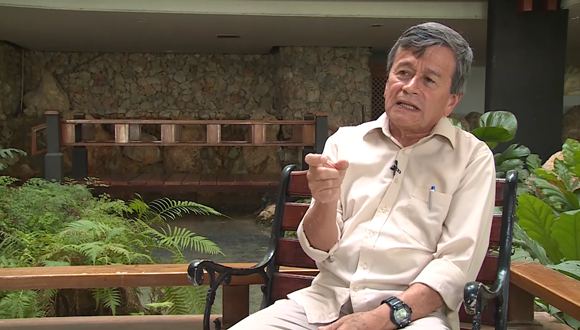
The guarantor countries have told the Bogotá government that their position in demanding compliance with the break-up protocol is unchanged, Beltrán says.
-In recent months, the ELN has taken some decisions that have been well-received by public opinion in the midst of the crisis in the peace process. For example, ceasefires and the release of detainees. How should these gestures be interpreted? Are they sending a message to the Government of Iván Duque?
-It has several interpretations. One is that the government is being told that the ELN is in a position to make peace, to pursue a political solution, and we invite it to join in. The other is that, in the Colombian conflict, the main victims are non-combatants, the population in general; the most impoverished and excluded areas are those that suffer the most. Therefore, every gesture that we can make has a fundamentally humanitarian message, it is not only as if we were ingratiating ourselves with the Government; it is also an invitation and, in essence, a humanitarian gesture.
-In the last few days, you have said that there will be no more unilateral ceasefires, only bilateral ones.
-Yes.
-Why?
-When the United Nations Secretary-General, António Guterres, called a ceasefire in March to better confront the pandemic, we accepted the proposal and made a unilateral ceasefire, but unfortunately, the military and paramilitary forces of the government took military advantage of that.
“For example, in many regions where we are, the persecution and assassination of social and community leaders has increased. So, today we say that we have the disposition for a new cease-fire in compliance with the United Nations resolution, but we also tell the government to participate, to join in a bilateral cease-fire that, in the end, is what will allow us to better confront the pandemic.
“I do not have a precise figure, but several hundred members of the Colombian Armed Forces are infected. There are countries that have had to confine their military forces due to the high level of contagion. It is not only a question raised by the UN; there is also a real threat of contagion within the armed forces”.
-But the government has already responded…
-The government’s a little tangled. President Duque went out on a tweet to say that he was setting conditions for the ELN to enter into a bilateral ceasefire, and it turns out that he is knocking on the wrong door, because it is the Security Council that is demanding the 90-day ceasefire, not the ELN. So let him answer the Security Council.
“We accept the call, the demand of the Council, and we believe that the best way is through bi-lateralism: that the government does it and the ELN does it. The response given by President Duque to the ELN is to knock on the wrong door and [that] does not exempt it from responding to the Security Council”.
-What do you think about the conditions that Duque has set for the bilateral ceasefire for 90 days? For example, he demands that the detainees be released.
This is the dark side of the matter, because, before he was in government, Duque was part of a very violent extreme right-wing coalition in Colombia, led by former President Uribe, which moves with a slogan: ‘Shatter the peace’. So, everything that the previous Santos government did, they came to hinder it.
“They come into the government and what are they going to do, well, shatter the peace. And they have done it. One example: as a result of the Peace Agreement of 2016, voluntary substitution plans were agreed upon with thousands of peasant communities that grow crops for illicit use, in order to eliminate those crops and start new ones, to promote the peasant economy. The first thing Duque did was to obey the dictates of Trump, who says ‘that’s not valid, and does me the favor and sprays me with glyphosate’. From that point on, social protest exploded throughout the region, with people demanding the fulfillment of the agreements and the army and police forcibly settling down, mistreating peasants and murdering several of them. Why? Because they were following orders from Trump.
“In Colombia, there is a very strong discussion, because it is a loss of sovereignty and the people who analyze Colombian foreign policy say that never had there been such a dark time, of so much unconditionality of the Government of Bogota before Washington. So, the problem is not only that Colombians want the peace process, it is that we have to fight with the United States to let it flow”.
-That could explain such a radical change in the Colombian State in the face of the dialogues with the ELN, the transformation of Santos to Duque. What else or who is moving Duque?
-Last Monday, former President Uribe had the idea of saying in a forum, I believe in Madrid, that the progressive opposition forces that want to reach the government in 2022 are a kind of reissue of Castro-chavism. Former President Uribe said this on Monday and Duque repeated it on Wednesday. I remember what Freud says, that when two people say the same thing, there is only one who thinks.
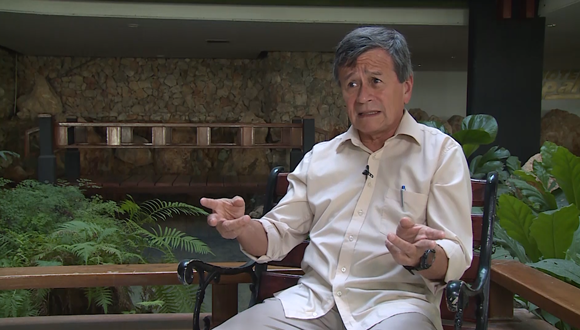
Duque was part of a very violent far-right coalition in Colombia, led by former President Uribe, he says.
-But during the first five months of the Duque government you were in dialogue. Could you cite some examples of the rapprochement between the guerrillas and the Executive?
-The coalition in the government is very diverse, a mix that ranges from fundamentalist evangelicals to the violent extreme right, including right-wing academics. There are some who agree with the dialogue and others who do not. We sent a peace officer last December to talk to former President Uribe and several contacts were made. At the end of December, he was arrested.
“So, if someone goes with goodwill to make discreet contacts and the same person who attends to him penalizes him, how do you build trust? I saw in the press on Thursday that in the prison where they are holding him, two dozen people have already been infected by COVID-19. There he is paying for this effort for peace.
-Can it also be said that Ceballos Arevalo, the Colombian government’s high commissioner for peace, changed his speech?
-That is a very serious problem in Colombia, because in the bureaucratic distribution of the government coalition, the position of peace commissioner is assigned to the Conservative Party. So, the faction of the Conservative Party that is with Uribe does so with Vice President Marta Lucía Ramírez, who is the head of Ceballos. But, at the same time, there is a think tank from an extreme right-wing university, Sergio Arboleda, from which Duque and Ceballos came, and the prosecutor who sets the lines on what to do in government. Surprise! Among the owners of that university is the Díaz-Balart family. What a small world, right?
-Is there any support or opposition from Colombian society and the political elite for breaking the dialogue between the government and the ELN?
-Colombia today is experiencing a kind of political storm that is coming. This week there have been several pronouncements in favor of resumption of the peace agreements. On Monday, Monsignor Monsalve, Archbishop of Cali, said: ‘They are carrying out a genocide with the agreements and with FARC’. More than 220 ex-combatants have been killed, more than 50 of their relatives have been killed… They are displaced, persecuted. They are displaced, persecuted. The intention to destroy peace was not left only for the papers, the people are suffering from it.
“Also on Monday, 94 U.S. congressmen told Duque (that is, Secretary Pompeo): ‘You have to guarantee compliance with the peace agreements; second, you have to stop the assassination of social leaders in Colombia and former combatants; third, you have to dismantle your paramilitary forces. On Wednesday, an important group of Colombian congressmen told Duque: ‘President, agree to a bilateral ceasefire with the ELN’. Very serious things are happening against peace. The political storm is no longer in the Colombian sphere and is now in a wider sphere”.
-Have you ever been sent from Colombia to stand up at the dialogue table?
-No, because the first instruction given to us by the national leadership is that we are never going to get up from the dialogue table, no matter how big the obstacles, the attacks. What we have said to the government is “name your delegate”. Ah, if you don’t want your delegates, then we will return to the camps.
-Is there any chance that the dialogue between the Colombian government and the ELN will be resumed?
-Yes. -Next month, Duque will barely be two years in office. He will have another two years left, and we have indications that all governments want to go down in history because they did something for peace, because that pays off politically, even if they do not do anything very concrete. This government must not be the exception and, furthermore, pressure from Colombian society and the international community to respect the peace agreements and resume dialogue continues to grow.
-In the medium and long term, do you see a definitive solution to the continuation of the revolutionary option through armed means?
-When there is a regime that no longer only kills leftist activists or leaders in Bogotá, but also indigenous leaders, peasants, it is committing genocide, systematic extermination. When you face that kind of extermination, the only thing that saves you is to defend yourself, to resist. In our case, we say that we have a firm commitment to agree an end to the armed conflict, but that this also implies transformations, because if you remove the consequences but leave the causes intact, the conflict remains.
“The most serious cause is the violence of politics. The majority in Colombia believe that Uribe is happy to bring violence into politics and he will be the last one to take the violence out of politics. We have the sincere willingness, but we doubt that the system has it. We say ‘count on the ELN for the political solution’, but the ELN will defend itself and resist.
-What conditions would they set to disarm?
-Colombia is a very complex country. I am going to give you a figure from about ten years ago, when they made a survey of the number of weapons they had given to civilians who were sympathetic to the extreme right. Two million. The Colombian Army and the Police total 500 000.
“When one talks about taking violence out of politics, it is not only that the army and the police stop considering everyone who opposes them as an internal enemy, but that everyone’s weapons are put on the table, because if it is only going to be the ELN’s, that is a story for minors.
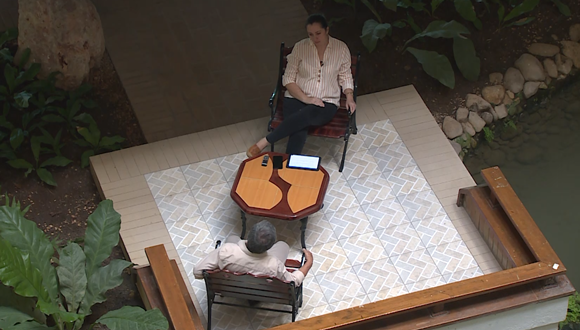
La mayoría en Colombia considera que Uribe está contento metiéndole violencia a la política.
-What lessons does Pablo Beltrán draw from the Peace Agreement signed by the FARC and the Executive, as well as from the process for its implementation?
-In 2016, we were finishing the confidential phase and beginning the public phase of negotiations with Santos. Everyone was telling us ‘do as the FARC does’. Last year they began to tell us, ‘Be careful, they are going to do the same as [they did to] the FARC’. That is what is being said in the streets of Colombia. What does this mean: that we are really facing an adversary that does not comply, neither in word nor in writing. How many are the members of the UN? About 200? That’s not good enough for them. The government does the same with all the pacts it makes after every social protest. So, if you have to negotiate with someone who does not comply, what rules do you make up?
“In the last round we had here in Havana with Santos, we were going to agree on one last bilateral cease and desist. We agreed with him on a 101-day period and we were going to agree on another one, so that when he left and Duque arrived he would find an active bilateral cessation. We couldn’t. We put a condition on them: a clause like the one used in international negotiations: if you fail to comply, you pay. We told them ‘let’s put another clause, if you default I default’; that is, the day you default, you authorize me to default, but by reciprocity.
“I believe the government delegate did not sleep that night. We told him ‘analyze that and tell us tomorrow’, and the next day he told us. “No, I called Bogota and they don’t want to know anything about it. They don’t want to know about reciprocity or any cost for not complying, which is what would guarantee the seriousness of a negotiation”.
-What is the situation of the guerrillas? Are they isolated or do they still have popular support?
-On Saturday, July 4th, we celebrated our 56th anniversary… Do you think that if important sectors of the Colombian people did not support us, we would be alive? What technique, technology, force or counter-insurgency resource that the United States has invented is not first tested in Colombia? It is not a merely military matter; it is, fundamentally, to have a social insertion. Whoever does not have it dies, whoever loses it becomes extinct.
-Analyzing the political situation in Colombia, the crisis of Uribism, the low popularity of the current president, the emerging political forces… Will the peace negotiations have any chance in the short- or medium-term?
-They have not one, but two chances. In the short term, a government, the deeper it is in a situation of illegitimacy – and there is also a loss of acceptance – could resort to the negotiating table as if to take a breath. In the medium term – and this is what we think will be more serious – the situation in Colombia is maturing so that by 2022 there will be a progressive government.
“The progressive force that opposed Iván Duque in 2018 obtained 44% of the votes. This is something historic, it has never happened before in Colombia. That force is there and it is growing. For us, to have a progressive government would be to have a valid interlocutor for peace negotiations.
-Then, will they manage to get violence out of politics? Is the ELN willing to do politics in times of peace?
-We are already doing politics, for a very simple reason. In the tradition of how the guerrillas organized themselves, we organized ourselves in a more Guevarist style, because the tradition was to build a party, an army and a front. We built a political-military organization, which has more democracy than an army, of course, but also a level of centralization. What does that imply? That we have a rural guerrilla, in uniform and with a rifle, but we have an ELN inserted in the population, both in the countryside and in the city, a clandestine militancy whose task is to accompany and organize the people every day. There will not be a political and social protest in Colombia where we are not, but they are not going to wear the ELN bracelet, they are the ELN that are there with the people.
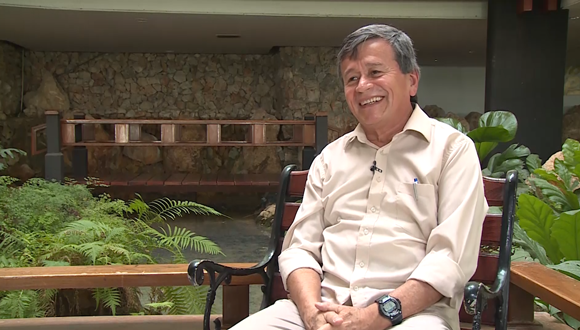
The commander of the National Liberation Army, and negotiator in Havana, Pablo Beltrán.
-Will there ever be peace in Colombia?
-We asked a FARC leader who was killed in this war, Alfonso Cano – with whom the ELN coordinated very well – about this once in a debate, and Alfonso said: ‘Nothing that the people get will be given away, everything has to be fought for. And what is the greatest good? Peace. Will they give it away? It must be fought [for].
“We will never abandon the path of seeking a political solution, but we will always defend ourselves. We have no vocation for martyrdom. One chooses these things because one considers that it is worth living and dying for them; otherwise, one would not choose this path.
In video, interview with Commander Pablo Beltrán
I’m Not Who You Think

spectator’s chronicle
I’m Not Who You Think
 By Rolando Pérez Betancourt
July 12, 2020
Translated and edited by Walter Lippmann for CubaNews.
After 35 years of sustained triumphs in various films, French actress Juliette Binoche is once again shining in her latest film, which will soon be shown on Cubavisión.
I’m Not Who You Think (Safy Nebbou, 2019) is the story of a divorced, 50-year-old literature professor with two children who uses the tricks of Facebook to create a profile that turns her into an attractive 24-year-old blonde.
The causes and consequences of this change will be the main theme of this romantic drama with a thriller-like twist. It’s conceived in the midst of human relationships conditioned by technology and the masks that encourage so-called catfishing, or [creating a] non-existent identity in social networks with the aim of attracting unwary people.
In days of unbridled love passions on Facebook, Twitter and Whatsapp, director Safy Nebbou waves the trump card of Binoche and squeezes it into the role of a middle-aged woman trapped in the obsession of feeling wanted. Why not fall in love with a young man much younger than she? And the protagonist embarks on the adventure, even if she ends up in the hands of a psychiatrist. This is a resource that is used from the beginning to weave the threads of the story in two stages and thus expose the intimate worlds of a woman who, after the divorce, was exposed to the risks of depression.
The film takes a critical look at the lies and manipulations of social networks and is a treat for viewers to reflect on issues such as the fear of growing old, the age difference when it comes to love, and whether it “looks good” for a mature woman to go crazy with love (and delude herself into madness), as she would have done in her twenties.
We will then see an exceptional Juliette Binoche fall silent, when a young lover tells her that she could well be her mother; chat in the solitude of her home, pretending to be the little girl she is not; fall into the chaos of uncertainty and moral collapse; shine like a sun and explode into childish euphoria when she feels wanted.
The film is all of her, and also a story of loneliness on days when it seems that everyone is connected.
A Motherhood Story
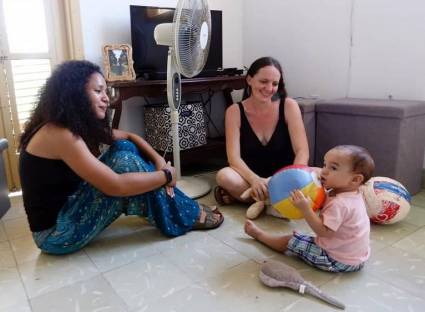
JR Podcast: A Motherhood Story
On this occasion, JR Podcast spoke with Dachelys Valdés and Hope Bastian, who were recognized by the Cuban state as Paulo’s mothers. Read on and listen to the story.
 By Dailene Dovale de la Cruz
digital@juventudrebelde.cu
July 20, 2020
Translated and edited by Walter Lippmann for CubaNews.
Dachelys Valdés and Hope Bastian, mothers of Paulo Author: Courtesy of the source Published: 20/07/2020 | 06:07 pm
Dachelys Valdes and Hope Bastian were returning from Florida with a concern. Would the pregnancy test be positive?
They met in Cienfuegos, in 2015, during the First National Meeting on Gender Studies and Non-Heteronormative Sexualities. They fell in love. They started a relationship and when they saw it consolidated, they decided to have a baby.
The first thing they did was consult their family doctor. He, kind and diligent, investigated the possibilities of accessing assisted reproduction services and returned the bad news. They could not access the service because equal marriage was not yet recognized in Cuba.
Nor did they find other options. Or yes, but in extremely risky ways.
A friend could pretend to be a partner of one of them, but what if he claimed his rights as the biological father? So many possibilities for disaster: divorce, death. They didn’t want to live in fear. They traveled to Florida with a very deep longing. On their way back they had a little boy in Hope’s belly.
Hope’s name is equivalent to our Esperanza that symbolizes very well the feelings of both women, when they got off the plane on Cuban soil.
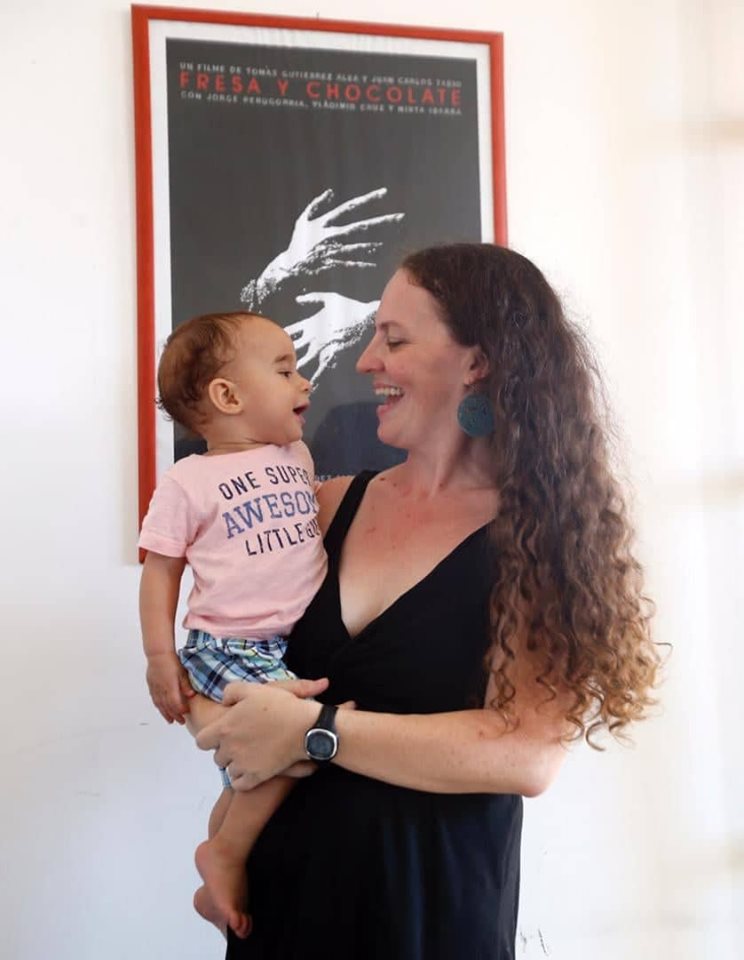
Photo: Courtesy of the interviewees
In Cuba, the birth certificate was slightly changed. The doctor, without anyone getting in the way, crossed out the predetermined male figure and wrote down Dachelys’ name. A small but significant gesture.
Dachelys Valdés is grateful and remembers this stage fondly. They attended the consultations with an in vitro fertilization specialist, no matter where it took place. They did not receive any discriminatory treatment, nor did they feel vulnerable, she confesses. And those who listen to her voice, very clear and soft but not docile, regain their faith in a more inclusive, less prejudiced and homophobic nation.
At the polyclinic, when they were going to be tested, they often tried to look for some sign of embarrassment in it. When they made it clear that they were the accompanying couple, they said “ah, it’s all right”, without further reaction.
Paulo was growing up in Hope’s womb in a calm and happy environment.
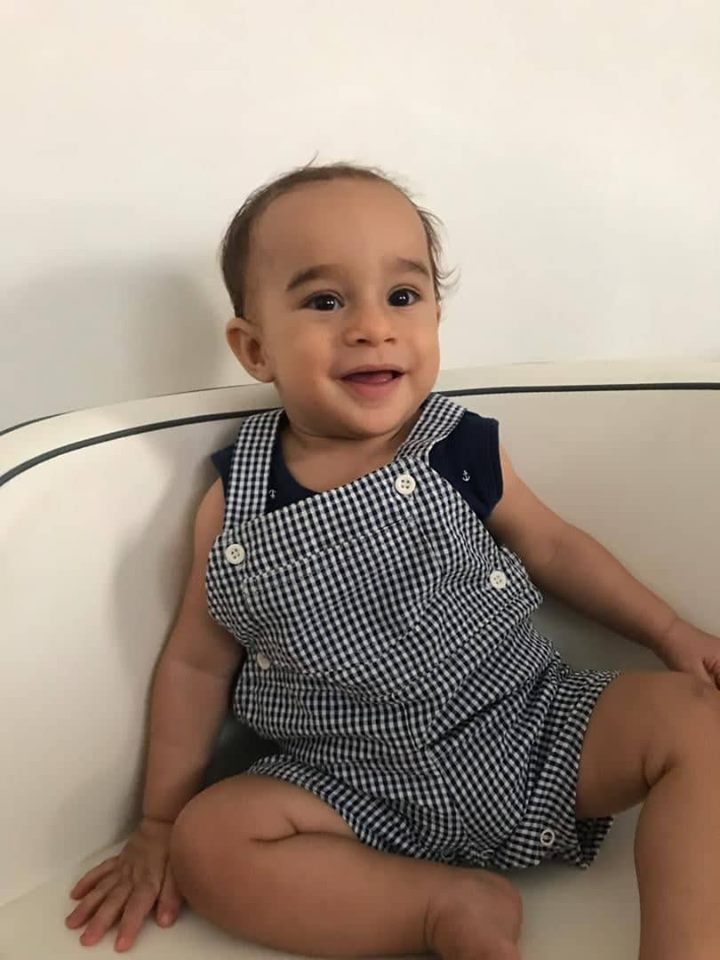
Photo: Courtesy of the interviewees
That was a collective pregnancy, the two first-time mothers were accompanied by fathers, brothers, friends.
That group of loving and supportive people has grown over time. I learned part of their story from a teacher at my school, Rocío Baró. One afternoon, at the end of 2019, she told me about the procedures both mothers took to obtain the Cuban citizenship of their little boy. She spoke with such great admiration of these two women that I promised myself to learn more about them, their experiences, their careers and their joys.
The desire became palpable in mid-June. I was checking Facebook, almost like an automaton, when the news came out. “The Cuban state legally recognizes that Paulo has two mothers.”
It had been worth the effort of the trip, for Dachelys to study how the birth would be, but in English. The losses in terms of comfort, being away from much of her support network.
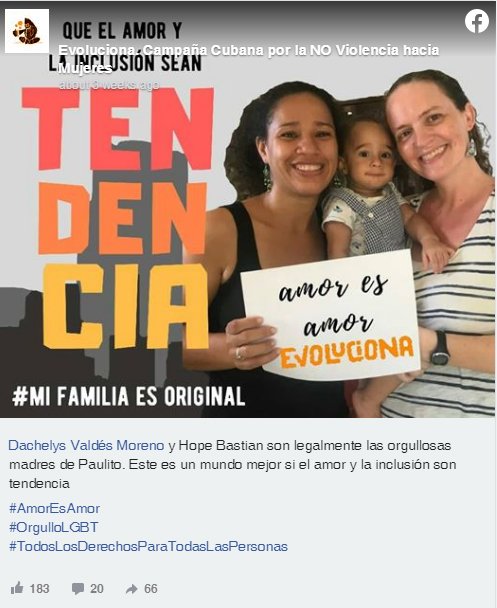
…
Paulo’s citizenship is still an ongoing project, but it is getting closer. They have a document from the Ministry of International Relations, which endorses the possibility of access to the childcare center and free health services.
They also have a birth certificate, which guarantees double maternity, for the first time in Cuba. They arrived at great happiness, free of fear. The process of obtaining such a certificate was slower than usual for families made up of both parents.
First, they started the procedures from Florida, they sent the documentation by post and the certified translation. They returned with their child on a family visa, because it was more feasible to carry out the procedure from Cuba. They knew that due to the newness of the case, the process would take time. They did not expect it to be around a year, nor did they imagine a pandemic. Instead, they confess to being safe and grateful for the end result, of not being left behind.
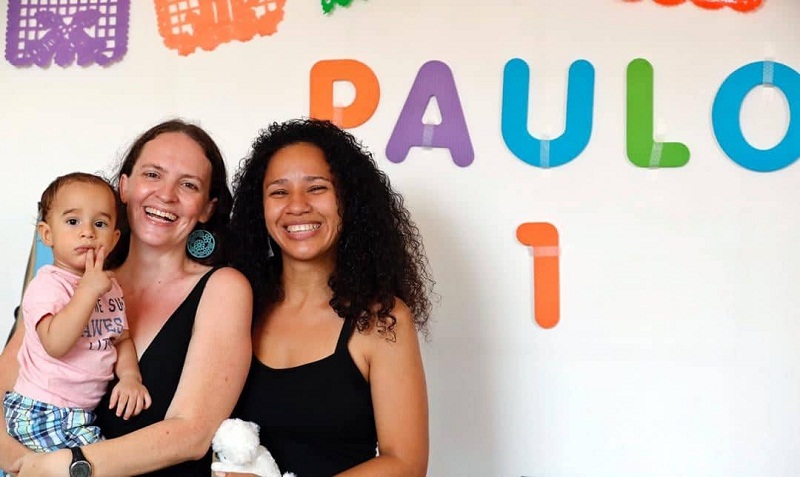
Photo: Courtesy of the interviewees
Since the announcement of their happiness, Dachelys and Hope speak a lot, to anyone who wants to know their story. They tell how they managed to realize their pregnancy and the remaining steps so that their child, for example, can have access to the food in the ration book. They feel that by telling of their experiences they make the LGTBIQ+ community more visible, the need to recognize the diverse forms of family, the access to assisted reproduction by same-sex couples, eliminating stereotypes. To recognize love and commitment as the only requirement to form a family.
They would like their story not to be isolated, not only for couples with resources and access to treatment in another country, although they understand that the laws and social sciences need reality to knock on their doors. And they are ready to continue, with every knock and every step, to bequeath to Paulo a more inclusive and happy Cuba.
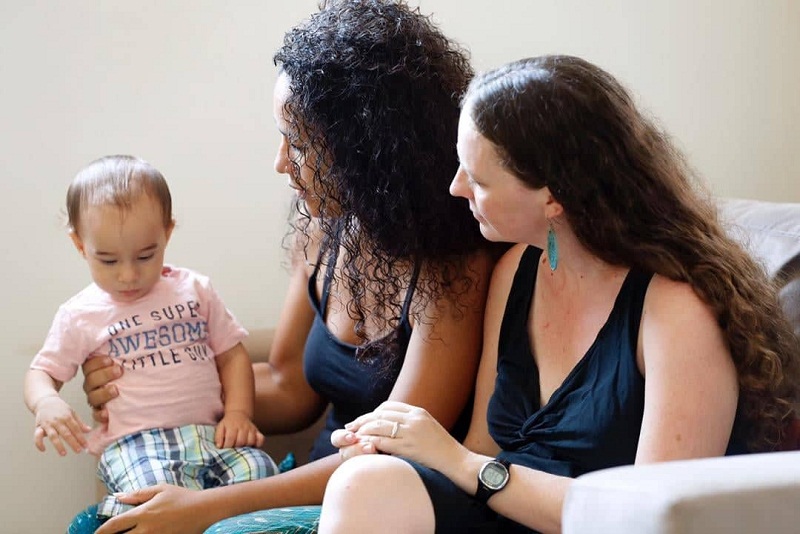
Photo: Courtesy of the interviewees
These are some excerpts from this story. If you want to hear from the voice of Dachelys Valdés and Hope Bastian, the emotions, fears, unforgettable moments, just listen to our podcast. Don’t miss it! [in Spanish]
Women’s Faces and Actions
Women’s Faces and Actions
In Santiago, 17 women serve as sector chiefs of the National Revolutionary Police (PNR)
By Odalis Riquenes Cutiño
July 18, 2020
Translated and edited by Walter Lippmann for CubaNews.
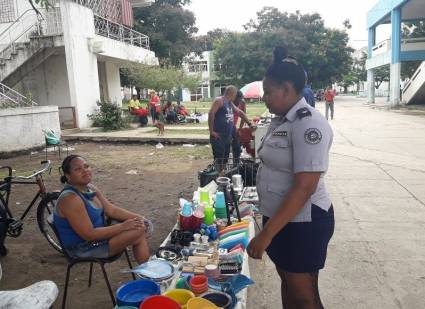
“If women build, how can we not be able to maintain order in the neighborhoods,” says First Lieutenant Evelyn Blanco Cadalzo, in charge of sector No. 102, in the Jose Marti Urban Center Author: Jose Angel Morales Published: 18/07/2020 | 10:24 am
SANTIAGO DE CUBA. For eight years now, the days of the young first lieutenant of the National Revolutionary Police (PNR), Evelyn Blanco Cadalzo, have had the duration of the surrender, the imprint of the sense of duty.
That’s just how long since she graduated from the former Interior Ministry (Minint) Hermanos Marañón University, as a law graduate specialized in public security. Since then, she has been the head of Sector 102 of the First Station, popularly known as Micro Nueve, in the José Martí urban center.
She has under her jurisdiction Blocks A and B of the José Martí Sur Popular Council, a community where she was born and has lived for her 27 years. It’s an area which, although not complicated in terms of criminal potential, is a recipient of criminals from other parts of the city who come there to commit offenses and crimes, such as robbery with force and theft with violence.
Preserving order in the place where you were born, where you have your friends and everyone knows you can be difficult if you are not clear that when duty calls, it is the first thing to be maintained: “You have to have character, set limits well and show that things done badly should not be seen by anyone anywhere in the world.
At the beginning of the year, this novel member of the PNR showed her courage and professional stature by getting involved in what could be considered the most notorious case she has ever been involved in: the capture of an escaped rapist, whom she had to protect from an angry mob with no other shield than her own body.
Hours earlier, as part of her operational work, she learned of the occurrence in her popular council of the reprehensible act against an eight-year-old girl,. Her first admitted thought was for his three-year-old daughter, Hasly Emely Estiven Blanco. She even thought about what she would do to that monster if she had it in front of him at that moment.
Later, chance gave her the opportunity to support her partner in charge of the investigations in the case, first sub-officer Luis Salmón Borrero,. After a long time of tracking him, when she found the offender in the middle of a crowd trying to lynch him, she reacted as she was taught in the ranks of the Cuban Police and took him out at the risk of her own life, protecting him until she could drive him.
“At that moment I felt it was my duty to prevent that man from being attacked. Cuba is a state governed by the rule of law and no one can take justice into his own hands; that is what the law is for,” she stressed.
Evelyn’s daily routine knows about beginnings, but never about the time of return, and even less about what each day will bring: “You know that you start work at 8:00 in the morning, the rest is dictated by the day. Sometimes you think: I’m going to have a little meal at home today… and in the end, you can’t because you have to do a search, an operation, or you get information that you have to deal with immediately. That’s why I’m so grateful for the support of my husband and my whole family, especially in caring for our daughter.
It is common to see her correcting, explaining, orienting, preventing the same thing in her office, in Block J of the José Martí district, or in the area for self-employed workers next to the shopping center in Block B. She considers it her “red zone” because everyone has a license, but some persist in selling industrial products that constitute illegalities.
Whoever observes her realizes that she knows how to be firm and energetic, without losing her tenderness. Her walk is filled with the authority and respect that she has earned through her daily performance.
“The work of the sector chief is very rewarding. At the beginning, it can be cumbersome, but once you organize it and get to know the factors of the community, you realize that it is among the best specialties of MININT, because it allows you to communicate with people”.
Everyday heroines
The experience of First Lieutenant Evelyn Blanco Cadalzo is not unique in Santiago de Cuba, where 17 women, mostly young, work as sector chiefs in the PNR stations.
Being a woman and leading a sector does not imply any additional limitations, insists Evelyn Blanco. “It used to be seen as something rough, but not anymore. Today people in the community accept it, take it as something normal, which we can perform successfully. If women can build, how can we not be able to maintain order in the neighborhoods? Everything is in the heart and the dedication you put into it; that’s how you earn respect.
However, there are still hurdles to overcome in the experience of First Lieutenant Gretchen Pérez Delgado, sector chief at the 30 de Noviembre Popular Council. She goes out every day to combat illegalities in an area plagued by many important economic objectives and a very diverse population.
“Each day brings complexities. Sometimes people on the street think that because you are a woman you are not going to do your job and they try to look down on you. We have shown that we can do this work, and in fact, we do it with the same quality as men,” insists this energetic girl, the mother of a two-year-old girl.
For First Lieutenant Tamara García Cala, chief of sector No. 62, in the community of PetrocasasSalaíto, in the Abel Santamaría Urban Center, without the support of the family it would have been impossible to get the job done during her two and a half years of service.
So does Lieutenant Reyna Nápoles Fabré, who heads Sector 55, which covers the San Juan area. Her two children and her husband have been instrumental in her performance. With 29 years of service in the FAR and MININT, she walks without fear at any time in her territory: “Being a police officer is my pride, and I really like the work as head of the sector because every day you learn about the human being and their social performance.
“I try to enforce what is established, but always reaching out to people. Every day I get up at 5:00 in the morning to be early in my area. The first thing I do is visit the community factors, get interested in the social reinsertion of some who are on probation, for example. Explaining, giving arguments, are keys to achieving the transformation of people, emphasizes Naples Fabré.
During the last three months, the rigors of the confrontation with COVID-19 in the slums added new tasks for these community heroines. For more than ten hours, the first NCO, Yenis Pereira Batista, sector chief in the Abel Santamaría neighborhood, risked contagion until she was able to transfer a suspected case of SARS-CoV-2 to the hospital.
“Usually,” she says, “I stay more at work than at home, and in this health situation, I have been almost always in the Sector, walking the area, visiting families and verifying that the measures are being complied with. When we see that we were able to contain the epidemic, without being confident, it is comforting to know that it was worth the effort.
This satisfaction is also felt in many communities in Santiago and in other provinces, where the population lives its daily life with confidence because they know that women and men of the stature of the interviewees defend the order and tranquility of the citizens in their neighborhoods and streets.
Viola Davis Regrets Acting in THE HELP
Viola Davis Once Again Regrets Performing in THE HELP
July 15, 2020
Translated and edited by Walter Lippmann for CubaNews.
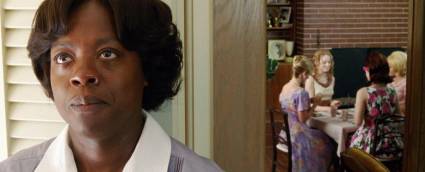
Viola Davis plays Aibileen Clark in the 2011 Maids and Ladies Firm. Autor: Frame of the film Published: 07/15/2020 | 02:50 p
This is not the first time that Viola Davis has publicly rejected her role as Aibileen Clark in the drama THE HELP, which this time she has described, in an interview with Vanity Fair magazine, as a film that maintains “the narrative of the white savior” and that did not give enough prominence to the black maids, reports the DPA agency.
The actress, who was nominated for an Oscar for best lead actor for her appearance in that film in 2012, has once again shown her regret, now within the context of the Black Lives Matter movement. Already in 2018, Davis showed h displeasure with the film directed by Tate Taylor in 2011.
“There’s no one who hasn’t enjoyed THE HELP, but there’s a part of me that feels I betrayed myself and my people,” Davis explains in an interview for the magazine she’s the cover of. “I was in a movie that wasn’t programmed [to tell the whole truth],” she adds, denouncing that the film is made “with the filter and the sewers of systematic racism.
Davis also denounces the lack of Black voices in the creative process in Hollywood. “There are not a lot of narratives that are involved in our humanity [referring to the African-American community],” she explains. She adds that the writers, directors and producers “try to delve into the idea of what it means to be Black, but thinking essentially about a white audience.
She added that in Hollywood “there are not enough opportunities for an unknown Black actress” to “get ahead” in the industry. In this way, Davis, who had already been nominated for an Oscar before THE HELP for her role in THE DOUBT, justifies her participation in the film that also starred Emma Stone, Jessica Chastain, Bryce Dallas Howard and Octavia Spencer, who won the Oscar for this film. “I was that actress who was trying to get into [the industry],” she says.
Not only Viola
Just a few weeks ago, Bryce Dallas Howard also disowned the film and recommended that the public not see THE HELP as a reference for fighting racism. The singer also added that she “would not” have participated in the film if it had been shot today.
It was in an interview with the Los Angeles Times that the Jurassic World actress spoke about the need to give voice to Black creators and for them to be the ones to address the African-American reality.
“I wouldn’t appear in the film again [if it had been made today]. I’ll tell you why: I’ve realized that now people have the courage to say, ‘With all due respect, I love this project, but I don’t think you should be the one to direct it. That’s a very powerful thing, to be able to say it,” the actress explained.
“In this transformation that’s happening, a new freedom of expression is emerging,” Howard added, emphasizing the importance of black voices in the industry, referring to the Black Lives Matter movement.
You must be logged in to post a comment.