
No Hugs Yet
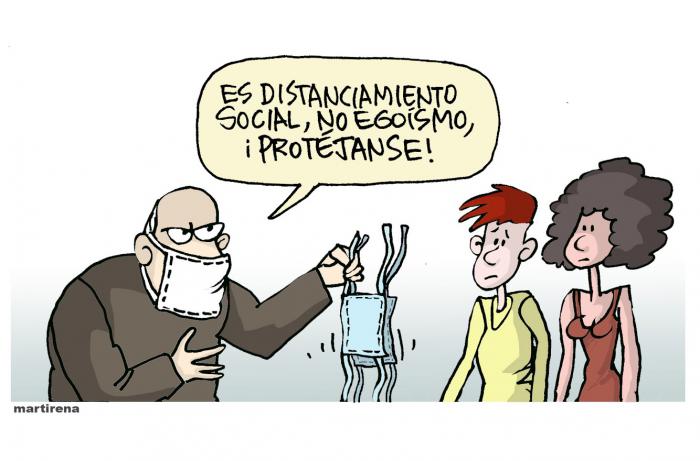


No Hugs Yet
By Julio César Sánchez Guerra
internet@granma.cu
July 29, 2020
Translated and edited by Walter Lippmann for CubaNews.
Photo: Martirena
This coronavirus that goes around the world, brings us some lessons and challenges. There are ancient truths that sometimes remain hidden in the agility of the days. These are some of them: sickness can knock at the door of the prince or the beggar; man’s life is fragile, and we all have, as an increasingly connected species, a common destiny. That, in a way, reminds us of César Pavesse’s dramatic verse: “Death has a look for everyone”.
Overwhelming were the images of empty cities in the midst of quarantine. It seemed as if a flutist had taken away the inhabitants of a town, or that we were leaning out of a window that let us see clip from one those science fiction images in dystopian and apocalyptic societies.
There are countries where human health is just another commodity; where a test to determine whether someone is a carrier of the virus could cost $3,000. Is that true? And how do those who have no health insurance manage? COVID-19 lays bare the structural flaws of social systems, where people are the screws of the great machinery that produces millions of dollars for a few, and poverty for many.
Now the virus is also an examination of ethics; selfishness makes its trenches, lies and morbidity run through the social networks exacerbating panic and uncertainty, and solidarity is a bit of fire that survives the drizzle.
How beautiful was the scene of the Italians singing as a chorus from their balconies! It is as if they were contaminated by the virus of collective happiness, of laughter, or that mystery of love that cannot be defeated in the best of peole.
That’s why Evangelina, in Havana, took three of her sheets and turned them into nasobucos for anyone who needs them, no matter who is a stranger. And a ship, where there were people carrying the virus, was given permission, despite the risks, to enter a Cuban port for humanity, and then sent them all home by plane.
Perhaps for Cubans, the biggest problem has been how to avoid hugs, effusive greetings, that habit of affection that identifies us as much as an identity card. It’s just is that we are used to rolling over in a conga, even after that cyclone that blows us away; to throwing the domino on the table to sing a capicua; to dance casino or to argue about a ball in a corner.
Today we still need that distance that this terrible disease forced us into. In spite of the phases that put the country on the road to a new normality, it is still necessary to delay the overdose of affection; to continue the truce by talking to us so closely; to extend the rest to the squeezes of euphoria. We still need to greet each other with closed fists, with forearms, with that gesture, which is not ours, of bowing like someone going to a judo match, or retiring from the tatami.
Let’s give ourselves one more time. Everything has its time. We are winning, but let’s not be in a hurry to go back to the burden of divided hugs, to that mania of walking mixed up in the noise and the affections. Let responsibility and patience dominate our actions, so that the unwanted return of the virus, in the form of carelessness, does not destroy love, optimism or desire.
Let us keep an open book so that, later on, we can fill it with hands that squeeze, in this Island where joy lives on guard.
In Black and White


In Black and White
Racism, whose historical cause lies in the pursuit of the most brutal exploitation as a means of enrichment, is also in its essence and necessarily a cultural phenomenon. That is why it does not end with the elimination of the economic bases that sustain it.
By Ernesto Estévez Rams
internet@granma.cu
July 5, 2020
Translated and edited by Walter Lippmann for CubaNews.
Photo: José Manuel Correa
The kidnapping of the black from the white is not exclusive to a single country with a slave-owning or slavery-like past; rather, it is the rule. In Cuba, it can even be sought from what is sometimes considered our first literary work, Mirror of Patience, written by an acriolated canary. [from the Canary Islands]
The story, in the words of Eduardo Torres-Cuevas, is an aesthetic recreation of a lie and, at the same time, the creation of a myth. The first, associated with the fact that the work tries to hide the context of smuggling that causes the events portrayed; the second refers to the intention of enhancing the heroism of the Bayamese Creoles.
But it can also be read in other ways. In the work, black appears, fundamentally in the figure of Salvador Golomón, an “Ethiopian worthy of praise”, who puts an end to the unfortunate life of the buccaneer Gilberto Girón, kidnapper of Bishop Cabezas de Altamirano. With this courageous action, the black man achieves his freedom. Salvador’s virtue, in the eyes of Silvestre de Balboa, author of the poem, is to have served the white masters courageously in a battle for commercial reasons – for a traffic from which he did not benefit at all – in which he was only a participant in his condition as a slave. Black was seen through the eyes of white, this time in his utilitarian function.
Racism, whose historical cause lies in the search for the most brutal exploitation as a means of enrichment, is also in its essence and necessarily a cultural phenomenon. That is why it does not end with the elimination of the economic bases that sustain it. It endures over time beyond the elimination of the explicit or implicit laws that codify it, beyond the economic relations that need racism. And discrimination is not completely stopped unless the cultural fabric that supports it and which, in many cases, forms part of the structural core of countries is also stopped.
Nations such as the Cuban were shaped from the Christian Eurocentric with a significant racist component. Significant actors in the formation of this nationality saw the black as a factor of social backwardness. The Creole elites justified concrete proposals for eugenics and other more genocidal proposals.
Such racist positions, whether in their most extreme or most paternalistic variants, were the norm among defenders of the colony, annexationists, reformers, or autonomists. But racism was also present in pro-independence sectors, despite our most distinquich heroes and the profoundly anti-slavery roots of our deeds. Martí’s preaching of thinking of an inclusive and peerless republic in all its ethnic diversity did not mean by far the acceptance of an anti-racist stance by the frustrated society that emerged from the war of independence.
The intervening power favored actors who shared its anti-black vision. From the elites, Cuba’s progress was to “whitewash” it, appealing equally to processes of “advancing the race” by means of mestizaje, as to relegating the black “to his place”. Such ideas, projected from the class hegemony of the subordinate bourgeoisie of imperial power, were also used as a mechanism of fear to justify violence against components of the humble masses of whites, blacks and mestizos. They were used to justify crimes like the killing of thousands of Black people during the 1912 uprising. The fear of the Black people, which had been stirred up as a mechanism of domination in the colony, was transferred to the nascent republic for the same purpose.
The black, in the neo-colonial republican design that emerged, was a symbol of incivility, backwardness, and a hindrance to the nation’s progress. Its culture was not such, it was ignorant, lascivious, perverse and incompetent, and to the same extent that its rebellious presence in authentic Cuba was unstoppable, it made more of an effort to create its “white”, “civilized” variant, whether in music, theater or literature. That perspective is still there in sectors of the Cuban social imaginary, even after 60 years of systematic effort to change it from the political power that the Revolution gave to the dispossessed, including in them the black.
Any process of gestation of the national, essentially symbolic, necessarily generates an organic intellectuality to that effort. We know the white intelligentsia, most of them representatives of sectors of the owning class within the Creole population. The memory of the black woman was largely lost, either through the lack of her own written testimony or through an exercise that she sought to forget. But, although recovering it for the social imaginary is difficult, we have the emancipatory duty to continue doing so. We still have a debt to the Aponte of our history and we will not succeed in crowning our aspirations until we pay it off.
These shortcomings persist despite years of effort to study the country’s black roots and the intellectuals who have made and continue to make this study the reason for their scientific endeavors. Studies to which the Revolution managed to incorporate the Black himself from his literate empowerment, as a prying into his past and shaping his history. This systematic effort to discover our Black history has not been accompanied by the same success, in spite of all the progress that has been made there too, in its incorporation into the educational systems. Nor is the generation of tangible and intangible symbols of that memory sufficient.
Beyond laws and concrete efforts to eliminate the economic and social roots of racism, the Revolution set in motion gigantic cultural decolonization processes that are still in progress today. Entire spaces in society acquired dark colors, especially in artistic culture, but far beyond it. Never before in the history of this country has a more monumental effort been made to incorporate the Black, not as something grafter on, but as an essential part of the trunk of what is Cuban. This was done at the same time as the methodological tools were being developed to achieve this, based on the urgency of taking the sky by storm here too. Like all emancipatory social processes, much was achieved in a very short time and it was also erred as a result of doing and, also, not doing enough.
The special period, with the social and economic processes that it unleashed, gave rise to processes of re-marginalization of tangible and symbolic areas of Cuban society that joined others that had never ceased to be marginal, where the Black presence is marked. This pointed to structural problems of inequality or vulnerability, associated with skin color, which have not been resolved in our society. Racism is still present in Cuba today, because it underlies, often dormant, in the social consciousness of not a few compatriots and is invisible in not a few social and even institutional spaces.
Today, the symbolic marginalization has as a new component the influence of colonizing globalization. It is in this context that the fight against racism in Cuba also acquires even more peremptory connotations and scope, as part of the common cultural front against the onslaught to which we are subjected as a nation.
We also see this marginalization in the loss of civility reflected in reprehensible social attitudes, the rise of misogynistic lyrics in songs and other manifestations. When this phenomenon occurs, the underlying racism tends to re-visit it in terms of race: the Black is antisocial, the Black is the ill-mannered, the Black is the uncivilized… This image is reflected in common places that persist among us, such as when it is associated with doing things right with “let’s do it like whites” or when a person is reproached for behaving like “a Black man”.
In our current society, wide spaces, where racism has been defeated, coexist with others where it persists and expands. We can proudly see tremendous advances in this fight against racism: firstly, its banishment as a phenomenon inherent to a capitalist society, but we also have to recognize its stubborn permanence as a real social phenomenon.
We recognize our formal dress, symbolically legitimized for protocol and official acts, in the very Cuban guayabera, but also in the jacket and tie imported from white and symbolically exclusive Europe, and none other. We do not incorporate into the garments accepted as formal the beautiful clothes of our African heritage. It is a simple and “innocent” example of all those symbolic dimensions of racism that go unnoticed among us.
Some monuments erected in the bourgeois neo-colonial republic have not been adequately intervened to re-describe them in the light of an anti-colonial and revolutionary vision of our history.
We carry with us the consequences of those centuries in which the Black, culturally speaking, was forcibly inserted into a society shaped from the white and its codes. Their culture, as an everyday attitude, is still seen by many as peripheral, another reality not incorporated into a supposed white root; it is perceived as a culture of folklore. It persists in segregating certain social behaviors, such as Black behaviors. The most explicit reaction on the part of those attacked to this symbolic aggression is then reduced by some to a supposed threat to social coexistence.
A relentless struggle must be waged, on the real economic, social and cultural levels, against racism, which not only persists but threatens to advance. It must be fought with the tools that we have used and are using in all these years of immense and insufficient effort. We have a tremendous arsenal of ideas that we didn’t have before, which is also the result of what has been done since the Revolution, and which we can and must incorporate into this battle, the one we owe to all the Salvador Golomóns of our history. They did not fight to reproduce patterns of exploitation, but to open up paths to seek full human potential. We owe it to ourselves, regardless of color, all the children equally of Martí and Maceo, of Camilo and Almeida.
Speculators of Dishonesty
Speculators of Dishonesty
On the website of our newspaper, readers denounce, in addition to the resales, the effects suffered by the environment for their “campsites” in parks and sidewalks that count among papers and cans their shameless.
By Walkiria Juanes Sánchez
walkiriajuanessanchez@gmail.com
July 27, 2020
Translated and edited by Walter Lippmann for CubaNews.
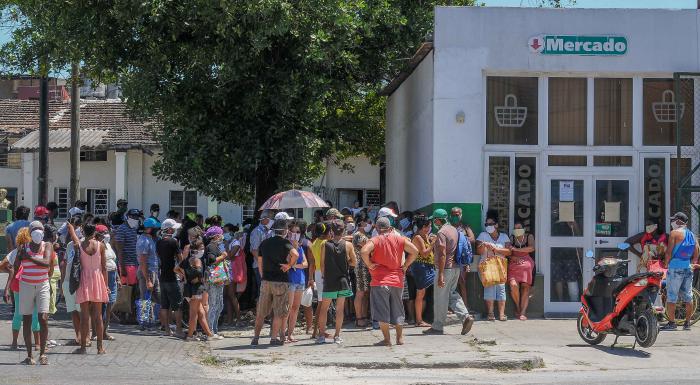
Queues and “coleros” abound in these months of COVID-19 in Cuba. Photo: Jose M. Correa
Queues and “coleros” abound in these months of COVID-19 in Cuba. They move in full view of everyone: those who mark two and three times, for several people, with the aim of selling their stuff to those who can pay high prices for rushing their time to buy. And there are also those who whisper in your ear that they have whatever you want (wet wipes, baby wipes, chicken, picadillo, oil, splits, refrigerators…), but only if you are willing to pay double, triple or who knows what number in CUC above their price in state stores. Then, to expand the resale, they even use the internet.
Like a ray of light in the midst of the global crisis, with its impacts on the internal market and the economic persecutions due to the blockade that increases the national crisis, a note from the Ministry of the Interior recently revived public debate on the subject, stating that more than 1,285 “coleros” had been sanctioned in Cuba since the beginning of the COVID-19 pandemic.
In view of this figure, which in the opinion of some will increase if the gravity of the situation is taken into account, the indolence of people without social commitment, dedicated to the transfer of products necessary for families, in the midst of a context of lack of supplies and national health emergency, comes to public attention.
One could come to doubt the humanity of these beings who, moved by individualism, forget that children, the elderly, pregnant women and the sick will not have the opportunity to obtain what they need.
On our newspaper’s website, readers denounce, in addition to the resalers, the effects suffered by the environment due to their “camping” in parks and sidewalks that count among papers and cans their shamelessness.
In the case of the severity of the sanctions that these individuals receive, diverse were the petitions to correct, energetically, these types of acts. Remember, the majority of those punished by the law only received fines of one hundred to 300 quotas, a minimum amount compared to the profits generated by the collapse of the sales system in the stores and the hoarding of products.
The so-called “lists”, supposedly created to organize the queues with tickets, numbers and shifts, also cover up the activity of the “coleros”, many of whom are the same organizers of the queues in the shops from the early hours of the morning.
If the authorities already have an identity card scanning system that allows for the order and control of this process, it should be used in the best possible way so as not to leave places available for other modalities.
Control within the stores should also be improved. An efficient service depends, in addition, on the organization and rapidity at the time of collecting the products, the personalized treatment to the client and the administrative vigilance towards the workers, demands that are frequently repeated.
Some people have proposed the use of the ration book [the libreta] as a mechanism to control the distribution of products in times of crisis like these. Something that has already been explained, since the country does not have the millions of dollars needed to carry out such a distribution.
Many other citizens request a greater supply in the stores, despite the effort that it means for the country to maintain them and in view of which alternatives for their re-supply have been generated.
The issue is not new. Among the greatest discontent is that the coleros still exist and cloud a trade already hit by the crisis and the economic, commercial and financial blockade of the United States. The cooperation of all could be the key to success in putting an end to the speculators, but greater control and a more effective complaint mechanism are needed, The will of the people is evident.
Belarus and the Rearview Mirror…

Belarus and the need for a rearview mirror…
Now that Belarus is facing a plot from the West, the warning to avoid the worst may be a reflective look at what happened in neighboring Ukraine, or what is being attempted to impose on Bolivarian Venezuela, or more recently, the coup against suffering Bolivia, after years of vindication and boom
Translated and edited by Walter Lippmann for CubaNews.
Author: Elson Concepción Pérez | internet@granma.cu
August 31, 2020 22:08:46
Also in politics there is the rear-view mirror, the one that must be observed at every moment, if the destinies of a country are being conducted, to warn when a premeditated collision can attack a work.
Now that Belarus is facing a plot from the West, the warning to avoid the worst may be a reflexive look at what happened in neighboring Ukraine, or what is being tried to impose in Bolivarian Venezuela, or more recently, the blow against suffering Bolivia, after years of vindication and boom.
Let’s look at the examples. First of all, Venezuela, which on Sunday, May 20, 2018, democratically and transparently elected Nicolás Maduro as president.
According to the National Electoral Council (CNE), with over 98% of the ballots counted, Maduro obtained 6,190,612 votes (67.8%), while in second place was the opposition candidate and former Governor Henri Falcón, with 1,917,036 votes (21%).
The plan planned from Washington was then applied: to ignore the elections and the elected president.
A few months later, on January 23, 2019, in the midst of the chaos created by terrorist groups encouraged by radical sectors of the opposition, Juan Guaidó proclaimed himself interim president of Venezuela. Quickly the government of Donald Trump, the Organization of American States (OAS) of Luis Almagro, the so-called “Lima Group”, an appendix of the latter, and other governments, mainly European, “recognized” the impostor Guaidó.
However, courage, dignity and political guidance, have put up a retaining wall, headed by civil-military unity, which the empire fears so much.
In the case of Bolivia, general elections were held on October 20, 2019. With 100 % of the votes counted, Evo Morales obtained an irrevocable victory in the first round, with 47.08 % in his favor, while his rival, Carlos Mesa, reached 36.51 %.
Then, a divided opposition burst in with all its strength, but capable of uniting in efforts such as that of removing Morales from power. With the support of military and oligarchic sectors, opposition groups with a fascist tendency took to the streets. Meanwhile the OAS, with its Secretary-General Luis Almagro at the head, and fulfilling a script prepared by the US State Department, questioned the results and encouraged chaos and repression against the party in power and its leaders, in the first place against President Evo Morales, who had to leave the country.
Then came the verification of the votes at the polls and the confirmation by international entities of their total transparency. But the coup d’état was already underway and a de facto government was taking power. In the case of Belarus, the script prepared by the West was no different. Presidential elections were held and when the vote was counted, the current president, Alexander Lukashenko, obtained 80.23% of the votes, while the opposition candidate Svetlana Tijanovskaya, only received 9.9% of the votes.
The difference was overwhelming and convincing, but, as Russian President Vladimir Putin said this week, everything was ready long before the election results were known.
Using NATO as a threatening military force, men and means of combat have been moved to Poland’s borders with Belarus, and to the also neighboring republics of Lithuania and Latvia, as sounding boards to incite bewilderment. Washington has moved its military from bases in Germany to Poland and has applied sanctions and threat mechanisms similar to those used in the cases cited in this commentary.
The European Union, too, which has ignored the election results without any real evidence, is already demonstrating this practice of sanctioning those who do not submit to what the West says.
As happened in Ukraine in 2014, the world must know that the plan prepared by the United States is directed against Russia, and for that reason, they want to cut economic, military, family and other ties. This is done under the false pretext of extricating Moscow’s influence in nations that were once part of the then Soviet Union, and that have a strong bond with Russia.
Putin warned that “his nation cannot observe with indifference what is happening in Belarus, because it is a very similar country in linguistic, cultural and religious aspects, and many others”.
“The problems that have arisen today in Belarus must be solved peacefully”, “or with the support of Russian force, if necessary”, Putin assured.
Rosa Luxemburg: A Rose Plucked by Betrayal

FROM THE LEFT
A Rose Plucked by Betrayal
The death of Rosa Luxemburg marked the final step of world social democracy towards treason; it was not only a crime committed with full consciousness of its historical significance, but orchestrated in pursuit of a class hegemonism of the German workers bourgeoisie and big capital, allied after the defeat in the First World War.
A CubaNews translation.
Edited by Walter Lippmann.
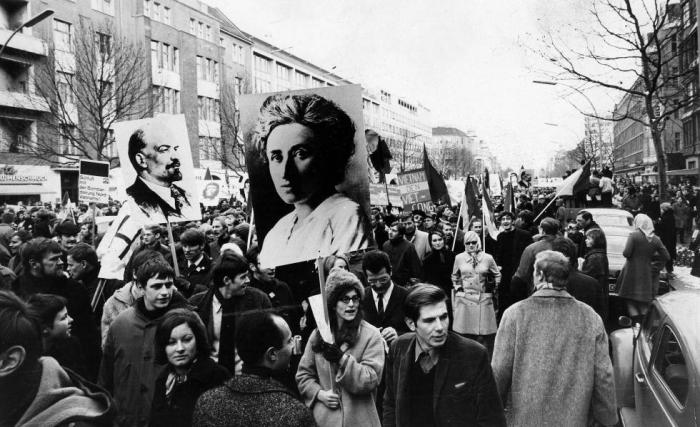
The Rose was plucked, but not hope. Photo: rosalux.org.ec
The death of Rosa Luxemburg marked the last step of world social democracy towards treason. It was not only a crime committed with full consciousness of its historical significance, but it was orchestrated in function of a class hegemonism over the German working class by the bourgeois workers and big capital. They were allied after the defeat in World War I, to build a new right-wing order, the hard state of National Socialism (Nazi), which would lead Europe towards its dissolution as the center of the world.
In the cold dawn of January 15, 1919, Red Rosa wrote her last lines on the problem of the Revolution on the continent. And, although with pessimism, she referred to the hope that the masses would one day awaken from the nationalist and revenge lethargy hovering over the humiliated Germany of the time, and so the Revolution would show its true strength by saying: “I was, I am and I will be.”
POLAND
Being born in a country occupied by Russians, Germans and Austrians made Rosa Luxemburg look at the national question with distrust. The most “revolutionary” she heard from many of the insurgents against foreign power was based on the restoration of the Polish feudal state of the 15th and 16th centuries. At that time it represented in Europe one of the purest reminiscences of the landowner’s system of servitude. That political creature, impervious to the ideas of the French Revolution, was devoured by three modern and authoritarian states that contained the nascent germ of capital.
For Rosa, then, the national question was a setback and she based her appraisals on the need to internationalize the socialist and workers’ underground movement, as a way to quickly win the emancipation of the oppressed classes. Living later in Germany, a country that based its strength as capital on the unity built by Bismarck, convinced her that nationalism only engendered steps backward on the road to a Revolution that, given the state of things at the end of the 19th century, seemed imminent.
In fact, in Germany the Social Democratic Party became the strongest and most numerous left party in the world, generating expectations in all revolutionaries. The very advance of this force in parliament provoked the removal of ultra-conservative and monarchical elements from the public sphere. But it also favored the establishment of pacts between that left and the central power of the State. It was the beginning of the historical betrayal of social democracy from Marxist socialism.
Rosa, who never felt Polish – much less German – encouraged this powerful left to extend eastwards, capturing countries under the aegis of old feudal empires, such as Russia. She saw in the mass movement of 1905 against the Tsar the beginning of the end of the crowned heads and the other European Caesars. However, the pragmatism of leaders and ideologues of social democracy, such as Karl Kautsky, would clash with Luxembourg’s theory of socialism as a new culture, whose idea is placed beyond nationalism.
For Kautsky, the struggle against capital was one of “attrition,” inasmuch as strikes were only intended to move power momentarily, but never to bring about its downfall, and the young socialist movement “would not know what to do with the vacuum of authority.” But she [Rosa] saw in this what it was: an unprecedented concession to conservative power by the leadership of a party that was beginning to abandon its foundations, while reviewing Marx’s thesis 11 on Feuerbach (Transforming the World). Historical facts demonstrated the lucidity of the Polish revolutionary, as opposed to Kautsky’s reformism, in heated and dangerous polemics.
THE SOCIAL DEMOCRATIC VOTE IN FAVOR OF THE EMPIRE
Many of those who, at the height of the 21st century, are surprised by the anti-popular cutback policies applied by the non-Marxist European left, forget that this betrayal began a long time ago. Perhaps it is not a bad memory, but a voluntary forgetfulness in order not to recognize the cynicism with which the revolutionary question has been handled since then by elements [who have] sold out to the interests of capital.
Marx warned that the original accumulation product of the plundering of the third world gave the European workers (a part of them) the possibility of becoming bourgeois and, therefore, defending interests far from total emancipation, guided only towards a nationalist, local question of the selfish improvement of their living conditions. The European worker will thus support not only a conservative pseudo-socialism, but also the hard fascist who guarantees a middle-class standard of living, as we are seeing in today’s Europe.
That is exactly the explanation of German social democracy, the model on which that same continental tendency was built during the Cold War (1945-1991), as a wild card against the Marxist socialism of Eastern Europe.
Social democracy should not surprise us, because since the beginning of the First World War, the budget for the Army was approved in the German parliament. [It was] the same [army] that would kill workers and peasants of the other rival imperialist nations of Europe. That fact marked Rosa Luxemburg’s distance when she founded the Spartacus League, the germ of the German Communist Party, which would be hated by social democrats, ultranationalists and monarchists alike.
The German failure in the trenches, which showed the impossibility of the “confluence” project. It put the country on the verge of total civil war, with revolutionary forces ready to drive for power. However, years of social-democratic government and conservative trade unions that agreed with the existing powers prevented the necessary unity of action.
A poster placed in every corner of Berlin appealed, in those hungry early morning hours of December 1918: “Whoever wants bread, let him bring the head of Rosa Luxemburg”. The black legend of Nazism began by blaming the revolutionary socialists for national disaster, as it would later do with the Jews. Worst of all, this poster was sent to hang by the president of the Republic and leader of the social democratic party, Rosa’s former comrade.
Days later, a group of Freikcorps (antecedents of the Nazi SS assault troops) advanced on a lonely 47-year-old woman, who had her skull smashed with rifle butts, and then threw her blood-dripping body into a Berlin canal. A Spartacist comrade sent an obituary to Lenin, leader of Bolshevik Russia, saying that she “took her revolutionary condition to the extreme.’
The Rose was uprooted, but not hope, much less History.
The Audacity of Squeezing the Needy


The Audacity of Squeezing the Needy
By Nelson García Santos
digital@juventudrebelde.cu
July 27, 2020
Translated and edited by Walter Lippmann for CubaNews.
Money that is easy to obtain, like a raging river, incites the crime-prone to fish. Author: Juventud Rebelde Published: 27/07/2020 | 10:17 pm
Colera: Come with me it will cost you 10. Police officer: Come with me to the police station.
Money that is easy to obtain, like a raging river, incites the crime-prone to fish. And this true truiosm is, let us say it bluntly, even by the benevolence with which this phenomenon has been treated, more visible in the unbridled action of coleros and resellers.
This scourge, which is now in the public eye, is multiplying the weights, squeezing the needs of our neighbors to the utmost, who sometimes, with no other alternative, have to die in their unhealthy hands.
They go to the extreme of wanting to justify their illicit business with the impudence that they are solving a problem for the people when, in reality, this practice harms the official market, the population and shows an unacceptable disrespect for the Law.
To finish off this trilogy, as if it were derisory, it is complemented by hoarders who operate in the wholesale market offering wholesale merchandise.
They often do it with the desired results on the employees of establishments and, who knows, with whom else, to explicitly obtain goods without the bosses noticing.
But they also capture people, weight for weight, to turn them into coleros and resellers, preferably women, elderly people and even the disabled.
Let’s recapitulate: this scaffolding has its categories. The highest-ranking is the great hoarder, but there are the coleros, who operate on their own, and the pot workers, those who put up the money for them to hoard and then give them a profit for resale.
In recent times, the authorities have intensified the confrontation against these people who have made living a la izquierda [literally, “on the left”, but meaning outside the law, wl] their lucrative essence, while the wise tribune on the street expresses satisfaction, because they approve, as in any place, of that protection that should be imposed by the authorities in the face of those who break the law.
But so untouchable do many of the transgressors believe themselves to be that their obfuscation prevents them from feeling that the noose is being pulled to stop this disorder attributed to scarcity, a half-truth, because nothing can justify immorality.
Here is an example of what is being done: for crimes related to illicit economic activity, disobedience, hoarding and the spread of epidemics, around 1,285 coleros have been prosecuted in Cuba since the beginning of the COVID-19 pandemic last March, according to a report published on the website of the Ministry of the Interior.
That figure has been broken down and prophylactic measures and fines have been applied. Others have been charged with the crimes of illegal economic activity, disobedience, hoarding and the spread of epidemics.
With the thunder falling on some and blinding others with the glare of lightning, the only thing advisable is to avoid turning a deaf ear to the very clear message from the authorities that illegalities will not be allowed, because they can simply compromise the daily course of our society.
Let no one think that this is just a momentary action and everything will return to normal, that is, let it be done and undone.
The people even want the laws to be tougher against all these illicit actions, so that anyone who has the idea of throwing himself into the dark labyrinth of living outside the law will think twice. It’s that logical, that simple.
Pain and Pleasure in Childbirth

Pain and Pleasure in Childbirth
By Mileyda Menéndez Dávila
sentido@juventudrebelde.cu
June 9, 2020
Translated and edited by Walter Lippmann for CubaNews.
In the past century, obstetricians and gynecologists from various countries have defended the hypothesis that an important function of pleasure in its maximum physical expression is to prepare women physiologically for the intensity of childbirth.
As a natural process, childbirth can be pleasurable… for some people too much. Photo taken from the site Bebés y más Autor: Tomado de Internet Published: 16/06/2020 | 09:07 pm
Although there are few studies available on the subject, it has been scientifically proven that orgasms can occur during labor. This phenomenon has been called a myth for centuries because in Western culture childbirth is associated with heroic pain and orgasm with pleasure of external origin (even if it is self-provoked), therefore, it is not acceptable that both concur in the same act without degrading stigmas.
In the biological field, things are not binary, as most conservative tendencies claim. In fact, since both processes are mediated by hormones and focus on the genital area (between the first and second chakra), there is reason to assume that the nervous system interprets painful signals according to very personal patterns, associated with the level of tolerance for physical pain, expectations with that pregnancy and the circumstances surrounding childbirth.
In the past century, gynecologists from various nations have defended the hypothesis that an important function of pleasure at its maximum physical expression is to prepare women physiologically for the intensity of childbirth.
In the 1970s, the Frenchman Michel Odent promoted actions to make birth a moment of joy, not of sacrifice or shame. Original cultures see it that way, and today new voices are raised in favor of the body acting according to its ancestral knowledge.
Adrenaline, oxytocin, dopamine… A whole cocktail of hormones is unleashed during labor, each at its own pace. And if the mind accepts the right to experience the act of giving life as pleasure, the sensations can be strong, but fluid, without panic,. That “permission” helps to interpret them without guilt, in some cases with similar enjoyment of what for that woman is the reference of an orgasm, as occurs in a sudden consensual sexual act.
Nutritional concern
Dr. Odent was also one of the driving forces behind breastfeeding in the baby’s first hour of life because of its health benefits for both of us.
Although formalized reports are rare, some mothers describe something like an orgasm when they breastfeed. Such is the case of a 32-year-old Matanzas reader, who suggested including it in the list of involuntary pleasures because on a physical level it is enjoyable, but she thinks “that morally it is not right”.
She says her breasts have always been very sensitive and her partner manages to bring her to a climax just by stimulating them.
Once again, it is cultural assumptions that prevent that woman from enjoying her own body in a natural, unintended sense with morbidity.
Broadly speaking, Dr. Elvia de Dios, a trained psychiatrist and therapist at CENESEX (National Center for Sex Education), explains that the baby’s suction triggers the production of oxytocin, and that hormone activates the functioning of essential glands. These incluse the hypothalamus and pituitary gland, which in turn facilitate intense nerve discharges that stimulate the contractions of the uterus and help it return to its normal size and muscle tone.
The reader who consults is a privileged woman in the quality of her nervous reflexes, says the expert. It should not inhibit a reaction that is not associated with any sexual thought or call into question your motherhood.
For questions about orgasm and other issues of your sexuality or sexual identity, you can contact Dr. Elvia de Dios at the Cenesex telephone counseling service, which she provides Tuesday and Thursday from 9:00 a.m. to 2:00 p.m. at 7638-8405.
From Auditor to Temporary Police Officer
Young People in Front of COVID-19:
From Auditor to Temporary Police Officer
On the Isle of Youth, Young Communist League members were trained by the Ministry of the Interior to take voluntary responsibility for supporting control measures in shops where food, toilets and other products are sold
By Roberto Díaz Martorell
corresponsales@juventudrebelde.cu
April 14, 2020
Translated and edited by Walter Lippmann for CubaNews.
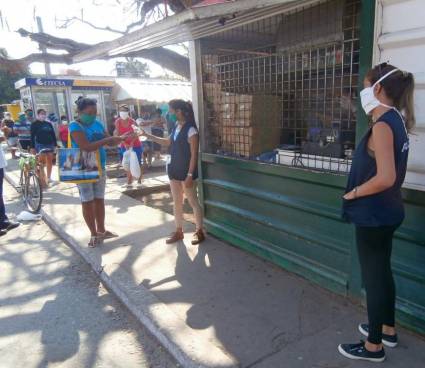
Indira Guevara and her colleagues control the distance at a point of sale in Nueva Gerona. Author: Roberto Díaz Martorell Published: 14/04/2020 | 10:49 am
NUEVO GERONA, Isle of Youth. – The COVID-19 not only changed the perception of the reality of the people who live in the world, but also transformed the work routines for many, such as the young Indira Guevara, auditor of the Municipal Comptroller’s Office, who today collaborates with the National Revolutionary Police to control the distance in the queues where food is sold.
There are 33 young militants of the Young Communist Union (UJC) who were trained by the Ministry of the Interior (Minint) to take on the voluntary responsibility of supporting control measures in commercial establishments where food, toilets and other products are sold.
“We were called together by those of us who do not have children or elderly people at home and we were assigned this task in the People’s Councils where we live, so that we do not move from one neighborhood to another and avoid the movement of people that could facilitate the spread of the virus.
“I was assigned to Abel Santamaría, a community that today reports six positive cases to COVID-19 and therefore extreme measures of quarantine and reinforced isolation are adopted, so I consider my work more important.
“They told us how we should proceed with the population to help avoid crowding in the queues, both in the stores in CUC and in the markets and points of sale of other food or supplies. Without hesitation, I accepted. This will allow the police to devote most of their personnel to areas with limited movement.
“We all agreed because the situation we are experiencing today is very complex and it is the duty of the young people to assume responsibility, as revolutionaries and Cuban citizens.
“It is true that sometimes we are afraid because it is something new and it is not a game: that pandemic has taken many lives in the world. Already here, on the Isle of Youth, one person has died, and many still do not understand the magnitude of the risks they take on the streets.
“At first it was funny, but it is true that the police vest they gave us gives us some authority, because when they see us so young people may think that we are not prepared and they may continue to be disobedient.
“So far I haven’t had any unpleasant encounters. We address people with respect and education so that they keep their distance from each other, so that they do not despair. We ask them please and that opens the dialogue to a better understanding.
“However, no matter how hard we try, they distance themselves and the next minute they are together again. People should be more aware of how dangerous this pandemic is and once and for all assume with responsibility and discipline the measures, which are all for the good of all,” reflected Indira Guevara.
This booster troop works on a voluntary basis from the time shops open until they close. Everyone is guaranteed water, a snack, lunch, and they rotate on occasions to rest. There is always a Minint officer with them, to advise and solve any situation that may arise.
According to Yander Zayas, first secretary of the Municipal Committee of the UJC in Isla de la Juventud, the group chosen comes from sectors such as Energy and Mines, Computers and Communications, Education, Sports or are students of the territory. This youth participation in the tasks of prevention against COVID-19 is part of the country’s strategy to guarantee the continuity of services to the population and ensure the future and health of all.
Restored “Last Supper” at Venice
Restored The Last Supper at Venice Film Festival
The digital restoration of The Last Supper, made by Tomás Gutiérrez Alea in 1976, will be screened as part of the Classics section at the 77th Venice International Film Festival, which will take place between September 2 and 12 next
By Joel del Río
digital@juventudrebelde.cu
August 22, 2020
Translated and edited by Walter Lippmann for CubaNews.
I would like to explain that the title of this work has nothing to do with Leonardo Da Vinci’s famous fresco, nor is it related to any gloomy prediction for the Italian city also called La Serenissima. I am referring rather to a transcendent Cuban film, which has fortunately been restored, and will be exhibited with honors at the next Venice International Film Festival.
This year’s event, because of the physical distance, a very limited public of critics and a few foreign guests will attend. Meanwhile, this and other competitions, such as the one in Toronto, value the exhibition of the films through websites with streaming services, to be downloaded only by the people authorized to view them.
The digital restoration of The Last Supper, made by Tomás Gutiérrez Alea in 1976, will be screened as part of the Classics section in the 77th edition of the Venetian event, which will take place between September 2 and 12. The copy will have its world premiere at the Il Cinema Ritrovato (The Rediscovered Cinema) Festival in Bologna, which will take place from August 25th to 31st, and will also be added to the list of restored classics offered by Venice, under a collaboration agreement.
In the 34th edition of Il Cinema Ritrovato, not only the aforementioned work by Titón will be shown, but also two of his other films. All three have been restored by the Academy of Motion Picture Arts and Sciences of Los Angeles, USA, in collaboration with the Cuban Cinematheque: the short documentary El arte del tabaco (1974) and the feature film La muerte de un burócrata (1966), which was at the Mostra last year.
It is never pointless to reflect again on the merits of Cuban art, even when it is taken as a pretext at this moment in which two classic films attract the attention of the most prestigious film events and institutions in the world. It should be noted that both productions were prophets in their own land, and placed, in their own time, in the deserved places, thanks to the attention of the public and the critics.
The death of a bureaucrat was constructed as a buzzing mockery of the unbearable “traversed” in the normal development of society. It attacks the plague of schematic and inflexible officials that build the despair of the central character, and highlights the tragic chaos around a simple and essential procedure.
Considered one of the most eloquent cinematographic satires on the administrative inadequacies of any society, the film inaugurates critical realism with absurd and unreal touches that allowed the national cinematography to elude the narrow representational frameworks, sometimes imitative, of Italian neo-realism.
For its part, The Last Supper was first seen on November 3, 1977 in the Yara, Acapulco, Metropolitan, Monaco, Florida and City Hall theaters (how wonderful to have so many theaters on the premiere circuit). Among its many international awards are the Golden Hugo of the International Film Festival of Chicago, the Grand Prix at the Biarritz Ibero-American Film Festival, the Golden Columbus in Huelva, the distinction as outstanding film at the London Festival, best foreign film exhibited in Venezuela, Grand Prize at the Figueira Festival in Foz, Portugal; and winner of the Popular Jury in the II Muestra Internacional de Cine Sao Pablo.
Ten years after making the brilliant contemporary satire on the problems of bureaucracy in Cuba, Gutiérrez Alea made a foray into historical production with his first color film, La última cena (The Last Supper), inspired by an anecdote about a real event that appears in the book El ingenio (The Sugar Mill) by Manuel Moreno Fraginals.
He wrote an extensive and medullar study of the plantation economy in the era of slavery in Cuba. While the action took place at the end of the 18th century in a sugar mill, the advice given by the historian to the filmmaker was very important. He also had the help of the knowledge of specialists such as Rogelio Martínez Furé and Nitza Villapol, because it also told the story of a rich count, very religious, who gathers 12 slaves and invites them to dinner, in the way of a similar invitation narrated in the Bible.
During dinner, which takes up most of the footage, the count talks to his servants and tries to explain to them the principles of humility and resignation that guide the Catholic religion. The slaves, convinced of their goodwill, decide not to work the next day and thus a repression is unleashed with tragic consequences.
It is a temporary analysis of power and dependence, because, as the director stated to Gerardo Chijona in the interview published in the magazine Cine Cubano number 93: “…a historical film, for me, is not to reconstruct in a spectacular way the fact itself. I’m not interested in archaeological work, but rather in taking advantage of history at some point because of the repercussions that this can have on the present.
Editor Nelson Rodríguez told the Cubasí website: “The filming of the dinner sequence was a real challenge in terms of staging, it lasted about four weeks and was shot continuously, that is, in order, almost in real-time. It was really a challenge, because the continuity demanded special care in all the elements, from the care with the candles, the food, the wines and of course the work of the actors. The edition was a real feast, because there was not the slightest error in the setting or in the continuity”.
In this respect, it is worth adding that in the famous long sequence the director films the table from the front, with the count in the middle, and resorts to a backward movement, and then a forward movement in the camera, as if to emphasize the theatrical air of the representation and the pictorial reference in Da Vinci’s painting.
It is unlikely that the director attempted a diatribe against Catholic ideology. Rather, I believe that he intended to question, indirectly, all the usual manipulations of the powerful, with respect to a certain idealistic and egalitarian rhetoric. His goal was to confirm in the background the predominance of the ruling class over a group that he considers inferior and anonymous.
So when the count refers to the acceptance of sacrifice and suffering, he never thinks of adopting that philosophy himself, but of having it endorsed by the slaves, forced to assent to their subordinate condition. This and other reflections come from one of the most brilliant and intelligent films ever made in Cuba. Now it can be enjoyed again in a good copy.
Since I am not invaded by the diagonal chauvinism of reporting on an event as enormous as the Venice International Film Festival only from the perspective of Cuban participation, we would at least like to point out that in the official section, where the premieres of the great filmmakers compete, among others, the Japanese master of horror Kiyoshi Kurosawa (The Spy’s Woman), the new revelation of Polish auteur cinema, Malgorzata Szumowska (It Will Never Snow Again), the world’s most acclaimed Israeli filmmaker, Amos Gitai (Laila in Haifa), the several times acclaimed Russian director Andrei Konchalovsky (Dear Friends), and the Iranian master of neo-realistic melodrama starring children, Majid Majidi (Children of the Sun).
In short, Cuban cinema continues to occupy prestigious spheres, because beyond the honors given to two essential classics. Itt was also announced a few days ago that the independent production Agosto, directed by debutant Armando Capó, will represent us in the 24th edition of the Lima Film Festival, which this year will also have an online version, due to the coronavirus, from the 21st to the 30th of this month.
In the same event, the documentary A media voz, co-directed by Heidi Hassán and Patricia Pérez, will be shown via internet throughout Peru, and will finally be released in Spain as part of the official selection of the Malaga Festival, on August 23rd in the Echegaray Theater.
Both Agosto and A Media Voz have gone through a long list of important international contests, and both were awarded with top choirs in their respective categories (debut opera and documentary) at the most recent Festival de La Habana. Cuban cinema does not live by past glories alone.
Cuba is Serious and Proactive

VIOLENCE AGAINST WOMEN
Cuba’s Work is Serious and Proactive
“The leadership that the FMC has today to exalt women before themselves and society is focused on such purposes as: the conquest of women’s autonomy in all areas, the deconstruction of prejudices and stereotypes, against all forms of discrimination and oppression that restrict their development, their freedom and wound their dignity as human beings. This is a strength to fight and do, in an organized and committed way, for non-violence against women”.
Author: Dilbert Reyes Rodríguez | dilbert@granma.cu
August 22, 2020 01:08:10
Translated and edited by Walter Lippmann for CubaNews.
Illustration: UN Women Photo: Unknown 2020 01:08:10
Not even the largest catalogue of possible courtesies is enough to erase the trace of a single deliberate act of gender-based violence against a woman.
Calling such acts abhorrent does not accept a single minute of debate. It is more important to make better use of all the opportunities – highly potential – that we, as an organized country, and with a declared political and governmental will, have to proactively and speedily confront the scourge.
It is well known that there are cultural roots that complicate and prolong this war’, that there are different, concrete and subjective obstacles, and it is also well known that there are hunters of the naïve who are betting on taking advantage of these slopes in order to push Cubans against each other under the skin of sheep and in order to divide us.
President Díaz-Canel himself has repeated it: “In matters of law and society, they have not given up on the search for points of rupture in national unity, magnifying the possible dissent on sensitive issues such as egalitarian marriage, racism, violence against women, or the mistreatment of animals, to mention a few, in all of which we are working seriously to resolve centuries of debt that only the Revolution in power has faced with unquestionable progress.
There will be no lack of those who, once again, contract with the hackneyed accusation of “politicizing everything”, in order to distract the arguments that explain, clearly and from within, that the country is not sitting idly by on an issue as sensitive as violence against women. But since there are words that have their backing in deeds, Granma tackles the issue with Dr. Mayda Alvarez Suarez, director of the Center for Women’s Studies (CEM).
-How have actions been taken in recent years to reduce violence against women?
-There have been many debates over these years, with the aim of making the existence of violence against women in our country visible and understanding its causes, combating stereotypes and placing the issue in the development of essential policies. Important experiences of orientation, prevention, telephone help lines and protection programs have also been carried out in different territories; but we are far from feeling satisfied because we cannot forget that the phenomenon has deep roots in the patriarchy, in societies characterized for centuries by the existence of unequal, unequal and power-based relationships. It is still there, manifested in thought and relationships in couples, families, workplaces, public places, where it is not always perceived as such, nor confronted and attended to as it should and is necessary.
“Male chauvinist concepts, prejudices, sexist stereotypes persist and are reproduced in our society, anywhere and at any level, and although there have been changes in assessments and ideas about violence, which were found by the National Survey on Gender Equality – conducted in 2016 by CEM, the Federation of Cuban Women (FMC) and the Centre for Population and Development Studies of the National Office of Statistics and Information (ONEI) – we were also able to reveal which ones remain, continue to hinder further progress and are at the root of existing inequalities.
“At present, the vast majority of Cubans do not justify violence against women or men, nor do they blame women for acts of violence (mistreatment or rape) and reject the idea that women should bear it.
“However, in a part of the population there are still criteria that contribute to sustaining and perpetuating violence against women. The most entrenched are: alcohol consumption is the cause, the woman who endures the abuse is because she likes it, most women withdraw the complaint, and consider the violence a private matter. These criteria become justifications for not intervening or denouncing the acts of violence”.
-Are there results that allow us to characterize an effective advance in the reduction of violence against women?
-The First Conference of the Communist Party of Cuba, held in 2012, before the National Survey was carried out, had already declared that there was a confrontation with prejudices and discrimination of all kinds that still persist in the heart of society. In particular, in its objective No. 55, it explicitly states that it will “raise the level of rejection of gender and domestic violence and that which is manifested in the communities.
“Among the main achievements of the current phase, the new Constitution of the Republic stands out, which expands and strengthens the protection of rights, particularly those of women and girls.
“The recognition of the right to a life free of violence (Articles 43, 85 and 86), the commitment to address it, ratifies the importance of prevention and enhances the mandatory responsibility of the State in the implementation of legal standards, public policies and the improvement of protection mechanisms for victims. At present, a process is under way to harmonize the new articles of the Constitution with various legislations that will allow its effective implementation, for example, the modification and updating of the Family Code, which will be brought to a process of popular consultation and referendum. The Criminal Code is also being analysed and amendments are being suggested.
“The Standing Committee on Children’s and Youth Affairs and Women’s Rights of the National Assembly of People’s Power is an important ally in promoting compliance with the Cuban State’s agenda for the advancement of Cuban women and in monitoring its implementation.
“In order to assess the progress made in reducing violence against women, better records are needed of the acts of violence that are detected and dealt with, and of their follow-up and solution. Ongoing statistics are needed to make it possible to compare, over time, the increase or decrease in cases, the prevalence and incidence of violence in a given population, and its frequency and severity, among other indicators.
“There is also a need to carry out periodic surveys on violence against women, which would allow for its systematic evaluation in selected periods and data of international comparability”.
-How much more do you think can be done, under the current conditions, to accelerate the change of such behaviours in the country?
-Above all, it is urgent to perfect ways, procedures, mechanisms, protocols of action in the institutions involved and everything necessary to attend, immediately, with respect and without prejudice, to the victims of violence, and to apply the law rigorously to those who commit these acts.
“Improving the presence of the subject in the laws in force, which are currently in the process of being modified, is also very important. However, my personal opinion is that we would benefit from a specific and comprehensive law on violence against women, which contemplates all the measures and sanctions that already appear in existing laws, and others that need to be enacted.
“Regarding macho conceptions and stereotypes, everything that is done to generate transformations in subjectivity is key: creative communication products, adequately focused from a gender perspective, training courses, community and face-to-face debates, the use of social networks
“Essential is the training in gender and violence to decision makers and lawyers because of the importance of their role in this issue, the insertion in curricula, in the training of educators, communication specialists, among other actors.
“Exchanging experiences with other countries, both to research and to confront and address in practice these facts, adapting them to our context, is also very useful, since violence against women is a global problem.
“On the other hand, the FMC has valued the need to increase the confrontation to the facts of violence in the communities, from our base structures and, for that, to raise the level of training of our leaders and collaborators of the Women and Family Orientation Houses. From the fmc, we have always affirmed that the most important thing is not that there are many or few of them, but that whenever there is a woman who is violated, she is well cared for and her rights are defended.
-What strengths exist to confront this?
-We have the political will of our Party and Government. The confrontation with violence is endorsed in the programmatic documents of the Party and in the Constitution. Instruments such as the Family Code, which was approved in 1975 and is in the process of being modified as I mentioned earlier. There’s also the National Plan of Action to follow up on the agreements of the Fourth World Conference on Women in 1997, contain principles and actions to guarantee gender equality and non-violence.
“The educational and employment opportunities enjoyed by women, as well as access to free and universal health services, including sexual and reproductive health services, have placed Cuban women in a better position to achieve autonomy and independence, which weakens the chances of experiencing situations of dependence and having to endure, for that reason, situations of violence.
“The safety and protection of sons and daughters is also guaranteed. The State provides free education for the offspring, their food and systematic medical care, with no gender differences. Thus, for example, girls show as high percentages of education as boys. There are also institutional support mechanisms for low-income families, especially for single mothers.
“The leadership that the FMC has today to exalt women before itself and before society is focused on such purposes: the conquest of women’s autonomy in all areas, the deconstruction of prejudices and stereotypes, against all forms of discrimination and oppression that restrict their development, their freedom and wound their dignity as human beings. This is a strength for fighting and doing, in an organized and committed way, for non-violence against women”.
You must be logged in to post a comment.