
Cuban Families Code 2022 – Summary
Translator’s note: The complete draft Cuban Families Code is 65,000 words and a 104pp pdf document. Because of its length, the Cuban New Agency (ACN) prepared the following summary, about 4,000 words, and a 30pp pdf, with the principal points of the document. What follows is the text of that summary, without the graphics.
=============================================
To read the new Families Code
This code, which in September will undergo social scrutiny through a referendum, something unprecedented so far in Cuba for this type of normative provision, has developed something extraordinarily exceptional: affection as a legal value. This is why it has been called the code of affection, which is not a slogan, it is an essence. This norm has an undisputed ethical value; it teaches us to think and gives us the tools to educate future generations.
—Miguel Díaz-Canel Bermudez July 2 3, 2 0 22
Design: Ernesto Niebla Chalita and Marien Lazo Regalado; Proofreading: Maykel Reyes Leyva; Illustrations: Maray Pereda Peña
About this edition: © Cultura Popular, 2022
All rights reserved. No part of this work may be reproduced without the authorization of Empresa de Artes Gráficas Federico Engels, to which the publishing house Cultura Popular belongs.
ISBN: 978-959-7047-39-1
Empresa de Artes Gráficas Federico Engels Via Blanca No. 551, between Primelles and Palatino Cerro, Havana, Cuba.
Translated by Walter Lippmann for CubaNews.
Thanks to Amelia Rodriguez, Madeleine Monte and Abel Gonzalez for their invaluable assistance.
THE CODE OF FAMILIES
It takes affection as the fundamental axis of family relationships.
1-It brings to the Law of Families more coherence with the Constitution
2-Sociologists, jurists, psychologists who research and work on the protection of Cuban families have participated in its elaboration.
3-It responds to the international commitments undertaken by Cuba, in particular:
The Convention on the Rights of the Child.
The Convention on the Rights of Persons with Disabilities.
The Convention on Violence and Harassment.
4-It is based on the secularity of the Cuban State.
5-It is not a Code for violent persons.
6-It is concerned with guaranteeing the protection of those persons who may be in a situation of vulnerability or disadvantage, of any kind, within the family.
With its approval by a national referendum, the new Family Code will govern the practice of family law in Cuba. So far, it is made up of 11 titles, which are broken down into several chapters. To this is added a section dedicated to Temporary Provisions, and another to Final Provisions.
TITLE 1
Frames the application of the Code within family relationships.
TITLE 2
Refers to discrimination and violence in the family framework. It defines:
* Its scope.*
* Manifestations and types.*
It addresses the liability for damages that may be caused by family violence.
TITLE 3
Refers to kinship and the obligation to guarantee everything necessary to live (food, footwear, clothes, recreation, protection…) to children, adolescents, older adults and disabled persons who cannot do it by themselves.
A-On the sources of kinship:
*Kinship that has arisen from an affective relationship is recognized.
*Mothers, fathers, grandparents, and related sons and daughters are recognized as family figures.
*The right of communication between relatives by blood, affinity and by persons affectively close to each other is extended.
B-Regarding the obligation to provide everything necessary to live:
* It is recognized between members of an affective de facto union.
* The persons obliged to do so are extended (to uncles/ aunts, nieces/nephews and mothers, fathers and affinity daughters).
* The cessation of this obligation is defined in the event of manifestations of violence.
* The exclusion of this right is defined when the person who supposedly needs them has put itself in this state.
TITLE 4
Accepts four sources of filiation:
These two are perfected:
* The consanguineous
* The adoptive
Other new ones are introduced
* Filiation as a result of assisted reproduction
* Socio-affective filiation
* It is defined that a child or adolescent can be adopted until he/she becomes of age.
* Both heterosexual and homosexual couples may adopt, without distinction, whether married or in affective de facto partnership.
* Solidarity gestation [non-profit surrogacy] is introduced as an alternative for assisted reproduction. It is based on solidarity as a cross-cutting principle of family relations.
Legal, medical and judicial mechanisms are foreseen for the strict control of these processes.
TITLE 5
Develops the entire content of parental responsibility.
The responsibilities of mothers and fathers are strengthened and consolidated.
The classic definition of patria potestad is updated and perfected and is replaced by the concept of parental responsibility. Other legal figures are introduced, such as:
* Residual parental responsibility.
* The temporary delegation of certain powers of exercise in favor of third parties.
* Temporary guardianship and care.
* Protection in digital environments
Violence is regulated as an express cause for deprivation, suspension, prohibition of guardianship and care and limitation of communication.
The figure of shared guardianship and care is incorporated and the right of family communication to other family members is reinforced.
TITLE 6
Recognizes the right of all persons to formalize a marriage. Marriage is prohibited for persons under 18 years of age.
TITLE 7
Recognizes the stable and singular union where a life project is shared, as another of the forms of organizing life as a couple and forming a family. It recognizes that covenants of cohabitation and economic regime can be made.
TITLE 8
Develops figures of protection and support of the child and persons in situations of disability:
* De facto guardianship.
* Family foster care.
* Institutional foster care of minors in social assistance centers.
* Voluntary feeding.
Guardianship is reserved exclusively for minors. It can be plural.
* It recognizes and protects the person who assumes total or partial responsibility for the care of another.
* Respect for autonomy and dignity of care is recognized.
* Violence is prohibited in the caregiver-care-receiver relationship.
* It defines their rights and duties.
TITLE 9
Regulates the rights of the elderly and people in a situation of disability to:
* Family life with dignity.
* Autonomous and independent life.
* To choose a place of residence.
* Family life free of violence.
* An accessible environment.
* Self-regulation of future protection.
* Family communication.
* Respectful support of their preferences.
TITLE 10
* Refers to mediation as an alternative for the solution of conflicts.
* It defines its scope as an extrajudicial procedure.
* Determines which are the matters that can be mediated.
TITLE 11
Regulates any family situation where any of its members is a foreigner or lives outside the country.
TEMPORARY PROVISIONS
The rights acquired under the Family Code of 1975 are maintained. The judicial matters that are in process when the new Code enters into force, will continue their process. The guardianships of persons of legal age defined under the Family Code of 1975 will be reviewed and valued. Marriages performed under the Family Code of 1975, may agree on new cohabitation and economic regime pacts.
FINAL PROVISIONS
It incorporates modifications to several articles of the Cuban Civil Code:
* Persons may not be declared incapable and shall be provided with support, from the simple to the most intense, according to their specific situations.
* It is foreseen that donations can be under condition and revocable.
WHAT ARE THE NOVELTIES AND WHY ARE THEY NECESSARY?
Families also change, they are no longer that photo that remained frozen over time. Their fundamental changes in Cuba can be summarized as follows:
Small families and households where adults work outside the home are on the rise.
More and more couples are living together without formalizing their union.
Fertility is decreasing.
The family in Cuba transcends the narrow framework of cohabitation in the home and there is a much more comprehensive system of relationships.
All these people form a network of support, of material and emotional support that must also be considered when talking about family.
SOME RELEVANT DATA
* Almost half of all households are headed by women.
* Only in one out of three households there are children under 15 years of age, and in four out of ten there is an older adult.
* There are fewer and fewer extended and
* Almost half are nuclear.
* Thirty percent of children and adolescents live only with grandparents.
* The majority of young people of reproductive age with a partner live with their family of origin or that of their partner.
* Fertility among young people remains below replacement, and the average age of reproduction is around 26 years for women.
This family diversity that characterizes Cuban society indicates the need for a new Family Code. Of the eleven titles that make up the draft Family Code, four are totally new, and five present numerous transformations. There are many new features compared to the current Code that we approved almost fifty years ago. The range of alternatives and possibilities that were taken into account is so wide that any person, no matter how conservative he or she may be, will always find something that benefits him or her, as a grandfather or grandmother, as a brother, as an uncle, as a partner, as a wife.
THE OBLIGATION TO PROVIDE WHAT IS NECESSARY TO LIVE
In this booklet, there is no room for all of them, but we bring some of those most commented upon in the neighborhood discussions: Within each of our families, there are basic obligations that we assume. One of them is the “obligation to provide food”, understood as the responsibility to guarantee what is necessary to live. We are not only talking about the responsibility to put on the table the food to be consumed at home. The term also refers to the roof that we must guarantee, to the clothes, to the education of our children and adolescents. It is about everything necessary for life, both materially, spiritually and in the affections that we share and help to build.
Among the novelties that appear in this section is the definition of the reciprocal nature of this obligation: whoever asks for food today may have been obliged to give it before, and if he/she did not fulfill his/her responsibility before, now he/she cannot claim it. In other areas, this new bill also recognizes that it is the duty of adult children to contribute to the satisfaction of their parent’s needs, even in old age.
In addition, solutions are proposed to problems that currently do not have a fair solution. For example, a pregnant woman does not currently have the legal mechanisms to claim alimony, which can only be claimed after the birth of the child. With the new Code, it is defined that it is necessary to ensure their care even from the gestation period and guarantees their care.
ADOPTION
In terms of adoption, the changes introduced by the new Code are important.
For example, if under the current Code, children can only be adopted up to 16 years of age, the new Code proposes that adoption be extended to 18 years of age.
Another example: the current Code establishes that only two people can adopt in the case of a married couple. Now, this possibility is extended to affective de facto unions, which would have the same right to access adoption as marriage has historically had.
With the background of frequently facing long, cumbersome processes, with a high emotional price for couples who decide to initiate this type of request, the new Code clears subjectivities that hinder and make it very difficult for any couple to complete the whole process.
3. SOLIDARITY GESTATION [SURROGACY not for profit]
The new Code takes into account the diverse realities we live in, in coherence with our plural, integrating and solidary sensibility. Being consistent with this, it leaves implicit that access to Assisted Reproduction Techniques must be admitted in a broad and egalitarian way without any discrimination in order to guarantee the essential right of all people to form a family.
In the specific case of surrogacy, nothing forbids its presence as long as both the giver of the womb and the future parents of the child act altruistically, disinterestedly and based on family or affective solidarity; and to leave no room for ambiguity, the document is explicitly against any interpretation that would turn this type of alternative into a lucrative business based on the exploitation or objectification of women.
4. RIGHT TO COMMUNICATION
The current Code is concerned with guaranteeing communication rights when there are mothers and fathers in separation disputes, but these results are narrow, asymmetrical and almost never take into account the rights of other family members such as grandfathers and grandmothers to maintain stable and clear communication with the children.
The Cuban family has always been very united, has always been very willing to exchange in all areas, including communication, and at this time they do not find a solution to the difficulties that may arise within the families.
Taking into account the numerous benefits that the possibility of frequent and unhindered communication offers for the healthy and happy growth of our children, and also how necessary are the environments of affection and harmony for grandmothers and grandfathers, the new Code recognizes the right of communication as a kinship right.
With this incorporation, we would be protecting the possibility of overcoming any conflict within the family, any limitation and facilitating the way for people to have their relational right to communicate in the family environment recognized.
5. PARENTAL RESPONSIBILITY AND PATRIA POTESTAS
For some people, the incorporation in the new Code of the concept “parental responsibility” may be unnecessary;it may provoke fears or may even be seen as an intervention in the ways in which they decide to relate to their sons and daughters.
In reality, its inclusion is not removing or eliminating what we have known until now as patria potestas (parental authority). In practical terms, it is only giving to that set of “…powers, duties and rights that correspond to mothers and fathers for the fulfillment of their function of assistance, education and care of their minor children, which affect their personal and patrimonial sphere and which are always exercised in their best interest…” a name that is more coherent with its content.
Far from being weakened, the ties between parents and children are strengthened, but not in terms of power or subjection, but in terms of responsibility towards them.
What are the guiding principles? Progressive autonomy, the best interests of the child and the right to be heard.
What do they mean? The best interest of children and adolescents do not mean responding to their whims or turning them into orders. Ensuring the best interests of our children implies that our decisions as parents should be aimed at their welfare. And also that they have the right to say no if -for example- an attempt is made to impose child labor, sexual abuse or physical injury on them,
Progressive autonomy and the right to be heard, as several specialists comment, are simple things to understand. Yamila Ferrer, vice-president of the National Union of Jurists of Cuba, said that for example, if we allow our 17-year-old daughter to decide whether she wants to be a lawyer or an engineer, and we support her, we are applying the principle of a progressive autonomy. If, in addition to taking our son to school in first grade, we also teach him to cross the streets safely and prepare him to be able to go on its own when he is in sixth grade, we are also applying this principle.
To take this idea as a starting point in the education of our children is to take on the need to provide them with the necessary tools so that they can reach their optimal development.
6. PROTECTION AGAINST ALL TYPES OF VIOLENCE IN THE FAMILY SPACE
There are problems that arise in the daily life of families in Cuba. For many they may be distant realities or difficult to understand, but if we review some research conducted in recent years, we can see, for example, that between 2016 and 2019 sexual abuse against minors increased by 24 percent, according to the Cuba Report on Preventing and Confronting Human Trafficking and Protecting Victims; we can read that violence towards our older adults is shown in its various faces and shades, from old women or men who are stripped of their money and property, or suffer direct robberies or are pressured to change their wills; we also hear the stories of violent experiences suffered by numerous women in their relationships with their partners.
In order to respond to these and other problems that locate stories of aggression, abuse and beatings in the family environment, the new Family Code proposes mechanisms to remove aggressive people from the space shared with the family, to protect those who may be vulnerable to this type of situation and need the backing and support of both close relatives and the community or the State. In this sense, we condemn violence against children, against people with disabilities, against the elderly, and against those based on gender inequalities. It does not matter whether these expressions of violence are physical, verbal, psychological, moral, sexual, economic, patrimonial or due to negligence; they are all relevant and all will have judicial consequences for those who commit them.
7. MARRIAGE STRUCTURE
The new Family Code introduces modifications in the elements linked to the legal status of the patrimony obtained by the couple during their married life. It means that the kind of agreements reached by any marriage over properties and acquired assets is diversified.
The current Family Code regulates a single and compulsory regime, called “matrimonial community of property”. However, in the new Code, in addition to this option, couples can choose between two other alternatives: the Mixed System and the Separation of Property System, which gives the couple the possibility of agreeing which of these to select and which assets could be part of that community.
8. MARRIAGE BETWEEN TWO PERSONS OF THE SAME GENDER
As another of the novelties included in the new Code, the rule that enshrines the right to marriage is marked by the principles and values of equality and non-discrimination, enshrined in the 2019 Constitution.
The world has not stood still. Family dynamics and ways of understanding and embracing affections have changed over the years. The transformations in the societies in which we live have also been expressed in the very nature of human relationships and among them, in the ways in which we look at marriage, giving new forms to the traditional concept. Different forms of affective, sexual and mutual solidarity relationships have emerged, which in turn have led to legal changes in the institution of marriage.
Beyond guaranteeing the couple’s procreation, marriage nowadays undertakes, as a legal figure, the purpose of granting reinforced protection to the family, of guaranteeing material rights such as the possibility of having a voice and a vote in the family; the possibility of having a voice and vote in medical decision making, the possibility of immigration benefits for foreign spouses, and of sharing property rights, among others. To deny these, to prevent homosexual couples from having access to this legal figure, leaves them unprotected; it prevents them from fully exercising those rights and duties that, on the other hand, are guaranteed to heterosexual couples.
9. CHILD MARRIAGE
In Cuba, almost a thousand girls between the ages of 14 and 17 marry each year, and almost always to men much older than themselves. These are often short marriages that break up almost always after a baby arrives in the couple’s life. As a result, after a while the girls find themselves alone, without studies, with the responsibility of a son or daughter to protect and educate.
Faced with this situation, which affects not only the reproductive and affective rights of adolescents, but in many cases deprives them of human rights such as access to education, to have a full life, the new Code prohibits the marriage of minors under 18 years of age.
10. PEOPLE WITH DISABILITIES
In 2012, the Population and Housing Census of Cuba registered more than forty thousand children and adolescents with some type of disability. If these figures are added to those of young people and adults who also live in some kind of similar situation, they add up to around five percent of the country’s population. In this context, under the principle of making an inclusive society effective, mechanisms are defined to provide dependent persons with the possibility of counting and deciding on their welfare.
11. ADOPTION BY SAME-GENDER COUPLES
Protecting children in any situation of neglect, guaranteeing the right of children and adolescents to live in a family, and ensuring their welfare and integral development are the fundamental interests of the new Family Code that will regulate the adoption process in the country.
In order to be able to do so, persons must demonstrate their capacity to fulfill their functions as parents: to be 25 years old and have a difference of 15 years with the adoptee, to be able to meet their economic needs and to have a conduct that allows to presume that they will fully comply with the duties inherent to the exercise of parental responsibility.
In the same way, the bill clearly defines and leaves no room for ambiguity when it lists the reasons that disqualify them as candidates to adopt: Those who do not meet these requirements and those who have been found guilty by final veredict in criminal proceedings as perpetrators or accomplices of crimes related to gender or family violence, or for crimes against freedom and sexual indemnity or against children, youth and the family, or those who have ever been deprived of parental responsibility for their own children for serious causes, may not adopt.
Any person who complies with these defined legal requirements will then be able to access the adoption process, without distinguishing whether the adoptive parents are heterosexual or same-gender couples.
WHAT HAVE WE DONE SO FAR? WHAT IS REMAINS TO BE DONE?
Feb. 2019 The new Constitution is approved with 86.85% of the votes. The Third Chapter is dedicated to Families in its articles 81 to 89 of Title V, devoted to rights, duties and guarantees. This analysis is complemented by the values and principles contained in Articles 40, 41 and 42: dignity as the basis of all the rights enshrined in the Constitution and those of equality and non-discrimination.
Jul. 2019 The temporary working group in charge of drafting the preliminary draft of the new Family Code is created. It is made up by sociologists, jurists and psychologists who research and work on the protection of Cuban families.
Mar. 2021 The Council of State approves the Commission in charge of giving continuity to the work carried out by the temporary group.
Sept. 2021 Version 22 of the Preliminary Draft of the Family Code is released. A consultation process is initiated with specialized institutions; the opinions of the population are received via e-mail; a new version of the preliminary draft is prepared.
Dec. 2021 The National Assembly of People’s Power discusses and approves the draft Family Code.
Feb.-Apr. 2022 The popular consultation called by the National Assembly is held to gather the opinions and recommendations of the population.
+ 79,000 meetings
+ 6,500,000 participants
+ 397,000 proposals to the draft 61% of the proposals are favorable to the draft Code
20.36% are proposals for modification
12.69% are proposals for elimination
3.47% are proposals for addition
1.72% are proposals for doubts.
Jul. 2022 New discussion of the project in the National Assembly of People’s Power.
Sept. 25 2022 National referendum called by the National Assembly of People’s Power.
“Each family is a unique, unrepeatable path, as unrepeatable as each person is. Families are an expression of the most delicate social fabric. They are where we come from, where we are formed, where we receive the highest values and principles with which we are educated. Families are like the homeland, they provide us with identity, civility, solidarity, respect, and altruism.
The bet for the approval of the family code in the referendum is also for democracy, for the virtue of being Cubans, for the happiness of each child or adolescent, for the autonomy and decision-making power of each senior citizen, for the inclusion of each person with disabilities, for the condemnation of family abuse, for the respect of family diversity”.
––Miguel Díaz-Canel Bermudez July 23, 2022
Here is the full, complete Codigo (104 pages, pdf)
https://www.gacetaoficial.gob.cu/sites/default/files/goc-2022-o87.pdf
Dinosaurs roar in the United States



FROM THE “LEGITIMATE” RIGHT TO BUY FIREARMS TO THE BAN ON ABORTION
Dinosaurs roar in the United States
Whoever stops just for a moment to take a look at the panorama of American society in these times, will discover the depth and extension that the most ultraconservative and retrograde thinking has reached.
Translated and edited by Walter Lippmann for CubaNews.
With a population of 319 million inhabitants, there are around 310 million guns in circulation in the United States, almost one per capita. Photo: Taken from perfil.com
The President of the United States, Joe Biden, gave legal status to the agreement approved by Congress that minimally restricts access to guns.
By signing the document, Biden took a step considered by many Americans as necessary, but insufficient, on the road to putting an end to the massacres caused by the promotion of violence and the indiscriminate sale and use of firearms.
It is important to note, because of its contradictory nature, that the June 23 congressional approval of this agreement was preceded by a U.S. Supreme Court ruling that expands the right to bear arms.
The Supreme Court ruled to overturn a New York State gun ownership law, enacted more than a century ago, that placed restrictions on carrying firearms in public.
This decision may have implications in seven other states with similar laws: California, Delaware, Hawaii, Maryland, Massachusetts, New Jersey and Rhode Island.
New York Governor Kathy Hochul called the Supreme Court’s ruling “outrageous” and “reckless,” according to CNN.
It is worth noting that there are about 310 million guns in circulation in the northern nation. With a population of 319 million, that means that almost every American owns a gun, regardless of age.
A few hours after the Uvalde massacre, considered -after the Sandy Hook elementary school shooting in Newtown, Connecticut- as the deadliest in U.S. history, the National Rifle Association (NRA) held its annual convention, which was attended, among others, by former President Donald Trump and Senator Ted Cruz.
In the speeches of both politicians, highly committed to the NRA, ideologically, business-wise and, above all, politically, they criticized the Democrats’ proposal to push for stricter gun legislation.
Ted Cruz went so far as to propose increased security in schools, placing armed guards to deal with shootings.
Many interests are at work behind politicians’ support for the NRA. From the coffers of the powerful association flow the money that finances electoral campaigns, bills and vetoes against anyone who tries to limit the business.
When guns cease to be a profitable vein that finances careers and buys consciences, the path will begin to clear, the chants of death and the macabre hymn of gunfire will cease.
CONSERVATIVES CELEBRATE
The U.S. Supreme Court also overturned the landmark 1973 ruling, known as Roe v. Wade, which determined that the right to abortion was a constitutional guarantee in the United States.
Ending this constitutional right is the result of a long-standing campaign by the nation’s most backward sectors, especially conservative Christians.
After it was confirmed, Trump called the decision “the greatest victory for life in a generation”; meanwhile, former Vice President Mike Pence expressed, “We must not rest and we must not relent until the sanctity of life is restored to the center of American law in every state in the country.”
On the other side, President Joe Biden, taking advantage of the circumstances, in an address to the nation, pointed out that the only way Americans can protect abortion rights is by voting for Democrats in the November mid-term elections, reported BBC, and the leader of the Democratic majority in the Lower House, Nancy Pelosi, called the Supreme Court ruling an “insult” to women.
The non-profit association, Planned Parenthood, described the decision to overturn Roe v. Wade as “dangerous” and “unprecedented”, as it will leave 36 million women of reproductive age unprotected, according to La Opinión.
Prior to the decision, access to this right was already out of reach for many women in the United States.
“This contrasts with many countries, including those in Western Europe, which offer access to subsidized, fully funded abortion services, universal health care, contraception and broader social programs,” said Risa Kaufman, director of U.S. Human Rights at the Center for Reproductive Rights.
It should be noted that this is not just in Europe. Closer to home, Cuba, the Caribbean island labeled a “dictatorship” by Washington, was the first country in Latin America and the Caribbean to decriminalize abortion. In the Greater Antilles, abortion has been free and legal since 1961, and in 1965 the legal basis was created so that it could be performed within the framework of the National Health System.
THE COURT’S IMPARTIALITY IN QUESTION
Another ruling by the U.S. Supreme Court demonstrates the bias and ultraconservative bias that prevails in its decisions.
On June 27, the Court recognized the right of teacher Joseph Kennedy, a soccer coach at a school in the Bremerton, Washington, school district, to pray with his students at midfield after the game.
The Supreme Court ruled against the School District and in favor of Kennedy, who demanded the right to pray with his players after games at the 50-yard line. The decision significantly erodes the separation of church and state in public schools.
The school had determined that Kennedy’s practice violated the students’ religious freedom rights, and also created a security risk at the games, because the teacher had orchestrated a public spectacle by inviting the media and local politicians to attend; while Kennedy claimed that the school’s actions violated his free speech and free exercise rights.
The American Civil Liberties Union of Washington filed a brief with the Court, arguing that Kennedy’s prayers are not protected by the Free Speech Clause.
Students stated that they were forced to pray, and one player explained that he participated against his own beliefs, for fear of losing playing time if he refused.
We refer to the country that took centuries to classify lynching as a federal hate crime. For years, attempts were made, to no avail, to punish mob killings, of which people of African descent and other minorities were the main victims.
More than 4,400 African Americans were executed in the United States as a result of this practice between 1877 and 1950 alone, as documented by the Equal Justice Initiative.
The crimes were committed with impunity, often in public places and in broad daylight, and also affected, albeit to a lesser extent, other minorities such as Native Americans, Asians and Mexican migrants.
The division within the U.S. is becoming more and more pronounced; some even speak of a schism, of insurmountable polarization, of possible balkanization. The truth is that the borders between one and the other are very clearly distinguishable.
Whoever stops just for a moment to take a look at the panorama of American society in these times, will discover the depth and extent to which the most ultra-conservative and retrograde thinking has reached.
He will hear, amidst the paraphernalia of political showmanship and gunfire, the deafening roar of the dinosaurs that refuse to disappear.
Leo Frumkin, 1928-2022
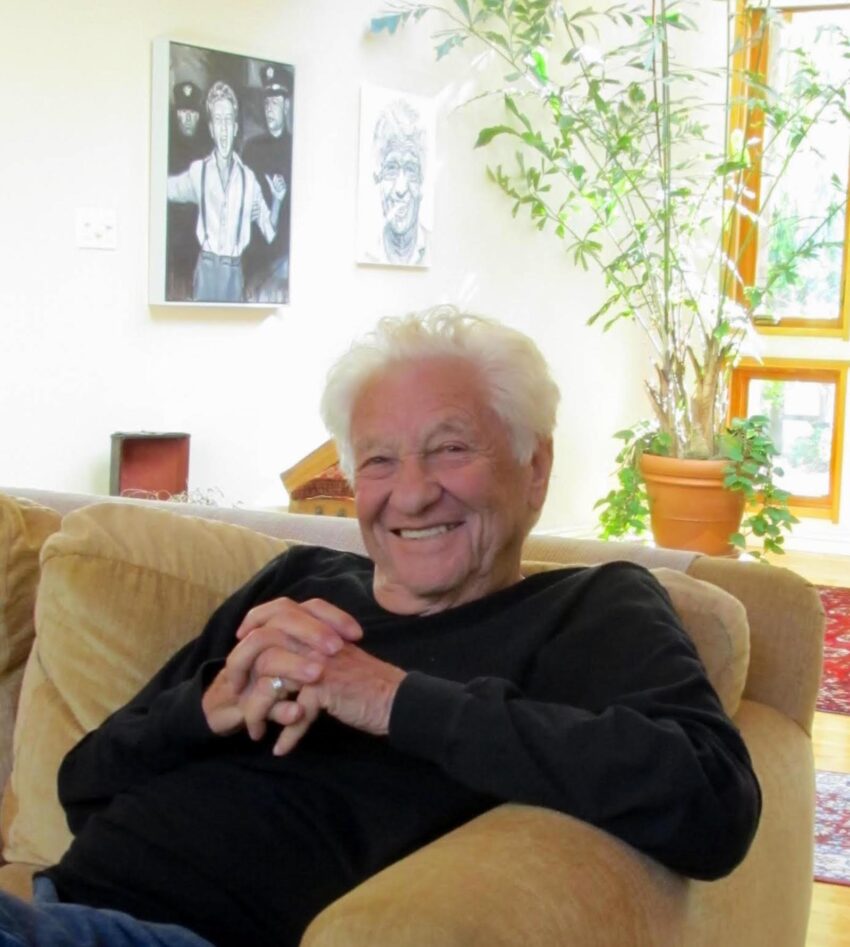
Leo Frumkin, 1928-2022
by Sherry Frumkin and Jim Lafferty
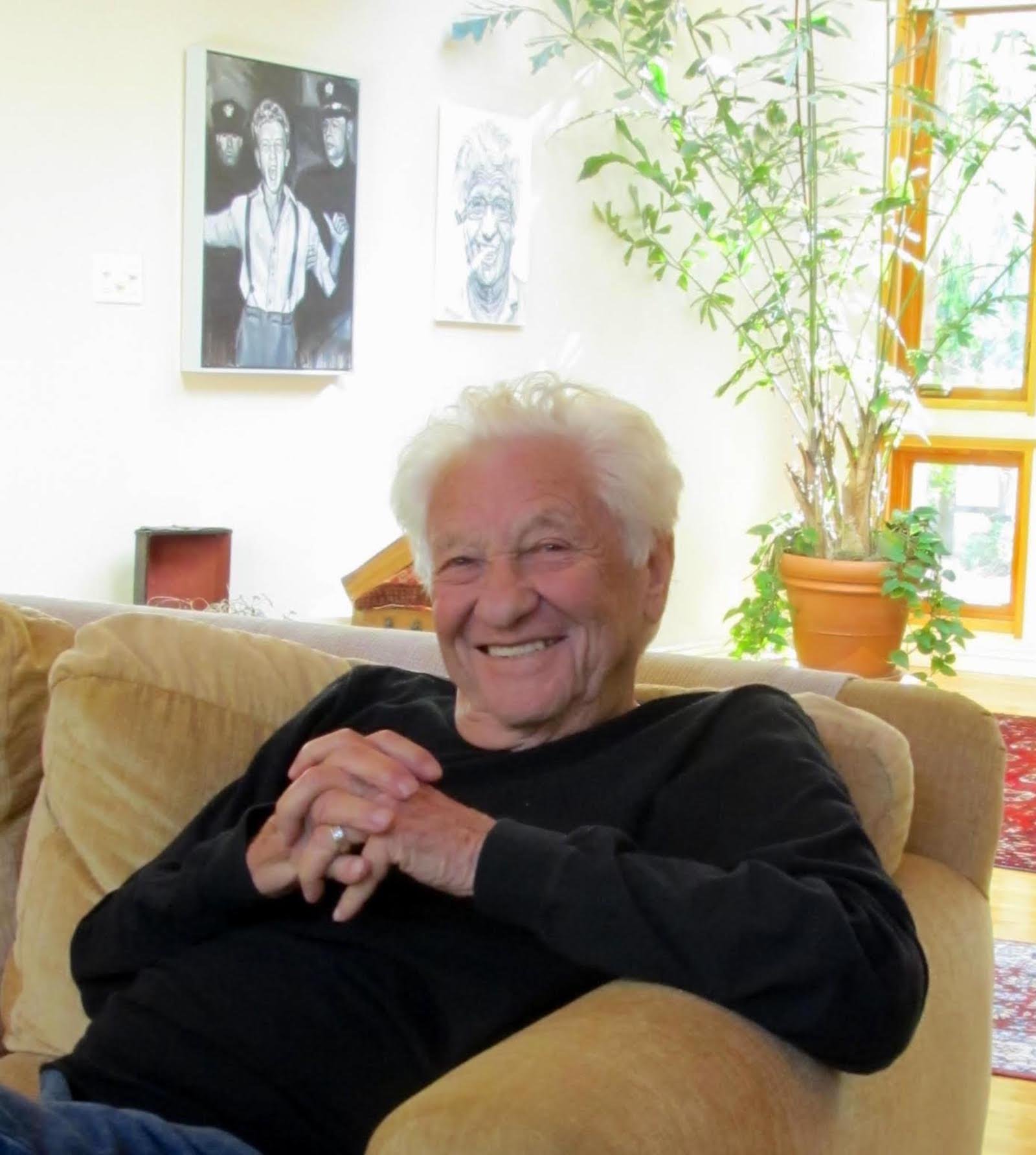
Photo by Edmon J. Rodman
A memorial will be announced at a later date.
Received by email
The United States and its return to darkness


The United States and its return to darkness
The Supreme Court’s decision to strike down a woman’s constitutional right to reproductive freedom is just one of the revisions to be made by the highest judicial authority dominated by traditionalism and backlash
Posted: Saturday 02 July 2022 | 10:40:22 pm.
Juana Carrasco Martin

juana@juventudrebelde.cu | digital@juventudrebelde.cu
Translated and edited by Walter Lippmann for CubaNews.
A divided society: this is how they demonstrated last December in front of the Supreme Court for and against abortion. Autor: AFP Publicado: 02/07/2022 | 09:38 pm
In the 1950s, in my neighborhood in Vedado, where apartment buildings and some residences for middle-class professionals were being built on barren land and on land occupied by citadels or old houses that were being demolished, a family with two high-rise apartments was the talk of the town when their purpose was “leaked” there.
The doctor who owned the building had his private practice and clinicthere for an exclusive clientele, American ladies who were spending a “vacation on the Caribbean island”, destined to have an abortion, all as discreetly as money allowed, to circumvent the laws of her country, which prohibited that medical practice and as did the laws of Cuba.
The interruption of pregnancy was only declared free and legal in Cuba in 1961. It was a clear and fair vision of the woman’s right to decide about her body and the possibility of doing it without taboos and in a safe way for life. This was put into practice from 1965 in the National Health System. It is said that pregnant women’s mortality due to illegal and unsafe abortions decreased to practically zero.
It was in 1973 that the United States succeeded, after a judicial struggle initiated in 1970, in legalizing abortion when Jane Doe, the pseudonym used by Norma Leah McCorvey, a woman from Dallas, denounced Henry Wade, district attorney of that Texas city, to demand her right to have an abortion – she had two children and her lawyers filed her petition because she had been raped – and the judges of the highest judicial authority in the United States ruled in favor of making abortion a constitutional right.
Nearly two decades later, in 1992, that decision was reaffirmed by the Supreme Court in Planned Parenthood v. Casey in a 5-4 vote. However, the most backward segments of a deeply puritanical society, often associated with religious beliefs, persecuted medical personnel, activists and women alike for the practice of women’s free reproductive rights.
Attacks on clinics, assassinations, and individual threats, were also coupled with judicial persecution. According to data from the National Advocates of Pregnant Women (NAPW), a women’s legal defense organization, since 1973 more than 1,700 women have been imprisoned or detained and prosecuted for the criminalization of pregnancy.
Of course, NAPW is concerned about what may happen from now on, when the Supreme Court overturned the Roe v. Wade ruling, and termination of pregnancy will no longer be a constitutional right, Each of the 50 states of the Union will impose the rules and limits on pregnant women, which translates into 166 million women in the United States being in their hands and unable to make decisions over their bodies and lives.
In this summer of 2022, what was believed for 49 years to be a step forward and definitive, was cut short by the 6-3 decision of the current Supreme Court. It was tailored to the stalest mold and extreme traditionalism of a good part of American society, because President Donald Trump was able to appoint three of the nine judges, tipping the balance in such a way that leaves a legacy of right-wing thinking and decision-making power that will weigh on American society for many years, since the terms of a Supreme Court justice is for life.
Now women who need or want to terminate a pregnancy will have to travel to the “liberal” states where it is allowed or to neighboring countries such as Canada and Mexico, for example, in order to make their own decision. Some commentaries emphasize how the persecution and trials could lead them to prison, even with accusations of murder or manslaughter.
A commentary in The Hill, signed by Liberty Vittert, under the headline “The biggest danger in overturning Roe: your phone could send you to prison,” warned, “You’re scared, you’re alone and you’re pregnant. You can’t keep the baby and you want an abortion. However, the state you live in had a trigger law that automatically made abortion a crime when the Supreme Court overturned Roe v. Wade last week. You decide to have an abortion anyway at a clinic that is still doing it 100 miles from your hometown.
“Now you’ve committed a crime, and the police have a new arsenal of evidence to arrest you at their disposal. Did you use Google Maps or Waze to drive to the clinic? Police can get warrants or subpoenas to get your Apple or Google cell phone location data to see where you went and how long you stayed there. Did you stop using your period-tracking app? Law enforcement can get that data. Did you Google an abortion clinic? Law enforcement can get that data.”
Although hypothetical, not fiction as related, abortion has once again been criminalized and any action linked to it is considered a crime or offense, can be investigated, prosecuted and convicted and since the Supreme Court made its ruling final, “trigger laws” banning the medical procedure have already gone into effect in several states.
Objectively, the Supreme Court’s action has divided the nation, and demonstrations for and against it came face to face in front of the Temple of Justice, a monumental marble edifice whose quarries of provenance almost identify the current ideological makeup of the nine justices: those stones came from Vermont, liberal and politically independent-minded; from Georgia, the state that was the icon of segregation; from Alabama, which continues to recall the black belt of slavery in its cotton fields; from Spain, where Franco’s phalanx drowned a people; and from the fascist Italy of Benito Mussolini, to whom the architect builder thanked for his marble contribution.
A first step on a path of retrogression
This overturning of Roe v. Wade is only the first back-to-the-darkness ruling by the U.S. Supreme Court in a series that will undoubtedly transform the country. The warnings about this retrograde process have been coming ever since Trump began appointing conservative justices and upsetting the balance.
Already, New York Democratic Rep. Carolyn Maloney, chair of the House Oversight and Reform Committee has scheduled a July 13 hearing on the impact of the reversal of Roe v. Wade, which she called having “devastating effects” for generations. She sees it as the culmination of a years-long public campaign by Republicans to appoint a Supreme Court that would uphold draconian restrictions on people’s reproductive health care.
Naomi Klein, a leading scholar and environmentalist, asserted in an article in The Intercept that the United States is in the midst of a “shock-and-awe judicial coup,” a military term for a surprise and frightening attack that allows for quick victory over an adversary that has been terrorized by the power of force, in this case by the force of power. We cannot ignore the fact that a Supreme Court decision is not subject to appeal.
To the blow to abortion rights, Klein added the blow to gun control laws and the authority of the federal government’s Environmental Protection Agency to regulate greenhouse gas emissions from the use of fossil fuels, to the benefit of exploitative corporations, even to the detriment of the sovereignty of indigenous nations in the U.S.
It is not new and her warning that can be read in her major study The Shock Doctrine: The Rise of Disaster Capitalism [In its Cuban edition: “La Doctrina del Shock: El auge del capitalismo del desastre”, published in Cuba by Editorial de Ciencias Sociales, 2016.] On the Supreme Court’s docket there are other issues of impact, even affecting democracy itself, the right to vote, the redrawing of electoral districts and these judges do not seem to be precisely neutral….
It is clear that American democracy is deteriorating and on the part of the Supreme Court, the process is underway. There will still be much to tell and to analyze.
Nancy Morejón: Regarding George Lamming
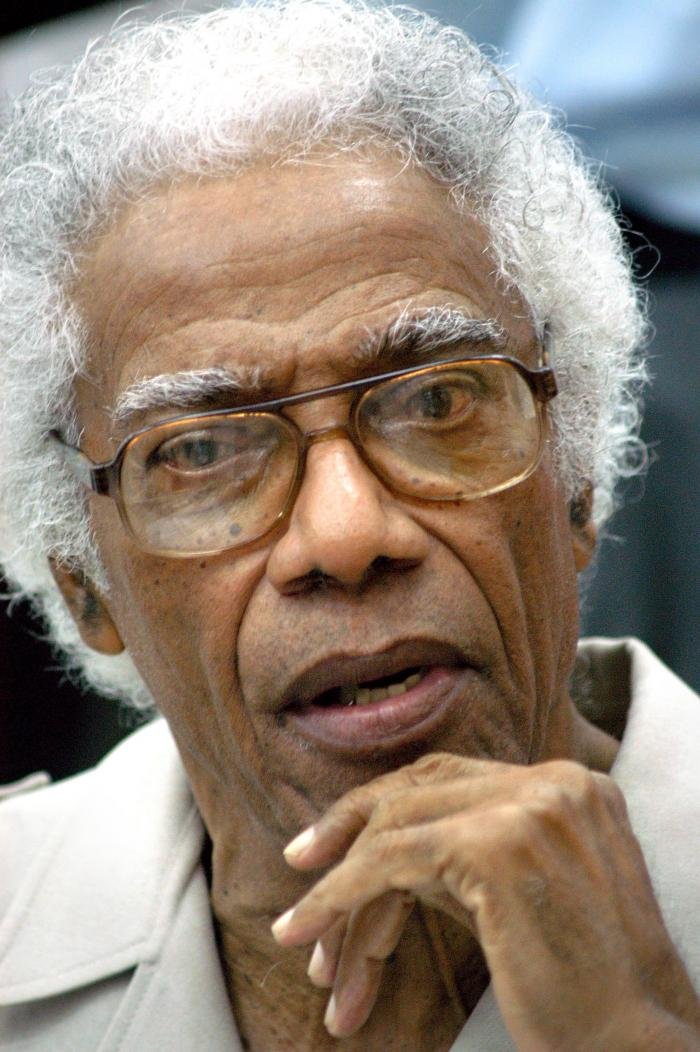
Regarding George Lamming
Translated and edited by Walter Lippmann for CubaNews.
George Lamming (1927-2022), the great writer, dean of the narrators and thinkers of the English-speaking Caribbean, has just died on the island of Barbados, his native land. It would seem that the torrential waters of the beginning of June wanted to put an end to his long and immense life experience and, also, to his exceptional literary production, which began with indisputable resonance in 1953, when his classic novel En el castillo de mi piel [In the Castle of My Skin] appeared, translated by María Teresa Ortega and prologued by Emilio Jorge Rodríguez, and splendidly integrated the editorial catalog of Casa de las Américas (1979), in its prestigious collection dedicated to Latin American literature, which included titles by authors such as the Brazilian Guimaraes Rosa, the Jamaican Roger Mais and the Paraguayan Augusto Roa Bastos.
In the years he served as an advisor to the Casa’s Center for Caribbean Studies, I learned from his erudition and his conscience, which went hand in hand. His sense of regional integration went beyond vested, economic or even personal interests. He was a good conversationalist, a spontaneous communicator. I once heard him say: “In the Caribbean, there is always a ship arriving or leaving. And also: “The best economists of our archipelagos are the housewives… that is to say, the humble women; I admire them, I love them because they put their ancestral magic into practice”.
Lamming belonged to a type of intellectual with a high sense of the function of literature and the arts as vehicles of communication and recognition of the plural identity that defines the multicultural character of the region. It was not by chance that he was part of the New World group that defended the right to avant-garde art, although never detached from a morality at the service of a more advanced, more independent and better world. With enormous rigor and a proverbial literary excellence, his stories, his novels, transpire the yearning for freedom and regional integration in a frank struggle against colonial oppression that, in his pages, also acquires a continental vocation that we still need to understand today.
He wrote books that we will never be able to do without again, and although fiction is the key to his literary experience, the truth is that he reflected and compiled a sum of allegories, reasonings and debates on exile that are today a school, a method and, thus, a call to the indomitable being of Caribbean people throughout all the archipelagos. London and Georgetown were put in their rightful place. That is the grace and intellectual restlessness that reigns in The Pleasures of Exile (1960), whose lesson Roberto Fernandez Retamar revered in his also classic essay Caliban (1979).
George Lamming is and will continue to be -like Wilson Harris, Vic Reid, Derek Walcott, among others, including the extraordinary musician popularly known as Mighty Sparrow- a sacred patriarch of our culture, especially when the popular is installed, by its own right, in the impassable place where the most legitimate flags of independence fly forever.
A weekend amid shootings and price hikes

A weekend amid shootings and price hikes
Things are not going well in the U.S. for the citizens who will vote in November. Pocketbooks are being ripped out, while schools, hospitals, religious institutions and even funerals are being targeted by shooters.
Author:

Juana Carrasco Martín | juana@juventudrebelde.cu
Translated and edited by Walter Lippmann for CubaNews.
Gasoline in Los Angeles. Author: Taken from Antiwar.com Published: 04/06/2022 | 09:11 pm
In Los Angeles, the host city in a few days of the Summit without the Americas, as many have labeled it because of the selective exclusion decreed by President Joseph Biden to three sovereign nations in the region, the price of fuel at a downtown gas station reached more than eight dollars a gallon and prices continued to rise throughout the United States.
Meanwhile, the price of a barrel of crude oil in the European market closed at $117.60, its highest price since March 23, and much had to do with the sanctions imposed on Russian exports due to Washington and NATO’s confrontation with the Kremlin and the war situation in Ukraine.
Crude oil costs account for just over half of the pump price, according to the U.S. Energy Information Administration. The rest of the price includes the other components of gasoline, production costs, distribution costs, overhead costs for everyone involved in production, distribution and sales, taxes and California carbon offset fees paid by refineries, City News Service said in releasing the increase that hits Americans’ pocketbooks hard.
The national average price of gasoline rose to a record high of $4.62 dollars, and it is no secret that this increase directly affects the cost of food, and a wide range of goods and services, so it has not been the only product that continues to rise.
The New York Times warned at the beginning of May that “the era of abundant cheap products could be coming to an end”, and went back to the pandemic in search of the causes. This is because, since then, the supply of goods has been severely limited and, consequently, prices have risen, with the aggravating factor that economists warn that this situation could persist, when the COVID-19 and the war in Ukraine affect international trade and inventories are difficult to fill.
Hence, inflation is affecting the global economy, practically without exception, including that of the United States which, moreover, many of whose corporations, in search of higher profits, have taken their industries to foreign territories and now ordinary Americans are paying double the consequences.
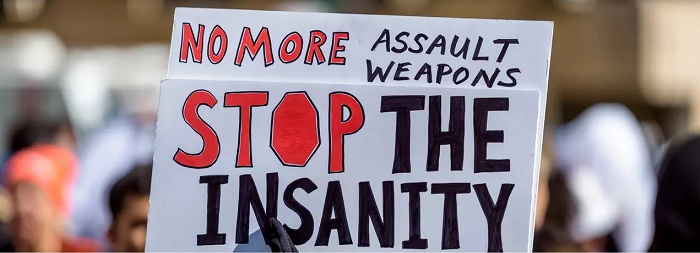
March for life against guns.Photo: Getty Images.
This rise in the cost of living is one edge of the Sword of Damocles hanging over the Democrats in the upcoming November elections, though not the only looming threat to that party. Mass shootings must be taken into account. These are much more than a problem of politicians-not public servants since they constitute an ultimatum to American society about its degradation as a nation.
The United States debates, once again and apparently with the same disappointing conclusion, how to reverse the violence that is expressed in the shootings that are leaving a trail of unfortunate deaths and, in just a week, the shootings have skyrocketed.
As of this Saturday, June 4 and so far in 2022, there have been 234 mass shootings in the United States, defined as when four or more people, not including the shooter, are injured or killed. Not a single week has gone by in 2022 without at least four mass shootings, according to Gun Violence Archive records, and at the end of May, they counted 256 people killed and 1010 injured. June began with the same criminal figures.
Saturday, June 4: Centerville, a Texas community is shaken after five members of a Houston-area family were found murdered in the Collins family cabin, a crime described as “unspeakable” that took the lives of three brothers, Carson, 16, Hudson, 11, and Waylon Collins, 18; their cousin Bryson, 11; and their grandfather Mark Collins, 66.
The killer, Gonzalo Lopez, a member of a Mafia group sentenced to two life sentences for murder in Hidalgo County and attempted capital murder in Webb County, had escaped from prison three weeks earlier. I was unable to find out what weapon was used in the crime.
More of a shock seems to be the emotional status of the U.S. citizenry. On Thursday, June 2, two separate shootings occurred in the Midwest. One in the parking lot of Cornerstone Church in Story County, Iowa, where Jonathan Lee Whitlatch, 33, shot two women in the congregation, Eden Mariah Montang, 22, and Vivian Renee Flores, 21, while a program was in progress inside the church. He then killed himself.
The other occurred in Racine, Wisconsin. Two women were shot at Graceland Cemetery Thursday afternoon during a funeral for a man who was killed by police last month. Residents heard between 20 and 30 gunshots before 2:30 p.m. as loved ones gathered to remember Da’Shontay L. King Sr. a 37-year-old Black man who was shot and killed by police after a foot chase following an attempted traffic stop on May 20, according to the Racine Journal Times. The identity of the attacker, apparently still on the run, was not released.
Gunshots and wails are still heard from the Buffalo supermarket massacres, from Robb’s Elementary School in Uvalde, and from fallen medical personnel at a Tulsa hospital. As America shudders, politicians are shaking in their boots to stand up to gun producers and their blackmailing arm, the National Rifle Association-NRA, or jingle in their pockets.
The President of the United States is waiting for Congress to decide on a proposal that barely promotes raising the age to 21 to legally purchase a gun. Hardly a band-aid for the deadly wounds caused by daily shootings, and possibly not even that will be granted by those who take refuge in the Second Amendment of the Constitution.
Shame on Biden’s words in a speech calling for the (unlikely) passage of the scrawny, rickety, flimsy reform: “I respect the culture, tradition and concerns of lawful gun owners,” and as if to cleanse himself, he added: “At the same time, the Second Amendment, like all other rights, is not absolute.”
It is very difficult to be with God and the Devil… and the voters, 97 percent of whom are in favor of some kind of limit or control on gun violence in their streets, schools, workplaces and homes, are pushing back.
What are you faithful to?

What are you faithful to?
The mysterious and not-so-mysterious motivations behind infidelities are revealed by psychologist Esther Perel, after years of studying intimacy among couples.
Author:

Mileyda Menéndez Dávila | sentido@juventudrebelde.cu
Published: Friday 07 April 2017 | 09:46:07 pm. Updated: Friday 22 September 2017 | 12:38:34 am.
Translated and edited by Walter Lippmann for CubaNews.
Infidelity Author: LAZ Published: 09/21/2017 | 06:53 pm
The bonds of wedlock are so heavy that it takes two to carry them, sometimes three.
—Alexandre Dumas, père
Being unfaithful has a tenacity that every marriage would envy. Its charm lies in the forbidden, but also in the intoxication of capturing a new passion, just as when the betrayed relationship began.
This is revealed by Esther Perel, a Belgian psychologist specializing in couples’ intimacy, who is visiting Cuba these days and agreed to give a series of talks on the future of femininity, an initiative of the Abanico project and its producer, Rafael Lavín.
Monogamy is concretized on a daily basis, but reality is a small portion of the human mind, where fantasy has much more space. That is why those who cheat almost never have the intention of hurting, says the expert.
More than distancing oneself from one’s partner or seeking pleasure from others, what is longed for is one’s own essence, what was left behind when assuming an exclusivity based on love, although desire is what drives these types of choices.
When it comes to light, what hurts most is not the contact with other bodies, the time or the resources “diverted” from the common desire, but the betrayal of that idealized mission to build the unique, indispensable and irreplaceable love that led them to unite in the first place.
But therapeutic practice confirms that after having an affair, many people reinforce their interest in their stable bond, improve their erotic commitment, and are ready to make up for it in a thousand ways.
Facebook that does not see…
In this digital era, it is easier and at the same time more difficult to hide infidelities. On social networks, you can meet many people, but there is also more risk of being caught in the crossfire.
Today a woman who decides to forgive is not looked at with the same condescension because there are more facilities to not depend economically on anyone and she can have all the sex she wants, says the expert. If it were not for this social pressure (always exerted on men), many people would recognize that their love is even stronger than disenchantment and would give their story another chance.
Esther is neither for nor against infidelity. Each case is a lesson and it takes courage both to break up and to rewrite the plot.
She shares two keys to achieve this: the first is that the unfaithful partner sincerely regrets the damage done to his or her partner, even if he or she does not feel remorse for the experience, and the second is to approach the conciliatory dialogue not from the sordid details (who, where, how), but from what they have learned about their own bond: Why you? Why us? What did you feel when you saw me every day? What did you discover about yourself? How do we get out of this together?
Passion vs. contract
Marriage has been, and still is in some ways, an estate agreement: which family to nurture and who gets the assets in the event of death or breakup. That is why the magnitude of the deception depends both on what is done and how it is received by the other party.
If infidelity were generated because something is missing within a relationship, all marriages would be condemned to suffer it, because no one always has everything for the other: the couple is built between two imperfect beings who dream of something dialectically superior and live in permanent challenge, negotiating power and seduction inward and outward.
The unfaithful person violates the collective faith in a romantic model that we still defend, and that violation does not begin when he gets into another bed but before, from the chatting, the compliment in the street, the gesture of attention towards other people….
It is said that men are unfaithful for fear of commitment and women for hunger of intimacy, but life is a more complex equation, especially now, that we do not marry to have sex with someone, but to stop having sex with other people, Esther points out.
Even in open couples there are clear rules about when, where or with whom you can’t experiment, but going beyond the contract is exciting: transgressing the limits gives a sense of autonomy and can become addictive, no matter how traditional or modern the couple is.
Sexual alchemy is important in this experience. After a certain time, a few minutes of fantasy sex generates more endorphins than the daily exchange with your partner. In surveys carried out in different countries, the
Esther Perel: Happiness is in the balance


Happiness is in the balance
The human couple is like a microcosm where cultural ideas penetrate and then pass to the children. A kind of portal in space and time that, like everything that responds to society, usually changes its model as the times change.
Author:
Mileyda Menéndez Dávila |sentido@juventudrebelde.cu
Published: Friday 13 April 2012 | 08:52:24 pm. Updated: Thursday 21 September 2017 | 09:34:28 pm.
Translated and edited by Walter Lippmann for CubaNews.
Desire is fire, and to grow it needs space. Author: internet Posted: 09/21/2017 | 05:19 pm
“Sexuality is a window to enter society,” says Belgian psychologist and anthropologist Esther Perel, with whom we spoke last January during the Sexology 2012 congress.
This New York-based therapist defines the human couple as a microcosm where cultural ideas penetrate and then are passed on to the children. A sort of portal in space and time that, like everything that responds to society, tends to change its model as the times change.
In her opinion, modern marriage left behind the old sexuality of reproduction and obligation to open the way to a new sexuality centered on erotic desire and governed by principles forged with Romanticism, that cultural movement that transformed the world from the 17th century onwards.
However, that romantic notion of the “passionate marriage” that is so much pursued today carries in its essence a historical contradiction: passion and commitment is a dialectical pair that we try to reconcile in order to satisfy in one person very different needs, such as adventure and stability, surprise and comfort.
“Today we women ask for more… and we divorce more because we get disillusioned very quickly. Although we still see a partner as a partner to raise a family and achieve economic security, in this century we are looking above all for our man to be our friend, our lover, our confidant.”
Modern women lead a life more open to individual projects, to social protagonism, to the decision to have fewer descendants and to fulfill themselves outside the home, but this takes a heavy toll on their intimacy, she says.
“It is an existential dilemma that all couples who manage to be stable go through: eroticism is our way of feeling alive, but without realizing it, we redirect it towards those who follow in our footsteps in the family and we neglect our erotic world,” she says.
“Many women stop grooming themselves to look beautiful, but they get satisfaction from watching their daughters do it. Others stop ‘taking care’ of their husbands to be jealous of their teenage son, and most adult married couples barely organize outings a couple of times a year, yet financially and materially support the weekly recreation of their young offspring.”
Sexually “savvy”
Esther has traveled to dozens of countries studying couples in their own historical and cultural context to try to answer those questions that everyone has ever asked: “Why is the forbidden so erotic, and after it is obtained it no longer excites us? Why is everyday sexuality, done with love, usually not as passionate as a casual encounter? Why does sex make children, and then children kill sex?”.
In fluent Spanish and full of metaphors, Esther talked to several Cuban journalists about the success of her book Erotic Intelligence, published since 2007 by several publishing houses, in which she tries to discuss these questions. [In English, the book is called Mating in Captivity]
According to what she told us, the term came up as a joke from her husband (she has been married for 30 years), but then they both made sense of it: if we are already talking about emotional intelligence, why not accept that sex demands its own share of knowledge and intuition?
In this day and age, a sexually “intelligent” woman with a secure attachment style looks for men who want her, not need her.
The difference is easy to detect, Esther assures: “In the first case they say “I love you”, while in the second case they ask “Why don’t you love me?”, even when you have given all the proof of love they have asked for throughout the relationship… And this is also true the other way around: emotionally dependent women who demand too much from their partners.
The diversity of manifestations of this dependence is above all cultural: in women, open complaint predominates; in men, it is more hidden or it emerges with a lot of aggression, especially in countries with a macho tradition.
Desire is fire, and to grow it needs space. Things will go better in many marriages when they understand that this is not a conflict to be resolved, but a paradox to be managed, like so many in this century: “You can be happy in a stable marriage, but the way to that happiness is the balance between individual freedom and mutual commitment”.
Be smart with your partner
If you want to apply erotic intelligence to your life as a couple, here are several tips discussed on the Terra site as a marital “survival list”:
-Be interested in your partner’s hobbies and show him/her what you like.
-Remember that you are not Siamese twins, you don’t have to go everywhere together.
-Work activities must be compatible for life as a couple.
-Avoid erosion in communication: get out of the house to talk about intimate things.
-Don’t fight against your partner’s quirks, incorporate them into your routine.
-Don’t try to change the other person, accept their bad side along with their good side.
-Balance the balance of roles, don’t try to be always and both the dominant voice.
-Put yourself in your partner’s shoes before judging why he/she acts one way or another.
CUBA AHORA interviews Esther Perel

Esther Perel: “We have started to control the body, to control sexuality”
Interview with Esther Perel, psychotherapist and specialist in couples therapy, who participates in the 6th Congress of Education, Orientation and Sexual Therapy….
By MARTA MARIA RAMIREZ
January 23, 2012
Translated and edited by Walter Lippmann for CubaNews.
Esther Perel is a psychotherapist and specializes in couples therapies. Born in Belgium, she studied in Israel and has her practice in NY where it seems she has many celebrities as patients.
Talking with Esther Perel is a privilege. Her personal story, as the daughter of Polish Jewish Holocaust survivors, refugees in Belgium, could be the plot of a novel or a movie.
But today we talk about the couple, after the workshop “The dilemmas of desire and clinical work with couples”, which she offered to specialists at Havana’s Casa de la Amistad on Saturday, January 21.
On Monday January 23, Perel will conduct the workshop “Emotional intelligence, erotic intelligence: new conversations about the sexuality of life in couples.”
What is the body for Esther?
It is the house in which we live. Some of us live well because it is a house, which has been respected, caressed, cared for, and which we care for.
Others see it as the central place of our inhibitions, restrictions and it turns out to be a prison. But the body is the foundation: if you are not inside your body, you are not present and to have desire or satisfying sex, you have to be present and your partner too.
If the body is dissociated, you are not there. If the body is not a place where you want to invite someone, where you are going to enter, because you don’t just enter an orifice, you enter a person, a world, a space.
For me, the body that enjoys, that feels good, is a base. At the same time, the most important sexual organ is the mind.
So, are the images of ideal women presented to us by the mass media a place of torture also for our sexualities?
It is torture for women that is expanding also to men, in consumer societies, where youth and beauty can be bought.
Since always, in every civilization, the body has been adored, decorated… This is not new. But the idea is that if you are not the ideal model, you have to feel less, diminished, because you don’t make it. That is slavery.
This is a way to control and every society controls sexuality, abstinence and license. We can no longer control so much what people do sexually, so we have started to control the body, how it dresses, how it takes care of itself, how it beautifies itself.
How does Esther see sexual pleasure? For you, is it a sexual right?
I never thought of pleasure as a right. But I am interested in this point of view. It seems logical to me.
I see pleasure more as a fundamental need in life. Not only sexual pleasure, to have pleasure, to enjoy, to feel alive.
Pleasure is the antidote to anxiety. It is play. When we see a child who does not play, we say that he is depressed, that he is anxious and that he is not living well. Adults also need to be able to play and have pleasure.
Sexual pleasure is a part of sexuality, a sexuality of desire, not of reproduction or obligation. So, desire comes with pleasure.
Why do we tend to deprive ourselves of pleasure, even though our sexuality, after the appearance of the contraceptive pill, is no longer for reproduction?
We are the first generations to have and want long-lasting sex. We think it can be achieved with only one person, based on the modern couple model, which is romantic. We want sex anchored in desire and this is, fundamentally, an expression of individual freedom.
As a consequence, pleasure cannot be forced; yes, sex. There is no pleasure without freedom. You cannot feel pleasure when you are anxious, when you are afraid, when you are forced or controlled.
Is there a lot of discussion about monogamy and infidelity? What do you think?
Monogamy is going to be the main issue for couples from now on. The next frontier will be sexual exclusivity and developing other ways of thinking about monogamy. Perhaps a monogamy not seen as sexual exclusivity, in the same way that we could not conceptualize premarital sex, with more than one person in life or non-pathologized homosexuality.
Infidelity is one of the main reasons for divorce because it breaks the romantic contract.
Have you ever said that having to take care of the other person in the couple is the most antiaphrodisiac? Why?
Love takes care, has responsibility, mutuality, reciprocity. But need does not give desire. Desire gives desire, invitation gives desire, wanting gives desire; need does not. When people talk about situations of desire they don’t feel responsible for anyone.
There is no element more successful than the independence of the other. When you ask men and women what turns you on the most, they answer self-sufficient and independent people. The fully sexualized woman is a free woman who does not need a man; same with competent men. There is no dependence on desire.
This is a contradiction with the model of femininity imposed by the patriarchy….
The submissive woman, with a double standard by the privileged man, that he can be unfaithful or can have passion because she does not, is a model is failing, even if it continues.
Why is there a crisis of the couple? Is it true?
It is true that there is a crisis of the couple. But I don’t know if the couple was so good before. I do know that expectations have changed. Today we want a person to give us what a whole community used to do: belonging, continuity, stability, independence and at the same time I want you to be my best friend, my passionate lover and even my confidant. Never before have we tried to have the same person give us continuity and novelty, surprise and stability?
Also today we want to be happy today. Before it was something for after death, not for the here and now. Not only do we want to be happy, but we are unhappy not to be happy. Happiness is a mandate.
So, the crisis of the couple is because we have carried within a unit a number of needs that are perhaps too many.
What is the meaning of the bed in today’s times?
Couples talk about their problems and their erotic problems in bed. Many fights are located there because we have a bed.
Today’s bed we want be sensual, passionate, affectionate, affectionate and when it is not so, there is an emptiness, anguish, longing… The bed becomes a place of intimacy and not only to go to rest.
Why Cuba, after two years?
Today the family is maintained only if the couple is happy. Today the focus is no longer: we stay together for the children, the community… I think we are all with the challenges of couples therapy, which I think is the most difficult. I am part of a global conversation and I came to have it with Cuban compañeros .
Summit of exclusion vs. Summit of the Peoples
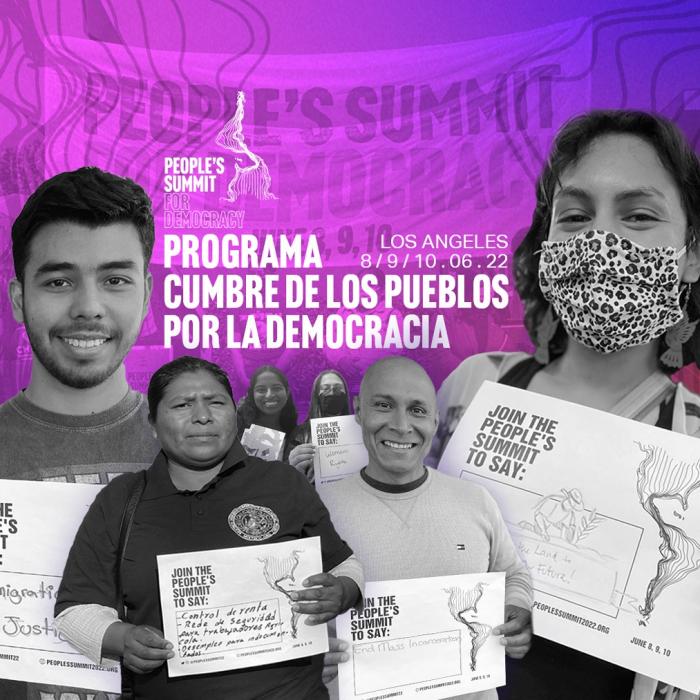
Summit of exclusion vs. Summit of the Peoples
The high-level session of the IX Summit of the Americas begins tomorrow in Los Angeles, California.
Translated and edited by Walter Lippmann for CubaNews.
From the diversity of ideas, the People’s Summit tries to raise as many voices as possible, without exclusions based on political interests; that is the difference between one Summit and the other. Photo: taken from Dominio Cuba’s Twitter feed.
The high-level session of the IX Summit of the Americas begins tomorrow in Los Angeles, California. The United States is once again hosting the conclave, after the first one in Miami in 1994. But hosting has been a bit too big for them, because for “their Summit” they not only took too long to send out invitations or to tangle organizational issues, but instead of focusing on discussing the real problems affecting the region with all those involved, they decided to put on the veil of “democracy” to exclude and, as a consequence, several leaders informed their disagreement with the decision, or announced that they would simply not participate.
On the other side will be the Summit of the Peoples and for Democracy, which will begin on the same day. But this one has not counted on the consent and good will of the US government, nor will it be held in large halls like the Summit of the Americas. On the contrary, last Friday, a group of ultra-right-wingers broke into one of the premises where the event is being coordinated, with the aim of occupying the space through the use of violence.
“For an hour we were defending our space, in the middle of that the police arrived, and instead of preventing what they were doing, they only observed and did not intervene in any way. What’s more, they prevented us from removing these extreme right-wing activists,” Manolo de los Santos, co-director of The People’s Forum, one of the U.S. organizations in charge of preparing the People’s Summit, told Granma in an exclusive interview.
He said that the attack was not only against their space, “but also against what it symbolizes, which are the socialist ideas, the work with the communities and the workers’ struggles”.
De los Santos told our newspaper that the organizational team continues with their minds and morale high, that they have received signs of solidarity from different parts of the world. “This type of attack is a phenomenon that the left has to face today,” he denounced.
Regarding the Summit of the Peoples and for Democracy, he explained that there are already more than 225 groups that will attend to interact in the official program, which includes panels and cultural activities.
“We are very motivated because we have already confirmed the presence of more than a thousand people, while many more are expected to participate in the demonstration on June 10, which we have called the March against the Exclusion Summit.” It is important to remember that this mobilization will take place after much negotiation with the Federal Government in Los Angeles, which, at first, denied permission.
He pointed out that, under the political umbrella of the Summit, other actions will take place in the city, related to the defense of the Amazon, in favor of Cuba and Venezuela, the right to housing and for [the rights of] immigrants.
“The important thing for us in this process of organizing the People’s Summit is to break with these policies of exclusion, to achieve greater social cohesion of popular movements, trade unions and the peoples who are in struggle in our continent,” said Manolo de los Santos.
This is an event that, despite the diversity of ideas, tries to raise as many voices as possible, without exclusions based on political interests; that is the difference between one Summit and the other.
You must be logged in to post a comment.