
The Artist of the Family
El ojo que te ve [The Eye That Sees You]
The Artist of the Family
Juvenal Balan
 Hello, I am Juvenal Balán, Cuban photojournalist, who invites you to reflect on photography, photojournalism and the current issues that concern us in our daily lives. I would like this page to become a place of friendship and solidarity between those of us who, camera in hand, walk the world trying to immortalize an image that bears witness to our passage through life.
Translated and edited by Walter Lippmann for CubaNews

Ojo de Agua Company with the presentation of all its groups at the Mariana Grajales Theatre on October 10th.
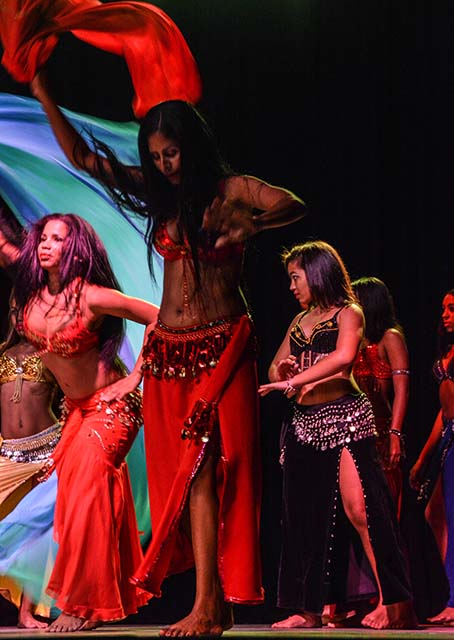
Ojo de Agua Company with the presentation of all its groups at the Mariana Grajales Theatre on October 10th.

Ojo de Agua Company with the presentation of all its groups at the Mariana Grajales Theatre on October 10th.

Ojo de Agua Company with the presentation of all its groups at the Mariana Grajales Theatre on October 10th.

Ojo de Agua Company with the presentation of all its groups at the Mariana Grajales Theatre on October 10th.

Ojo de Agua Company with the presentation of all its groups at the Mariana Grajales Theatre on October 10th.
Daniel Chavarría Obituary in Granma
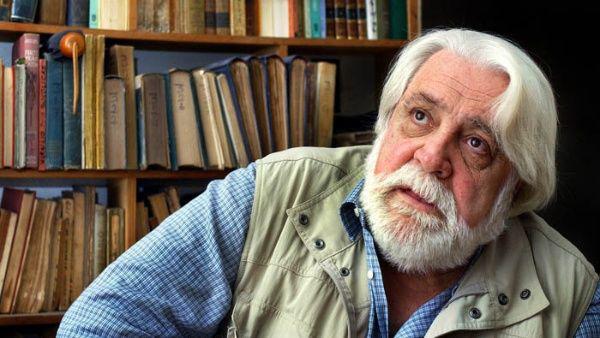

Daniel Chavarría, Icon of Latin American Crime Fiction, has died
Recognized in his adopted homeland with the National Literature Prize in 2010, the outstanding creator considered himself “a Cuban writer who was born in Uruguay”.
————————————————————
Author: Pedro de la Hoz | pedro@granma.cu
April 6, 2018 19:04:5
A CubaNews translation.
Edited by Walter Lippmann.
The writer Daniel Chavarría received Cuba’s National Literature Prize Photo: TELESUR
Daniel Chavarría, author of a book that revolutionized crime fiction in Latin America, died this Friday in Havana at 85.
Recognized in his adopted homeland with the National Literature Prize in 2010, the outstanding creator considered himself “a Cuban writer who was born in Uruguay.”
In doing so, he underlined his essential link with Cuba, where he arrived in 1969 and began a literary career with a firm step in 1978 when he published the novel Joy, winner three years before the Anniversary Contest of the Revolution of Police Literature organized by the Ministry of the Interior.
Since then, he won the fervor of readers and the endorsement of critics in Cuba and other countries through detective intrigue novels such as La sexta isla (The Sixth Island), El ojo de Cibele (The Eye of Cybele), Allá ellos (There They), El rojo en la pluma del loro (The Red in the Parrot’s Feather). Viudas de sangre (Blood Widows), Priapos, Una pica en Flandes (A Pike in Flanders) and El último roomservice (The Last Room Service), although he also published texts with a strong evocative charge such as Aquel año en Madrid.
Several of these books won important literary prizes, including the Casa de las Américas literary prize, the Dashiell Hammet prize for best detective novel in Spanish and the Edgar Allan Poe prize, awarded by the American professional association Mystery Writers of America.
Another notable publishing success was the publication of his memoirs And the World Walks on, which highlighted a personal life of adventure and his revolutionary consciousness.
Among his most recent works, he devoted special attention to one that he owed to his country of origin and to all those who defend the emancipatory ideal of the peoples of the continent: Yo soy el Rufo y no me rindo [I Am Rufo and I Do Not Give Up, a biographical novel on Raúl Sendic the founder of the Tupamaros, .
He was also very excited to publish some unpublished chronicles in the pages of Juventud Rebelde. Journalism burned in his veins.
Far Right Running US Cuba Policy


Ex-diplomat Vicki Huddleston points out that the extreme right has taken over US policy towards Cuba
By: Cubadebate Editorial Staff
April 5, 2018
Translated and edited by Walter Lippmann for CubaNews.
Beyond Racism
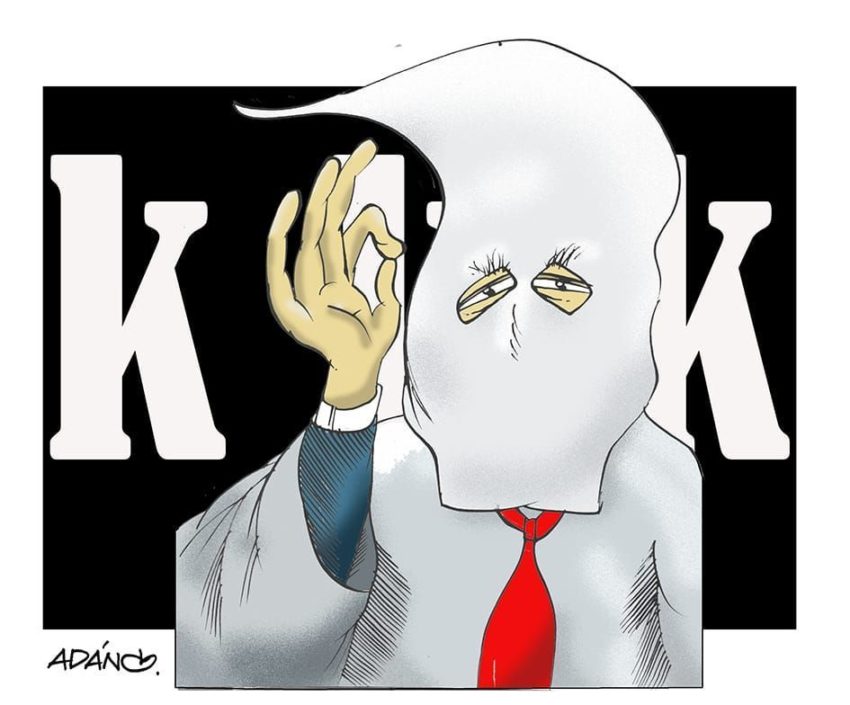
Graphic Opinion: Beyond Racism
 By Adán Iglesias ,
Renowned Cuban cartoonist. Director of the humorous publication DDT.
Translated and edited by Walter Lippmann for CubaNews.
During the 2016 presidential campaign, Donald Trump was the candidate of several supremacist groups. Since his rise to power he has come to declare that among the supremacists there are “good people”.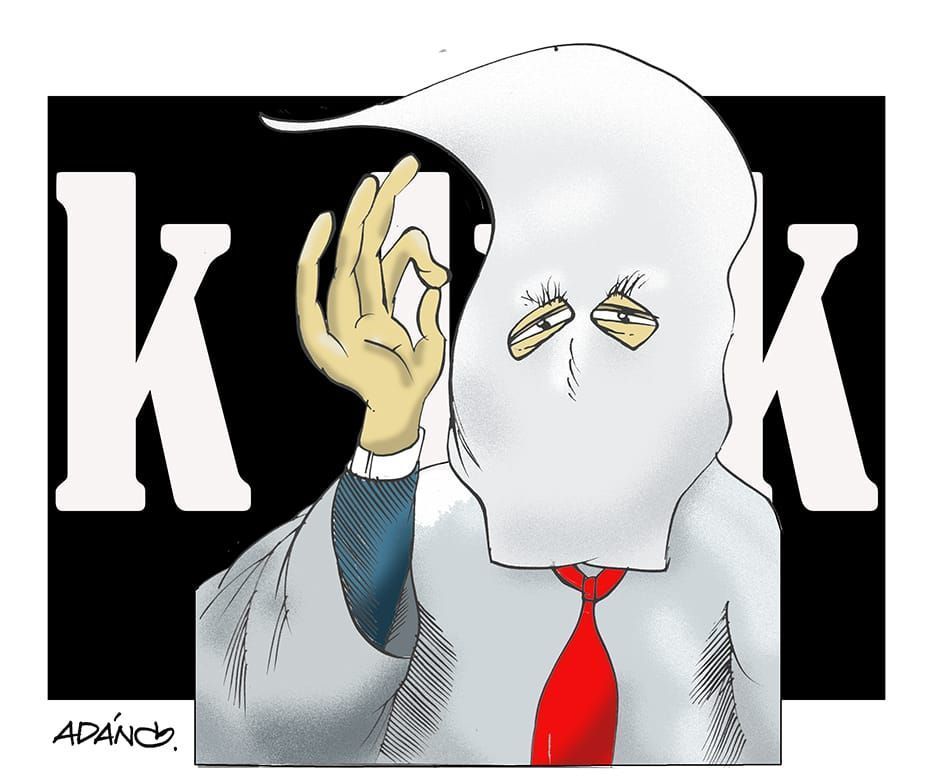
From James Monroe to Marilyn Monroe
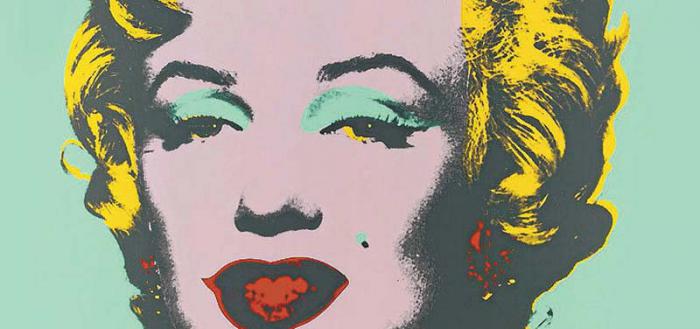
From James Monroe to Marilyn Monroe: America for the Americans
American cinema is one of the most powerful weapons of the culture and symbol war that threatens us today.
April 4, 2018 20:04:06
A CubaNews translation.
Edited by Walter Lippmann.
The industry turned the beautiful blonde Marilyn Monroe into a glamorous sex symbol, an object of collective desire. Photo: MOMA
Rene Greendwald, a veteran CIA official, said in a preparatory meeting for the Genesis project, aimed at the cultural war against Cuba, that they had been more successful in Latin America with Marilyn Monroe than with the Monroe Doctrine. The CIA specialist, who also said that the scenario of a conventional war was well interpreted by the Cubans, whom he believed were capable of facing and defeating any attempt at military occupation, was right, but he always raised the question: And when the enemy is in your living room? How do you identify in a series of your choice, in a film, in a sports programme, in a raeality show or a talk show, an action of the enemy?
American cinema has effectively contributed, on our continent in particular and in the world in general, to the efficient “selling” of the American way of life, to instilling in people’s minds the image of the superiority of Americans, the invincibility of their army and the inferiority of the peoples of the southern hemisphere. It has helped to distort history, to sell us its products, to impose its fashions, its national symbols.
THE GREAT DREAM FACTORY
U.S. cinema, in the midst of a process of expansion and development, reached Europe and spread throughout Latin America after the First World War. These were the happy 1920s, which corresponded to the period of economic prosperity in the United States from 1922 to 1929.
 Hollywood cinema is becoming an efficient tool for “Americanizing”, or simply transmitting the values of the American way of life, spreading the stereotypes outlined by psychology in its prestigious universities, to the cultures and ways of being of the people of the rest of the countries of the world.
Hollywood cinema is becoming an efficient tool for “Americanizing”, or simply transmitting the values of the American way of life, spreading the stereotypes outlined by psychology in its prestigious universities, to the cultures and ways of being of the people of the rest of the countries of the world.
Martin Luther King
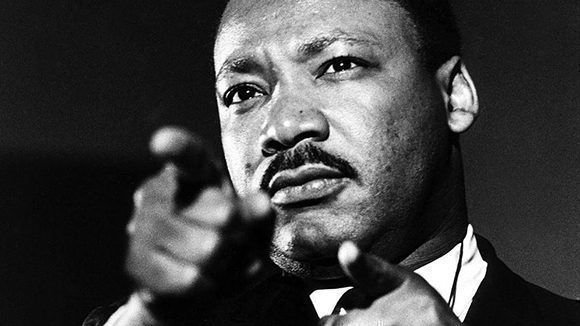
Martin Luther King: 50 Years Can’t Kill a Dream
April 4, 2018
Translated and edited by Walter Lippmann for CubaNews.
The speech that American activist Martin Luther King is remembered for today was entitled “I have a dream”. The three words became a milestone. Hundreds of politicians and presidents from around the world have used that same phrase at public events. But none has been as powerful as the one Luther King starred in on August 28, 1963, on the steps of the Lincoln Memorial in Washington. However, last Saturday, March 24th, the story of this phrase began a completely new chapter.
Yolanda Renee King, granddaughter of the leader of the civil rights movement in the United States, repeated her grandfather’s words very close to where he first spoke them 55 years ago. At just nine years of age, Yolanda stepped onto the stage with the confidence of a leader who knows the legacy that precedes her and the power of words.
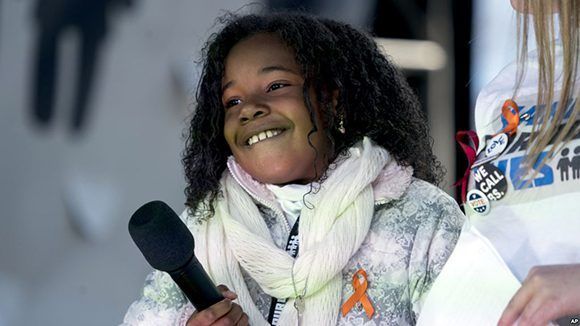
Yolanda Renee King, granddaughter of Martin Luther King Jr., speaks on “The March for Our Lives” in support of gun control. Photo: Andrew Harnik/ AP
VIDEO: https://twitter.com/AMarch4OurLives/status/977625892745658368
Capitalism and Democracy
Capitalism and Democracy are Opposites
 By Manuel E. Yepe
http://manuelyepe.wordpress.com/
Exclusive for the daily POR ESTO! of Merida, Mexico.
Translated and edited by Walter Lippmann.
The capitalist socio-economic order is synonymous with freedom only for those who accept that the first freedom must be for capital and that money must be free to buy everything. When the capacity of money to acquire the goods that sustain life in society is restricted or when it is prevented from behaving in the manner of another commodity that can be bought and sold, it is restricted to capitalism.
That is why it is so important for capitalism that popular consciousness has been manipulated by the system and won over to the idea that “capitalism” equals “democracy” and that any attack on the freedom of money to acquire any of the earthly and moral goods of society is an attack on democracy.
Can you imagine what your country, and this planet, would be like if doctors, educators, courts, governments, the means of production and services, information, cultural expressions and even the conditions for making love were equally available to everyone in a society where money cannot determine differences in the quality and urgency of benefits?
But this would distort the precarious asymmetrical balance present in almost every society on the planet, because capitalism needs such ideas to continue on the fringes of citizen aspirations.
Because, for capitalism, it would be terrible if a person with many economic resources were condemned to the same quality of life and the same conditions of treatment and possibilities of cure in cases of illness as those who lack sufficient money.
Because, from a capitalist point of view, it cannot be considered logical that the descendants of the wealthy should have to share the same classrooms and quality of education with children from poor families.
Because it does not seem rational to a good bourgeois that the poor and the rich should be judged, in the case of crime, by the same standards, nor that they should share galleys in prison with corrupt millionaire and hungry common criminals.
Because in the electoral systems of capitalism, it should not happen that elected leaders should dispense with the donations made by the richest, most influential and responsible individuals and entities of society in their campaigns for office. In their future performance as leaders, they may consider themselves obliged to protect the security of corporate capital and that of the nation’s most important and powerful layer.
Because, in the capitalist order, the media is only free if private capital can buy radio and television stations, magazines, newspapers, news agencies or any other means of communication. This is so that they may be in a position to efficiently ensure that what is published serves their own interests, which are the determining factors in bourgeois society as a whole.
Because the capitalist system needs the best of national and international art and culture to be exhibited or imported for the enjoyment of society’s educated elite, which has the resources to pay for the costs involved through advertising.
Because in a capitalist society it is considered healthy that everything is structured in such a way that the main attraction for gender relations is money and economic position. Thus, the most beautiful men and women are attracted to other beautiful men and woman with greater wealth, without peculiar considerations such as understanding, kindness, sensitivity or other sentimental or otherwise subjective arguments.s.
For capitalism, stimulating competitiveness and the struggle for profit as engines of progress, at every level of the economy, brings the greatest dividends and any other consideration – moral, ethical or patriotic, for example – limits the development of the nation.
When any of the above conditions are missing or are threatened by the misunderstanding that they are inherent to capitalism and that this is the same as democracy, we must act with haste and without mercy.
This is how modern capitalism does it systematically, through the government of the United States and the oligarchies that are submissive to it, anywhere in the world.
The erratic hegemonic performance of the United States in recent years has contributed greatly to the discrediting of the capitalist way of life on a global scale. Capitalism has shown that its model is not in line with the aspirations of the dispossessed classes of the rich countries, nor with those of the peoples of the Third World, who are eager to live in a less cruel and more equitable system.
April 5, 2018.
MLK: The Resurrection
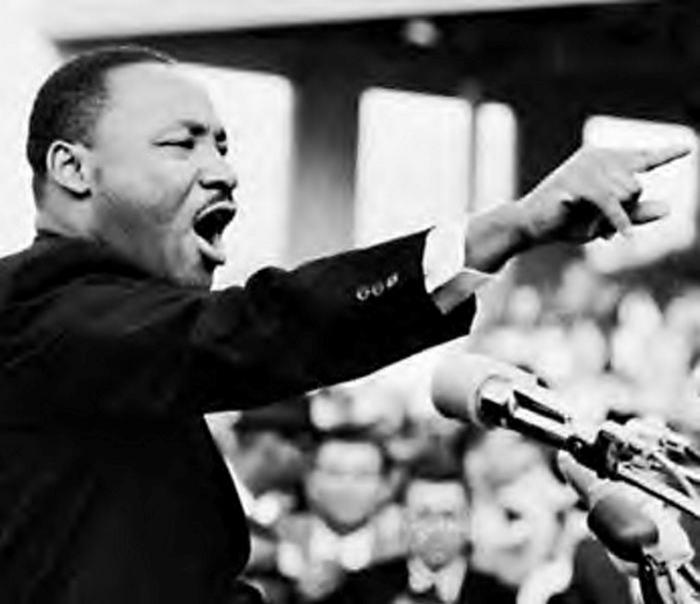
 MLK, Jr.: The Resurrection
By David Brooks
Translated and edited by Walter Lippmann for CubaNews
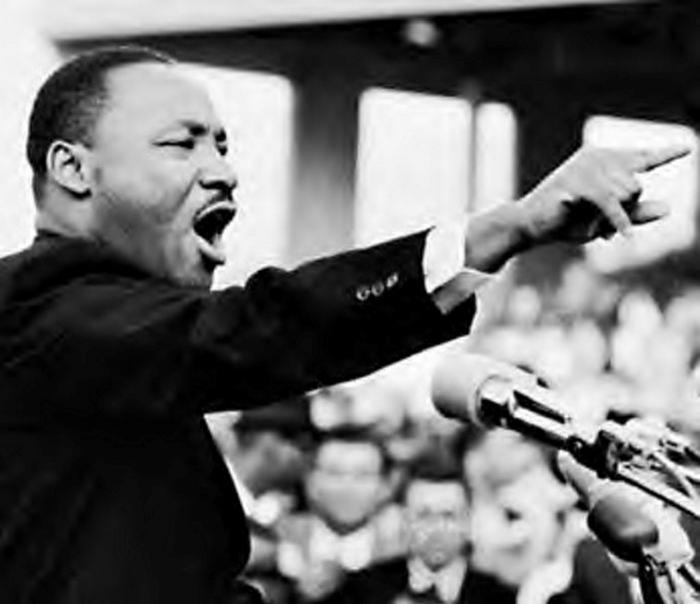
The Reverend Martin Luther King Jr., during the March on Washington for Work and Freedom, a major demonstration on August 28, 1963, where he delivered his historic I Have a Dream speech. Next Wednesday will be the 50th anniversary of his murder in Memphis,
English Article Goes Here
===
The Reverend Martin Luther King Jr. was killed 50 years ago (April 4) in Memphis, marking the bloodiest moment of what would be a 1968 that shook the United States and various parts of the world. Half a century later, this country is in the midst of a reactionary wave that has elevated a white supremacist backed by the Ku Klux Klan to the presidency, almost enough to make fun of King’s famous dream.
But it is worth remembering that King, when he was assassinated, was no longer just the man with a dream of racial equality, but a Nobel Prize winner and international moral authority who had dared in his later years to question and condemn his country’s economic and imperial system, including the war against Vietnam.
King went to Memphis, in the southern state of Tennessee, to support a union garbage workers strike in the name of economic and social justice. At the same time, he was organizing a national mobilization called the Poor People’s Campaign to demand economic rights for the underprivileged of all races and colors, a fundamental change in the U.S. capitalist system.
In the official rites and celebrations that King receives each year, it recalls his famous I Have a Dream speech, which he gave in 1963, but they almost never mention the radical message at the end of his life.
In 1967, King told a civil rights organization that the movement must address the issue of a restructuring of American society as a whole, adding that doing so meant coming to see that the problems of racism, economic exploitation, and war were all linked. These are interrelated evils. On the issue of economic injustice, he did not limit it to a racial issue: Let us be dissatisfied until the tragic walls that separate the outer city of wealth and comfort from the inner city of poverty and despair are destroyed by the battering rams of the forces of justice.
A few months earlier, he commented at a meeting of a civil rights organization: I think it is necessary to realize that we have moved from an era of civil rights to an era of human rights (…) we see that there has to be a radical redistribution of economic and political power…’.
Fifty years later, despite major changes in the country’s laws and regulations around institutional racism, crowned by the election of the first African-American president and what that means in a country founded on the backs of slaves, in essence, little seems to have changed.
An AP/NORC poll last week found that only one in 10 African Americans think the United States has met the goals of the civil rights movement half a century ago (35 percent of whites believe it has) after two rounds by an African-American president.
Fifty years later, new generations are continuing the fight against economic inequality, which has reached a record level in almost a century, with 1 percent of the richest families controlling nearly twice the wealth of 90 percent of the poor.
Fifty years later, incidents of official violence provoke fury. Impunity prevails as before, and indicators of segregation and racism multiply along with, and part of, the official anti-immigrant policies. Not to mention militarism in a country that has been in its longest wars in its history hoping to forget Vietnam.
But in the face of this, 50 years later, King’s echoes are heard all over the country.
Teachers in Oklahoma will begin a strike this Monday, following the triumphant example of their West Virginia peers, demanding not only a living wage and respect for their work – as they did 50 years ago in Memphis – but also greater investment in public education, especially to serve the poor and minorities; their counterparts in Kentucky (where teachers declared themselves sick by closing schools in 26 counties last Friday), Arizona and Wisconsin
African-American Rev. William Barber, famous for his Moral Mondays movement in North Carolina in 2013, which fought state initiatives to reduce spending on education and healthcare and to overturn some electoral rights, is resurrecting King’s Poor People’s Campaign this spring, and declaring, as his predecessor, that this is a moral issue.
MLK Dreamed of a Different America

Recalling the Memory of a Man Who Dreamed of a Different America 50 years ago.
Martin Luther King was honored in many places around the world today on the 50th anniversary of his murder.
Author: International Editor | internacionales@granma.cu
April 4, 2018 21:04:51
A CubaNews translation. Edited by Walter Lippmann.
WASHINGTON: The life and work of Martin Luther King, a symbol of the struggle for civil rights in the United States, was remembered in the United States and much of the world today.
The murderous bullet that killed the renowned Baptist pastor in Memphis, Tennessee, on April 4, 1968, deprived humanity of one of its most tireless activists, who has since become an example to many of those who dream of a better world, reports Prensa Latina.
King dedicated his life to demanding an end to discrimination in the United States, where hundreds of years after the war of independence, blacks could not access certain places and had no right to vote.
He was also a harsh critic of the Vietnam War.
Despite the public notoriety he achieved, the activist was investigated and harassed by the FBI. In recent years, the real extent of the official political persecution of his movement, which included wiretaps of private calls and the spread of unfounded rumors, has come to light.
This Wednesday, personalities from around the world remembered his historic speech on the Lincoln Memorial esplanade in Washington, D.C., where he spoke the historic phrase “I have a dream.”
Half a century later, many of their demands remain unfulfilled in the United States, where discrimination and differences between blacks and whites continue to be a daily reality.
King’s granddaughter, Yolanda Renee, recently climbed on a platform to remember the Baptist pastor’s words when he asked that “his four little children be judged not by the color of their skin, but by the content of their character.
“I have a dream where we’ve had enough and where this world is one free of weapons. Period,” said the nine-year-old.
For his part, the president of Venezuela, Nicolás Maduro, recalled the legacy of the American social leader in a message published on Twitter.
“Martin Luther King was shot in the head in 1968 while greeting his followers in Memphis, Tennessee. Venezuelan young people must know their struggle and their dreams for us to make them a reality,” Maduro said.
Meanwhile, in Cuba, he was honored in a monument erected to his memory in the central park of 23 y F in the Vedado neighborhood.
The memorial event, organized by the Memorial Center that bears his name, opens a broader agenda of activities to be carried out this year related to the event.
Victor Fowler, director of the Centro Cultural Dulce María Loynaz, said Martin Luther King was an example of commitment and strength.
MLK: When a Dream Doesn’t Die


MLK, Jr.: When a Dream Doesn’t Die
Fifty years after the assassination of Martin Luther King Jr., the United States is still convulsed by racial inequality, but hope also remains.
 By Marylín Luis Grillo
digital@juventudrebelde.cu
Posted: Wednesday 04 April 2018 | 09:35:06 PM
A CubaNews translation.
Edited by Walter Lippmann.
It was a single shot from a Remington-Peters rifle. Martin Luther King Jr. had fallen in Memphis, Tennessee.
Hours earlier, in a sermon, as if in anticipation of the bullet that tried to quell his throat, he had said to the congregation of the city: “We have difficult days ahead of us […] Like everyone else, I would like to have a long life. […] But that doesn’t worry me now. I just want to do God’s will. And he has allowed me to climb to the top of the mountain. And from there I saw the promised land. I may not get to her with you. But I want you to know tonight that we, as a people, will reach the Promised Land. And I’m happy about it. Nothing worries me.
Luther King, who at the age of 39 had won the Nobel Peace Prize, had led a non-violent struggle for the civil rights of the African-American community, which had become the banner of hope… King did not die, because dreams do not die, they only come true.
The results of their struggle are not yet complete. Fifty years after his murder, the United States is still convulsed by inequality. The latest statistics illustrate that African-Americans suffer three times as many expulsions and school dropouts, their average household income is half that of white families, and with only 13 percent of the population, El País reported, they account for 40 percent of drug arrests.
A study by the Inequality of Opportunity Project also concluded that racial income disparities are one of the most persistent issues in American society, and that the racial identity to which one belongs marks the opportunities for study, work, salary levels, and social advancement from generation to generation.
Black people are also three times more likely than whites to be victims of police in the United States, and in 2015 alone, for example, with Barack Obama in the White House, law enforcement officers killed more unarmed blacks than armed whites. Faced with an Afro-descendant, the trigger is pulled without much attention.
Police repression, increasing inequality, debates in society about the role of identity groups, and Trump’s racist rhetoric are some of the factors that have led to the resurgence of movements like the National Association for the Advancement of Colored People (NAACP) and the birth of others like Black Lives Matter.
“No Justice, No Peace” said one of the posters that flooded the streets of Sacramento a week ago protesting the death of another black man by police, 22-year-old Stephon Clark, who was shot down in the Californian capital on suspicion of breaking car windows and running around with a cell phone in his hand, which officers said they mistook for a gun.
Police opened fire up to 20 times on Clark and eight bullets hit him, seven from behind. The video of the arrest hardly shows whether the young man was approaching the officers or not. They do not order him to freez, or to lie on the ground, after the first order to show his hands, they immediately shout “gun” and shoot. The city has been shaken up again, but it is not enough.
This is a good time to remember Luther King. Less than two weeks ago, her nine-year-old granddaughter, Yolanda Renee, was repeating the mythical words “I have a dream. She called for “a world without weapons”. His father, Martin Luther King III, son of the pastor, announced Friday the launch of a global initiative to encourage young people to focus on non-violence to resolve their conflicts.
The struggle continues, but it must be carried to its end; “from the mountain of despair, a stone of hope,” Dr. King would say. He was the same one who never stopped spreading faith because he had died: no bullet can kill dreams.
You must be logged in to post a comment.