Mexico Returns to Its Place in the Vanguard
Mexico Returns to Its Place in the Vanguard
By Manuel E. Yepe
http://manuelyepe.wordpress.com/
Exclusive for the daily POR ESTO! of Merida, Mexico.
Translated and edited by Walter Lippmann.
Mexico and Latin America are partying! Mexico elected a President who can rise to the nation’s role in history!
A broad, overwhelming and unquestionable electoral victory made Andrés Manuel López Obrador (AMLO) the next President of the United States of Mexico. His candidacy was put forth by the Movimiento de Regeneración Nacional (Morena), a party he founded and whose most recent national registration, forming the Together We Will Make History alliance, together with the Labor and Social Encounter parties.
His prestige rests mainly on his honesty and his election theme, la esperanze de Mexico (Mexico’s Hope) which has now become a reality.
The popular victory of AMLO in the homeland of the priest Hidalgo, Benito Juárez, Emiliano Zapata, Pancho Villa and Lázaro Cárdenas constitutes a political history of Latin America and the Caribbean. It is is a milestone in the political history of Latin America and the Caribbean. It significantly shifts the balance of power in favor of popular struggles, Latin American unity and the support for progressive governments against neoliberalism.
The rise of a popular government whose foreign policy heralds a constant struggle in defense of sovereignty, independence, non-intervention and peaceful resolution of conflicts. These were given in the Proclamation of Latin America and the Caribbean as a Zone of Peace agreed by the the Community of Latin American and Caribbean States (CELAC) in its Second Havana Summit, a vital instrument for the defense of peace in the region.
Insecurity and violence; social inequalities and poverty, all linked to rampant corruption and a tense relationship with the United States, are some of the most urgent and arduous challenges that AMLO will have to face. He will take the presidency of Mexico on December 1, after a five-month transition. In addition, the US president has threatened to build a wall on the Mexican border to isolate himself from the world and to have it paid for by the Mexican treasury
With regard to Mexico’s and Latin America’s relations in with their neighbor to the north, this proverb always resonates: “Mexico, so far away from God and so close to the United States,” Today we recall the prophetic study published by AMLO in April 2017 in Le Monde Diplomatique, on the strategy that would lead to Donald Trump to the US presidency and the situation that would be created for Mexico under Trump’s presidency:
“About two years ago, the future president (Trump) and his advisers began to systematically study the mood of the American people. Among the most frequent feelings they cited were: disappointment, irritation, anger, sadness and despair. It was enough to take advantage of this general mood, to articulate it and to push this interpretation forward in the hope that it would permeate the whole society.
“Long before Trump’s inauguration, it was clear that his campaign, the anti-Mexican approach, did not originate in an economic analysis of his country, but rather in an economic one. that was (and still is) in the political interest of taking advantage of nationalist sentiment in the U.S..”
Mexico’s new president-elect promises to cut the “top of its head” off privileges”, ending the “power mafia”, ending the the corruption by example and giving priority to the poor.
This son of merchants, born on November 13, 1953 in Tepetitán, Tabasco, and known by his initials as AMLO, embodies for many Mexicans the desire for change.
He is a mass leader who conveys confidence and trust in his speech. With a single call from him, tens of thousands of fill up the public squares.
From an ideological point of view, he is not easy to pigeonhole, but the media and the people generally think of him as a politician of the left or as an honest politician.
In economic terms, he is committed to the internal market, to set prices guarantees for the countryside and to review the opening of the oil sector to private capital.
In the social area, AMLO seeks to reduce inequalities but steers clear of issues that would fall within a traditional agenda of the left, such as abortion and same-sex marriages.
After having lost in the 2006 and 2012 elections, in the current campaign, he moderated his tone to attract sectors that previously distrusted his progressive preaching but never got past it. of his identification with the humble.
In fact, he proposes a change comparable to the big transformations in history such as the Mexican Revolution of 1910, as part of the political system.
He has declared that he is inspired by the fathers of the homeland, who left lessons on the fight for justice, for democracy, and for national sovereignty.
July 5, 2018.
The US Left Has a Past and a Future
- English
- Español
THE US LEFT HAS A PAST AND A FUTURE
By Manuel E. Yepe
http://manuelyepe.wordpress.com/
Exclusive for the daily POR ESTO! of Merida, Mexico
Translated and edited by Walter Lippmann.
The United States is an atypical case among the most advanced industrialized societies because it does not have a large, national-level socialist party. The culture of that great North American nation emphasizes individualism and anti-statism. The role of government in society is much smaller than that of government in other parts of the world, for example in Europe.
During the period of the Great Depression and the economic crisis of the 1930s, many American socialists were hopeful that the time might have come to found a workers’ party in their country. But with the rise to power of Franklin Delano Roosevelt (FDR) and his New Deal coalition, the working class became a prominent force within the Democratic Party itself and the union leaders saw no benefit in trying to pursue their ideas independently.
The unions were actively working to promote voter participation within the bipartisan U.S. context. After the Great Depression, the trade union movement channeled its support mainly to the Democratic Party, which, in turn, developed a policy of broad acceptance of people on the left side of the U.S. political spectrum.
In recent history, in addition to the well-known Democratic and Republican parties, the Reform Party (far right), the Green Party (left), and the Libertarian Party, have been registered for elections in the United States. In the 1992 and 1996 elections, the Reform Party gained notoriety with Ross Perot as its presidential candidate, who was accused by the moderate right wing of having damaged George Bush senior’s re-election with his participation.
In 2000 and 2004, the participation of Ralph Nader of the Green Party, who was blamed by the moderate left for taking votes away from Democratic candidates, was seen to have benefited the Republican George W. Bush Jr.
FDR is credited with this policy of blocking the creation of a great socialist party in the United States by opening the doors of the Democratic Party to trade unions and many progressive people during the Great Depression. That’s why Roosevelt is considered the closest president to socialism America has ever had. Before World War II, Roosevelt had to confront the forces of the right within his own party to advance his transformative purpose in the United States.
Anti-Roosevelt Democrats even formed the American Liberty League in the 1936 presidential election. The then governor of New York and prominent Democratic leader Al Smith urged her to oppose Roosevelt by proclaiming that “America can have only one capital, Washington or Moscow,” meaning that the Roosevelt supporters’ movement had too many communists and socialists in its ranks.
Roosevelt died in 1945 but, at the end of the war, the left-wing political army of trade unionists, intellectuals and black community leaders that had been structured to support Roosevelt still retained great influence within the Democratic Party. Within the Democratic Party, unions such as the United Auto Workers, the International Longshore Warehouse Union, the National Maritime Union, and the United Steelworkers of America had large pro-Communist factions and leaders of that political orientation, including several members of the National Negro Workers Congress and other civil rights groups directly linked to the Communist Party of the United States.
Many Roosevelt Democrats had a very positive appreciation of the Soviet Union and the role it played in the defeat of fascism. They had no objection to aligning themselves with the Communist Party and its political environment on local issues.
In this way, the balance of left and right forces was maintained until, in 1946, the anti-communist Cold War repressive operation under Harry S. Truman, FDR’s replacement, began.
During this period of fascist terror against the left, the first targets of the witch hunt were Democrats who belonged to the populist and pro-Soviet left faction entrenched within the party itself.
Alger Hiss, a State Department official who had played a key role in founding the United Nations, was one of the first to be demonized. He was accused of being a Soviet agent and ended up in prison for perjury. Both Democrats and Republicans were harshly repressed by their own parties during this period.
Now, with the advent of Trumpism, everything seems to indicate that new difficult times are approaching for the workers, professionals and progressive members of the American middle class. July 2, 2018.
This article may be reproduced by quoting the newspaper POR ESTO
LA IZQUIERDA TIENE HISTORIA Y FUTURO EN EEUU
By Manuel E. Yepe
Por Manuel E. Yepe Exclusivo para el diario POR ESTO! de Mérida, México. http://manuelyepe.wordpress.com/
Estados Unidos es un caso atípico entre las más avanzadas sociedades industrializadas, porque no tiene un partido socialista grande de nivel nacional. La cultura en esa gran nación del norte de América enfatiza el individualismo y el anti-estatismo. El papel del gobierno en la sociedad es mucho menor que el que éstos tienen en otros países del mundo, por ejemplo en los europeos.
Durante el período de la Gran Depresión y la crisis económica de los años 1930 germinó en muchos socialistas estadounidenses la esperanza de que pudiera haber llegado el momento de fundar un partido de los trabajadores en su país. Pero con la llegada al poder de Franklin Delano Roosevelt (FDR) y su coalición del New Deal, la clase obrera se convirtió en una fuerza prominente dentro del propio Partido Demócrata y los líderes sindicales no percibían beneficio alguno en tratar de llevar adelante su ideario de manera independiente.
Los sindicatos trabajaban activamente en la promoción de la participación de votantes dentro del contexto bipartidista de Estados Unidos. A partir de la Gran Depresión, el movimiento sindicalista canalizó su apoyo mayoritariamente hacia el Partido Demócrata que, por su parte, desarrolló una política de amplia acogida de gente situada en la izquierda del espectro político estadounidense.
En la historia reciente se han registrado para las elecciones en Estados Unidos, además de los consabidos partidos Demócrata y Republicano, el Partido de la Reforma (ultraderecha), el Partido Verde (izquierda), y el Partido Libertario. En los comicios de 1992 y 1996, cobró notoriedad el Partido de la Reforma con Ross Perot como candidato presidencial, a quien la derecha moderada acusaba de haber perjudicado con su participación la reelección de George Bush padre.
En 2000 y 2004, fue visible la participación de Ralph Nader, del Partido Verde, a quien la izquierda moderada culpó de restar votos a candidatos demócratas, en beneficio del republicano George W. Bush hijo.
A FDR se le atribuye esa política de haber bloqueado la creación de un gran partido socialista en Estados Unidos, al abrir las puertas del Partido Demócrata a los sindicatos y a mucha gente progresista durante la Gran Depresión. Es por esa razón que se considera a Roosevelt el presidente más cercano al socialismo que haya tenido Estados Unidos. Antes de la Segunda Guerra Mundial, ya Roosevelt tuvo que enfrentar las fuerzas de la derecha dentro de su propio partido para hacer avanzar su propósito transformador en Estados Unidos.
Los demócratas que se le oponían llegaron a constituir la “American Liberty League” en las elecciones presidenciales de 1936. El entonces gobernador de Nueva York y prominente líder demócrata Al Smith, instó a la oponerse a Roosevelt proclamando que “¡Estados Unidos sólo puede tener una capital, Washington o Moscú!”, significando que el movimiento de los partidarios de Roosevelt tenía en sus filas demasiados comunistas y socialistas.
Roosevelt murió en 1945 pero, al término de la guerra, el ejército político de la izquierda constituido por sindicalistas, intelectuales y líderes comunitarios negros que se había estructurado para apoyar a Roosevelt aun conservaba gran influencia dentro del Partido Demócrata. Los sindicatos afines al Partido Demócrata como el United Auto Workers, el International Longshore Warehouse Union, el National Maritime Union, y el United Steelworkers of America, tenían grandes facciones procomunistas y líderes de esa orientación política, entre los cuales se incluían varios asociados al Congreso Nacional de Trabadores Negros y otros grupos de derechos civiles vinculados directamente con el Partido Comunista de Estados Unidos.
Muchos demócratas de Roosevelt tenían una apreciación muy positiva de la Unión Soviética y del papel que ésta desempeñó en la derrota del fascismo. No tenían objeción alguna a alinearse con el Partido Comunista y su entorno político en asuntos locales.
Así se mantuvo el balance de fuerzas de izquierda y derecha hasta que, en 1946, comenzó la operación represiva anticomunista de la Guerra Fría bajo Harry S. Truman, reemplazante de FDR.
Durante ese período de terror fascista contra la izquierda los primeros blancos de la caza de brujas fueron demócratas que pertenecían a la facción de izquierda populista y pro-soviética afianzada dentro del propio partido.
Alger Hiss, funcionario del Departamento de Estado que había desempeñado un papel clave en la fundación de las Naciones Unidas, fue uno de los primeros en ser objeto de demonización y acusación de ser agente soviético para terminar encarcelado por perjurio. Tanto demócratas como republicanos, fueron duramente reprimidos por sus propios partidos durante este período.
Ahora, con la llegada del trumpismo, todo parece indicar que se avecinan nuevos tiempos difíciles para los obreros, profesionales e integrantes progresistas de la clase media estadounidense. Julio 2 de 2018.
Este artículo se puede reproducir citando al periódico POR ESTO como fuente.
‘
Trump Administration’s Child Abuse
The Trump Administration’s Child Abuse in the US
By Manuel E. Yepe
http://manuelyepe.wordpress.com/
Exclusive for the daily POR ESTO! of Merida, Mexico.
Translated and edited by Walter Lippmann.
The Trump administration is holding 1,500 teens and pre-teens between the ages of 10 and 17 in captivity. Some were captured and separated from their parents along the Mexican border.
This was reported by the Salt Lake Tribune, stating that they were being held in an old abandoned Walmart that was renovated with classrooms, recreation centers and medical examination rooms to house children in federal custody. Children are allowed two hours of free time each day, including one hour of physical exercise and one hour of free time. There are two separate learning shifts due to the high number of children in the institution.
In the old 250,000 square foot supermarket (just over 23,000 square meters) 313 bedrooms were adapted, with no interior ceilings or doors, where children are forced to lie on their beds all the time. Although according to reports from the newspaper, they are being well fed, many of the young people consulted by the media testified that “the food was terrible and everyone was complaining about it”.
It is assumed that most of the teenage children entered the United States alone, but it can be ensured that the younger children were forcibly separated from their parents at the border under the new Trump zero tolerance policy for immigration. It requires a referral to criminal justice of anyone caught illegally crossing the border for, a decision that has resulted in the separation of a large number of children from their families.
“If you cross the border illegally, even if you do it for the first time, we’re going to prosecute you,” Jeff Sessions told the Association of State Criminal Investigation Agencies in May.
“If you are dealing with a child, we will prosecute you, and that child will probably be separated from you, as required by law. If you don’t want your child to be separated, then don’t take him or her illegally to the other side of the border.
“We’re trying to do the best we can to take care of these children. Our ultimate goal is to reunite the children with their families,” he said. “We are not a detention center. … What we operate are childcare shelters. There’s an extremely big difference.
According to federal officials, in the two weeks following U.S. Attorney General Jeff Sessions’ announcement of the separation policy, 638 adults accompanied by 658 children were prosecuted.
It has not been explained whether other centers like these are operating in other parts of the country to imprison children in detention camps> It is known that Jeff Sessions ordered all federal prosecutors to bring criminal charges against all women detained for crossing the border illegally.
According to the Associated Press, which analyzed the Department of Homeland Security’s records, 1,995 children were separated between April 19 and May 31 of the year in question because of the new strong immigration policies.
Politically cornered by the widespread outrage that caused the forced removal of thousands of parents and children, Trump signed an executive order on June 21 to put an end to this course of action, which he had previously described as inevitable.
But as those comparisons continued, other signals to the Trump government from international organizations also emerged.
The UN High Commissioner for Human Rights expressed deep concern about the “cruel practice” of separating children from their parents by force.
“The idea that any state should try to deter parents from migrating by inflicting such abuse on children is inconceivable,” the UN High Commissioner for Human Rights, ZeidRa’ad Al Hussein, said at a session of the Council he heads.
Amnesty International’s director for the Americas, Erika Guevara-Rosas, said that “these acts meet the definitions of torture under U.S. and international law” because of the mental harm they cause to families for coercive purposes.
Trump responded to the allegations with a peculiar defense of his government’s policy, suggesting that adult migrants arrested at the border could be murderers and thieves. He also accused the Democratic opposition of being obstructionist and being primarily responsible for the separation of families in the United States.
June 28, 2018.
Art Instructors’ Schools Open Nationwide

- English
- Español

Art Instructors’ Schools Open Nationwide
The genius is in the masses, Fidel said at the Manuel Ascunce Domenech School in Santa Clara.
Art Instructor’s Day Observed
Author: José Antonio Fulgueiras and Pedro de la Hoz
A CubaNews translation.
Edited by Walter Lippmann.
February 19, 2001
LIBORIO NOVAL
SANTA CLARA: “The genie is in the masses, the genie is massive”: these two deep convictions were expressed by Fidel when he opened last night, in the Escuela de Instructores de Arte ManuelAscunce Domenech, in this city, the system of educational institutions of this type (15) operating in the country since last September.
The Commander in Chief made this comment when analyzing the enormous possibilities that are open to the development of talent under the conditions when the Revolution, after four decades of extraordinary growth in the number of people educational work, is carrying out a colossal program for the promotion of a general and comprehensive society-wide culture.
The event coincided with the celebration of the Day of the Art Instructor, September 18. February, date of birth of Olga Alonso, a young woman who belonged to the first batch of this speciality, of remarkable poetic sensibility, who died in an accident in 1964, near the Escambray, when She was killed. was doing her duty.
Fidel spoke with the school’s director, Pedro Díaz Guerra, and with teachers and students from downtown.
“Your historic mission,” he said as he addressed the students of the school- is that all the children of our country acquire a culture art, learn to appreciate art, that millions of children, that all of them those that are born every year and that are currently around 150 000, have the possibility of awakening artistic genius or artistic faculties they’ve got inside them. It’s to turn all those children into artists, to teach them to paint one, to work in the clay or clay to others, to teach them to enjoy what humanity has created for thousands of years, to bring them that spiritual wealth that has no limits and that human society does can create for man.” He compared that mission to the sowing of seeds of gold in our children and adolescents, while there may be a star in every human heart.
No less than 4 000 children will enter this type of school each year. students, served by cloisters in which the contribution of the following are highlighted members of the UNEAC and the HermanosSaíz Association, organizations that together with the to the National Union of Cultural Workers, have given their full support to the initiative.
Fidel emphasized the idea that the wealth of a country cannot be measured in the cold terms of the Gross Domestic Product, or of its production material only. He highlighted the incalculable benefits of the education, health, sport and culture, and resource training a priceless capital that in our country has developed in correspondence with the project of society that we built.
He contrasted our ideal of culture with the one that prevails in the world, where what he described as cultural poison is proliferating: exacerbation of violence, the erosion of national identities, an industry of the entertainment that stimulates the selfish and irrational feelings of the human being.
He expressed his confidence that we are building a kind of society that will be inspires in the noblest feelings of the human being, the brotherhood, the brotherhood, the generosity, solidarity, as well as an absolute and enormous conviction satisfaction with the society we are building, the way in which we are building it, the way in which we are doing, and the heroism accumulated in defense of that dream of society, which we temporarily call socialism, and which we will one day call socialism. communism .
In front of a square filled with students of the school of Villaclara, of intellectual and artistic personalities and guests the governors of the Venezuelan states of Portuguesa and Lara, Antonia Muñoz and Jesús Reyes, and the British rock band Manic. Street Preachers, with whom he had a good talk for a while. He developed an artistic program in which a young boy, Antonio La Villa, a student of the Commander’s presence with tenths of a second and a third of a second. dedicated to cultural mass.
Fernando Rojas, director of the National Center for Community Culture, introduced one of the most emotional moments: Fidel’s award, with the Distinction for National Culture, to Mercedes Suárez, a Matanzas instructor of Plastic Arts; to Delia Aguilar, a Camagüeyan dedicated to dance; to Nieves Armas, a Santiaguera who has excelled in choreographic creation; and to Eloy Hernández, a veteran theater instructor in Villa Clara, who represented the graduates in the first courses implemented in the early 1960s. Everyone was deeply impressed by the words with which Eloy remembered how he, a guajiro from Santa Cruz del Sur, shoeshine boy, newspaper salesman and glass container scrubber, had the opportunity to study at the School of Art Instructors at the Hotel Comodoro and since 1963 has been practicing what is more than just a profession – an undeniable vocation.
The director of the EIA Manuel Ascunce Domenech, Pedro Díaz Guerra, spoke to explain the magnificent conditions of these schools and the support received from the artistic intelligentsia, the UJC and the organizations; and the president of the FEEM of the center, Yudislaydys Cardet, made clear the commitment of the future instructors to serve the Homeland. MICONS, MINIL, COPEXTEL and the Instituto Superior de Diseño Industrial were recognized for their contribution to the development of these schools.
Forty minutes before the ceremony began, Fidel, accompanied by the Minister of Culture, Abel Prieto; the first secretary of the Party in Villa Clara, Miguel Díaz-Canel; and Otto Rivero, first secretary of the UJC, toured the installation. He exchanged with students who participated in drawing and modelling sessions and in dance and body expression practices; he received explanations about Cuban and universal painting works, particularly Picasso’s Guernica, from the collections of reproductions exhibited in the school, and he noted what the bibliographic resources and the use of audiovisual media represent for the quality of teaching.
This school has an enrollment of 359 students from the 13 municipalities of Villa Clara, who study in the specialties of Theater, Music, Dance and Plastic Arts.
The course lasts 4 years, of which 3 are dedicated to teaching and 1 is pre-professional, with internships in the cultural centres where the students come from and where they will be placed at the end of their studies.

Inauguran Escuelas de Instructores de Arte en todo el país
El genio está en las masas
Fidel en la Escuela Manuel Ascunce Domenech, de Santa Clara.
Celebrado Día del Instructor de Arte
Autor: José Antonio Fulgueiras y Pedro de la Hoz
19/02/01
LIBORIO NOVAL
SANTA CLARA.-“El genio está en las masas, el genio es masivo”: estas dos profundas convicciones fueron expresadas por Fidel al inaugurar anoche, en la Escuela de Instructores de Arte ManuelAscunce Domenech, de esta ciudad, el sistema de instituciones docentes de este tipo (15) que funciona en el país desde septiembre pasado.
El Comandante en Jefe hizo este comentario al analizar las enormes posibilidades que se abren al desarrollo del talento en las condiciones actuales , cuando la Revolución, al cabo de cuatro décadas de extraordinaria obra educacional, lleva adelante un colosal programa para la promoción de una cultura general e integral a escala de toda la sociedad.
El acto coincidió con la celebración del Día del Instructor de Arte, 18 de febrero , fecha de nacimiento de Olga Alonso, una joven que perteneció a la primera hornada de esta especialidad, de notable sensibilidad poética, quien falleció en un accidente en 1964, en las cercanías delEscambray, cuando cumplía con su deber.
Fidel conversa con el director de la Escuela, Pedro Díaz Guerra, y con profesores y alumnos del centro.
“La misión histórica de ustedes -dijo al dirigirse a los estudiantes de la escuela- es que todos los niños de nuestro país adquieran una cultura artística , aprendan a apreciar el arte, que millones de niños, que todos esos que nacen cada año y que actualmente son alrededor de 150 000, tengan la posibilidad de despertar el genio artístico o las facultades artísticas que tengan dentro. Es convertir en artistas a todos esos niños, enseñarles a pintar a uno, a trabajar en el barro o la plastilina a otros, enseñarles a disfrutar lo que la humanidad ha creado durante miles de años, a aportarles esa riqueza espiritual que no tiene límites y que la sociedad humana sí podrá crear para el hombre”. Comparó esa misión con la siembra de semillas de oro en nuestros niños y adolescentes, en tanto puede haber una estrella en cada corazón humano.
Todos los años ingresarán en este tipo de escuela no menos de 4 000 estudiantes , atendidos por claustros en los que se destacan el aporte de miembros de la UNEAC y la Asociación HermanosSaíz, organizaciones que junto al Sindicato Nacional de Trabajadores de la Cultura, han dado todo su apoyo a la iniciativa.
Fidel hizo énfasis en la idea de que la riqueza de un país no se puede medir en los fríos términos del Producto Interno Bruto, o de su producción exclusivamente material, en tanto destacó los incalculables beneficios de la educación , la salud, el deporte y la cultura, y de la formación de recursos humanos , un capital invaluable que en nuestro país se desarrolla en correspondencia con el proyecto de sociedad que construimos.
Contrastó nuestro ideal de cultura con el que predomina en el mundo, donde prolifera lo que calificó de veneno cultural: exacerbación de la violencia, del sexo, erosión de las identidades nacionales, una industria del entretenimiento que estimula los sentimientos egoístas e irracionales del ser humano.
Manifestó su confianza en que estamos edificando un tipo de sociedad que se inspira en los sentimientos más nobles del ser humano, la hermandad, la generosidad , la solidaridad, así como una absoluta convicción y enorme satisfacción por la sociedad que estamos construyendo, la forma en que lo estamos haciendo, y el heroísmo acumulado en la defensa de ese sueño de sociedad , que llamamos socialismo, transitoriamente, y que un día llamaremos comunismo .
Ante una plaza colmada por los estudiantes de la escuela villaclareña, de personalidades de la esfera intelectual y artística, y de invitados especiales como los gobernadores de los estados venezolanos de Portuguesa y Lara, Antonia Muñoz y Jesús Reyes, y de la banda británica de rockManic Street Preachers, con los que departió durante un buen rato, se desarrolló un programa artístico en el que un jovencito, Antonio La Villa, alumno del centro , saludó la presencia del Comandante con décimas y una seguidilla dedicadas a la masividad cultural.
Fernando Rojas, director del Centro Nacional de Cultura Comunitaria, introdujo uno de los momentos más emotivos: la condecoración, por parte de Fidel, con la Distinción por la Cultura Nacional, a Mercedes Suárez, instructora matancera de Artes Plásticas; a Delia Aguilar, una camagüeyana consagrada a la danza; a Nieves Armas, santiaguera que se ha destacado en la creación coreográfica, y a Eloy Hernández, veterano instructor de teatro en Villa Clara, que representaron a los egresados en la especialidad en los primeros cursos implementados en los tempranos años 60. A todos impresionó vivamente las palabras con que Eloy recordó cómo él, un guajiro de Santa Cruz del Sur, limpiabotas, vendedor de periódicos y fregador de envases de vidrio , tuvo la posibilidad de estudiar en la Escuela de Instructores de Arte del hotel Comodoro y desde 1963 ejercer lo que es algo más que una profesión : una vocación irrenunciable.
El director de la EIA Manuel Ascunce Domenech, Pedro Díaz Guerra, habló para explicar las magníficas condiciones con que cuentan estas escuelas y el apoyo recibido de la intelectualidad artística, la UJC y los organismos; y la presidenta de la FEEM del centro,Yudislaydys Cardet, hizo patente el compromiso de los futuros instructores de servir a la Patria. El MICONS, el MINIL, COPEXTEL y el Instituto Superior de Diseño Industrial merecieron un reconocimiento por su contribución al despegue de estas escuelas.
Cuarenta minutos antes de comenzar el acto, Fidel, acompañado por el ministro de Cultura, Abel Prieto; el primer secretario del Partido en Villa Clara, Miguel Díaz-Canel ; y Otto Rivero, primer secretario de la UJC, recorrieron la instalación. Intercambió con alumnos que participaban en sesiones de dibujo y modelado y en prácticas de danza y expresión corporal; recibió explicaciones sobre obras de pintura cubana y universal, particularmente el Guernica, de Picasso, a partir de las colecciones de reproducciones expuestas en la escuela, y constató lo que representa para la calidad de la docencia la dotación bibliográfica y el uso de los medios audiovisuales .
Esta escuela tiene una matrícula de 359 alumnos procedentes de los 13 municipios de Villa Clara, quienes estudian en las especialidades de Teatro, Música, Danza y Plástica.
La carrera dura 4 años, de ellos tres son dedicados a la docencia y uno pre-profesional con prácticas en las casas de cultura de donde proceden los alumnos y en las que serán ubicados al finalizar los estudios.
THANKS TO NELSON VALDES for the Spanish original, an early reference to Migues Diez-Canel from the year 2001. He was elected President of Cuba’s Councils of State and Ministers in April 2018.
Harlan Ellison, Dies at Age 94
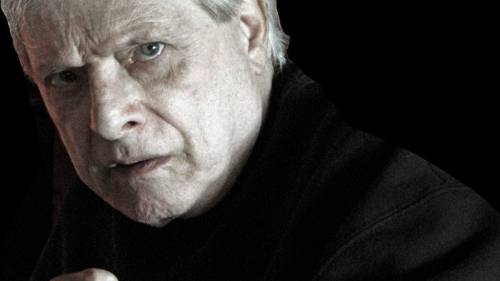

Harlan Ellison, Writer of Star Trek Series, Dies at 84
The famous science fiction writer died this Thursday in Los Angeles
By Juventud Rebelde
digital@juventudrebelde.cu
A CubaNews translation.
Edited by Walter Lippmann.
Fans and celebrities on social networks mourned the death of the famous writer. Photo: Actualidad RT Published: 29/06/2018 | 10:27 am
Harlan Ellison, a prolific and outstanding writer of novels and short stories specializing in fantasy, horror and, above all, science fiction, died this Thursday in Los Angeles at the age of 84 in his sleep, according to RT.
His publications include over 1700 short stories, novels, scripts, and essays on literature, film, television, and print media. He also worked as an editor and anthologist, especially the anthology Dangerous Visions, paradigmatic of the New Wave movement (a global term for various pop/rock styles from the late 1970s and mid-1980s). Ellison won numerous awards, including several Hugos, Nebulas and Edgars.
Among his most famous stories are The Beast Who Cried Love in the Heart of the Universe, I Have No Mouth and Must Shout, or Repent, Trickster,” said Mr. Tick-tock.
He also starred in numerous incursions into the world of comics and participated in some of his most popular collections such as The Incredible Hulk, Daredevil, Batman and The Avengers.
Photographer Christine Valada spread the news on Twitter at the request of Susan Ellison, wife of the prolific writer, who is known worldwide as the scriptwriter of the 1967 episode of “The City on the Edge of Forever” in “Star Trek” and is considered one of the most wonderful in the series, according to La Vanguardia.
Valada also published Ellison’s farewell phrase, which reads: “For a short time I was here and for a short time I mattered. The author’s literary career includes short stories that were later adapted for cinema as “A Boy and His Dog”.
Series such as “The Man from U.N.C.C.L.E”, “The Starlost” and “The Twilight Zone” also had their mark.
Many fans and celebrities on social networks mourned the writer’s death: “There was no one like him in American literature and there never will be. Angry, funny, eloquent, immensely talented,” said best-selling writer Stephen King.
Making Millions Out of the Worst Addiction Crisis

THE MARIJUANA INDUSTRY
Making millions out of the worst addiction crisis
The “medical marijuana” fever that has been legalized in 23 U.S. states and the “prosperity” of the industry coincide with what the Surgeon General’s office described as an addiction “crisis” in the United States at the end of 2016.
Author: Francisco Arias Fernández | internet@granma.cu
June 19, 2018 21:06:33
A CubaNews translation.
Edited by Walter Lippmann.
A study by the Institute for High Security and Justice Studies and the French Observatory of Drugs and Drug Addiction (OFDT), which analyzed the impact of the legalization of marijuana in North American states, was published in October 2017. It indicated that, in the USA, this measure contributed to an increase in the consumption of this drug, especially among users over 25 years of age, and led to “a significant increase in hospitalization cases linked to alleged cannabis intoxications”.
The Miami Herald recently revealed that a year and a half after an amendment to the Florida constitution legalized so-called medical marijuana, “the industry is finally showing signs of prosperity. The newspaper reported that some 91,000 Floridians are buying 56 pounds of marijuana weekly with prescriptions from 1,400 licensed doctors.
According to the information, when the medical use of marijuana was legalized in that state in 2016, drug dealers predicted that half a million users would register quickly, and the facts are proving them right, as more and more clinics are opening and customers are arriving by the thousands. The specialized state department said that new users are registering at a rate of 5,400 per week and to “make the process viable” the time to complete the process has been reduced to two weeks.
In this regard, the UN International Narcotics Control Board (INCB) has warned that the increased availability of marijuana, coupled with policies and legislative initiatives to regulate the use of cannabis for medical purposes in some states and for non-medical purposes in others, “has reduced the perception of the risk associated with cannabis use”.
The INCB, the body responsible for ensuring compliance with the international drug treaties, has called for a halt to the advance of legal marijuana, and criticized governments that passed laws in this regard.
Since last year’s report, it warned of non-compliance with international covenants by states that allowed the legalization of marijuana use. “These laws are contrary to international treaties” (Single Convention on Narcotic Drugs of 1961 as amended by the 1972 Protocol), the agency said. It added that “rates of abuse [of drugs] may increase, especially among young people, because legalization measures may influence the way harm is perceived, in the sense that fewer people will consider cannabis to be harmful, highlighting the need for more effective prevention measures”.
Translated with www.DeepL.com/Translator
THE WORST ADDICTION CRISIS IN HISTORY
The “medical marijuana” fever that has been legalized in 23 U.S. states (almost half the country) and the “prosperity” of that industry coincide with what a report by the Office of the Surgeon General of the Nation called a “crisis” of addictions in the United States at the end of 2016, characterized by a death from heroin overdose every 19 minutes, more than 27 million people addicted to illicit drugs and medicines, as well as 66 million alcoholics. According to available statistics, “more than half of all new illicit drug users started with marijuana.
The phenomenon prompted President Donald Trump in October 2017 to declare a “public health emergency” in the country over the use of opiates, a substance whose use caused the death of 64,000 people in 2016 and is the worst drug use crisis in “human history”. Over the past six years, overdose deaths have become the most common cause of death from injuries in the United States, over and above traffic accidents or weapons.
If this situation was reached in the United States – among other causes – by a very liberal system of dispensing medical prescriptions for legal opiates to treat chronic pain, where can medical and recreational marijuana fever lead?
The Surgeon General’s Report on Alcohol, Drugs and Health warned that if current trends continue, one in seven Americans will face a problem with addiction in their lifetime, and estimated that the combined annual economic impact of alcohol abuse and illegal drug addiction is $442 billion (the cost of diabetes is about $240 billion).
To complicate matters, many addicts do not go to medical services or treatment because of fear, embarrassment, or discrimination, while another percentage say their level of alcohol or drug use is a problem that requires medical attention. Only 10% of people with addiction problems receive some form of treatment, as some of the health coverage plans do not fully cover doctor visits or medications associated with addiction health services.
It states that more than 40% of people with an addiction suffer from a mental disorder, yet less than half receive treatment for both the addiction and the underlying condition.
On the social impact of the crisis, the document stated that “neighborhoods and communities are suffering as a result of the criminality and violence associated with alcohol and drug use, abuse, child neglect, and the rising costs associated with substance abuse.
INDUSTRY AND BUSINESS FLOURISH
“As the number of people with enrollment cards increases, so does our business,” said the manager of one of the four Miami-Dade County stores, which serves between 100 and 115 customers daily.
The Miami Herald points out that an even more evident indication of the industry’s flourishing is that fairs have been held to offer at least 100 new jobs for dispensaries, they are trying to increase the number of doctors with the course required to authorize patients and the Grow Healthy medical marijuana company was bought by a major New York firm for $47.5 million.
While the conditions are created to continue receiving millions at the expense of these patients, employers are investing undetermined amounts to try to influence lawmakers to sweep away what they see as “a key obstacle,” as the constitutional amendment states that “the only” ways in which medical use of marijuana in Florida is permitted is “in oils, tinctures, sprays and groceries.
The magnates of this business want to expand the universe of consumers and argue that to expand the industry and its profits it is essential to break the ban on smoking marijuana. “It’s just a barrier, but it’s fundamental,” they say, and so they seek to influence public opinion with all kinds of sentimentality, based on the fact that for most people in the United States, smoking is the most familiar form and that medical use was supported by 70% of voters in Florida in 2016.
CANNABIS: MONEY AGAINST HEALTH
Since the late 1940s, the World Health Organization (WHO) concluded that the use of cannabis (marijuana, hashish and hashish oil) was dangerous from all points of view: physical, mental or social. More recently, they were joined by so-called synthetic cannabinoids (synthetic or laboratory marijuana, even more harmful).
It is striking that the media serving the great beneficiaries of business talk more about the supposed therapeutic virtues of these substances than the doctors, scientists and health institutions of the United States or other parts of the world themselves. The Miami Herald newspaper’s own information reported that the doctors were apathetic about using medical cannabis or taking the necessary steps to indicate its use.
For this reason, information on the subject is frequently magnified and distorted, and the Internet is invaded with messages in favor of marijuana, the most widely produced, commercialized and consumed drug in the world.
The merchants of this business do not care about the health or future of their customers, they are interested in money and the present. Annually, the profits of the drug industry, in general, exceed 600 billion dollars and marijuana is an important commodity, whether it is illegal, legal or “medicinal”.
LETTERS POSTED TO GRANMA WEBSITE, AS OF July 1, 2018.
Roger said:
June 20, 2018
08:31:25
Marijuana is fine but we in Cuba sell other drugs because it also gives us money. We know that alcohol is killing people and every day in Cuba is more stimulated to consume it because in all the cafes are sold more than 14 types of drinks and often no food and tobacco as much as you want.
==========================
Albert N Jones said:
June 20, 2018
09:57:35
Millions of people suffering from mental illness, addictions and post-traumatic injuries acquired in the wars of conquest in the United States, roam without medical assistance, and are victims of some 35 suicides a day in the country. Of these, hundreds of thousands are Latinos, who were taken to these wars because of the offer to legalize their stay in the country. Today, hundreds of thousands of these men and women roam without professional services in their language to care for their neurological disorders, while in Cuba there are thousands of mental health professionals, facilities and experiences, while thousands of professionals lack well-paid jobs and the country has deprived itself of this substantial economic income.
Jorge Luis said:
June 20, 2018
11:33:04
We all know that any legal or non-legal drug can be addictive and the reason for addiction lies in the physiology of the human body itself. And to avoid this terrible evil, we must educate society and create a socio-economic and educational system that protects citizens from drugs. Capitalism in its essence is a generator of lethal drugs and addictions. The opium war imposed on China is an example, when capitalism is not able to generate profits through honest and clean trade. Today the drug is the oil that is lubricating the machinery of the local economies of many cities and nations, and even many of the large banks have been linked to the laundering of drug money. Drugs are also a macabre and scary method of social control. Some of the black community leaders in the United States have publicly recognized how this evil has destroyed their neighborhoods and have demonstrated that they used to fight for civil and political rights and now fight among themselves for drugs. All this big business is in the hands of an elite or power groups and the proof is that to obtain a permit to grow marijuana you have to pay a six-digit fee so many farmers cannot participate in the lucrative business and this helps to maintain the price of the drug. It is good to remember that societies divided into classes and under strong psychological pressure due to poverty, unemployment and the struggle for survival create an enormous psychological tension in the citizen, so that once he or she uses drugs and this temporarily takes him or her away from the reality that he or she lives to the other fantastic and pleasant reality, it is difficult for him or her to stop being an addict with terrible consequences.
==========================
ezequiel said:
June 20, 2018
12:24:59
Excellent article. Thank you. Thank you. In the media, both hegemonic and “counter-hegemonic” do not say anything. Only apologia, extolling the supposed attributes of cannabis and not informing about its dangers to health. and also here the consumption of all types of drugs is growing, especially when there is a crisis is more and more seen
==========================
Michelangelo said:
June 21, 2018
04:22:24
Great journalistic work. This is a clear manifestation of the upheavals suffered by American society, infested by the manipulation of values imposed by some political authorities and, above all, by the mercenaries of financial power, who profit and enrich themselves at the expense of the deception and disinformation of a large part of the population. Marijuana is not only a drug that is harmful to health, but also a hook, a gateway to other, stronger and more harmful drugs. It is here that the fight against global drug trafficking must begin, not by encouraging the sale of “medical marijuana”. It is a fallacy, an abject way of making large profits at the cost of human suffering. In some “cultured European countries”, which boast of being super democratic, marijuana is sold in restaurants and other public places, where it is allowed to be consumed as part of the package of ddhh that any person must have, which is a moral aberration, as occurs in dozens of American states. In Cuba, “zero tolerance” for any form of addiction is a duty of the Cuban State and of our society to protect our youth and the population in general against this perverse scourge…
IN PRINT EDITION:
http://www.granma.cu/file/pdf/2018/06/20/G_2018062002.pdf
Women in China Today

Women in China: from obedient to empowered
After the triumph of the People’s Revolution in 1949, the landscape for women was completely transformed, but they still face challenges.
Author: Gabriela Avila Gómez, Special Envoy | internet@granma.cu
June 8, 2018 21:06:54
A CubaNews translation.
Edited by Walter Lippmann.

Source: unknown.
BEIJING: The proclamation of the People’s Revolution in China, the 1st. of October 1949, represented a transformation of the country that took deep root in every sphere, including the role of women in society, which until then could be defined in one term: obedience.
The belief in the superiority of men within the family and society over women led to the conception that women should always obey: first their father, then their husband and, if they were widowed, their son. As if this were not enough, the woman did not work, she had to admit her partner’s surname and did not even have the right to divorce, but the man did.
However, after the coming to power of Mao Zedong and the Communist Party of China (CPC), a new stage for the development and empowerment of women was opened, leaving behind superstitions, lineages and patriarchy.
On one occasion, the Chinese leader stated that “in order to build a great socialist society, it is of the utmost importance to mobilize the great masses of women to engage in productive activities. (…) Only in the process of socialist transformation of society as a whole can true equality between the sexes be achieved.
In a conversation with Liu Meng, Vice-China Women’s University’s vice-chancellor, she said the Constitution – adopted just a few years after Mao took office as the country’s top leader – opened a new page for women’s emancipation by advocating for gender equality and encouraging them to move out of the confinement of the home to which they were previously committed.
Years before the appearance of the Magna Carta, the first Marriage Law had been enacted in the Asian giant, thanks to which the imposed and forced marriages, characteristic of ancient China, were definitively annulled.
WOMEN IN TODAY’S CHINA
Nearly 70 years after the People’s Republic, women in the Asian giant are an essential part of a society facing an ageing population and have a number of institutions that safeguard their security and promote gender equality, such as the National Federation of Women of China.
Chinese woman during college entrance exams. Photo: El País
While the data provides an encouraging picture, it also reflects a number of difficulties for them, which the government of the president and secretary general of the CCPH Central Committee, Xi Jinping, knows and works to eliminate step by step.
“We will continue to pursue gender equality as a basic state policy and guarantee the legal rights and interests of women and children,” Xi said last year when presenting her report to the 19th National Congress of the CCPH.
Currently, their participation in political life is very notable, they are part of the National People’s Assembly, the Political Consultative Conference, and the administration at all levels.
Currently, the employment rate of women in the Asian giant is among the highest in the world, with a greater presence in sectors such as service and agriculture, said the vice-rector of the Women’s University of China.
However, as in other countries, efforts are being made to close the wage gap: in the Asian giant, women earn only 70% of men’s wages, and the higher the level of employment, the fewer women there are.
In that sense, Liu considers it difficult to have a female president in the short term, as their weight in top-level positions within the Asian nation is still very low.
This is due to the fact that they are left behind from antiquity and it is thought that if women want to be leaders they are ambitious and illogical, to which is added the difference in access to higher education between those in the countryside and those in the city, with 24% and 2%, respectively.
“We hope that the presence of Chinese women in high positions can increase,” she said.
WOMEN’S COLLEGE
The Asian giant has around twenty women’s universities, created under the premise of promoting gender equality, and training women’s talents to contribute to economic and social development and diplomacy.
One such institution is the China Women’s University and, according to its vice-chancellor, Liu Meng, currently has around 6,000 students, 99 per cent of whom are women.
There are careers,” said Liu, “in which there is a need for a balance between people of both sexes, such as that of a radio presenter.
Currently, the university has three cooperation projects, the first of which is aimed at training female officials from developing countries such as Cuba, Mexico and Venezuela. The second is dedicated to master’s degrees in women’s leadership and social advancement, and the last one is dedicated to women’s talents from nations included in the Silk Road and Strip.
Although women in China, and around the world, still have a long way to go to achieve their full rights, work from every family, locality and government is critical to their empowerment.
IN CONTEXT
1949: Implementation of an agrarian reform that benefited more than 90% of the population. Some 300 million farmers obtained farmland.
1953-1957: First Five-Year Plan. From that experience are the Chinese progress that increased the national income to almost 9 a year and created a solid industrial base for a rise as a power.
1978: Policy of Reform and Openness, a project of nationhood that began more than 30 years ago and which considerably increased its national power, the standard of living of the people and the weight and contribution to the world economy. It catapulted the country’s political stability, fostered development and active diplomacy, which is still in place.
It has consolidated the construction of socialism with Chinese peculiarities and defined the path that the country should follow.
By 2020, the integral construction of a modestly affluent society would be completed.
China’s prosperity and stability are opportunities for all humanity to live on.
More than 30 countries are participating in the Strip and Silk Road initiative.
STUDENTS: TOTAL MEN(%) WOMEN(%)
UNIVERSITY: 1,793,953 51 49
TEACHING: 1,495,650 48.6 51.4
GRADUATE: 298,283 63.1 36.9
POPULATION:
MEN: 86,852,572 (51.27%)
WOMEN: 65,287,288 (48.73%)
NATIONAL PEOPLE’S ASSEMBLY (2018)
24.9% are women out of about 3000, total.
Data provided by Liu Meng, Vice-Rector of Women’s Univesity of China.
Social Networking on the Internet
DOUBLE CLIC
Social networking on the Internet: what to do?
Although it is only in these times of increasingly widespread use of the Internet that the term has become popular, social networks have existed as long as human groups have existed.
——————————————————————————————————-
Author: Iroel Sanchez | internet@granma.cu
19 June 2018 19:06:05
Translated and edited by Walter Lippmann for CubaNews.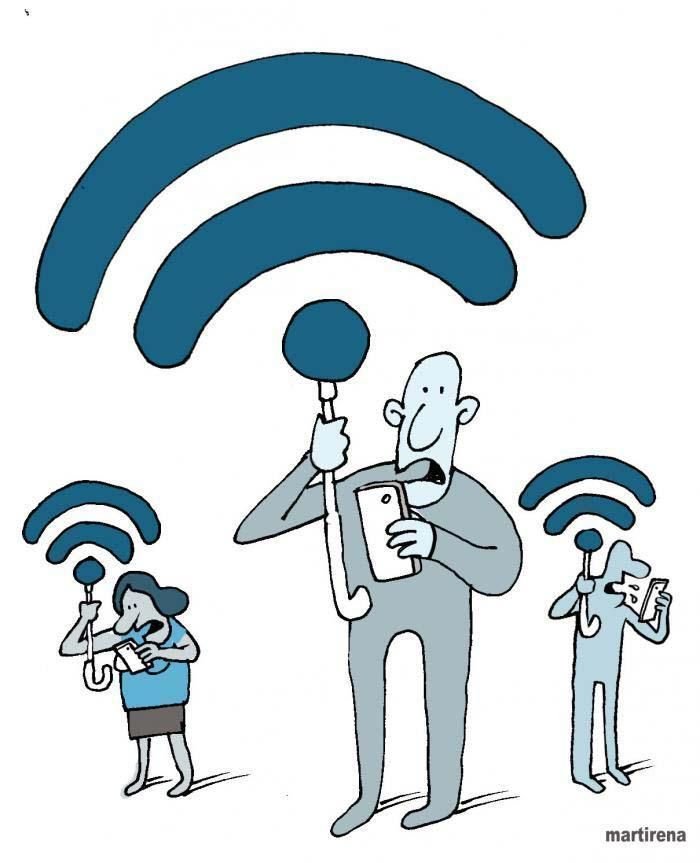
Although it is only in these times of increasingly widespread use of the Internet that the term, which used to be common only among sociologists and other social science professionals, has become popular, social networks have existed since human collectives first existed. Even other non-human groups also function as networks. Just look at an ant hill, a honeycomb… Their functioning is crucial for access to food, protection against other species, reproduction and for sharing essential information related to these vital activities.
In human societies, each individual already belonged to family networks, friendships, neighbors, co-workers or students, professionals, often overlapping, long before spaces such as Facebook or Twitter became commonplace.
However, the advent of the Internet has made tangible, and even capitalizable, what was previously invisible. By recording in the memories of powerful computers called servers, every search, every exchange, every publication of text, video or photos and those that interact with them, as well as the metadata that accompany them (date, time, sex, theme and geographical location of the participants, among others), in a space where every minute billions of these actions occur, the current development of computer tools to correlate them allows us to find and connect affinities at a speed that was unthinkable before.
This has given rise to companies known as “internet giants” or technology giants, whose potential lies precisely in capitalizing on these intangibles. Offering its users as advertising merchandise for other companies with an effectiveness that was unimaginable a few years ago, Facebook and Google have gone public for hundreds of billions of dollars. Fewer and fewer people are arriving at information by typing the address in their browser, the most common thing is to navigate through what a search engine like Google or the Facebook algorithm puts in front of us. Rather than surfing, we relate to internet applications that select for us virtual answers from the real world hegemons who paid for it.
For most people who use these two tools most of the time, the Internet is Facebook and Google, just as the operating system is synonymous with Android or Windows.
On May 18, 2012, a joint statement was issued by a group of civil society organizations to the United Nations meeting in Geneva for enhanced cooperation on public policy issues related to the Internet. It noted that “what was a public network of millions of digital spaces, is now largely a conglomerate of spaces of a few owners. Six years later, many people talk about Gafam (Google, Amazon, Facebook, Apple and Microsoft) as the giant that controls the global digital space from a single country.
Beyond the denunciations of its use for political and military domination, as a consequence of what the former National Security Agency analyst Edward Snowden has already revealed, the effectiveness that transnational companies which can pay for advertising acquired in national markets, micro locating audiences according to their characteristics, tastes, and needs, crossing national borders, is devastating.
With more than 4 billion Internet users, the battle between Google and Facebook to manage the connection of the remaining 3 billion Earthlings to “internet.org” (free access to the services of these companies, but charged when they leave these spaces) is on the rise. The policies that penalize external links at Mark Zuckerberg’s corporation, making them virtually invisible, while rewarding content that does not require users to leave the social network to access it, are a manifestation of this obsession with having users all the time in the space where each action produces metadata for the company.
Undoubtedly, the digital divide has been closing at a much faster rate than the radio or television. However, far from meaning a diversification of cultural consumption, this has deepened the chasm between the core production of content and services held by a few American companies and the rest of the planet, causing a growing homogenization.
In Latin America, of the 100 most popular sites, only 26% are of local origin and less than 30% are in the local language, and even though much of the latter is in Spanish, it is of American origin.
It is an everyday fact that an advertiser can now micro-localize in a network like Facebook or in the results of a search engine like Google the recipient of a message based on age, gender, geographic location and professional profile. This can be whether to position a product or news item, whether true or not, it’s just that you have to have the money to pay for it. This is absolutely legal and widely used, and has nothing to do with the recent scandals over the use of data derived from personal activity on Facebook to create political profiles of users associated with Cambridge Analytica.
Few countries have a critical demographic mass and language of their own that allows them to develop alternatives, such as China and Russia. Stanford University expert and professor Evgeny Morozov, not at all suspected of admiration for either country, pointed out ironically in 2015: “Notice the crucial difference: Russia and China want access to data generated by their citizens on their own soil, while the US wants access to data generated by anyone anywhere, as long as American companies manage it.
Processes such as Brexit, the election of Donald Trump or the response to the referendum on peace in Colombia have been impacted by these realities. The guarimbas of the first semester of 2017 in Venezuela, the defeat of the referendum for the re-election of Evo Morales in Bolivia, or the instantaneous deployment of violence in Nicaragua have had millions of dollars invested in social networks on the Internet.
The Internet is not the problem, but the economic and social inequality with which the hegemonies of the real world are transferred to virtual space, through money.
Tim Berners Lee, creator of the world wide web, on the occasion of the 28th anniversary of his invention in March 2017, expressed his “growing concern about three new trends” on the web: we have lost control of our personal information, it is very easy to spread misinformation on the web, and online political advertising needs transparency and understanding.
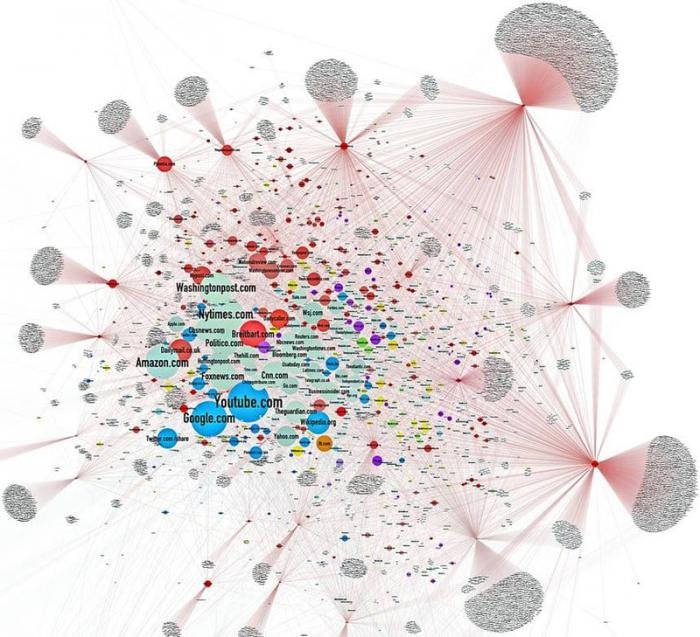
In 2016 Jonathan Albright, a professor at Elon University in North Carolina, published a map showing how, from the domain of Google’s search algorithm, the far-right colonized digital space much more effectively than the liberal left in the United States. Albright’s map, which followed 1.3 million hyperlinks, shows how a “satellite” system of right-wing news and propaganda (dark forms on the map) surrounded the dominant media system just in the year that Donald Trump reached the White House. Asked by The Guardian about how to stop this process, Albright replied: “I don’t know, I’m not sure if it can be done, it’s a network, it’s much more powerful than any actor.
“So it almost has a life of its own?” they asked him. “Yes,” replied the scientist, “and it is learning. It gets stronger every day.
What is the solution to this problem for a small country that does not want to be dominated by US hegemony? Can we flee from the social networks of the Internet? They are already part of the daily life of billions of people, of the majority of young people and of a growing number of Cubans. Can we create, without a critical demographic mass, national spaces that are exclusive as China does, that has more Internet users than the United States and Europe combined?
It does not seem to be viable, our alternative seems to be to network our values, to ask ourselves if the Cubans who carry them are the ones who have the best facilities to access the Internet, to make our media and our schools promote a culture of the use of these technologies that allows them not to be manipulated and that the institutional, political and social leadership is present and articulated in the network based on timely and quality information that is related to Cubans’ expectations and needs.
Russophobic Madness Affects the USA
Russophobic Madness Affects the USA
By Manuel E. Yepe
http://manuelyepe.wordpress.com/
Exclusive for the daily POR ESTO! of Merida, Mexico.
Translated and edited by Walter Lippmann.
Jack F. Matlock Jr., U.S. Ambassador to the Soviet Union from 1987 to 1991, called on his country’s citizens to end the Russian-phobic madness that dominates Congress and many of the media in North America in a recent article in several U.S. media outlets.He cites as a blatant example of this, the New York Times’ leading editorial of February 17 entitled “Stop letting the Russians get away with it, Mr. Trump”, in which the newspaper’s editors repudiate Russia for interfering in the US elections and call for greater sanctions against it in order to protect American democracy’.
“It had never occurred to me that our political system, no doubt dysfunctional, was so weak, underdeveloped and sick that with inept actions on the Internet it could be damaged,” says Matlock. But the New York Times isn’t the only one accused. Most other U.S. print and electronic media have followed suit. “Increasingly, both in Congress and in the media, Russian interference in the 2016 elections has been accepted as a fact.+
Among the Russian actions that have upset the American establishment and are now presented as events that have contributed from Russia to Trump’s rise is the creation by the Russian government of a sophisticated television service (Russia Today or RT) that provides entertainment, information and propaganda to foreign audiences, including that of the United States. The magnitude of its viewers may be several times smaller than that of the big U.S. media, but it has undoubtedly weakened the monopoly on news that the Western media have had and has had a huge reception everywhere, not excluding the United States.
Russian leaders, like most other countries in the world, thought Clinton would be elected, but some senior Russian officials expressed a preference for Trump’s candidacy after Secretary of State Hillary Clinton compared Hitler to President Putin and urged more active U.S. military intervention abroad, contrasting with Donald Trump, who then spoke out in favor of cooperation with Russia rather than treating it as an enemy, Matlock says.
No one seems to have made even a superficial study of the effect of Russian actions on the vote. There is no evidence that Russian activities have had a tangible impact on the election result, says Matlock.
But the most important fact, obscured by anti-Russian hysteria, is that it was the Americans who elected Trump under the terms set out in the Constitution; the Americans created the Electoral College, which allows a candidate with fewer popular votes to become president, and it is they who manipulate constituencies in favor of a particular political party when it suits the system.
The Supreme Court issued the infamous decision allowing for corporate funding of candidates for political office. The Americans created a Senate that is anything but democratic because it gives disproportionate representation to states with relatively small populations. It was US senators who established undemocratic procedures that allow minorities to block legislation or confirm appointments.
For Matlock, just because the Americans themselves chose their electoral system does not mean that Trump’s choice is good for the country. In his opinion, the 2016 presidential and legislative elections represented an imminent danger to the nation. They have created potential disasters that will severely test the checks and balances built into the Constitution. This is especially true today when both houses of Congress are controlled by the Republican Party, which in turn represents fewer voters than the opposition party.
Matlock claims he did not vote for Trump, but he believes that the allegation that Russian actions interfered with the elections, or damaged the quality of democracy in the country, is ridiculous, pathetic and shameful. “And I should add dangerous because making an enemy of Russia, the other nuclear superpower, is closer to political madness than anything else I can think of.
The former U.S. ambassador concludes his article by calling on his countrymen to desist from the current Russo-phobic madness and to encourage Presidents Trump and Putin to re-establish cooperation on nuclear security, non-proliferation, nuclear material control and nuclear arms reduction, issues that are of vital interest to both the United States and Russia.
June 25, 2018.
Trump’s War Against the Elephants
Trump’s War Against the Elephants
By Manuel E. Yepe
http://manuelyepe.wordpress.com/
Exclusive for the daily POR ESTO! of Merida, Mexico.
Translated and edited by Walter Lippmann.
One might think that under this title it would be appropriate to read something about the conflicts that affect relations between Trump, the narcissistic president of the United States, and the leadership of the political party that had him as its candidate for that high office.The Republican Party has had the elephant as its electoral symbol since 1887 when a cartoonist drew it in response to the Democratic Party’s electoral symbol, the donkey.
The donkey had emerged in the 1828 elections as a Democratic symbol as an expression of mockery by his opponents of the stubbornness and lack of intelligence attributed to the then-Democratic presidential candidate, Andrew Jackson.
The insult was jocularly assimilated by the leaders of the Democratic Party who adopted the donkey as their electoral emblem, highlighting its capacity for work and its modesty. So the Republican elephant was born in response to the Democratic donkey invoking the mastodons for their memory, docility and submissiveness.
However, Donald Trump is not identified as a historic Republican or any other party member, since his political career has been characterized by repeated changes in party membership since he entered politics.
Trump sought the presidential nomination of the U.S. Reform Party in 2000. It was a populist formation of nationalist economic orientation founded in 1995 and ephemeral in existence. He withdrew before the voting began. He then considered running for high office as a Republican in the 2012 election, but eventually did not.
In June 2015, he officially announced his candidacy for the 2016 elections, and gradually became the favorite among the seventeen candidates in the Republican primaries. In May 2016, the last of his rivals suspended campaigning and in July he was nominated, with Mike Pence as his running mate, at the Republican Convention.
His campaign received unprecedented media coverage and international attention. Many of his statements in media interviews, on social networks and at campaign demonstrations were controversial. No few were considered false, but they were always widely disseminated.
He won the general election on November 8, 2016 against his Democratic rival Hillary Clinton, and became president on January 20, 2017 at the age of 70, 7 months and 6 days, making him the oldest president to assume this position in his country. He is also the most affluent president, first without military service or political office before being elected and fifth in winning by the votes of the electoral college despite having lost the election by popular vote.
But, to return to the title of this commentary, it is curious that one of the many embarrassing situations Trump has been involved in stems from the accusations made against him for his support of elephant hunting in Africa.
Avaaz, a nongovernmental organization with more than 46 million members who protect nature and the ecosystem, which promotes actions aimed at protecting wildlife, has directly accused President Donald Trump of supporting elephant extermination actions in Africa.
A climax of this ruckus came when the president’s eldest son, Donald Trump, Jr., mutilated an elephant during a hunt in Africa and appeared in the world’s press in a photo proudly depicting the white hunter with a smoking rifle next to the body of a large elephant. The president came to his aid and ordered the lifting of the ordinance prohibiting such “diversions” because of the danger they posed to this species in danger of extermination.
But this decision provoked justified outrage in the world. While it met the insistent demand of many wealthy American hunters thirsting for the morbid pleasure of killing harmless elephants in Africa in order to bring their ivory tusks to their mansions as trophies for the sake of human dignity and their role on the planet, nature and environmental protection organizations mobilized and succeeded, through massive global protest, in getting the United States to renounce such an offensive practice.
Following the general rejection of the measure, Trump tweeted that he would put this decision on the elephant hunt on “hold” but, earlier this year, in an interview, he assured us that the trophy ban act would not stand for long.
Obviously Avaaz’s protest has continued and the issue of the elephants remains on Trump’s agenda and with it the confrontation between the US president and the Republican party’s electoral symbol that supposedly sponsors him.
June 21, 2018.
You must be logged in to post a comment.