Cannibis is a Dangerous Gamble for the Caribbean
- English
- Español
Cannabis is a Dangerous Gamble for the Caribbean
By Manuel E. Yepe
http://manuelyepe.wordpress.com/
Exclusive for the daily Por Esto!, of Merida, Mexico
A CubaNews translation.
Edited by Walter Lippmann.
Marijuana is having a good time in the Caribbean. With the exception of Cuba, cannabis is widespread in the insular Caribbean, although it is no longer the “ganja” that came to the Caribbean from India and was used by humble workers in Jamaica to free themselves for a few moments from their cruel jobs.
So says an article published by the Italian magazine TTC (Travel Trade Caribbean), specializing in the tourism industry of the Caribbean region, today threatened by the dangerous presence of this universal scourge.
In 2015, the growth, trade and private possession of up to 200 grams of marijuana by adults and the growing of up to 5 plants for private consumption and medicinal, religious and scientific purposes was decriminalized in Jamaica, as a celebration of Bob Marley’s 70th birthday, the extraordinary Jamaican musician who was addicted to smoking the weed.
According to TTC, the successes of marijuana have gone so far in 2016 that the Bhang Travel Inc., in Miami, Florida, the Cannabis Industries Premiere Travel and Event Agency, launched the first-ever Jamaican Cannabis Cruise setting sail departing from Miami on January 2017 with destination Ocho Rios Port in Jamaica.
Currently, in many parts of the world, the number and influence of marijuana advocates is increasing. They argue for its general decriminalization or at least for its free use in medicine. Also increasing is the number of the detractors of marijuana which is still classified in the world as a class A (High-risk) drug, together with Heroin, Cocaine, Amphetamines and ecstasy (MDMA).
Cautiously, the Caribbean Public Health Agency (CARPHA) recommended to its member countries the need for further research, before accepting new programs to liberate its use. The head of the organization, Dr. James Hospedales, advises “proceed with an abundance of caution.” He emphasizes the immense importance of youth protection.
Two Caribbean nations, US protectorate Puerto Rico and Jamaica, already have a medicinal cannabis program in place and others are taking steps to decriminalize it.
According to an analysis posted in the Internet about Jamaica, “the country is trying to cash in on the multi-billion-dollar health and wellness tourism sector that several Caribbean countries are turning to. But it won’t be the use of cannabis for traditional medicine purposes alone it is contemplating. It is also planning to use products made from the herb that would play a major part in the tourism sector”.
Jamaica´s Minister of Tourism Edmund Bartlett said Jamaica’s lush and rustic southwestern coast is “ideally suited for the concept of “cannabis-infused tourism” where products made from the herb would play a major part in the tourism sector”.
In 2015 the countries that had the least restrictive cannabis laws were Bangladesh, Cambodia, Canada, Chile, Colombia, the Czech Republic, India, Jamaica, Mexico, Portugal, Spain, Costa Rica, Uruguay, Germany, the Netherlands, some U.S. states, Native American Indian reservations, and cities as well as some territories of Australia.
The countries that maintain the strictest cannabis laws are China, Egypt, France, Indonesia, Japan, Malaysia, Nigeria, Norway, the Philippines, Poland, Saudi Arabia, Singapore, South Korea, Thailand, Turkey, Ukraine, the United Arab Emirates and Vietnam.
The global market for a cannabis tourism stands at around US $494 billion, according to the article in TTC.
Although the flow of cocaine heading north has been reduced, violent crime and drug trafficking mean serious threats to Central America and the Caribbean. Given its
geographical location between the main producers of coca in the South and the main consumers of narcotics in the North, the region has become a drug corridor.
October 3, 2016.
“His greatest work was his own life”
“His greatest work was his own life”
By Felipa de las Mercedes Suarez
A CubaNews translation.
Edited by Walter Lippmann.
Posted on September 25, 2016 • 16:40 by Felipa de las Mercedes Suarez Ramos.
Trabajadores
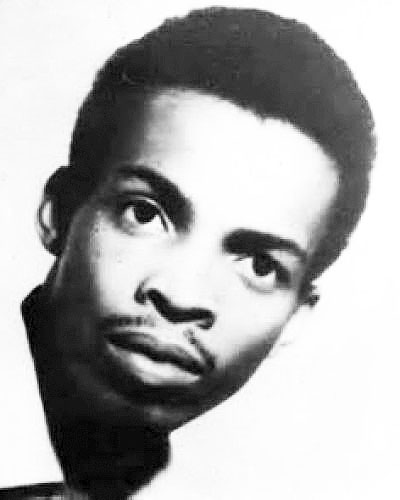
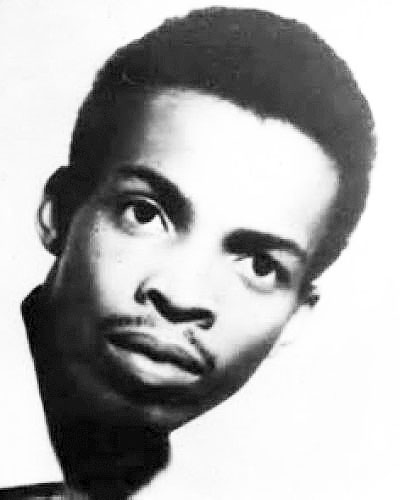
Gerardo Abreu, Fontán, distinguished himself by his integrity, morality, austerity and personal example.
Great affection, admiration, sorrow and respect, make up the amalgam of feelings that the face of Dr. Ricardo Alarcón de Quesada reflects while speaking of Gerardo Abreu, the unforgettable Fontán, his leader in the underground struggle against the tyranny of Fulgencio Batista.
His personality came to Alarcón clad in a legend because “they all spoke of a so-called Fontán who was a great organizer, a great leader. I imagined him as a tall, strong guy, someone generally described as a “big man”, hence the impression I got when I first met him; he was rather short, black, slim, soft-spoken, very polite, refined and serious, a man of few words who gave the orders very firmly, but gently; a curious character, despite his youth.“
Alarcón was active in the Youth and Students Brigades of the 26 of July Movement, the organization initiated by Antonio López Fernández in 1955. In October the following year, when he left for Mexico to join the preparations for the Granma expedition, he gave his deputy, Fontán, the responsibility of the brigades located in the city of Havana.
“Gerardo, born in a poor neighborhood in the city of Santa Clara on September 24, 1931, began to work from very young in anything; his best known job was as reciter of Afro-Cuban poetry, which he did very well. Despite his very basic level of education, merely fourth grade, he became an educated person with a great sensitivity; he liked poetry, literature… He was not the kind of person I had imagined.“
An Unsurpassed Organizer
“It has always been said –and it must be repeated– that he had a tremendous ability as an organizer, his dedication to the struggle and work. We are not referring to a person leading an organization with resources, who had cars at his disposal … He moved on foot or by bus, those were his means of transport. That’s how they caught him on Infanta Street.”
In connection with Fontán´s organizational capacity, our interviewee points out two crucial and revealing moments, one was in November 1957 when the famous night of the 100 bombs –actually small artifacts that caused no victims– that exploded in many neighborhoods of Havana after the traditional Cannon shot at 9 pm, which caused policemen and patrol cars to move frantically from one place to another.
“The other was on February 7, 1958. He had been arrested and we were convinced that they would kill him quickly: first, by the fierce hatred that the henchmen of the regime felt for him, and second, because he would not say absolutely anything. No one had the slightest doubt that he would not talk; he didn’t even give his own address or his name.”
“They knew that a guy known as Fontán led the strongest organization, the Youth and Student Movement Brigades of the 26 of July Movement in terms of organization and number of members within the whole kaleidoscope of existing revolutionary forces. We tried to make sure his arrest became known in an attempt to save him.”
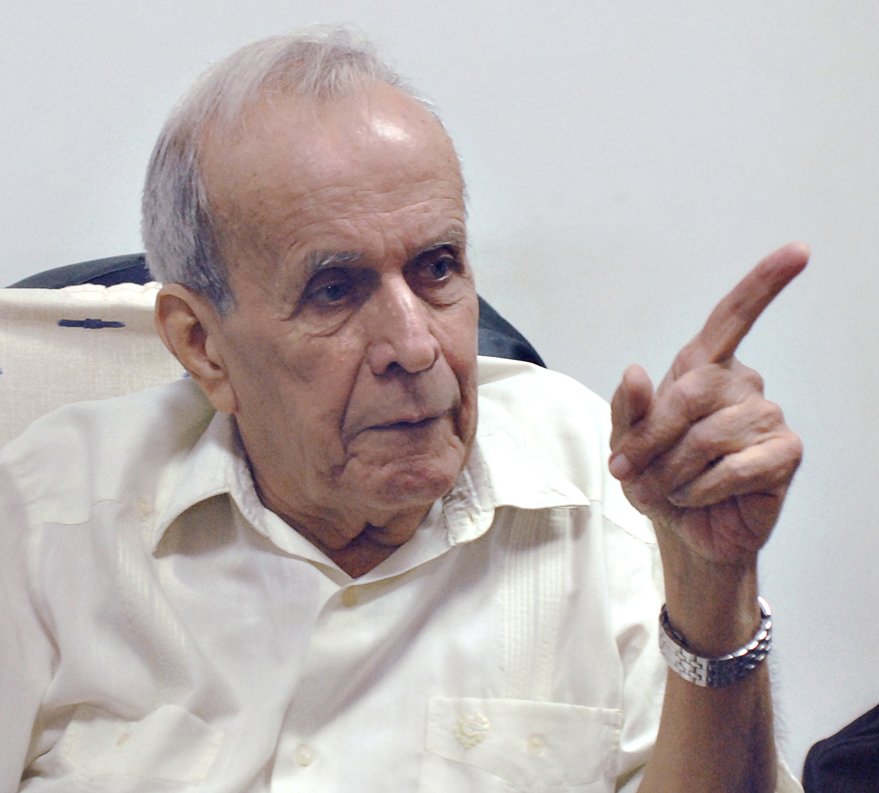
Gerardo was “an example I wish we could reproduce today in our society, because it’s what we need most,” said Dr. Ricardo Alarcón de Quesada.
Havana’s Student Response
“At that time there were constitutional guarantees, but Batista suspended them due to the student strike that the death of Fontán generated: a tremendous movement that started spontaneously. As soon as the news spread, students began to protest in several centers. After that it became organized and the Federation of Students of Secondary Education called for a strike that was already underway. This lasted for three months and two ministers lost their posts.”
He describes the paralizing of all student centers in the capital: centers of Secondary Education, the schools of Teacher Training, Commerce and Arts and Crafts; private universities like Villanueva, La Salle and the Masonic; as well as private academies, whether religious or not.
“All of them, without exception, went on strike, and it did not start because the leaders, the organizers planned it; but because people desperately tried to save him. The next day his mangled corpse was found, next to the Palace of Justice. They did horrible things to him that it’s better not to describe.”
Alarcón notes that the best proof that he said nothing is that “we are alive, because he knew where I was; also where the heads of neighborhood brigades were and others, because although for many Fontán was a legend, he knew practically everyone because he organized them step by step, neighborhood by neighborhood. Something really impressive.”
“So he was the undisputed leader of the most advanced members of that generation of youth, many of them white, supposedly more educated than he; but nobody ever questioned his leadership. He was the one who knew best, the most intelligent and educated; really a very curious phenomenon, because in such a society, people like him were doomed to misery, to the worst.”
“Gerardo was like an exception, a miracle to which no youth of his social status could aspire. I don’t think anyone has an explanation for this mystery, because he was not dragged down by the vices and phenomena that harmed a lot of people at that time.”
“There is also something that has been said about him and we should not tire of repeating: his integrity, his morals. He taught us absolute austerity, and did so with his personal example. He was incapable of using a single penny of the Movement not even to eat. He could go hungry, but the funds he had raised –by selling bonds and other ways– were untouchable, and he educated us in that spirit.”
“I think a lot about El Negro [as friends called Gerardo] at that time, when there is so much talk about certain phenomena in Cuban society, and I wonder what he would think, because in that Cuba of widespread corruption, selfishness, lack of solidarity, Gerardo was exactly a master of the opposite, not a teacher who gave you heavy spiels but because we saw how he lived, how he went around walking or by bus. It was like that all the time.”
“He was impressively austere, and had a peculiar sense of leadership.. I think none of us who knew him ever questioned his authority, and we are talking about a Cuba where racial discrimination was very strong. When he gave orders he did so with few words, very concretely, and you perceived that he knew things better than you did, that he really knew what to do, and also he spoke very gently, very serenely.”
“In Cuban society at that time, where frustration and disappointment predominated, you needed to cling dearly to the moral and spiritual values, and to the idea that there could be another world, another life, an alternative.”
“And Fontán embodied that, because he was simply the best example, who came from deep down, from the lowest ranks of Cuban society, doomed to be a failure in life, as were all the poor people of this country. The fact that he lifted himself up and became an example to all was a feat.”
“I think that was largely due to himself, who, had he not been murdered, would have become one of the main political leaders of the Revolution. Surely one of the most valuable intellectuals, because he had an artist´s vocation, but his greatest work was his own life, extracting himself out of that very hostile environment to become an example that we could hopefully reproduce in our society, because it is what we need most.”
Stanley Scheinbaum: A Quixote of the 20th Century
Stanley Scheinbaum: A Quixote of the 20th Century
By Ricardo Alarcón
A CubaNews translation.
Edited by Walter Lippmann.
On Monday, September 12, at 96 years of age, Stanley K. Sheinbaum died in his California home. I want to add these lines to the tribute that he will surely receive from many everywhere. Despite his advanced age and ill health his friends will never find comfort for his departure. Because Stanley belongs to the category of those Bertolt Brecht called the essential who struggle all their lives.
From his New York childhood during the Great Depression until the era of the global dominance of US plutocracy he walked a long path that led him not only to travel across his country but also to know the rest of the world. He learned to be interested, as were few of his countrymen, in the conflicts and problems of others and to get involved and take sides, “trying to create a little peace and justice in this unjust world” as he wrote in his memoirs published five years ago (A 20th Century Knight’s Quest for Peace, Civil Liberties and Economic Justice).
He discovered in 1959 that the program he led at Michigan State University was a covert CIA activity, and became the first person who publicly denounced the illegal actions of the CIA inside the United States.
In the 1960s he articulated the campaign for the release of Andreas Papandreou, imprisoned by the military junta in Greece. He led the movement for raising the necessary funds for the defense of Daniel Elsberg, arrested in 1971 for revealing the so-called Pentagon Papers on the aggression to Viet Nam. This was an iconic fight with the outstanding participation of Leonard Boudin and his disciple the young Leonard Weinglass, both brilliant human rights and civil liberties activists. If it were not for Stanley, according to Ellsberg, “the trial would have been over, Nixon would have remained until the end of his term and the war would have continued.”
He promoted the work of the American Civil Liberties Union in Southern California to end racial segregation in schools and to combat the repressive methods of the LAPD as he led efforts against the apartheid regime of South Africa.
1988 he organized a group of American Jewish leaders who, on 6 December, met with Yasser Arafat in Stockholm, Sweden to start a process towards mutual understanding and peace in Palestine. The gesture won him many enemies. “For a while I was the most hated Jew in America … by other Jews” he wrote in his Autobiography.
He took a courageous stand in confronting police brutality and the Rodney King beating. He did so from his position on the Los Angeles Police Commission of the LAPD and on the streets of the city. “He was” –in the words of Afro-American Congresswoman Maxine Waters– “an extraordinary human being.”
He also addressed Cuba. He visited us here and we kept communication at a distance to the end. He opposed the blockade, fought for the normalization of relations, and was decisive in the battle for the liberation of our Five antiterrorists whose situation he helped publicize in the United States. What was announced on December 17, 2014, was also the result of his solidarity commitment that had rarely reached the major media headlines.
At the end of his life he could say: “I’m still interested; I still get involved; I still believe that tomorrow will be better. And so, I’m still very optimistic. If I have learned something over the years it is that it is not so important whether or not we win the battles. What is really important is that we continue waging the battles for justice, for equality, for fairness. “
Stanley keeps riding on.
The Battle for Honest Journalism
- English
- Español
The Battle for Honest Journalism
By Manuel E. Yepe
http://manuelyepe.wordpress.com/
Exclusive for daily Por Esto! of Merida, Mexico.
A CubaNews translation.
Edited by Walter Lippmann.
We live in a world with all provisions set for the benefit of the owners of money: from electoral procedures and government structures to the smallest details of public and private relations. Everything has been oriented to the buying and selling mechanisms so they favor the owning classes who have the wealth.
In Latin America, not even Cuba –with its socialist revolution but also heir to countless of the methods, traditions and practices of capitalism– escapes this global reality. Except that in Cuba, by virtue of the deep socialist revolution that began half a century ago, the role previously held by the dominant wealthy classes is now exercised by society as a whole.
In the case of Cuba, a political organization –based on the most advanced revolutionary doctrine humanity has produced: Marxism– as society’s vanguard, protects its unity and ensures the legitimacy of truly democratic relations in all areas of society.
If we fail to consider that the mechanisms which freed Cuba from the evils of capitalism are still being created, tested, or waiting to be instituted to serve a social system that is also in the process of emerging fully, we are at risk of making serious mistakes. The Cuban revolution is not a copy of any other and, like other models that proclaim themselves Socialist, Cuba to find its own way.
Globally, journalism has become –for a long time now– an essential element of power, along with the three classic powers of the State (legislative, executive and judicial). Hence the media is often identified as the fourth power.
With this as its starting point, the ruling classes have succeeded in making the mainstream media (in print, radio, television and, more recently the Internet) a commodity and a tool aimed at convincing people and promoting compliance with capitalist ideas. They have done this with such effectiveness that they have succeeded in imposing their media dictatorship worldwide.
Advertising has become the lawful resource for those with money to defray cost of operating the media and thus controling it or exercise influence over its content proportional to the potential of their own economic and political interests.
Historically, big capitalists have not been satisfied with the ascendency they can get through their ads and have moved to partial or wholly ownership of the media, often using more or less publicly-identifiable fronts.
The ideological domination of oligarchies in Latin America –who often act as figureheads for the hegemonic domination of large US corporations– has been acquiring such a high level on the continent that no one doubts that a social revolution is not feasible without destroying the counterrevolutionary control of the media.
Confirmation of this conception is the fact that today in Latin America, the media under control of the ruling classes are playing the role that, in the last century, was played by the Latin American military hierarchy. The military carried out the coups –promoted by the United States– which plunged the region into the most nefarious situation of inequality, crime and misery.
However, according to recent experiences in the hemisphere, we could say that a coup may occur with the military or without it, with parliament or without it, with the media or without it, but always with the financial resources that move the wheels.
Although the laws of technological development tend to make the media increasingly social, the owners of capital have managed to always put communications and the media in a place outside the control of centers of democratic power. Thus, they facilitate their control by the owners of financial resources: the capitalists.
The Cuban experience –with its virtues and its many flaws that today are hotly debated by journalists in the island– shows that the social ownership of communications and the media with the widest popular participation, in a society with social ownership of the major means of production and distribution, opens the possibility of the use and effective enjoyment of these media by the majority… and safeguards it from the insatiable greed of capital.
Other mechanisms could be valid, but are yet to be tested and confirmed by practice.
September 19, 2016.
Thoughts on the Eve of Returning to Cuba
Thoughts on the Eve of Returning to Cuba
by Walter Lippmann
Tlatelolco, Mexico, Saturday, September 3, 2016
Later this morning I’ll be off to Havana via Interjet, a Mexican airline which flies regularly. “Father, forgive me, for I have sinned:” It’s been nine months since my last time down, in December 2015. I’m looking forward to seeing whatever changes have taken place. I’m hoping to spend another three months, and plan to post regular reports of things done, places seen and people met.
Each time before I go, I try to post some final thoughts before leaving for the island where my impressions are altered or corrected by Cuban reality, as they always are. What follows are rough notes, and not in order of importance. I hope you’ll find them of interest. I’ll have to look back and the and see what actually happened. Will also plan to post some first impressions as soon as I’m settled in. Probably not until Sunday.
First-hand observations
It’s amazing how different Cuba is from a distance. That’s why it’s so important to actually GO to Cuba and see it for oneself. It’s also why Washington imposed, and continues to maintain, a travel ban on US citizens and residents.
The Obama administration has modified the ban, but it is still on the books. Vacationing and going to the beach remain violations of US law, even if not vigorously enforced, for now. Basically, Washington just does not want people from the US to see the country first hand, because, warts and all, it is so different from the hostile and tendentious image we’ve been fed ever since the earliest days.
You know: Cuba is a dictatorship. There are no human rights. Everyone is spied on. There is no Internet, and so on. The last example I saw was in that otherwise-objective piece about Cuba’s success in fighting the Zika virus which the main AP reporter in Cuba, in today’s Washington Post.
When I started following Cuba most closely, in the late 1990s, the problem was the lack of information, and most of what we got in the dominant capitalist media was tendentious and hostile. That’s still largely true, but, with the change toward a more formally normalized diplomatic relationship, that’s changed somewhat. Now we’re overwhelmed with information in the dominant media, and some of that is not unsympathetic, or downright friendly.
For example, the current issue of WESTWAYS, the magazine of the definitely NOT leftist Automobile Club of Southern California (AAA). It’s cover art and main headline is HOLA CUBA. The issue has eight full pages without advertising and it’s all presented in a friendly, encouraging tone.
If we can get it scanned and posted, I will share it. It must be very popular because, after standing on a waiting line and presenting my club membership, they were only willing to give me two copies. Who will be the lucky Cubans who get them?
Transportation
In Los Angeles, I more and more try to avoid driving. The driving culture has degenerated terribly, the streets are very crowded, and so on. I’ve begun to wonder if I can or should give up driving completely, but haven’t taken the plunge yet.
In LA, for example, I often walk to the markets and back with my groceries now, and they are each about a mile or so away from where I live. I’m 72 years young, by the way, but I really like getting away from the house, the phone and the computer. It’s good exercise and I feel relaxed, though often pretty sweaty, when finally I’m back home.
Mexico City is far, far worse. The local Metro system, is older but far superior in its routes to the lovely one we have in Los Angeles, and reasonably priced. But for someone not familiar with the Metro and the city, Uber, which wasn’t here during my last visit, amazed me with its efficiency.
The friend I’m staying with here is Peter Gellert, whom I met in the US in the 1970s. He moved here forty years ago, gave up his US citizenship and became a legal Mexican citizen, 100%. Here he works as a translator and is an activist in Mexican and solidarity movement politics.
Yesterday we walked down to the street, and summoned an Uber car on his smartphone. A nice, new car arrived in under five minutes, driven by a 62 year-old retired government worker who can’t afford to not work on his pension. This Uber car took me to an engagement with a friend, and another took me home later, in comfort and quiet.
Up til now, I’ve not yet learned the Uber system in Los Angeles, but I am certain that I will now. And will learn how to use a smartphone as well. I’m not a Luddite, but have avoided learning some of this modern technology. Though my crystal ball isn’t as clear as it was when I was 20 and 30, I found a lot go ponder in the current issue of the London ECONOMIST, in its cover feature, Uberworld.
The structure of world transport, and of the working class which drives it, is changing. While it’s not all for the better, there’s a something I think we can learn from this new system. Just sayin’…
There’s no Uber in Cuba, but an interesting multi-level system of state-owned, cooperative, private individuals both licenced and not, bicitaxis and hitch-hiking. Hitching is quite widespread in Cuba, and is entirely safe. (It seem to help being a pretty young woman.)
Smartphones
Same is true for those smartphones which I’ve been avoiding up to now. Last year, when I was in Cuba at the time of Pope Francis’ visit, the Cubans set up a wonderful media center for all the accredited journalists.
One day I noticed a woman talking into a smartphone which she had posted on a tripod. She was broadcasting, online, LIVE, though a hand-held personal cell phone. I’d love to be able to do that! I promise to pick up this skill as soon as I can.
Last year I wasn’t able to post materials to my website for some technical reason I never could figure out with certainty. And still haven’t, but am working on that. I’ve spent almost all of today working on that, and seem to have made some progress. I’ll let you know when (and if), that’s successfully completed. If my hands weren’t so busy writing, I’d cross my fingers…<g>
Therefore my reports and the CubaNews translations will continue to go out through the Yahoo News group to which I’ve posted most materials for over fifteen years. You can subscribe, to the news group here: https://groups.yahoo.com/neo/groups/CubaNews/info
US blockade against Cuba still very much in place
While the Obama administration’s decision to normalized diplomatic relations with Cuba was a good thing, which we can all appreciate, Washington’s goals toward Cuba and its revolutionary government haven’t changed. Not one bit.
So long as the Cuban Adjustment Act of 1966, the Torricelli law of 1992 and the Helms-Burton law of 1996 remain on the books, the official foreign policy of the US government can be summarized as “over throw the Cuban government and restore capitalism there.”
And let’s not forget Guantanamo, the military base and torture camp Washington has occupied for over a century. Cuba doesn’t cash the “rent” checks Washington sends Havana every year (well, they DID cash the first one in 1959, but none since then…)
There’s no way to briefly summarize just how the US blockade functions, but a comprehensive summary can be found at the report Cuba presented to the United Nations General Assembly last year. It was adopted by an overwhelming majority, with no abstentions and only two “no” votes: The United States and Israel. It’s Resolution 69/5 of the United Nations General Assembly:
“Necessity of ending the economic, commercial and financial blockade imposed by the United States of America against Cuba.”
Where I’ll be staying
This time I’ll be staying in a new casa particular for the first time. I’ve been there and seen it, but haven’t stayed there before. It’s conveniently located in Vedado. And, hey, WOW, my new landlady is coming to pick me up at the airport! That’s new, and different, and pleasing. It will cost $25 CUC per day. I have a private room and bath, air conditioning and adequate privacy.
Local news sources
In Los Angeles, I take the LA TIMES and the NEW YORK TIMES in print every day. They do provide a wealth of information, but are edited with a fiercely pro-capitalist slant.
Those Sunday New York Times ads offering apartments for sale in New York City for as much as $50 million dollars and those thousand dollar dresses (I don’t wear them and wouldn’t buy one for anyone I know) are part of a kind of cultural psy-war on the population.
Who wouldn’t want to have these things, but what’s wrong with YOU if you cannot afford one? And these papers are overwhelmingly filled with advertising.
Back when Gerardo Hernandez of the Cuban Five was living in the US federal prison in Victorville, California, I used to print the Cuban papers out for him every day. Granma and Juventud Rebelde, and sometimes Trabajadores, and even the humor newspaper P’alante could be downloaded from their website, and Gerardo was able to get them. Among his other talents, he’s a cartoonist as well.
Cuban newspapers are much smaller, due to their limited resources: eight pages for the daily editions and 16 pages for JR on Sunday, and Granma on Friday. And not one word of commercial advertising. The Cuban papers of course have their own slant, a Cuban revolutionary perspective, but very little fluff and filler.
Since Gerardo went home, I have only occasionally looked at the print editions, and even less frequently printed them out. Now I’ll be glad to see what Cubans see every day. It takes a lot less time to get through them and their counterpart US dailies, but sometimes it seems there’s more information in the Cuban papers.
My favorite Cuban magazine is one aimed at teens and young adults, Somos Jovenes (We The Youth). CubaNews has presented English translations of some its articles over the years. It takes up issues of burning interest to young people, as well as historical themes.
They try to to show the continuity between the the country’s struggles to defend its national sovereignty, and the challenges of today’s young people. Among these are gender, sex, sexuality, violence against women, drugs, rock ‘n’ roll as well as big political themes. Here are some samples I’m very proud to have brought: Somos Jovenes in English translation
Unlike the way people in the US (and here in Mexico) who have the money, can have high-speed Internet access for a low price 24-7, in Cuba I have to go out to an Internet access point, either an ETECSA office or a WiFi point, which are growing rapidly across the country.
In the US, I don’t watch TV at all, but in Cuba the national newscasts in the evening and early afternoon presents a succinct summary of the days’ important events, from the Cuban leadership’s perspective. I’ll miss Amy Goodman’s Democracy Now, which I prefer to listen to than watch.
The spectrum of political discussion has widened considerably in recent years with the explosion of the Internet. Many individuals for and against the government have blogs. Hostile ones, like those of Yoani Sanchez, touted all over the world by opponents of the Cuban system, in some ways predominant.
I’m not aware of many pro-revolutionary blogs, those which actively defend the revolutionary process against its critics. Perhaps the best-known is Iroel Sanchez’s La Pupila Insomne, which vigorously defends the revolutionary process. Singer Silvio Rodriguez and historian Esteban Morales also have actively revolutionary blogs.
LGBT issues Journalist Francisco Rodriquez Cruz is a militant gay rights activist, whose day job is as a journalist at the weekly Trabajadores. There are other gay activists, but Paquito, as he’s usually called, is the best-known. You’ll sense his stance the minute you see his blog: https://paquitoeldecuba.com/ It’s mostly in Spanish, but he has a nice section with some of his articles in English translation.
Marijuana, Cannabis, Ganja
Cuba has a very tough, law-and-order approach to marijuana, but with many countries, especially in Latin America, moving toward legalizing or decriminalizing the substance, will this have any effect on Cuban thinking?
While federal law continues to define marijuana as a substance with no redeeming medical value, Washington has just begun to expand research on its possible medical utility. And now most US states have made it legal under varying conditions. My home state, California, is set to legalize it for all adults without any medical necessity having to be cited. It’s a multi-billion dollar business.
When people from the US come to Cuba, some will naturally want to bring it with them. Anyone who does this at present would be crazy, but it is a subject about which I wonder if there will be some evolution in local thinking. Alcohol and smoking (in Cuba they call it “tobaccoism” are recognized today as public health problems, along with obesity and etc.
Medical uses of marijuana
I’m someone with multiple documented medical diagnoses, including Chronic Lymphocytic Leukemia, Myelodysplasic Syndrome, which are blood cancers, obesity, hypertension, sleep apnea, a torn miniscus and tendonitis. In recent years, I have found some relief through the use of occasional small amounts of the edible forms of marijuana, for which I have the required medical recommendation.
Naturally, I didn’t bring any along on this trip, though from what my host tells me, it’s virtually completely legal here in Mexico City in small quantities for personal consumption.
Volunteer opportunities
If your Spanish is good enough to translate, CubaNews is always looking for people willing to translate materials from the Cuban media in Spanish into English for the broader world world.
We can’t pay you in anything but gratitude, but there’s lots of that, and I promise also to send books, pamphlets and magazines from Cuba to those who’d like to help bring these Cuban ideas out to a broader audience. I’m guided by a great deal of curiosity.
There are innumerable things I’ve been wondering about and looking to see how the city has changed, if the culture is being affected by the growing number of people from the US who have been visiting, what new stores and restaurants have popped up, and so on and on and on.
My bottom line is that given the immense obstacles the Cuban Revolution faces, it’s pretty much of a miracle that it’s still here every day. Thanks to an imaginative leadership, and solidarity in various forms from many sources. Cuba is still with us.
Given recent negative trends in Latin America, this is all the more the case. US policy and Washington’s policies are the biggest factor limiting Cuba’s growth, development. The blockade makes all of these problems worse in and of themselves, and limits the country’s ability to confront its demons, some of which are home-grown.
Please remember this: When I was 20 and 30, I was a very self-. righteous young activist. I thought I had all the answers. Today, I know I don’t even have the questions. Cuba, to me, is, as Captain Hugh N. Mulzac titled his memoir, A Star to Steer By.
It’s not a model to be copied, but an example and an experience to be studied and learned from. Some of its successful experiences can help people elsewhere to learn how to build a better world for themselves and their children.
It’s now 2:00 AM Saturday morning. I have to put my stuff together and get ready to go to the airport in the morning. I’m sure there are important matters I’ve forgotten here, but readers will remind me of them. I still have to shower, shave, dress and then try to stay awake for the next few hours so I can get to the airport on time later in the morning. Thanks to all of you who have taken the time to read these thoughts. Your reactions will be of interest. I encourage you to share them. I’m very tired now.
Tlatelolco, Mexico City
September 3, 2016
2:03 AM
Some Thoughts On the Eve of Returning to Cuba
Some Thoughts the Eve of Returning to Cuba
Tlatelolco, Mexico, Saturday, September 3, 2016
Later this morning I’ll be off to Havana via Interjet, a Mexican airline which flies regularly. “Father, forgive me, for I have sinned:” It’s been nine months since my last time down, in December 2015. I’m looking forward to seeing whatever changes have taken place. I’m hoping to spend another three months, and plan to post regular reports of things done, places seen and people met.
Each time before I go, I try to post some final thoughts before leaving for the island where my impressions are altered or corrected by Cuban reality, as they always are. What follows are rough notes, and not in order of importance. I hope you’ll find them of interest. I’ll have to look back and the and see what actually happened. Will also plan to post some first impressions as soon as I’m settled in. Probably not until Sunday.
First-hand observations
It’s amazing how different Cuba is from a distance. That’s why it’s so important to actually GO to Cuba and see it for oneself. It’s also why Washington imposed, and continues to maintain, a travel ban on US citizens and residents.
The Obama administration has modified the ban, but it is still on the books. Vacationing and going to the beach remain violations of US law, even if not vigorously enforced, for now. Basically, Washington just does not want people from the US to see the country first hand, because, warts and all, it is so different from the hostile and tendentious image we’ve been fed ever since the earliest days.
You know: Cuba is a dictatorship. There are no human rights. Everyone is spied on. There is no Internet, and so on. The last example I saw was in that otherwise-objective piece about Cuba’s success in fighting the Zika virus which the main AP reporter in Cuba, in today’s Washington Post.
When I started following Cuba most closely, in the late 1990s, the problem was the lack of information, and most of what we got in the dominant capitalist media was tendentious and hostile. That’s still largely true, but, with the change toward a more formally normalized diplomatic relationship, that’s changed somewhat. Now we’re overwhelmed with information in the dominant media, and some of that is not unsympathetic, or downright friendly.
For example, the current issue of WESTWAYS, the magazine of the definitely NOT leftist Automobile Club of Southern California (AAA). It’s cover art and main headline is HOLA CUBA. The issue has eight full pages without advertising and it’s all presented in a friendly, encouraging tone.
If we can get it scanned and posted, I will share it. It must be very popular because, after standing on a waiting line and presenting my club membership, they were only willing to give me two copies. Who will be the lucky Cubans who get them?
Transportation
In Los Angeles, I more and more try to avoid driving. The driving culture has degenerated terribly, the streets are very crowded, and so on. I’ve begun to wonder if I can or should give up driving completely, but haven’t taken the plunge yet.
In LA, for example, I often walk to the markets and back with my groceries now, and they are each about a mile or so away from where I live. I’m 72 years young, by the way, but I really like getting away from the house, the phone and the computer. It’s good exercise and I feel relaxed, though often pretty sweaty, when finally I’m back home.
Mexico City is far, far worse. The local Metro system, is older but far superior in its routes to the lovely one we have in Los Angeles, and reasonably priced. But for someone not familiar with the Metro and the city, Uber, which wasn’t here during my last visit, amazed me with its efficiency.
The friend I’m staying with here is Peter Gellert, whom I met in the US in the 1970s. He moved here forty years ago, gave up his US citizenship and became a legal Mexican citizen, 100%. Here he works as a translator and is an activist in Mexican and solidarity movement politics.
Yesterday we walked down to the street, and summoned an Uber car on his smartphone. A nice, new car arrived in under five minutes, driven by a 62 year-old retired government worker who can’t afford to not work on his pension. This Uber car took me to an engagement with a friend, and another took me home later, in comfort and quiet.
Up til now, I’ve not yet learned the Uber system in Los Angeles, but I am certain that I will now. And will learn how to use a smartphone as well. I’m not a Luddite, but have avoided learning some of this modern technology. Though my crystal ball isn’t as clear as it was when I was 20 and 30, I found a lot go ponder in the current issue of the London ECONOMIST, in its cover feature, Uberworld.
The structure of world transport, and of the working class which drives it, is changing. While it’s not all for the better, there’s a something I think we can learn from this new system. Just sayin’…
There’s no Uber in Cuba, but an interesting multi-level system of state-owned, cooperative, private individuals both licenced and not, bicitaxis and hitch-hiking. Hitching is quite widespread in Cuba, and is entirely safe. (It seem to help being a pretty young woman.)
Smartphones
Same is true for those smartphones which I’ve been avoiding up to now. Last year, when I was in Cuba at the time of Pope Francis’ visit, the Cubans set up a wonderful media center for all the accredited journalists.
One day I noticed a woman talking into a smartphone which she had posted on a tripod. She was broadcasting, online, LIVE, though a hand-held personal cell phone. I’d love to be able to do that! I promise to pick up this skill as soon as I can.
Last year I wasn’t able to post materials to my website for some technical reason I never could figure out with certainty. And still haven’t, but am working on that. I’ve spent almost all of today working on that, and seem to have made some progress. I’ll let you know when (and if), that’s successfully completed. If my hands weren’t so busy writing, I’d cross my fingers…<g>
Therefore my reports and the CubaNews translations will continue to go out through the Yahoo News group to which I’ve posted most materials for over fifteen years. You can subscribe, to the news group here: https://groups.yahoo.com/neo/groups/CubaNews/info
US blockade against Cuba still very much in place
While the Obama administration’s decision to normalized diplomatic relations with Cuba was a good thing, which we can all appreciate, Washington’s goals toward Cuba and its revolutionary government haven’t changed. Not one bit.
So long as the Cuban Adjustment Act of 1966, the Torricelli law of 1992 and the Helms-Burton law of 1996 remain on the books, the official foreign policy of the US government can be summarized as “over throw the Cuban government and restore capitalism there.”
And let’s not forget Guantanamo, the military base and torture camp Washington has occupied for over a century. Cuba doesn’t cash the “rent” checks Washington sends Havana every year (well, they DID cash the first one in 1959, but none since then…)
There’s no way to briefly summarize just how the US blockade functions, but a comprehensive summary can be found at the report Cuba presented to the United Nations General Assembly last year. It was adopted by an overwhelming majority, with no abstentions and only two “no” votes: The United States and Israel. It’s Resolution 69/5 of the United Nations General Assembly:
“Necessity of ending the economic, commercial and financial blockade imposed by the United States of America against Cuba.”
Where I’ll be staying
This time I’ll be staying in a new casa particular for the first time. I’ve been there and seen it, but haven’t stayed there before. It’s conveniently located in Vedado. And, hey, WOW, my new landlady is coming to pick me up at the airport! That’s new, and different, and pleasing. It will cost $25 CUC per day. I have a private room and bath, air conditioning and adequate privacy.
Local news sources
In Los Angeles, I take the LA TIMES and the NEW YORK TIMES in print every day. They do provide a wealth of information, but are edited with a fiercely pro-capitalist slant.
Those Sunday New York Times ads offering apartments for sale in New York City for as much as $50 million dollars and those thousand dollar dresses (I don’t wear them and wouldn’t buy one for anyone I know) are part of a kind of cultural psy-war on the population.
Who wouldn’t want to have these things, but what’s wrong with YOU if you cannot afford one? And these papers are overwhelmingly filled with advertising.
Back when Gerardo Hernandez of the Cuban Five was living in the US federal prison in Victorville, California, I used to print the Cuban papers out for him every day. Granma and Juventud Rebelde, and sometimes Trabajadores, and even the humor newspaper P’alante could be downloaded from their website, and Gerardo was able to get them. Among his other talents, he’s a cartoonist as well.
Cuban newspapers are much smaller, due to their limited resources: eight pages for the daily editions and 16 pages for JR on Sunday, and Granma on Friday. And not one word of commercial advertising. The Cuban papers of course have their own slant, a Cuban revolutionary perspective, but very little fluff and filler.
Since Gerardo went home, I have only occasionally looked at the print editions, and even less frequently printed them out. Now I’ll be glad to see what Cubans see every day. It takes a lot less time to get through them and their counterpart US dailies, but sometimes it seems there’s more information in the Cuban papers.
My favorite Cuban magazine is one aimed at teens and young adults, Somos Jovenes (We The Youth). CubaNews has presented English translations of some its articles over the years. It takes up issues of burning interest to young people, as well as historical themes. They try to to show the continuity between the the country’s struggles to defend its national sovereignty, and the challenges of today’s young people. Among these are gender, sex, sexuality, violence against women, drugs, rock ‘n’ roll as well as big political themes. Here are some samples I’m very proud to have brought: Somos Jovenes in English translation
Unlike the way people in the US (and here in Mexico) who have the money, can have high-speed Internet access for a low price 24-7, in Cuba I have to go out to an Internet access point, either an ETECSA office or a WiFi point, which are growing rapidly across the country.
In the US, I don’t watch TV at all, but in Cuba the national newscasts in the evening and early afternoon presents a succinct summary of the days’ important events, from the Cuban leadership’s perspective. I’ll miss Amy Goodman’s Democracy Now, which I prefer to listen to than watch.
The spectrum of political discussion has widened considerably in recent years with the explosion of the Internet. Many individuals for and against the government have blogs. Hostile ones, like those of Yoani Sanchez, touted all over the world by opponents of the Cuban system, in some ways predominant.
I’m not aware of many pro-revolutionary blogs, those which actively defend the revolutionary process against its critics. Perhaps the best-known is Iroel Sanchez’s La Pupila Insomne, which vigorously defends the revolutionary process. Singer Silvio Rodriguez and historian Esteban Morales also have actively revolutionary blogs.
LGBT issues Journalist Francisco Rodriquez Cruz is a militant gay rights activist, whose day job is as a journalist at the weekly Trabajadores. There are other gay activists, but Paquito, as he’s usually called, is the best-known. You’ll sense his stance the minute you see his blog: https://paquitoeldecuba.com/ It’s mostly in Spanish, but he has a nice section with some of his articles in English translation.
Marijuana, Cannabis, Ganja
Cuba has a very tough, law-and-order approach to marijuana, but with many countries, especially in Latin America, moving toward legalizing or decriminalizing the substance, will this have any effect on Cuban thinking?
While federal law continues to define marijuana as a substance with no redeeming medical value, Washington has just begun to expand research on its possible medical utility. And now most US states have made it legal under varying conditions. My home state, California, is set to legalize it for all adults without any medical necessity having to be cited. It’s a multi-billion dollar business.
When people from the US come to Cuba, some will naturally want to bring it with them. Anyone who does this at present would be crazy, but it is a subject about which I wonder if there will be some evolution in local thinking. Alcohol and smoking (in Cuba they call it “tobaccoism” are recognized today as public health problems, along with obesity and etc.
Medical uses of marijuana
I’m someone with multiple documented medical diagnoses, including Chronic Lymphocytic Leukemia, Myelodysplasic Syndrome, which are blood cancers, obesity, hypertension, sleep apnea, a torn miniscus and tendonitis. In recent years, I have found some relief through the use of occasional small amounts of the edible forms of marijuana, for which I have the required medical recommendation.
Naturally, I didn’t bring any along on this trip, though from what my host tells me, it’s virtually completely legal here in Mexico City in small quantities for personal consumption.
Volunteer opportunities
If your Spanish is good enough to translate, CubaNews is always looking for people willing to translate materials from the Cuban media in Spanish into English for the broader world world.
We can’t pay you in anything but gratitude, but there’s lots of that, and I promise also to send books, pamphlets and magazines from Cuba to those who’d like to help bring these Cuban ideas out to a broader audience. I’m guided by a great deal of curiosity.
There are innumerable things I’ve been wondering about and looking to see how the city has changed, if the culture is being affected by the growing number of people from the US who have been visiting, what new stores and restaurants have popped up, and so on and on and on.
My bottom line is that given the immense obstacles the Cuban Revolution faces, it’s pretty much of a miracle that it’s still here every day. Thanks to an imaginative leadership, and solidarity in various forms from many sources. Cuba is still with us.
Given recent negative trends in Latin America, this is all the more the case. US policy and Washington’s policies are the biggest factor limiting Cuba’s growth, development. The blockade makes all of these problems worse in and of themselves, and limits the country’s ability to confront its demons, some of which are home-grown.
Please remember this: When I was 20 and 30, I was a very self-. righteous young activist. I thought I had all the answers. Today, I know I don’t even have the questions. Cuba, to me, is, as Captain Hugh N. Mulzac titled his memoir, A Star to Steer By.
It’s not a model to be copied, but an example and an experience to be studied and learned from. Some of its successful experiences can help people elsewhere to learn how to build a better world for themselves and their children.
It’s now 2:00 AM Saturday morning. I have to put my stuff together and get ready to go to the airport in the morning. I’m sure there are important matters I’ve forgotten here, but readers will remind me of them. I still have to shower, shave, dress and then try to stay awake for the next few hours so I can get to the airport on time later in the morning. Thanks to all of you who have taken the time to read these thoughts. Your reactions will be of interest. I encourage you to share them. I’m very tired now.
Tlatelolco, Mexico City
September 3, 2016
2:03 AM
The United States and Fateful Anniversaries
The United States and Fateful Anniversaries
By Manuel E. Yepe
A CubaNews translation.
Edited by Walter Lippmann.
On September 11th, the anniversaries of multiple misdeeds by the US government in recent years coincide.
On that date in 1973, the coup d’état against the constitutional government of Salvador Allende in Chile took place. It was organized, financed and led by the Pentagon and the CIA, in a conspiracy with the worst elements of the Chilean armed forces.
Between that fateful day and March 1990, Chile lived under a horrible dictatorship headed by General Augusto Pinochet (1915-2006), who led the coup against Allende’s legitimate government and headed the military junta that ruled the country. Pinochet was proclaimed president of the republic in 1974 and, in 1981, was confirmed in that position by the pseudo-constitution designed by the tyrant.
In 1988, after being defeated in a plebiscite, Pinochet announced he would retain the presidency until 1990. Although the 1989 elections forced him to give up the presidecy, the dictator remained as supreme commander of the army. In 1998 a warrant was issued for him by Spain’s judicial system for his crimes.
Between 1973 and 1990, human rights in Chile were systematically violated by the fascist military dictatorship, with the support of the country’s upper classes. Repression included arbitrary arrests, kidnappings, imprisonments, killings, forced disappearances, exile and clandestine cemeteries. Torture was both physical and psychological. The used electric shocks, sexual violence, beatings, drugs, burns, waterboarding, and even the rape of women by trained dogs.
Between 1973 and 1975 there were some 42,500 political arrests. In addition, there were 12,100 individual arrests and 26,400 mass arrests between 1976 and 1988. Then there were more than 4000 harassment and intimidation situations between 1977 and 1988 with a balance of a thousand missing prisoners and 2100 assassinated for political reasons.
Some 3200 people died or disappeared between 1973 and 1990 in the hands of repressive state agents. Of these, about eleven 1100 people are considered missing apart from the above-mentioned 2100 dead.
On September 11, 1980, in New York City, Cuban diplomat Felix Garcia, accredited to the Cuban Mission to the United Nations, was gunned down in the street by a member of a group of Cuban exiles organized, financed and directed by the CIA. The Cuban diplomat became the first foreign representative accredited to the United Nations to be killed in the United States.
According to an FBI report, hours after the crime, the Cuban-born counterrevolutionary gunman Pedro Remon made a call to New York media and took responsibility for the murder on behalf of “Omega 7”, one of the Cuban exile terrorist organizations operating in the United States under the umbrella of the Central Intelligence Agency (CIA).
Despite his long terrorist record, the murderer was not taken to trial until the mid-1980s. Meanwhile, the Cuban UN mission, its officers and families remained systematically harassed.
But for the US people the most painful September 11th was the one of the attack on the Twin Towers in New York in 2001. It left a balance of about three thousand deaths, including firefighters and other participants in the immediate rescue, who were affected by the toxic gases.
The definition of this act remains pending, given the inappropriateness of classifying the action as a classic terrorist attack due to the abundance of evidence suggesting it could have been an act of official self-aggression.
Evidence refuting the official version that was presented and used to justify the passage of USA PATRIOT Act is unquestionable. The PATRIOT Act has been seen as a state terrorism project derived from the attack which has brought horrible consequences worldwide reaching to the present.
Finally, as Néstor García Iturbe, A Cuban journalist and expert in the fight against terrorism, has rightly pointed out, the US government seemed interested in linking the date of September 11th with ignominious acts, President Barack Obama chose that very day, in 2015, to renew the inclusion of Cuba in the list of nations it sanctions under the Trading with the Enemy Act –enacted by Washington in 1917– to punish countries whose relations are incompatible with US foreign policy. This absurd list today has a single member in the whole world: Cuba.
August 27, 2016.
The New Cold War Between the U.S. and China
The New Cold War Between the U.S. and China
By Manuel E. Yepe
A CubaNews translation.
Edited by Walter Lippmann.
Leonardo Boff, is a Franciscan monk who was one of the main creators of the liberation theology-until he decided in 1992 to leave the priesthood. On August 12, he granted an interview to journalist Martin Granovsky, from the Argentine newspaper Pagina 12, in which he analyzed the course that Brazil and Argentina have taken due to their subordination to transnational capital.
Asked about the reasons for the advance of neo-conservative processes in Latin America –by means of a coup, as in Brazil, or by the ballot box, as in Argentina– Boff linked them to a new cold war that is being waged between the United States and China.
The Asian giant, now part of the BRICS bloc, has been gaining presence in Latin America and this contradicts the US purpose to control the continent. By attacking Brazil, the US attacks China and its huge investments in Latin America that only last year meant $54 billion for the railway that would link the Atlantic with the Pacific.
Latin Americans are frightened by the U.S. negotiations with Argentine president Mauricio Macri regarding two new military bases, one on the border between Brazil, Paraguay and Argentina, and another in Patagonia, near the world’s largest freshwater aquifer, says the leader of liberation theology, who is already 77 years old.
Regarding the coup process in Brazil, Boff reported that the Movimiento Sin Tierra [Landless Movement] has the support of Pope Francisco who got very enthusiastically close to President Dilma Roussef; so much so that she has greeted him on her every trip to Europe.
In one of her trips she was accompanied by the Brazilian actress Leticia Sabatella who gave the Pope a first-hand description of the situation. She let him know that the main issue was defense of democracy, because attacking Dilma would bring violent forms of social repression. After listening to her, the Pope said: “It is the work of capitalism: of Brazilian capitalism and transnational capitalism.”
Boff believes the Pope has seen that neo-liberalism, which gives more value to the market than to the common good for people, produces great marginalization and great poverty. The forty million Brazilians who were rescued from hunger in the country are now begining to return to their previous situation.
“As is known, the deputy who remained as interim president dismissed Dilma´s cabinet and attacked the Ministry of Social Welfare and the agrarian reform. Social projects are increasingly underfunded, attention to culture was scaled down from a ministry to an undersecretary, and Michel Temer cut the subsidies to public universities by half “.
According to Boff, the Pope considered that the parliamentary coup without bayonets seeks the same effect as military coups did before: to reinforce a group of big national capitalists together with transnational capitalists aimed at a greater accumulation of capital by privatizing national assets.
There is a project to recolonize Latin America and increasingly turn it into an area that only exports pure raw materials without adding value to its products. Brazil itself has more than 70 million hectares to produce and satisfy hunger worldwide, and has more than enough water, said Boff.
“Everything would fall under the control of the privatized or internationalized capital. The Pope is aware of this phenomenon and of the fact that the poor would return to misery and hunger.”
In Argentina, the state caries out a policy of privatization. It talks to the companies. There is no society but individuals. Wealth accumulation is concentrated in a shrinking group. You cannot analyze the situation in Argentina or Brazil separately or assess the attempt by the United States to align the two countries within the imperial strategy in isolation, Boff said.
“In the 13 years when the Workers Party (PT) in power, it was shown that there are two projects at stake. The two want to be democratic, but neo-liberal democracy is for the few and makes rich policies for the rich and poor policies for the poor.”
Boff recalled that there are 210 million people in Brazil and 71,440 superrich who control more than half of the gross domestic product. The World Bank has said that the greatest accumulation of capital in the world is in Brazil, where the most anti-popular and anti-social capitalists reside. They keep much of their fortunes abroad in tax havens and operate through offshore companies. This is definitely an example of the two types of democracy.
The other type of democracy, that of Lula in Brazil, is the inclusive democracy, open to all. The global correlation of forces makes it impossible to prevent the accumulation of capital. But at least we can put some limit to it. In his interview with the Argentine newspaper Pagina 12, Leonardo Boff concluded, “We must do it.
August 22, 2016.
Dos Meses en Cuba
Breve actualización: septiembre de 2015
La próxima semana regresaré a Cuba. Este ha sido mi mayor tiempo lejos desde 1999, cuando comencé visitas regulares. Ha sido un año y medio. ¡Tanto ha cambiado desde entonces! Los Cinco son libres y caseros. Las relaciones diplomáticas, rotas por Washington en 1961, han sido restauradas y el proceso que los cubanos llaman “la actualización de su modelo económico” continúa, como lo describió Raúl Castro, “sin prisa, pero sin pausa” Pero sin parar “. Hay mucho que aprender y decir sobre el proceso, que incluso el observador más atento del extranjero apenas puede comenzar a comprender. Así que ahora estoy esperando con gran anticipación a ser capaz de ponerse al día con amigos y colegas allí, y para compartir con los lectores lo que puedo ver, oír y comenzar a tratar de entender. Abajo un enlace a mi primer comentario extenso sobre Cuba, escrito después de mi segunda visita, hace quince años. Algunos siguen siendo válidos, algunos han sido resueltos desde hace tiempo). Bueno, suficiente por ahora.
Walter Lippmann
Los Angeles, California
8 de septiembre de 2015.
Dos Meses en Cuba
Notas de un activista de solidaridad con Cuba de visita
por Walter Lippmann
Estos son algunos apuntes de mi visita a Cuba realizada desde Noviembre de 2000 hasta Enero de 2001. Algunas cosas en Cuba son muy parecidas a los Estados Unidos, pero muchas otras cosas son muy, pero que muy diferentes.
Este trabajo no pretende ser un análisis en gran escala sobre Cuba. Eso estaría más allá de su alcance. Se trata de mis observaciones, reflexiones y comentarios acerca de cosas que vi, escuché e hice personalmente. Antes y después de viajar a Cuba pasé algún tiempo visitando a México para ganar perspectiva y hacer algunas comparaciones. Espero que lo encuentre útil.
En la página final de este trabajo, encontrará enlaces con algunas otras fotos que tomé y una página con referencias sobre fuentes útiles en inglés para que pueda profundizar en su investigación sobre Cuba de manera independiente.
¿POR QUÉ CUBA? ¿POR QUÉ YO?
Mi interés por Cuba tiene raíces familiares profundas. Mi padre y sus padres vivieron allí desde 1939 hasta 1942. Como refugiados judíos procedentes de la Alemania Nazi no pudieron entrar en la Gran Bretaña o los Estados Unidos, a pesar de tener familiares cercanos en ambos países. El gobierno de Roosevelt mantuvo de manera estricta una cuota restringida a la emigración judía. Mi padre y abuelos tuvieron que esperar en Cuba hasta 1943 para obtener permiso para entrar en los Estados Unidos. Yo nací en la ciudad de Nueva York en 1944. (Una buena historia de la experiencia judía en Cuba esTropical Diaspora de Robert M. Levine (1993) (ISBN:0-8130-1218-X). Hay otra novela que evoca de manera elocuente la época en que mi padre vivió en Cuba Passing Through Havana, por Felicia Rosshandler (ISBN: 0-312-59779-7).
Mi padre me llevó a Cuba en agosto de 1956.Visitamos la casa donde vivió y conocí a algunos de sus antiguos amigos. No recuerdo mucho de esa visita excepto que Cuba era un lugar muy caluroso y pegajoso (Tenía solamente 12 años en aquel momento). Nos hospedamos brevemente en el Hotel Nacional y después nos mudamos a un hotel más pequeño. Viajamos a Pinar del Rio con un viejo amigo John Gundrum que también era un inmigrante alemán pero de los que nunca se fueron de Cuba.
En noviembre de 2000 hice mi segunda visita a Cuba como adulto. A fines de 1999 había pasado tres semanas allí con una delegación de alumnos y maestros de yoga que nos reuníamos y practicábamos con nuestras contrapartes cubanas. Sabía bastante más que la mayoría de la gente en los Estados Unidos sobre la nación caribeña. Había leído bastante historia de Cuba y seguía los asuntos cubanos con atención. Ahora quería ver las cosas de cerca.
¿Cómo es que viven los cubanos el día a día? Deseaba tener una visión de cómo trabajan, de las cosas que les agradan y desagradan, y así sucesivamente. Una cosa es escuchar y leer en los medios sobre un lugar (¡Cuba es un lugar horrible! ¡La gente está desesperada por dejar el país!), o por otra parte versiones positivas nada críticas en los pocos medios favorables a Cuba.
Mi español es limitado por lo que frecuentemente tenía que depender de amigos y conocidos bilingües para obtener respuestas y direcciones. Durante mis 31 años de trabajo como trabajador social para el Distrito de Los Ángeles había adquirido un poco de “español callejero” elemental, pero no lo suficiente para mantener una conversación. Conocí a muchas personas que hablaban inglés y que querían practicarlo, por lo que pude obtener respuestas a mis muchas preguntas.
Los teléfonos: No se le ocurra pensar que va a coger un teléfono y encontrar tono de discar cada vez que lo necesite. Una vez que consiga el tono de discar y marque el número, no espere obtener una conexión enseguida. No siempre es posible lograrlo en Cuba. Me habían dicho que el servicio telefónico en la zona del Vedado era bastante problemático, pero eso resultó ser cierto para los demás lugares también. Las dificultades se le atribuyen al cambio de la telefonía analógica a la digital, un proceso que estaba todavía a medio concluir durante mi estancia allí.
En La Habana me alojé con una familia cubana que había conocido en 1999. Uno de los miembros de la familia acababa de dejar su trabajo de 13 años en el sector estatal para dedicarse al trabajo por cuenta propia. Traduce guiones de televisión cubanos del español al inglés por contratos independientes. Cuba espera vender algunos de esos guiones a distribuidores tales como el Discovery Channel. También hace traducciones para periodistas y cineastas visitantes. Unas semanas antes de mi llegada había trabajado con Barbara Kopple, documentalista ganadora de Oscar, en la filmación de la visita del Ballet de Washington D.C. a Cuba. Su madre es una ingeniera que trabaja en un Ministerio del Gobierno y es miembro del Partido Comunista de Cuba. No pagué alojamiento, pero compré alimentos y algunas otras cosas para la familia. Con frecuencia iba de compras y a veces cocinaba para la familia. ¡Creo que no habían comido tanto ajo en su vida! (Por suerte les gusta el ajo…)
LOS OBJETIVOS HISTÓRICOS DE CUBA:
INDEPENDENCIA Y UNA SOCIEDAD JUSTA
Para entender la Cuba de hoy es esencial conocer la amarga historia de sus relaciones con los Estados Unidos. Ambas naciones tienen una larga, estrecha y tensa conexión. Los políticos norteamericanos del Siglo XIX consideraron anexarse la Isla. Trataron de evitar su independencia y de obstaculizar sus esfuerzos por lograr una sociedad justa en la cual los intereses nacionales cubanos tuvieran la prioridad. Aún hoy la mayoría de los políticos norteamericanos hablan y actúan como si tuvieran el derecho de decirles a los cubanos como administrar Cuba. La Revolución dirigida por Fidel Castro y sus compañeros ha sido el más exitoso de los esfuerzos independentistas cubanos.
Los partidarios del derrocado gobierno del dictador Batista fueron bienvenidos en los Estados Unidos. Washington se opuso a los esfuerzos cubanos para asumir el control de sus recursos nacionales que estaban en manos de compañías extranjeras (mayormente norteamericanas). Se ha opuesto y tratado de revertir la Revolución a cada paso. Washington y sus seguidores llaman a esta política “el embargo”, pero los cubanos la llaman “el bloqueo”. Esto se debe a que Washington trata denodadamente de empujar a los demás países a apoyar sus actividades anti cubanas.
A PARTIR DEL COLAPSO DE LA UNIÓN SOVIÉTICA
Durante la alianza de Cuba con la Unión Soviética y los Estados de Europa Oriental, la Isla mantuvo convenios estables y a largo plazo por sus productos, en ocasiones con precios superiores a los del mercado mundial. Eso suministró la base militar y económica para que Cuba pudiera sobrevivir los esfuerzos de Washington mantenidos durante décadas para rendirla por hambre. La política y la economía de la Isla tuvieron una fuerte influencia del modelo soviético.
Todas las casas que visité en Cuba tienen un sistema para almacenar agua en lo alto. Se trata de tanques grandes (piense en barriles de aceite). El agua se bombea una o dos veces al día (en la casa donde vivía se hacía de las 6 a las 8 p.m. y los sábados y domingos se hacía por la mañana). Cada casa o apartamento tiene solamente una cantidad finita de agua. Por supuesto, esto es en La Habana. Por lo que me cuentan la situación es diferente en otras ciudades y zonas rurales. Los problemas de plomería de agravaron mucho durante el Período Especial por la carencia de piezas para reparar el deterioro de la vieja infraestructura en esta extensa y cosmopolita ciudad. Imagínese a Nueva York o a Los Ángeles después de un período similar de diez años sin mantenimiento. Tal vez una película de la era de postguerra nuclear le pueda dar una idea.
A pesar de que yo nunca experimenté un corte total de agua, eso le ocurría a algunas casas en la ciudad. En esos casos camiones cisterna grandes acudían y los vecinos cargaban agua en recipientes y los arrastraban a sus hogares. Muchas personas hierven o procesan el agua con productos químicos antes de beberla. En el lugar donde me alojaba consideraban suficientes unas gotas purificadoras. Algunos viajeros con los que conversé utilizaban yodo, pero muchos que se alojaban en hoteles no lo consideraban necesario. Los habaneros más precavidos continúan hirviendo el agua.
U.S. Elections are Mass Distractions
U.S. Elections are Mass Distractions
By Manuel E. Yepe
A CubaNews translation.
Edited by Walter Lippmann.
The main utility of presidential elections in the US is simply that it’s a weapon of mass distraction –creating a fiction that presidents actually rule and that voters actually determine the country’s destiny.
In truth, presidents and their minions in Congress and the Supreme Court may govern, but they certainly don’t rule. Elections serve to transfer power from one set of elites to another set of elites, cloaking the spectacle in democratic legitimacy, as the ruling class watch from their corporate suites, pleased with the quadrennial national consensus-building bread & circus event.
This is how Gerald Sussman, a sociologist and Professor in the Toulan School of Urban Studies and Planning at Portland State University, defines the US electoral system in his essay “American Elections: Weapons of Mass Distraction”.
If Bernie Sanders had managed to capture the largest number of delegates, the nomination, and the election, it simply would have left a democratic socialist in the White House with all the levers of power intact to discipline him back to what Noam Chomsky has called “the spectrum of thinkable thought.”
“Indeed –wrote Sussman– if the ruling class were a bit wiser, they would have backed Bernie instead of Hillary for the nomination and the presidency just to crush the hopes of the left. The real value of the Sanders campaign was to incite courage in young people to confront the establishment. A Clinton victory in November might bring thousands of protesters into the streets, but a Trump victory would probably bring millions.”
The designation, in recent conventions, of two of the presidential candidates most despised by the activists and supporters of their own parties –Democratic and Republican respectively– has placed millions of voters between the proverbial rock and a hard place before the presidential election on November 8th.
They are equally forced to choose between Donald Trump (R) and Hillary Clinton (D), the lesser of two evils.
Driven by the fallacy that democracy consists of choosing between the two options offered by the two-party system (duopoly) there must be many in the United States today who believe that the small number of options offered is to be blamed for this situation, and think a multiplicity of parties would be the solution.
But soon enough they learn of the existence of many countries where there are multiple parties (dozens and even hundreds), and the situation is the same: power always remains in the hands of rich, who govern for the benefit of the rich.
Historically in the US, whenever an upstart candidate has emerged, having somehow managed to infiltrate the system to the point of seriously jeopardizing the duopolistic control of power (as happened with Jesse Jackson in 1988, Ross Perot in 1992, Ralph Nader and Howard Dean in 2004 and to some extent Bernie Sanders in 2016), they have been confronted by the money, the means and the Machiavellian methods of pressure which, in the end, prove insurmountable, although for some time they serve as a distraction for their followers.
As journalist Barbara G. Ellis has noted on the Truthout website, Bernie Sanders became a monumental threat to the Democratic nomination with demonstrations of tens of thousands of potential voters across the country. Volunteers, mostly young people, vastly outnumbered those of Clinton.
Simultaneously, Trump, with his rallies and wins in the primaries, seemed to be in the same situation with respect to the Republican machinery.
Just as anguish and despair become increasingly pressing for the destitute masses in the world and foreshadow an inevitable popular uprising at a global scale, within the US, the contradiction between the 1% that dominates everything and the 99% who can no longer be fooled by the myths and tricks of representative democracy controlled by the rich becomes more acute.
The experience gathered from the ongoing electoral process in the US clearly shows that small cosmetic changes are not enough to make the current system work. Neither new parties or structural changes in the existing ones, nor unstable coalitions will be able to save the system. The problem lies in the unjust nature of the capitalist system itself that, by its current imperialist nature, hinders the democratic development of the nation and oppresses its citizens.
August 16, 2016.
You must be logged in to post a comment.