So That the Victims of Torture are Remembered
- English
- Español
So That the Victims of Torture are Remembered
By Manuel E. Yepe
June, 2009
A CubaNews translation.
Edited by Walter Lippmann.
“Despite the impressive legal and institutional framework established to prevent it, the practice of torture remains widely tolerated or even used by governments, and there is still impunity for its perpetrators”.
So it was admitted by the United Nations Secretary General in the appeal issued every year by this organization ever since December 12, 1997, when its General Assembly passed Resolution 52/149 proclaiming June 26 International Day in Support of Victims of Torture.
For a long time, the widespread, standard use of cruel and repressive methods, and especially the torture of prisoners, was held to be indigenous to prisons and military garrisons in Latin America during the second half of the 20th century.
Nowadays, however, there’s no doubt about the origin of actions and concepts that divorced the Latin American peoples from their soldiers and turned torture into a daily practice against the population.
When news –including pictures– on torture and other forms of inhuman treatment used by the U.S. army against prisoners in Iraqi jails and the detention center they illegally keep in areas of Cuba’s Guantanamo Bay, old reports pointing at the School of the Americas (SOA), set up in Panama in 1946, began to take full credit.
Around those days, in 1947, the U.S. government also set in motion its gloomy, official criminal organization called Central Intelligence Agency, bound to write, in the region and the world over, the dirtiest chapters of abuse, barbarism and terror humanity has ever known.
Up until 1963, the SOA was named Latin American Training Center – Ground Division, reportedly designed to train acting military leaders and qualify new ones needed by armies throughout the continent.
After the triumph of the Cuban Revolution in 1959, it took on more specific responsibilities as a result of the failure in the island of the center’s highly favored strategies. Now it would be used to train cadre called to stop the Cuban example from spreading across Latin America.
The space for “representative democracy” was considerably curtailed while military dictatorships mushroomed all over the region. Democratic traditions like Chile’s and Uruguay’s were no more respected than the size of mega-nations like Argentina and Brazil.
The SOA played a significant role as part of this ‘firm hand’ policy and its dreariest expression, the ‘Operation Condor’, for which it trained leaders, organized death squads to oppose insurgency, and designed interrogation and torture techniques.
Various dictators, chiefs of police and notorious torturers who played a decisive part in Operation Condor came from the SOA, many of whose professors and advisors took part in the dirty war against Latin America.
In 1984, following the Torrijos-Carter agreements and the signature of the Treaty on the Panama Canal, the SOA was relocated in Fort Benning, in Columbus, Georgia.
In 2001, owing to the huge wave of reports that the U.S. Congress had been receiving since 1999 to denounce the content of the torture training manuals that it used to train its students, the SOA’s request to operate was turned down.
The Pentagon “obidiently” renamed the school Western Hemisphere Institute for Security Cooperation and made some cosmetic changes to conceal the most serious human rights violations that were a commonplace occurrence in its premises.
Whether cases of torture in secret prisons should be treated as confidential information is now under debate in the U.S., and in the meantime the world is witnessing in astonishment how Richard Cheney, who was vice president until a few months ago, openly defends the use of torture against prisoners and even demands more publicity for the ways such inhuman treatment redounds for the benefit of his country in order to gain more popular acceptance of that torment.
Beyond denunciations and protests about this practice, the world should also worry about saving another victim of torture: the American people, now faced with the morally degrading fact that so many of their young soldiers are being forced to inflict suffering on other human beings or trained for that purpose.
Spanish Headline Here
Por Manuel E. Yepe
Espanol Here
Depression Included in Medical Agenda

Depression Included in Medical Agenda
Author: Jose A. de la Osa
June 28, 2009
A CubaNews translation.
Edited by Walter Lippmann.
Depression, an emotional disorder which is significantly growing in the world, was included in the scientific agenda of the 8th International Symposium on Biological Aspects of Mental Disorder celebrated in this capital with the participation of delegates from ten different countries.
Professor Ana Sarracent, chairperson of this event, told Granma that depression is caused by biological, psychological and social factors. Nowadays it represents 50% of all psychiatric consultations in a great number of countries.
Its medical and social importance is due to the fact that this disorder is the cause of suicides and suicide attempts at all ages.
During the Symposium Dr. Sarracent presided the session dedicated to “Suicide: beyond violence” because this behavior is the most frequent complication of this disorder.
This specialist, presently at the Calixto Garcia University Hospital of Havana, cautions that a depressed mood persisting during weeks, loss of interest in all activities, personality changes, crying, insomnia, withdrawal, excessive helplessness or guilt, lack of attention or appetite, and recurring death thoughts are all symptoms that require medical attention.
The symposium agenda also included sleep and eating disorders; sexual dysfunction; violence, pregnancy and breastfeeding; genetic and mental disorders and other non-pharmacological biological therapies like floral and bio-energetic therapies.
Cuba’s options

Cuba’s options
By Guillermo Almeyra
August 8, 2009
A CubaNews translation.
Edited by Walter Lippmann.
The Cuban Revolution is going through its hardest period ever, mainly because of an international situation marked by capitalism’s current crisis, which is bound to last for at least two more years. Even a slight recovery will still mean that imported goods such as food and oil will go up in price, and hopefully, the latter won’t go so high as to prevent Venezuela’s aid from increasing. At the same time, global warming has reached such levels that the whole Caribbean region is doomed to suffer the devastating effects of hurricanes and droughts on a regular basis.
Throw in the fact that the way U.S. policy on Latin America has evolved –suffice it to mention the role played by the State Department and the Pentagon in the coup d’état in Honduras, the threat posed by the IV Fleet hanging over the region like the sword of Damocles, and the seven military bases in Colombia that constitute a direct threat to Cuba, Venezuela, Ecuador, and Brazil, just to mention a few examples– reveals that Obama’s intentions and views carry a lot less weight with the Establishment than the big business and the U.S. government’s imperialist nature. Therefore, Cuba must keep improving its preparedness, so much so now that it has fewer resources than ever to provide for people’s needs and well-being.
There’s also the fact that youth, especially in the cities, have known nothing but crises and special periods, and what’s worse, they have witnessed the sharp contrast between their austere and difficult life and the frenzied consumerism of foreign tourists. Unacquainted with pre-Revolution Cuba, they are fully aware that it was a terrible mistake to model their system on a Soviet bureaucracy they believed eternal and reliable, only to be left stranded in the end with no aim or sense or purpose. The Cuban Government is thus relying on a negative consensus, that is, the decision made by the vast majority of Cubans, whether or not they agree with the official policy, that Cuba will be neither another Puerto Rico nor a new addition to the Stars and Stripes. Not exactly small potatoes, but more is needed to lift their spirits and boost their confidence enough for them to undertake a project that will only bear fruit in the medium or long-term and demand, therefore, their courage, patience and creativeness while they live their life without consumer items.
Truth is, Cuba can be dependent on the brain drain no more than it can rely totally on oil imports, especially at a time that its Venezuelan friends are in Washington’s sights. It must work hard instead to produce a variety of quality foods and share them out effectively in the short term, even for reasons of internal political security, which the Cuban Government knows only too well. Now, an effective agricultural production calls for skilled, non-improvised labor and incentives to make up for the first rough encounter with rundown land overrun by thorny shrubs, essential tools, and consumables –since hoes and machetes are not enough– seeds and water. In other words, investments, a system of extensive agriculture and even the shock experience of an agreement with China, for instance, to set up model farming camps in some regions of Cuba to be manned by landless Chinese and Cubans.
Yet, producing is not enough: there must be an effective, affordable system in place to distribute the most urgently needed foodstuffs, some of which –say, meat and dairy products– must be sufficiently profitable for the producers who invested their time and money in the project. Lenin saved his country with a new economic policy, that is, a market policy implemented in agriculture and trade together with plans to manufacture clothes, machinery, and equipment for the new farmers’ market. How much does the island pay for a tourist industry bound to bring less and less hard currency in the coming years as it turns to cheaper destinations with less demanding moral and legal standards? Instead of funding great hotel chains empowered to buy expensive goods and foods, wouldn’t it be better to skim some money off that stock and use it to prod domestic production and design a more fair and equitable plan to distribute foods and services?
Why not consult the population about their needs and ideas to meet them? Why leave everything in the hands of a state apparatus made up of bureaucrats and technocrats who mean well but whose perception differs from John Q. Public’s and tend to solve things through managerial channels, using military labor rather than the working class’s energy and ingenuity? Why not hold people’s assemblies for production and self-improvement where the citizens can directly discuss, propose and resolve things? If the Party Congress has been put off –which further confirms that it neither has a life of itself nor does it control the State, but rather depends on a bunch of government leaders– why not turn this extraordinary conference into a forum for open, free, on-the-job debate where workers can make proposals? The techno-bureaucratic option is a fake option. Socialism cannot be built without the conscious involvement of the Cuban people. Cuba is in a state of emergency it can only overcome through the participation and will of all its workers and intellectuals.
Fernando Martínez Heredia
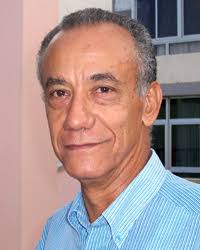
Fernando Martinez Heredia
A CubaNews translation.
Edited by Walter Lippmann.
RELATED ARTICLES
- Malcom X continues speaking to us
- Remembrance and actuality of Eduardo Chibás
- Blacks in Nicolás Guillén’s works
- A militant of the culture
- Human rights and popular fights
- The meaning of a Centennial
He majored in Law at the University of Havana in 1963. He graduated form several post graduate studies in Philosophy for 9 years. He was a Philosophy professor at the University of Havana, from 1963 to 1971, and Area Director and member of the University Council from 1966 to 1969. Since 1991 he is a “Professor Titular Adjunto” (Joint Senior Professor) of the University of Havana. He has graduated form numerous studies and post-graduate courses in diverse social disciplines. He has also taught numerous post graduate Philosophy and social courses in several institutions since 1966 until today. He has also given lectures in other post-graduate courses and taken part as a professor in the Seminar for Invited Investigators of the Ecumenical Department of Investigations of Costa Rica (1996) and in two courses at the Mothers of May Square Popular University in Buenos Aires (May-June 2000 and February 2001). He has also given lectures in numerous academic institutions in Cuba and of nineteen other countries.
He has been a Senior Researcher since 1985. He works at the “Juan Marinello” Cuban Culture Research and Development Center of the Ministry of Culture. He is President of the “Antonio Gramsci” Studies of that institution. Since 1964 he has carried out or participated in different social studies at the University of Havana (1971-73), the Western Europe Studies Center (1976-79) and the Study Center of America (1984-1996).He was also an Invited Investigator in the Center of Interdisciplinary Investigations in Humanities, of the National Autonomous University of Mexico (UNAM) in 1994. He is a collaborator of the Current World Problems Seminar of the Institute of Economic Investigations of UNAM, since 1990. He was a member of the Executive Committee of the Latin American Association of Sociology (ALAS) in 1997-1999, and member of the Ernesto Che Guevara Studies of FLACSO/Cuba and of the Mothers of May Square Popular University.
Since 1964 he has carried out or participated in research studies on multiple Cuban problems–social, economic, political, ideological, of thought–, and also on the historical process of the Cuban nation in general, and of the classes, races and other social groups in that process. For more than three decades he carried out investigations on a great number of Latin American topics for Cuban institutions, including: social movements, revolutionary and contra revolutionary wars, associations and religious thoughts, political parties, and situations of several countries. During 8 years he investigated the history and the contemporary processes in Nicaragua.
He was the Director of the theoretical monthly magazine “Pensamiento Crítico” (Critical Thought) (Havana, 1967-1971). He also directed the “Boletín Azúcar” (Sugar Bulletin), of the Cuban Sugar Ministry (1975-76). He is a member of the Councils of the magazines América Libre (Free America) (Latin American), Caminos (Roads) and Debates Americanos (American Debates) (Cuba), and of the Annual of the Fondazione Che Guevara (Italy). He has also been juror of numerous Social Studies Awards, both national and international, including the essays award of Casa de las Americas and the Cuban Union of Writers and Artists, and the National Prize of Social Sciences.
He won the Essays Award of Casa de las Americas in 1989. He is a member of the Cuban National Union of Writers and Artists and of the National Union of Historians; and member of honor of the Hermanos Saíz Association. He has the Order “For the national culture” (1996).
His more recent books are: “Repenser le socialisme and Repensar el Socialismo (Rethink Socialism) (editions in French and in Spanish), Editorial CIDIHCA, Montreal, 2001; and El corrimiento hacia el rojo (Shift towards Red), Ed. Letras Cubanas, Havana, 2002 and 2003.
He is a joint author of eight books and author of chapters in others. He has published more than two hundred papers including essays and articles, in Cuba and in numerous countries.
A Brief History of Tourism
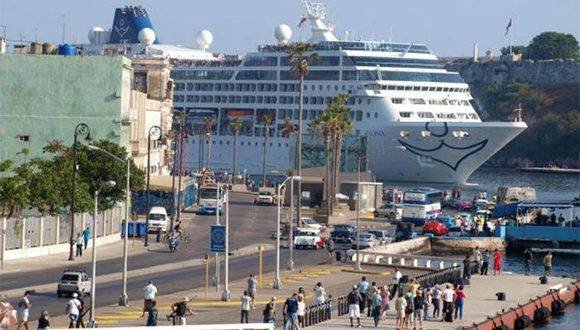

A Brief History of Tourism
Photo: Courtesy of Mintur/Granma/Archive.
By Graziella Pogolotti
May 3, 2017
A CubaNews translation.
Edited by Walter Lippmann.
The image of the tourist was, at first, that of a traveler who, individually, undertook an adventure in search of new horizons to gain knowledge. Thus, exotic visitors began to show up in Cuba, who very often left testimony of their experience through letters, stories or books that proposed more ambitious insights.
The perspective of others gave us a vision of our singularity in the multiple planes that natural and human landscapes offer. For those persons who come from other lands, the richness of a prodigal natural universe –unaffected by the harsh rigors of winter– is striking.
The chromatic luxury of the environment made an impact at first sight. The true singularity was expressed in the human face of a cordial country, with open doors, where the refinement of customs was accompanied by the abandonment of the rigid formalism prevailing in other lands. The deepest bond was established in the human plane and there was also the first-hand approach to a culture forged under different circumstances. Thus, the characteristics of “being Cuban” were beginning to be defined.
Later on, in the twentieth century, workers’ demands gave the middle classes the right to vacation time. Inexpensive because of geographical proximity, access to a tourist trip was within reach of Americans encouraged by the stimulus of the warm climate and the exoticism of a certain folklore trivialized by the trinket trade.
In the winter months, the high season prevailed. It offered an enjoyable warm weather and coincided with the Havana carnival. In Parque Central, a maracas player stood at the door of a store that offered cheap musical instruments, along with belts, purses, and other articles made of genuine crocodile leather.
The flourishing business imposed its perverse features. When Prohibition was established in the United States, Havana was a space open to free consumption of alcohol. Bars multiplied and a malicious substrate became linked to the contraband privileged by the vicinity between the coasts of the two countries.
With its well-known ability to forge mentalities, neo-liberal globalization has appropriated large-scale tourism, associated with what is called with apparent innocence –eternal trap of words–: the leisure industry.
Its extreme expression is manifested in the cruises. In these, instead of observing the new, travelers contemplate each other in a coexistence that consumes most of the available time. In a tour of preset destinations, they pass through some paradigmatic sites and lunge into the search for small souvenirs, trophies to give to friends, once back home. The human landscape and the power of culture have disappeared from the picture. They will get to know, if at all, a masquerade willing to show –with roaring stridency– the expected exotic component.
Before becoming the grave of desperate emigrants, the Mediterranean’s natural environment suffered the predatory effects of tourism. There, too, on a short excursion, the testimonies of one of the original sources of so-called Western culture moved to the background
The Caribbean is the counterpart of that mare nostrum. We preserve virginal areas, but our being an island makes us extremely vulnerable. We have beautiful landscapes, but we lack abundant water resources to quench the thirst of a temporary overpopulation and maintain perfect lawns for golf courses.
In the cultural field, the dangers are even greater. While the Mediterranean tradition still evokes the glories of a dilapidated Parthenon and the infinite management of the Egyptian pyramids, –all victims of neo-colonial perspectives– our culture does not enjoy similar recognition.
Exoticism always maintains a component of underestimation, and our inhabitants have psychologically suffered from this conditioning. Expansive in the last half century, the leisure industry was already emerging, when “the Commander arrived and ordered it to stop.” [a refernence to the lyrics of a song, by Carlos Puebla, referering to Fidel putting an end to capitalist evils].
The hotels that multiplied in Havana were fronts for gambling halls, meeting points for high class prostitution, and business centers of an expanding mafia.
At that time, a master plan for the development of Havana was designed which articulated interests of a diverse nature. Speculation based on the price of the land oriented the growth of the city towards the east, where investments were made with a view to the creation of new neighborhoods.
The government would pay the expenses of infrastructure for investments with an absolute guarantee of profitability. New management centers were being directed there.
The historic city would be at the expense of the underworld. Since the space provided for that predatory universe was insufficient, a floating island would be built in front of the Malecon, for the free flow of large-scale gambling dens. The landscape value of the Malecón –complemented by the gentle hills that shape the profile of the city towards its geographical center, the present-day Plaza de la Revolución– did not matter. The capital of the country, the historical and cultural jewel in our crown, would be hopelessly dismembered.
For a country like ours, lacking in great mining wealth, tourism is a source of income of indisputable importance. The challenge is to devise strategies that enhance the possibilities of development in favor of the nation, culturally and humanly, because in the virtues of our people lies the soul of the nation.
The emergent demand for a large-scale project focused on the advantages of the availability of sun and beaches must be accompanied by the analysis of the risks involved, with the purpose of elaborating the indispensable counterparts. It is important to discard the notion of the leisure industry and to take into account that the fashion of beach enjoyment may be temporary.
Our true strength lies in our status as a large island, endowed with a multitude of possible options: many of them based on a cultural and historical tradition.
There is also the possibility of proposing designs aimed at valuing good living, latent in our large and small cities, in the varied landscape environment, and in the survival of little-explored corners made to the measure of the human being. To elaborate these projects, it would be advisable to complement the geographic and geological maps with a cultural map illuminated by a deep inward look.
Intro to Cuban edition of A People’s History of Science
Introduction to the Cuban edition of
A People’s History of Science
(Historia Popular de la Ciencia)
By Clifford D. Conner
A CubaNews translation.
Edited by Walter Lippmann.
When I learned that an edition of A People’s History of Science would be published in Cuba, it occurred to me that in no country in the world would readers be more likely to appreciate its central theme, which is that science is not and never has been the exclusive province of a few elite geniuses. President Castro himself made that point very succinctly in a National Science Day speech on January 15, 1992. In Cuba, he said, “there are hundreds of thousands of scientists. Even the individual that manufactures the small parts and looks for solutions is a scientist and an investigator of a sort.”
This book is a general survey of a very large subject, and does not pretend to be all-inclusive. One particular area to which it accorded insufficient attention was the science of the twentieth century, and especially the relationship of science to the great revolutionary events that occurred in Russia, China, and Cuba. I will try to at least partially remedy that deficiency now.
Throughout history, revolutions have tended to create positive conditions for the development of science by removing obstacles to innovative thought and practice. In the process of “turning the world upside down,” revolutions have typically eliminated censorship and broken the institutional power of entrenched intellectual elites that stifled science. Furthermore, by liberating subordinate social classes, revolutions have brought many more actors onto the stage of history. The resulting vast increase in the number of people able to play an active role in shaping their lives has enhanced all fields of human endeavor, including science.
Revolutions in the twentieth century have also encouraged the development of science in other ways. From Russia to Vietnam, science became a major governmental priority wherever revolutions guided by Marxist parties occurred. The socialist revolutions that replaced market-controlled economies with centrally planned economies have been able to marshal resources and focus attention on scientific goals to an unprecedented degree and with unprecedented results. “National liberation” revolutions in poorer countries have broken the chains of imperialist domination that had previously restricted them to the low-tech role of raw-materials suppliers. Being free to create their own modern industries naturally stimulated their interest in modern science and technology.
Science and the Russian Revolution
“The Bolsheviks who took over Russia in 1917,” Loren Graham writes in Science in Russia and the Soviet Union, “were enthusiastic about science and technology. Indeed, no group of governmental leaders in previous history ever placed science and technology in such a prominent place on their agenda.” The results proved to be momentous. “In a period of sixty years the Soviet Union made the transition from being a nation of minor significance in international science to being a great scientific center. By the 1960s Russian was a more important scientific language than French or German, a dramatic change from a half-century earlier.” The Soviet Union’s ascension to international scientific leadership was strikingly confirmed when it became the first country to launch an artificial satellite and to put an astronaut into orbit.
Lenin’s appreciation of the value of science-based technology is apparent in his famous definition of communism as “Soviet power plus the electrification of the entire country.” But despite Lenin’s desires and intentions, scientific development got off to a slow start in the early years of the Soviet Union. Efforts to promote research were severely hampered not only by the war-ravaged country’s shortage of material resources, but by a deficiency of scientific talent caused by the exodus of many scientists who were hostile to the revolution. Nor did it help that a large proportion of the scientifically and technically trained specialists who did not emigrate were unsympathetic to the Bolshevik regime. More than a decade after the 1917 revolution, fewer than two percent of the Soviet Union’s engineers—138 out of about 10,000—were Communist cadres.
Nonetheless, Lenin believed it would be counterproductive to try to forcibly impose the Bolshevik will on the recalcitrant scientists and engineers. Totalitarian control of scientific institutions was not his policy but Stalin’s. At the end of 1928 the Imperial Academy of Sciences, a Czarist institution, not only continued to exist but was still the most prestigious of scientific bodies, and not one of its academicians belonged to the Communist Party. It was not until the 1929–32 period, when Stalin was well on his way toward assuming complete command, that the Communist Party took over the Academy and reorganized it.
In the first years of the revolution, an ultra-radical current within the Communist movement demanded the “proletarianization” of science and the dismissal of the “bourgeois” experts. Lenin vigorously opposed this Proletkult movement, which he characterized as infantile and irresponsible. Lenin’s great authority was able to hold the Proletkult campaign at bay for a number of years, but after his death Stalin demagogically manipulated it for factional purposes. In the years 1928–31 he promoted a Cultural Revolution (later to be imitated by Mao Zedong in China) that once again counterposed “proletarian science” to “bourgeois science.” Purges of scientists and campaigns to ensure political conformity caused chaos and disruption within the scientific institutions. Scientific education was paralyzed as the works of Einstein, Mendel, Freud, and others were condemned as bourgeois science and banned from the universities.
Meanwhile, however, the relentless pressure of external threats to the Soviet Union allowed Stalin to rally support, consolidate his power, and impose a program of rapid industrialization and agricultural collectivization requiring significant input from the sciences. Compulsory centralized planning plus massive funding rapidly gave birth to “Big Science” in the Soviet Union. The result was the creation of a powerful, but distorted, science establishment.
The limitations Stalin’s policies imposed on free inquiry acted as a counterweight to the revolution’s great gift to Russian science, which was the ability of the centralized economy to marshal and organize resources. Although the Soviet Union rose close to the top of the science world—second only to the United States—in the final analysis, its record was disappointing. In spite of its success in accomplishing some very impressive large-scale technological feats—hydroelectric power plants, nuclear weapons, earth-orbiting satellites, and the like—the achievements of the Soviet science establishment, given its immense size, fell far short of what might have been expected of it.
The demise of the Soviet Union in 1991 caused it to forfeit the strong position it had gained in international science. A 1998 assessment by the U.S. National Science Foundation reported that with regard to Russia and the other spinoffs of the former Soviet Union, science in those countries is on the edge of extinction, surviving only by means of charitable donations from abroad.
Science and the Chinese Revolution
Just as World War One gave rise to a Marxist-led revolution in Russia, so did World War Two facilitate the victory of a revolution in China under the aegis of a Communist Party. In 1949 the People’s Republic of China was proclaimed and the remnants of the Guomindang regime fled to Taiwan. The revolution brought to power a government that for the first time had the will and the ability to create institutions of Big Science, as had previously been done in the Soviet Union.
Soviet science provided more than simply a model for Mao Zedong’s regime. In the 1950s Soviet scientists and technicians participated heavily in the construction of science in the new China and they created it in their own image. However, there were strings attached—Stalin expected the Chinese to submit to Soviet control—and that led to problems.
Stalin had originally pledged full support to the effort to replicate Soviet Big Science in China, including the development of nuclear weapons. But there were sharp limits to the Kremlin’s spirit of proletarian solidarity. When the Mao regime began to show signs of resistance to Soviet control, Soviet leaders apparently had second thoughts about creating a nuclear power in a large country with which it had a long common border. They reneged on their promise to share nuclear technology, precipitating a deep and bitter Sino-Soviet split.
In June 1960, Soviet Premier Nikita Khrushchev abruptly ordered the withdrawal of all aid from China. Thousands of Soviet scientists and engineers were called home immediately, taking their blueprints and expertise with them. It was a ruthless act of sabotage that dealt a crushing blow not only to Chinese science but to the country’s economic and industrial development as a whole.
Although set back several years, the goal of constructing a Soviet-style science establishment endured. The Soviet formula of heavily bureaucratized central planning plus massive funding produced similar mixed results in China. With very little foreign assistance, strategic nuclear weapons were developed and satellites were launched into space—both extremely impressive feats. Nonmilitary science and technology in Chinese industries and at the research institutes and universities, however, remained at a relatively primitive level.
In spite of the devastating blow caused by the Soviet Union’s withdrawal of support, China accomplished some remarkable achievements in nuclear and space technology—a testament to the power of the planned economy to mobilize and focus resources against all odds. The country tested its first atomic bomb in 1964 and its first hydrogen bomb in 1967, and launched its first satellite into Earth orbit in 1970—number one in a series of scores of space probes leading up to 2003, when China became only the third nation to independently send an astronaut into space. The science establishment, however, has remained highly bureaucratized and focused on military and big industrial projects at the expense of research aimed at improving the lives of the billion-plus people of China.
It is undeniable that the centralization and planning made possible by the 1949 revolution is at the root of China’s transformation from a negligible factor to a major player on the international science scene—perhaps even the primary future challenger to the United States’ dominance. Yet the mass of the Chinese population continues to endure a material standard of living far below that of the people of Europe, Japan and the United States. That an orientation more centered on human needs is possible has been demonstrated by a revolution that occurred in a much smaller country.
The people-oriented science of the Cuban Revolution
In the first week of 1959 revolutionary forces under the banner of the July 26th Movement entered Havana and established a new government. As events unfolded, the revolution’s leaders soon found themselves embroiled in conflict with the United States. They came to believe that economic sabotage by pro–United States industrialists operating within Cuba could only be prevented by nationalizing the Cuban economy and declaring a governmental monopoly of foreign trade. As United States–owned firms were nationalized, Cuba’s confrontation with its mighty neighbor deepened, and for protection the new regime entered into an alliance with the Soviet Union.
Once the revolution’s leaders were in command of a fully nationalized economy, they enjoyed the same advantages that had enabled their Soviet and Chinese counterparts to develop powerful science establishments. The situation in Cuba, however, was considerably different: The earlier revolutions had occurred in two of the world’s largest countries, but Cuba was a small island with a population of only about ten million people. Its scientific endeavors, therefore, were not channeled into a quixotic effort to compete directly with the United States in the field of military technology. Instead, Cuba would depend on diplomatic and political means for its national security—that is, on its alliance with the Soviet Union and on the moral authority its revolution had gained throughout Latin America and the rest of the world. That allowed its science establishment to direct its attention in other, less military-oriented, directions.
The USSR and China had both sought to build powerful, autonomous economies that could go head-to-head in competition with the world’s leading capitalist nations. With that in mind, they aimed their science efforts at facilitating the growth of basic heavy industry. The Cubans, by contrast, oriented their science program toward the solution of social problems. Scientific development, they decided, depended first of all on raising the educational level of the entire population. Before the revolution, almost 40 percent of the Cuban people were illiterate. In 1961 a major literacy campaign was launched that reportedly resulted in more than a million Cubans learning to read and write within a single year. Today the literacy rate is 97 percent and science education is a fundamental part of the national curriculum.
In addition to education, universal healthcare was assigned high priority, giving impetus to the development of the medical sciences. A harsh economic embargo imposed by the United States compelled the Cubans to find ways to produce their own medicines. They met the challenge and the upshot was that Cuba, despite its “developing world” economic status, now stands at the forefront of international biochemical and pharmacological research.
As evidence of the success of their medical programs, Cuban officials point to comparative statistics routinely used to quantify the well-being of nations, the most informative measures being average life expectancy and infant mortality. In both categories, Cuba has risen to rank among the wealthiest industrialized nations. Richard Levins, a professor at Harvard University’s School of Public Health, contends that “Cuba has the best healthcare in the developing world and is even ahead of the United States in some areas such as reducing infant mortality.” As for life expectancy, the CIA’s World Factbook statistics for 2006 report that the average lifespan in Cuba of 77.41 years earns it a rank of 55th out of 226 countries, while the United States’ average of 77.85 years puts it slightly higher, in 48th place.
Another key indicator of the quality of a nation’s healthcare system is the doctor-to-patient ratio. According to the World Health Organization’s statistics for 2006, out of 192 countries in the world, Cuba ranks first in that category: There is one doctor for every 170 people in Cuba, compared, for example, with one doctor per 390 in the United States, per 435 in the United Kingdom, per 238 in Italy, and per 297 in France. Most of the nations of the developing world have fewer than one doctor per 1,000 inhabitants.
The abundance of Cuban medical practitioners today is especially remarkable considering that in reaction to the nationalization of medical services in 1960 almost half of the island’s physicians emigrated to the United States, leaving only about 3,000 doctors and fewer than two dozen medical professors. In 1961 the revolutionary government addressed that problem by constructing medical teaching facilities. Today, according to the World Health Organization, thirteen medical schools are in operation in Cuba.
The doctor-to-patient ratio only tells part of the story, because Cuba’s medical schools in fact produce a large surplus of physicians—far more than can be put to productive use on the island itself. As a result, Cuba has actively exported its doctors to other parts of the world. The itinerant Cuban physicians do not “follow the money”—they go to parts of the developing world most in need of healthcare services. With the stated ambition of becoming a “world medical power,” Cuba offers more humanitarian medical aid to the rest of the world than does any other country, including the wealthy industrialized nations. The Cuban government has more doctors working throughout the world than does the World Health Organization.
A January 17, 2006, BBC News report stated: “Humanitarian missions in 68 countries are manned by 25,000 Cuban doctors, and medical teams have assisted victims of both the Tsunami and the Pakistan earthquake. In addition, last year 1,800 doctors from 47 developing countries graduated in Cuba. . . . Under a recent agreement, Cuba has sent 14,000 medics to provide free health care to people living in Venezuela’s barrios, or shantytowns, where many have never seen a doctor before.” In addition to the medical equipment, medicines, and the services of doctors it has provided throughout the developing world, Cuba has also helped to build and staff medical schools in Ethiopia, Guinea-Bissau, and Yemen.
Cuba’s healthcare successes have been closely linked to the pioneering advances its laboratories have produced in the medical sciences. In the 1980s a worldwide “biotechnological revolution” occurred, and Cuban research institutions took a leading role in it. Among the most noteworthy products of Cuban bioscience are vaccines for treating meningitis and hepatitis B, the popular cholesterol-reducer PPG (which is derived from sugarcane), monoclonal antibodies used to combat the rejection of transplanted organs, recombinant interferon products for use against viral infections, epidermal growth factor to promote tissue healing in burn victims, and recombinant streptokinase for treating heart attacks.
The Cuban biotech institutes focus their attention on deadly diseases that “Big Pharma” (the profit-motivated multinational drug corporations) tends to ignore because they mainly afflict poor people in the developing world. An important part of their mission is the creation of low-cost alternative drugs. In 2003 Cuban researchers announced the creation of the world’s first human vaccine containing a synthetic antigen (the “active ingredient” of a vaccine). It was a vaccine for treating Hib (Haemophilus influenzae type b), a bacterial disease that causes meningitis and pneumonia in young children and kills more than 500,000 throughout the world every year. An effective vaccine against Hib already existed and had proven successful in industrialized nations, but its high cost sharply limited its availability in the less affluent parts of the world. The significantly cheaper synthetic vaccine has already been administered to more than a million children in Cuba and is currently being introduced into many other countries.
The Cuban example offers a particularly clear case study of how a revolution has contributed to the development of science. The Cuban revolution removed the greatest of all obstacles to scientific advance by freeing the island from economic subordination to the industrialized world. The wealthier countries’ ability to manufacture products at relatively low cost allows them to flood the markets of the nonindustrialized countries with cheaply produced machine-made goods, effectively preventing the latter from industrializing. The only way out of this dilemma for the poorer countries is to remove themselves from the worldwide economic system based on market exchange, where the rules are entirely stacked against them. The history of the twentieth century, however, suggests that any countries wanting to opt out of the system have had to fight their way out. The Cuban revolution was therefore a necessary precondition of the creation and flowering of Cuban science and its biotechnology industry.
The scientific achievements of the Cuban revolution testify that important, high-level scientific work can be performed without being driven by the profit motive. They also show that centralized planning does not necessarily have to follow the ultrabureaucratized model offered by the Soviet Union and China, wherein science primarily serves the interests of strengthening the state and only secondarily concerns itself with the needs of the people. Cuba’s accomplishments are all the more impressive for having been the product of a country with a relatively small economic base, and with the additional handicap of an economic embargo imposed by a powerful and hostile neighboring country.
The Cuban revolution has come closest to realizing the noble goal of a fully human-oriented science. Although Cuba’s small size limits its usefulness as a basis for universal conclusions, its accomplishments in the medical sciences certainly provide reason to believe that science on a world scale could be redirected from its present course as a facilitator of blind economic growth (which primarily serves the interests of small ruling groups that control their countries’ economies) and instead be devoted to improving the wellbeing of entire populations.
Cuba authorizes free Internet access
Cuba authorizes free Internet access
Sub-Title
By Fernando Ravsberg, BBC Mundo
September 11, 2009
A CubaNews translation.
Edited by Walter Lippmann.
Universities have computer rooms and some have internet access.
Cuban authorities approved legal internet use for all citizens, given in a resolution signed by Commandante of the Revolution Ramiro Valdés, Computer Science and Communications Minister.
This resolution implies a change in government policy, which up to now had limited the net to social use, allowing access only to institutions, companies, and to a small group of little more than 100.000 people, mainly intellectuals and scientists.
For some weeks Cubans had been authorized access to “Cybercafés” in hotels, where they can connect to the internet, using the wireless system or WIFI, from their own computers or from those provided by the hotel.
However, it was in fact a measure that could change without notice. On the other hand, a ministerial resolution has legal force; it was even published in the Official Gazette of Cuba.
It is the end of the State’s information monopoly.
In post offices
Some post offices will have internet navigating rooms.
The Minister resolved “authorizing the Cuban Post Office Company, as Access to Internet Service Supplier for the Public. It will provide this service to all people inside our national territory using its internet areas.”
They will use post offices to install computers so that any Cuban can navigate the net. Up to now a similar structure existed, but it only gave access to an intranet, with websites selected by the government.
Brenda and Daimi, workers of a post office in Vedado, in Havana, confirmed to BBC World that 3 days ago they closed to create an internet room. However, it was reopened without finishing the installation.
Apparently, not all post offices will be used during the first phase, workers of the Computer Science’s Ministry to BBC Mundo workers. “One will be selected by municipality” and this service can be enlarged as necessary.
Expensive service
During this last decade, computer classes have been taught throughout the entire country.
With this measure, the prohibition is eliminated. But, the government continues with its proposal of “social use” of the Internet, meaning it won’t be possible to access the net from home. This is because the country doesn’t have enough bandwidth for this.
According to the Cuban authorities, the United States has prevented internet companies from negotiating a larger internet access with Cuba. What’s more, all communications are more expensive since they have to be made via satellite because Washington doesn’t allow the use of the submarine cable.
Shortly all this could change. American President, Barack Obama, authorized telecommunications companies to negotiate with Havana and next year the installation of a telephone cable between Cuba and Venezuela will be finished.
These new technological possibilities could reduce service prices, which today are extremely high. A one hour card in a hotel costs US$7 and full access from homes costs US$150 a month.
End of the monopoly
In this post office, work began but they wasn’t finished.
For decades, the Cuban government maintained an information monopoly. However, in the last years, the propagation of satellite antennas and the sale of internet accesses, both of them illegal yet increasingly extended have diminished it.
Regarding internet access, there are tens of thousands of illegal accounts, directly negotiated between server workers and clients. They cost around US $50 a month and give full access. It’s the same service legal subscribers receive.
Nobody can really know how many people have access to the net. But, it could be more than a million if we count those with authorized accounts, those with illegal ones and those who navigate – without permission – using institution accounts.
Anyway, the Cuban government maintains filters to prevent access to the most radical anti-Castro pages, while allowing access to the whole world press, including the biggest Cuban American newspaper in Miami.
Cuba in the OAS?
Cuba in the OAS?
By Atilio A. Boron
June 3, 2009
A CubaNews translation.
Edited by Walter Lippmann.
After a 47-year ban, the OAS sealed an agreement by acclamation yesterday to revoke a 1962 measure suspending Cuba from that body. The resolution was taken without conditions, although it lays down a procedure to be set in motion in the (unlikely) event that Havana decides to join the group. However, there are some facts to be taken into account here.
First: The resolution is a telltale sign of the great sociopolitical changes we’ve seen in Latin America and the Caribbean in the last few years, marked by the United States’ decreasing clout in the region. The vote to render the outrageous move under Kennedy null and void, is at once highly revealing of an ongoing shift that the White House has reluctantly accepted and a step to make amends, if belatedly and partially, for an obviously immoral policy which has long brought unbearable shame upon both the OAS and those governments who have voted for –or at least not against– Imperialism’s plans. Unable to defeat the Cuban Revolution by force of arms at the Bay of Pigs, the U.S. chose to put up a ‘cordon sanitaire’ to keep the island’s liberating influence from spreading across the continent. They never succeeded, by the way.
Second: That the U.S.’s hegemony became weaker is by no means an indication that they give up on using other means to get hold of the region’s resources and wealth or control our governments. It would be an inexcusable mistake to believe that Imperialism will lay down its arms and start to get along with our countries on an equal footing just because its political (and intellectual and moral) ability as a leader has gone into decline. Quite the opposite: in similar circumstances in the past its response was to reactivate the Fourth Fleet in order to achieve by force what they used to get from submissive or abetting governments. And Obama has given us no hint that he intends to change that policy.
Third: Neither Cuba nor any other country in Our America have anything to do in the OAS. As we have oftentimes pointed out, this institution became a landmark of a special period in our continent’s evolution: that of the U.S.’s absolute supremacy. But those days are gone, and there’s no going back. As our political consciousness developed, governments that still look up to the White House have no choice but to vote against the U.S. blockade on Cuba and the 1962 suspension in San Pedro Sula. The OAS has been brought to the limelight for its long record as a docile instrument of the Empire, since it condoned invasions, the assassination of political leaders and presidents (like the murder of Orlando Letelier in Washington), coups d’état and campaigns to destabilize democratic governments. The OAS turned a blind eye –and a deaf ear– to the atrocities of U.S.-sponsored ‘state terrorism’ and criminal policies like Plan Condor. When in May 2008 the Bolivian conflict blew up, the Latin American countries took care of things right away without the OAS getting involved at all. There was no need for it, nor will there ever be.
Fourth: What we do need is to make our various projects of Latin American and Caribbean integration stronger and more coherent, for instance, initiatives such as ALBA or UNASUR, basically different but based on our region’s contemporary situation. The OAS, however, is an inevitably and therefore useless, anachronistic, body in that it represents a world we only find in the delirious ravings of those who yearn for the Cold War era, and that’s why it can contribute nothing to deal with our current challenges. Now that the 1962 resolution has been done away with, the OAS should do mankind a very great service by dissolving.
Priests, friends and murdered
El País
Priests, friends and murdered
In five months time two Spanish priests have died violently in Cuba
By Mauricio Vicent
Havana – July 19, 2009
A CubaNews translation.
Edited by Walter Lippmann.
Last New Year’s Eve, Spanish priests Isidro Hoyos, Mariano Arroyo and Eduardo de la Fuente had dinner together in the San Martin de Porres parish, in the workers’ neighborhood of Alamar, east of the Cuban capital. “A simple meal: vegetable soup, some chicken, nougat, and Spanish cider to celebrate”, remembers Isidro. Sharing a dinner on New Year’s Eve, he explains, “had become a tradition… “.
The three priests had been friends for years and the three were in Havana because of their religious vocation, but it was Mariano who put the idea of coming to Cuba in their heads. Mariano Arroyo Merino was the first one to arrive on January 19, 1997. Then Isidro Hoyos, in December 2000. Both were from Cantabria and knew each other since they were young.
Mariano had been a missionary in Chile. For 20 years he lived in that country, always in contact with the poorest [of the people]. Hoyos even became a lawyer for the Workers’ Commissions. He was a worker and a committed priest, for that reason when he arrived in Cuba he found it proper to take charge of the small parish of Alamar, a neighborhood built by the revolution in the ‘70s as the home of the New Man, and therefore without a church.
Eduardo de la Fuente began traveling to the island to substitute for Mariano and Isidro when they left on vacation. He did this for seven or eight years, until in 2006 he decided to stay permanently.
Eduardo, 61 years old, had a mysterious and violent death on February 13. He was found on a highway on the outskirts of Havana, stabbed and strangled. It caused a shock wave in the ecclesiastical world and it especially affected Mariano, who was also murdered later.
Mariano Arroyo was a Philosophy and Theology major from the Comillas Papal University, and a philosophy and literature graduate of the University of Madrid. He was not only a wise man; he was also “a humble, good and venturesome person”, according to those who knew him. “Father Mariano was very dear to us here, nobody had any grudge against him”, said one of the neighbors, who laments his death today in Regla, a neighborhood of Havana.
First, he was a parish priest at the Our Lady of Pilar church in the municipality of Cerro, from which he also assisted the congregation of Alamar. On occasions he made 20 kilometer trips there by bicycle and celebrated mass at people’s homes. In December 2004, Mariano took charge of the parsonage and the parish of the National Sanctuary of Our Lady of Regla, on the other side of the Havana bay. He immediately stood out.
Regla is a parish with special characteristics because its Virgin is one of the most worshiped among the Afro-Cuban cults. The Virgin of Regla symbolizes the goddess Yemayá in these cults, ruler of the waters and the sea, the fundamental source of life. Mariano didn’t repudiate these beliefs, but rather he studied them thoroughly and tried to understand them. Many bishops invited him to their dioceses to give lectures on this subject. “Mariano was very learned and very understanding and he was valued more and more in the Cuban Church”, Isidro affirms.
On the dawn of last July 13th, exactly five months after the murder of Eduardo de la Fuente, somebody entered the parochial house where Mariano lived in Regla. Before dawn, a neighbor saw smoke coming out of the priest’s room and called for help. The one who entered to help him found the priest handcuffed, gagged, and with burns in the soles of his feet and hands, hit on the head and knifed.
The crime, or rather, the crimes against two priests in such a short space of time and on the same day of the month February 13 and July 13 , the fact that they were friends and that both were victims of violent attacks, generated numerous rumors. Mainly because in Cuba there is no crime chronicle and news is spread from mouth to ear. Some thought that the two crimes could be connected.
Isidro Hoyos himself admitted, shortly after hearing of Arroyo’s death, that he was afraid. “I am not superstitious, but yesterday was exactly five months after Eduardo’s death, and it seems the procedure is the same: torture, savagery… “.
And, he added, still excited: “The first one, the second… what is behind this? Who are they? What are they looking for? This is something the people in charge of the investigations need to clarify. Are they some kind of mafia? I don’t know “. But, he warned himself: “There are not two, without three.”
The following day in Spain, Agustín Arroyo, brother of the murdered priest, stated that “to steal it is not necessary to kill”. And, he suggested other possible causes: “In Cuba, priests are a nuisance. My brother was very much loved in the community, he had influence over the people and maybe that caused a certain mistrust.”
The Church had to take a stand on this and Cardinal Jaime Ortega himself discarded such arguments last Friday in the homily he gave during the Exequial Mass for Father Mariano Arroyo, denying any “anti-religious or anti-Spanish significance.”
In truth, it was the mystery and the secrecy surrounding the investigation of the first death, that of Eduardo de la Fuente, which fueled speculation. Neither the Church nor Spanish authorities revealed the results of the police investigation, even though they had conclusions, detainees and confessed perpetrators.
If truth be told, Father de la Fuente died at the hands of another man who was his significant other, and to whom the priest had passed himself off as a foreign CEO. This is why, in the Friday homily, the cardinal said that in his case, “the criminals ignored that they had killed a priest”. Police sources informed the Church and the [Spanish] Embassy of what had happened. They also informed them that the perpetrator and his accomplices had been captured and that because it was such a delicate matter they had treated it with the utmost discretion.
Priest Mariano Arroyo’s death was absolutely different. The motive of the crime was robbery, something more and more frequent on the island. The safe that Arroyo had in the house, which apparently had things of little value, was found open. Sources at the Church indicated that the murderer, already in custody, was the guardian of the parish, who acted in complicity with others.
In the homily in memory of Mariano Arroyo, Cardinal Jaime Ortega remembered the priest’s words explaining why he remained in the country: “The Cuban people have a warmth, a sympathy toward the Church and toward the priest in his search for God that, although they don’t know almost anything of religion, shows an interest and an avidity that is enthusiastic”. On Friday, people filled the cathedral of Havana and said goodbye to Mariano Arroyo with tears in their eyes and songs of love.
[At noon yesterday the remains of Arroyo arrived at the Madrid airport. The funeral one will take place this afternoon at Cabezón de la Sal (Cantabria)].
Cuba has the Right to a Revolution
- English
- Español
Cuba’s Right to a Revolution
By Manuel E. Yepe
May, 2009
http://manuelyepe.wordpress.com/
A CubaNews translation.
Edited by Walter Lippmann.
Paulo Nogueira Batista, an executive director representing Brazil and a group of eight Latin American countries in the International Monetary Fund, stressed during a world tourism conference held a week ago in the Brazilian city of Florianopolis that “U.S. President Barack Obama’s administration should work to bringing Cuba back into international bodies such as the IMF”.
His appeal is anything but exceptional. In fact, it adds to the chorus of many in the United States and other countries against an economic blockade that year after year the international community condemns almost with one voice in the United Nations General Assembly, as well as to the widespread criticism leveled at the U.S. anti-Cuban policy, as with the variety of statements made in the Summit of the Americas in Trinidad in favor of restoring Cuba’s right to join the Organization of American States, even if the host nation is known to be opposed to the idea.
It all reveals a lack of consistency with the promise of change that helped the new U.S. president win the election: to the voters, it means a high number of social rights denied to them despite their country’s wealth, whereas to the elite who truly hold the power these are merely necessary corrections to prevent the collapse of a seriously endangered imperial order.
However, that the superpower has managed to get away with the manifest crime against humanity that its fifty-year-long blockade on the small neighboring island represents throws into relief the wickedness and absurdity of the world order imposed on our planet and proves that it extends beyond economic issues to leave a deep mark on the political leanings of plenty of people and social groups.
Obviously, many strong forces are currently in motion in the United States to lift the blockade, end the travel ban and reestablish official relations with Cuba, but it’s also undeniable that the effects of half a century of malicious slander compel most of those who fight to get things back to normal between both countries to justify their efforts to correct this wrong by arguing that the Cuban revolution has successfully overcome every aggressive wile so far and therefore other, more subtle ones are needed.
I believe those who claim that all people in the world have the inalienable right to a revolution and that the Cubans have been forced to exercise such right under constant, unjustifiable pressure from its nearest neighbor –the greatest military and economic power on Earth– are still a minority in the United States.
Small wonder, then, that zealous defenders of the U.S.’s worst terrorist acts against Cuba are now challenging the blockade, including Cuban-Americans who made a living from the attacks on the island using the considerable financial aid earmarked by Washington for overthrowing the Revolution and are now saying that violence must be replaced by ideological influence without giving up the ultimate purpose.
This idea of trying to undermine the Cuban Revolution from the inside is not only typical of the new political currents up north or the Cuban counterrevolutionaries at their service. It’s common knowledge that almost every northern nation whose government has long advised world capitalism’s leading superpower to lift the blockade on Cuba is as fearful of the former’s example as they are of the latter’s.
Yet, the Cuban Revolution, whose people and leaders have been so determined to and capable of fighting the hardest battles for their identity and rights, would not be worthy of its name if it shied away from the challenge of engaging the enemy in the battlefield of ideological confrontation.
Funded by the U.S., anti-Cuban propaganda coined the argument that Cuba took advantage of the blockade to explain its mistakes or flaws while shamelessly trying to isolate, starve and discourage the Cubans from their efforts to carry on with a beautiful revolutionary project that they will never give up until they make it come true.
LA REVOLUCIÓN ES UN DERECHO DE CUBA
Por Manuel E. Yepe
Mayo de 2009
http://manuelyepe.wordpress.com/
“La Administración del Presidente estadounidense Barack Obama debía trabajar por lograr la reincorporación de Cuba a organismos internacionales tales como el Fondo Monetario Internacional”, manifestó Paulo Nogueira Batista, un funcionario de dicho Fondo que representa a Brasil y a un grupo de otros 8 países latinoamericanos en el FMI, durante una conferencia sobre turismo mundial que tuvo lugar a mediados de mayo en la ciudad brasileña de Florianópolis.
El llamado no es algo excepcional. De hecho, se incorpora a los muchos que, tanto en Estados Unidos como en otras naciones, se formulan constantemente contra un bloqueo económico que ha sido condenado, casi unánimemente, por la comunidad mundial en la Asamblea General de las Naciones Unidas, año tras año.
Son denuncias que forman parte de las críticas más generales a la política de Estados Unidos contra Cuba que ahora están brotando en muchos escenarios, como es el caso de los pronunciamientos a favor de la restitución a Cuba sus derechos de pertenecer a la Organización de Estados Americanos que proliferaron en ocasión de la Conferencia Cumbre de las Américas en Trinidad y Tobago, pese a que es sabido que la nación caribeña rechazaría tal reinserción.
Es tangible la incongruencia que existe entre el significado de las promesas de cambios que propiciaron al nuevo presidente de los Estados Unidos su elección. Para las masas de votantes significan muchas reivindicaciones sociales enajenadas no obstante la opulencia del país, en tanto que, para las élites que detentan el poder verdadero son las correcciones imprescindibles para evitar el derrumbe de un orden imperial gravemente amenazado.
Pero la impunidad con que la superpotencia se ha permitido mantener el evidente crimen de lesa humanidad del bloqueo a la pequeña isla vecina durante medio siglo, pone de relieve lo inicuo y absurdo de ese orden mundial a que se halla sometido el planeta y, así mismo, prueba que éste no se limita a los factores económicos sino que ha marcado profundamente la orientación política de mucha gente y grupos sociales.
Es evidente que hoy, en Estados Unidos, son muchos y muy fuertes los intereses que se movilizan contra el bloqueo económico de Cuba, la prohibición de los viajes de estadounidenses a Cuba y la ausencia de relaciones oficiales con la isla antillana.
Pero también es irrebatible que aún la mayoría de quienes abogan por el retorno a la normalidad de los vínculos diplomáticos, económicos, culturales y de todo tipo entre los dos países, se ven obligados por las huellas de cincuenta años de malintencionadas campañas de difamación, a acudir a la justificación de esta posición rectificadora con el argumento de que la revolución cubana no ha podido ser derrotada con las mañas agresivas hasta ahora utilizadas y es preciso adoptar otras más sutiles.
Son minoría aún en Estados Unidos, a mi juicio, aquellos que –al abogar o respaldar un cambio en la política de Estados Unidos respecto a Cuba- parten del argumento de que la revolución es un derecho inalienable que tienen los pueblos de todas las naciones del mundo y que los cubanos se han visto obligados a ejercer tal facultad siempre obstaculizados por una injustificable hostilidad de la potencia militar y económica mayor del mundo, su vecino más próximo.
Por eso, no sorprende encontrar ahora a furibundos defensores de las políticas más terroristas de EEUU contra Cuba abogando en contra del bloqueo. Incluso entre cubanos residentes en los Estados Unidos que han hecho de la agresividad contra Cuba su medio de subsistencia aprovechando los abundantes recursos financieros que Washington ha destinado al propósito de derrotar a la revolución cubana, se encuentran hoy nuevos propagadores de la idea del cambio de los métodos agresivos por los de la penetración, sin variar los objetivos.
Es obvio que esta idea de intentar la derrota de la revolución cubana desde adentro no es privativa de la nueva corriente política estadounidense y de los contrarrevolucionarios cubanos que sirven a Washington. Nadie ignora que los gobiernos de casi todas las naciones del Norte, que durante muchos años han aconsejado a los de la superpotencia líder del capitalismo mundial que levante el bloqueo a Cuba, temen tanto el ejemplo de Cuba como el de EEUU.
Pero la revolución cubana, cuyo pueblo y sus líderes han dado muestras de decisión y capacidad para librar las batallas más complejas por afirmar su identidad y los derechos populares, no sería verdadera si rehuyera el enfrentamiento ideológico como terreno de lucha para su reafirmación.
La propaganda contra la revolución pagada por Estados Unidos acuñó como consigna la de que Cuba se aprovechaba del bloqueo para justificar sus errores o deficiencias, mientras impúdicamente se trataba de aislar, hambrear y desalentar los bríos de los cubanos por llevar adelante un hermoso proyecto revolucionario al que el pueblo no ha renunciado ni renunciará jamás hasta verlo convertido en realidad.
You must be logged in to post a comment.