Obituaries 5
Leo Frumkin, 1928-2022
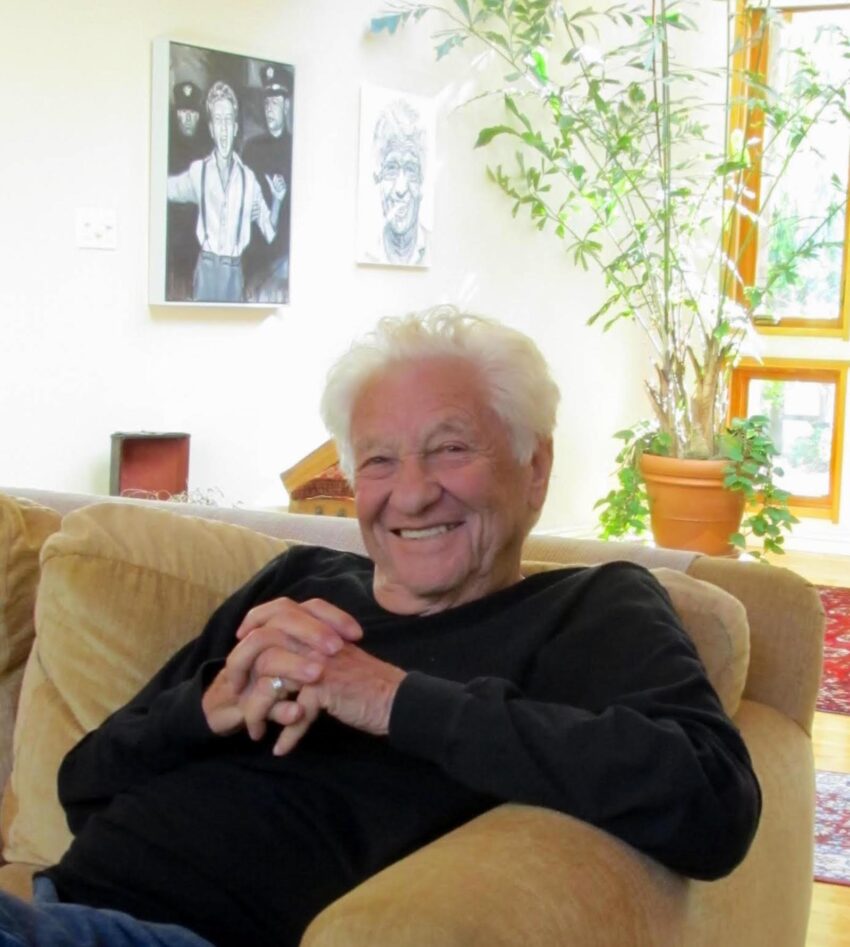
Leo Frumkin, 1928-2022
by Sherry Frumkin and Jim Lafferty
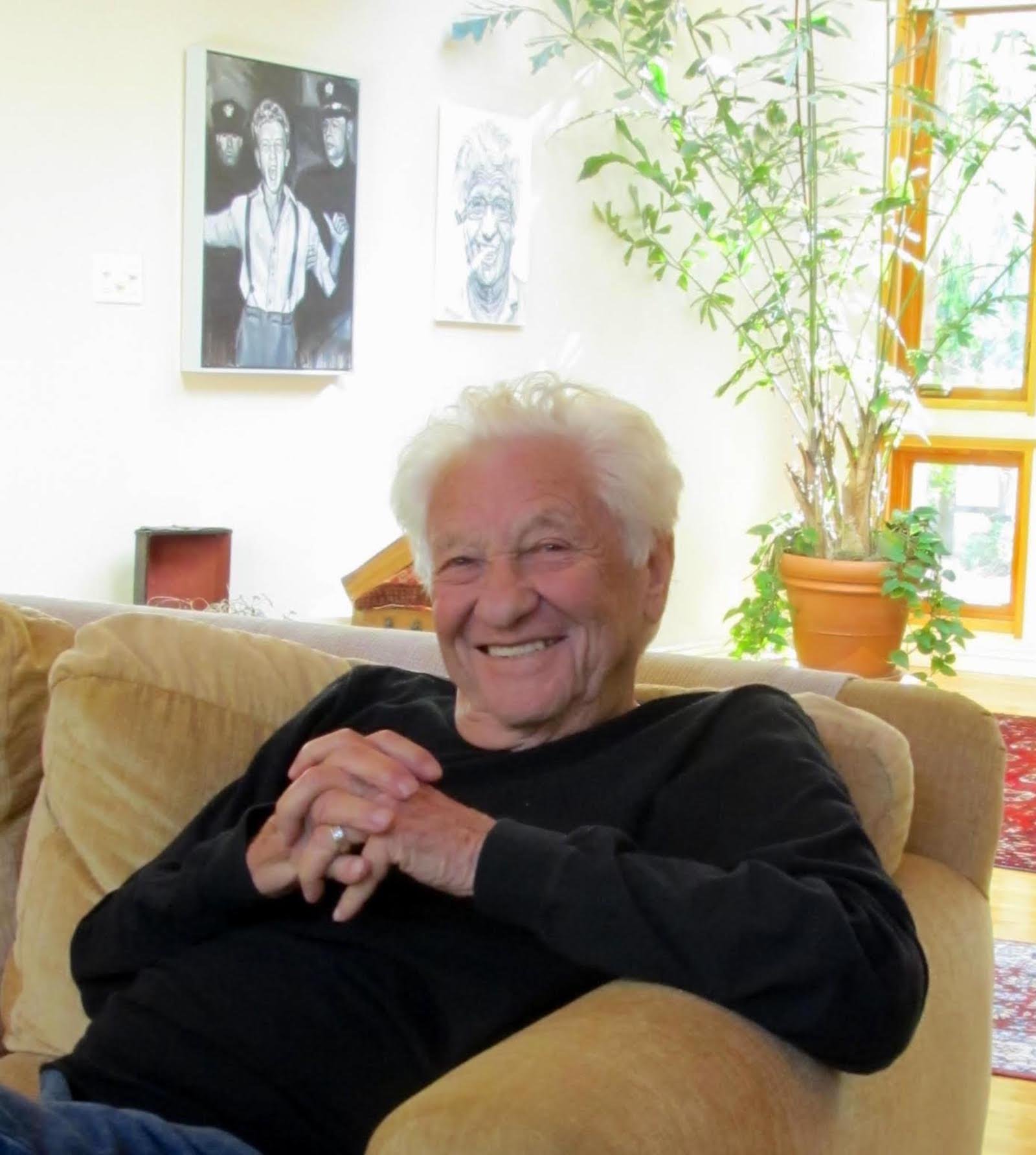
Photo by Edmon J. Rodman
A memorial will be announced at a later date.
Received by email
Desmond Tutu Dies at age 90
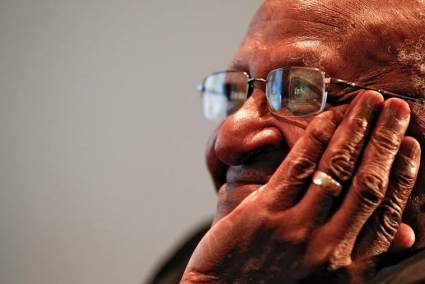

Desmond Tutu, South African archbishop and Nobel Peace Prize laureate, dies at the age of 90
For his fight against the brutal racist oppression of apartheid, Tutu is considered one of the key figures in South Africa’s contemporary history
Author:

Juventud Rebelde |digital@juventudrebelde.cu
Translated and edited by Walter Lippmann for CubaNews.
South African Archbishop Emeritus Desmond Tutu. Autor: EFE Publicado: 26/12/2021 | 09:36 am
This Sunday, at the age of 90, died South African Archbishop Emeritus Desmond Tutu, 1984 Nobel Peace Prize winner for his activism against the Apartheid racist segregation regime, in Cape Town, said in a statement issued by the South African government, the country’s president, Cyril Ramaphosa, who sent his condolences to the Tutu family.
“The death of Archbishop Emeritus Desmond Tutu is another chapter of loss in our nation’s farewell to a generation of outstanding South Africans who bequeathed us a liberated South Africa,” the president said in the text.
The president described Tutu as a “peerless patriot” and a “man of extraordinary intellect” who maintained his integrity in the fight against the “forces of apartheid.”
Even in a democracy, Ramaphosa stressed, Tutu maintained the “vigor” and “vigilance” of leadership to hold institutions accountable.
“On behalf of the Anglican Church of Southern Africa, the entire faith community and, dare I say, on behalf of millions (of people) across South Africa, Africa and the world, I send our deepest condolences to his wife, Nomalizo Leah, his son, Trevor Tamsanqa, and his daughters, Thandeka, Nontombi and Mpho,” Makgoba said in a statement.
The voice of the voiceless
“Apartheid, separate development or whatever it is called, is evil (…) It is anti-Christian and unbiblical. If anyone proves me otherwise, I will burn my bible and cease to be a Christian,” Tutu protested to apartheid officials in 1982.
For his tireless struggle, Tutu received the Nobel Peace Prize in 1984, two years before he became the first black head of the Anglican Archbishopric of Cape Town (southwest).
For his struggle against the brutal racist oppression of apartheid, Tutu is considered one of the key figures in contemporary South African history.
:quality(85)/cloudfront-us-east-1.images.arcpublishing.com/infobae/4QNT2SIPIYYZYBCKC7XHJHQDJ4.jpg)
At the World Conference Against Racism (WCAR), September 5, 2001. Photo: Reuters
He was at the helm until 1996, when apartheid was dismantled and South Africa became a democracy led by Mandela.
As president, Madiba – Mandela’s local nickname, who described the archbishop as “the voice of the voiceless” – gave Tutu the difficult task of chairing the Truth and Reconciliation Commission, a body charged with bringing to light the atrocities committed during apartheid.
:quality(85)/cloudfront-us-east-1.images.arcpublishing.com/infobae/QOTNWOB6UVDA5G73FFEL5VNE7Q.jpg)
Desmond Tutu with Mandela. Photo taken from the Internet
Tutu and Mandela, in fact, had resided on the same street in Soweto, which is today one of Johannesburg’s major tourist attractions, to the pride of South Africans, who boast that no other country has a street with two Nobel Peace Laureates.
His career has been marked by a constant defense of human rights, something that led him to dissociate himself on numerous occasions from the church hierarchy to openly defend positions such as gay rights or euthanasia.
In recent years he had stayed away from public life due to his advanced age and the health problems he had been suffering from for years, including prostate cancer.
His last public appearance had been in a few brief video images broadcast on his 90th birthday (last October 7), an anniversary that his foundation celebrated with a virtual conference in which participated, among others, the highest Tibetan spiritual leader, the Dalai Lama, the Mozambican activist and widow of Nelson Mandela Graça Machel or the former Irish president Mary Robinson.
(With information from EFE)
Pablo Armando Fernández beloved writer, dies
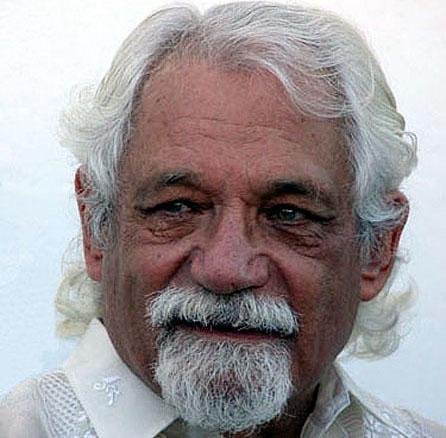

Pablo Armando Fernandez, one of Cuba’s most beloved writers, dies
In 1996, the Cuban Ministry of Culture awarded him the National Literature Prize for the importance of his work.
Translated and edited by Walter Lippmann for CubaNews.
The extraordinary Cuban writer Pablo Armando Fernandez, who not only shone for his literary work in poetry and novels, but also for his patriotic and revolutionary attitude, has died.
The Minister of Culture, Alpidio Alonso, has testified on Twitter of the deep pain caused by the death of the great Cuban poet. “With a poetic and narrative work that led him to win the National Prize for Literature, Pablo Armando is one of our most beloved writers. Our condolences go to his family and friends,” he said.
The author of such important works as Los niños se despiden, Casa de las Américas Prize 1968; Golpe de dados, or the first-born Salterio y lamentaciones, among many of great literary flight and reception of the reader, was born in Central Delicias, in the former province of Oriente, on March 2, 1930. He attended his first education in his hometown and then moved to the United States. He studied at Washington Irving High School in New York until 1947. He also enrolled in some courses at Columbia University in New York.
He lived in the United States between 1943 and 1959. With the triumph of the Revolution he returned to Cuba and developed an intense cultural life that led him, among other things, to be director of the magazine Unión and the Fondo Editorial Casa de las Américas.
He represented Cuba in numerous international events, among them: poetry biennials in Belgium (1963-1965); Meeting of Poets of Spoletto (Italy, 1965); Congress of Poets of Edinburgh (1964-1965) …
He served as a juror for important literary awards such as the Casa de las Américas de Poesía (1966) and Literatura Caribeña en Lengua Inglesa (1982). In 1992 he was a member of the jury for the prestigious Cervantes Prize.
His literary work, which includes numerous books of poetry (20 in total), three novels, a volume of short stories and a volume of essays, has been translated into several languages. In 1996 the Cuban Ministry of Culture awarded him the National Literature Prize for the importance of his work.
The 2003 Book Fair was dedicated to him, to which he reacted with enthusiasm, because in addition to considering it a recognition, he thought it would be another opportunity for his work to be known. “I don’t believe in chance, I believe in writing,” he said at the time.
Related information
Notes on Pablo Armando Fernández (English translation)
Notes on Pablo Armando Fernández
Notes on Pablo Armando Fernández
Pablo Armando Fernández was justly praised for his extraordinary literary work in poetry and novels, as well as for his patriotic and revolutionary attitude, during the forum held at Uneac in the context of the International Book Fair.
Translated and edited by Walter Lippmann for CubaNews.
Writer Pablo Armando Fernández, honored at the Fair. Photo: Pastor Batista
Pablo Armando Fernandez was justly praised for his extraordinary literary work in poetry and novels, as well as for his patriotic and revolutionary attitude, during the forum or tertulia held at Uneac in the context of the International Book Fair.
Miguel Barnet, president of the Uneac, dwelt on the character of the author of such important works as Los niños se despiden, Casa de las Américas Prize 1968; Golpe de dados, or the first-born Salterio y lamentaciones, among many of great literary flight and reception of the reader.
Barnet’s words were preceded by speeches by writers Enrique Saínz, Juan Nicolás Padrón and Nancy Morejón.
Barnet, more than Armando’s work, wanted to refer to his life, both to the intimate love with his wife Maruja, as everyone knew her, and to his unwavering attitude in defense of culture in the Revolution. He shared singular anecdotes about Pablo Armando, whom Fidel honored by visiting him at his home.
He especially focused on the celebration of the writer’s 70th birthday, which was also attended, among other intellectual friends, by Gabriel García Márquez, later winner of the Nobel Prize in Literature.
The Forum began with the reading of a letter from Roberto Fernández Retamar, who met Pablo Armando when he was living in New York and had not yet published his first book, which turned out to be the famous Psalter and Lamentations.
The exhaustive and rich exposition on Pablo Armando’s immense work in poetry and prose turned out to be an extraordinary piece, whose publication, in the Gaceta, was proposed by Barnet, as it would be necessary to resort to it in order to know the literary work of Pablo Armando, National Literature Prize winner.
Enrique Saínz also referred to how much his birth and life, until he was 15 years old, in the Batey del Central Delicias and in the surroundings of Chaparra, in the former province of Oriente, could have influenced the intellectual.
Juan Nicolás Padrón fundamentally approached Pablo Armando’s poetic work, as well as his life of continuous creation in poetry and novels; he also dealt with the author’s links with the most outstanding Cuban intellectuals in the Revolution and with American colleagues and those from many countries of the world. He also praised the undeniable value of the Spanish and English languages, which Pablo Armando masters with excellence.
After the words of the panel members, applauded by the large audience in the Villena Hall, a documentary about Pablo Armando Fernandez was screened.
Journalist Germán Piniella dies
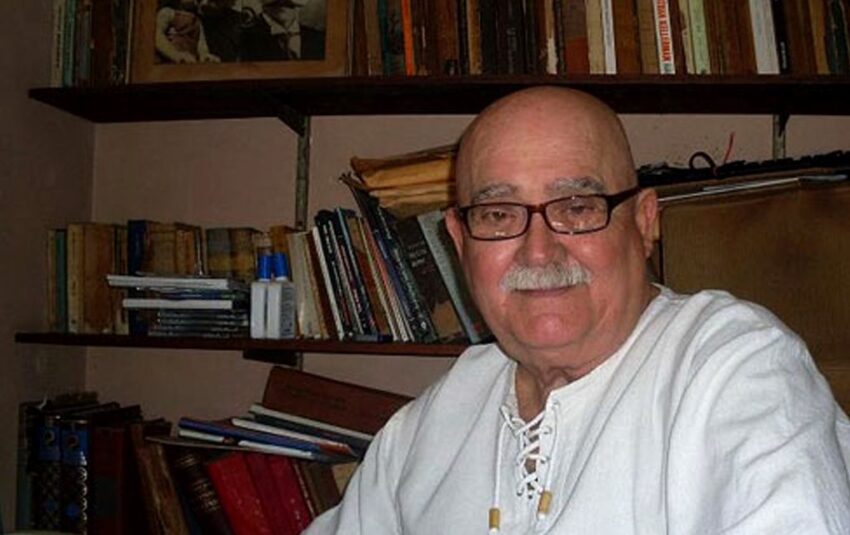

Journalist and cultural critic Germán Piniella dies
By Yoandry Avila Guerra
January 9, 2021
Translated and edited by Walter Lippmann for CubaNews
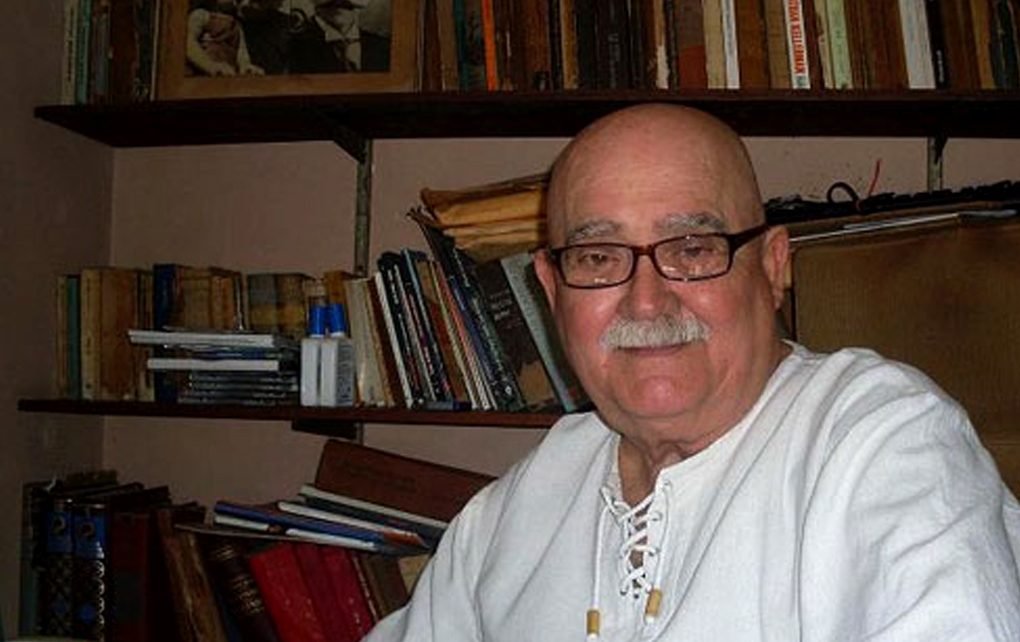
The Union of Cuban Journalists laments the death, this January 9, of journalist, narrator, literary translator and music critic Germán Piniella. Among other Cuban serial publications, Piniella collaborated with the magazine Casa de las Américas, La Gaceta de Cuba, Bohemia, El Caimán Barbudo and La Jiribilla. He also served as associate editor of the bilingual magazine Progreso Semanal.
Among his works are the book of short stories Otra vez al camino (Editorial Pluma en Ristre, 1971), finalist for the David Award in 1969; Comiendo con Doña Lita (Art and Literature, 2010), a text written with his wife, psychologist Amelia Rodríguez, in which he approaches culinary culture, and the detective novel Un toque de melancolía (Ediciones Unión, 2013). Likewise, with Raúl Rivero, he was the author of Punto de partida (Pluma en Ristre, 1970), an anthology of young narrators and poets from the Island.
With a degree in Journalism from the University of Havana, Piniella also received a Master’s degree in Marketing and Business Management from the Escuela Superior de Estudios de Marketing de Madrid and a Master’s degree in Marketing and Communication from the University of Havana. For his work in the field of advertising, the Cuban Association of Social Communicators awarded him the Premio Espacio for his life’s work.
Upon learning of his death, Rafael Grillo, head of information for the cultural magazine El Caimán Barbudo, wrote in his personal profile on the social network Facebook: “Friend, Germán Piniella Sardiñas, more than goodbye a hasta siempre. To know you, to embrace your affection, even if it is a short term friendship, but very sincere, is unforgettable. Your passion, the enthusiasm to create, the way to face destiny without renouncing the enjoyment of life is a teaching that you leave me.
“And to your dear Amelia Rodriguez, adorable woman, with you and with everyone, I transmit my encouragement and my love. May that novel that you were working on and that I was able to read about, see the light, so that your light may continue. With “a touch of melancholy” we say goodbye to you Juliette Massip I…”
You must be logged in to post a comment.