The Sao Paulo Forum’s Great Mission
The Sao Paulo Forum’s Great Mission
By Manuel E. Yepe
http://manuelyepe.wordpress.com/
Exclusive for the daily POR ESTO! of Merida, Mexico.
Translated and edited by Walter Lippmann.
“Prevent the release of Lula in Brazil, issue an arrest warrant for Rafael Correa in Ecuador, threaten Cristina in Argentina with jail, round up Daniel Ortega in Nicaragua, incriminate Paraguayan Lugo, deploy an offensive at all levels against Nicolás Maduro in the Bolivarian Republic of Venezuela, and focus fire on Cuba. In just these four lines, Peruvian journalist and writer Gustavo Espinoza M. summarizes the difficult situation that the Latin American left was going through at the beginning of the 24th meeting of the Sao Paolo Forum that is being held in Havana from 15 to 17 July.The Sao Paulo Forum (FSSP) is a mechanism for bringing together left-wing and progressive political parties and movements in Latin America and the Caribbean. It is a space for convergence, discussion and joint action resulting from the Meeting of Left Political Parties and Organizations of Latin America and the Caribbean, which took place in 1990 under the auspices of the Workers’ Party (PT) of Brazil. It was an initiative of the historic leader of the Cuban revolution, Fidel Castro Ruz and the leader of the Workers’ Party of Brazil (PT), Luiz Inácio Lula da Silva.
In addition to its plenary meetings, the Forum holds an average of five annual meetings of its Working Group. It organizes conferences, seminars, and workshops on various topics, holds exchanges with political and social forces in Africa, Asia, the Middle East, Europe and North America, and participates in the meetings of the World Social Forum, the Americas Social Forum and the European Social Forum.
The FSSP develops a broad and multifaceted agenda that has embraced issues such as the world capitalist crisis and its impact on Latin America and the Caribbean; the new forms of political, economic, social and cultural domination of imperialism, with emphasis on U.S. imperialism and its projection into the region; the increase in aggression78p-, occupations and foreign military bases; the struggle against colonialism; the construction of new emancipatory paradigms; the promotion of integration, cooperation and coordination in the Caribbean and Latin America, and solidarity with the struggles of its members, as well as with the struggles of those political and social forces in other regions.
The FSSP was formed to bring together the efforts of left-wing parties and movements in the southern hemisphere in the complex international arena following the fall of the Berlin Wall. In addition, it aimed to counter the consequences of neoliberalism for the peoples of the countries of Latin America and the Caribbean through reciprocal support among its members.
At the time of its foundation in 1990, the only member with executive power in a sovereign country was the Communist Party of Cuba. Twenty years later, most of the countries that are members of the Forum have agreed for some period of time, through the ballot box, to exercise government or to be part of official coalitions. Several have also become the first opposing forces in their respective countries.
The election of the revolutionary military man Hugo Chávez in 1998 in Venezuela was the first time that a member of the Sao Paulo Forum came to power.
Then came the triumphs of the Brazilian Workers’ Party in 2002 with Luiz Inácio Lula da Silva; the Frente Amplio in Uruguay in 2004 with Tabaré Vázquez; the Movimiento al Socialismo with Evo Morales in Bolivia in 2005; Michelle Bachelet of the Partido Socialista de Chile in 2006; Rafael Correa for Alianza PAIS in Ecuador in 2006; Daniel Ortega for the Frente Sandinista de Liberación Nacional de Nicaragua in 2006; Fernando Lugo for the Patriotic Alliance for Change (now the Guasú Front) in Paraguay in 2008; José Mujica for the Frente Amplio in Uruguay in 2009; Mauricio Funes of the Farabundo Martí National Liberation Front of El Salvador in 2009; Dilma Rousseff for the Brazilian Workers Party in 2010; Ollanta Humala for the Nationalist Party of Peru in 2011; Nicolás Maduro for the United Socialist Party of Venezuela in 2013. In 2014, Michelle Bachelet won the elections again and in 2014, Salvador Sánchez Cerén of the Farabundo Martí National Liberation Front in El Salvador won.
These successes, however, were followed by an intense counter-revolutionary offensive that could have ended with the recent electoral victory of Andrés Manuel López Obrador at the head of the Movimiento de Regeneración Nacional (Morena), in alliance with the Labor and Social Encounter parties, which could have been a turning point in continental political events.
With a prestige that rests essentially on his honesty and a program that is in line with “Mexico’s hopes”, as his electoral slogan states, everything suggests that the great victory of Andres Manuel López Obrador has come at the right time to save not only Mexico but Latin America as a whole from the right-wing wave.
The Sao Paolo Forum has the floor.
July 16, 2018.
At The Rosenberg Memorial
Remarks by professor Jose Altschuler, a Cuban electrical engineer at the Havana, Cuba memorial to Julius and Ethel Rosenberg, June 19, 2018. Though retired, Altschuler remains dedicated to the history of science and technology, about which he has written several books.
Thanks to Karen Wald who shared this information which came from the speaker himself. It’s been reformatted from PDF for easier reading on the web. None of his words have been changed.
=======================================================
From: Jose Altshuler <jea@infomed.sld.cu>
Date: Sun, Jul 15, 2018 at 5:22 PM
Subject: Re: ANNIVERSARY
To: <karenlee726@gmail.com>
Dear friends,
Invited by the Cuban Institute for Peoples’ Friendship and the Cuban Movement for Peace and Peoples’ Sovereignty, we are gathering here today to pay tribute to the exemplary verticality and courage with which the Julius and Ethel Rosenberg couple faced their electric chair execution on June 19, 1953 -exactly 65 years ago, victims of a politically motivated sentence during the Cold War and the American “witch hunt” times.
There is really no room for a different interpretation since on the preceding June 2, they had flatly rejected the official offer of saving their lives in exchange for “confession” and “full cooperation”. “If we are executed shame will fall on the United States Government” -they said at the time. Add to this the offer which was previously made to Ethel that her life would be spared if she agreed to certain requirements, a proposal that she rejected angrily, calling it a “devilish scheme.”
While the execution was taking place inside Sing Sing prison, hate demonstrators outside carried placards with the inscription “Death to the communist rats!” -Jean-Paul Sartre described the show as a “legal lynching that covered with blood the whole country.” Countless appeals and clemency requests coming from all around the world had been rejected, including those by the great Albert Einstein and the Vatican.
At the time, President Eisenhower declared that the executions were a “serious matter. And even more serious -he added –if one thinks of the millions of dead whose death can be directly blamed to what these spies did.”
It is quite paradoxical that this was said by the president of the only country in the world that had dropped atomic bombs, killing tens of thousands of civilians of a practically defeated enemy country, with no other purpose than trying to frighten a victorious allied power, according to knowledgeable analysts.
But there is much more to this. Which will be seen in the following reproduction of four brief paragraphs from an article by William J. Broad published in the United States on 12 November 2007, which I downloaded from the web not too long ago.
This is what they say:
On Nov. 2, the Kremlin startled Western scholars by announcing that President Vladimir V. Putin had posthumously given the highest Russian award to a Soviet agent who penetrated the Manhattan Project to build the atomic bomb.
The announcement hailed Dr. [George] Koval [who died in 2006, aged 93] as “the only Soviet intelligence officer” to infiltrate the project’s secret plans, saying his work “helped speed up considerably the time it took the Soviet Union to develop an atomic bomb of its own.”
Washington has known about Dr. Koval’s spying since he fled the United States shortly after the war but kept it secret.
“It would have been highly embarrassing for the U.S. government to have had this divulged,” said Robert S. Norris, author of […] a biography of the project’s military leader.
I guess it is not necessary to insist on the subject to clearly show to what extent the Rosenbergs were demonized for an essentially political purpose.
Still, the cruelty to which they were subjected could be explained more precisely by taking into account the fact that their case was aired at the height of the Cold War, in full development of the McCarthy “witch hunt” during the Korean war -though the alleged facts under trial had taken place during the Second World War, when the Soviet Union was an ally of the Western powers. It was for this reason that, on March 2, 1950, the German scientist Klaus Fuchs, strongly involved in the transfer of information to the Soviets, was sanctioned in England only to 14 years in prison -the maximum penalty for passing military secrets to a friendly country. He was granted full reprieve after serving 9 years and 4 months.
On the subject just mentioned, I believe it is very illustrative to recall the following quite exceptional testimony that a participant in the atom bomb project from the British side, Professor Joseph Rotblat, published in the August 1985 issue of the Bulletin of the Atomic Scientists. Here is what he says:
In March 1944 I experienced a disagreeable shock […]
During [a conversation at the home of Prof. Chadwick, the head of the Manhattan Project, General Leslie Groves,]said that, of course, the real purpose in making the bomb was to subdue the Soviets […] Although I had no illusions about the Stalin regime […] I felt deeply the sense of betrayal of an ally […] when thousands of Russians were dying every day on the Eastern Front, tying down the Germans and giving the Allies time to prepare for the landing on the continent of Europe. […] Until then I had thought that our work was to prevent a Nazi victory, and now I was told that the weapon we were preparing was intended for use against the people who were making extreme sacrifices for that very aim.
Shocked by such a terrible reality and already knowing at the time that Germany did not have any possibility of manufacturing the bomb, early in 1945 Rotblat managed to leave the Manhattan Project and return to Great Britain. Since then he dedicated his life to the struggle for a peaceful world and the elimination of nuclear weapons, for which he was awarded in 1995 the Nobel Prize for Peace.
“It would […] be wrong and imprudent to entrust [to others] the secret knowledge or experience of the atomic bomb, which the United States, Great Britain and Canada now share”— declared Winston Churchill in the famous speech which he delivered in Fulton, Missouri, barely seven months after the atomic bombing of Japan.
That was exactly opposite to the very serious warning personally given to Prime Minister Churchill and to President Roosevelt in 1944 by the world respected Physics Nobel prize, Niels Bohr, that hiding the work on the atom bomb from its wartime ally, the Soviet Union, would necessarily provoke mistrust and give rise to an extremely dangerous nuclear arms race. Needless to say, this became very soon a sad fact of life.
In 1946, the year after Hiroshima and Nagasaki, President Truman gave the USSR an ultimatum to evacuate a province of Iran, or else have the United States drop atomic bombs on the Soviet Union itself. Three years later the Soviets detonated their first nuclear device, which they were forced to develop while their country was still in ruins from the Second World War that had cost them more than 20 million lives. In 1953 president Eisenhower threatened North Korea and China with the use of nuclear weapons. It was in this context that Julius and Ethel Rosenberg were executed in the United States 65 years ago, on a day like today. Some five weeks later, a military bulwark of the pro imperialist tyranny then in power in this country was attacked by a group of Cuban revolutionaries led by Fidel Castro. At the court that tried him and his surviving comrades, he took up his own defense and that of his ideals of social justice. “It doesn’t matter if you condemn me; history will absolve me”, he concluded. “We will be vindicated by history”, the Rosenberg’s had said.
The very fact that we are now gathered around this memorial bears witness to the prophetic character of Fidel’s words, so similar to those of the Rosenbergs. Let us hope that sooner than later memorials of this kind may find their place in other places, where Cubans and Americans can get together in peace, mutual respect, and solidarity, as we are here today.
Thank you very much.
Speech at La Demajagua (1998)
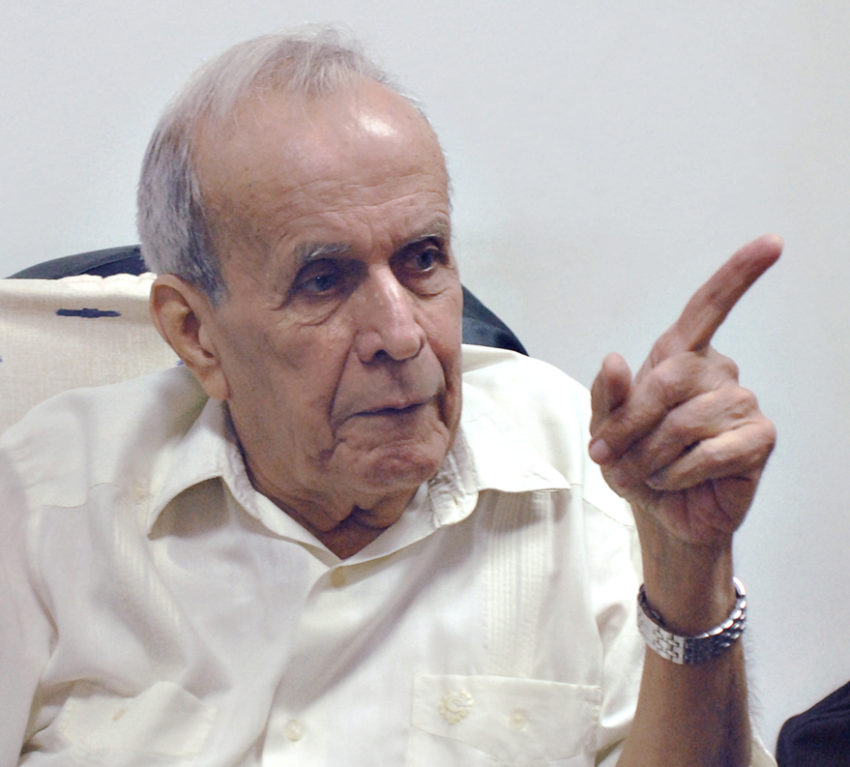
Speech by Ricardo Alarcón de Quesada,
President of the National Assembly of People’s Power,
at La Demajagua. 10 October 1998
Major of the Revolution Juan Almeida Bosque,
Fellow countrymen:
The idea, rather than the sunshine, brightened that morning:
“Fellow citizens, until this moment you have been my slaves. From now on, you are free as free as I am. Cuba needs from every one of her children to conquer her independence. Those of you who want to follow me, do follow me; those who want to stay, do stay; all will remain as free as the rest.
The announcement, emulated by all the land owners around Céspedes on 10 in the October 1868, would strongly mark the nature of the war.
With those words, right here, 130 years ago today, the Cuban nation started to move ahead in our own a only Revolution began, which would be continued thereafter by successive generations of Cubans, and for almost a century would squander feats, withstand defeats and sacrifices until victory was achieved.
Born from the unlimited love of justice, equality and human dignity, it knew how to stoically cope with the worst adversaries and learn how to stand up to them, without even relinquishing its ideals. It inspired men to bequeath everything and to fight to the bitter end, without anybody’s help, following the example of that who on a day like this called everyone of us to start out. This same Revolution that 130 years later, dealing with similar obstacles resists, preserves and triumphs, and can recognize the path it has gone along as the best tribute to those who took history by storm on 10 October 1868.
In that society poisoned by the slaves system, freeing the slaves and openly proclaiming it is in its first act imparted the emerging movement the deepest radical nature, placed its face to face with the primary problem of that time. But Céspedes would not just break the chains that oppressed those men. He went, all the ones, or beyond. He turns them into citizens with exactly the same rights as the rest. He defines the homeland as an ideal, as a project for me the holy to blacks and whites, two former masters inserts, and urged all of them all and exactly the same wording to fight the last four of the last La Belle was not calling them to work, nor was it just announcing freedom calling it was an invitation person for foremost to the creation of a common work.
It was the founding of the only true democracy, on that does not recognize privileges, that rejects prejudices, stresses virtue, trusts men and incorporates everyone.
It was the birth, then, of the Republic of Cuba and the outset of the struggle to conquer the Homeland.
Slavery was the decisive question that defined Cubans. The despicable exploitation of human beings was the main source of the wealth of the criollo well-to-do and the fuel for the colonial regime.
Slavery had been present, all over the century, in our intellectuals’ and politicians’ reflections. It would always come up as the dominant subject in the projects to reform the colonial system, in the attempts to change relations with the Metropolis, in the plans to design the Island’s future and would weigh heavily thereafter, during the war itself.
It was also linked to the core question at the time when Cuba was emerging as a distinct identity and which should forcibly separate from Spain. Who were the Cubans? Who made up that new people?
It is necessary to deepen into our history if we are to understand the meaning of what happened that day and to fathom the complexity of a problem that would not solve with a noble act, of incomparable altruism, or with its formal proclamation. It would demand a struggle that would require tenacity, staunchness and wisdom. It would be part and parcel of the war itself; it would most strongly mark it and determine the future course of our life as a people.
The La Demajagua message, issued by a group of white landowners, entailed a total break with the line of thinking and behavior on slavery and blacks maintained by the reformist sectors, including those with more advanced ideas.
Its real forerunners were not those groups, but slaves who more than once had revolted against the abominable system. The Matanzas province risings in 1843, butchered in a sea of blood, shook the colonial society.
Those rebellions would cause fear amongst reformists, the wealthy criollos who sought to change the gloomy society in which they lived but who, at the same time, would not go beyond that which an anachronic and obscurantist empire would be able to grant them. Slave masters could demand nothing from their colonial masters. The most important separatist attempts promoted by them sought to perpetuate slavery and annex the island to the United States. Notably, their main actions were armed expeditions, openly organized and prepared in the U.S. territory; from where they left for happen afterward with the efforts to be made from there by emigrant patriots. Also, most of those expeditioners were foreigners; very few Cuban-born people participated with them.
On the other hand, for slaves -subjected to the cruelest exploitation, isolated in their barracks, with no access to education, lacking the means to communicate their demands and organize themselves- it was virtually impossible to assume the leadership of a nation-wide struggle. They could – and did in fact many of a time rebel against their masters and punish them or flee to the woods. But they were not in a position to turn their struggle into a movement that would get other forces together to conquer equality and, with it, political independence the warranty for justice to be real and conclusive.
That space could only be filled by criollos freed slaves, craftsmen and landowners who were willing not only to abolish slavery altogether but also to incorporate the emancipated people to the common national project. It was not enough to oppose the slave trade or to criticize the excesses of human serfdom.
It was not a matter of compassion, philanthropy or economic calculation. If the purpose was to build a nation as demanded by the evolution reached by the colonial society, it was imperative to recognize the human factors constituting it and to attain their full integration.
A total abolition of slavery in all of its forms and manifestations, a true emancipation of full exercise of citizenship – with the same civic and political rights as the other men-, the elimination of racism, including prejudices and discrimination, where the demands posed by history and could only be assumed by a deeply and truly revolutionary movement.
The essence of that movement would have to be justice and solidarity. It was La Demajagua’s main message. It would thus be proclaimed, years later, by Antonio Maceo when he said that on October 10, 1868 “Cuba flew the flag of war for justice.”
That morning, before their liberator, there were scarcely twenty slaves, which was his full endowment. So it was not a decision significant in concrete military terms. The aim was not to set u pa major detachment with them to march on Yara, the goal of the then-emerging Liberation Army. Twenty men was nothing compared to 100,000 colonialist troops, or to the hundreds of thousands of slaves that there were on the Island. But it was to that mass and to their masters, precisely, that the message was for.
It was the beginning of a complex process –that would have ups and downs- which would see a quest to firmly stick to principles and to incorporate, as much as possible, other elements, without excluding the planters from western Cuba. The unequal balance of forces facing patriots forced them to do that, but loyalty to their own ideals made them keep a radical and consistent path even at the early stage.
At La Demajagua, a channel had been opened that would allow slaves and sincere abolitionists to move ahead of the sugar oligarchy’s hostility and of fears and inconsistencies present also amongst the revolutionary ranks.
On 28 October, the Bayamo municipal government would unanimously decree immediate abolition. In April 1869, the Guáimaro Constitution would enshrine freedom for all Cubans and the end of slavery, but a subsequent House of Representatives agreement –on July 5- would keep former slaves subjected by forcing them to continue to work through the Freed Slaves Rules.
Céspedes would annul it on 25 December 1870. It was this decision that ended slaver –conclusively and completely all over the Republic’s territory- , including covert slavery under the so-called Patronato. Before that, on March 10, the Revolutionary Government had declared null and void the Chinese colonization contracts, a hardly disguised form of servitude.
Thus –indicated Céspedes- their “natural capacity as free men was restituted, exercising their personality in its entirety, enjoying the same civil and political rights as the other citizens in perfect equality. “
Complete abolitionism had triumphed and would be the rule within the territory liberated by the Republic in arms. However, it would have to go on fighting bitter battles against the landowners who, in the western region, controlled most of the country’s riches, and against their agents who amongst émigrés, would promote divisiveness and plot against the Revolution, to deviate it from its course.
The La Demajagua message reached all Cubans. One of the main representatives of reformist landowners went as far as asserting, on 2, October 1868 that “never before had Cuba been closer to a true social and socialist revolution.”
General Dulce, for his part, in a decree he issued on 12 February 1869 –to then unleash the fiercest repression of the fighters for independence and of all those who supported them- included amount the serious crimes of “infidelity”, insurrection, conspiracy and sedition, those of “coalitions and leagues of day laborers and workers”.
That is why, among the first freedom martyrs were, on 9 April that year, several tobacco workers, members of the guild called Gremio de Laborantes (day laborer’s guild), A Havana secret society, who found their death at the vile pillory. One of them, Francisco de León, at the foot of the gallows, delivered a fervent speech that ended with wishes of long life to the independence of Cuba and to Carlos Manuel de Céspedes.
Repressive action focused especially on the association of tobacco workers, core of the Cuban emerging workers’ movement, which had gone on strike several times since 1865 and whose newspapers were suppressed.
An irrational violence was unleashed against the Havana population as a whole, which suffered the terror caused by incidents like those of the Villanueva and Tacón theaters and the Louvre walkway, and later the murder of the medical students.
General repression triggered the exodus of an important part of the Cuban population. According to a Spanish historian, only between February and September 1869, over 100,000 people left the country through the port of Havana.
Among them were moneyed families, but also important groups of workers. That emigration would have been an indispensable support for the Revolution, but it could not unite to fight the big landowners’ annexationist intrigues and the Washington Government’s systematic opposition.
Emigrant workers made generous contributions from their salaries for the purchase of weapons and the preparation of expeditions. They devoted their time to defend the Cuban cause and many of them laid down their lives in combat. Of all 156 expeditioners aboard the Virginius, 47 were workers, 23 of them of the tobacco sector.
The emigration question would be a decisive factor in the war’s unfolding. As to the wealthiest landowners who had left the country, their relations with the Revolution would be a reflection of the attitude towards the Revolution maintained by that sector which controlled the Island’s greatest riches, concentrated in its western region. The Junta de New York was an extension of the Junta de La Habana and an expression of its interests closely linked to slave production. Despite the many efforts that the Orient and Camagüey people made with them –since before October 10 and which would go on after the Revolutionary Government was in place- the war could not move into the west, where several risings by local patriots were discouraged and aborted in different ways by the capital’s leaders.
Their behavior was opportunistic and treacherous. They appeared to support the Revolution as long as it took place away from their properties and actually supported it only in hopes of getting concessions from Spain or in wait for a Yankee intervention to annex the island to the United States.
This group was essentially annexationist and its positions on the social and racial questions never went beyond the lines of reformism. This led to one of the most dramatic aspects of that war and to one of the main causes of defeat. The bloodiest, longest and most devastating war in the Americas had a theater of operations limited to the country’s poorer and less developed half.
The conflict was not reflected in the colony’s sugar production, which kept basically the same levels over those ten years, except for some variations caused by the situation on the world market. This goes to show that, in this time period, Cuba’s western planters –Spainiards and criollols- saw an increase in their profits obtained from slave labor whereas the rest of the country was bleeding dry for freedom.
To regard the War of 1868 as a landowner’s and criollos bourgeoisie’s movement –a flaw some have made- is to not look at things in-depth. In the history of Cuba there was never a chance for a bourgeois revolution because in this country there never was, as a class, a national bourgeoisie. The men who started the Revolution cam by birth from that class, but they did not implement its policies or served its interests. The fathers of the Revolution –Céspedes in the first place- represented from the outset the people’s –including the slave population’s- aspirations; they merged with them and brought them along to the movement’s leadership at all levels.
If one were to point out that those men, from the family origin viewpoint, were our patricians, one would have to note that they were part of a Jacobinic patriciate capable of radicalization, along with the exploited masses, at the pace the process was moving on.
Furthermore, the Metropolis’ clumsy policies and the outrages committed by the mobs of voluntaries in the cities, particularly in Havana, placed many of those planters in difficult situations and, in some cases damaged their property and made them victims of repression. From the revolutionaries’ perspective, that reality justified the efforts to bring them to join in the cause, to seek their support or to neutralize them.
The Revolution was also desperately in need for imperative resources from abroad. It also needed solidarity and international support for its lonesome struggle. Learned Cubans, trained for diplomatic work and propaganda, were not many then. The best from the country’s central and eastern parts were fighting at war. The best from the west had emigrated.
All those factors were the backdrop of the complex, contradictory and difficult relationship that there would be amongst the wealthy émigrés and the Republic in arms. As a rule, when it comes down to the Great War and its internal conflicts, three factors are mentioned; the Liberation Army, the revolutionary Government and the House of Representatives. But a fourth factor is to be added; and it was emigration, which had a close connection with the others and played a major role by action and default in the course of events.
There would be no time here to go deeper into this important issue. I will just point out that, in those years, the group of leading exiled planters, controlled by annexationists, had a preeminent influence over emigration as a whole. It included Céspedes’s bitterest enemies, who publicly opposed his policies and were part of the conspiracy that brought him down from the presidency.
Most of the emigration was made up of poor craftsmen and workers, just arrived at a racist society, still struggling for their life in an alien and hostile environment. It was a profoundly Céspedesite mass that regarded the La Demajagua man as their liberator, that admired his generous sacrifice and understood his intransigence against exploiters and his love for justice.
His opinions were voiced in publications that denounced the annexationist and slavery advocates’ maneuvers by the Junta de New York. That city’s working women expressed their feelings through the sword the bestowed on Céspedes, which he did not accept out of modesty.
In a lovely gesture, artisans expressed their support by agreeing to economically support the Homeland’s Father’s wife and little children. This action prompted a greater gesture from Céspedes and a clarification of his thinking when, on declining the offer, he said that he wanted his family to follow in their steps by “working for a living and contributing if possible with their savings to the Republic’s funds”.
New York’s Sociedad de Artesanos Cubanos, the representative of the then emerging Cuban proletariat, would elevate its protest for the Republic in arms President’s deposition, which it had denounced and rejected even before it took place.
That mass of poor men and women would be the support of the revolutionary efforts during the Ten Year’s War, when the plantation owners stepped back to wait for the Yankee intervention, and they would continue to do so in the future attempts; would support Marti’s Party and would continue to fight until 1898. The truth is that over those thirty years, as Máximo Gómez acknowledged, “the combatants’ last hope of salvation is always the cigar roller’s knife”.
The colonial repression broke loose with a unique rage against defenseless towns, trying to wipe out all forms of collaboration with the Liberation Army.
Among the measures adopted by Captain-General Dulce in 1869 and denounced by Céspedes to the world were “the confiscation of assets of republican army members and of those suspect of being friendly to the revolution, the compulsory collection of horses from all rural farms in all rebelled districts… The reconcentration, also compulsory, of all population in rural settlement and the subsequent abandonment of farms, the ruin of all corps and fields to devoid the patriots from foodstuff, the arrest and immediate execution of all Cubans found in the fields, both armed and unarmed”.
An Irish journalist who visited the island during the war left testimony of the desolating picture he found in the Las Villas towns: “most of the population is in the saddest stage of misery as a result to the severe orders given by the Spaniards for the reconcentration of people in towns and villages, concentration that has resulted in families being ravaged by hunger and disease”. And on his arrival at Sancti Spíritus, that author wrote: “There one could see, asking for a bit of rice from door to door, lines of women whose faces showed the unerasable signs of hunger and in many of them you could read sad stories of sufferings and hardships”
Extending the war to the rest of the country, achieving an effective integration of all territories and getting the indispensable war resources from abroad were strategic needs that the Revolution had to meet to consolidate itself and triumph.
Those objectives came face to face with not only the colonialists’ power but also the anti-national oligarchy and the US government.
It is recorded in American official documents that between March and November 1869, the entire federal Government machinery was mobilized in 16 States, from Florida and the Gulf of Mexico up to the Canadian border, with the active participation of the Navy, to thwart expeditions, stop ships, seize weapons and pursue, arrest and punish the patriots.
The authorities’ hostility towards the Cuban cause contrasted with American people’s manifestation of communion and support. For instance, in its report of 14 June 1870 the House of Representatives’ Foreign Relations Committee included numerous annexes with belligerence in and independence of Cuba. They came from different parts of the United States and were backed by tens of thousands of people’s signatures. One of those letters was signed by 72,384 New Yorkers.
The official attitude counter to the feeling of so many Americans would be expressed, at that time, in an address to the Congress where President Ulysses Grant rejected any assistance for the Cuban patriots, about whom he used the most slanderous and vulgar of languages.
Back in 1870 Céspedes had warned that the US Government’s “aspiration is to take possession of Cuba without dangerous complications for its nation and while it remains under Spanish rule, even if it is to become an independent power; that is the secret of its policy”.
In a message to Benito Juárez, on 13 December 1870, Céspedes said “you certainly know only too well how terrible are the efforts we are engaged in to secure our national rights and how big are the difficulties we have to overcome, for you know that our enemies are great many and well disciplined, that we have to fight in a quite narrow island, that the coastline is patrolled by a large fleet; and that we are abandoned to our own resources in spite of being at the very center of the independent America”.
Two days later, in a letter to a New York newspaper editor, Céspedes denounced that while Spain can easily procure everything it needs for the war, the Cuban patriots are persecuted and “their ships and weapons –bought out of their patriotism and with our women’s tears and our brave soldiers’ blood-are seized”.
The persecution of immigrants in the United States and the authorities’ actions to prevent any aid from there to the revolutionary movement reached its highest expression with the proclamation issued on 12 October 1871 by President Grant himself. Alleging that the revolutionaries’ activities violated United States laws, he threatened them with these words: “which is why they are subject to be punished, will be most severely pursued without possibly be punished, will be most severely pursued without possibly expecting mercy from the Executive to save them from the consequences of their crime, if convicted. And I admonish and consequences of their crime, if convicted. And I admonish and encourage every authority of this Government, civilian, military or naval, to use every means within their reach in order to apprehend, try and punish each and every one of such criminals, transgressors of the laws that impose upon us sacred obligations to all friendly Powers”.
Mister Grant’s threats were dramatically realized when the Yankee authorities confiscated the ship Pioneer and all the weapons it was carrying to Cuba. The Homeland’s Father gave instructions then, on 30 November 1872, to withdraw the unofficial diplomatic representation that the Revolution had set up to at least seek the acknowledgement of our belligerence. In doing this, he left history these words of permanent validity: “It was no longer possible to put up with the contempt with which the United States Government was treating us, a contempt that increased as our sufferings increased. For long enough we have played the beggar who gets the alms repeatedly denied, and who gets the doors slammed insolently on his face. The Pioneer case has come to break the back of our patience: not because we are weak and unfortunate should we stop having dignity”.
While obstructing solitary actions from the Cuban immigration, the United States facilitated the colonialists’ continuation of the war with the use of the American territory and industry. With this support, Spain deployed up to 83 warships to block Cuban coasts, including 30 stem gun boats, built, armed and equipped in the United States.
In a message to the president of the U.S. Senate’s Foreign Relations Committee which constitutes a profound analysis of the war’s development, on 10 August 1871, Céspedes had unmasked Washington’s policies: “that Republic’s Government… no longer being a mere spectator indifferent to the barbarities and cruelties executed before its eyes.. but now providing indirect, moral and material support to the oppressor against the oppressed, the strong against the weak, the Monarchy against the Republic, the European Metropolis against the colonial America, the hard-line slavery advocator against the liberator of hundreds of thousands of thousands of slaves”.
Comrades all:
After 1898, when the Yankee intervention brutally interrupted the eliminate them from the memory of the people, to lessen the meaning of their struggle and hide the true nature of the problems they had, the way they faced them and the solutions they found.
Stressed were the different points of view on various issues that, at times, some of the main protagonists of the epic had. Any analysis was eliminated from the evolution of those opinions and the context in which they came to be. Everything was reduced to inevitable personality differences. In fact, it was the human passions that explained the failure of a ten-year war. They wanted us to believe that, in the end, it was our own characteristics as a people with explained the failure of a ten-year war. They wanted us to believe that, in the end, it was our own characteristics as a people what explained the defeats we suffered. They were trying to introduce in the collective psychology the fatalism that has always been used by the annexationists to justify docility to their masters.
In 1868 there was no nation or a national conscience. We were a heterogeneous, shapeless mass, out of which the people would emerge in the middle of the struggle and would identify itself through the struggle, thus acquiring its definite identity.
Those men did create the nation, forge the people, make the reality of Cubanness come true. Was it possible to do it with no discussion or passionately contrasting ideas?
Many times concepts were repeated to us that were like an echo of the distortions and slanders given at its time by the colonial and the US government’s propaganda of the events and their participants.
Céspedes –supposedly authoritarian- accepted, however, the majority’s criterion at Guáimaro, and later observed the House’s deeply unjust and mistaken decision to depose him. He who was presented as a militarist did his best, as far as possible, to regularize the war and make it more humane. An all-out abolitionist, he made tactical concessions in the initial phase two attract or neutralize western planters.
But he never hesitated to fully exert his powers when the principles were at stake for it was necessary to secure the advance of the Revolution. He did it on 10 October 1869, on the struggle’s first anniversary, when he ordered the Liberation Army the burning of all sugarcane and coffee fields, when he commanded that, in a Las Villas invasion, properties be burned and that slaves be brought to the rebel and accepted in the patriotic ranks were sent to Camagüey to protect them from their former owners; also when he annulled the House’s agreement that governs the life of freed slaves, thus definitely eliminating the servitude system; when he appointed two blacks as alderman in Bayamo, Cuba’s first liberated city and home to the Revolutionary government; when he promoted Antonio Maceo and Máximo Gómez to generals and blacks and mulattos who were former slaves and from the poorest sectors of people to high military ranks; when he decreed, on 15 February 1871, that traitors be considered all those who took part in any negotiation that did not observe Cuba’s absolute independence and the complete abolition of slavery.
These positions and Céspedes efforts to eliminate regionalism, to lead the invasion to the west and his support for the most radical sectors in the exile in their opposition to the planters annexationists maneuvering, place me as the starter of a consistent revolutionary line that would later continue with a Protest of Baraguá, with José Marti’s revolutionary work and with other people’s unending struggle until the victory of January 1st and these glorious fourty years in which, under Fidel’s Céspedesite leadership, the people at last saw the La Demajagua come true.
The goals of independence and justice of the Cuban Revolution that started on 10 October 1868 were attainable in the first phase. To realize them there would have to be a national consensus, a Party to lead and integrate the political and military struggle and a fighting strategy to be spread throughout the entire island. These objectives would be later achieved with Marti’s indefatigable genius and work.
But the Apostle’s work would have never been possible without the Ten Years’ War, because it was that War that forged our nationality, radically transformed the colonial society and turned the exploited masses into the propagandists of their history.
Before 10 October 1868 there was different criteria as to the time to commence the war, and from that moment on, up until April 1869, there were diverging ideas as to the strategy to be followed and the organization of a revolutionary power, they’re being two main centers in Oriente and Camagüey, two leaderships, two armies in the event two wives. It is true that that Guámimaro they discussed deeply; they surely had to discuss passionately because they were trying to design the Homeland into the find a way to get there. But most important of all is that, with everybody’s concord, Guámimaro produced only one Revolutionary Government, with only one program, only one Army had only one flag. At Guámimaro prevailed, above all, the sense of the indispensable unity, the common will to set aside the differences and to add up everyone’s energies for the common battle.
Céspedes and Ignacio Agramonte, the main chiefs of that period, were symbols of the two initial notions regarding no revolutionary power’s organization which were ex needs some worry. But after his thesis triumphed Guámimaro, Agramonte himself would criticize, amid his brilliant military campaign, the House’s interference with the condition of the war and would claim for the indispensable sing single command to lead it. On 14 January 1871, after stating that there were “contradictory opinions but no divisions war concessions”, the celebrated Camagueyan added “I am one of those who think it most and necessary to replace the officials for delaying the expeditious and energetic advance of our military operations… “ There up use plenty of evidence that as they advanced in the war, all relationship of mutual understanding was growing between Céspedes and Agramonte. In the Homeland’s Father’s epistolary there was proof of his happiness in this regard and he dedicated words of admiration and affection to Agramonte.
Just as Fidel had explained, should Agramonte have been alive, he would have opposed and probably prevented Céspedes from being disposed by the House of Representatives. The historical truth is that when he fell in Jimaguayú, the Homeland’s Father lost a decisive support, the most eminent disciple, he who should be his successor.
The 1898 Imperialists you search and frustrated the movement initiated here 30 years before. The two possession of the country and its resources, planned to correct and US-client regimes that exploited and divided the people. In that base Republic remaining the colonial society’s worst vices. There was no hold tight servitude of millions of Cubans suffered capitalist slavery and along with it, misery, helplessness, racism end radical discrimination.
There were six decades of ignominy, radical negation of the 1868 ideals. That republic was the opposite of La Demajagua; it had nothing to do with Céspedes an Agramonte’s dreams for wit that heroism, the sacrifices in the light should buy hundreds of thousands of Cubans over three decades.
Today’s youth, who learned to love and respect are glorious founding fathers, will find it difficult to imagine that it was not always like this. Under the Yankee domination regime, they tried to steal their memories from the public, your history was distorted, they tried to dissolve into forgetfulness the example of their heroes in the lessons of their struggle.
The neo-colony and its masters were specially in place a ball with Carlos Manuel de Céspedes. Since that regime was the most opposite to patriotism, they had to make sure of the Homeland Father’s eternal death, have him completely disappeared from history, for forever buried his message.
There you have all the data in archives and libraries. Céspedes is thought, his political documents, his ample correspondence, his literary work was more publicized over the 30 years of war than after the date the intervention. Over 60 years in the so-called Republic of Cuba use only published, together with works by other offers, a tiny portion of his political work in one book for circulation appeared in 1938 under the title Breve Antologia del 10 de Octubre (Brief Anthology of 10 October). On Céspedes, over sixty years, were published 3 books, 3 booklets and 24 newspaper articles, not always fair to him.
Numberless were, however, the biographies, studies and tax of former annexationists and autonomists that came out of Cuban printing shops during the same period.
Also, to those characters were dedicated statues and monuments, and streets and squares were named after them.
But not to Céspedes. It is true that Manzanillo zealously took care of the Bell and the Bayamo and Santiago, witnesses of his immolation, mark some places with his glorious name. But the rulers of the time, for sixty years, did not pay any tribute to his memory, outside his tomb.
It is good that our young thing about it. It illustrates on the meaning of our said terry and struggle in our single revolution, the one initiated by the man who the enemies of the homeland wants to destroy and disappear. It also reminds us of how he continued to fight even after he fell in San Lorenzo.
He who always foresaw his death before the triumph and had warned us that he would come out of his two as many times as necessary to our minds Cubans of their duties for the homeland, continue to call on the young and the two patriots to retake the La Demajagua road.
This is why his first monument in Havana, a humble plaster bust, was built and put at the entrance of Vibora’s Secondary Education iIstitute in 1949, paid for by his teachers, students and workers, penny upon penny. This is why in 1947 Fidel Castro and the University Students’ Federation took the glorious bell to the university campus and rescued it from political maneuverings they denounced of a memorable acts in the capital and in Manzanillo. This is why, in 1956 Emilo Roig, exemplary teacher, took that autocrat king from the seat where he was still honored by the spurious republic and replaced him with the Homeland’s founder.
Only after 1959, when the Revolution that he initiated triumphed, his work and thought was finally rescued and extensively spread. Today, for the Cuban people his exemplary life and his ideas are they in the spring where the pure water of patriotism and the virtues and value of Cubanness always flow.
In this same place, thirty years ago, our Commander- in-Chief gave an essential speech. He defined our history’s greatest truth, one so many have tried to hide in various ways: that there has only been one Revolution in Cuba, the one undertaken by Céspedes on 10 October. Fidel summed up the insoluble continuity of our historic process with this admirable phrase: “We, then, would have been like them. They, today, would have been like us”.
Being like them, today, when the threatened homeland is faced with powerful enemies, just like then, when we have to face fifth up the dangers of confusion and overseas fostered hesitations, means, first and foremost, to revive the La Demajagua message and to turn it into a way out of behavior, into a guidance for the present revolutionary action.
Unyielding defense of the Homeland’s absolute independence, without concessions of eight times that might damage our national dignity; true unity, real, intimate among all Cubans, and the elimination of every trace of discrimination or prejudice that may separate us; indefatigable struggle for equality and solitary amongst people, founded upon the ethics of sacrifice, abnegation and virtue.
This is the legacy left us by our common Father, the founder, the internal President of the Homeland.
He who told us that “those were not willing to sacrifice everything, everything for the freedom of the homeland are not revolutionaries”, their rich planter and gave up his wealth and laid down all his personal to rate for the revolutionary cause. He was sacrificed his family and promised to leave them with “an inheritance lacking in money but plentiful of civic virtues”, they enlightened man, the poet, that until the eve of his death was teaching to read and write with rude instruments that he would bring out of the woods; the Manzanillo and Bayamo Symphonic Orchestra organizer who in his last refuge in the Sierra Maestra admired the dances that former servants rehearsed for him; he who called the black man brother in the worker comrade; he who was unyielding loyal to the Revolution despite the injustice, abandonment and ingratitude he suffered; he who fought to the last minute, completely by himself, almost blind and surrendered by enemy soldiers.
At this time when they are trying to take the sentiments of justice out of men’s hearts, in a world where selfishness and greed are trying to be imposed, the Cuban Revolution continues to be our people’s only road and carries indispensable values for humanity. In the middle of the war, Céspedes drew a clear line between Cuba and colonialism, and outlined that insurmountable line that separates us today, even more clearly, from the imperialist. The enemy “fights to sustain slavery of the black, to spread obscurantism, to perpetuate iniquity; the Cuban patriots fight for all men’s freedom, for the triumph of justice, for the enthroning of civilization; out go the greed, the ignominy, the night, here come the reason, the truth, the light”.
Today’s and tomorrow’s Cubans will continue to defend the Homeland founded here, the Revolution started on 10 October, our Socialism that and this sacred land took its strongest roots. We will continue to fight ever on to victory.
Long live free Cuba!
Independence or Death!
SCANNED FROM 1998 PAMPHLET in 2018.
“Printed by the printing section of the
National Assembly of People’s Power”
Cuban Journalists Elect New UPEC President
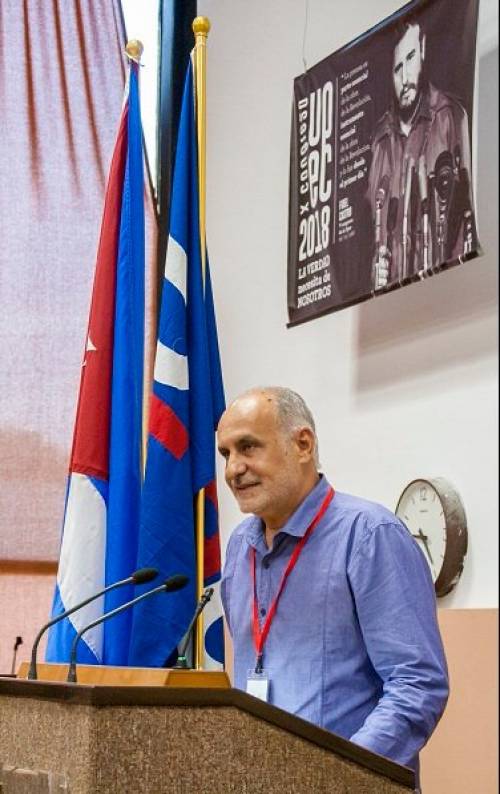

New President for UPEC
Ricardo Ronquillo Bello, deputy editorial director of our newspaper, was elected on Saturday as the new president of the Union of Cuban Journalists.
Published: Sunday 15 July 2018 | 01:32:49 AM
By Juventud Rebelde
digital@juventudrebelde.cu
A CubaNews translation.
Edited by Walter Lippmann.
Ricardo Ronquillo Bello, deputy editorial director of our newspaper, was elected on Saturday as the new president of the Union of Cuban Journalists.
In this responsibility, and by decision of the delegates to the meeting, he will be accompanied, as first vice-president, by Rosa Miriam Elizalde Zorrilla, member of the presidency of the trade union organization during the previous period, as well as Ariel Terrero Escalante, director of the International Institute of Journalism José Martí, and Jorge Legañoa Alonso, deputy director of the Cuban News Agency, as vice-presidents.
Raúl Garcés Corra, dean of the Faculty of Communication at the University of Havana; Arleen Rodríguez Derivet, journalist for the television program Mesa Redonda; and Ana Teresa Badía, Angélica Paredes López and Minoska Cadalso Navarro, all from Radio Rebelde, were also elected as non-professional members.
World Trade War Has Begun
World Trade War Has Begun
By Manuel E. Yepe
http://manuelyepe.wordpress.com/
Exclusive for the daily POR ESTO! of Merida, Mexico.
Translated and edited by Walter Lippmann.
With a strong response from Beijing to the offensive actions of the United States in the field of markets, the most colossal world trade war in history has been unleashed.
“By imposing tariffs of 25% on hundreds of products imported from China worth US$34 billion a year on Friday, July 6, the United States has violated the rules of the World Trade Organization and launched the largest trade war in the world’s economic history,” a statement by China’s Commerce Ministry declarae.
Beijing claims that it was committed to not firing the first shot, but has been forced to take action in response to the situation created by the United States and has notified the World Trade Organization.
“U.S. actions affect global supply and value chains, but they are also opening fire on everyone, including themselves,” said a spokesman for the Asian nation’s trade ministry.
The Chinese agency has denounced the mercantile “bullying” with which Washington is putting pressure on its trading partners by means of tariff threats that go against the conduct demanded today.
China called on all countries of the world to join forces against trade protectionism and to support multilateralism. The Asian giant claims to have wanted to avoid the trade war that the United States has provoked, but has been forced to fight this war as much as necessary to protect the interests of the nation and its people.
In retaliation, Beijing announced the introduction of an identical tariff rate for the same monetary value for several U.S. goods, some of which would begin to be taxed as of the date set by Washington.
A trade war between the US and China, the two largest economies in the world, could affect not only both nations, but the world economy as a whole, according to a projection by economists at Pictet Asset Management in London, one of Europe’s leading independent asset and wealth managers.
Some of the most immediate effects that are predicted in the war that is just beginning for U.S. consumers are the 25% increase in the price of products imported from China. These include technological products such as semiconductors and chips that are assembled in China, needed for the manufacture of consumer products such as televisions, computers, cell phones and vehicles, not to mention a wide variety of other products, from plastics to nuclear reactors.
Obviously, the US and Chinese economies will be the hardest hit, but they won’t be the only ones.
More than 90% of the products that will be damaged by US tariffs are intermediate productions or capital goods: that is, they are products that are needed to obtain other types of production.
U.S. tariffs will likely impact other goods not necessarily traded exclusively in the United States. In turn, China gets components from many other countries that end up in its finished products so any change in China’s export flow would inevitably disrupt these countries. About 91% of the 545 U.S. products that China, in retaliation, is taxing belong to the agricultural industry sector affect U.S. farmers, President Trump’s stronghold.
Companies such as Tesla and Chrysler, which manufacture in the United States and ship their products to China, will be hit in the automotive industry.
Among the economies that could be most vulnerable to a trade war are those that are most closely integrated into global value chains. This is how the process by which a product, for its manufactur, goes not only along the production line in a nation, but is added in more than one country until it reaches its final result is identified.
Many experts believe that Trump’s punitive measures against China, based on the unfounded allegation that the Asian nation is stealing U.S. technology, will somehow affect the impressive progress of the Chinese economy but will have an even greater negative effect on the lives and finances of U.S. citizens.
It will be necessary to know what are the calculations of profits and losses that can be derived from the trade war against China carried out by Wall Street’s corporate system. The survival of Donald Trump’s regime, with its constant outbursts and upheavals, will probably depend on these calculations.
July 12, 2018.
The Evil of the “Four Cats”

The Evil of the “Four Cats”
Explaining the reason why things happened, their meaning and importance, with solid arguments, were reasons that were countlessly laid out during the 9th Congress of the organization at the Technological University of Havana José Antonio Echeverría (Cujae).
 By Yuniel Labacena Romero
Posted: Thursday 14 June 2018 | 10:57:52 PM
digital@juventudrebelde.cu
A CubaNews translation.
Edited by Walter Lippmann.

We must banish apathy and increase participation. Author: Juventud Rebelde Published: 14/06/2018 | 10:36 pm
It is necessary to explain to the students the reason for things, their meaning and importance, and to do it with solid arguments, so that they know why they should attend the activities or be part of the processes or movements that the University Student Federation (FEU) has.
This was reiterated countless times during the 9th Congress of the organization at the Universidad Tecnológica de La Habana José Antonio Echeverría (Cujae).
As Felipe Alejandro Pérez, a student at the School of Automatics and Biomedicine, explained, apathy must be banished, increasing participation. And that can only be achieved by “infecting young people with the desire to do, with perseverance and personal example, having brigade leaders who motivate, convince, take on any sacrifice and strip themselves of inertia and formalism,” he said.
There were not a few participants who, like this young man, alluded to the fact that many times in the brigade, in the department and even in the university, activities are organized or certain tasks are called for and only three or four cats go, as they say in good Cuban. Faced with this reality, the student said, we have to better organize our processes.
In the same vein, Danhiz Díaz Pereira, president of the FEU in Cujae, stressed that the brigade is the essential cell of the organization and “in all our actions it has to be the most effective”. She added that the commitment of the members of the Federation is to make it more like them, through conscious and real participation in all processes.
Another topic of analysis was the Educating for Love initiative. It has been involving university students in alleviating teacher shortages in a number of provinces for several years. Yeslaisy Grandales Ferrales, a student at the Department of Mechanics, referred to this task as the most humane, far-reaching and socially-influential one in which she has participated, which means educating the new generations.
Olga Lidia Tapia Iglesias, a member of the Secretariat of the Party Central Committee, said that this task of impact, like others carried out by the FEU, demonstrates her concrete contribution to the economic and social development of the country. “Every day, she stressed, we have to think about how to become more useful, how to continue training a competent professional, who carries feelings, values and principles in keeping with the Revolution.
Not a few agreements emerged from the discussion: to promote university-industry relations that make it possible to train students in their skills. To propose to the departments that they hold a workshop on job placement, to analyze the need for the years in which the student is an assistant to be counted as seniority in the teaching category process and to strengthen other aspects of political-ideological work with new communication codes.
At the end of the meeting, Raúl Alejandro Palmero, president of the FEU, called on the students to act with the example and commitment of José Antonio Echeverría, and above all, to participate, because where it is not possible for the young person to get involved, share and motivate himself, the FEU loses its meaning, while if the opposite is achieved, the organisation becomes green.
“These are times to have a living Federation, which will continue to represent its members and do for the country,” he said.
TRANSLATION NOTE:
“Four cats” is a Cuban slang expression used when only a few people or none show up for an organized event. I’ve no idea what significance, if any, the number “four” has in this context.
Nicaragua Will Not Renounce Peace
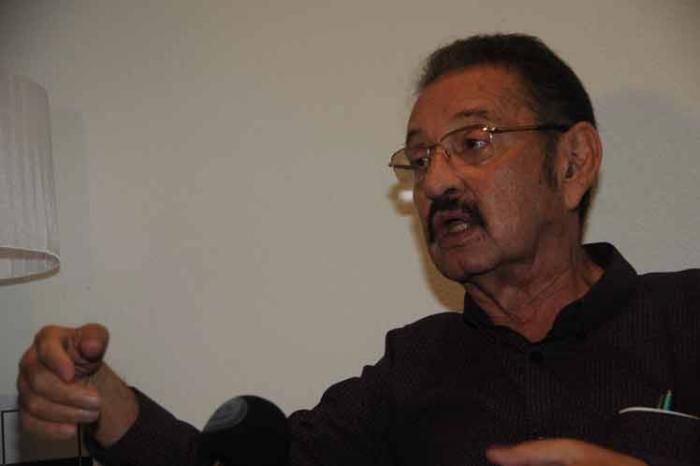

Sandinista leader says Nicaragua will not renounce peace
The International Relations Secretary of the Sandinista National Liberation Front (FSLN) reaffirmed the government’s will to maintain peace of mind and citizens’ rights.
Author: | internet@granma.cu
July 11, 2018 10:07:14
A CubaNews translation.
Edited by Walter Lippmann.
Photo: Prensa Latina
The International Relations Secretary of the Sandinista National Liberation Front (FSLN), Jacinto Suárez, reaffirmed today in Havana the invariable will of the Nicaraguan government to preserve peace in that nation.
According to Prensa Latina, Suárez rejected the wave of violence unleashed in the Central American country last April and insisted on an end to crime, encouraged, he said, by political manipulation by the right.
The Nicaraguan leader, who will participate as a delegate to the 24th Sao Paulo Forum in this capital city, ratified the call for dialogue as a way to restore peace to the nation’s citizens, and deplored the vandalism of groups described as terrorists whose aim is to spread chaos and terror in the country.
“The destruction they have caused is not easily replaced and the loss of human life is irreparable. It is necessary to resort to peaceful means,” he said after recalling the achievements of the past 10 years in areas such as the economy, health, education and the fight against poverty.
Also president of the International Relations and Integration Commission of the National Assembly of Nicaragua, Suarez warned that the destabilizing actions of the last three months respond to a soft coup orchestrated from abroad, similar to that applied in Venezuela, which seeks the resignation of the president, Daniel Ortega, and foreign intervention.
In addition, he explained that the students who participated in the first riots were manipulated by the right-wing, and assured that the promoters of such actions are not political activists, but criminals.
Suárez, who joined the FSLN in its struggle as a teenager, also referred to what happened on Monday in the department of Carazo, where residents denounced the complicity between the Catholic Church and criminal groups during a visit by the Episcopal Conference to the Basilica Menor de San Sebastián in the municipality of Diriamba.
In this regard, he said that the citizens repudiated the alleged use of the temples as a den for criminals, torture centers and weapons storage.
He also criticised the Conference’s bias in the national dialogue between the representative of the Executive and opposition sectors.
The escalation of violence erupted on April 18 against government social security reforms, which although later repealed did not stop the protests, to which other political demands were added.
These reforms, in line with allegations, served as a pretext to implement a plan aimed at destabilizing the nation and overthrowing the Sandinista government, which reiterates its commitment to the defense of peace, security and the right to life of all citizens.
South Korea Has Been the Most Favored
South Korea Has Been the Most Favored
By Manuel E. Yepe
http://manuelyepe.wordpress.com/
Exclusive for the daily POR ESTO! of Merida, Mexico.
Translated and edited by Walter Lippmann.
The recent easing of tensions between North and South Korea, two countries that are still technically at war, has given new life to the debate on the unification of the two countries, which have been divided and confronted since the 1950s.
In my opinion, the most favored part of the development of the events that led to the meeting of the leaders of the two Koreas was South Korea!
The extensive and intense military presence of the United States in the south of the Korean peninsula has always been the main obstacle to the reunification efforts of the Korean nation.
Thus, the only net loser at the end of these events has been Washington, which has seen its absolute empire on the southern part of the Korean peninsula threatened.
The Democratic People’s Republic of Korea (DPRK) has never given in to Washington’s demands. The South has always lacked sufficient autonomy to assert its interests and rights as a formally independent nation, due to the control exercised by the United States over its defenses and war resources.
This is understood by many observers who believe that Seoul derives the greatest benefits from the events that are taking place because they contribute to the collapse of the pretexts for maintaining the semi-colonial status of South Korea. These are invariably based on the supposed danger that North Korea, a socialist country, will absorb the entire peninsula and, with its independence, benefit the left in the world balance of power.
The North Korean authorities’ demonstration of absolute autonomy and total dominance of sovereignty over their territory, before and during the negotiations with Seoul and the United States, refutes the repeated and absurd accusations by the United States in the Western media that the Pyongyang government is a puppet of Moscow or Beijing.
On the other hand, what the most objective observers wondered was the extent to which the Seoul government could act with the minimum degree of autonomy necessary to take decisions that would make viable, or at least accompany, the profound changes that would result from the rapprochement with Pyongyang in its external relations, which had been so subordinate to those of the United States.
Although the hope of lasting peace is a win-win situation for all parties involved, the most significant change in regional policy so far seems to be the one that affects the characteristics of South Korea’s submission to the US strategy of maintaining the status of two countries at war, betting on an eventual reunification forced by the weapons it leaves to the united Korea, but within Washington’s sphere of control.
When the North Korean Communist leader, Kim Jong Un, and the President of South Korea, Moon Jae-in, made a commitment to work for the complete denuclearization of the Korean peninsula on April 27 at the House of Peace in Panmunjom, inside the demilitarized zone that separates the two countries, they were smiling and shaking hands. At that moment, the brains of the State Department and the Pentagon were plotting how to restructure the imperialist strategy for the region, to make it compatible with the style of its unpredictable President Trump and his team of hawks, almost all as ignorant as its chief in international politics and diplomacy.
Both Koreas announced that they will work with the US and China to reach an agreement soon for a “permanent” and “strong” peace that will officially end the Korean War, which has lasted from the 1950s to the present with only a single ceasefire in 1953.
They promised to work for an agreement for the progressive reduction of military weapons, to cease hostile acts, to transform their fortified border into a zone of peace and to seek multilateral talks with other countries, in an obvious but omitted reference to the United States, whose military forces are still widely deployed in South Korea.
Kim was the first North Korean leader since the 1950-1953 war to visit South Korea. The scenes of Moon and Kim walking together smilingly contrasted sharply with the tensions generated the previous year by the joint South Korean-U.S. military games and, in response, North Korea’s missile tests and its largest nuclear test, which led to the usual U.S. sanctions and increased fears of a new war on the Peninsula.
Humanity expected a lot from the handshake between the two Korean leaders on the concrete strip that marks the border between the two countries in the demilitarized zone. Unfortunately, the most recent visit by Vice President Mike Pompeo to Pyongyang indicates that Washington plans to make mischief.
July 9, 2018.
She says: I’m a “Babe”
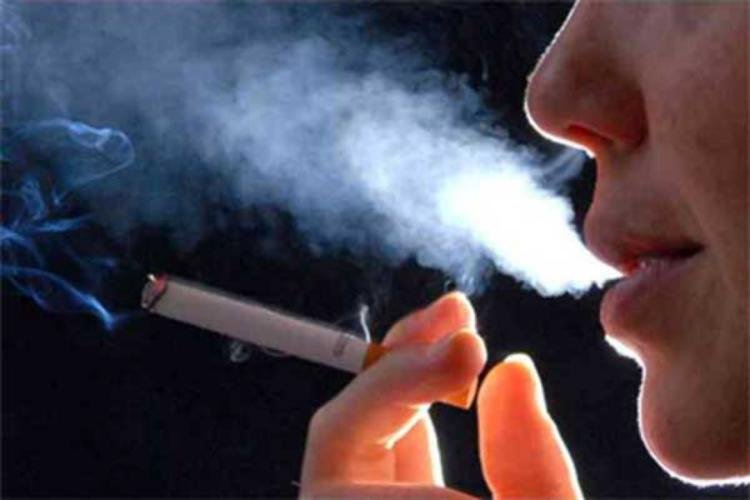

She Says, I’m a “Babe”
Posted on June 28, 2018 – 12:44 by Yoel Almaguer de Armas
Translated and edited by Walter Lippmann for CubaNews.
Don’t miss the translation note at the end. Thanks.
The World Health Organization predicts that smoking will cause 450 million deaths in the next 50 years. Photo: Taken from the newspaper Peridico 26
“Unlike my sister, who looks like a train puffing smoke, I have never swallowed it or talked about it while I have a cigarette in my mouth, and after smoking, I drink a glass of water so that the nicotine doesn’t hurt my airways.”
The gentleman who accompanied her told her that the cigar was not good in any of its forms and that the glass of water was an invention of hers. He told her that his grandfather was a country man, that he had a huge meadow in Pinar del Río and loved to chew tobacco.
“And she died of lung cancer?” she asked, half doubtful, suspicious.
“No, he got tired of living and died of something else.”
There was a time of silence between the two of us. I expected a reaction from her, because I knew she would comment on something, anything, to justify her vision as a smoker.
“Doctors always say that smoking causes lung cancer, but there are a lot of people with lung cancer who have never put one in their mouths.”
To corroborate the lady’s idea a little, the Cuban Journal of Hygiene and Epidemiology wrote in one of its issues that tobacco is associated with cancer of the mouth, pharynx, larynx, esophagus, stomach, pancreas, cervix, kidney, ureter, bladder, blood system and, especially, lung.
Studies published in issue 44 of this magazine show that women who smoke tend to have an earlier menopause and have a double risk of developing lung cancer than men, while men, when they smoke one pack a day, increase their risk of suffering from erectile dysfunction and premature ejaculation by 40%.
The lady, who was waiting for a test result in the lobby of the hospital in Havana, is one of the many people who wake up with a little coffee and a cigarette in their mouth, and when they don’t have them, they have a headache and the day is pure sorrow.
From the moment I heard it, I thought of an alternative that would help her reduce her addiction, until she quit smoking. She didn’t know I was a journalist because I didn’t tell her, either. You may read this paper and know that it is intended for her and everyone who has ever tried to quit smoking and has not been able to.
The World Health Organization, WHO, explains that tobacco kills more than 7 million people each year. Of these, more than 6 million are consumers of the product, and around 890,000 are non-smokers exposed to second-hand tobacco smoke.
WHO also states that in adults, smoke from other serious cardiovascular and respiratory disorders, particularly coronary heart disease and lung cancer, causes sudden death in infants and low birth weight in pregnant women.
The same Organization states that tobacco is the leading preventable cause of death in the world, and tobacco use is expected to cause 450 million deaths in the next 50 years.
The one who is a “titi” is one of the many people who recognize the negative effect that smoking cigarettes has on their health, and often have the obligation to quit when it causes them to say between life and the addiction to smoke.
========================
TRANSLATION NOTE: The Spanish headline is “Yo soy una “titi”. It’s a Cuban slang expression referring to a still-attractive, but no longer as young, female. Because it’s slang, I asked two Cuban translators. The first, a female in her seventies wrote:
A titi is slang for a very young person. In that context she means she looks and feels very young despite her 50’s.
The second, male in his fifties, wrote:
As to “titi”, very common too. It’s just slang (although not offensive) to refer to someone who looks really good, young and/or healthy (especially in cases of middle-aged people), and it can be used for men and women alike. Now, you would only call a woman “estas hecha un titi” when you’re close to her. Behind a woman’s back, it’s as common a sex-related remark as any other, like “Look at that temba (a woman in her 40s or 50s, remember that one? Like in discotemba?), she’s kind of old and yet see how tasty she looks”. But even if my grandmother complains about how weak or sick she feels because of her old age, I could very well use that expression and tell her, “Don’t say that, you look really great!” (…estas echa un titi). Hope you get the picture.
Obesity is a Health Problem in Cuba
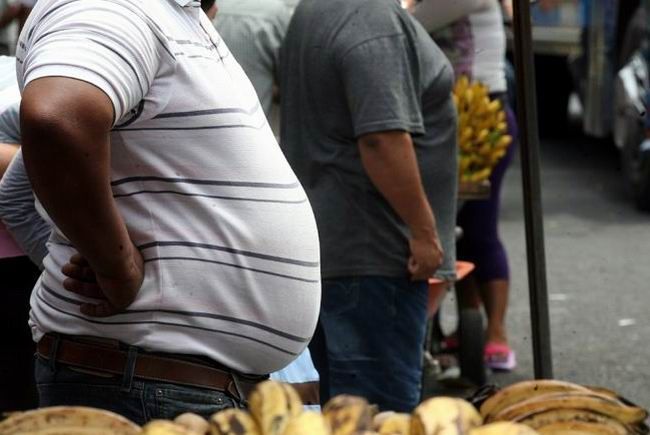

Obesity is a Health Problem In Cuba
July 6, 2018
Translated and edited by Walter Lippmann for CubaNews.
Obesity is a health problem in Cuba.
Dr. Lilian Valdivia García, head of the nutritional support group at the National Minimum Access Surgery Center in the Cuban capital, where she works as an intensivist, told Radio Rebelde that obesity is currently a health problem in the country.
Also a specialist in General Comprehensive and Internal Medicine, Dr. Vadivia explained that a national survey on cardiovascular risk factors reported that 42 percent of the Cuban population was overweight, of these, 47 percent were female and 37.6 percent were male; the most worrying thing was that 13 percent of the total are children, and as a result they are exposed to serious diseases.
The above, he said, has an impact on health, because if not taken up in time, these infants will become obese in adolescence and later as adults with risk factors for hypertension, diabetes mellitus, hypercolestoremia, ie, increased fat and incidence of diseases such as heart attacks, cerebrovascular diseases and increased incidence of high blood pressure, among others.
“Many patients who come to our consultations with these diseases respond favorably to a diet plan that makes them lose weight, thus compensating for their diabetes or stop being so, and others eliminate hypertension.
Dr. Valdivia Garcia also said: “As for the types of obesity, we classify the weight of the patients according to their body mass index; we calculate the size squared and divide it by the kilos of weight they weigh.
He explained that a person’s normal body mass index should be between 18.5 and 24.9; when it is above 25 and 29.9 it is said that the patient is overweight, and after 30 is considered obese, according to the different degrees that has this condition that indicates that when the body mass index is 40 corresponds to super obesity.
He categorically affirmed that this evil is preventable from childhood. A person becomes obese, among other causes, because he or she begins to have bad eating habits from a very early age. “It’s not that they don’t eat jams,” he says, “but that’s one day, without being the essence of the infant’s diet; parents usually offer them empty calories, such as soft drinks, sweets or candy.”
For Dr. Valdivia, good nutrition is provided by a balanced diet: “It is considered that in the first place are cereals and fruits, then vegetables, followed by proteins as a contribution of essential amino acids, then dairy products for the body that is not capable of producing them and then what I say to patients are the “whims” or jams, known as empty proteins that should be eaten one day as something exceptional.
The population has the false concept that only meat is protein,” he said, “but so is a dish of rice and beans because legumes are legumes; eggs are also a protein with the highest biological value that exists. Sometimes they go to the agricultural market and instead of buying fruits and vegetables, they choose empty calories and other products that do not provide the body with vitamins or other necessary nutrients.
Dr. Valdivia also pointed out the importance of becoming aware of the harmfulness of inadequate dietary habits to human health; each person has the power to stop the growth of overweight and obesity – she said categorically.
(Taken from Radio Rebelde)
You must be logged in to post a comment.