
The challenge of assuming a new concept

The challenge of assuming a new concept
Marriage has been consolidated as a charter of social and citizen protection that guarantees numerous possibilities. It establishes limits, roles and rights between people, towards them and from them towards the State. The formulation of the article in the Draft Magna Carta has generated controversy. The aim is to break down stereotypes and avoid any form of discrimination.
 By Ana María Domínguez Cruz
digital@juventudrebelde.cu
and
 Yuniel Labacena Romero
yuniel@juventudrebelde.cu
Posted: Saturday 20 October 2018 | 10:04:22 pm.
A CubaNews translation.
Edited by Walter Lippmann.
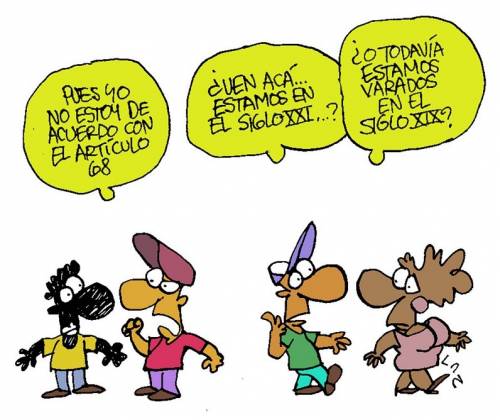
The constitution. Author: LAZ Published: 20/10/2018 | 09:43 pm
DIALOGUE:
So, I don’t agree with Article 68.
Aren’t we in the 21st Century?
Or are we still stuck in the 19th Century?
Love. That is the fundamental reason why two people decide to unite their lives and the basis on which, if they wish, they form a family. Legalizing this union or not is not the most important thing, some think, and jurists insist on the need to value marriage as a legal institution, guarantor of rights for those involved.
Cuba proposes in its Draft Constitution, specifically in article 68, that marriage is the voluntarily agreed upon union between two persons with the legal capacity to do so, in order to make a life in common…, which gives way to the possibility of equal marriage, and it is logical that controversy is awakened in the debates.
As Homero Acosta Álvarez, Secretary of the Council of State, recently pointed out at, the inauguration of the International Congress of Lawyers 2018, today’s draft was confronted with the choice of maintaining the concept of marriage as constitutional (a content barely regulated in the constitutions) or moving away from that and leaving its [further] development to the law.
“It was decided to maintain this configuration and to assume the challenge of the new concept, knowing that its inclusion could generate disagreements, due to cultural reasons, prejudices and stereotyped visions, these are not transformed overnight,” said the member of the Commission responsible for constitutional reform.
“If the Constitution proclaims broad recognition of the right to equality, why should it limit people of different sexual orientations from getting married? It will have to follow this concept anchored in visions already overcome by time or it will have to be modified and recognized as a right, as is gradually happening at the planetary level.
“The positions in front of this regulation are those who prefer to maintain the concept of the current Constitution; those who favor the current proposal in the Project; those who accept the civil recognition of de facto couples and not marriage. There are others who agree, but limit the right to adoption and, finally, some advocate the concept of “two or more persons”. In short, a diversity of criteria that have to be evaluated like others with the rigor and depth that is required,” he said.
A wonderful way to start thinking
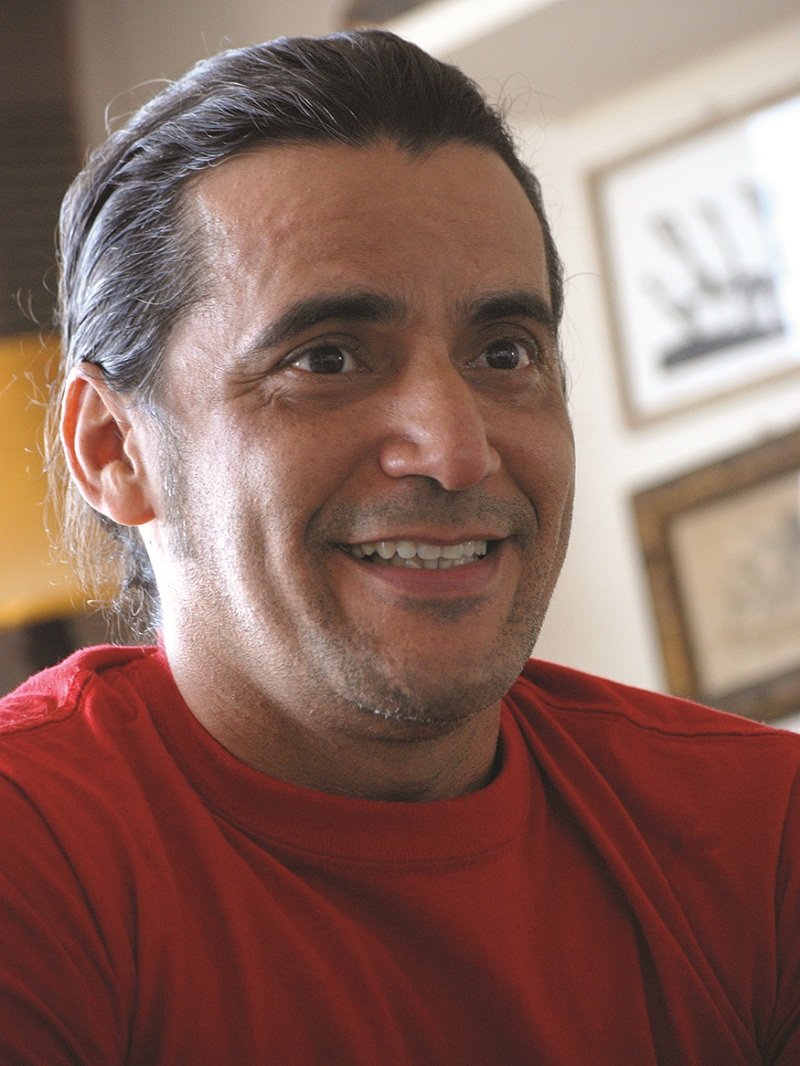
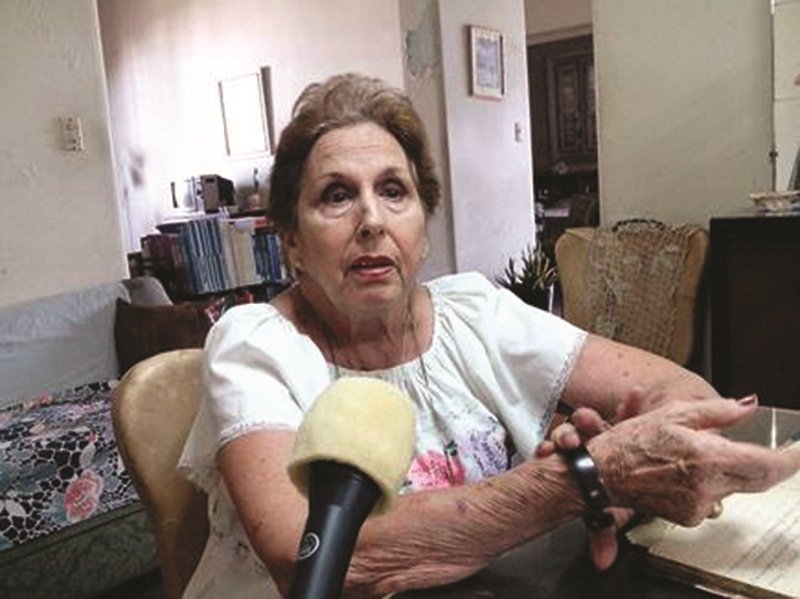
Lilian, divorced and with two children, also agreed with the ideas explained by the Secretary of the Council of State. She thinks this variation of the concept of marriage is a wonderful way to begin to think. “Each person has the absolute freedom to love another and the most important thing is that affection takes precedence in that relationship. If it is a couple of the same sex, love is still the most important thing. And if now there is the possibility that the legal protection of their rights is guaranteed, it’s better.
She refers at this point to the fact that there are still those who believe that homosexuality is a disease, synonymous with promiscuity, brazenness and few moral values. “We are happy to the extent that we can live fully, without hypocrisy and without maintaining appearances. This is a step forward from the social and the cultural. We have to recognize love, and I see it as just,” she says.
For his part, Mario Román -who has lived with René Miguel for four years- values positively that these guarantees are believed, even when they aren’t interested in getting married. “Relationships have the same value. The same rights must be guaranteed for everyone, and marriage is that necessary justice when one of the two is missing, the other has legal protection. Cuba has always fought for equality and we cannot allow people’s sexual orientation to be a cause for discrimination,” he says.
Marta Emilia still remembers with sadness what happened in her neighborhood when Angel died. “We all knew that Victor was his partner for more than 15 years and that Angel’s family always turned their back on him because of his choice. Not even when he was hospitalized did anyone come, much less when Victor spent more than a year taking care of him at home. But when Angel died, nephews and cousins showed up to take the house and Victor was left homeless. That was wrong and I hope those stories won’t happen again.
==
According to Rafael, another interviewee, “our society is not prepared for this modification of the concept of marriage. Therefore, we must defend the ”original design of the family” and what the current Constitution states,” he says. “We have to think about the new generation, when they see two men or two women holding hands, in the street or kissing. That was always frowned upon and I still see it the same way,” he says.
From the poll carried out by this newspaper and from the comments left on our web edition, other criteria also emerge against it: the negative effects on the birth rate, the transformation of the traditional family model, the problem of adoption and the world’s own cosmovision. While these reasons are used in disagreement with what is stipulated in article 68, others believe that it is not possible to try to prohibit a decision of a personal nature.
Katia, married for the second time, says that the myth that having a child in a homoparental home will lead to homosexuality must be banished. “Those who today have relations with people of the same sex did not learn it in their homes, where they lived with their father and mother. Besides, that’s not the issue the constitutional reform is talking about; there’s no need to mix things up,” she says.
And Felicia says our society has yet to go through the necessary transformations in its thinking. “Even in the treatment of men towards women we lack much. It’s enough to listen to some flirtations compliments that become offensive. Tolerance is not the concept, but acceptance and respect for coexistence among all.
Necessary progress
Julio César González Pagés, who holds a doctorate in historical sciences, recognizes that, one hundred years after the approval of the Divorce Law in Cuba, which was very controversial, it is magnificent that this good news arrives. “The country is placed in a position of advancement, because it is something that is closely related to human rights. On a global level, very few countries have endorsed this in their Constitutions, which is why Cuba would be among the few that grant that right.
“First and foremost, the concept of respect for the equal rights of all must prevail. It is not a question of imposing oneself, but of dialoguing among all and contributing to a full education among citizens. It is praiseworthy that, in a nation where homophobic thought was deep-rooted, it now there is a determination that this does not happen again and that we are seeing ourselves as an inclusive society.
“It is also important to stress that this is not just a right for lesbian, gay, bisexual, transgender and intersex (LGBTI) people, but for everyone, because it is the respect that we have for all rights. It is not a question of all people rushing out to get married, because many, homosexual or heterosexual, are not interested in formalizing their relationship in this way at this time, but the existence of the right is the essential thing”, he points out.
The modification reflected in article 68 – which departs from heteronormativity and machismo – is in line with the Conceptualization of the Cuban economic and social model of socialist development. This defines as principles that sustain the model and its main transformations respect for diversity and confronting all forms of discrimination due to skin color, gender, gender identity and sexual orientation.
It is praiseworthy that in a nation where there was a deep-rooted homophobic thought, it is now demonstrated that there is a will that this not happen again and that we are seen as an inclusive society.
It is also due to a culture of rights and social justice that the Cuban Revolution has promoted. It has has won for its citizens what in many nations are unthinkable guarantees, such as safe, legal and free abortion; equal pay for equal work for women and men; maternity and paternity leave; family planning services; sex education in school…
But there are more elements. In the words of the advisor of the Ibero-American and African Network of Masculinities, this is related “to the policy carried out by the country from the campaigns carried out against homophobia and transphobia. Legislation shows that educational and awareness-raising campaigns in respect to free and responsible sexual orientation and gender identity work if there is the political will of the country and the movement of people.
González Pagés warns that there is lots of opposition from groups of people who only see the couple as a means for reproduction or who only accept the family scheme of decades ago, made up of mother, father and children. “They do not understand that the family today includes grandparents, uncles, single mothers, among other archetypes, and that the legalization of a union does not necessarily entail having children.
“This process must not lead to aggressions, offenses or impositions. All processes have people in favor and others in disagreement, which are also included. But in the end, the logic of an educated, educated, highly literate country will mean reason will prevail, as has happened with other laws.
“The new rights of the 21st century cannot frighten us. We are not a backward-looking country because part of the population disagrees, on the contrary. The difference exists and what it is about is to argue, to convince, to dialogue and in no case to impose by force”.
The specialist recalls that Cuba has always been an advanced country, with controversies and confrontations regarding many issues, such as racial and gender discrimination. “Every movement generates these reactions and you have to be prepared for that. Some believe the birth rate will fall in the country because they think this is a process of proselytism in favor of marriage between people of the same sex, but that’s a mistake, it is not so.
“It is a question of legalizing unions that already exist, and so that people do not feel unprotected,” warns the specialist, who assures us that he is proud that “our Draft Constitution is advanced and revolutionary, among other reasons for making this modification. It shows we have a society with all and for the good of all, as is embodied in the Preamble to the Draft Constitution.”
Useful legality
According to the study Deconstructing Myths about Same-Gender Couples from the National Center for Sex Education (Cenesex), the scarce work carried out in the country denotes the existence of similar characteristics among families made up of heterosexuals and homosexuals (commitment, capacity to resolve conflicts, distribution of roles and functions, shared feelings and intimacy, among other indicators).
====
The criteria shared by the interviewees with whom this newspaper spoke, as well as article 68, are in line with other postulates of the Draft Constitution, particularly article 40. It states that “all persons are equal before the law, are subject to equal duties, receive the same protection and treatment from the authorities and enjoy the same rights, freedoms and opportunities, without any discrimination for reasons of sex, gender, sexual orientation, gender identity, ethnic origin, skin color, religious belief, disability, national origin or any other distinction injurious to human dignity”.
Perhaps for this reason, Gina, who has been together with Dania for three years, will not rush to a law firm to legalize her union. “We are not interested in getting married, but it is a right, a protection, an option for those who need it in their life history; and that our Constitution, like others in the world, includes it, has great value”.
Another of the interviewees tells us: “The stigmata and social schemes must crumble, because the treatment between people is sometimes hostile, unjustly. It is not necessary to hide if you love someone and acting cleanly is what favors peaceful coexistence. When ten years pass, we will be able to analyze what has happened on the island and if the taboo persists, but legally recognizing what already exists is a step forward.
Law cannot remain a perpetual slave of social backwardness, even though at some point it may collide with part of the social spectrum. In its transforming mission, it is also responsible for promoting development.
In this sense, Olga Mesa Castillo, Doctor of Juridical Sciences, titular professor and consultant to the Faculty of Law of the University of Havana, remembers that since the promulgation, in 1975, of the Family Code as an independent legal text of the Civil Code, our country was ahead in regulating institutions such as that of civil marriage. We did so in a liberating manner, stripping it of the requirement of physical-sexual capacity; of divorce for just cause, and without guilt; and with a special regulation on de facto union, equating it with civil marriage.
Furthermore, the President of the Cuban Society of Civil and Family Law, of the National Union of Jurists of Cuba, comments that the protection of concubinage was also introduced, and the country was a pioneer in including in its 1940 Constitution the equalization of de facto union with civil marriage.
“Marriage in Cuba today is a voluntary union, without a contractual, legal or business sense, and is not exempt from duties and rights. It is legislated that upon the death of one of the members of the couple, the one who survives is protected by law for the enjoyment of some economic or material benefits,” he says.
The National Law Prize winner regrets that, in a general sense, the population has not worried about knowing about legality and worse still, that many have decided to live outside it, not only concerning marriage but also paternity.
“Marriage means that you are fortunate enough to have a person in your life who also protects you from a material point of view. As a consensual union, there are already same-sex couples who live together and if they want to formalize it before the law, I see no problem in that. On the contrary, problems arise if you want to resort to the law when there is no remedy.
The incorporation of a broader concept of marriage is only the first step on the road to the approval of a new Constitution that will ensure greater legal guarantees for the specific LGBTI population. As Mariela Castro Espín, director of Cenesex, has warned, article 68 is not about taking away the rights of heterosexual couples, but about giving them to those who had been denied them.
Homero Acosta Álvarez recalled: “This is not the first time we have faced these challenges. Let us remember in history the conflicts to recognize women’s right to vote or the establishment of divorce or, in our case, to incorporate the equality of rights between men and women and the equal responsibility of spouses, according to our Family Code.
“In our opinion, Law cannot remain a perpetual slave of social backwardness, even though at some point it may collide with part of the social spectrum. In its transforming mission, it must also promote development,” he said.
“I ask the world to do something for us”.
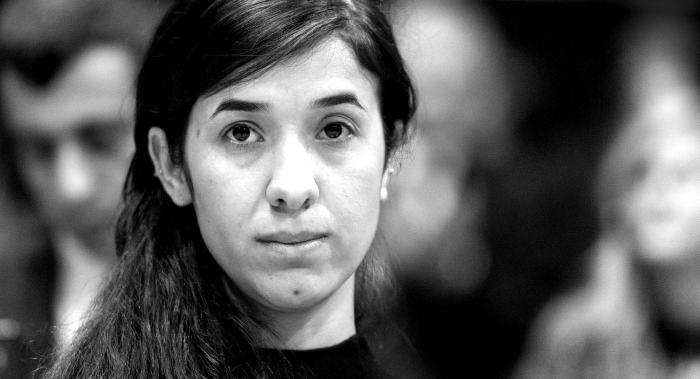

“I ask the world to do something for us.”
Nadia Murad won the Nobel Peace Prize 2018 for her fight against the rape of women in war contexts.
Author: Ana Laura Palomino García | internet@granma.cu
October 23, 2018 20:10:41
A CubaNews translation. Edited by Walter Lippmann.
Murad tries to make the world aware of what’s going on with his people. Photo: Patrick Seeger/EPA
“My pain is like a hundred deaths. I sadly sentenced a 14-year-old girl to BBC MUNDO, after living such a traumatic experience as being a sex slave.
My words do not find the way to express in prose so much pain. Her phrase, however, reminds me that her story is multiplied into others, to the shame of humanity.
Nadia Murad won the Nobel Peace Prize 2018 and understands very well the sorrow of this young woman. The recognition is undoubtedly an honor, but this woman bears the cross of having been a sexual slave of the terrorist group Islamic State (IS). Since then, her struggle has not ceased, and she travels the world as an activist against the rape of women in contexts of war.
When collecting the award I remembered that “thousands of women are still imprisoned in the hands of IS mercenaries.” For this reason, “my survival is based on defending the rights of persecuted communities and victims of sexual violence. One prize and one person cannot do it. We need an international response,” she told the Spanish daily El País.
Murad is part of Yazidism, a minority religion that dates back to 2000 B.C. and has its origins in the teachings of Iranian prophet and reformer Zoroastro.
This group within Iraq has been persecuted and its members forced to convert to Islam, or die at the hands of terrorists.
It was from the year 2014, when the Islamic State began the extermination against the Yazidis and Shiites, using all kinds of vexations against them.
The beginning of the end
Nadia’s nightmare began on a normal day, in that place she called home, when IS terrorists came to her village in Iraq and killed most of the men while women under the age of 45 were kidnapped, she confessed to the BBC.
Murad suffered the same fate as almost all of these young women. They were already in the hands of the terrorists and at night the sale of the girls began among the IS terrorists, most of them to be sexually enslaved. This inhumane practice is part of the propaganda to attract more followers to the organization.
“They began to walk around the room, looking at us, while we shouted and asked for compassion. They surrounded the prettiest girls and asked them: “How old are you? They looked at their mouths and their hair. They are all virgins, aren’t they? they asked the guard, who nodded and said, “Of course, like a merchant proud of his products,” Murad recalls sadly for El Diario.
After living hard experiences, she managed to flee from her captors and began a fight without rest, at the risk of her own safety.
This battle, as she repeats in each of her speeches, will not cease until the creation of a specialized tribunal to try those responsible for the crimes committed by terrorists in Syria and Iraq.
Your mission: the freedom of a people
Murad tries to make the world aware of what’s going on with her people. She tells her story over and over again. She does everything she can because her experience is not lived by another adolescent or girl, neither in Iraq nor anywhere else in the world.
The self-proclaimed Islamic State has destroyed the lives of some 3,000 Yazidi girls and women, according to El País newspaper. Raped, locked up and sold as simple objects, they try to recover their souls when they manage to escape from their kidnappers.
I will be the last. The history of my captivity and my struggle against the Islamic State is a book written by Murad as a testimony of her experiences. In this way, she aims to reach a wider audience and raise awareness.
She has travelled to different countries in order to meet with the leaders of those nations. However, the response has not been as expected and, while world leaders make a decision, there are still girls and women being kidnapped.
Nadia has urged the international community to “work together with the determination to show that genocidal campaigns will not only fail, but will also hold perpetrators accountable and that there will also be justice for survivors.
But the world becomes blind to these problems. Perhaps this is because there are others that are considered “more important,” such as economic crises or political conflicts between great world powers. Meanwhile, wars, violence and the pains they cause continue waiting for a common effort, for human sensitivity, so that stories like those of Nadia and the thousands of girls turned into sexual slaves are not repeated and we never have to listen again: “I ask the world to do something for us”.
Trump Could Bring Down the US Empire
Trump Could Bring Down the US Empire
By Manuel E. Yepe
http://manuelyepe.wordpress.com/
Exclusive for the daily POR ESTO! of Merida, Mexico.
Translated and edited by Walter Lippmann.
More than any other presidency in the modern history of the United States, Donald Trump’s has been a permanent threat of socio-political shipwreck. He has deliberately excited and fuelled conflicts, involving xenophobic and racist currents in society, with an always nasty political discourse. Trump’s eccentricities have been widely highlighted by the press, but his attacks on the U.S. military presence in the world and its commitments to that end have received far less attention.
Such is the essence of an essay by journalist and historian Gareth Porter, published on the website TRUTHDIG.
Trump had come to the White House with a commitment to end U.S. military interventions. This was based on a worldview in which wars for military domination have no place. In the last speech of his victory tour in December 2016, Trump promised: “Let’s stop tearing down foreign regimes that we shouldn’t have been involved with. Instead of investing in wars, we will invest in rebuilding our crumbling infrastructure…”.
At a meeting in the summer of 2017, where Defense Secretary James Mattis defended new military measures against the Islamic State in North Africa, Trump expressed his displeasure at the endless wars and Mattis claimed that “we are doing it to prevent a bomb from exploding in Times Square,” to which Trump replied, furiously, that the same could be said about anything that happened in any country on the planet.
Trump’s national security team was so alarmed by his questioning of military commitments and troop deployments that they invited him to the Pentagon. They were hoping to make him better understand their arguments with the usual rhetoric of the international democratic order based on the rules of globalism.
Ignoring decades of wars in Southeast Asia and the Middle East, Mattis and other high-ranking officials argued that “this order is what has kept the peace for 70 years.” Trump shook his head in disagreement and diverted the discussion to a subject he found particularly irritating: economic and military relations with South Korea. “We spend $3.5 billion a year there to keep troops in South Korea,” complained Trump. “I don’t know why they’re there. Let’s bring them all home!”
In September 2017, while Trump threatened to destroy North Korea in tweets, he privately held an opinion against the presence of troops in South Korea and his determination was to eliminate it, according to Bob Woodward.
Political-diplomatic events with the two Koreas in early 2018 reinforced Trump’s view that U.S. troops should withdraw from there, so he accepted North Korean leader Kim Jong Un’s offer to hold a summit.
Trump ordered the Pentagon to study options for the withdrawal of these U.S. troops. That idea was viewed by the media and most of the U.S. national security elite as completely unacceptable. But the Pentagon’s military and intelligence specialists long knew that U.S. troops were not needed to deter North Korea or defend against an attack through the demilitarized zone.
Trump’s willingness to practice personal diplomacy with Kim was driven by his ego, but also by the idea that it would contribute to ending or attenuating the deployment of troops in South Korea. Obviously, such a thing could not happen without a clear rejection of the national security ideology that had dominated Washington’s elites for generations.
Bob Woodward tells in his book “Fear in the White House” that Trump was eager to put an end to the three great wars inherited from Barack Obama: in Afghanistan, Iraq and Syria, about which he said in July 2017 that he was very tired.
“We should proclaim victory, end wars and bring our troops home,” he said, repeating the political tactic with which Washington covered up its defeat in Vietnam in 1966.
Trump feared he would be held responsible for the consequences of defeat in a war. This was the same fear that had led Lyndon Johnson to abandon his strong resistance to large-scale intervention in Vietnam in mid-1965 and Barack Obama to accept a major escalation in Afghanistan that he had been objecting to.
Trump’s mercantilist worldview poses economic dangers for the United States that may lead him to reject the tactics of multiple permanent wars. But his unorthodox approach has encouraged him to challenge the essential logic of the U.S. military empire more than any previous president. And the final years of his administration will surely bring him more struggles over these issues with those in charge of the empire, predicts Gareth Porter in Truthdig.
October 22, 2018.
This article can be reproduced by citing the newspaper POR ESTO as the source.
Sole survivor of Havana plane crash still hospitalized


Sole survivor of the plane crash in Havana remains hospitalized in Ameijeiras
October 20, 2018
Translated and edited by Walter Lippmann for CubaNews.
Maylén Díaz, a survivor of the plane crash in Havana, remains hospitalized. Photo: Facebook.
Maylén Díaz Almaguer, the only survivor of the airplane crash of May 18, is being assisted by a multidisciplinary group from the Hermanos Ameijeiras Hospital in Havana, with the participation of specialists from other institutions.
According to the doctor, the patient continues the process of recovery and stabilization of organ functions, oral nutrition and infection control.
Neurological rehabilitation measures and respiratory mechanics are also maintained.
The healing process of soft-tissue injuries is also consolidated, with good evolution and the emotional state and level of cooperation of the patient with the medical treatment is adequate.
At the request of the relatives, the parts relating to the evolution of Maylén Díaz Almaguer are kept private.
Since August 1, Diaz Almaguer has received treatment and rehabilitation in the Ameijeiras. Previously, she was cared for at the General Calixto García University Hospital, where she received treatment and rehabilitation.
The accident occurred on Friday, May 18, when the Boeing 737-200 of the Mexican company Damojh, rented by Cubana de Aviación, fell to the ground just moments after taking off from Havana’s José Martí international airport, in which 112 people, including the crew, lost their lives.
Cold War II Might Just Have Begun
Cold War II Might Just Have Begun
By Manuel E. Yepe
http://manuelyepe.wordpress.com/
Exclusive for the daily POR ESTO! of Merida, Mexico.
Translated and edited by Walter Lippmann.
U.S. Vice President Mike Pence announced what could already be described as the beginning of World Cold War II, with Washington and Beijing as the first belligerents but soon the stage will be global.
Pence spoke at the Hudson Institute, a think tank specializing in interdisciplinary issues related to international relations, culture, defense, economics, technology, and other strategic issues. Like most NGOs in the U.S., the Hudson is funded by tax-deductible contributions from large taxpayers.
There Pence formulated what many observers compared to Winston Churchill’s 1946 “Iron Curtain” speech. The U.S. Vice President, recognizing, in fact, Washington’s defeat in the current trade confrontation with China, proclaimed what amounts to a declaration of cold war:
“China now spends as much on its military as the rest of Asia combined and has prioritized capabilities that erode U.S. military advantages on land, sea, air, and space. China wants to drive the United States out of the Western Pacific and prevent us from coming to the aid of our allies. We hoped that economic liberalization would lead China to greater partnership with us and the world. But it opted for economic aggression, which in turn encourages its growing army. (…) Beijing is conducting a comprehensive and coordinated campaign to undermine support for the President, his agenda, and our nation’s most cherished ideals. (…) China is also applying this power more proactively than ever before to influence and interfere in this country’s domestic politics and politics. Worst of all, China has embarked on an unprecedented effort to influence American public opinion, the 2018 elections, and the environment leading up to the 2020 presidential election. To put it bluntly, President Trump’s leadership is working and China wants a different American president. (…) There can be no doubt: China is meddling in America’s democracy.
“But should China endure the insult and retreat? Of course not,” says an editorial in the Global Times, the English-language Chinese newspaper sponsored by the People’s Daily, which is itself an organ of the Government of the People’s Republic of China. “If China were to respond belligerently to recent US provocations and define Pence’s speech as a declaration of Cold War, it would become a reality.
“China must firmly safeguard its rights and legitimate interests, from trade to defense, and take its own measures against American provocations. We must refrain from increasing friction with the U.S. and not increase the atmosphere of strategic confrontation. Do not allow the conflict with the U.S. to dominate China’s foreign relations or determine the path to be taken by the Chinese government.
“In fact, U.S. efforts to contain China is limited and a trade war will inevitably harm the United States. It would be a stupid choice. It is not realistic to establish a NATO-style organization to attack China. It is impossible to isolate and contain China, given the expansion of its business abroad and in domestic markets.
“It will be difficult for the White House and Congress to mobilize a campaign against China in U.S. society. Gone are the days when the public was willing to step forward in the so-called national interest. As long as China remains calm in the face of hysterical U.S. political elites, the so-called Cold War will not take shape,” the Global Times editorial explains.
“At that point, China should play tai chi with the United States. This is the unique strategic wisdom of the Chinese nation. We must make America feel the pain of trade war and not allow unscrupulous action in the South China Sea and Taiwan Straits. But we must act calmly. China will continue to open up. A deteriorating outside world will not change that picture. China is not the Soviet Union, and the United States cannot deal with China the way it did with the Soviet Union,” the GlobalTimes editorial concludes.
It has been a reprehensible practice in the United States, during many election campaigns, for the ruling party to manipulate some kind of threat of war from abroad in order to obtain public support for the government through subliminal stimulus. No one should be surprised if, on the occasion of the mid-term elections to be held on November 6, something just like this in North America.
October 17, 2018.
This article may be reproduced by citing the newspaper POR ESTO as the source.
Lesbian Abuela Wins Nietx Custody
Inter Press Service in Cuba
The Legal Case that Marked Cuba’s LGBTI Community
Learn about the victory of a grandmother’s love in the voice of attorneys Anahita Sanchez and Rodolfo Echevarria.
By IPS Cuba, Feb 24, 2018
Translated and edited by Walter Lippmann for CubaNews.

HAVANA: Lawyers linked to the case where a Cuban court awarded custody and care of three minors to their grandmother, a lesbian woman who lives with her partner, note that the sentence recognized in some way the union between people of the same sex.
This was expressed in an interview with IPS Cuba by lawyers Rodolfo Echevarría and Anahita Sánchez, who were in charge of the legal representation of Eumnice Violeta Cardoso, the grandmother of three children who were orphaned.
The event transcended as a victory for the community of lesbians, gays, bi, trans en intersexuales (LGBTI), which is waiting for the legalization of equal marriage and respect for other rights such as homoparental adoption.
The case
It all began in March 2016, when Vioem Karen Díaz Cardoso, the daughter of Eumnice Violeta and mother of two girls and one boy, aged nine, eight and six respectively, died after fighting lymphatic cancer.
To determine the custody and care of the three children, the grandmother and the children’s father, Guillermo Gomez, went to court.
In October 2017, the family room of the Tribunal Municipal Popular de Boyeros, a municipality on the southern outskirts of Havana, mediated the family conflict and left custody and care in the hands of the grandmother.
The news broke last January in international news media and Internet social networks.
“In the ruling, which is the binding and obligatory part of the sentence, the court confers the guardianship and care only in favor of Eumnice. That has to be well clarified,” said Echevarría, because current local legislation does not recognize same-sex couples or homoparental families.
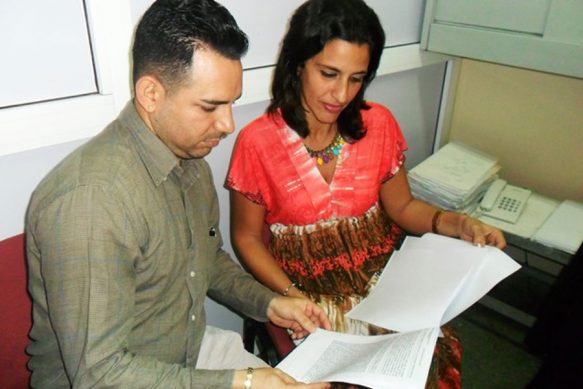
“Although the sentence recognizes in its first Considering the active role of Isabel (the couple of Eumnice), who is also the godmother of children, in the upbringing of minors, “he detailed.
“Nor is there any sign of “discrimination” in the sentence, that is, indirectly there is a recognition of the union between these two people, because it refers to the godmother of the children, her partner, also plays a fundamental role in the care of the three minors,” he continued.
“Perhaps that is the novelty of the sentence,” said the lawyer.
And he clarified that the father was not deprived of parental authority. “He has duties and rights also with respect to these minors,” he said.
Do we say they are lesbians?
Both jurists admitted that they had doubts about whether or not they should address the homosexuality of the grandmothers when filing the lawsuit.
“In self-consultation with my conscience, I said to myself, “Do I put all the data related to this family?” recalled Echevarría.
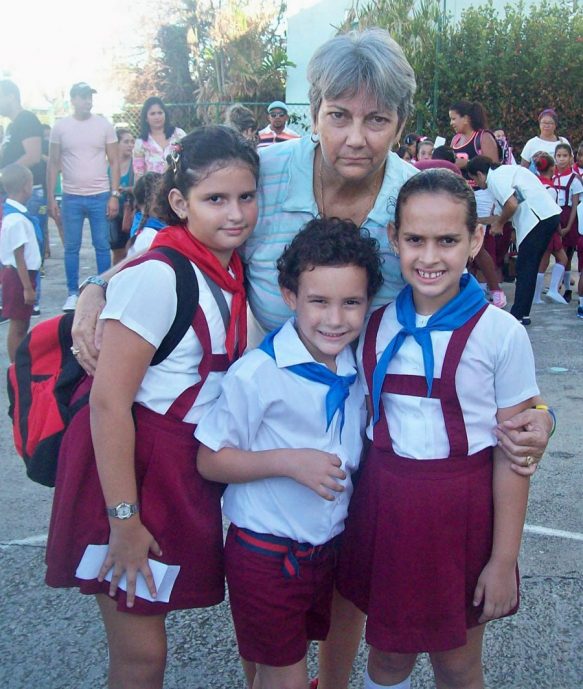
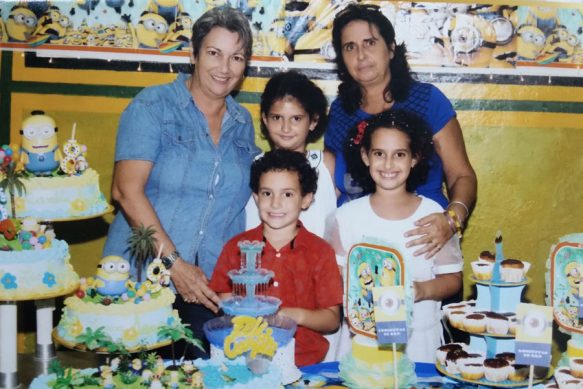
Eumnice Violeta and her grandchildren on a school morning. Photo: Taken from the Accept website
The lawyer was concerned that the other party might use the fact that it was a homosexual couple to allege alleged harm to children because of same-sex relationships.
“And I said to myself… why not? You have to put the patch on before the hole comes out. They are in a relationship as a couple and that doesn’t in any way affect minors,” she recalled.
“To introduce that element, she obviously had to have the consent of Eumnice Violeta. She always agreed, even asked that this information be introduced in the lawsuit,” she continued.
Attorney Sanchez described the court’s reaction on the day of the hearing as “impressive.”
“When the grandmother finished speaking, with very personal and moving experiences, the godmother stood up and explained. Everyone ended up crying, and the two of them embraced,” she shared.
“It was a very nice process, because the court didn’t have the slightest doubt that they have a relationship. But that didn’t mean that they were deprived of their rights, on the contrary,” she said.
The lawyer maintained that “the judiciary didn’t show any kind of opposition, neither in the act of appearance nor in the sentence” because of the sexual orientation of the grandmothers.
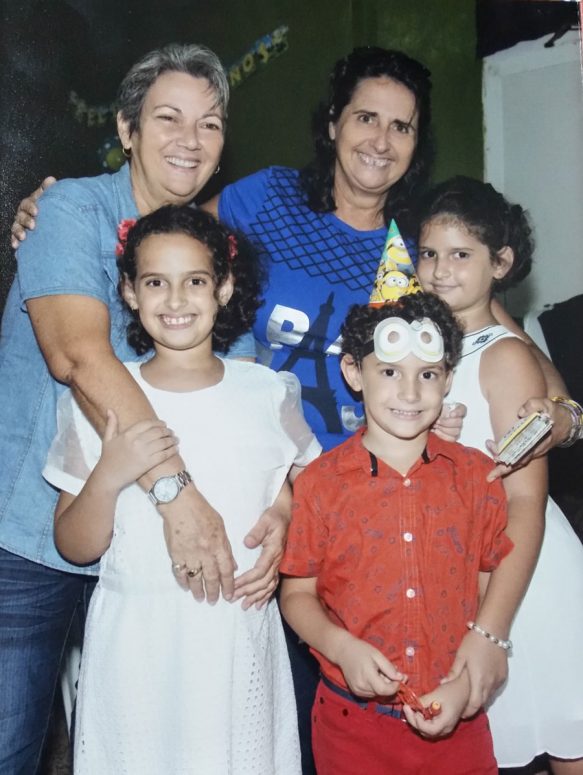
Another family photo.Taken from the Accept website
An exceptional case
The case of Eumnice arrived in April 2017 at the hands of Rodolfo and Anahita, two professionals from the Law Firm Specialized in Cassation Resources, thanks to the recommendation of a colleague who assessed the sensitivity of the problem.
“They had been given little hope, and the granting of guardianship and care to grandparents is certainly unusual,” Echevarría said, as the law states that custody should be vested in the father after the mother’s death.
However, “this is not the first case of detachment of custody and care in favor of the extended family, such as grandparents, although they have not been abundant,” said the lawyer.
Due to the very nature of the work in the law firm where they work, which handles cases from all over the country, Rodolfo and Anahita affirm that there will have been three or four similar cases in the rest of the Cuban provinces.
Nor do they believe that he is the only one in Havana, although “there are many judges who have not yet had any in their jurisdiction. Since it’s not the first, it’s not that many,” Sánchez said.
In fact, the first setback faced by the family was that the Popular Municipal Court of Old Havana, in an unusual intervention by the Attorney General’s Office, alleged a lack of competence to deal with the case and ordered its transfer to the municipality of Boyeros, where the children’s father resided.
New paths in family law
As professionals, Echevarría and Sánchez maintain that the positive solution to this case brought them great satisfaction.
“Law has to go hand in hand with these new family paths. There are reconstituted, assembled families, and there is already a recognition of the role of the extended family,” Echevarría reflected.
For the lawyer, “the right has to look at the new paradigm shifts, from a nuclear family based on the ties derived from marriage, to a family that is sustained by affection.
The family rooms today reinterpret current but outdated Cuban norms and apply international agreements signed by the country to solve family law cases, pending the postponed revision by parliament of a draft of a new Family Code to replace the one drafted in 1975. (2018)
New US Ciber-War Announcements

CONTRaplANO
Donald Trump and the New U.S. National Cyber Strategy
U.S. National Security Advisor John Bolton announced that on September 20 President Donald Trump signed the new National Cyber Strategy plan that officially authorizes the U.S. government to conduct offensive cyber attacks.U.S. National Security Advisor John Bolton announced that on September 20 President Donald Trump signed the new National Cyber Strategy plan that officially authorizes the U.S. government to conduct offensive cyber attacks.
Photo: Internet
A CubaNews translation.
Edited by Walter Lippmann.
U.S. National Security Advisor John Bolton announced that on September 20 President Donald Trump signed the new National Cyber Strategy plan that officially authorizes the U.S. government to conduct offensive cyber attacks.
“We are going to do a lot of things in an offensive way and I think our adversaries need to know that,” Bolton said at a press conference. This document will contribute to “ensuring a secure internet”; according to Bolton, the competent bodies will now be able to “identify, counter, dismantle, degrade and deter actions contrary to national interests.”
“People who have perpetrated or are preparing to perpetrate hostile actions against us in cyberspace” should be concerned, the National Security Adviser said, emphasizing that responses to these aggressions will not be limited to cyberspace, but also include legislative responses, economic sanctions and military actions.
“The president has decided that the new plan is in our national security interest, not because we want more offensive operations in cyberspace, but precisely to create the deterrent structures that will show our adversaries that the cost is too high,” he said.
The document accuses Iran, Russia, China and the Democratic People’s Republic of Korea (DPRK), among others, of using cyberspace as an instrument to attack the U.S. And Bolton mentions examples of attacks “perpetrated” by Russia and the DPRK.
Last July, special prosecutor Robert Mueller of the U.S. Department of Justice accused 12 members of Russia’s Senior Intelligence Board (GRU) of “pirating” Hillary Clinton’s presidential campaign for the 2016 U.S. elections.
According to the Associated Press (AP), Russian hackers obtained military secrets from Washington, including its unmanned aircraft and critical defense technology. The group of hackers tracked at least 87 people working in sensitive areas of the country’s military sector such as drones, missiles, rockets and poachers, among others.
The Office of Personnel Management, an independent agency of the U.S. government, reported that hackers have made several attacks on major U.S. websites, including the Pentagon’s computer network, the Twitter and YouTube accounts of U.S. Central Command (Uscentcom), and that pirates stole access data from millions of U.S. officials, including employees of the Department of Defense.
Moscow refutes these accusations and considers it an invention. The Russian government has repeatedly said that the accusations are “absurd” and represent an attempt to divert attention from U.S. domestic affairs and its responsibility for attacks on installations, companies, military and civilian units, public and private services in Russia, Iran, the rpdc and China.
The Russian Chancellery reiterated the call to “organize a meeting of the bilateral cybersecurity working group to examine these problems with the participation of specialists from Russia and the U.S.”.
Who’s Attacking Whom
The United States Government, its intelligence services and institutions, companies linked to the military-industrial complex, have been developing a strong offensive against the Islamic Republic of Iran for a decade.
In 2010, a cyberattack on an Iranian nuclear power plant caused damage to the plant’s cooling system, which could have led to a serious incident with unforeseeable consequences. This is considered to be the first computer attack to cause damage to the physical world.
Various sources claim that the Stuxnet virus affected the centrifuges of the Iranian nuclear system. Once inside the plant, the pressure of the centrifuges increased until they failed without being detected, confusing the technicians who believed it was a physical failure. The intention was to sabotage and delay the development of the Iranian nuclear program; today there are elements to consider that the US and Israeli special services were involved in the attack.
Although it may seem like a matter of science fiction, in addition to attacks on infrastructures, cybercriminals can directly attack human life, pacemakers can be hacked that have a wireless function and end the life of an “enemy”, declared sources close to the company.
According to the CBS 60-minute program, in 2007, U.S. Vice President Dick Cheney, during George Bush’s term in office, his doctor ordered that the wireless function of his pacemaker be deactivated for fear of being hacked and killed.
FireEye, a research company in areas related to cybersecurity protection, is closely linked to cia through Robert Bigman, ex ciso (director of information security) of this agency, with whom it has signed numerous contracts for investigations into the use of malware, zero-day exploits (cyber attacks that occur on the same day a vulnerability is discovered in the system) and apt tactics (technical solutions to the Advanced Persistent Threat, apt).
FireEye has been singled out as possibly responsible for manufacturing fake attacks with the aim of singling out Russia and Iran as cyber-crime countries.
Russia was accused in 2017 of carrying out a global cyberattack that caused billions of dollars in losses in Europe, Asia and America. “The attack spread rapidly around the world”; in a communiqué the United Kingdom accused Russia of being behind this cyber aggression, an accusation that was supported by the White House.
“This has nothing to do with Russia,” Russian President Vladimir Putin said immediately during a visit to China. “Microsoft said it directly, that the source of the virus was the intelligence services of the United States.
Now that “we realize that a genie has come out of the bottle (…) he can turn against his parents,” “(…) it is necessary that the issue be addressed immediately on a serious political level,” Putin added.
Microsoft’s legal director, Brad Smith, noted that the event occurred because the National Security Agency (nsa) developed a way to penetrate Windows operating systems that ended up in the hands of pirates.
The “terabyte of death” and other cuties
The U.S. Department of Defense has repeatedly announced that a major cyber attack of unknown magnitude could occur at any time on a global scale. Pentagon spokesman Alan R. Lynn said that a few years ago receiving a one- or two-gigantic attack was an important issue.
“We are currently facing 600 gigabyte cyber attacks and cyber offensives that we could not even imagine before,” he said.
The Pentagon speaks of an eventual massive effect of one terabyte (one thousand gigabytes). “It’s only a matter of time before such an attack occurs,” warned Lynn.
On 12 May last year, the extortionist WannaCry virus infected 200,000 users in more than 150 countries. WannaCry is a computer program whose purpose is to “hijack” files from a computer and then “ransom” them from users in exchange for money.
“The size of the attack makes us think that it may not be lone wolves,” blogger José Luis Camacho told Russia Today, arguing that attacks of this magnitude require significant funding.
Part of the code of this virus corresponds to an NSA “cyberweapon” called EternalBlue, according to Bleeping Computer. With this tool, the attack takes advantage of a well-known security breach in the Windows operating system that makes it possible to take control of a computer.
Approved Plan Justifies Cyber Attacks Against Alleged Opponents
Trump repealed the so-called “presidential directive 20,” a confidential document signed by Obama and made public in 2013, when former NSA analyst Edward Snowden exposed 1.7 million files on U.S. espionage programs.
That regulation forced the Pentagon and intelligence agencies to obtain approval from other government departments before launching cyber attacks. Now that door has been left open and the Pentagon receives the authorization to act aggressively, leaving behind, according to Bolton, “the defensive position maintained until now.
The document legalizes hacking and cyber-attacks against other nations. What then can be expected of experts in manufacturing pretexts, false flag attacks, self-aggressions, simulated attacks or permitted aggressions in order to achieve dark purposes, as some point out that what happened on September 11, 2001?
The new plan opens one more scenario of danger for world peace, humanity must close ranks to stop the war madness from extending to cyberspace.
Cuba promotes the peaceful and legitimate use of information and communication technologies (ICTs) and the opportunities that cyberspace offers for the development and well-being of humanity.
PSOL will support Haddad in run-off
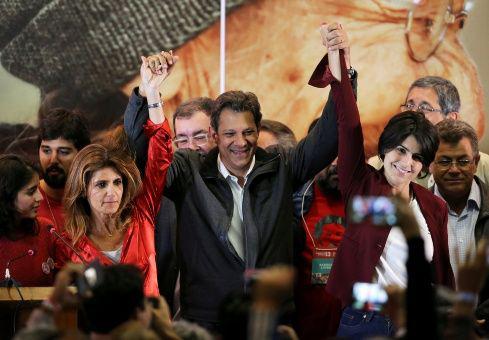
PSOL will support Haddad in the run-off election
As Brazil celebrates its second round of presidential elections, the parties begin to announce their alliances
—————————————————————————————–
October 9, 2018 14:10:33
A CubaNews translation.
Edited by Walter Lippmann.
Brazilians will vote this Sunday, Oct. 28, to elect the president for 2019-2023.
The Socialism and Freedom Party announced on Tuesday that it will support the presidential candidate of the Workers’ Party, Fernando Haddad, for the second round of elections to be held on October 28.
“To defeat Bolsonaro and defend rights, in the second round the PSOL defends the vote for Haddad and Manuela. AgoraÉHaddad”, says the publication in the party’s social networks.
Luiz Inácio Lula da Silva’s representative at the polls will have to face the utlraderechista Jair Bolsonaro in the next election day. After the vote on Sunday, October 7, Bolsonaro got 46 percent of the votes, while Haddad got 29.3 percent.
To advance towards Brazil’s presidency, candidates will have to resort to political alliances with other parties.
Meanwhile, former Democratic Labour Party candidate Ciro Gomes, who received 12.5 percent of the vote, said he would not support Bolsonaro.

After the support of this party, Haddad called for a united front for democracy. Photo: (Source: Telesur)
Isabel Moya’s Last Interview
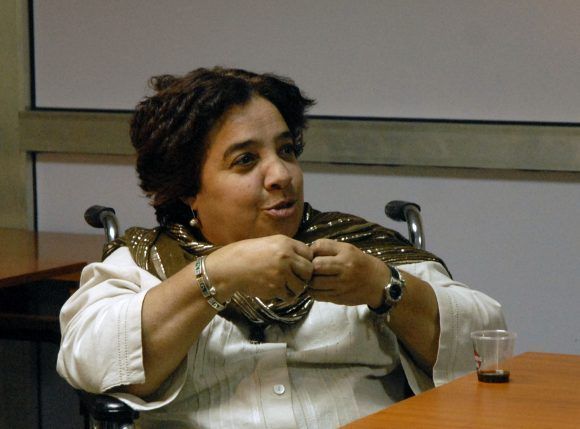
Isabel Moya: Challenges for women in Cuba?
Let’s not think everything has already been achieved.
 By Flor de Paz, Cuban journalist and plastic artist
March 8, 2018
Translated and edited by Walter Lippmann for CubaNews.
Isabelita, during a conference at the Editorial. Photo: Flor de Paz/ Cubaperiodistas.
This is the last interview given by the director of Editorial de la Mujer, who passed away in Havana on Sunday, March 4. Her testimony is part of an audio-visual series that was recently recorded to dignify the work of Cuban journalists, who will be holding their 10th Congress this year.
The project, which will soon be broadcast on Cuban television, is being carried out by young graduates of FAMCA and is the fruit of collaboration between the Union of Journalists of Cuba (UPEC) and the Association Hermanos Saíz (AHS).
— Constance and strength? A trait of my personality. I am, I don’t want to use the term fighter because it has many meanings, but I am a combative woman who always believes in Anaïs Nin’s phrase: “Put your dreams on the horizon and start walking”. You never reach the horizon, we know that, but push.
The entrance hall and living room of Isabel Catalina Moya Richard’s house are very spacious, as in most Havana construction of the first decades of the 20th century. Both spaces are demarcated only by four circular columns, and are passageways for the furniture that inhabits it —sofás, armchairs, armchairs, tables— and, among the latter, a huge one that Enrique Sosa, a professor at the University of Havana and panelist for years in the television program Escriba y Lea [Write and Read], gave to Isabelita.
It’s San Lázaro Street, in the popular neighborhood of Centro Habana. The noises of the road buzz around the house like a volcano erupting. And Isabel, seated in front of the precious wooden table that Professor Sosa gave her, now supporting an old typewriter, a souvenir from La Catrina, photos with Juan Carlos, and Gabriela, the 20-year-old daughter of both of them, as well as other ornaments, talks about the image she has hanging on one of the walls of the room: “it is Frida Kahlo’s Blue House”. It was given her by its author, the Mexican Aurea Alanis, who was in Havana for a course in gender photography.
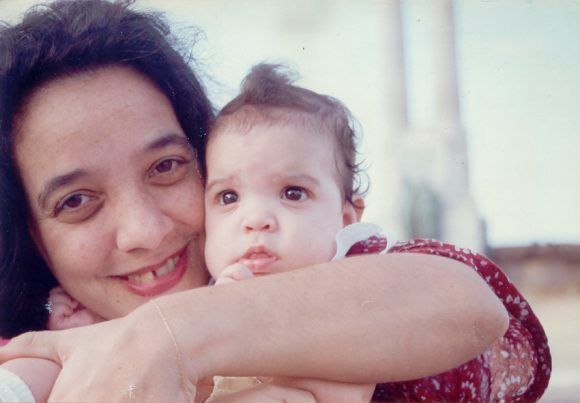
Isa and her daughter Gaby, as a baby.
—I’ve always been very gregarious, I enjoy being in a group, I’m very social, but I realized that I wanted to study journalism because I liked to write, I liked to research, I liked to read, I liked Humphrey Bogart’s films, from film noir, in which it was always a journalist who discovered everything. And I thought: I want to be that kind of person who investigates, who reveals secrets, she says, while Daniela Muñoz Barroso and Lena Hernández’s cameras “focus” on her eloquence.
During a pause, her mother, also named Isabel, also 72, reaches for a glass of water and medication. “All my life I have known what my faculties and shortcomings are. I have a degenerative bone disease that has forced me to use braces to walk since I was born. I’ve been operated on many times and during those periods I devoured books and books; of course, without order or concert, I read The Consecration of Spring, by Carpentier, as well as seven novels by Corín Tellado.
At that stage she tried, above all, to fill herself with a world of words that would allow her to live other lives in her own life. And then, in high school, when teachers began to direct their reading, she realized that she really had writing skills.
—But look, I never approached journalism as literature; I have not written stories or fiction as journalism. No, I’ve always been interested in writing essays on history or politics. It’s important to write about reality. And, of course, I’ve written poems, like everyone else, to give them to the groom, but not because they are publishable. Far from it.
…
—I would say that I had a beautiful childhood; a very happy growth process. Starting school was an important time because I always loved studying. In the fifth grade, I won a literature contest with a fantasy fiction story. I felt tremendous joy!
“I don’t forget that in elementary school my political life began, even though I wasn’t very aware of that reality at the time. Many times, we would go with Vietnamese hats and leaflets glued on our uniforms to support Vietnam in its war against the United States. Also, one of the first marches I participated in as a child was for Angela Davis’ freedom. Then she came to Cuba and I realized that I was already worried about those problems. Later, in the middle school and high school years, when I made friendships that I still have, and when my interests were taking shape, I definitely knew that I wanted to study journalism.”
…
Isabel Catalina Moya Richard was born in Havana on November 25, 1961. She is the eldest daughter of a family of four, including her parents. Their existence – marked by the impossibility of their organisms to assimilate calcium and, in turn, an optimism compensating for the lack of the mineral and all difficulties – can be summed up this way:
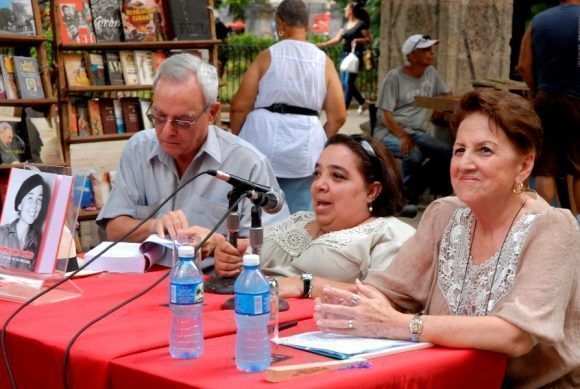
Isabelita, together with Eusebio Leal, Historian of the City of Havana, and Deputy Yolanda Ferrer.
On her feet, on crutches or in a wheelchair, she is still herself: PhD in Communication Sciences, director of Editorial de la Mujer and the magazine Mujeres, the Associate Professor of the Faculty of Communication at the University of Havana, the president of the Chair of Gender and Communication and coordinator of the International Diploma in Gender and Communication at the José Martí International Institute of Journalism; the admirable José Martí Prize for Dignity and the National Journalism Prize (for her life’s work), awarded by the Union of Journalists of Cuba in 2016 and 2017.
—When I graduated, in 1984, I was the first in the group and was placed as a disseminator in the Office of Nuclear Affairs, but I did not agree. My dissatisfaction did not go down well because that institution was very important at the time. However, I wanted to do journalism and, when I asked to be relocated, I didn’t know where I was going to work for three months. The second choice was Mujeres [Women} magazine, and I took it as a punishment.
“How wrong I was! There were opportunities that many of my classmates didn’t have. I know all of Cuba thanks to my work as a reporter for Mujeres. I have been in the Pico Turquino, on the black beaches of the Isla de la Juventud, in the wonderful landscapes of Pinar del Río, in the Escambray… And, as at the same time I was attending the correspondence section, one day I thought: “Oh, I’m going to do a postgraduate course in research methodology”. And so I was able to design a content analysis tool that allowed us to classify all the letters we received. We get a lot of information from them, both for the magazine’s work and for the attention to the problems they alluded to. And I was forever hooked on research.
With the support of the Federation of Cuban Women (FMC), Isabelita had the opportunity to do a course on feminism at Casa Morada in Chile, and to participate in numerous international events on gender. Until in one of her daily inner dialogues, she asked herself: “Well, I have to try to create an environment where theories of gender and communication converge and thus we will have a better journalism”. And in this approximation, her doctoral thesis is aligned, for which she received the highest grade.
In the School of Communication, Isabelita gave her first gender classes, a horizon reached by which she lets us see great passion. When thinking about it, she brings to mind, that master’s degree given in Villa Clara, “one of the adventures in which I enrolled with UPEC: the teachers had to stay there every school week”.
Then it was time to found the Chair in Gender and Communications at the José Martí International Institute of Journalism, thanks to Guillermo Cabrera, she said. In this way, a line of training and research was opened in our country, of which we can be proud today. This is because, in addition to having graduates from numerous graduate schools, some of them have done their doctoral theses on the subject.
—More than two hundred communicators from all over Latin America have graduated from our courses. Through the Chair, I have also been able to teach at several important universities in the region and in Europe. Two years ago, for the first time, I gave online TV classes to some high schools in the United States. Having students everywhere is a delightful experience.
…
It’s February 3, 2018, Saturday morning. Isabelita, in front of Daniela and Lena’s cameras, talks about the issues that move her the most. Irina, with a demanding expression, reveals her concern for the continuous sounds coming from Calle San Lázaro, but this is the daily environment in which she lives.
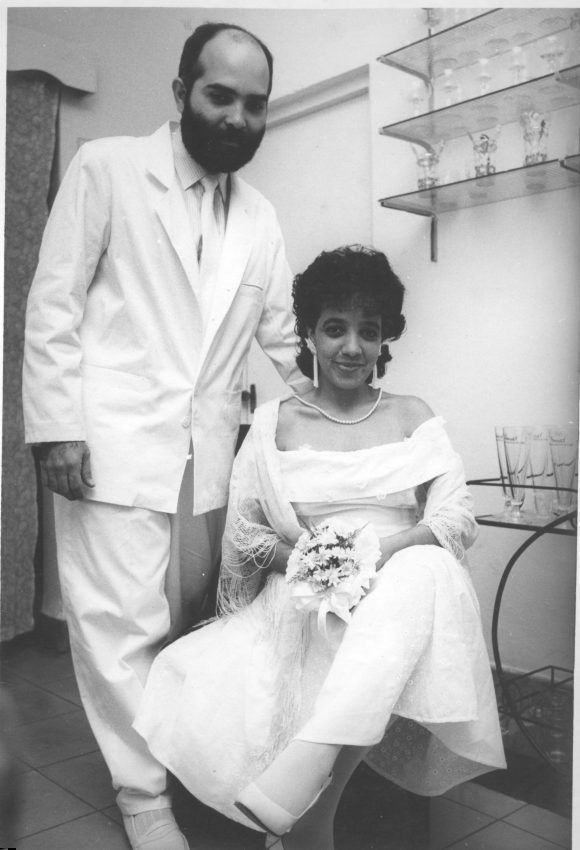
Graphic memory of the wedding of Isabelita and Juanca.
—The challenges facing women in Cuba? The first is to think that they have already achieved everything. When we look at the statistics and see the number of women in the National Assembly, the number of women scientists and women communicators, and that more than seventy percent of the prosecutors are women, and so on, we come up with a distorted idea of reality. Because we have managed to open ourselves up in professions that were not previously considered feminine, we are now in the most complex moment, that of confronting subjectivity, culture, value judgments, and customs. These are much more difficult to change, since they are based on collective imagery and social representations. This is what we sing when we sing a bolero, a salsa song or sometimes, unfortunately, a reggaeton and what the novels tell us: romantic, dependent loves.
Her reflection is based on two substantive arguments: the communicational processes in Cuba do not problematize the reductive approaches of these audiovisual spaces, nor the subjective gaps that in the seventies the media managed to tackle documentaries such as that of Sara Gómez, Mi aportación, and the feature films Retrato de Teresa. Furthermore, attitudes that unwittingly blame and associate the advancement of women with certain family crises are frequent.
Today they say, “Women don’t give birth,” but that’s not the problem. The problem is that society has put women in the dichotomy of motherhood or professional fulfillment, so society has to change in order for the couple, the family, to have more children. It is not just a matter for women because even with all the advances in science and technology, it takes an egg and sperm to conceive a human being. But the media, instead of questioning this sexist approach, return and blame women for the problem of low birth rate.
Despite being public, of representing a social system that has human beings as the center of its goals, the media in our country does not achieve a racial balance, for example, Its aesthetics are very homogeneous: the majority of women come out with straightened hair. I liked it very much that the other day I saw a young black girl with her braids on the Morning Magazine. Because, as I say, there is no problem with straightening your hair, but in that fashion, it becomes a cultural mandate that forces you to assume aesthetics with which not all want to express themselves. It is still a challenge for diversity to be understood.
Using her experience as an example of what can be done in the communication processes, Isabelita talks about a work recently published in Mujeres magazine. It was about the people who sell coffee and fried foods from a window of what was the living room of her house, of a small house. And she asks, “What about the children living in these homes, where do they do their homework? You guys get to work? How do you reconcile business and family life in a small space like that??? Oh, and what good is it, grandparents live longer, but now the child is going to marry so grandma must move out of her room, and sleep in the living room…?
I know that there are people who think that these issues are minor and that the only thing that matters is global warming, but in what happens global warming there are people who live similar tragedies every day, so it is very good that there is journalism for global warming and that there is journalism that helps in the day-to-day, a service journalism and a journalism of social activism.
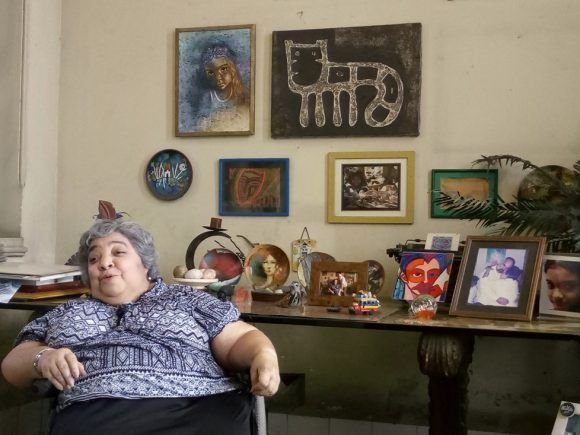
Isabelita, what does journalism mean to you?
A commitment to my contemporaries, to my country, to my people; a passion, a passion that saves. I have been sick, in the hospital at terrible times, when one of those moments in which the fragility of the human body is observed. Someone passed by and said to me, “Oh, how I like your magazine”. And, listen to me, all the fears and pains have been frightened away. So I tell you, journalism is my salvation.
And she added:
Rosa Luxemburg said that socialism is not just a knife and fork problem, it is a profound cultural revolution. I, therefore, believe that journalism will help transform machismo, sexism, homophobia, racism, the inheritance of five hundred years of Western Judaeo-Christian culture, first, from an atrocious first colonialism and, later, from a capitalism that destroys human beings.
(taken from Cubaperiodistas)
Brazil: Birth of a Monster

Pagina 12 (Argentina)
Birth of a Monster
By Atilio Boron
October 7, 2018
Translated and edited by Walter Lippmann for CubaNews
[reformatted for web-readability)

In a smelly tavern in the slums of Munich in the first post-war period, a demobilized corporal of the Austrian imperial army – failed as a painter and portraitist – tried to make a living by betting on local drunks that they could not hit him with their spittle from a distance of three meters. If he dodged them, he won; when he didn’t, he had to pay.
Between attempts, he shouted tremendous anti-Semitic insults, cursed Bolsheviks and Spartacists, and promised to eradicate gypsies, homosexuals, and Jews from the face of the earth. All in the midst of the uncontrolled shouting of the clientele gathered there, passing alcohol, and repeating with mockery their sayings while they threw the remains of beer from their cups and threw coins between insults and laughter.
Years later, Adolf Hitler would become, with the same harangues, the leader “of the most cultured people in Europe”, according to Friedrich Engels more than once. Who in those moments – 1920, 21, 23 – was the reason for the cruel sarcasm among the parishioners of the tavern would resurrect as a kind of demigod for the great masses of his country and the very embodiment of the German national spirit.
Bridging the gap, something similar is happening with Jair Bolsonaro, who comfortably leads the polls in the first round of Brazil’s presidential election. His reactionary, sexist, homophobic, fascist outbursts and his apology of the gloomy Brazilian military dictatorship of 1964 and his tortures provoked widespread repulsion in society.
For that reason, for two years, his voting intention never exceeded 15 or 18 percent. The polls of the last two weeks, however, show a spectacular growth in his candidacy. The most recent one assigns him 39 percent voting intention. We know that today’s public opinion polls have enormous margins of error. There can also be media operations of the Brazilian bourgeoisie willing to install in Brasilia anyone who prevents the “return of petista populism” to power.
But we also know, as a recent note by Marcelo Zero in Brazil states, that the CIA and its local allies have unleashed an overwhelming avalanche of “fake news” and defamatory news about the candidates of the petista alliance that found fertile ground in the favelas and popular neighborhoods of the big cities of that country.
These sectors were lifted out of extreme poverty and empowered by the administration of Lula and Dilma. But they were not educated politically nor was their territorial organization favored. They remained as masses in availability, as the sociologists of the sixties would say.
Those who are organizing and raising awareness are the evangelical churches with whom Bolsonaro has allied himself, promoting a harsh, hyper-critical conservative discourse about the “disorder” caused by the left in Brazil with its policies of social inclusion, gender, respect for diversity, LGBTI and its “soft hand” with delinquency, its obsession for human rights “only for the criminals”.
One of their means of attracting favelados to the cause of the radical right is to send so-called pollsters to ask them if they would like their son José to be renamed and called María, to exacerbate homophobia. The answer is unanimously negative, and indignant. The former captain’s preaching is clearly in tune with that popular conservatism skillfully stimulated by reaction.
In this ideological climate, his scandalous and violent nonsense, such as Hitler’s, decant as reasonable popular common sense and could catapult a monster like Bolsonaro to the Palace of the Planalto. By the way, as an additional fact, it should be remembered that he promised Donald Trump to authorize the installation of a U.S. military base in Alcántara, something the petite governments refused. If it were to succeed, it would be the beginning of a horrible nightmare, not only for Brazil but for all of Latin America.
Join in support of Pagina 12:
https://www.pagina12.com.ar/apps/membresias/
You must be logged in to post a comment.