US Must Ask Forgiveness
The U.S. Must Ask for Forgiveness
 By Manuel E. Yepe
http://manuelyepe.wordpress.com/
Exclusive for the daily POR ESTO! of Merida, Mexico.
Translated and edited by Walter Lippmann.
The U.S. House of Representatives passed a resolution in late July 2008 apologizing to African Americans for the years of slavery they have suffered.
This was the recognition by the U.S. House of Representatives of the injustice and inhumanity of the slave system and “Jim Crow”, as the period of intense racial discrimination between 1865, when slavery was officially abolished and the 1960s, was known in there.
At that time, the establishment was forced to take action against the nefarious racial discrimination system but, in some states more and in others less, it kept black citizens legally segregated from white people and limited their civil rights, even without the right to vote. This legal segregation was more inhumane and violent in the southern states than in the northern United States.
The name “Jim Crow” applied to that shameful period in American history was that of a comedian and singer named Rice, who composed and performed the song “Jump, Jim Crow” in 1828, about a black servant who danced while brushing his master’s horse. It is not clear why the term “Jim Crow” began to be used to refer to any entity that practiced racial segregation: “Jim Crow laws”, “Jim Crow schools”, “Jim Crow trams”. There were workplaces, universities, taxis, trains, buses, boats, canteens, restaurants, hotels, hospitals, health services, water fountains, prisons, nursing homes, barbershops, public parks, sports fields, circuses, fairs, theatres, cinemas, concert or party halls, libraries, beaches, swimming pools, waiting rooms, telephone booths, workshops, elevators, brothels, lines or queues, entrances and exits of buildings. Everything could be assimilated into to this U.S. form of apartheid.
Segregation applied to marriage, some professions, neighborhoods, churches and cemeteries. In some cities, Jim Crow martial law was imposed and blacks could not go out on the street after a certain hour at night. In the Jim Crow courts, whites swore with one hand on a Bible and blacks swore on a different copy of the same book..
Black people were excluded from the unions. They were not admitted to Jim Crow sororities, clubs and societies. Board games and sports involving physical contact between blacks and whites, including combat games such as boxing, were prohibited unless the opponent was a foreigner.
Add to this ignominious situation the violence with which the Ku Klux Klan, members of the John Birch Society, the White Citizens’ Councils and other elements of the American extreme right were acting. A real white terrorist system!
In the face of such outrages, the struggle of black Americans for their civil rights became increasingly intense. It generated such great leaders as Malcolm X and the Rev. Martin Luther King, Jr., as well as hundreds of martyrs, remembered or forgotten, from Black Power organizations and others who, in the 1960s, gave birth to a situation that appeared to be a precursor to a revolution.
Fear of reprisals by the empire and its control of the media limited the international denunciation of these abuses and global solidarity. The triumph of the revolution in Cuba, the rise of anti-imperialism and the ideas of social justice in Latin America encouraged the just domestic struggle of Black people. This coincided with the need for the recruitment of black soldiers for the asymmetrical imperialist war against Vietnam and all this forced the establishment to bury the Jim Crow system.
For the sake of national security, the empire made major reformist “concessions” in race relations in a country where the law was white, and there were white policemen, white judges, white mayors, and white actors and actresses on film and TV screens. Blacks were nearly always represented in submissive and complacent attitudes.
Prior to the request for an apology from the House of Representatives, the other branch of Congress, the Senate, passed another resolution in April 2008 apologizing for “the many cases of violence, abuse and neglect” suffered by Native Americans. The Senate also apologized in 1993 for the “illegal overthrow” of the Kingdom of Hawaii a hundred years earlier.
Yet humanity is still waiting for the U.S. to apologize and compensate so many nations on every continent whose democratic existence the U.S. has assaulted since it became an imperialist power in the early 20th century. And to do so with the promise never again to intervene in the internal affairs of other nations, as well as to respect the human rights of their own citizens of other ethnicities and ways of thinking.
May 17, 2018.
Rita Hayworth and Gossip


Rita Hayworth and the Globalization of Gossip
April 3, 2018
 By Rolando Pérez Betancourt
Graduated in Journalism from the University of Havana in 1973. Graduate in French from the Institutes of Foreign Trade and Foreign Affairs. José Antonio Fernández de Castro National Prize for Cultural Journalism (1999), José Martí National Prize for Journalism for the work of life (2007). Journalist at the Granma Newspaper. Attends the weekly program “The Seventh Gate”. He is one of the sharpest film critics in Cuba.
A CubaNews translation. Edited by Walter Lippmann.
Rita Hayworth in her most famous role, alongside Glenn Ford in “Gilda”. Photo: American Cinematheque/ Los Angeles Times.
Increasingly, the globalization of gossip gains ground from the social and cultural magnitude.
“-Dig this!, Mrs. X divorced Mr. X after finishing her latest movie.”
“Yes, but he was already sleeping with somebody else.”
“With a He, or with a She?”
This is just an example of banal and depoliticized gossip in its comprehensive role of obliterating transcendental reasoning.
Back in the 50s, as a child, I learned about the subject — without understanding it then—by reading the glossy magazines collected by a cousin who, despite spending a fortune in red dye and high heels, never reached her dream of looking like Rita Hayworth and, by chance, marrying a prince from distant lands.
At the time, gossip about show-business celebrities was nothing compared to the explosive levels it reaches today in the huge and dominant information platforms of the Internet, where a headline about the latest mass killing at a school in the United States may rank equally, or below, the latest steamy dress exhibited by Jennifer Lopez, or any other actress with less artistic talent, but with enough curves, public life, or money to keep up with the hype.
These are myths and individual fame aimed at trivializing culture and monopolizing the attention of an audience eager to follow the bombastic life of the rich and famous, instead of the political, cultural or economic events that, in their fabric of human implications, could indeed influence their own lives.
The sensationalism irradiating from individuals is winning the battle from the social fact as part of the US-Americanization of the myth that –without landing craft or air strikes– invades and seduces millions of minds settled in Europe (also an exporter of those empty values), Asia, and Latin America.
“Information” maneuvers with the clear central objective to have de-politicization and banality govern the everyday life of an international society that –according to their plan– should become increasingly more individual and private, and less collective and social.
This cultural model based on sensationalism, the excessive transcendence of the image, and the exaltation of celebrities (true or fabricated), is aimed at focusing popular attention on egocentric principles with numbing effects. It has the same purpose – only now on a scale unimaginable in the mid 20th Century—that one day made my cousin try and fail to look like Rita Hayworth.
Let’s include ourselves
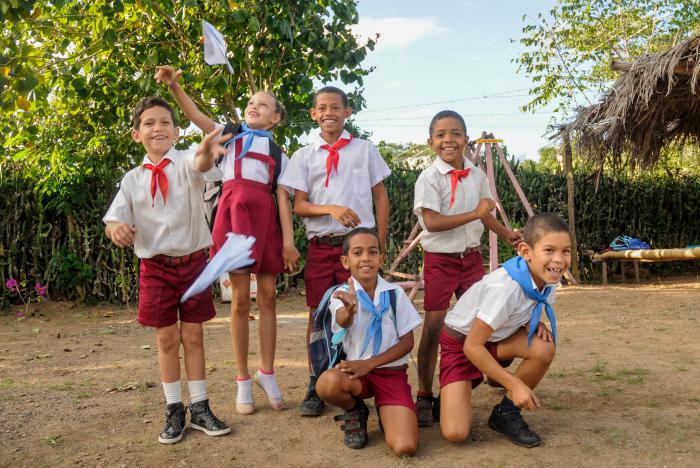

Let’s include ourselves, for schools without homophobia or transphobia
Mariela Castro Espín, director of the National Sex Education Center (Cenesex), urged this during the press conference of the 11th International Conference on Sex Education. edition of the Cuban Conference against Homophobia and Transphobia, which will run until May 18
Author:
May 4, 2018 21:05:20
A CubaNews translation.
Edited by Walter Lippmann.
For schools to be a place of love and inclusion, where ethical principles and references for life are built and reinforced, means preventing and confronting all manifestations of discrimination.
Teachers must therefore have the tools to identify situations of harassment, as well as the clarity and scientific culture to address these realities. In addition, the family should alert them to any experience of rejection, physical, verbal or psychological abuse suffered or referred by their child in the school setting, and reinforce the culture of respect from home.
Mariela Castro Espín, director of the National Sex Education Center (Cenesex), urged this during the press conference of the 11th International Conference on Sex Education. edition of the Cuban Conference against Homophobia and Transphobia, which will run until 18 May, to promote respect for free and responsible sexual orientation and gender identity.
Although the Cuban school stands out in the world for its levels of security, realities marked by mockery, physical or verbal abuse, situations of social exclusion and the use of a naturalized homophobic and sexist language must be made visible in order to overcome them, said Mariela.
The Director of Cenesex, an institution that celebrates its 30th anniversary, highlighted the support of the Cuban Party and Government in raising awareness among the population, educating them to overcome prejudices and moving forward, without ignoring resistance, in generating awareness and consensus. He also mentioned the alliances with Cuba’s Central de Trabajadores and the Ministry of Education, and said that the significance of Cuba’s projection for schools without homophobia or transphobia transcends its borders, since the island is a point of reference.
The agenda of the Conference gives relevance to the topics of formation, and the province of Pinar del Río will be the venue. Two emblematic events are to be held: the Gala, at the Karl Marx Theatre, on May 11 at 8:30 p.m.and the Conga and Diversity Festival, which this year begins at 6:30 p.m. May 12, and will go from Línea y Paseo to the José Antonio Echeverría Recreational Center.
Pix from Gala vs. Homophobia & Transphobia

Pictures from 11th Gala Againist Homophobia & Transphobia
By Darío Gabriel Sánchez García
Journalist and photojournalist. Professor of Photography and Audiovisual Production at the Faculty of Communication of the University of Havana.
May 18, 2018
Translated and edited by Walter Lippmann for CubaNews.
This Friday, the stage of the great Cuban events, the Karl Marx Theatre, was filled with people at the 11th Cuban gala against homophobia and transphobia, under the slogan “For schools without homophobia and transphobia”.The gala featured nationally recognized international artists such as Alain Daniel, Diván, Haila, Laritza Bacallao, Migue-DECUBA, Proyecto Voces, Yotuel, as well as the dance companies Acosta Danza, Rakatán, Coro de la Escuela René Vilches, Latin Dance Ballet and Revolution.
With the presence of Roberto Morales Ojeda, Minister of Public Health, member of the Political Bureau of the Central Committee and Vice-President of the State Council; Ena Elsa Velázquez, Minister of Higher Education; José Ramón Saborido, Minister of Higher Education and Mariela Castro Espín, Director of the National Sex Education Center (Cenesex), among other personalities, this eleventh edition is being held within the framework of the celebrations for the 30th anniversary of Cenesex, an institution that since 2007 has strengthened its educational strategy to promote the full and responsible exercise of sexual rights as inherent to human beings.
Beyond the artistic display, the gala was also the occasion for the presentation of special awards by Cenesex to Carla Antonelli, and recognized LGBT rights activist who since 2011 serves as deputy of the Assembly of Madrid by the Spanish Socialist Workers Party, becoming the first and only transgender woman in Spain to accede to this position. Also honored was Mike Jackson, an English activist and one of the founders of Lesbians and Gays Support the Miners, a lesbian and gay organization that came together to support striking miners from 1984 to 1985 in Britain after the Thatcher government confiscated funds from that sector of the workforce.
The “In memoriam” prize was awarded to the recently deceased journalist, researcher and professor Isabel Moya Richard. From her position as director of the Women’s Publishing House, of the magazine Mujeres, and as president of the Chair of Gender and Communication at the José Martí International Institute of Journalism, Isabel Moya was always a fervent defender of gender equality.

De izquierda a derecha: Carlos Solar, Yasbell Rodríguez y Margot. Foto: Darío Gabriel Sánchez/ Cubadebate.

Foto: Darío Gabriel Sánchez/ Cubadebate.

Foto: Darío Gabriel Sánchez/ Cuabadebate.
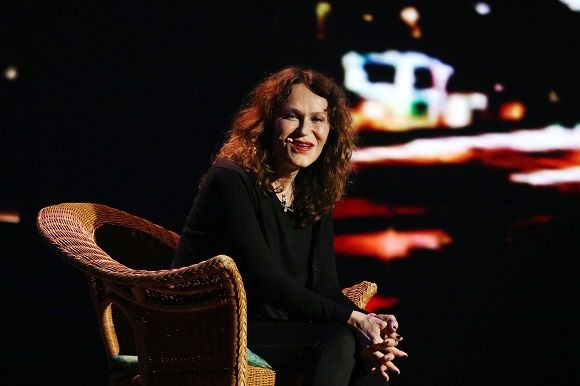
Antonia San Juan (Actriz española). Foto: Darío Gabriel Sánchez/ Cuabadebate.

Foto: Darío Gabriel Sánchez/ Cuabadebate.

Foto: Darío Gabriel Sánchez/ Cuabadebate.
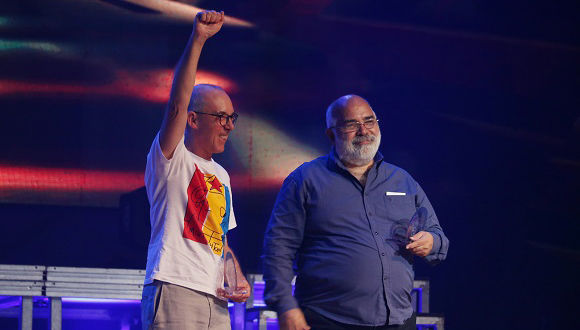
Foto: Darío Gabriel Sánchez/ Cuabadebate.
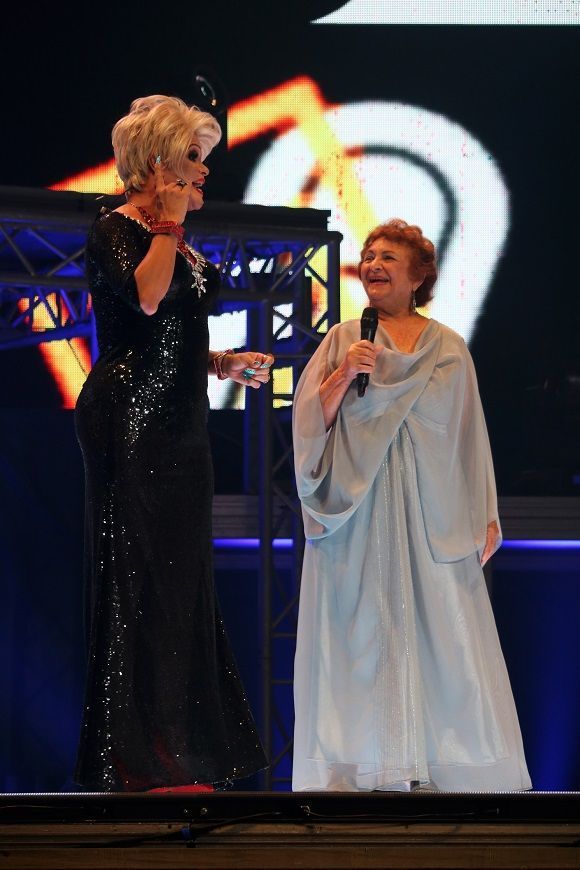
Foto: Darío Gabriel Sánchez/ Cuabadebate.
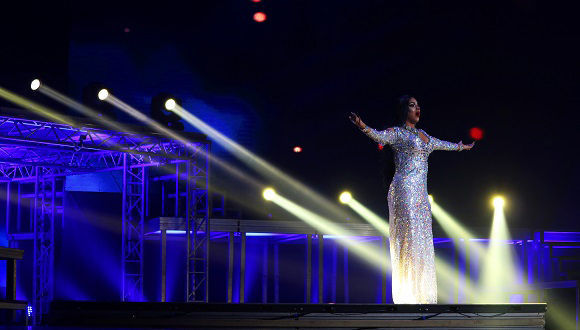
Foto: Darío Gabriel Sánchez/ Cuabadebate.

Foto: Darío Gabriel Sánchez/ Cuabadebate.
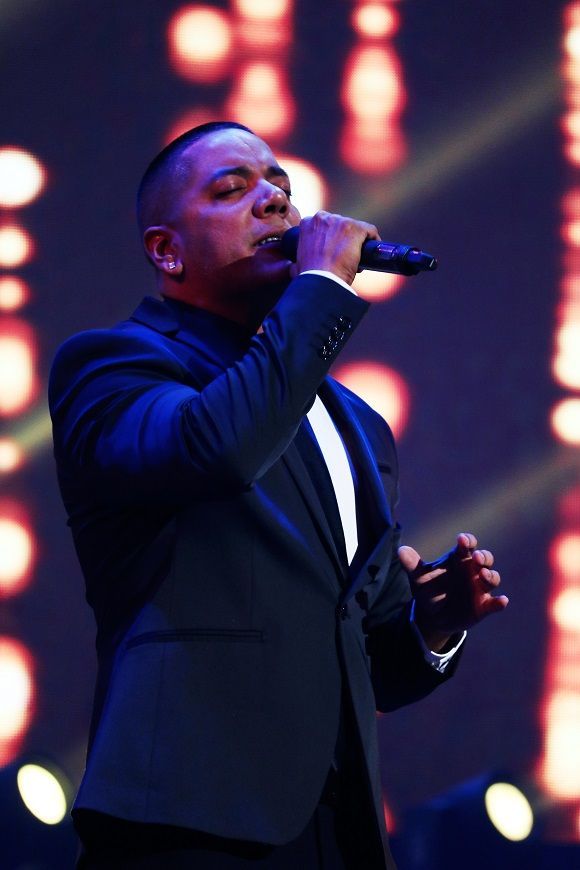
Foto: Darío Gabriel Sánchez/ Cuabadebate.
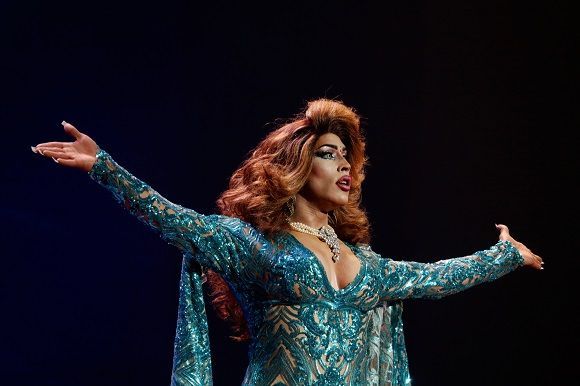
Foto: Darío Gabriel Sánchez/ Cuabadebate.

Foto: Darío Gabriel Sánchez/ Cuabadebate.

Foto: Darío Gabriel Sánchez/ Cuabadebate.
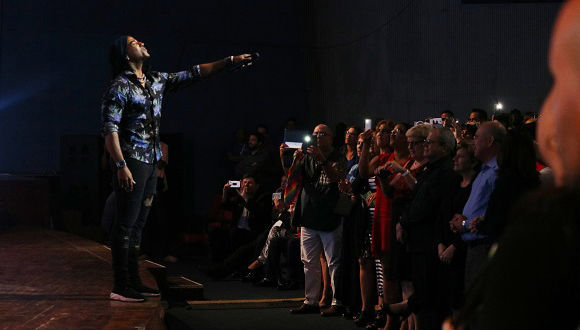
Foto: Darío Gabriel Sánchez/ Cuabadebate.
Pinar del Rio Against Homophobia, Transphobia
- English
- Español
ACN 39
Cuba-provincias
To the rhythm of the conga, NO to homophobia and transphobia
By Evelyn Corbillón Díaz
A CubaNews translation.
Edited by Walter Lippmann.
Carrying banners, multicolored banners and the national flag, attendees danced down José Martí Street to Independence Park on the day the World Health Organization’s General Assembly removed homosexuality from the list of mental illnesses in 1990.
Comparsas, floats, bands of schools and artists on stilts of the street theater group Tecma, integrated the parade this morning with the population of the westernmost territory of Cuba.
I am part of the Revolution, I am also Fidel, were some of the slogans of Pinar del Río residents, visitors from other provinces and latitudes who joined the Cuban conga; and many did not miss the opportunity to share the moment on social networks.
For schools without homophobia or transphobia is the motto of the educational campaign that for the second consecutive year accompanies this day, and focuses on homophobic and transphobic bullying.
Gelen Valdés, an eleventh-grader at the Rafael Ferro Urban Pre-University Institute in this city, defended the right to free sexual orientation and assured ACN that it could not miss the conga to share with diverse people and enjoy.
Pinar del Río, the host province of the eleventh Cuban Day Against Homophobia and Transphobia, is hosting an extensive programme of activities since Tuesday, including exhibitions, literary presentations, mini-sports, exchanges in educational centres and conferences by Dr Mariela Castro Espín, director of the National Centre for Sex Education.
Castro Espín thanked the people of Pinar del Río for their participation in this type of activities, including the National Program of Education and Sexual Health; he assured that the whole island is advancing in the goals of the Revolution, and one of its struggles is against homophobia and transphobia.
(Photos available for this information at http://fotos.acn.cu)
ecd/mpv/cmb 18 13:07
ACN 39
Cuba-provincias
A ritmo de conga, un NO a la homofobia y la transfobia
Por Evelyn Corbillón Díaz
Pinar del Río, 17 may (ACN) Pinareños de todas las edades y sectores desfilaron por la arteria principal de esta ciudad en muestra de respeto a la libre y responsable orientación sexual e identidad de género, en la conga cubana contra la homofobia y la transfobia.
Portadores de pancartas, banderolas multicolores y de la enseña nacional, los asistentes bailaron por la calle José Martí hasta el Parque de la Independencia, en el día en que en 1990 la Asamblea General de la Organización Mundial de la Salud eliminó a la homosexualidad de la lista de enfermedades mentales.
Comparsas, carroza, bandas de escuelas vueltabajeras y artistas en zancos del grupo de teatro callejero Tecma, integraron el desfile de esta mañana junto a la población del territorio más occidental de Cuba.
Soy parte de la Revolución, yo también soy Fidel, fueron algunas de las consignas de pinareños, visitantes de otras provincias y latitudes que se sumaron a la conga cubana; y muchos no perdieron la oportunidad de compartir el momento en las redes sociales.
Por escuelas sin homofobia ni transfobia es el lema de la campaña educativa que por segundo año consecutivo acompaña a esta jornada, y se centra en el bullying o acoso escolar homofóbico y transfóbico.
Gelen Valdés, alumna de oncena grado del Instituto Preuniversitario Urbano Rafael Ferro, de esta ciudad, defendió el derecho a la libre orientación sexual y aseguró a la ACN que no podía perderse la conga para compartir con personas diversas y disfrutar.
Pinar del Río, provincia sede de la oncena jornada cubana contra la homofobia y la transfobia, acoge desde el martes un amplio programa de actividades que incluye exposiciones, presentaciones literarias, miniferias, intercambios en centros educacionales y conferencias de la doctora Mariela Castro Espín, directora del Centro Nacional de Educación Sexual.
Castro Espín agradeció a la población pinareña por su participación en este tipo de actividades, incluso, en el Programa Nacional de Educación y Salud Sexual; en tanto aseguró que toda la isla avanza en las metas de la Revolución, y una de sus luchas, es contra la homofobia y la transfobia.
(Fotos disponibles para esta información en http://fotos.acn.cu)
ecd/mpv/cmb 18 13:07
School is for Everyone
School is for Everyone
“Cuba is a safe country, the Cuban school is safe, the family has confidence in it, and what we are looking for with these campaigns is to raise awareness, address concerns, and to provide education and guidance to the population,” Mariela Castro Espín, director of the National Sex Education Center, told Granma.
Author:
May 15, 2018 20:05:41
A CubaNews translation.
Edited by Walter Lippmann.
School must be a place of inclusion, love and personal growth. Photo: Endrys Correa Vaillant
Learn without fear. To make the daily lesson the realisable idea of having a space where to accept and respect, to listen to the other in peace; where mockery, mistreatment, punishment are crushed by dialogue, and security is never a chimera.
Say school, and you will have said that, and more, because you can’t think of this institution any other way. Efforts to eliminate all forms of violence in society, and particularly in schools, are therefore welcome.
This is one of the messages that the Cuban Conference against Homophobia and Transphobia is bringing us in these days. I’m included! For schools without homophobia or transphobia, which in its 11th edition – whose headquarters is in the province of Pinar del Rio – not only promotes respect for free and responsible sexual orientation and gender identity, as an exercise in social justice and equity, but also chooses a strategic scenario for it.
“Emotional violence and exclusion generate suffering, and it is not something that can be tolerated for any reason,” Mariela Castro Espín, director of the National Sex Education Center (Cenesex), told Granma.
There is an essential space, which could not be left out of this campaign that Cenesex organizes every two years, and that is the school, the interviewee confirmed, for whom she cannot lose sight of the fact that the causes of situations of violence are often interrelated.
“If we start from the fact that homophobia and transphobia are rooted in culture, institutional dynamics and relationships between people, which makes it difficult to make them visible as a social problem and their need for prevention, it can be easily understood that both phenomena are present in the schools, as a reflection of a changing social reality that requires more effective social action,” she explained.
Hence, the emphasis on these types of discrimination. This does not mean that the rest of the causes are not being addressed, but it is undeniable that we should focus on those areas where the “education” of homophobia begins, added Dr. Castro Espín.
“Cuba is a safe country, the Cuban school is safe, the family has confidence in it, and what we are looking for with these campaigns is to raise awareness, to address worries, and to provide education and guidance to the population, based on scientifically proven data in studies that we conducted in the Center and other institutions on the subject. They alert us to the need to make any of these expressions visible, in order to provide the appropriate response accordingly,” said the expert.
IN SEARCH OF TOOLS AGAINST VIOLENCE
According to academic sources at Cenesex, “studies of discrimination based on sexual orientation and gender identity in Cuba are still scarce and are not focused on homophobic and transphobic violence as categories of analysis, but on violence in general”.
“Only some research addresses violence that has its origin in the prejudices and stereotypes associated with gender roles, those that the dominant cultures assign to men and women in order to maintain a social order that services the economic interests of the ruling classes,” they say.
In this sense, Dr. Castro Espín explains that, in the case of children, they do not work with or handle concepts such as sexual orientation or gender identity, but rather that prejudices are exercised through the expression of gender, which is also constructed from what we educate as roles historically assigned to the masculine and feminine.
But it must be understood, she said, that homophobic and transphobic violence in schools affects all those who are in this situation: victims, perpetrators and witnesses.
It also has a significant impact on the physical and mental health and well-being of the educational community, and adversely affects access to education, academic achievement and job prospects. “These situations create a climate of insecurity, fear and discontent in the school community. They diminish confidence in educational staff and the institution, increase the risk of self-injurious behavior and hinder the construction of enriching and non-judgmental relationships,” say scholars.
“The positive emotional environment that the school must create is fundamental for learning,” said the specialist, who pointed out that the Cuban state’s educational policy has a responsibility to continue to promote the values of inclusion, not hatred.
“Hate is begins with adults, not children. They are the ones who educate or transmit the prejudices, so the campaign is strongly aimed at making this understood,” he said.
Today, one of the main challenges facing Cenesex is to find appropriate and effective teaching tools that allow students, teachers and their families to tackle these phenomena. It is also a response to UNESCO’s call for states to investigate and address bullying issues in the context of violence in schools, said the director of the center.
The role of comprehensive sexuality education as a basis for training to prepare for and prevent violence is critical, she added.
In line with this, Manuel Vázquez Seijido, Deputy Director of Cenesex, pointed out that Resolution 139 of 2011 is a legal norm issued by the Ministry of Education itself. It orders and introduces sexuality education from the curricular point of view. It is an educational element that can become a framework that guarantees schools without homophobia or transphobia, if these elements are emphasized in the formative process.
The issue, he said, is to protect the fundamental rights of individuals, and this implies a shared responsibility that must be assumed and articulated by all sectors of society.
NECESSARY AVENUES
In Cuba, according to Cenesex experts, research that has dealt with homophobic and transphobic violence in schools has done so indirectly, one of the axes of analysis being the school environment. Likewise, another common element in these studies in our country has been the fragmentation of the samples in the LGBTI population, which prevents the integrated analysis and systematization of the results.
In this regard, they argue that retrospective research, conducted with samples of adult LGBT activists, offers among their main elements: difficulties in the processes of adaptation and permanence of trans people in school because they do not accept the school uniform established according to their legal identity (Castro, 2015; Suárez, 2015). In addition, there are experiences of rejection, physical, verbal and psychological mistreatment of trans people by students and some teachers, because they do not accept their gender expressions (Castro, 2015; Suárez, 2015) Also, there is the inability to begin or continue higher education because of the contradictions between their gender expressions and institutional norms (Castro, 2015). Finally, there is the tendency towards social exclusion of trans people in educational institutions (Castro, 2015).
For example, out of a total of 160 people surveyed, from 12 provinces in the country, 142 have been victims of homophobic acts (Garcés, 2015).
On the other hand, studies carried out in some school spaces in Havana show the existence of physical and verbal abuse, situations of social exclusion, as well as the use of a naturalized homophobic and sexist language (Rodney, 2015).
Some clues about the above can be found in the progressive exploratory study on homophobic and transphobic violence in the school careers of Cuban LGBT activists, by the authors Delia Rosa Suárez Socarrás, Massiel Rodríguez Núñez, Marais del Río Martín, Ada Caridad Alfonso Rodríguez, Gisett Suárez Gutiérrez. Their results, although they cannot be generalized to Cuban society, do offer important warning elements to work with.
The retrospective and exploratory investigation, which aimed to characterize the homophobic and transphobic violence experienced by activists of the Community Social Networks during their trajectory for Cuban schools, had, as a sample, 90 activists from the following networks: Youth for sexual health and rights; Transcuba. Network of Transgender people, couples and families; Lesbian and bisexual women; Humanity for diversity (HXD); and Men who have sex with men (MSM).
According to the text, “the average age of the sample was 28.1 years with a trend of 22 years of age. Attendance was predominantly white (48), followed by mestizo (25) and black (17) people from the provinces of Havana, Villa Clara and Santiago de Cuba. Most of the people studied in the urban areas of their provinces and the external regime was predominant.
“Distribution by sexual orientation and gender identity as stated by the subjects was 38 gay men, 27 transgender people, 19 lesbian women, 5 bisexual women and 1 bisexual man.
“The schooling completed was concentrated in Secondary Education. At the time of the investigation, 25 people were in higher education, mostly gay men.
Among the elements of analysis that stand out in the results, the authors cite school dropout, while “22 subjects indicated that they had left school at some point in their school career, and only 9 returned, mostly trans people who sought to complete their secondary education”.
According to the research, “the average age of dropout was concentrated at 16.6 years of age at the end of secondary school, with trans people being the most represented. Of the 22 people who reported having dropped out of school, 13 referred to the fact that this decision was linked to the situations of violence of which they were victims in the school environment . They experienced physical abuse, their opinions weren’t listened to, threats against them weren’t listened to, or they were ignored, mocked, had their belongings, stolen, were insulsted, sexually abused, sexually abused, not allowed to wear the uniform they wanted, were left home, not allowed to participate in activities, contracted the HIV virus, or needed to work because the family did not cover their basic needs.
Trans people (9) are the ones who mostly refer to this experience, followed by lesbian women (3)”.
“The response of the educational institutions focused on the change of study regime or on the isolation of the victims: (…) the solution from the residences was to put us in semi-boarding schools, (…) the daily trips (…)”, some of the testimonies state.
“It should be noted that the measures implemented could be considered a form of revictimization, since it is the victims of violence against whom measures are taken and not on those who victimize them,” the authors point out.
Among those who perpetrated violence, researchers cite students, teachers, the victims’ own families, relatives of other students, teaching support staff and others.
Support networks within the school were practically non-existent, and there was a tendency to normalize the situations that occurred: (…) they are the work of boys, they should not be given importance (…) The support, in the cases in which it was present, came from students who intervened to stop the mistreatment, according to the study.
“Verbal aggressions coming from friends were not seen as forms of violence: (…) they told me that they could make jokes and play with me, but we did not allow anyone to play with you (…), while the attitude of the teachers was aimed at silencing the situations and placing the blame on the victims”.
Another element of interest is that the people affected decided not to report when they suffered violence due to homophobia and transphobia. Among the reasons for not making the complaint are: Not being prepared to make sexual orientation public: (…) I didn’t say anything because my family didn’t know about it (…) The immobility of the teaching staff results in impunity for the aggressors: (…) Even though you denounced the abuse, nothing happened (…) Fear of the consequences against double stigmatization: (…) if you made a complaint, they made fun of you because you were gay and a snitch (…)
“Such evidence shows that it is essential to sensitize student organizations to act as support networks for situations of violence in the school setting. It is vitally important to strengthen the training of teachers and non-teaching staff in the identification and prevention of homophobic and transphobic violence,” the Cenesex experts say.
It so happens that homophobic and transphobic violence in the school setting reflects homophobia and social transphobia. “Preventing and confronting these manifestations of discrimination in schools contributes to guaranteeing one of the principles of the National Education System in Cuba: access to education free of discrimination. Thus, it will be necessary to promote, not only specific policies and regulations, but also social and cultural changes, which are expressed in subjectivities and therefore in the relations between people,” says the campaign of the 11th edition of this Conference.
Nothing compares to always, and without exception, listening to children and young people in Cuba, who say that they like their school, because fear has no place in it.
==================================
COMMENTS ON WEB:
Very enlightening interview with Mariela and the information she provides on the few studies that have been done on the subject. However, I believe that in addition to raising awareness in the aftermath, it is also necessary to raise awareness and educate the family, mainly parents, about the way in which they should deal with situations that may arise with their children and to give them tools, especially to parents of primary school children, to explain to them according to their age how to treat and accept and not to discriminate and to give them guidance on how to explain to them that it is homosexuality and transsexuality (I am referring to primary school children). Because although they are parents from a generation closer to these times and are not permeated by prejudice, I imagine it must be difficult for them to give this kind of information to their children. And I point this out because of the negative comments made by the readers in the articles that reported on the conga for the day against homophobia in terms of allowing the participation of minors, who have no level of understanding of what it means to be gay, lesbian, transgender, etc.
Eusebio Hdez said:
2
May 16, 2018
08:56:01
It is good that the school is a place of wide inclusion. However, with this campaign it would appear that violence is associated with gender issues, when it is not exactly so. The campaign against any kind of violence should be extended to ¨Bullying¨ For example against disabled, skin color, personal appearance, etc.
The Pride of Mike Jackson
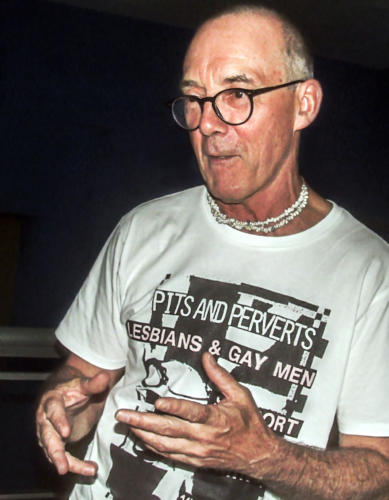
 The Pride of Mike Jackson
Posted on May 15, 2018 – 7:14 by Alina M. Lotti
A CubaNews translation.
Edited by Walter Lippmann.
During the Gala against Homophobia and Transphobia, the English activist Mike Jackson received the Cenesex Award. Photo: Heriberto González Brito
Stephen Beresford probably found in Mike Jackson a good story to include in what would later become the screenplay for the film Pride, a historical drama about the work of a group of LGBT activists (lesbian, gay, bisexual and transgender) who raised money to help families affected by the 1984 British miners’ strike.
A long time has passed since then and now Mike has had a chance to revisit those facts. Invited by the National Center for Sex Education (Cenesex) to celebrate the eleventh edition of the Conference against Homophobia and Transphobia, the activist, is also a member of the UNITE trade union. It’s the largest in the country, bringing together millions of members from various sectors, an organization in solidarity with Cuba, shared here with the public some of his experiences with the film and the event that motivated it.
“It was during Margaret Thatcher’s second term in office (1983-1987) when she intended to close a large number of mines and put thousands of workers out of work. I was just a young man of socialist thought and a member of the LGBT community, for whom it was important not only to recognize their rights, but also those of others.
“Stephen, the screenwriter, thought the story was incredible and worth taking to the big screen. The experience was different for those of us who were part of that group. I came from the working class and it was easy for me to identify with that cause.
That is to say, during all these years millions of human beings have had the possibility of learning the real dimension of the facts…
In September 2014 it premiered in the UK and it was amazing! Many young people were attracted to it. Today, new groups have emerged in the gay community, such as those who support dockworkers and immigrants. Many are trying to do what we did at that time. We couldn’t hope for anything better!
Thanks to the film we were able to broaden our voices in the UK and in other nations, and to speak not only of struggle and commitment, but also of solidarity.
This is the first time he has visited Cuba and it has only been three weeks. However, how do you see respect for the LGBTI community (this last letter has been incorporated a few years ago and means intersex)?
I feel very safe here; there are no drug users or homeless people on the streets. Compared to London there is a great contrast. My country has lived for 40 years with strong right-wing rule, but now the new leader of the Labour Party, Jeremy Corbyn, is a great candidate on the left.
As for what you ask me, I believe that Cuba has made progress on the rights of the LGBT community, similar to my country.
If there was the possibility of a second film….
If that happens I’ll migrate to the moon!
The 11th Cuban Conference against Homophobia and Transphobia: For schools without homophobia and transphobia, began on May 4 and will run until May 18 in the context of the 30th anniversary of Cenesex, the main organizer and promoter of the event. Under the motto I include myself, this year – and for the second time – the campaign focuses on better education for the new generations.
Tillerson Out, Pompeo In

Tillerson’s gone and Pompeo’s here
Posted: Monday 14 May 2018 | 07:55:29 PM
 By Lázaro Fariñas
digital@juventudrebelde.cu
A CubaNews translation.
Edited by Walter Lippmann.
It seems that not only by going to Seville you lose your seat. For example, former Secretary of State Rex Tillerson did not go to that city, but he did go to Africa, and he lost his seat. The man, in the best Trumpist style, was called and fired. It was so humiliating that they were not even kind enough to wait for him to recover from a bad stomach acquired in that region.
Worse still, to further publicized information no one needed to know. It is known that there had long been a series of disagreements between Tillerson and the President, and on countless occasions there was a rumour that he was going to be fired at any moment. Donald Trump never forgave the Secretary of State for publicly calling him a moron at the end of a meeting with several cabinet members. Vengeful as he is, the President waited for the most inopportune moment to humiliate him.
It must be said that this gentleman was at least called on the phone, since with FBI Director James Comey, they didn’t even have that courtesy and the man learned of his dismissal on television in the middle of a meeting with his subordinates in California.
When Tillerson returned to Washington, he was no longer Secretary of State, having already been replalce in that position by that time by CIA Director Mike Pompeo.
Who’s Mike Pompeo?
When this man was appointed by Trump to the position of Director of the Central Intelligence Agency, he was a Congressional Representative from Kansas since 2011.
For some time he was in the Armed Forces where he held the rank of captain. He studied at the Military Academy in West Point, where he graduated as an engineer, and then was admitted to Harvard Law School, graduating as a lawyer, a career he practiced for a while and then went into business, until he came into politics in 2010.
Pompeo, whose paternal grandfather was born in Italy, was a member of the Congress of the Italian-American Delegation. He belongs to the ultraconservative group known as the Tea Party, a group that is on the far-right of the Republican Party.
This gentleman’s credentials as an ultraconservative are impeccable.
He supports the killings being committed by the Israelis against Palestinians in Gaza and the West Bank. He supports the method of torture by drowning [euphemistically called “waterboarding]/ He is against the closure of the torture center at the Guantánamo Naval Base. He was against the agreements that were signed with Iran. He opposes women’s right to abortion and he says that life begins at conception. He does not accept same-sex marriage. He iss a distinguished member of the National Rifle Association. He opposes the health care law that benefits the poor known as Obamacare. He does not believe in climate change, and opposes the United States signing the greenhouse gases treaty. I really don’t even know how you can be so reactionary.
At his Senate confirmation hearing, Pompeo moderated some of his positions. Of course, I knew he would not be confirmed if he held such an uncompromising position.
It is very difficult to know how this new Secretary of State will act.
It will be necessary to see if he can maintain a good diplomatic relationship with the rest of the world and if he can even stay in office having a boss as unbalanced as the one he has, a boss who likes to humiliate those under him; also, a boss who constantly contradicts himself and who constantly criticizes, lies and names his own employees.
Pompeo has a lot going against him. He declared a few days ago that he is in favor of Israel and of the crimes that that nation is committing against the Palestinians, in his favor he has the fact that he has tried by all means to avoid a war against the Democratic Republic of Korea.
He recently visited that country and met with its President. Now we’ll see if he can get Trump to heed his advice so that he doesn’t screw up with unheard of blunders when it comes time for him to sit down with the North Korean President. It is known that the White House narcissist does not like to take advice. Let’s hope he does listen to them at that next meeting, because if he doesn’t, everything that has been put forward so far to avoid war would go down the worst of roads.
Declaration of the Revolutionary Government
Cuba condemns new Israeli aggression against the Palestinian people
The Revolutionary Government of the Republic of Cuba expresses its strongest condemnation of the criminal repression by the Israeli army on the defenceless Palestinian population in the Gaza Strip
Published: Tuesday 15 May 2018 | 01:07:29 PM
A CubaNews translation. Edited by Walter Lippmann.
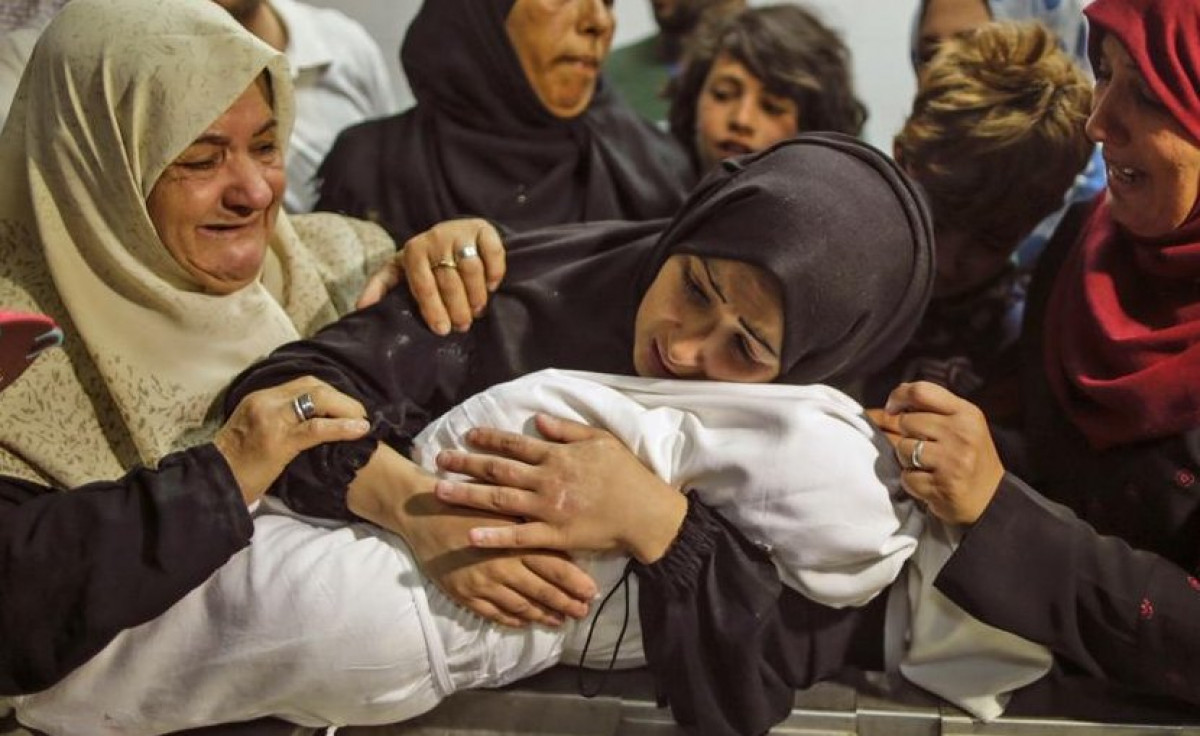
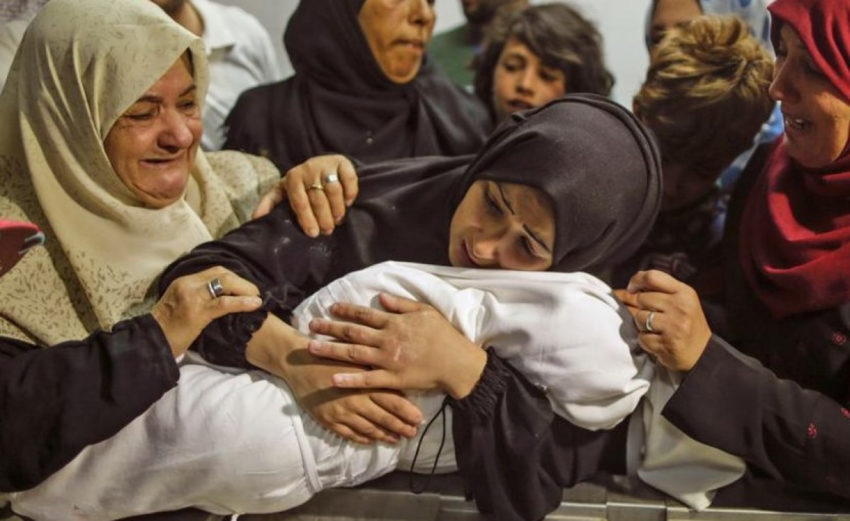
The image of this little girl killed by the attacks on the Gaza Strip goes around the world. Author: AFP Published: 15/05/2018 | 01:15 pm
Cuba condemns new Israeli aggression against the Palestinian people
The Revolutionary Government of the Republic of Cuba expresses its strongest condemnation of the criminal repression by the Israeli army of the defenceless Palestinian population in the Gaza Strip, which has killed at least 52 people and injured more than 2,400. This is yet another serious and flagrant violation of the UN Charter and international humanitarian law and a further outrage against the Palestinian people.
Cuba reiterates its rejection of the unilateral action of the Government of the United States to establish its diplomatic representation in the city of Jerusalem, in open disrespect of international law and United Nations resolutions, which further aggravates tensions in the region.
The Revolutionary Government reiterates once again its unreserved support for a comprehensive, just and lasting solution to the Israeli-Palestinian conflict, based on the creation of two states, which would allow Palestinians the right to self-determination and to an independent and sovereign state on the pre-1967 borders, with East Jerusalem as its capital.
The Dark History of the Koch Brothers
The Dark History of the Koch Brothers
By Manuel E. Yepe
http://manuelyepe.wordpress.com/
Exclusive for the daily POR ESTO! of Merida, Mexico.
Translated and edited by Walter Lippmann.
In 2010, when Mike Pompeo arrived in Congress in 2010, he was called “the Koch Congressman” because the amount of the Koch Brothers’ industrial conglomerate’s contribution to his election campaign. Now, when he was approved by Congress as Secretary of State, several media outlets considered that the Koch Brothers finally got their own Secretary of State.
When talking to anyone form the US active in any party about some measure or projection of domestic or foreign policy in his or her country, it is inevitable that the influence that “the Koch brothers” have, or may have, on it is mentioned in one way or another.
Following his confirmation as the new Secretary of State, most of the US media have identified Mike Pompeo as “Koch’s Congressman” or “the Koch brothers’ man”. But outside the U.S. borders, brothers David and Charles Koch are not as well known.
Although they are not among the nation’s leading authorities, there are fundamental reasons for this. Together, they make up the third largest fortune in the country (only Bill Gates and Warren Buffet outnumber them). The two brothers have an annual turnover of more than $100 billion. Their industrial conglomerate is the second largest in the country, behind only the Cargill group. In 2010, it was named the 10th most polluting in the United States by the Political Economic Research Institute of Massachusetts.
Their influence on politics can be calculated by the fact that they have injected around $200 million into the most ultraconservative causes in the last decade and this hardly transcends the media.
The Big Brothers, as they are popularly known, deny their direct link to the Tea Party. They seek to remain invisible from their headquarters in Wichita, Kansas, deep in the heart of the United States. From there, the Kochs have extended the oil empire inherited from their father, Fred, by devising ways of influencing American politics without being noticed too much, through a network of small groups and foundations they have created.
Although not proclaimed a success on its own, the Americans for Prosperity Foundation, created by David Koch in 2004, was the real organizer of the Tea Party revolt. One of its phantasmagorical projects, United Patients Now, organized more than 300 “popular” protests against the Obamacare health reform and another 80 to boycott its climate protection laws.
The real forerunner of the Koch Brothers phenomenon was his father, Fred Koch, who half a century ago warned of the risks of “a communist president.” Also a critic of the New Deal of Franklin Delano Roosevelt, and denounced “the infiltration of communists” into the Democratic and Republican parties. His children inherited, in addition to their fortune, his libertarian creed.
Charles, 74, was always the most discreet. David Koch, 70, made an unfortunate foray into politics in 1980, competing with Ronald Reagan, whom he saw as a danger. David ran as a vice presidential candidate for the Libertarian Party having been nominated by Ed Clark, its presidential candidate. Among his “libertarian” electoral promises were the suppression of the FBI and the CIA, the elimination of Social Security and Minimum Wages, total deregulation and a drastic reduction in taxes. The government would be reduced to “protecting individual rights”. They got 1% of the vote.
Four years later, as Reagan took over part of his ideology, David Koch officially became a Republican and dragged his brother down the same path.
The youngest of the Kochs suffered a second enlightenment in the 1990s, when he miraculously survived a plane crash. He reinvented himself as a philanthropist for the American Ballet Theater and created the group Citizens for a Sound Economy to continue to defend his multi-million dollar privileges from the shadows.
He then created Americans for Prosperity (AFP), defined as an organization of “grassroots leaders for limited government and the free market.” He could not openly support candidates, but he invested $45 million to support conservative causes in the November 2, 2016 elections.
According to New Yorker journalist Jane Mayer, on the first anniversary of Obama’s presidency, billionaire David Koch stealthily took the lead in the “people’s revolution” by announcing that “When we created Americans for Prosperity (AFP), we had in mind a mass movement, state-by-state, with hundreds of thousands of Americans fighting for the economic freedoms that made this nation the most prosperous in history….
May 15, 2018.
You must be logged in to post a comment.