Argentina in the year of the pandemic

Argentina in the year of the pandemic
As everywhere else, the arrival of SarsCoV-2 has hindered Peronist management in its return; but this has not hindered a social task that has struggled to impose itself on the economic ballast during its first year in office
 Author: Marina Menéndez Quintero | marina@juventudrebelde.cu
December 12, 2020
Translated and edited by Walter Lippmann for CubaNews.
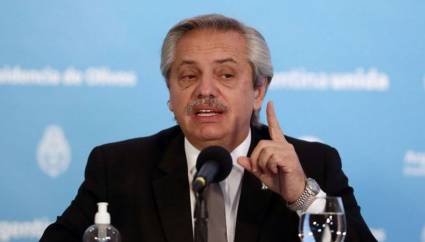
Alberto Fernandez believes he will be able to raise Argentina again, as he did in 2003 when he was Nestor Kirchner’s right-hand man. Author: Getty Images Published: 12/12/2020 | 08:21 pm
The debates to legalize the voluntary termination of pregnancy close the legislative year and, also, the list of relevant events noted in Argentina during the first 12 months of the Peronistas return. But the events that will most mark the life of the nation are in the economy and in society itself, at the mercy of both, like everything in this world, of the scourge and the confrontation of the pandemic.
The interruption of the pregnancy will be the last vote that the Senate will take on the 29th of this month after its approval in the House of Representatives, which could lead, if it is approved, to the fulfillment of one of the most important campaign promises of the executive that Alberto Fernandez presides over.
And although the issue is attracting the attention of defenders and detractors, it is discussing spaces in the media with the arrival, in the first two months of 2021, of ten million doses of the vaccine against Covid-19. This was negotiated with Russia through the direct intermediary of President Vladimir Putin to help a country that is accumulating more than 40,000 deaths from Sars-Cov-2, despite the efforts of the government in the care of the disease and the sick.
It could be said that the outbreak of the pandemic in March, barely three months after the arrival of the Front of All to power, has passed through his presidential administration at the beginning, to the point that the Head of State has declared that when history is written he will be remembered as “the president of the pandemic”.
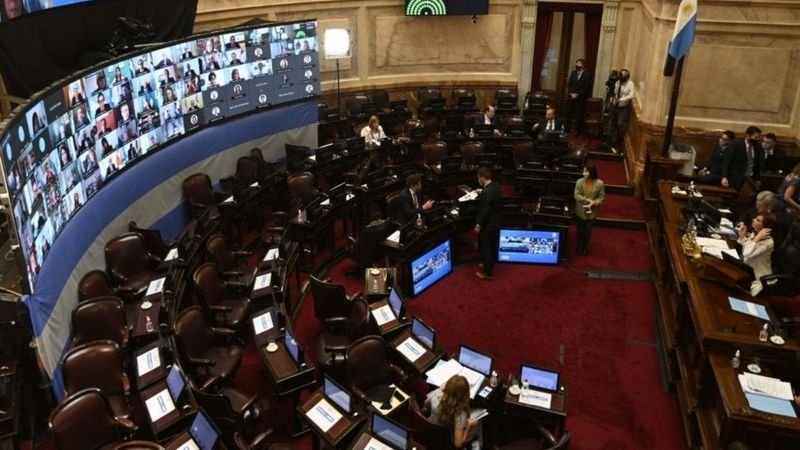
The Argentine Senate also approved the Law of Solidarity and Extraordinary Contribution to Covid-19. Getty Images
Confronting the coronavirus has been much more difficult for a nation that was left, as Argentines often say, “in intensive care” by Mauricio Macri’s terms and was therefore in a worse position to face a crisis that has continued to rage.
In October 2019, still in the middle of Macri’s administration, the official National Institute of Statistics and Census (Indec) reported that poverty had risen to 35.4 percent and destitution to 7.7 percent.
That was the scenario where the restrictions imposed against the risk of contagion were primed, so that at the end of the first half of 2020, Indec reported another slight rise in poverty by five percentage points to 40 percent. Meanwhile, the price of the basic basket rose by 20 percent: nine percent more than the increase in total family income which grew by 11 points, so that families living standards continued to decline .
The substratum was visible in the macro numbers left by Macri. At the end of his two terms, inflation had escalated from 25 to 50 percent annually, the accumulated peso devaluation was 540 percent, reserves had become thinner and, worst of all, the foreign debt was equivalent to 95 percent of the GDP in a country that was not growing.
Argentina was in virtual default.
Faced with this reality, the impact of what was the biggest challenge and now also the biggest success of the new government is not yet visible: the renegotiation of 99 percent of the debt bonds held by private holders, an agreement that saved the country from default and set sail so that, despite everything, the ship would sail again.
The rescheduling of payments – as the young and talented Minister of Economy, Martín Guzmán, is accustomed to say, because only the terms have been distanced but Argentina will pay – was completed in September and, although it may have passed by in the midst of the contingencies unleashed by the Covid-19, it can be considered transcendental. Paying interest on the debt, it was impossible to think of any plan for national revitalization.
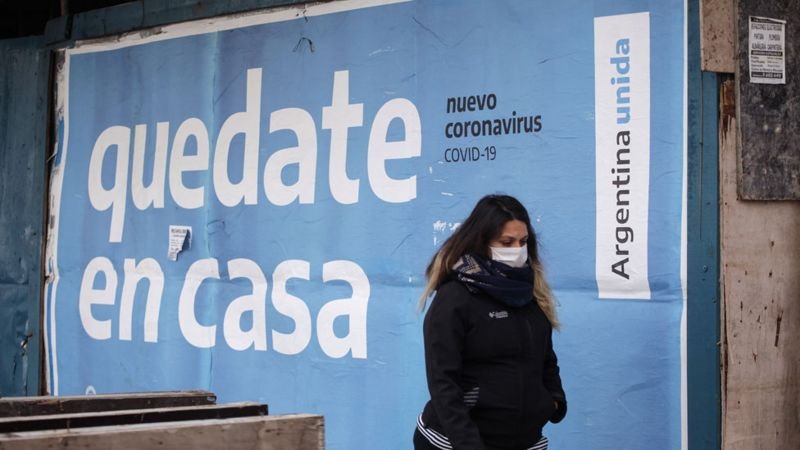
The arrival of the coronavirus added to other problems already facing Argentines. Photo: Getty Images
The payment of $66,137 million dollars of debt under foreign legislation in ten years was restructured with a deduction of around 60 percent, so that only the debts agreed to with the International Monetary Fund itself, relatively “comprehensive” now but responsible for an unpublished disbursement approved by Macri of 57 billion dollars, of which $44 billion were received. Despite its cooperation in the process with the bondholders, the Fund will try to negotiate with the government by imposing prescription books that the Argentine executive does not want to accept.
The successful negotiation with the private sector made it possible for the legislature to approve last month an ambitious and optimistic budget for 2021 that contemplates the forecast of 5.5 percent economic growth after the 12.1 percent collapse of the year that ends,. Inflation is projected to decelerate from 32 percent reported this year, to 29%; and a primary deficit of 4.5 percent, among other aspects.
Martin Guzman, who is responsible for the plan already approved by Congress, has said that this will be one of the elements he would use to negotiate a new program of extended facilities with the IMF.
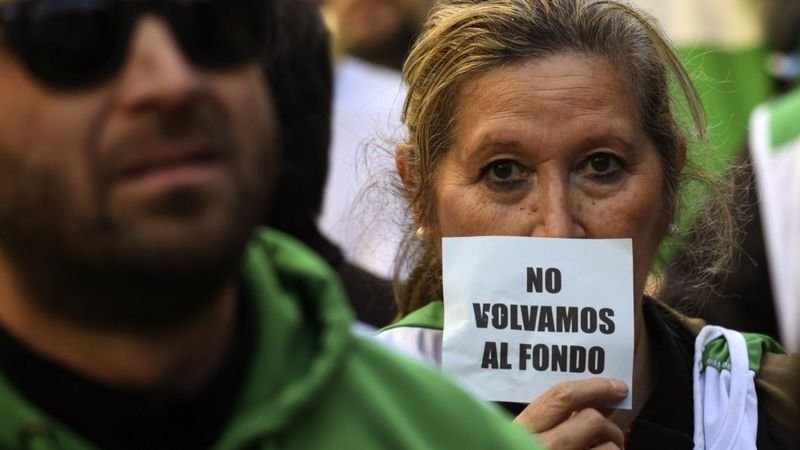
The interventions of the IMF in Argentina have been popular rejected. Photo: AFP
Offering the shoulder to the people
But the benefit that some of this brings is not yet visible today, when the adversity of the economic figures has been lessened by the government with social measures, aimed at making the burden on the people less heavy.
This shouldering of the burden must be responsible for the fact that, in spite of the sorrows, the executive headed by Alberto and former President Cristina Fernández closed the year with popularity ratings that give more than 50 percent support to the president.
A neoliberal ideologue bent on discrediting him would call it “populism”; but such thinking about people is precisely what offers the nuances that differentiate the models from the socio-political point of view.
Among these measures is the Law of Solidarity and Productive Reactivation, which suspended the formula for adjusting pensions and retirement pensions, and promoted their stability. Also, there is the increase of withholding taxes on exports, the freezing of public service rates throughout the year, the creation of the so-called PAIS Tax on purchases with dollars in order to increase savings, and the increase of taxes only on those who receive more income.
In addition, steps were taken to strengthen local production chains in order to make products cheaper, and it was decided to create a food card that will monitor the nutritional quality of families.
Interviewed by the alternative media El Destape, Alberto Fernandez has confessed the rigors of governing a country that received in crisis and then has vilified the coronavirus. But he has also shown that he feels at ease.
During the last three months, income has exceeded inflation by almost three points, he said. Industries such as the automotive industry produced 20 percent more in November than in the same month last year, and reports state that “in the most popular neighborhoods, where people need it most, demand in the dining halls has fallen,” he said.
“So I say, I was not wrong.
A second inauguration on January 20th?
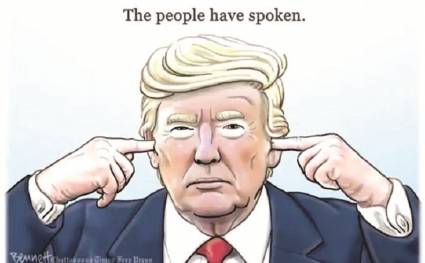
A second inauguration on January 20th?
Outgoing President Donald Trump is organizing a “second inauguration” online at the same time that Bidel will take his oath of office and officially begin the term of 46th U.S. President, Democrat Joe Biden
 Author Juana Carrasco Martín | juana@juventudrebelde.cu
December 22, 2020
Translated and edited by Walter Lippmann for CubaNews.
People have spoken, says cartoonist Author: Juventud Rebelde Published: 22/12/2020 | 12:34 am
The height of irrationality among supporters of outgoing President Donald Trump: they are organizing a “second inauguration” for him, on January 20, at noon, at the same time that he will be sworn in and officially begin the term of 46th U.S. President, Democrat Joe Biden.
Trump’s inauguration will be online and can be considered a provocation and probably a violation of constitutional norms, but there they go proclaiming that it is their right “to freedom of expression.”
As social networks endure everything, more than 60,000 Facebook users are promoting the event they have called “Donald J. Trump’s second presidential inauguration ceremony,” and they claim in a “disclaimer” that they are a sum of 325,000 private individuals, not affiliated with any formal organization, who want to show their support for “President Donald Trump”.
In the face of such ignorance of the popular will expressed in the ballot box and the certification of the Electoral College, Facebook has simply issued another “disclaimer”: “Joe Biden is the president-elect. He will be inaugurated as the 46th president of the United States on January 20, 2021.”
As reported in The Hill, the event will be hosted by Ilir Chami and Evi Kokalari, who was allegedly part of Trump’s 2020 campaign and is featured in regular on right-wing news networks such as One American News Network.
In a recent post on the Facebook page, Kokalari re-posted Facebook’s disclaimer, writing: “Our voting rights are under attack! So is our freedom of speech! And FB’s disclaimer in this post proves it.”
One could not expect less from these fans when Trump has not recognized himself as a loser and continues to encourage such false news and disruptive actions.
Rumor has it that in his obsession with staying in the White House he seems to have in mind appointing attorney Sidney Powell as special counsel to investigate allegations of voting fraud.
For identification purposes, Powell was separated from the Trump campaign in November when he was mocked for claiming that there was a broad “national conspiracy” to deny the current president victory and an “immense influence of communist money from Venezuela, Cuba and probably China” that interfered with the elections, in addition to claiming that the voting machines used were “created in Venezuela by Hugo Chávez” to ensure that he would never lose an election.
At the time, Rudy Giuliani, Trump’s personal lawyer, had said in a statement: “Sidney Powell is practicing on her own. She is not a member of Trump’s legal team. Nor is she an attorney for the President in her personal capacity.”
Now, that statement comes crashing down. Desperate Trump put her in the ring and provided evidence that anywhere in the world psychiatry would have already rendered a verdict of committal or at least strong treatment of insanity.
2020: Hollywood’s worst year


2020, the worst year for Hollywood and theaters
Translated and edited by Walter Lippmann for CubaNews.
Photo: Internet
With only a few days to go before 2020 becomes a historical reference, what many had been predicting is being confirmed: theaters in the United States had the worst box office results since 1980, the year in which the calculation of the collections began.
But if you look back at inflation and other indexes moviesof the economy, you can be sure that 2020 has been the most chaotic year, not only for U.S. movie houses, but in the history of the Hollywood film industry, the most powerful in the world.
Losses from the pandemic have been in the millions, and according to the Hollywood Reporter, box office receipts in 2020 represent an 80% drop in revenue from 2019.
If the damage was not greater, it is because US cinemas were able to function fully until mid-March, but since then they have been intermittent, with few spectators and essential isolation, while in territories like California and New York the policy of closed doors was maintained.
Also, the box office in Asian countries that exhibited films produced in Hollywood contributed to the fact that the collapse was not total, as well as the films released in streaming, an option before which some production houses have remained hesitant, waiting for the vaccines against covid-19 to end up recovering the luminous paths of the great cinematographic business.
But time is running out, capitals are contracting, and there is no lack of studios like Warner Bros. who have already announced that they will not wait for the movie theaters and will play films in 2021 by releasing them in streaming, ignoring the movie theater owners who, standing at the entrance of their theaters, continue to shout and talk about betrayal.
Houdini and Doyle
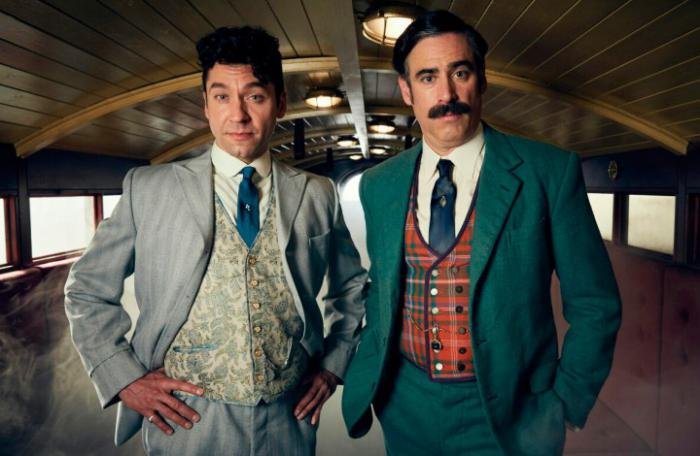
Houdini and Doyle
Among the criminal and detective series to which Multivision has accustomed us at night, a rare advert snuck in: Houdini & Doyle
Translated and edited by Walter Lippmann for CubaNews.
Photo: Internet
Among the crime and detective series to which Multivision has accustomed us at night, a rare advert has crept in: Houdini & Doyle. What did the famous escapist, precursor of David Copperfield’s truculence, have to do with the creator of Sherlock Holmes? How much truth and how much imagination is there in the approach to the cases developed throughout the ten chapters conceived by David Shore, Dr. House’s own, in the service of the 2016 British-Canadian co-production?
The truth was that, in real life, Harry Houdini (Budapest, 1874-Detroit, 1926) and Arthur Conan Doyle (Edinburgh, 1859-Crowborough, 1930), met, dealt with and made enemies. The bond and the antagonism had a certain basis. The writer who applied with tenacity and contumacity the deductive method became fanatical about occultism. meanwhile, the magician who made an epoch in Europe and the United States by untying chains, overcoming immersions and weaving optical illusions, disbelieved in spiritualism and appealed to reason to explain complex phenomena. So much so that he publicly denounced the medium who sold him an alleged message sent by his mother from the beyond: the text, headed by a Christian cross, was written in impeccable English. The magician’s mother was ignorant of that language, spoke in Yiddish, and professed Judaism.
Again and again, in each chapter of the series, the two confront each other in the effort to decipher mysteries and misunderstandings come to light. There is no progression in their views, for when Doyle (Stephen Mangan) seems to fail, and Houdini (Michael Weston) is stubborn, the case is solved by plausible, though sophisticated, explanations that leave a margin of doubt for Houdini to admit the possibility of supernatural intervention, and Doyle, more defeated than convinced, becomes more like Holmes than himself.
Shore and the Canadian scriptwriter David Titcher, known among us for the series The Librarians, got their hands on a third character, Detective Stratton (Rebecca Liddiard), the first woman with that degree in the English police force, a fact that was never sufficiently taken advantage of -it would have been an interesting feminist note- and ended up paling in the face of the antagonists’ clashes.
Neither by polishing the epochal reconstruction to the last detail, nor by mixing ingredients from the gothic novel and the psychological thriller, nor by putting into the plot, to the cannon, real characters, such as the inventor Thomas Alva Edison and Bram Stoker, the creator of Dracula, managed to hold the artistic breath of the series, which was canceled at the end of the first and only season. Critics recalled the counterpoint between Houdini and Doyle as a washed-up version of the debates between Mulder and Scully in the X-Files.
The Bravery of the Bravos
The Bravery of the Bravos
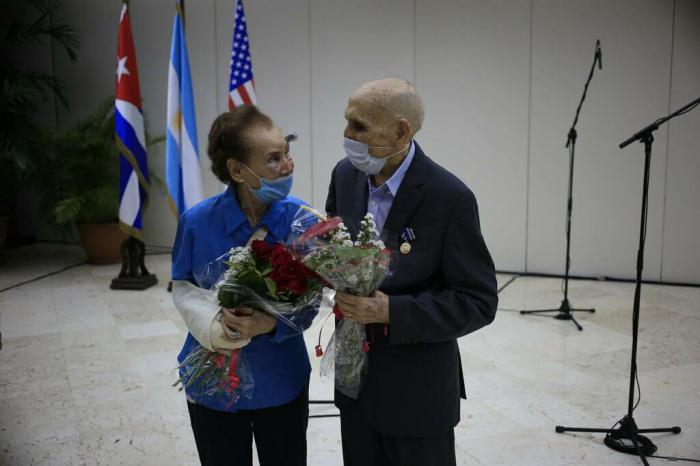
The event was chaired by Bruno Rodríguez Parrilla, Minister of Foreign Affairs of Cuba (Minrex), and Alpidio Alonso Grau, Minister of Culture (Mincult), who personally presented the award.
Translated and edited by Walter Lippmann for CubaNews.
Photo: Ariel Ley Royero/ACN
If bravery is a quality to face each step in life with courage, it is abundant in the political and artistic career of Estela and Ernesto Bravo. She, a North American, he, an Argentine, supportive, internationalists and Cubans by conviction since they decided to share dreams and destiny in the homeland of Marti and Fidel.
The Distinction for National Culture awarded to both of them last Saturday honors their passionate contributions to art and their permanent commitment to the ethical values and ideals of justice advocated by revolutionary Cuba.
Culture Minister Alpidio Alonso presented the award to the Bravo couple in a ceremony attended by Bruno Rodríguez Parrilla, a member of the Party’s Political Bureau and Minister of Foreign Affairs, during which the poet Nancy Morejón gave the words of praise.
Estela’s contribution to the documentary screen as a director, always assisted by Ernesto as a scriptwriter, consultant and coordinator in the tasks of production, stands out among the most lucid and penetrating in the cinema of the last four decades, starting with the 1980 release of Los que se fueron [Those Who Left].
With a catalog of more than 30 works of diverse footage, a substantial part of the Bravos’ filmography bears witness to events related to Cuban migration to the United States and the traumatic human and family cost of the hostility of that country’s rulers towards Cuba.
It is worth looking at the Latin American and Caribbean context of the time of the dictatorships and the US interventions in the region.
But, without a doubt, the most endearing productions of Estela and Ernesto are those that have had the historic leader of the Cuban Revolution in the forefront. Fidel, the untold story is revealed as one of the most complete portraits of the Commander in Chief’s personality.
Cuba: Pilgrimage to San Lázaro

Cuba: Pilgrimage to San Lázaro
December 17, 2012
Translated and edited by Walter Lippmann for CubaNews.
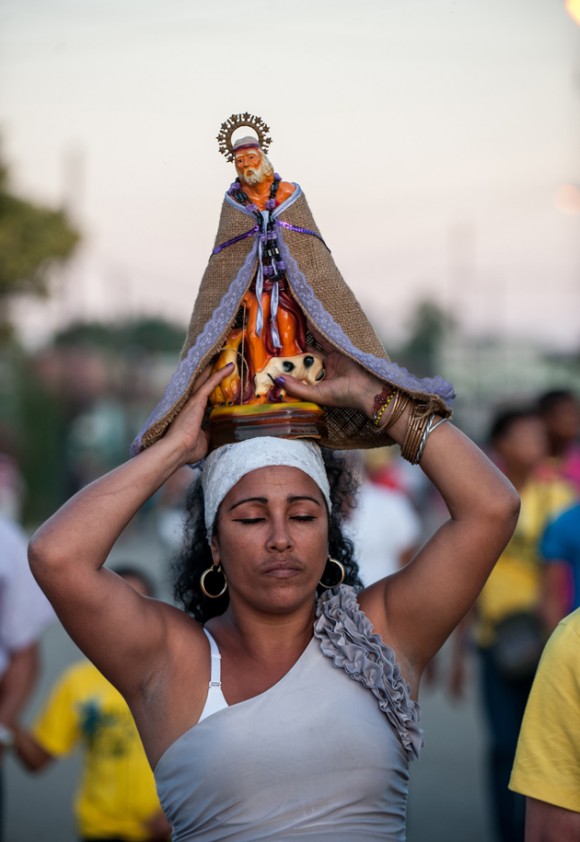
Yeniel Zamole crawled five kilometers with a cement block chained to one foot to thank St. Lazarus for her daughter’s health, while other believers on Monday asked Cuba’s most revered saint to intercede for Venezuelan President Hugo Chavez.
“I make this promise because of the devotion of my daughter, who walked here again thanks to Saint Lazarus,” said Zamole, a 25-year-old ceramist who paid a promise to a miraculous being venerated by Catholics and Santeros (worshippers of African origin), in a communist country that until 1992 was officially atheist, before becoming a layman.
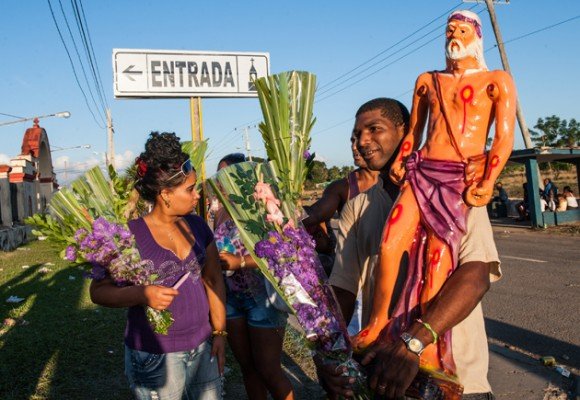
Every December 17, hundreds of thousands of Cubans come to the Sanctuary of Saint Lazarus in El Rincón, 30 kilometers southwest of Havana, to venerate the person whom Catholics identify with Saint Lazarus the Bishop and the Santeros with Babalú Ayé.
Visited by Pope John Paul II during his historic trip in January 1998, this small chapel is, together with a leper colony, the main place of devotion to this deity of popular creation, in a pilgrimage in which prayers are mixed with reggaeton, bread with piglet, rum and cigars.
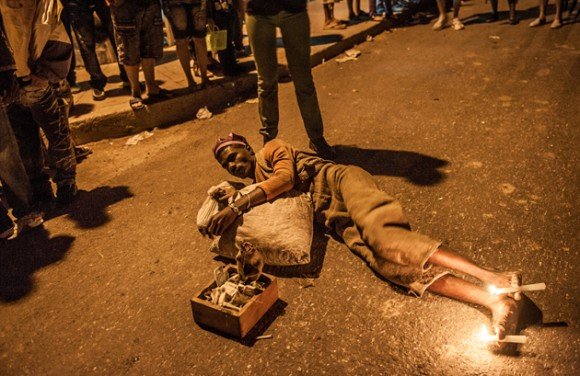
The five kilometer walk from the town of Santiago de las Vegas to the Sanctuary is completed by many dressed in jute or purple clothing. Dozens of faithful are martyred during the way and enter the temple exhausted, crawling, kneeling, rolling or doing somersaults.
Yeniel Zamole dragged a block of cement, others carried rocks, shackles or even a piece of rail. One man rolled down the road with two lighted candles held in place by his toes.
The walk, which started on Sunday, took place under heavy police protection, in a fair atmosphere – as in previous years – with stalls selling criollo food and loud music, which was mixed with sales of flowers, candles and plaster statuettes of St. Lazarus of different sizes.
Once in the temple, the believers and payers of promises deposited their offerings to the saint and prayed, while the public renewed itself incessantly.
“My baby girl, when she was born, looked very serious. I made a promise to him (Saint Lazarus) that if my little girl never went to a hospital again, I would come every year that I could come,” Yaniset Avila, who came with her daughter, who is now 11 years old, told AFP.
“I’m here because my daughter was seriously ill three years ago and she’s fine now. I made a promise for 10 years,” Jorge, who makes and sells candy in La Lisa, a western Havana suburb, told AFP.
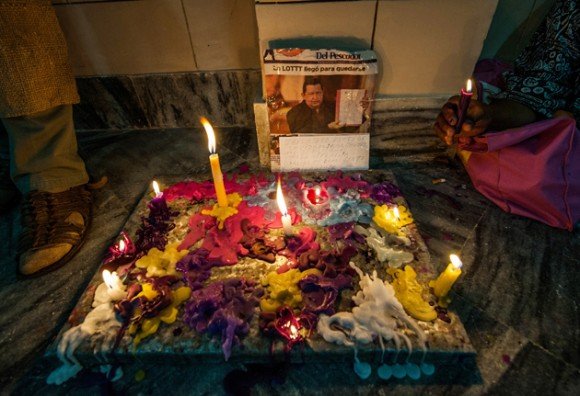
This year, some of the faithful had a new reason to pray to Saint Lazarus: the health of the president of Venezuela, Cuba’s main political ally and business partner, who underwent surgery last Tuesday for the fourth time for cancer in Havana.
“Chavez is the best, he is very good, he is a good president,” Patricia Ascui Martinez, an old lady from the western province of Pinar del Rio who lit candles and prayed before a small picture of the president that another pilgrim pasted on a wall inside the Shrine, told AFP.
Olivia Valle, another woman from Pinar del Rio who prayed to the photo of the Venezuelan leader, expressed: “He is very human, he worries about everyone, we are asking for him in the prayers we make”.
“I pray for Chávez, poor thing, that Saint Lazarus may help him. I wish him much health, he is good, I am not a fool, he is good”, indicated María Caridad González, from the central province of Villa Clara.
On the economic level, there are neighbors of El Rincón who took advantage of the massive influx of people to earn some money selling flowers or food, but some complained that the sales were not very good.
“The sales are weak, because there are many vendors,” said Walnier Pérez Morales, who sold sunflowers and strange roses outside his house.
“The devotion to Saint Lazarus is still the same, but (the authorities) gave many sales licenses this year,” he lamented.
(With information from Noticias24)
Dr. Salvador Capote on Biden vs. Trump

Biden vs. Trump
By Dr. Salvador Capote
October 14, 2020
Translated and edited by Walter Lippmann for CubaNews.
Trump and Biden pursue the same goal: to liquidate the Cuban Revolution. Trump embodies the hard line that is expressed in economic, commercial and financial suffocation, without ruling out the military option. Biden is on “Track 2”, the track of cultural and media penetration, of corrupting USAID and NED money, of diversionism, consumerism, and siren calls. Cuba can face both challenges, since it is very possibly the most politically aware people in the world.
It is the people of Martí and Fidel, whose courage and capacity to resist have been proven a thousand times over. But to face the line of the hawks in Washington would cost a lot of blood, in fact it has already cost a lot in the suffering of the Cuban people because of the blockade.
Facing the Obama line, represented by Biden for now, is in the long run the most subtle and dangerous, but we Cubans are aware of the danger and we know how to face it.
With the Biden administration, we could breathe and, if they take their knee off our neck, in a very short time we will demonstrate that to achieve the well-being and happiness of human beings there is no other option than socialism.
Ralph Gonsalves Wins Fifth Term
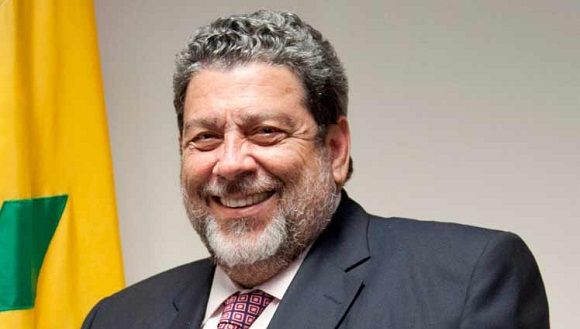
Ralph Gonsalves Wins Fifth Election in St. Vincent and the Grenadines
By Caribe, Elections, Ralph Gonsalves, Saint Vincent and the Grenadines
November 6, 2020
Translated and edited by Walter Lippmann for CubaNews.
The Prime Minister of St. Vincent and the Grenadines, Ralph Gonsalves
The citizens of St. Vincent and the Grenadines elected Prime Minister Ralph Gonsalves to a fifth consecutive term in Thursday’s general elections, according to preliminary figures released in Kingstown, the capital.
According to these figures, the United Labor Party (ULP) achieved a major victory by winning nine of the 15 seats in Parliament, compared to the eight it controlled until now.
Godwin Friday’s opposition New Democratic Party (NDP) lost one seat and took the remaining six.
In declaring himself the winner in the elections, Gonsalves affirmed that the population adopted “our progressive agenda for the future” and rejected “the policy of hate, backwardness and colonialism.
He also stressed the need for the unity of the country to address the challenges of development.
For the elections, this regional body sent a group of six observers, led by Anthonyson King, a member of the electoral commission of Antigua and Barbuda.
Voter registration for the election was 89,119 persons over the age of 18 out of a total population of 110,000.
Those subject to quarantine because of COVID-19 were also able to cast their vote. The consultation took place under a pandemic prevention protocol.
The country is one of the few in the world that has not recorded any deaths from the disease and only 75 cases, 70 of them recovered, since the beginning of the health crisis in March, while CARICOM as a whole reports some 45,000 confirmed cases and just over 1,000 deaths.
St. Vincent and the Grenadines is among the 10 smallest countries in the world and this month it holds the presidency of the United Nations Security Council, a position it holds from last January until December 2021.
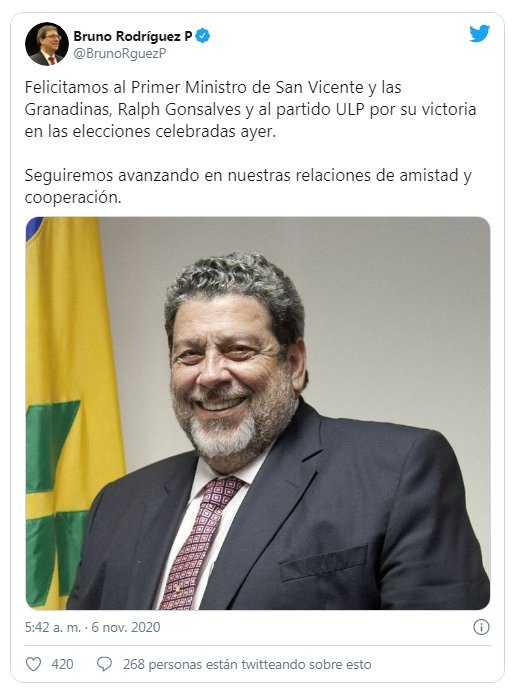
Cuban Foreign Minister Bruno Rodriguez today congratulated St. Vincent and the Grenadines Prime Minister Ralph Gonsalves and the United Labor Party (ULP) on their election victory.
In his Twitter account, the Foreign Minister highlighted the relations of friendship and cooperation between both nations, on which he expressed the will to continue advancing in their development.
(With information from Prensa Latina)
Ten Notes on the “Cuban vote” in Florida
Ten Notes on the “Cuban vote” in Florida
By Rosa Miriam Elizalde, Daniel González
 Rosa Miriam Elizalde is a Cuban journalist. First Vice President of UPEC and Vice President of FELAP. She is a Doctor in Communication Sciences and author or co-author of the books “Antes de que se me Olvidar”, “Jineteros en La Habana”, “Clic Internet” and “Chávez Nuestro”, among others. She has received the “Juan Gualberto Gómez” National Journalism Award on several occasions. Founder of Cubadebate and its Chief Editor until January 2017. She is a columnist for La Jornada, Mexico.
On twitter: @elizalderosa
November 6, 2020
Translated and edited by Walter Lippmann for CubaNews.
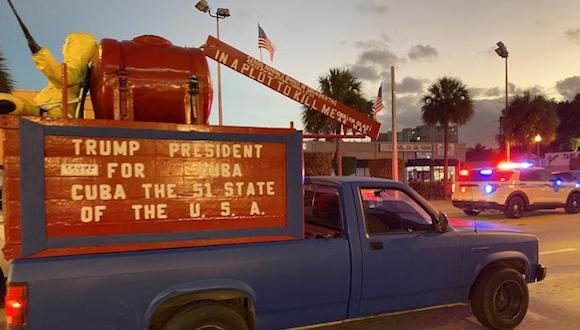
In Miami, this van circulated this Thursday with a sign asking to turn Cuba into the 51st state of the USA. Photo: Twitter.
Two-thirds of Florida counties voted for Donald Trump, as did a good portion of Latin American Americans, with a record turnout in this election. In the United States, Mexicans represent by far the largest percentage of Latino voters (almost 60% of the electorate), 14% of those who come from Puerto Rico and, in third place, Cubans with 5%. Why then the overvaluation of this last group?
No one doubts that Donald Trump’s disinformation campaign worked in the émigré community from our country, but as far as the final figures on voters go, the “Cuban vote” should be taken with a grain of salt. Here are a few quick notes on the subject.
1.-There are no definitive figures for the “Cuban vote” or for any other community. Counts are underway in the country. According to the American Community Survey 2014-2018, 697,785 Cubans were registered in Florida in 2016. Of these, 367,233 declared themselves in favor of the Republican Party; 180,227 for the Democratic Party, and 150,325 other political affiliations. Finally, four years ago, 564,938 voted. Between 52 and 54% voted for Trump and between 41 and 47% for Clinton. Both NBC News and Fox News estimated a Cuban participation rate in these elections of 58%, a level similar to that of 2016.
2.-The “Cuban vote” in Miami-Dade gave a majority to the Republican candidate, as in the previous election. However, this did not prevent the election of a Democratic mayor – the first woman to hold that office in the county – despite the fact that the other candidate was a Cuban and a Republican, Steve Bovo, and more signs as he was the son of a member of the failed Brigade 2506 that invaded Cuba in 1961.
3 – This Wednesday, The New York Times acknowledged that Florida lived in a climate of unprecedented misinformation, especially in the Spanish-language media and in the local social networks. The McCarthyite hysteria reached such a level of alienation that Joseph Biden was accused of being a com munist, a socialist and even of practicing witchcraft. Nevertheless, the Democratic Party won Miami Dade County with more than a 7-point lead over his opponent.
4.-The “Cuban vote” is not a monolith. One million were born on the island and at least another million are descended from Cubans, but have lived all their lives in Florida. They all identify themselves as such in the national census. In those two groups there are American citizens and others who are not, some speak only English and others only Spanish, have registered to vote or not, are Republicans, Democrats or Independents, and have direct family in Cuba or not.
5 – Michel Bustamante, an academic from Florida International University, maintains that the Cuban community is much more complicated than it has been described in the middle of the electoral contest. He speaks of a “cognitive dissonance”, notable in the Cuban communities of Hialeah and Miami. Many send remittances to their families or travel regularly to the island, but also express support for Trump’s sanctions.
6.-The relationship with Cuba is not the main issue that defines the vote of a Cuban resident in the United States and it has not even been among the main motivations for going to vote. According to data from the Latino Decisions survey, the main concerns of Florida’s Hispanics are the pandemic (52%), employment and the economy (44%) and health care costs (28%). Other analysts have perceived that, even for those most receptive to the administration’s anti-Cuban rhetoric, the fear of the Covid was greater than the hatred for the Havana government.
7. There is no single “Cuban vote,” nor can a similar statement be made about any immigrant community in the United States, whether larger or smaller than the Cuban one. The emergence of the term and its permanence in time has to do with the state policy applied against Cuba for 60 years, which is totally different from any other articulated towards the rest of the nations of the world. Cuban emigration in the United States is a by-product of that policy.
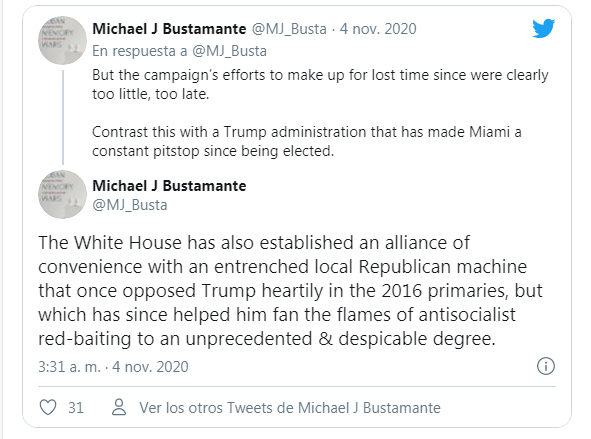
Not for nothing did Bustamante say this Wednesday in a tweet: “The White House has established an alliance of convenience with the local Republican machine that once opposed Trump in the 2016 primaries, but since then has helped him fan the flames of anti-socialist attacks to a despicable and unprecedented level.
8.-There is no “Mexican vote” even though it is geographically concentrated in territories that one day changed sovereignty. There is no “Soviet vote” or “Chinese vote”, despite the fact that the Cold War translated into enormous hostility towards the former USSR and China, which originated the respective migratory flows of those nations.
9.The “Cuban vote” is politically conditioned. Like any significant social group, among Cuban Americans there was a sector that was dedicated to local politics and the rest to survival. Since the 1980 elections, a relationship of convenience was generated between the Republican Party and a Cuban-American elite that negotiated space and access within the US system of government, in exchange for a quota of votes. Both Republicans and Democrats have courted the Cuban community since then, but only in Florida. A not inconsiderable group of Cubans resides in the New Jersey-NY area and yet there is no recurring talk of the “Cuban vote.”
10.- In many US states the results of the vote are decided by a marginal amount of votes. Any group with a similar identity that expresses itself in favor of one or another candidate at the polls can make a difference, as we are seeing right now in the dispute over Georgia or Pennsylvania to decide the next president of that country. Cubans have run again and again as a bloc, to continue to benefit from federal funds, as do Puerto Ricans or Haitians living in Florida, for example.
As many analysts have pointed out these days, rather than reducing the complexity of this scenario to a stereotype, it would be necessary to assess the extent to which one or another campaign team has understood the changes that have taken place among Cuban-Americans and to what extent both Republicans and Democrats are betting on the real possibility of attracting supporters in that community.
The historical truth is that since 1980 the Republicans have invaded, conquered and established themselves in the Cuban-American media, while the Democrats have made furtive attempts in a field they consider alien and in which they have renounced a permanent presence.
Part of the Democrats’ weakness is that their main leaders share or coexist with the state policy of confrontation with Cuba, either through pressure or through a “democratizing” approach. The local South Florida Democrats repeat virtually the same messages of hostility against Cuba as their fellow Republicans, posturing as tough as the Republicans are, and end up ignoring and alienating those new generations of Cubans who are the vast majority and who neither aspire nor need to succeed from the funds of the programs associated with “regime change.”
In the elections that have just concluded, the Democrats saw their initial advantage over the Republicans in Florida gradually disappear. Among the first explanations was the performance of the supposed “Cuban vote.” In reality, the votes Biden lacked were the result of the absence of support from other groups and minorities.
Democrats and Republicans may or may not choose to continue to cultivate the fiction of the “Cuban vote,” they may or may not continue to fund the federal programs that court them, but the truth is that time and again there will be a conflicting relationship between the foreign policy interests of the United States as a country and the electoral games at one point in that country’s geography.
In focusing on that tiny vote, in national terms, both parties are unaware of the position of large sectors of American voters who favor the most normalized relationship possible with Cuba and who have specific interests in business, science, culture, academic relations, health, and other sectors.
Behind Washington’s immobility with its unilateral sanctions on Cuba for more than 60 years, behind the power lent to Florida’s machinery of hate, calculation and despotism, old anti-communist rhetoric and the usual failure are mixed. We will see how the votes look when the final numbers are known – by the way, journalist John Kruzel of The Hill has denounced the fact that a significant number of votes were lost in the south of the state. Before crowing so much about the “Cuban vote,” let’s wait for the end of this stormy election recount that has turned the United States into a banana republic and Donald Trump into the most pathetic autocrat in that country’s history.
MAS Strengthens its Majority
MAS Strengthens its Majority in Bolivian Parliament
The second Bolivian political force will be the Citizens’ Community Alliance, of former President Carlos Mesa.
By Redacción Digital | internet@granma.cu
October 24, 2020
Translated and edited by Walter Lippmann for CubaNews.
Photo: Taken from the Internet
With 97 percent of the officially counted election records, the Movement Towards Socialism (MAS) consolidated its majority in the Bolivian Legislative Assembly on Friday, reported Telesur, by securing 21 senators and 78 deputies.
The Plurinational Electoral Body (OEP) of Bolivia reported this Thursday that the MAS, of President-elect Luis Arce, obtained 78 of the 130 seats in the Chamber of Deputies, while in the Senate it obtained 21 of the 36 seats.
The Citizen Community Alliance (CC), of former president Carlos Mesa, obtained 35 deputies and 11 senators, to become the second political force of the South American country.
Meanwhile, the Creemos movement, led by former presidential candidate Luis Fernando Camacho, will have four legislators in the upper house and 17 deputies.
With this composition, the Movement Towards Socialism will be able to approve laws and make parliamentary decisions, without having to build political alliances with the opposition.
However, it will have to build agreements with CC and Creemos to designate authorities, approve judgments of responsibilities and even propose constitutional changes, since this requires the approval of two thirds of the Legislative Assembly.
Among those who must be appointed with a two-thirds majority are the ombudsman, the attorney general and the comptroller general.
This Friday, the Supreme Electoral Tribunal (TSE) officially declared Luis Arce, of MAS, to be the president-elect, who obtained 55.10 percent of the valid votes cast in the general elections of 18 October.
In second place was Comunidad Ciudadana, with 28.92 percent; and in third place, Creemos with 13.82 percent of the votes.
You must be logged in to post a comment.