Trump: Thunders and Traps
Trump: Thunders and Traps
By Ricardo Alarcón de Quesada, Red DH
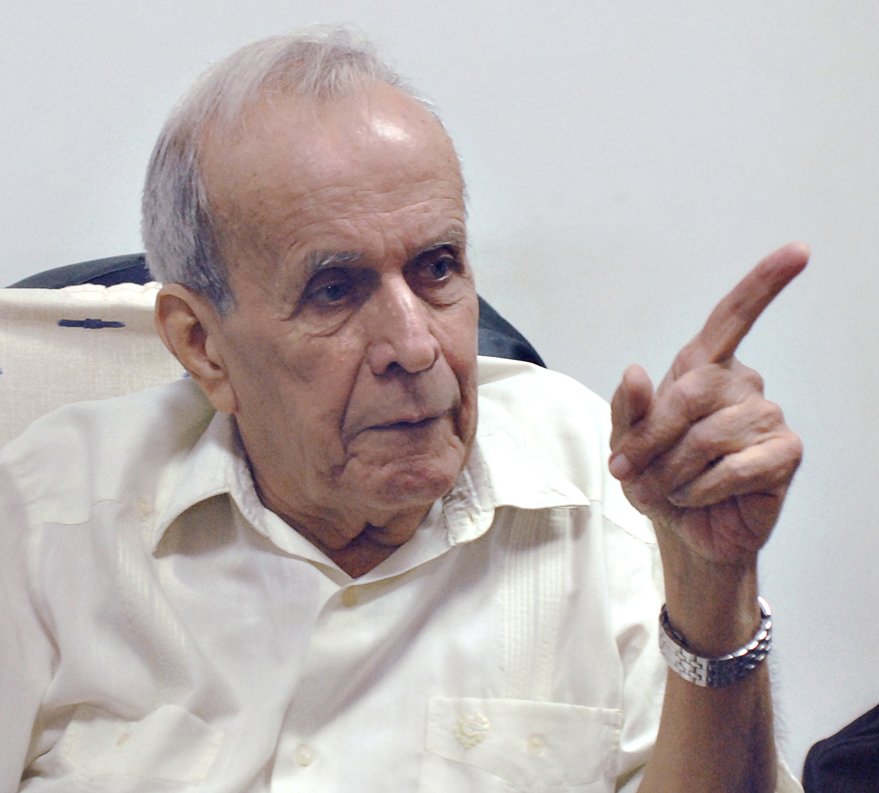
Ricardo Alarcón
Much has been said and will be said about the grotesque show that took place in Miami on June 16 and the lies and threats against Cuba there pronounced. Trump’s speech, incoherent and clumsy like all of his, made at least two things clear: he will do all he can to harden US policy toward Cuba, canceling the timid steps that his predecessor had taken and [the fact that] the current President is an irremediable liar.
It is customary there in the North to mix politics with spectacle, information with entertainment, even if, as in this case, in terrible taste. For those who look at it from the outside, a good dose of Cartesian doubt is advisable and prudence is necessary to avoid being confused. Especially if it’s about what someone says like the quirky occupant of the White House.
Congresswoman Barbara Lee, a tireless fighter for justice and civil rights, was right to reject Trump’s speech. She stressed the importance of fighting to prevent specific regulations which would translate the presidential directive into mandatory rules that are even more damaging to peoples of the two countries. There, on that very day, there was evident proof of the correctness of her concern.
In his speech, Trump announced that he would issue a new executive order to replace the one already repealed that had guided Obama’s policy in its last two years. There in front of everyone, he added his signature to the document that appears on the official site of the White House, but which nobody read.
What he said does not correspond exactly with what he signed and the latter is what counts, because it has legal force and will guide the conduct of his administration. The contrast is evident, for example, in the case of remittances many Cubans on the island receive from their relatives residing in the United States. According to the speaker in Miami, such remittances would continue and would not be affected.
But right there, in the same act, without hiding, he signed an order that says exactly the opposite. On this issue of remittances, the document entitled “Presidential Memorandum for the Strengthening of The United States Policy towards Cuba,” which Trump signed and which was publicized by the White House. The fine print states that there would be millions of Cubans living on the island who would not be allowed to receive remittances.
In Section III, subsection (D), the definition of “prohibited officials of the Government of Cuba” is now extended to cover not only the leaders of the Cuban State and Government, but its officers and employees, the military and civilian workers of the Armed Forces and the Ministry of the Interior, the cadres of the CTC, of the trade unions, and the Defense Committees of the Revolution. Professor William M. Leogrande estimates that this would be more than one million families.
Trump boasted that he would drop all Obama’s moves and he probably intends to do so.
But he knows that this contradicts the interests and opinions of some business sectors linked to the Republican Party and that is why he hides behind aggressive rhetoric and often undecipherable jargon. With regard to the issue of Cubans and remittances he had no choice but to use his favorite weapon: the lie.
We must now see how they write and apply this new order that seeks to punish the Cuban population as a whole.
Translated and edited by Walter Lippmann.
OSPAAAL Condemnation Declaration
- English
- Español
OSPAAL DECLARATION OF CONDEMNATION
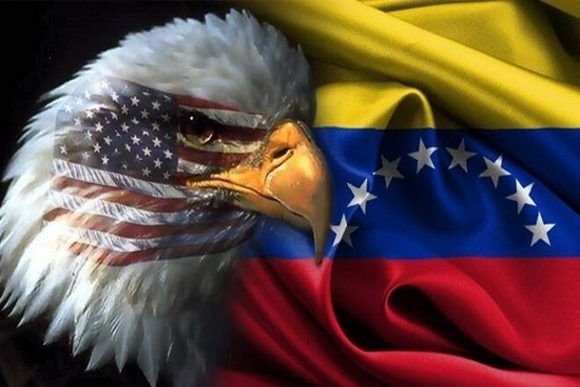
The Organization of Solidarity of the Peoples of Africa, Asia and Latin America (OSPAAAL) expresses its strongest condemnation of the terrorist attacks on Tuesday, June 27, against Venezuelan government facilities such as the Supreme Court of Justice and the Ministry of Popular Power for Internal Relations, Justice and Peace.
This hostile act against democratic institutionality could have very unfortunate consequences for the physical integrity of the people who were inside both headquarters and puts the lives of innocent people at risk.
How is it possible that, in the face of such arrogance and terrorist plans, in collusion with the American intelligence services and the sick Venezuelan opposition, the main means of communication at the service of the interests of imperialism are not now speaking up? Why is it that now, organizations such as the OAS do not raise a concern and remain in absolute silence? How can we understand the double standards of some governments that condemn terrorist acts that take place in the world and do not speak out at this moment?
Every terrorist demonstration deserves the strongest condemnation on the part of the international community struggling for a world of peace. Our region has had this imprint since the Second Summit of CELAC in Havana, and we can not allow any reason to jeopardize the sovereignty, peaceful coexistence between our states and much less to break democratic institutionality in our region. The defense of Latin America and the Caribbean as a Zone of Peace must be a permanent commitment.
This extremist act, as well as all counterrevolutionary actions against Simón Bolívar’s homeland and its eternal leader Hugo Chávez Frías, including the cruelest crimes against sympathizers of the Bolivarian Government. It’s part of the escalation that the most reactionary groups of the Venezuelan opposition to frustrate the Latin American emancipatory process and to force down a government that was anointed by the sovereign will of its people in elections also validated also by international organizations.
The Bolivarian Government has gone through all manner of economic, political, media, conspiracy and diplomatic actions, now faces terrorist actions that constitute a serious danger to the security of the country. It tries, by all means, to provoke military intervention. This is certainly one of the main objectives of the effort to overthrow the constitutional government.
This new escalation, aimed at violating citizen security, has cost the lives of 79 children of the brave Venezuelan people.
OSPAAAL reaffirms the strongest solidarity with the Bolivarian Revolution, its leaders and its people who remain in the struggle and at the same time reject the armed attacks perpetrated against government institutions. Also, there repeated calls for military coups, looting, and violence by opposition sectors with the objective of undermining the civic-military unity in the sister Bolivarian Republic of Venezuela.
Once again we reaffirm the commitment that the sister Bolivarian nation will be able to count on us at this difficult stage, convinced that peace and reason will be imposed against the hatred and destabilizing plans of the fascist right.
Stop the pressures!
Stop interfering in the internal affairs of Venezuela!
Long live the civic-military unit!
Long live Peace!
Venezuela is not alone!
For a decisive victory in the National Constituent Assembly, WE WILL WIN!
International Executive Secretariat
Havana, June 30, 2017
CubaNews translation and editing by Walter Lippmann.
DECLARACION DE CONDENA DE LA OSPAAAL
La Organización de Solidaridad de los Pueblos de África, Asia y América Latina (OSPAAAL) manifiesta su más enérgica condena ante los atentados terroristas del pasado martes 27 de junio contra instalaciones gubernamentales venezolanas como el Tribunal Supremo de Justicia y el Ministerio del Poder Popular para las Relaciones Interiores, Justicia y Paz.
Este acto hostil contra la institucionalidad democrática pudo tener consecuencias muy lamentables para la integridad física de las personas que se encontraban en el interior de ambas sedes y pone en riesgo la vida de personas inocentes.
¿Cómo es posible que ante tal arrogancia y planes terroristas, en contubernio con los servicios de inteligencia norteamericanos y la enfermiza oposición venezolana, no se pronuncien ahora los principales medios de comunicación al servicio de los intereses del imperialismo? ¿Por qué ahora, organismos como la OEA no levantan una vos condenatoria y se quedan en el más absoluto silencio? ¿Cómo entender la doble moral de algunos gobiernos que condenan actos terroristas que tienen lugar en el mundo y no se pronuncien en estos momentos?
Toda manifestación terrorista merece la más enérgica condena por parte de la comunidad internacional que lucha denodadamente por un mundo de paz. Nuestra región tiene ese sello desde la II Cumbre de la CELAC de La Habana y no podemos permitir por ninguna razón que se ponga en peligro la soberanía, la coexistencia pacífica entre nuestros Estados y mucho menos se quebrante la institucionalidad democrática en nuestra región. La defensa de América Latina y el Caribe como región de Paz debe ser un compromiso permanente.
Este acto extremista, así como todas las acciones contrarrevolucionarias contra la Patria de Simón Bolívar y del líder eterno Hugo Chávez Frías, incluso los más crueles crímenes contra simpatizantes del Gobierno Bolivariano, forman parte de la escalada que los grupos más reaccionarios de la oposición venezolana llevan adelante para frustrar el proceso emancipador latinoamericano y derribar por la fuerza a un gobierno que fue ungido por la voluntad soberana de su pueblo en elecciones validadas también por organismos internacionales.
El Gobierno Bolivariano ha pasado por todo, acciones económicas, políticas, mediáticas, conspirativas y diplomáticas, ahora, enfrenta acciones terroristas que constituyen un serio peligro para la seguridad del país y que trata por todos los medios de que se produzca una intervención militar, que es a ciencia cierta uno de los principales objetivos para derrocar al Gobierno constitucional.
Esta nueva escalada dirigida a quebrantar la seguridad ciudadana ha costado la vida de 79 hijos del bravo pueblo venezolano.
La OSPAAAL reitera la más firme solidaridad con la Revolución Bolivariana, sus líderes y su pueblo que se mantienen en pie de lucha y al propio tiempo rechaza los ataques armados perpetrados contra las instituciones gubernamentales, así como los reiterados llamados a golpes militares, saqueos y violencia por parte de sectores opositores con el objetivo de socavar la unidad cívico-militar en la hermana República Bolivariana de Venezuela.
Una vez más reafirmamos el compromiso de que la hermana nación bolivariana podrá contar con nosotros en esta etapa difícil, convencidos de que la paz y la razón se impondrán contra el odio y los planes desestabilizadores de la derecha fascista.
¡Cesen las presiones!
¡Cesen las intromisiones en los asuntos internos de Venezuela!
¡Viva la unidad cívico-militar!
¡Viva la Paz!
¡Venezuela no está sola!
¡Por una victoria contundente en la Asamblea Nacional Constituyente, VENCEREMOS!
Secretariado Ejecutivo Internacional
La Habana, 30 de junio de 2017
Trump: Thunders and Traps
- English
- Español
Trump: Thunders and Traps
BULLETIN 4. RESPONSES TO TRUMP’S MIAMI SPEECH AND THE MEASURES ANNOUNCED BY THE UNITED STATES GOVERNMENT
As part of the responses to the rude speech of Trump in Miami and the announced measures of the US government to intensify the blockade; Cubarte offers you other opinions, declarations and messages of solidarity.
By Ricardo Alarcón de Quesada RedDH
A CubaNews translation edited by Walter Lippmann.
Much has been said and will be said about the grotesque show that took place in Miami on June 16 and the lies and threats against Cuba there pronounced. Trump’s speech, incoherent and clumsy like all his, made at least two things clear: he will do all he can to harden US policy toward Cuba, canceling the timid steps that his predecessor had taken and the current President is an irremediable liar.
It is customary there in the North to mix politics with spectacle, information with entertainment, even if, as in this case, in terrible taste. For those who look at it from the outside, a good dose of Cartesian doubt is advisable and prudence is necessary to avoid being confused. Especially if it’s about what someone says like the quirky occupant of the White House.
Congresswoman Barbara Lee, a tireless fighter for justice and civil rights, was right to reject Trump’s speech. She stressed the importance of fighting to prevent specific regulations which would translate the presidential directive into mandatory rules that are even more damaging to peoples of the two countries. There, on that very day, there was evident proof of the correctness of her concern.
In his speech, Trump announced that he would issue a new executive order to replace the one already repealed that had guided Obama’s policy in its last two years. There in front of everyone, he added his signature to the document that appears on the official site of the White House, but which nobody read.
What he said does not correspond exactly with what he signed and the latter is what counts, because it has legal force and will guide the conduct of his administration. The contrast is evident, for example, in the case of remittances many Cubans on the island receive from their relatives residing in the United States. According to the speaker in Miami, such remittances would continue and would not be affected.
But right there, in the same act, without hiding, he signed an order that says exactly the opposite. On this issue of remittances, the document entitled “Presidential Memorandum for the Strengthening of The United States Policy towards Cuba,” which Trump signed and which was publicized by the White House and in which the fine print states that there would be millions of Cubans living on the island who would not be allowed to receive remittances.
In Section III, subsection (D), the definition of “prohibited officials of the Government of Cuba” is now extended to cover the officers and employees of the Cuban State and Government and members of the Armed Forces And the Ministry of the Interior, the cadres of the CTC and those of the local trade unions and Defense Committees of the Revolution. Professor William M. Leogrande estimates that this would be more than one
million families.
Trump boasted that he would drop all Obama’s moves and he probably intends to do so.
But he knows that this contradicts the interests and opinions of some business sectors linked to the Republican Party and that is why he hides behind aggressive rhetoric and often undecipherable jargon. With regard to the issue of Cubans and remittances had no choice but to use his favorite weapon: the lie.
We must now see how they write and apply this new order that seeks to punish the Cuban population as a whole.
From: cubarte <cubarte@cubarte.cult.cu>
To: Cubarte <cubarte@cubarte.cult.cu>
Subject: [special] Bulletin 4 of June 30
Date: Jun 30, 2017 3:20 PM
BOLETIN 4. RESPUESTAS AL TRUMP DE MIAMI Y LAS ANUNCIADAS MEDIDAS DEL GOBIERNO ESTADOUNIDENSE
Como parte de las respuestas al grosero discurso de Trump en Miami y las anunciadas medidas del gobierno estadounidense para recrudecer el bloqueo; Cubarte pone a su disposición otras opiniones, declaraciones y mensajes
de solidaridad.
———————————————————————————————————-
I. OPINIONES
TRUMP: TRUENOS Y TRAMPAS
Por Ricardo Alarcón de Quesada RedDH
Ricardo Alarcón de Quesada
Mucho se ha dicho y se dirá sobre el grotesco show que tuvo lugar en Miami el 16 de junio y las mentiras y amenazas contra Cuba allí proferidas. El discurso de Trump, incoherente y torpe como todos los suyos, dejó en claro al menos
dos cosas: que hará todo lo que pueda para endurecer la política contra Cuba, anulando los tímidos pasos que había dado su predecesor y que el actual Presidente es un mentiroso irremediable.
Es costumbre allá en el Norte mezclar la política con el espectáculo, la información con el divertimiento, aunque sea, como en este caso, de pésimo gusto. Para quien lo observa desde fuera es recomendable una buena dosis de duda cartesiana y la prudencia necesaria para no dejarse confundir. Sobre todo si se trata de lo que diga alguien como el estrafalario ocupante de la Casa Blanca.
Con razón la congresista federal Barbara Lee, incansable luchadora por la justicia y los derechos civiles, al rechazar el discurso de Trump, subrayó la importancia de pelear por evitar que las regulaciones específicas para traducir en normas obligatorias la directiva presidencial sean aun más perjudiciales para los pueblos de los dos países. Allí mismo ese día se dio una prueba evidente de la justeza de su preocupación.
En su perorata Trump anunció que iba a emitir una nueva orden ejecutiva para reemplazar la ya derogada que había orientado la política de Obama en sus últimos dos años. Allí delante de todos, estampó su firma en el documento que
aparece en el sitio oficial de la Casa Blanca pero que nadie leyó.
Lo que dijo no corresponde exactamente con lo que suscribió y esto último es lo que vale, lo que tiene fuerza legal y guiará la conducta de su Administración. El contraste es evidente, por ejemplo, en el caso de las remesas que reciben
muchos cubanos en la isla de sus familiares residentes en Estados Unidos. Según el que habló en Miami tales remesas continuarían y no serían afectadas.
Pero allí mismo, en el mismo acto, sin esconderse, firmó una orden que dice exactamente lo contrario. A esta cuestión de las remesas dedica varios párrafos el documento titulado “Memorandum Presidencial para el Fortalecimiento de
la Política de Estados Unidos hacia Cuba”, que firmado por Trump publicó la Casa Blanca y con todas las letras establece que serían millones los cubanos residentes en la isla a quienes no se les permitiría recibir remesas.
En la Sección III, inciso (D) la definición de “funcionarios prohibidos del gobierno de Cuba” se amplía ahora para abarcar más allá de los dirigentes del Estado y el Gobierno cubanos a sus funcionarios y empleados y a los miembros y empleados de las Fuerzas Armadas y el Ministerio del Interior, a los cuadros de la CTC y a los de los sindicatos y los Comités de Defensa de la Revolución locales. El profesor William M. Leogrande calcula que se trataría de más de un
millón de familias.
Trump alardeó de que echaría abajo todas las medidas adoptadas por Obama y probablemente se propone hacerlo.
Pero sabe que ello contradice los intereses y opiniones de algunos sectores empresariales vinculados al Partido Republicano y por eso se escudó tras su retórica agresiva y su jerga a menudo indescifrable. Respecto al tema de los
cubanos y las remesas no le quedó otro remedio que emplear su arma favorita: la mentira.
Habrá que ver ahora como redactan y aplican esta nueva orden que pretende castigar al conjunto de la población cubana.
From: cubarte <cubarte@cubarte.cult.cu>
To: Cubarte <cubarte@cubarte.cult.cu>
Subject: [especial] Boletín 4 del 30 de Junio
Date: Jun 30, 2017 3:20 PM
Vicious Cyber-War Against Venezuela
Vicious Cyber-War Against Venezuela
By Manuel E. Yepe
The psychological warfare being waged by the oligarchic opposition in Venezuela –following the strategic and tactical objectives of US imperialism– has strong support in a well-organized Twitter operation that promotes protests from the Miami-based DolarToday platform. This is described in a research article published by the well-known specialist Erin Gallagher.
DolarToday is a US website based in Miami that, according to Wikipedia, “is more known for being an exchange rate reference to the Venezuelan bolivar” and “monitoring the Venezuelan economy.”
Currently, with no other reliable source other than the black market exchange rates, these rates are used by Reuters, CNBC, and several media news agencies and networks.
The Economist states in its defense that the rates calculated by DolarToday are “erratic”, but that they are “more realistic than the three official rates” released by the Venezuelan government. It maintains that it is not true that the rates published by DolarToday are manipulated in order to undercut the Venezuelan government.
The DolarToday website has been denounced by the Venezuelan State for setting a parallel dollar artificial price marker (black market). It has also been the target of a lawsuit by the Central Bank of Venezuela for falsifying the country’s exchange rates.
In 2013, President Maduro accused the website of “fueling an economic war against his government, and manipulating the exchange rate.”
“DolarToday is also promoting opposition protests in Venezuela. Its tweets are being boosted by automated accounts that exhibit repetitive, bot-like characteristics and are using a social media management tool called IFTTT (If This Then That) to automate their tweets”, says Erin Gallagher.
“What immediately caught my attention in the #TeamHDP hashtag data were the shared networks between the influencers (real persons of high credibility),” explained the specialist.
Trolls and bots carry out coordinated attacks to create false trends, congest or disrupt networks, and disseminate misinformation. Sometimes they succeed having a respected media –by neglect or mistake– disseminate their fake information and misleading headlines.
“Bots” are automated systems or programs –that can be run on home computers or on sophisticated servers—which use non-existent Twitter accounts to repeat a certain phrase hundreds or thousands of times. Thus they can turn those phrases into “trends”; that is to make them appear among the 10 or 20 topics that Twitter considers the subjects most discussed in recent hours.
Bot experts disguise themselves as “digital marketing companies”,create dozens or hundreds of fake Twitter accounts, and then use “bots” so that these accounts simultaneously tweet certain content, including headlines from news sites.
Because many journalists in the print media, radio and television use Twitter trends to determine what topics to deal with in their media, whoever dominates Twitter trends can get to determine the topics most talked about in the country’s media.
Gallagher says it is relatively easy to discover the use of these systems: when you enter a tag on Twitter and then click “Most Recent”, you will notice that there are hundreds or thousands of accounts tweeting exactly the same phrase.
This is not the first time robotic cyber actions have been observed in Venezuelan networks. Mexican researchers from the platform “LoQueSigue” used, in 2014, bots with the hashtag #PrayForVenezuela, which denounced “the violence, the repression and the supposed “censorship” of the protests in Venezuela,” which became a worldwide trend.
In addition, NoBotsPolitico of Spain documented fake accounts that supported the protests in Venezuela until June 2014, then remained silent for eight months, but went back to tweeting propaganda against Podemos in hashtags related to the 2015 elections in Spain.
Bloomberg published a feature on an investigation of March 2016 titled “How to Hack an Election” about the Colombian hacker Andrés Sepulveda, who worked with a team of hackers to manipulate information about the elections in Latin America. Sepulveda is currently serving 10 years in prison for crimes such as abusive access to computer networks, violation of personal data, espionage, and the use of malicious software during the 2014 election in Colombia.
It is not difficult to guess who controls the automated accounts that support #TeamHDP. The counterrevolution will someday have to answer for so much crime against the Venezuelan people.
June 26, 2017.
A CubaNews translation. Edited by Walter Lippmann.
Lack of labor discipline, a problem that needs solving

Lack of labor discipline, a problem that needs solving
Author: Lourdes Perez Navarro
January 10, 2009 0:40:08 CDT
A CubaNews translation.
Edited by Walter Lippmann.
A little over two years ago, the Resolution 188 of 2006, issued by the Minister of Labor and Social Security, came into effect. Consequently, institutions created or updated their internal disciplinary regulations. The aim was to strengthen labor discipline, educate the workers and deal with the lack of discipline and illegalities present in work places.
The draft [of this Resolution] was discussed and analyzed in meetings with workers before its approval, because it establishes rules and obligations at the workplace. Obligations include punctuality, meeting schedules, not leaving the workplace during working hours without permission of the supervisor, etc. It also states prohibitions like, not punching the card or signing the attendance record of another employee, and serious offenses, such as repeated absences, unjustified unpunctuality, and disregarding warnings and remonstrances.
According to Resolution 188, administrations are obliged to disclose and permanently explain to the workers the internal disciplinary regulations. Workers must obey regulations, or be subject to different disciplinary sanctions, depending on the gravity of the infraction.
It is known that lack of labor discipline slows production rates, erodes service quality and efficiency, and damages the country’s economy. It also dissatisfies the population. For example, if a machine operator doesn’t arrive on time, he interrupts or reduces that day’s production. If a lab technician is absent from work, a number of clinical trials can no longer be made.
These things are happening now. Specialists of the Ministry of Labor and Social Security monitored 2 042 companies and budgeted units during May-June 2008. The study showed that 60% of the workers did not comply with their working day.
They recorded 26 622 violations of labor discipline. Some of them were: late arrivals (46%), taking more than the allotted time for recess and eating (19%), working less than the stipulated working hours(13%), leaving before closing time(10% ) performing other unauthorized activities (5%), and leaving the workplace without proper authorization (4%).
Are a lot of financial and material resources needed to control and enforce discipline and efficient performance during the working day in each workplace? Or do we need more control, supervision and organization at the workplace?
Local administrations and directors are responsible for ongoing observation and control of how their workers comply with their obligations and abide by the rules established. Higher instances must be more demanding.
Why are internal disciplinary regulations put away in a drawer? On the contrary, they should be displayed on the workplace bulletin board, so all workers can see them. The Boards of Directors should periodically discuss the results of internal control checks.
Lack of labor discipline is not only personal. Certainly, those who violate discipline have names, and are liable to disciplinary actions that affect their pocket, their prestige or, in more serious cases, cost them their jobs.
But, this is not the only consequence. It damages the workers collective image, hinders completing economic plans, and affects the quality and efficiency of service. That is why labor discipline should be discussed in workers assemblies, at least once each quarter. This can not continue to be a problem.
How To Link Young People to Study and Work

A DEBATE ON HOW TO LINK YOUNG PEOPLE TO STUDY AND WORK
By Juan Morales Agüero
A CubaNews translation.
Edited by Walter Lippmann.
Social Workers considered this social problem in territorial evaluations and agreed that it has to be faced by all factors.
Las Tunas.-Nationwide, 2008 was the best year ever with regard to the reintegration and incorporation of young people to classrooms or workplaces. But, it has not yet reached all young people who neither do one, nor the other.
This statement was made by Enrique Gomez Cabezas, head of the social workers program in the country, during the provincial assembly of these professionals. The assembly analyzed the performance of this important program of the Revolution during 2008.
The most debated issue was, without doubt, young people who neither study nor work. Participants made a profound analysis and agreed that it needs a multi-factor approach. This is logical, because it is an issue that has a high priority today.
“We need to establish a link with the community, so that the different factors can keep us informed in a permanent and rapid way of the situation of the universe of their young people,” said Gomez Cabeza. He added that the work has to be personalized because there are no two cases alike. “Until we achieve this, we won’t have arrived at total results “, he said.
An aspect of the problem that received particular attention during the evaluation was the time period in which the identified cases must be dealt with. It is not enough to have the names of the young people in this situation. What is urgently needed is to work with them and resolve their situation.
Edgar Fernandez, from the municipality of Jesús Menéndez, took the floor to clarify that social workers have an enormous job before them regarding unemployed young people. He added that lots of creativity is needed to deal with it. And, that it depends on the links established with the family and the environment of the young person in question.
Cabeza Gomez took the floor again to remind participants that to have the healthy, just society we want to build, we can not have people that do not contribute anything to the country in terms of employment. He added that, in fact, many cases are very difficult and seemingly impossible to solve, but you can not dismiss anyone. We need to detect, identify and take care of them. “You have to be the social microscopes Fidel spoke about,” he said.
Yariri Torres, from the Amancio municipality, spoke about the usefulness of accompanying former prisoners throughout the process of getting jobs. She said former prisoners appreciate the presence of a social worker when they begin their new life in a workshop, a cooperative, or in any another job.
In a special intervention Deibis Garcia, provincial director of Labor, said that follow up is just as important as identifying and taking care of unemployed youths. If after the young person is studying or working, he doesn’t continue and gives up, then that defeat will be charged to our account.
A Probably Civil War in Israel
- English
- Español
A PROBABLE CIVIL WAR IN ISRAEL
By Manuel E. Yepe
http://manuelyepe.wordpress.com/
Exclusive for daily POR ESTO! of Mérida, México.
A CubaNews translation.
Edited by Walter Lippmann.
Is Israel on the verge of civil war, as a growing number of Middle East commentators suggest, with its Jewish population deeply divided over the future of the occupation of Palestinian soil?
Such is the question asked by Jonathan Cook, British writer and journalist based in Nazareth, a specialist on Middle East issues who writes for The Guardian, Al Jazeera and other media, who attempted to answer it in a recent article.
Cook wrote that on one side is a new peace movement, Decision at 50, stuffed with former political and security leaders. Ehud Barak, a previous prime minister who appears to be seeking a political comeback, may yet emerge as its figurehead.
The group has demanded the government hold a referendum next year – the half-centenary of Israel’s occupation, which began in 1967 – on whether it is time to leave the occupied territories. Its own polling shows a narrow majority ready to concede a Palestinian state.
On the other is Benjamin Netanyahu, in power for seven years with the most right-wing government in Israel’s history. Recently he posted a video on social networks criticizing those who want to end the occupation.
Cook wrote that whatever its proponents imply, the Decision at 50 referendum is about neither peace nor the Palestinians’ best interests. Its assumption is that yet again the Israeli public should determine unilaterally the Palestinians’ fate.
An Israeli consensus believes Gaza has been free of occupation since the settlers were pulled out in 2005, despite the fact that Israel still surrounds most of the coastal strip with soldiers, patrols its air space with drones and denies access to the sea.
The same unyielding, deluded Israeli consensus has declared East Jerusalem, the expected capital of a Palestinian state, as instead part of Israel’s “eternal capital”.
But the problem runs deeper still. When the new campaign proudly cites new figures showing that 58 per cent support “two States for two nations”, it glosses over what most Israelis think such statehood would entail for the Palestinians.
So what do Israelis think a Palestinian state should look like? Previous surveys have been clear. It would not include Jerusalem or control its borders. It would be territorially carved up to preserve the “settlement blocs”, which would be annexed to Israel. And most certainly it would be “demilitarized” – without an army or air force. In other words, Palestinians would lack sovereignty.
Such a state exists only in the imagination of the Israeli public. A Palestinian state on these terms would simply be an extension of the Gaza model to the West Bank.
Nonetheless, the idea of a civil war is gaining ground. Tamir Pardo, the recently departed head of Israel’s spy agency MOSSAD, warned before his death that Israel was on the brink of tearing itself apart through “internal divisions”. He rated this a bigger danger than any of the existential threats posited by Mr. Netanyahu, such as Iran’s supposed nuclear bomb.
But the truth is that there is very little ideologically separating most Israeli Jews. All but a tiny minority wish to see the Palestinians continue as a subjugated people. For the great majority, a Palestinian state means nothing more than a makeover of the occupation, penning up the Palestinians in slightly more humane conditions.
According to Cook, Israeli moderates have had to confront the painful reality that their country is not the enlightened outpost in the Middle East they had imagined. Those who cannot stomach such a view will have to stop equivocating and take sides.
They can leave, as some are already doing, or stay and fight – not for a bogus referendum that solves nothing, but to demand dignity and freedom for the Palestinian people, advises Jonathan Cook.
September 22, 2016.
Cuban Reggaeton or… It’s All Peachy
Cachivache Media
April 7, 2017
Cuban Reggaeton or… It’s All Peachy
A CubaNews translation.
Edited by Walter Lippmann.
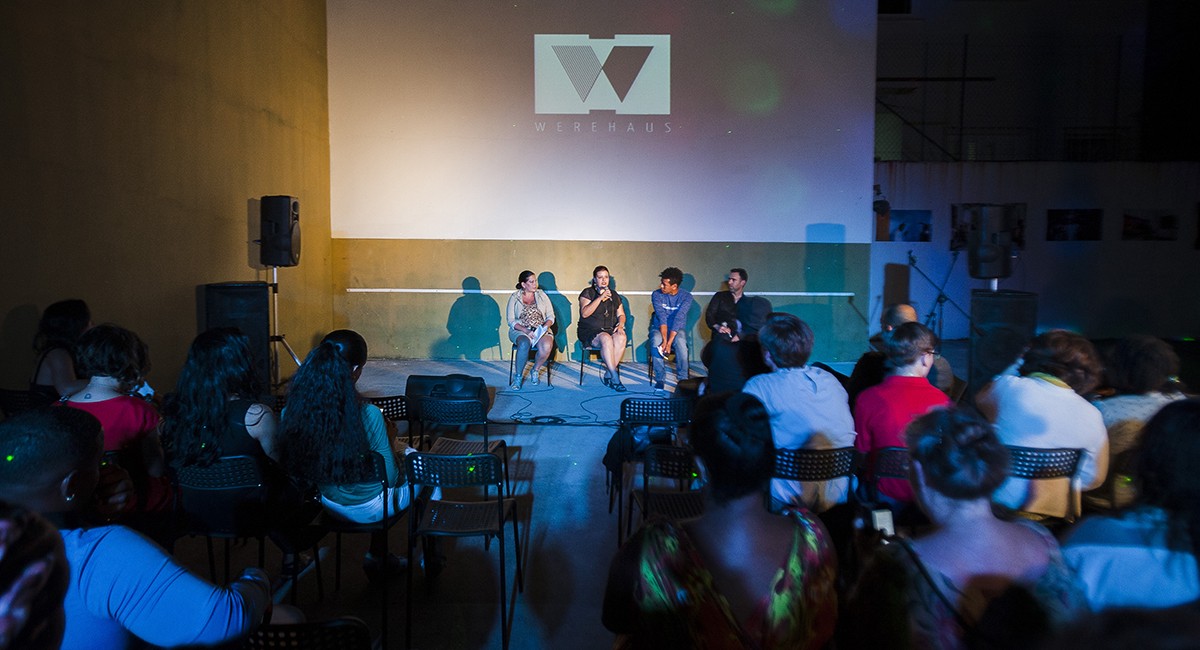
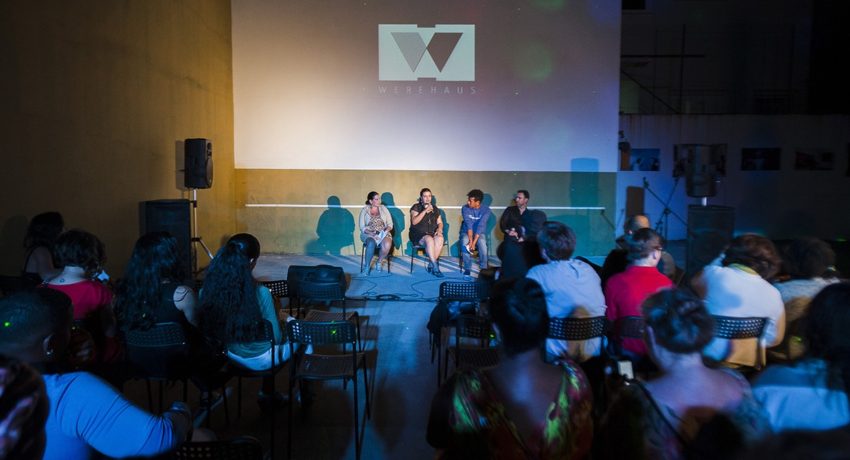
Panelists begin the debate after watching documentary “Reggaeton Revolution: Cuba in the Digital Age”. From left to right: The Goddess (Dianelis Alfonso Cartaya), reggaeton performer; Carmen Souto musicologist with Casa de las Américas; Marcos Junco, independent producer; and Marcos Juárez, director of the Latin music department of US Digital Music Producing Company Pandora. Photo: Fernando Medina / Cachivache Media.
By Maite López Pino
Cuban-American filmmaker Lisette Poole recently presented her documentary “Reggaeton Revolution: Cuba in the Digital Age” at the Royal Norwegian Embassy in Havana and the credits were still running when the debate began. In almost twenty minutes, Poole introduces everything: how the alternative recording houses operate; the production of this genre; the vital importance of “El Paquete” [The package] for its dissemination … the lifestyle of representatives of this genre; and the business concept that has been the cornerstone of this underground industry.
But she doesn’t go beyond that: an introduction. After seeing the documentary, it would seem that being a Cuban reggaeton performer is the quintessence of success as an artist in Cuba. Many of us remained waiting for the turning point where it would talk about why it is a censored genre in the Cuban mass media. Neither was there time to criticize the way it presents women as barely more than objects, or the patriarchal hegemony and gender violence that abound in the audiovisual products of this artistic expression.
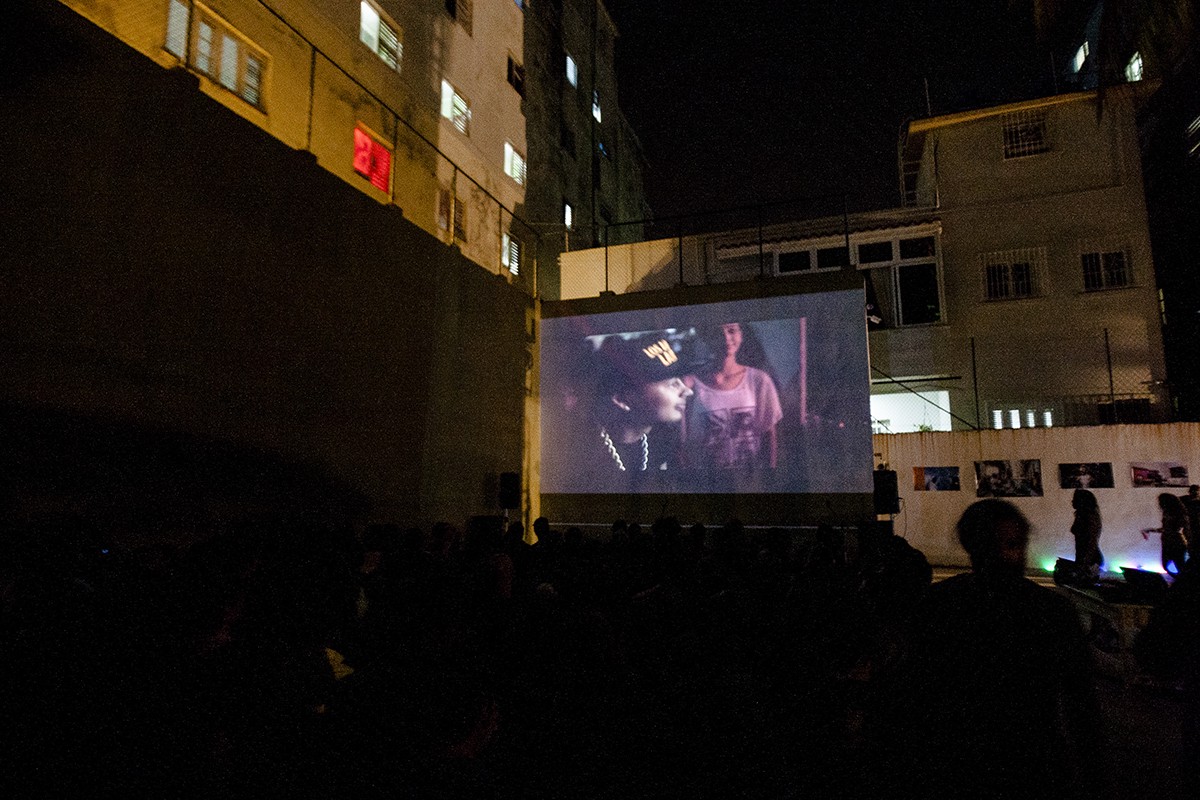
Premier of the documentary “Reggaeton Revolution: Cuba in the Digital Age”, by Lisette Poole. Photo: Fernando Medina / Cachivache Media.
Lisette Poole’s images and the documentary glorify reggaeton, throwing much light on its spectacular dimensions and leaving the elements that justify its censorship in the shadow.
The premiere was planned for two moments: the showing of the documentary that would be followed by a discussion between a group of panelists: The Goddess (Dianelis Alfonso Cartaya), performer of Cuban reggaetón; Carmen Souto, musicologist with Casa de Las Americas, Marcos Junco, independent producer, and Marcos Juárez, director of the Latin Music Department at the US Digital Music Production Company “Pandora”.
Producer Marcos Junco commented on his firsthand experiences witnessing “the turning point of rap towards reggaeton, and how the boom of independent studios began. All artists left the official studios and went into their rooms with a computer and a microphone to do wonders.
“In independent studies there is a person behind a computer playing many roles at the same time: making music, recording it, adding its voice, and even going out in the streets to promote the work done –trying to get it played on the radio, on TV, etc.–“
Carmen Souto, a musicologist with Casa de las Américas, analyzed the particular rhythmic and generic elements that make Cuban reggaeton so striking: “It is fusion music with a strong influence of timba and rumba. This makes it extremely attractive and generates a world special interest on the reggaeton that is made in Cuba.
Regarding censorship, the musicologist said that “when an institution represses a certain genre, it makes it visibl; because everyone feels the need to consume what is being forbidden.”
“Censorship was frequently mentioned in the documentary; I think it was one of the reasons they made this communication product: the fact that despite being a genre highly censored by the media, it is still very popular inside and outside Cuba, but mainly inside.”
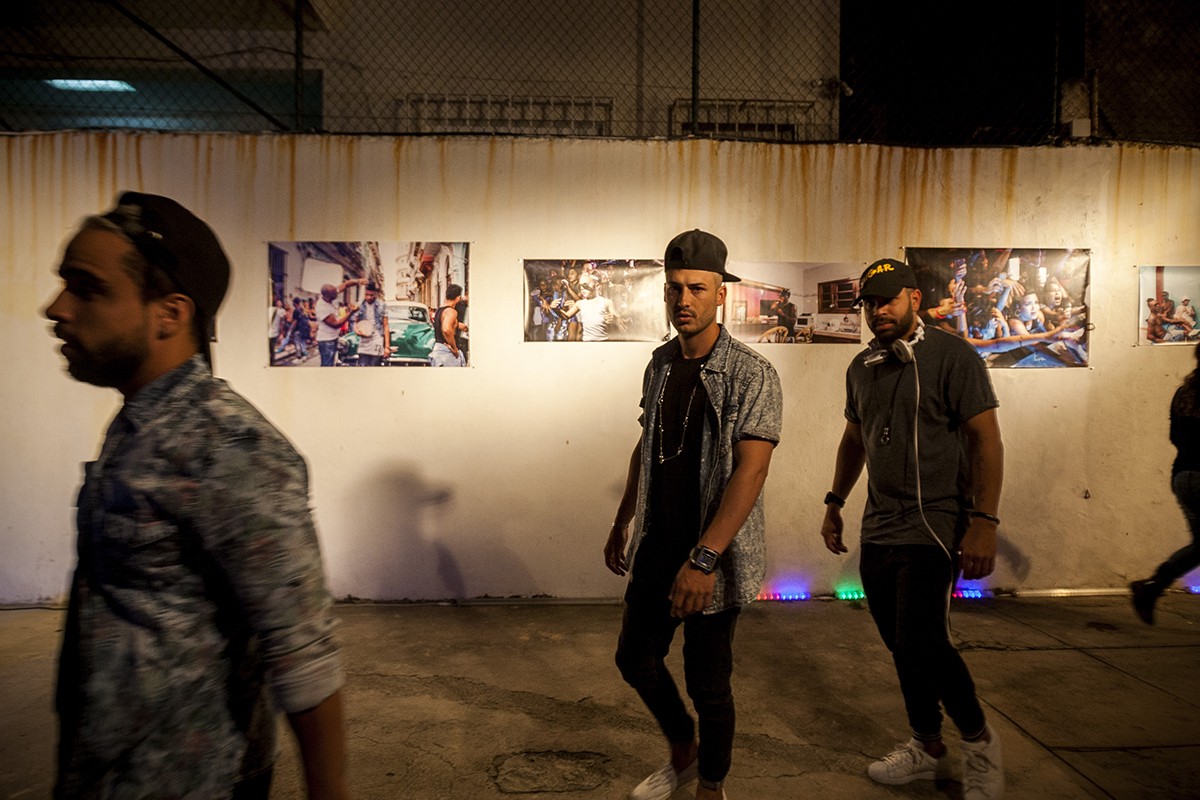
Premier of documentary “Reggaetón Revolution: Cuba in the Digital Age”, by Lisette Poole. Photo: Fernando Medina / Cachivache Media.
Women and Reggaeton
It may seem that the role of women in Cuban reggaeton would be that of –paraphrasing [Argentinean comic strip artist Kino’s character] Mafalda– a rag … in particular a tiny bikini.
Reggaeton performer known as The Goddess spoke about women and their representation in this cultural expression: “Starting from the idea that we live in a society ruled by patriarchal precepts, reggaeton is also a gender dominated by men; it has been so from the beginning, and the participation of women in these spaces is very difficult”.
Danilo de la Rosa, activist of “Súmate”, the campaign for non-violence against women and girls, was among the audience present at the premiere of the documentary. He drew attention to phenomena that are seen in Cuban musical videoclips, where “men take it on women and women take it on men, and thus tend to create ghetto-like divisions”.
“Often, artists do not realize that they harm the public by symbolically reproducing within the media the violence that is exerted on women and girls. In certain videoclips they are being used as a sex objects or worthless things. This is not only the artists’ fault, but I believe that they should approach the campaigns for non-violence that are implemented in Cuba,” de la Rosa said.
He also asked the panelists how they work on the issue of gender equality in commercial communication products that promote reggaeton. Producer Marcos Junco said that it should be officials from the media who talk about the censorship of the lyrics in Spanish of reggaetón, and how, however, “the lyrics in other languages, such as those in rap , that are much more violent, are played on national radio and television channels. It is necessary to do more than a campaign to end gender discrimination. “
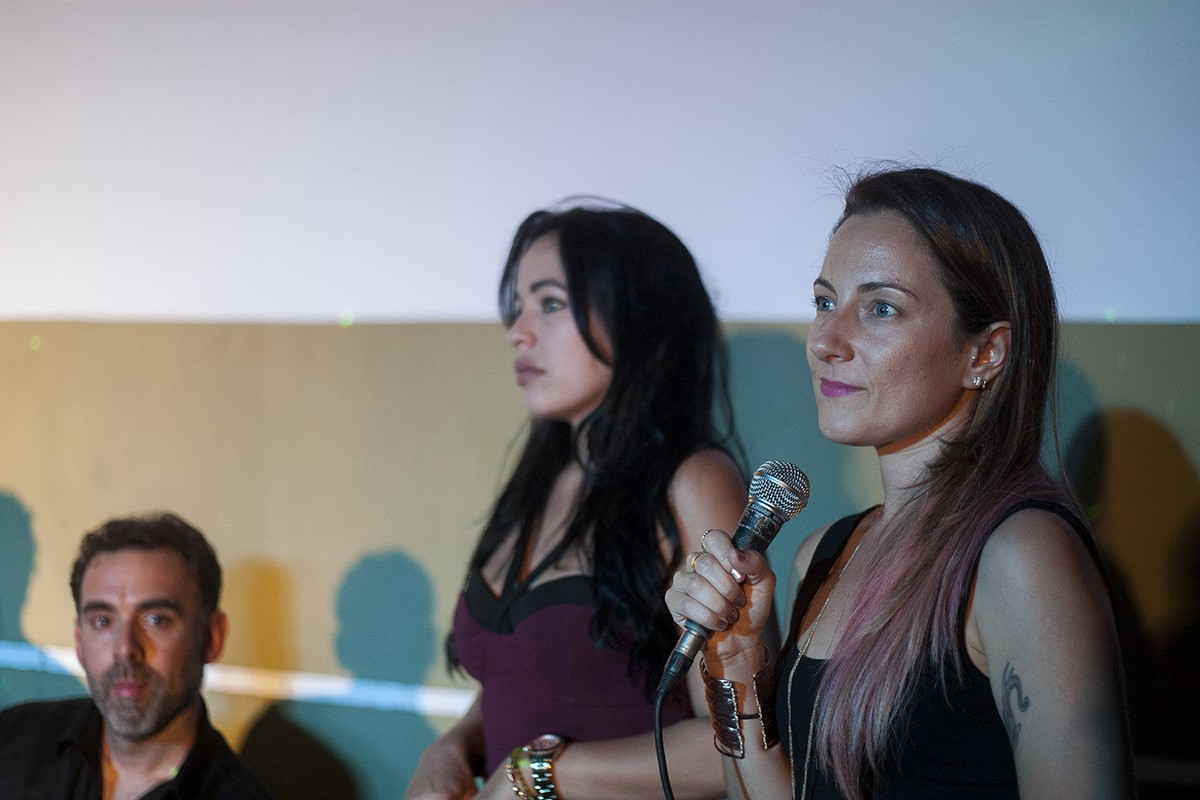
On the right, Lisette Poole, director of the documentary “Reggaeton Revolution: Cuba in the Digital Age”. Photo: Fernando Medina Fernández / Cachivache Media.
Those who see the documentary “Reggaeton Revolution: Cuba in the Digital Age” could infer that in Cuba, in matters of reggaeton “everything is peachy” –as is popularly said by many performers of this genre. However, beyond the usefulness or virtue of the material, more documentaries are needed to deepen on the question of the success of the music industry of underground urban genres in Cuba bis a bis the debacle of the official national system of musical production. Likewise, it is also urgent to discuss more about the relationship between this type of urban music and the media, as well as to analyze in detail the current censorship codes, and the coherence (or lack of it) of the Cuban cultural policies concerning reggaeton.
And this is so, because everything is not “peachy” when “El Paquete” –avidly awaited by much of the Cuban public in every corner of the country– delivers videos, photographs, songs and other elements that reinforce a questionable “artistic” concept in terms of aesthetics, quality and values.
USA TODAY announces Cuban coffee will reach the United States through a third party
- English
- Español

USA TODAY announces Cuban coffee will reach the United States through a third party
June 20, 2016
A Google translation. Revised by Walter Lippmann.
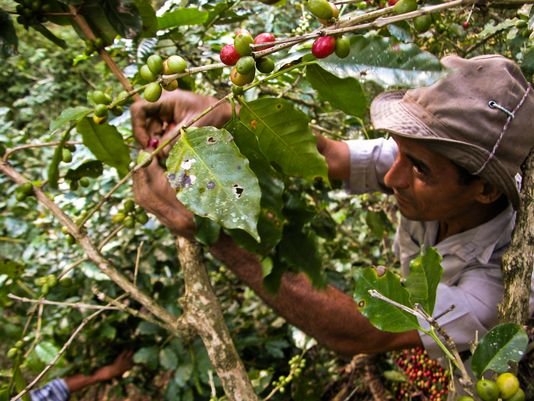
Cuban coffee picker in the eastern province of Santiago de Cuba. Photo: AFP
The next phase of change in Cuba’s relations with the United States will come in the form of coffee.
The Swiss company Nespresso, Nestle SA group, announced Monday that Cuban coffee will be sold in the US as of the end of this year. The long-banned coffee (as a result of the blockade), will be sold in a limited edition called Cafecito de Cuba, in stores, online and telephone trading.
Guillaume Le Cunff, President of Nespresso USA, said it is good to be the first company to provide Cuban coffee to the US market. He noted that Nespresso is very interested in developing a long-term agreement to ensure an adequate supply of Cuban coffee to US customers and improve the living conditions of the Cuban producers.
“We are not thinking of a short-term outcome,” said Le Cunff on Sunday. “This is the point nicial an initiative long term. We are very optimistic to manage and build the project. We want consumers in the US can experience this amazing coffee and enjoy them now and in the years to come. “
Nespresso it allied with TechnoServe, a nonprofit organization based in Washington, assisting coffee growers in Colombia. South Sudan, Kenya and Ethiopia. David Browning, vice president for strategic initiatives TechnoServe, recently visited Cuba to meet with government officials and visit the small farm where the Cuban coffee grows.
Most of the agricultural land in Cuba are managed by cooperatives of small private farmers. They sell their products to the government, which distributes on the island or export around the world. Nespresso begin their experiment buying Cuban coffee beans to European importers, toasting them, then packaging it and selling it in the United States.
Browning said the two companies discussed the new regulations approved by the US government and saw the opening they needed. “It was necessary that lawyers would ensure us that was totally understandable what the US government was trying. Everything was very clear, “he said.
According to USA Today, the next phase for Nespresso and TehcnoServe will help Cubans farmers improve their production process, helping get new agricultural equipment for harvesting plantation, something not clear how they would be implemented.
In a dispatch today, Reuters explains that in April, the US State Department added to coffee and other products to its list of eligible Cuban imports produced by independent producers.
The regulatory change made it easier Nespresso began sales in the United States of Cafecito de Cuba -a premium roasted espresso in their cafeteras- during this fall.
Cuba produces around 100,000 60-kg bags Arabica year, according to the International Coffee Organization. Although this volume is about five times the annual output of Jamaica, it is just a fraction of the 13.5 million bags waiting Colombia, the world’s largest producer of high quality Arabic washing, for this year.
(With information from Reuters and USA Today)
Cuba and exporters of products such as coffee can not yet directly access the US market. In a statement last May 5, the National Association of Small Farmers declared:
On April 22, the State Department announced the decision to include coffee in the list of Cuban products produced by the non-state sector, which would be imported into that country. With this action continuity to a measure adopted by the government of the United States in February 2015, allowing very limited Cuban exports, which excluded all goods and services produced by state enterprises was given.
He did not say the State Department is that the fact of having deprived unilaterally to Cuba – after decreed the lock- treatment of most favored nation, which rightfully ours as State Founder of the World Trade Organization, any product Cuban to be exported to the United States has to pay higher customs tariffs, which makes it practically impossible to import into that country.
It also ignores the Agrarian Reform Law, enacted after the triumph of the Revolution in 1959, did own the land more than 200,000 peasant families, and that the Cuban State has implemented since a program for productive, economic development and social peasantry of our country and ensured the production assistance, access to credit, secure market for their products and other social benefits.
No one can think that a small farmer can export directly to the United States. To make this possible must participate Cuban foreign trade enterprises and financial transactions have to occur in dollars, which so far have not been able to realize.
We are aware that the objective of these measures is to influence the Cuban peasantry and separate it from our state.
[…]
If the government of the United States really wants to contribute to the welfare of Cubans, what it has to do is definitely lift the economic, commercial and financial blockade imposed for more than 50 years, which is the main obstacle to the development of Cuba .
Café cubano llegará a Estados Unidos a través de un tercero, anuncia USA Today
20 junio 2016
Español
Mariana Hernandez, THE RAG interview, 1971
THE RAG INTERVIEWS MARIANA HERNANDEZ
February 22, 1971
MARIANA HERNANDEZ, interviewed by THE RAG, Austin, Texas,
Mariana Hernandez is the Socialist Party’s candidate for Travis LaRue’s job- mayor of Austin.
By printing this interview, The Rag does not mean to take sides in the upcoming election. But we would like to point out that almost any change would be an improvement.
The interview was taped on the spur of the moment at the Abortion Conference, where the Socialist candidates were promising to work for free abortions on demand if elected. The candidate’s willingness to speak into a somewhat hostile reporter’s tape recorder without advance notice was remarkable in the context of Texas politics.
RAGT: How do you propose to change the abortion laws from the City Council?
MH: Well, what we intend to do first of all is help build the Women’s Liberation movement. We will involve ourselves in all the building aspects of it and in that way involve a larger number of people. What we will do at the City| Council is also have it at a time when more women are able to come to meetings and express their views as to what the City Council ought to be| doing. That is, we won’t have them at 9 o’clock in the morning when most people can’t come. There are working women who can’t present their views because they’re working… RAG: Wouldn’t you say that most men can’t participate at that time either, so it’s a bit unfair to all citizens?
MH: That’s true. So we would have it at a time when all citizens could participate.
RAG: How do you see. your chances for winning?
MH: Well, what we see is that if we get the publicity, if we get out and are able to take our demands to the people, they’re going to support us. That’s our chances.
Many women support free abortion on demand, which is one of our positions. Large numbers of people support our anti-war position. But there are areas of the city that just have not had the opportunity to hear us.
RAG: How has the response to you been from the straight media?
MH: All of the press except for the Daily Texan were at our press conference. Even the Dallas Morning News was there! And, in fact, they didn’t seem to be that hostile just amazed that Socialists would run. Their major question was: “Is it serious?” The way this was answered over and over again by all the candidates was yes, we are serious, we are the only group of people running today who are serious, who are even talking about the major issues that affect people. The others are avoiding them.
RAG: Speaking of talking about the major issues, would you consider a debate with the incumbents?
MH: Yes, I would. Of course. I would certainly like to debate the mayor, Travis LaRue. We’d discuss things like pollution around laundries. We’d discuss his position on Women’s Liberation, although there’s supposed to be a Mayor’s Commission on Women. We would debate the question of the right of a citizen to march down the street and assemble.
We would discuss many issues. Like, for instance, the fact that he gives the key to the city to all sorts of people people who sell Budweiser on TV, and things like that but he would never consider the idea of inviting representatives from East Austin, say, to be mayor for a day. Not only mayor for a day, but just come in
RAG: Do you agree with what seems to be a wide-spread sentiment in East Austin that the apathy of City Government has emasculated the Human Rights Commission?
MH: I would agree with that. The reason that it was actually started in the first place was, basically, to make people believe that the City Council was going to do something.
A real, concrete example of what they haven’t done that they could have done is in the recent demands being made by the Booker T. Washington Project people. They are saying that there has been brutality, that the police come in as outsiders, they push us. around, they have guns on us, and we don’t appreciate this. The people were trying to get something done about the situation.
Of course, there have been promises of investigations. It doesn’t take more than 30 minutes to go out there and investigate that situation.
If the police—“the protectors and defenders of the people of East Austin”—were from East Austin, if they were under the control of the East Austin residents so that the East Austin residents could remove them, then we wouldn’t have police brutality, because the police would be defending the people’s rights in Austin. You wouldn’t see policemen protecting the privileges of certain people out here who go into East Austin.
RAG: Do you believe that even if you lose, your candidacy may push whoever does win towards solving these problems?
MH: Yes, there will be pressure put on them. It’s pretty much like what happened in Colorado, when La Kaza Unida candidates ran. Although there had never been any chicanos elected even within the Democratic Party, this began to happen. All of a sudden, they were pressured into getting chicanos to run, they were pressured into beginning to talk about the lettuce strike publicly, they were pressured into talking about the Coor’s beer boycott.
* In this way, we will pressure them to talk and make their stand known to the people. And this is where the media has to come in and support us. That’s our basic fight at this point letting people know what we stand for.
You must be logged in to post a comment.