Violence Against Women

Violence Against Women
Concept: It is violence against women because of their status as a woman
Violence against women presents numerous facets ranging from discrimination and contempt to physical or psychological aggression and murder. Producing itself in many different spheres (family, work, training and others), it acquires special drama in the area of the couple and the domestic, where every year women are murdered by their partners by the tens or hundreds in the different countries of the world .
Translated and edited by Walter Lippmann
October 9, 2017
Content
- 1 Introduction
- 2 Situation of violence against women in the world
- 3 Valuation from international organizations
- 4 Historical considerations on violence against women
- 5 Current Consideration
- 6 Violence against women in the family
- 7 Violence against women in the couple
o 7.1 Violation
o 7.2 Rape as a weapon of war
o 7.3 Sexual exploitation
o 7.4 Ablation of the clitoris
o 7.5 Feminicidio
o 7.6 Gender Violence
- 8 Participation of women in decision-making
- 9 Situation of violence in Cuba
o 9.1 Legal status
- 10 See also
- 11 Sources
Introduction
At least one in three women in the world has suffered an act of violence (abuse), abuse, harassment and others) during their lifetimes. It has been emphasized that this type of violence is the first cause of death or disability for women between 15 and 44 years of age. Researcher Raquel Osborne states that: “Since violence against women is mostly exercised by men because of their sexist conditioning, the term macho violence is also used.”
At its 85th plenary meeting, on 20 December 1993 , the United Nations ratified the declaration on the elimination of violence against women. They recognized it as a grave violation of human rights and “urges all possible efforts to make it [the declaration] universally known and respected “. The resolution defines violence against women in its first article as any act of violence based on belonging to the female sex that has or may result in physical, sexual or psychological harm or suffering for women , as well as threats of such acts, coercion or arbitrary deprivation of liberty , whether occurring in public or in private life.
The United Nations, in 1999, on the proposal of the Dominican Republic with the support of 60 more countries, approved to declare November 25 International Day for the Elimination of Violence against Women.
Situation of violence against women in the world
Sexist violence is too entrenched around the world, more than half of women live under this threat. To eradicate it requires political will and economic resources. When a man beats a woman he is “impoverishing his entire community and damaging several generations of his family” .
According to recent data cited by the world body, between 40 and 70 percent of the murdered women die at the hands of their husbands or sentimental partners, in latitudes as Australia , Canada , USA or South Africa .
In Colombia, every 6 days a woman dies at the hands of her partner, while in the last 10 years hundreds have been kidnapped raped and murdered in Ciudad Juárez , in northern Mexico. Other studies in 71 nations show that a significant percentage of women are physically, sexually or psychologically aggression, and physical violence is the most widespread.
According to the Instituto de Mujer Ibérico , between 1999 and 2003 , 246 women died at the hands of their husbands, partners or ex-companions, in various ways.
The current Spanish government pledged to pay greater to this topic; so their Council of Ministers approved a couple of years ago ten urgent measures against this scourge.
The evil that has caused enough deaths and damage. In the rest of Europe, gender abuse is an issue that affects one in five European women. In the American continent, USA, this issue affects 32 million Americans every year. Every 9 seconds an American woman suffers from mistreatment and more than three are killed, according to the references of the centers for disease control and the National Institute of Justice.
The risk of being abused is higher among American Indian and Alaska Native women and men, African-American women, Hispanic women, young women, and people living in poverty.
Valuation from international organizations
In 1993 the United Nations recognized “the urgent need for universal application to women of the rights and principles relating to the equality, security, freedom, integrity and dignity of all human beings”.
It also recognized the role played by women’s rights organizations, which facilitated the visibility of the problem.
Since violence against women is a problem that affects human rights. It “constitutes a manifestation of historically unequal power relations between men and women, which have led to the domination of women and discrimination against them by men and prevented the full advancement of women.
It is one of the fundamental social mechanisms by which women are forced into subordination to men”. It sees the need to define it clearly as a first step for the States, mainly, to assume its responsibilities and there is “a commitment of the international community to eliminate violence against women”.
The declaration includes six articles defining violence against women and the forms and areas of violence, while enumerating the rights of women to achieve equality and their full development and urges states and international organizations to develop strategies and put the means to eradicate it. In the same vein, on March 5, 1995 , the Inter-American Convention on the Prevention, Punishment and Eradication of Violence against Women: the Belem Do Para Convention was adopted.
Historical considerations on violence against women
Violence against women is linked to the consideration of women who detach themselves from the patriarchal family. Humanity in its origins could be constituted by matriarchal communities, as Lewis Henry Morgan , considered one of the founders of modern anthropology, in his book Ancient Society in 1877 . “The abolition of the mother’s right was (could be) the great defeat of the female sex”.
Today the patriarchal family may appear blurred after centuries of women’s efforts to emancipate themselves. In its origins, it made the woman an object owned by man, the patriarch. The the material goods of the family and its members belonged to the patriarch.
Thus, the wife passed from her father’s hands into her husband’s hands, both having full authority over her, being able to decide even on matters of life and death, that is, excluded from society, she was part of the family heritage, relegated to the reproductive function and domestic tasks.
In classical Rome, in its earliest times, the dependence of women was evident, owing obedience and submission to her father and her husband. The paterfamilias [head of the family, male] had on their children the right to life and death. He could sell them as slaves in foreign territory, abandon them at birth or hand them over to the relatives of their victims if they had committed any crime; separating them and agree or dissolve their marriages.
But just as men became paterfamilias when the father died and acquired all their legal powers within their family, women, on the other hand, were to remain for life subordinated to male power, alternating between father, father-in-law and husband. File: Antonio Gil Hambrona confirms that this model of the ancestral patriarchal family suffered numerous modifications during the Republic and the Empire. The right over the life of women was abolished. The death penalty was still preserved in certain cases, but it was no longer the husband who decided on it, and the community was responsible for judging it.
At certain moments, the woman came to achieve a certain emancipation. She could divorce on equal terms with man, she stopped seeing herself as selfless, sacrificed and submissive and in the relationship between husbands the husband’s authority was indicated. This occurred mainly in the upper classes and did not prevent violence from occurring within the marriage “aimed at controlling and subjecting women through physical aggression or murder”.
The advances that could be made during the Republic and Empire disappeared in the dark period of the Middle Ages. A society that worshiped violence also exercised it against women, and women frequently became a bargaining chip to forge alliances between families. “In the lower classes, in addition to fulfilling the reproductive function, constituted labor to work at home and in the countryside.”
In this history, religions have played an important role, assuming a moral justification of the patriarchal model: “Married women are subject to their husbands as to the Lord, because the husband is head of the woman, as Christ is head of the Church and savior of her body”.
Another consequence of patriarchy has been the historical exclusion of women from society; being excluded from all its spheres: cultural, artistic, political, economic, this being another form of violence against women.
It was not until the industrial revolution in the West, when women were allowed to participate in social life, that a path of emancipation truly begins. However, the uses and abuses committed against women for centuries have proven difficult to eradicate.
Current considerations
Violence against women is not exclusive to any political or economic system; is given in all societies of the world and without distinction of economic position, race or culture . The power structures of society that perpetuate it are characterized by its deep roots and intransigence. Throughout the world, violence or threats of violence prevent women from exercising their human rights and enjoying them. Amnesty International, It is in our hands. No more violence against women.
It was the feminist organizations that in the second half of the 20th century gave full visibility to the problem of violence against women. It is curious that in many countries statistics on traffic accidents were collected while ignoring the incidence of femicide and rape.
Latin America and the Caribbean have been “one of the regions of the world that has given more attention to the fight against violence against women” It has been especially active in the consolidation of social networks, sensitizing the media, acquiring institutional commitments and legislating to eradicate a problem that affects 50% of the world’s population by limiting and violating their most basic human rights.
In those times, it was hard to see that the aggressions towards women were not the product of moments of frustration, tension or outbursts, contingencies of life in common; but were a consequence of attempts to maintain the subordination of women, the ancestral consideration of women as the property of men, and should, therefore, be given special consideration.
Of particular importance was the International Tribunal of Crimes against Women in Brussels in 1976. That was first time that crimes different types of violence committed against women, creating the International Feminist Network with programs of support and solidarity. As a result of its resonance in 1979, the United Nations Assembly approved the Convention on the Elimination of All Forms of Discrimination against Women, and in 1980 the First United Nations World Conference on Women was held in Mexico, following the Convention to Eradicate Discrimination Against Women (CEDAW).
These events promoted a whole series of legislative measures and modifications of penal codes that in the different countries have been taking place ever since. In 1993, the United Nations ratified the Declaration on the Elimination of Violence against Women, and in 1995 in Belem do Para (Brazil) adopted the Inter-American Convention to Prevent, Punish and Eradicate Violence against Women.
Numerous countries now have specific strategies to combat violence against women and have amended their legislation including laws against violence against women, design general and sectoral plans to combat it and promote campaigns to interest the different spheres of society in this problem.
These strategies have also served to sensitize states and society to other forms of violence: against children, the elderly, the handicapped, minority groups, etc.
Violence against women in the family
Violence against women begins in childhood, and it is in the family that violence is most prevalent. Infancy is especially vulnerable to violence and the girl suffers an added bonus for her female status. Ablation [surgical removal of human tissue], is widespread in certain communities and inevitably linked to the female sex.
Examples: the sexual commerce that can start in the family with the sale of the girl, or infanticide and sexual abuse, more often linked to the female sex, a more rigid paternal authority, also exercised by siblings, and a discriminatory education that limits their vital expectations.
More than 80% of rapes are perpetrated by members of the victim’s family, and most of them at very young ages, when she is only a child; parents, grandparents, uncles, adults she trusts become her aggressors. This is a worldwide problem that in many cases does not transcend beyond the limits of the family itself, the girl suffers violence in silence, embarrassed and feeling guilty.
The sale of girls would be another form of violence suffered by women in childhood and in the family. These sales may serve a variety of purposes, but the lucrative business of prostitution, the unhealthy sexual inclinations of clients, coupled with the misery in which many families are found, have extended the trade in girls, under 10 years of age, in many cases, destined for to sexual exploitation.
To this violence, we still have to add many of lesser character that would go from greater paternal and family authoritarianism, to forced marriages. Violence against women, whatever its nature, has as its preferred framework the family.
Violence against women in the couple
Violence against women by their partner or ex-partner is widespread in the world, affecting all social groups regardless of economic, cultural or any other consideration. Even though it is difficult to quantify, since not all cases transcend beyond the scope of the couple, it is assumed that a high number of women suffer or have suffered this type of violence.
In all human relationships, conflicts arise and in relationships as well. Discussions, even heated discussions, can be part of the relationship. In conflictive couple relationships, fights can arise and physical aggression can arise between them. This, which could reach levels of violence that would be objectionable and objectionable, would be part of the difficulties faced by couples.
In the couple, the abuse is mostly exercised by him against her. It has specific causes: man’s attempts to dominate women, men’s low opinion of women; causes that lead to seeking to establish a relationship of domination through scorn, threats and blows.
The most visible traits of abuse are beatings and murders, which transcend the realm of the couple; However, “low intensity” mistreatment, psychic mistreatment that undermines women’s self-esteem, is the most common. When it transcends a case of mistreatment, the woman can take years suffering the abuse. And, if mistreatment can occur at any stage of the couple’s history, it is at the time of rupture and after this, if it occurs, then they become exacerbated.
It is frequent to treat the subject of the mistreatment as individual cases, the abusers would suffer the sort of disorders that would lead them to mistreat the woman and to this, in its fragility, to receive those mistreatments. This would be a reassuring vision of the problem that would not call into question the patriarchal model.
The psycho-pathological model explains the violence as a result of deviant behavior peculiar to certain individuals whose personal history is characterized by a serious disturbance. This approach, after all reassuring, speaks of an “other,” a “sick” or “delinquent”, who, after examination, can be punished or treated medically.
From the feminist point of view, male violence is perceived as a mechanism of social control that maintains the subordination of women to men. Violence against women derives from a social system whose values and representations assign women the status of dominated subject. Maryse Jaspard: The ultimate consequences of violence against women in the couple are that of tens or hundreds of women killed each year, in different countries, by their partners or ex-partners.
Rape
Rape is a global reality. In both rich and poor countries, despite cultural, religious and social differences, women are still often seen as mere objects. Sandrine Treiner: “Rape is without any doubt the most obvious form of domination exercised, in a violent way, by men over women. ” In it the atavistic icons still present in the mind of man, which is known as machismo, is implied: it implies a contempt of the woman considering it as mere object destined to satisfy the sexual appetites and the conviction that the woman must be submitted to the man .
It does not mean to consider woman inferior to the man in a matter of degree but to consider it an inferior being, a being with whom all kinds of excesses can be committed.
More than 14% of American women over the age of 17 admit to being raped. This figure could be extrapolated to other Western societies. And although this percentage may fall in countries (8% in Canada , 11.6 in Switzerland, 5.9 in Finland ), in South Africa, one of the countries with the most worrisome problem, the percentage rises to 25% with 1,500,000 violations every year. Again it is the area of the family that produces the highest percentage of violations, probably more than 70%.
The figures underscore the extent of rape as an abuse of power and trust, and blunt the guilty tendency of so many societies that the victims of rape are reckless women with risky behaviors: provocative outfits, late night outings, Etc. Sandrine Treiner : It would be women with higher levels of training and independence who would be most likely to be raped. They would be more exposed to being raped those women with more determination to the unwanted sexual requirements; which would indicate that many violations do not occur when women give in to sexual relations imposed.
As for the fact of the violation should be added that of the imposition of unwanted sex, a form of rape that would not figure in the statistics. Sexuality is not always a choice for the adolescent: 15.4 per cent of the girls stated “having suffered one or more sexual relations” under coercion “or” by force “. Among them, three-quarters of the relationships imposed were by young people and, more often, by well-known young people.
Raquel Osborne : Rape produces devastating effects that go beyond those caused by violence. Women who are raped may fall into deep depression, may become suicidal, may change their character becoming more withdrawn, fall into alcohol or drugs , … AIDS or become pregnant of their aggressor are also possible consequences.
The women victims of the rape suffer a double aggression, the one of the aggressor is added that of the family and the community. The raped woman is stigmatized by a family and a society that put their honor on her body. According to which cultures can be killed by members of their own family to “wash their honor” or suffer their rejection and that of the community.
The truth is that the Iraqi tribal tradition leaves them no choice: when a woman is “defiled” by rape or extramarital sex, she is endangering the honor of her family and the whole tribe. Rape is retaliated with, but the first thing is to eliminate the “stain”, for which it is necessary to physically eliminate the woman.
Rape as a weapon of war
Cécile Hennion : In times of war women become targets to punish the enemy community. The wars in Bosnia and Rwanda revealed the reality of systematic violations in times of war, in the present and in history.
You will never have certain figures on these facts, the feeling of shame of the victims will mostly keep them silent and also, to these violations, in many cases, the murder follows. It is estimated that for each report there have been 100 unreported cases.
In the woman’s body the hatred towards the enemy and the anxieties of its destruction are staged: the rape can be public, in the presence of its relatives; parents and family are forced in turn to rape their daughters and loved ones. Women, girls and boys would be the chosen victims. All in an attempt to annul them as people and to perpetuate the victory over the subjugated community carrying their wives with the children of their enemies.
Rape is the crime of desecration par excellence against the female body, and, consequently, against all promise of life of the community as a whole. Hence, it can be defined anthropologically as an attempt to invade the historical space of the other by inserting into the family tree the son of the “ethnic” enemy. (Véronique Nahoum Grappe)
Sexual exploitation
According to United Nations sources, during the decade 1990-2000, trafficking in persons destined for prostitution claimed 33 million victims, three times more than the traffic of African slaves for four hundred years, estimated at 11,500,000 people.
This, too, is a universal crime. Women caught with deception or by force can belong to any country, especially countries where the population suffers from economic deprivation or countries at war, and the destination can be their own country or any other, in this case, mainly rich countries. Sexual exploitation makes victims into slaves. Pimps are enriched by keeping victims in subhuman, frightened and threatened conditions, forced to engage in prostitution under exploitative conditions.
From feminism it is seen as a means to combat this trafficking to combat prostitution, to end the sex trade which, they consider, degrades women. The debate on prostitution is open, there are groups, including groups of women dedicated to prostitution, who consider this election a right, and feminist organizations willing to eradicate it.
Ablation of the clitoris
Clitoral ablation, also known as female genital mutilation (FGM), is another form of violence against women. It is estimated that this is practiced annually on two million women. Ablation reduces women to “a mere reproductive function” by nullifying their sexuality .
The consequences of FGM begin at the time of the intervention with unbearable pain and the possibility of causing the victim’s death. prolonging the sequelae [definition: an abnormal condition resulting from a previous disease.] during the rest of her life with chronic pains, problems during childbirth and making it impossible for the woman to have satisfactory sexual relations.
To the physical consequences should be added psychic: the woman who has been ablated is aware of the mutilation to which she has been subjected and can lose her self-esteem. It is the most visible expression of man’s efforts to dominate the woman, its purpose would be to “calm” the sexual inclinations of women and “guarantee their fidelity to the husband.”
Ablation is practiced mainly in communities of sub-Saharan African countries and, although mostly practiced by Muslim communities, it is also practiced in animist, Christian and Jewish communities.
Among the countries where ablation is practiced are Nigeria , Senegal , Sudan , Egypt , Ethiopia (mostly Christian), Pakistan , Indonesia , Malaysia , … “It is a cultural and non-religious tradition, even if it is in the Islamic countries where it is most frequently practiced.
In most Muslim communities, ablation is not applied, but the social and religious imaginary has associated it with Islam. “In many cases, ablation is carried out in secret by the communities that practice it. It is a tradition very difficult to eradicate since parents, especially mothers, though still disagreeing, feel obliged to practice it on their daughters in fear of not being able to marry them.
Femicide
Femicide is the homicide of women motivated by their status as a woman. It is a more specific term than homicide and would serve to give visibility to the ultimate motivations of a majority of women’s homicides: misogyny and machismo; being “the most extreme form of violence against women”.
Femicide is the crime against women on grounds of gender. It is an act that does not respond to a conjuncture or specific actors, since it takes place both in times of peace and in times of armed conflict and female victims do not have a unique profile of age range or socioeconomic status. However, there is a greater incidence of violence in women of reproductive age. The perpetrators of the crimes do not respond to a specificity since these acts can be carried out by persons with whom the victim maintains an affective, social or social bond, such as family, couples, lovers, boyfriends, partners, spouses, ex-offenders, ex-spouses or friends.
It is also done by well-known people, such as neighbors, co-workers and students; just as by unknown to the victim. It can also be perpetrated individually or collectively, and even by organized gangs.
Gender violence
The term gender violence is also frequently used. It would be a less concrete expression and, in a way, soften the true nature of violence against women.
Less concrete because it would refer to the violence practiced by both sexes; and, in a sense, it would be sweetened, since it obviates a factor that is not symmetrical, which is only caused in the violence of man against woman: the feeling of superiority and domination of the latter over her and, more extensively, machismo. The same would occur with the terms “sexist violence” and “partner violence”.
The term “gender violence” is the English-language translation of gender-based violence or gender violence, a widespread expression following the Congress on Women held in Beijing in 1995 under the auspices of the United Nations.
Participation of women in decision-making
The participation of women is a basic requirement for consolidating democracy. However, both in times of peace and especially in times of war, the presence of women in decision-making bodies is rather scarce. That is why UNIFEM works to remedy this situation. The maximum participation of women, in equal conditions with men, in all fields, is indispensable for the full and complete development of a country, the welfare of the world and the cause of peace. Convention for the Elimination of All Forms of Discrimination against Women. In Africa , UNIFEM support and efforts helped the activists in the Democratic Republic of the Congo to ensure that the Constitution recognized the full participation of women in peace-building. The Sierra Leone Truth and Reparations Commission currently includes a witness program to help women report gender-based violence. In Afghanistan and Peru UNIFEM worked closely with the delegates of the Loya Jirga and the Truth Commission respectively to ensure that the Afghan Constitution guarantees women’s equality and Justice and Reparation declares rape as a weapon of war.
Situation of violence in Cuba
Cuba exists in the context of this world and survives amidst manifestations of a sexist culture despite everything we have accomplished, especially in education and health. This is added to the economic crisis in which the country lives, aggravated by the blockade of the EE . as a fact of systematic violence that transcends the social and personal aspects of daily life.
Violence in Cuba is conditioned by the economic, political and social processes that took place over 500 years, from the encounter of European and American cultures with the process of cultural identity, transculturation of Spanish and African cultures, prejudices and petty-bourgeois weaknesses were occurring in the course of our country, acts opposed to the exercise of women’s social equality.
Cuban women have all the possibilities to achieve their maximum development and occupy a place in society, and which does not depend on man, but on their intelligence, efficiency and work performance.
Legal status
According to the penal codes of different countries or the criminalization of domestic violence, we find regions where it is not contemplated in its legislation and is passively tolerated by the state.
Addressing a subject as delicate as the one in question generates resistance, and can cause discomfort, defensive attitudes and even aggression, in some cases. People may feel vulnerable when they are discovered in situations they are often not aware of.
Unfortunately, slowness in the evolution of beliefs is one of the essential facts in history. The influence exercised by the past in the elaboration of the present modes of thinking, provides the resistance of values 0ik\and customs of the millenarian patriarchal society.
In Cuba, the type of society in which we live does not engender structural or institutional violence; on the contrary, the principle of equality, non-discrimination is incorporated into all laws and policies of the country, our society is not characterized by mistreatment, without However in the private world of the family there are couples where these manifestations survive, but in general the community rejects such behavior.
Violence in these times has acquired social resonance, not because it occurs more frequently but because today these behaviors are better known and studied.
See also
Violence
Dynamics of domestic violence
Domestic Violence
Marital violence
Child abuse
Sources
Salazar Jamieson, Felipe E. Women, Violence, Psychosocial Factors. I work to opt for the Master’s Degree in Social Psychiatry. City of Havana 2002.
INFOMED. Domestic violence. NC. 25 August 2005.
Artíles de León, Iliana. Violence and Sexuality. Violence. ED Technical Scientist, 2001: 24-85.
Cervera Estrada, Lef et al. Behavior of Violence Intrafamiliar Revista Cubana de MGI. Domestic violence. Gender focus. April.2002.
http://en.wikipedia.org [United Nations Declaration]
http://en.wikipedia.org [Belem do Para Convention]
http://en.wiki . Fund_of_Development_of_United_Nations_for_the_Woman “
http://en.wikipedia.org . Violence against women
https://www.ecured.cu/Violencia_contra_la_Mujer.
Chávez was to Bolívar as Fidel was to Martí
- English
- Español
Chávez was to Bolívar as Fidel was to Martí
By Manuel E. Yepe
http://manuelyepe.wordpress.com/
Exclusive for the daily POR ESTO! of Merida, Mexico
Translated and edited by Walter Lippmann.
https://walterlippmann.com/chavez-was-to-bolivar-as-fidel-was-to-marti/
Distant in time but so similar in their ideas that the dates cannot separate their lives, Bolívar and Martí were born, as if by history’s mandate, to serve the noblest ideals of the emancipation of Latin America. Three–quarters of a century after Simón Bolívar’s death, Jose Marti warned that what the Liberator had not been able to do was yet to be done, and so he dedicated his enormous talent to it and gave his life for it.
Cuba’s national hero soon realized that America was not what the great Venezuelan had dreamed of. He knew that the misery and inequality of the continent stemmed from the unjust administration of the freedom that the great Bolívar had won for America.
Bolívar and Martí dreamed, each in his time, of the impregnable union and integration of the peoples that had won independence from Spain. The Gran Colombia unveiled to Bolívar as much as to Martí the idea of uprooting from the Cubans the divisions that had ruined the 10–year War “in order to avoid, through the independence of Cuba, that the United States would fall, with full force, on the peoples of our America.” Martí founded the Cuban Revolutionary Party to correct that evil, which would, like a merger of wills lead to Cuban independence from Spain. That is why he remembered Bolívar when he repeatedly spoke in his effort to add consciousness and arms to the will for independence.
Thanks to the unity that Martí had forged in the revolutionary ranks, when the United States –without being called upon by the Cubans to do so– intervened in Cuba’s war for independence. A Cuban victory was near and inevitable, the patriotic sentiments in the island were too strong to be ignored. The seed of Martí’s patriotism had germinated and its fruitfulness could not be frustrated by converting Cuba into a colony, not even by means of pseudo-independence.
In his longing for freedom, for a Cuba that was still enslaved, Martí remembered Bolívar, more than half a century after his death, as “a truly extraordinary man”. Martí wondered, for himself and his audience, what place the Liberator would hold in Hispanic American history.
Almost a century after Marti’s founding of the Cuban Revolutionary Party, and almost two years after the birth of the Liberator, in 1982, Venezuelan captain Hugo Chávez endorsed the words of the Cuban apostle when he said “Bolívar still has something to do in America”, referring to Bolívar ‘s unfinished work on the continent.
“Because what Bolívar did not do, remains without being done today,” emphasized captain Hugo Chávez. And he went on: “But there sits Bolívar , watchful and frowning, on the rock of creation in the sky of America, with the Inca beside him, and the bundle of flags at his feet. There he is, still wearing his campaign boots… “
Where will Bolívar go?, Martí had asked many decades before. And the answer seems to have been heard clearly by the young and idealistic Captain Hugo Chávez: “Arm in arm with men, to defend the land where humanity will be most blessed and beautiful, from the new greed and the stubborn old spirit!”
On the 109th anniversary of José Martí’s death in combat, on May 19, 2004, Hugo Chávez, then president of Venezuela, recalled the decision that accompanied the Cuban hero “building the homeland that was stolen and denied to us many times”.
Chávez, while imprisoned in the barracks in Venezuela, was able to read Martí, and the imprint of the Cuban leader was marked in his soul. He showed the imprint that the Cuban apostle left on him when he acknowledged in him, “a value bordering on audacity, temerity and glory. Martí had never fought in wars, arms in hand, but it was he who armed the Revolution, traveled the Caribbean, even the United States, seeking support. He brought together ideas and logistics, united the different trends that existed in Cuba; but, as he had not fought until then, he wanted to go to fight … “.
And fighting, he gave his life to his homeland, not without first confessing –in an unfinished letter to his Mexican friend Manuel Mercado– that all that he had done in his life with his life was to prevent, with Cuba’s independence, that the United States fell, with all its great force on the nations of “our America”.
On July 26, 1953, Fidel Castro credited Marti, with the merit of having conceived, organized and directed the assault on the Moncada Barracks. This opened the revolutionary process that led to today’s Cuban reality. Similarly, the call to the Bolívar ian Revolutionary Movement, coming from the hand and mind of Hugo Chávez, brought a new hope for Latin America which has always recognized Bolívar as its true promoter.
September 28, 2017.
CHÁVEZ ES A BOLIVAR LO QUE FIDEL A MARTÍ
By Manuel E. Yepe
http://manuelyepe.wordpress.com/
Exclusivo para el diario POR ESTO! de Mérida, México.
Distantes en el tiempo pero tan semejantes en sus ideas que las fechas no pueden separar sus vidas, Bolívar y Martí nacieron, como por mandato de la historia, para servir a los más nobles ideales de la emancipación de América Latina. Tres cuartos de siglo después de la muerte de Simón Bolívar, José Martí advirtió que lo que no había podido hacer el Libertador estaba aún por hacerse, dedicó a ello su enorme talento y entregó su vida a esa causa.
Supo prontamente el héroe nacional cubano que América no era lo que el gran venezolano había soñado. Sabía que la miseria y la desigualdad del continente derivaban de la injusta administración de la libertad que para América había ganado el inmenso Bolívar.
Bolívar y Martí soñaron, cada uno en su momento, con la unión inexpugnable y la integración de los pueblos independizados de España. La Gran Colombia desveló a Bolívar tanto como a Martí la idea de arrancar de los cubanos las divisiones que habían echado por tierra la Guerra de los 10 años “para evitar con la independencia de Cuba que Estados Unidos cayera, con esa fuerza más, sobre los pueblos de nuestra América”. Martí fundó para corregir ese mal el Partido Revolucionario Cubano como aglutinador de voluntades que conducirían a materializar la independencia cubana de España. Por eso recordaba a Bolívar cuando hablaba sin descanso para sumar conciencias y brazos a la voluntad independentista.
Gracias a la unidad que forjó Martí en las filas revolucionarias, cuando Estados Unidos intervino -sin ser llamado por los cubanos a hacerlo- en la guerra cubana por la independencia y ya era próxima e inevitable una victoria cubana, los sentimientos patrióticos en la isla eran demasiado fuertes como para ser ignorados. La semilla del patriotismo martiano había germinado y su fructificación no pudo frustrarse con la conversión de Cuba en una colonia, ni siquiera con el invento de la seudoindependencia.
En su sueño anhelante de libertad para una Cuba que todavía era esclava, Martí evocaba a Bolívar, a más de medio siglo de su muerte, como “un hombre verdaderamente extraordinario” y se preguntaba, para sí y para sus auditorios, qué sitio ocuparía el Libertador en la historia hispanoamericana.
Casi un siglo luego de la fundación por José Martí del Partido Revolucionario Cubano, y a casi dos del natalicio del Libertador, en 1982, el capitán venezolano Hugo Chávez hizo suyas las palabras del Apóstol cubano al referir que “Bolívar tiene qué hacer en América todavía”, refiriéndose a la obra inacabada de Bolívar en el continente.
“Porque lo que Bolívar no dejó hecho, sin hacer está hoy”, enfatizó el capitán Hugo Chávez. Y siguió: “Pero así está Bolívar, vigilante y ceñudo, en el cielo de América, sentado aún en la roca de crear, con el inca al lado y el haz de banderas a los pies; así está él, calzadas aún las botas de campaña…”.
¿A dónde irá Bolívar?, había preguntado Martí muchas décadas antes. Y la respuesta parece haberla oído claramente el joven e idealista capitán Hugo Chavez: “¡Al brazo de los hombres, para que defiendan de la nueva codicia y del terco espíritu viejo la tierra donde será más dichosa y bella la humanidad!”
En el aniversario 109 de la caída en combate de José Martí, el 19 de mayo de 2004, Hugo Chávez, ya presidente de Venezuela, recordaba la decisión que acompañaba al héroe de la isla antillana de “construir la Patria que nos robaron y nos negaron tantas veces”.
Chávez, quien preso en los cuarteles de Venezuela, pudo leer a Martí, sembró en su alma la huella del líder cubano. Daba fe de la impronta que el Apóstol cubano dejó en él al reconocerle, “un valor rayano en la audacia, en la temeridad y en la gloria. Martí no había combatido nunca en guerras, con armas en la mano, pero fue quien armó la Revolución, viajó por el Caribe, incluso por Estados Unidos, buscando apoyo. Armó las ideas y la logística, produjo la unión de las distintas corrientes que había en Cuba, pero como él no había combatido hasta entonces, quiso ir a combatir…”.
Y combatiendo entregó su vida a su Patria, no sin antes confesar, en carta inconclusa a su amigo mexicano Manuel Mercado, que todo cuanto en silencio había tenido que hacer en su vida era por evitar con la independencia para Cuba, que los Estados Unidos cayeran, con esa fuerza más sobre las naciones de “nuestra América”.
Así como el 26 de Julio de 1953 Fidel Castro cedió a Martí el mérito de haber concebido, organizado y dirigido el asalto al Cuartel Moncada que dio inicio al proceso revolucionario que condujo a la realidad cubana de hoy, la arenga del Movimiento Bolivariano Revolucionario, que de la mano y la mente de Hugo Chávez inauguró una nueva esperanza para América Latina ha reconocido siempre a Bolívar como su promotor verdadero.
Septiembre 28 de 2017.
Acoustic Manipulation Against Cuba
- English
- Español
Acoustic Manipulation Against Cuba
By Manuel E. Yepe
http://manuelyepe.wordpress.com/
Exclusive for the daily POR ESTO! of Merida, Mexico
Translated and edited by Walter Lippmann.
The largest US association of travel organizers in Cuba, after holding an assembly of its members, issued a statement in which it unanimously disagrees with the decision of the US State Department to withdraw 60% of its Embassy staff from Cuba. Havana and its warning to US citizens to avoid their trips to Cuba.
As a result, the US Consulate in Havana suspended the issuance of visas for travel to the United States indefinitely, although it will continue to provide emergency services to US citizens when they are in Cuba.
The motivation for these actions is that it has been known that 21 US diplomats accredited in Havana have reported hearing problems of unknown origin.
“From the evidence available to date and from the fact that the State Department asserts that no other American citizen has been affected, we believe that such a decision is unjustified and, therefore, we will continue to organize trips to Cuba and encourage others to do so.” said Bob Guild, Co-Coordinator of RESPECT (Responsible Ethical Tourism of Cuba), a professional association made up of 150 representatives of travel agents, tour operators and other service providers related to trips to the island founded in December of 2016, on the anniversary of the opening of the Cuban-American dialogue.
Guild emphasized that US law allows citizens and US residents to travel to Cuba and there is no provision from the State Department that would in any way prohibit US citizens from visiting the island.
At the aforementioned RESPECT meeting, representatives of US commercial airlines traveling to Cuba express their intention to continue to do so.
Gail Reed, founder of the scientific journal MEDICC and deputy coordinator of RESPECT, said categorically in the proposal that “Cuba remains a very safe destination for travelers from the United States.”
At the invitation of the Cuban authorities, the FBI was in Havana earlier looking for evidence of what the United States has described as “sonic attacks” causing hearing loss and other symptoms, but its agents found no device or other evidence to explain the mystery.
None of the 500,000 US visitors to Cuba this year2017 have reported similar health problems and, according to Secretary of State Tillerson’s statement last week, “we have no reports from any other US citizen who has been affected …”.
Neither have had detours approximately two million deturistas of other countries that has visited Cuba in what goes of the present year.
Not a single guest has experienced in Cuba problems related to “hearing loss” or other health claims that concern the Trump administration.
Of the many thousands of foreign guests who were in Cubacuando the island was recently whipped from one end to the other by Hurricane “Irma” not one was damaged. Cuba remains one of the safest nations in the world for its guests and there are no drug wars, no terrorism, no arms trafficking, no gang wars, no kidnappings, no tropical pandemics.
The president of AFSA , an association representing 15,000 US diplomats around the world, Barbara Stephenson, has opposed any decision to withdraw diplomats from Cuba. He said that his members are against the reduction of the Embassy staff in Havana and that they are prepared to continue their mission regardless of whether there are real health problems. “We have to stay in the field and play,” Stephenson said.
In response to Washington’s move to reduce its embassy’s diplomatic staff in Cuba, Josefina Vidal, the Director General of US Affairs in the Cuban Foreign Ministry, called the decision a precipitous decision and considered that this will affect bilateral relations and cooperation in areas of interest mutual. Vidal had urged the United States not to politicize the issue and insisted that Cuba needs active cooperation from the US authorities to reach a definitive conclusion.
Obviously, we are in the presence of a new maneuver against Cuba of the sectors of the extreme right terrorist in the foreign policy of the American government. The insistence on the issue of representatives as representative of these sectors of US diplomacy as Republican Senator Marco Rubio confirms this hypothesis.
October 2, 2017.
MANIPULACION ACÚSTICA CONTRA CUBA
By Manuel E. Yepe
Exclusivo para el diario POR ESTO! de Mérida, México.
http://manuelyepe.wordpress.com/
La mayor asociación estadounidense de organizadores de viajes a Cuba,luego de efectuar una asamblea de sus miembros, emitió una declaraciónen la que discrepa, por unanimidad, de la decisión del Departamento deEstado de su país de retirar el 60 % del personal de su Embajada de laHabana y de su advertencia a los ciudadanos estadounidenses de queeviten sus viajes a Cuba.
Derivado de ello, el Consulado estadounidense en La Habana suspendiópor tiempo indefinido la expedición de visas para viajar a EstadosUnidos, aunque seguirá prestando servicios de emergencia a losciudadanos estadounidenses cuando están en Cuba.
La motivación que se argumenta para estas acciones es que se habíaconocido que 21 diplomáticos Usamericanos acreditados en La Habana hanreportado problemas auditivos de origen ignorado.
“A partir de la evidencia disponible hasta el momento y del hecho deque el Departamento de Estado afirma que ningún otro ciudadanoestadounidense han sido afectado, creemos que tal decisión esinjustificada y, por tanto, continuaremos organizando viajes a Cuba yanimando a otros a hacerlo”, declaró Bob Guild, Co-Coordinador deRESPECT (por las siglas en ingles de Turismo Ético Responsable deCuba), una Asociación profesional integrada por 150 representantes deagencias de viajes, turoperadores y otros prestadores de serviciosrelacionados con los viajes a la isla fundada en diciembre de 2016, enel aniversario de la apertura del diálogo cubano-estadounidense.
Destacó Guild que las leyes estadounidenses permiten a los ciudadanosy residentes estadounidenses viajar a Cuba y no hay disposición algunadel Departamento de Estado que de alguna manera prohíba a ciudadanosde Estados Unidos visitar la isla.
En la arriba citada reunión de RESPECT, los representantes de lasaerolíneas comerciales de Estados Unidos que viajan a Cuba expresaronsu intención de continuar haciéndolo.
Gail Reed, fundadora de la revista científica MEDICC yvice-coordinadora de RESPECT, destacó categóricamente en la propiareunión que “Cuba sigue siendo un destino muy seguro para los viajerosde Estados Unidos”.
Por invitación de las autoridades cubanas, el FBI estuvo en La Habanaanteriormente buscando evidencias de lo que Estados Unidos ha descrito como “ataques sónicos” causantes de hipoacusia y otros síntomas, perosus agentes no encontraron dispositivo alguno u otra evidencia queexplicara el misterio.
Ninguno de los 500,000 visitantes de Estados Unidos a Cuba en este año2017 ha reportado problemas de salud similares y, según declaración deSecretario de Estado Tillerson de la semana pasada “no tenemosinformes de ningún otro ciudadano estadounidense que haya sidoafectado…”.
Tampoco han tenido contratiempos aproximadamente dos millones deturistas de otros países que ha visitado a Cuba en lo que va delpresente año.
Ni un solo huésped ha experimentado en Cuba problemas relacionados con”pérdida auditiva” u otros reclamos de salud que preocupan a laadministración de Trump.
De los muchos miles de invitados extranjeros que se hallaban en Cubacuando la isla fue recientemente azotada de una punta a la otra por elhuracán “Irma” ni uno solo sufrió daños. Cuba sigue siendo una de lasnaciones más seguras del mundo para sus huéspedes y, además, tampocohay guerras por la droga, ni por terrorismo, ni por tráfico de armas,ni guerras de pandillas, ni secuestros, ni hay pandemias tropicales.La presidenta de AFSA, asociación que representa a 15,000 diplomáticosde Estados Unidos en todo el mundo, Barbara Stephenson, se ha opuestoa cualquier decisión de retirar los diplomáticos de Cuba. Dijo que susmiembros están en contra de la reducción del personal de la Embajadaen La Habana y que están preparados para continuar a su misiónindependientemente de que hubiera problemas de salud reales osupuestos. “Tenemos que permanecer en el campo y en el juego”, alegóStephenson.
En respuesta a la medida de Washington de reducir el personaldiplomático de su Embajada en Cuba, Josefina Vidal, Directora Generalde asuntos de Estados Unidos en la Cancillería cubana, calificó ladecisión de precipitada y consideró que ello afectará las relacionesbilaterales y la cooperación en áreas de interés mutuo. Vidal habíainstado a los Estados Unidos a no politizar el asunto e insistió enque Cuba precisa de una activa cooperación de las autoridadesnorteamericanas para llegar a una conclusión definitiva.
Evidentemente, estamos en presencia de una nueva maniobra contra Cubade los sectores de la extrema derecha terrorista en la políticaexterior del gobierno estadounidense. La insistencia en el asunto depersoneros tan representativos de esos sectores de la diplomaciaestadounidense como el senador republicano Marco Rubio confirma estahipótesis.
Octubre 2 de 2017.
Trump Against the Rest of the World
Trump Against the Rest of the World at the UN
By Manuel E. Yepe
http://manuelyepe.wordpress.com/
Exclusive to the daily POR ESTO! of Mérida, Mexico.
http://manuelyepe.wordpress.com/
Translated and edited by Walter Lippmann.
The speech with which Donald Trump, as President of the country that hosts the world’s largest organization, inaugurated the 72nd session of the United Nations General Assembly, overshadowed even more the prospects for peaceful coexistence in the world. Far beyond offering evidence of his disrespect for the international community as a whole. Trump was particularly direct with regard to some of the most representative world powers, such as China, Russia, India and Iran, among others.
Perhaps It was Iranian President Hassan Rouhani, who had the most ingenious and educated response to Trump’s speech, which had been full of calls for violence, along with his arrogance, haughtiness and total disrespect for the world organization. When all the dignitaries present hoped that the Iranian leader would respond with justified indignation to Trump’s insulting characterization of his government as “a corrupt dictatorship behind the false appearance of democracy,” the Iranian leader contrasted Trump’s uncultured rhetoric with a fine reference to Persian literary masters of the twelfth and thirteenth centuries.
“In order to promote our culture, civilization, religion and revolution, we enter into peoples’ hearts and capture their minds. We recite poetry and spread our philosophy in speeches. Our ambassadors are our poets, mystics and philosophers. We have flown to the shores of this side of the Atlantic through Yalal Al-Din Rümi extending our influence throughout Asia with Saadi (Musarrif ibn Muslih). We have already captured the world with Hafiz (Sams al-Din Muhammad), and we do not need new conquests, “quipped the head of the Persian government.
Rouhani used the word “moderation” no less than ten times, contrasting with Trump’s repeated use of the words “violence, chaos and bloodshed.” He even recited a poem with many healthy tips:
“Moderation seeks neither isolation nor hegemony; and it does not imply either indifference or intransigence”.
“The path of moderation is the way of peace; but a just and inclusive peace: not peace for a nation and war and agitation for others. Moderation is freedom and democracy; but in an inclusive and comprehensible way.”
“Do not pretend to promote liberty in one place by supporting dictators elsewhere; moderation is synergy of ideas and no dance of swords; the path of moderation nourishes beauty. Exports of lethal weapons are not beautiful; peace is.”
Dozens of heads of state, presidents of governments and other senior officials of the countries represented in the United Nations contributed to this 72nd session of the highest global organization without appealing to the arrogant language of Trump.
The United States, the dominant imperialist power in these times, now has a president at its head whose evident ineptitude confirms the total incapacity of the capitalist system to represent a unifying role of the world community that would serve to confront old and new challenges that stand in the way of survival.
It would seem that the spectacle offered by the UN General Assembly evidenced the fragmentation in which humanity lives. This starts with the distance between the head of state and government of the United States and his own people, and the insurmountable contradiction between the dominant power and the rest of the world .
When humanity’s articulated response to the challenges that are being imposed on it by nature is most needed, the President of the United States opposes everything positive that the international community has advanced in its fight against climate change.
The nearer the world has been to atomic war since the United States dropped its weapon on Japan, Trump announces the desire to “destroy” a nation possessing nuclear weapons, one which is not willing to sacrifice its sovereignty to imperialist impertinence.
Trump boycotts long-negotiated compromises for high-level nuclear issues with North Korea and with Iran in whose development his predecessors played sterner roles than he.
Today the planet needs the United Nations all the more as a center to harmonize the efforts of nations to achieve their common ends, to fulfill their role of maintaining world peace and security, to eliminate threats of war, to suppress acts of aggression and other breaches of peace. By contrast, the United States –in the voice and presence of its highest representative– boasted of its power to mobilize and railed against the world organization itself without sparing all kinds of lies.
September 25, 2017.
Jack Shepherd: Statement to NRC
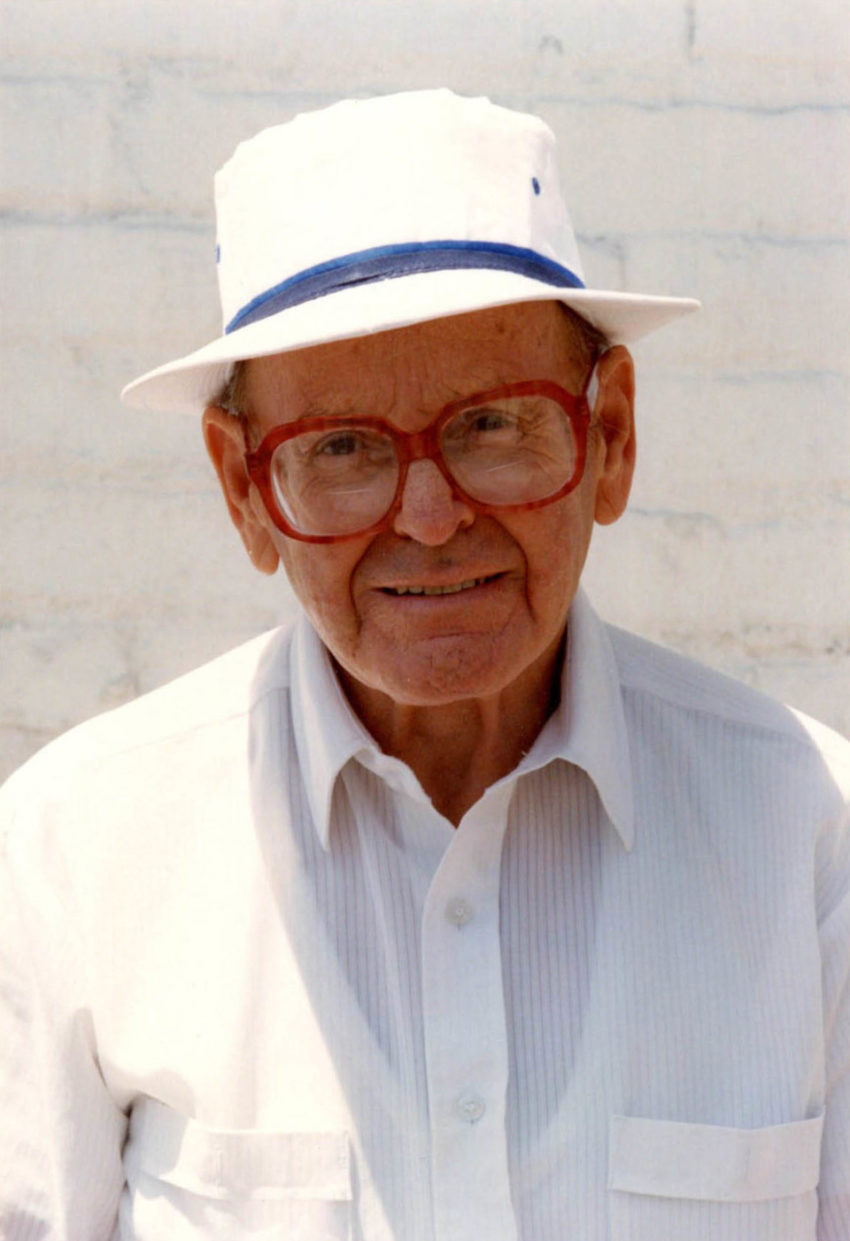
Statement to the Nuclear Regulatory Commission
on the Licensing of Units 2 and 3 at San Onofre, California
By Jack A. Shepherd, early 1980s. exact date unknown
I am presently involuntarily retired from the American Bridge Division of the U.S. Steel Corporation because its Maywood plant was closed in March, 1980. During the last ten years of the thirty seven that I worked for this company, one of my duties as an Inspector, was to radiograph welds to ascertain that they were of acceptable quality. I have been a member of organized labor since 1938, and I am now an Honorary member of the United Steelworkers of America. I am an active participant in the Labor Safe Energy and Full Employment Committee.
While I have not heard all of the testimony that has been presented in this hearing to date, I believe that this Commission should know that a sizable and growing section of the American labor movement does not support the use and proliferation of nuclear power. In general our opposition to nukes is based on three factors: 1 The excessive risks to the safety and health of the workers in the plants and to the public living in their vicinity. 2 The fact that nuclear power provides fewer jobs than any of the alternative sources of power that are available. 3 The high cost of nuclear power in comparison to other alternative power sources.
I don’t believe that I could add anything to the ample testimony that has already been submitted about the danger that the use of nuclear power creates in the San Onofre57rtf area. The inability to evacuate the area in a reasonable length of time in the event of an accident; the possibility of a major earthquake in the area; the evidence of an increase in the level of radiation that has already occurred due to the operation of Unit 1 are valid arguments against licensing Units 2 and 3.
To the best of my knowledge, the testimony that has been presented in these proceedings by union members has been in favor of licensing Units 2 and 3. It has come from Brothers who are employed at the San Onofre facility. One of these workers seemed to feel that the opponents of licensing were questioning his ability as a welder to produce the quality of work which nuclear powered generators require. Prior to my employment at American Bridge, I worked as a High Pressure Pipe Welder in refinery construction. Like my Brother welder, I also took pride in my ability as a craftsman to perform my duties. However, even if all the welds and the other work was perfect, it would not resolve problems such as public evacuation, earthquake danger or so-called “low-level radiation” in the plant and the San Onofre area.
I will not take the time in this hearing that would be required to discuss nuclear power from a union point of view, but members of the Labor Safe Energy and Full Employment Committee would welcome-such a discussion with other union members if it could be arranged. We believe this issue deserves far more discussion and consideration in the labor movement than it has received in the past.
Based on the training I received before radiographing welds, I think that the one thing you can say about radiation is: the less of it you get, the better off you are. Radiation exists as a natural part of our environment. If man possessed the technology, it would be logical, in my judgment, to try to lessen or even eliminate the natural level of radiation. Conversely, it is illogical to engage in anything that raises this level of radiation in the environment.
Nuclear power produces low-level radiation from its beginning to its end. Workers are radiated when it is mined. The ore tailings, once they are brought to the surface, inject more radiation into the environment than when they were buried in the earth. Workers in industries where radio-active materials are used receive increased radiation. So do workers who transport it. The end product of nuclear use is radio-active waste. There are tens of thousands of tons of this radio-active junk around right now, and nobody has come up with a trully safe way of disposing of it. In my opinion, even if the possibility of a nuclear melt-down did not exist, the foregoing facts constitute sufficient reason to stop the use of nuclear power.
When I see the problem of low-level radiation casually dismissed, as nuclear power advocates are wont to do, I am reminded of the fable about the race between the tortise and the hare. Like low-level radiation, the tortise just kept grinding away while rabbit slept, and we all know that he won. But the prize in a race where low-level radiation is a competitor, is not something anyone wants to win because it consists of medical problems and the possibility of untimely death.
At American Bridge, the level of radiation which workers outside the radiation area received, was held to one half the legal limit when this work was done. Most of the radiography was done after midnight when there were no other workers present. We had some wild cats in the plant which the workers fed. Two of them were accidentally radiated. It is not a pleasant sight to see any living thing die from excessive radiation.
With the sole exception of hydro-power, nuclear power provides fewer jobs than any other type of electric generation. Nukes employ a large number of workers during the time of their construction, but from then on, the work force is very small. Other methods of power generation not only employ more workers, but they create jobs for coal miners, oil workers and transport workers.
In this period of growing unemployment, I and other unionists are concerned about the availability of work. While the curtailment of nuclear power in the short haul could reduce the number of jobs in construction, in the long haul, they would also gain. Unemployed workers are not apt to be customers for the goods and services that they normally consume. This, of course, would include electricity. If there is a contraction in the use of electricity, there will be fewer construction jobs because new power plants will not be needed.
Nuclear power is not only the most unsafe form of energy, it is also the most costly. When the cost of a nuclear plant is amortized thru the years of its productive use, it is the most expensive means of producing electricity.
Testimony has already been introduced which shows that Southern California Edison has placed 40% of its total investment in nuclear and, power,/in so-doing, has only increased its generating capacity by 12%.This testimony has not been refuted at any time that I have been at these hearings. While I am on this subject of costs, I would like to present some further evidence. It comes from the states of Utah and Washington.
Utah Power and Light, to my knowledge, is the only utility company in the nation which generates all of its power with coal. Recently, it reported a 92% increase in profits for the second quarter of this year. Contrast this with Consolidated Edison, which is soliciting government help and trying to pass rate increases to its customers, to avoid bankruptcy because of Three Mile Island.
The Washington Public Power Supply System is also in serious financial trouble because of nuclear power. The estimated cost of the five nukes this outfit is building has risen from four billion to twenty four billion dollars. Two of these nukes have been placed on hold, and the company is considering drastic rate increases. They are also asking the Bonneville’ Power Administration, a federal energy-distributing agency, to raise its rates to help pay the cost of completing the other three nukes.
All things considered, coal generated power would appear to be the most satisfactory way to meet the general criteria which a sound union energy program would embrace. It is safe. The technology exists to burn it environmentally clean. It is cheap. It exists in such ample supply in the nation that it could supply our energy needs until new and better sources are developed. It would create more jobs than any’., other energy source, that is immediately available. It is now being brought into the Los Angeles harbor in huge amounts for shipment to Japan.
Nuclear supporters cited the extensive use of nukes in Russia as proof of its safety. However, it is well documented, that since 1970, when nukes proliferated, there has been a steady increase in the death rate of children – particularly under the age of one year.. in Russia.
Dutch bank obstructs post-Irma aid to Cuba

Dutch bank obstructs post-Irma aid to Cuba
The German-Cuba Friendship Association
is the oldest solidarity organization with the island in Germany.
Translated and edited by Walter Lippmann for CubaNews.
The weekend before last, Cuba was a victim of Hurricane Irma. Since then we have received more than sixty thousand euros in the accounts of the FRA-Cuba Friendship Association ( Freundschaftsgesellschaft BRD-Kuba ). This huge figure is not enough to cover the material damages that “Irma” left in the country, but donations are always welcome and necessary.
In this situation, the ING NGB bank becomes a blocking factor, allied to the US’s adverse policies towards Cuba. A friend from Cuba, based in the Netherlands, wanted to deposit a donation in the account of our Friendship Association RFA-Cuba. On the grounds that ING does not carry out transactions that have “direct or indirect reference to certain countries”, namely Cuba, Iran, North Korea, Sudan and Syria, the bank rejected the receipt and transfer of the sum .
The bank stated: “In connection with the above policy we can not carry out your order. The amount will be deposited into your account again. “
The FRA-Cuba Friendship Association states that the necessary normalization of relations between Cuba and the member states of the European Union can only be possible through the end of the United States blockade against Cuba, which is still supported by some states members of the EU.
In the EU there are also tight conditions for Cuba, for transactions and extra costs increases for freight or credit. The example of the ING bank shows that only our name (in which the word “Cuba” is a natural part) can be an obstacle to an economic and financial exchange with Cuba.
The FRA-Cuba Friendship Association calls on all people of good will to resist the blockade against Cuba and to help the Cuban people just now when millions are mourning damages. In this endeavor Cuba will never submit, whatever the obstacle that is put in the way. Cuba will be free while opting for the road to socialism.
Freundschaftsgesellschaft BRD-Kuba
Federal Office of the FRA-Cuba Friendship Association
Cologne, September 19, 2017
Implementing Our Trade Union Policy and Recruitment
Implementing Our Trade Union Policy and Recruitment
by Jack Shepherd, Los Angeles branch, July 10, 1981
Socialist Workers Party Discussion, Vol. 37, No. 24, July 1981
==========================
Thanks to David Walters, at Holt Labor Library, for the scanned version, which has been OCRed and edited for reposting here by Walter Lippmann and Kimberly Sloss. Please let me know if you find any typos. This essay is just under 5000 words.
Walter Lippmann.
walterlx@earthlink.net
==========================
walterlx@earthlink.net
==========================
The party’s resolutions, while analyzing and portraying the political reality and the relationship of class forces at given conjunctures in time, stresses the more favorable variant in the further evolution of the class struggle. Generally this approach has been characterized as “the right to revolutionary optimism.” It is something I have always supported in our movement, and it has been my observation that those who questioned this proposition were embarking on a path that led out of the party.
Even as I had been a firm supporter of the party’s decisions to follow the radicalization in peripheral struggles such as the anti-war, civil rights, women’s and gay movements, I supported the party’s turn to industry. This support was motivated by the opinion that the economy had entered a deeper and more intractable crisis than any which had occurred since World War II. It was not based upon the concept that the workers had miraculously shed the effects of the preceding thirty years which had nurtured and sustained the generally conservative mood which shaped their thinking.
Making a turn in the party is not an easy thing. I listened to reports and assessments, which in my judgment, were overly optimistic, but were also a necessary part of carrying out the turn. Optimism has been, and always will be a legitimate part of our party and I want to affirm my support to Ito continued use. .
The party has reached the stage in our turn to the industrial workers where any fears that we are going to be left on the sidelines when they go into action should be allayed. I think the time has come when we can realistically assess the level of radicalization in the unions and build the party in the process.
We should continue the party’s present trade union policy
I am a supporter of the party’s trade union policy. I believe that the flanking tactic with respect to the trade union leadership is, soundly conceived, that the open socialist policy, within, the limits of what is possible, is correct, and that we should continue to concentrate our work in the unions around the social and political issues. It follows that I think Comrade Weinstein and his co-thinkers are mistaken.
I have always been loath to judge the application of any party policy from afar. I believe you have to have all the details and facts before a sound judgment can be made. Truth manifests itself in the concrete. The reports from Lockheed in Marietta, Georgia, and from Newport News should have clarified any misunderstandings about how our trade union policy was carried out in those situations.
It is a fact of life that any trade union policy will always result in some casualties. Sometimes it is because it is ineptly applied. In such instances, the leadership, as it has been doing, must intervene and educate against these misapplications. Sometimes the bosses take off on a tangent as is the case with Lockheed. In these situations, we are required to mount a counter-attack using every available means to win. The outcome of such a fight also shapes the application of our trade union-policy, The only tirade union policy which might not have called us to Lockheed’s attention, in my judgment, would have been to just work and do nothing.
Taking union posts has not helped other radical parties
The policy of taking union posts and concentrating on union issues is not the panacea that some comrades believe. This is basically what the other radicals have been-doing. A look at some of their 4 experiences should be instructive.
The first of these experiences involves the Communist Party (Marxist-Leninist). They were in a caucus which won some posts, including the presidency, in the Ford Motor plant in Pico Rivera, California. From the time they took, office, they were in a fight with a right-wing majority on the executive board, which enjoyed the support of the UAW Regional Director. This red-baiting fight was so intense that the majority of the members would not even take a .union leaflet when it was passed out at the plant gates.
After the plant closed, the president was put on trial for allegedly using the phone for unauthorized calls. At the trial, he said that he didn’t care what the verdict was, because he was going into the construction business. He was found guilty.
The CP (ML) has lost many of its members. It is in a political crisis over Maoism. It also has organizational problems. It is in a major internal discussion to decide whether it should continue as a party or dissolve.
The second experience involves the Communist Labor Party in the Bethlehem Steel plant in Huntington Park, California. The CLP ran candidates for union offices with mixed results. They lost the presidency to Wilfred Anderson, but they won some griever posts. Had they been more successful, they could have very easily found themselves in the same situation that prevailed at Ford because the local has a right-wing majority on its executive board.
This plant is first on a list of plants which Bethlehem is considering closing. Anderson, who is basically a good unionist, is trying to keep the plant open by cooperating with the company. He says that if he pushes grievances the way he used to, the plant will fold in 60 days.
The CLP is critical of Anderson, and will probably run against him in 1983 if the plant is still open. Basically this is a no-win situation. The CLP advocates a policy that is a little more militant, but they agree with Anderson that the plant is on the verge of being closed. Having gone through the experience of a plant closure myself, the last thing I would recommend would be to take union office to administer the procedure.
The CLP operates out of a front group called Californians Against Taft-Hartley (14b). I was trapped into attending one of its meetings because a co-worker who was riding with me wanted to go: In the past, these meetings attracted more than thirty. This particular meeting was down to eight or nine. The discussion was about what could be done to keep the committee functioning. Like other radical parties, the CLP has lost members and is now down to its hard-core cadre.
The third experience involves the Communist Workers Party. I recently had an opportunity to listen to a report on the union struggle at NASSCO by Rodney Johnson. The wages at this shipyard are about $2.00 per hour less than the rates paid by the industry on the West Coast, and the safety conditions are very poor. Military expenditures sustain the expectations of NASSCO workers that they will have contracts. The CWP and their friends ran for office and were elected. They combined militancy with democratic worker mobilizations to press for resolution of the many problems, particularly around safety, which existed. The company retaliated against one of these in-plant demonstrations that took place at lunch hour in conjunction with a ship launching, by discharging a large number of the union’s officers and shop stewards. The workers established picket lines and closed the shipyard. The strike was ended on the basis that the discharges would be given expedited arbitration. Twenty-seven cases are involved. The Ironworkers International put the local in receivership. The authorities put Boyd, Loo and Johnson on trial for allegedly conspiring to blow up the shipyard’s electrical facilities. They have been found guilty, and the verdict is being appealed. The CWP and their supporters are also petitioning to decertify the Ironworkers Union at NASSCO and replace it with an independent union.
While a final balance sheet must be delayed until the outcome of the arbitrations, the court appeal and the decertification election is known, I believe it is safe to say that we would not like to see any of our comrades in a similar situation. Johnson reported that the CWP and its friends still retain the support of a large Section of the NASSCO workers, but the obstacles to be overcome are formidable. The answer may well be that worker militancy must exist in many locals before it can be translated into victories in any of them.
Of course, all of the experiences I relate are in California. Perhaps it is different in other parts of the country. If there is some place where radicals, or for that matter even militants, are winning victories and recruiting, it would be a valid argument for adopting a more interventionist trade union policy.
Our trade union policy now and during World War II
Of all previous party, trade union policies, the present one is closest to our trade union policy during World War II. At that time we refrained from taking union posts and devoted our efforts to socialist propaganda work, Minneapolis Trial support and general union educational propaganda around the no-strike pledge, etc. We characterized this union position as “a policy of caution.” I might add that, in my judgment, this cautious policy served us well. It laid the groundwork for our extensive intervention into union leadership and the post-World War II struggles of the industrial workers.
The present union policy puts a little more stress on the open socialist approach, but I can recall selling about 40 Militant subscriptions not too long after I had completed my probationary period. Our abstention from taking positions of union leadership was based on the proposition that the wildcat strikes, which occurred in greater numbers as the war went on, could not be led to victories. The combination of the government, the companies and the union bureaucrats, plus the political support which most workers gave the war, led to assorted strikes and victimizations of the strike leaders.
Of course, John L. Lewis scored a major victory when the UMWA struck during World War II. But that was an action sanctioned by the International leadership of a major union and not a wildcat strike led by radicals or militants.
The success of the UMWA strike was powerful testimony in support of our trade union analysis. We were the only section of the labor movement that propagated the idea that the unions had to withdraw the no-strike pledge in order to resolve the accumulating problems of their members. Towards the end of the war the idea began to spread. At its last war-time convention, the UAW debated a resolution to withdraw the no-strike pledge. It lost by a handful of votes. However, it was not until the war was coming to an end and it was apparent that the working class was getting ready to go into action that were able to recruit these workers.
The economy and capital mobility has the workers on the defensive
Although it is masked to a certain extent by the inflation, the situation today is one in which the deflationary forces in the economy are coming more and more to the fore. The days when workers were fighting for reverse seniority in order to take extended vacations while they were collecting unemployment and supplementary unemployment benefits are behind us.
Since 1929, the last time these deflationary forces were unleashed, the ruling class has developed a powerful new weapon – capital mobility. During the years 1969-1976, 15 million jobs in the United States were wiped out by plant and department closures. The trend has escalated since then, and while I don’t have figures, I think it is safe to say that almost 25% of the U.S. workforce has lost jobs due to closures.
Most of these job losses were not due to business failures, but rather to capital mobility. Most of the capital migration within the U.S. has been from the Frostbelt to the Sunbelt and from unionized areas to non-union areas. But all areas of the U.S. have been affected by capital migration overseas. As a matter of fact, the rate of plant-closures in the South has been greater than in the U.S. as a whole. During the 1969-76 period, more than one third of the plants in the South, employing 100 or more workers, were closed, primarily due to capital migration overseas.
Because of their ability to freely move capital, the bosses, in many instances, have been relieved from the task of making frontal assaults on the unions to drive down wages and working conditions. To date, nobody has come up with a strategy that workers can employ on the economic front to stop these closures. At the prompt time, the choice for workers appears to be: 1) Refuse a wage cut, remain militant and go down with the flags flying like the workers did in the Gary, Indiana, American Bridge plant; or 2) Make concessions, go home and pray and probably go out with a whimper like they appear;, to be doing at the Bethlehem Steel plant in Huntington Park.
In 1950, the U.S. multinationals had $11 billion invested overseas. By 1974, it had grown to $118 billion. While I don’t have figures on what U.S. overseas investments are now,. we can rest assured that the amount has expanded since the trend to overseas investment has increased, in the last seven years.
Plant closures and the threat of plant closures are exerting enormous pressure on the unions and the workers. Ford, for- example, recently asked the UAW to open its contract before its termination date so that the company could share in the concessions that were being given to Chrysler. When its request was refused, Ford said: We are now building a world car. We can close all of our U.S. plants and still produce as many cars as we can expect to sell:
Perhaps someone may believe that you can confront problems like this one facing the Ford workers by taking a griever position and being militant on the assembly line. I don’t. The only answer I see is a long-range one. It requires the radicalization and politicalization of the workers. And this type of educational work can best be done without the burden of a griever job.
Any serious worker fightback must be political
As I have already noted, nobody has come up with any strategy, on the union level to stop these closures. Nor have they been able to use the closure of a particular plant to speed worker radicalization. This is something we should try to initiate if the opportunity presents itself, or be prepared to assist if it is initiated by someone else.
The right to invest, disinvest and move capital throughout the capitalist sector of the world is assured to the ruling class by their control over the political process. Both the Republican and Democrat parties are supporters of “free enterprise,” the economic system which makes the aforementioned rights possible. Any political party which would challenge these rights or start dismantling the structure upon which they rest would have to be anti-business, anti-free enterprise and anti-capitalist. A labor party, or any other party, would be as helpless as a baby in terms of arresting the ruling class assault on the living standards of the workers if it didn’t possess some of the foregoing ingredients. A return to a Democrat administration would be unlikely to provide the union leaders or the workers with any of the relief that they hope to obtain.
The ability of capital to move overseas was won in World War II and formalized at Bretton Woods. But it also rests on a number of subsequent government decisions such as: 1) Government insurance to compensate U.S. companies if their investments are lost through nationalizations by foreign governments; (This law may, have expired, but it existed for decades.) 2) Favorable tariff rulings; 3) IRS rulings which exonerate overseas profits from being taxed in the year they were made and taxes them in the year they are repatriated to the U.S.
Can anyone imagine any capitalist party tampering with the structure which presently facilitates overseas capital flight? Yet this is exactly what would be required if a political party was going to help Ford workers in their pending negotiations.
Domestic capital mobility also rests on a political base such as: 1) Publicly financed incentives and tax breaks to encourage investment in a particular city, county or state; 2) Low accident, disability and unemployment benefits for workers in some states; 3) Right-to-work laws which inhibit unionization.
The unions have been trying for years to solve some of the problems that encourage domestic capital migration through the Democratic Party. In a period of economic uncertainty, are the Democrats apt to pass laws which correct these inequities?
Under free enterprise, the right to invest or disinvest in a way that maximizes profits in the most sacred of all rights. Many of the plants that have been closed were profitable. But workers need jobs. Communities should have the to a decent environment rather than being converted into slums as the effects of the economic dislocated ripples through their economies.
A capitalist politician, in the name of corporate responsibility, might ask a company not to close a plant. But what if the company refuses? Is he or she going to enact legislation that says worker and community rights must be given pre-eminence over the right to maximize profits?
Most of the workers that I have talked to during the last twenty years –even those who went through the great depression– were of the opinion that it could never happen again. What is happening now is contrary to everything that they had been led to expect. Many still have hopes that things will get better. Some even, think Reagan will deliver on his promises in a reasonable period of time. We believe that the economic downturn is in its preliminary stages. If we are correct, the next period will be one in which the working class begins to dispel its misconceptions and illusions. It will begin to deepen and expand its radicalization into more meaningful and broader areas. We can do our work best as open socialists unencumbered by union posts and responsibilities, We also must be patient and confident. Time is on our side.
Where the union leadership is going now
In a recent issue of the western edition of Steelabor, the official publication of the United Steelworkers of America, the front page featured a quotation from Woody Guthrie, and its back page carried an interview with a Polish steelworker who was representing Solidarity at an AFL-CIO meeting. I have read this paper for nearly forty years. Not so long ago, If I were a betting man, I could have gotten odds of more than 100 to 1 that there never would be a Steelabor with a format that was this radical. As a matter of fact, I don’t think I would have been willing to bet a dollar on it.
Some comrades have expressed the opinion that radicalism of this type by the union leadership reflects pressure from the ranks below. I think they are mistaken.
The first time I encountered this kind of radicalism emanating from the union leadership was shortly after the enactment of the Taft-Hartley law. I believe it was in 1948.
During about a six-months period, the leadership published rearms of material showing that the U.S. was really run by a handful of the super-rich, etc. I don’t know what they did in other locals, but we were in the leadership of my local. We saw to it that it was passed out to the membership. It was just about the time that we were beginning to get a response from rank and file members that this anti-capitalist propaganda offensive stopped.
Then, as now, the union leaders were of the opinion that they were facing a major crisis. Nor was it a figment of their imaginations. If the Taft-Hartley law had been enforced with the same conservative, anti-labor vindictiveness with which it was passed, the unions would have been in a struggle to survive. Of course, we know this didn’t happen. The union leadership established a detente with the bosses, and class conciliation continued to prevail in government circles. Through the years, however, this conciliation shifted more to the side of the bosses, and it returns were more meager for labor.
Reagan’s election, the increased number of union-hating conservatives in Congress and in the state legislatures, plus the economic crisis, have again convinced the union leaders that they are in jeopardy. That is why they have mounted another radical propaganda offensive. It is a good thing. We should use it for all it’s worth and for as long as it lasts. But again, I repeat, we should not interpret this leadership radicalism as a reflection of wide-spread radicalization in the ranks of the union membership.
The union leaders are ready to make another deal
On the other hand, the union leadership is exploring the possibilities of another deal. Kirkland establishes a committee to meet with Reagan administration officials to set what can be worked out. The July 7th Wall Street Journal reports that the Steelworker leadership is opening negotiations with the steel industry to decide if the no-strike agreement will be extended to cover the 1983 negotiations. The industry wants the terms of the no-strike agreement watered down because “past settlements were too costly.” This policy of union cooperation with the steel industry was justified to the workers, after the 1959 strike, as a way to save jobs. At that time, I believe, there were more than 400,000 workers covered by the Basic Steel agreement. The WSJ says that 286,000 are covered now.
As has already been noted in this internal discussion the union leaders are seeking to solve the problems of their members by increasing their cooperation with the industrialists. We can be sure that the price the bosses are willing to pay for this cooperation will be less and less acceptable to the workers. But this is a part of the learning process which the workers have to go through before they will be ready to strike out in a new direction. It is conceivable, even likely, that this worker dissatisfaction will take some time before it manifests itself in action unless the bosses’ terms are so bad that the union leaders are forced to call a strike.
Radicalization in other social sectors will outpace industrial workers
Meanwhile, the Reagan program is devastating the many other sections of our society in the here and now. In the next immediate period, the radicalization of these affected sectors, in my judgment, will outpace the radicalization in the ranks of the industrial workers.
These other sectors don’t have the same social weight or significance of the industrial workers, but we should not underestimate the importance of their radicalization. In fact, this radicalization, if transmitted into the unions, can accelerate the radicalization of the industrial workers. And we have an almost perfect opening to start this operation.
The September 19 coalitions
As a result of their left turn, the union leaders are anxious to be seen with Black leaders, environmentalists, etc., who they formerly shunned. They want all the help they can get if Reagan and his union-hating cohorts come down on them, and they want to influence and rebuild the Democratic Party. They have set September 19 as a day of national mobilization against the Reagan program in Washington, D.C. and in major cities across the country.
In Los Angeles, the September 19th coalition is called the Greater Los Angeles-Labor Community Coalition. It is open to all union locals, AFL-CIO or independent, any community organizations, other coalitions and political parties that are opposed to all or any part of the Reagan program. As they put it: “Any group that is capable of fogging up a mirror in the morning is eligible to join and have one representative at coalition meetings.”
I have been representing the Coalition Against Plant Closures, September 19th coalition meetings are held in the Los Angeles County Federation of Labor, AFL-CIO office, and they are usually attended by about 25 people. More are involved, but sometimes they miss meetings. A representative of the New American Movement usually attends, so the coalition, is clearly open to any radical party that wants to participate.
To date, one expanded coalition meeting has been held. I suggested that we should invite a representative of the hunger-striking Vietnam veterans to this expanded meeting. While some coalition members expressed reservations, the vote was favorable, and a veteran did speak. The expanded meeting was attended by about 175.
I also serve on the coalition steering committee. At one of its meetings, a member expressed the opinion that the coalition should oppose the military budget. Another member supported the military. Since the AFL-CIO also supports the military program, it was agreed that a position against the military program would destroy the coalition. In this discussion, I made the point that the anti-draft, anti-war movement was a legitimate part of the coalition’s constituency. Everyone, including the military supporter, agreed with this position.
Of course, these September 19th coalitions may not be as open in other areas as it is in Los Angeles. If we enter these coalitions and involve our co-workers, I can’t think of any better way to get them to “think socially and act politically.” The Democrat politicians will speak at the September 19 rallies, but I can’t think of any better way to open a political discussion with our co-workers. We can contrast our labor party and socialist politics against what the Democrats have to offer. These rallies should attract the more union-minded and politically conscious industrial workers.
What the September 19th coalitions have to offer
I have already mentioned that the anti-war movement is welcome. The Nicaraguan, Salvadoran and Guatemalan movements have been asking the unions—with some success—for support. I think we should advise them to join these September 19th coalitions. They should come not seeking help, but offering their support. They may not get a speaker on the program, but if they mobilize their supporters, it would really be appreciated—and they could put anti-interventionist leaflets in the hands of everyone present.
Someone in the course of this discussion said that it was difficult to encounter Stalinists in the plants because they avoid us. If they come around these coalitions they will find them, both young and old. In fact, all of the radical parties are there. These coalitions just could be the best vehicle for a dialogue with other radicals that we have ever had during my time in the party. It is also the best time, that I can remember, to have such a discussion. The Stalinists are stuck with an indefensible position on Poland. The DSOC-NAMers are stuck with the Democrats. The Maoists are stuck with the Chinese events. I think these rallies may become poles of attraction for the newly radicalizing.
I also believe we should make a major effort to bring the student movement into September 19th. They are not only against the military buildup, but they are also against increased tuitions and decreased student loans. While on this subject, I would like to give my support to the proposition that the YSA should re-establish an on-campus presence as soon as possible. The issues are there, and, it is the only place, that I know of, where some recruitment to radical parties has been taking place during recent times.
The Reagan administration is obviously moving against the senior citizens on social security. I think we should ask our SWP seniors to make a probe with a view to bringing this, movement into September 19th. The Grey Panthers and the union-organized senior-citizens would seem to be the logical place to start.
Radicalizing industrial workers
Dining the Vietnam War most demonstrations appeared to have very little impact on the consciousness of workers in my plant. The workers knew that I was involved because I passed out leaflets. The company wouldn’t let me pass them from its parking lot which Was adjacent to the gate where the workers walked into the plant. They made me pass them from the street at the gate where the cars drove in. The union officials offered to fight for my right to use the parking lot. I turned them down because I learned from experience that I got more sympathy from my coworkers using the street gate. Even some supporters of the war thought the company was striking a low blow by not allowing me to use the parking lot. I might add that very few of my co-workers ever came to a demonstration.
The big 1969 demonstrations in Washington, D.C. and San Francisco, however, got their attention. More than once I was asked by co-workers if the San Francisco demonstration was really as large as it looked on TV. I assured them that it was even bigger. Their comment always was “I didn’t know there were that many people against the war.”
There have been many demonstrations since Reagan took office. We know that they are significant and important. But there is nothing like size to get the attention of industrial workers. September 19th may give us the opportunity to pull it all together. If we don’t accomplish it then, we will have more opportunities later, because it is supposed to be an ongoing coalition. Big demonstrations will help radicalize and politicize the industrial workers. The sooner we get them, the quicker this process will unfold in the ranks of the workers.
In conclusion, I would like to say that the foregoing represents just one comrade’s opinion about where we are now, and what we ought to do next. If it contributes in any way to helping us through this rather difficult period, it will have served its purpose.
July 10, 1981
Letter to Walter Lippmann
LETTER FROM JACK SHEPHERD TO WALTER LIPPMANN
July 12, 1997
Dear Walter:
American medicine is dominated by the drug companies in alliance with the FDA and the majority of the doctors. It results in high costs and inferior medical treatment.
Drug companies cannot patent substances that occur naturally in the human body such as hormones. They cannot patent herbal remedies that have been used since ancient times. The cost of getting FBAA approval on a drug is enormous. Because of this and the inability to patent, no one is going to spend this money on hormones and herbal medicine.
The drug company – doctor – FDA combines push all kinds of risky and even life – threatening medicines. They will give you Valium for insomnia. It doesn’t work very well and is addictive if used for any length of time.
If they could patent melatonin parenthesis (a natural hormone) to combine would be pushing it as the great medical breakthrough on sleeping disorders that it really is. They must know that there are numerous papers from prestigious universities that have studied human use of melatonin and found it to be devoid of bad side effects.
Sincerely, Jack
P.S. I would like the paper on the ice diet returned
Tougher Penalties for post-Irma Crimes
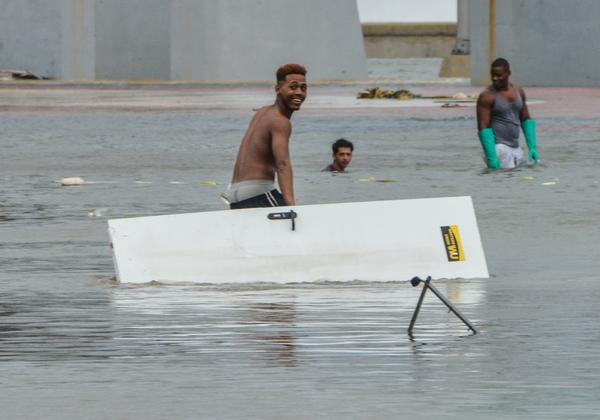
Tougher Penalties for post-Irma Crimes
By Enrique Valdés Machín
September 15, 2017 13:44
Photo: ACN/Marcelino Vázquez Hernández
Translated and edited by Walter Lippmann.
Floods near the N and 15, caused by the penetration of the sea, after the scourge of Hurricane Irma, in the municipality Plaza de la Revolución, in Havana, on September 10, 2017. ACN FOTO / Marcelino VAZQUEZ HERNANDEZ./oca
Havana, Sep 15 (ACN) Criminal conduct perpetrated during the passage of Hurricane Irma through Cuba, as well as those that violate the normal recovery process, will be punished with all the rigor of the law, said Yamila Peña, deputy prosecutor chief of the Attorney General of the Republic.
During a meeting with the press, the deputy prosecutor said that the investigation process continues against a group of citizens, many of them with a provisional custody order, for crimes of disobedience, attacks on and alteration of public order, among others, whose results will be subsequently reported.
From what has been confirmed in the Criminal Code and the Criminal Procedure Law of Cuba, and without violating any Due Process guarantees, the accused, faced with severe penalties, will be liable for their actions before the People’s Provincial Court, Peña explained.
According to Peña, during Irma’s passage through Cuban territory, the Attorney General, in fulfillment of its functions as guarantor of Socialist Legality, maintained, from the first moment, the vitality of its services, even in the most intricate places and even under adverse conditions.
This, he said, aims to ensure consumer protection and the proper use of resources destined for recovery.
We also watch for the correct use of food destined to homes for children without family shelter and the homes for the elderly and children without family, the people in temporary shelters (because their homes were damaged by the hurricane) and the food processing plants, he stressed.
It is not a question, he argued, of supplanting the functions of management cadres and administrative officials, but of being present to control this recovery process, to face and to anticipate, as far as possible, criminal behavior that is exacerbated under complex situations such as this.
Among the crimes are price alteration, speculation, consumer deception, which must be denounced by the population both in the units of the National Revolutionary Police and by the Single Line of the Public Prosecutor’s Office, the mailboxes located in each of their installations in the different instances and by the telephones 080212345, 7 2069073, 7 2069077 and 7 206 9088, indicated.
Peña insisted that what is important now is to reinforce prevention, to explain to the population how much is being done in favor of recovery, and to maintain the principle of zero impunity in the face of violations of the provisions.
Cuba Recovered and Open
By Manuel E. Yepe Translated and edited by Walter Lippmann. USA Today reported on Sept. 17 that the US government was providing humanitarian aid to numerous Caribbean islands devastated by Hurricane Irma. Cuba, located just 90 miles off the coast of Florida – was not among them. When Hurricane Katrina hit New Orleans in 2005, Cuba was the first nation to offer aid. The island prepared thousands of volunteers and huge amounts of emergency equipment and supplies to assist the victims in the affected regions with all the expenses incurred by Cuba. Even on that occasion, Havana organized a permanent aid brigade to send to to countries affected by natural disasters that was named after a US citizen, Henry Reeve (1850-1876), who fought in an outstanding way in the Cuban independence ranks against Spanish colonialism, and who rose to the rank of Brigadier General. The US government of George W. Bush rejected the magnanimous Cuban aid offer, in spite of the enormous humanitarian catastrophe that was unfolding in Louisiana at the time. Katrina caused damage to the city of New Orleans, but it did not devastate it. Shortly afterwards, the Pontchartrain lake dams and several canals were broken. A toxic broth of contaminated water flooded the streets, as well as thousands of homes and beyond the second floor of tall buildings. Tens of thousands of people, almost all of them black and poor, had to fight for survival in the worst conditions of official abandonment. An estimated 300,000 families were made homeless. Nor was the offer of Cuban aid accepted at that time. At the moment, although Cuba is recovering from the serious damage caused by Hurricane Irma, it has not hesitated to give aid to neighboring islands that have suffered a misfortune similar to its own. Hundreds of professionals, with their assistants and medical supplies, have been sent by Havana in support their Caribbean neighbors. It is known that there are now hundreds of millions of dollars worth of food, medicine, and building materials being stored in the US military base that Washington illegally occupied more than a century ago, on the shores of Guantanamo Bay, on Cuban territory, in the easternmost part of Cuba. (This also includes the concentration camp whose inmates have no rights or trial as prisoners war). But it is also known that the US military base has not shared a single bottle of potable water with the Cuban residents affected by the hurricane outside the perimeter fencing at the base. Among other nations, they are providing assistance to Cuba, Argentina, Bolivia, Canada, Colombia, Costa Rica, China, Ecuador, El Salvador, Spain, Mexico, Nicaragua, Panama, Dominican Republic, Russia, Uruguay, Venezuela and Vietnam, as well as some dependencies from the ONU. In contrast, the State Department has issued a warning against travel to Cuba and advises the Americans in that regard. Meanwhile, millions of Cuban volunteers have cleared the tracks that provide the most evidence of the destructive passage of Hurricane Irma. Tourists from the most diverse countries are already going massively to the island. By denying Cubans aid, and discouraging its citizens’ travel to Cuba, Washington is once again using the occurrence of a humanitarian disaster to punish Cubans for refusing to accept US meddling in their internal affairs. However, as the Canadian tour operator “Cuba Explorer”, which has been based for years in Havana, states in a message to its clients, “Americans are preparing to visit Cuba in large numbers in the coming months, aware that social tourism is a form humanitarian and economic aid. The travelers want to keep alive the new spirit of cooperation between the United States and Cuba that began during the Presidency of Barack Obama. “Cubans are showing their disposition and their desire to welcome and warmly welcome their arrival to the island to their American guests,” said the aforementioned US tour operator, based on his own experiences and expectations. September 18, 2017.
Por Manuel E. Yepe Exclusivo para el diario POR ESTO! de Mérida, México. El diario USA Today informó el 17 de septiembre que el gobierno de Estados Unidos estaba dando ayuda humanitaria a numerosas islas del Caribe devastadas por el huracán Irma. Cuba, situada a tan solo 90 millas de las costas de la Florida- no estaba entre ellas. Cuando el huracán Katrina golpeó a Nueva Orleans en 2005, Cuba fue la primera nación en ofrecer ayuda. La isla preparó miles de voluntarios y enormes cantidades de equipos y suministros de emergencia para ayudar a las víctimas en las regiones afectadas con todos los gastos sufragados por Cuba. Incluso en esa ocasión La Habana organizó una brigada permanente de ayuda a países afectados por desastres naturales que nombró Henry Reed (1850—1876), en honor a un ciudadano estadounidense que combatió de manera sobresaliente en las filas independentistas cubanas contra el colonialismo español, en las que alcanzó el grado de Brigadier General. El gobierno estadounidense de George W. Bush rechazó la magnánima oferta cubana de ayuda, a pesar de la enorme catástrofe humanitaria que se desplegaba en el estado de Luisiana en aquel momento. Katrina causó daños a la ciudad de Nueva Orleáns, pero no la devastó. Poco después, cuando los diques del lago Pontchartrain y varios canales se reventaron, un caldo tóxico de agua contaminada inundó las calles, así como miles de casas y hasta más allá del segundo piso de los edificios altos. Decenas de miles de personas, casi todas negras y pobres, debieron luchar por la supervivencia en las peores condiciones de abandono oficial. Se calcula que 300,000 familias quedaron sin techo. Tampoco fue aceptada entonces la oferta de ayuda cubana. En estos momentos, pese a que Cuba se está recuperando de los graves perjuicios que le causara el huracán Irma, no ha vacilado en prestar ayuda a las islas vecinas que han sufrido una desgracia semejante a la propia. Cientos de profesionales, con sus asistentes y suministros médicos, han sido enviados por La Habana en apoyo a sus vecinos del Caribe. Se conoce que en la base militar estadounidense que ilegalmente ocupa hace más de un siglo un espacio en la ribera de la bahía de Guantánamo, en territorio cubano, en la parte más oriental de Cuba (así como en el campo de concentración de sus prisioneros de guerra sin derecho a juicio que allí existen), hay actualmente alimentos, medicinas y materiales de construcción valorados en cientos de millones de dólares. Pero se sabe, igualmente, que la base militar estadounidense no ha compartido ni una sola botella de agua potable con los cubanos residentes afectados por el huracán fuera del vallado perimetral de la base. Entre otras naciones, están proporcionando ayuda a Cuba Argentina, Bolivia, Canadá, Colombia, Costa Rica, China, Ecuador, El Salvador, España, México, Nicaragua, Panamá, República Dominicana, Rusia, Uruguay, Venezuela y Vietnam, así como algunas dependencias de la ONU. En contraste, el Departamento de Estado ha dictado una advertencia contra los viajes a Cuba y asesora en ese sentido a los estadounidenses. Mientras tanto, millones de voluntarios cubanos han limpiado las huellas que más evidencian el destructivo paso de huracán Irma. Turistas de los más diversos países están acudiendo masivamente ya a la isla. Al negarle ayuda a los cubanos y desalentar los viajes a Cuba de sus ciudadanos, Washington está utilizando una vez más la ocurrencia de un desastre humanitario para castigar a los cubanos por negarse a aceptar la intromisión de Estados Unidos en sus asuntos internos. Sin embargo, como manifiesta en mensaje a sus clientes el turoperador canadiense “Cuba Explorer”, basado hace años en La Habana, “los estadounidenses se preparan para visitar Cuba en gran número en los próximos meses, conscientes de que el turismo social es una forma humanitaria y económica de ayuda. Los viajeros quieren mantener vivo el nuevo espíritu de cooperación entre Estados Unidos y Cuba que se inició durante la Presidencia de Barack Obama”. “Los cubanos están dando muestras de su disposición y sus deseos de dar la bienvenida y abrazar calurosamente a su llegada a la isla a sus invitados estadounidenses”, expresó el antes citado turoperador norteamericano, a partir de sus propias vivencias y expectativas. Septiembre 18 de 2017.
Cuba Recovered and Open to the World
http://manuelyepe.wordpress.com/
Exclusive to the daily POR ESTO! of Mérida, Mexico.CUBA SE RECUPERA Y SIGUE ABIERTA AL MUNDO
http://manuelyepe.wordpress.com/
You must be logged in to post a comment.