
March 18, 2020 5
Movies and the Coronavirus

Movies and the Coronavirus
By Rolando Pérez Betancourt
March 16, 2020
Translated and edited by Walter Lippmann for CubaNews.
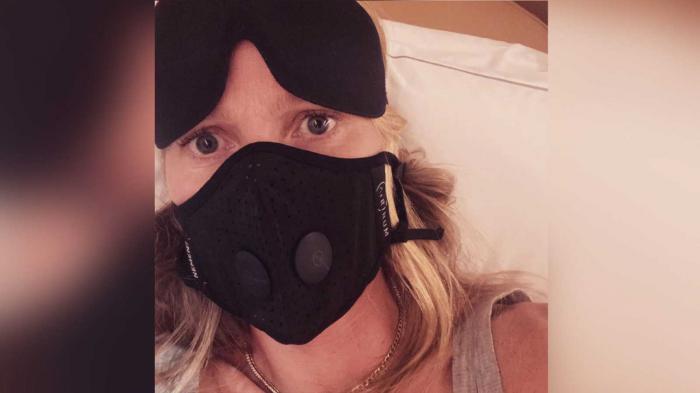
A few days ago, actress Gwyneth Paltrow appeared on social networks wearing a mask and this recommendation: “I’ve already been in this movie. Stay safe. Don’t wave. Wash your hands often.”
The film Paltrow was referring to is Contagion (Steven Soderberg, 2011), the most-watched on the Internet in recent weeks because of its similarity to that global scourge that keeps humanity against the wall, Covid-19.
Contagioun has a first-rate international cast: Jude Law, Marion Cotillard, Kate Winslet and Matt Damon, in addition to Paltrow, and is the film, within the genre of catastrophe, that most resembles what we’re experiencing, something like if since fiction its scriptwriter, Scott Z. Burns, had been sending out a warning message.

Gwyneth Paltrow has posted an image on Instagram recalling the film Photo: Instagram
In Contagion, Soderberg once again demonstrates his ability to combine experimental films with documentary elements and commercial touches, a formula that, through the use of breathless editing, opens the doors to vast audiences, while at the same time immersing the viewer in an atmosphere of tribulation.
The film talks about a virus that is supposedly transmitted from Hong Kong. Gwyneth Paltrow’s character, infected by a chef who shakes her hand after preparing a strange dish, later visits a casino where she blows the dice on a man who will die two days later. There he will contaminate everyone who approaches him, people who in a few hours will take planes to different parts of the world. On her way back to her native Minnesota, she falls ill and dies.
The epidemic takes on a global dimension and scientists begin to work on a vaccine, while the most diverse reactions take place in a film that gives great importance to the secondary characters: a blogger who denounces an international conspiracy that links the government with the pharmaceutical industry, cases of extreme selfishness, countries with no economic possibilities that are not involved in international cooperation, the manipulative role of the media and the lukewarmness, at the level of the nation and from the first moments, with which it faces what is happening.

Soderberg once again demonstrates in Contagio the ability to combine his experimental cinema with documentary elements and commercial touches Photo: sensacine.com
It is true that there are other films that deal with the subject, but none with the realism of Contagioun, hence the worldwide resurrection that makes many people look for it, and especially those people who remain in quarantine in their respective countries, perhaps because after long anguished suspense of anguish, the conflict opens the way to hope.
It is logical that in this “re-envisioning” the scriptwriter of Contagion, Scott Z. Burns, a faithful collaborator of Soderberg, returns to the foreground – with greater force than nine years ago. Interviewed by the website Slate, he had no qualms about condemning the cold actions of some governments in the face of the pandemic, starting with President Trump, who in the first moments relied more on his elusive messages via Twitter than on concrete actions.
According to Burns, while writing the script for the film, he went to meet with leading scientists who told him that the issue was not whether what he said could happen, but “when” it would happen. “When scientists say something, it’s better to listen,” the screenwriter said, and he had words of praise for the professionals at the U.S. Centers for Disease Control who advised him on his script. But he complained, “We’re finding out that we don’t have enough kits to test and for some reason, we’ve dissolved our pandemic response teams.
Speaking of the many people who tell him that the film was becoming a reality, Burns responds that he said, “I never imagined that there were leaders in this country who would leave us defenseless.
From a long interview appeared on the Slate website and an extensive lunge by Scott Z. Burns: “The administration and the Republican Party talk about protecting people with a wall [on the border with Mexico], but we don’t even have test kits. And he blames the lack of measures against hoarding, demonic price hikes, and other reprehensible aspects. “Where is the law when there are people on the Internet selling miracle cures?” he wonders. Those who saw the film remember the tricks of a grotesque con man in it, one more similarity of the many that come to show that, between fiction and reality, only the passage of life is in between.
Disinfecting Buses in Havana


Disinfecting Buses in Havana to Prevent COVID-19
By Ricardo López Hevia, Susana Antón Rodriguez
March 16, 2020
Translated and edited by Walter Lippmann for CubaNews.
They disinfect the buses in Havana. Photo: Ricardo López Hevia/Granma.
In a city like Havana that moves an average of one million people a day by bus, any measure taken to combat the new coronavirus might seem like little.
However, the Ministry of Transport (Mitrans) has implemented a series of actions aimed at increasing sanitation and preventive control in the Provincial Transport Company, which is responsible for the articulated and rigid buses that participate in the daily transfer of the population in the capital.
The measures, which began last Tuesday, also include the work centers and the arrival of each worker to the base units, said Raimundo Hierro Luna, deputy director of human resources of the company.
The process is established so that, once the “bus” arrives at the terminal, a team begins with the disinfection with chlorine solutions of the handrails, seats, doors and other surfaces.
The departure times of the transport will not be affected, because also at peak times, between each departure of the buses, there are 15 minutes for cleaning, explained Mauricio Mató Hernández, director of the Mulgoba Terminal.
Each time a bus completes a journey, at the rest time before returning, these measures are also being applied, and the people responsible are the driver and the conductor, who carry out the cleaning with the means given to them.

They disinfect the buses in Havana. Photo: Ricardo López Hevia/Granma.
Likewise, once the “cart” finishes the daily route and arrives at the base, a more meticulous cleaning is done to leave it ready for the next day.
The Provincial Transport Company of Havana has also published informative banners inside the buses, both rigid and articulated, so that the population is aware of the measures that must be adopted to prevent COVID-19.
This practice is implemented in each of the areas related to transport, such as the railways, the sea, and even aeronautics, as has been indicated to private transporters.
It is necessary to create a collective awareness of the importance of prevention, as each driver must be responsible for cleanliness and ensure compliance with the provisions of the COVID-19 confrontation in the Mitrans.
It is therefore up to the transporters to ensure the health of the Cuban people and to ensure, through hygiene and discipline, that all forms of transport are a guarantee of safety.

They disinfect the buses in Havana. Photo: Ricardo López Hevia/Granma.

They disinfect the buses in Havana. Photo: Ricardo López Hevia/Granma.

They disinfect the buses in Havana. Photo: Ricardo López Hevia/Granma.
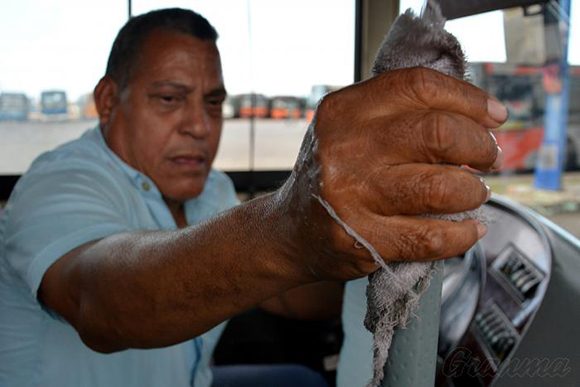
They disinfect the buses in Havana. Photo: Ricardo López Hevia/Granma.

They disinfect the buses in Havana. Photo: Ricardo López Hevia/Granma.
Kissing Moratorium?


Kissing Moratorium?
In an era marked by virtual affections, not very credible for the most part, the scourge of the coronavirus has put in greater trouble that which the French call poutous, bisouilles, becs, bisous, bécots…
By Enrique Milanés León
March 15, 2020
Translated and edited by Walter Lippmann for CubaNews.
This picture of a Chinese couple pulling down their masks to kiss has been very popular, in the midst of the spread of the virus. Author: EFE Published: 15/03/2020 | 12:04 pm
Amazed, the world put its hand on its mouth when, a few days ago, French President Emmanuel Macron and his wife Brigitte received the king of Spain at the Elysée Palace without giving them a hand or a gift – bonjour with bonjour and cheek with cheek – the bise, that double portion of kisses so dear to the so-called land of love. The host couple chose to bow slightly with their hands and throw love into the air to Doña Leticia.
The anecdote may encapsulate the evolution of a planetary medical history because, just a week ago in Naples, Macron himself had had no qualms about putting a pair of pecks on the face of Italian Prime Minister Antonio Conte, a gesture with which, it is said, at the same time, sent a message of security to their citizens in times of uncertainty.
In an era marked by virtual affections, most of which are not very credible, the scourge of the coronavirus has put in a greater predicament what the French call poutous, bisouilles, becs, bisous, bécots… in short, kisses. There and here, certain contexts of doubt, between acceptance and rejection, leave many attempts in the frustration of the grimace.
A powerful and highly respectable woman, none other than Germany’s Federal Chancellor Angela Merkel went through the motions this week of being denied her hand by her own Interior Minister at a meeting, while across the Channel Queen Elizabeth II wore long white gloves for the first time in a ceremony at Buckingham Palace.
The issue is global, but in France, where the kiss is something of a national attribute, it must hurt more. It is easy to imagine that the Minister of Health, Olivier Véran, the public call to stop kissing must have seemed almost like a dictatorial act.
Such is the colorfulness of this practice that the French themselves sometimes don’t know if it’s right to give two kisses, as they do in Nice and Paris, or three and even four, as they’re used to in Montpellier. Who would have seen a Cuban there, with a shopping bag!
The famous Parisian centers of joyful life have also been impacted. At the Mask Club, for example, you cannot get into the bedroom without using hydroalcoholic gel and wearing a convenient mask, either expensive lace or the common surgical version.
Even the Tinder dating application, with some 50 million users who often venture into real contact, had to put on the mask on and warn its customers that “protecting yourself from the coronavirus is more important”.
They are distant prints that give the idea of how human contact looks in this particular context of humanity. German experts advise suspending the strong handshake that, from the schools, has always been promoted as a sign of strong personality. The British and Italians also propose to leave aside those expressions of appreciation that so many earthlings germinate, generous, by the hands and the lips.
There is indeed a moratorium on kissing. In Beijing, red posters advise against squeezing and propose to replace them with the traditional gong shou; that is, to put the palm on one’s fist as a sign of aseptic “hello!
Ravaged by the coronavirus, in Iran they defend the motto “I do not shake your hand because I love you” and men choose to approach, without reaching the contact, a closed fist to the equally tight fist of the friend. And almost at the end of the world, in New Zealand, the practitioners left aside the hongi, the traditional Maori greeting that consists of joining noses and fronts.
In Cuba… in Cuba you can see everything. Just a couple of days ago, at an event of colleagues, I found myself in the same space with some who kept me at a distance, at the distance of a musketeer, and others who embraced me, in a frank bid for the “affectovirus”. As far as the Ministry of Public Health is concerned, which is everyone’s best friend, each personal picture is an interesting page.
There is no other way than to join in this battle that is also being fought for the massive return of kisses. The world cannot live without them, so, as the measures are temporary, it is advisable to make a stockpile for when the “thing” is fixed. Let’s hope that by July 6th, International Kissing Day, the epidemic will be a tamed jíbaro and, without a virus crown or a king’s crown, the common people of humanity will take to the streets to celebrate… simply by kissing.
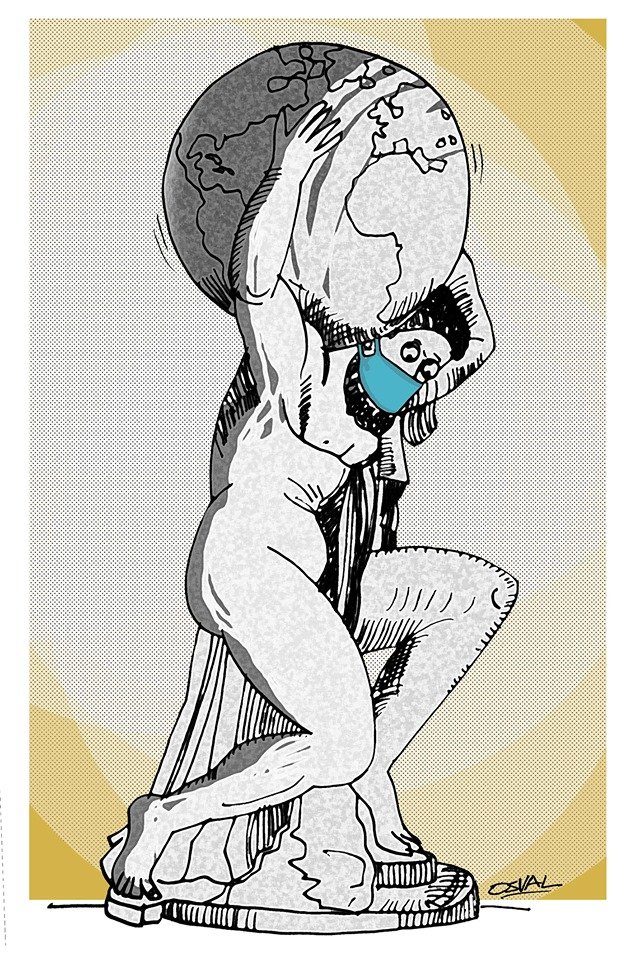
Cuban Cartoonists Confront Coronavirus
Cuban Cartoonists Confront Coronavirus
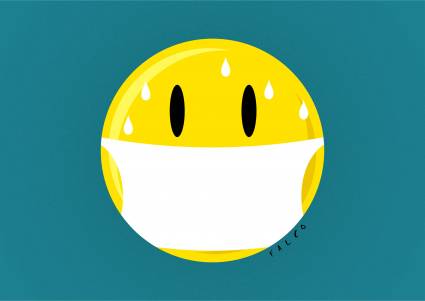
Cuban cartoonists fight paranoia with what they know how to do: good humor. But, of course, laughter with nasobuco in it… [nasobuco is a Cuban word for facemask]
March 15, 2020
Translated and edited by Walter Lippmann for CubaNews.
Cuban cartoonists propose another way to face the virus: laughing, but with nasobuco Author: Falco Published: 15/03/2020 | 12:18 pm

Granma, what a big mask you have!
The better to protect us.
 Yesterday I travelled from a bill to a counter, from there followed a tube on a bus, then ended up on the keyboard of a computer!

He’s not isolated because of the coronovirus, but because he’s egocentric and (too) self-sufficient

Wearing the mask doesn’t make her immune to the virus
But with a gossip like her, at least it’ll keep her mouth shut.
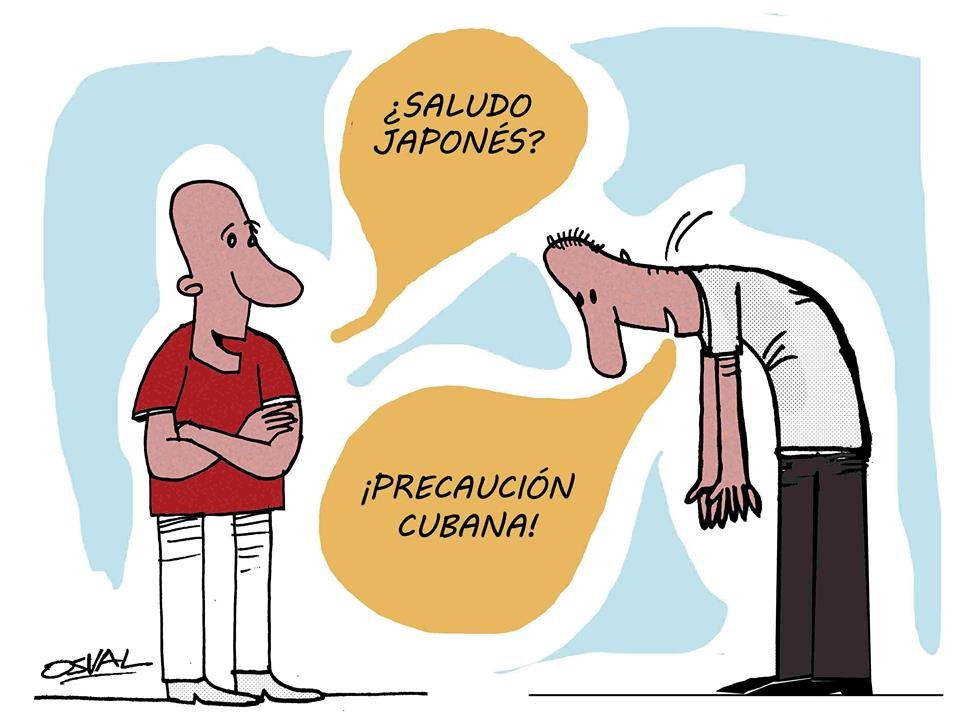 Japanese Greeting?
Cuban Caution!
(No caption)
Cuba Rejected Jewish Refugees in 1939
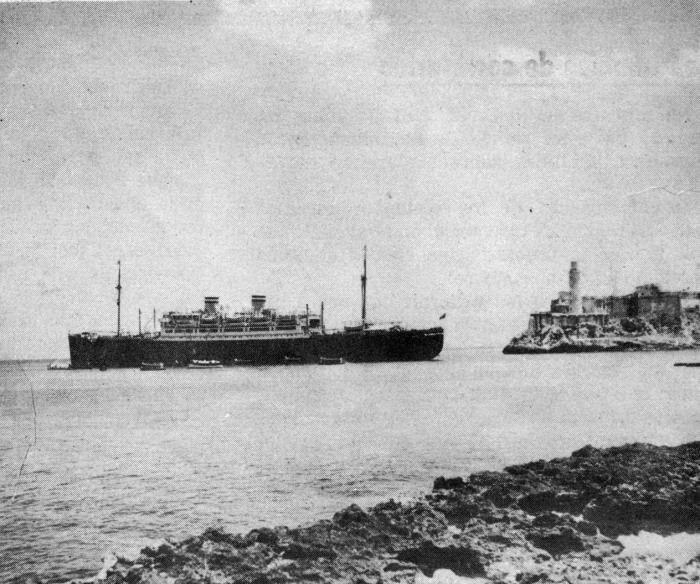
SS Saint Louis:
Under U.S. Pressure, Cuba Turned its Back on 909 Jewish Refugees in 1939
This is the heartbreaking story of the passengers of the SS Saint Louis liner, who in order to escape persecution by the Nazis, decided to travel to Havana, and then to the United States, but upon arrival at the Cuban port, under pressure from the U.S. government, were denied
—————————————————————————————————
Author: Dolphin Xiqués Cutiño | archivo@granma.cu
March 17, 2020 13:03:41
Translated and edited by Walter Lippmann for CubaNews.
The SS Saint Louis leaving the port of Havana on June 2, 1939, when the Jewish refugees were denied landing. Photo: Carteles Magazine
This is the heartbreaking story of the 937 passengers of the SS Saint Louis liner, who in order to escape the persecution by the Nazis, decided to travel to Havana, and then to the United States, but upon arrival at the Cuban port, under pressure from the Yankee government, were denied disembarkation.
Most of the passengers were Jewish families who, with the arrival of the Nazi party to power, began to be harassed: Their synagogues and properties were burned, they were constantly harassed and, moreover, they risked being detained only because they were Jews.
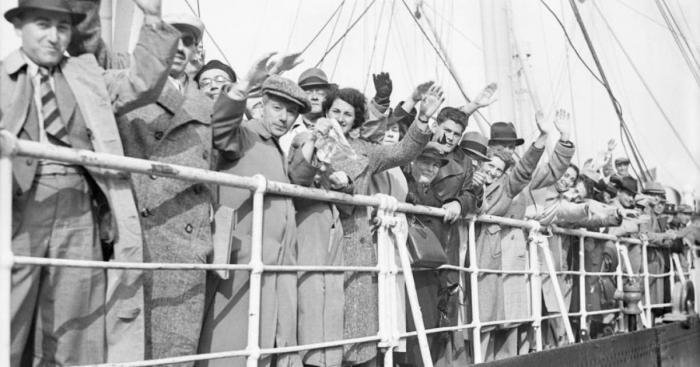
937 Jews fleeing the Nazi repression were shipped to the port of Hamburg. Photo: Taken from the Internet
Also traveling were four Spaniards and two Cubans who were not Jews. Almost all of them carried their visas in order issued by the Cuban Embassy in Berlin at a cost of $200 or $300 each, a fortune at that time.
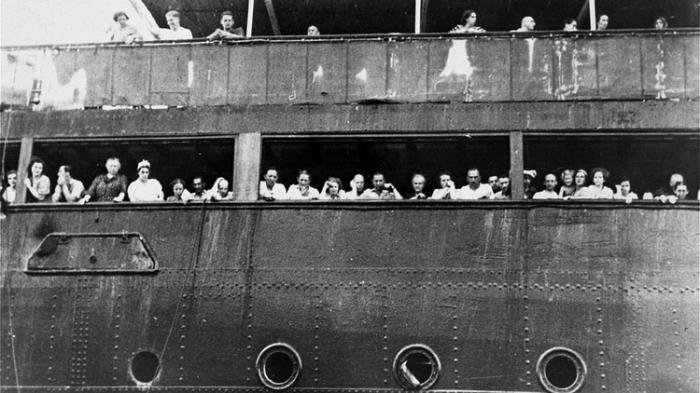
The passengers of the SS Saint Louis were traveling with the illusion of reaching Cuba and then the United States, but that did not happen. Photo: Taken from the Internet
The SS Saint Louis set sail from the port of Hamburg on May 13, 1939. Gisela Felman was 15 years old when she embarked on that unknown adventure and “she remembers her father begging her mother to wait for him but she was tenacious and always replied: I have to take the girls away for safety.”
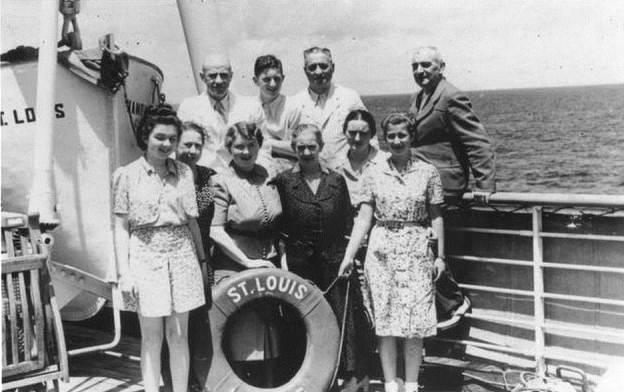
The families enjoyed the trip without suspecting that they would be rejected in Cuba, in the United States and in other Latin American countries. Photo: Taken from the Internet
“So, armed with visas for Cuba acquired in Berlin, 10 German marks in their bag and another 200 hidden in their underwear, they headed for Hamburg and the St Louis.
The voyage took place with the usual normality of passenger ships. Games, dances, dinners, walks on deck and that its captain Gustav Schroder kept so that women, men and children could enjoy the comforts on board, knowing that those families had suffered enough on German land.
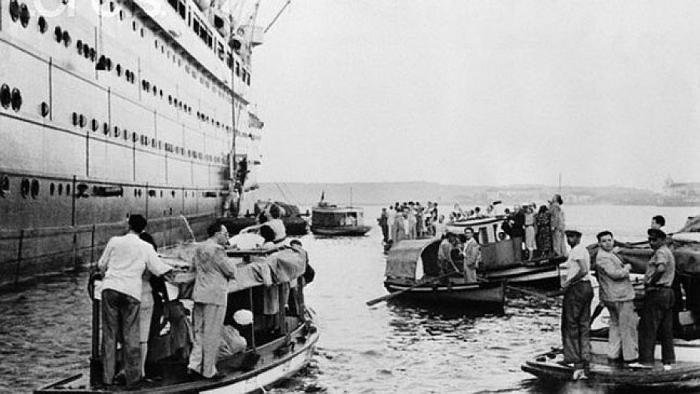
The Havanese were very supportive of Jewish immigrants. Photo: Taken from the Internet
Everything was ready for the passengers to disembark. But big was the surprise when the authorities showed up on board the ship and informed the captain that nobody could go ashore.
The Jewish immigrants were unaware that eight days before the departure of the ship from Hamburg, the then president of Cuba, Federico Laredo Bru, under pressure from the Yankees, had denied the landing permits by means of a decree. Now, in order to enter Cuba, it was required to have an authorization from the Secretary of State and another from the Secretary of Labor and to pay a $500 bonus, except for the tourists.
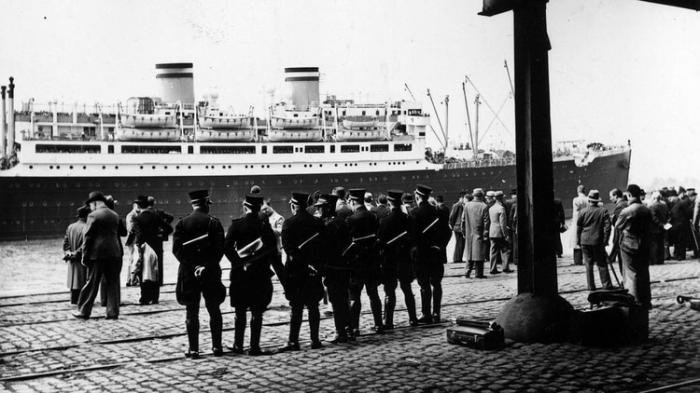
The SS Saint Louis in the port of Antwerp, Belgium, after sailing for almost a month through Latin America without getting any country to accept its passengers. Photo: Taken from the Internet
Of course, the Jewish refugees could not comply with the new entry regulations because they had left Germany with what little value they had left. And now they had nothing of value with them, only their lives.
Only 28 passengers were able to disembark without problems, including the four Spaniards and the two Cubans.
The SS St. Louis remained in the Havana watershed for almost a week while the lives of the 909 Jewish refugees were traded as if they were just another commodity. They were fleeing from Nazism and were caught by capitalism.
On June 2, President Laredo Bru ordered Captain Gustav Schroder to leave the port of Havana. As the ship was leaving, thousands of Havana residents came to see them off, offering their solidarity and thus showing that the Cuban people were with them.
The ship set sail escorted by two Navy boats and set course for Florida, but there they refused to receive them as they did in Puerto Rico. The captain then telegraphed the authorities in Canada, Honduras, Venezuela, Ecuador, Chile, Colombia, Paraguay, and Argentina, among other countries, to persuade them to take in the Jewish immigrants, but they all refused entry.
Almost a month after his departure from Germany, the SS Saint Louis had to set out for Europe and after long conversations some Jews were accepted by Great Britain, Holland and France, confining them in internment camps. The remaining passengers disembarked on June 17, 1939, in Antwerp, Belgium.
The epilogue to this heartbreaking story goes back to the German invasion of western Europe in May 1940: approximately 670 SS Saint Louis refugees were caught by the Nazis and died in concentration camps. Some 240 survived years of starvation, abuse, and forced labor.
Sources:
Cartel Magazine, June 11, 1939
Juventud Rebelde, March 29, 2009
You must be logged in to post a comment.