
March 7, 2020 3
Food Self-Sufficiency and National Security

Food Self-Sufficiency:
A Matter of National Security
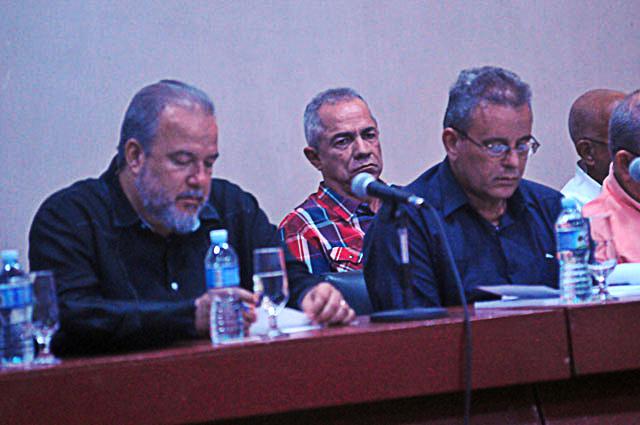
Granma publishes the remarks of Prime Minister, Manuel Marrero Cruz, at the 32nd anniversary of the Urban, Suburban and Family Farming Program in the municipality of Segundo Frente, Santiago de Cuba
Author: Manuel Marrero Cruz | internet@granma.cu
February 16, 2020 21:02:00
Translated and edited by Walter Lippmann for CubaNews.
Photo: Sierra Maestra newspaper
Compañeras and compañeros of the presidency and invited guests;
Delegates to this important work meeting:
More than three decades ago, on December 27, 1987, during a visit to an experience of growing vegetables in quarries enriched with organic matter in Hortifar, an entity belonging to the Military Agricultural Union, the Army General [Raul Castro] indicated to analyze and develop this method of cultivation. This is how the Urban Agriculture Program was born.
Years later, this type of quarry became part of the environment in every corner of Cuba, from the big cities to the small towns.
Then the idea emerged, also from the Army General, to increase the scale of those crops to the lands around the cities, which in their great majority remained unproductive.
As you will remember, this came to be on April 8, 2009, first in Camagüey, within a radius of ten kilometers from the center of the provincial capital. It was called suburban agriculture, and wisely integrated into the by-then already consolidated urban and family agriculture. It was under the direction of comrade Adolfo Rodríguez, known affectionately by all of us as Adolfito. With such passion, responsibility and efficiency he took on the task, practically until the last moment of his life, and to whose commitment we owe a great deal of what was achieved. May this event serve to honor his memory.
The concept has remained unchanged: to generalize a system of food production based on local potential, that is, creating there their own technologies and productive inputs by using the potential available in the territory.
Undoubtedly, since then, progress has been significant. The program has been consolidated as a popular movement of a productive extensionist nature and under agro-ecological principles. This is done with the use of sustainable production technologies, the use of local resources, and the combination of experience and traditions with science and technology.
It is a dynamic, deep, vertical, coordinated and directed work system through the National Group. This has allowed us to achieve positive results and with it, important savings to the country’s economy, contributing to the decrease of input imports.
At a time when the U.S. government has tightened the blockade and everything indicates that it will continue to do so, this project aimed at producing food for the people. It’s something that is not simply another priority, takes on much more importance. It is a vital issue for national security, I repeat, something that is not simply another priority; it is a vital issue for national security, which is equal to preserving our independence and sovereignty.
Today, our country imports $1.65 billion in food for the people, so replacing those imports is strategic. We must commit ourselves to the development of this program and extend its various productive structures to our cities, up to 10 square meters per inhabitant by next year. To take advantage of all available spaces in the cities or towns.
There are plenty of reasons to defend this strategy. In the first place, it is the most economical way of producing food. It can work with a minimum of motor transport and fuel – even without any if necessary – as people can buy them where they are grown, or the transport is a short distance and allows the use of alternative means.
Another very important point: it does not require imports of pesticides or fertilizers. Each hectare of quarry committed must be supported by the amount of fertilizer and other organic inputs needed.
In addition, it guarantees employment for thousands of workers, including women and young people. It is an elementary tool for achieving food security. It contributes to improving water management and nutrient recycling. It allows the use of unproductive, idle or underutilized spaces and is capable of producing the seeds it demands, among other advantages.
All this makes it a realistic and sustainable alternative, a reference for what we have to do to achieve food and nutritional sovereignty for our population.
It is fair and necessary to recognize what has been achieved, but you know, and you analyzed it during the event, that even greater results can be achieved with the resources available today, if we use them with the maximum of rationality and intelligence.
No one can feel satisfied until the last disused quarry and organoponico is recovered. The goal is to repair them all and put them into use during the current year. Likewise, to complete the reconstruction of the protected and semi-protected cultivation areas affected by meteorological phenomena or by the logical deterioration of the years of exploitation.
The yield per square meter must be increased. There are plenty of examples of what is possible when quality seeds are used and with a constant application of organic substrates and fertilizers, as well as the appropriate use of bio-products and agro-technology.
The use of animal traction in cultivation work around towns and villages should be a constant, whether or not fuel is available. In addition to the efficient use of water and renewable energy sources, such as biogas, windmills, solar panels, biomass and other alternatives, depending on the possibilities in each location.
We cannot stop at the incorporation of idle areas, covered with marabou and other weeds, in the surroundings of population settlements and communities.
It is also important to guarantee production throughout the year; not to neglect the summer under the excuse of unfavorable weather. In those months we have to promote products that are more resistant to heat, such as cucumbers, eggplants, beans, and okra, among others.
We must perfect the marketing of fresh vegetables and fruit, with emphasis on the population, but without forgetting tourism, social consumption, defense, and the internal order, and we must even get to export some products.
Closely linked to these purposes is the objective of continuing to adjust the organizational system of Urban Agriculture. It is necessary to analyze its financial structure and measure its impact, to ensure adequate profitability and stability in the results.
The Municipal Urban Farm and its representatives of the people’s councils must exercise a broad power of convocation among local producers. In turn, they must play the productive, political and social role for which they were created. It is necessary to work hard to re-establish the marketing network that will simplify and facilitate the acquisition of agro-products directly for the local population.
The success of this great effort has a decisive key: the women and men who make the land produce. It is essential to continue to increase the incorporation of the labor force into this activity, especially young people, and to perfect the systems of payment by results.
Also from Urban Agriculture, the fruit tree program was born, which was incorporated into the local supply in all the perimeter of our localities.
Regarding this program, Army General Raul Castro Ruz suggested to create a fruit tree cooperative in each municipality and today we can report with satisfaction that we have 353 cooperatives throughout the country, dedicated to the production of fruit for the people.
With regard to food production in general, today more than ever we have to promote polyculture.: It is not the same to invest in fuel, fertilizers and other resources to prepare the land and sow a single crop than to take advantage of the same for two and three more.
Compañeras and compañeros:
We had proposed to guarantee 30 pounds per month of food and vegetables to each fellow citizen,. Of those, we reached 20 in 2019. We will reach that goal in less time if we continue to increase the productive areas, from the backyards, the orchard, the giant organoponicos and suburban agriculture, to the large productive poles.
To do this, we must continue to produce high-quality seeds. Research centers already show positive results with seeds that are better adapted to our climate, increase yields and even reduce production cycles.
Another objective is to guarantee each Cuban five kilograms of animal protein per month, and last year we only reached 200 grams. It is unsustainable to try to increase the production of animal protein-based on imported feed and raw materials, in which we are investing 450 million dollars today. It is as much of a priority to produce animal feed as we consume directly as people.
We Cubans have inherited as a food tradition a diet made up of four basic products: rice, beans, food and protein, to which we should add vegetables or salads. Of these, we now have total sovereignty over only one: food. We import an important part of rice, and to a lesser extent, beans and meat, but also in considerable volume, and even a level of vegetables.
Our future has to be directed towards achieving food sovereignty. We have to aim for this in stages, the shorter the better, planned and well-coordinated in a comprehensive way through realistic plans. It is precisely vegetables and beans that we can stop importing in the short term.
We are convinced that this program will continue to grow and will play an important and irreplaceable role in achieving these strategic objectives.
We congratulate you on the results achieved in 2019 and we urge you to continue to move forward as a national reference in the production of food for the people and thereby demonstrate that Yes we could, Yes we can and Always we will.
Thank you very much.
Public-Private Strategic Alliance in Cuba
Governance from a Public-Private Strategic Alliance in Cuba
March 6, 2020
Translated and edited by Walter Lippmann for CubaNews
Text: CEAP collaboration
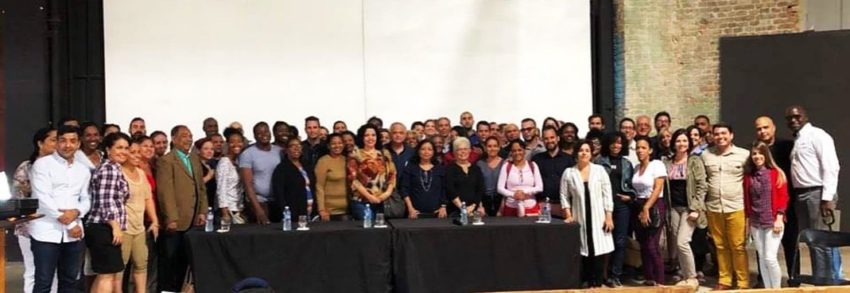
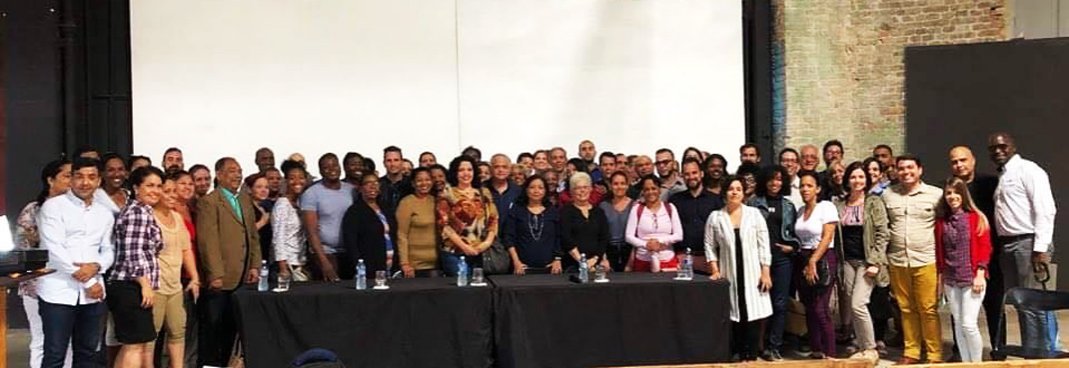
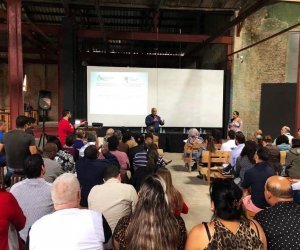
Considering the will of the private sector as a high strategic value for a city and reconciling concrete actions to transform not only the physical spaces but also the culture of life is magnanimous in these times. This was endorsed in the first workshop: governance from a public-private strategic alliance in Cuba. It was a meeting between the government and a large group of entrepreneurs from the capital.
The workshop, on this occasion, was convened by the Center for Public Administration Studies (CEAP), belonging to the Alma Mater of Cuban Higher Education. It’s part of a joint effort with the Public Administration Network of the aforementioned Center for the Study of Public Administration, and the Entrepreneurship and Innovation Network of the Center for the Study of the Cuban Economy, in a conjunction of efforts and interests.
The meeting was held in response to the need and demand to create a space for exchange in the interest of presenting, debating and exchanging needs, potentialities, experiences and proposals, among others, aimed at promoting local development projects, as well as fostering links between the State and non-State sectors and foreign investment.
Its development was attended by the Coordinator of Economy in the Government of Havana, Jorge Luis Villa, as well as the economic coordinators of all the municipalities of the province and some Municipal Directors of Labour. The University of Havana was represented by the Director of the Center for the Study of Public Administration and the Cuban Economy, Dr. Noris Tamayo Pineda and Dr. Betsy Anaya Cruz, respectively, as well as the Presidents of the Public Administration and Entrepreneurship Networks, belonging to each of the aforementioned, in addition to academics linked to each of the aforementioned research centers.
Among the more than 70 participants, and during 6 hours, assertive communication and immediate commitments prevailed. It is to carry out in the next months the First Exhibition Fair with an international scope. There the creators of goods and services by their own efforts will not only make known their products, but also offer all kinds of possibilities and opportunities for the community’s integral development; it was established the need to transform at local scale and through the interactions, in such a way that it reaches to energize the different sectors (state and non-state) as an intention prioritized in the Project of social economic development of the country.
State Gastronomy: Everything in CUP
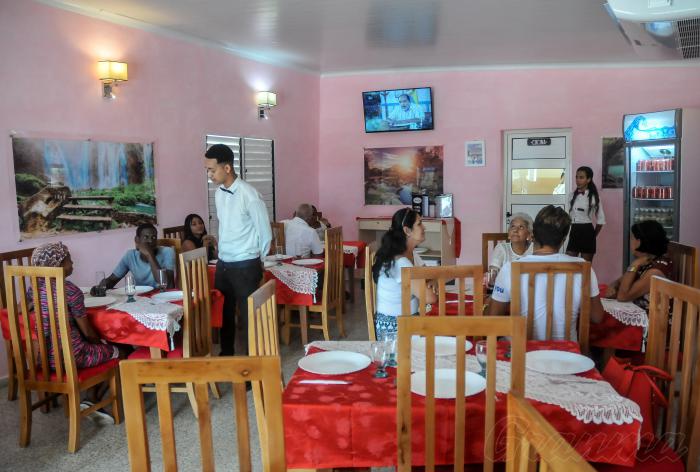
Gastronomic Services of State Commerce: Everything in CUP
It should be noted that there are more than 7000 state-run restaurants, bars and other catering establishments in the country, and only 10 % of them were allowed to sell in dual currency.
by Yaditza del Sol González
March 4, 2020
Translated and edited by Walter Lippmann for CubaNews.
The elimination of cucumber sales in these establishments is intended to achieve greater control in the management of trade and gastronomic activities, as it allows a single accounting record to be established for the products marketed. Photo: Ariel Cecilio Lemus
The units of the state trade system that provide gastronomic services already carry out all their commercial activities in coupons, and payment in cucumbers is not appropriate for the purchase of certain products that were previously sold in this currency, such as beers, soft drinks, cigars, water, ice cream, jams and alcoholic beverages.
All these commercial actions will be carried out only in CUP, taking into account the current conditions of automation of the accounting systems of these units.
Arturo Vazquez, director of organization and systems of the Ministry of Interior Commerce (Mincin) explained that this measure is part of the improvement of retail trade of local subordination and does not include the chains of stores in foreign exchange, whether TRD, Palmares, Cimex or others, nor the Sylvain.
This is undoubtedly a measure that has caused great concern among readers, whether because of the lack of institutional communication prior to the effect of such a procedure, consumers’ concerns about the existence of exchange funds or about the conversion rate applied to goods.
According to the Deputy Minister of the sector, Miriam Perez, the elimination of the sale in CUC in these establishments is a response to the purpose of achieving greater control in the management of commerce and gastronomic activities, since it allows for the establishment of a single accounting record of the products marketed.
It should be pointed out that there are more than 7000 units in the country that carry out gastronomic activities on a State basis, i.e. bars, restaurants and others, and only 10% were authorized to sell in dual currency.
This group was selected as part of a scheme that, at the time, allowed the Trade to be self-financing in CUC, in addition to being an element of support for the budgets of other expenses, commented the Deputy Minister. This meant that, in the same restaurant, certain offers were paid in coupons and others in CUC, which had become a recurrent complaint from consumers.
Yosvany Pupo, general director of Services of the Mincin, explained that what was assumed is not part of a previous measure to the process of monetary unification, but that it responds to the improvement of the management of the commerce and cannot be analyzed out of that context. “In addition, there is no price increase in what we offer and, therefore, the Cadeca conversion rate of 1 CUC x 25 cup is applied,” he explained.
However, in the case of products that had official price lists in CUP, the price already established is assumed. For example, the domestically-produced canned soft drink, which used to be sold at .50 CUC, now costs 10 CUC, and not 12.50 CUC.
You must be logged in to post a comment.