US OKs Interfering in Others’ Elections
US Justifies Interfering in Others’ Elections
By Manuel E. Yepe
http://manuelyepe.wordpress.com/
Exclusive for the daily POR ESTO! of Merida, Mexico.
Translated and edited by Walter Lippmann.
“When we try to manipulate or influence the elections of other nations, or even when we have wanted to overthrow their governments, we have done so in the best interests of the people of those countries.” Such a tender philosophy was the one that James Robert Clapper Jr, former head of the National Security Agency (NSA), declared before a congressional committee in Washington, D.C.. Clapper did this on May 8, 2018, with all naturalness, trying to justify Washington’s electoral interference in more than eighty countries.
In the same way, this gentleman expressed himself when he promoted his book Facts and Fears, where he tackles issues such as alleged Russian interference in the 2016 U.S. presidential elections and in the Syrian conflict. In Syria, the United States has been the main support for terrorists seeking to overthrow the legitimate government of that Middle Eastern country.
The interference in the electoral processes of more than eighty countries throughout history was done thinking “in the best interests of the people” of these nations, Clapper reiterated in an interview granted to Bloomberg, when speaking of the American history of interference in the elections of other nations.
Clapper is remembered in his country for hiding the truth about the massive surveillance program developed by the National Security Agency (NSA) before it was brought to light by Edward Snowden.
Certainly, intervention in other people’s electoral processes has long been a recurring component of Washington’s foreign policy.
In Latin America, the expulsion from power of a legitimately-elected president is considered the most condemnable intervention, although they abound, practically, in the history of all the countries in the region. Jacobo Arbenz, in Guatemala; Salvador Allende, in Chile, or Joao Goulart, in Brazil, are just some examples that have preceded in time to the recent Manuel Zelaya in Honduras; Fernando Lugo in Paraguay and Dilma Rousseff in Brazil.
On a global scale, it is known that, in 1947, the U.S. forced the Italian government to exclude all communists and socialists in the first post-war cabinet in exchange for U.S. economic aid to rebuild Europe destroyed by the World War.
Thereafter, the CIA (U.S. Central Intelligence Agency) did everything in its power, legally or illegally, to prevent the participation of Communists in the Italian government, while covertly financing Christian Democratic candidates there and elsewhere in Western Europe.
The Italian elections of April 1948 were the first in which the CIA’s intervention in the affairs of another country was felt. Without the CIA, the Italian Communist Party would have won those 1948 elections broadly.
From then on, for decades, whenever the Communists, either in alliance with the Socialists or on their own, threatened an electoral triumph, the United States raised the threat of exclusion from the Marshall Plan to prevent it.
The now-retired intelligence official explains that he wrote the book to inform the public of the “both internal and external” threats facing the United States, and to explain that President Donald Trump is not the problem of the American country, but only the symbol of a broader problem because “the truth is relative.
On February 13, U.S. intelligence directors warned the U.S. Senate Intelligence Committee that “Russia appears to be preparing to repeat the tricks it unleashed in 2016 as the 2018 midterm elections approach: cyberattacking, filtering, manipulating social networks, and perhaps others.
Days later, special prosecutor Robert Mueller used social networks to formulate accusations against 13 Russians and 3 companies run by a businessman linked to the Kremlin in order to attack Hillary Clinton, support Donald Trump and sow discord.
Most Americans were understandably impacted by what they saw as an unprecedented attack on their political system. However, intelligence veterans and academics who have studied covert operations have a different and rather revealing view.
If any government in the world totally lacks the authority and moral standing to condemn the interference of any nation, powerful or weak, large or small, rich or poor, in the internal affairs of another, that nation is the United States because of its long history of abuses against its enemies as well as its allies.
But for Washington to go out and denounce or protest the interference of any nation in its electoral affairs is simply an insult to the collective intelligence of humanity; an unacceptable shame from any point of view.
October 11, 2018.
Bolivia was the Moncada of Latin America
Rumi Perú
Bolivia was the Moncada of Latin America
By Zbigniew Marcin Kowalewski*
Translated and edited for CubaNews by Walter Lippmann.
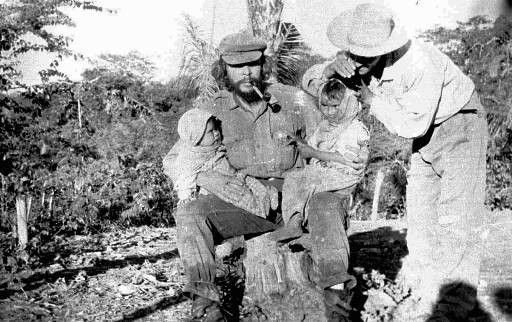
“The initiative of the International Proletarian Army should not die in the face of the first failure,” Che Guevara wrote after his departure from the Congolese guerrillas. He reaffirmed it on the eve of his departure for the Bolivian guerrilla writing: “That a true proletarian internationalism be developed; with international proletarian armies, where the flag under which it fights is the sacred cause of the redemption of humanity. “
“Latin America will be one country”. This was the idea with which Che had come to fight in Bolivia and for which he sacrificed his life, as Guido “Inti” Peredo explained in his messages while working tenaciously to rebuild the National Liberation Army.
Fifty years after Che’s death, Pombo, a legendary Cuban survivor of this guerrilla, insists, with the same force of conviction and the same ardor: “It is the most important of all tasks: to achieve the union of all Latin American peoples,” because union is “the only way in which Latin American peoples can resist the aggression, influence, alienation to which imperialism submits.”
The historic and at the same time revolutionary value of the conversations of Maria del Carmen Garcés with today’s general Harry Villegas Tamayo is enormous. In the abundant literature on Che’s guerrilla, this book stands out for reviving with exceptional fidelity its political program, its deeds, its ideas, its spirit and – its respect! – its incredible morale.
One of the most striking things in this book is precisely the constant presence, in the life and action of the guerrilla, of the morale factor with its two aspects which, in Che’s words, “complement each other” – “a morale as to the ethical sense of the word and another in its heroic sense “- as a fundamental weapon of every true revolutionary movement.
Pombo, from Yara to Ñancahuazú, restores the truth against so many lies and so much petty discourse that they have accumulated distorting, dwarfing and trivializing the history of the Bolivian guerrilla.
“We do not always have to wait for all the conditions for revolution; the insurrectionary foco can create them.” This was another of Che’s fundamental ideas. How much had been said that the fate that the guerrilla ran in Bolivia denied and buried forever!
Harry Villegas and María del Carmen Garcés show that Bolivia had fully confirmed that it was a fair idea. The guerrillas contributed to creating conditions for the revolution by mobilizing and gaining the support of “a revolutionary force like that of the Bolivian miners, the most advanced of the continent.”
It was because of the fear that a miner’s uprising would be combined with the guerrilla action that the army perpetrated the San Juan massacre in the mines. “It was very unfeasible,” explains Pombo, that the single guerrilla group, with its own small force, could “catalyze and take advantage of this revolutionary situation” without counting on “the vanguard role that left parties should play.” But “within their conception of the mass struggle” they “could not play it,” notes Pombo. Che was right to comment at this political juncture: “It’s a pity not to have 100 more men.”
From Bolivia, within the framework of an incredibly bold strategy for the continental revolution, the internationalist guerrilla under his command had to contribute decisively to the development of the revolutionary movements in the Southern Cone and to coordinate or unify all these movements on a Latin American scale. By creating “two, three … many Vietnams” on an even wider plane -the tricontinental- it was possible to give the imperialist superpower an irreversible defeat.
In this strategy, the struggle for Latin America’s “unique, true and inalienable independence”, announced in the Second Declaration of Havana, was combined or interwoven with the socialist revolution, because for Che, there were “no more changes what to do: or socialist revolution or caricature of revolution. “
When Che and his fellow Cubans, Bolivians and Peruvians fought in Bolivia, the great majority of revolutionary movements and left-wing organizations from all Latin American countries met in Havana at the conference of Latin American Solidarity Organization (OLAS).
The Cuban delegation, explaining in its report that the objective was “to elaborate a common strategy to fight against Yankee imperialism and the oligarchies of bourgeois and landowners” and exposing the strategy of the continental revolution, he claimed “the Bolivarian ideology of conceiving Latin America as one and great Fatherland. “ Deepened by José Martí, “today the continental conception of a single Latin American people has been strengthened,” he said.
The Cuban delegation presented at the conference an “evident fact that has not been evaluated in all its dimension: never before has such a large group of people been known, with such a large population and a vast territory, cultures so similar, interests as similar and anti-imperialist purposes identical.
Each of us feels part of our America. We learned this from historical tradition; as our ancestors bequeathed to us, as our heroes taught us! None of these ideas is new to the representatives of the revolutionary organizations of Latin America. But have we sufficiently appreciated what these events represent?
Have we analyzed in depth what it means from as far back as the first years of the nineteenth century, and we had a continental idea of the struggle that was taking place throughout Latin America? Have we analyzed with sufficient clarity the irrefutable fact that Latin America constitutes one and great people? “
In July 1969, weeks before his capture and murder, Inti Peredo, faithful to the “Bolivarian dream and that of Che to politically and economically unite Latin America,” Che declared in his proclamation “We will return to the mountains! : “Our only and final goal is the liberation of Latin America, which is not only our continent, but also our homeland temporarily broken up into twenty republics.”
Pombo, from Yara to Ñancahuazú, collects today and again sends this message of Che, Inti, Coco, Chino, Tania, Moisés, Tuma, Joaquin, Ricardo, Rolando and all the other revolutionary fighters who fell in Bolivia. “To some extent,” says Harry Villegas, “Bolivia was the Moncada of America. Today we are seeing how crops are really being harvested from this blow that shook all of our America. “
Reading, studying, discussing and disseminating this book, in Latin America and in any other region of the world, is to politically, ideologically and morally rearm ourselves.
Warsaw, September 1, 2017
* Deputy editor-in-chief of the Polish edition of Le Monde Diplomatique and editor of Quaderni della Fondazione “Ernesto Che Guevara” edited in Italy
===========
LETTER FROM AUTHOR:
(Translation from Spanish. Original below)
Dear Walter,
Years ago we were in contact, we exchanged emails. The contact between us was an initiative of Celia [Hart].
From the very beginning (specifically since the reporting of [NY Times writer Herbert L.] Matthews) I followed the Cuban revolution and was politically formed largely under its influence. In 1967 I won an international contest by Radio Havana Cuba (they rewarded my essay Che’s Message to the Tricontinental) and I was invited to Cuba; It was my first trip. Worked on the guerrilla movements in Latin America, published a book on them in Poland (left in 1978). In the second half of the 1970s I spent four and a half years in Cuba, helping to train translators at the Pablo Lafargue Institute.
I was a leader of the Solidarność trade union (a member of the Lodz Regional Executive, then one of the most important industrial centers in Poland). The establishment of the state of war in December 1981 surprised me in France where I was traveling, so I spent the 1980’s in exile in France.
Then I came back and now I’m living in Poland. Since 1981 I have been a member of the Fourth [International]. Between 2005 and 2013 Militant in the Polish Labor Party (PPP), an almost purely labor party in its composition, created by a combative minority union that comes from a split from Solidarność and is called Free Trade Union “August ’80”. I was secretary for programmatic affairs of this party. The party was not maintained and in the long run and disappeared, while the union remains active.
At various stages of my life I tried to promote some work of solidarity with Cuba, although conditions there were never conducive. In People’s Poland there was no official work of solidarity, beyond a purely bureaucratic facade, and all unofficial political work provoked an intervention by the political police.
During the 1990s. There were very strong anti-Cuban bells here, both in the media and, indeed, in the State. Since the year 2000 I took a whole series of initiatives in this area, there was some development of a solidarity association, I was a member of its leadership, but the association disintegrated little by little. Then I had support from the Polish Labor Party for a job in Cuba, but finally, at the beginning of this decade, all work of solidarity with Cuba, which was already becoming smaller and more marginal, became extinct.
If you translate my text on the book of Maria Garces I will check it, evidently.
A hug
Zbigniew
Estimado Walter,
Hace anos estuvimos en contacto, intercambiamos mails. El contacto entre nosotros fue una iniciativa de Celia.
Desde el comienzo (concretamente desde el reportaje de Matthews) segui la revolución cubana y me forme politicamente en buena medida bajo su influencia. En 1967 gane un concurso internacional de Radio Habana Cuba (premiaron mi ensayo sobre el mensaje del Che a la Tricontinental) y fui invitado a Cuba; fue mi primer viaje. Trabaje sobre los movimientos guerrilleros en America Latina, publique en Polonia un libro sobre ellos (salió en 1978). En la segunda mitad de los 70 pase cuatro anos y medio en Cuba, formando traductores en el Instituto Pablo Lafargue.
Fui dirigente del sindicato Solidarność (miembro de la ejecutiva de la dirección regional de Lodz, entonces uno de los mas importantes centros industriales de Polonia). La instauración del estado de guerra en diciembre de 1981 me sorprendió en Francia donde me encontraba de viaje, asi que pase los anos 80 en exilio en Francia.
Luego volvi y estoy viviendo en Polonia. Desde 1981 soy miembro de la Cuarta. Entre 2005 y 2013 milite en el Partido Polaco del Trabajo (PPP), un partido casi puramente obrero en su composición, creado por un sindicato minoritario combativo que proviene de una escisión de Solidarność y se llama Sindicato Libre “Agosto ’80”. Fui secretario para asuntos programaticos de este partido. El partido no se mantuvo a la larga y desapareció, mientras que el sindicato sigue activo.
En varias etapas de mi vida intentaba promover algun trabajo de solidaridad con Cuba, aunque jamas habia condiciones propicias. En la Polonia Popular no habia ningun trabajo oficial de solidaridad, mas alla de una fachada puramente burocratica, y todo trabajo politico no oficial provocaba una intervención de la policia politica.
durante los anos 90. hubo aqui muy fuertes campanas anticubanas, tanto de los medios como, de hecho, del Estado. Desde el ano 2000 tome toda una serie de iniciativas en este terreno, hubo algun desarrollo de una asociación de solidaridad, fui miembro de su dirección, pero la asociación se desintegró poco a poco, Luego tuve apoyo del Partido Polaco del Trabajo para un trabajo Cuba, pero finalmente , a comienzos de esta decada, todo trabajo de solidaridad con Cuba, que ya era cada vez mas reducido y marginal, se extinguió.
Si traduces mi texto sobre el libro de Maria Garces lo verificare, evidentemente.
Un abrazo
Zbigniew
Chucho Valdés, Always Ours


Chucho Valdés, Always Ours
Dionisio de Jesús Valdés Rodríguez, known as “Chucho” Valdés, celebrates his 77th birthday and continues to give glory to our country.
Author: Ricardo Alonso Venereo | venereo@granma.cu
October 8, 2018
A CubaNews translation.
Edited by Walter Lippmann.
Photo: Ismael Francisco
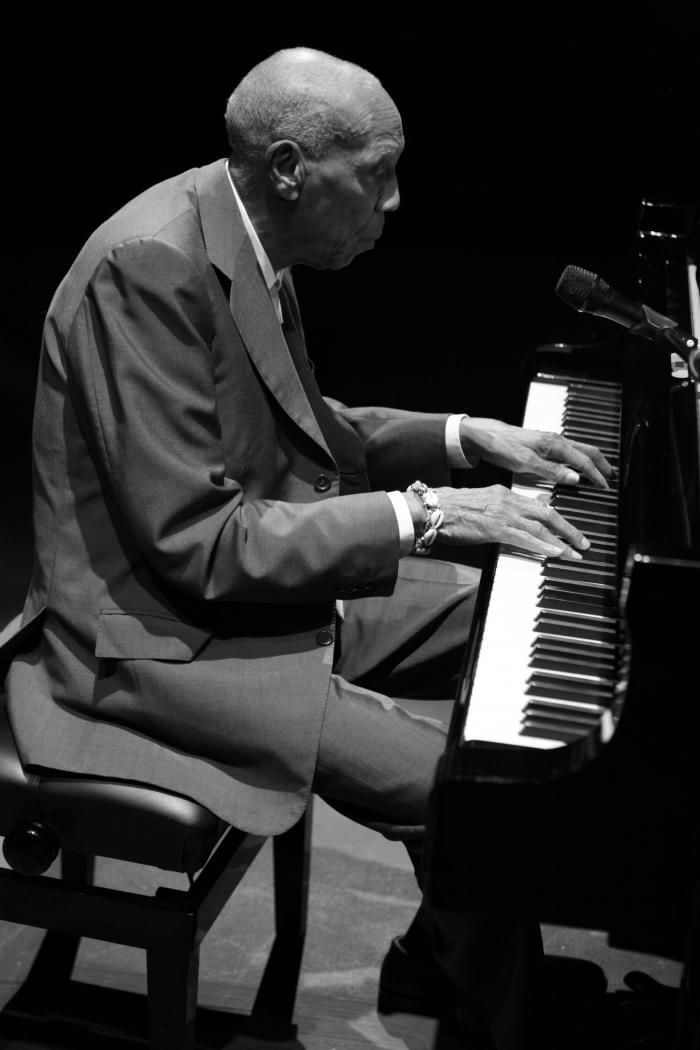
If Bebo Valdés is of Cuba, so is his son Dionisio de Jesús Valdés Rodríguez, known as “Chucho” Valdés, who, this October 9, the date of his father’s centenary, will be 77 years old. Both were born in the municipality of Quivicán: both of us.
A friend recently told me: Bebo and Chucho Valdés put this town, in the province of Mayabeque, into the category of Grammy town. How many towns in the world, with an average of 20,000 or more inhabitants, have Grammies that add up to those two? Together they total eleven awards between Grammy Latino Awards and the Latin Grammys.
And, if the father is an obligatory reference in the history of Cuban music, the son is no less so. He is a pianist, composer, music teacher, musical arranger and director. His work is distinguished by its Cuban nature and by his being among the best jazz musicians in the world. As a pianist, he also ranks among the best. He is a master in all genres, both jazz, classical music and popular dance music.
With Irakere, considered by many to be the most important Cuban music group of the second half of the 20th century, which Chucho founded in 1973, he patented a label very hard to beat in contemporary and future Cuban music. Here are his songs Misa Negra and Bacalao Con Pan (Black Mass and Cod with Bread). In 2002, together with Leo Brouwer, he won the first National Music Award. In 2006 he was appointed Goodwill Ambassador of the Food and Agriculture Organization of the United Nations (FAO). He has been granted a Doctor Honoris Causa by prestigious Berklee College of Music in Boston, the University of Victoria in Canada, and by the University of the Arts (ISA). He also holds the Félix Varela Medal of Cuba, the keys to the cities of San Francisco, Los Angeles, Madison and Nevilly in the United States and Ponce in Puerto Rico.
His time at the world’s greatest jazz festivals has been overwhelming. With his new group, The Afro-Cuban Messengers, “Chucho” Valdés continues to give glory to our country.
Bebo Valdes is Of Cuba
Bebo Valdés is Of Cuba
It cannot be otherwise for the one who played a very important role in the crystallization of the orchestral style with which vernacular music reached its purest expression around the middle of the last century.
Author: Pedro de la Hoz | pedro@granma.cu
October 8, 2018 20:10:13
A CubaNews translation.
Edited by Walter Lippmann.
Bebo Valdés (1918 – 2013). Photo: Taken from the Internet
It cannot be otherwise for the one who played a very important role in the crystallization of the orchestral style with which popular music reached its purest expression around the middle of the last century.
Ramón Emilio Valdés Amaro is from Cuba. Not even the decades in which he lived far away, first in Sweden and later in Spain, did he cease to be ours or to promote Cuban music. One hundred years after his birth on October 9, 1918 in Quivicán, Bebo Valdés is from Cuba.
It cannot be otherwise for those who played a very important role in the crystallization of the orchestral style with which popular music reached its purest expression around the middle of the last century. At the same time, he contributed substantial values to the development of the Cuban descarga [jam session], the most imaginative and endearing variant of the criollization of jazz.
Between Dámaso Pérez Prado, Chico O’ Farrill and Armando Romeu, plus Benny Moré’s genius as a free and unique electron. Without any academic training, he molded a band tailored to his desires. Bebo occupies a place to which, time and time again, it will be necessary to return to find the keys to the height reached by insular music and its continental projection in the 1950s.
Bebo’s trademark was the Sabor de Cuba orchestra, with which he worked on the Tropicana cabaret, alternating with that of Armando Romeu, between 1949 and 1957; They recorded memorable sessions, as well as accompanying leading Cuban and foreign figures, including Rita Montaner and Nat King Cole.
In 1952, he created the batanga rhythm, whose renovating approaches were not deciphered by the record and entertainment industry, but whose traces became a reference for much of what has happened since then in the evolution of both Cuban jazz and timba. By the way, the initial recordings of the new rhythm included Benny Moré, who had just returned from Mexico and had not yet assembled his portentous giant band.
He ended up in Mexico in 1960, where he collaborated for a while with Chilean Lucho Gatica, whom he knew from Havana. Then he settled in Europe. He left his family behind and founded another in Sweden. He never understood the changes that took place in his native country. But not even in the days of making a living in Swedish restaurants and discos did he stop thinking about music in Cuban terms. So much so that, at age 76, as someone said, he reinvented himself when he was called to record in New York.
That’s the Bebo who begins to ride again, in the airs of Latin jazz, albums like Bebo Rides Again, and movies like Calle 54, his fabulous union with singer Diego el Cigala and the reunion with his son Chucho Valdés in the album Juntos Para Siempre.
But I would like to point out what researcher Rosa Marquetti has said: “It would be a capital mistake to reduce the importance of Bebo Valdés in Cuban music, to the international boom that reached its revival with the album Lágrimas Negras (Black Tears). In any case, his world recognition achieved in the last decade of the twentieth century was a deserved culmination of a career that crosses a century and more in Cuban music.
He has his own outstanding place among the best orchestra conductors, composers and pianists of transcendence, and is one of the most creative arrangers in the entire history of our music.
That is the Bebo who, in his centennial year, I would like to remember, and that, without a doubt, over and above the anecdotal, legitimately belongs to us.
Miami Cubans and the 2018 US Midterms
Miami Cubans and the US Midterm Elections
By Manuel E. Yepe
http://manuelyepe.wordpress.com/
Exclusive for the daily POR ESTO! of Merida, Mexico.
Translated and edited by Walter Lippmann.
The Cuban community residing in South Florida, in the United States, mainly in Miami Dade County, is returning to the state of great anxiety and fear. These are traditionally imposed by the Cuban-American extreme right and its sponsors from the American terrorist extreme right.
Numerous and widely-publicized visits by special agents of the Federal Bureau of Investigation have been made to the homes and workplaces of Cuban émigrés in Miami. Those visited have been, for many years, activists for the improvement of relations between the peoples and governments of the United States and Cuba. Now they have reason to be alarmed.
The local media and even the U.S. national media speculate about the reasons for this intimidating campaign by the federal government’s main counterintelligence agency. On September 12, the FBI published an article in the Miami Herald and El Nuevo Herald, stating that the reason for such warning visits was “to send to the Cuban government the message that the FBI is looking for and watching Cuban spies who might be infiltrating the United States.
Andrés Gómez, director of the Areitodigital website, based in Miami, has written that this FBI campaign is for political reasons. “In the first place, it’s because a decisive mid-tern election is about to be held on November 6. Control of both houses of Congress is at stake, as well as the future of the Trump Administration and the Cuban-American extreme right in Washington.
In Gómez’s opinion, “since the Cuban-American extreme right was unable to obtain the changes in U.S. policy towards Cuba that they wanted, the FBI could be giving them these FBI visits in order to partially satisfy them in today’s political environment. In this way, the fantasy of Cuban spies under every pebble and on every grain of sand of our long and famous beaches is once again being imposed on the social and political environment of our community.”
The director of Areitodigital believes that it could also be to warning against the electoral triumph in the mid-term elections on November 6 of candidates more in tune with the new policy toward Cuba laid out in Miami by President Barack Obama in December 2014.
But, according to Gómez, “we are no longer in Florida then, with a demonized Cuba as an evil and perverse enemy. To the horror of the Cuban-American extreme-right in Miami and its political and ideological allies in the rest of the country, and to the resentment of some FBI special agents who are visiting innocent citizens who maintain irreproachable social behavior-even though they defend their right to travel to their native country, and condemn the blockade against Cuba and everything that impedes the development of the Island and the possibilities of the Cuban people to advance and live in peace.”
In the national political environment, and in Florida in particular, there is a close electoral contest for governor between the progressive African American Democrat Andrew Gillum and the racist and reactionary Republican Ron DeSantis. It is feared that African American voters and progressives who do not normally participate in elections will be motivated to go to the polls to give electoral triumph to the most liberal and progressive candidates. That’s what might be motivating the FBI’s current intimidation campaign, notes Andres Gomez.
The official statement issued by the FBI says that “in the course of performing our duties, the FBI -on a regular and open basis- interacts with members of our communities to enhance the mutual trust necessary to combat potential criminal activities and possible threats to our population.
With respect to that, Gómez says “the FBI leadership should appeal to the mutual trust necessary to combat criminal activities, such as the immediate arrest and judicial prosecution of all terrorists of Cuban origin who live freely and with impunity in Miami under the protection of the FBI itself. They have attempted and killed many innocent people over many years, in a campaign of state terrorism sponsored by successive U.S. governments. They targeted the Cuban people and those of us who live in the United States and whom we have supported a more reasonable policy between both peoples and governments, such as the one initiated by President Barack Obama.”
It would have been good for Gomez to point out that the objective of all fifteen presidents of the United States since the triumph of the Cuban revolution, including Obama, has been to liquidate the example of effective independence and socialism that is Cuba. Of them all, Trump’s government is the one that contributes the least to those perverse imperialist ends, because he exposes it so brazenly.
September 10, 2018
Jim Carrey and the “Yes” to Socialism
FROM THE LEFT
Jim Carrey and the “yes” to socialism
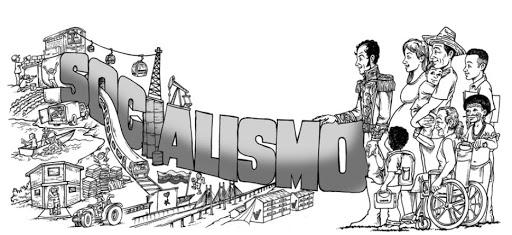
The words of the famous American actor Jim Carrey, in which he advocates socialism, have given a lot to talk about on social networks on the Internet and in the mainstream media for several weeks. The supposed defenders of “freedom of expression” have unleashed all sorts of attacks against him.
———————————————————————–
Author: Jorge Ángel Hernández | internet@granma.cu
October 7, 2018 20:10:40
A CubaNews translation.
Edited by Walter Lippmann.
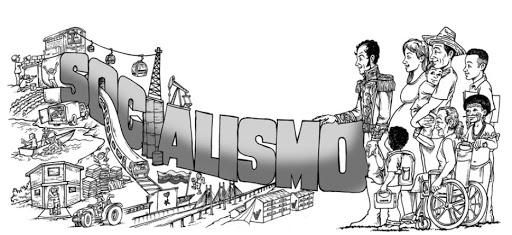
Photo: socialismoweb.wordpress.com
Throughout its history, the democracy of political parties has proclaimed its defense of freedom of expression. It appears as a citizen’s right in all constitutions. To make matters worse, it has been used with great manipulative intelligence since the Cold War.
Thus, a pattern of appreciative judgment has been achieved that, as the 21st century goes by, accuses the emerging socialisms of being dictatorships as it assumes that capitalism guarantees freedom.
The reality is quite different, since the contradiction with which public opinion is pressured imposes a terrorist response, even to the most advanced models of socialism, without ruling out public condemnations based on diverse judicial subterfuges; practices completely normalized today that impose a condemnation of socialism historically and towards the far future. In other words, to infinity and beyond.
This has been done in South America, even with center formations that only apply measures of humane capitalism, such as the Argentina of the Kirchners.
Suddenly, the well-known actor Jim Carrey said on HBO: “We have to say yes to socialism -“to the word and everything”-and the true reactions which that freedom of expression have generated.
Fox’s review starts by discrediting him as a confessed Hollywood destroyer. It artificially superimposes on Carrey’s declaration, Fox’s own claim that Venezuelan socialism is a failed system, in which thousands of people suffer the worst living conditions on a daily basis.
The Fox reporter who assumes these words is not aware of the plans for housing, health, education, culture nor, of course, of the terrorist interference and mercenarism – in successive boycotts of the national economy and in real and concrete attacks – with which they have tried to besiege Bolivarian socialism.
If you look at it, Carrey’s focus does not delve into socialism itself, but calls for resistance to the insanity of the regime in power in the U.S. It takes as a formula the very system of political parties of U.S. democracy. It is a call to shake off the predetermined aggressiveness between Republicans and Democrats in the United States.
But the reaction has been brutal: exercising freedom of expression, in the context where the actor usually operates, could cost him his career, among the brightest and best paid in the film industry today, if he depends on this terrorist machinery of information. This is how many Venezuelan bigots manipulate and respond wherever the news appears.
For the democracy of political parties, led by the American one, the word -and only the word-, “socialism” represents the satanic in all dimensions.
Carrey has made it clear in his comments that whoever uses it must apologize, that it is vetoed from the supposedly democratic vocabulary. And that is what those who hijack the idea of freedom of expression to make it a hostage and client of their own oppression immediately bet on.
McCarthyism is still alive and those who dare to cross the fine line of censorship will have to face terrorist smear campaigns and the manipulation of justice.
For this reason, we must not only say yes to the word “socialism,” but to everything else that the system proposes and facilitates in the emancipation of the classes that are still oppressed by capital. Jim Carrey is absolutely right. (Taken from La Jiribilla)
“A pattern of appreciative judgment has been achieved that, advancing in the 21st century, accuses emerging socialisms of dictatorships.
“Exercising freedom of expression, in the context where the actor usually operates, could cost him his career, among the brightest and best paid in the film industry today, if he depends on this terrorist information machinery.
Cuban poet, narrator and essayist. Villa Clara, 1961. Collaborator of several press media. Directed the culture magazine Umbral, by Villa Clara. He received the Distinction for National Culture in 2004.
Photo from La Jiribilla:

Jim Carrey: “Let’s stop apologizing.” Photo: Internet
The Kiss of Life

The Kiss of Life

Una foto, una historia
Published: Wednesday, August 15, 2018 | 10:16:54 AM
A CubaNews translation.
Edited by Walter Lippmann.
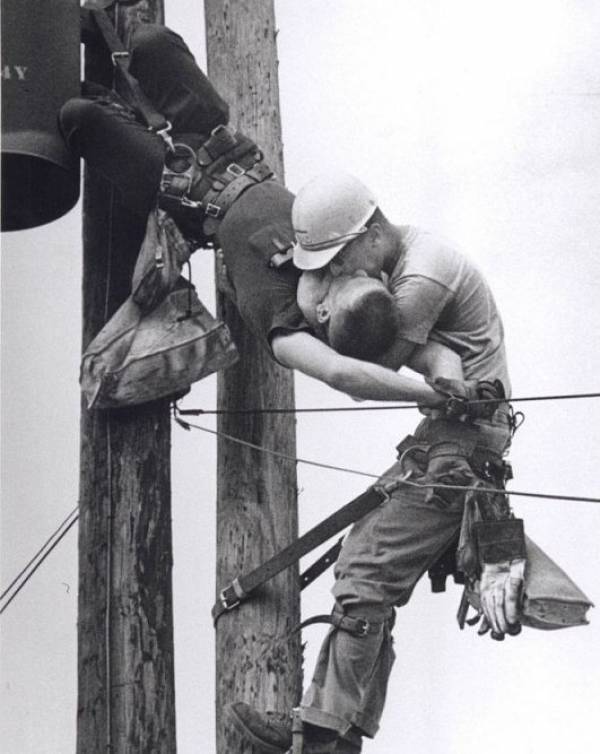
A young operator on U.S. national power lines brings his unconscious partner back to life with mouth-to-mouth resuscitation. Author: Taken from the Internet Published: 15/08/2018 | 10:10 am
On July 17, 1967, the American photographer Rocco Morabito (1920- 2009) was hunting images for the Jacksonville Journal, in the state of Florida, of which he was staff. After several hours without his lens catching anything important, he decided to return home. He was about to open the door of his car when a loud noise shook him.
He looked in the direction of the explosion and could not suppress a gesture of stupor. In fact, at the top of a pole, almost 15 meters from the ground, a young operator of the national electricity lines who was carrying out maintenance work was lying unconscious and hanging from his safety harness, after receiving in his body the colossal discharge of 4 000 volts.
Next to the victim, one of his companions was trying to revive him with mouth-to-mouth resuscitation. Rocco wasted no time, and after using his car radio to warn emergency services urgently, he photographed the unique rescue. The image is known worldwide as “The Kiss of Life”.
In 1968, this photograph was awarded the important Pulitzer Prize and was the recognition of a photographer who dedicated his career to street journalism. For years, the image served as an example in the training courses of electric companies, and even of the Red Cross. For Rocco Morabito, the only important thing was what he himself conveyed: “Someone helping someone”.
“I Am Proud of Cuban Democracy”
Cubainformación
Gustavo Machín:
“I Am Proud of Cuban Democracy”
Saturday, September 29, 2018
Translated and edited by Walter Lippmann for CubaNews
Translated and edited by Walter Lippmann for CubaNews
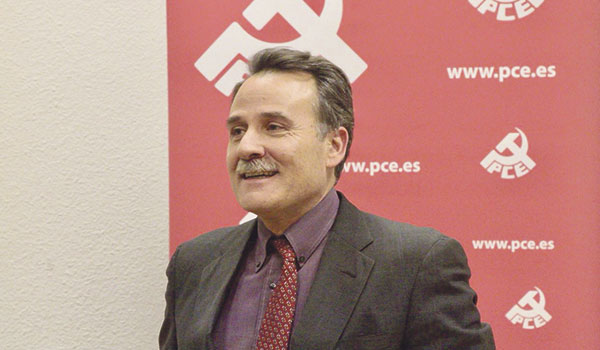
J.M. Mariscal Cifuentes – Mundo Obrero – Interview with the Cuban Ambassador in Spain.
MUNDO OBRERO: You have been part of important diplomatic delegations and you know well Cuba’s foreign policy. What principles does Cuba’s foreign and diplomatic policy respond to?
GUSTAVO MACHÍN: Since the beginning of the Revolution, Cuba has had a foreign policy based on principles that for us are inviolable and that are the ones that mark Cuba’s actions in the international context. Cuba’s foreign policy is not a policy of ups and downs or of circumstantial or conjunctural interests, but rather a foreign policy based on principles.
Many of them are internationally recognized but not necessarily complied with. I am talking about the principle of respect for independence and sovereignty; the principle of non-interference in the internal affairs of other states; the principle of negotiation as a means of resolving conflicts, disputes and, of course, openly opposing the use of force, the coercion of military aggression as a means of solution; the principle of international solidarity, we never forget our status as a so-called Third World country and therefore we are a country that defends non-alignment, we do not belong to any military bloc and we defend international peace and security.
This, I believe, was called proletarian internationalism at the time. These are principles that we deeply respect and that we not only respect but also assert. They are principles to which all the member countries of the United Nations are committed, and we see how many countries repeatedly fail to respect them and make manipulated use of these principles at their convenience.
M.O.: Of Cuba’s diplomatic delegations, the Spanish delegation is undoubtedly one of the most important because of its cultural, historical and now economic and commercial ties.
G.M.: Cuba and Spain have a very deep historical, family and cultural relationship in each of the two countries, and that, in itself, gives a different content and substance to the relations between Cuba and Spain. I feel very proud and pleased to have been sent as ambassador to Spain. There are strong historical, family and emotional ties that merit that importance.
Cuba and Spain had a paternal-child relationship during the five centuries of Spanish colonial domination, but the son grew up and we are already talking about a relationship of brothers, a relationship of equals that have the advantage of those deep historical ties.
You also mention the economic and commercial sphere and it is true, it is one of the spheres in which we work but they must be mutually beneficial and must respond to the interests of both countries.
We are open to investment and to the economic-trade relationship with Spain, but we have a definite policy on foreign investment that does not constitute subjugation but a factor in the economic growth of the country in which both parties benefit. We have enormous potential for growth in parliamentary relations, in relations of cooperation, energy, judicial or development cooperation, even.
If we want to broaden and deepen relations with Spain, the strong relations that exist between the Cuban people and the Spanish people deserve that at the country level we also have the same relationship and, as ambassador of Cuba, I am here to broaden and consolidate them, not only with the government but with all sectors of Spanish society.
M.O.: You arrived in Spain after having been part of the diplomatic delegation in the United States and you have coincided with a change in the presidency of that country. What did Trump’s arrival mean in the dispute with the United States?
G.M.: During the last two years of the Obama administration, our two countries took the decision to re-establish diplomatic relations and move them towards a process of normalization. You have to recognize that there was progress in the bilateral relationship, we opened our embassies, we had a much more fluid political-diplomatic relationship, exchanges and cooperation were a sphere in which we advanced a lot, based on the mutual interest of both countries.
Let me repeat that in our foreign policy we do not allow ourselves to be subjugated and what we do is treat each other equally. What we did in this two-year period with Obama was that we began to treat each other as equals, and we began to talk, cooperate, and advance our bilateral ties.
Nevertheless, it must be said that the economic and financial blockade of Cuba was not lifted by Obama, an image has been created that the blockade is over and not. The blockade is maintained and was not lifted, in fact, during the Obama administration there was a record in the imposition of fines on companies and ships that had commercial relations with Cuba.
But we have to recognize that there were advances, not substantive ones, but at least we worked towards a better relationship. With the Trump administration, we are facing a totally different situation from the one we had with the Obama administration. We are in a clear setback in relations between Cuba and the United States.
Trump has been reversing many of those advances, we are going towards a negative atmosphere in bilateral relations, but I always like to point out that within the United States, within the American public opinion, the opposition to the blockade of Cuba, the opposition to an opposite and offensive policy towards Cuba, is growing every day.
The disagreement with the backtracking measures that President Trump is doing has even reached Florida. Today, the majority of the Cuban community based in the United States and especially in Florida are in favor of lifting the blockade and having normal relations between the two countries.
US policy towards Cuba has been kidnapped by right-wing politicians from that community and they are the ones who are imposing a line of action, but I can assure you that at the level of society in the United States, business sectors, academics, non-governmental or religious sectors are in favor of changing the policy towards Cuba.
Even if the rulers and President Trump want to retreat, he will always have American society against him and to a great extent this retreat does not correspond to the interests and desires of the American people and society.
M.O.: And a few months after your arrival in Spain, there is a change of government here, in this case with an inverse path in which a social-liberal replaces a conservative president. What influence does this change have on bilateral relations between Cuba and Spain and the European Union?
G.M.: I have the satisfaction and I see as ambassador that there is finally a State policy towards Cuba, and for me a State policy is a policy that responds to the interests of the country and to the interests of the Spanish people and not to personal or partisan interests.
I feel satisfied to have been named at a time when that State policy towards Cuba prevails. During my eleven-month stay in Spain, I see the good state of bilateral relations, both countries are working to expand and consolidate.
Spain was one of the countries that, during the previous government and with the parliamentary support of the majority of the political forces, played a very important role in the renegotiation of the sovereign debt, but also and above all in negotiating a new agreement for political dialogue and cooperation with the EU that has been in force since last November.
[It’s] an agreement that has managed to overcome the so-called common position that President Aznar imposed on relations with Cuba, which was an interfering, conditioning relationship that we never accepted. I believe that it is a success for both the European Union and Cuba that a new political dialogue and cooperation agreement has been adopted; we are in a new context in the relationship based on respect for independence, sovereignty and equal treatment.
We hope that on 31 October, the day of the vote on the resolution lifting the blockade in the United Nations General Assembly, the EU will continue to vote in favour of the blockade.
M.O.: Let us go to Cuba. You are immersed in a constituent process with a profound debate on a new constitutional text, but what has reached us here is that Cuba is abandoning communism.
G.M.: (laughs) Yeah, I noticed those headlines. What a superficial interpretation. President Díaz-Canel has said. We are defining ourselves as a socialist country that has not yet reached communism. We cannot define ourselves as a communist country if we are not yet, we are still in socialism, in our socialism.
It is a constitution for the moment, flexible, advanced and easy to use and interpret, a constitution that reflects the real context. As far as I know, the party has not had its name changed. I am still a member of the Cuban Communist Party, whose leading role in Cuban society is recognized by the Constitution.
This appears in the draft with their full names and surnames, because of their recognized prestige, roots and recognition within society as the party of all of us. But well, we are used to it, decades have gone by talking about Fidel and longing for a biological solution to the Cuban problem, then they went for Raúl, and now that none of the Castro’s is president, they are going for Diaz-Canel and they are already making him look like a “dictator”.
In short, how many examples could I give you that if we were a dictatorship many of the things that happen in Cuba would not happen! Cuban society is contentious by nature, we have an opinion on everything. Anyone who knows us minimally knows it.
What is clear to us is that our majority has opted for a Cuban model of socialism that copies no one, a socialism according to our history, our traditions, our context and our economic and geographical conditions, a socialism that we have never renounced.
We are a country that has a Constitution, that has laws, that has an institutionality. We have our electoral system, there will be those who do not like it, but it is ours, the one that works and of which I am proud. I feel proud of Cuban democracy, a model that the majority of Cubans endorsed when we went to last year’s elections to elect our deputies to the National Assembly with a participation in free and secret vote of 84% of the census.
There are governments that claim to be democratic that do not reach 51% approval. When in 2010 the government launched what we call the process of updating the Cuban economic and social model, it was preceded by a very broad popular debate. I challenge the governments of many countries to bring their economic and social policies to popular discussion, everyone had the opportunity to give opinions to the point that after popular debates all the guidelines, all of them, were modified. We are immersed in a policy of economic and social transformations that enjoys the support and consensus of the majority of Cubans.
M.O.: How do you evaluate the process that led to the election of Diaz-Canel as president, replacing Raúl Castro?
G.M.: Raúl Castro, by his own decision, even against many who wanted him to be re-elected, kept his word, said two terms and so it has been. You are still a deputy member of the Assembly, because you are elected in your district. In Cuba, to be president, you have to be a parliamentarian. The arrival of Diaz-Canel, therefore, is part of the democratic normality of our nation, a continuity endorsed by the people.
M.O.: How is the process for Cuba to have a new Constitution developing?
G.M.: You have used the terms correctly. It is a new Constitution, not a mere reform. We improved our model of government by creating the post of the President of the Republic, as head of state, and that of prime minister, as head of government. A president who cannot be president for more than two terms.
We are proposing an administrative rationalization, reinforcing the role of the municipalities as the fundamental unit of the political, economic and social organization of Cuba, eliminating the provincial assemblies, authentic parliaments that exist today in the 14 provinces that now become simple administrative entities and whose powers pass to the municipalities.
It is an abundant text in reference to the rights of Cubans, I even think that they could put a little more duties on themselves. We are giving constitutional rank to all the rights that emanate from the international agreements on human rights of which Cuba is a member: food, health, housing, social security, assembly, press.
For example, here in the embassy we had our meeting, as Cubans, we discussed the entire Constitution and 57 proposals for modification were made, which have been sent. The popular discussion of the draft constitution will take place until November 30, after which all the opinions expressed will be sent to the parliamentary commission, which also has a broad representation of all sectors of society.
Julio Lobo, the King of Havana

Julio Lobo, the King of Havana
 By: Ciro Bianchi Ross
September 21, 2018
A CubaNews translation. Edited by Walter Lippmann.
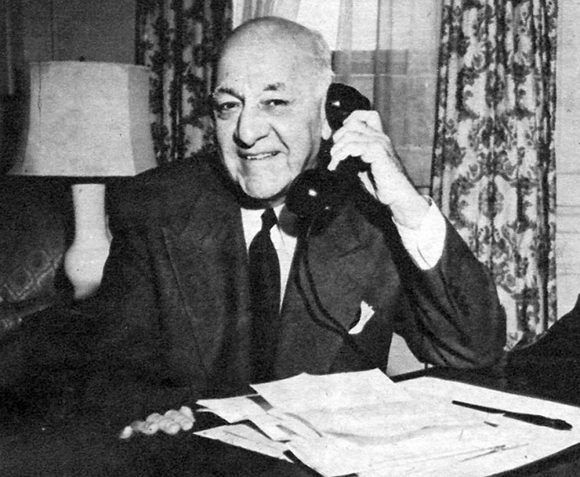
Julio Lobo. Photo: ABC.
A biography of Julio Lobo has been published in the USA. It is titled The Sugar King of Havana and its author is John Paul Rathbone. We will dedicate today’s space to this character. He was the great figure of the Cuban bourgeoisie.
Lobo was born in Venezuela and brought to Havana when he was barely a year old. His father began to work very young in what would later become the Bank of Venezuela. Thanks to his efforts and intelligence, he gradually rose to management of the company when he was only 22. One day he had the bad idea of denying a loan to Venezuelan dictator Cipriano Castro and ended up in jail. Released at last, after three months of confinement, he was evicted from Caracas.
In New York, where he settled, the North American Trust Company immediately offered him the position of administrator of their Havana branch. A company that soon became the National Bank of Cuba, but was neither national nor Cuban. It was already the year 1900.
His son Julio studied in the United States and graduated as an agricultural engineer. He returned to Cuba and, in 1920, undertook the general management of Galban, Lobo y Compañía –his father’s business—which was the beginning and launching pad of his sugar empire. He became one of the richest men in Cuba.
If as a family group, the Falla Bonet’s surpassed him, Lobo was above them as an individual owner. He came to own 16 sugar mills, 22 warehouses, a sugar brokerage firm, a radio communications agency, a bank, a shipping company, an airline, an insurance company and an oil company. He was the main seller of sugar on the world market.
In his book Los propietarios de Cuba [The Owners of Cuba], Guillermo Jiménez attributes to Lobo a personal fortune of $85 million, with assets estimated at one hundred million. Rathbone, his biographer, assures us in his book that if that fortune were measured in today’s dollars it would amount to no less than $5 billion.
However, in 1960, Lobo left Havana –he would say– with a small suitcase and a toothbrush. He settled in New York and continued in the sugar business, but never repeated his past exploits. When he died in 1983, his capital, Rathbone says, was estimated at $200,000. In fact, according to the biographer, very few of his generation prospered in exile.
Unlike the Falla Bonets who, when the Revolution triumphed, took no less than forty million dollars out of Cuba, Julio Lobo, a furious nationalist, continued to invest in the sugar industry and other companies, while continuing to expand his valuable art collection. After all, he knew he had always been smarter than his rivals… but that trust led him to take no precautions whatsoever.
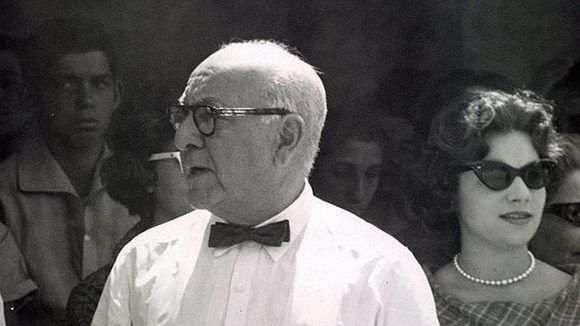
Lobo used to wear a starched guayabera, a bow tie, and linen trousers. Photo: ABC.
He never wanted to intervene in politics, but he was a convinced opponent of Batista. He was a supporter of Batista’s removal, without caring who would succeed him.
In 1957 he gave 50,000 pesos to the “Accion Libertadora”, an anti-Batista organization, which in turn gave half of that money to the “26th of July Movement”. This led him to believe that he could make conditions on the Revolution.
Rathbone assures his readers that Ernesto Che Guevara showed him otherwise. He summoned him to his office. The guerrilla commander, who had become president of the National Bank of Cuba, told him that they had reviewed his accounts and that Che congratulated him for the efficiency of his companies, and for not owing a single penny to the Treasury, but he also told him that his assets would be intervened. He made him an offer: He could remain at the head of his sugar mills. In exchange, he would receive a salary from the State. Needless to say, Lobo refused. It was then that he packed his small suitcase.
Lobo’s purchase, in 1958, of the three mills owned by Hershey was very controversial. This was a very expensive transaction, because, already in exile outside Cuba, his creditors demanded payment of the outstanding debt for those mills that were no longer his.
His specialized sugar library was the best and most complete in Cuba and perhaps in the whole world. His art gallery featured works by Da Vinci, Rafael, Miguel Ángel and Goya, among other great painters. His collection of incunabula and unique and rare books was famous.
He was obsessed with the personality of Napoleon and came to possess a large collection of relics and more than 200,000 documents, which he left in deposit to the nation and which are treasured today in the Napoleonic Museum in Havana.
He was also interested in Hispanic-American subjects. Lobo was a Renaissance man, says Rathbone, extremely curious, with a deep knowledge of business, the subject of sugar, politics and history, and an impressive general culture.
He never had a yacht of his own and barely a social life. He was a compulsive worker, up to 16 hours a day. His hobby was gardening. He also had a penchant for collecting Hollywood actresses. He had a long relationship with Joan Fontaine and even proposed to Bette Davis. On one occasion he ordered that one of his swimming pools be filled with perfumed water to entertain the movie star and synchronized swimming diva Esther Williams.
He spent his final years caring for his first wife, whom he had divorced many years earlier. By then he could only move his eyes. He asked to be buried in a guayabera. A Cuban flag covered his coffin. That was his wish.
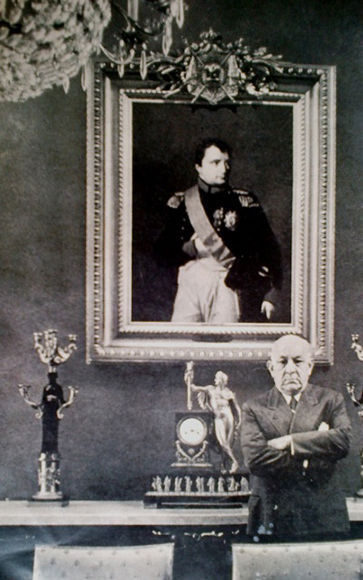
Julio Lobo, Cuba’s Napoleon. Photo: Finding Napoleon.
Canadian Daily Drags Out Bad Comedy
Canadian Daily Drags Bad Comedy Out
By Manuel E. Yepe
http://manuelyepe.wordpress.com/
Exclusive for the daily POR ESTO! of Merida, Mexico.
Translated and edited by Walter Lippmann.
The Canadian government has partnered with its brain injury experts to investigate the causes and effects of alleged health problems that have affected Canadian and U.S. diplomats accredited in Havana.
So says an article in the Ottawa Starr newspaper headlines, signed by Bruce Campion-Smith, its reporter for local political affairs.
Global Affairs, [the Canadian foreign ministry], has arranged for the Brain Repair Center, affiliated with Dalhousie University, as well as the Nova Scotia Health Authority and IWK Health Center, to investigate the potential causes and mysterious symptoms that allegedly affected a dozen diplomats and their accredited family members in Cuba.
A senior federal government official told The Star that an investigation led by the RCMP (Royal Canadian Mounted Police) conducted with the cooperation of Cuban authorities, which has lasted more than a year, does not even appear to have come close to determining what may have happened and whether anything really happened.
Since 2016, when several U.S. diplomats were joined shortly after by some Canadians, they have been involved in a series of mysterious incidents that left them suffering symptoms such as dizziness, nausea, headaches and difficulty concentrating, similar to those of a concussion but without cranial trauma to explain the cause, the Canadian newspaper states.
“In spite of all the investigations carried out, the cause or causes of the health incidents experienced by our staff are still unknown. We basically continue to search, investigate and work with our counterparts,” said the official, who spoke on the condition that his testimony remain anonymous, according to The Star.
Investigations have been hampered from the outset by mysterious circumstances. First, because the U.S. side did not allow accredited experts of any nationality clinical access to those affected or to the U.S. military doctors who could see them within a period of time close to their supposedly being affected. They argued that the patients were personnel working in intelligence tasks, obliged to respect strict rules of secrecy because of the profile of their tasks.
In addition, many media outlets have exploded the imagination of their audiences with science fiction versions of ultrasonic weapons that could be microwaves, speculation about the size of such weapons and the capabilities of such presumed devices.
But perhaps the main obstacle has been that the issue has been turned into a vehicle for denunciation of Cuba by Florida Republican Senator Marco Rubio. Though he is not Cuban and has never visited the island, Rubio intends to take advantage of his Cuban ancestry to benefit his presidential aspirations, in the context of the tense relations between Washington and Havana.
Rubio managed and obtained support from President Trump to give the issue global resonance. To encourage him, Rubio assured the American President, using false data, that in Florida counties with abundant Cuban population, Trump had obtained the majority of the votes over Hillary Clinton in the 2018 presidential elections, something that was proved to be false and showed Rubio’s scarce political base among Cubans.
Dr. Michael Hoffer, a brain injury specialist at the University of Miami who cared for several Americans with symptoms, confirmed that their cause is unknown.
Like the Americans, Canadians also experienced incidents in their homes or in hotels and at their workplaces. All revealed anomalies in the boody organs that help determine gravity and balance. Americans and Canadians also agree in the experience of having suffered vestibular problems of the ear and in the balance.
It is interesting to note how the course of the investigations always revolves around the search for the perpetrator(s) of the attacks, their motivation and methods. But they overlook the possible responsibility for the harm to American or Canadian personnel is not from countries that are enemies of the United States or Canada. Nor are they caused by mysterious acoustic attacks themseves, but by actions carried out by the authorities of the American intelligence community, carrying out trials of some kind of clandestine program or secret weapon, at the cost of the naïve sacrifice of their own soldiers and allies.
For now, it seems like a comedy with no predictable end.
October 3, 2018.
You must be logged in to post a comment.