A Speech to Miami
- English
- Español
A Speech to Miami
By Dr. Néstor García Iturbe
June 16, 2017
A CubaNews translation.
Edited by Walter Lippmann.
On June 16, as had been announced, Donald Trump visited the city of Miami and delivered a speech to an audience made of the worst Cuban exiles, who had gathered at the Manuel Artime Theater, to learn about the new measures that would be implemented against Cuba.
It is interesting to analyze the environment in which the act took place and its concrete results.
Trump, following the pattern of every US presidential speech, had someone write it for him and that person, was responsible for highlighting in it some names and situations. In addition to adding clumsiness, allows people to see Trump’s lack of knowledge Cuba.
Among the things that the president read, was calling the Brigade 2506 mercenaries, who surrendered in less than 72 hours, “heroic.”
The speech touched on an amalgam of facts that, instead of benefiting the United States, denigrates it. Among these was Operation Peter Pan, organized by the CIA and repudiated by the majority of those who were forced to come to the United States under it.
He spoke of the disappearance of people, of murders by the police, which reminds us of the times of Batista, the dictator who, thanks to the support of the United States, was badly ruling Cuba until the Revolution triumphed.
I speak of people who are detained when they go to pray in temples and churches. The absence of freedoms and respect for human rights. Of the danger that Cuba had atomic weapons, something that refers to the 60s of the last century and that Cuba has sent arms to Korea, which gives us doubt, that Mr. Trump knows where Korea is.
Clearly, this was not exactly a speech in Miami, but a speech to Miami, full of demagoguery, lies and misrepresentation, but it was pleasing to the ears of those who went to the theater to watch blood run.
There was no lack of references to Venezuela and Cuba Washington’s plans against the people of that country.
According to Trump, the United States is the champion of freedom, democracy, the country where human rights violations are not discussed, where there are no political prisoners and where their armed forces help other peoples of the world to stay free.
Their actions on Cuba will be pointed in that direction, to liberate the Cuban people and that the exiles will be able to return to their homes, in addition to claiming their property, now with new owners, the Cuban people.
All this he says, as if it were true, or at least he seems to be convinced of what he’s putting out. Of course, he could be deceived, which implies that it is easy to deceive, like a fool, the president of the United States.
The main thing was not in the rhetoric, the demagoguery and the phrases he used so that some would feel happy. There were many kisses, hugs, handshakes, applause, pointing out supposed “heroes” in the audience, gift of little pens to some of them, all that was part of the show.
The main thing was in the executive order that he signed, and if it really implies a change in relations between Cuba and the United States, as detailed in the “agreements” reached during the Obama administration.
We can say that there are some changes and novelties, but of some, things were not even talked about. According to a communication dated June 16, issued by the White House Press Office on the executive order, we have the following:
If he doesn’t sign another order tomorrow, travel to Cuba by people of Cuban origin is still the same. The same can be said of remittances and trips to the United States to visit relatives and other reasons, all in an orderly manner with a visa.
Of the airlines that travel to Cuba from the United States and Transatlantic tourism, nothing new.
In relation to the accommodation of Americans in Cuba, in the order it is proposed not to do it with establishments or hotels under the direction of the Business Administration Group [GAESA], because it is deemed linked to the Cuban armed forces.
It confirms, as has long been established, not to allow Americans to travel to Cuba for tourism purposes. Visitors from the academic, artistic, and other sectors should travel in groups, not individually as authorized by Obama.
As a policy change, among the indications issued by Trump, is the increase of trade with the Private Sector. It does not say to which private sector it is concerned, but in Cuban agriculture we have a strong private sector and the Secretary of Agriculture, appointed by Trump, is in favor of trade with it.
He also reaffirmed the policy of blockade against Cuba and opposes efforts that can be made in the United Nations and other International Organizations to terminate it. In September we will see how they vote the resolution against the blockade in United Nations.
He said that the improvement of relations between Cuba and the United States will depend on the action of the Cuban government in order to increase compliance with the laws, the way of life of the people, respect for human rights and the increase of political, economic and religious freedom. All of this will be determined by the United States.
The order directs the Departments of Commerce and Treasury to establish corresponding regulations within a period of thirty days, to put it to work. This process, according to experts, could take several months in which the current regulations will continue.
So far as mentioned in the executive order, what was not mentioned, for the moment remains the same.
As you can see, these regulations affect those who are Americans, and what they can or can not do according to them.
The change of policy towards Cuba has been reduced to what the “country of freedom” allows its citizens to do in relation to Cuba.
It was evident that this activity was not directed at Cuba or the Cubans, but at the Americans of Cuban origin who participated in it. Not once was the name of Martí, Maceo or any of our heroes mentioned. The crowd shouted U S A … U S A …. U S A … and finally, an immitator of Ferruccio Burgos played the United States national anthem.
This was a speech to Miami. It could not have been given anywhere elsewhere in the world. I think Trump scoffed at the audience.
They are lost.
Un discurso para Miami
Por: Dr. Néstor García Iturbe
16 de junio 2017
El día 16 de Junio, según se había anunciado, Donald Trump visitó la ciudad de Miami y pronunció un discurso ante una audiencia formada por lo peor del exilio cubano, que se había congregado en el Teatro Manuel Artime, para conocer de las nuevas medidas que se implantarían contra Cuba.
Es interesante analizar el ambiente en que se desarrollo el acto y los resultados concretos del mismo.
Trump, siguiendo el patrón de todo discurso presidencial estadounidense, tuvo alguien que se lo escribiera y esa persona, se encargó de resaltar en el mismo algunos nombres y situaciones, que además de agregar torpeza, permiten definir la falta de conocimiento de Trump sobre Cuba.
Dentro de las cosas que leyó el presidente, estuvo el llamar “heroicos” a los mercenarios de la Brigada 2506, que se rindieron en menos de 72 horas.
El discurso tocó una amalgama de hechos que en vez de beneficiar a Estados Unidos, lo denigra, como la Operación Peter Pan, organizada por la CIA y repudiada por la mayoría de los que llegaron a Estados Unidos forzados por la misma.
Habló de desaparición de personas, de asesinatos por parte de la policía, lo cual nos hace recordar los tiempos de Batista, el dictador que gracias al apoyo de Estados Unidos estuvo mal gobernando Cuba hasta que triunfó la Revolución.
Hablo de las personas que son detenidas cuando se encaminan a rezar en templos e iglesias. De la no existencia de libertades ni respeto a los derechos humanos. Del peligro que Cuba tuviera armas atómicas, algo que se refiere a los años 60 del siglo pasado y de que Cuba ha enviado armas a Corea, lo cual nos siembra la duda, de que el señor Trump sepa dónde está Corea.
Es evidente que aquel no fue precisamente un discurso en Miami, sino un discurso para Miami, lleno de demagogia, mentiras y tergiversaciones, que resultara agradable a los oídos de los que fueron al teatro para ver correr la sangre.
No podía faltar en aquel desbarrar la referencia a Venezuela y como Cuba la ayudaba en sus planes contra el pueblo de dicho país.
Según Trump, Estados Unidos son los campeones de la libertad, la democracia, el país donde no se comenten violaciones a los derechos humanos, donde no existen presos políticos y donde sus fuerzas armadas ayudan a otros pueblos del mundo para que se mantengan libres.
Sus acciones sobre Cuba estarán encaminadas en ese sentido, para liberar al pueblo cubano y que los exilados puedan regresar a sus hogares, además de reclamar lo que fueron sus propiedades, ahora con nuevos propietarios, el pueblo cubano.
Todo esto lo dice como si fuera verdad, o al menos parece estar convencido de lo que expone, aunque pudiera estar engañado, lo que implica que es fácil engañar, como a un tonto, al presidente de Estados Unidos.
Lo principal no estuvo en la retórica, la demagogia y las frases que dijo para que algunos se sintieran felices. Muchos besos, abrazos, apretones de mano, aplausos, señalar supuestos “héroes” que estaban en la audiencia, regalo de plumita a algunos de ellos, todo eso formaba parte del espectáculo.
Lo principal estuvo en la orden ejecutiva que firmó y si la misma realmente implica un cambio en las relaciones que se llevan a cabo entre Cuba y Estados Unidos, según los “acuerdos” llegados durante la administración Obama.
Podemos decir que hay algunos cambios y novedades, pero que de algunas, cosas ni se habló. Según comunicación de fecha 16 de junio emitida por la Oficina de Prensa de la Casa Blanca sobre la orden ejecutiva tenemos lo siguiente:
Si no firma otra orden mañana, los viajes a Cuba de las personas de origen cubano siguen igual, lo mismo podemos decir de las remesas y los viajes a Estados Unidos para visitar familiares y otros motivos, todo de forma ordenada y mediante visa.
De las línea aéreas que viajan a Cuba procedente de Estados Unidos y los Trasatlánticos turísticos, nada nuevo.
En relación con el alojamiento de estadounidenses en Cuba, se plantea en la orden no realizarlo con establecimientos ni hoteles bajo la dirección del Grupo de Administración Empresarial, por considerarlo vinculado a las fuerzas armadas cubanas.
Se ratifica, lo ya establecido desde hace mucho tiempo, de no permitir que estadounidenses viajen a Cuba con fines turísticos. Los visitantes del sector académico, artístico y otros, deberán viajar en grupos, no individualmente como fue autorizado por Obama.
Cómo un cambio de política, dentro de la indicaciones emitidas por Trump, está el incremento del comercio con el Sector Privado. Aquí no dice a cual sector privado se refiere, pero en la agricultura cubana tenemos un fuerte sector privado y el Secretario de Agricultura, nombrado por Trump, es partidario del comercio con el mismo.
También se ratifica la política del bloqueo a Cuba y se opone a las gestiones que se puedan realizar en las Naciones Unidas y otros Organismos Internacionales para la terminación del mismo. En septiembre veremos cómo votan la resolución contra el Bloqueo en Naciones Unidas.
Se dice que el mejoramiento de las relaciones entre Cuba y Estados Unidos dependerá de la acción del gobierno cubano en función de incrementar el cumplimiento de las leyes, el modo de vida del pueblo, el respeto a los derechos humanos y el incremento de libertades políticas, económicas y religiosas. Todo lo cual será Estados Unidos el que lo determine.
En la orden se orienta a los Departamentos de Comercio y Tesoro para que establezcan las regulaciones correspondientes en un plazo de treinta días, para poner a funcionar la misma. Este proceso, según los expertos, pudiera demorar varios meses en los cuales seguirán vigentes las regulaciones actuales.
Hasta aquí lo mencionado en la orden ejecutiva, lo que no se mencionó, por el momento queda igual.
Cómo podrán ver, estas regulaciones a quienes afectan es a los estadounidenses, qué pueden, o no pueden hacer, según las mismas.
El cambio de política hacia Cuba, se ha reducido al cambio de lo que el “país de la libertad” permite que sus ciudadanos realicen en relación con Cuba.
Era evidente que esta actividad no estaba dirigida a Cuba ni a los cubanos, sino a los estadounidenses de origen cubano que participaban en la misma. Ni una sola vez se mencionó el nombre de Martí, Maceo o alguno de nuestros próceres. La muchedumbre gritaba U S A… U S A…. U S A… y para terminar, un émulo de Ferruccio Burgos, interpretó en solo de violín, el Himno de Estados Unidos.
Este era un discurso para Miami. No resiste ser pronunciado en otro lugar del mundo. Considero que Trump se burló de los asistentes.
Están perdidos.
First Results of Trump’s Miami Speech
First Results of Trump’s Miami Speech
By Iroel Sanchez
June 17, 2017
A CubaNews translation by Walter Lippmann.
By Iroel Sanchez
June 17, 2017
July 30 is a day of national mourning in Cuba. On that date, each year, the streets of Santiago de Cuba are filled with a spontaneous pilgrimage; rose petals fall from the balconies, and people walk in silence towards the cemetery.
This yearly pilgrimage is a remembrance of the popular reaction of the city in response, in 1957, to the murders of young Frank País and Raúl Pujol by the police of Fulgencio Batista. It is also a remembrance of all the many who were victims of similar actions.
It was the son of one of Frank and Josue’s murderers whom the US President Donald Trump chose for the storytelling in the speech he delivered in Miami June 17. A violin in the hands of the offspring played –out of tune– the notes of the US national anthem.
In a theater that bears the name of one of the invaders that –under the orders of the CIA– suffered an embarrassing defeat at Playa Girón [Bay of Pigs], a politician many consider a “loser”, promised more of the same the whole world –and even his predecessor in office– recognized as doomed to failure.
The audience –mostly elderly Miamians who have not set foot in Cuba in decades– shouted, “USA, USA,” while the president announced that citizens of “the land of the free” will continue to be banned from engaging in tourism in Cuba. If they travel to the island they must do so in a group and with a detailed and auditable logbook, so that Big Brother can adequately confirm if they fulfill the mission that their government has given them: to overthrow the “regime” that has made sure that crimes such as those of December 30, 1957, never happen again o n the island.
The same President, who signed a $100 billion contract for arms sales to the Saudi Arabian monarchy less than a month ago, signed another in the presence of people who practiced terrorism. The objective: to prevent a single US penny from reaching the Armed Forces of the Republic of Cuba. He also promised to prevent trade and investments that do not exist today.
With the balance of his campaign promises showing more debits than credits and threatened by a congressional investigation following his pressure on former FBI director James Comey, Mr. Trump seems to have found among the Cuban-American ultra-right in Miami a way to show he is true to his word and to be applauded.
But rhetoric cannot conceal a reality: 73% of Americans and 80% of Cuban-Americans support the end of the blockade of Cuba, and Trump’s announcements this Friday will only increase that rejection. Time will tell. The day before the speech, Trump managed to make the analysts of The Miami Herald agree with those of The New York Times.
South of the Florida straits we did not have long to wait. The first results of Trump’s show in Miami are already perceptible in Cuba: there is more talk about politics. In social networks many young people, who do not usually discuss these issues, express their indignation with the Miami speech of the American President. Since the kidnapping of Elian Gonzalez, Cubans had not seen such a clear image of the Jurassic Park that would be ruling Cuba if there was no Revolution.
Sunday Special: US Cartoonists on Trump

Sunday Special
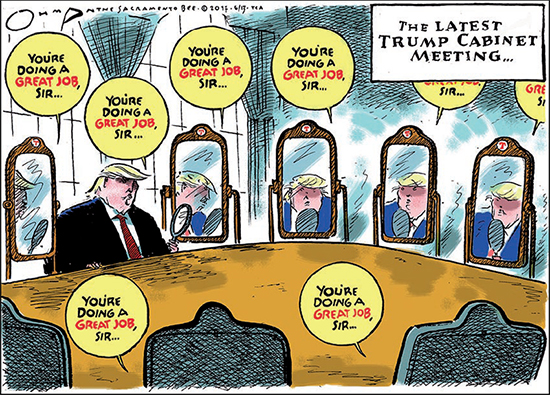
A sample of what some of the most renowned American caricaturists post about the politics of Donald Trump
Juana@juventudrebelde.cu
June 17, 2017 23:02:29 CDT
A CubaNews translation by Walter Lippmann.
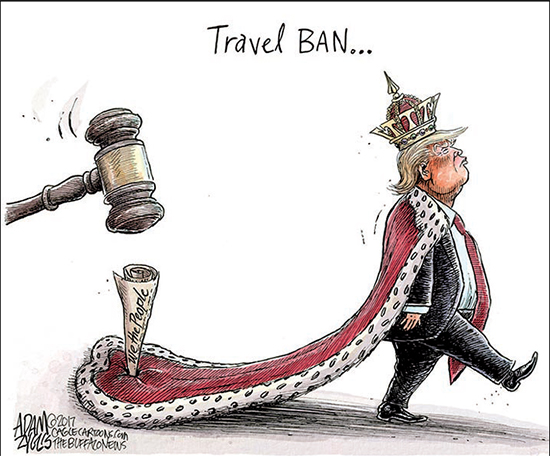
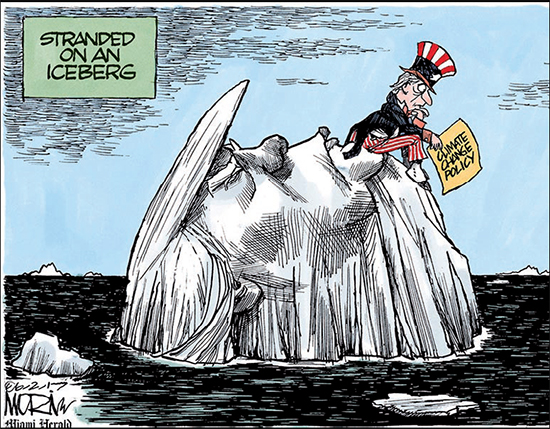
Instead of the accustomed texts, the three of Sunday arrive with the vision that some of the most renowned American caricaturists publish in the media on domestic and foreign policies developed by Republican President Donald Trump, or his way of leading that nation .
Gerardo dreamed of being a father

Gerardo, the hero, dreamed of being a father
And he has fulfilled it, three times
By L Eduardo Domínguez, Claudia Yilén Paz Joa
June 17, 2017
When Sunday is celebrated in several regions of the world as Father’s Day, Gerardo Hernandez and Adriana Perez, will have two new reasons to celebrate the special date. The family they built together, fighting two life sentences and 15 years, has already grown to five members, like the five who were the heroes of their cause. The three children born in less than three years, although it is hard to believe, were dreamed of almost exactly as they arrived.
What is a day in the life of the hero who named in letters the children who were going to be born? How did he feed his hope and that of his beloved, more than ninety miles from an infernal hollow? What does a man feel when he fulfills all his dreams and a review of his life is full of impressive coincidences?
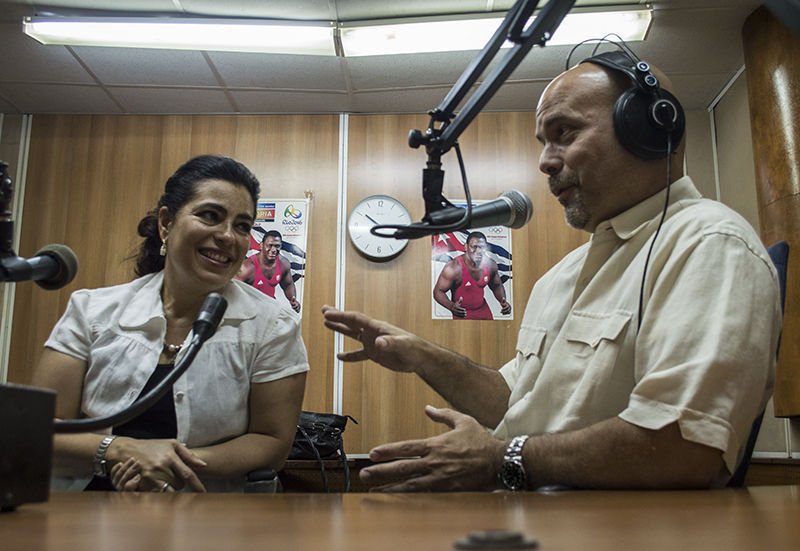
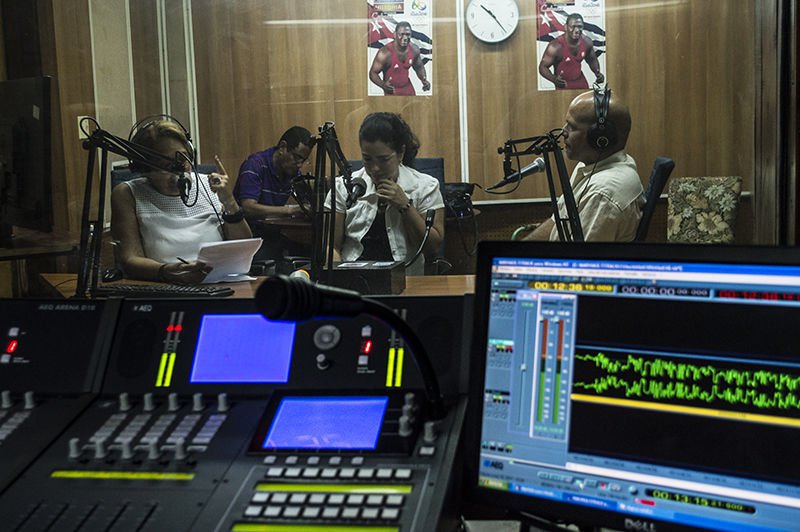
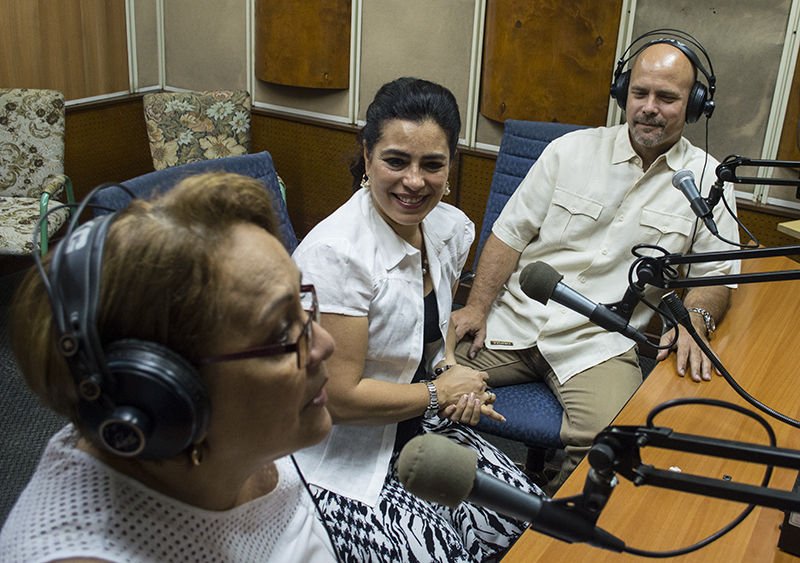
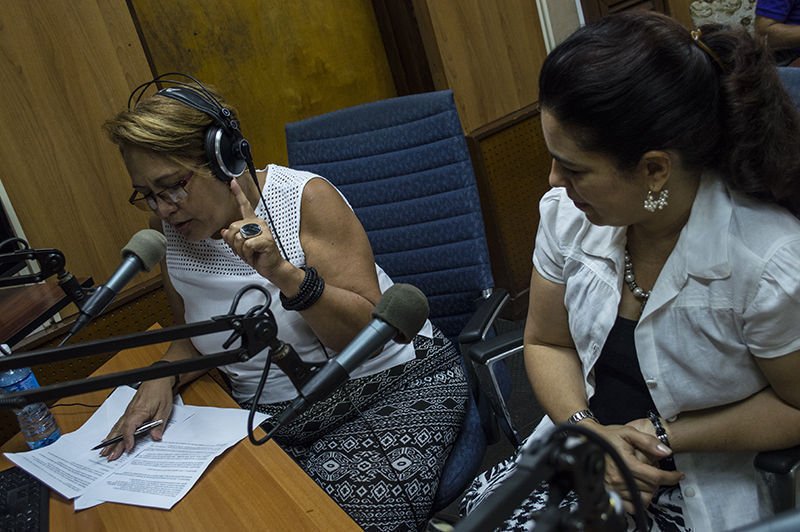
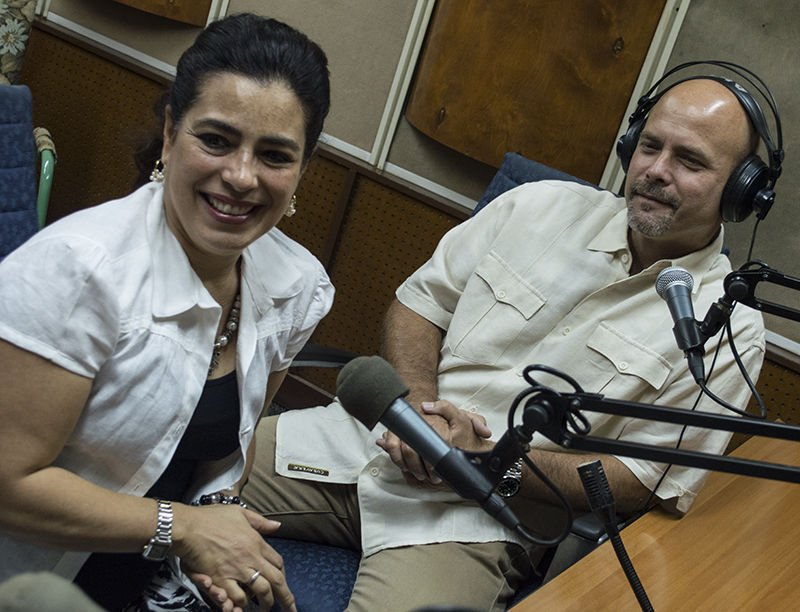
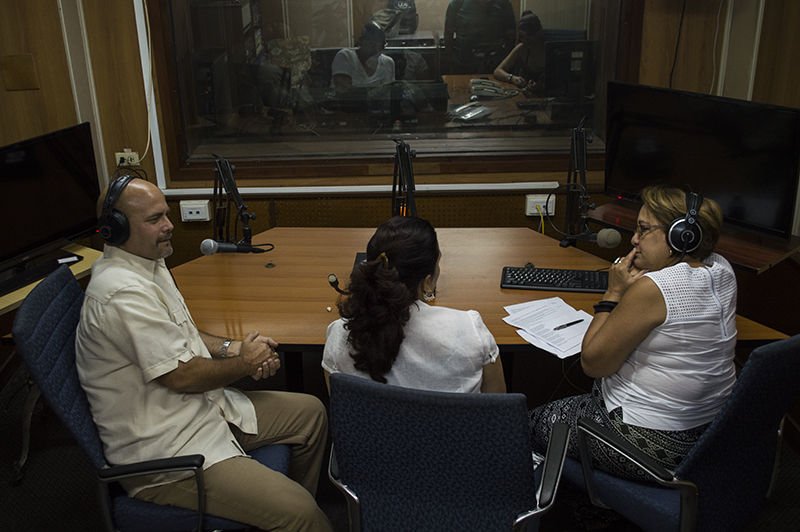
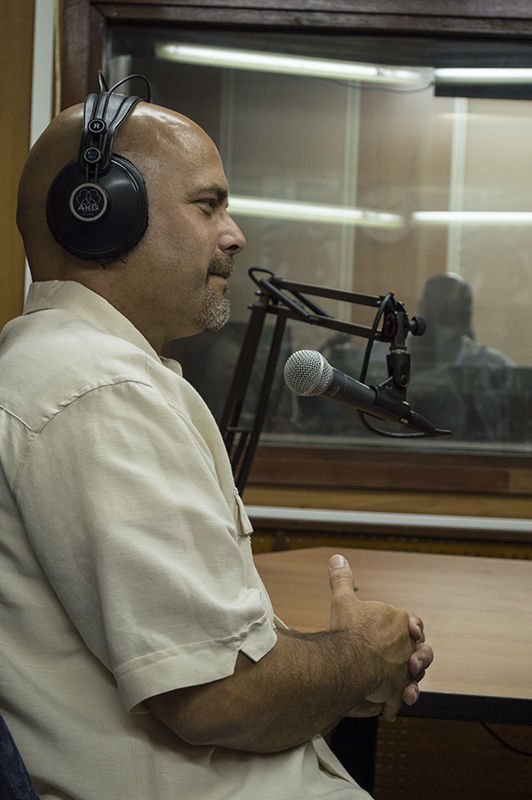
Behind the studio glass headsets and microphones are adjusted. They are ready now. Excited and happy, they share laughter and tears, after the poem that provokes memories, music and anecdotes of love. Don’t stop listening to the exclusive interview with the Hero of the Republic of Cuba that from his space “The Light of Memory”, Radio Rebelde gives to parents on their day this Sunday at 11:00 p.m. At Cubadebate we bring you the exclusive.
A CubaNews translation by Walter Lippmann.
“The Cuban dissidents are an artificial phenomenon
- English
- Español
http://www.elespanol.com/
“The Cuban dissidents are an artificial phenomenon”
Cuban spy Gerardo Hernandez spent 16 years imprisoned in the US and was amnestied in the process of rapprochement.
Former Cuban spy in the US believes that Havana has won the tug-of-war with Washington.
DANIEL PINILLA
Havana, 03/19/2016 02:45 h.
A CubaNews translation.
Edited by Walter Lippmann.
Gerardo Hernandez (Havana, June 4, 1965) is the son of a Canary Islands woman who came to Cuba when she was fifteen. He does not have a Spanish passport and considers himself a Cuban patriot. He is the man of the moment on the island. Convicted of conspiracy to commit espionage in the United States, he spent more than fifteen years in prison there.
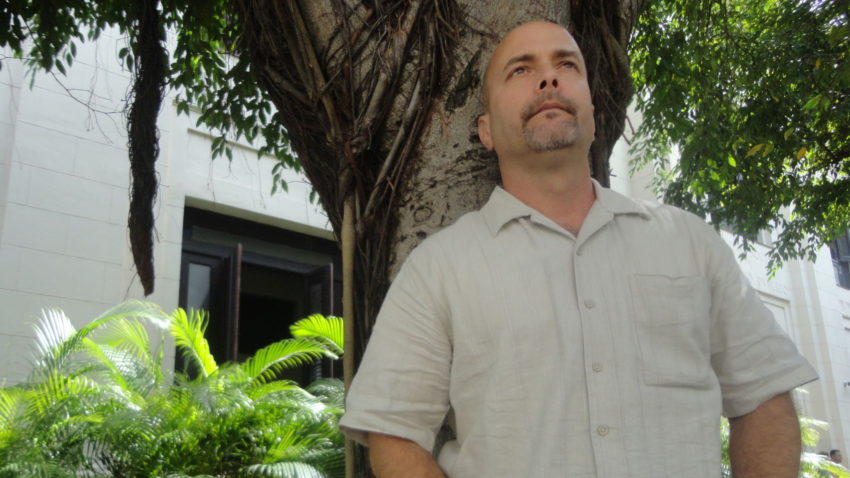
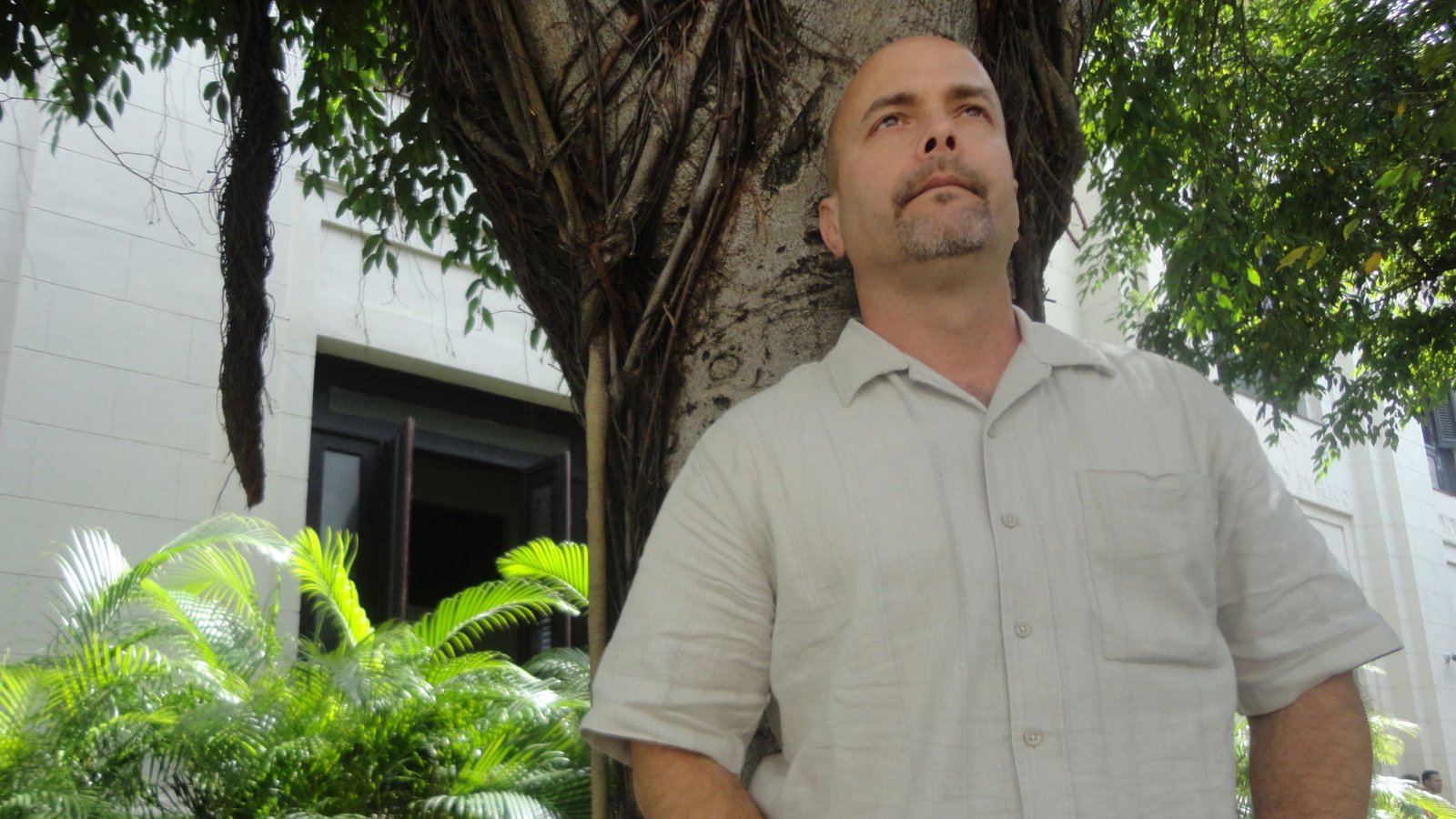
On December 17, 2014 he was amnestied as a gesture of good will in the process of rapprochement between Cuba and the US. El Español has spoken with him under the watchful eye of the Alma Mater statue at the University of Havana days before the historic visit of Barack Obama to the island, which begins this Sunday. His words are echoed, and heavily so, throughout Cuba in this crucial moment for the largest of the Antilles.
Why were you sent to jail and why where you amnestied?
I was sent to jail because I was doing intelligence work for Cuba in the United States. For many years, groups that were sometimes paid and other times tolerated by the United States had been coming to attack Cuba, planting bombs in hotels, blowing up planes … The US never did anything to stop it, so Cuba was forced to send people over there to uncover their plans and send information over here.
We were arrested and tried in Miami without the minimum guarantees of impartiality. In my case, I was sentenced to two life sentences plus fifteen years of imprisonment. After sixteen years in prison, as part of the ongoing process of rapprochement, the two countries reached an agreement, a part of which was the release of three of the five of us who were still in prison.
Is it correct to say that you were a spy?
Look, there are people who defend us and who take offense by the term. I tell you that the term is wrong, but I do not take offense. Legally it does not apply to us because according to US law, we were not accused of spying, but of conspiracy to commit espionage. But I do not feel offended by the term, as I said. I was an intelligence officer and a spy is something that people talk about in the movies and such.
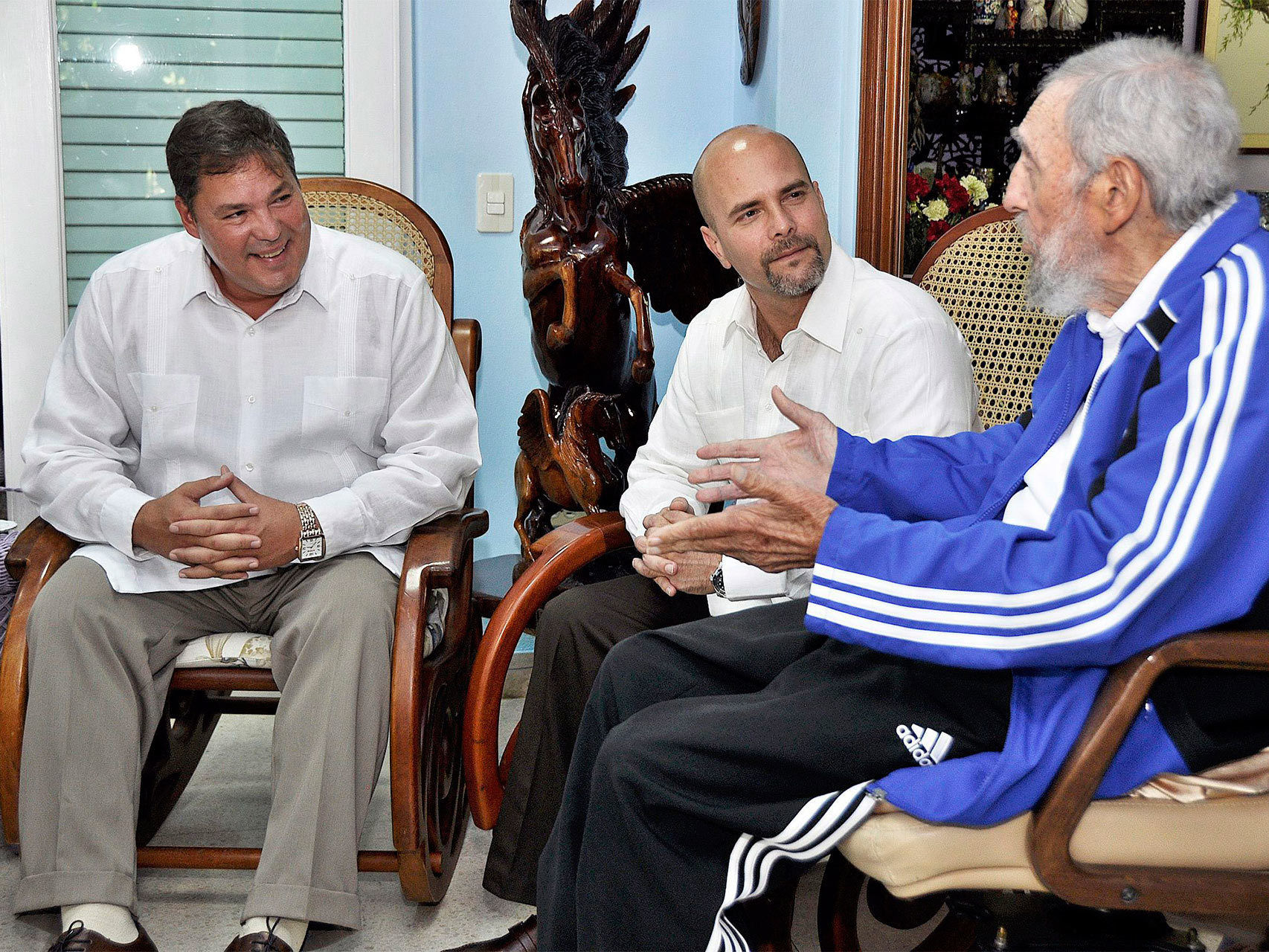
Fidel Castro talks to Hernandez and Ramon Labañino, another of the prisoners.
Photo: Cuban government
Looking ahead, do you see yourself returning sometime to the US, or do you think of the country holding a grudge?
I hold no grudge whatsoever. I took up a responsibility when I agreed to carry out my mission and I have no problem with that. While we did have the unpleasant experience of hearing people say that they wanted to lynch us, and of having had an unfair trial that lasted more than six months, there were also people, including political and religious officials, who were able to see that our cause was just; also there were actors like Danny Glover, who supported us.
Generally speaking I have no negative feelings toward the US people, but I do not see myself going back because one of the conditions imposed for our release was that we could never go back to that country.
I’m going to ask you to be critical of the Revolution and tell me what it has done wrong in these decades, and if you understand that it is time to seriously consider holding multi-party elections in Cuba.
I think that we do have options in Cuba. I guess you mean the fact that there is a single party. That is the result of historical factors: José Martí founded a single party to make it the party of the Cuban nation. Over time, the Communist Party of Cuba has opened up to other sectors such as the religious. Our goal is to make it even more participatory; but we firmly intend to maintain unity.
Our people, 90, 80 or 75 per cent of it support their Revolution.
Throughout our history we have paid dearly on account of disunity. If they manage to divide us, we will be in trouble. You cannot analyze Cuban reality without emphasizing that we are a small country only ninety miles away from the most powerful nation in the world, one that has been determined to prevent Cubans from choosing our own destiny. Our people, 90, 80 or 75 per cent of it support their revolution. You can rest assured that the day when Cubans do not support the revolution, this could not hold. If we are standing today, it is because we have the majority of Cubans with us. It is not a perfect society, but we want to make it ourselves.
Raul Castro has already announced that he resigns this year. There is talk about Vice President Miguel Diaz Canel, the Minister for Economy Marino Murillo, even about a son of Raul’s…
This is not a monarchy. In Cuba, the succession that occurred was because Raul was our vice president and there was no one else more apt or loved by the people. The [National] Assembly [Parliament] met and he was elected.
This is not a monarchy. In Cuba succession happened because Raul was our Vice President
My personal opinion is that it should be comrade Miguel Diaz Canel, who has a great performance record. But everything depends on the will of the Cuban people.
You speak of the will of Cubans and the possibility of it being expressed under the current regime. When you were in prison, the late dissident Oswaldo Paya collected signatures –as contemplated in the law– in what was known as the “Varela Project”. He demanded freedom of expression and assembly, entrepreneurial freedom, democratic elections and amnesty for political prisoners. He was ignored, but eventually some of his proposals have been adopted. What do you say to that?
Actually I was in prison then. I do know that there have been many projects financed from abroad. For less than that, in the United States you get accused of being an agent at the service of a foreign power, for which I got a fifteen-year sentence. I am sure that in Spain anyone who tries to change the government while being paid by a foreign power would go against Spanish law. If this happens in Cuba, other countries applaud. And, well, if we have taken measures that were in that project, let them be welcome.
The bottom line is: in Cuba do people really have the possibility to make decisions about the political system within the current framework?
Cuba’s current system is not perfect, just like all others. But I’ll give you an example: in the last election of the People’s Power, people who are openly against the Government were nominated. There was a vote and they had their chance. The only requirement in our system is that you get elected at the grassroots; you do not have to be a Party member. It is enough to have a base that supports you.
Yoani Sanchez is primarily a media phenomenon created by the Grupo Prisma, and she is better-known abroad than inside.
We can continue modifying aspects of the system to make it more participatory, but the possibility already exists. What happens is that these dissidents, who sometimes are better known outside Cuba than inside, do not have a base of social support. These are cases artificially created from abroad for a reason. And I’ll give you the case of Yoani Sanchez, a media phenomenon created primarily by the Grupo Prisma, who is better known outside than inside. She can stand here at any corner and nobody knows her.
Nor do the Cuban media give her any coverage…
Sure, she hasn’t deserved it either. The Cuban media would give coverage to a woman who may be having a hard time trying to push her family forward. But I do not see any merit in this person to promote her, and we are not going to waste any money of our media to do so.
There is a great expectation with Obama’s visit. Everyone in Cuba surmises that a new stage is about to begin, but no one gives a name to it. Perhaps it is an economic opening without altering the political system, as in China, or something else. What is your perception?
I don’t have a crystal ball to tell you how Cuba will look like in a few years. What I can tell you is what most Cubans want: a country that solves the problems that still affect us, but also that it does not resemble the Cuba of the past when it was necessary to make a revolution.
What would you demand from the United States so that it doesn’t stop at a policy of gestures; what specific measures would you like to see?
Just what we have demanded for more than half a century, since the triumph of the Revolution: For the US to recognize our right to exist as an independent and sovereign nation, to recognize that we are not their backyard. For them to understand that Cuba is a nation that decided its own destiny; and that we Cubans have the right to resolve our own problems without foreign interference.
In relation to the many Cubans who reside in the United States, conflicting versions circulate. The state newspaper Granma argues that this is not so and that they will do anything to prevent the Castro regime from receiving a life-line. What do you think?
For many years now a lot of surveys have been performed by respectable firms, some of which are not at all friendly to Cuba. Even surveys by the US government itself recognize that the vast majority of Cubans living in the US want a normal relationship with their country. Now then, that vast majority of Cubans do not yet have enough economic and political clout to push for more rapid measures.
Cuban power in the US is held by a minority segment –increasingly so– of powerful Cuban families who have found their way into Congress.
The political and economic power there is held by a minority segment –increasingly so– of Cubans who left this country. They belonged to powerful families and in recent years have come to hold seats in Congress. Up until this week, there were two aspiring candidates for the US presidency of Cuban origin [Republicans Ted Cruz, and Marco Rubio who has withdrawn from the presidential race]. That segment is increasingly small, but unfortunately it is the one that controls the banks and the media. The majority is on the other side, but unfortunately many still do not vote and have no power to raise an opinion.
If Ted Cruz wins, would it be good or bad news for Cuba?
I think it would be very bad, because they are people who have lived off the hatred industry for many years. Hatred against Cuba has given them a modus vivendi like Ileana Ros-Lehtinen, for example, Lincoln Diaz-Balart … members of Congress who for many years have not had a well-defined program other than hatred against Cuba. They have objected to everything that might have benefited the Cuban people. For instance, when hurricanes have devastated the Island and the Red Cross has wanted to seek help from the United States, they have even opposed that. Their preaching has always been: we will destroy the Government of Cuba; we will recover Cuba at any price. They have motivated a generation of old Cubans who know nothing but that message of hatred. That will change with the new generations of Cuban immigrants, especially starting in the eighties, who went to that country to advance economically and help their families.
If the US puts on the negotiation table the need for free elections in Cuba before discussing Guantanamo and the blockade, would it be acceptable?
Of course not. If we talk to them it is because they have recognized that it is impossible for Cuba to accept preconditions. For many years they said they had nothing to negotiate while the Castros were in power, the country was Communist and had a single party; Cuba always remained firm and said that if we ever sat down to negotiate, it would be on equal terms without preconditions. Finally they had to accept.
If we talk with the US it is because they have recognized that it is impossible for Cuba to accept pre-conditions
Do you think Cuba is the winner of this tug-of-war?
I think that Cuba has already won in the sense that we have not given up any of our principles to sit down and negotiate. They are the same since 1959. The United States has said for decades that it would never negotiate while the Castros were in power and yet, Raul Castro is our president, Fidel is alive and is our guide. And they are negotiating with us. It is a victory for Cuba that they have sat down to negotiate without conditions.
EX HUMORIST AND FATHER ‘BEHIND BARS’
Before joining the Cuban intelligence services, Gerardo was a cartoonist. Throughout his years behind bars he claimed he had not lost irony as a weapon of defense. “You can put humor into sixteen years in prison; it is something that helps a lot. We humorists have a particular way of seeing life, and is not that what we take everything lightly, but I do not know any embittered person who can be a humorist. In my case, my optimistic nature helped me a lot. All along the years that we spent in prison, the five of us often laughed at our own misfortunes. That helped us. “
In prison, the five of us often laughed over our own misfortunes
Gerardo has recently become a father. The numbers don’t add up for a period of normal pregnancy, since his daughter was born a few days after he was released. The explanation: “We always wished to have our child; we had asked for conjugal visits for prisoners, something that happens in Cuba but not in the United States, at least in federal prisons. My wife Adriana asked an American senator for help and he knocked on the right doors to allow me to make a donation after my wife had her eggs frozen. It was a process of in vitro fertilization”. The little girl is called Gema and she was born on January 6, 2015.
“La disidencia cubana es un fenómeno artificial”
DANIEL PINILLA La Habana
19.03.2016 02:45 h.
Gerardo Hernández Nordelo (La Habana, 4 de junio de 1965) es hijo de una canaria que llegó a Cuba cuando tenía quince años. Él no tiene el pasaporte español y se considera patriota cubano. Es el hombre del momento en la isla. Condenado por conspiración para cometer espionaje en Estados Unidos, ha permanecido más de tres lustros en la cárcel allí.
El 17 de diciembre de 2014 fue amnistiado como gesto de buena voluntad dentro del proceso de acercamiento entre ambos países. EL ESPAÑOL ha hablado con él bajo la atenta mirada de la estatua del Alma Mater de la Universidad de La Habana en los días previos a la histórica visita de Barack Obama a la isla, que se inicia este domingo. Sus palabras tienen eco, y mucho, en toda Cuba en este momento trascendental para la mayor de las Antillas.
¿Por qué fue encarcelado y por qué ha sido amnistiado?
Fui encarcelado porque estaba en Estados Unidos haciendo labor de Inteligencia para Cuba. Durante muchos años, grupos a veces pagados y otras tolerados por Estados Unidos han estado viniendo para agredir a Cuba, han puesto bombas en hoteles, derribado aviones… EEUU nunca hizo nada para impedirlo, así que Cuba se vio obligada a mandar gente a ese país para descubrir sus planes y mandar información para acá.
Nosotros fuimos arrestados, se nos hizo un juicio en la ciudad de Miami sin las mínimas garantías de imparcialidad. En mi caso se me condenó a dos cadenas perpetuas más quince años de privación de libertad. Después de haber cumplido dieciséis años en prisión, como parte del actual proceso de acercamiento, los dos países llegaron a un acuerdo, parte del cual era la libertad de los tres de los cinco que quedábamos encarcelados.
¿Decir que ejerció de espía es correcto?
Mira, hay personas que nos defienden y que se ofenden con ese término. Yo te digo que el término es incorrecto, pero yo no lo tomo como una ofensa. Legalmente no nos aplica porque las propias leyes de EEUU no nos acusaron de espionaje, sino de conspiración para cometer espionaje. Pero no tomo ofensa con el término, ya te digo. Yo era agente de Inteligencia y lo de espía es algo que dice la gente por las películas y demás.
PHOTO
Fidel Castro habla con Hernández y Ramón Labanino, otro de los encarcelados. Gobierno cubano
Mirando al futuro, ¿se ve regresando en alguna ocasión a Estados Unidos o piensa en el país con rencor?
No hay rencor ninguno. Asumí una responsabilidad cuando acepté cumplir mi misión y no hay problema. Si bien tuvimos la desagradable experiencia de escuchar a personas decir que nos querían linchar y de haber estado en un juicio sin garantías que duró más de seis meses, también hubo gente, incluso funcionarios políticos y religiosos, que supieron ver que nuestra causa era justa; también actores, como Danny Glover, nos apoyaron.
En sentido general no tengo ningún sentimiento negativo respecto al pueblo estadounidense, pero no me veo regresando porque una de las condiciones que se impusieron para nuestra liberación era que no podíamos regresar más a ese país.
Le voy a pedir que sea crítico con la Revolución y me diga qué ha hecho mal en estas décadas y si entiende que ha llegado el momento
de que se valore seriamente celebrar elecciones plurales en Cuba.
Pienso que en Cuba sí hay alternativas. Supongo que te refieres a que hay un único partido. Eso responde a factores históricos; José Martí fundó un único partido para que lo fuera de la nación cubana. Con el paso del tiempo, el Partido Comunista de Cuba se ha ido abriendo a otros sectores como el religioso. Nuestra meta es que sea aún más participativo, pero tenemos el firme propósito de mantener la unidad.
Nuestro pueblo, en un 90, 80 ó 75% apoya su Revolución
A lo largo de nuestra historia hemos pagado cara la desunión. Si logran dividirnos, estaremos en problemas. No puedes analizar la realidad cubana sin destacar que somos un pequeño país a sólo noventa millas del más poderoso del mundo, que se ha empeñado en impedir que los cubanos escojamos nuestro propio destino. Nuestro pueblo, en un 90, 80 ó 75% apoya su Revolución. Puedes estar convencido de que el día en que los cubanos no apoyen la Revolución, esto no podría sostenerse. Si estamos en pie es porque tenemos con nosotros a la mayoría de los cubanos. No es una sociedad perfecta, pero queremos hacerla nosotros.
Raúl Castro ya ha anunciado que este año renuncia a su cargo. Se habla del vicepresidente Miguel Díaz- Canel, del ministro de Economía Marino Murillo, incluso de un hijo de Raúl…
Esto no es una monarquía. En Cuba la sucesión que se dio fue porque Raúl era nuestro vicepresidente y no había nadie más capacitado ni querido por el pueblo. Hubo una asamblea y fue elegido.
Esto no es una monarquía. En Cuba la sucesión que se dio fue porque Raúl era nuestro vicepresidente
Mi opinión personal es que debe ser el compañero Miguel Díaz- Canel, que tiene una gran trayectoria. Pero todo depende de la voluntad de los cubanos.
Habla de la voluntad de los cubanos y de la posibilidad de que se exprese en el régimen actual. Cuando usted estaba en prisión, el
disidente ya fallecido Oswaldo Payá recogió las firmas como plantea la ley en lo que fue conocido como ‘Plan Varela’. Pedía libertad de expresión y reunión, libertad empresarial, elecciones democráticas y amnistía para los presos políticos. No se le hizo caso, pero con el tiempo se han adoptado algunas propuestas que proponía. ¿Qué opina?
Realmente yo estaba entonces en prisión. Sí sé que ha habido muchos proyectos financiados desde el exterior. Por menos de eso, en Estados Unidos te acusan de ser agente al servicio de potencia extranjera, por lo que yo tenía quince años de condena. Estoy seguro de que en España cualquiera que pretenda modificar el Gobierno siendo pagado por una potencia extranjera iría contra la ley española. Si esto ocurre en Cuba, en otros países lo aplauden. Y, bueno, si tomamos medidas que eran de ese proyecto, bienvenidas sean.
La cuestión de fondo es: ¿en Cuba existe realmente la posibilidad de que la gente tome decisiones sobre el sistema político en el marco actual?
El sistema actual cubano no es perfecto, como todos. Pero te pongo ejemplo de que en el último ejercicio de elección del Poder Popular fueron postuladas
personas que son abiertamente contrarias al Gobierno de Cuba. Se votó, tuvieron la posibilidad. El único requerimiento en nuestro sistema es que te elijan en la base, no tienes que formar parte del Partido. Basta con que haya una base que te apoye.
Yoani Sánchez es un fenómeno mediático fundamentalmente creado por el Grupo Prisma, que es más conocida dentro que fuera
Podemos continuar modificando aspectos del sistema haciéndolo más participativo, pero la posibilidad ya existe. Lo que ocurre es que estas personas de la disidencia, que a veces son más conocidas fuera de Cuba que dentro, no tienen una base de apoyo social, son fenómenos creados artificialmente desde afuera con algún propósito. Y te pongo el caso de Yoani Sánchez, un fenómeno mediático fundamentalmente creado por el Grupo Prisma, que es más conocida dentro que fuera. Aquí se puede parar en cualquier esquina y nadie la conoce.
Tampoco le dan cobertura los medios cubanos…
Claro, tampoco lo ha merecido. Los medios cubanos le dan cobertura a una mujer que esté pasando trabajo para sacar adelante su familia. A esta persona no le veo ningún mérito para promoverla y no vamos a gastar dinero en nuestros medios para hacerlo.
Existe una gran expectación con la visita de Obama. Todo el mundo en Cuba intuye que se va a entrar en una nueva etapa, pero nadie le pone nombre. Quizás se trate de una apertura económica sin alterar el sistema político, como sucedió en China, o de algo más. ¿Cuál es su sensación?
No tengo una bola de cristal para decir cómo va a ser Cuba de aquí a unos años. Sí te puedo decir lo que queremos la mayoría de los cubanos: un país que resuelva problemas que todavía hoy nos afectan, pero igualmente que no se parezca a la Cuba del pasado en la que fue necesario hacer una revolución.
¿Qué le demandaría a Estados Unidos para que no se quede en política de gestos, qué medidas concretas desearía?
Lo mismo que llevamos demandando más de medio siglo, desde el triunfo de la Revolución. Que reconozcan nuestro derecho a existir como nación independiente y soberana, que reconozcan que no somos el patio trasero de ellos. Que entiendan que Cuba es una nación que decidió su propio destino y que los cubanos tenemos el derecho a resolver nuestros propios problemas y hacerlo sin injerencias extranjeras.
En relación a los muchísimos cubanos que residen en EEUU circulan versiones contrapuestas. En el diario estatal Granma sostienen que no es así y que harán lo que sea para evitar que el régimen castrista reciba un balón de oxígeno. ¿Qué opina?
Se vienen haciendo muchas encuestas desde hace ya muchos años por parte de firmas respetables y algunas de ellas nada amigables con Cuba. Incluso encuestas del propio Gobierno norteamericano que reconocen que la gran mayoría de los cubanos que residen en EEUU desean una relación normal con su país. Ahora bien, esa gran mayoría de cubanos todavía no tiene el poder económico y político suficientes para impulsar que se tomen medidas más rápidas.
El poder cubano en EEUU lo tiene un segmento cada vez más minoritario de cubanos de familias poderosas que han llegado a congresistas
El poder político y económico allí lo tiene un segmento cada vez más minoritario de cubanos que se fueron de este país, que pertenecían a familias poderosas y que en los últimos años han llegado a ocupar puestos de congresistas. Hasta esta semana había dos aspirantes a la presidencia de Estados Unidos de origen cubano [, los republicanos Ted Cruz y Marco Rubio, que se ha retirado de la carrera presidencial]. Ese segmento es cada vez más reducido, pero desgraciadamente es el que controla los bancos y los medios de comunicación. En el otro lado está la mayoría, pero lamentablemente muchos todavía no votan ni tienen poder para levantar opinión.
Si Ted Cruz ganara, ¿sería una buena o una mala noticia para Cuba?
Pienso que sería muy malo, porque son personas que han vivido muchos años
de la industria del odio. El odio contra Cuba les ha dado un modus vivendi y pongo por ejemplo a Ileana Ros, Lincoln Díaz Balart… congresistas que por muchos años no han tenido un programa definido que no sea el odio contra Cuba. Se han opuesto a cuanto beneficio pudiera haber para el pueblo cubano.
Por ejemplo, cuando los ciclones han devastado la isla y la Cruz Roja ha querido ayudar desde Estados Unidos, ellos se han opuesto hasta a eso. Su prédica siempre ha sido: vamos a destruir al Gobierno de Cuba, a recuperar Cuba al precio que sea. Así han movido a una generación de viejitos cubanos que no conocen otra cosa que ese mensaje de odio. Eso va a cambiar con las nuevas generaciones de emigrantes cubanos, sobre todo a partir de los ochenta, que fueron a ese país para mejorar económicamente y ayudar a sus familias.
Si EEUU pone encima de la mesa de la negociación la exigencia de unas elecciones libres en Cuba para hablar de Guantánamo y el bloqueo, ¿sería admisible?
Por supuesto que no. Si conversamos con ellos es porque han reconocido que es imposible que Cuba acepte condiciones. Durante muchos años dijeron que no tenían nada que negociar mientras los Castro estuvieran en el poder, el país fuera comunista y hubiera un único partido; Cuba se mantuvo firme siempre y dijo que si alguna vez nos sentáramos, sería de igual a igual sin condiciones previas. Finalmente lo han tenido que aceptar.
Si conversamos con EEUU es porque han reconocido que es imposible que Cuba acepte condiciones
¿Piensa que Cuba es el ganador de este pulso?
Yo pienso que Cuba ya ha ganado en el sentido de que no hemos renunciado a ninguno de nuestros principios para sentarnos a negociar. Son los mismos desde el año 59. Estados Unidos ha dicho durante décadas que nunca negociaría mientras estuvieran los Castro en el poder y, sin embargo, Raúl Castro es nuestro presidente, Fidel está vivo y es nuestro guía. Y ellos están negociando con nosotros. Ha sido una victoria para Cuba el que se hayan sentado a negociar sin condiciones.
EX HUMORISTA Y PADRE ‘ENTRE REJAS’
Antes de enrolarse en los servicios de Inteligencia Cubanos, Gerardo era humorista. Durante toda su estancia tras los barrotes asegura no haber perdido la ironía como arma de defensa. “Se le puede meter humor a dieciséis años en la cárcel, es algo que te ayuda mucho. Los humoristas tenemos un modo particular de ver la vida, y no es que lo tiremos todo a relajo, pero no conozco a ninguna persona de carácter amargado que pueda ser humorista. En mi caso me ayudó mucho el tener un carácter optimista. A lo largo de los años que estuvimos en prisión, los cinco nos reímos muchas veces de nuestras propias desgracias. Eso nos ayudó”.
En prisión, los cinco nos reímos muchas veces de nuestras propias desgracias
Gerardo ha sido padre recientemente. Haciendo números, no sale un periodo de embarazo normal, puesto que su niña nació pocos días después de haber sido puesto en libertad. La explicación: “Siempre tuvimos el anhelo de tener nuestro hijo; habíamos pedido la visita conyugal para los presos, algo que se da en Cuba pero no en Estados Unidos, al menos en las prisiones federales. Mi esposa Adriana solicitó ayuda a un senador americano, quien tocó las puertas necesarias para que yo pudiera hacer una donación después de que mi esposa hubiera congelado sus óvulos. Fue un proceso de fertilización in vitro”. La pequeña se llama Gema y nació el 6 de enero de 2015.
Cabalgando con Fidel – English lyrics

Cabalgando con Fidel
[Riding with Fidel] by Raúl Torres
Song composed by Raúl Torres
Author: Raúl Torres | Internet@granma.cu
December 1, 2016 02:12:10
A CubaNews translation. Edited by Walter Lippmann.
They say these days
Camilo and Marti have been seen
Riding along on Revolution Square.
And that leading the caravan
Slowly trots a riderless horse
For you.
Open are the wounds that never heal
Of the men and women
who will never let you go.
Today our hearts beat in that square
It hurts so, but your people
do not want to see you go.
Man: the grateful ones are with you.
We shall all miss your great deeds.
Even Death cannot believe it took you.
Man: we learned to know you’d be eternal.
Just as Olofi and Jesus Christ,
There is not a single altar without a light for you.
Today I don’t want to call you, Comandante;
nor ‘barbudo’ nor ‘gigante’.
Or everything I know of you.
Today I want to shout “father of mine”
Do not let go of my hand
I still cannot walk without you.
Man: the grateful ones are with you.
We shall all miss your great deeds.
Even Death cannot believe it took you.
Man: we learned to know you’d be eternal.
Just as Olofi and Jesus Christ,
There is not a single altar without a light for you.
Man: the grateful ones are with you.
We shall all miss your great deeds.
Even Death cannot believe it took you.
Man: we learned to know you’d be eternal.
Just as Olofi and Jesus Christ,
There is not a single altar without a light for you.
They say that the square this morning,
Is completely full of horses,
Coming from far beyond.
A desperate crowd
of heroes with wings on their backs
Who have gathered there.
And leading the caravan
Slowly trots a riderless horse
For you.
Raúl Torres
———————————————————–
Cabalgando con Fidel (+Video)
Canción compuesta por Raúl Torres
Autor: Raúl Torres | internet@granma.cu
1 de diciembre de 2016 02:12:10
Dicen que en la plaza en estos días
se le ha visto cabalgar
a Camilo y a Martí.
Y delante de la caravana
lentamente sin jinete,
un caballo para ti.
Vuelven las heridas que no sanan
de los hombres y mujeres
que no te dejaremos ir.
Hoy el corazón nos late afuera
y tu pueblo aunque le duela
no te quiere despedir.
Hombre, los agradecidos te acompañan
Cómo anhelaremos tus hazañas.
Ni la muerte cree que se apoderó de ti.
Hombre, aprendimos a saberte eterno.
Así como Olofi y Jesucristo,
no hay un solo altar sin una luz por ti.
Hoy no quiero decirte, Comandante,
ni barbudo, ni gigante
todo lo que sé de ti.
Hoy quiero gritarte «padre mío»,
no te sueltes de mi mano,
aún no sé andar bien sin ti.
Hombre, los agradecidos te acompañan.
Cómo anhelaremos tus hazañas.
Ni la muerte cree que se apoderó de ti.
Hombre, aprendimos a saberte eterno.
Así como Olofi y Jesucristo,
no hay un solo altar sin una luz por ti.
Hombre, los agradecidos te acompañan.
Cómo anhelaremos tus hazañas.
Ni la muerte cree que se apoderó de ti.
Hombre, aprendimos a saberte eterno.
Así como Olofi y Jesucristo.
No hay un solo altar sin una luz por ti.
Dicen que en la plaza esta mañana,
ya no caben más corceles
llegando de otro confín.
Una multitud desesperada
de héroes de espaldas aladas
que se han dado cita aquí.
Y delante de la caravana
lentamente sin jinete,
un caballo para ti.
Llorando en Miami…
Llorando en Miami…
A CubaNews translation.
Edited by Walter Lippmann.
Ladies & gentleman, now from Cuba
what’s up with Cuba why do we wanna do it in English for
say it in Spanish HELLO !
Tell me, how you’ve been, if you have found happiness
Tell me how are you doing? I’m doing fine
what’s up with you? Charanga Habanera !
they say she’s feeling OK that Miami is madness,
but she misses Havana, gossip and ‘sabrosura’
they say she has money, the car she always dreamed of
but she can’t find in Miami , what she left behind in Havana!
Let me tell you what happened to me
I loved her so, but she upped and go!
Lachy! she wanted to be famous, she wanted to win a Grammy
and so she went to try her luck in a plane for Miami
(David ) hey chacal (jackal)….. I heard you
they say she’s feeling OK that Miami is madness,
but she misses Havana, gossip and ‘sabrosura’
they say she has money, the car she always dreamed of
but she can’t find in Miami , what she left behind in Havana!
lies, lies
(rap by chacal …………)
what’s the point in crying
you left, now you suffer, there is no two ways about it
What are you doing with micky mouse if who you like is elpidio valdes?
audi for me,…..
I don’t want to pretend , I eat minced meat and I am happy
(rap chacal …………)
(Dantes) And now she calls me crying, saying she can’t find her way
that she’s not happy, that she misses everything Cuban
she misses the Van Van , Hectico and PMM
she misses the Charanga , and the man she wants
(Randy mc) I keep on charangueando the way I like
You’re crying in Miami, and I’m living it up in Havana
You’re crying in Miami, and I’m living it up in Havana
she’s sad because they don’t have the Capri or Tropicana
You’re crying in Miami, and I’m living it up in Havana
She misses Mi Habana Tu and the Bucanero she drank
You’re crying in Miami, and I’m living it up in Havana
For how long? When will it end?
if you act like a Yuma, you have to leave
For how long? When will it end?
if you act like a Yuma, you have to go
go, go, go
if you act like a Yuma, you have to go
go, go, go
if you act like a Yuma, you have to go
She speaks to me in English and I don’t understand
if you act like a Yuma, you have to go
Ready, let’s live it up!
Everybody raise their hands
let’s sing it!
Tell me, how you’ve been, if you have found happiness
Tell me how are you doing? I’m doing fine
How you doing over there?
Tell me, how you’ve been, if you have found happiness
Tell me how are you doing? I’m doing fine
How you doing over there?
(El Chacal ) hey baby, I keep doing what I’m doing and I won’t give it up
that’s why I am who I am, and I do what I like, what I fucking want!
From the barracks pavel, frank dos metra , respect me,
do it so you can learn,
this is for you to enjoy not for you to criticize
ok, ok, what do you want bread for, if I have coffee cake
Did you get it?
Uncertainty
EL NUEVO HERALD
Uncertainty
By ALEJANDRO ARMENGOL 2009
A CubaNews translation.
Edited by Walter Lippmann.
Anywhere in the world we can determine how good a functionary is. In Cuba, however, the unknown quantity is for how long.
It doesn’t matter that a doctor spends his time overseeing the economy or that a general is put in charge of the cultivation of sugar cane. Efficiency is not the main concern.
If anything has functioned well on the island over the past year it is international relations, and it is precisely in this arena that the most striking changes have been made.
One might argue that such successes are not solely due to the foreign minister, but it is also worth noting that they would not have been achieved without his input. At the least, one ought to concede that he was a good messenger.
Except that in Havana it is easier to replace the messenger than the source of the tidings. That’s why you can have a minister who is brilliant today and “unworthy” tomorrow.
Ministerial changes take place everywhere, as do political intrigues. Power is equally corrupting in capitalism and socialism. But in thinking about the changes that have transpired during the past week, there is something else, over and above all the explanations, that seems almost ghoulish: the recurrence of a seemingly never-ending mechanism that transforms someone from saintliness to dishonor, from representing the country’s best to sinking into its worst, dropping them from heaven to hell.
It is like turning the Bible into a simple gangster saga. It reduces a political process into the turf battles of a mafia family. It is like governing a country the way you might run a store, where the owner suddenly tells the customers that he had to fire the butcher because after ten years he just discovered that the butcher wasn’t washing his hands when he went to the bathroom.
Seen from the perspective of a week, the Cuban events lead one to think that one of the objectives has been to produce uncertainly, or its big brother: fear, even terror. With the publication of Fidel Castro’s “reflection,” what began on Monday as a broad restructuring of the government turned into a hint of something more sinister: a preventative blow against a possible conspiracy, with the government getting rid of figures in whom the “external enemy” might have hopes.
The changes of last Monday were first seen as a step taken by Raúl Castro to consolidate his power and move forward in establishing his own more institutional style of government, without using groups and individuals who – outside the bounds of governmental structures – wielded a considerable measure of power because they answered directly to Fidel Castro. Above all it was another response to the worry that “the revolution could be destroyed by its own members.” If Fidel Castro thought the solution lay in a generational change, Raúl sees it in sticking with the “historics.”
So there was an initial explanation, both for the fall of Carlos Lage “the reformer” and Felipe Pérez Roque “from the new generation.” It doesn’t matter that neither of them fully fit those roles, because a lot depends on perception, and especially on how they were seen abroad.
Then Fidel Castro’s “reflection” changed this initial perception, and their removal was explained by the conduct of both individuals. The (ex?) Commander-in-Chief leveled strong accusations, and came close to calling them traitors. His characterization of them as “unworthy” is reminiscent of previous trials: once again a potential threat is being thwarted.
By resigning all their posts, Lage and Pérez Roque carry out their final acts of loyalty to Fidel Castro. In two letters, whose only difference was the paper they were written on, both carry out their final assignment in support of the Comandante.
In a different period things would have gone worse for them: suicide or the firing squad. Now it seems that a piece of paper is enough. It is another illustration that the saga has drawn to a close. Cuba has returned to the epoch of generals and bureaucrats. Both the “reflection” and the letters seem aimed at making the process of restructuring into some form of a purge.
Therefore analysts and experts should resist the temptation to think that they already have the perfect explanation. Fidel Castro’s demand seems clear. In this drama he cannot appear to be the loser. Not because he was not ready to cede, which he has done, nor to deny that in the final analysis the whole movement is decided between both brothers. Here appearances are what is important, along with the image presented to the outside world, which is what he is most interested in.
And now the replacement of Fernando Remírez de Estenoz as head of the International Relations Department of the Communist Party (PCC) creates new speculation. The news has not been officially confirmed by Havana. But it leads us to wonder whether the departure of this official is related to the wave of firings. He had been vice-minister of foreign relations and headed Cuba’s diplomatic mission in Washington in the days when Havana was fighting for the return of young Elián González, and is a figure very closely linked to Lage.
It is hard to imagine that Remírez de Estenoz will go on to hold a higher position than the one he had, because on various occasions in the past his name had been raised as the possible foreign minister, a post to which Bruno Rodríguez Parrilla has just been named.
If he is kept removed from diplomatic functions –which seems to be the present situatio – Cuba is ruling out one of the most competent figures for potential negotiations with the United States, and it reaffirms the conclusion that Fidel and Raúl Castro feel they do not need “intermediaries” in this matter. In any case, they have just shown that there is no safety at their side, except in terms of the distance you keep, something that friends as well as enemies might bear in mind.
Will Havana Prosper?
Will Havana Prosper?
By Iroel Sánchez
A CubaNews translation.
Edited by Walter Lippmann.
March 21, 2017
Some time ago I published some questions about Havana:
“Is it a coincidence that places like Parque Lenin or Coppelia [ice-cream parlor in Vedado], symbols of the democratization of recreation and the access of the majority to refinement –opened by the collective project of the Revolution– languish between bad service and structural deterioration, while the idea that the good and the beautiful are the exclusive patrimony of the pre-revolutionary past? Why is the Latin American Stadium increasingly called the “Estadium del Cerro” in our media?
“Is it a Havana for tourists the one that will reach its 500th anniversary, reproducing the celebrations with the colonial flavor that –unlike what happened with the half millennium of Santiago de Cuba– took place in many of the towns founded by the Spaniards? Or as in Santiago, the neighborhoods built by the Revolution –and now more or less vandalized– (Camilo Cienfuegos, San Agustín, Alamar, Mulgoba, Reparto Electrico …) can renew their (lack of) urbanism and raise the quality of life of hundreds of thousands of Havana workers who have never been able to sit in a “paladar” [private restaurant]?
“Will the newly refurbished Capitolio of Havana be an old building for a new democracy, or a shell that –between marbles and bronzes, so dear to the dictatorships and plutocracies– forgets to consecrate the name of Jesus Menendez, the black working-class parliamentarian who imposed on the Yankees and the Cuban bourgeoisie a fair deal for the sugar workers. As a result, he was murdered despite his parliamentary immunity in “the most democratic period in contemporary Cuban history,” a phrase taken from an article in the Spanish newspaper El País signed by a Cuban “historian”?
And I return to these questions because, fortunately, for a few months now in the capital of the country we can see the growth of a transformative effort in favor of the majorities: renewing public spaces –like those mentioned in my questions– accessible to those who lack the resources to visit the new recreation centers which have prospered under the new economic measures. Large agricultural markets have been opened on the outskirts of the city. State-run gastronomic facilities with popular prices have been rescued. Fountains that had been without water for decades are running again. And other achievements are beginning to take shape with the decentralized funds collected by the municipalities. It can be said that, through these actions, the city thrives, because most of its inhabitants prosper.
But if that effort is not accompanied by the participation of the people in creating a culture of civic order and urbanity, all this effort will be like pedaling on a stationary bicycle. This participation must stem from a popular debate –we have the organizations and media to do so– that would serve for the dissemination and production of consensus around the rules that regulate and punish –if they were enforced– the frequent aggressions against common property.
To give just one example: the debris generated by construction work –for repairing opulent mansions acquired by landlords and the new rich in the most central municipalities of Havana– will continue to be dumped with impunity on street corners, so that the state sector –that is: the lowest paid workers– pay for its free collection without taking into account that, as explained by the British academic Emily Morris:
“As the non-state sector has developed, it has become increasingly clear that the relatively inefficient private firms have been able to thrive within the national economy since their costs in Cuban pesos, including labor, are undervalued at the CADECA / CUC rate they use for their transactions. In fact, the Cuban state is subsidizing the new non-state sector through the underrated rate of CADECA. Meanwhile, state-owned enterprises have to use the overvalued official exchange rate, a serious disadvantage in terms of their competitiveness. A form of “monetary illusion” which means that efficient state-owned enterprises report losses and therefore cannot raise capital for investment; while private entrepreneurs operating at very low productivity levels enjoy strong hidden state subsidies but complain of excessively high taxes.”
The non-state economy has much to contribute in Cuba; but illegality, tax evasion, hoarding, appropriation of the common good, and speculation with deficit products are not the best allies to convince of its virtues.
The first thing that should be clarified is what we mean when we use the verb “to prosper”.
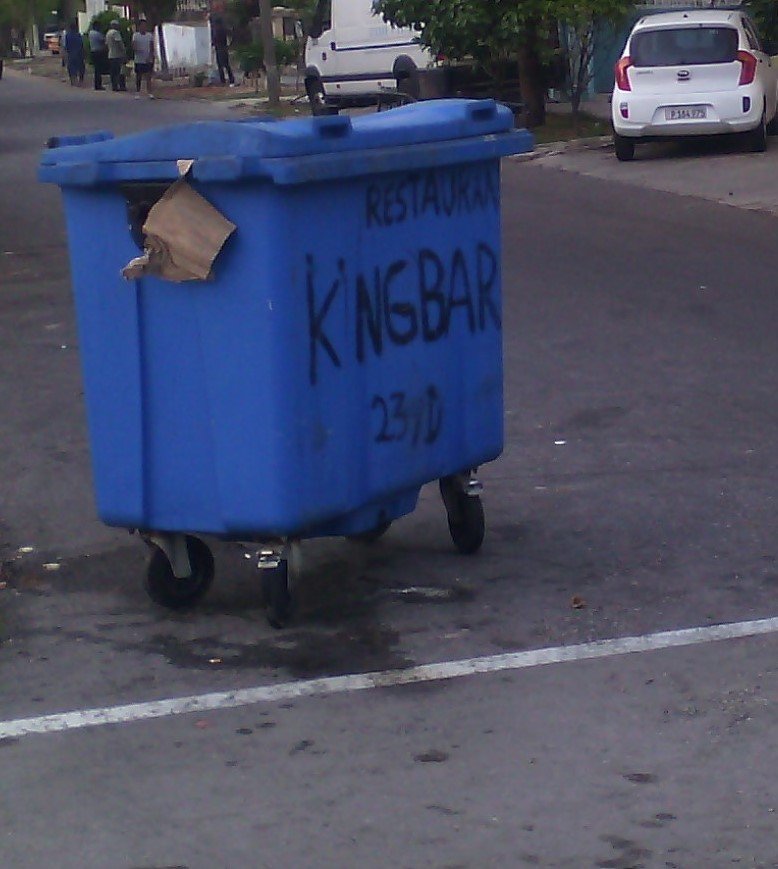
In those economically “most prosperous” territories (such as: Trinidad –where business has developed along with the growth of garbage in the streets, and the notorious tax evasion reached such extremes that the ONAT [National Office for Tax Collection] of Sancti Spiritus had to be moved over there; Viñales –where teachers have to be taken from other municipalities and private pools try to steal the scarce water supply in times of drought; or Havana, where part of the efforts to supply popular restaurants and cafeterias, education and health centers, drains to private restaurants or bars that remain open until five in the morning –not until 3:00 am as it is regulated) businesses are favored by the indirect subsidies of the CADECA 25 to 1 exchange rate, the low rates of water, gas and electricity conceived for domestic use, but used for profit; the free disposal of increased amounts of solid waste –as if this waste came from the kitchen of a home.
In this way development and prosperity will be patrimony of a few to the detriment of the majority.(CubAhora)
Venezuela: Facts and Misinformation


Venezuela: Facts and Misinformation
Editorial
April 1, 2017
A CubaNews translation. Edited by Walter Lippmann.
Thanks to Nelson Valdes who brought this to my attention
and helped revise the translation for posting here.
The unfolding Venezuelan political crisis is being accompanied by an incessant media campaign that seeks to plant in international public opinion the idea that the South American country is going through a government-sponsored coup process that has little to do with reality.
This recent propaganda war against the democratically-elected Venezuelan government has been compounded in recent weeks by the political attacks originating at the Organization of American States –a multilateral organization presumably engaged in the pursuit of dialogue– and the rightwing and ultra-right regimes of the Latin American region
The facts are that the Venezuelan Constitution continues to be in operation, the president is still in office –which, in a presidential regime like the Venezuelan, makes it absurd to speak of the existence of a coup–, all constitutional guarantees are in force.
The internal life of all political parties and respect for freedom of expression persists. Paradoxically, those very constitutional rights are being used to describe the regime as a dictatorship. In addition, the notion that the legislative power was dissolved is no more than absurd, since no parliamentarian has been dismissed and the legislative assembly can resume its functions as soon as it complies with an order of the Supreme Court of Justice (TSJ) issued on January 5, 2016 .
The tale of a coup or self-coup by the government of President Nicolas Maduro is an uninformed interpretation of the decision adopted on Thursday, March 30, by the Constitutional Chamber of the TSJ, with which the TSJ assumed the powers of the National Assembly of Venezuela (ANV, Venezuela’s unicameral parliament), as it puts an end to the situation of contempt in which it finds itself caused by the illegal swearing in of three opposition deputies.
It should be remembered that the present situation of a prolonged confrontation between the Venezuelan right grouped in the Democratic Unity Table (MUD) and the Maduro government has its origin in the legislative elections of December 2015, when the opposition managed to snatch a majority from the pro-Chavez Parliament.
In the election then, large irregularities were verified and verified in the state of Amazonas were documented. This caused the annulment of the election of three MUD deputies and the high court also ordered the reinstatement of the corresponding votes. The opposition decided to use its parliamentary majority to swear in the legislators, in open violation of legality, and for that reason the courts declared the opposition in contempt by the TSJ.
It is also necessary to point out that the decision by which the TSJ temporarily assumes the powers of the assembly is based in Venezuelan law and responds to the need to unlock the operation of the oil sector, which is crucial to facing the serious economic crisis of the country.
In short, it is imperative to put an end to systematic disinformation that only exacerbates an already delicate conflict, and the outcome will determind the welfare and social peace of millions of Venezuelans. The Venuelans are the ones who must resolve their differences within the framework of their own laws, while the external actors who wish to contribute must do so while fully respecting the sovereignty of Venezuela and with the sole purpose of facilitating the implementation of resolutions adopted internally.
You must be logged in to post a comment.