
 MLK, Jr.: The Resurrection
By David Brooks
Translated and edited by Walter Lippmann for CubaNews
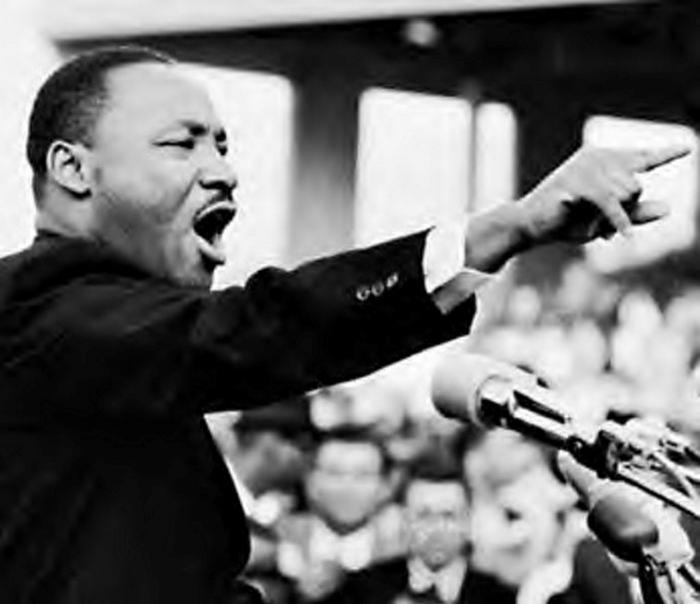
The Reverend Martin Luther King Jr., during the March on Washington for Work and Freedom, a major demonstration on August 28, 1963, where he delivered his historic I Have a Dream speech. Next Wednesday will be the 50th anniversary of his murder in Memphis,
English Article Goes Here
===
The Reverend Martin Luther King Jr. was killed 50 years ago (April 4) in Memphis, marking the bloodiest moment of what would be a 1968 that shook the United States and various parts of the world. Half a century later, this country is in the midst of a reactionary wave that has elevated a white supremacist backed by the Ku Klux Klan to the presidency, almost enough to make fun of King’s famous dream.
But it is worth remembering that King, when he was assassinated, was no longer just the man with a dream of racial equality, but a Nobel Prize winner and international moral authority who had dared in his later years to question and condemn his country’s economic and imperial system, including the war against Vietnam.
King went to Memphis, in the southern state of Tennessee, to support a union garbage workers strike in the name of economic and social justice. At the same time, he was organizing a national mobilization called the Poor People’s Campaign to demand economic rights for the underprivileged of all races and colors, a fundamental change in the U.S. capitalist system.
In the official rites and celebrations that King receives each year, it recalls his famous I Have a Dream speech, which he gave in 1963, but they almost never mention the radical message at the end of his life.
In 1967, King told a civil rights organization that the movement must address the issue of a restructuring of American society as a whole, adding that doing so meant coming to see that the problems of racism, economic exploitation, and war were all linked. These are interrelated evils. On the issue of economic injustice, he did not limit it to a racial issue: Let us be dissatisfied until the tragic walls that separate the outer city of wealth and comfort from the inner city of poverty and despair are destroyed by the battering rams of the forces of justice.
A few months earlier, he commented at a meeting of a civil rights organization: I think it is necessary to realize that we have moved from an era of civil rights to an era of human rights (…) we see that there has to be a radical redistribution of economic and political power…’.
Fifty years later, despite major changes in the country’s laws and regulations around institutional racism, crowned by the election of the first African-American president and what that means in a country founded on the backs of slaves, in essence, little seems to have changed.
An AP/NORC poll last week found that only one in 10 African Americans think the United States has met the goals of the civil rights movement half a century ago (35 percent of whites believe it has) after two rounds by an African-American president.
Fifty years later, new generations are continuing the fight against economic inequality, which has reached a record level in almost a century, with 1 percent of the richest families controlling nearly twice the wealth of 90 percent of the poor.
Fifty years later, incidents of official violence provoke fury. Impunity prevails as before, and indicators of segregation and racism multiply along with, and part of, the official anti-immigrant policies. Not to mention militarism in a country that has been in its longest wars in its history hoping to forget Vietnam.
But in the face of this, 50 years later, King’s echoes are heard all over the country.
Teachers in Oklahoma will begin a strike this Monday, following the triumphant example of their West Virginia peers, demanding not only a living wage and respect for their work – as they did 50 years ago in Memphis – but also greater investment in public education, especially to serve the poor and minorities; their counterparts in Kentucky (where teachers declared themselves sick by closing schools in 26 counties last Friday), Arizona and Wisconsin
African-American Rev. William Barber, famous for his Moral Mondays movement in North Carolina in 2013, which fought state initiatives to reduce spending on education and healthcare and to overturn some electoral rights, is resurrecting King’s Poor People’s Campaign this spring, and declaring, as his predecessor, that this is a moral issue.
You must be logged in to post a comment.