
Postal Service Talks
Postal Service Talks
By Dr. Néstor García Iturbe
A CubaNews translation.
Edited by Walter Lippmann.
September 19, 2009
Very interesting, the statement issued by officials from the U.S. State Department on September 18 about talks aimed at resuming direct postal service between the United States and Cuba.
According to the note, they are very pleased with the initial discussions of a first round of conversations that the U.S. government considers to have been positive, after a one-day meeting where a variety of issues related to transportation, quality and security of mail service between both countries were covered.
Since these first talks were held in Havana, the Cubans offered the U.S. delegation an opportunity to tour a Cuban mail processing center and post office, and the U.S. officials offered to reciprocate the tour with a visit to an international processing center in the U.S. when the Cubans travel to their country to resume talks, which both sides agreed after consultation in their respective capitals on the issues raised.
So far, so good… Problem is, the spokesman could not help seizing the opportunity to try and do Obama a little of much-needed credit.
What’s behind the Obama administration’s efforts to re-establish direct postal services between the United States and Cuba?
In words of the spokesman, “establishing direct mail service supports President Obama’s goals, as announced April 13, of bridging the gap among divided Cuban families and promoting the free flow of information to the Cuban people”.
I’m convinced that in the meeting with the Cuban postal authority, the U.S. delegation failed to give a correct explanation as to the whys and wherefores of their goals, as unlikely to have been addressed in the first meeting as it will be in the next ones.
Who keeps open the gap dividing Cuban families? Who prevents the Cuban people from being properly informed?
Two issues deserving long talks with any U.S. delegation, be it under Clinton, Bush or Obama, the president of the moment. Those who encourage Cubans to leave by illegal means, maintain the ‘dry feet, wet feet’ law, and have extended the commercial blockade to apply as well to culture, information and every aspect of life in the Island have very few arguments to discuss these matters with Cuba.
Mirrors


Mirrors
By José Alejandro Rodríguez
August 29, 2009 23:26:55 CDT
A CubaNews translation.
Edited by Walter Lippmann.
Unlike the deceiving mirror of my childhood, which assured the witch she was the most beautiful woman in the world, ordinary mirrors are built with the quicksilver of truth. They reflect our image such as we are, with the furrows and the snow of time.
Societies also need mirrors to scrutinize their images, to detect wrinkles, which, conversely to those that mark human faces, can be reversed. And, our socialism needs to be systematically observed, to avoid clinging to idyllic images, or deceiving notions that we are living in the best of all possible worlds.
I say this because, in my long and loving job of reflecting our society’s problems, to guarantee that it lasts longer; I have met a blinding resistance to my sincere criticism. This resistance takes the form of a “handsaw”; meaning that those who judge me, are carving a hole on the floor for me to fall through.
The sick obsession with protecting “the image” of the country, of the ministry, of the company or of the territory is more frequent than concern for the real messes being reported. On occasion, it is paranoia trying to protect positions, jobs, and other trifles, when improving reality is what it’s about.
Other times, it’s the consequence of a confusion many people have. They think that problems (in the country, ministry, company or territory) should not be discussed publicly because this will demean the achievements of the Revolution.
This blindness, common to both indolent and opportunist people, common also to those holding high positions or not, can strengthen the sensation that everything is all right. It’s very dangerous to confuse reality with our best wishes, and that by clinging to our society’s noble paradigms we fail to discover when, where, and how deeply reality proves them faulty. This would be the worst possible service to the Revolution.
There’s a scientific principle that says that to solve something, it is necessary first to recognize it and to elucidate it. For a long time there was strong resistance to accepting that corruption larvae had been already incubated in our society. Corruption was considered profanity, as if it could condemned us, we who have so much accumulated honesty. In the long run, here we are creating a General Controlership of the Republic.
Some perceive that healthy criticism – which, by the way, should not stop at words but continue in actions and transformations – is giving in to weakness; that it’s like giving weapons to the enemy. The truth is that the most dangerous missile we can give those who want to dismantle our 50 year work is silence. To keep silent when we see pretenses, double morals, conformity, or the disappearance of militant intransigence against wrongs that are incubated and develop before our very own eyes.
European socialism disappeared because it lost the ability to see what was really happening, and the compass to correct the route. This lesson cannot be forgotten. It is similar to Dorian Grey’s tragedy, Oscar Wilde’s character the one who was obsessed by narcissism, hid his portrait, so that he didn’t have to see the signs he was incorporating every time he made a blunder. Cuba has enough light to see herself in the mirror, and to correct her ugliness.
Laundries are reopened
Laundries are reopened
Although This Service Is Almost 60% Subsidized by the State, 32 Laundries Have Been Reopened in the Country in the Last Year and a Half.
By Haydée León Moya
August 4, 2009 00:42:10 GMT
A CubaNews translation.
Edited by Walter Lippmann.
Cecilia González and her daughter Alioska opened their purses almost at the same time. They are standing in front of the cashier of a glistening laundry on Ayestaran Street in Havana. “It’s 77 pesos”, the employee says. And the young girl is the first one to extend her hand and pay.
Outside we heard this dialogue between the young girl and the lady:
– It’s a little bit expensive, isn’t it, “mi’ja?”
– No Mom, I think the price is right, because neither of us had to do it.
– But, will we be able to do it twice a month?
– Sure… sometimes what we don’t have is time, or detergent…
Zelmira Ramírez, laundry manager, also heard this conversation, and reached the same conclusion they did. If you don’t have to buy detergent, nor spend electricity at home, it’s worth it. If they hand in the dirty clothes, go to work and pick them up on the same day when they come back home, and pay in “pesos”, it’s really worth it, mi’jita!
Then, the experienced laundry worker, comments, “You cannot compare these machines with the clothes rippers called ‘Aurika’”.
“Well, they were also a great help”, the lady says, and leaves pleased.
The manager informs us they work from 7 a.m. to 7:00 p.m. Monday through Saturday, and on Sundays from 8:30 a.m. at 12:30 p.m. The price for washing and drying depends on weight, but ironing is charged by piece. “It’s a little more expensive, because compared to washing and drying, it consumes more electricity. We also have a very good new sewing machine in case a hem or some other stitches need sewing”, comments Zelmira.
Arnold Díaz, a 20 year-old boy who is already in love with the ironing machine he operates, says he also irons at home. He likes to do this job and he is not planning to leave. But, he thinks wages should be a bit higher so people wouldn’t leave looking for better paid jobs elsewhere.
People are thankful for the appearance of several remodeled laundries in different ‘barrios’ of the city. They have used places that already existed but hadn’t been repaired in more than 15 years.
Eduardo Tomé Consuegra, provincial director of commercial services in the capital, told JR that 15 laundries were reopened in Havana. Nine of these have been equipped with totally new and automated technology. The equipment includes five or seven washing machines, three or four dryers and an ironing machine or “planchín”. The equipment was bought in Spain at a cost of 70,000 dollars per module.
He said that in most of these restored facilities there is a payment system that stimulates workers and guarantees the service quality. He also said that the new modules will soon be found in all city units.
Tome said repairs have been made thanks to the cooperation of other provinces, especially with equipment installation, and to unit workers zeal in construction work. In this way, little by little, they have saved units that provided this type of service from dilapidation.
Mirurgia Ramírez Santana, national director of Service in the Ministry of Internal Trade, explains that 1,300,000 dollars were invested in 2008 to recover these basic services. The money was used to purchase 20 modules, which we described before, spare parts and maintenance service from a prominent Spanish laundry chain.
She reported that despite economic limitations and that the State subsidizes 60 per cent of this service, 32 laundries have been remodeled through out the country. A budget was approved to purchase 11 more modules, because the goal is that at least one new module is installed in every province before the end of the year.
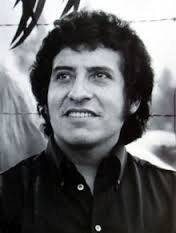
Notes on a letter to Victor Jara
REBELION
Notes on a letter to Victor Jara published by Rebelión
Our message to the world
By Carole Fernández Martínez
September 24, 2009
A CubaNews translation.
Edited by Walter Lippmann.
I have known and admired Victor Jara’s songs since I was a little girl. “Plegaria a un labrador” (Prayer to a farmer), “El alma llena de banderas” (A soul full of flags), “Las casitas del barrio alto” (The houses of the rich neighborhoods), “Ni chicha ni limoná”(Nor ‘chicha’ nor lemonade) and many other songs of his will always be a part of my personal patrimony and my singing arsenal, because of their messages and for their extraordinary quality.
At the same time, I was invited to be part of the Cuban team that helped organize the Peace without Borders Concert last Sunday September 20. From my point of view, what happened that day at the Revolution Square was transcendent for Cuba, for our young people and for our country’s image in the world.
I was there; I felt the public, for the most part young people, vibrate. It was neither a trivial neither a hysterical mass of people. They knew all that had happened in Miami, the pressure they had put on Juanes, the acts of barbarism and fascism to force him to cancel the project. When they shouted “Cuba, Cuba, Cuba”, with the public’s commitment to the success of the concert, we sent our message to the world.
For all these reasons, the “Letter to Victor Jara” written by Carlos Alberto Ruiz published today in Rebellion particularly irritated me. Although I have always written on topics of my specialty, I feel compelled to comment on it, on the cultural policies of my country, and with judgments of a different character that appear in it.
As a musicologist, I know perfectly well where the so-called entertainment industry is going, how banality is cultivated by it. They manufacture and promote false idols at a global level. Nobody has to give us lessons on that. I also know how hard Cuban musical institutions try to intelligently counteract the influence on our young people of those frivolous and commercial currents flooding the planet today.
Although we are under its permanent influence, we work daily to promote talent. And, to establish the authentic artistic hierarchies of all times, of Cuba and of the world. Thanks to this, ours is one of the very few countries in which the people prefer their own music.
It was moving to be at the Square when a million youths sang “Ojala” with Silvio Rodríguez, or with Danny Rivera, “Your Town is My Town”, and with Amaury Pérez “Hacerte Venir” (Make You Come to Me). It was great to dance with them to the rhythm of the anthological potpourri 70s songs of Los Van Van. It closed to the music of Compay Segundo’s “Chan Chan”, intoning verses of Jose Marti. It was the most moving and intense moment in the concert and a homage to our roots, to our traditional music, to the ideas of Jose Marti, to our culture, to what we have been and to what we will continue to be as Cubans.
Without a doubt, not everything we listened to there had the same artistic level. Some of these moments will be ephemeral; but most of them will remain in the minds and souls of all Cubans: those that were there and those that enjoyed the show on television.
Carlos Alberto Ruiz reminds us how in this superficial world a pseudo culture without marrow and forgetfulness is being imposed. He dares to confront Victor Jara’s image to Cuba today. Our country has never ceased to promote Victor Jara’s songs, thought and example. Among the first transcriptions made of his compositions, we find those made by Cuban teacher Jesus Ortega, published in 1978 in Boletinmúsica of Casa de las Americas called Victor Jara Speaks and Sings.
The “International Meeting against Terrorism, for Truth and Justice” was an historical event, presided over by Fidel the whole time. It was held in Havana, in June 2005. More than 600 intellectuals, artists, social fighters and political leaders of 60 countries participated. This event culminated with a beautiful and very moving homage to Victor at the Karl Marx Theater. To an overflowing public, figures of the revolutionary song of several Latin American countries paid tribute to him with their art.
In the 2007 edition of Cubadisco, the main Cuban musical event, Victor Jara was paid tribute and received, as he deserves, the Prize of Honor. This event was widely broadcast to our people. In their colloquy, dedicated in that occasion to the “necessary Song” (as expressed by Alí Primera), topics like alternative discography and the strategy to take songs with social content and commitment to the large masses were discussed. From these discussions the idea of creating a discography label called ALBA (Dawn) arose. This was recently approved by the summit of the countries that integrate it, and it was decided that among the first productions they would include an anthology of Victor Jara’s songs.
Last year, Professor Leo Brouwer organized it and directed in Havana the “Victor Jara in memoriam: 35 years later” concert. It included the premiere of two pieces composed by Professor Leo for this concert: “Variations on a Victor Jara theme for guitar” and “Elegy to Victor Jara”. Important groups and soloists from Cuba and Latin America also participated in this concert.
All these years, Cuba has published in disks, cassettes and cds all the recordings of Victor’s concerts in Cuba. The most recent edition was made by Casa de las Americas (the recordings of a concert Victor offered in that emblematic institution on March 1972). It was presented in February this year, at the International Book Fair dedicated to Chile, in the collection “Music of this America”. The cd’s of that same collection Hasta Siempre and Che querido, also in that Fair, were presented as a tribute to the Heroic Guerilla by different Latin American singers. Also Victor’s CD Compañero Presidente, with songs from Silvio, Pablo and other singers dedicated to Salvador Allende.
The magazine Boletinmúsica ode Casa de las Americas dedicated a number in dedicated to the 1967 Protest Song Meeting 40 years after its celebration. In that edition, there is a special dossier, “Victor Jara in us”, dedicated to his life and his example. Thereis also a Leonardo Acosta article on a book in remembrance of Alí Primera and interviews to Daniel Viglietti, Caesar Isela, Pancho Villa, Ricardo Darts and other figures of different generations that cultivate protest songs in our region.
The list of actions that Cuban institutions and artists promote against the tyranny of the market having Victor Jara as a reference figure of an art divorced from commercial concessions could be endless. It would be enough to go through the digital publications of institutions like Casa de las Americas (www.casadelasamericas.org) , Center Pablo de la Torriente Brau (www.centropablo.cult.cu) , the magazine Clave of the Cuban Music Institute (www.clave.icm.cu) , La Jiribilla ( www.lajiribilla.cu ) or CUBARTE webpage (www.cubarte.cult.cu ) to understand the real meaning of our cultural policy and how far are we from promoting banality.
I had the privilege from the beginning of knowing how this concert’s project originated, supported without hesitation by some of Cuba’s exceptional creators, who belong not only to the vanguard of our culture, but also to that of the Spanish-speaking world. They have nothing to do with the aesthetics of some of the artists that visited us and who don’t need these types of actions for their professional promotion. They have an enormous prestige among our people and with other countries’ public. They participated simply because they understood the meaning this concert would have for Cuba.
This morning, I was proud to read that Fidel in his reflections, characterized the concert “Peace without Borders” as extraordinary, and he finished saying: “The Cuban people, especially Cuba’s magnificent young people, demonstrated yesterday that even in the midst of a brutal economic blockade it is possible to conquer unimaginable obstacles.”
Once again, like in these past fifty years, Fidel put facts in their proper place.
Although I read Fidel’s book Peace in Colombia with a lot of interest , I don’t know the history of that country in detail neither do I feel I’m prepared to forward an opinion on it. Much less, can I speak about how they perceive Juanes politically there. What I do know is the history of my homeland and the principles that guide it. I know that, like Victor Jara, revolutionary Cubans will know how to defend our dignity and our principles.
What Will Trump Say About Cuba?

What Will Trump Say About Cuba?
By Dr. Néstor García Iturbe
A CubaNews translation by Walter Lippmann.
EL HERALDO GROUP sarahnes@ …
“THE FEELING OF FULFILLING THE MOST SACRED OF THE DUTIES,
TO FIGHT AGAINST IMPERIALISM WHEREVER IT IS”
CHE
////////////////////////////////////////////////////////////////////////////////////////////////////
There is an expectation among a good number of people, especially in Cuba and in Miami, about what Trump might say in relation to our island in the declarations he is about to make in the near future in the city of Florida.
Some wish that these statements would provoke Armageddon and that everything that has advanced in the relations between the two countries will be without effect and we will return to the time in which hostility is the main reason that governs our relations.
Others, whom I believe have a more objective approach, suggest that there will be some changes in what Obama has established, but many issues will remain as they have been until now, especially those that could affect business profits, jobs, immigration policy, and campaigns against Cuba, such as those related to religious freedom, so-called political prisoners, human rights and ideological-political subversion.
It should not be surprising, according to the rumors running on Calle 8, that some issues be added to U.S. claims, among which may be to demand that people who are considered to have debts with justice be delivered to the United States, impose sanctions and visa limitations on certain Cuban officials and act against the entry into the United States of Havana Club rum. The problem with the claims is another one that has also been considered to be included in Trumps’s speech , that if it includes all that is desired by some in Miami, it will last about three hours.
In relation to something on Radio Bemba in Miami, we could also say that also in the United States people who have debts with Cuban justice, many of them for having committed acts of terrorism, in or against the island and its citizens, I do not think there is any interest in sending those terrorists to Cuba to be tried. The main interest of the government of the northern country lies in Joanne Chesimard [Assata Shakur], a woman, a militant of an organization that fought for the rights of blacks. She was accused unjustly of having committed a crime, and whom they say is in Cuba.
As to limitations and sanctions, it is possible that again and have been so many times raised that the food that Cuba buys and if it manages to buy medicine in that country, they can not go to military installations. As for tourism, they say they are thinking of banning business with Gaviota, because they consider that MINFAR (the Ministry of the Armed Forces) runs this company, hence it could be deduced that the visa limitations and sanctions would be to civil servants who now occupy positions in our government, but they come from the Armed Forces.
That of Havana Club rum is a business problem, as the Bacardí firm feels strongly affected and is precisely the one that delivers large amounts of money to the electoral campaigns of US politicians of Cuban origin. This is the time to pay off that debt, and business people understand that politicians have enough influence on Trump to do something about it, if that were possible.
The financial demands between the two countries could be another issue touched on by Trump. It is true that this is a long-term problem, because the United States demands $8 billion from Cuba and we demand $120 billion from them. The Miami speech could give Trump the opportunity to argue that those Cubans whose property was nationalized, and who traveled to the “land of democracy” and became US citizens, will be included in the claims they present.
Many of these issues, as discussed in this article, are rumors, which stakeholders put into the possible pronouncements that Trump could make to try to reach their ears and take them into consideration. Those in charge of trying to do this are the Representatives of Cuban origin who have been closer to Trump lately.
There are other elements that can not be left out of the analysis. The first is Trump himself, who is quite difficult to predict. The second, in my opinion, is Greenblatt, that of the Cuban grandfather. According to him, the number two person of the Trump Corporation, appointed as presidential negotiator, the third is Sonny Perdue, recently named by Trump as Secretary of Agriculture. On several occasions Purdue has mentioned the benefits which would be obtained from agricultural trade with Cuba.
Trump, as always, may surprise us. He may say that his policy will maintain everything that implies economic benefits for the United States, increasing jobs, increasing trade possibilities (which would reduce the United States’ negative trade balance), maintaining a system to ensure orderly immigration of people and the exchange between civil entities of both countries.
Other matters of interest (such as Havana Club rum) should be analyzed more deeply, which will be reported to the extent that he has decided what to do.
He will maintain US support for what they are fighting for in Cuba for the “liberties”, the “human rights” and the liberation of “political prisoners”. He will demand the sending to the United States of fugitives of justice who may be refugees in Cuba. Above all this, he will order an immediate start to talks with the Cuban government.
The latter he will leave until the end, as a good communicator that is, to leave a good impression on the audience, who must be pleased with the proposal to maintain a degree of hostility towards Cuba.
I could be wrong. To err is human and especially of humans who say what they think will happen.
The one who does not bet does not lose, but does not win either.
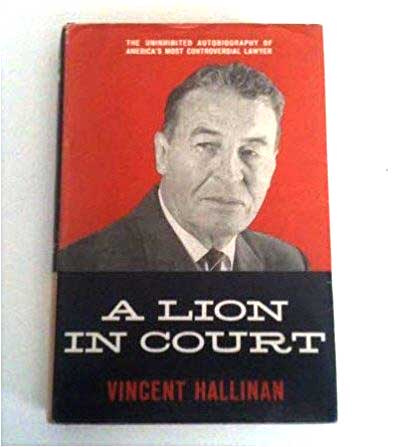
Vincent Hallinan on Cuba (1963)
Vincent Hallinan on Cuba
Back in 1935, my wife and I went to Cuba for a vacation. We went via the Panama Canal one of the great flying boats which then operated between San Francisco and New York. It laid out for two or three days in Havana harbor. We spent one day in the capital city and then returned aboard the ship and went on up to New York. We couldn’t see ourselves vacationing in the welter of poverty, ignorance, corruption, prostitution, misery and despair, which were the Cuba of 1935. We went back to Havana and in December 1960. Fidel Castro and his revolutionaries had overthrown the American puppet Batista, and defeated his army – also maintained, trained, and paid by American taxpayers for the benefit of American big – business corporations. It was the Year of Education, and and islandwide campaign was being waged to stamp out illiteracy. The shacks and slums were disappearing, to be replaced by prefabricated concrete houses. These had sanitary plumbing, running water, gas and electricity. The barren landed estates had been converted into food–processing plantations for the benefit of all. Everywhere there was hope, pride and exaltation. The Cuban people had recaptured their coiuntry from the exploiters.
In the same way that the American people were educated to believe that the Russian Revolution was bad, a vigorous campaign has been, and is being, waged to convince them that the Cuban revolution is the same. Castro, an heroic and shining patriot, is depicted as a madman ruining his own country by the exclusion of the benign North American corporations.
From:
A LION IN COURT
by Vincent Hallinan
G.P. Putnam’s Sons
p.317
Cuban intellectual Fernando Martínez Heredia dies


Cuban intellectual Fernando Martínez Heredia dies
June 12, 2017
A CubaNews translation by Walter Lippmann.
Fernando Martínez Heredia. Photo taken from La Jornada.
This morning we received the news of the death, on Monday morning, of the distinguished professor, essayist and historian, Fernando Martínez Heredia , at the age of 78 years.
Martínez Heredia was born on January 21, 1939 in Yaguajay, province of Sancti Spíritus, Cuba.
As a professor of postgraduate education, he taught courses and lectures on social issues in various institutions in the country and in nineteen other nations, where he worked as a guest professor or researcher.
A permanent researcher of the Cuban and Latin American realities, he participated in social research at the University of Havana, the Center for Western European Studies, the Center for American Studies and the Center for Interdisciplinary Research in Humanities and the National Autonomous University of Mexico.
He was scientific collaborator of the Program of the Latin American Faculty of Social Sciences in Cuba; Member of the “Ernesto Che Guevara” Chair and the Current World Problems Seminar of the Economic Research Institute of the National Autonomous University of Mexico.
He worked in the Cuban Institute of Cultural Research Juan Marinello and there he was president of the chair of studies “Antonio Gramsci”.
The Handmaid’s Tale

“The Handmaid’s Tale”: The controversy, fiction and a constant provocation
by Yunier Javier Sifonte Díaz
June 17, 2017
Translated and edited by Walter Lippmann for CubaNews.
The Handmaid’s Tale is perhaps one of the most disturbing TV series of recent times. Provocative in extreme, incisive in its questionings and with a crudity without limits, this production investigates in sensitive areas of the human species and speaks without fear about oppression and the loss of freedom. Fear, corporal punishment and rape, which has become a ritual, coexist with an extraordinary screenplay and attract the applause of the specialized critics, but also the attention of those who wonder where reality ends and fiction begins.
Based on the novel of the Canadian writer Margaret Atwood’s novel of the same name, the series looks to the near future where environmental pollution has left most women in the United States sterile. Faced with the situation, a radical group seizes power, assassinates the President, annuls the Constitution and implements the Republic of Gilead. In the new society, profoundly fundamentalist and puritanical, most modern values disappear, women lose all their rights and those who can still breed offspring only matter as an object destined to give children to the wealthiest families.
From here, females can only aspire to few roles: a few are the infertile wives of the nation’s leaders, but the rest fulfill functions as maids destined for the repopulation of the country, domestic employees or prisoners sentenced to die while cleaning the areas damaged by the radiation. However, none has the right to read, think or express her views, because, even with the ancestry of ladies or sexual slaves make up that lower group causing the misfortunes of the nation. Among them lives the servant Offred, whose name hardly represents another sign of submission. If she belongs to Commander Fred then she should be named like him.

Corporal threats are recurrent when maids forget their basic rules of behaviour. Photo: Hulu.
This is one of the great successes of the series: the narrative from all possible spaces, with a deep symbolism and a precise structuring of dialogues. From the immutable red dress of the maidservants – joyful to fecundity, but also to blood and pain – through their pre-established attitudes, gestures and conversations, to the cap to restrict their vision of a world they no longer know, everything works to annul their individuality and turn them into standardized subjects.
With different levels of reading and interpretation, for some, The Handmaid’s Tale means a defense of feminism, while for others it represents a good way to reflect on systems of government such as that implemented by the Islamic State or against the rise of neo-fascist or extreme right-wing tendencies in some countries of the planet. At the thematic level, the series does not address current issues such as women’s reification, harassment of homosexuals, ablation [female genital mutilation] or ethical discussions about abortion.
Supported by a millimeter of perfection and an extraordinary passion for detail, director Reed Morano uses whatever element she believes necessary to retrace the path of this deeply misogynistic and inhuman society, to show the harshness of the moment and the anguish of some female characters almost always on the brink of the abyss. Both the careful photography of bluish or ochre tones, as well as the commitment to intimacy in scenes, the punctual use of the soundtrack and the optimal use of some very first shots of Offred’s face -performed masterfully by Elisabeth Moss-, contribute to closing spaces and placing the spectator right in the centre of this asphyxiating drama.
To this end, this maid has two voices, one submissive and fearful and the other known only to the spectator: rebellious, sarcastic, always pungent in the face of the regime’s exaggerations. Narrated by the protagonist from recurrent flashbacks and internal dialogues, the decomposition of society and its silent conversion in the Republic of Gilead appears on screen. “Now I’m awake and I see the world. I was asleep before. That’s how we let it happen. When they massacred Congress, we didn’t wake up. When they blamed the terrorists and annulled the Constitution, we did not wake up either. They said it would be temporary, but nothing changes at all,” recalls Offred to explain how the country arrived in the current state of affairs.

The sobriety of the scenes and the correct use of light give this production a special touch and nuance. Photo: Hulu.
However, these reflections articulate a discourse more anchored to reality and raise questions that are essential for the debate of these times. Does conquering certain universal values such as freedom, democracy and human dignity mean giving up fighting for them? What subsists beneath xenophobia, intolerance, extreme individualism and attempts to construct apolitical or banal subjects?
“Blessed are the meek,” they constantly remind the maids in the centers in charge of training them for their new function, as if eliminating any kind of active posture and making conformism a virtue were an essential objective to achieve domination. And in fact, it is, because the oppression that exists here is not only physical, but also psychological, intellectual and cultural, the only way to dismember a society as a whole.
With seven of the ten chapters of the first season already released and the guarantee of at least one second, The Handmaid’s Tale transcends its exceptional technical skills and its fine adaptation of a classic Canadian literature, but also because it uninhibitedly discusses universal themes such as ideology, morality, humanism, politics and totalitarian and extremist systems. Even without claiming to be a prophetic or apocalyptic work, it has the merit of evading complacent positions and touching sharp areas of a model who likes to see itself as perfect. Responding to the provocations of this series with intelligence and analysis, confronting it without complexes and willing to its art, but also to the debate and questioning, would be good ways to live this story only as fiction.

In this society there is no room for individual initiatives and any activity implies the fulfillment of a ritual. Photo: Hulu.

All the elements surrounding these maids function as symbols of their submission. The regular red dress, the cap, the obligation to go out in pairs to watch each other, are good examples. Photo: Hulu.
Cubadebate exceeds three million visits
Cubadebate exceeds three million visits per month for first time
A CubaNews translation by Walter Lippmann.
At the end of May 2017, our site Cubadebate exceeded three million visits for the first time in a month the number of 3,223,174, despite the technical difficulties we have faced with our servers in recent days.
Cuba was the country that received the most visits with 2,218,591 and received another million visits from the rest of the world.
Cubadebate reached one million monthly visits in 2012 and two million in 2015. For several years, Cubadebate has been the medium of communication, including international ones, best placed in the well-known Alexa ranking for Cuba. In turn, it is the Cuban best located in the Alexa World Ranking, now in the position 6 thousand 361.
On its Facebook homepage, which has more than 437,000 followers, Cubadebate received in May 783,154 interactions and 1.4 million video views. In Youtube 685,560 views were reached in the month, while on Twitter, the main account of the site has 253,135 followers.
Our team appreciates the visits and interactions of our followers; And aims to continue to grow as a communications product, despite shortages and difficulties, always with the input of all of you.
Follow us on Facebook: @cubadebate
Twitter: @cubadebate
Youtube: Cubadebatecu
2 Letters On Cuban Measures Against The Swine Influenza Epidemic
2 Letters On Cuban Measures Against The Swine Influenza Epidemic
By May 11, 2009 9:13 AM
A CubaNews translation.
Edited by Walter Lippmann.
Letter to La Jornada of a Mexican scholarship student in Cuba
Havana, Cuba May 8, 2009
As a Mexican scholarship student of the Latin American School of Medicine (ELAM) in Cuba, I respectfully write you to make the following comment.
The measures taken in the island are merely precautionary, because the virus causing the disease is absent [from this territory], there has been no discriminatory measure of any kind on the part of any citizen or Cuban authority to Mexican students currently living here. It is indeed unacceptable that the Mexican people remain so poorly informed and that this situation is used to attack and to discredit the Cuban people. The Cuban people have never rejected us under any circumstances. On the contrary, we have been accepted very generously and as brothers and sisters. I am enormously grateful for this.
The campaign to slander Cuba must cease immediately. Such manipulation against a people like the Cubans must stop. Cubans have shown the world that it is not necessary to be under foreign domination to succeed. They have imprinted the meaning of dignity in each of its citizens. .
Orquídea Marván García Ayala
response to an email received from a comrade
Dear colleague,
In response to your email, I would like to make the following commentary:
Cuba has always responded with strong and decisive preventive measures to any disease, especially in the case of this virus, whose patterns and trends were not clear at the beginning of the epidemic. This was so in the case of AIDS, for example, or with the internationalist cooperationists returning from developing countries. In all cases, the priority was to protect the health of the people in spite other considerations and sensitivities, also taking care of the individual rights of the people.
In the case of Cuba, it is easier to do, because of the quality and dimension of its health system and the fact that the country is an island (the advantage from a sanitary point of view, of being surrounded by water). And here it is more urgent that we do so, because Cuba is under an embargo and can not purchase medicines on the closest market , the American, nor in any other country if the patents or components [of the pharmaceutical] are of U.S. origin.
Furthermore, with the damage the three hurricanes that hit the island in September and October last year caused the Cuban economy (with losses estimated at 10 billion dollars, equivalent to 30% of the country’s gross domestic product), it is particularly vulnerable to additional losses caused by an epidemic.
In the case of the influenza, the national and local governments (DF) of the affected country (Mexico), took drastic measures (closing schools, restaurants, workplaces, cinemas, etc..) and even the president advised the people not to leave their homes. It is not surprising then that other countries also reacted with strong measures.
By the way, Cuba offered to send medical technicians, scientists and epidemiological doctors to Mexico. But of course, Cuba can not send them without the consent of the government of the country concerned, nor is it the role of Cuba to determine whether the measures taken by Mexico were correct or not.
Also, remember that Mexican citizens in Cuba (residents or the more than 1,200 scholarship students) have not suffered any discrimination, not from the government nor from the local population. Unlike other countries, where Mexicans have been confined or have suffered various attacks.
This is a health measure, no more and no less.
Greetings
Pedro Gellert
You must be logged in to post a comment.